


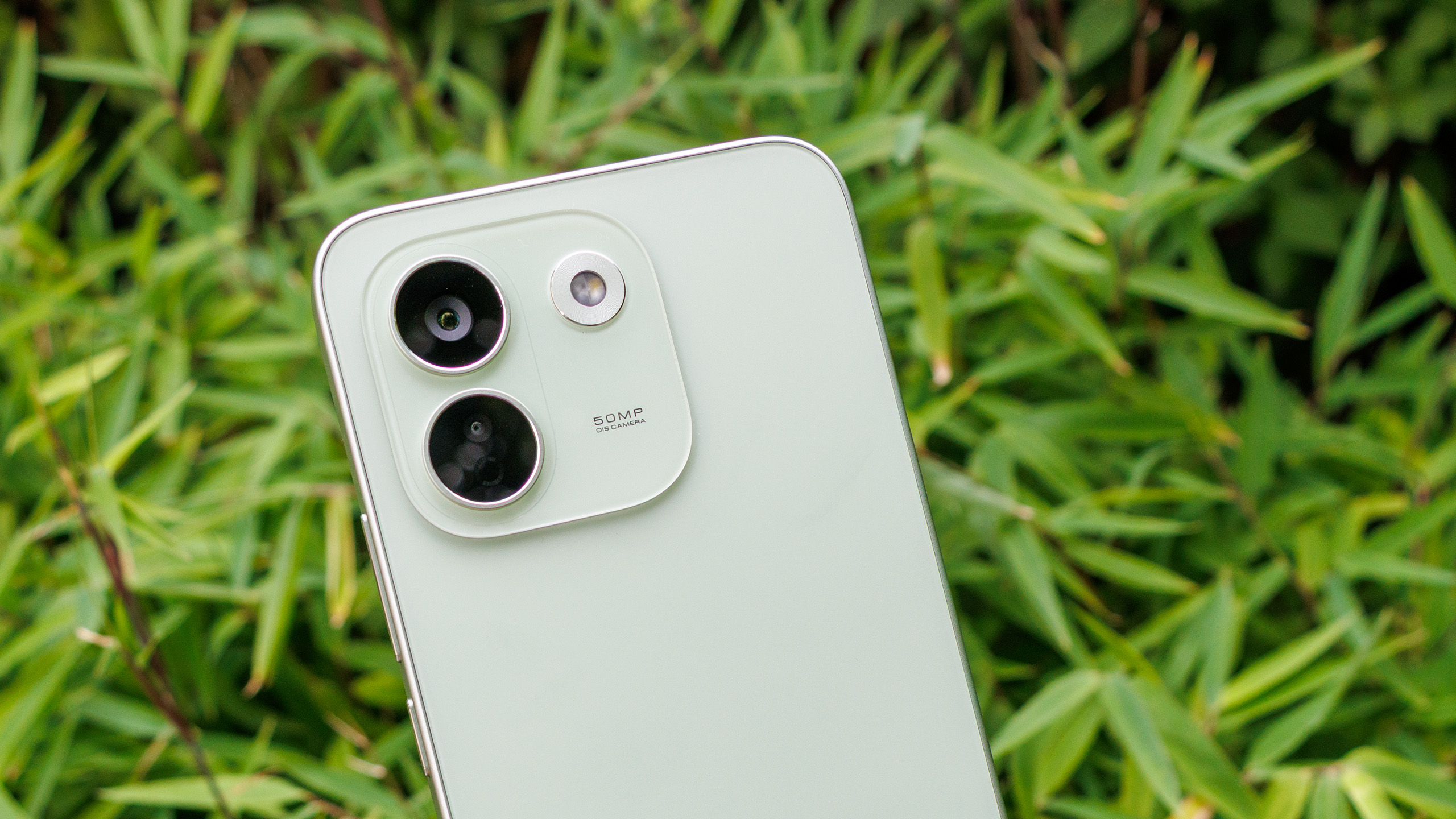
Verdict - Redmi Note 17 Pro Max 5G
The Xiaomi Redmi Note 17 Pro Max 5G is, above all else, a smartphone for users wishing to plug it into a power outlet as infrequently as possible. With a Wi-Fi test runtime of 33 hours and 42 minutes, it delivers outstanding battery life that leaves the competition in its tracks. Other strengths include its robust, high-quality build and a very bright AMOLED display. On the flip side, Xiaomi has cut corners in a few areas. The Snapdragon 6 Gen 5 is a clear step backwards from its predecessor and feels weak for a smartphone at this price point. While performance is sufficient for everyday situations, occasional stuttering is unavoidable—and the faster storage does little to change that.
The cameras also disappoint, given the device's lofty ambitions. The main camera features a smaller sensor than its predecessor, losing fine detail and struggling with high-contrast scenes. While the speakers can get loud, the sound becomes unpleasant at high volumes and suffers from audible distortion.
Ultimately, the Redmi Note 17 Pro Max 5G is a smartphone possessing one exceptional strength, alongside several compromises that are difficult to justify. If your primary priorities are long battery life and a bright display, this device has tons to offer. However, if you value performance, camera quality, or a well-rounded feature set, you will find more balanced alternatives elsewhere.
Pros
Cons
Price and availability
The Redmi Note 17 Pro Max 5G is available directly from the Xiaomi store. It has an MSRP of £499 (8/256 GB) and £549 (8/512 GB), but the 8/256 GB version is currently on offer for £399, while the 8/512 GB version can be yours for £449.
Table of Contents
- Verdict - Redmi Note 17 Pro Max 5G
- Specifications - Xiaomi Redmi Note 17 Pro Max 5G
- Case - The Redmi Note 17 Pro Max comes with a high IP certification
- Features - Midrange with room for improvement
- Software - The Redmi Note 17 Pro Max will still get Android 20
- Communication and GNSS - Sluggish Wi-Fi 6
- Telephone functions and voice quality
- Cameras - A small sensor and not many MPix
- Accessories and warranty - Optionally with Xiaomi Care
- Input devices and and operation - With a screen protector
- Display - The Redmi Note 17 Pro Max gets really bright
- Performance - The Xiaomi packs a Snapdragon 6 Gen 5
- Emissions - A Xiaomi smartphone with Dolby Atmos
- Battery life - A massive 9,210 mAh
- Notebookcheck overall rating
- Possible alternatives compared
The Redmi Note 17 Pro Max succeeds the Redmi Note 15 Pro+ 5G. Xiaomi has further improved the battery life, once again focusing on high-level durability for its premium mid-range smartphone. However, compromises have been made regarding storage, cameras, and SoC.
One of Xiaomi's more powerful versions is the Poco X8 Pro Max.
Specifications - Xiaomi Redmi Note 17 Pro Max 5G
Case - The Redmi Note 17 Pro Max comes with a high IP certification
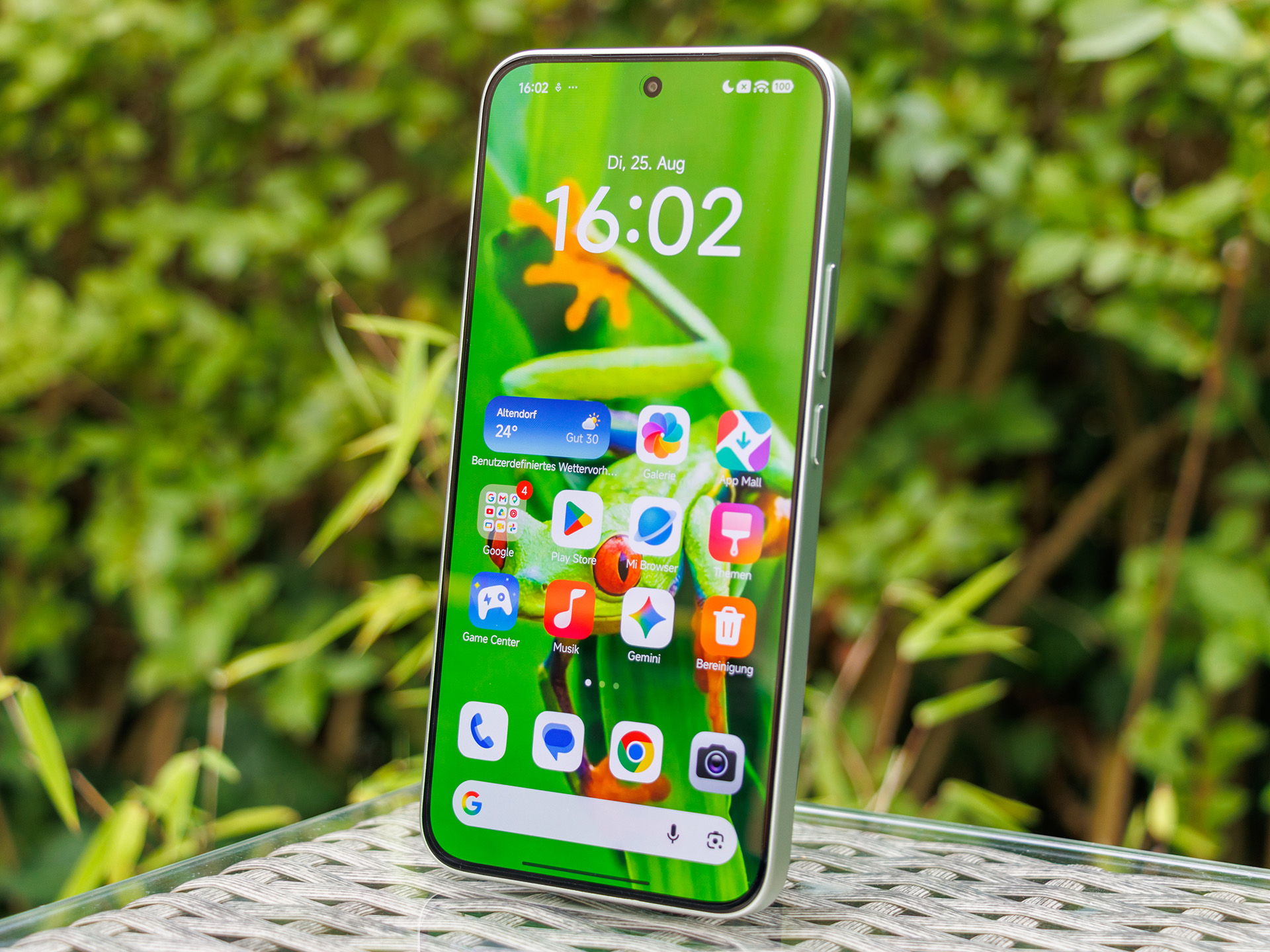
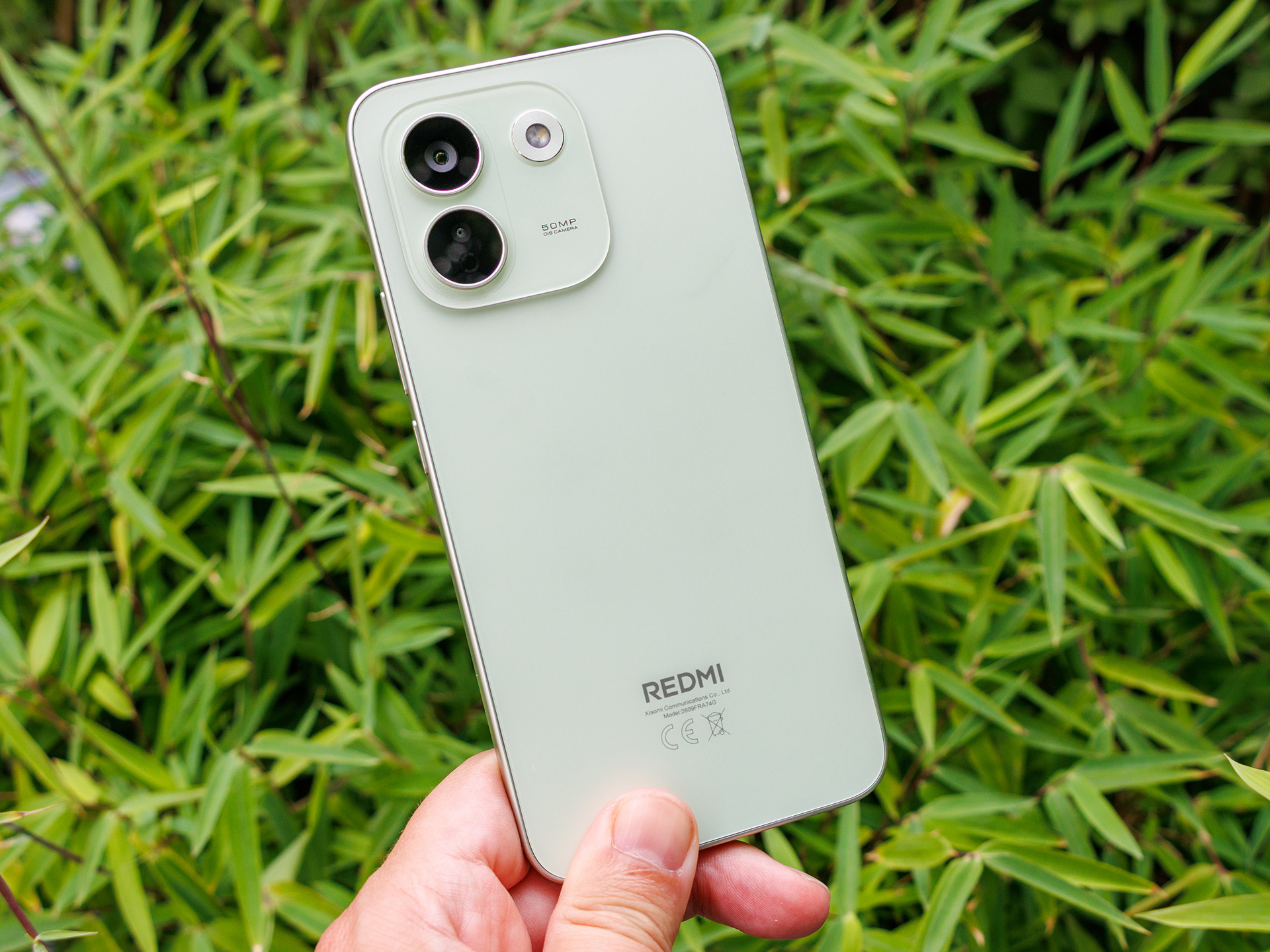
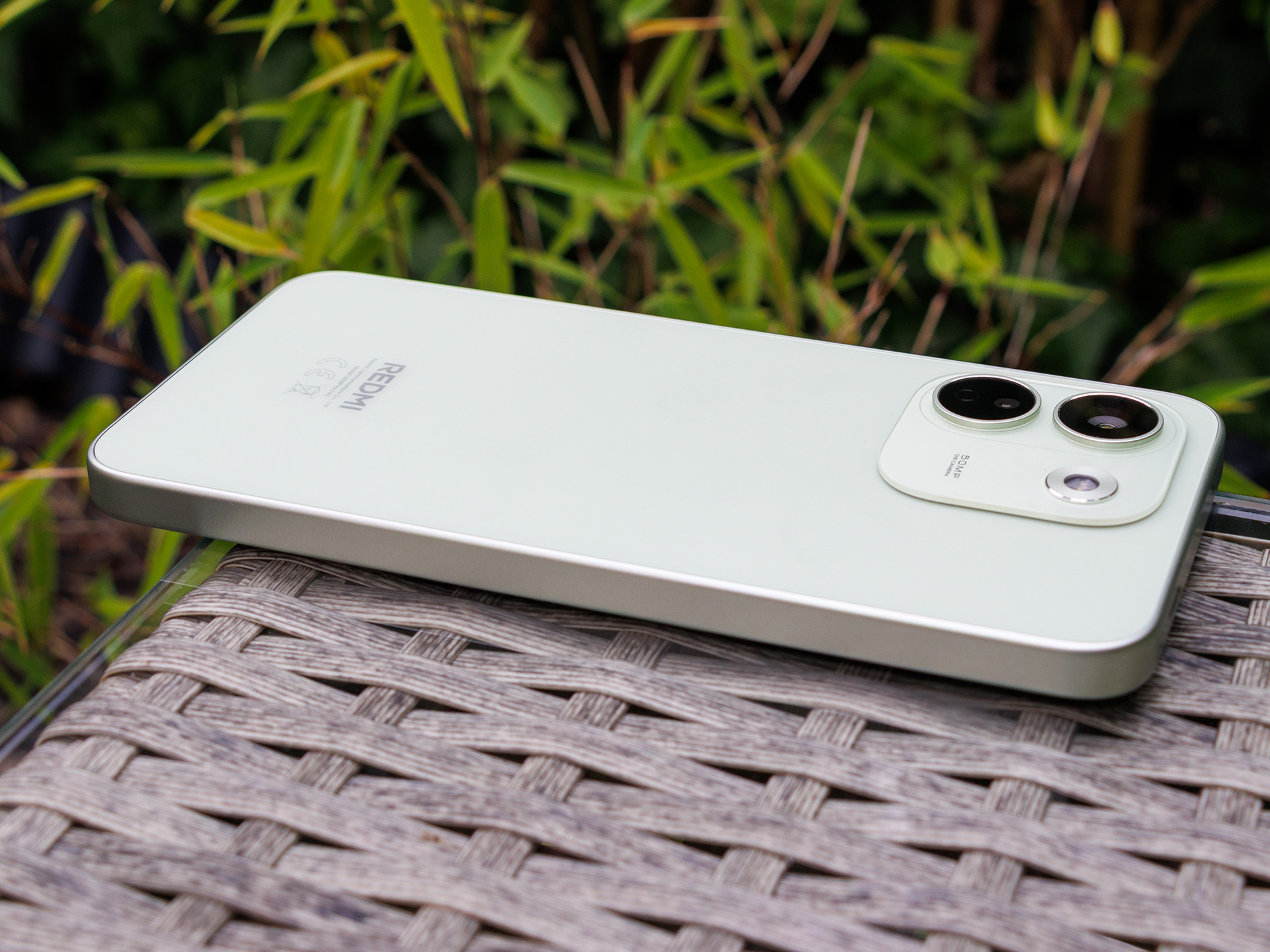
The Redmi Note 17 Pro Max is available in green, black, and cloud red. At 225 grams, you wouldn't exactly call it lightweight, but with Xiaomi specifying a thickness of 8.65 mm, we measured up to 11.5 mm when including the camera module.
The build quality feels premium, with consistent gaps and a very sturdy overall construction. Xiaomi also claims the device has been tested to withstand drops from a height of three meters, a feat attributed to a reinforced chassis structure. The battery is also rated to endure temperatures ranging from -45°C to +75°C—though this should not be confused with its operational temperature range. When subjected to torsional stress (twisting), the Redmi phone emits an audible creaking sound.
The IP certification is also rather complex. For its German version, Xiaomi has only specified IP66 and IP68, whereas the international version adds IP69 and IP69K ratings.
Features - Midrange with room for improvement
The feature set is very similar to its predecessor, but there are a few downgrades. For instance, the 6 GHz Wi-Fi band is now absent, and while the SoC is new, it sits a performance tier below the one found in the previous model.
Furthermore, the inclusion of only USB 2.0 is underwhelming for this price range. Additionally, despite featuring Bluetooth 6.0, the Redmi Note 17 Pro Max does not support Auracast. The IR blaster, however, is still on board.
Software - The Redmi Note 17 Pro Max will still get Android 20
The Redmi Note 17 Pro Max 5G comes with Google Android 16 and HyperOS 3.0. It is said to receive four years of version updates and six years of security patches, which are scheduled to be released on a quarterly basis.
While the advertizing within the system is not as extensive as on the cheaper models, it is still present. You can find out how to remove it here. Additionally, Xiaomi has pre-installed numerous third-party apps.


Sustainability
Xiaomi hasn't provided any specific CO2 emission data or the proportion of recycled materials used in the Redmi Note 17 Pro Max. Although the packaging is largely plastic-free, it is still wrapped entirely in plastic film. Spare parts are intended to be made available through a self-repair program.
Communication and GNSS - Sluggish Wi-Fi 6
The Redmi Note 17 Pro Max features Wi-Fi 6 (ax) support; however, it proved itself to be relatively slow in our tests, which suggests a scaled-back antenna architecture. Having said that, its range is good.
While the supported mobile frequency bands don’t necessarily make this smartphone a perfect choice for a global traveller, there are no significant gaps.
| Networking | |
| Xiaomi Redmi Note 17 Pro Max 5G | |
| iperf3 transmit Wi-Fi6/7 RT-BE96U | |
| iperf3 receive Wi-Fi6/7 RT-BE96U | |
| Sony Xperia 10 VIII | |
| iperf3 transmit Wi-Fi6/7 RT-BE96U | |
| iperf3 transmit Wi-Fi6/7 RT-BE96U | |
| iperf3 receive Wi-Fi6/7 RT-BE96U | |
| iperf3 receive Wi-Fi6/7 RT-BE96U | |
| Google Pixel 10a | |
| iperf3 transmit Wi-Fi6/7 RT-BE96U | |
| iperf3 receive Wi-Fi6/7 RT-BE96U | |
| Samsung Galaxy A57 | |
| iperf3 transmit AXE11000 6GHz | |
| iperf3 receive AXE11000 6GHz | |
| Xiaomi Poco X8 Pro | |
| iperf3 transmit AXE11000 | |
| iperf3 receive AXE11000 | |
| Nothing Phone (4a) Pro | |
| iperf3 transmit AXE11000 6GHz | |
| iperf3 receive AXE11000 6GHz | |
| Average 802.11 a/b/g/n/ac/ax | |
| iperf3 transmit AXE11000 | |
| iperf3 receive AXE11000 | |
| iperf3 transmit AXE11000 6GHz | |
| iperf3 receive AXE11000 6GHz | |
| iperf3 transmit Wi-Fi6/7 RT-BE96U | |
| iperf3 receive Wi-Fi6/7 RT-BE96U | |
| Average of class Smartphone | |
| iperf3 transmit AXE11000 | |
| iperf3 receive AXE11000 | |
| iperf3 transmit AXE11000 6GHz | |
| iperf3 receive AXE11000 6GHz | |
| iperf3 transmit Wi-Fi6/7 RT-BE96U | |
| iperf3 receive Wi-Fi6/7 RT-BE96U | |


Despite only having single-band GNSS, the Redmi Note 17 Pro Max's satellite fix is quick, even when indoors.
During a bicycle trip, we tested the accuracy of the recorded distance travelled. The smartphone delivered a solid result and is therefore more than sufficient for navigation tasks.


Telephone functions and voice quality
When making calls, the Redmi Note 17 Pro Max 5G delivers natural voice quality. However, Xiaomi has decided against including intelligent ambient noise suppression, which can be an issue, particularly in noisy environments.
The phone supports either two nano-SIM cards or two eSIMs, and a combination of both is also possible.
Cameras - A small sensor and not many MPix

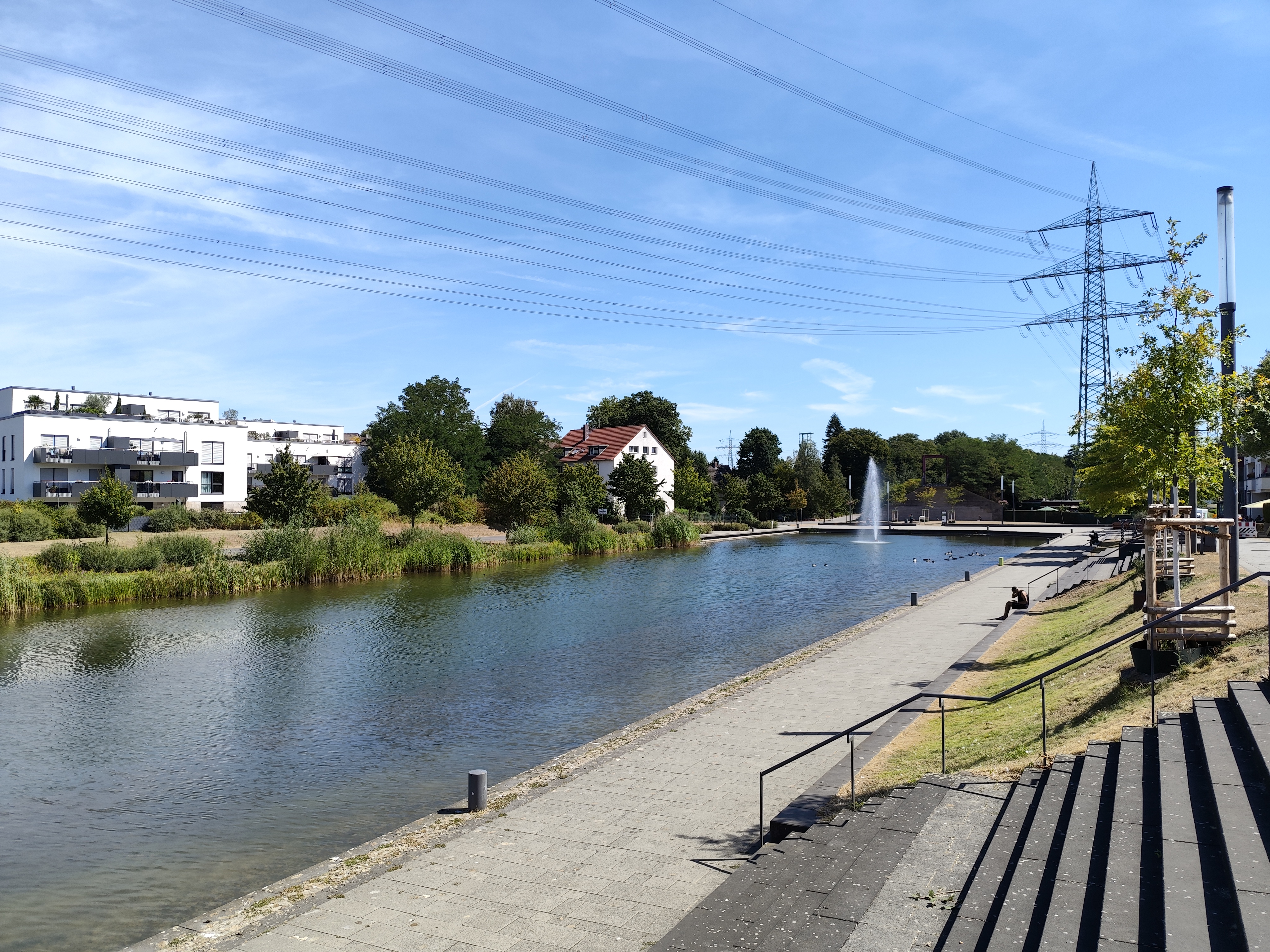
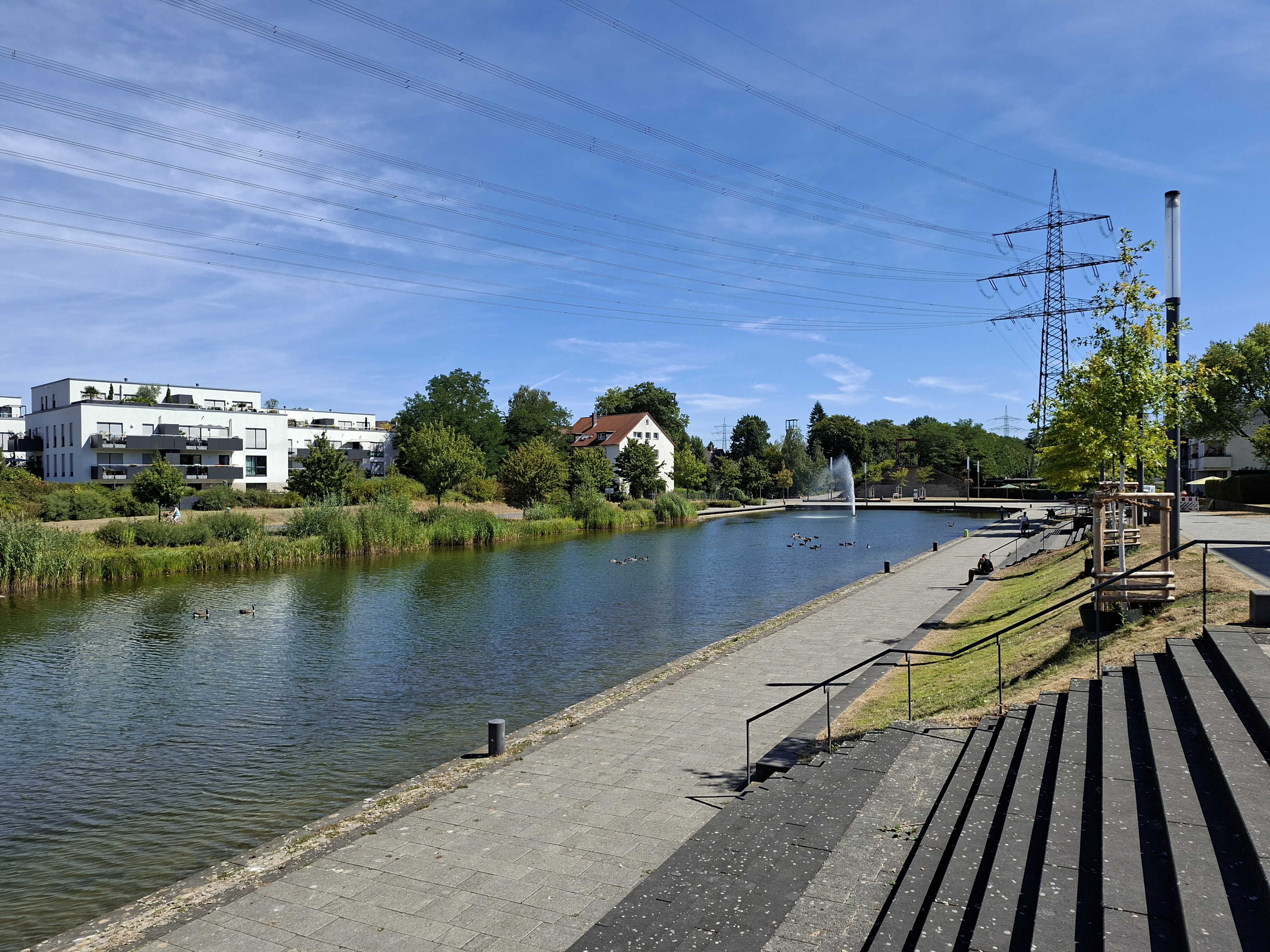
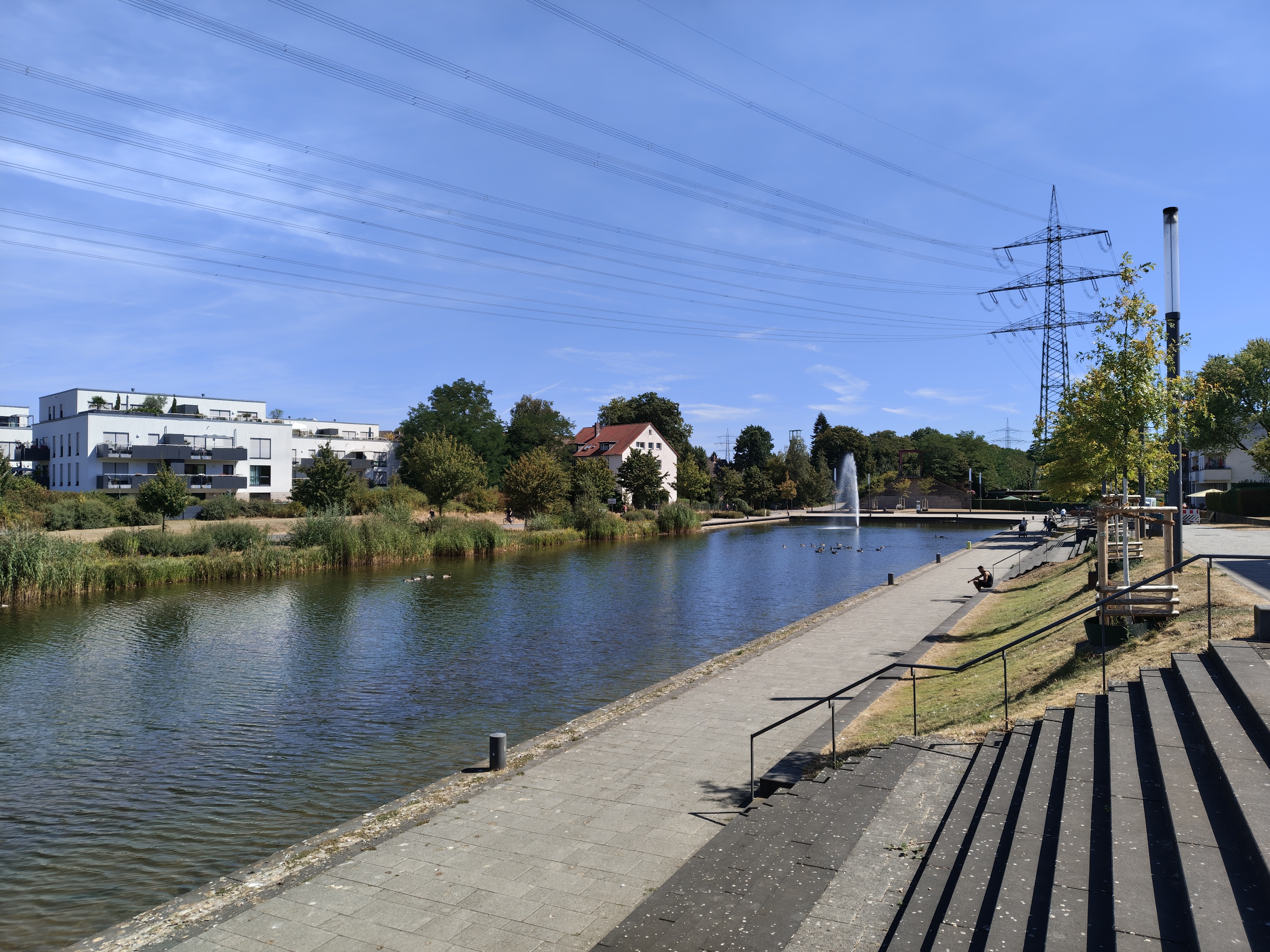
In daylight, the 50 MP main camera captures decent images, though the level of detail isn't always impressive. Fine textures—such as the fur of our test subject (a toy rabbit)—tend to get lost. The camera also struggles with high-contrast scenes, where bright areas often become overexposed (blown out).
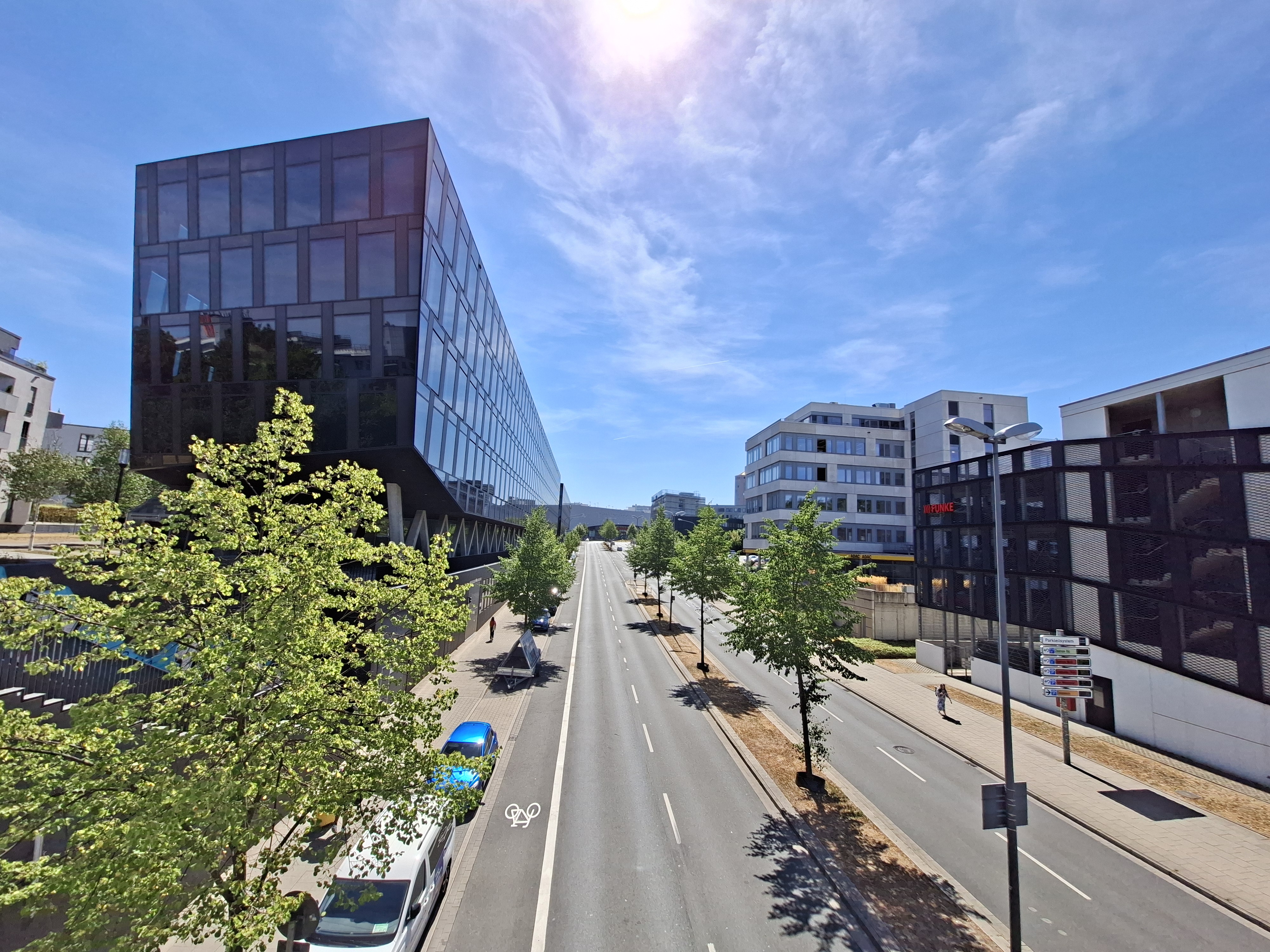
The ultra-wide-angle camera falls significantly short of the main camera when it comes to quality; its images appear softer and possess less detail. The digital zoom is also underwhelming; at 5x magnification (with a maximum 20x zoom), fine details become very blurred.
The front-facing camera captures serviceable selfies with fairly natural skin tones. However, minor artefacts appear around the contours of the head, particularly where it meets a bright sky. Here, too, the rendering of detail is not consistently convincing.
Video recording is available on both the front and rear cameras in Ultra HD at 30 fps.
Image comparison
Choose a scene and navigate within the first image. One click changes the position on touchscreens. One click on the zoomed-in image opens the original in a new window. The first image shows the scaled photograph of the test device.
Main cameraMain cameraUltra-wide angle5x ZoomLow light





















Accessories and warranty - Optionally with Xiaomi Care
Out of the box, the Redmi Note 17 Pro Max comes with a USB cable (Type-A to Type-C), a SIM tool, and a grey silicone protective case. In the EU and UK, you'll have to purchase a power adapter separately.
Xiaomi only provides a twelve-month warranty, which doesn't affect the manufacturer's warranty. An optional insurance package, Xiaomi Care, is also available; it covers either accidental damage only (around £40 for two years) or both accidental damage and theft (around £65).
Input devices and and operation - With a screen protector
Swiping gestures on the Redmi Note 17 Pro Max's capacitive touchscreen are smooth and register inputs reliably. While the pre-installed screen protector also provides a decent surface for touchscreen input, it develops bubbles after only a short period of use.
The linear vibration motor delivers crisp feedback, though it could occasionally be a bit stronger. The optical in-display fingerprint sensor offers good recognition rates and impressive speed. Additionally, there is a facial recognition feature—though it is not particularly secure—that uses the front-facing camera.


Display - The Redmi Note 17 Pro Max gets really bright

The Redmi Note 17 Pro Max 5G's display panel reaches a higher peak brightness than its predecessor; however, this does not necessarily apply to HDR peak brightness or brightness levels across a solid white screen. When adjusting the brightness manually, users can reach up to 849 cd/m².
At lower brightness levels, Xiaomi employs high-frequency PWM dimming, while at higher brightness levels, it reportedly uses DC dimming. Nevertheless, since we also measured a baseline flicker of 120 Hz, the possibility of discomfort for users sensitive to such issues cannot be ruled out.
| |||||||||||||||||||||||||
Brightness Distribution: 98 %
Center on Battery: 1124 cd/m²
Contrast: ∞:1 (Black: 0 cd/m²)
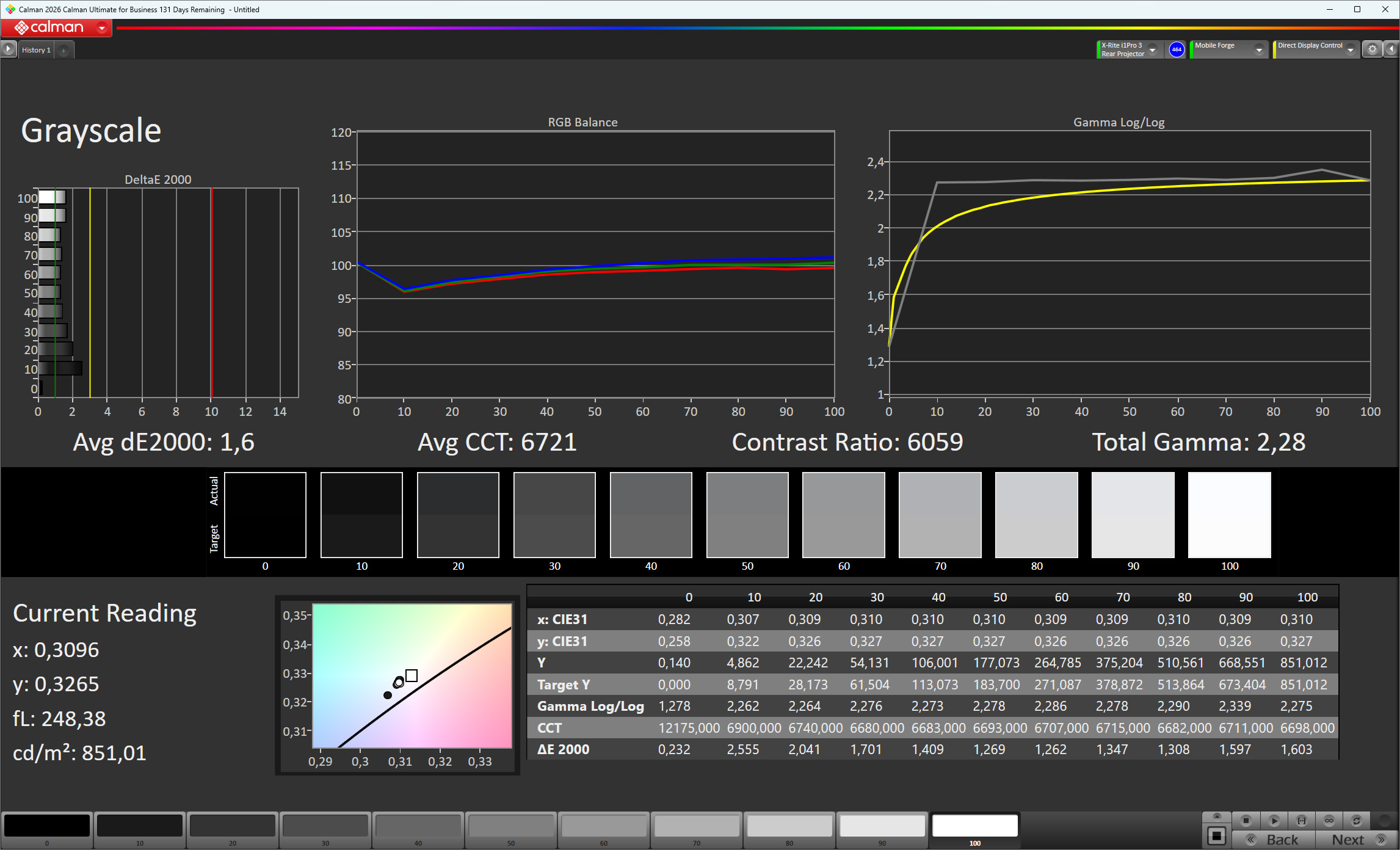
ΔE ColorChecker Calman: 1.9 | ∀{0.5-29.43 Ø4.68}
ΔE Greyscale Calman: 1.6 | ∀{0.09-98 Ø4.93}
99.9% sRGB (Calman 2D)
Gamma: 2.28
CCT: 6721 K
| Xiaomi Redmi Note 17 Pro Max 5G AMOLED, 2772x1280, 6.8" | Sony Xperia 10 VIII OLED, 2340x1080, 6.1" | Google Pixel 10a pOLED, 2424x1080, 6.3" | Samsung Galaxy A57 Super AMOLED, 2340x1080, 6.7" | Nothing Phone (4a) Pro AMOLED, 2800x1260, 6.8" | Xiaomi Poco X8 Pro Max AMOLED, 2772x1280, 6.8" | |
|---|---|---|---|---|---|---|
| Display | -51% | -2% | -36% | -48% | 17% | |
| APL18 Peak Brightness (cd/m²) | 3493 | 1487 -57% | 3050 -13% | 1920 -45% | 1596 -54% | 3582 3% |
| HDR Peak Brightness (cd/m²) | 2695 | 1470 -45% | 2925 9% | 1980 -27% | 1564 -42% | 3538 31% |
| Response Times | 9% | -10% | -10% | 23% | 15% | |
| Response Time Grey 50% / Grey 80% * (ms) | 1.18 ? | 0.93 ? 21% | 1.42 ? -20% | 1.21 ? -3% | 0.64 ? 46% | 0.8 ? 32% |
| Response Time Black / White * (ms) | 0.99 ? | 0.93 ? 6% | 1.07 ? -8% | 1.1 ? -11% | 0.84 ? 15% | 0.952 ? 4% |
| PWM Frequency (Hz) | 120 | 480 | 240 | 240 | 90 | 120 |
| PWM Amplitude * (%) | 14.56 | 14.46 1% | 14.71 -1% | 16.72 -15% | 13.58 7% | 13.45 8% |
| Screen | 14% | 39% | 9% | -4% | 10% | |
| Brightness middle (cd/m²) | 1124 | 1522 35% | 2205 96% | 1135 1% | 1604 43% | 1107 -2% |
| Brightness (cd/m²) | 1124 | 1527 36% | 1134 1% | 1585 41% | 1110 -1% | |
| Brightness Distribution (%) | 98 | 97 -1% | 99 1% | 95 -3% | 97 -1% | |
| Black Level * (cd/m²) | ||||||
| Colorchecker dE 2000 * | 1.9 | 1.4 26% | 1.4 26% | 1.7 11% | 1.9 -0% | 1 47% |
| Colorchecker dE 2000 max. * | 3.5 | 2.9 17% | 2.3 34% | 2.5 29% | 4.3 -23% | 2.7 23% |
| Greyscale dE 2000 * | 1.6 | 2.1 -31% | 1.6 -0% | 1.4 13% | 2.9 -81% | 1.7 -6% |
| Gamma | 2.28 96% | 2.23 99% | 2.23 99% | 2.08 106% | 2.27 97% | 2.25 98% |
| CCT | 6721 97% | 6832 95% | 6715 97% | 6578 99% | 7083 92% | 6498 100% |
| Total Average (Program / Settings) | -9% /
1% | 9% /
14% | -12% /
-4% | -10% /
-5% | 14% /
13% |
* ... smaller is better
Screen Flickering / PWM (Pulse-Width Modulation)
| Screen flickering / PWM detected | 120 Hz Amplitude: 14.56 % Secondary Frequency: 3125 Hz | 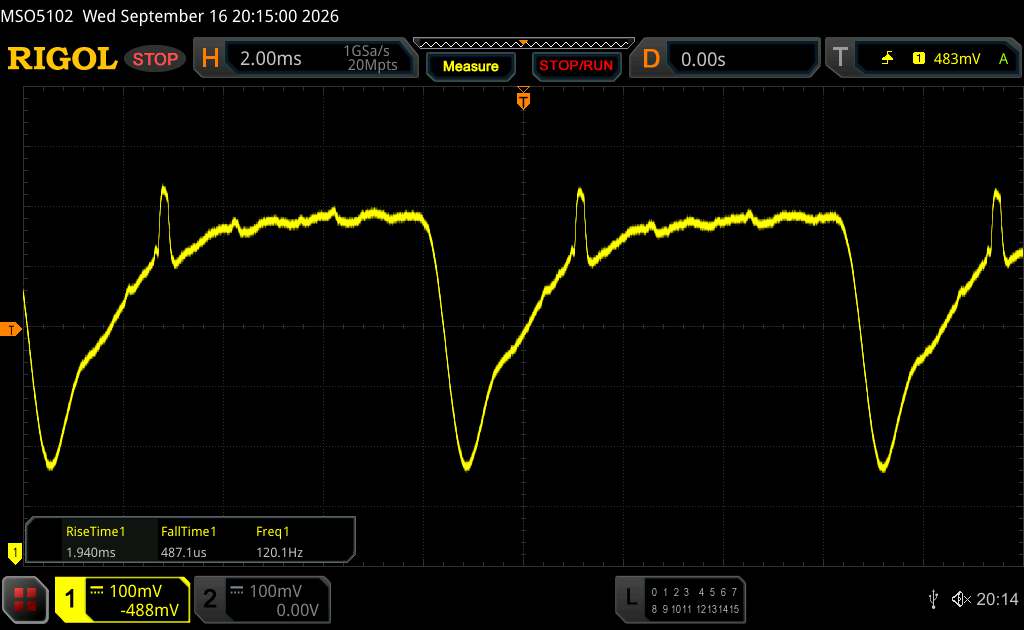 | |
The display backlight flickers at 120 Hz (worst case, e.g., utilizing PWM) . The frequency of 120 Hz is very low, so the flickering may cause eyestrain and headaches after extended use. In comparison: 52 % of all tested devices do not use PWM to dim the display. If PWM was detected, an average of 7559 (minimum: 5 - maximum: 343500) Hz was measured. | |||
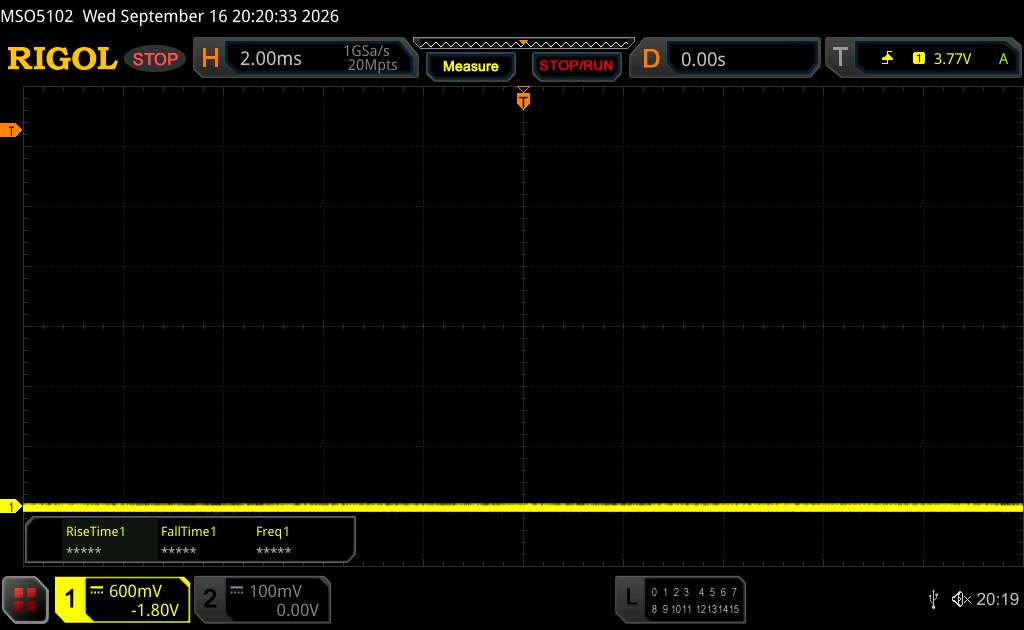
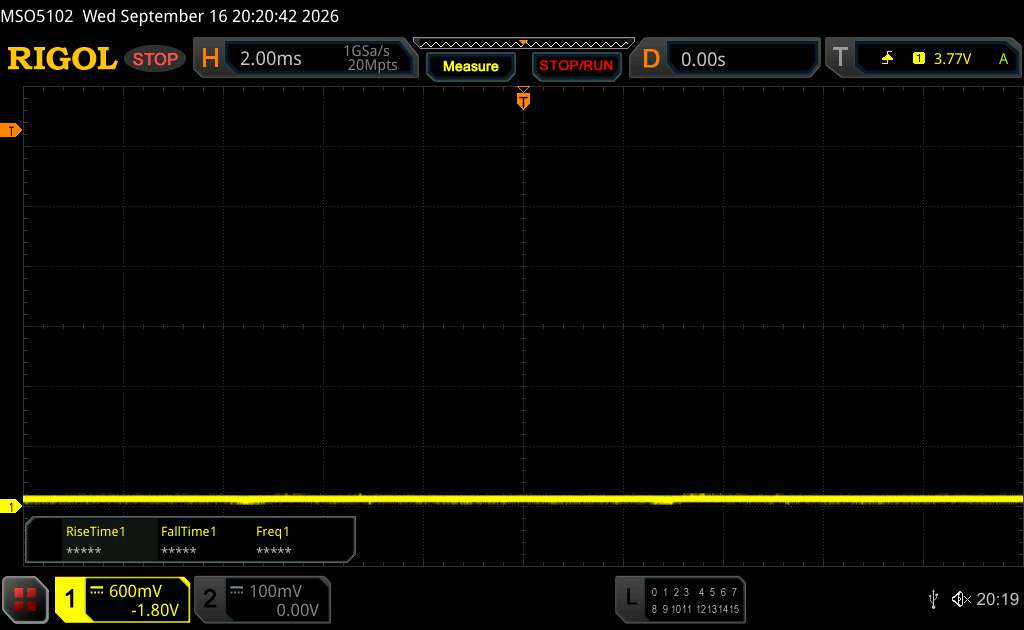
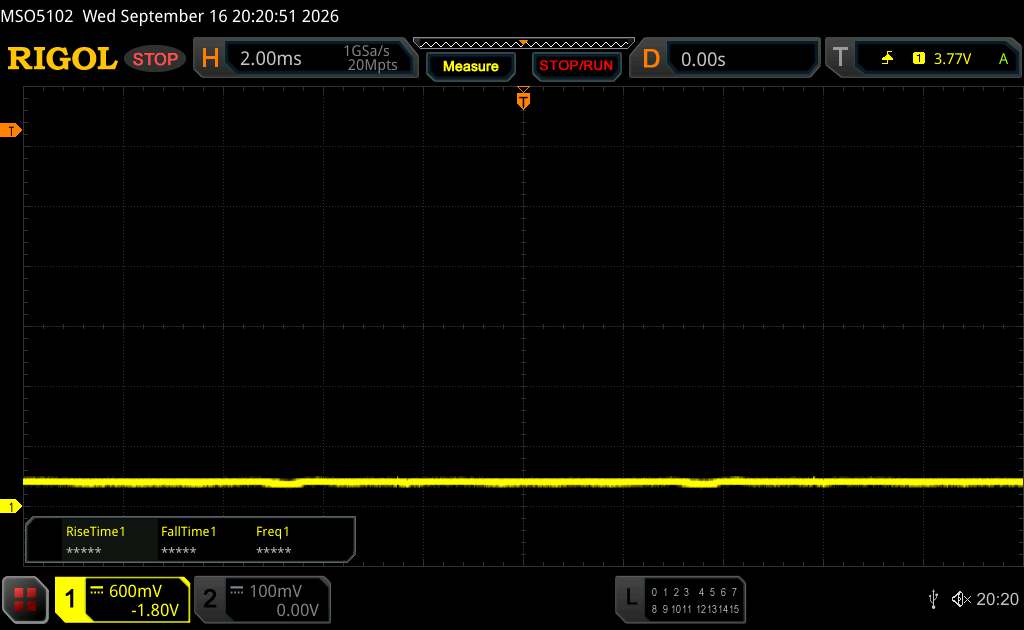
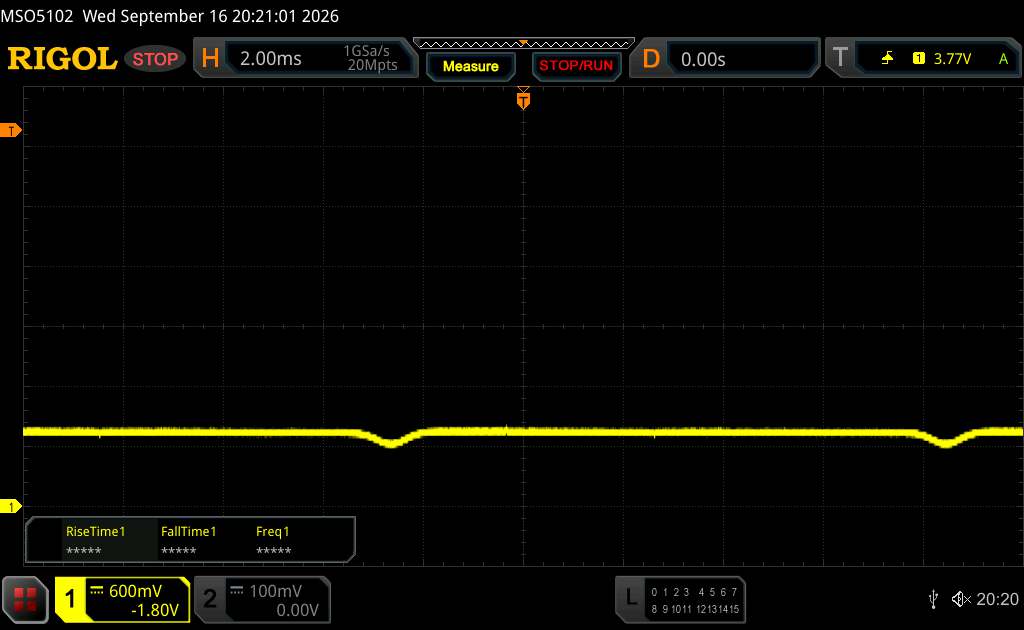
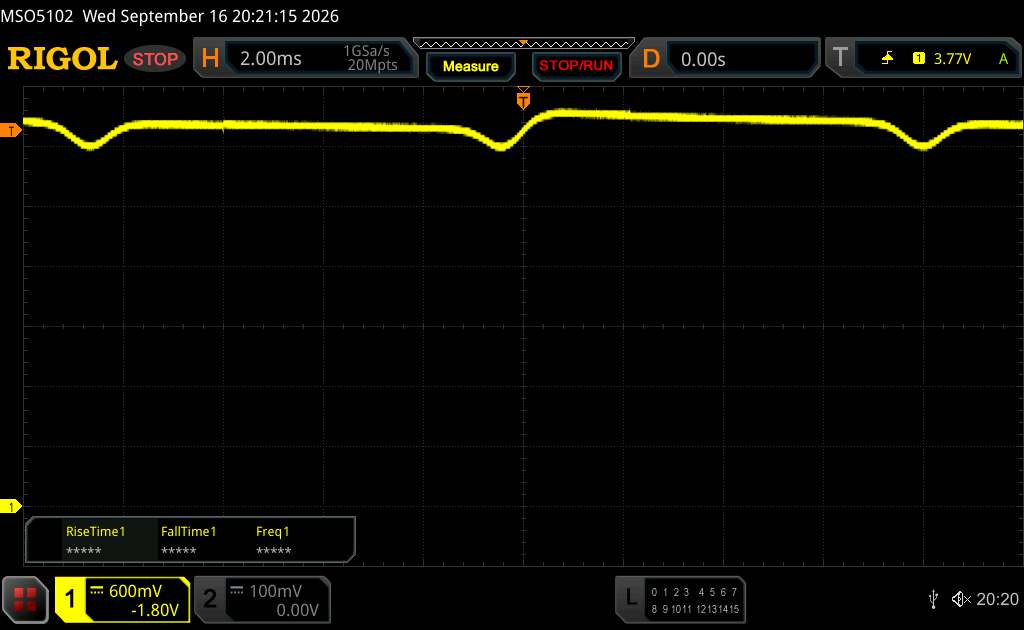
A series of measurements with a fixed zoom level and various brightness settings (Although the amplitude waveform appears flat at minimum brightness, this is due to the scaling. An enlarged version of the amplitude at minimum brightness is shown in the information box.)
The Redmi Note 17 Pro Max's color reproduction and white balance are at their best in the default "Vivid" mode, with colors appearing natural, though the saturation is a touch on the high side.


Display Response Times
| ↔ Response Time Black to White | ||
|---|---|---|
| 0.99 ms ... rise ↗ and fall ↘ combined | ↗ 0.617 ms rise | 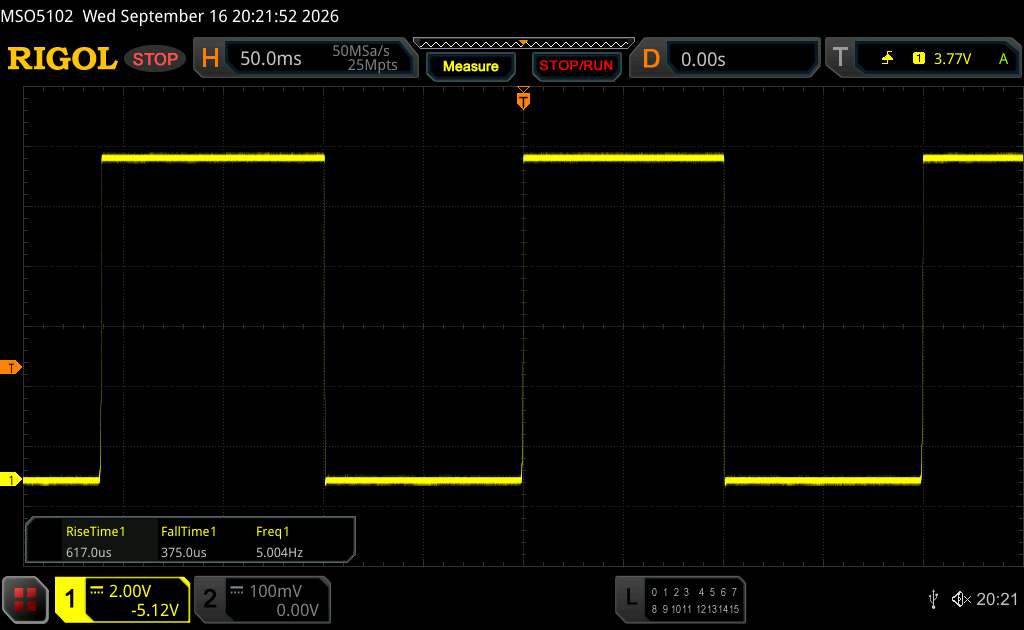 |
| ↘ 0.375 ms fall | ||
| The screen shows very fast response rates in our tests and should be very well suited for fast-paced gaming. In comparison, all tested devices range from 0.1 (minimum) to 240 (maximum) ms. » 4 % of all devices are better. This means that the measured response time is better than the average of all tested devices (19.6 ms). | ||
| ↔ Response Time 50% Grey to 80% Grey | ||
| 1.18 ms ... rise ↗ and fall ↘ combined | ↗ 0.661 ms rise | 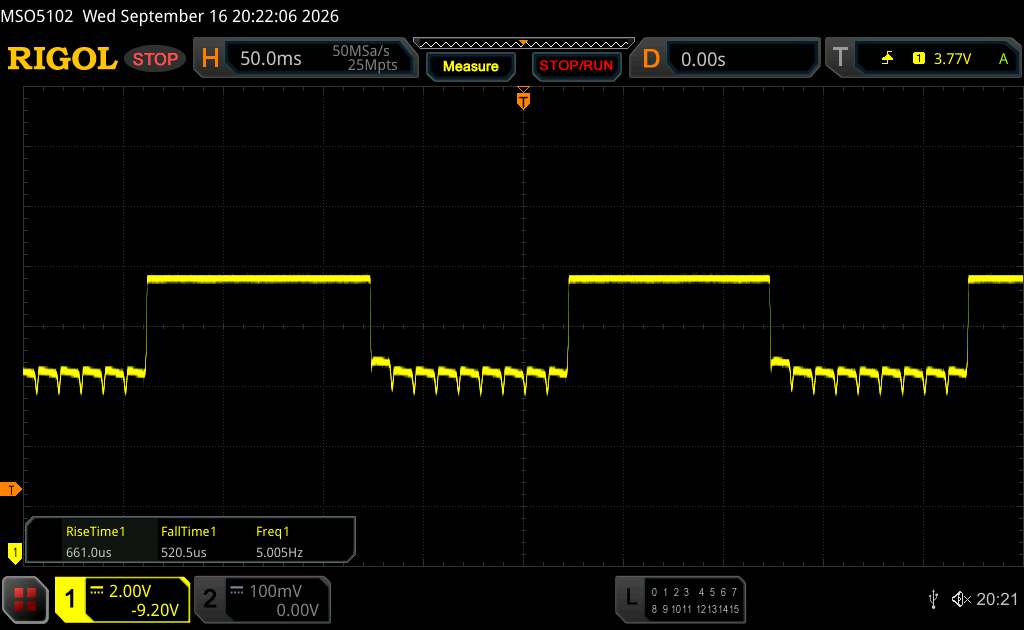 |
| ↘ 0.5205 ms fall | ||
| The screen shows very fast response rates in our tests and should be very well suited for fast-paced gaming. In comparison, all tested devices range from 0.13 (minimum) to 636 (maximum) ms. » 6 % of all devices are better. This means that the measured response time is better than the average of all tested devices (30.6 ms). | ||
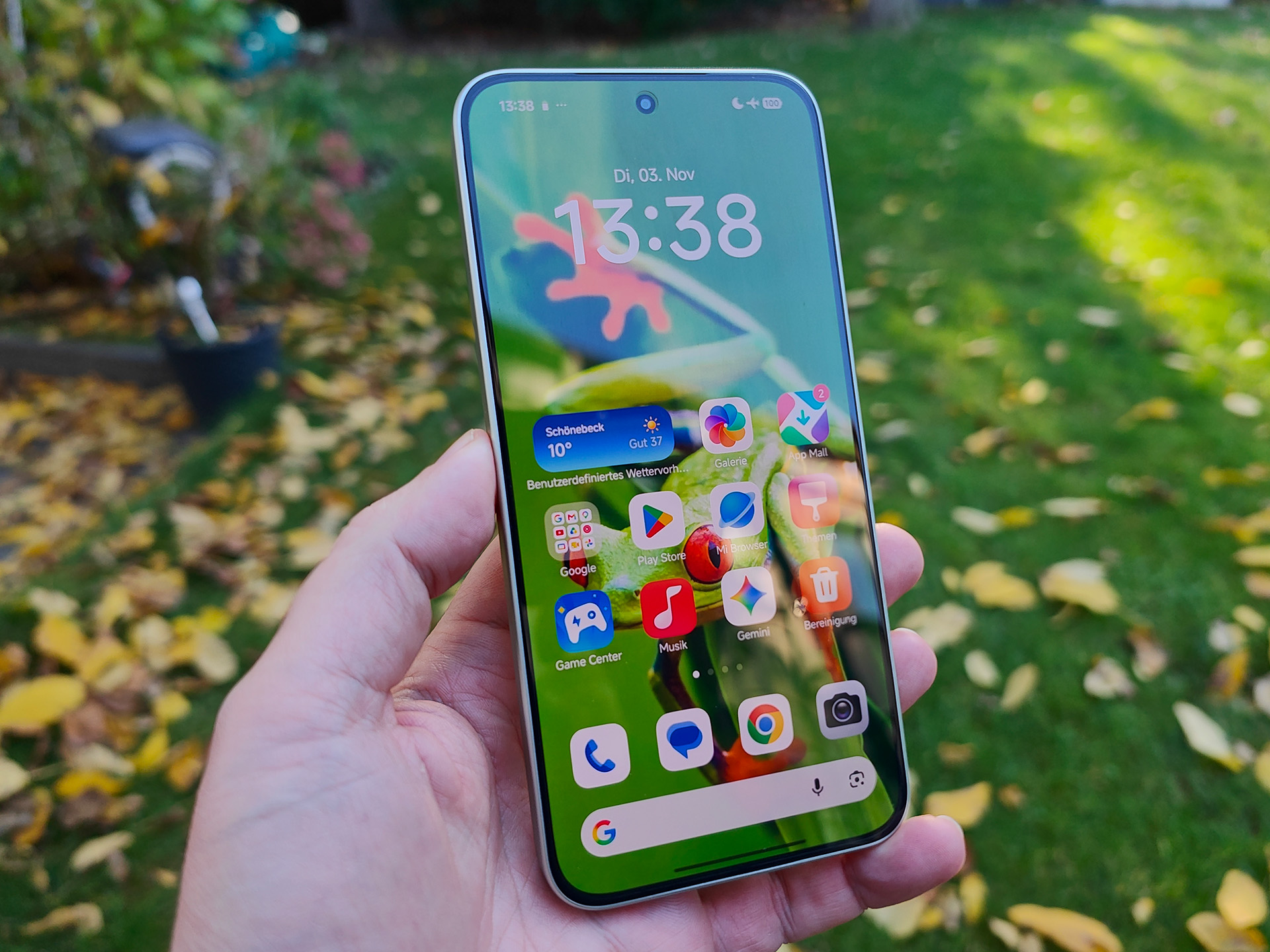
Outdoors, the Redmi smartphone is impressive and remains easy to read in most lighting conditions; at most, reflections can occasionally be a bit annoying.
The viewing angle stability is very good, though sometimes a visible greenish shimmer is present.

Performance - The Xiaomi packs a Snapdragon 6 Gen 5
The Redmi Note 17 Pro Max leads the way with the Snapdragon 6 Gen 5, but in terms of performance, it's a clear downgrade compared to the predecessor. In return, you'll find faster LPDDR5X RAM, and the storage found in the 256 GB and 512 GB models is also significantly faster thanks to UFS 4.1—though the SoC prevents it from reaching anywhere near its full speed potential.
Nevertheless, we find the smartphone’s system performance to be suitable for everyday use, even if minor stutters occasionally creep in.
| Antutu v12 - Score | |
| Average of class Smartphone (573642 - 4764073, n=11, last 2 years) | |
| Samsung Galaxy A57 | |
| Xiaomi Redmi Note 17 Pro Max 5G | |
| Average Qualcomm Snapdragon 6 Gen 5 (n=1) | |
| Sony Xperia 10 VIII | |
| UL Procyon AI Inference for Android - Overall Score NNAPI | |
| Xiaomi Poco X8 Pro Max | |
| Average of class Smartphone (2895 - 66164, n=95, last 2 years) | |
| Samsung Galaxy A57 | |
| Sony Xperia 10 VIII | |
| Average Qualcomm Snapdragon 6 Gen 5 (8935 - 10020, n=2) | |
| Xiaomi Redmi Note 17 Pro Max 5G | |
The integrated Adreno 812 GPU delivers rather mixed performance and does not support ray tracing, but it is on par with the one found in the Note 15 Pro+.
GFXBench (DX / GLBenchmark) 2.7: T-Rex Onscreen | 1920x1080 T-Rex Offscreen
GFXBench 3.0: on screen Manhattan Onscreen OGL | 1920x1080 1080p Manhattan Offscreen
GFXBench 3.1: on screen Manhattan ES 3.1 Onscreen | 1920x1080 Manhattan ES 3.1 Offscreen
GFXBench: on screen Car Chase Onscreen | 1920x1080 Car Chase Offscreen | on screen Aztec Ruins High Tier Onscreen | 2560x1440 Aztec Ruins High Tier Offscreen | on screen Aztec Ruins Normal Tier Onscreen | 1920x1080 Aztec Ruins Normal Tier Offscreen | 3840x2160 4K Aztec Ruins High Tier Offscreen
| 3DMark / Wild Life Extreme Unlimited | |
| Xiaomi Poco X8 Pro | |
| Google Pixel 10a | |
| Nothing Phone (4a) Pro | |
| Samsung Galaxy A57 | |
| Xiaomi Redmi Note 17 Pro Max 5G | |
| Sony Xperia 10 VIII | |
| 3DMark / Wild Life Extreme | |
| Xiaomi Poco X8 Pro | |
| Google Pixel 10a | |
| Nothing Phone (4a) Pro | |
| Samsung Galaxy A57 | |
| Xiaomi Redmi Note 17 Pro Max 5G (Press-Version) | |
| Xiaomi Redmi Note 17 Pro Max 5G (Play-Store-Version) | |
| Sony Xperia 10 VIII | |
| 3DMark / Wild Life Unlimited Score | |
| Xiaomi Poco X8 Pro | |
| Google Pixel 10a | |
| Nothing Phone (4a) Pro | |
| Samsung Galaxy A57 | |
| Xiaomi Redmi Note 17 Pro Max 5G | |
| Sony Xperia 10 VIII | |
| 3DMark / Steel Nomad Light Unlimited Score | |
| Xiaomi Poco X8 Pro | |
| Google Pixel 10a | |
| Samsung Galaxy A57 | |
| Nothing Phone (4a) Pro | |
| Xiaomi Redmi Note 17 Pro Max 5G | |
| Sony Xperia 10 VIII | |
| 3DMark / Steel Nomad Light Score | |
| Xiaomi Poco X8 Pro | |
| Google Pixel 10a | |
| Nothing Phone (4a) Pro | |
| Samsung Galaxy A57 | |
| Xiaomi Redmi Note 17 Pro Max 5G | |
| Sony Xperia 10 VIII | |
| GFXBench (DX / GLBenchmark) 2.7 / T-Rex Onscreen | |
| Xiaomi Poco X8 Pro | |
| Samsung Galaxy A57 | |
| Xiaomi Redmi Note 17 Pro Max 5G | |
| Sony Xperia 10 VIII | |
| GFXBench (DX / GLBenchmark) 2.7 / T-Rex Offscreen | |
| Xiaomi Poco X8 Pro | |
| Samsung Galaxy A57 | |
| Xiaomi Redmi Note 17 Pro Max 5G | |
| Sony Xperia 10 VIII | |
| GFXBench 3.0 / Manhattan Onscreen OGL | |
| Xiaomi Poco X8 Pro | |
| Samsung Galaxy A57 | |
| Xiaomi Redmi Note 17 Pro Max 5G | |
| Sony Xperia 10 VIII | |
| GFXBench 3.0 / 1080p Manhattan Offscreen | |
| Xiaomi Poco X8 Pro | |
| Samsung Galaxy A57 | |
| Xiaomi Redmi Note 17 Pro Max 5G | |
| Sony Xperia 10 VIII | |
| GFXBench 3.1 / Manhattan ES 3.1 Onscreen | |
| Xiaomi Poco X8 Pro | |
| Samsung Galaxy A57 | |
| Sony Xperia 10 VIII | |
| Xiaomi Redmi Note 17 Pro Max 5G | |
| GFXBench 3.1 / Manhattan ES 3.1 Offscreen | |
| Xiaomi Poco X8 Pro | |
| Samsung Galaxy A57 | |
| Xiaomi Redmi Note 17 Pro Max 5G | |
| Sony Xperia 10 VIII | |
| GFXBench / Car Chase Onscreen | |
| Xiaomi Poco X8 Pro | |
| Google Pixel 10a | |
| Samsung Galaxy A57 | |
| Sony Xperia 10 VIII | |
| Xiaomi Redmi Note 17 Pro Max 5G | |
| GFXBench / Car Chase Offscreen | |
| Xiaomi Poco X8 Pro | |
| Google Pixel 10a | |
| Samsung Galaxy A57 | |
| Xiaomi Redmi Note 17 Pro Max 5G | |
| Sony Xperia 10 VIII | |
| GFXBench / Aztec Ruins High Tier Onscreen | |
| Xiaomi Poco X8 Pro | |
| Google Pixel 10a | |
| Samsung Galaxy A57 | |
| Nothing Phone (4a) Pro | |
| Xiaomi Redmi Note 17 Pro Max 5G | |
| Sony Xperia 10 VIII | |
| GFXBench / Aztec Ruins High Tier Offscreen | |
| Xiaomi Poco X8 Pro | |
| Google Pixel 10a | |
| Nothing Phone (4a) Pro | |
| Samsung Galaxy A57 | |
| Xiaomi Redmi Note 17 Pro Max 5G | |
| Sony Xperia 10 VIII | |
| GFXBench / Aztec Ruins Normal Tier Onscreen | |
| Xiaomi Poco X8 Pro | |
| Nothing Phone (4a) Pro | |
| Google Pixel 10a | |
| Samsung Galaxy A57 | |
| Xiaomi Redmi Note 17 Pro Max 5G | |
| Sony Xperia 10 VIII | |
| GFXBench / Aztec Ruins Normal Tier Offscreen | |
| Xiaomi Poco X8 Pro | |
| Google Pixel 10a | |
| Nothing Phone (4a) Pro | |
| Samsung Galaxy A57 | |
| Xiaomi Redmi Note 17 Pro Max 5G | |
| Sony Xperia 10 VIII | |
| GFXBench / 4K Aztec Ruins High Tier Offscreen | |
| Xiaomi Poco X8 Pro (vulkan) | |
| Google Pixel 10a | |
| Nothing Phone (4a) Pro | |
| Samsung Galaxy A57 | |
| Xiaomi Redmi Note 17 Pro Max 5G | |
| Sony Xperia 10 VIII | |
| Jetstream 2 | |
| 2.0 Total | |
| Nothing Phone (4a) Pro (Chrome 147) | |
| Samsung Galaxy A57 (Chrome 149) | |
| Average Qualcomm Snapdragon 6 Gen 5 (149.6 - 162.4, n=2) | |
| Average of class Smartphone (63.9 - 423, n=110, last 2 years) | |
| Xiaomi Redmi Note 17 Pro Max 5G (Chrome 153) | |
| Sony Xperia 10 VIII (Chrome 153) | |
| 2.2 Total | |
| Google Pixel 10a (Chrome 149) | |
| Nothing Phone (4a) Pro (Chrome 147) | |
| Average of class Smartphone (2 - 480, n=104, last 2 years) | |
| Samsung Galaxy A57 (Chrome 149) | |
| Xiaomi Poco X8 Pro (Chrome 146) | |
| Average Qualcomm Snapdragon 6 Gen 5 (159.2 - 175.1, n=2) | |
| Xiaomi Redmi Note 17 Pro Max 5G (Chrome 153) | |
| Sony Xperia 10 VIII (Chrome 153) | |
| Speedometer 2.0 - Result 2.0 | |
| Samsung Galaxy A57 (Chrome 149) | |
| Average of class Smartphone (49.3 - 733, n=69, last 2 years) | |
| Average Qualcomm Snapdragon 6 Gen 5 (128 - 143, n=2) | |
| Xiaomi Redmi Note 17 Pro Max 5G (Chrome 153) | |
| Speedometer 3 - Score 3.0 | |
| Samsung Galaxy A57 (Chrome 149) | |
| Average of class Smartphone (3.06 - 56.5, n=77, last 2 years) | |
| Xiaomi Poco X8 Pro (Chrome 146) | |
| Average Qualcomm Snapdragon 6 Gen 5 (8.78 - 10, n=2) | |
| Xiaomi Redmi Note 17 Pro Max 5G (Chrome 153) | |
| WebXPRT 4 - Overall | |
| Samsung Galaxy A57 (Chrome 149) | |
| Average of class Smartphone (56 - 278, n=85, last 2 years) | |
| Xiaomi Redmi Note 17 Pro Max 5G (Chrome 153) | |
| Average Qualcomm Snapdragon 6 Gen 5 (117 - 122, n=2) | |
| Octane V2 - Total Score | |
| Xiaomi Poco X8 Pro (Chrome 146) | |
| Samsung Galaxy A57 (Chrome 149) | |
| Average of class Smartphone (6015 - 160221, n=124, last 2 years) | |
| Average Qualcomm Snapdragon 6 Gen 5 (39620 - 43558, n=2) | |
| Xiaomi Redmi Note 17 Pro Max 5G (Chrome 153) | |
| Sony Xperia 10 VIII (Chrome 153) | |
| Mozilla Kraken 1.1 - Total | |
| Sony Xperia 10 VIII (Chrome 153) | |
| Xiaomi Redmi Note 17 Pro Max 5G (Chrome 153) | |
| Average Qualcomm Snapdragon 6 Gen 5 (888 - 982, n=2) | |
| Average of class Smartphone (216 - 2718, n=115, last 2 years) | |
| Xiaomi Poco X8 Pro (Chrome 146) | |
| Samsung Galaxy A57 (Chrome 149) | |
* ... smaller is better
| Xiaomi Redmi Note 17 Pro Max 5G | Sony Xperia 10 VIII | Google Pixel 10a | Samsung Galaxy A57 | Xiaomi Poco X8 Pro | Nothing Phone (4a) Pro | Average 256 GB UFS 4.1 Flash | Average of class Smartphone | |
|---|---|---|---|---|---|---|---|---|
| AndroBench 3-5 | 7% | -5% | -30% | 29% | 28% | 71% | 13% | |
| Sequential Read 256KB (MB/s) | 1991.44 | 1914.56 -4% | 1689.27 -15% | 1683.07 -15% | 3576.86 80% | 1977.37 -1% | 3497 ? 76% | 2281 ? 15% |
| Sequential Write 256KB (MB/s) | 1901.65 | 1802.32 -5% | 826.38 -57% | 1119.11 -41% | 3565.14 87% | 1738.18 -9% | 3196 ? 68% | 1994 ? 5% |
| Random Read 4KB (MB/s) | 286.02 | 320.27 12% | 326.53 14% | 249.83 -13% | 324.76 14% | 409.28 43% | 426 ? 49% | 321 ? 12% |
| Random Write 4KB (MB/s) | 307.3 | 386.88 26% | 430.37 40% | 149.04 -52% | 112.05 -64% | 547.62 78% | 587 ? 91% | 372 ? 21% |
Emissions - A Xiaomi smartphone with Dolby Atmos
Temperature
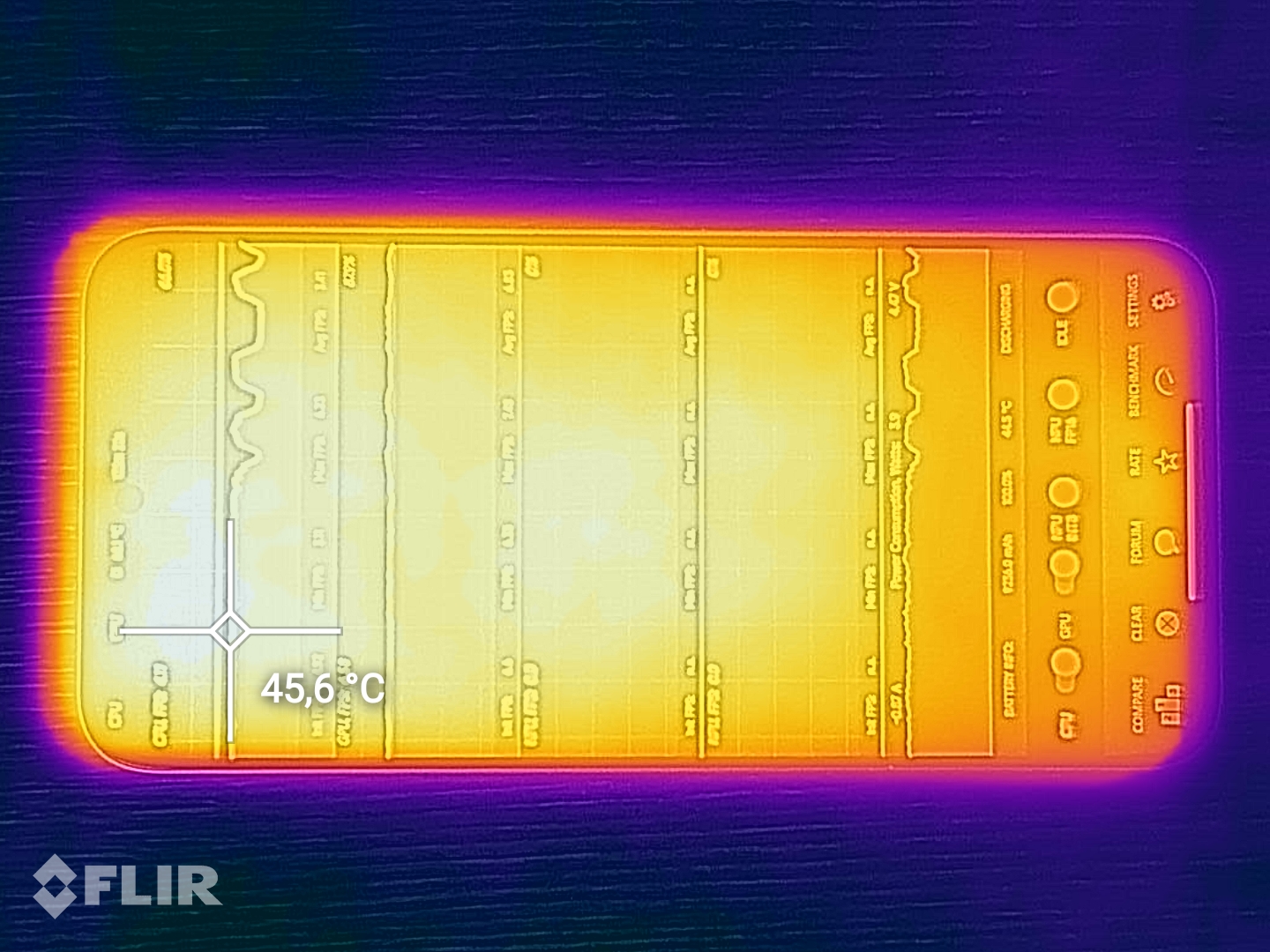
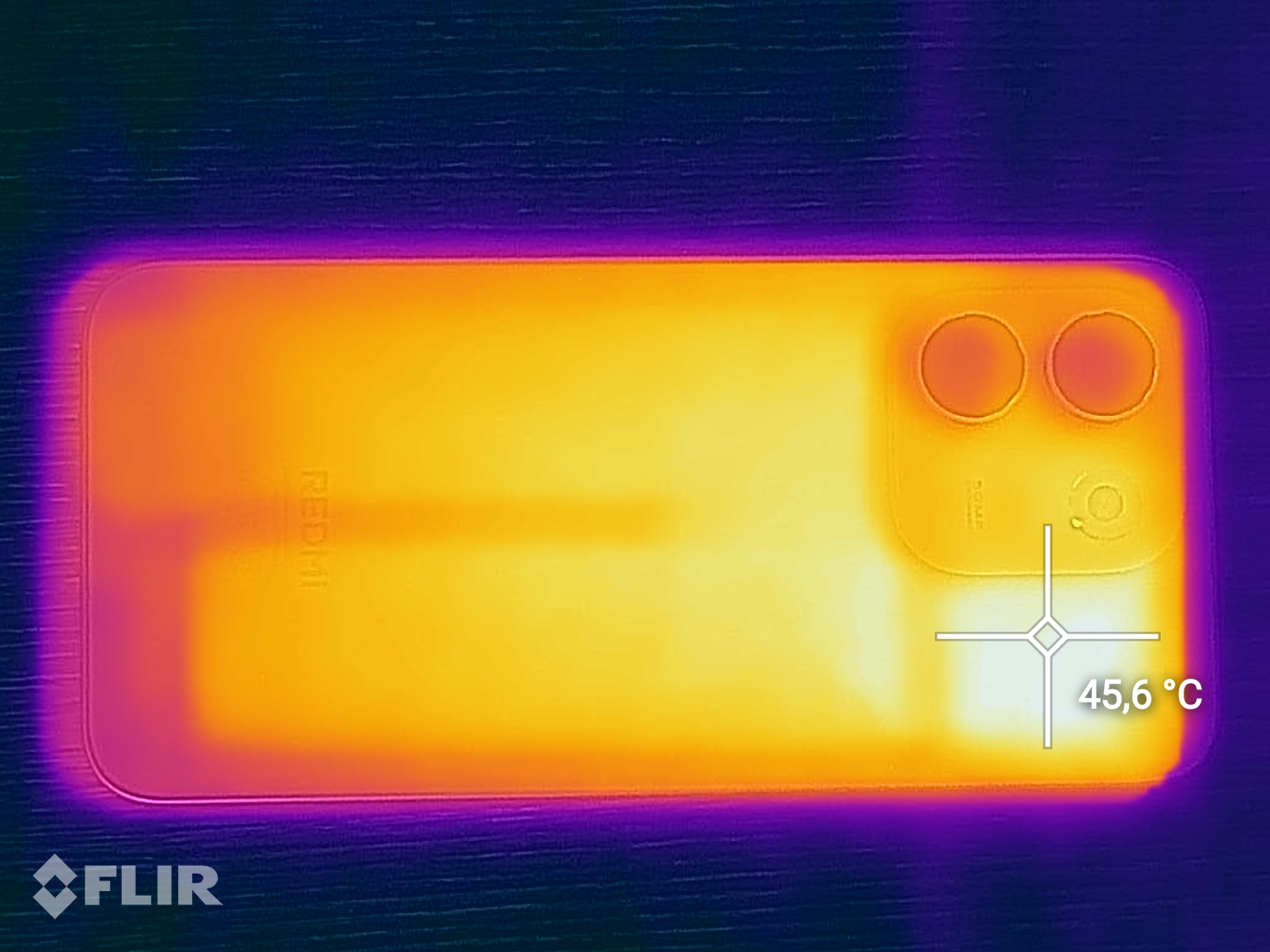
Although the Redmi Note 17 Pro Max's surface temperatures exceed 40 degrees across the entire device under sustained load, this is perfectly safe and never feels uncomfortable.
(±) The maximum temperature on the upper side is 44.4 °C / 112 F, compared to the average of 35.4 °C / 96 F, ranging from 21.9 to 247 °C for the class Smartphone.
(±) The bottom heats up to a maximum of 44.2 °C / 112 F, compared to the average of 34.1 °C / 93 F
(+) In idle usage, the average temperature for the upper side is 25.8 °C / 78 F, compared to the device average of 33 °C / 91 F.
3DMark Stress Tests
Speakers
The smartphone’s two speakers can get quite loud, but their sound quality is rather underwhelming. At high volumes, they fail to convey any depth and instead produce noticeable echoes and distortion. At medium volume, the sound profile is more balanced and sufficient for occasional media playback.
Xiaomi Redmi Note 17 Pro Max 5G audio analysis
(+) | speakers can play relatively loud (92.1 dB)
Bass 100 - 315 Hz
(-) | nearly no bass - on average 15.3% lower than median
(+) | bass is linear (6.8% delta to prev. frequency)
Mids 400 - 2000 Hz
(±) | higher mids - on average 8.3% higher than median
(+) | mids are linear (6.9% delta to prev. frequency)
Highs 2 - 16 kHz
(±) | higher highs - on average 7.9% higher than median
(+) | highs are linear (4.4% delta to prev. frequency)
Overall 100 - 16.000 Hz
(±) | linearity of overall sound is average (19.3% difference to median)
Compared to same class
» 27% of all tested devices in this class were better, 9% similar, 64% worse
» The best had a delta of 11%, average was 34%, worst was 136%
Compared to all devices tested
» 47% of all tested devices were better, 7% similar, 45% worse
» The best had a delta of 4%, average was 23%, worst was 136%
Samsung Galaxy A57 audio analysis
(+) | speakers can play relatively loud (89.1 dB)
Bass 100 - 315 Hz
(-) | nearly no bass - on average 19.1% lower than median
(±) | linearity of bass is average (9.8% delta to prev. frequency)
Mids 400 - 2000 Hz
(±) | higher mids - on average 6.5% higher than median
(+) | mids are linear (6.4% delta to prev. frequency)
Highs 2 - 16 kHz
(+) | balanced highs - only 4.2% away from median
(+) | highs are linear (4.4% delta to prev. frequency)
Overall 100 - 16.000 Hz
(±) | linearity of overall sound is average (16.1% difference to median)
Compared to same class
» 6% of all tested devices in this class were better, 4% similar, 89% worse
» The best had a delta of 11%, average was 34%, worst was 136%
Compared to all devices tested
» 27% of all tested devices were better, 5% similar, 68% worse
» The best had a delta of 4%, average was 23%, worst was 136%
Battery life - A massive 9,210 mAh
Power consumption
The Redmi Note 17 Pro Max's power consumption is surprisingly high when idle.
| Off / Standby |   0.16 / 0.27 Watt |
| Idle |  1.3 / 2.12 / 2.18 Watt |
| Load |
4.37 / 8.7 Watt |
    
| |
Key:
min: ,
med: ,
max: Metrahit Energy | |
| Xiaomi Redmi Note 17 Pro Max 5G 9210 mAh | Sony Xperia 10 VIII 5000 mAh | Google Pixel 10a 5100 mAh | Samsung Galaxy A57 5000 mAh | Xiaomi Redmi Note 15 Pro+ 5G 6500 mAh | Nothing Phone (4a) Pro 5080 mAh | Xiaomi Poco X8 Pro Max 8500 mAh | Average Qualcomm Snapdragon 6 Gen 5 | Average of class Smartphone | |
|---|---|---|---|---|---|---|---|---|---|
| Power Consumption | -3% | 52% | -8% | 27% | 18% | -1% | 6% | 1% | |
| Idle Minimum * (Watt) | 1.3 | 0.81 38% | 0.7 46% | 0.71 45% | 0.96 26% | 1.01 22% | 1.19 8% | 1.2 ? 8% | 0.903 ? 31% |
| Idle Average * (Watt) | 2.12 | 2.51 -18% | 0.94 56% | 1.94 8% | 1.18 44% | 1.78 16% | 1.23 42% | 1.66 ? 22% | 1.486 ? 30% |
| Idle Maximum * (Watt) | 2.18 | 2.57 -18% | 1.03 53% | 2.04 6% | 1.3 40% | 1.81 17% | 1.43 34% | 2.14 ? 2% | 1.69 ? 22% |
| Load Average * (Watt) | 4.37 | 4.37 -0% | 6.19 -42% | 3.79 13% | 6.8 -56% | 4.37 ? -0% | 6.78 ? -55% | ||
| Load Maximum * (Watt) | 8.7 | 10.16 -17% | 13.67 -57% | 7.5 14% | 11.45 -32% | 8.7 ? -0% | 10.6 ? -22% |
* ... smaller is better
Power consumption: Geekbench (150 cd/m²)
Power consumption: GFXbench (150 cd/m²)
Battery runtime
The massive 9,210 mAh battery ensures the Redmi Note 17 Pro Max 5G boasts outstanding battery life. In our Wi-Fi test, the smartphone kept going for an impressive 33 hours and 42 minutes, leaving the competition lagging far behind.
Notebookcheck overall rating
The Redmi Note 17 Pro Max 5G impressed us with outstanding battery life that comes at the cost of significant compromises in performance, cameras, and features.
Xiaomi Redmi Note 17 Pro Max 5G
- 11/03/2026 v8
Daniel Schmidt
 Total Sustainability Score:
Possible alternatives compared
Image | Model / Review | Price | Weight | Drive | Display |
|---|---|---|---|---|---|
1. 78.6%  | Xiaomi Redmi Note 17 Pro Max 5G Qualcomm Snapdragon 6 Gen 5 ⎘ Qualcomm Adreno 812 ⎘ 8 GB Memory, 256 GB UFS 4.x | List Price: 600€ | 225 g | 256 GB UFS 4.1 Flash | 6.83" 2772x1280 447 PPI AMOLED |
2. 78.5%  | Sony Xperia 10 VIII Qualcomm Snapdragon 6 Gen 3 ⎘ Qualcomm Adreno 710 ⎘ 8 GB Memory, 128 GB UFS 3.1 | List Price: 599€ | 168 g | 128 GB UFS 3.1 Flash | 6.10" 2340x1080 422 PPI OLED |
3. 85.3%  | Google Pixel 10a Google Tensor G4 ⎘ ARM Mali-G715 MP7 ⎘ 8 GB Memory, 128 GB UFS 3.1 | List Price: 549€ | 183 g | 128 GB UFS 3.1 Flash | 6.30" 2424x1080 421 PPI pOLED |
4. 81.5%  | Samsung Galaxy A57 Samsung Exynos 1680 ⎘ Samsung Xclipse 550 ⎘ 8 GB Memory, 256 GB UFS 3.1 | List Price: 589€ | 179 g | 256 GB UFS 3.1 Flash | 6.70" 2340x1080 385 PPI Super AMOLED |
5. 82.5%  | Nothing Phone (4a) Pro Qualcomm Snapdragon 7 Gen 4 SM7750-AB ⎘ Qualcomm Adreno 722 ⎘ 12 GB Memory, 256 GB UFS 3.1 | List Price: 549€ | 210 g | 256 GB UFS 3.1 Flash | 6.83" 2800x1260 450 PPI AMOLED |
6. 85.6%  | Xiaomi Poco X8 Pro Max Mediatek Dimensity 9500s ⎘ ARM Immortalis-G925 MC11 ⎘ 12 GB Memory, 512 GB UFS 4.x | Amazon: $489.99 List Price: 470€ | 218 g | 512 GB UFS 4.1 Flash | 6.83" 2772x1280 447 PPI AMOLED |
Transparency
The selection of devices to be reviewed is made by our editorial team. The test sample was given to the author by the manufacturer free of charge for the purposes of review. There was no third-party influence on this review, nor did the manufacturer receive a copy of this review before publication. There was no obligation to publish this review. As an independent media company, Notebookcheck is not subjected to the authority of manufacturers, retailers or publishers.
This is how Notebookcheck is testing
Every year, Notebookcheck independently reviews hundreds of laptops and smartphones using standardized procedures to ensure that all results are comparable. We have continuously developed our test methods for around 20 years and set industry standards in the process. In our test labs, high-quality measuring equipment is utilized by experienced technicians and editors. These tests involve a multi-stage validation process. Our complex rating system is based on hundreds of well-founded measurements and benchmarks, which maintains objectivity. Further information on our test methods can be found here.
 Add as a preferred source on Google


