





Verdict on the Xiaomi Redmi Note 17 Pro 5G
The Redmi Note 17 Pro 5G leaves an extremely mixed impression in our test. With this year’s Pro model at the latest, Xiaomi has broken with the tradition of positioning the Redmi Note series as a balanced all-rounder with a strong price-performance ratio. Instead, the 2026 model moves further towards being an attractive outdoor companion, thanks to its high durability, including IP69K certification, numerous TÜV and SGS certifications, and fantastic battery life. Paired with the very bright AMOLED display, the Xiaomi phone offers strong arguments for outdoor fans.
However, this is offset by clear regressions that become a problem in this price class when looking at the mid-range competition. The cost-cutting on the main camera is hard to comprehend and leads to disappointing results, especially in low light and zoom shots.
Xiaomi also makes a misstep in terms of performance: combined with 6 GB of RAM, the Snapdragon 6s Gen 4 delivers very modest performance that even falls behind the older Note 15 Pro. A Samsung Galaxy A57 or Poco X8 Pro sometimes offers twice the graphics performance for less money.
In addition, the Pro model in the Note series is becoming noticeably heavier year after year. Together with the extensive use of plastic, this is unlikely to inspire much enthusiasm.
Pros
Cons
Price and availability of the Xiaomi Redmi Note 17 Pro 5G
The Redmi Note 17 Pro 5G is available in Germany in two storage variants, 6 GB RAM + 256 GB and 8 GB RAM + 512 GB, and three color options, with an RRP starting at around €480. It is available from retailers such as Amazon.de or directly from the manufacturer. However, current street prices, starting at around €350, are significantly lower.

- $779.50XIAOMI 17T PRO Ai 5G (Compatible with Tmobile Mint Tello & Global) (512GB + 12GB) NFC Global ROM Unlocked 50MP Triple Pro Leica Cam eSIM 6.83" 144Mhz Model 2602EPTC0G Liberado (Black)
- $379.50XIAOMI Redmi Note 15 Pro+ Plus 5G Ai (Compatible with Tmobile Mint Tello & Global) (512GB + 12GB) NFC 6.83" 120Hz 200MP Ultra Camera Model 2510ERA8BG Unlocked Dual Sim Liberado (Mocha Brown)
- $399.50XIAOMI Redmi Note 15 Pro+ Plus 5G Ai (Compatible with Tmobile Mint Tello & Global) (512GB + 12GB) NFC 6.83" 120Hz 200MP Ultra Camera Model 2510ERA8BG Unlocked Dual Sim Liberado (Glacier Blue)
Table of Contents
- Verdict on the Xiaomi Redmi Note 17 Pro 5G
- Specifications of the Xiaomi Redmi Note 17 Pro 5G
- Case: robust Xiaomi smartphone with IP rating and Gorilla Glass Victus 2
- Features: Redmi Note 17 Pro 5G without USB 3.1, but with IR blaster
- Software: affordable mid-range smartphone with long updates
- Communication and GNSS: Xiaomi smartphone without WiFi 7 and single-band GPS
- Phone functions and voice quality: Redmi Note 17 Pro 5G supports dual SIM and eSIM
- Cameras: mid-range smartphone with optical image stabilization and 50 megapixels
- Accessories and warranty: mid-range smartphone without a charger
- Input devices and operation: affordable Android phone with optical fingerprint sensor
- Display: Redmi Note 17 Pro 5G OLED screen supports DC dimming and PWM dimming
- Performance: Xiaomi smartphone uses Snapdragon chipset and up to 8 GB of RAM
- Emissions: Redmi Note 17 Pro 5G only throttles performance slightly under load
- Battery life: affordable Android smartphone with silicon-carbon battery and fast charging
- Notebookcheck overall assessment
- Possible alternatives compared
Specifications of the Xiaomi Redmi Note 17 Pro 5G
Case: robust Xiaomi smartphone with IP rating and Gorilla Glass Victus 2

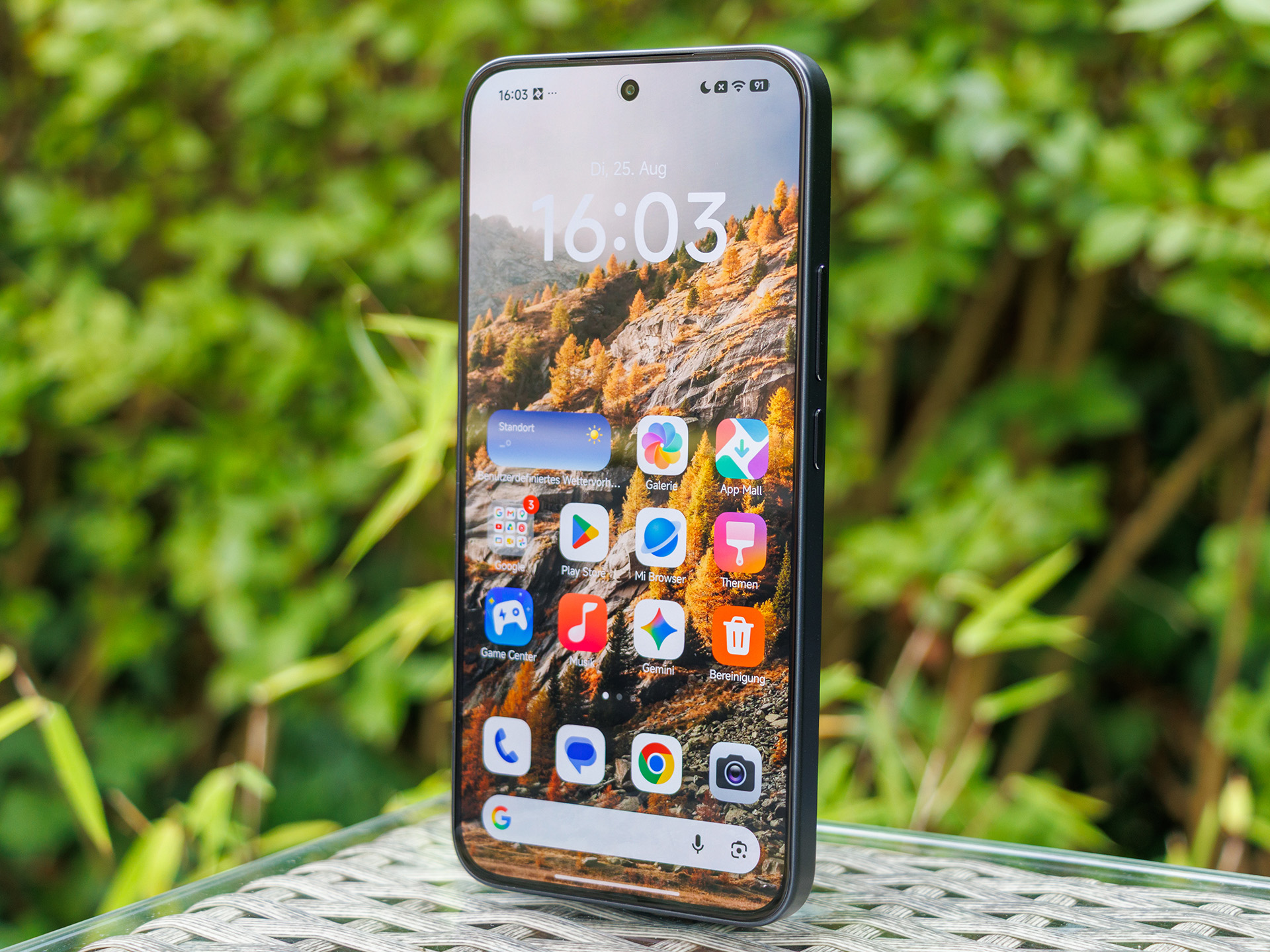
The Redmi Note 17 Pro shows plenty of light when it comes to the case, but there are some shortcomings in terms of feel. A real highlight is the front, with a very high screen-to-body ratio of almost 90 percent. This means that the bezels are extremely narrow for this price class. Gorilla Glass Victus 2 also protects the display.
On the other hand, Xiaomi uses a lot of plastic in its mid-range phone, which means the back and frame do not feel particularly premium. Owing to the gigantic battery, the case is also fairly thick and heavy.
The durability, however, is convincing. The case offers protection in accordance with IP68 and IP69K. TÜV SÜD also certifies the Redmi Note 17 Pro as water-resistant to a depth of 2 meters for 72 hours. In addition, the Xiaomi phone is SGS-certified and is said to withstand drops from a height of up to 3 meters onto a granite surface. The battery also proves tough: according to Xiaomi, under laboratory conditions it withstood extreme environmental stresses, such as simulated storage and discharge at high and low temperatures ranging from -40 °C to 75 °C.


Features: Redmi Note 17 Pro 5G without USB 3.1, but with IR blaster
Xiaomi's mid-range phone offers what can be expected for this price class. An electronic compass, NFC, an IR blaster and USB OTG are all on board. However, a fast USB 3 port with the option of outputting an image signal via cable is not provided. Miracast can be used wirelessly. In our test, the Redmi Note 17 Pro achieved a low speed of just under 29 MBit/s with a Samsung Portable SSD T7.
Software: affordable mid-range smartphone with long updates
The Redmi Note 17 Pro is set to receive security updates for six years, while Android upgrades are expected up to Android 21. The 2026 model, which ships with Android 16, is not yet listed in the Security Center.
The ads displayed under HyperOS 3 are noticeable.


Sustainability
Xiaomi does not provide any truly reliable information about its ecological footprint. According to the manufacturer, the Redmi phone benefits from Xiaomi’s ESG measures, such as avoiding plastic in packaging, using lower-CO₂ rail and sea transport routes, and the self-repair program. Plastic films are not used for the Note 17 Pro.
Communication and GNSS: Xiaomi smartphone without WiFi 7 and single-band GPS
Xiaomi’s cost-cutting is evident in the slow WiFi 5 standard and probably also in the antenna equipment, as the Redmi phone only reached a sluggish peak of 350 MBit/s in our measurements. In mobile communications, however, the Note 17 Pro is much better positioned thanks to 5G support and many LTE frequencies.
| Networking | |
| Xiaomi Redmi Note 17 Pro 5G | |
| iperf3 transmit Wi-Fi6/7 RT-BE96U | |
| iperf3 receive Wi-Fi6/7 RT-BE96U | |
| Nothing Phone (4a) | |
| iperf3 transmit AXE11000 | |
| iperf3 receive AXE11000 | |
| Samsung Galaxy A57 | |
| iperf3 transmit AXE11000 6GHz | |
| iperf3 receive AXE11000 6GHz | |
| Xiaomi Poco X8 Pro | |
| iperf3 transmit AXE11000 | |
| iperf3 receive AXE11000 | |
| Xiaomi Redmi Note 15 Pro 5G | |
| iperf3 transmit AXE11000 | |
| iperf3 receive AXE11000 | |
| Average 802.11 a/b/g/n/ac | |
| iperf3 transmit AXE11000 | |
| iperf3 receive AXE11000 | |
| iperf3 transmit AXE11000 6GHz | |
| iperf3 receive AXE11000 6GHz | |
| iperf3 transmit Wi-Fi6/7 RT-BE96U | |
| iperf3 receive Wi-Fi6/7 RT-BE96U | |
| Average of class Smartphone | |
| iperf3 transmit AXE11000 | |
| iperf3 receive AXE11000 | |
| iperf3 transmit AXE11000 6GHz | |
| iperf3 receive AXE11000 6GHz | |
| iperf3 transmit Wi-Fi6/7 RT-BE96U | |
| iperf3 receive Wi-Fi6/7 RT-BE96U | |


Outdoors, the Redmi Note 17 Pro locates the user quickly and accurately to around 3 meters using single-band GNSS and SBAS support. In our practical test, the Xiaomi phone proved precise compared with the Garmin Venu 2. However, minimal deviations from the route were still noticeable. Since these were well within the acceptable range, the mid-range smartphone can be recommended for navigation without hesitation.


Phone functions and voice quality: Redmi Note 17 Pro 5G supports dual SIM and eSIM


The Note 17 Pro supports dual SIM with either two nanoSIMs or an eSIM in combination. Important phone functions such as VoLTE, VoNR and VoWiFi are also supported. Voice quality is good, and voices are easy to understand through the earpiece.
Cameras: mid-range smartphone with optical image stabilization and 50 megapixels

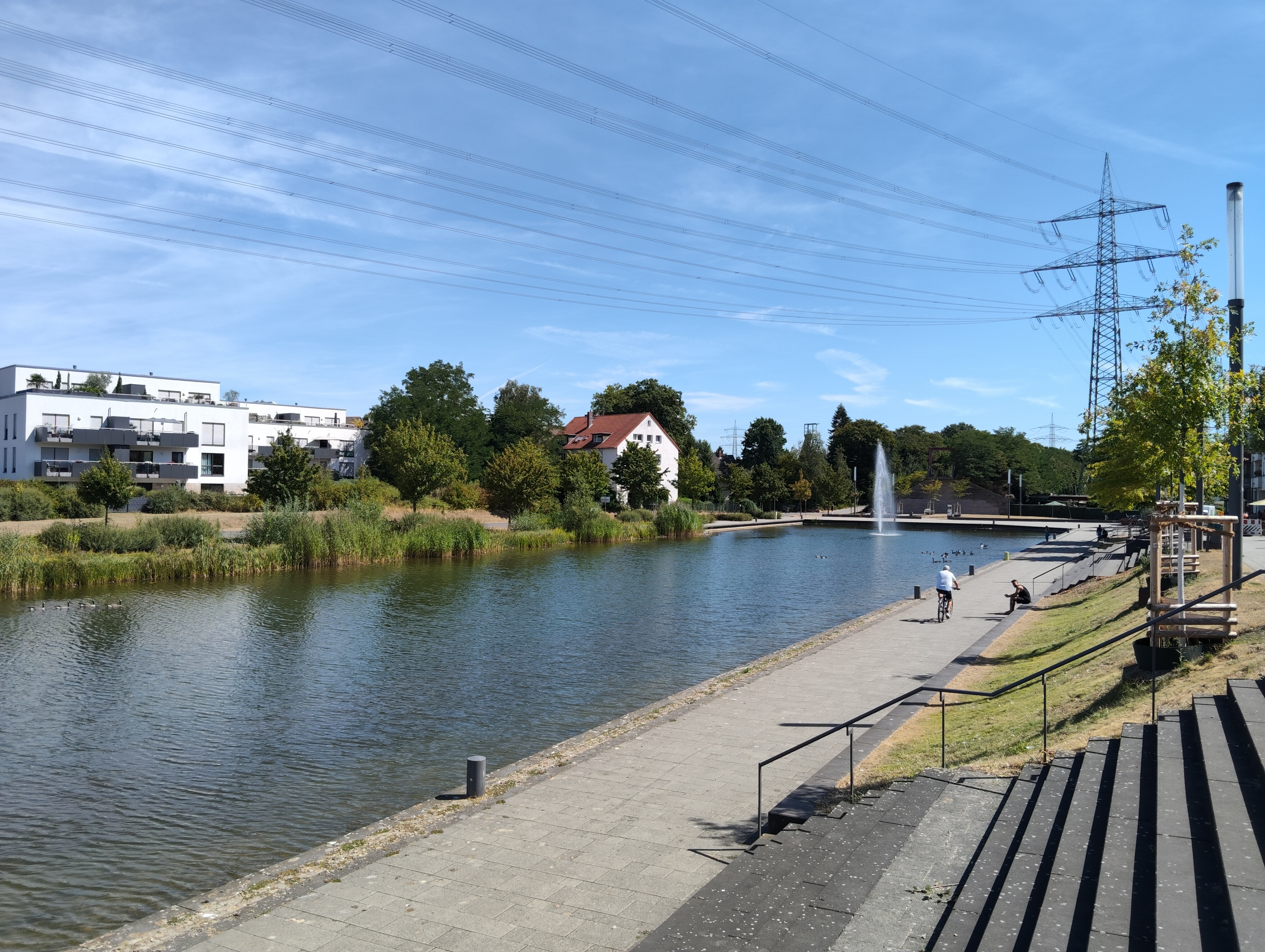
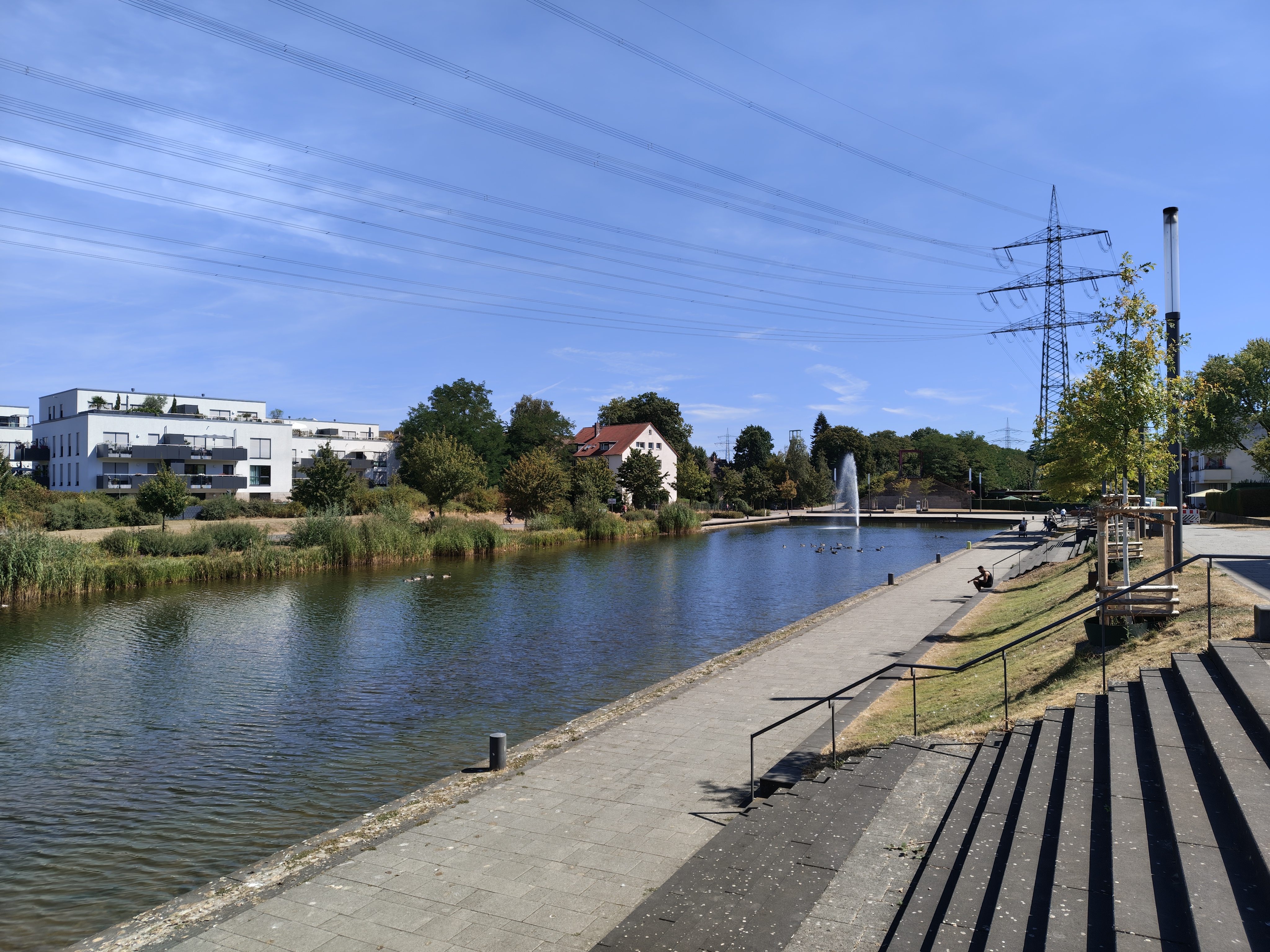
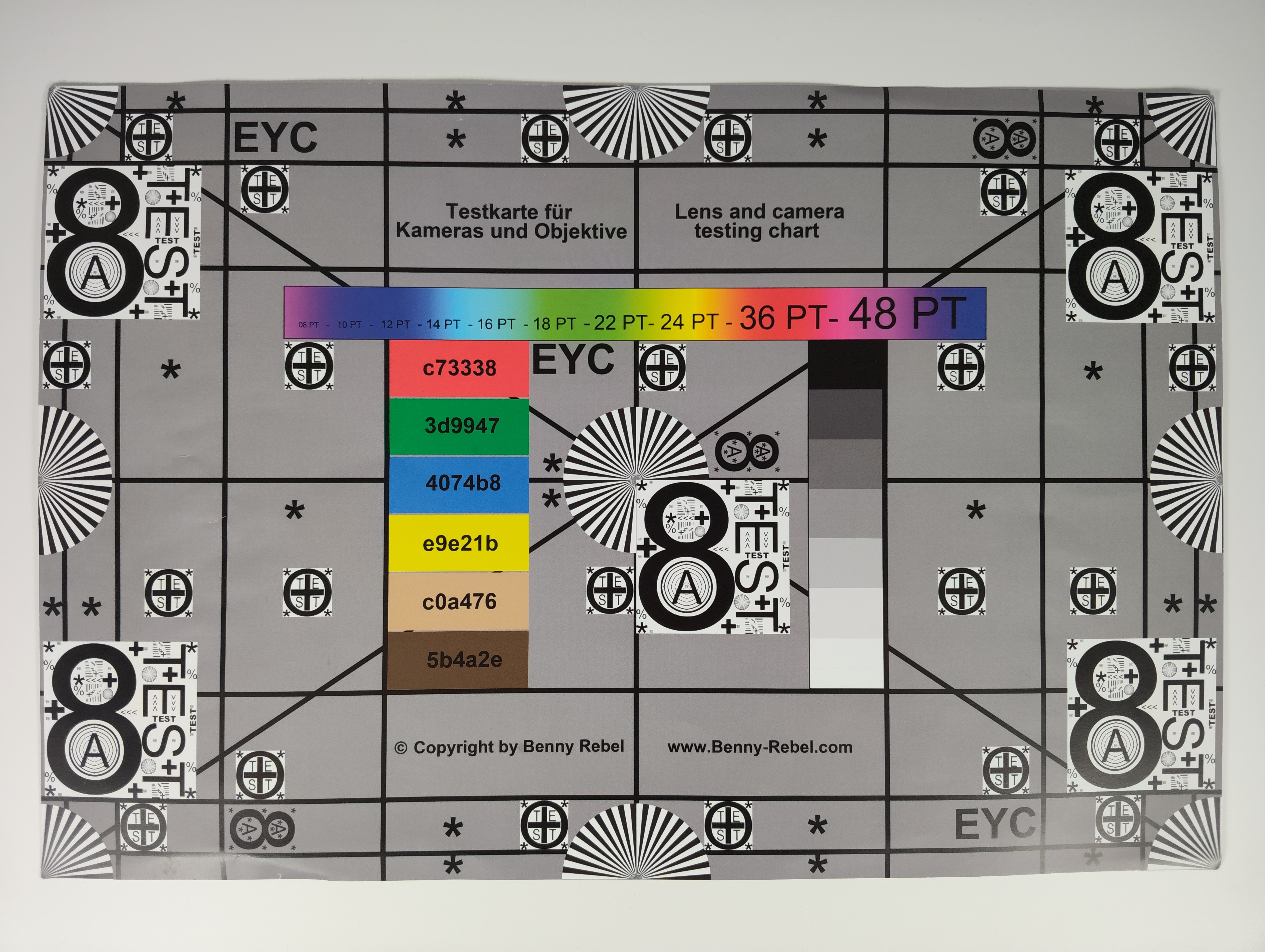
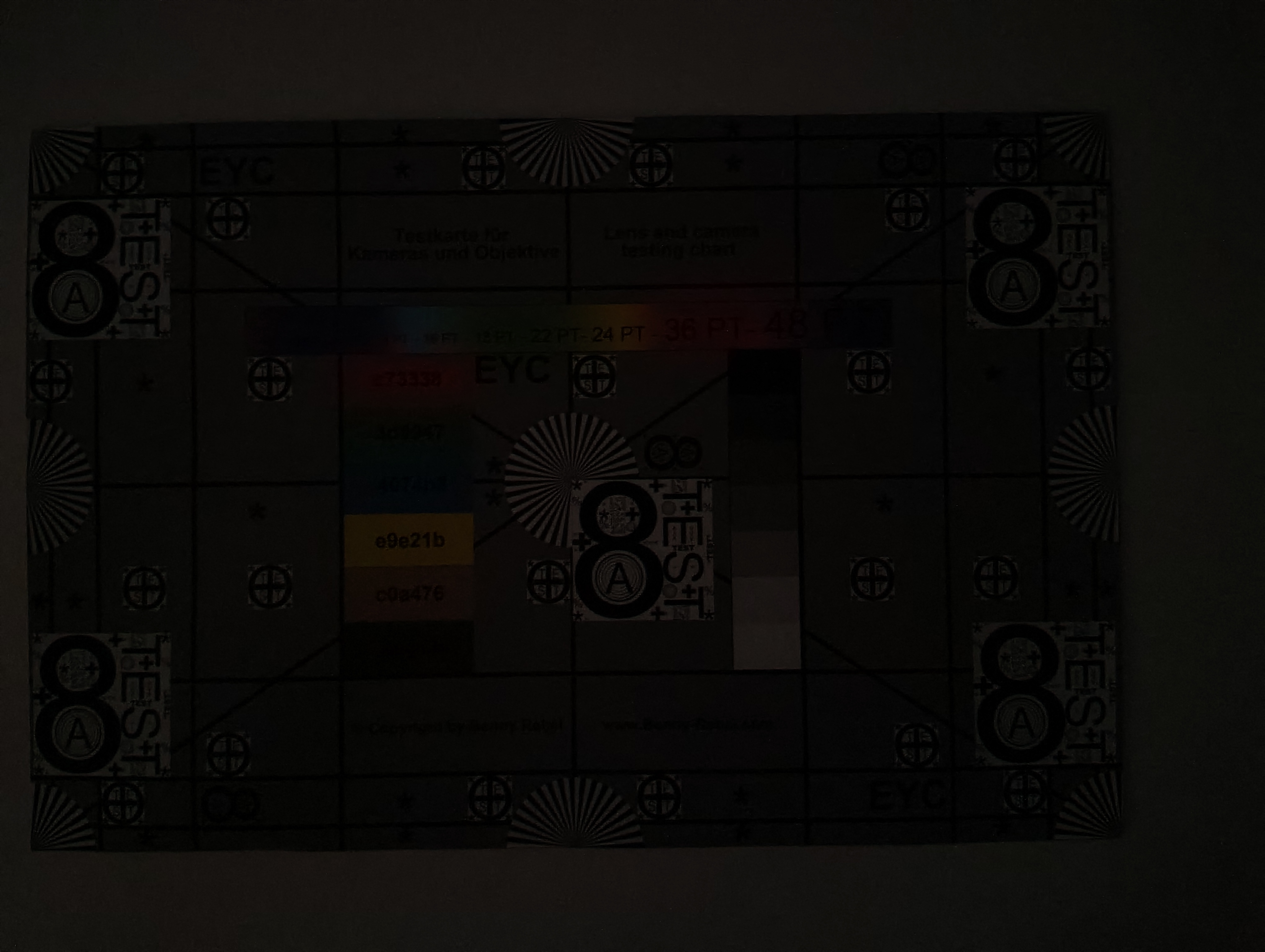
Redmi fans are in for a bitter disappointment with the main camera of the 2026 model. The fairly large 200 MP sensor of the Note 15 Pro has been replaced by an ISOCELL JN sensor, probably the JN1, that is almost half the size. As a result, the Note 17 Pro captures significantly less light and shows weaknesses above all in difficult lighting conditions. In our test photos taken in the dark, the autofocus also struggles. At least optical image stabilization is included.
Since there is still no telephoto lens, the move to a mini sensor is doubly annoying. Zoom shots on the Note 17 Pro are therefore only possible in poor quality, as the image crop further amplifies the weaknesses of the ISOCELL JN.
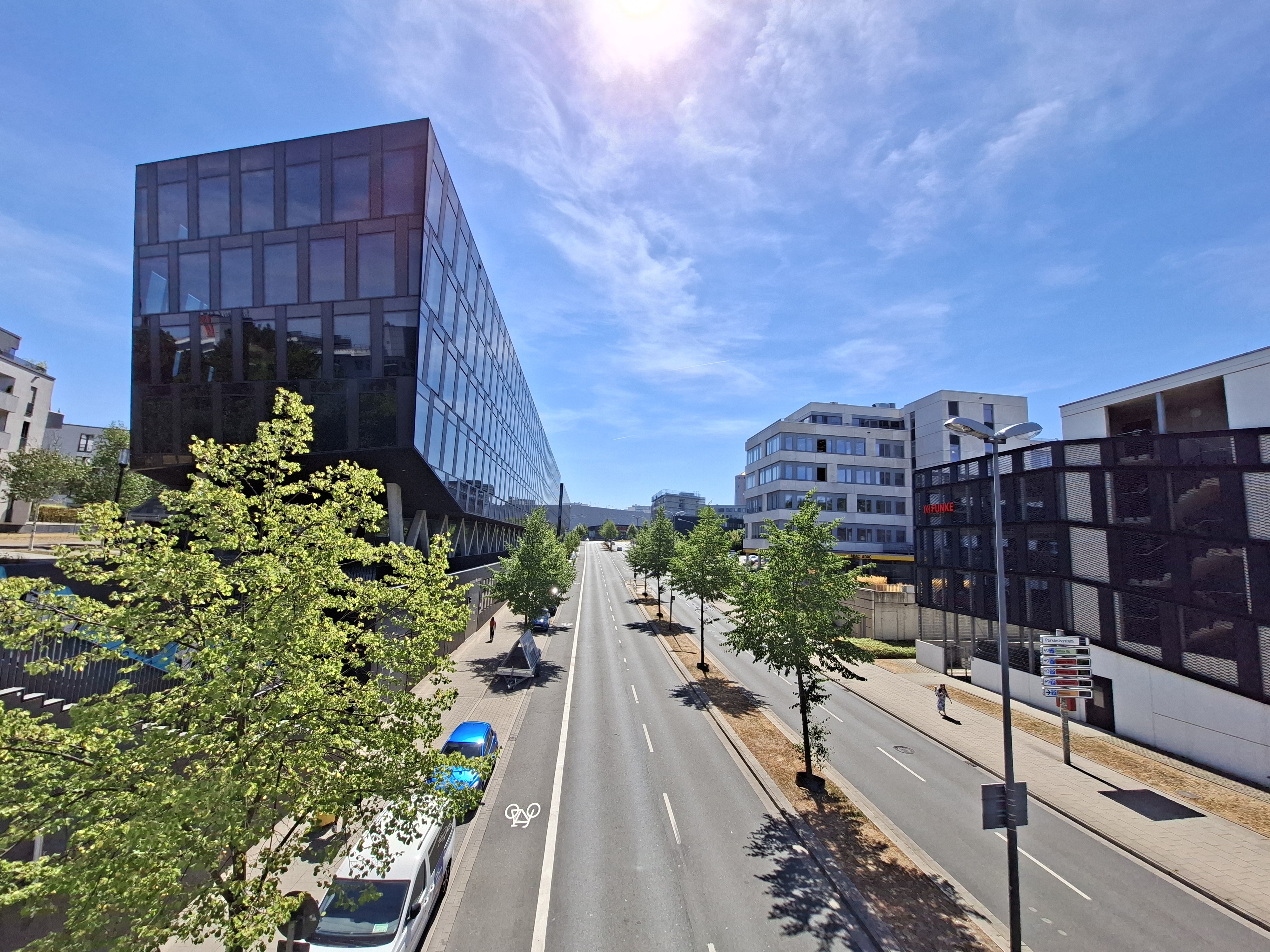
The wide-angle camera with only 8 MP is acceptable, but at best average even for the cheapest mid-range segment.
Image comparison
Choose a scene and navigate within the first image. One click changes the position on touchscreens. One click on the zoomed-in image opens the original in a new window. The first image shows the scaled photograph of the test device.
Main cameraMain cameraLow light5x zoomUltra-wide angle





















Accessories and warranty: mid-range smartphone without a charger
Our test device comes with a USB-C cable, a SIM eject tool, a protective case and a warranty card. According to the warranty card, the Note 17 Pro comes with only a 12-month warranty. The 67-watt HyperCharger has to be purchased separately.
Input devices and operation: affordable Android phone with optical fingerprint sensor
Inputs on the large OLED screen are sampled at 240 Hz and are registered without delay. The instant touch sampling rate also increases to 3,200 Hz when Game Turbo mode is activated. The optical fingerprint sensor is positioned quite low on the edge of the display, but unlocks the Redmi phone quickly and reliably. Users can also use insecure 2D facial recognition if desired.


Display: Redmi Note 17 Pro 5G OLED screen supports DC dimming and PWM dimming

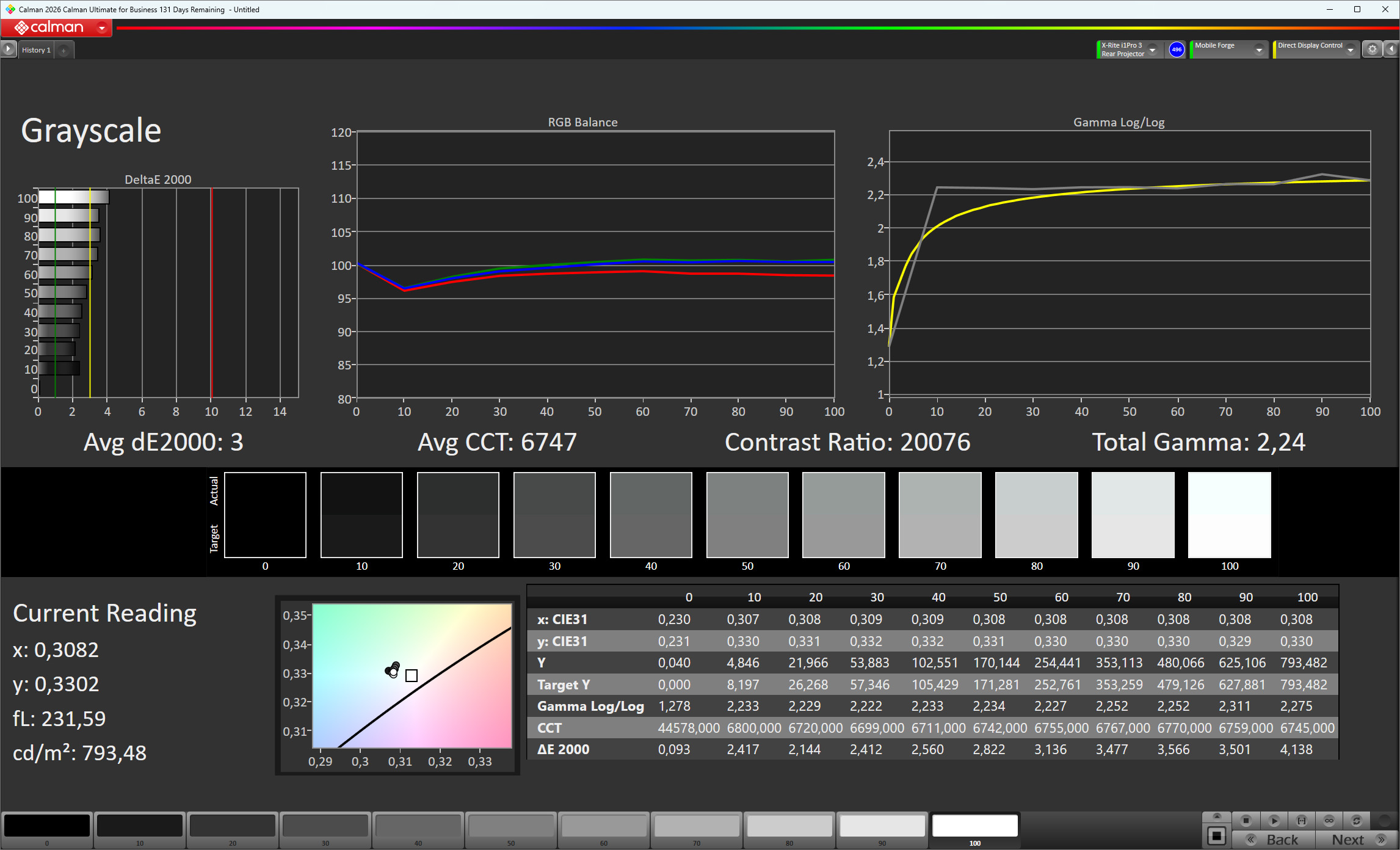
One highlight of the Xiaomi phone is the sharp AMOLED screen, which operates at up to 120 Hz and gets really bright. In our APL measurement, which is important for everyday use, the Note 17 Pro gets almost twice as bright as a Galaxy A57.
The Redmi smartphone can also beat its Samsung rival when it comes to PWM. We measured PWM flickering at around 120 Hz as well as the high-frequency PWM dimming of up to 3,840 Hz advertised by Xiaomi. We recorded a measured value of 3,571 Hz with a fairly flat amplitude. DC dimming is also available at higher brightness levels.
| |||||||||||||||||||||||||
Brightness Distribution: 98 %
Center on Battery: 1053 cd/m²
Contrast: ∞:1 (Black: 0 cd/m²)
ΔE ColorChecker Calman: 2.9 | ∀{0.5-29.43 Ø4.69}
ΔE Greyscale Calman: 3 | ∀{0.09-98 Ø4.94}
99.7% sRGB (Calman 2D)
Gamma: 2.24
CCT: 6747 K
| Xiaomi Redmi Note 17 Pro 5G OLED, 2772x1280, 6.8" | Nothing Phone (4a) AMOLED, 2720x1224, 6.8" | Samsung Galaxy A57 Super AMOLED, 2340x1080, 6.7" | Xiaomi Poco X8 Pro AMOLED, 2756x1268, 6.6" | Xiaomi Redmi Note 15 Pro 5G AMOLED, 2772x1280, 6.8" | |
|---|---|---|---|---|---|
| Display | -66% | -54% | -19% | -43% | |
| APL18 Peak Brightness (cd/m²) | 4034 | 1455 -64% | 1920 -52% | 3475 -14% | 1953 -52% |
| HDR Peak Brightness (cd/m²) | 4440 | 1403 -68% | 1980 -55% | 3406 -23% | 2922 -34% |
| Response Times | -139% | 5% | 10% | -5% | |
| Response Time Grey 50% / Grey 80% * (ms) | 1.6 ? | 8.18 ? -411% | 1.21 ? 24% | 1.11 ? 31% | 1.4 ? 13% |
| Response Time Black / White * (ms) | 1.3 ? | 0.99 ? 24% | 1.1 ? 15% | 1.05 ? 19% | 1.4 ? -8% |
| PWM Frequency (Hz) | 120 | 90 | 240 | 120 | 120.5 |
| PWM Amplitude * (%) | 13.42 | 17.49 -30% | 16.72 -25% | 16.04 -20% | 16 -19% |
| Screen | 20% | 27% | 25% | -1% | |
| Brightness middle (cd/m²) | 1053 | 1536 46% | 1135 8% | 1104 5% | 1155 10% |
| Brightness (cd/m²) | 1063 | 1538 45% | 1134 7% | 1102 4% | 1136 7% |
| Brightness Distribution (%) | 98 | 97 -1% | 99 1% | 97 -1% | 97 -1% |
| Black Level * (cd/m²) | |||||
| Colorchecker dE 2000 * | 2.9 | 2.6 10% | 1.7 41% | 1.2 59% | 2.42 17% |
| Colorchecker dE 2000 max. * | 4.9 | 5.7 -16% | 2.5 49% | 2.4 51% | 5.63 -15% |
| Greyscale dE 2000 * | 3 | 2 33% | 1.4 53% | 2.1 30% | 3.7 -23% |
| Gamma | 2.24 98% | 2.24 98% | 2.08 106% | 2.22 99% | 2.246 98% |
| CCT | 6747 96% | 6878 95% | 6578 99% | 6472 100% | 7263 89% |
| Total Average (Program / Settings) | -62% /
-39% | -7% /
6% | 5% /
13% | -16% /
-10% |
* ... smaller is better
Screen Flickering / PWM (Pulse-Width Modulation)
| Screen flickering / PWM detected | 120 Hz Amplitude: 13.42 % Secondary Frequency: 3571 Hz | 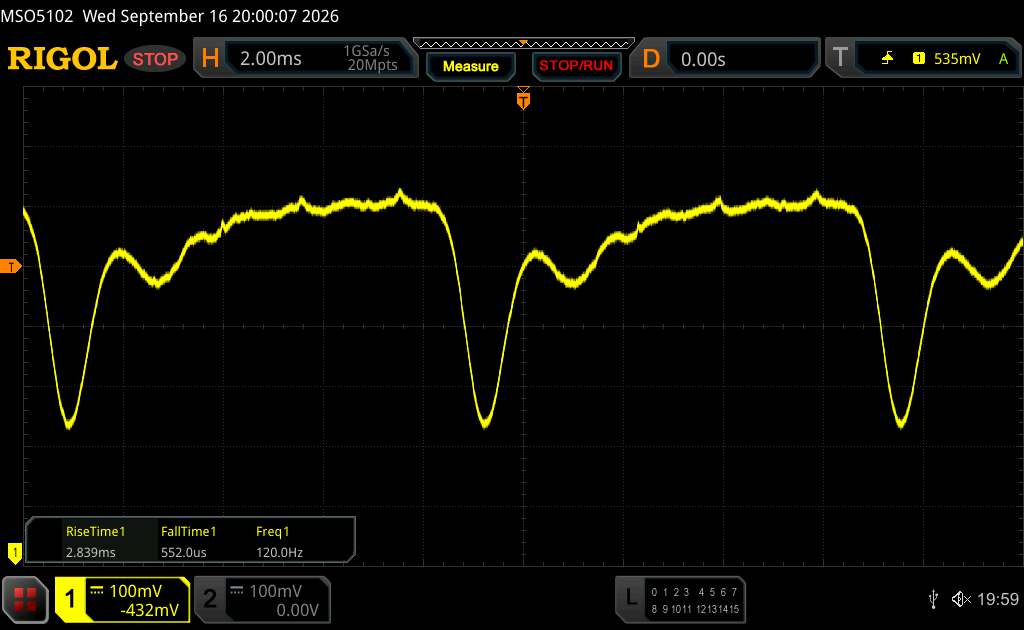 | |
The display backlight flickers at 120 Hz (worst case, e.g., utilizing PWM) . The frequency of 120 Hz is very low, so the flickering may cause eyestrain and headaches after extended use. In comparison: 52 % of all tested devices do not use PWM to dim the display. If PWM was detected, an average of 7611 (minimum: 5 - maximum: 343500) Hz was measured. | |||
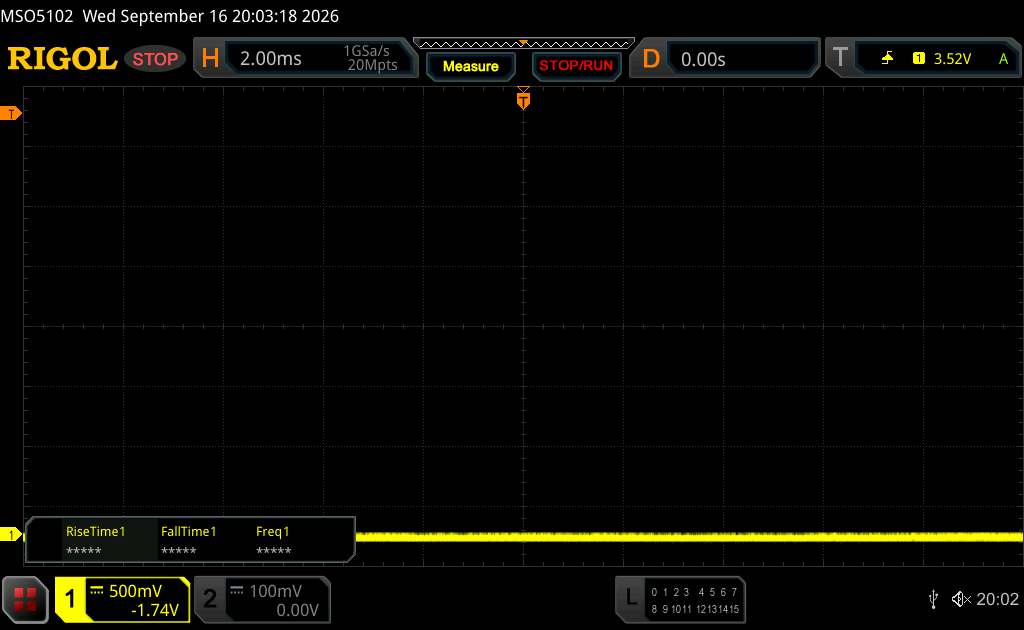
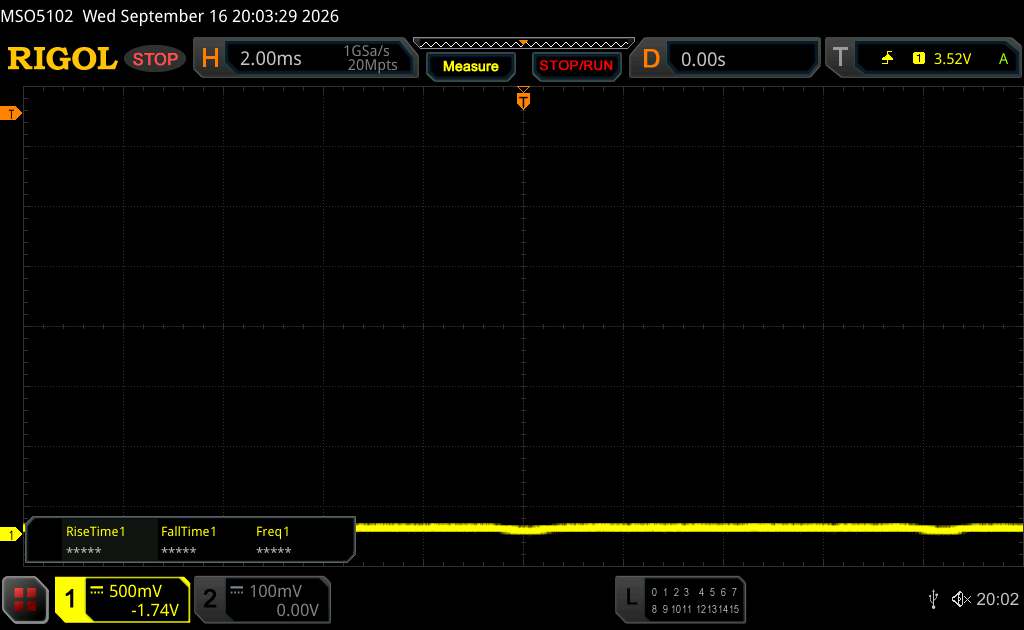
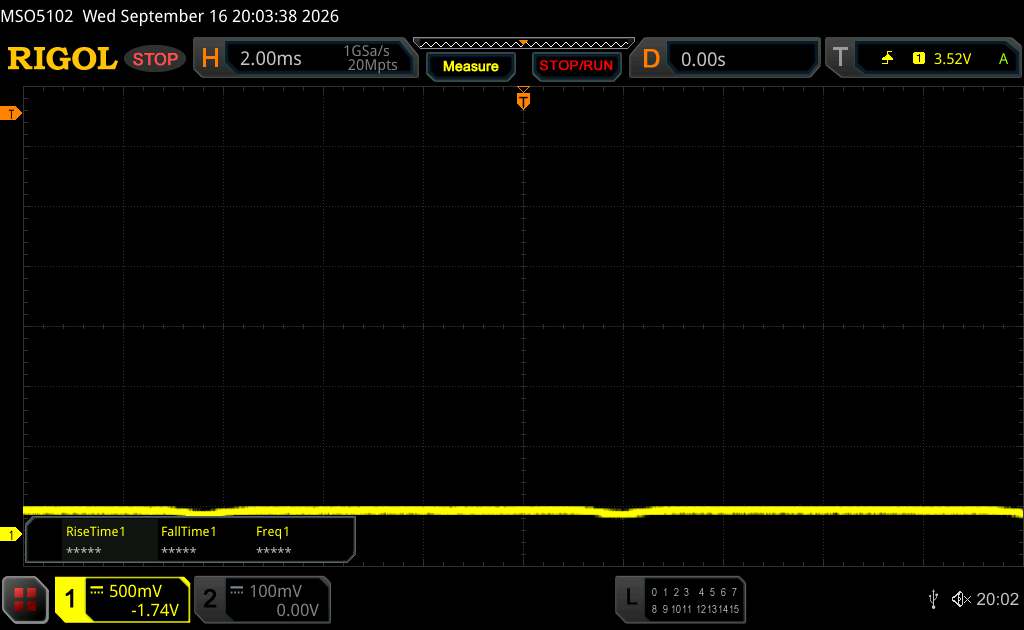
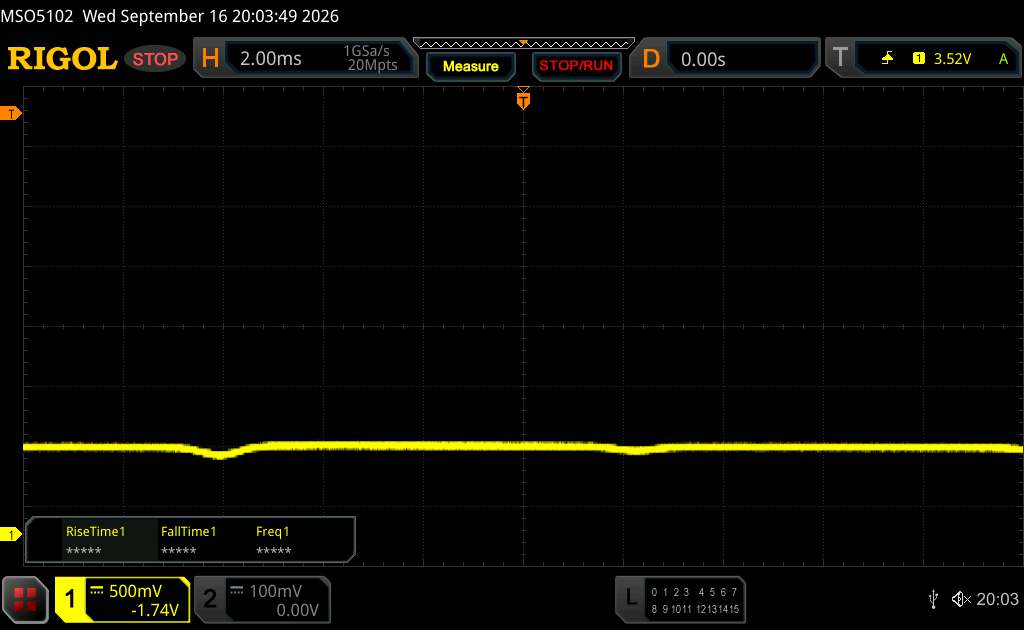
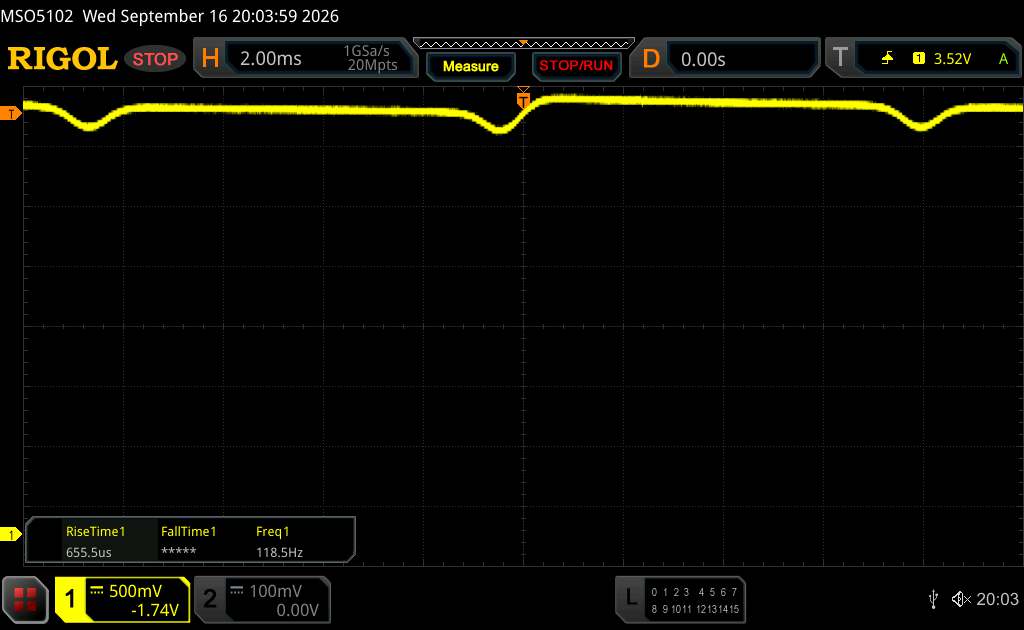
Measurement series at a fixed zoom level and different brightness settings (Although the amplitude curve at minimum brightness looks flat, this is due to the scaling. The information box shows an enlarged version of the amplitude at minimum brightness.)
In our measurements, the Redmi Note 17 lands within the target range for colors (<3), although a look at its Poco sister model shows that Xiaomi is certainly capable of doing better. Slight deviations are visible to the naked eye. Is this annoying in everyday use? Probably not.


Display Response Times
| ↔ Response Time Black to White | ||
|---|---|---|
| 1.3 ms ... rise ↗ and fall ↘ combined | ↗ 0.667 ms rise | 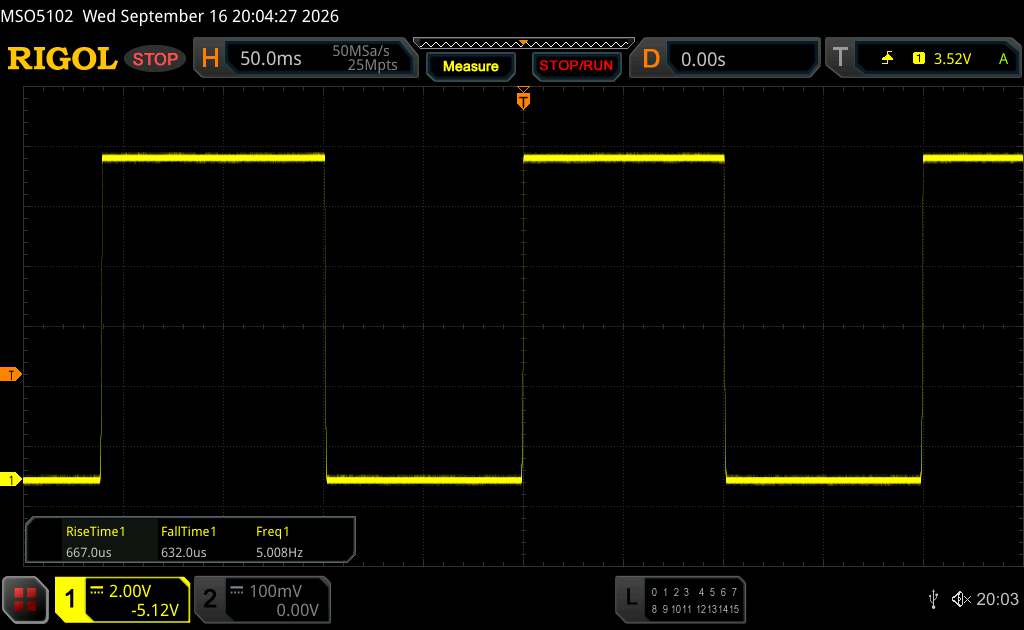 |
| ↘ 0.632 ms fall | ||
| The screen shows very fast response rates in our tests and should be very well suited for fast-paced gaming. In comparison, all tested devices range from 0.1 (minimum) to 240 (maximum) ms. » 8 % of all devices are better. This means that the measured response time is better than the average of all tested devices (19.7 ms). | ||
| ↔ Response Time 50% Grey to 80% Grey | ||
| 1.6 ms ... rise ↗ and fall ↘ combined | ↗ 0.782 ms rise | 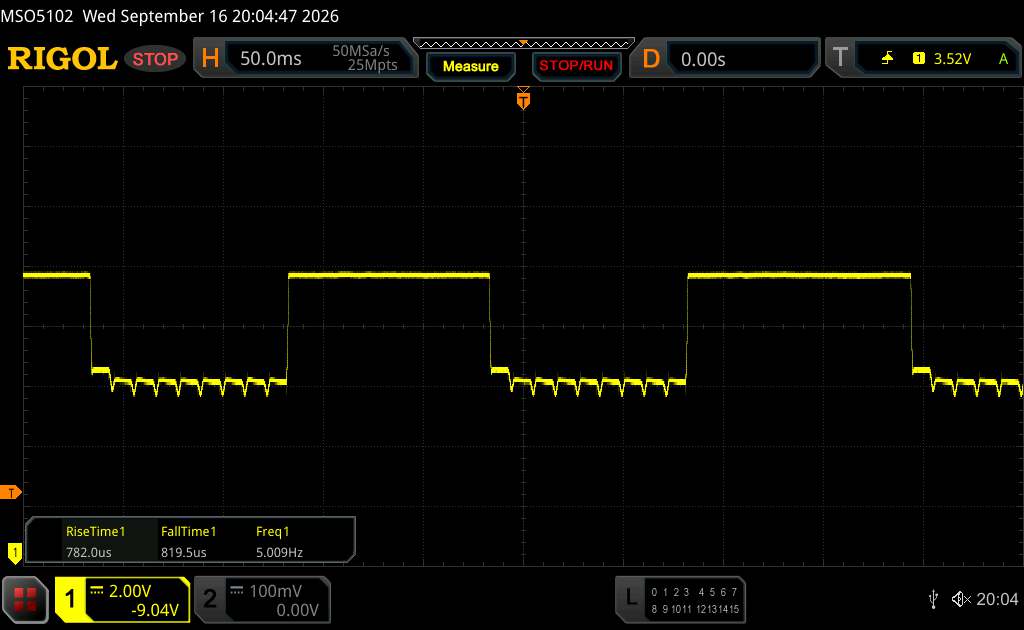 |
| ↘ 0.8195 ms fall | ||
| The screen shows very fast response rates in our tests and should be very well suited for fast-paced gaming. In comparison, all tested devices range from 0.13 (minimum) to 636 (maximum) ms. » 8 % of all devices are better. This means that the measured response time is better than the average of all tested devices (30.7 ms). | ||


Performance: Xiaomi smartphone uses Snapdragon chipset and up to 8 GB of RAM
After the camera faux pas, the Redmi Note 17 Pro makes its next misstep with the chipset. Our test device, equipped with 6 GB of RAM, delivers very modest performance in combination with the Snapdragon 6s Gen 4. Even its predecessor is faster than the 2026 model, especially in the AI tests. In Geekbench multi-core, a Poco X8 Pro achieves almost twice as high scores, despite currently being priced more attractively than the Redmi Note 17 Pro.
| UL Procyon AI Inference for Android - Overall Score NNAPI | |
| Xiaomi Poco X8 Pro | |
| Average of class Smartphone (2895 - 66164, n=99, last 2 years) | |
| Samsung Galaxy A57 | |
| Average Qualcomm Snapdragon 6s Gen 4 (7933 - 8777, n=2) | |
| Xiaomi Redmi Note 15 Pro 5G | |
| Xiaomi Redmi Note 17 Pro 5G | |
| AImark - Score v3.x | |
| Xiaomi Poco X8 Pro | |
| Average of class Smartphone (293 - 307528, n=67, last 2 years) | |
| Samsung Galaxy A57 | |
| Xiaomi Redmi Note 17 Pro 5G | |
| Average Qualcomm Snapdragon 6s Gen 4 (558 - 567, n=2) | |
In the GPU tests, the Xiaomi phone with its Adreno 710 performs even worse compared with its predecessor. Even a Galaxy A57 with the Exynos 1680 achieves a hefty 146 percent advantage over the Redmi Note 17 Pro in GFXBench’s 4K test.
GFXBench (DX / GLBenchmark) 2.7: T-Rex Onscreen | 1920x1080 T-Rex Offscreen
GFXBench 3.0: on screen Manhattan Onscreen OGL | 1920x1080 1080p Manhattan Offscreen
GFXBench 3.1: on screen Manhattan ES 3.1 Onscreen | 1920x1080 Manhattan ES 3.1 Offscreen
GFXBench: on screen Car Chase Onscreen | 1920x1080 Car Chase Offscreen | on screen Aztec Ruins High Tier Onscreen | 2560x1440 Aztec Ruins High Tier Offscreen | on screen Aztec Ruins Normal Tier Onscreen | 1920x1080 Aztec Ruins Normal Tier Offscreen | 3840x2160 4K Aztec Ruins High Tier Offscreen
| 3DMark / Wild Life Extreme Unlimited | |
| Xiaomi Poco X8 Pro | |
| Samsung Galaxy A57 | |
| Nothing Phone (4a) | |
| Xiaomi Redmi Note 15 Pro 5G | |
| Xiaomi Redmi Note 17 Pro 5G | |
| 3DMark / Wild Life Extreme | |
| Xiaomi Poco X8 Pro | |
| Samsung Galaxy A57 | |
| Nothing Phone (4a) | |
| Xiaomi Redmi Note 15 Pro 5G | |
| Xiaomi Redmi Note 17 Pro 5G | |
| 3DMark / Wild Life Unlimited Score | |
| Xiaomi Poco X8 Pro | |
| Samsung Galaxy A57 | |
| Nothing Phone (4a) | |
| Xiaomi Redmi Note 17 Pro 5G | |
| 3DMark / Solar Bay Score | |
| Xiaomi Poco X8 Pro | |
| 3DMark / Solar Bay Unlimited Score | |
| Xiaomi Poco X8 Pro | |
| 3DMark / Steel Nomad Light Unlimited Score | |
| Xiaomi Poco X8 Pro | |
| Samsung Galaxy A57 | |
| Xiaomi Redmi Note 15 Pro 5G | |
| Nothing Phone (4a) | |
| 3DMark / Steel Nomad Light Score | |
| Xiaomi Poco X8 Pro | |
| Samsung Galaxy A57 | |
| Nothing Phone (4a) | |
| Xiaomi Redmi Note 15 Pro 5G | |
| GFXBench (DX / GLBenchmark) 2.7 / T-Rex Onscreen | |
| Xiaomi Poco X8 Pro | |
| Samsung Galaxy A57 | |
| Xiaomi Redmi Note 15 Pro 5G | |
| Xiaomi Redmi Note 17 Pro 5G | |
| GFXBench (DX / GLBenchmark) 2.7 / T-Rex Offscreen | |
| Xiaomi Poco X8 Pro | |
| Samsung Galaxy A57 | |
| Xiaomi Redmi Note 15 Pro 5G | |
| Xiaomi Redmi Note 17 Pro 5G | |
| GFXBench 3.0 / Manhattan Onscreen OGL | |
| Xiaomi Poco X8 Pro | |
| Samsung Galaxy A57 | |
| Xiaomi Redmi Note 15 Pro 5G | |
| Xiaomi Redmi Note 17 Pro 5G | |
| GFXBench 3.0 / 1080p Manhattan Offscreen | |
| Xiaomi Poco X8 Pro | |
| Samsung Galaxy A57 | |
| Xiaomi Redmi Note 15 Pro 5G | |
| Xiaomi Redmi Note 17 Pro 5G | |
| GFXBench 3.1 / Manhattan ES 3.1 Onscreen | |
| Xiaomi Poco X8 Pro | |
| Samsung Galaxy A57 | |
| Xiaomi Redmi Note 15 Pro 5G | |
| Xiaomi Redmi Note 17 Pro 5G | |
| GFXBench 3.1 / Manhattan ES 3.1 Offscreen | |
| Xiaomi Poco X8 Pro | |
| Samsung Galaxy A57 | |
| Xiaomi Redmi Note 15 Pro 5G | |
| Xiaomi Redmi Note 17 Pro 5G | |
| GFXBench / Car Chase Onscreen | |
| Xiaomi Poco X8 Pro | |
| Samsung Galaxy A57 | |
| Xiaomi Redmi Note 15 Pro 5G | |
| Xiaomi Redmi Note 17 Pro 5G | |
| GFXBench / Car Chase Offscreen | |
| Xiaomi Poco X8 Pro | |
| Samsung Galaxy A57 | |
| Xiaomi Redmi Note 15 Pro 5G | |
| Xiaomi Redmi Note 17 Pro 5G | |
| GFXBench / Aztec Ruins High Tier Onscreen | |
| Xiaomi Poco X8 Pro | |
| Samsung Galaxy A57 | |
| Nothing Phone (4a) | |
| Xiaomi Redmi Note 15 Pro 5G | |
| Xiaomi Redmi Note 17 Pro 5G | |
| GFXBench / Aztec Ruins High Tier Offscreen | |
| Xiaomi Poco X8 Pro | |
| Samsung Galaxy A57 | |
| Nothing Phone (4a) | |
| Xiaomi Redmi Note 15 Pro 5G | |
| Xiaomi Redmi Note 17 Pro 5G | |
| GFXBench / Aztec Ruins Normal Tier Onscreen | |
| Xiaomi Poco X8 Pro | |
| Samsung Galaxy A57 | |
| Nothing Phone (4a) | |
| Xiaomi Redmi Note 15 Pro 5G | |
| Xiaomi Redmi Note 17 Pro 5G | |
| GFXBench / Aztec Ruins Normal Tier Offscreen | |
| Xiaomi Poco X8 Pro | |
| Samsung Galaxy A57 | |
| Nothing Phone (4a) | |
| Xiaomi Redmi Note 15 Pro 5G | |
| Xiaomi Redmi Note 17 Pro 5G | |
| GFXBench / 4K Aztec Ruins High Tier Offscreen | |
| Xiaomi Poco X8 Pro | |
| Samsung Galaxy A57 | |
| Nothing Phone (4a) | |
| Xiaomi Redmi Note 15 Pro 5G | |
| Xiaomi Redmi Note 17 Pro 5G | |
| Jetstream 2 | |
| 2.0 Total | |
| Samsung Galaxy A57 (Chrome 149) | |
| Average of class Smartphone (63.9 - 423, n=117, last 2 years) | |
| Xiaomi Redmi Note 17 Pro 5G (Chrome 151) | |
| Average Qualcomm Snapdragon 6s Gen 4 (118.3 - 119.4, n=2) | |
| Xiaomi Redmi Note 15 Pro 5G (Chrome 144) | |
| 2.2 Total | |
| Average of class Smartphone (2 - 480, n=104, last 2 years) | |
| Samsung Galaxy A57 (Chrome 149) | |
| Nothing Phone (4a) (Chrome 147) | |
| Xiaomi Poco X8 Pro (Chrome 146) | |
| Average Qualcomm Snapdragon 6s Gen 4 (126.5 - 131.3, n=2) | |
| Xiaomi Redmi Note 17 Pro 5G (Chrome 151) | |
| Xiaomi Redmi Note 15 Pro 5G (Chrome 144) | |
| Speedometer 2.0 - Result 2.0 | |
| Samsung Galaxy A57 (Chrome 149) | |
| Average of class Smartphone (49.3 - 733, n=73, last 2 years) | |
| Xiaomi Redmi Note 17 Pro 5G (Chrome 151) | |
| Average Qualcomm Snapdragon 6s Gen 4 (113 - 136, n=2) | |
| Xiaomi Redmi Note 15 Pro 5G (Chrome 144) | |
| Speedometer 3 - Score 3.0 | |
| Samsung Galaxy A57 (Chrome 149) | |
| Average of class Smartphone (3.06 - 45.5, n=81, last 2 years) | |
| Xiaomi Poco X8 Pro (Chrome 146) | |
| Xiaomi Redmi Note 17 Pro 5G (Chrome 151) | |
| Average Qualcomm Snapdragon 6s Gen 4 (7.1 - 9.56, n=2) | |
| Xiaomi Redmi Note 15 Pro 5G (Chrome 144) | |
| WebXPRT 4 - Overall | |
| Samsung Galaxy A57 (Chrome 149) | |
| Average of class Smartphone (56 - 278, n=90, last 2 years) | |
| Xiaomi Redmi Note 17 Pro 5G (Chrome 151) | |
| Average Qualcomm Snapdragon 6s Gen 4 (116 - 122, n=2) | |
| Xiaomi Redmi Note 15 Pro 5G (Chrome 144) | |
| Octane V2 - Total Score | |
| Xiaomi Poco X8 Pro (Chrome 146) | |
| Samsung Galaxy A57 (Chrome 149) | |
| Average of class Smartphone (6015 - 126661, n=135, last 2 years) | |
| Xiaomi Redmi Note 17 Pro 5G (Chrome 151) | |
| Xiaomi Redmi Note 15 Pro 5G (Chrome 144) | |
| Average Qualcomm Snapdragon 6s Gen 4 (34926 - 39091, n=2) | |
| Mozilla Kraken 1.1 - Total | |
| Xiaomi Redmi Note 15 Pro 5G (Chrome 144) | |
| Average Qualcomm Snapdragon 6s Gen 4 (1008 - 1093, n=2) | |
| Xiaomi Redmi Note 17 Pro 5G (Chrome 151) | |
| Average of class Smartphone (281 - 2718, n=120, last 2 years) | |
| Xiaomi Poco X8 Pro (Chrome 146) | |
| Samsung Galaxy A57 (Chrome 149) | |
* ... smaller is better
| Xiaomi Redmi Note 17 Pro 5G | Nothing Phone (4a) | Samsung Galaxy A57 | Xiaomi Poco X8 Pro | Xiaomi Redmi Note 15 Pro 5G | Average 256 GB UFS 3.1 Flash | Average of class Smartphone | |
|---|---|---|---|---|---|---|---|
| AndroBench 3-5 | 1% | -28% | 29% | -29% | -4% | 18% | |
| Sequential Read 256KB (MB/s) | 2098.67 | 2003.93 -5% | 1683.07 -20% | 3576.86 70% | 945 -55% | 1775 ? -15% | 2278 ? 9% |
| Sequential Write 256KB (MB/s) | 1981.23 | 1596.2 -19% | 1119.11 -44% | 3565.14 80% | 837.4 -58% | 1247 ? -37% | 1971 ? -1% |
| Random Read 4KB (MB/s) | 266.38 | 263.22 -1% | 249.83 -6% | 324.76 22% | 184 -31% | 290 ? 9% | 317 ? 19% |
| Random Write 4KB (MB/s) | 251.83 | 325.75 29% | 149.04 -41% | 112.05 -56% | 326.1 29% | 319 ? 27% | 362 ? 44% |
Emissions: Redmi Note 17 Pro 5G only throttles performance slightly under load
Temperature
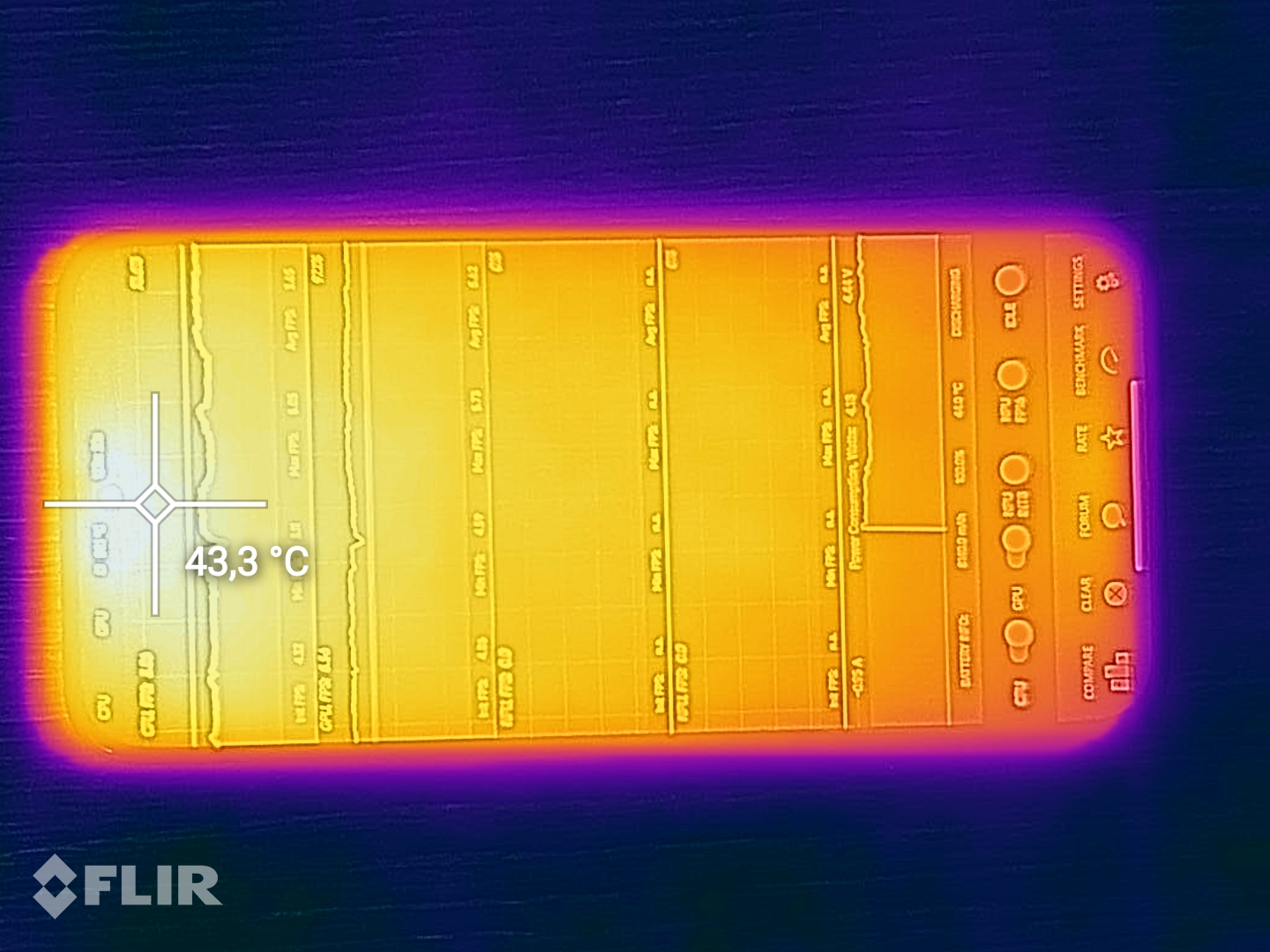
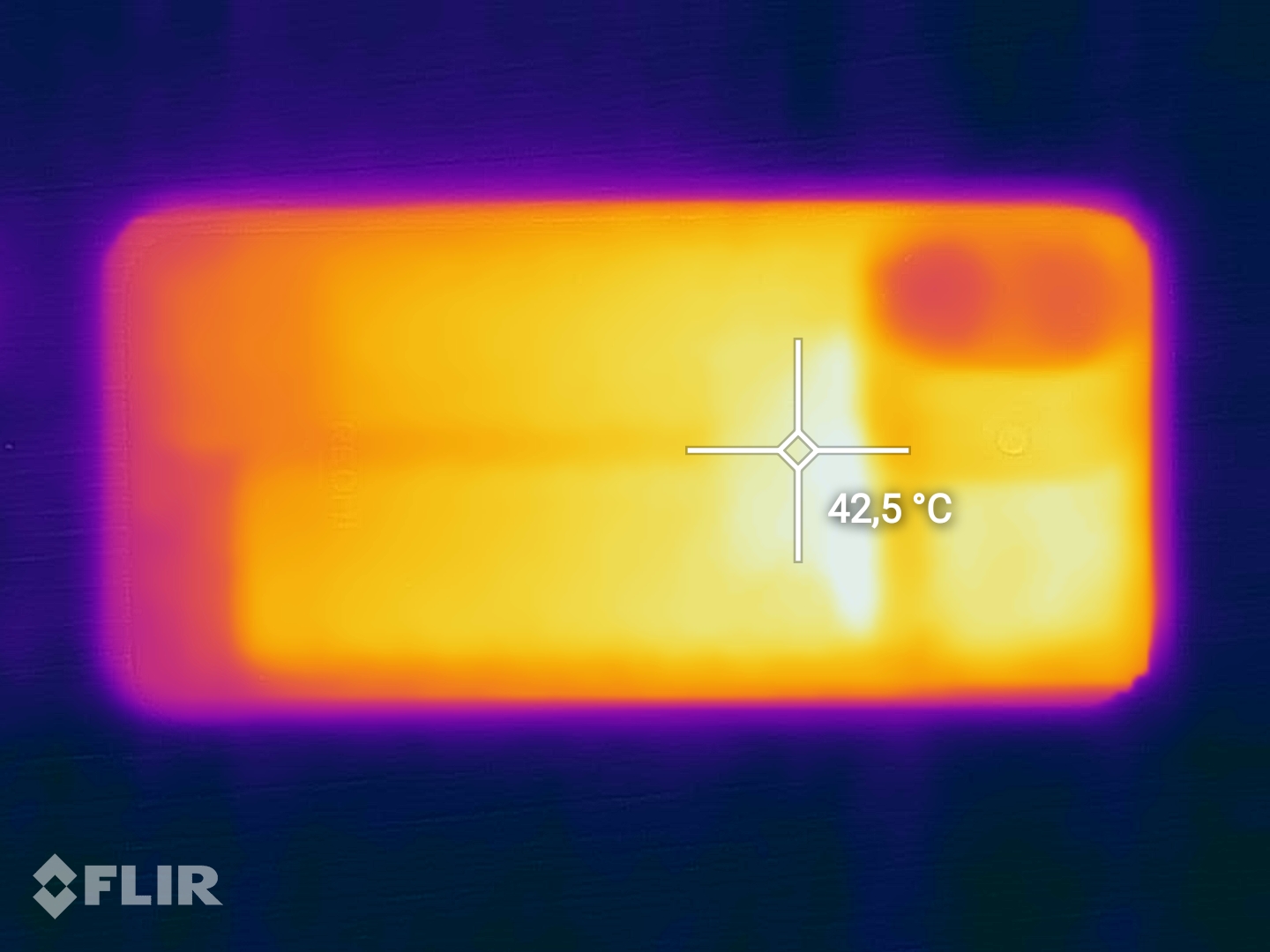
The surface temperatures under sustained load are clearly noticeable, but not really critical. We measured a peak of just under 45 °C. In the 3DMark stress tests, the Redmi Note 17 Pro barely throttles.
(±) The maximum temperature on the upper side is 44.7 °C / 112 F, compared to the average of 35.4 °C / 96 F, ranging from 21.9 to 247 °C for the class Smartphone.
(±) The bottom heats up to a maximum of 44.4 °C / 112 F, compared to the average of 34.1 °C / 93 F
(+) In idle usage, the average temperature for the upper side is 25.8 °C / 78 F, compared to the device average of 33 °C / 91 F.
3DMark stress tests
| 3DMark | |
| Wild Life Stress Test Stability | |
| Nothing Phone (4a) | |
| Xiaomi Redmi Note 17 Pro 5G | |
| Samsung Galaxy A57 | |
| Xiaomi Poco X8 Pro | |
| Wild Life Extreme Stress Test | |
| Nothing Phone (4a) | |
| Xiaomi Redmi Note 15 Pro 5G | |
| Samsung Galaxy A57 | |
| Xiaomi Redmi Note 17 Pro 5G | |
| Xiaomi Poco X8 Pro | |
Speakers
The stereo speakers offer a bass-light sound, but are acceptable for this price class. In the pink noise test, the mids rise, while the highs are also fairly even.
Alternatively, headphones can be connected via USB or wirelessly via Bluetooth. A solid selection of codecs is available.
Xiaomi Redmi Note 17 Pro 5G audio analysis
(+) | speakers can play relatively loud (86.7 dB)
Bass 100 - 315 Hz
(-) | nearly no bass - on average 30.2% lower than median
(±) | linearity of bass is average (9.9% delta to prev. frequency)
Mids 400 - 2000 Hz
(±) | reduced mids - on average 7% lower than median
(+) | mids are linear (6.1% delta to prev. frequency)
Highs 2 - 16 kHz
(+) | balanced highs - only 3.7% away from median
(+) | highs are linear (5.1% delta to prev. frequency)
Overall 100 - 16.000 Hz
(±) | linearity of overall sound is average (20.4% difference to median)
Compared to same class
» 35% of all tested devices in this class were better, 9% similar, 56% worse
» The best had a delta of 11%, average was 34%, worst was 136%
Compared to all devices tested
» 54% of all tested devices were better, 8% similar, 38% worse
» The best had a delta of 4%, average was 23%, worst was 136%
Samsung Galaxy A57 audio analysis
(+) | speakers can play relatively loud (89.1 dB)
Bass 100 - 315 Hz
(-) | nearly no bass - on average 19.1% lower than median
(±) | linearity of bass is average (9.8% delta to prev. frequency)
Mids 400 - 2000 Hz
(±) | higher mids - on average 6.5% higher than median
(+) | mids are linear (6.4% delta to prev. frequency)
Highs 2 - 16 kHz
(+) | balanced highs - only 4.2% away from median
(+) | highs are linear (4.4% delta to prev. frequency)
Overall 100 - 16.000 Hz
(±) | linearity of overall sound is average (16.1% difference to median)
Compared to same class
» 6% of all tested devices in this class were better, 5% similar, 90% worse
» The best had a delta of 11%, average was 34%, worst was 136%
Compared to all devices tested
» 26% of all tested devices were better, 5% similar, 69% worse
» The best had a delta of 4%, average was 23%, worst was 136%
Battery life: affordable Android smartphone with silicon-carbon battery and fast charging
Power consumption
A distinctive feature of the Redmi Note 17 Pro is its enormous 8,340 mAh battery, which can be charged through the USB-C port at up to 67 watts. In our test using a Xiaomi 2500 power bank, we achieve a charging time of around 65 minutes. Xiaomi's mid-range smartphone does not support wireless charging.
The Redmi Note 17 Pro's power consumption is unremarkable, although its idle consumption of 2 watts leaves room for improvement.
| Off / Standby |   0.17 / 0.31 Watt 0.17 / 0.31 Watt |
| Idle |  1.27 / 1.98 / 2.3 Watt 1.27 / 1.98 / 2.3 Watt |
| Load |
4.62 / 8.73 Watt |
    
| |
Key:
min: ,
med: ,
max: Metrahit Energy | |
| Xiaomi Redmi Note 17 Pro 5G 8340 mAh | Nothing Phone (4a) 5080 mAh | Samsung Galaxy A57 5000 mAh | Xiaomi Poco X8 Pro 6500 mAh | Xiaomi Redmi Note 15 Pro 5G 6580 mAh | Average Qualcomm Snapdragon 6s Gen 4 | Average of class Smartphone | |
|---|---|---|---|---|---|---|---|
| Power Consumption | 9% | -7% | 11% | 15% | 0% | 2% | |
| Idle Minimum * (Watt) | 1.27 | 0.97 24% | 0.71 44% | 0.97 24% | 1.2 6% | 1.27 ? -0% | 0.901 ? 29% |
| Idle Average * (Watt) | 1.98 | 2.07 -5% | 1.94 2% | 1.19 40% | 1.5 24% | 1.98 ? -0% | 1.483 ? 25% |
| Idle Maximum * (Watt) | 2.3 | 2.13 7% | 2.04 11% | 1.28 44% | 1.9 17% | 2.3 ? -0% | 1.677 ? 27% |
| Load Average * (Watt) | 4.62 | 6.19 -34% | 5.99 -30% | 4 13% | 4.62 ? -0% | 6.82 ? -48% | |
| Load Maximum * (Watt) | 8.73 | 13.67 -57% | 10.53 -21% | 7.4 15% | 8.73 ? -0% | 10.8 ? -24% |
* ... smaller is better
Power consumption: Geekbench (150 cd/m²)
Power consumption: GFXbench (150 cd/m²)
Battery life
In our Wi-Fi Web browsing battery test, the Redmi phone achieves an impressive runtime of almost 30 hours.
| Battery runtime - WiFi v1.3 | |
| Xiaomi Redmi Note 17 Pro 5G | |
| Nothing Phone (4a) | |
| Samsung Galaxy A57 | |
| Xiaomi Poco X8 Pro | |
| Xiaomi Redmi Note 15 Pro 5G | |
Notebookcheck overall assessment
With its durability, bright OLED screen and excellent battery life, the Redmi Note 17 Pro will certainly find its fans. However, major shortcomings in performance and camera quality prevent us from recommending the Xiaomi phone in the mid-range price segment.

Xiaomi Redmi Note 17 Pro 5G
- 10/02/2026 v8
Marcus Herbrich
 Total Sustainability Score:
 Possible alternatives compared
Image | Model / Review | Price | Weight | Drive | Display |
|---|---|---|---|---|---|
1. 76.7%  | Xiaomi Redmi Note 17 Pro 5G Qualcomm Snapdragon 6s Gen 4 ⎘ Qualcomm Adreno 710 ⎘ 6 GB Memory, 256 GB UFS 3.1 | List Price: 480€ | 223 g | 256 GB UFS 3.1 Flash | 6.83" 2772x1280 447 PPI OLED |
2. 78.6%  | Nothing Phone (4a) Qualcomm Snapdragon 7s Gen 4 ⎘ Qualcomm Adreno 810 ⎘ 12 GB Memory, 256 GB UFS 3.1 | List Price: 429€ | 204.5 g | 256 GB UFS 3.1 Flash | 6.78" 2720x1224 440 PPI AMOLED |
3. 81.5%  | Samsung Galaxy A57 Samsung Exynos 1680 ⎘ Samsung Xclipse 550 ⎘ 8 GB Memory, 256 GB UFS 3.1 | List Price: 589€ | 179 g | 256 GB UFS 3.1 Flash | 6.70" 2340x1080 385 PPI Super AMOLED |
4. 83.8%  | Xiaomi Poco X8 Pro MediaTek Dimensity 8500 ⎘ ARM Mali-G720 MP8 ⎘ 12 GB Memory, 512 GB UFS 4.x | Amazon: $349.99 List Price: 400€ | 202 g | 512 GB UFS 4.1 Flash | 6.59" 2756x1268 460 PPI AMOLED |
5. 77.6%  | Xiaomi Redmi Note 15 Pro 5G MediaTek Dimensity 7400-Ultra ⎘ ARM Mali-G615 MP2 ⎘ 8 GB Memory, 256 GB UFS 2.2 | List Price: 400€ | 210 g | 256 GB UFS 2.2 Flash | 6.83" 2772x1280 447 PPI AMOLED |
Transparency
The selection of devices to be reviewed is made by our editorial team. The test sample was provided to the author as a loan by the manufacturer or retailer for the purpose of this review. The lender had no influence on this review, nor did the manufacturer receive a copy of this review before publication. There was no obligation to publish this review. As an independent media company, Notebookcheck is not subjected to the authority of manufacturers, retailers or publishers.
This is how Notebookcheck is testing
Every year, Notebookcheck independently reviews hundreds of laptops and smartphones using standardized procedures to ensure that all results are comparable. We have continuously developed our test methods for around 20 years and set industry standards in the process. In our test labs, high-quality measuring equipment is utilized by experienced technicians and editors. These tests involve a multi-stage validation process. Our complex rating system is based on hundreds of well-founded measurements and benchmarks, which maintains objectivity. Further information on our test methods can be found here.
 Add as a preferred source on Google


