




Verdict on the Sony Xperia 10 VIII
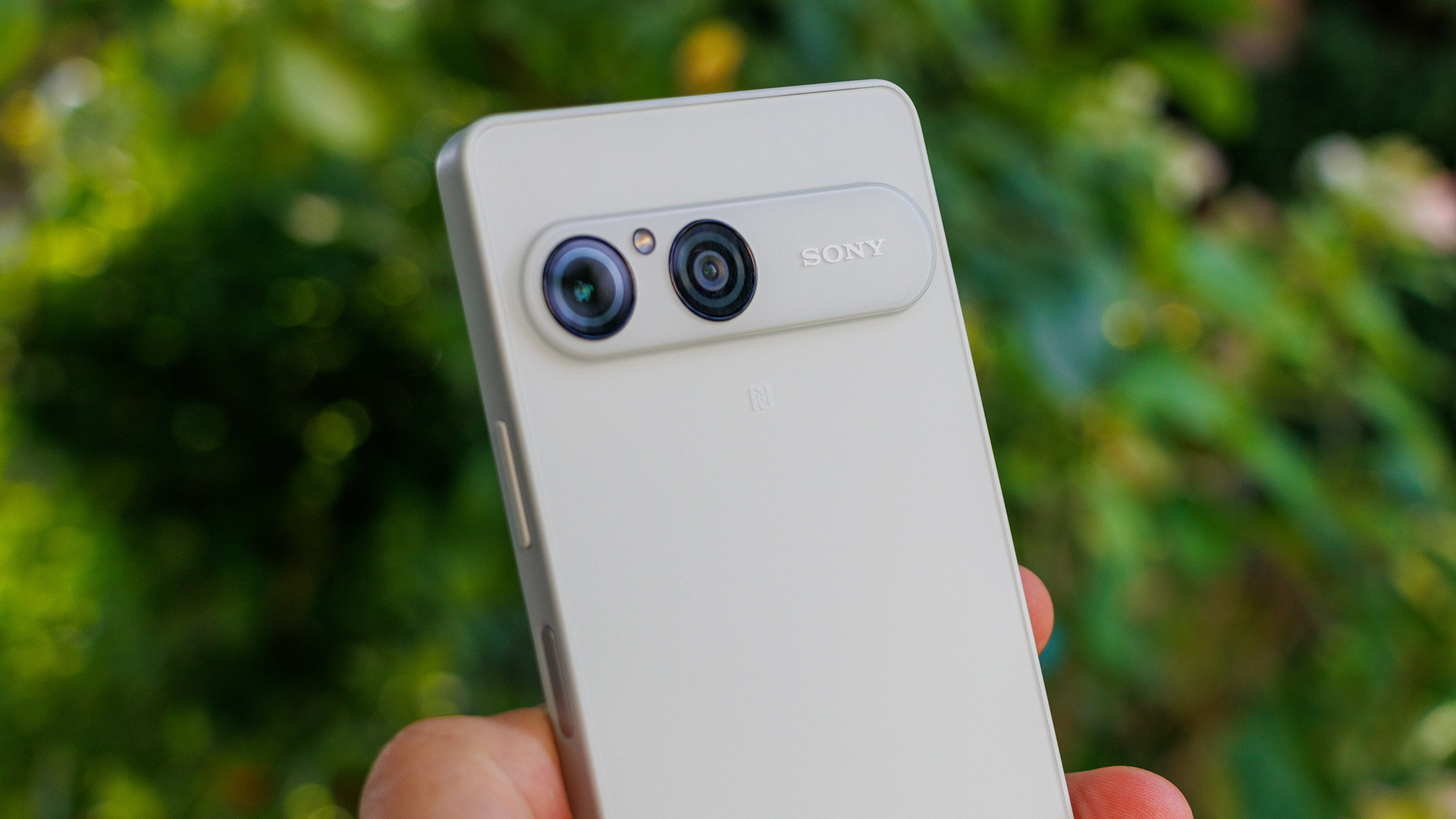
The Sony Xperia 10 VIII stands out with its bright OLED display, good battery life, precise location tracking, and rare extras like a headphone jack and microSD slot. The smartphone's build quality, light weight, and compact design are also appealing.
However, the high price is offset by a slow Snapdragon 6 Gen 3 processor, only 128 GB of storage, USB 2.0, and unchanged cameras from the previous generation.
The lack of HDR support and occasional stuttering also detract from the overall impression. That being said, compared to the Xperia 10 VII, the significantly brighter display in particular stands out as a real improvement.
Other new features are relatively minor. Given the substantial price increase, Sony offers too little added value overall compared to its predecessor.
Pros
Cons
Price and availability

- $1,449.99Sony Xperia 1 VII XQ-FS72 512GB 12GB Dual SIM Factory Unlocked GSM Smartphone, 5G 6.5" 120Hz OLED Display, 48MP Camera - International Version (Orchid Purple)
- $402.80Google Pixel 10a - 30+ Hours Battery, Camera Coach, Gemini - Obsidian 128GB
- $949.00Sony Xperia 10 V XQ-DC72 5G Dual 128GB ROM 8GB RAM Factory Unlocked (GSM Only | No CDMA - not Compatible with Verizon/Sprint) NGP Wireless Charger Included, Global Mobile Cell Phone - Black
Table of Contents
- Verdict on the Sony Xperia 10 VIII
- Specifications: Sony Xperia 10 VIII
- Build: The Xperia 10 Mk 8 is dust- and water-resistant
- Features: Expensive mid-range model with only USB 2.0
- Software: Only four years of Android version updates
- Communication and GNSS: Xperia 10 VIII with 6 GHz Wi-Fi
- Phone features and call quality
- Cameras: Slow dual-lens system in the Xperia 10 VIII
- Accessories and warranty: A yawning void
- Input devices and operation
- Display: Brighter but without HDR support
- Performance: Sony Xperia 10 VIII with Snapdragon 6 Gen 3
- Emissions: Good speakers in the Xperia 10 VIII
- Battery life: Xperia 10 VIII with a 5,000 mAh cell
- Notebookcheck's overall impressions of the Sony Xperia 10 VIII
- Potential alternatives in comparison
With the Xperia 10 VIII, Sony is focusing on evolution rather than a fresh start. Compared to the Xperia 10 VII, much remains unchanged: the manufacturer has retained the Snapdragon 6 Gen 3 SoC, 5,000-mAh battery, 128 GB of storage, and the basic camera features.
The most noteworthy addition this time is the significantly brighter 120-Hz OLED display, along with minor adjustments to the hardware and software.
At the same time, the MSRP has increased from €449 to €599. Whether these few improvements justify this substantial price increase remains to be seen in our following review of the Xperia 10 VIII.
Specifications: Sony Xperia 10 VIII
Build: The Xperia 10 Mk 8 is dust- and water-resistant
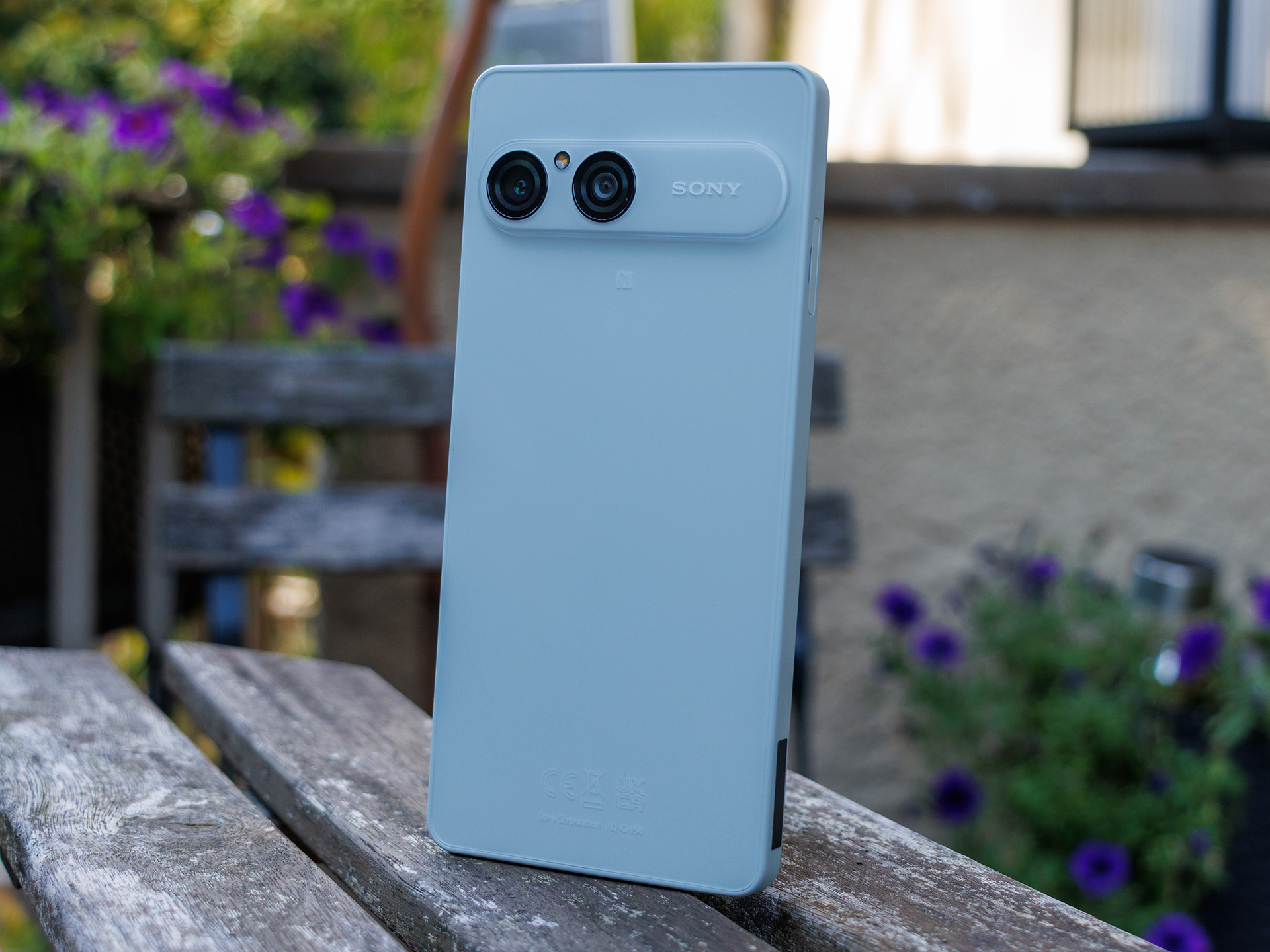
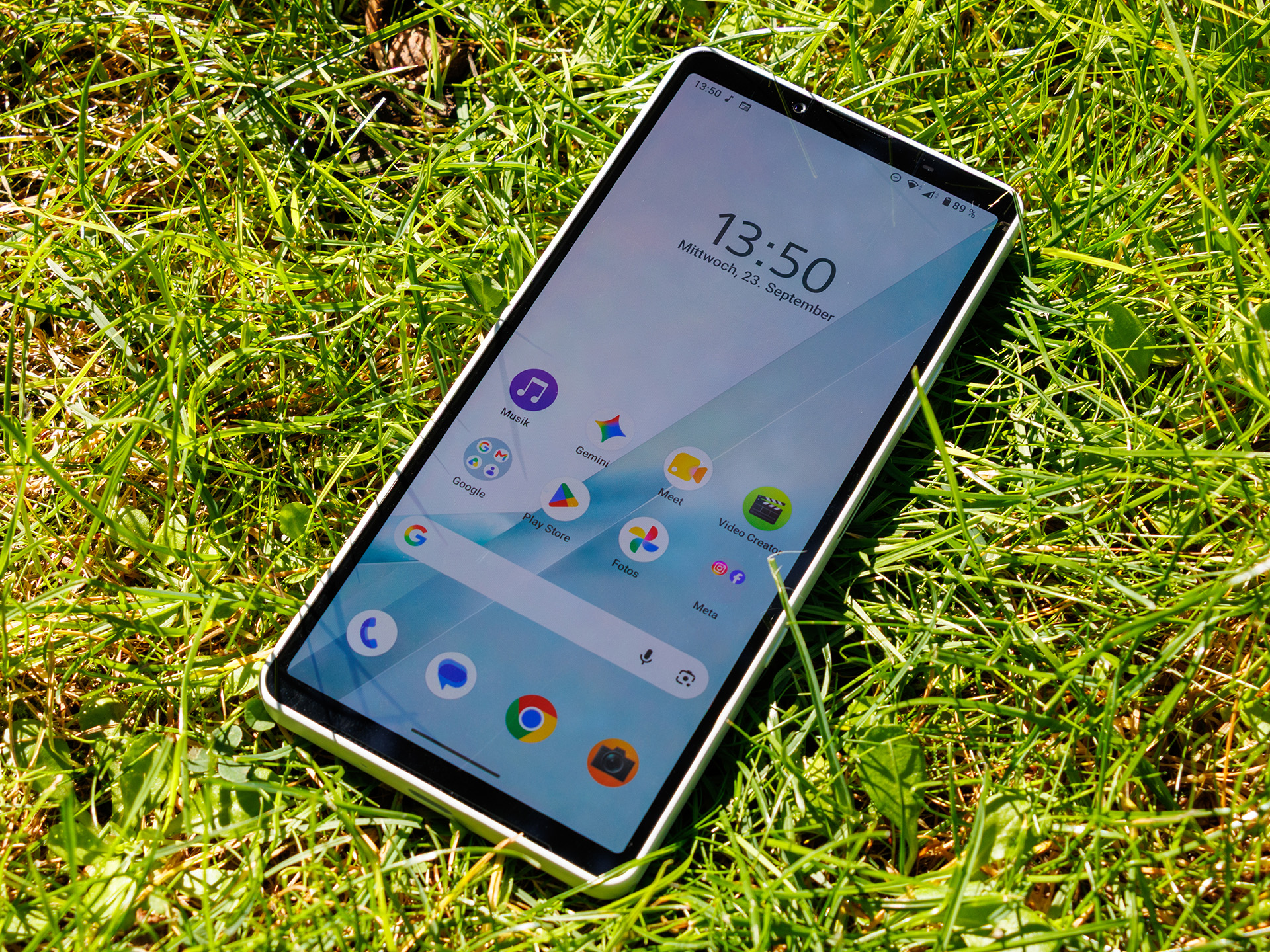
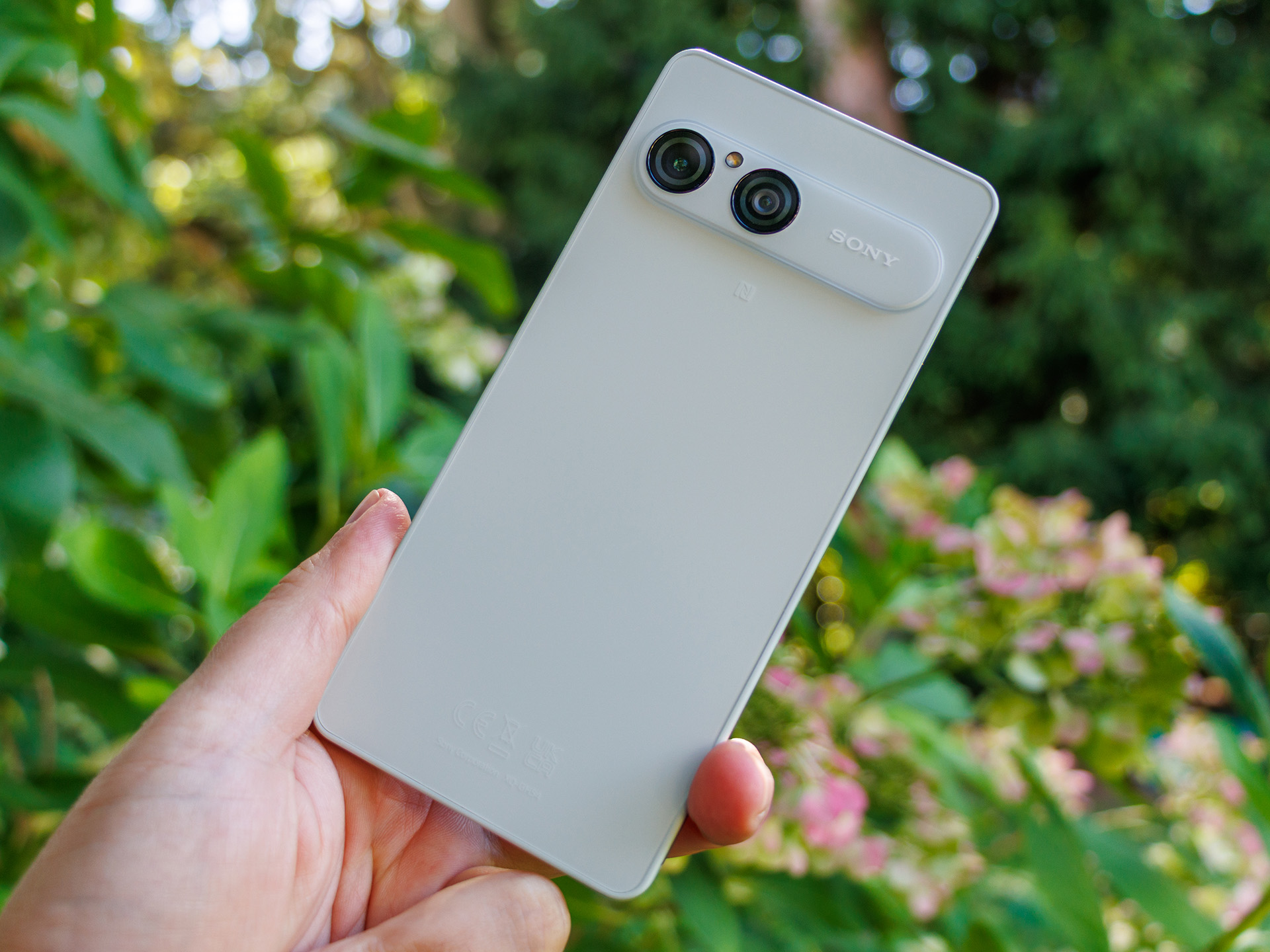
The Sony Xperia 10 VIII is one of the more compact smartphones, but it’s a bit on the thicker side at 8.3 mm. We measured 8.5 mm at the outer edges, and up to 10.1 mm including the camera. Weighing 168 g, it’s relatively light and fits comfortably in the hand.
With its rather thick screen bezels, the Sony smartphone looks a bit dated. On the other hand, the display isn’t interrupted by a camera, and the two speakers face forward. The build quality impresses in our test with even and tight gaps. During torsion tests, the Xperia 10 Mk 8 remains rigid and silent.
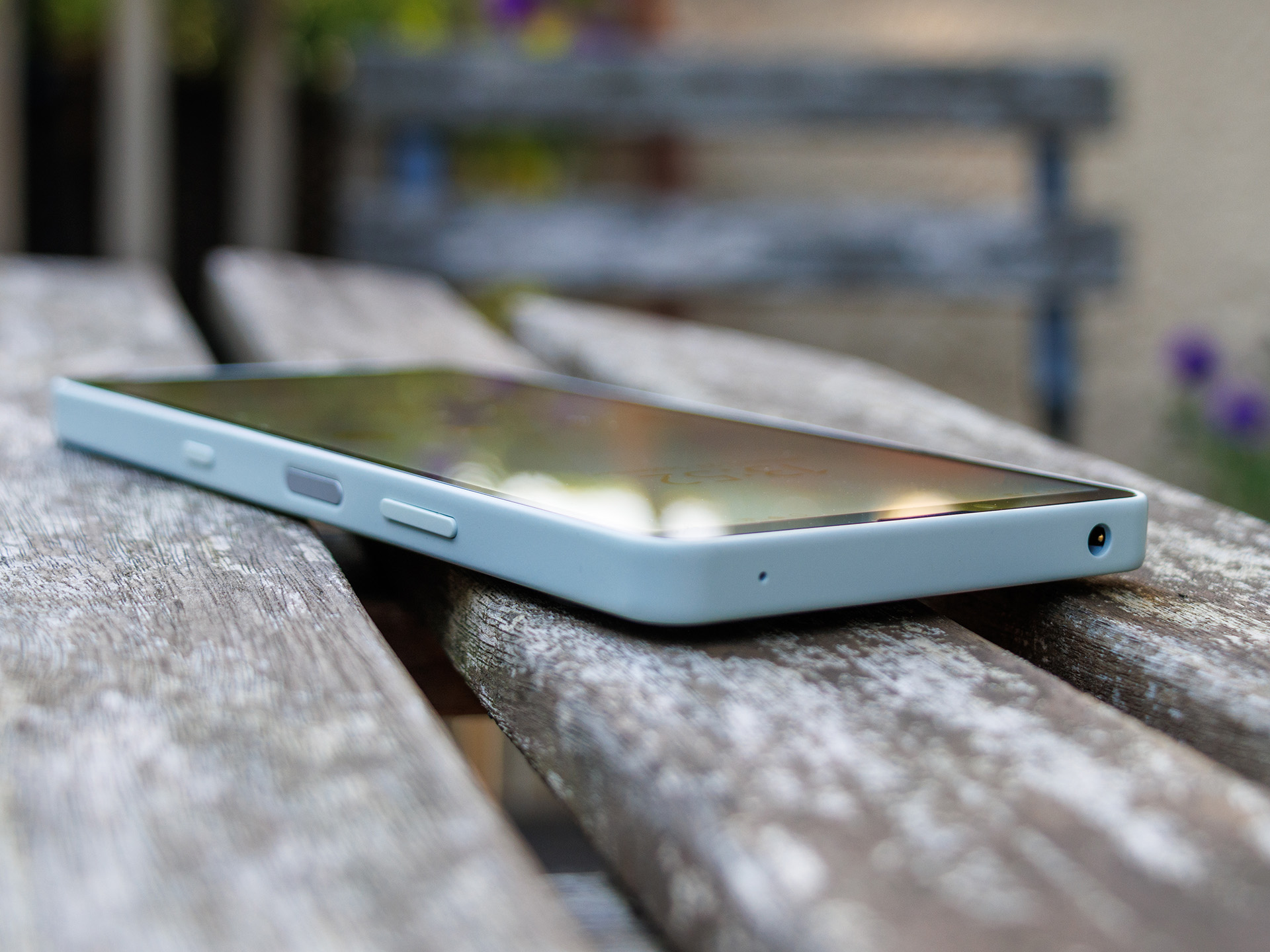
The phone is both dust- and water-resistant according to IP65/IP68 standards. Access to the SIM card and microSD slot is also tool-free.
The Xperia 10 VIII is available in Misty Lilac, Matte Gray, and Frozen White color options.
Features: Expensive mid-range model with only USB 2.0
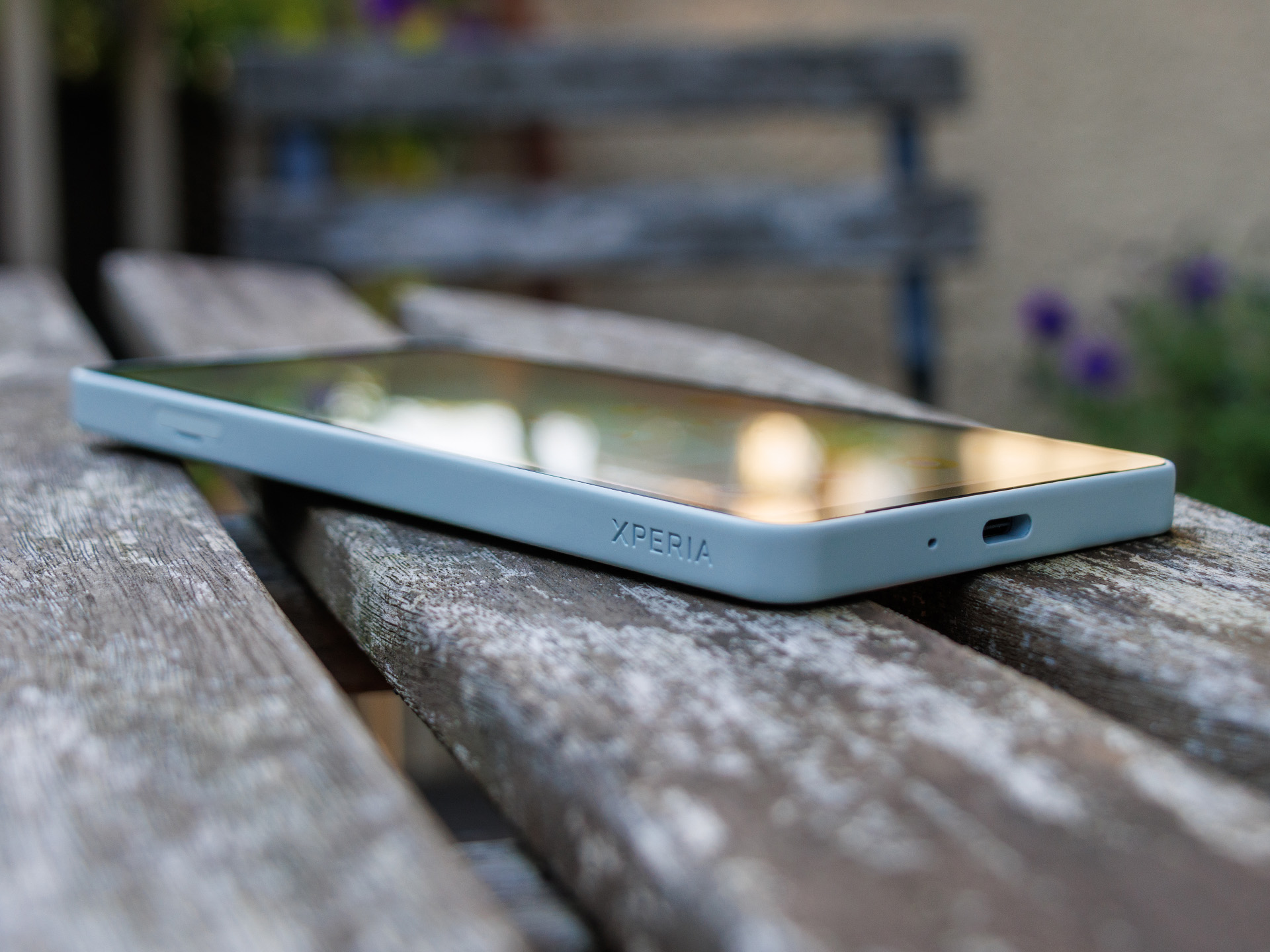
The Sony Xperia 10 VIII is once again available only with 128 GB of storage, though this can still be expanded using a microSD card. Another rarity is the built-in headphone jack. But that’s about it for the special features.
For a €600 smartphone, USB 2.0 feels rather meager. Additionally, connected storage devices formatted with NTFS cannot be read. Bluetooth 5.4 and NFC are also on board.
microSD card reader
Although the microSD card reader is slightly faster in testing than its predecessor, it still isn’t exactly setting the world on fire. On the plus side, the card can be swapped out without any additional tools.
| SD Card Reader - average JPG Copy Test (av. of 3 runs) | |
| Average of class Smartphone (5.72 - 58.9, n=55, last 2 years) | |
| Sony Xperia 10 VIII (Angelbird AV Pro V60) | |
| Sony Xperia 10 VII (Angelbird AV Pro V60) | |
Cross-Platform Disk Test (CPDT)
Software: Only four years of Android version updates
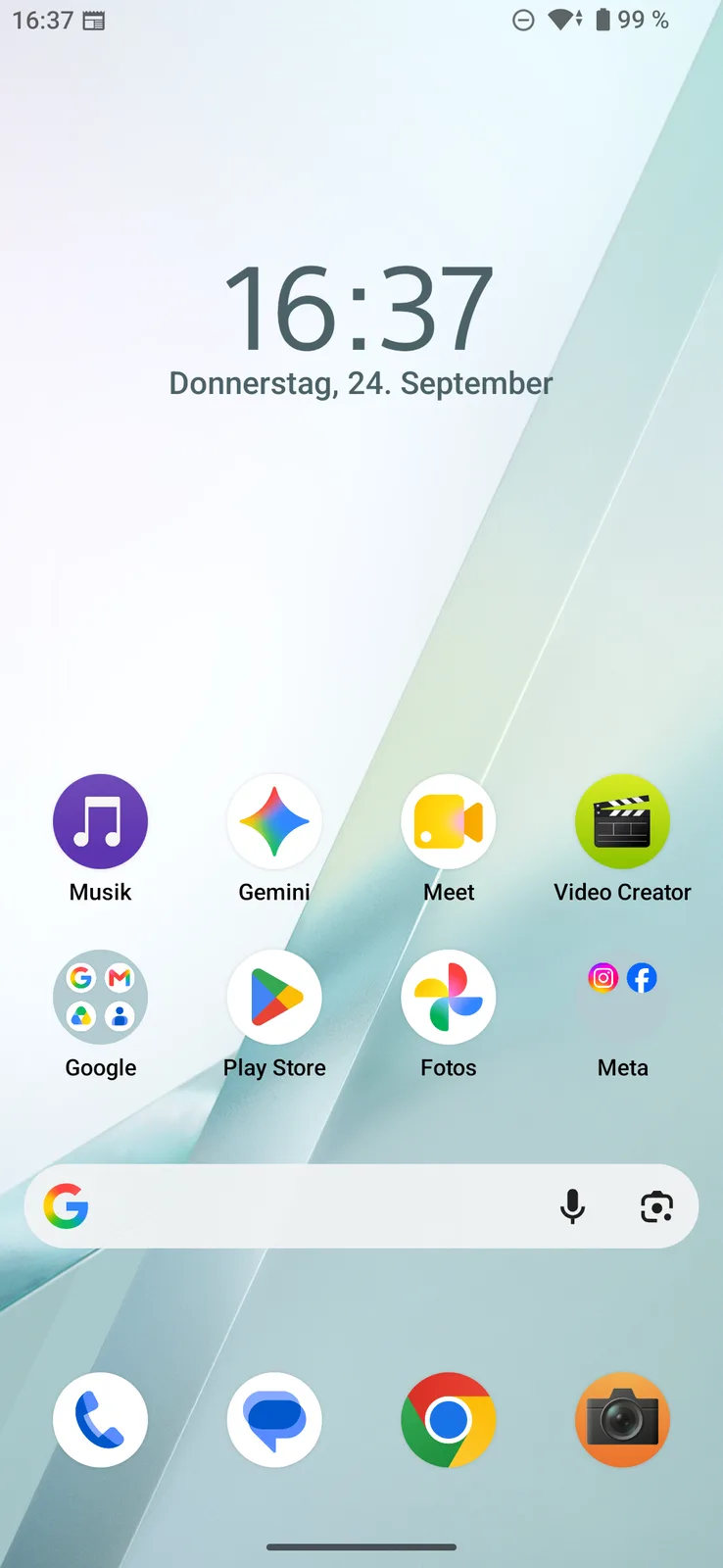
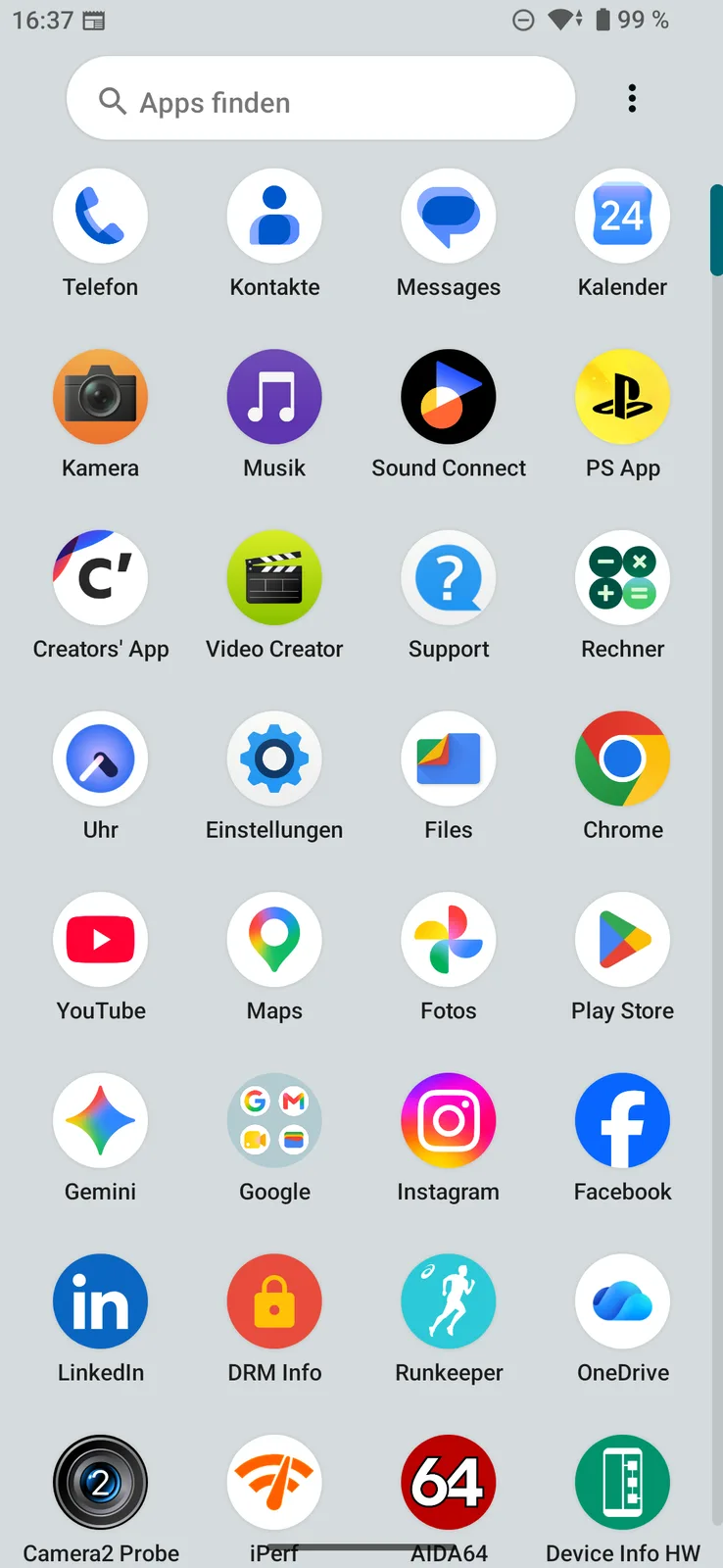
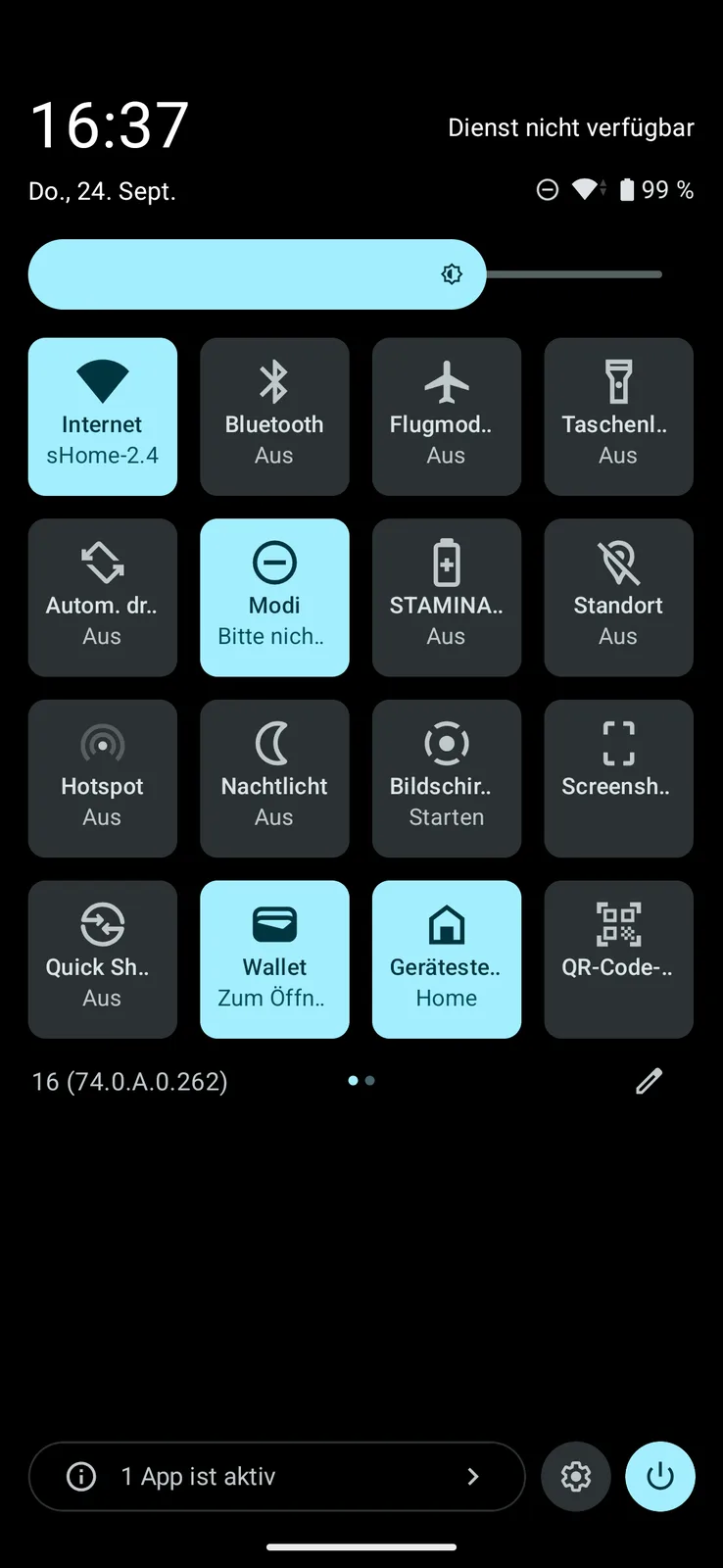
The Sony Xperia 10 VIII ships with Google Android 16 and receives four years of version updates as well as two additional years of security patches.
Sony preinstalls a few of its own apps but is sparing with third-party apps. Only Facebook, Instagram, and LinkedIn come preinstalled.
However, these apps cannot be completely uninstalled but only disabled.
Sustainability
Sony remains rather vague regarding the Xperia 10 VIII when it comes to sustainability aspects. The housing contains recycled plastic, but the manufacturer does not specify the exact percentage of recycled material.
The packaging consists of paper and Sony’s original blended material made from bamboo, sugarcane fibers, and recycled paper. Sony also does not provide a product-specific carbon footprint.
Sony does not offer a self-repair program for the Xperia 10 VIII. For hardware defects, the manufacturer refers users to its repair service and authorized service centers.
Communication and GNSS: Xperia 10 VIII with 6 GHz Wi-Fi
Sony isn’t exactly generous when it comes to supporting a wide range of mobile frequencies, and this applies to both 4G and 5G. Within Europe, however, this isn’t a problem; it’s only during intercontinental travel that one or two bands may be missing.
Although Wi-Fi 7 isn’t built in, at least 6 GHz Wi-Fi is supported. In testing, this not only delivers high data transfer rates but also ensures stable performance.
| Networking | |
| Sony Xperia 10 VIII | |
| iperf3 transmit Wi-Fi6/7 RT-BE96U | |
| iperf3 transmit Wi-Fi6/7 RT-BE96U | |
| iperf3 receive Wi-Fi6/7 RT-BE96U | |
| iperf3 receive Wi-Fi6/7 RT-BE96U | |
| Google Pixel 10a | |
| iperf3 transmit Wi-Fi6/7 RT-BE96U | |
| iperf3 receive Wi-Fi6/7 RT-BE96U | |
| Samsung Galaxy A57 | |
| iperf3 transmit AXE11000 6GHz | |
| iperf3 receive AXE11000 6GHz | |
| Xiaomi Redmi Note 17 Pro Max 5G | |
| iperf3 transmit Wi-Fi6/7 RT-BE96U | |
| iperf3 receive Wi-Fi6/7 RT-BE96U | |
| Nothing Phone (4a) Pro | |
| iperf3 transmit AXE11000 6GHz | |
| iperf3 receive AXE11000 6GHz | |
| Sony Xperia 10 VII | |
| iperf3 transmit AXE11000 | |
| iperf3 receive AXE11000 | |
| iperf3 transmit AXE11000 6GHz | |
| iperf3 receive AXE11000 6GHz | |
| Average Wi-Fi 6E | |
| iperf3 transmit AXE11000 | |
| iperf3 receive AXE11000 | |
| iperf3 transmit AXE11000 6GHz | |
| iperf3 receive AXE11000 6GHz | |
| iperf3 transmit Wi-Fi6/7 RT-BE96U | |
| iperf3 receive Wi-Fi6/7 RT-BE96U | |
| Average of class Smartphone | |
| iperf3 transmit AXE11000 | |
| iperf3 receive AXE11000 | |
| iperf3 transmit AXE11000 6GHz | |
| iperf3 receive AXE11000 6GHz | |
| iperf3 transmit Wi-Fi6/7 RT-BE96U | |
| iperf3 receive Wi-Fi6/7 RT-BE96U | |
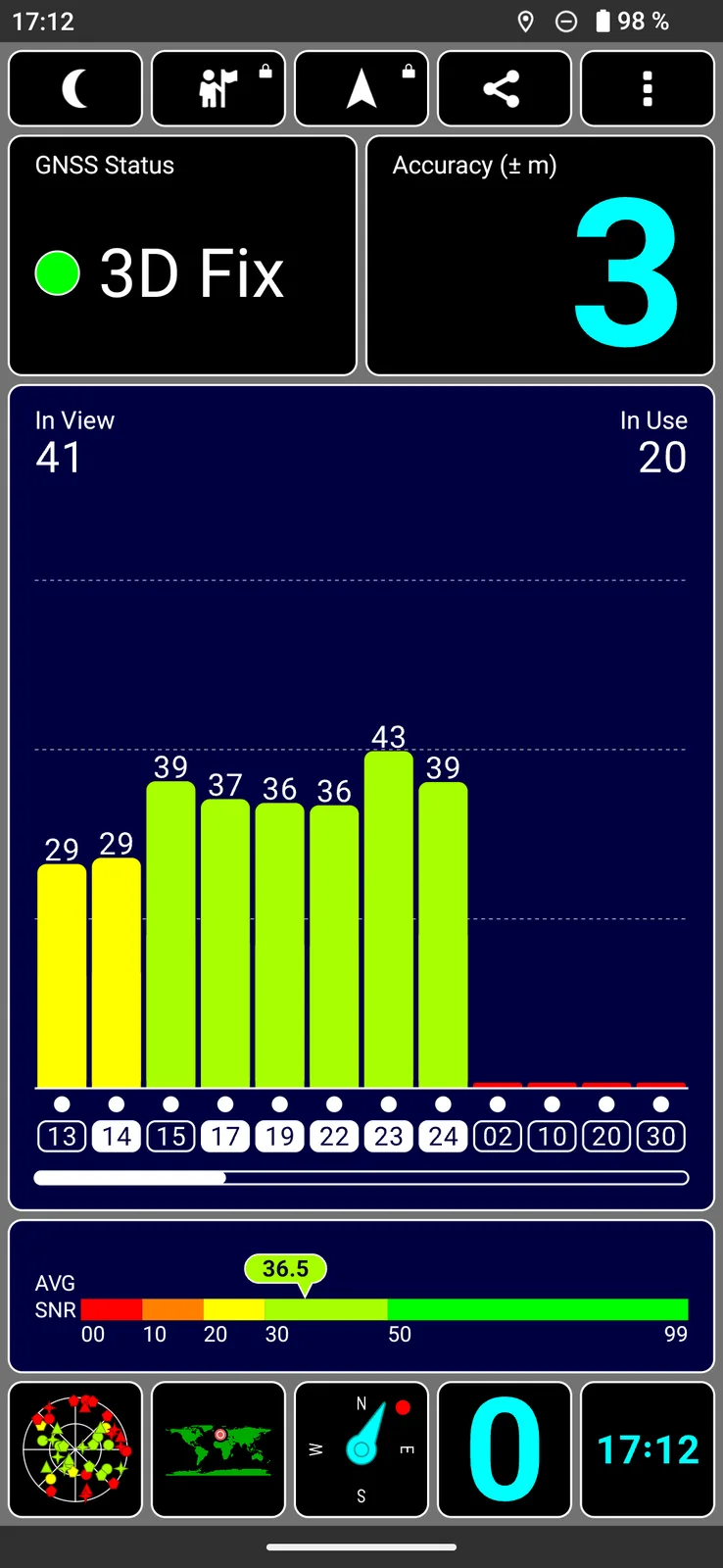
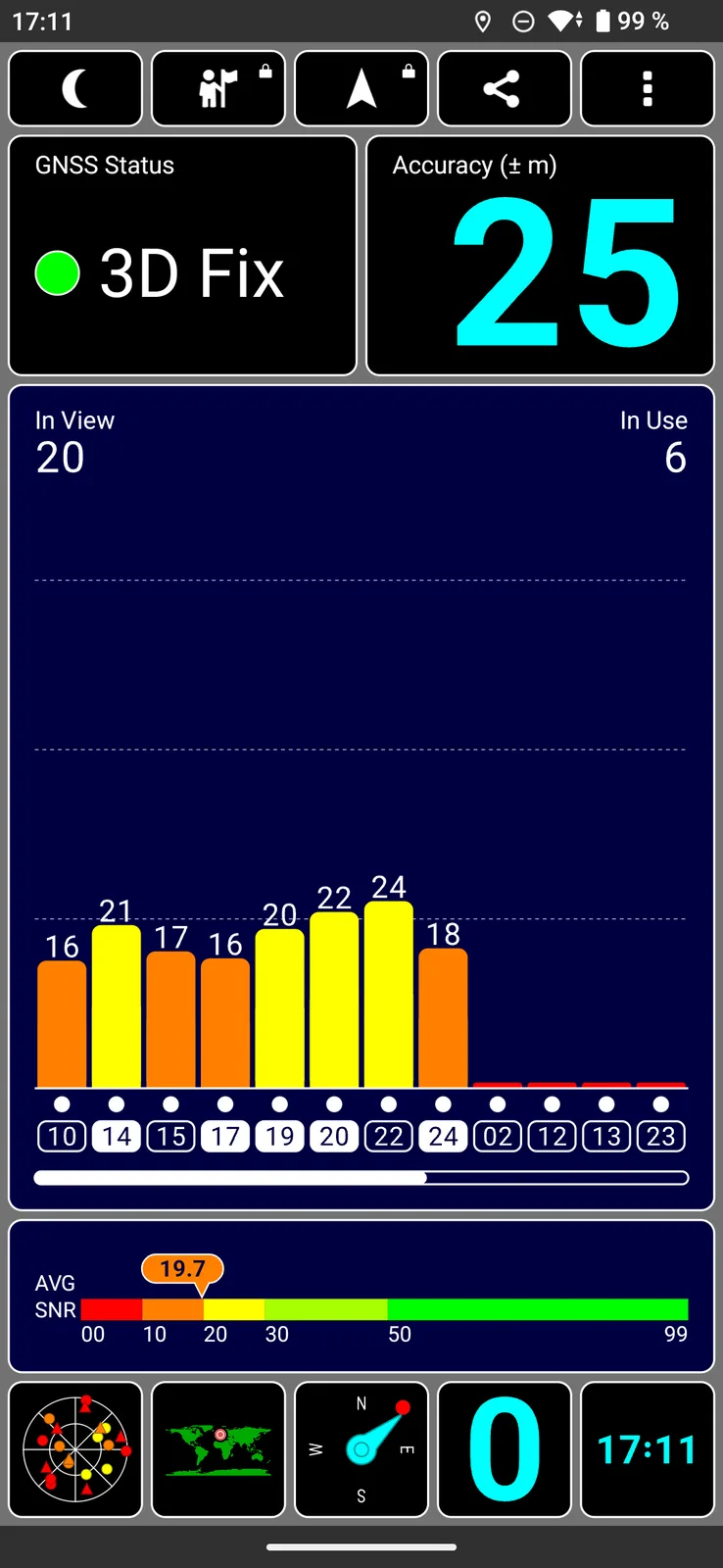
The Xperia 10 VIII's satfix is fast and accurate outdoors, even though the smartphone only supports single-band GNSS. It doesn’t take much longer indoors, but it is significantly less precise and also fluctuates considerably.
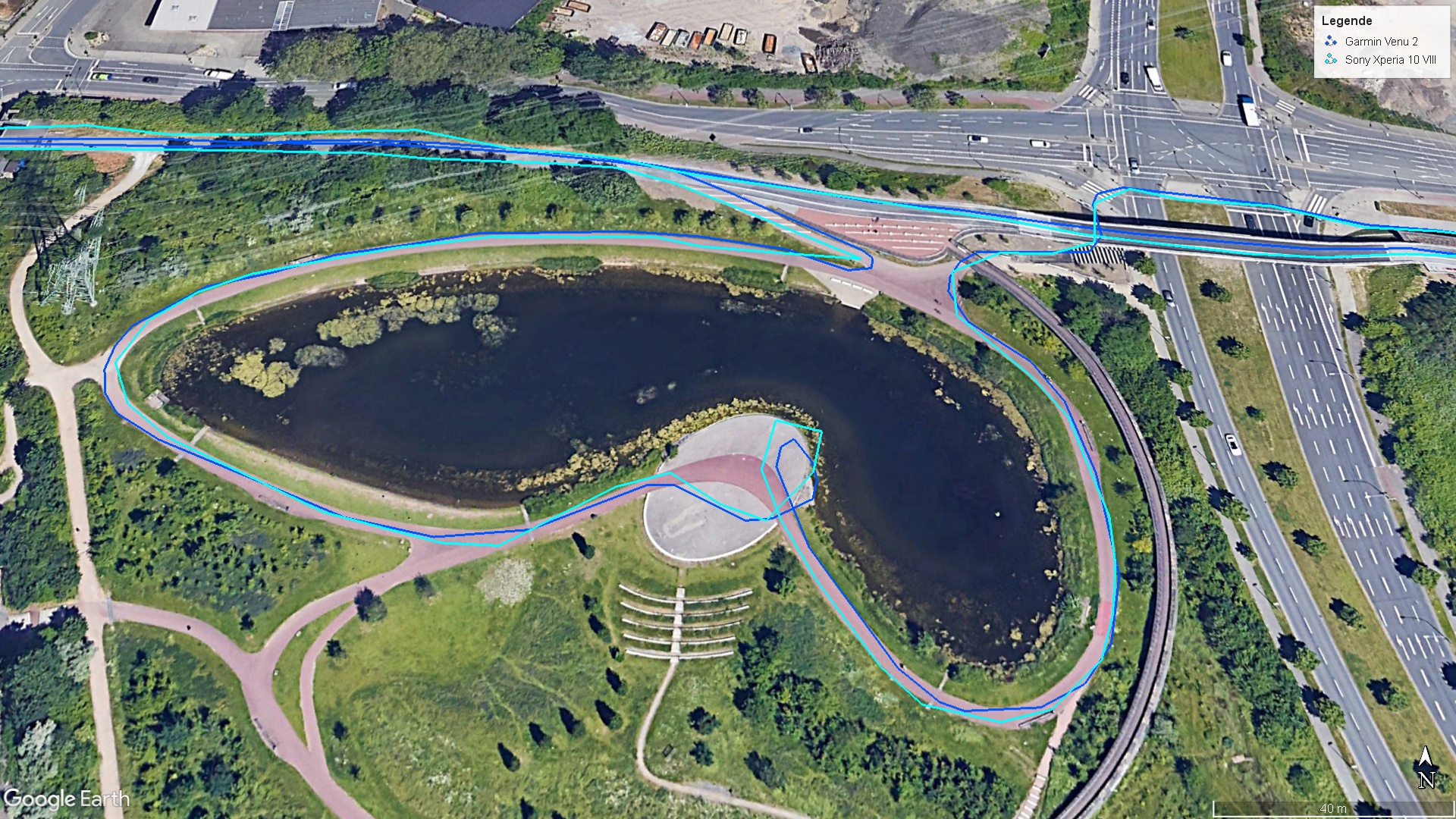
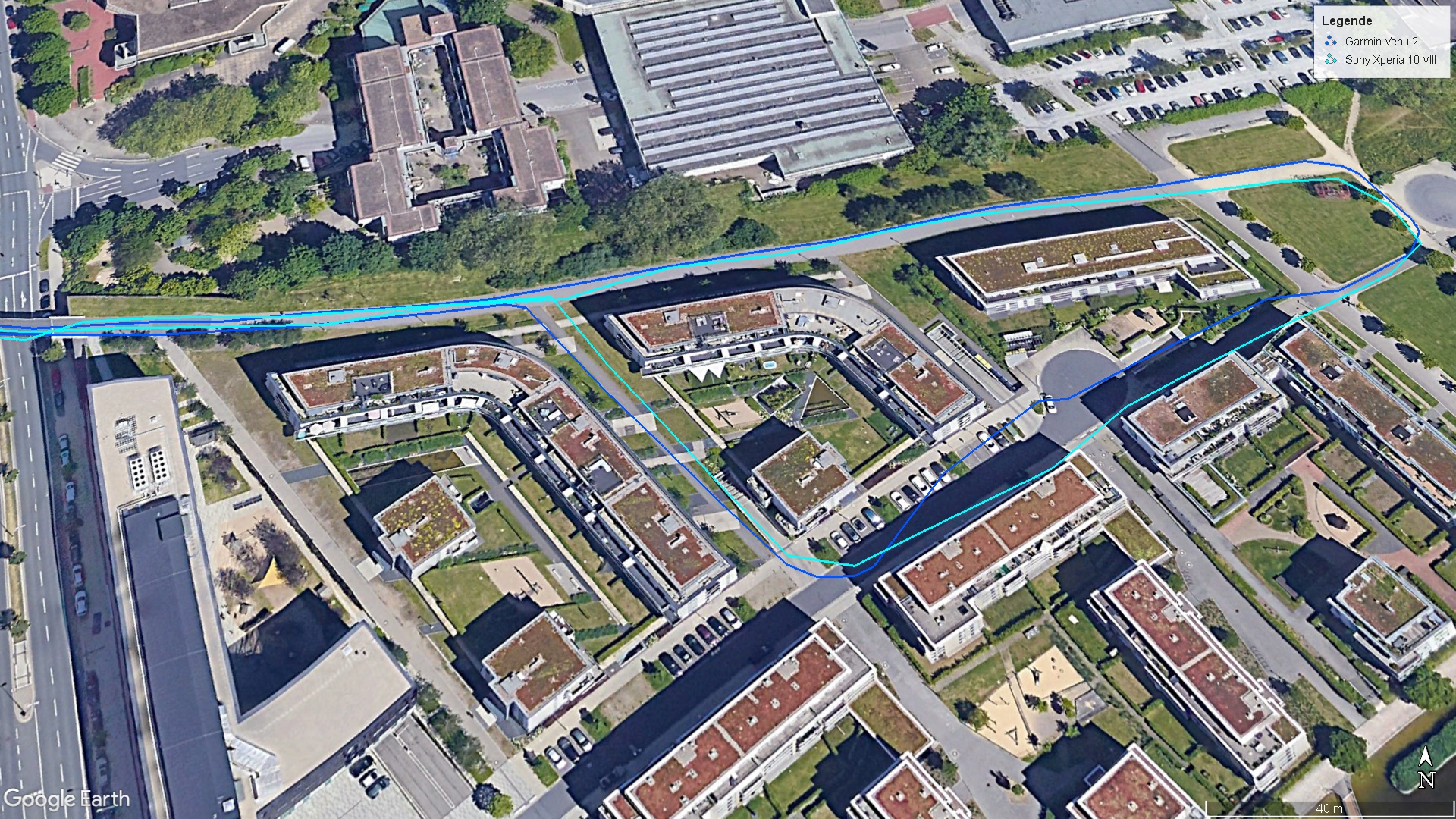
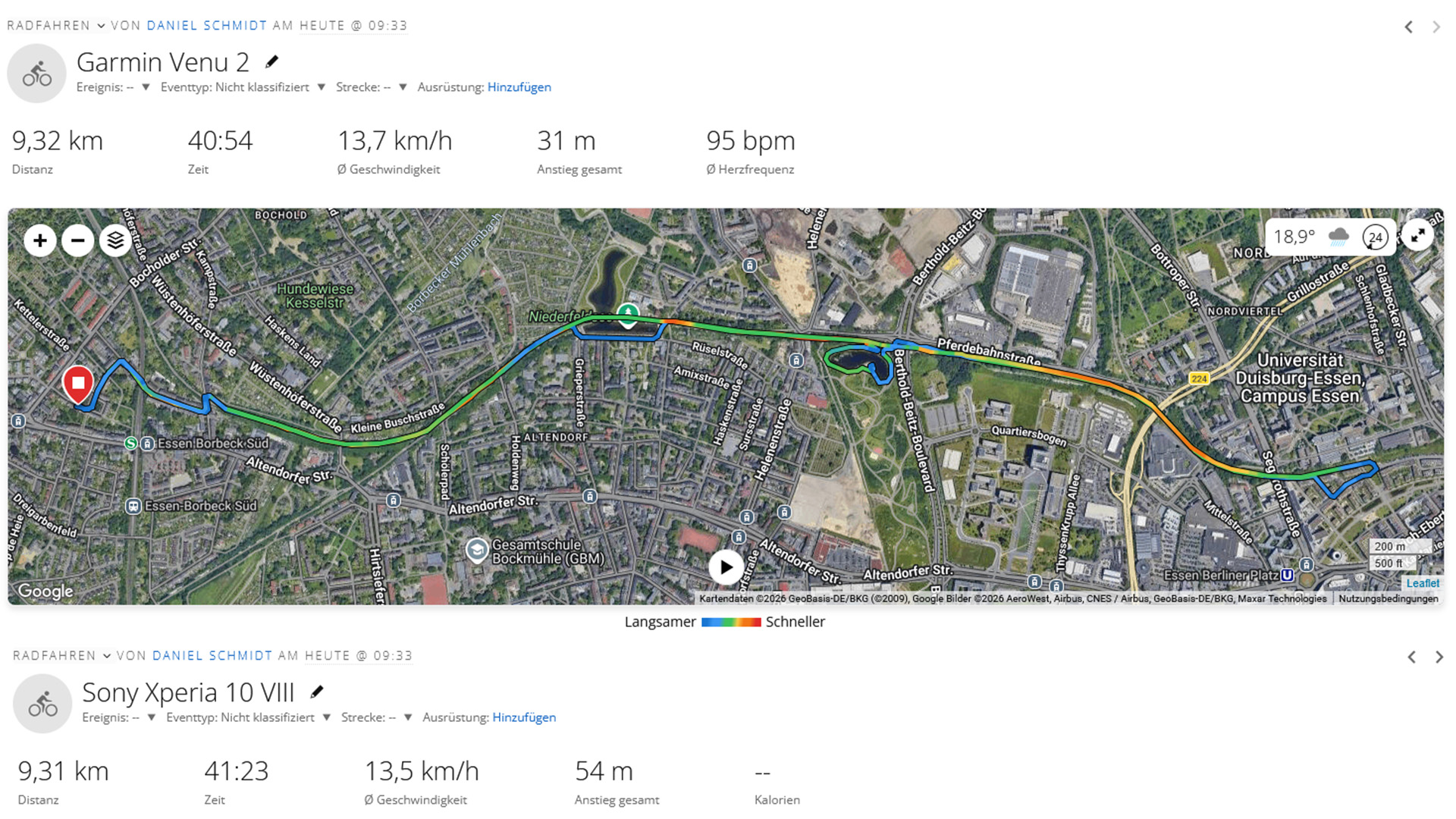
On a bike ride, we compare the smartphone’s positioning capabilities with those of a Garmin Venu 2. The two devices largely agree on the recorded total distance, differing by only 10 m.
While the smartwatch tracks the distance traveled more accurately by the lake, the Xperia phone is more precise in the city center.
Phone features and call quality
The call quality of the Sony Xperia 10 VIII felt quite natural when held to the ear, though the suppression of background noise could be better.
Only a nano-SIM card and/or an eSIM can be used.
Cameras: Slow dual-lens system in the Xperia 10 VIII

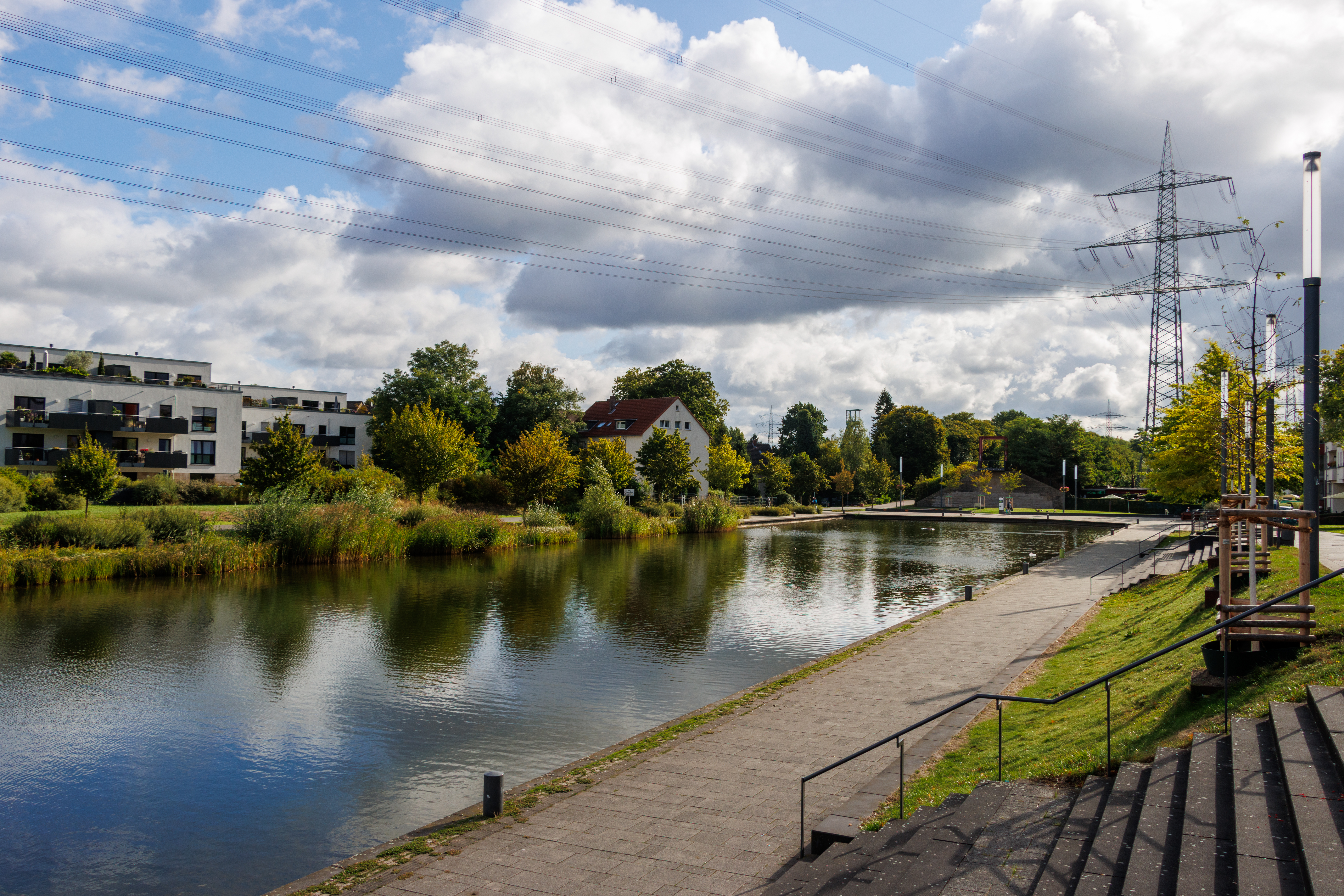
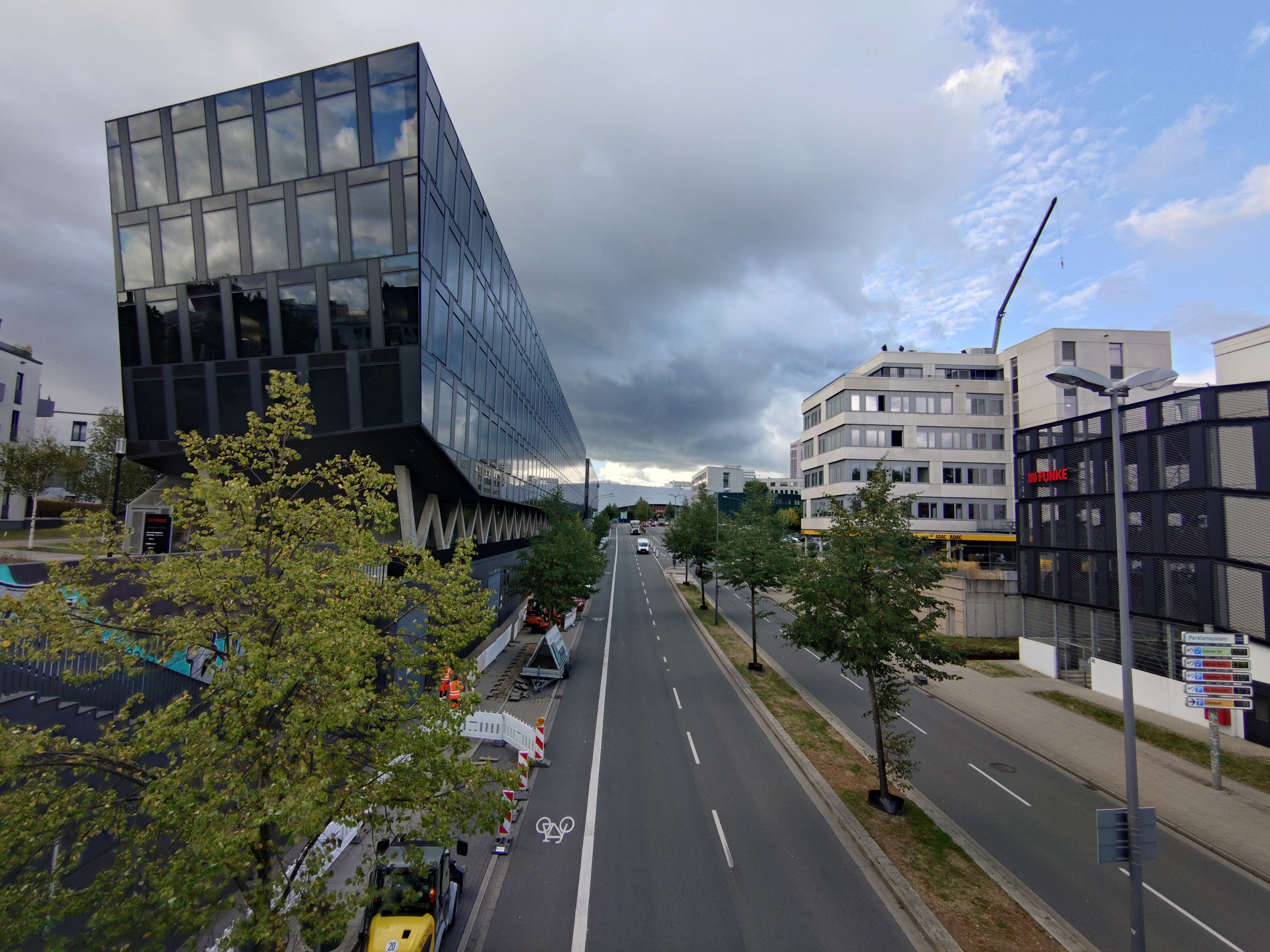
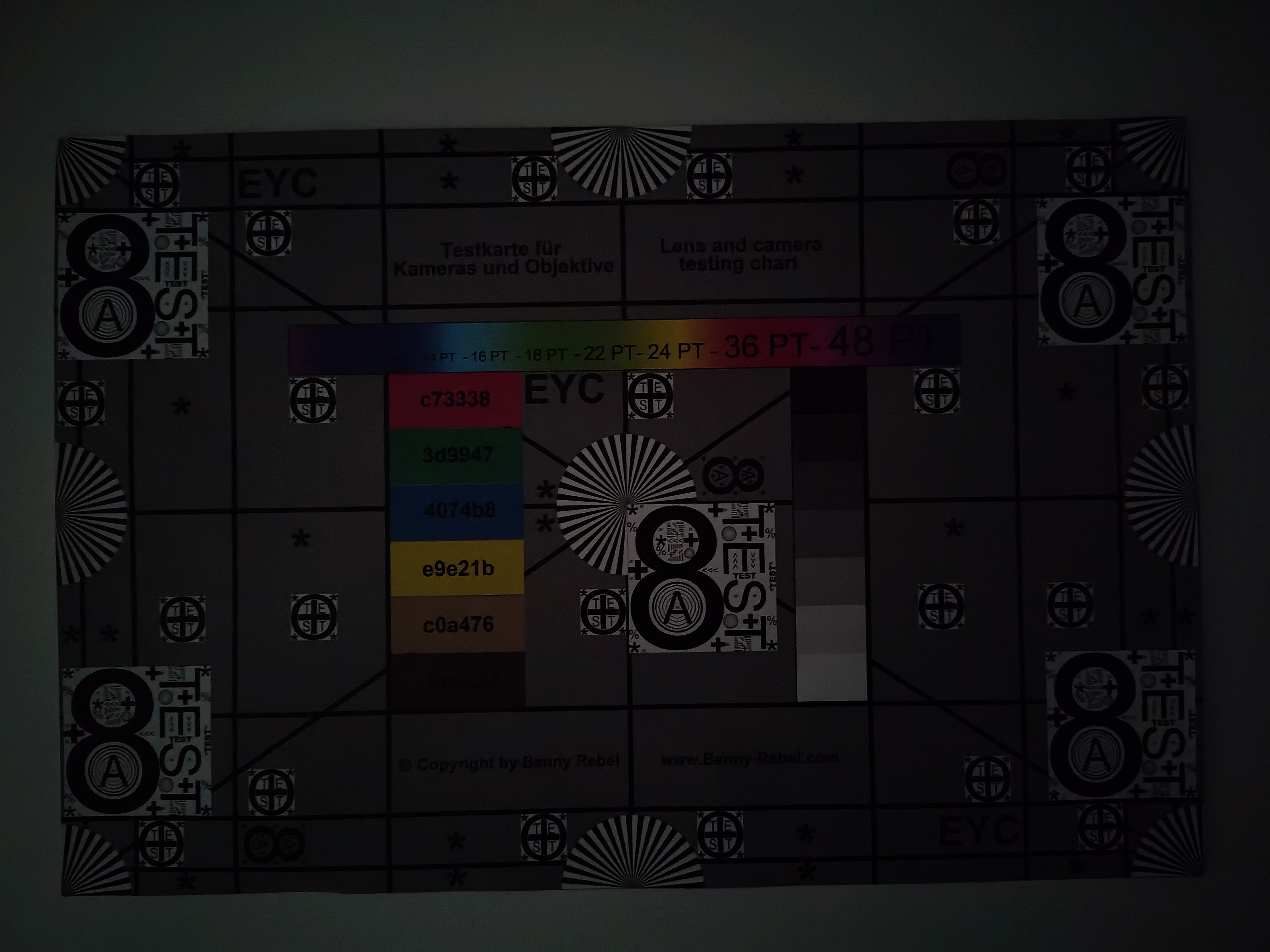
As for the cameras, everything remains the same — they’re identical to those on the Xperia 10 VII. Despite the small front-facing sensor, it takes pretty good selfies in daylight. However, the camera only records video in HD or full HD at 30 fps.
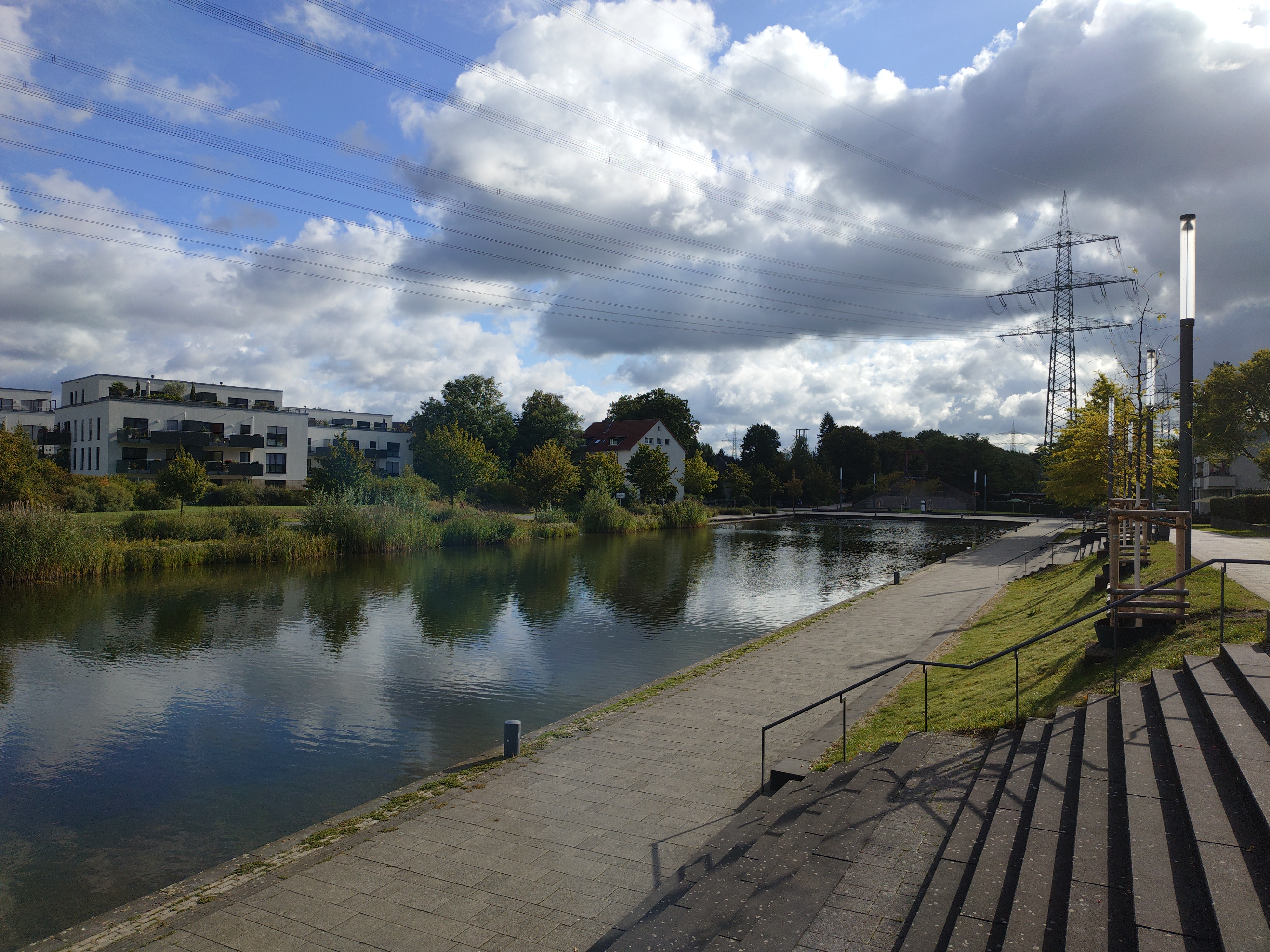
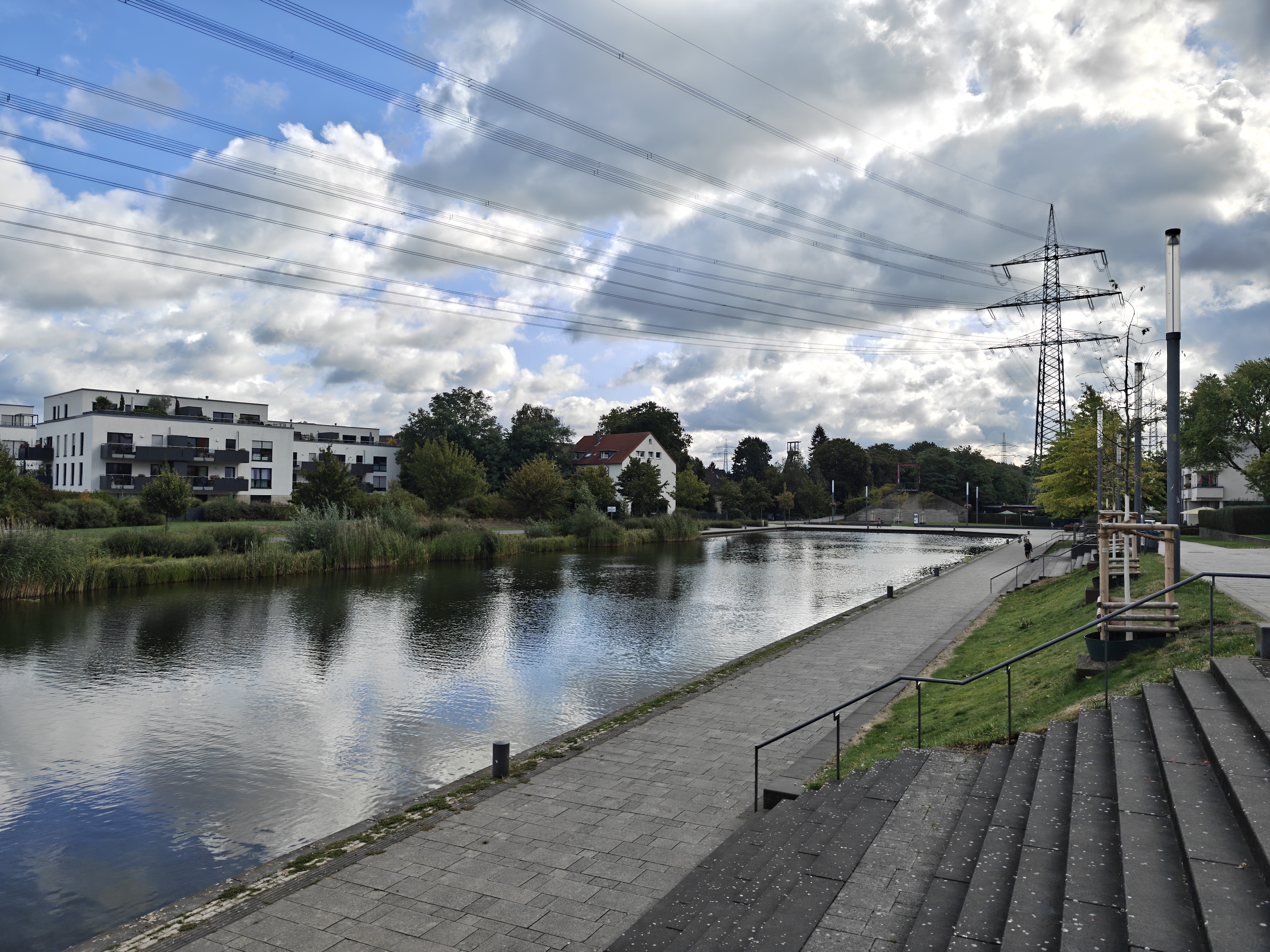
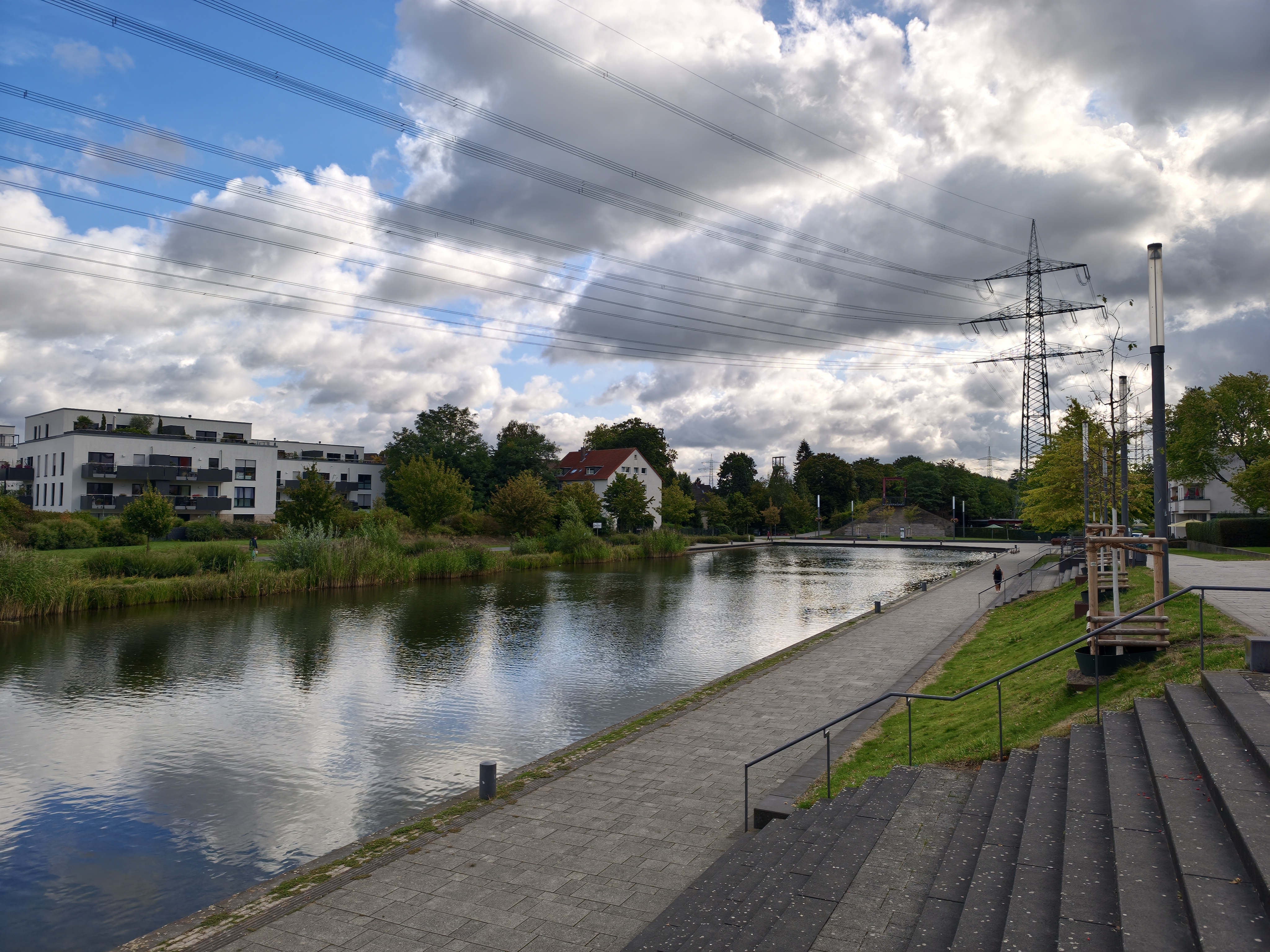
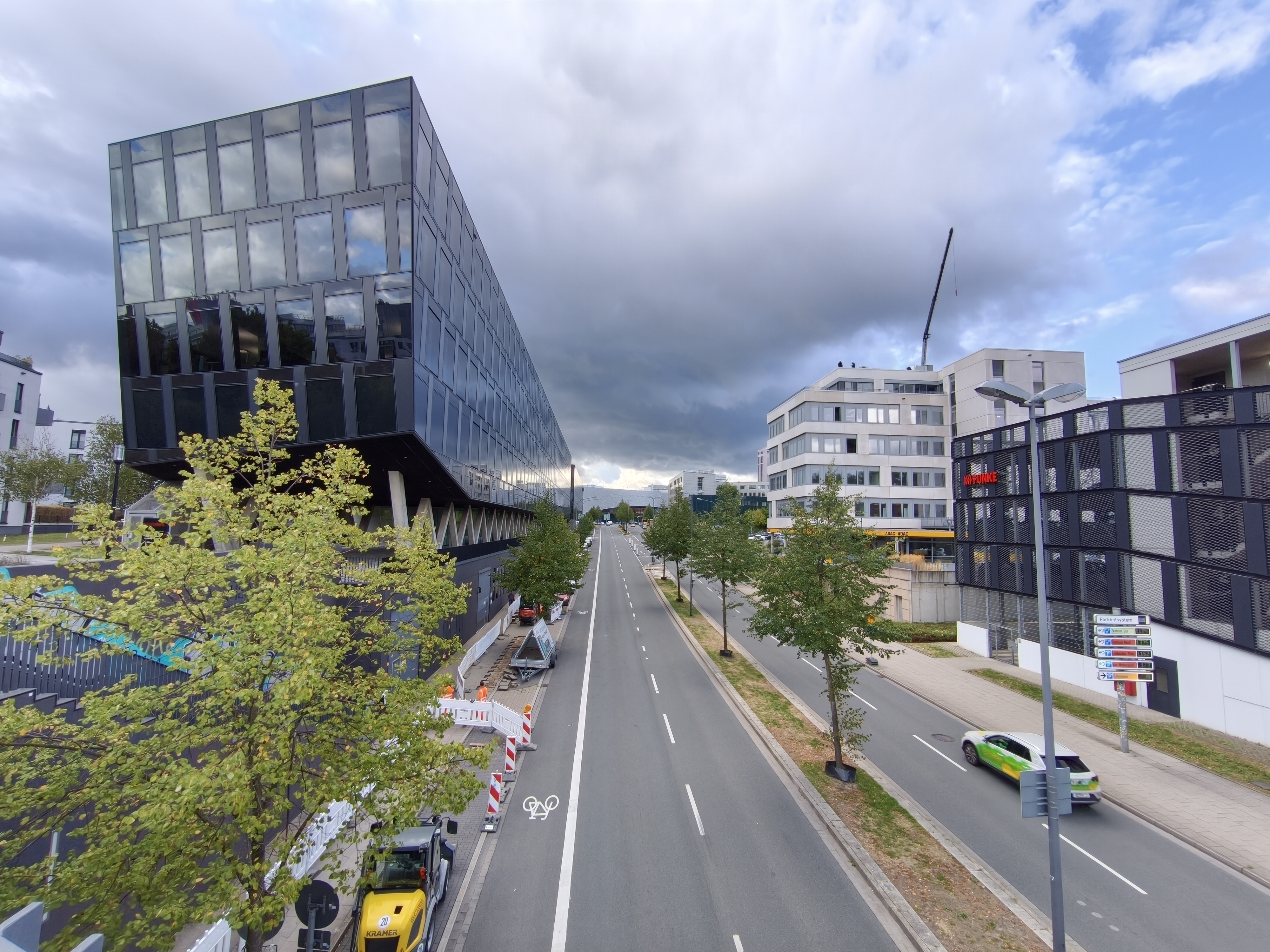
The main rear sensor is complemented by an ultra-wide-angle lens. The former features natural white balance and could benefit from a bit more dynamic range, depending on the subject.
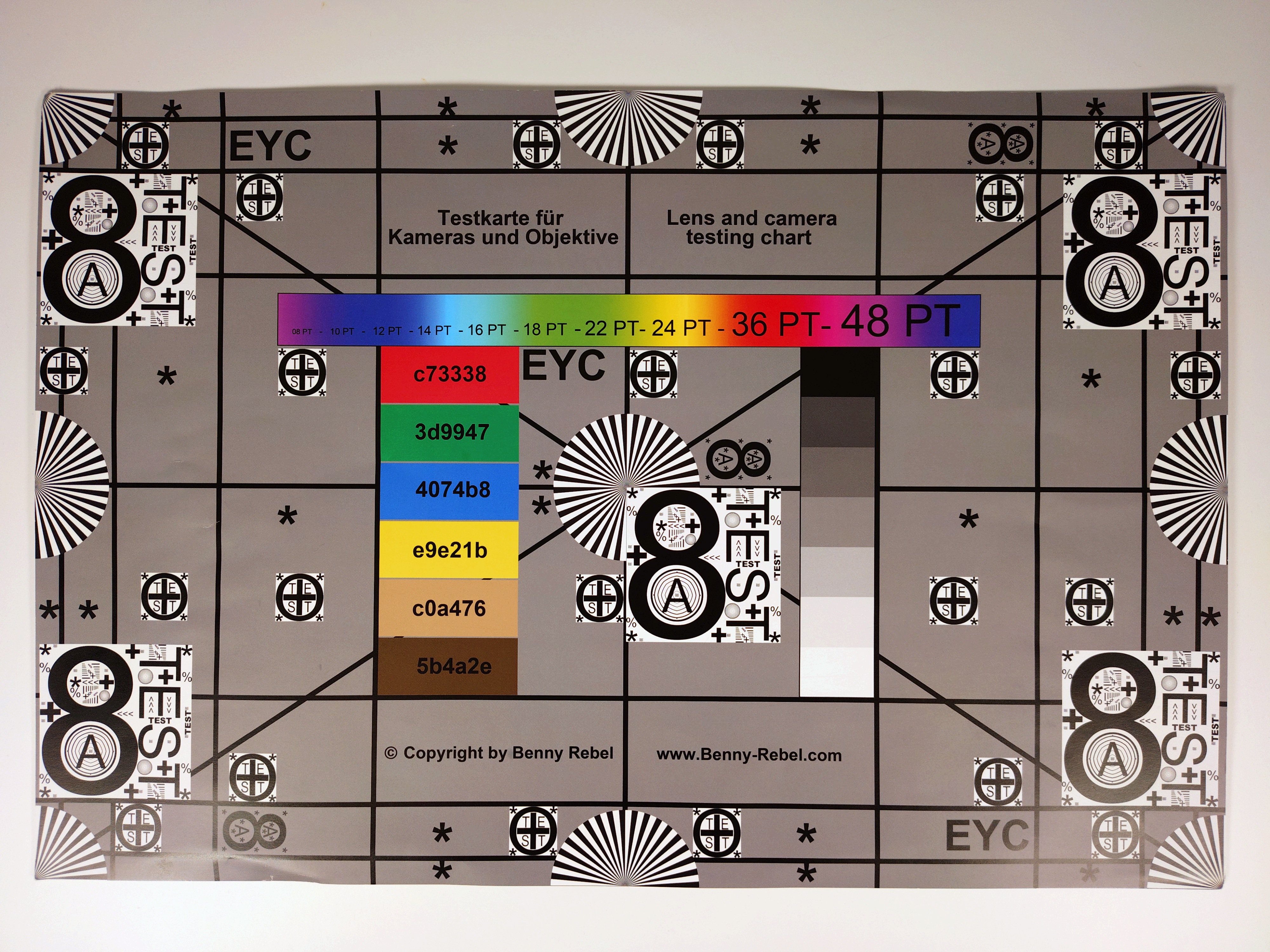
In low light, the camera still produces decent shots, though these require a long exposure time. The ultra-wide-angle lens offers a balanced overall composition, but the image becomes slightly blurry at the edges. Zooming is exclusively digital, and the maximum magnification possible is 6x.
The main camera records videos in ultra HD (30 fps) at best. However, this resolution — as well as full HD at 60 fps — is only available to the main sensor.
Image comparison
Choose a scene and navigate within the first image. One click changes the position on touchscreens. One click on the zoomed-in image opens the original in a new window. The first image shows the scaled photograph of the test device.
Main cameraMain cameraUltra wide-angle5x zoomLow light


















Accessories and warranty: A yawning void
Sony does not include any accessories in the package.
The warranty in Germany is valid for 24 months.
Input devices and operation
The Sony Xperia 10 VIII’s capacitive touchscreen works flawlessly and has good glide characteristics.
The fingerprint sensor is located in the power button and also works reliably in most cases. Sony has once again opted not to include additional facial recognition.
For the vibration motor, Sony continues to rely on an affordable ERM motor. While it’s powerful, it’s also feels a bit vague.
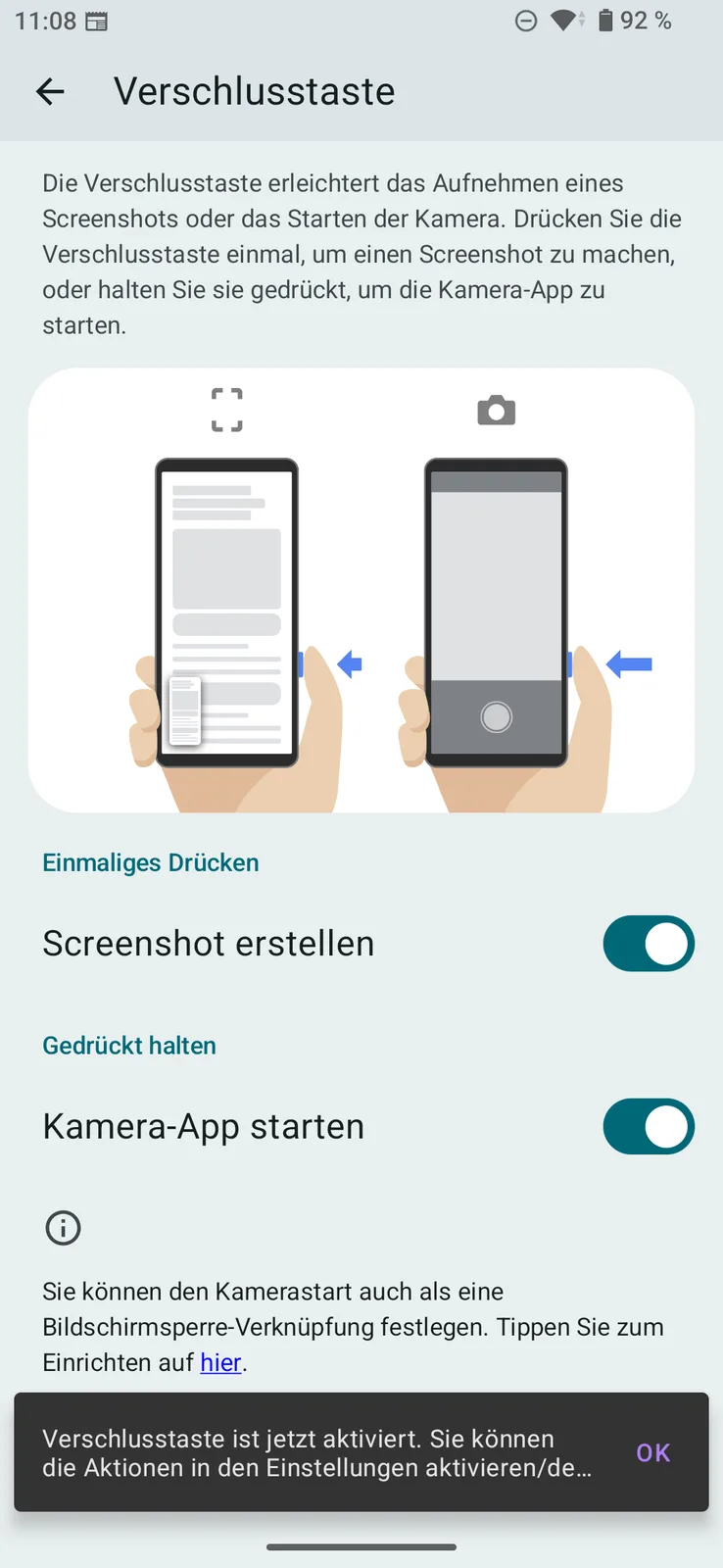
The dedicated shutter button can be used both to take screenshots and to launch the camera app. In the camera app, it serves as the shutter button.



Display: Brighter but without HDR support

The display on the Xperia 10 VIII is virtually unchanged from the previous generation; Sony has merely increased the brightness by about 50%, which our measurements also confirm.
Users who adjust the brightness manually can achieve up to 682 cd/m².
It’s a shame, however, that there’s no HDR support and the PWM frequency, at 480 Hz, isn’t particularly high. This means that PWM-sensitive users may experience discomfort.
| |||||||||||||||||||||||||
Brightness Distribution: 97 %
Center on Battery: 1522 cd/m²
Contrast: ∞:1 (Black: 0 cd/m²)
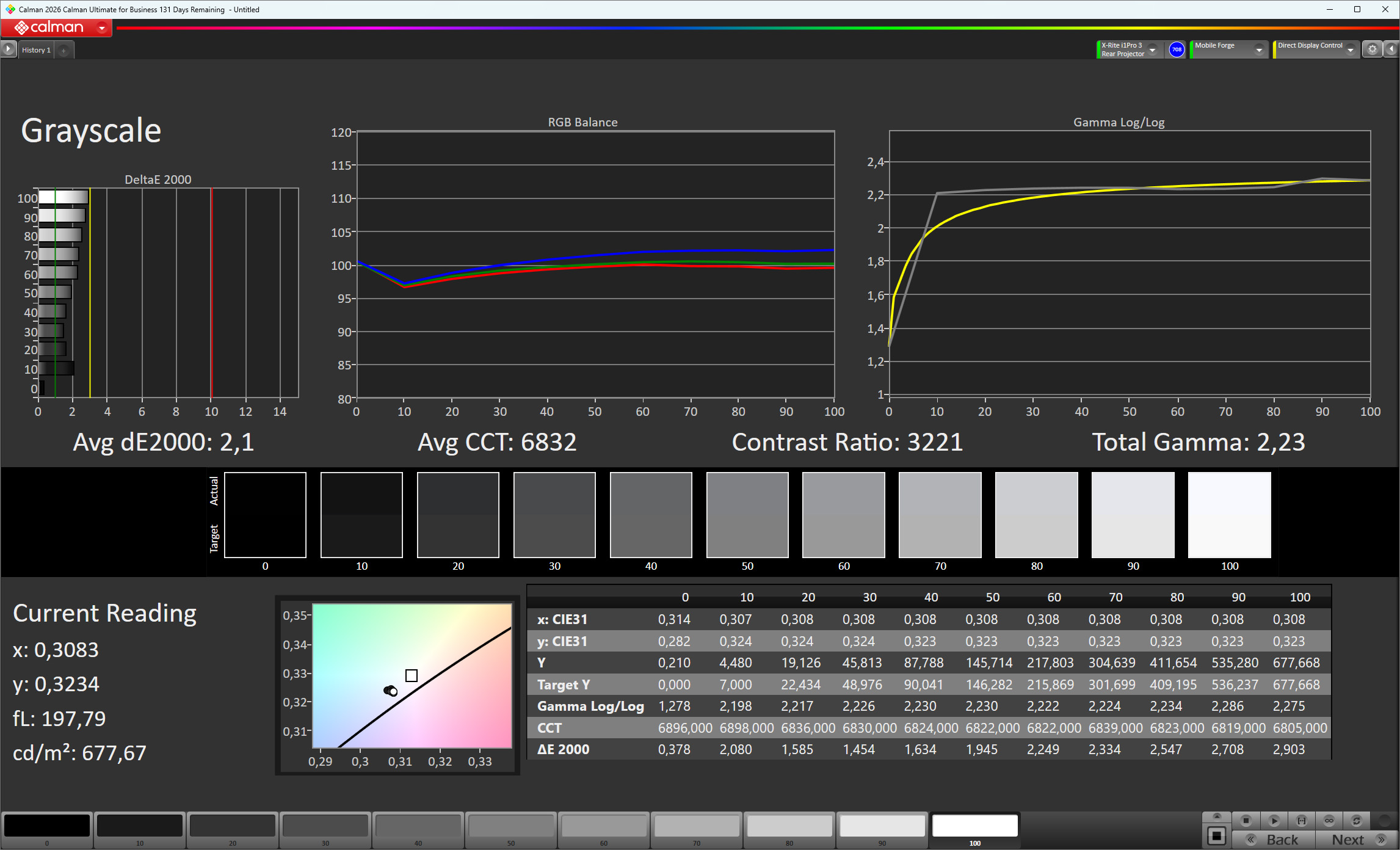
ΔE ColorChecker Calman: 1.4 | ∀{0.5-29.43 Ø4.69}
ΔE Greyscale Calman: 2.1 | ∀{0.09-98 Ø4.94}
95.5% sRGB (Calman 2D)
Gamma: 2.23
CCT: 6832 K
| Sony Xperia 10 VIII OLED, 2340x1080, 6.1" | Google Pixel 10a pOLED, 2424x1080, 6.3" | Samsung Galaxy A57 Super AMOLED, 2340x1080, 6.7" | Xiaomi Redmi Note 17 Pro Max 5G 2772x1280, 6.8" | Nothing Phone (4a) Pro AMOLED, 2800x1260, 6.8" | Sony Xperia 10 VII OLED, 2340x1080, 6.1" | |
|---|---|---|---|---|---|---|
| Display | 102% | 32% | 109% | 7% | -28% | |
| APL18 Peak Brightness (cd/m²) | 1487 | 3050 105% | 1920 29% | 3493 135% | 1596 7% | 1073 -28% |
| HDR Peak Brightness (cd/m²) | 1470 | 2925 99% | 1980 35% | 2695 83% | 1564 6% | 1074 -27% |
| Response Times | -23% | -21% | -11% | 16% | -17% | |
| Response Time Grey 50% / Grey 80% * (ms) | 0.93 ? | 1.42 ? -53% | 1.21 ? -30% | 1.18 ? -27% | 0.64 ? 31% | 1.051 ? -13% |
| Response Time Black / White * (ms) | 0.93 ? | 1.07 ? -15% | 1.1 ? -18% | 0.99 ? -6% | 0.84 ? 10% | 1.26 ? -35% |
| PWM Frequency (Hz) | 480 | 240 | 240 | 120 | 90 | 480 |
| PWM Amplitude * (%) | 14.46 | 14.71 -2% | 16.72 -16% | 14.56 -1% | 13.58 6% | 15.04 -4% |
| Screen | 23% | -4% | -14% | -19% | 1% | |
| Brightness middle (cd/m²) | 1522 | 2205 45% | 1135 -25% | 1124 -26% | 1604 5% | 820 -46% |
| Brightness (cd/m²) | 1527 | 1134 -26% | 1124 -26% | 1585 4% | 823 -46% | |
| Brightness Distribution (%) | 97 | 99 2% | 98 1% | 95 -2% | 97 0% | |
| Black Level * (cd/m²) | ||||||
| Colorchecker dE 2000 * | 1.4 | 1.4 -0% | 1.7 -21% | 1.9 -36% | 1.9 -36% | 1 29% |
| Colorchecker dE 2000 max. * | 2.9 | 2.3 21% | 2.5 14% | 3.5 -21% | 4.3 -48% | 1.8 38% |
| Greyscale dE 2000 * | 2.1 | 1.6 24% | 1.4 33% | 1.6 24% | 2.9 -38% | 1.4 33% |
| Gamma | 2.23 99% | 2.23 99% | 2.08 106% | 2.28 96% | 2.27 97% | 2.24 98% |
| CCT | 6832 95% | 6715 97% | 6578 99% | 6721 97% | 7083 92% | 6544 99% |
| Total Average (Program / Settings) | 34% /
25% | 2% /
-2% | 28% /
9% | 1% /
-5% | -15% /
-9% |
* ... smaller is better
Screen Flickering / PWM (Pulse-Width Modulation)
| Screen flickering / PWM detected | 480 Hz Amplitude: 14.46 % | 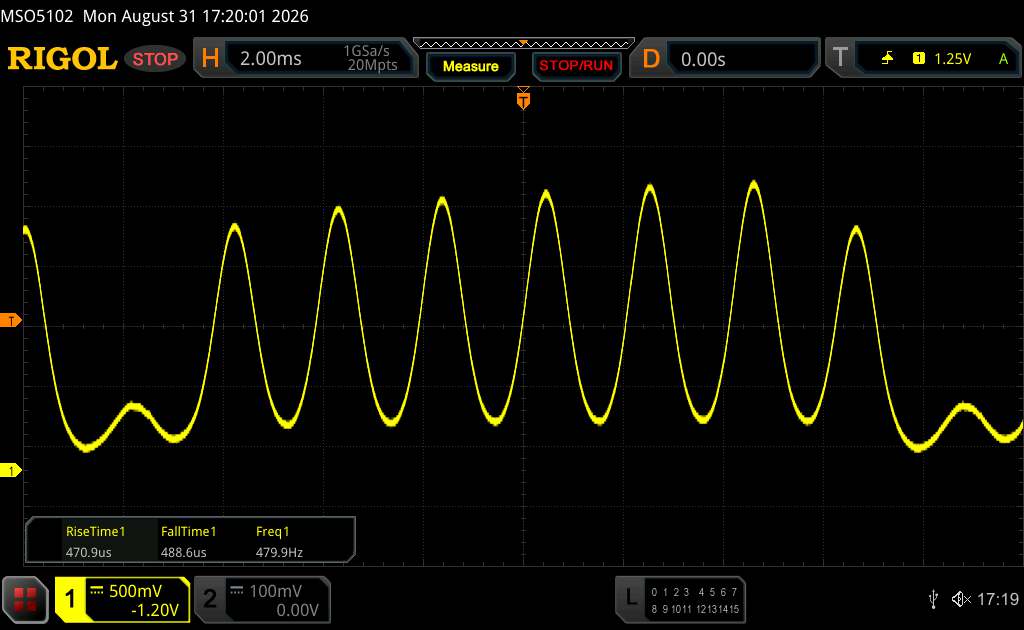 | |
The display backlight flickers at 480 Hz (worst case, e.g., utilizing PWM) . The frequency of 480 Hz is relatively high, so most users sensitive to PWM should not notice any flickering. However, there are reports that some users are still sensitive to PWM at 500 Hz and above, so be aware. In comparison: 52 % of all tested devices do not use PWM to dim the display. If PWM was detected, an average of 7622 (minimum: 5 - maximum: 343500) Hz was measured. | |||
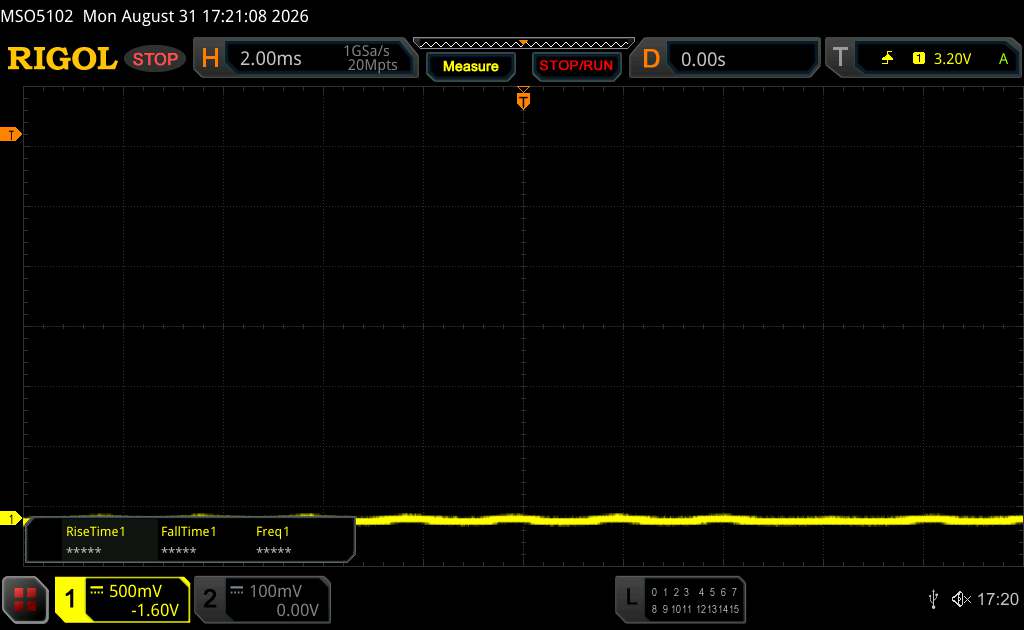
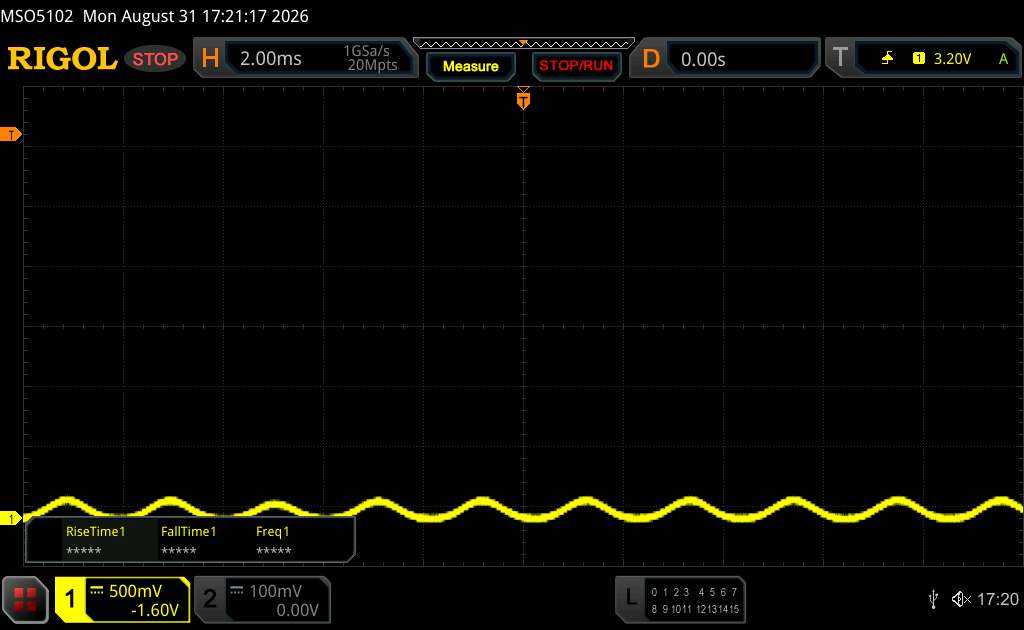
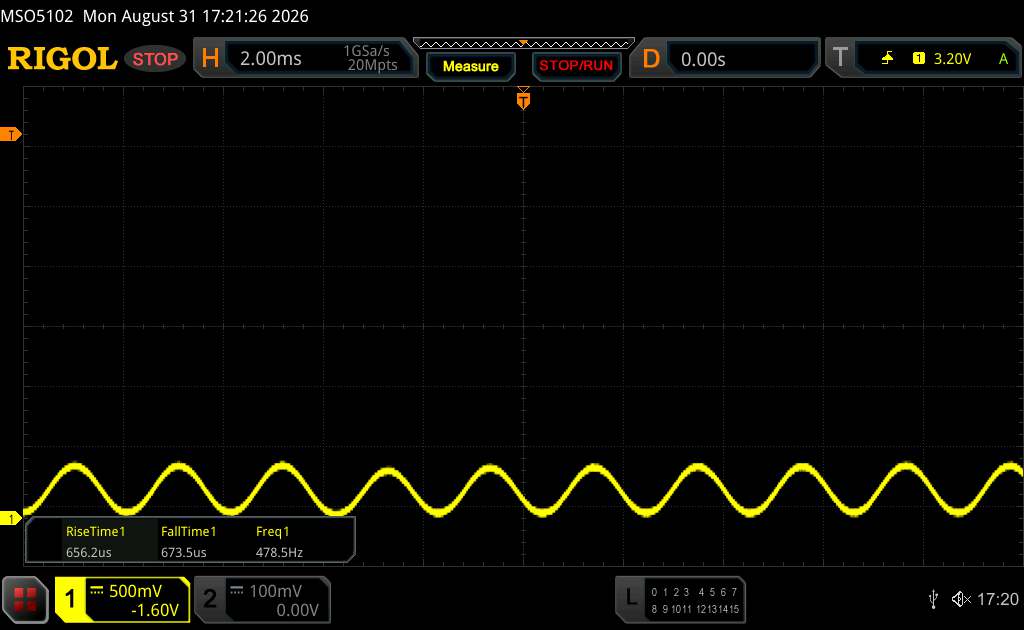
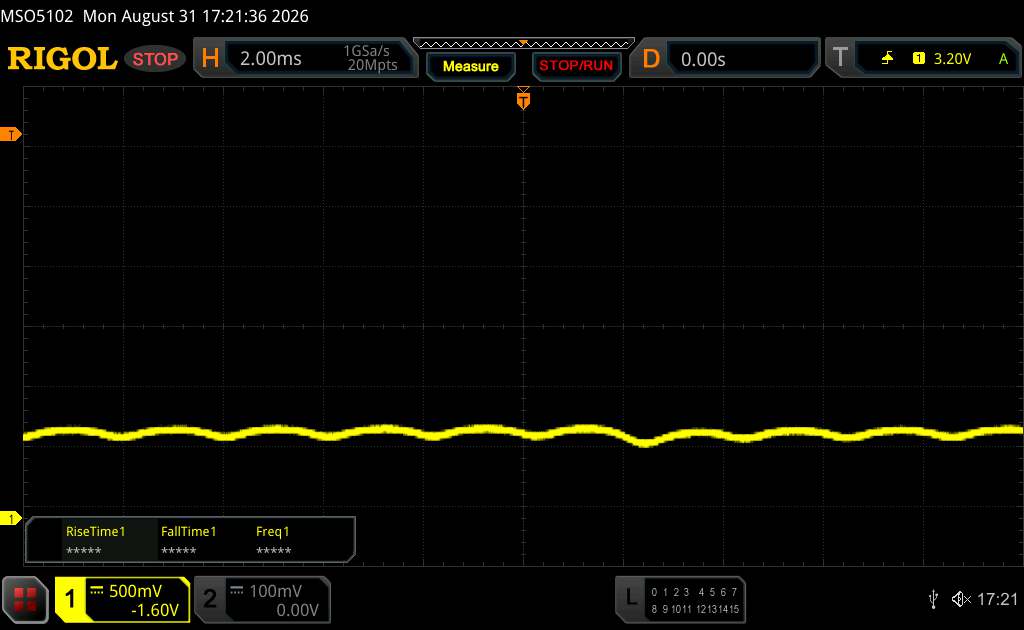
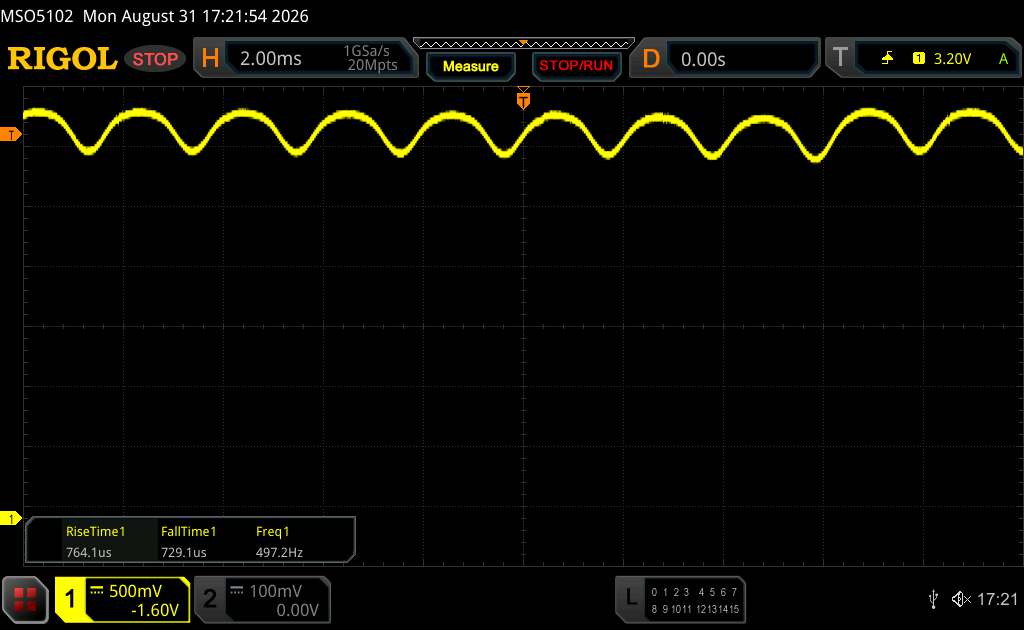
Measurement series with a fixed zoom level and different brightness settings (Although the amplitude curve at minimum brightness appears flat, this is due to the scaling. The info box shows a magnified version of the amplitude at minimum brightness.)
The display’s color settings can be extensively customized to suit your needs. We achieved the most natural result using “Original Mode.”


Display Response Times
| ↔ Response Time Black to White | ||
|---|---|---|
| 0.93 ms ... rise ↗ and fall ↘ combined | ↗ 0.493 ms rise | 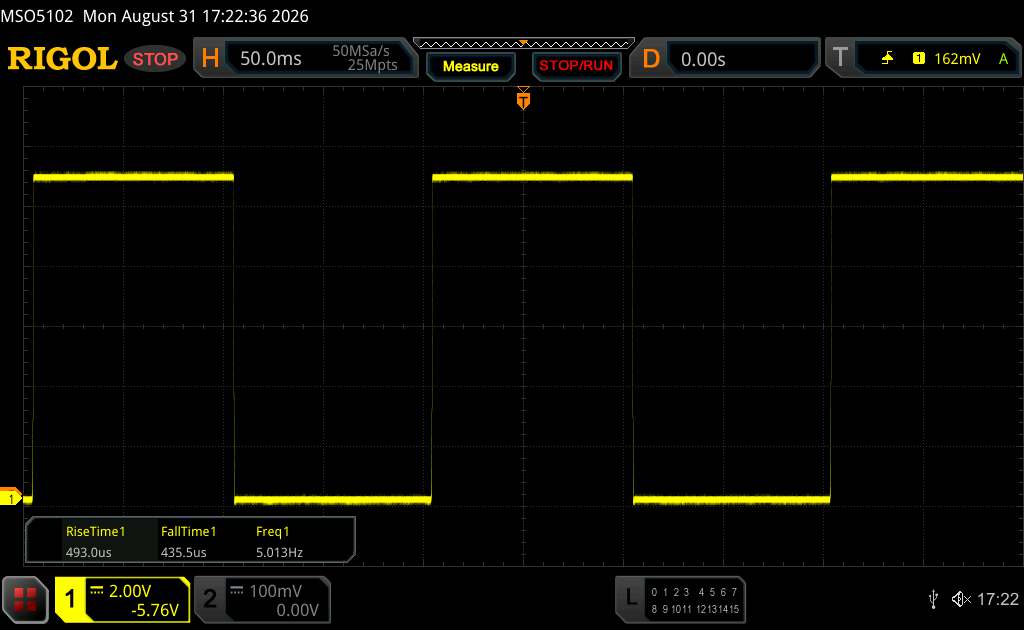 |
| ↘ 0.4355 ms fall | ||
| The screen shows very fast response rates in our tests and should be very well suited for fast-paced gaming. In comparison, all tested devices range from 0.1 (minimum) to 240 (maximum) ms. » 4 % of all devices are better. This means that the measured response time is better than the average of all tested devices (19.7 ms). | ||
| ↔ Response Time 50% Grey to 80% Grey | ||
| 0.93 ms ... rise ↗ and fall ↘ combined | ↗ 0.435 ms rise | 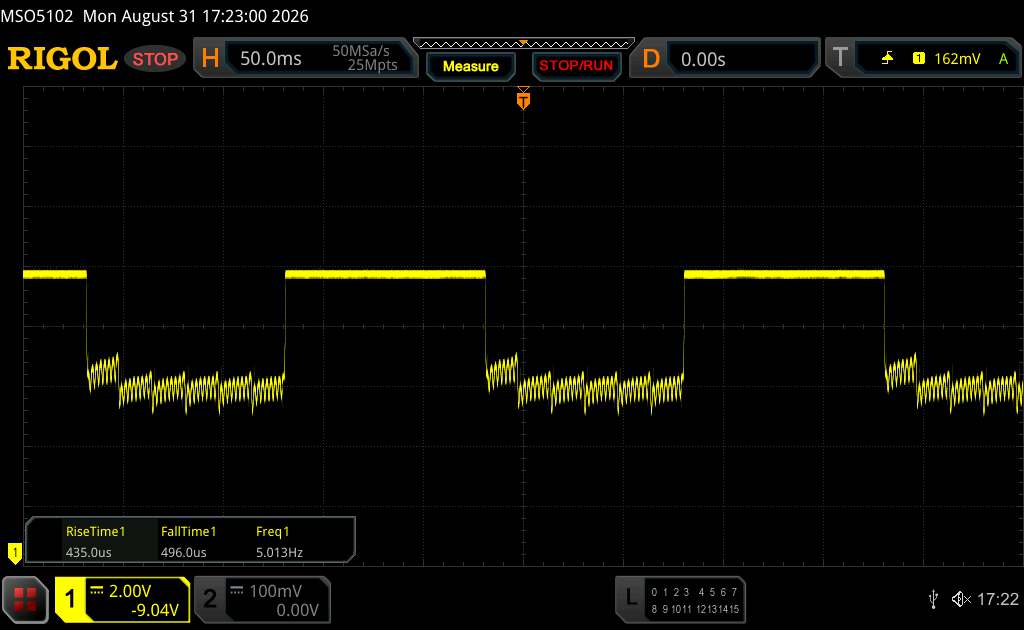 |
| ↘ 0.496 ms fall | ||
| The screen shows very fast response rates in our tests and should be very well suited for fast-paced gaming. In comparison, all tested devices range from 0.13 (minimum) to 636 (maximum) ms. » 4 % of all devices are better. This means that the measured response time is better than the average of all tested devices (30.7 ms). | ||
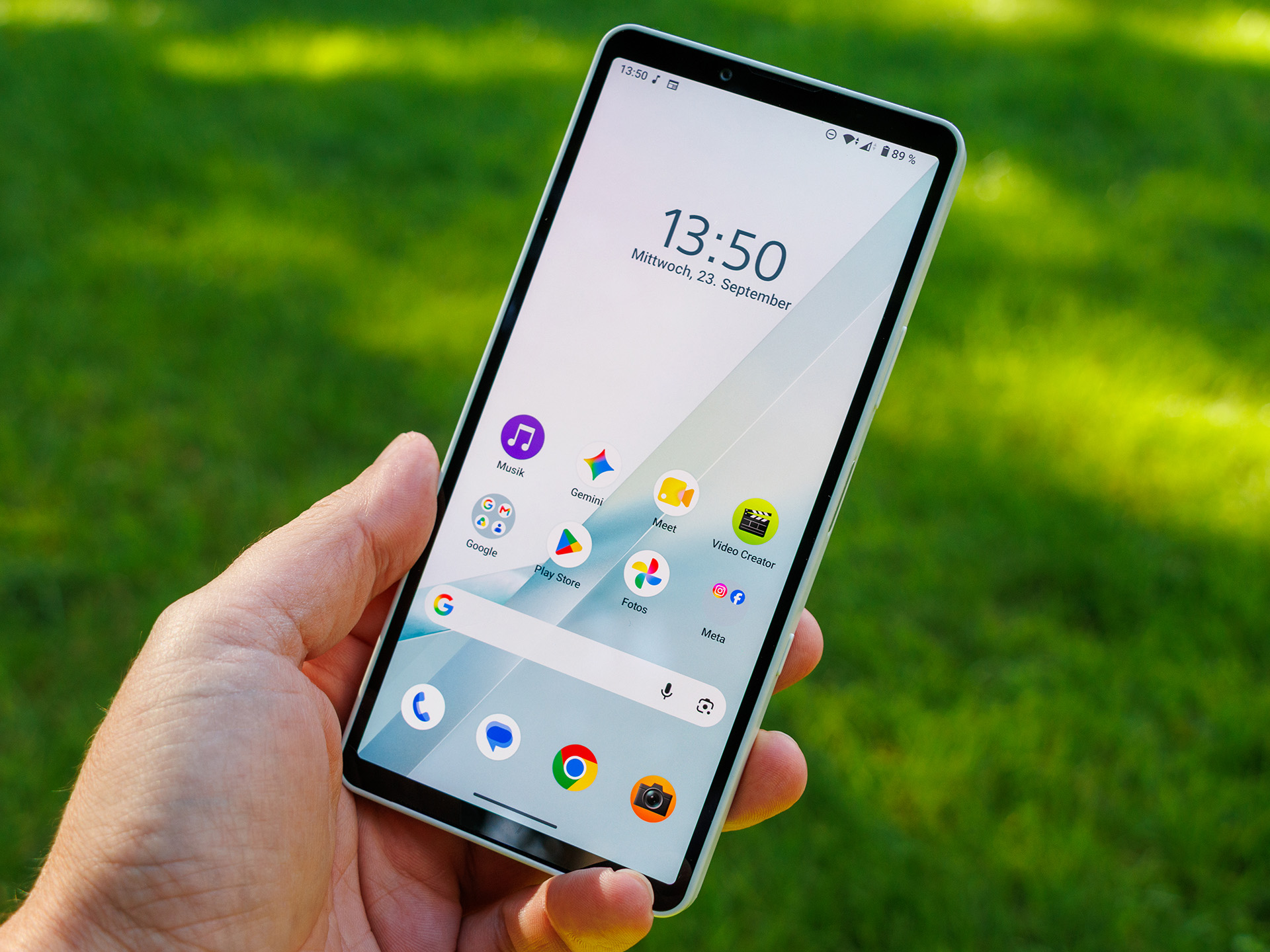
Outdoors, the increased brightness is a definite plus. The Xperia 10 VIII is now easier to read even in direct sunlight.
The viewing angle stability is good, and there is never any color distortion. However, a shimmering color haze appears over the image at very shallow viewing angles.

Performance: Sony Xperia 10 VIII with Snapdragon 6 Gen 3
The Sony Xperia 10 VIII once again runs on the Snapdragon 6 Gen 3. Given the price range this smartphone now falls into, we find this to be somewhat underpowered. The competition generally has more to offer in this regard.
In everyday use, the system stutters from time to time.
| UL Procyon AI Inference for Android - Overall Score NNAPI | |
| Average of class Smartphone (2895 - 66164, n=99, last 2 years) | |
| Samsung Galaxy A57 | |
| Sony Xperia 10 VIII | |
| Sony Xperia 10 VII | |
| Average Qualcomm Snapdragon 6 Gen 3 (8253 - 9538, n=5) | |
| Xiaomi Redmi Note 17 Pro Max 5G | |
| AImark - Score v3.x | |
| Average of class Smartphone (293 - 307528, n=66, last 2 years) | |
| Samsung Galaxy A57 | |
| Average Qualcomm Snapdragon 6 Gen 3 (587 - 729, n=3) | |
| Xiaomi Redmi Note 17 Pro Max 5G | |
The Adreno 710 GPU in the Snapdragon 6 Gen 3 does not support ray tracing. It is suitable for simple games but quickly reaches its limits with demanding titles.
GFXBench (DX / GLBenchmark) 2.7: T-Rex Onscreen | 1920x1080 T-Rex Offscreen
GFXBench 3.0: on screen Manhattan Onscreen OGL | 1920x1080 1080p Manhattan Offscreen
GFXBench 3.1: on screen Manhattan ES 3.1 Onscreen | 1920x1080 Manhattan ES 3.1 Offscreen
GFXBench: on screen Car Chase Onscreen | 1920x1080 Car Chase Offscreen | on screen Aztec Ruins High Tier Onscreen | 2560x1440 Aztec Ruins High Tier Offscreen | on screen Aztec Ruins Normal Tier Onscreen | 1920x1080 Aztec Ruins Normal Tier Offscreen | 3840x2160 4K Aztec Ruins High Tier Offscreen
| 3DMark / Wild Life Extreme Unlimited | |
| Google Pixel 10a | |
| Nothing Phone (4a) Pro | |
| Samsung Galaxy A57 | |
| Xiaomi Redmi Note 17 Pro Max 5G | |
| Sony Xperia 10 VII | |
| Sony Xperia 10 VIII | |
| 3DMark / Wild Life Extreme | |
| Google Pixel 10a | |
| Nothing Phone (4a) Pro | |
| Samsung Galaxy A57 | |
| Xiaomi Redmi Note 17 Pro Max 5G (Press-Version) | |
| Xiaomi Redmi Note 17 Pro Max 5G (Play-Store-Version) | |
| Sony Xperia 10 VII | |
| Sony Xperia 10 VIII | |
| 3DMark / Wild Life Unlimited Score | |
| Google Pixel 10a | |
| Nothing Phone (4a) Pro | |
| Samsung Galaxy A57 | |
| Xiaomi Redmi Note 17 Pro Max 5G | |
| Sony Xperia 10 VIII | |
| Sony Xperia 10 VII | |
| 3DMark / Wild Life Score | |
| Nothing Phone (4a) Pro | |
| Samsung Galaxy A57 | |
| Xiaomi Redmi Note 17 Pro Max 5G | |
| Sony Xperia 10 VII | |
| Sony Xperia 10 VIII (Press-Version) | |
| Sony Xperia 10 VIII (Play-Store-Version) | |
| 3DMark / Steel Nomad Light Unlimited Score | |
| Google Pixel 10a | |
| Samsung Galaxy A57 | |
| Nothing Phone (4a) Pro | |
| Xiaomi Redmi Note 17 Pro Max 5G | |
| Sony Xperia 10 VIII | |
| Sony Xperia 10 VII | |
| 3DMark / Steel Nomad Light Score | |
| Google Pixel 10a | |
| Nothing Phone (4a) Pro | |
| Samsung Galaxy A57 | |
| Xiaomi Redmi Note 17 Pro Max 5G | |
| Sony Xperia 10 VII | |
| Sony Xperia 10 VIII | |
| GFXBench (DX / GLBenchmark) 2.7 / T-Rex Onscreen | |
| Samsung Galaxy A57 | |
| Xiaomi Redmi Note 17 Pro Max 5G | |
| Sony Xperia 10 VII | |
| Sony Xperia 10 VIII | |
| GFXBench (DX / GLBenchmark) 2.7 / T-Rex Offscreen | |
| Samsung Galaxy A57 | |
| Xiaomi Redmi Note 17 Pro Max 5G | |
| Sony Xperia 10 VIII | |
| Sony Xperia 10 VII | |
| GFXBench 3.0 / Manhattan Onscreen OGL | |
| Samsung Galaxy A57 | |
| Xiaomi Redmi Note 17 Pro Max 5G | |
| Sony Xperia 10 VII | |
| Sony Xperia 10 VIII | |
| GFXBench 3.0 / 1080p Manhattan Offscreen | |
| Samsung Galaxy A57 | |
| Xiaomi Redmi Note 17 Pro Max 5G | |
| Sony Xperia 10 VII | |
| Sony Xperia 10 VIII | |
| GFXBench 3.1 / Manhattan ES 3.1 Onscreen | |
| Samsung Galaxy A57 | |
| Sony Xperia 10 VIII | |
| Xiaomi Redmi Note 17 Pro Max 5G | |
| Sony Xperia 10 VII | |
| GFXBench 3.1 / Manhattan ES 3.1 Offscreen | |
| Samsung Galaxy A57 | |
| Xiaomi Redmi Note 17 Pro Max 5G | |
| Sony Xperia 10 VII | |
| Sony Xperia 10 VIII | |
| GFXBench / Car Chase Onscreen | |
| Google Pixel 10a | |
| Samsung Galaxy A57 | |
| Sony Xperia 10 VIII | |
| Sony Xperia 10 VII | |
| Xiaomi Redmi Note 17 Pro Max 5G | |
| GFXBench / Car Chase Offscreen | |
| Google Pixel 10a | |
| Samsung Galaxy A57 | |
| Xiaomi Redmi Note 17 Pro Max 5G | |
| Sony Xperia 10 VIII | |
| Sony Xperia 10 VII | |
| GFXBench / Aztec Ruins High Tier Onscreen | |
| Google Pixel 10a | |
| Samsung Galaxy A57 | |
| Nothing Phone (4a) Pro | |
| Xiaomi Redmi Note 17 Pro Max 5G | |
| Sony Xperia 10 VIII | |
| Sony Xperia 10 VII | |
| GFXBench / Aztec Ruins High Tier Offscreen | |
| Google Pixel 10a | |
| Nothing Phone (4a) Pro | |
| Samsung Galaxy A57 | |
| Xiaomi Redmi Note 17 Pro Max 5G | |
| Sony Xperia 10 VIII | |
| Sony Xperia 10 VII | |
| GFXBench / Aztec Ruins Normal Tier Onscreen | |
| Nothing Phone (4a) Pro | |
| Google Pixel 10a | |
| Samsung Galaxy A57 | |
| Xiaomi Redmi Note 17 Pro Max 5G | |
| Sony Xperia 10 VIII | |
| Sony Xperia 10 VII | |
| GFXBench / Aztec Ruins Normal Tier Offscreen | |
| Google Pixel 10a | |
| Nothing Phone (4a) Pro | |
| Samsung Galaxy A57 | |
| Xiaomi Redmi Note 17 Pro Max 5G | |
| Sony Xperia 10 VIII | |
| Sony Xperia 10 VII | |
| GFXBench / 4K Aztec Ruins High Tier Offscreen | |
| Google Pixel 10a | |
| Nothing Phone (4a) Pro | |
| Samsung Galaxy A57 | |
| Xiaomi Redmi Note 17 Pro Max 5G | |
| Sony Xperia 10 VIII | |
| Sony Xperia 10 VII (es3.1) | |
| Jetstream 2 | |
| 2.0 Total | |
| Nothing Phone (4a) Pro (Chrome 147) | |
| Samsung Galaxy A57 (Chrome 149) | |
| Average of class Smartphone (63.9 - 423, n=115, last 2 years) | |
| Xiaomi Redmi Note 17 Pro Max 5G (Chrome 153) | |
| Average Qualcomm Snapdragon 6 Gen 3 (109 - 147.8, n=5) | |
| Sony Xperia 10 VIII (Chrome 153) | |
| 2.2 Total | |
| Google Pixel 10a (Chrome 149) | |
| Nothing Phone (4a) Pro (Chrome 147) | |
| Average of class Smartphone (2 - 480, n=103, last 2 years) | |
| Samsung Galaxy A57 (Chrome 149) | |
| Xiaomi Redmi Note 17 Pro Max 5G (Chrome 153) | |
| Sony Xperia 10 VIII (Chrome 153) | |
| Average Qualcomm Snapdragon 6 Gen 3 (122 - 149.4, n=5) | |
| Sony Xperia 10 VII (Chrome 143) | |
| WebXPRT 5 - Overall | |
| Average of class Smartphone (19 - 104, n=26, last 2 years) | |
| Samsung Galaxy A57 (Chrome 149) | |
| Xiaomi Redmi Note 17 Pro Max 5G (Chrome 153) | |
| Sony Xperia 10 VIII (Chrome 153) | |
| Average Qualcomm Snapdragon 6 Gen 3 (n=1) | |
| Octane V2 - Total Score | |
| Samsung Galaxy A57 (Chrome 149) | |
| Average of class Smartphone (6015 - 126661, n=135, last 2 years) | |
| Xiaomi Redmi Note 17 Pro Max 5G (Chrome 153) | |
| Average Qualcomm Snapdragon 6 Gen 3 (37483 - 40500, n=5) | |
| Sony Xperia 10 VIII (Chrome 153) | |
| Sony Xperia 10 VII (Chrome 143) | |
| Mozilla Kraken 1.1 - Total | |
| Sony Xperia 10 VII (Chrome 143) | |
| Average Qualcomm Snapdragon 6 Gen 3 (978 - 1476, n=5) | |
| Sony Xperia 10 VIII (Chrome 153) | |
| Xiaomi Redmi Note 17 Pro Max 5G (Chrome 153) | |
| Average of class Smartphone (281 - 2718, n=119, last 2 years) | |
| Samsung Galaxy A57 (Chrome 149) | |
* ... smaller is better
| Sony Xperia 10 VIII | Google Pixel 10a | Samsung Galaxy A57 | Nothing Phone (4a) Pro | Sony Xperia 10 VII | Average 128 GB UFS 3.1 Flash | Average of class Smartphone | |
|---|---|---|---|---|---|---|---|
| AndroBench 3-5 | -13% | -33% | 17% | -27% | -33% | 5% | |
| Sequential Read 256KB (MB/s) | 1914.56 | 1689.27 -12% | 1683.07 -12% | 1977.37 3% | 1022.21 -47% | 1588 ? -17% | 2280 ? 19% |
| Sequential Write 256KB (MB/s) | 1802.32 | 826.38 -54% | 1119.11 -38% | 1738.18 -4% | 973.41 -46% | 820 ? -55% | 1972 ? 9% |
| Random Read 4KB (MB/s) | 320.27 | 326.53 2% | 249.83 -22% | 409.28 28% | 298.75 -7% | 247 ? -23% | 317 ? -1% |
| Random Write 4KB (MB/s) | 386.88 | 430.37 11% | 149.04 -61% | 547.62 42% | 354.89 -8% | 251 ? -35% | 362 ? -6% |
Emissions: Good speakers in the Xperia 10 VIII
Temperature
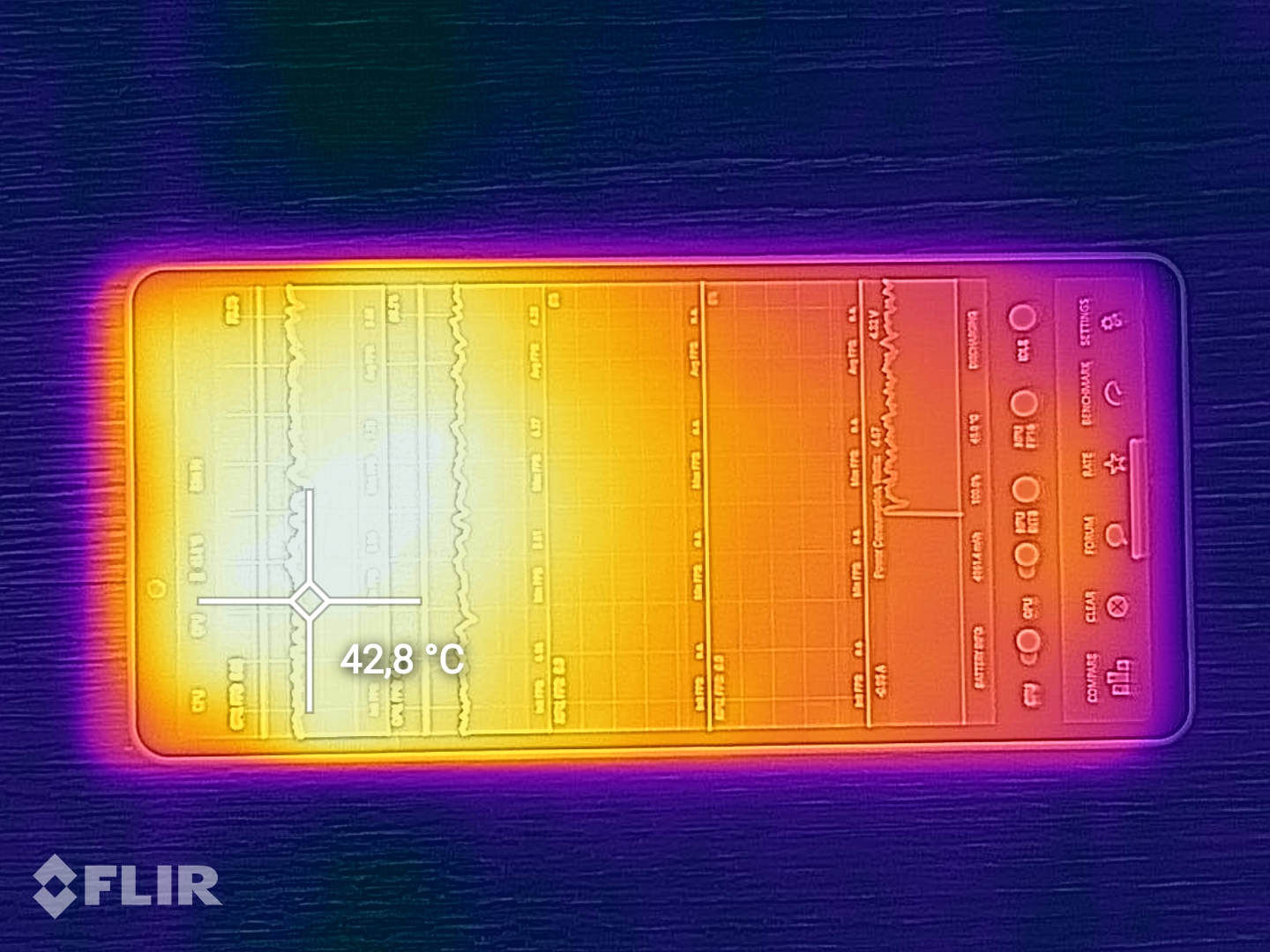
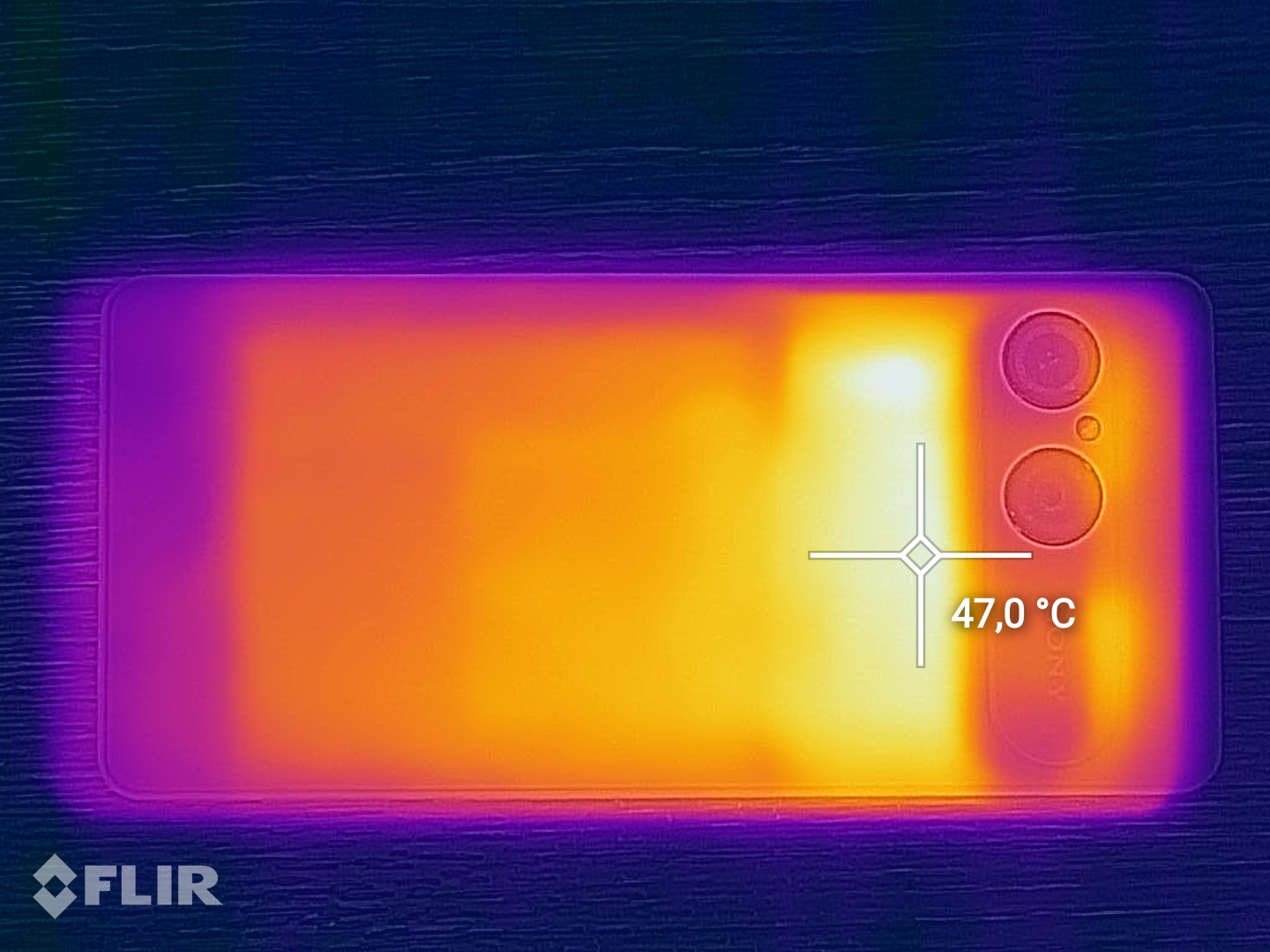
The surface temperatures of the Xperia 10 VIII can get quite high under sustained load, but they remain within a safe range. However, the SoC — which isn’t particularly fast to begin with — throttles a bit even then.
(-) The maximum temperature on the upper side is 45.4 °C / 114 F, compared to the average of 35.4 °C / 96 F, ranging from 21.9 to 247 °C for the class Smartphone.
(-) The bottom heats up to a maximum of 47.6 °C / 118 F, compared to the average of 34.1 °C / 93 F
(+) In idle usage, the average temperature for the upper side is 28.8 °C / 84 F, compared to the device average of 33 °C / 91 F.
3DMark stress tests
| 3DMark | |
| Wild Life Stress Test Stability | |
| Sony Xperia 10 VII | |
| Nothing Phone (4a) Pro | |
| Samsung Galaxy A57 | |
| Sony Xperia 10 VIII | |
| Google Pixel 10a | |
| Wild Life Extreme Stress Test | |
| Sony Xperia 10 VII | |
| Nothing Phone (4a) Pro | |
| Samsung Galaxy A57 | |
| Sony Xperia 10 VIII | |
| Google Pixel 10a | |
| Steel Nomad Light Stress Test Stability | |
| Samsung Galaxy A57 | |
| Sony Xperia 10 VII | |
| Nothing Phone (4a) Pro | |
| Sony Xperia 10 VIII | |
| Google Pixel 10a | |
Loudspeaker
The two front-facing speakers still deliver decent sound even at higher volumes, though the sound lacks a bit of depth. At maximum volume, however, they tend to distort.
Sound output is better via the 3.5 mm jack, which only achieves an average SNR of 49.18 dBFS in testing, but this applies only to a very narrow frequency range.
Sony Xperia 10 VIII audio analysis
(+) | speakers can play relatively loud (87 dB)
Bass 100 - 315 Hz
(-) | nearly no bass - on average 15.2% lower than median
(±) | linearity of bass is average (10.5% delta to prev. frequency)
Mids 400 - 2000 Hz
(±) | higher mids - on average 7.3% higher than median
(+) | mids are linear (5.8% delta to prev. frequency)
Highs 2 - 16 kHz
(+) | balanced highs - only 3.2% away from median
(+) | highs are linear (3.7% delta to prev. frequency)
Overall 100 - 16.000 Hz
(+) | overall sound is linear (14.3% difference to median)
Compared to same class
» 1% of all tested devices in this class were better, 2% similar, 97% worse
» The best had a delta of 11%, average was 34%, worst was 136%
Compared to all devices tested
» 18% of all tested devices were better, 4% similar, 78% worse
» The best had a delta of 4%, average was 23%, worst was 136%
Samsung Galaxy A57 audio analysis
(+) | speakers can play relatively loud (89.1 dB)
Bass 100 - 315 Hz
(-) | nearly no bass - on average 19.1% lower than median
(±) | linearity of bass is average (9.8% delta to prev. frequency)
Mids 400 - 2000 Hz
(±) | higher mids - on average 6.5% higher than median
(+) | mids are linear (6.4% delta to prev. frequency)
Highs 2 - 16 kHz
(+) | balanced highs - only 4.2% away from median
(+) | highs are linear (4.4% delta to prev. frequency)
Overall 100 - 16.000 Hz
(±) | linearity of overall sound is average (16.1% difference to median)
Compared to same class
» 6% of all tested devices in this class were better, 5% similar, 90% worse
» The best had a delta of 11%, average was 34%, worst was 136%
Compared to all devices tested
» 26% of all tested devices were better, 5% similar, 69% worse
» The best had a delta of 4%, average was 23%, worst was 136%
Battery life: Xperia 10 VIII with a 5,000 mAh cell
Power consumption
The Xperia 10 VIII's power consumption is somewhat high at full display brightness but is otherwise unremarkable.
We fully recharged the 5,000 mAh battery in 69 minutes using a Ugreen Nexode 65 W power adapter.
| Off / Standby |   0.21 / 0.3 Watt 0.21 / 0.3 Watt |
| Idle |  0.81 / 2.51 / 2.57 Watt 0.81 / 2.51 / 2.57 Watt |
| Load |
4.37 / 10.16 Watt |
    
| |
Key:
min: ,
med: ,
max: Metrahit Energy | |
| Sony Xperia 10 VIII 5000 mAh | Google Pixel 10a 5100 mAh | Samsung Galaxy A57 5000 mAh | Xiaomi Redmi Note 17 Pro Max 5G mAh | Nothing Phone (4a) Pro 5080 mAh | Sony Xperia 10 VII 5000 mAh | Average Qualcomm Snapdragon 6 Gen 3 | Average of class Smartphone | |
|---|---|---|---|---|---|---|---|---|
| Power Consumption | 46% | -4% | -3% | 11% | 23% | 10% | 1% | |
| Idle Minimum * (Watt) | 0.81 | 0.7 14% | 0.71 12% | 1.3 -60% | 1.01 -25% | 0.85 -5% | 0.893 ? -10% | 0.898 ? -11% |
| Idle Average * (Watt) | 2.51 | 0.94 63% | 1.94 23% | 2.12 16% | 1.78 29% | 1.11 56% | 1.507 ? 40% | 1.482 ? 41% |
| Idle Maximum * (Watt) | 2.57 | 1.03 60% | 2.04 21% | 2.18 15% | 1.81 30% | 1.17 54% | 1.618 ? 37% | 1.673 ? 35% |
| Load Average * (Watt) | 4.37 | 6.19 -42% | 4.37 -0% | 4.32 1% | 5.35 ? -22% | 6.79 ? -55% | ||
| Load Maximum * (Watt) | 10.16 | 13.67 -35% | 8.7 14% | 9.09 11% | 9.86 ? 3% | 10.7 ? -5% |
* ... smaller is better
Power consumption: Geekbench (150 cd/m²)
Power consumption: GFXbench (150 cd/m²)
Battery life
In our standardized Wi-Fi browsing test at 150 nits, the Sony Xperia 10 VIII’s battery life reached nearly 20 hours. That’s a good result, but surprisingly worse than that of its predecessor.
| Battery runtime - WiFi v1.3 | |
| Sony Xperia 10 VIII | |
| Google Pixel 10a | |
| Samsung Galaxy A57 | |
| Nothing Phone (4a) Pro | |
| Sony Xperia 10 VII | |
Notebookcheck's overall impressions of the Sony Xperia 10 VIII
The Sony Xperia 10 VIII impresses with its bright OLED display, good battery life, and rare extras. But given its high price and the few improvements over its predecessor, it offers too little in the way of progress.
Sony Xperia 10 VIII
- 09/25/2026 v8
Daniel Schmidt
 Total Sustainability Score:
 Potential alternatives in comparison
Image | Model / Review | Price | Weight | Drive | Display |
|---|---|---|---|---|---|
1. 78.5%  | Sony Xperia 10 VIII Qualcomm Snapdragon 6 Gen 3 ⎘ Qualcomm Adreno 710 ⎘ 8 GB Memory, 128 GB UFS 3.1 | List Price: 599€ | 168 g | 128 GB UFS 3.1 Flash | 6.10" 2340x1080 422 PPI OLED |
2. 85.3%  | Google Pixel 10a Google Tensor G4 ⎘ ARM Mali-G715 MP7 ⎘ 8 GB Memory, 128 GB UFS 3.1 | List Price: 549€ | 183 g | 128 GB UFS 3.1 Flash | 6.30" 2424x1080 421 PPI pOLED |
3. 81.5%  | Samsung Galaxy A57 Samsung Exynos 1680 ⎘ Samsung Xclipse 550 ⎘ 8 GB Memory, 256 GB UFS 3.1 | List Price: 589€ | 179 g | 256 GB UFS 3.1 Flash | 6.70" 2340x1080 385 PPI Super AMOLED |
4.  | Xiaomi Redmi Note 17 Pro Max 5G Qualcomm Snapdragon 6 Gen 5 ⎘ Qualcomm Adreno 812 ⎘ 8 GB Memory, 256 GB UFS 4.x | List Price: 600€ | 225 g | 256 GB UFS 4.1 Flash | 6.83" 2772x1280 447 PPI |
5. 82.5%  | Nothing Phone (4a) Pro Qualcomm Snapdragon 7 Gen 4 SM7750-AB ⎘ Qualcomm Adreno 722 ⎘ 12 GB Memory, 256 GB UFS 3.1 | List Price: 549€ | 210 g | 256 GB UFS 3.1 Flash | 6.83" 2800x1260 450 PPI AMOLED |
Transparency
The selection of devices to be reviewed is made by our editorial team. The test sample was provided to the author as a loan by the manufacturer or retailer for the purpose of this review. The lender had no influence on this review, nor did the manufacturer receive a copy of this review before publication. There was no obligation to publish this review. As an independent media company, Notebookcheck is not subjected to the authority of manufacturers, retailers or publishers.
This is how Notebookcheck is testing
Every year, Notebookcheck independently reviews hundreds of laptops and smartphones using standardized procedures to ensure that all results are comparable. We have continuously developed our test methods for around 20 years and set industry standards in the process. In our test labs, high-quality measuring equipment is utilized by experienced technicians and editors. These tests involve a multi-stage validation process. Our complex rating system is based on hundreds of well-founded measurements and benchmarks, which maintains objectivity. Further information on our test methods can be found here.
 Add as a preferred source on Google


