




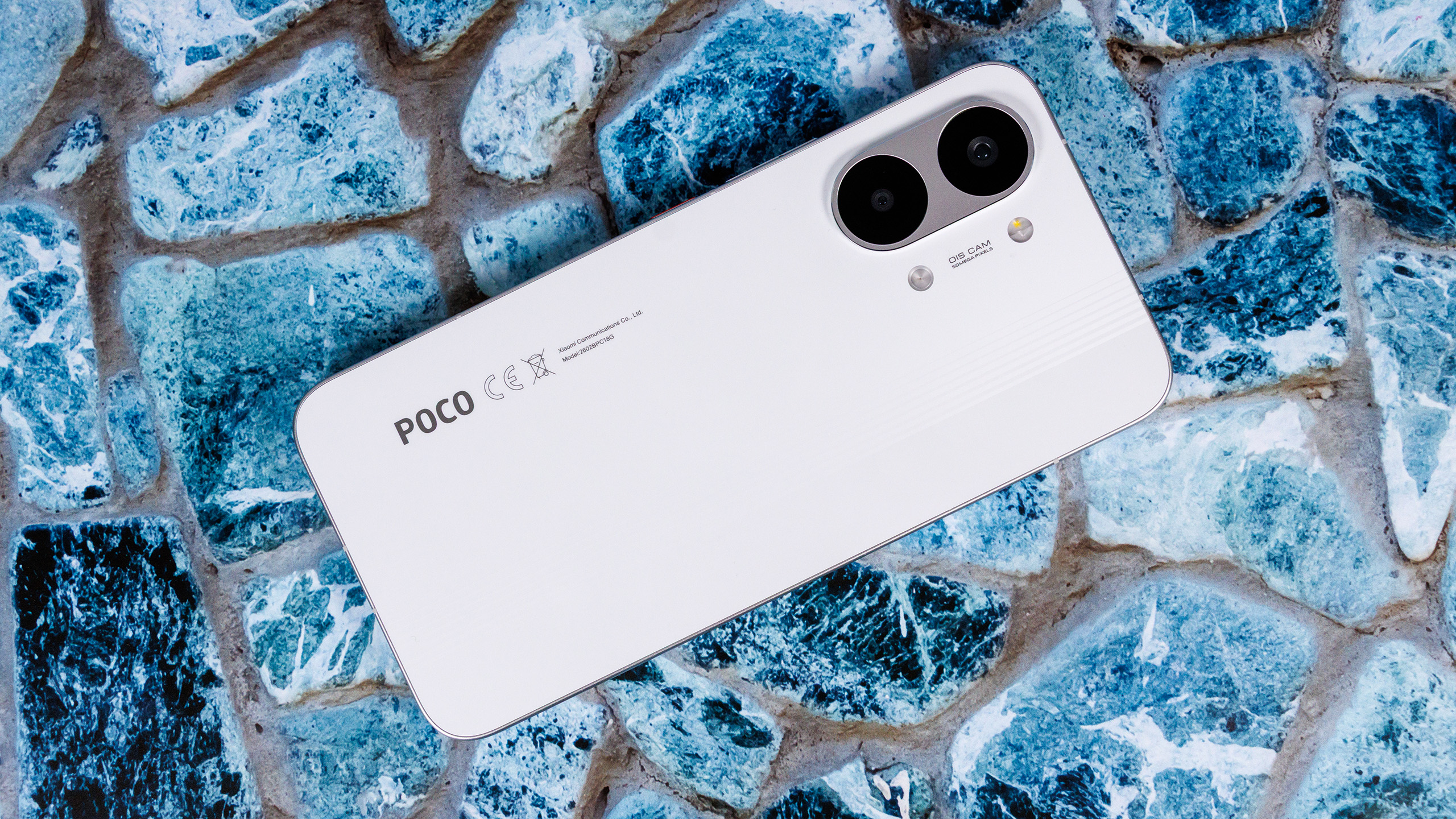
Verdict on the Poco X8 Pro Max
The Poco X8 Pro Max is a good mid-range device with several real strengths—but also some clear weaknesses that make it fight to justify its price.
Positive features include the phone's big, bright AMOLED display, massive 8,500-mAh battery with fast 100-watt charging, and its powerful Dimensity 9500s. IP68 water and dust resistance, NFC, and an attractive design round out the total package nicely.
A point of criticism, on the other hand, is that its camera system will struggle to impress photography enthusiasts—despite its new sensors: No optical zoom, a weak ultra-wide-angle lens and a front-facing camera that sharpens images excessively. Moreover, the device's speakers sound distorted and, quite frankly, disappointing. When it comes to storage, the Dimensity 9500s falls short due to its low bandwidth, making its UFS 4.1 specification little more than an empty promise on paper. On top of that, we noted significant throttling under heavy load, which becomes noticeable during gaming sessions.
The phone's software experience also has its shortcomings: HyperOS comes with a plethora of pre-installed third-party apps and ads that, while removable, are simply annoying. And in 2026, having only USB 2.0 and no wireless charging is just hard to justify.
The bottom line is that the Poco X8 Pro Max is a good device for users prioritising battery life and pure performance; however, those seeking a well-balanced all-rounder may be better off looking elsewhere.
Pros
Cons
Price and availability
You can order the Poco X8 Pro Max from Amazon, where the version with 512 GB of storage currently costs $529.
Table of Contents
- Verdict on the Poco X8 Pro Max
- Specifications: Poco X8 Pro Max
- Case - The Poco X8 Pro Max is IP68 certified
- Connectivity - Only USB 2.0 and no wireless charging
- Software - Security patches until 2032
- Communication and GNSS - The Poco smartphone without 6-GHz WLAN
- Telephone features and call quality
- Cameras - Dual-lens system with flaws
- Accessories and warranty - The Poco X8 Pro Max with a protective case
- Input devices and operation - The Poco phone with an ultrasonic fingerprint sensor
- Display - Extremely bright, not just in HDR
- Performance - Poco has chosen the Dimensity 9500s
- Games - High resolution and up to 120fps
- Emissions - The Poco X8 Pro Max is throttled under load
- Battery life - A huge 8,500-mAh battery inside the Poco X8 Pro Max
- Notebookcheck total rating
- Possible alternatives compared
The Poco X8 Pro Max succeeds the Poco X7 Pro as the flagship model of this year's X series, but takes things up a notch in terms of both specs and price. That being said, the latter is only true to a limited extent, as its price has already dropped significantly and is now on par with that of the X7 Pro.
The phone's SoC is a genuine upgrade, as it belongs to a higher class and isn’t simply a newer model. Its display has also grown in size, and its communication modules are modern. Furthermore, its battery is now a lot bigger—but its cameras have stagnated.
Specifications: Poco X8 Pro Max
Case - The Poco X8 Pro Max is IP68 certified
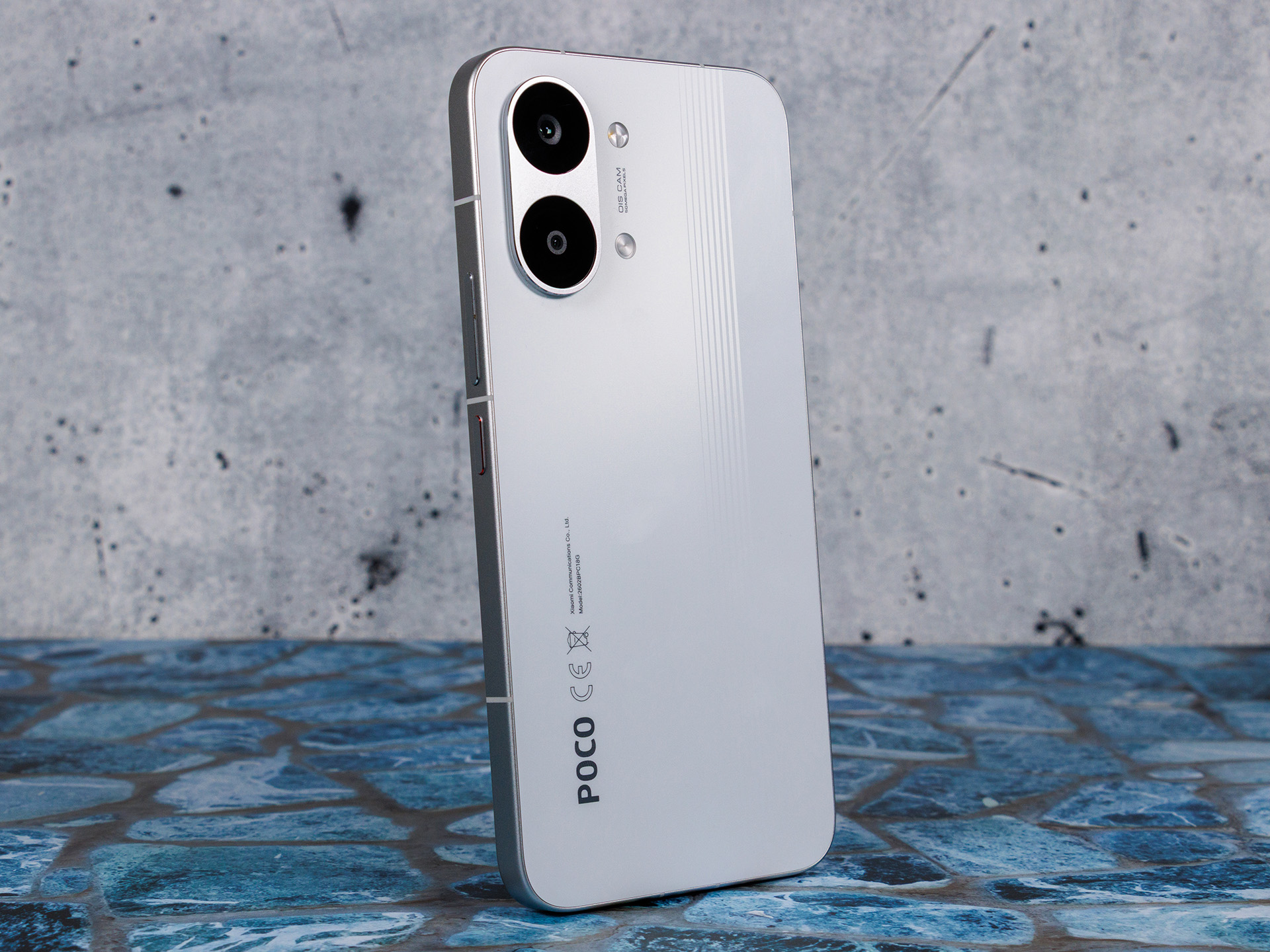
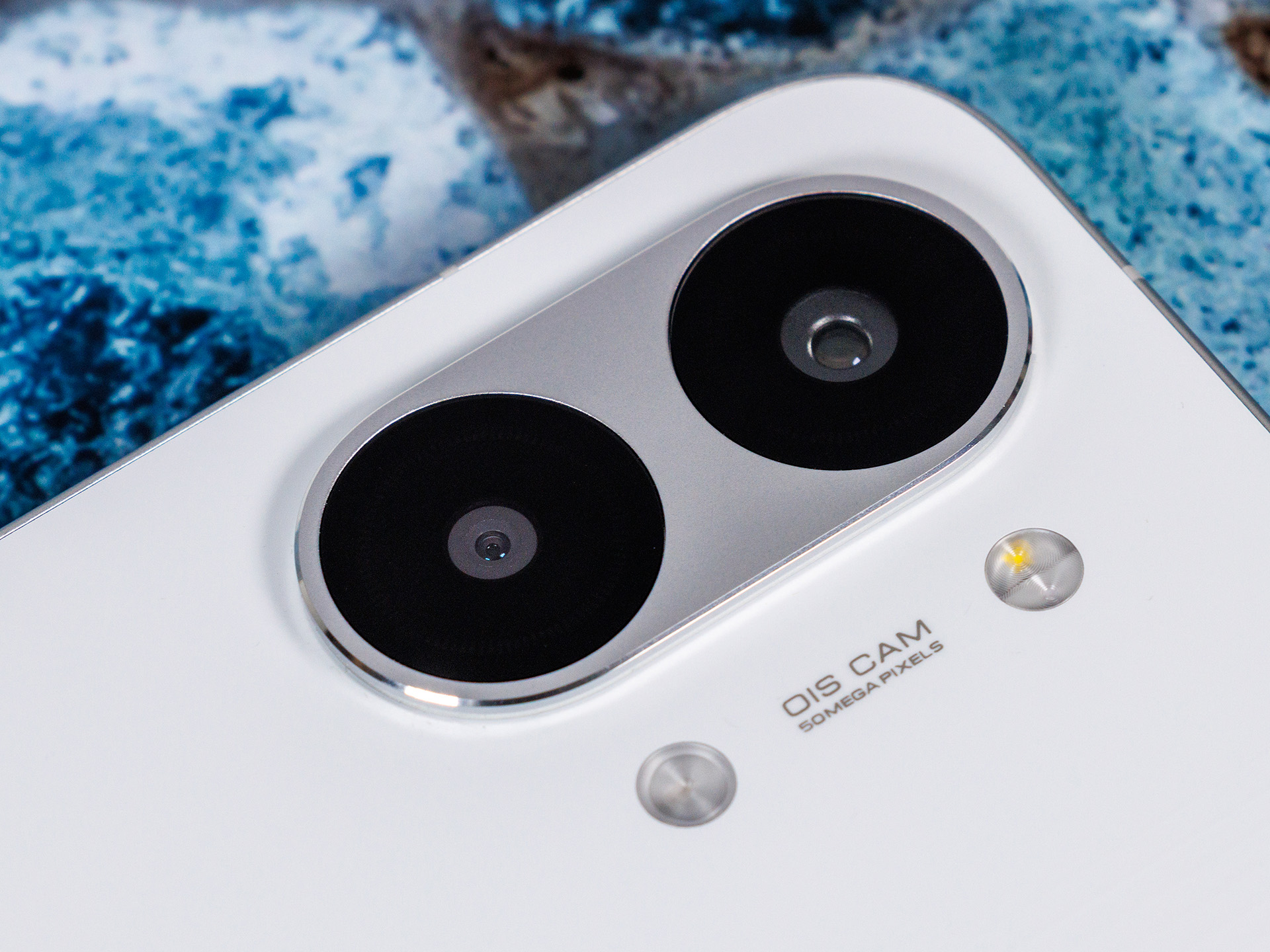
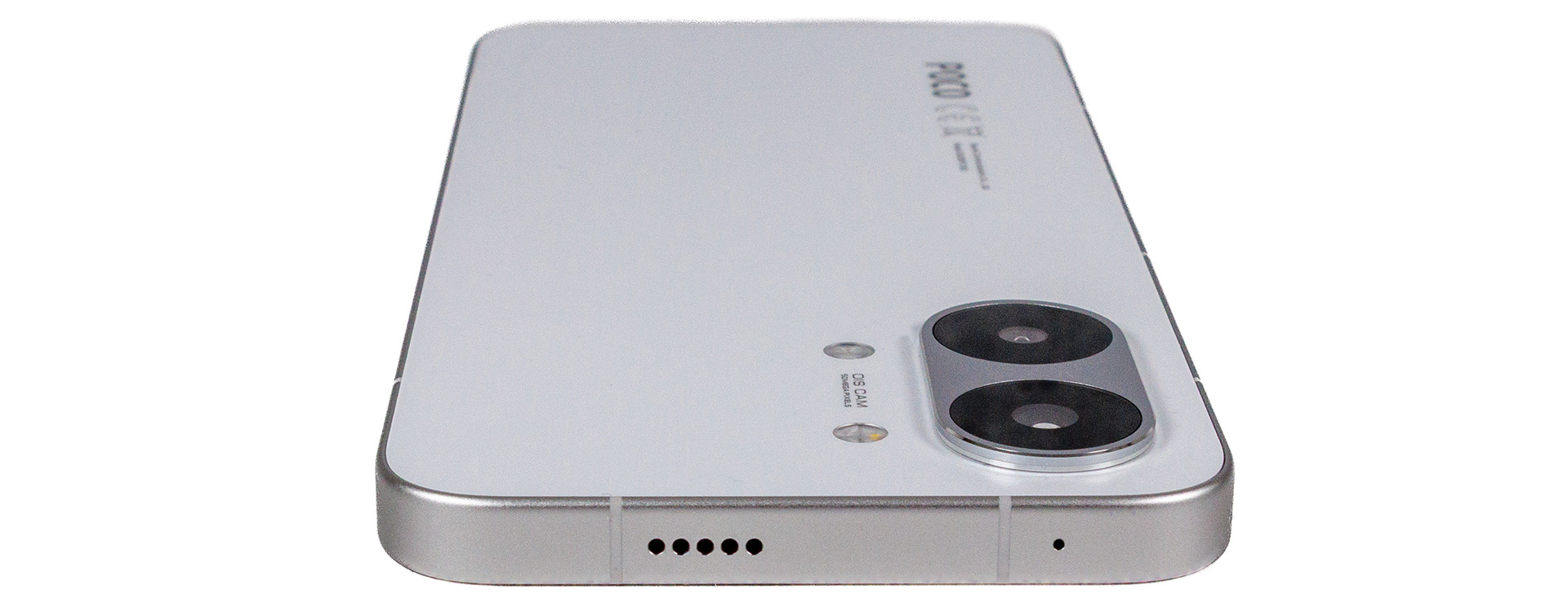
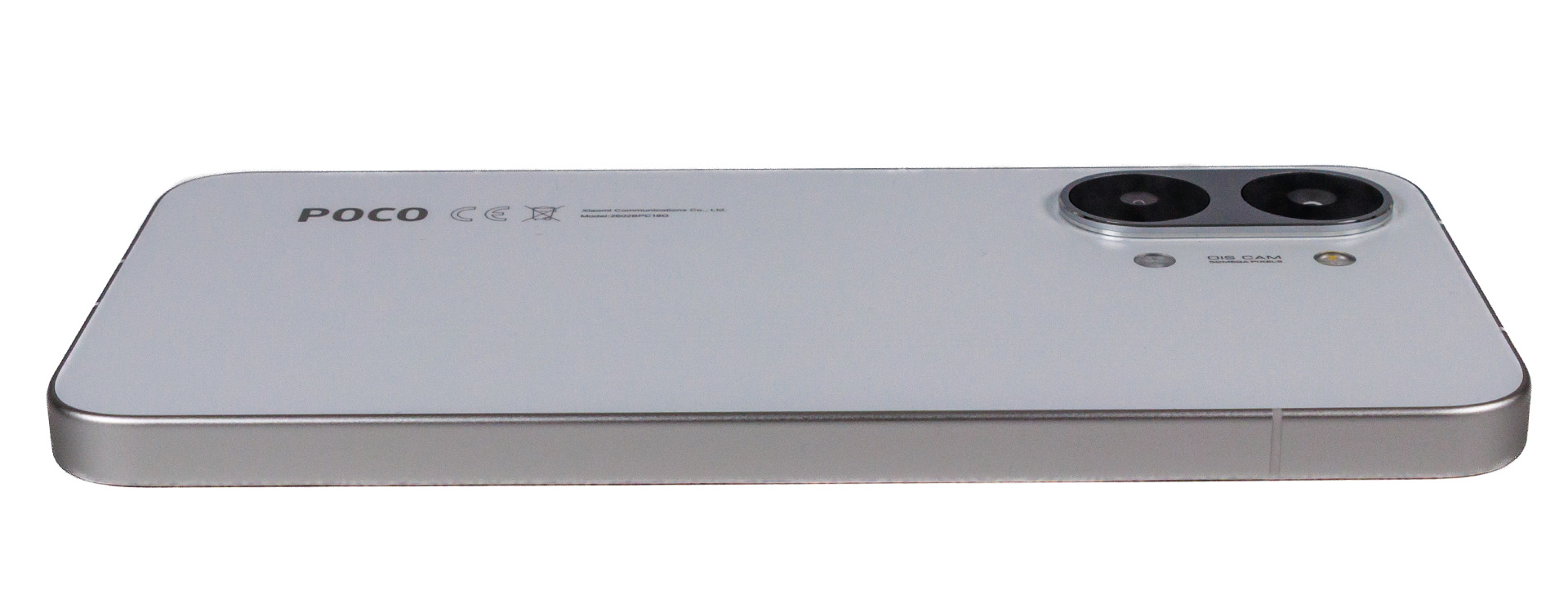
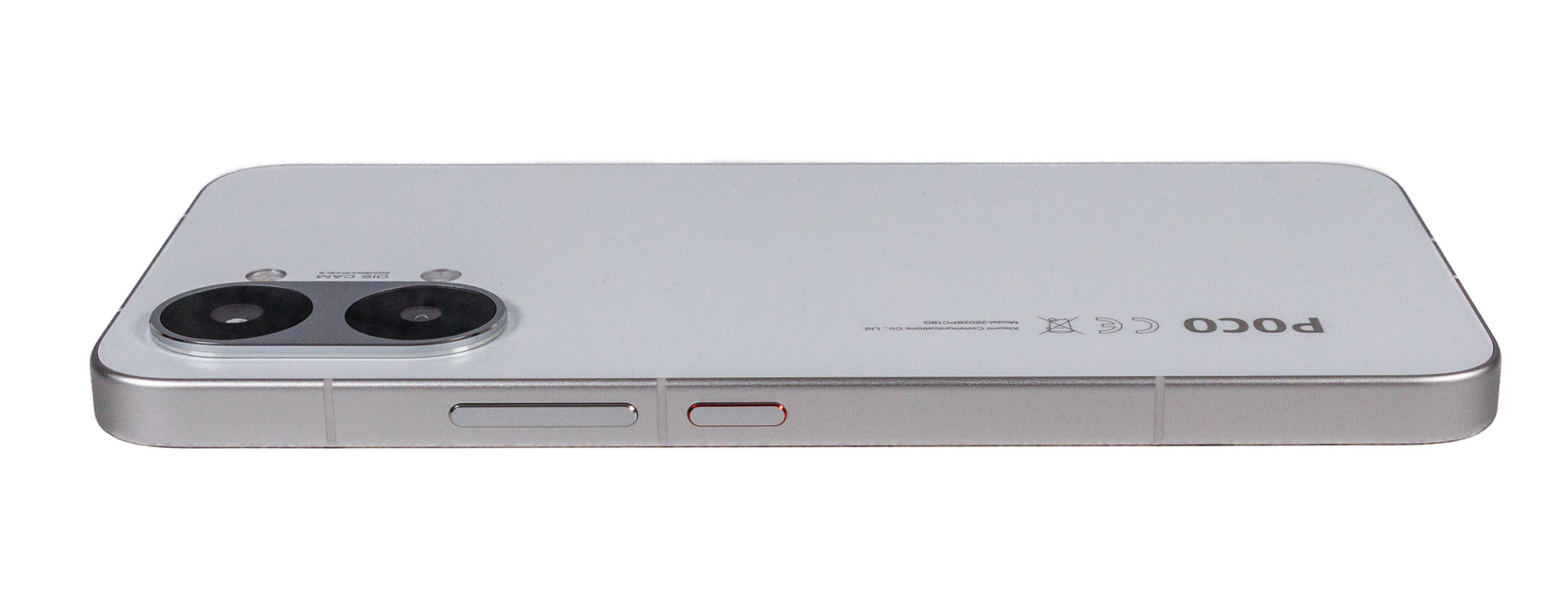
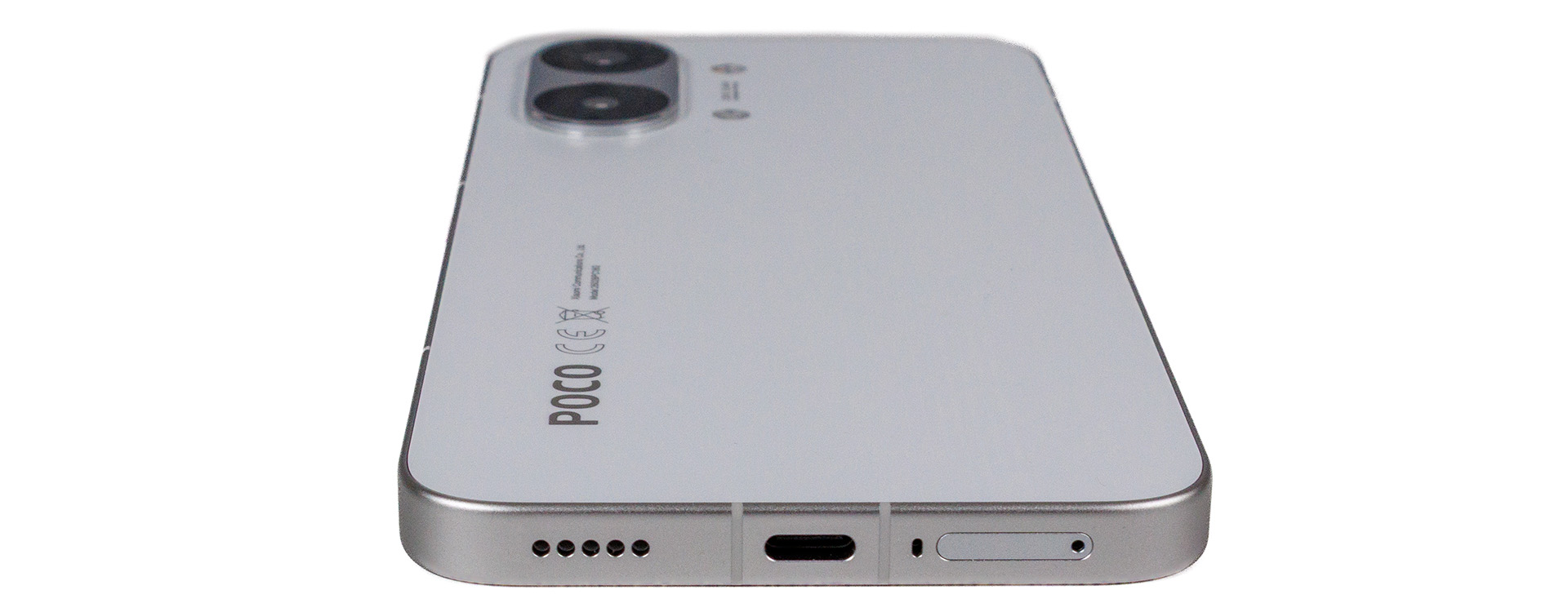
The Poco X8 Pro Max is neither particularly lightweight nor compact, however, it still feels nice to hold. Its 1.95-millimeter camera module isn't all too tall, but the smartphone still wobbles considerably when set down on a table.
Its matte aluminum frame has a premium feel and doesn't seem to attract many fingerprint marks. Its build quality is good, with tight, even gaps throughout most of the phone; only its curved edges show minimal unevenness. The X8 Pro Max creaks slightly when subjected to torsion attempts.
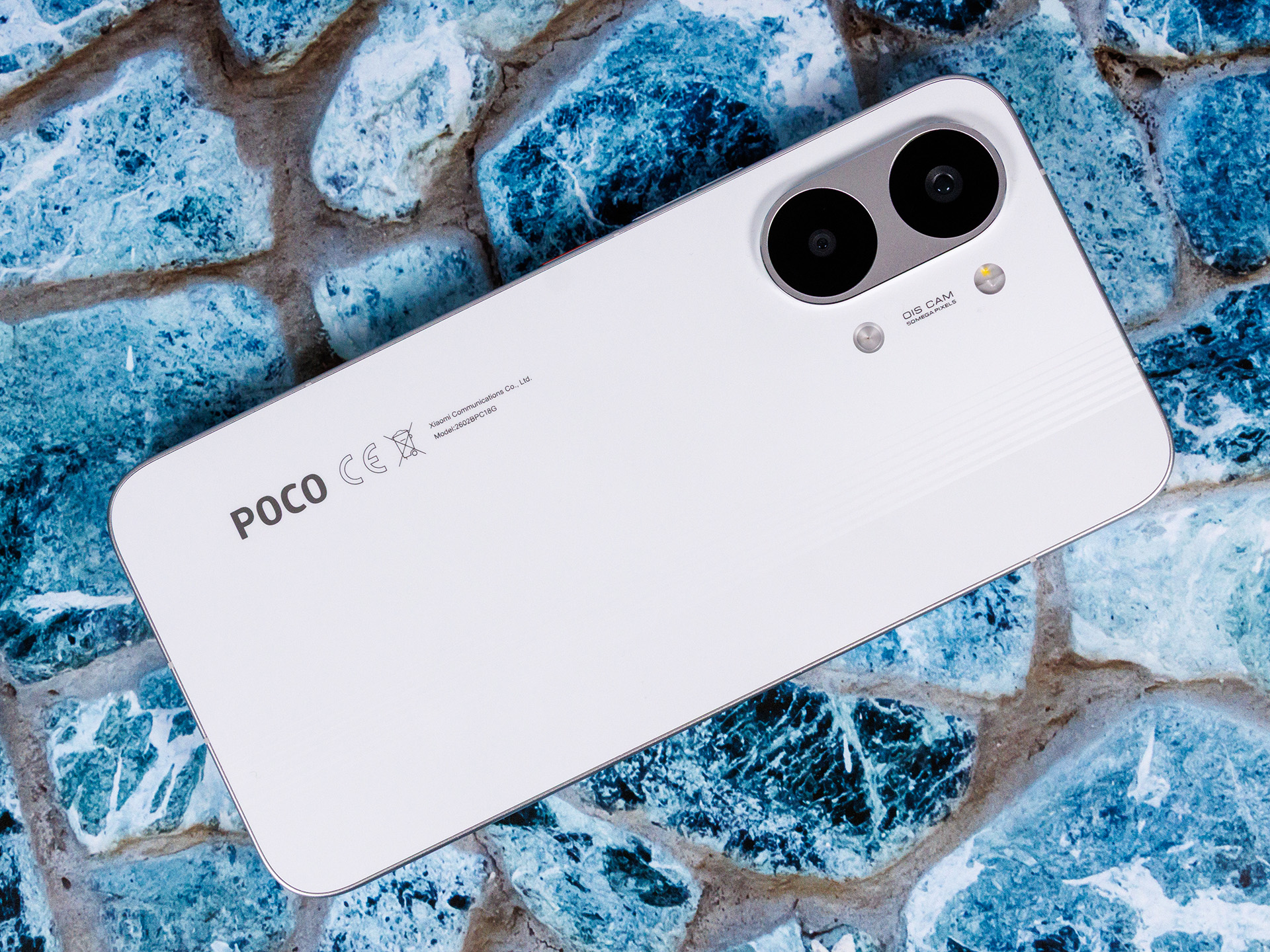
In accordance with its IP68 certification, it is both water- and dust-resistant. The Xiaomi smartphone comes in black, white and blue.
Connectivity - Only USB 2.0 and no wireless charging
The Xiaomi Poco X8 Pro Max features only a slow USB 2.0 port, which achieved a meager 26.15 MB/s during our copying test using a Samsung Portable SSD T7, but it at least supports all common file formats such as exFAT and NTFS. Wired video output, on the other hand, is not supported.
We are also missing the ability to charge the smartphone wirelessly. However, it features an infrared transmitter (which allows you to control TVs and air conditioners, for example), NFC, and Xiaomi Offline Communication. The latter enables voice calls with other Xiaomi phones over a distance of up to 500 meters without the need for a cellular connection.
Software - Security patches until 2032
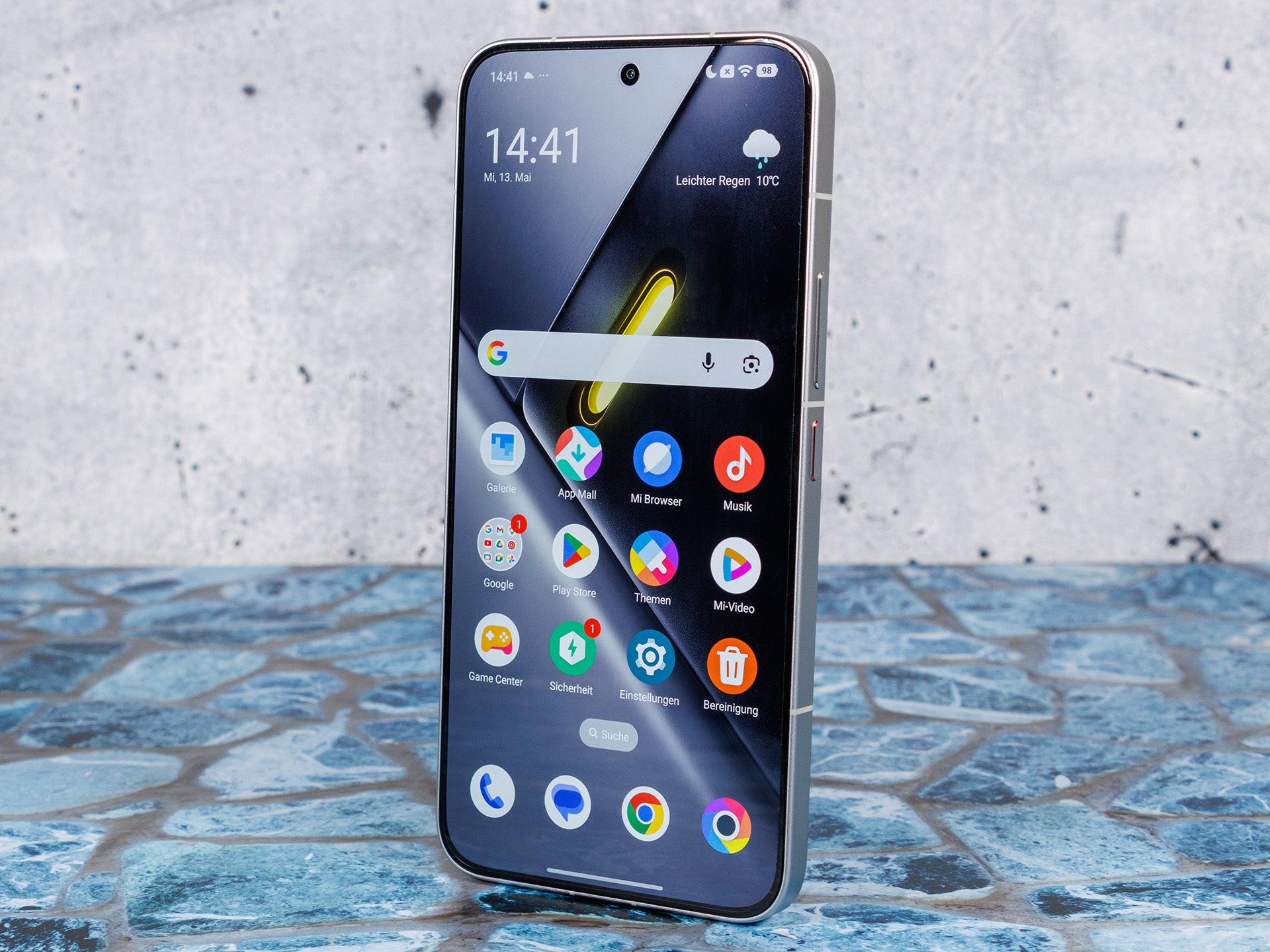
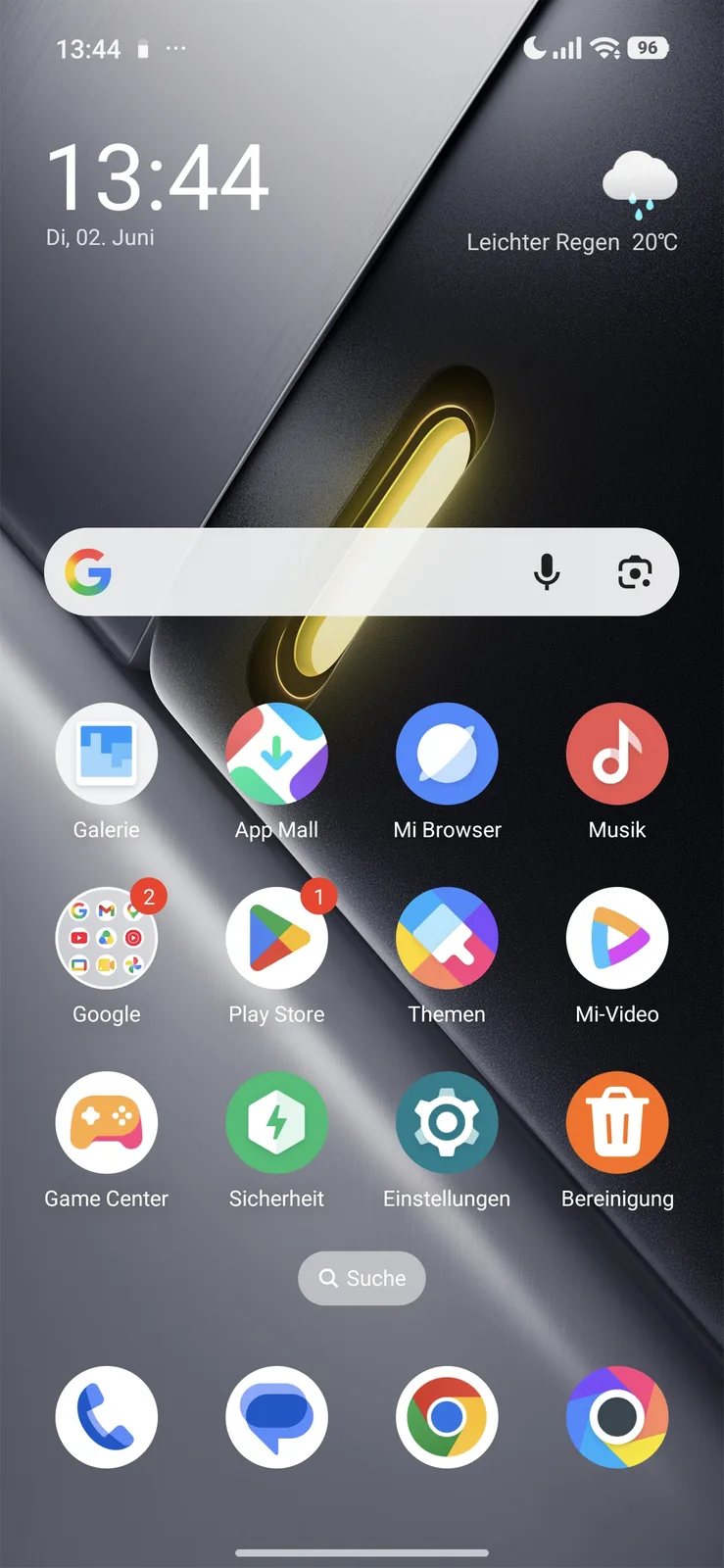
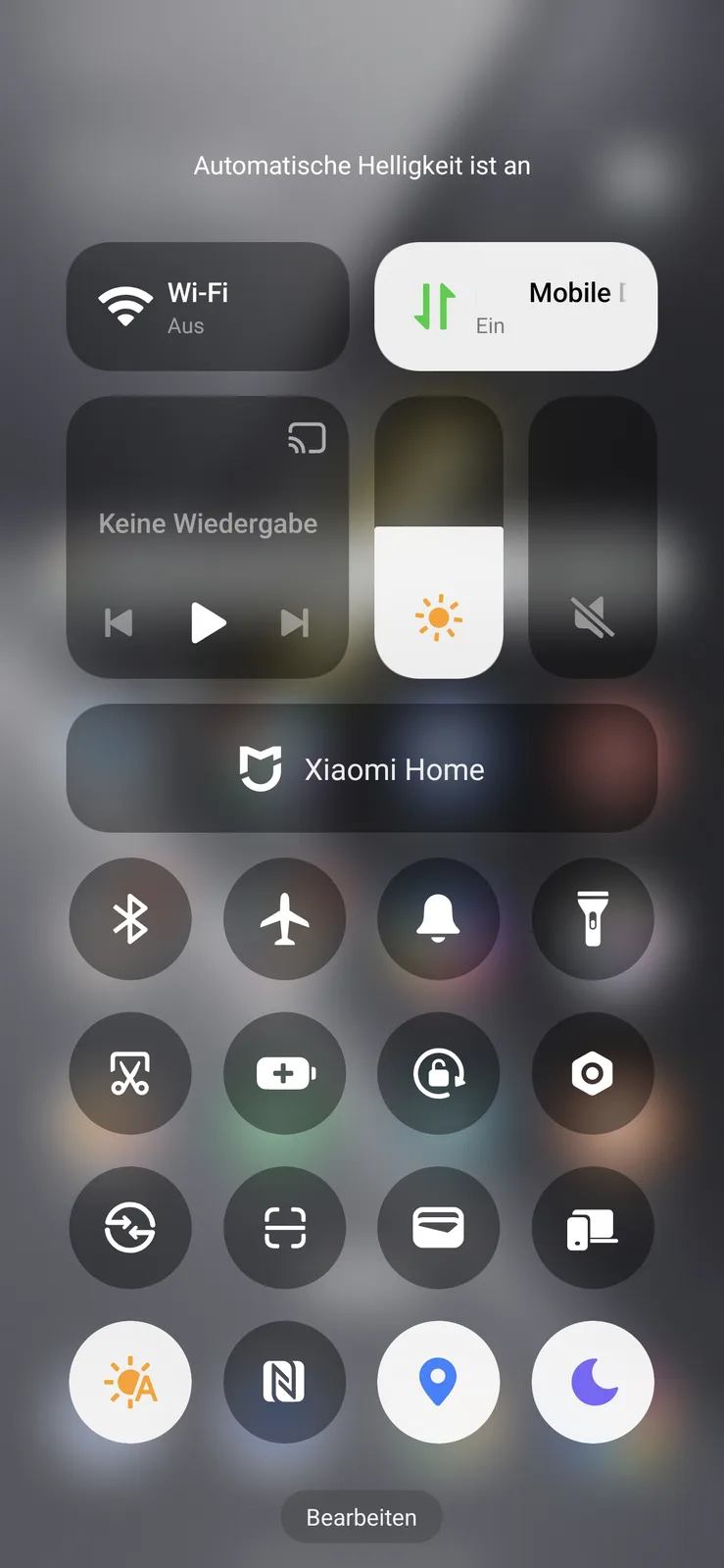
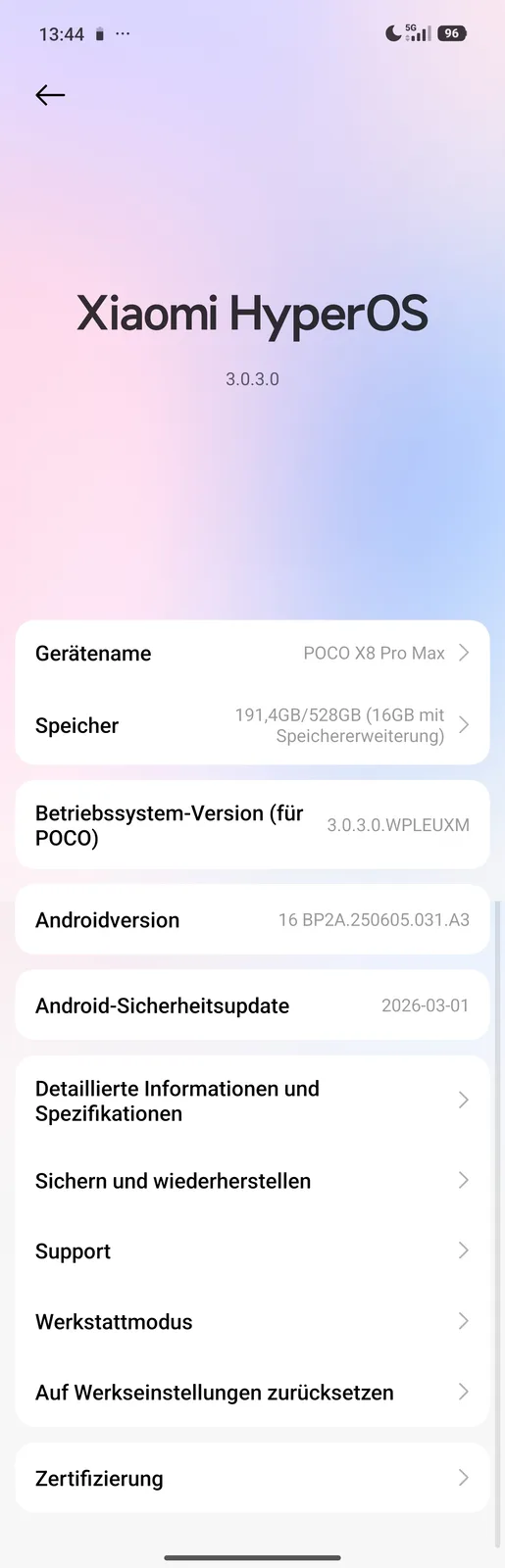
The Poco X8 Pro Max ships with Google Android 16 and Xiaomi's HyperOS 3.0 installed. It is expected to receive system updates for four years and security patches for an additional two years.
In addition to the many pre-installed third-party apps—all of which can be uninstalled—advertisements are once again included within Xiaomi's own apps, though not as prominently as on lower-priced models.
Sustainability
Xiaomi hasn't provided specific details about the materials used, recycling rate, or CO2e emissions for its Poco X8 Pro Max. Although the smartphone comes in plastic-free packaging, it is completely shrink-wrapped in a plastic film.
As of now, neither repair manuals nor replacement parts are available for the smartphone.
Communication and GNSS - The Poco smartphone without 6-GHz WLAN
The device's cellular connectivity features support all modern standards, including 5G Sub-6, with a wide range of frequencies. While it supports Wi-Fi 7, the fast 6 GHz band is not supported.
During our tests, we noted solid transfer speeds of over 900 Mbps using an Asus ROG Rapture GT-AXE11000. These speeds were also stable.
| Networking | |
| Xiaomi Poco X8 Pro Max | |
| iperf3 transmit AXE11000 | |
| iperf3 receive AXE11000 | |
| Xiaomi Poco F8 Pro | |
| iperf3 transmit AXE11000 | |
| iperf3 receive AXE11000 | |
| Samsung Galaxy S25 FE | |
| iperf3 transmit AXE11000 | |
| iperf3 receive AXE11000 | |
| iperf3 transmit AXE11000 6GHz | |
| iperf3 receive AXE11000 6GHz | |
| Motorola Edge 70 Fusion | |
| iperf3 transmit AXE11000 | |
| iperf3 receive AXE11000 | |
| Xiaomi 15T | |
| iperf3 transmit AXE11000 | |
| iperf3 receive AXE11000 | |
| iperf3 transmit AXE11000 6GHz | |
| iperf3 receive AXE11000 6GHz | |
| Xiaomi Poco X7 Pro | |
| iperf3 transmit AXE11000 | |
| iperf3 receive AXE11000 | |
| Average 802.11 a/b/g/n/ac/ax/be | |
| iperf3 transmit AXE11000 | |
| iperf3 receive AXE11000 | |
| iperf3 transmit AXE11000 6GHz | |
| iperf3 receive AXE11000 6GHz | |
| Average of class Smartphone | |
| iperf3 transmit AXE11000 | |
| iperf3 receive AXE11000 | |
| iperf3 transmit AXE11000 6GHz | |
| iperf3 receive AXE11000 6GHz | |
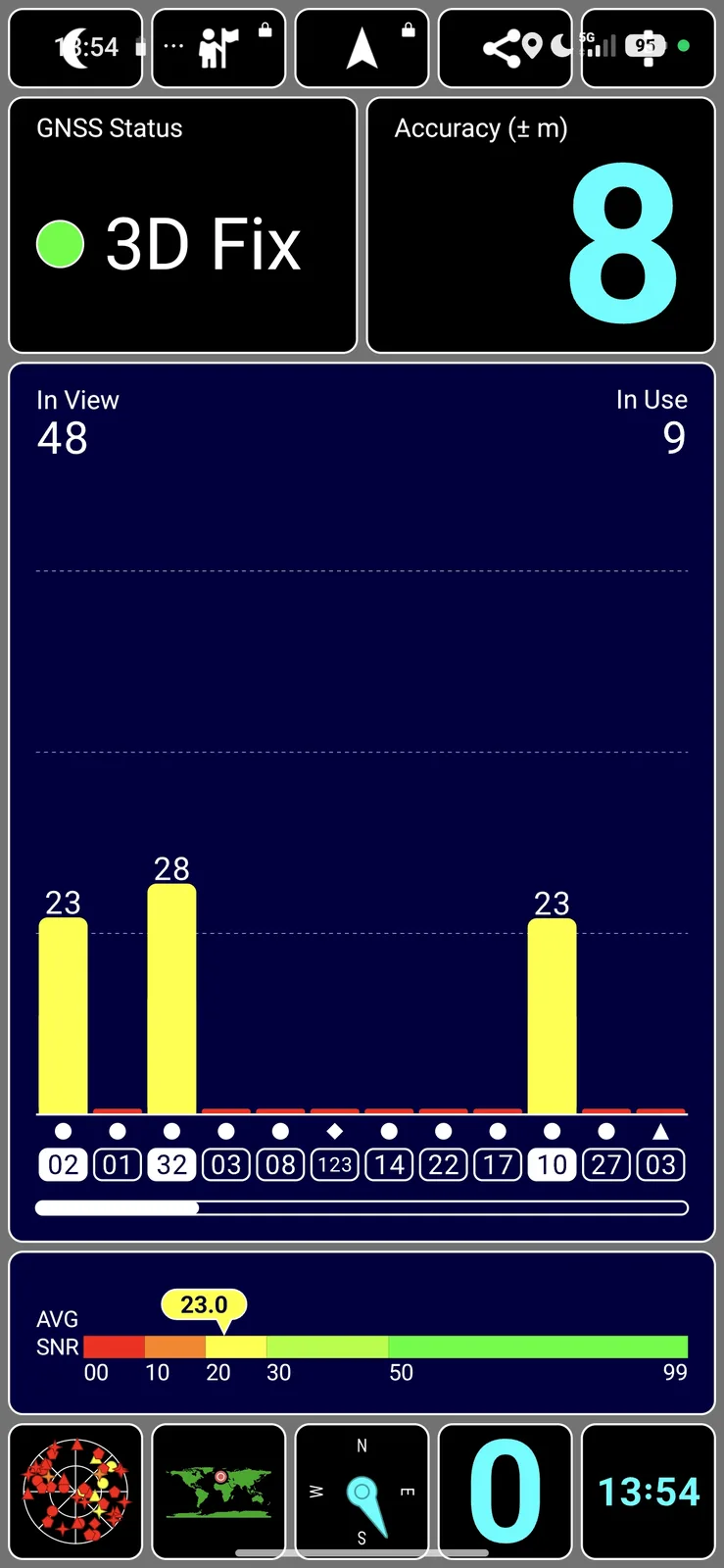
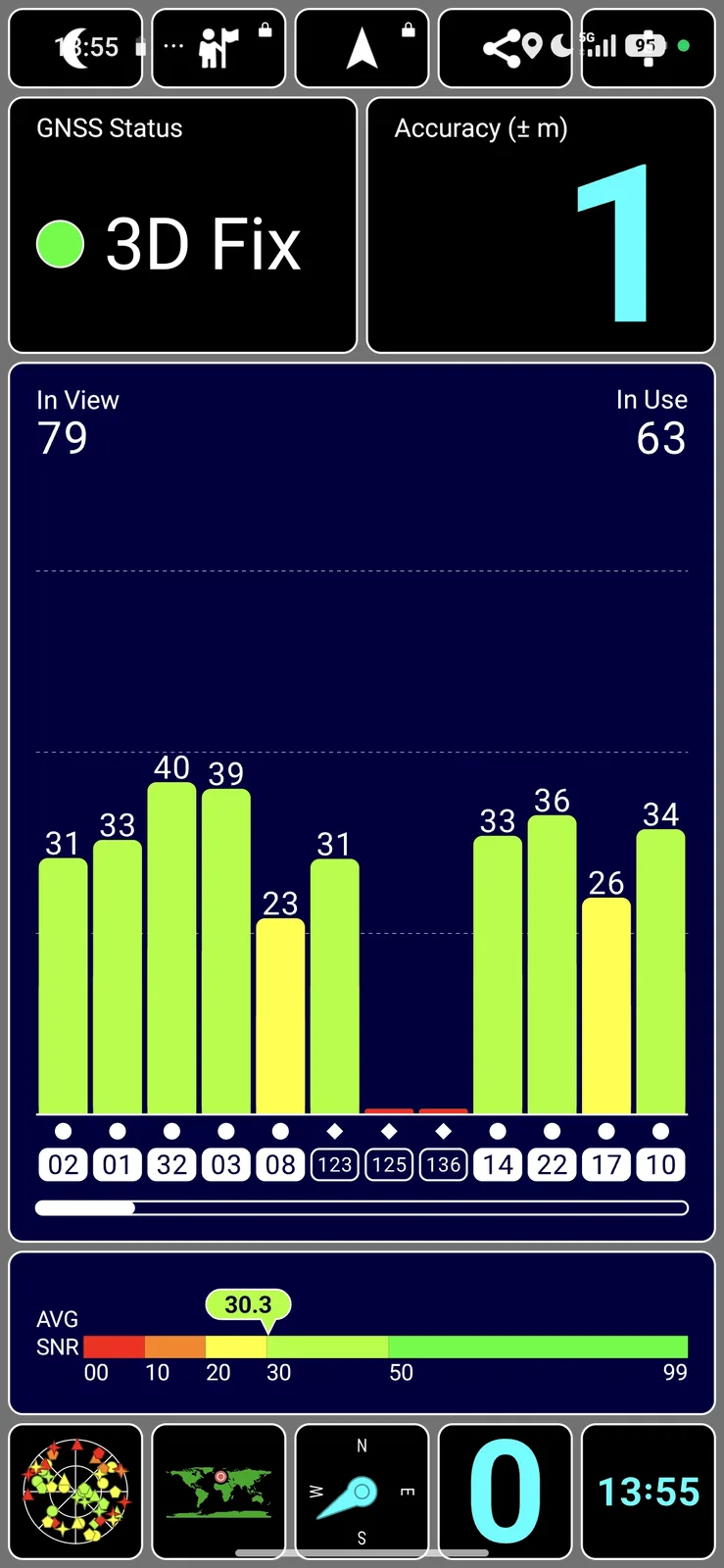
For location tracking, the Poco X8 Pro Max can access all satellite networks. According to the spec sheet, quad-band positioning is even possible via China’s BeiDou network; however, during our test, the smartphone was unable to connect to the B2b band. Outdoors, it located its position quickly, but indoors, this took a very long time and we only got a weak signal.
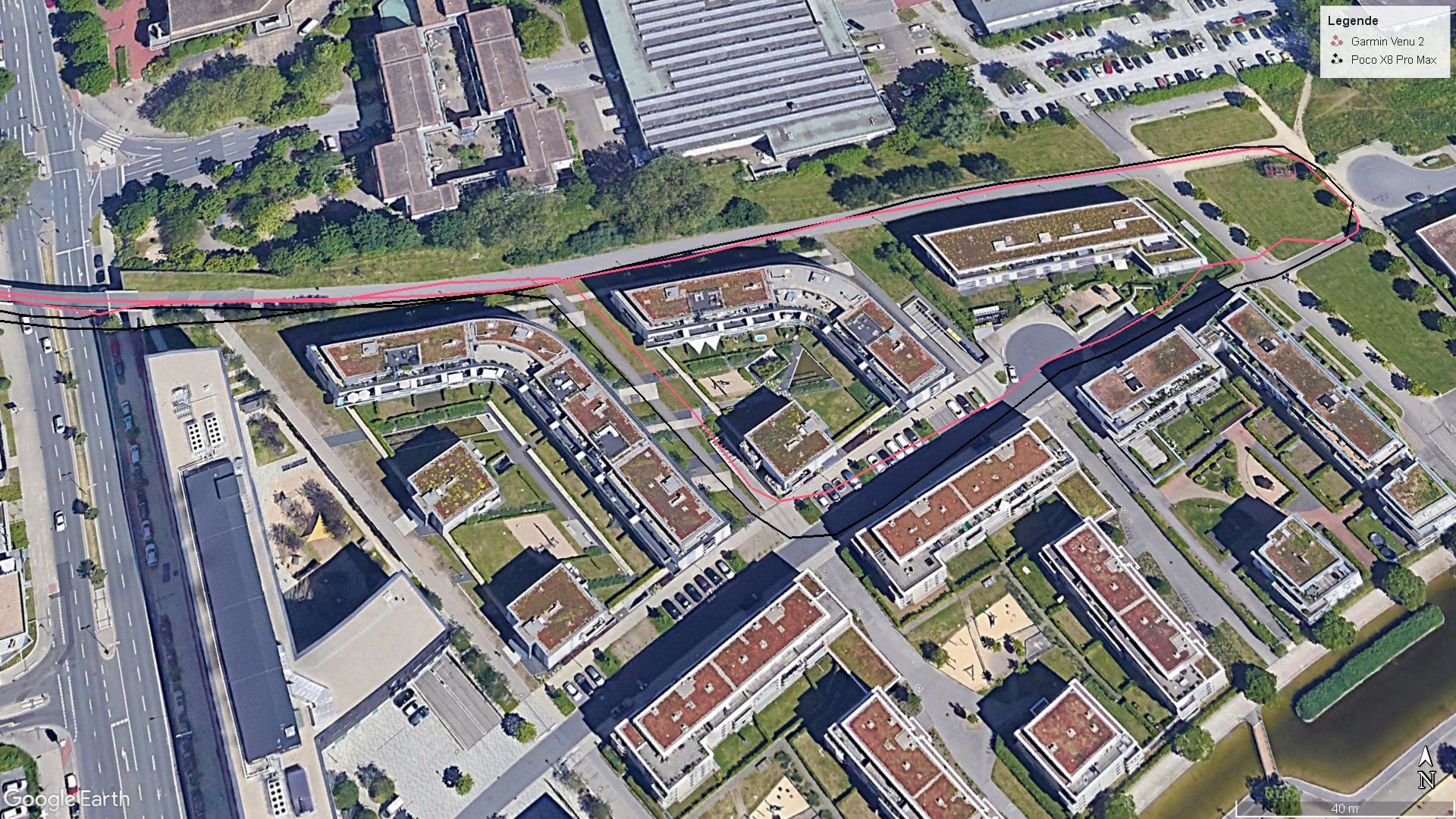
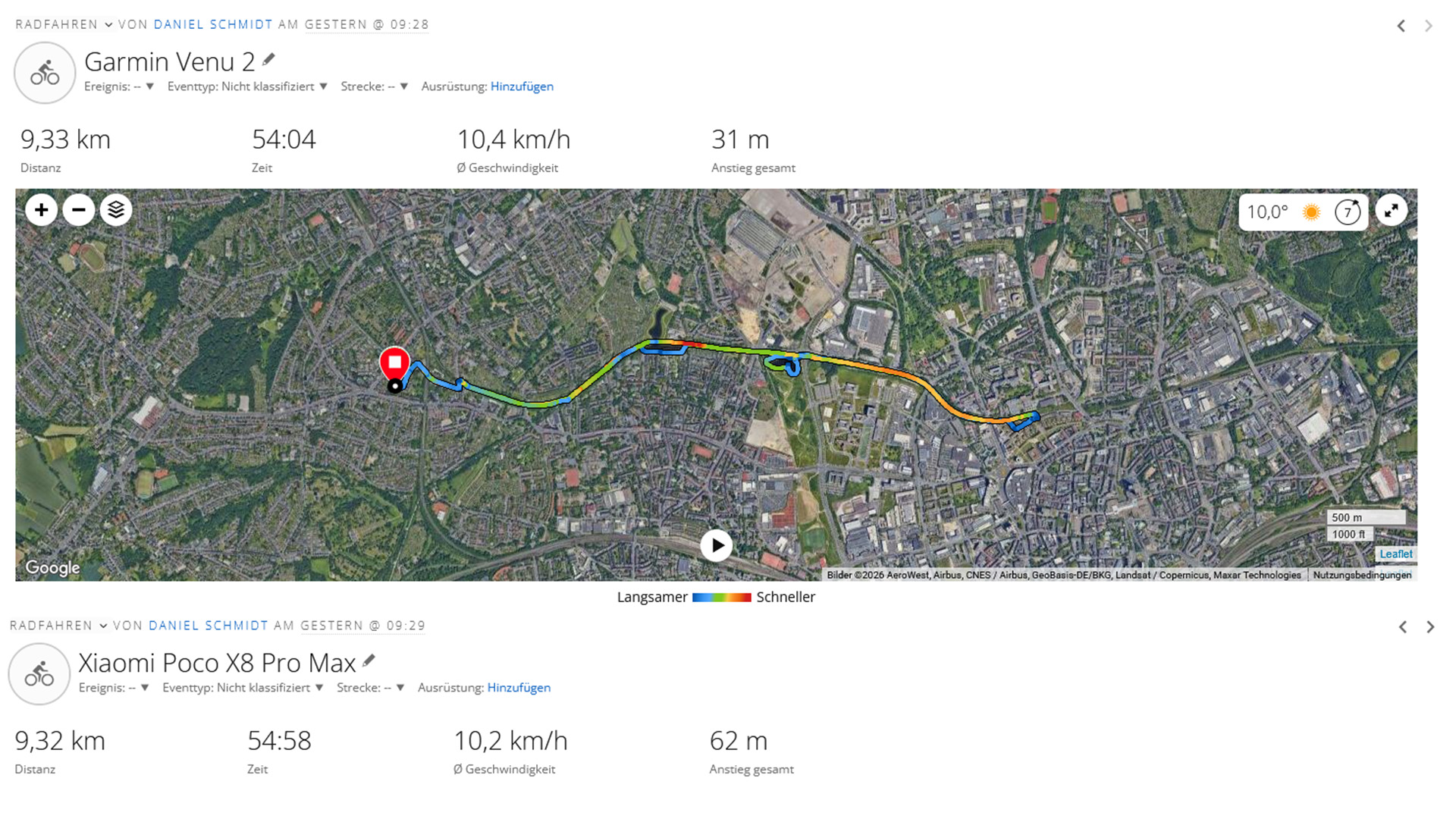
We compared the X8 Pro Max with the Garmin Venu 2 on a bike ride. The smartphone turned out to locate us more accurately in between buildings, but it also checked our location less frequently.

Telephone features and call quality
When held to your ear, the Poco X8 Pro Max features a natural call quality and suppresses background noise well. When using loudspeaker mode, the user sounds a little more muffled, nevertheless, the sound is still clear enough as long as the smartphone isn't too far away.
The X8 Pro Max can use either two nano SIM cards, or you can replace the second SIM slot with an eSIM.
Cameras - Dual-lens system with flaws

At first glance, the phone's camera setup appears unchanged compared to the X7 Pro. However, even though their specs are identical, the Poco X8 Pro Max features different sensors. Its front-facing camera, on the other hand, is the exact same and takes decent selfies—though they appear slightly oversharpened at times. Videos can be recorded in Full HD at up to 60fps.
The main camera on the back now uses a sensor from OmniVision and delivers nice looking photos with good color balance in daylight. In certain lighting situations, a slight red cast creeps into the shots. Although the camera's sensor is relatively small, it produces pretty impressive images when shooting static subjects. Zooming is entirely digital and works well up to 2x magnification; beyond that, the quality drops sharply. A maximum magnification of 10x (260 mm) is possible.
The ultra-wide-angle lens shows aberrations toward the edges and has only a shallow depth of field; at best, the results are suitable for social media use. There is no macro function.
Videos can be recorded in Ultra HD at 60fps at best. They appear to be well stabilized.
Image comparison
Choose a scene and navigate within the first image. One click changes the position on touchscreens. One click on the zoomed-in image opens the original in a new window. The first image shows the scaled photograph of the test device.
Main cameraMain cameraUltra-wide angle5x zoomLow-light




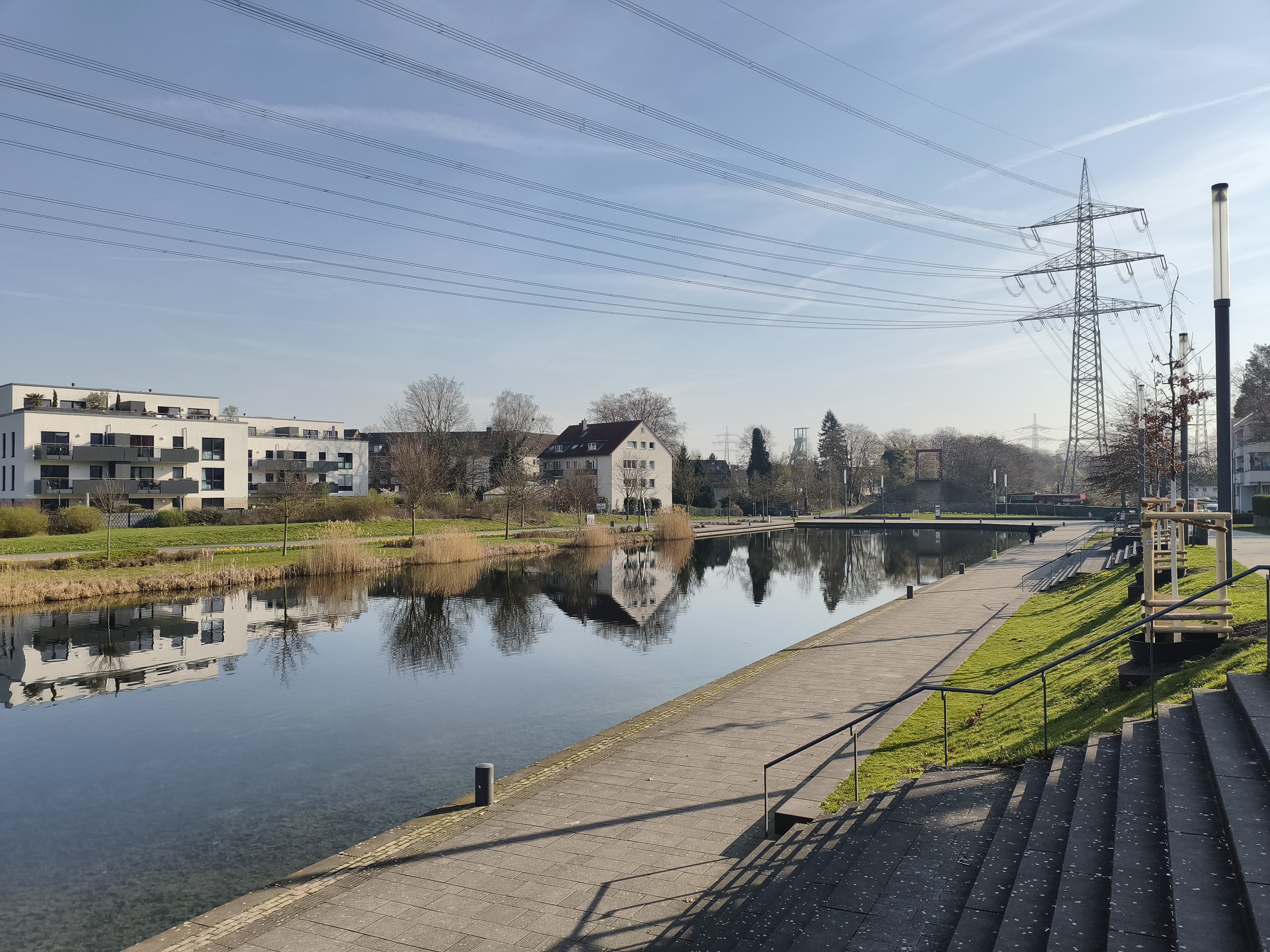

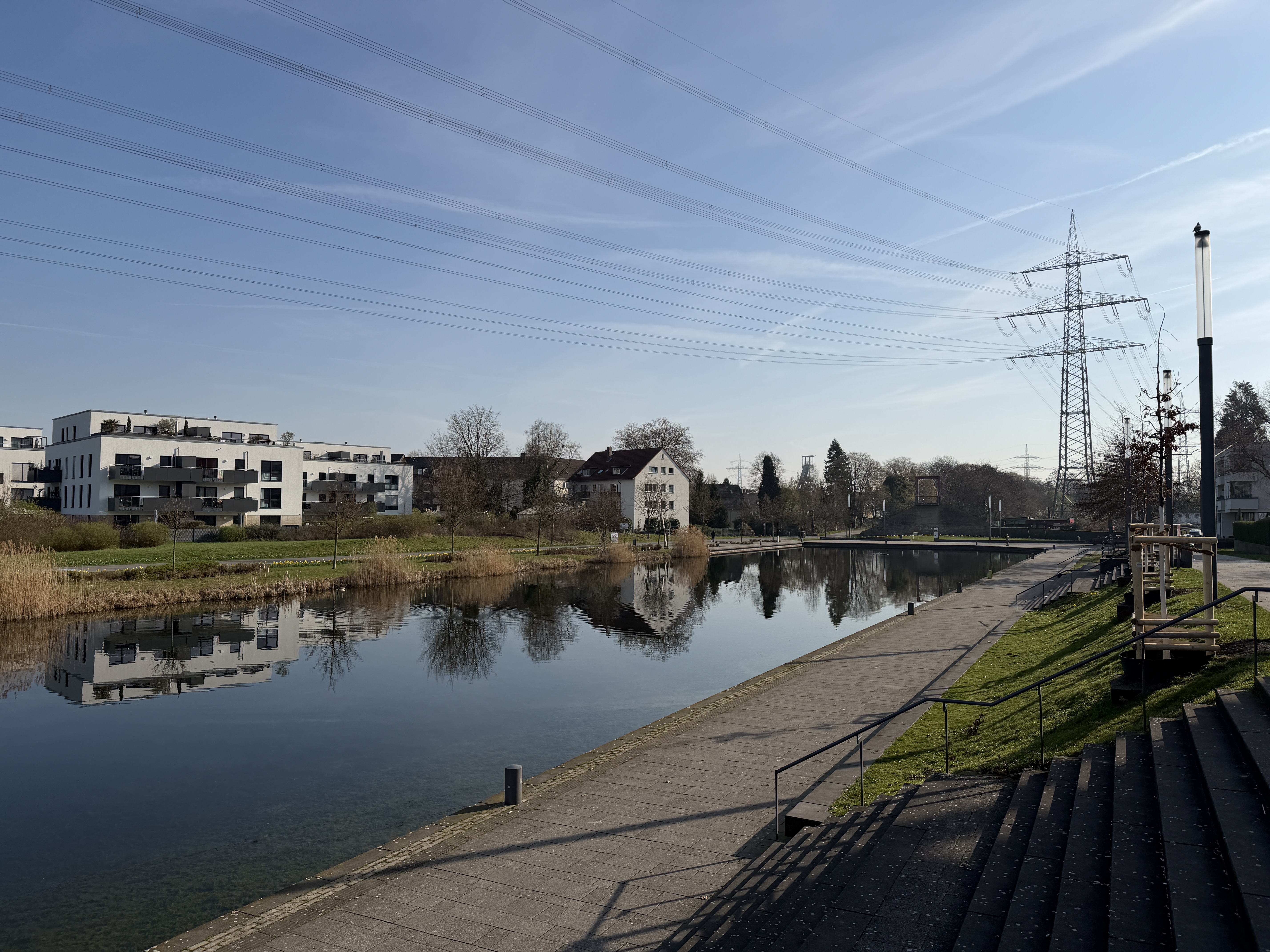



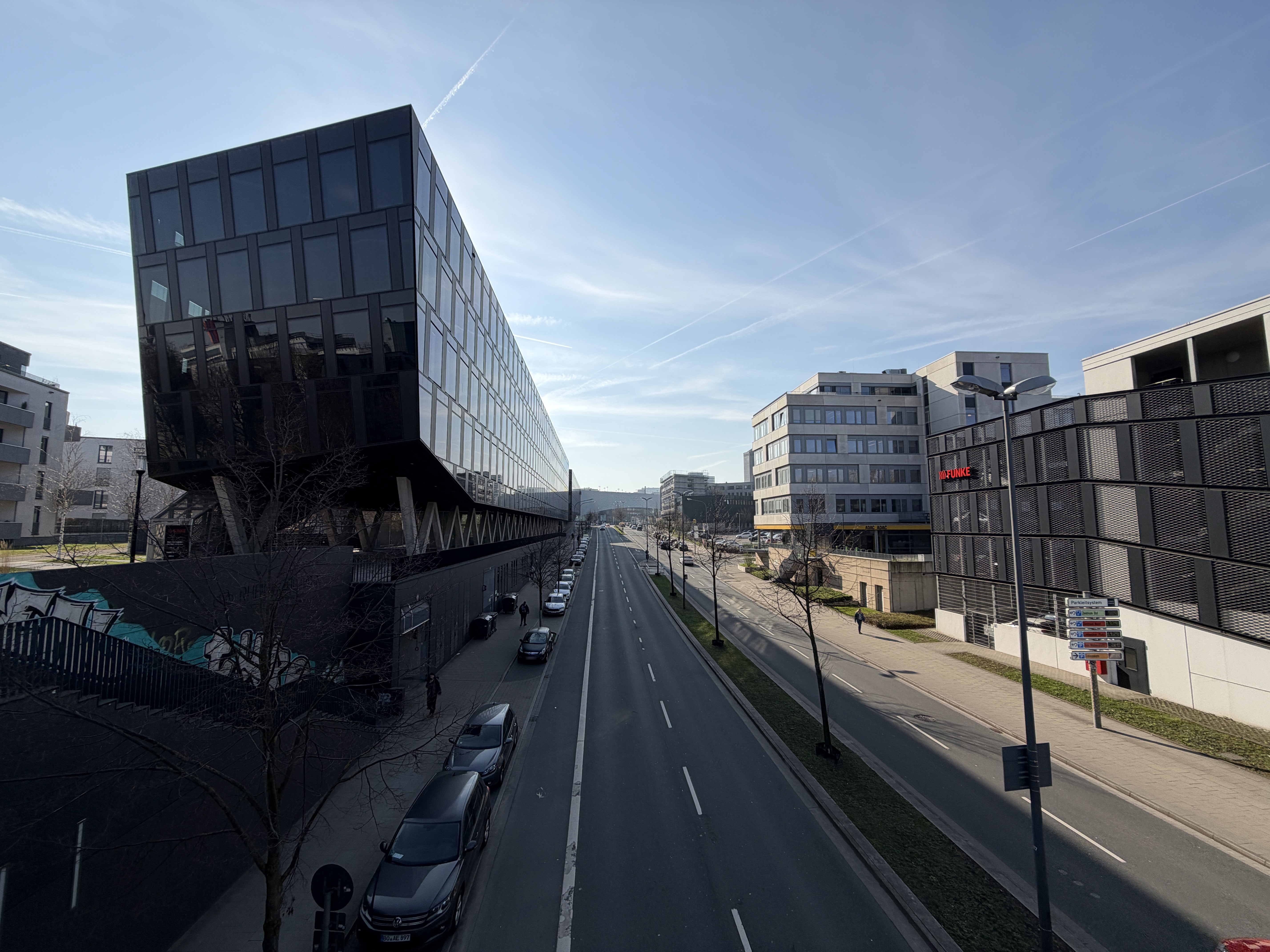









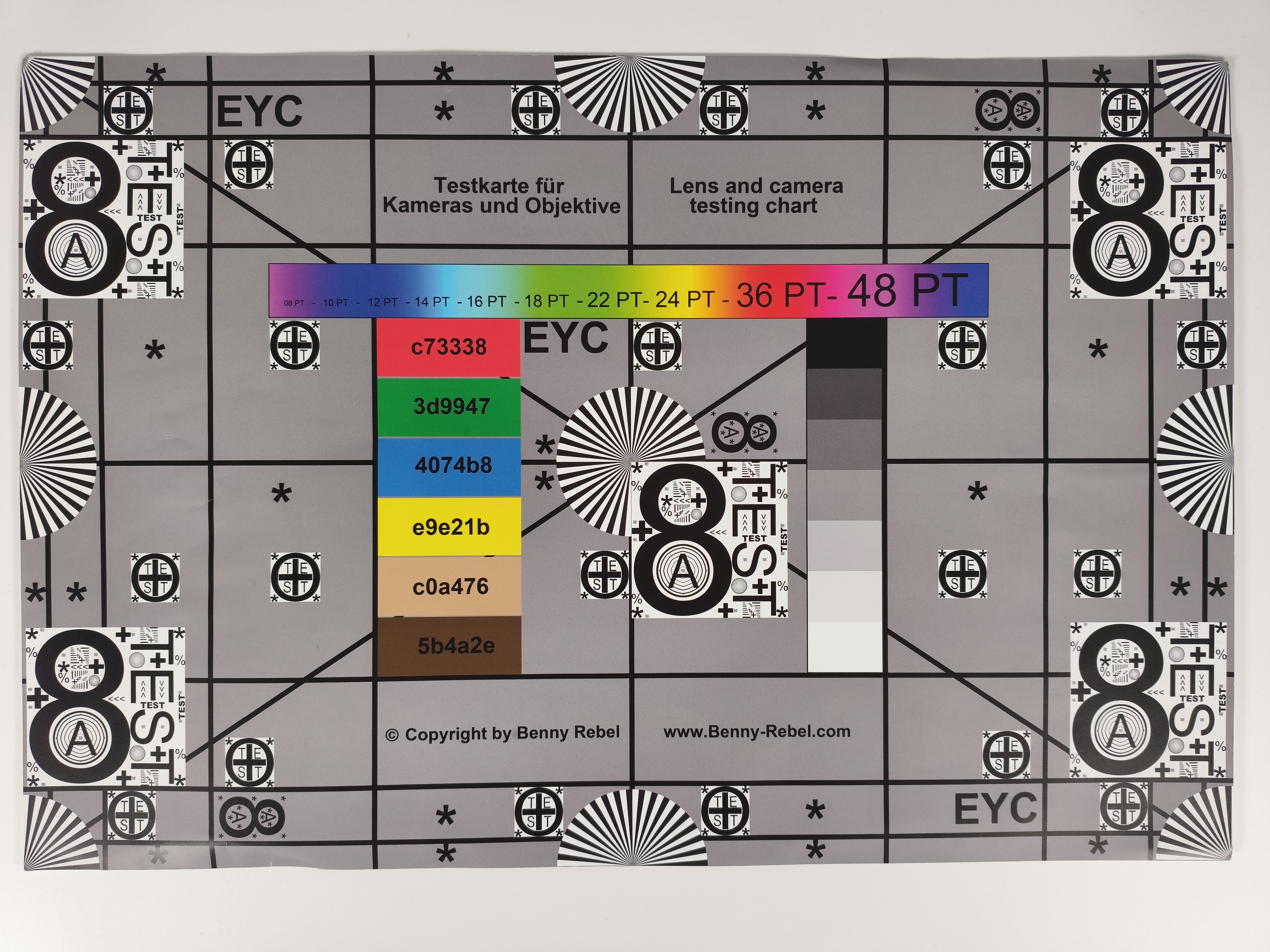
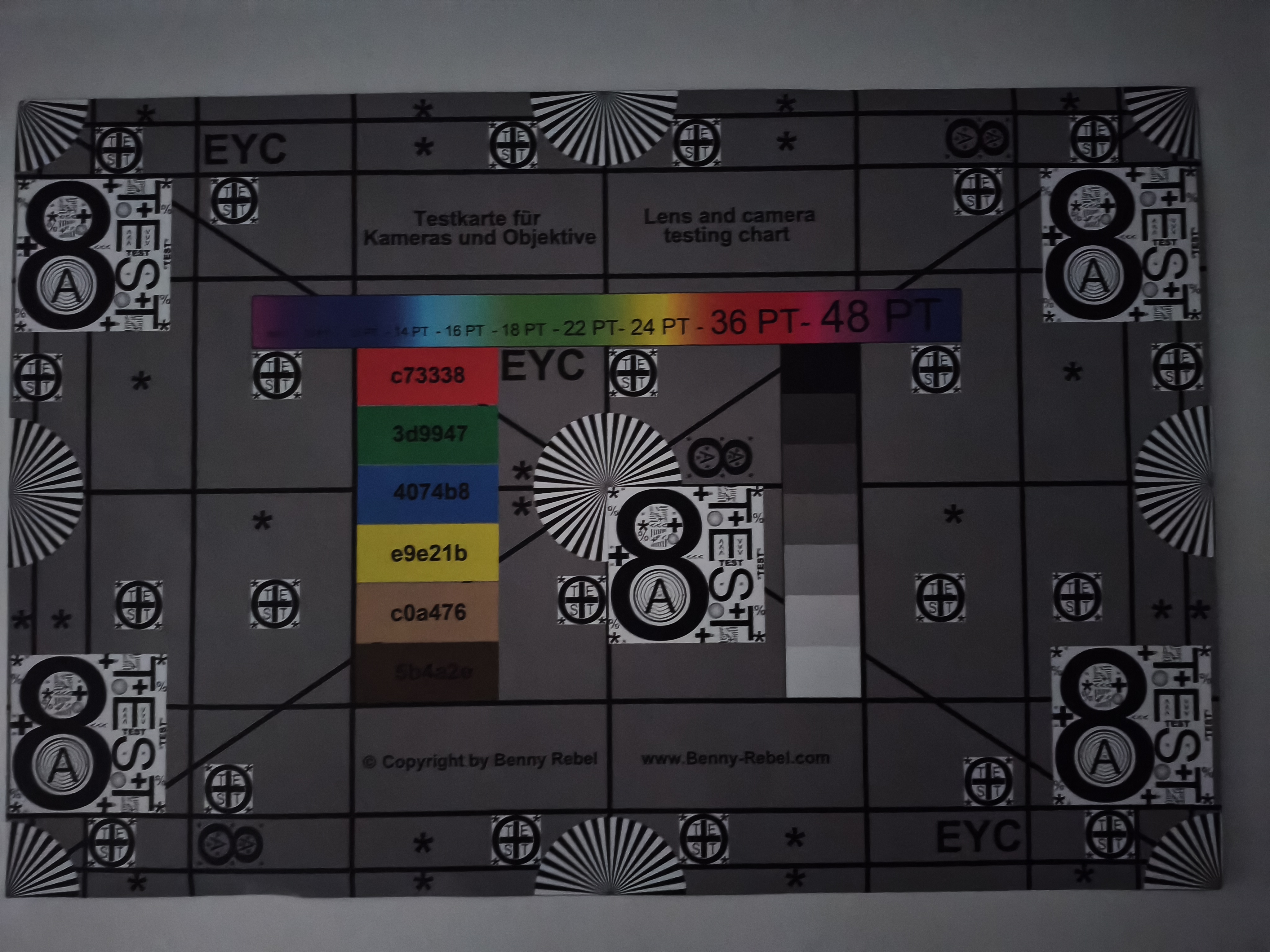
In controlled lighting conditions, the Poco X8 Pro Max showed comparatively accurate color depiction.
Our test chart was reproduced quite highly sharpened, but even toward the edges, it retained a high level of detail.




Accessories and warranty - The Poco X8 Pro Max with a protective case
The Xiaomi Poco X8 Pro Max comes delivered with a USB cable, a SIM tool as well as an anthracite-colored silicone protective case. The European models don't come with a power adapter.
The phone is only covered by a 12-month warranty, but this can be expanded via Xiaomi Care insurance and so the phone can optionally be additionally insured against damage and theft. Xiaomi Care costs between approximately $45 and $70 and runs for two years.
Input devices and operation - The Poco phone with an ultrasonic fingerprint sensor
The Poco X8 Pro Max's capacitive touchscreen feels nice and smooth and responds precisely to all inputs. However, the pre-installed screen protector creates a little more friction and is difficult to clean.
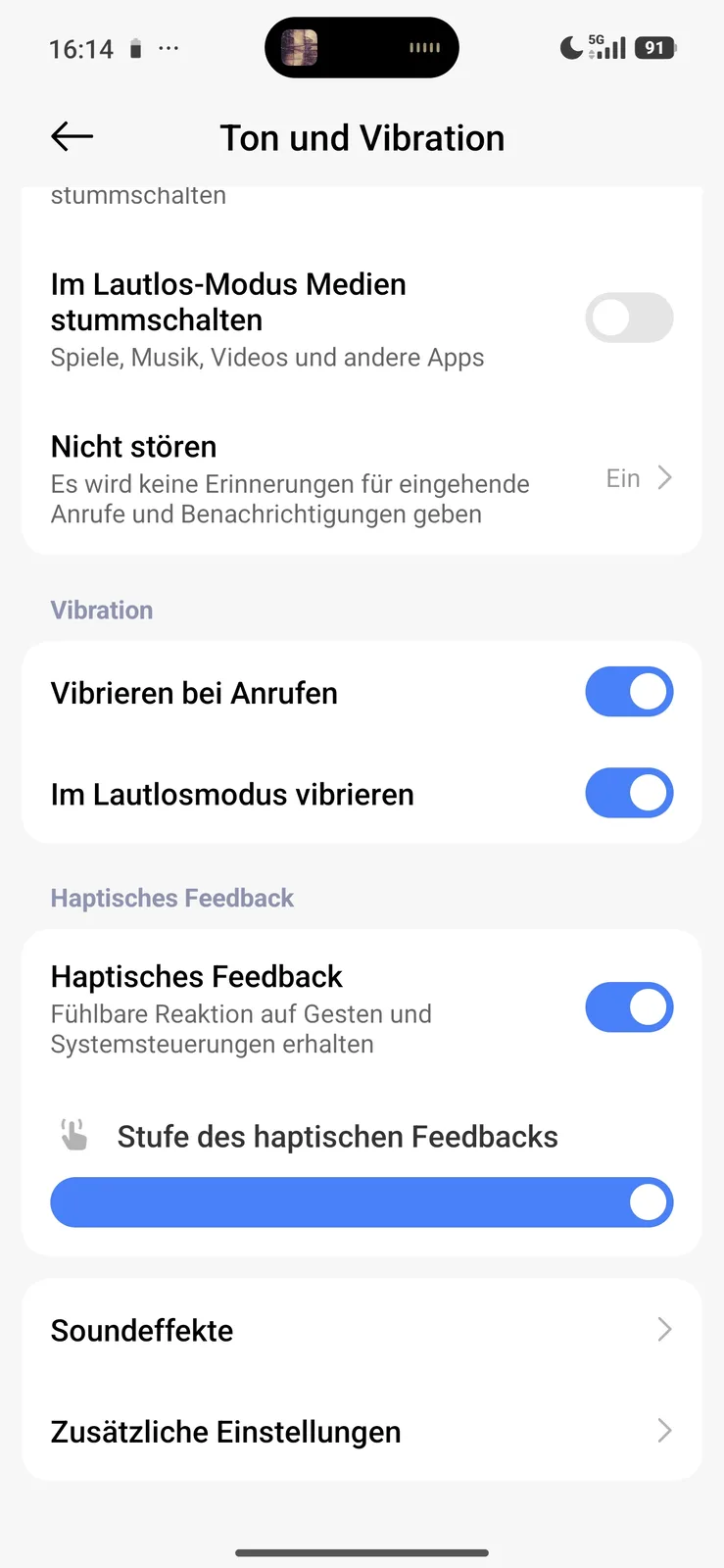
The device's linear vibration motor provides crisp feedback and can be adjusted in the settings. The in-display ultrasonic fingerprint sensor offers good recognition rates and unlocks the smartphone quickly. Additionally, users can unlock the phone using the front-facing camera.
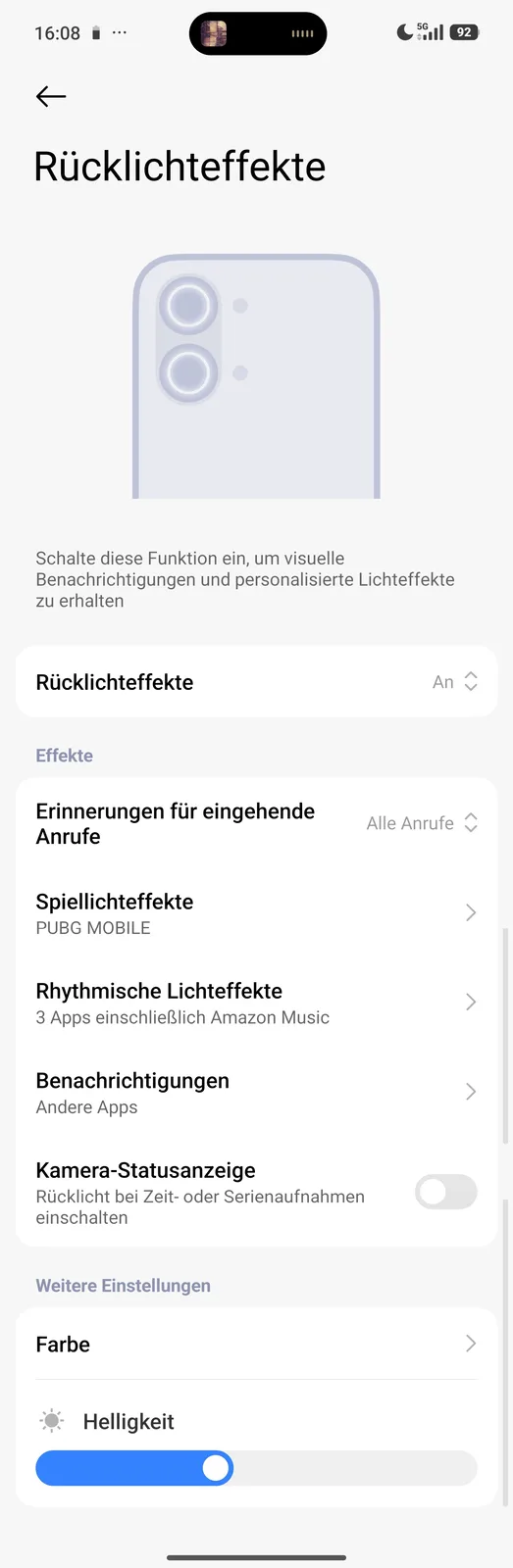
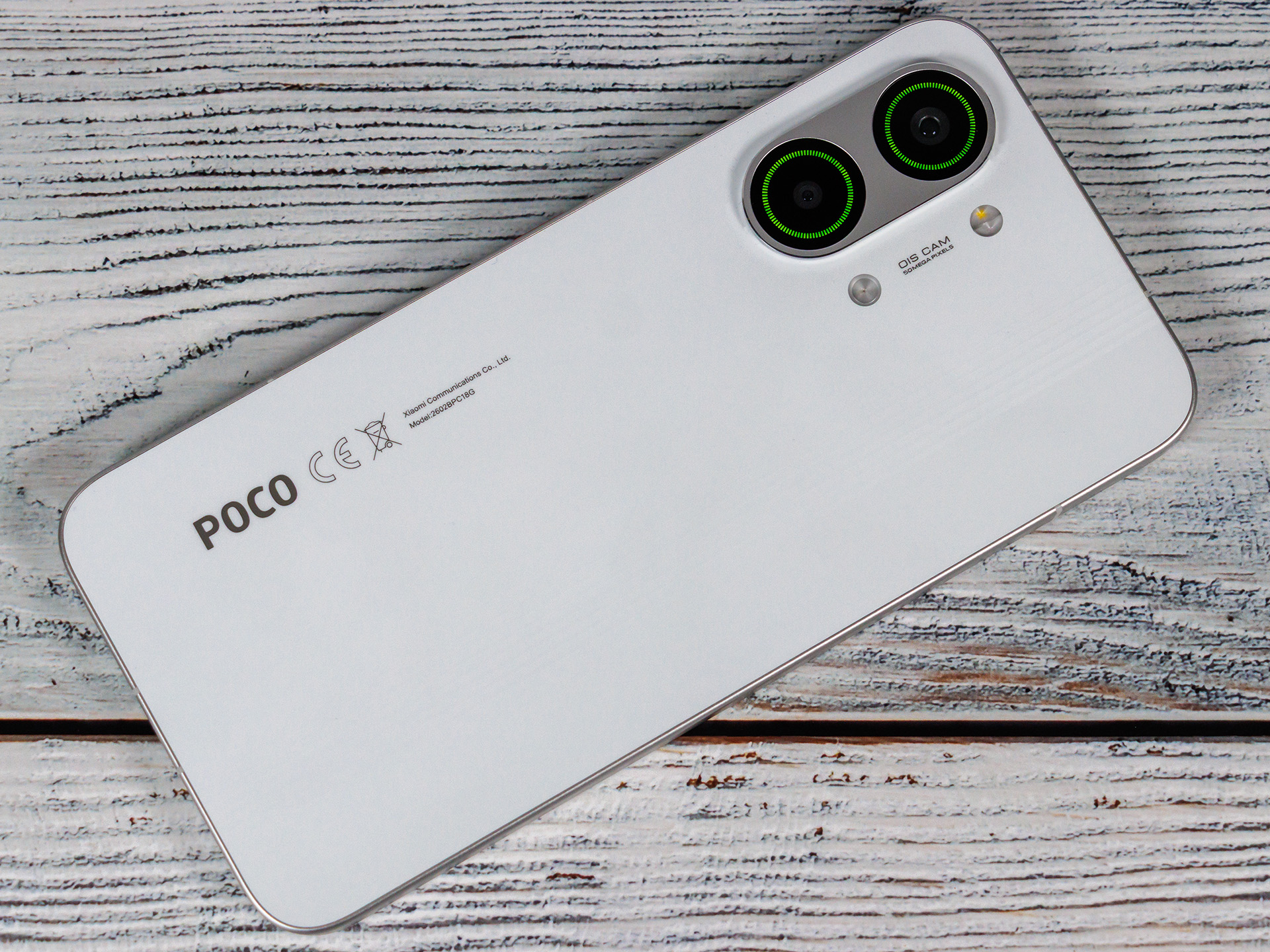
The Poco X8 Pro Max features two LED rings around the cameras that serve as notification lights, but these can also be used for rhythmic or gaming light effects.

Display - Extremely bright, not just in HDR

The Poco X8 Pro Max's 6.83-inch (17.35 cm) AMOLED display operates at a refresh rate of 30 to 120 Hz, but doesn't use LTPO. Xiaomi specifies a brightness of up to 3,500 cd/m².
When displaying a pure white screen, we measured up to 1,107 cd/m² at the center of the display with the ambient light sensor enabled. Without it, the brightness reached 634 cd/m². If Sunlight Mode is enabled in the settings, you can expect brightness levels of up to 835 cd/m². When measuring with a reduced white area (APL18), we recorded a generous 3,582 cd/m² and when playing an HDR video via YouTube, we noted 3,538 cd/m²—all very good values.
Under the oscilloscope, we measured a base flicker of 120 Hz, which is likely caused by BFI (Black Frame Insertion). For controlling the phone's brightness, Xiaomi uses pulse width modulation (PWM) at a high frequency of 3,840 Hz. We measured a very high frequency of 2,941 Hz at minimum display brightness, so the panel can be considered relatively easy on the eyes.
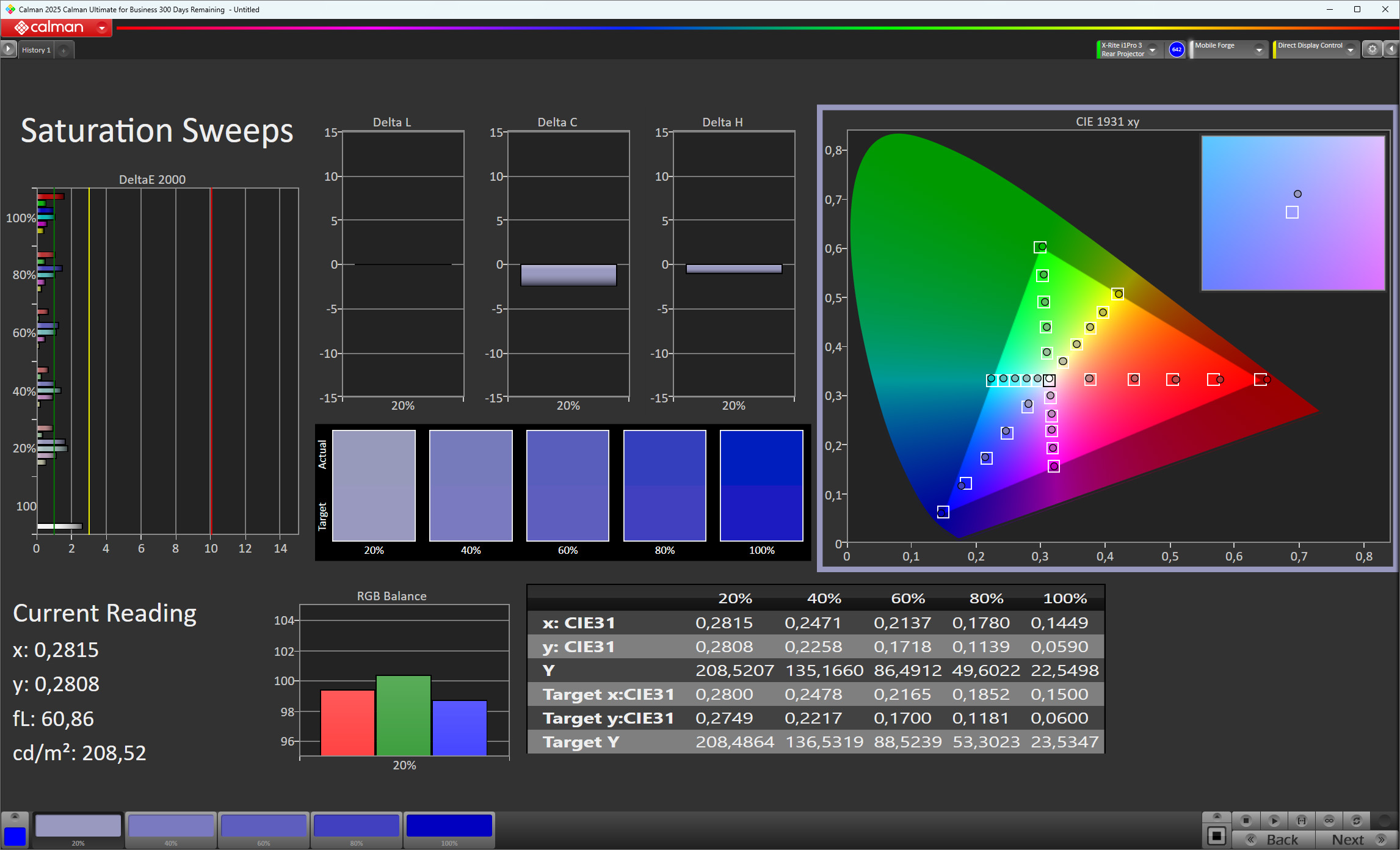
As a result of its high color depth of 12 bits, we also tested the panel for temporal dithering, or frame rate control (FCR). This technology is used to make a pixel alternate between two or more color values, tricking the eye into perceiving a different color and thereby simulating a higher color depth and enabling smooth color gradients. However, this can also be taxing for sensitive users. Using a slow-motion recording and a microscope, we tested the screen for this, with the result being that temporal dithering is likely being used.
| |||||||||||||||||||||||||
Brightness Distribution: 97 %
Center on Battery: 1107 cd/m²
Contrast: ∞:1 (Black: 0 cd/m²)
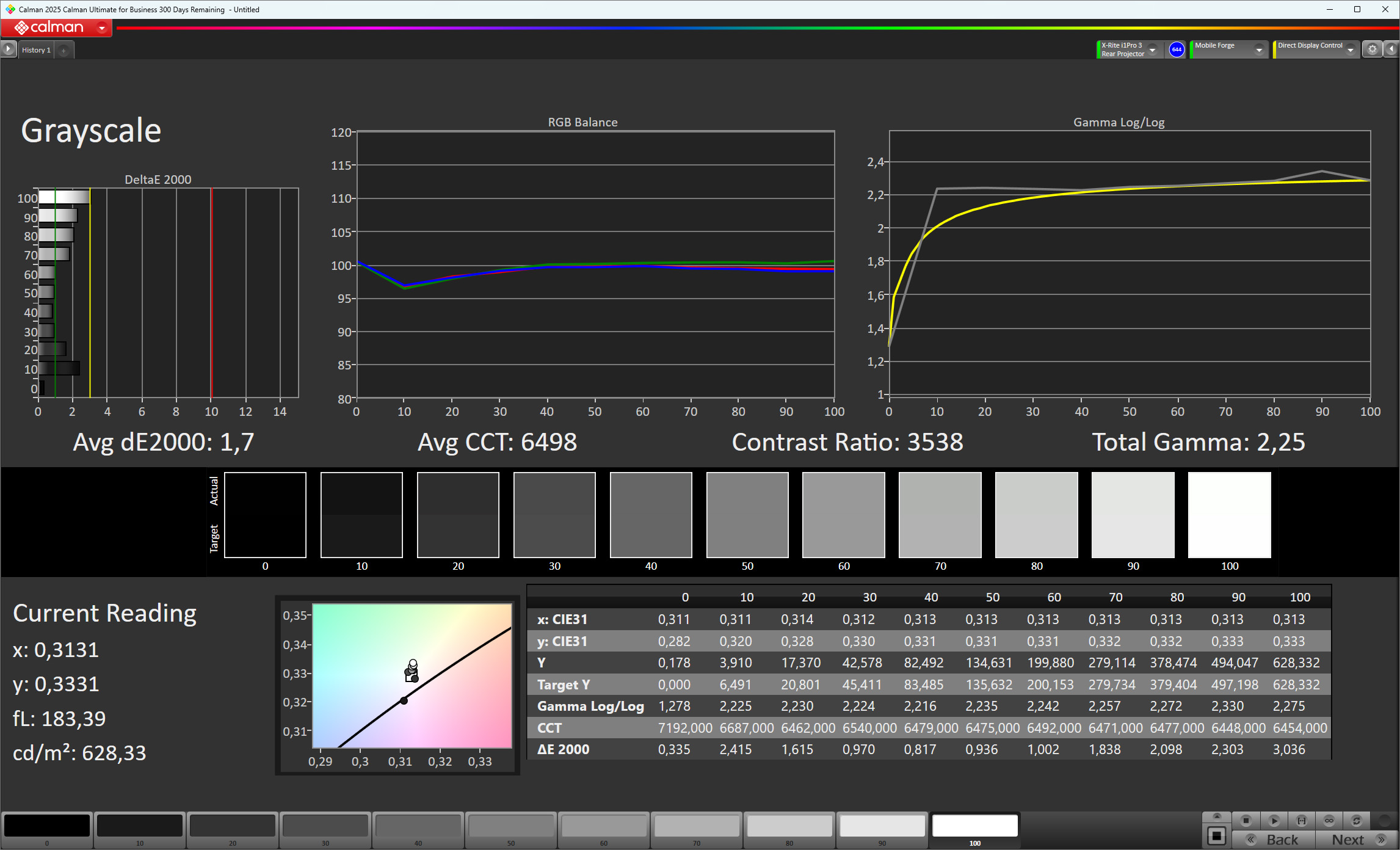
ΔE ColorChecker Calman: 1 | ∀{0.5-29.43 Ø4.69}
ΔE Greyscale Calman: 1.7 | ∀{0.09-98 Ø4.94}
99.8% sRGB (Calman 2D)
Gamma: 2.25
CCT: 6498 K
| Xiaomi Poco X8 Pro Max AMOLED, 2772x1280, 6.8" | Xiaomi Poco F8 Pro AMOLED, 2510x1156, 6.6" | Samsung Galaxy S25 FE AMOLED, 2340x1080, 6.7" | Motorola Edge 70 Fusion AMOLED, 2772x1272, 6.8" | Xiaomi 15T AMOLED, 2772x1280, 6.8" | Xiaomi Poco X7 Pro AMOLED, 2712x1220, 6.7" | |
|---|---|---|---|---|---|---|
| Screen | 22% | -65% | -11% | -25% | 4% | |
| Brightness middle (cd/m²) | 1107 | 1717 55% | 1136 3% | 1501 36% | 1070 -3% | 1034 -7% |
| Brightness (cd/m²) | 1110 | 1721 55% | 1132 2% | 1476 33% | 1079 -3% | 1041 -6% |
| Brightness Distribution (%) | 97 | 98 1% | 98 1% | 96 -1% | 94 -3% | 97 0% |
| Black Level * (cd/m²) | ||||||
| Colorchecker dE 2000 * | 1 | 1 -0% | 3.5 -250% | 1.52 -52% | 1.5 -50% | 1 -0% |
| Colorchecker dE 2000 max. * | 2.7 | 2.2 19% | 5.5 -104% | 3.47 -29% | 3.9 -44% | 2.2 19% |
| Greyscale dE 2000 * | 1.7 | 1.7 -0% | 2.4 -41% | 2.6 -53% | 2.5 -47% | 1.4 18% |
| Gamma | 2.25 98% | 2.29 96% | 2.02 109% | 2.184 101% | 2.24 98% | 2.22 99% |
| CCT | 6498 100% | 6574 99% | 6322 103% | 6444 101% | 6648 98% | 6553 99% |
* ... smaller is better
| Display / APL18 Peak Brightness | |
| Motorola Edge 70 Fusion | |
| Xiaomi Poco X8 Pro Max | |
| Xiaomi Poco F8 Pro | |
| Xiaomi 15T | |
| Samsung Galaxy S25 FE | |
| Xiaomi Poco X7 Pro | |
| Display / HDR Peak Brightness | |
| Motorola Edge 70 Fusion | |
| Xiaomi Poco X8 Pro Max | |
| Xiaomi Poco F8 Pro | |
| Xiaomi 15T | |
| Xiaomi Poco X7 Pro | |
| Samsung Galaxy S25 FE | |
Screen Flickering / PWM (Pulse-Width Modulation)
| Screen flickering / PWM detected | 120 Hz Amplitude: 13.45 % Secondary Frequency: 2941 Hz | 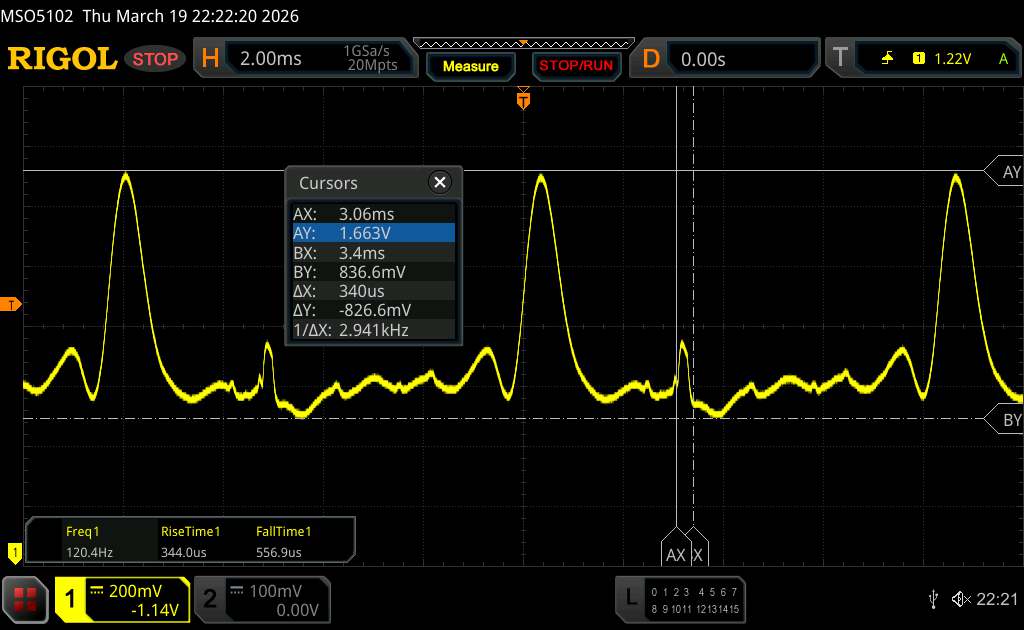 | |
The display backlight flickers at 120 Hz (worst case, e.g., utilizing PWM) . The frequency of 120 Hz is very low, so the flickering may cause eyestrain and headaches after extended use. In comparison: 52 % of all tested devices do not use PWM to dim the display. If PWM was detected, an average of 7579 (minimum: 5 - maximum: 343500) Hz was measured. | |||
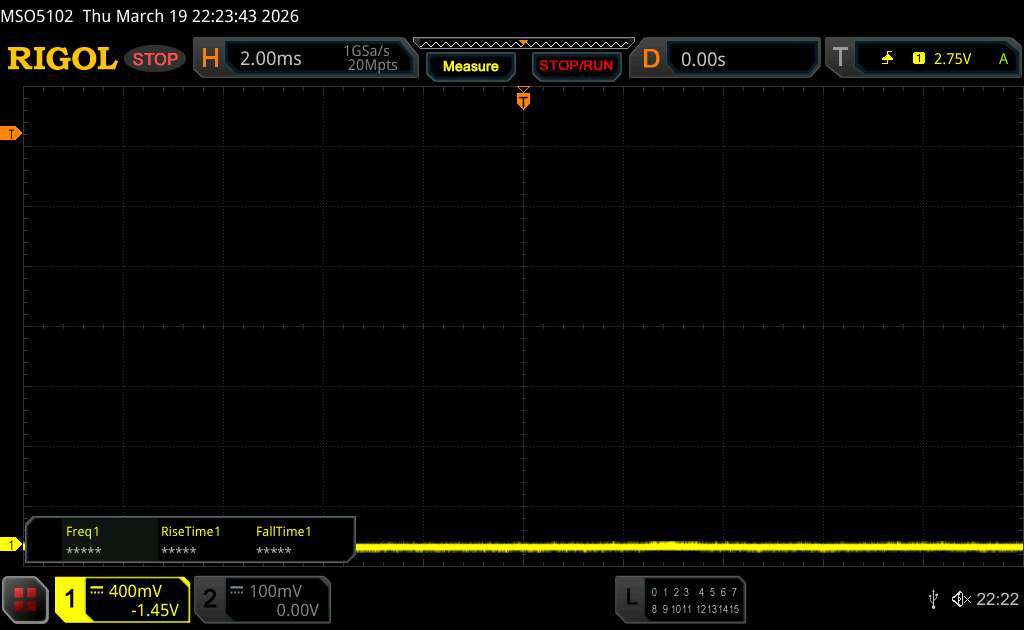
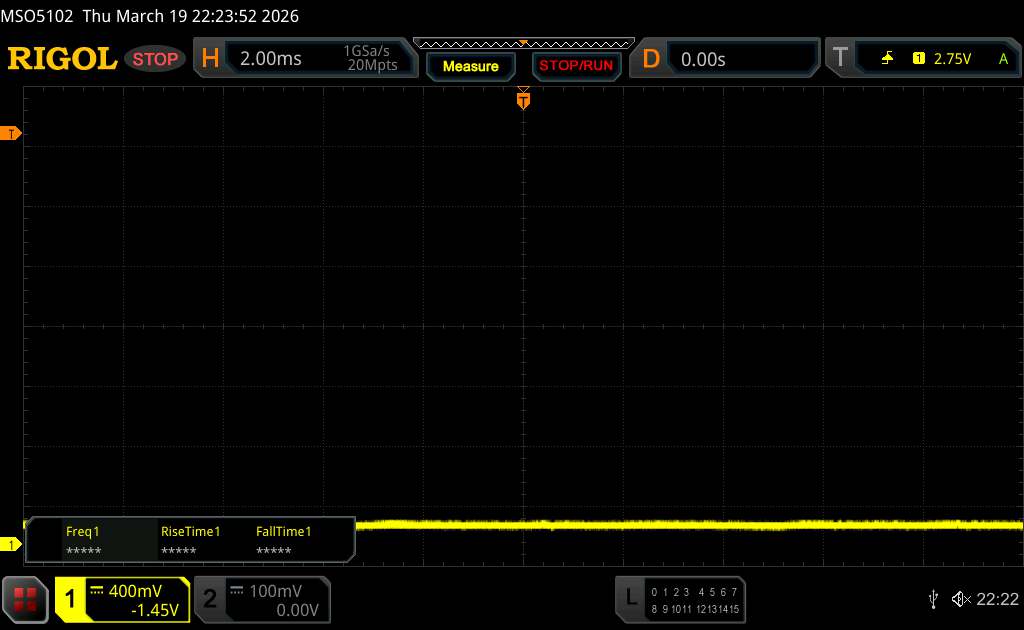
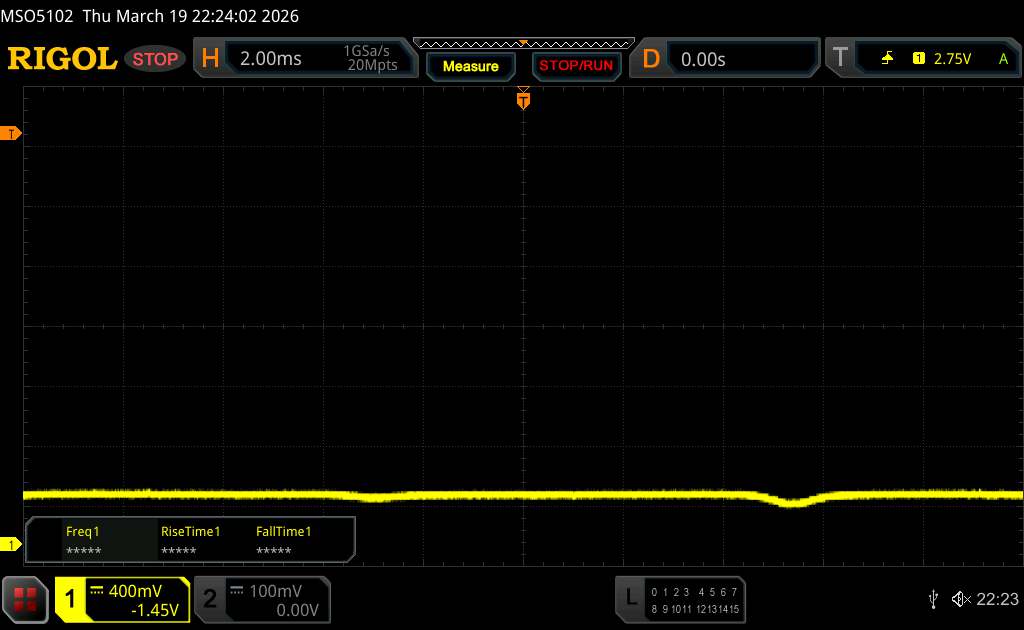
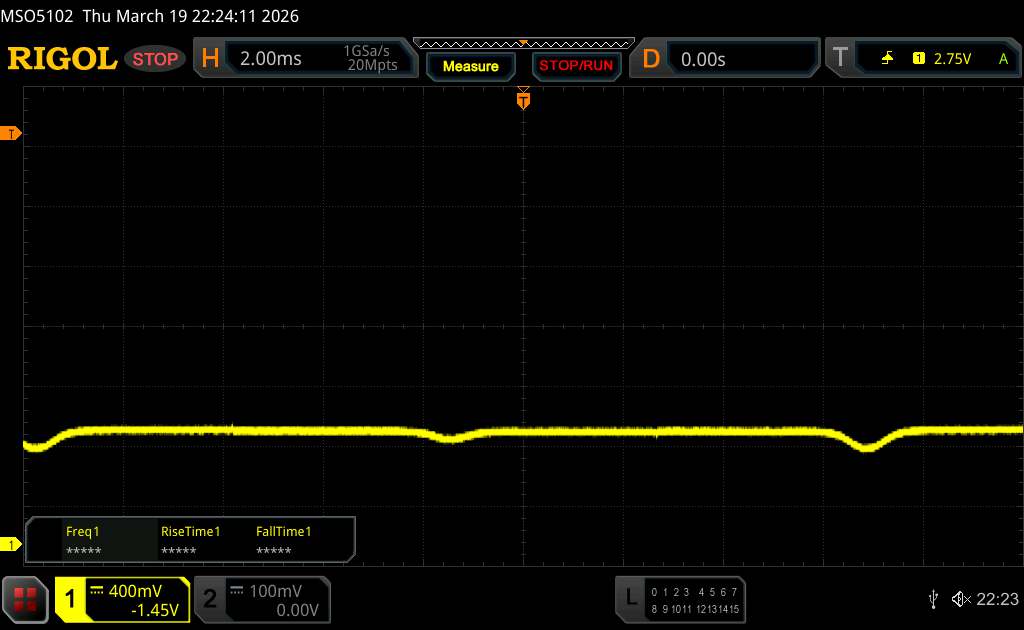
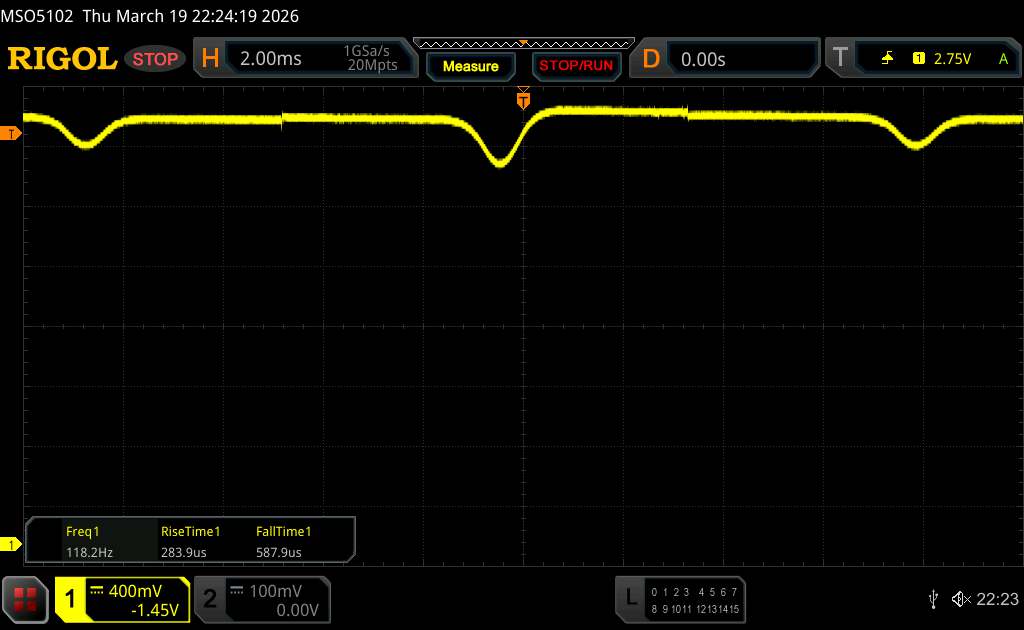
Series of measurements with a fixed zoom level and different brightness settings (Although the amplitude curve appears flat at minimum brightness, this is due to the scaling. The info box shows a magnified version of the amplitude at minimum brightness.)
When the color temperature is set to Warm, the Poco X8 Pro Max's display produces natural colors. Using the factory settings, the colors are slightly cooler.


Display Response Times
| ↔ Response Time Black to White | ||
|---|---|---|
| 0.952 ms ... rise ↗ and fall ↘ combined | ↗ 0.484 ms rise | 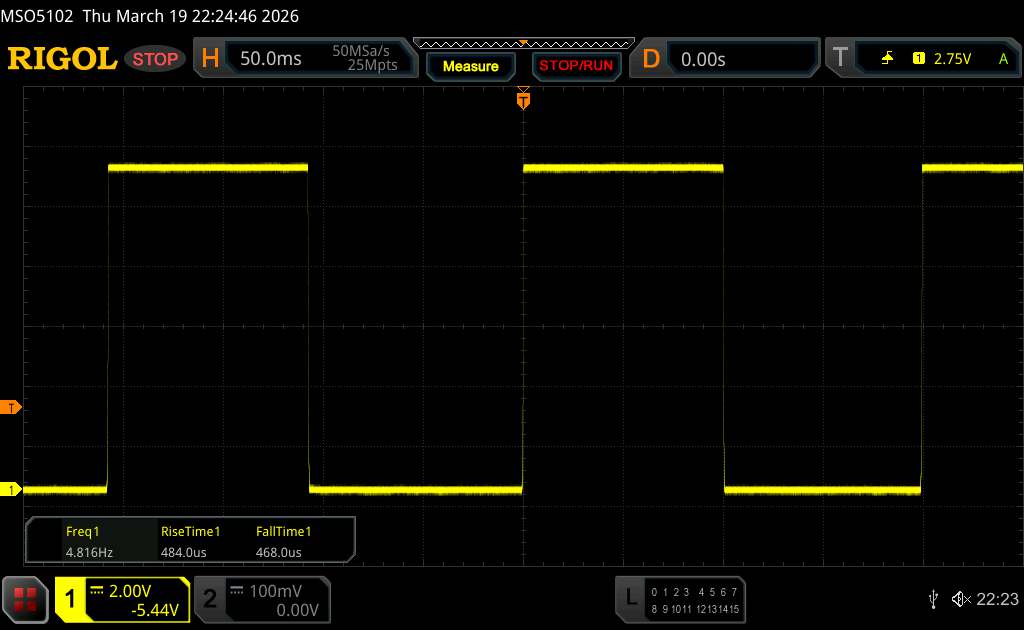 |
| ↘ 0.468 ms fall | ||
| The screen shows very fast response rates in our tests and should be very well suited for fast-paced gaming. In comparison, all tested devices range from 0.1 (minimum) to 240 (maximum) ms. » 4 % of all devices are better. This means that the measured response time is better than the average of all tested devices (19.6 ms). | ||
| ↔ Response Time 50% Grey to 80% Grey | ||
| 0.8 ms ... rise ↗ and fall ↘ combined | ↗ 0.4215 ms rise | 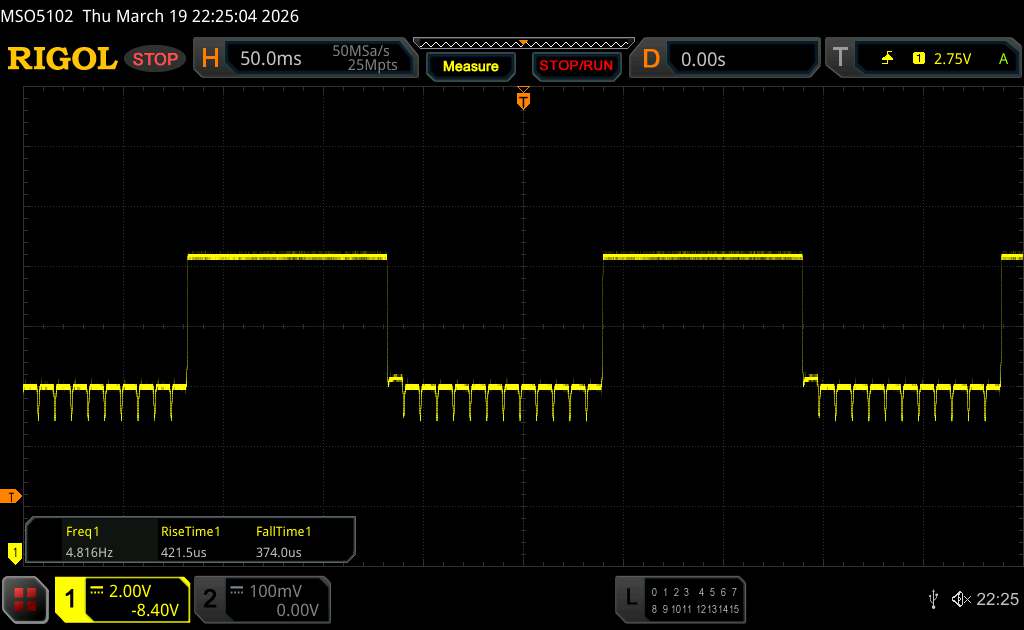 |
| ↘ 0.374 ms fall | ||
| The screen shows very fast response rates in our tests and should be very well suited for fast-paced gaming. In comparison, all tested devices range from 0.13 (minimum) to 636 (maximum) ms. » 3 % of all devices are better. This means that the measured response time is better than the average of all tested devices (30.7 ms). | ||
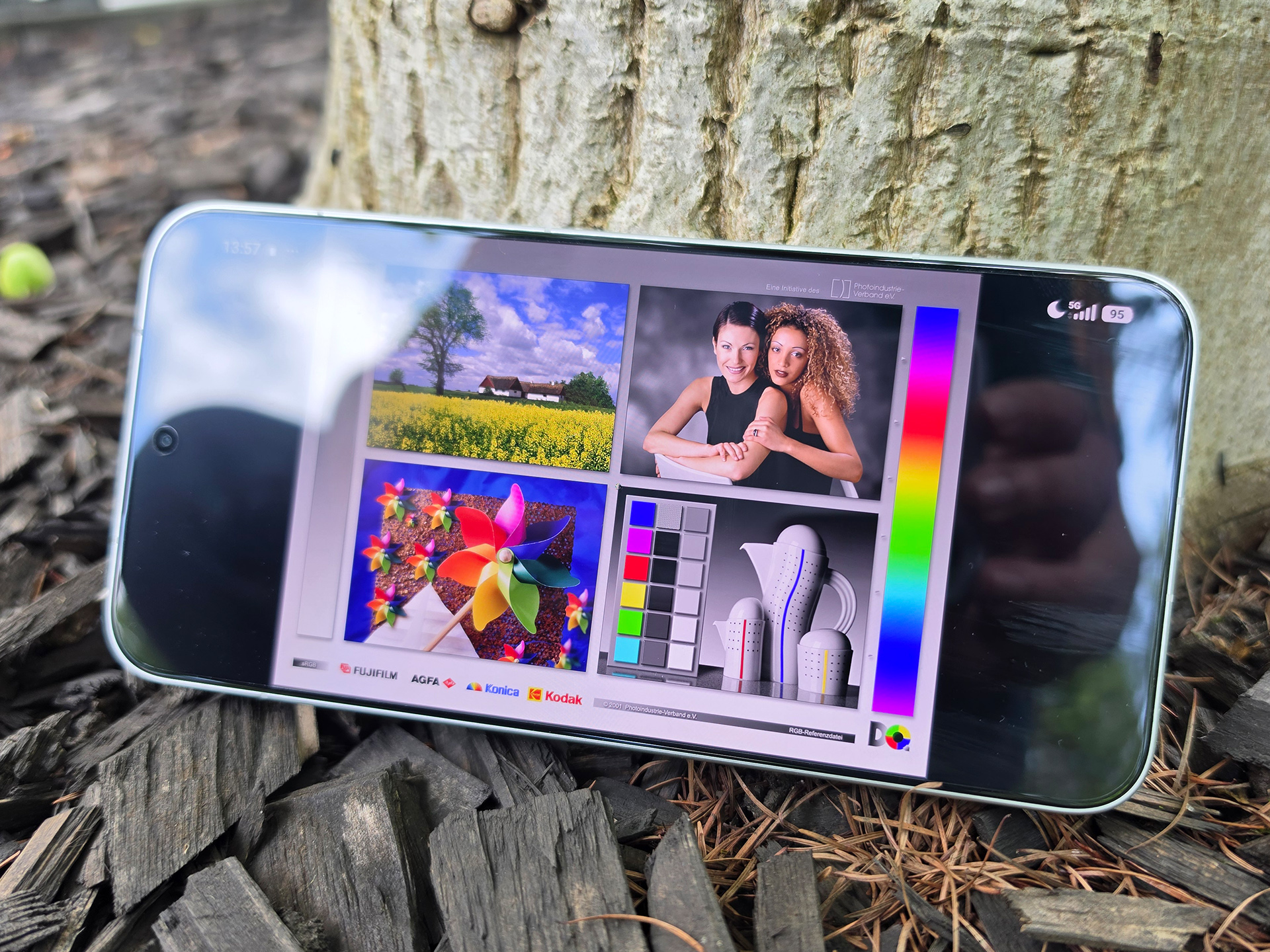
Outdoors, the Poco X8 Pro Max remains easy to read in most lighting conditions. However, in addition to glare, the smudge-prone screen protector can be particularly bothersome.
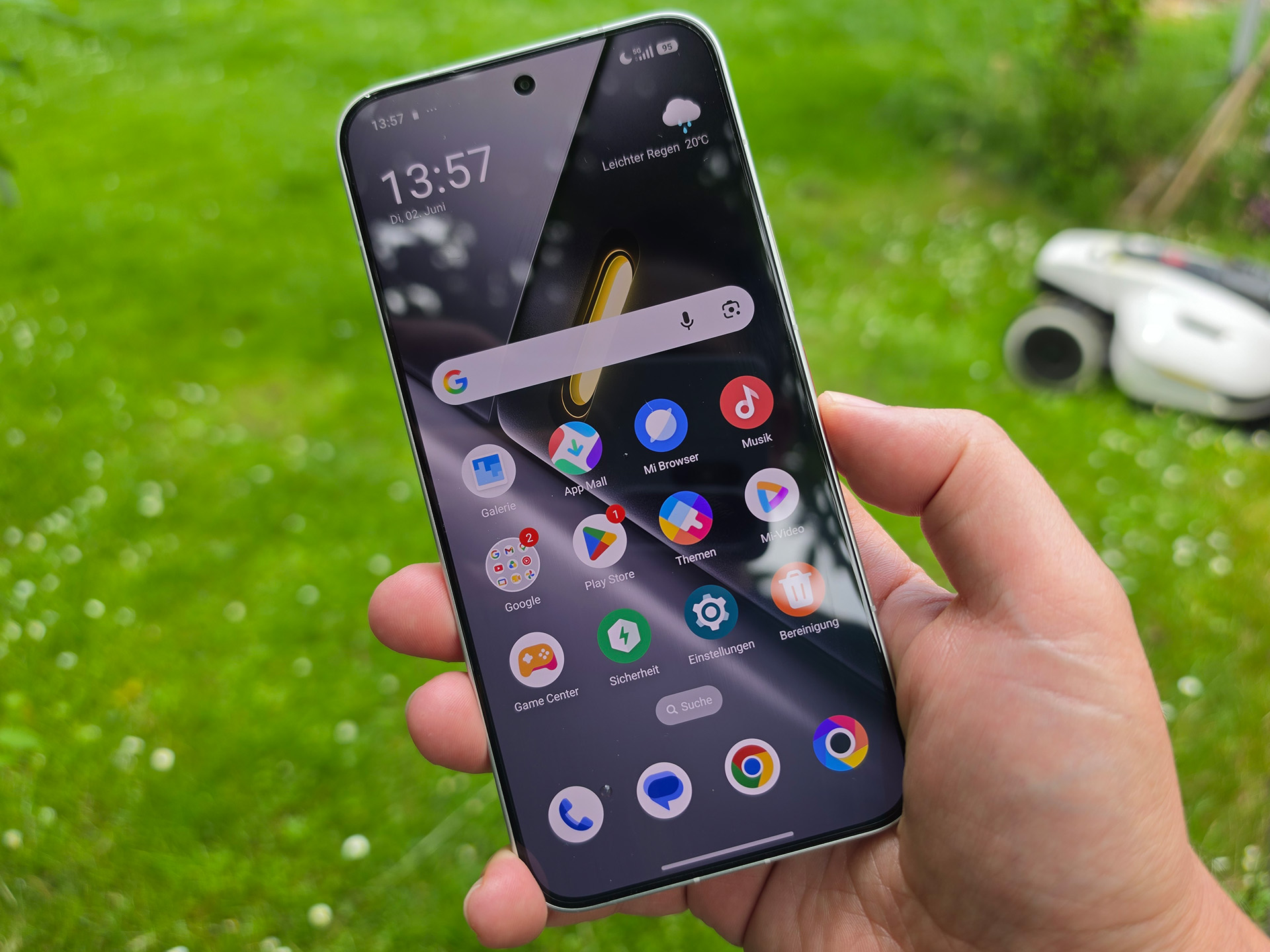
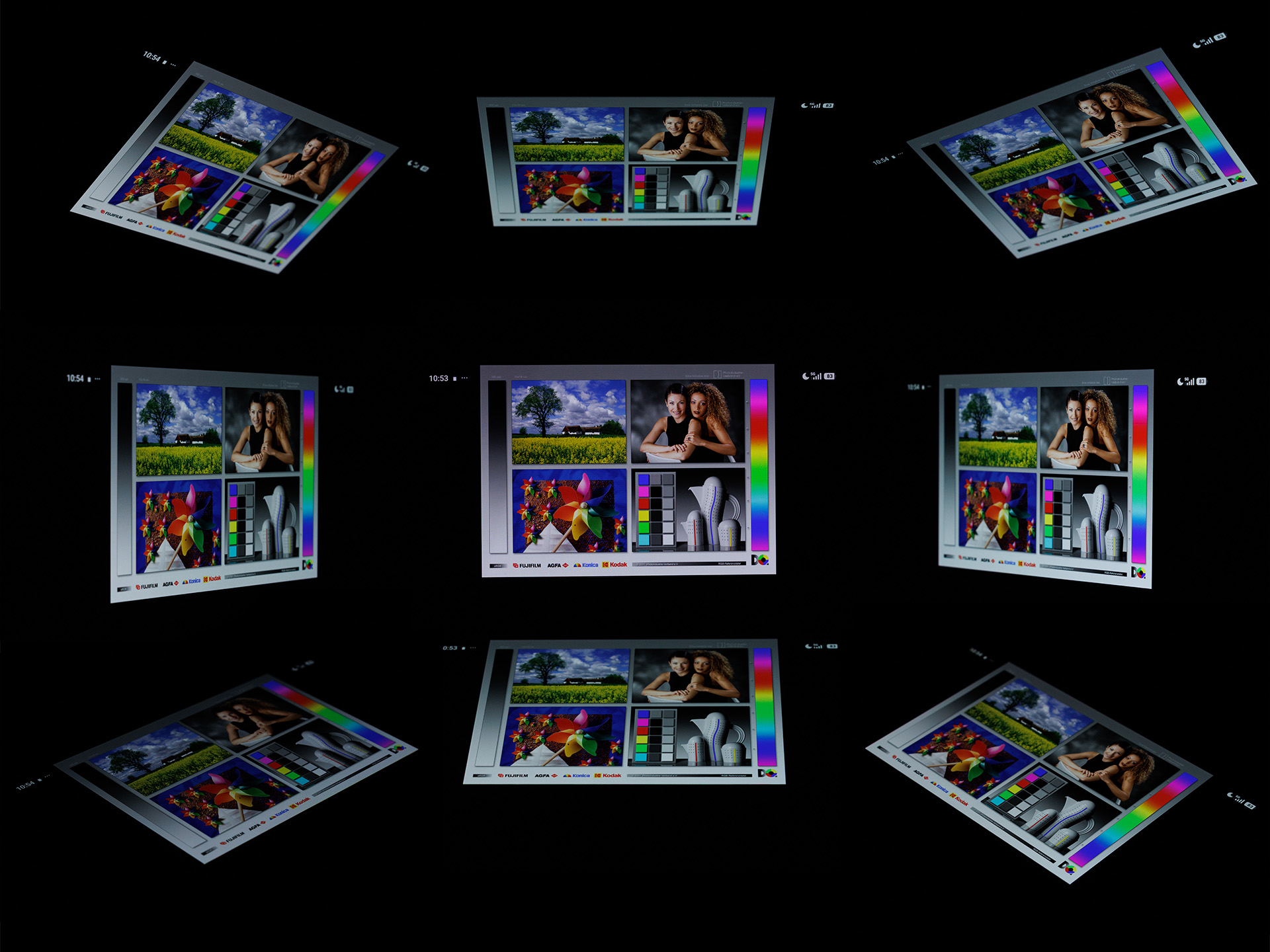
Even at very flat viewing angles, the Poco X8 Pro Max's display loses only a little brightness, and the colors then appear slightly cooler.
Performance - Poco has chosen the Dimensity 9500s
The Poco X8 Pro Max's SoC is the super-fast MediaTek Dimensity 9500s, which is positioned below the Dimensity 9500, however, thanks to some of its cores running at higher clock speeds, it is more powerful than even the 9400 series.
In the benchmarks, it delivered strong CPU performance, but it couldn't keep up with the Snapdragon 8 Elite Gen 5 in this respect. Its NPU, however, delivered excellent results.
| Antutu v11 - Score | |
| Xiaomi Poco F8 Pro | |
| Xiaomi Poco X8 Pro Max | |
| Average Mediatek Dimensity 9500s (n=1) | |
| Average of class Smartphone (519159 - 4450644, n=46, last 2 years) | |
| UL Procyon AI Inference for Android - Overall Score NNAPI | |
| Xiaomi Poco X8 Pro Max | |
| Average Mediatek Dimensity 9500s (n=1) | |
| Xiaomi 15T | |
| Xiaomi Poco X7 Pro | |
| Xiaomi Poco F8 Pro | |
| Average of class Smartphone (2895 - 66164, n=97, last 2 years) | |
| Samsung Galaxy S25 FE | |
| AImark - Score v3.x | |
| Xiaomi Poco X8 Pro Max | |
| Average Mediatek Dimensity 9500s (n=1) | |
| Xiaomi 15T | |
| Xiaomi Poco X7 Pro | |
| Average of class Smartphone (293 - 307528, n=65, last 2 years) | |
| Samsung Galaxy S25 FE | |
Like the Dimensity 9400, it uses an ARM Immortalis-G925 MC11 graphics unit, which also supports ray tracing but has one fewer core. This unit also delivered very high performance during our, though it proved not to be as fast as the current top-of-the-line SoCs. In the Solar Bay Extreme test, a demanding ray tracing test, it was outperformed by Samsung’s Xclipse 940.
GFXBench (DX / GLBenchmark) 2.7: T-Rex Onscreen | 1920x1080 T-Rex Offscreen
GFXBench 3.0: on screen Manhattan Onscreen OGL | 1920x1080 1080p Manhattan Offscreen
GFXBench 3.1: on screen Manhattan ES 3.1 Onscreen | 1920x1080 Manhattan ES 3.1 Offscreen
GFXBench: on screen Car Chase Onscreen | 1920x1080 Car Chase Offscreen | on screen Aztec Ruins High Tier Onscreen | 2560x1440 Aztec Ruins High Tier Offscreen | on screen Aztec Ruins Normal Tier Onscreen | 1920x1080 Aztec Ruins Normal Tier Offscreen | 3840x2160 4K Aztec Ruins High Tier Offscreen
| 3DMark / Wild Life Extreme Unlimited | |
| Xiaomi Poco F8 Pro | |
| Xiaomi Poco X8 Pro Max | |
| Samsung Galaxy S25 FE | |
| Xiaomi 15T | |
| Xiaomi Poco X7 Pro | |
| Motorola Edge 70 Fusion | |
| 3DMark / Wild Life Extreme | |
| Xiaomi Poco F8 Pro | |
| Xiaomi Poco X8 Pro Max | |
| Samsung Galaxy S25 FE | |
| Xiaomi 15T | |
| Xiaomi Poco X7 Pro | |
| Motorola Edge 70 Fusion | |
| 3DMark / Wild Life Unlimited Score | |
| Xiaomi Poco F8 Pro | |
| Xiaomi Poco X8 Pro Max | |
| Samsung Galaxy S25 FE | |
| Xiaomi 15T | |
| Xiaomi Poco X7 Pro | |
| Motorola Edge 70 Fusion | |
| 3DMark / Solar Bay Score | |
| Xiaomi Poco F8 Pro | |
| Xiaomi Poco X8 Pro Max | |
| Samsung Galaxy S25 FE | |
| Xiaomi 15T | |
| Xiaomi Poco X7 Pro | |
| 3DMark / Solar Bay Unlimited Score | |
| Xiaomi Poco F8 Pro | |
| Xiaomi Poco X8 Pro Max | |
| Samsung Galaxy S25 FE | |
| Xiaomi 15T | |
| Xiaomi Poco X7 Pro | |
| 3DMark / Solar Bay Extreme Score | |
| Xiaomi Poco F8 Pro | |
| Samsung Galaxy S25 FE | |
| Xiaomi Poco X8 Pro Max | |
| 3DMark / Solar Bay Extreme Unlimited Score | |
| Xiaomi Poco F8 Pro | |
| Samsung Galaxy S25 FE | |
| Xiaomi Poco X8 Pro Max | |
| 3DMark / Steel Nomad Light Unlimited Score | |
| Xiaomi Poco F8 Pro | |
| Xiaomi Poco X8 Pro Max | |
| Samsung Galaxy S25 FE | |
| Xiaomi 15T | |
| Xiaomi Poco X7 Pro | |
| 3DMark / Steel Nomad Light Score | |
| Xiaomi Poco F8 Pro | |
| Xiaomi Poco X8 Pro Max | |
| Samsung Galaxy S25 FE | |
| Xiaomi 15T | |
| Xiaomi Poco X7 Pro | |
| GFXBench (DX / GLBenchmark) 2.7 / T-Rex Onscreen | |
| Xiaomi Poco X7 Pro | |
| Samsung Galaxy S25 FE | |
| Xiaomi 15T | |
| Xiaomi Poco X8 Pro Max | |
| GFXBench (DX / GLBenchmark) 2.7 / T-Rex Offscreen | |
| Xiaomi Poco X8 Pro Max | |
| Xiaomi 15T | |
| Xiaomi Poco X7 Pro | |
| Samsung Galaxy S25 FE | |
| GFXBench 3.0 / Manhattan Onscreen OGL | |
| Xiaomi Poco X7 Pro | |
| Samsung Galaxy S25 FE | |
| Xiaomi 15T | |
| Xiaomi Poco X8 Pro Max | |
| GFXBench 3.0 / 1080p Manhattan Offscreen | |
| Xiaomi Poco X8 Pro Max | |
| Xiaomi 15T | |
| Samsung Galaxy S25 FE | |
| Xiaomi Poco X7 Pro | |
| GFXBench 3.1 / Manhattan ES 3.1 Onscreen | |
| Xiaomi Poco X8 Pro Max | |
| Xiaomi Poco X7 Pro | |
| Samsung Galaxy S25 FE | |
| Xiaomi 15T | |
| GFXBench 3.1 / Manhattan ES 3.1 Offscreen | |
| Xiaomi Poco X8 Pro Max | |
| Samsung Galaxy S25 FE | |
| Xiaomi 15T | |
| Xiaomi Poco X7 Pro | |
| GFXBench / Car Chase Onscreen | |
| Xiaomi Poco F8 Pro | |
| Samsung Galaxy S25 FE | |
| Xiaomi Poco X8 Pro Max | |
| Xiaomi Poco X7 Pro | |
| Xiaomi 15T | |
| GFXBench / Car Chase Offscreen | |
| Xiaomi Poco F8 Pro | |
| Xiaomi Poco X8 Pro Max | |
| Samsung Galaxy S25 FE | |
| Xiaomi Poco X7 Pro | |
| Xiaomi 15T | |
| GFXBench / Aztec Ruins High Tier Onscreen | |
| Xiaomi Poco F8 Pro | |
| Samsung Galaxy S25 FE | |
| Xiaomi Poco X8 Pro Max | |
| Xiaomi Poco X7 Pro | |
| Xiaomi 15T | |
| Motorola Edge 70 Fusion | |
| GFXBench / Aztec Ruins High Tier Offscreen | |
| Xiaomi Poco X8 Pro Max | |
| Xiaomi Poco F8 Pro | |
| Samsung Galaxy S25 FE | |
| Xiaomi Poco X7 Pro | |
| Xiaomi 15T | |
| Motorola Edge 70 Fusion | |
| GFXBench / Aztec Ruins Normal Tier Onscreen | |
| Xiaomi Poco F8 Pro | |
| Xiaomi Poco X8 Pro Max | |
| Samsung Galaxy S25 FE | |
| Xiaomi Poco X7 Pro | |
| Xiaomi 15T | |
| Motorola Edge 70 Fusion | |
| GFXBench / Aztec Ruins Normal Tier Offscreen | |
| Xiaomi Poco X8 Pro Max | |
| Xiaomi Poco F8 Pro | |
| Samsung Galaxy S25 FE | |
| Xiaomi Poco X7 Pro | |
| Xiaomi 15T | |
| Motorola Edge 70 Fusion | |
| GFXBench / 4K Aztec Ruins High Tier Offscreen | |
| Xiaomi Poco X8 Pro Max | |
| Xiaomi Poco F8 Pro | |
| Samsung Galaxy S25 FE | |
| Xiaomi Poco X7 Pro | |
| Xiaomi 15T | |
| Motorola Edge 70 Fusion | |
Web browsing is a breeze on the Poco X8 Pro Max. Even so, our benchmark results revealed that it couldn't achieve top scores; the Galaxy S25 FE was actually faster. This is likely due less to its SoC and more to HyperOS.
| Jetstream 2 - 2.0 Total | |
| Samsung Galaxy S25 FE (Chrome 141.0.7390.43) | |
| Average Mediatek Dimensity 9500s (n=1) | |
| Xiaomi Poco X8 Pro Max (Chrome 147) | |
| Average of class Smartphone (63.9 - 423, n=114, last 2 years) | |
| Motorola Edge 70 Fusion (Chrome 146) | |
| Xiaomi Poco X7 Pro (Chrome 132.0.6834.163) | |
| Xiaomi Poco F8 Pro (Chrome 143) | |
| Speedometer 2.0 - Result 2.0 | |
| Samsung Galaxy S25 FE (Chrome 141.0.7390.43) | |
| Xiaomi Poco X8 Pro Max (Chrome 147) | |
| Average Mediatek Dimensity 9500s (n=1) | |
| Average of class Smartphone (49.3 - 733, n=71, last 2 years) | |
| Xiaomi Poco X7 Pro (Chrome 132.0.6834.163) | |
| Speedometer 3 - Score 3.0 | |
| Samsung Galaxy S25 FE (Chrome 141.0.7390.43) | |
| Xiaomi Poco X8 Pro Max (Chrome 147) | |
| Average Mediatek Dimensity 9500s (n=1) | |
| Average of class Smartphone (3.06 - 56.5, n=80, last 2 years) | |
| Xiaomi Poco X7 Pro (Chrome 132.0.6834.163) | |
| Xiaomi Poco F8 Pro (Chrome 143) | |
| Xiaomi 15T | |
| WebXPRT 4 - Overall | |
| Samsung Galaxy S25 FE (Chrome 141.0.7390.43) | |
| Xiaomi Poco X8 Pro Max (Chrome 147) | |
| Average Mediatek Dimensity 9500s (n=1) | |
| Xiaomi Poco X7 Pro (Chrome 132.0.6834.163) | |
| Xiaomi 15T (Chrome 141) | |
| Average of class Smartphone (56 - 278, n=88, last 2 years) | |
| Xiaomi Poco F8 Pro (Chrome 143) | |
| WebXPRT 5 - Overall | |
| Average of class Smartphone (19 - 139, n=28, last 2 years) | |
| Xiaomi Poco X8 Pro Max (Chrome 147) | |
| Average Mediatek Dimensity 9500s (n=1) | |
| Octane V2 - Total Score | |
| Samsung Galaxy S25 FE (Chrome 141.0.7390.43) | |
| Xiaomi Poco X8 Pro Max (Chrome 147) | |
| Average Mediatek Dimensity 9500s (n=1) | |
| Average of class Smartphone (6015 - 160221, n=132, last 2 years) | |
| Xiaomi Poco X7 Pro (Chrome 132.0.6834.163) | |
| Xiaomi 15T (Chrome 141) | |
| Xiaomi Poco F8 Pro (Chrome 143) | |
| Mozilla Kraken 1.1 - Total | |
| Xiaomi Poco F8 Pro (Chrome 143) | |
| Xiaomi 15T (Chrome 141) | |
| Xiaomi Poco X7 Pro (Chrome 132.0.6834.163) | |
| Average of class Smartphone (216 - 2718, n=119, last 2 years) | |
| Xiaomi Poco X8 Pro Max (Chrome 147) | |
| Average Mediatek Dimensity 9500s (n=1) | |
| Samsung Galaxy S25 FE (Chrome 141.0.7390.43) | |
* ... smaller is better
Technically, the smartphone uses UFS 4.1 storage, but it performs very slowly inside the X8 Pro Max. This is likely due to the Dimensity 9500's reduced memory bandwidth. On the plus side, this isn't noticeable during everyday use.
| Xiaomi Poco X8 Pro Max | Xiaomi Poco F8 Pro | Samsung Galaxy S25 FE | Motorola Edge 70 Fusion | Xiaomi 15T | Average 512 GB UFS 4.1 Flash | Average of class Smartphone | |
|---|---|---|---|---|---|---|---|
| AndroBench 3-5 | 139% | 49% | 77% | -12% | 129% | 58% | |
| Sequential Read 256KB (MB/s) | 2067.34 | 3959.14 92% | 3756.44 82% | 2049.4 -1% | 1954.45 -5% | 3616 ? 75% | 2263 ? 9% |
| Sequential Write 256KB (MB/s) | 1942.35 | 3833.02 97% | 2450.19 26% | 1825.9 -6% | 1879.62 -3% | 3225 ? 66% | 1966 ? 1% |
| Random Read 4KB (MB/s) | 366.17 | 309.91 -15% | 382.44 4% | 351.2 -4% | 278.9 -24% | 414 ? 13% | 316 ? -14% |
| Random Write 4KB (MB/s) | 108.21 | 521.31 382% | 198.68 84% | 452.1 318% | 89.68 -17% | 498 ? 360% | 362 ? 235% |
Games - High resolution and up to 120fps
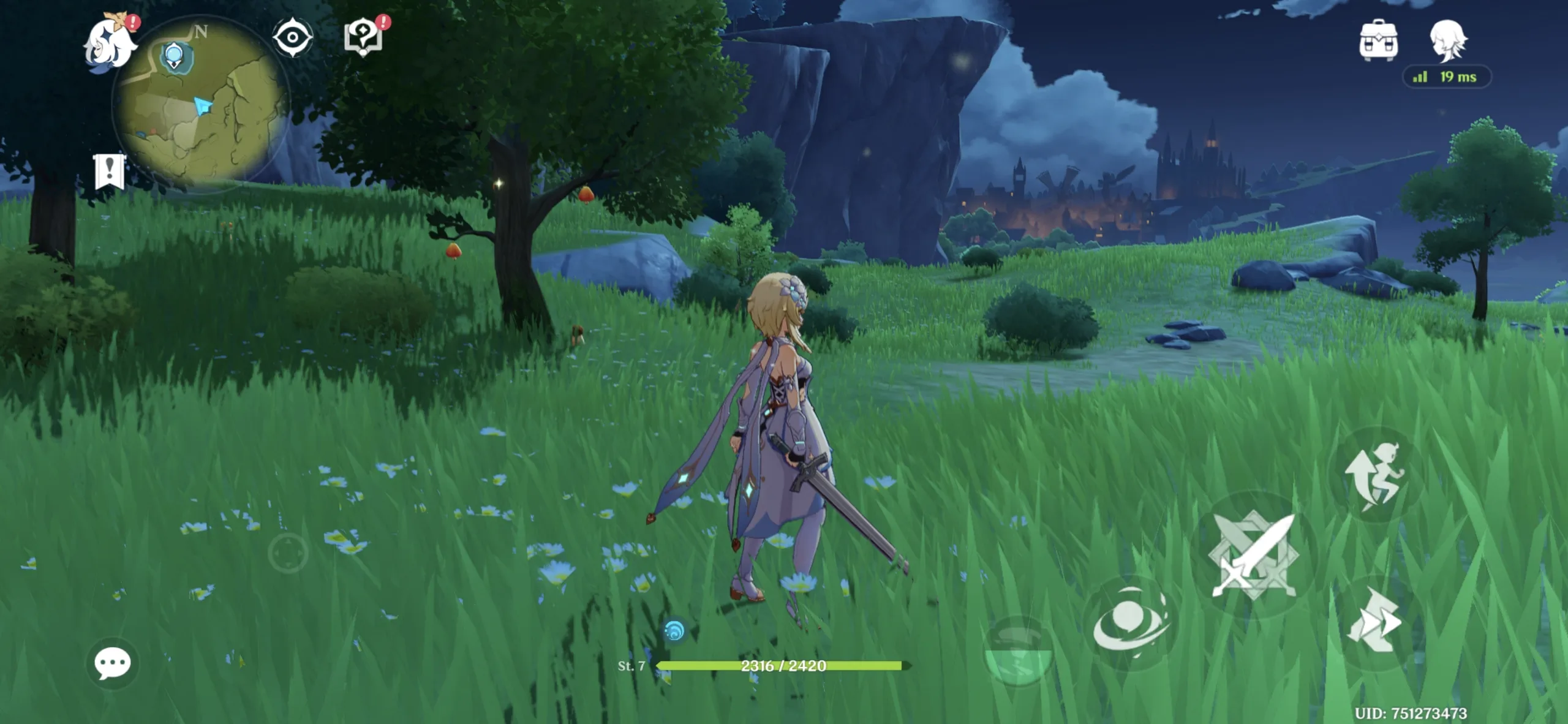
The phone's large display and dual speakers provide a solid foundation for gaming. However, when holding the Poco X8 Pro Max in landscape mode, its speakers are sometimes blocked. As our tests using GameBench revealed, the smartphone generally delivers excellent gaming performance even when running demanding games.

Emissions - The Poco X8 Pro Max is throttled under load
Temperature
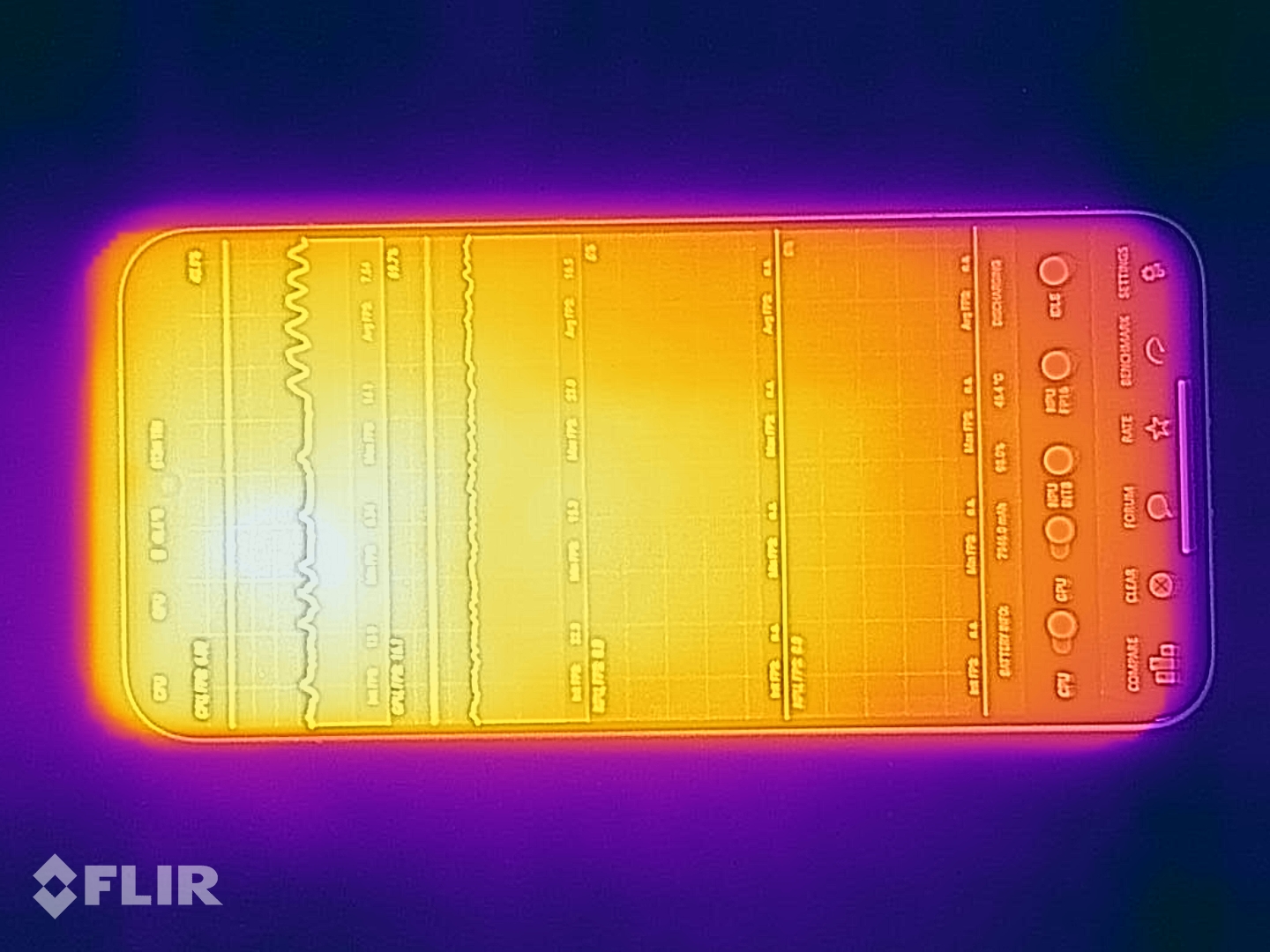
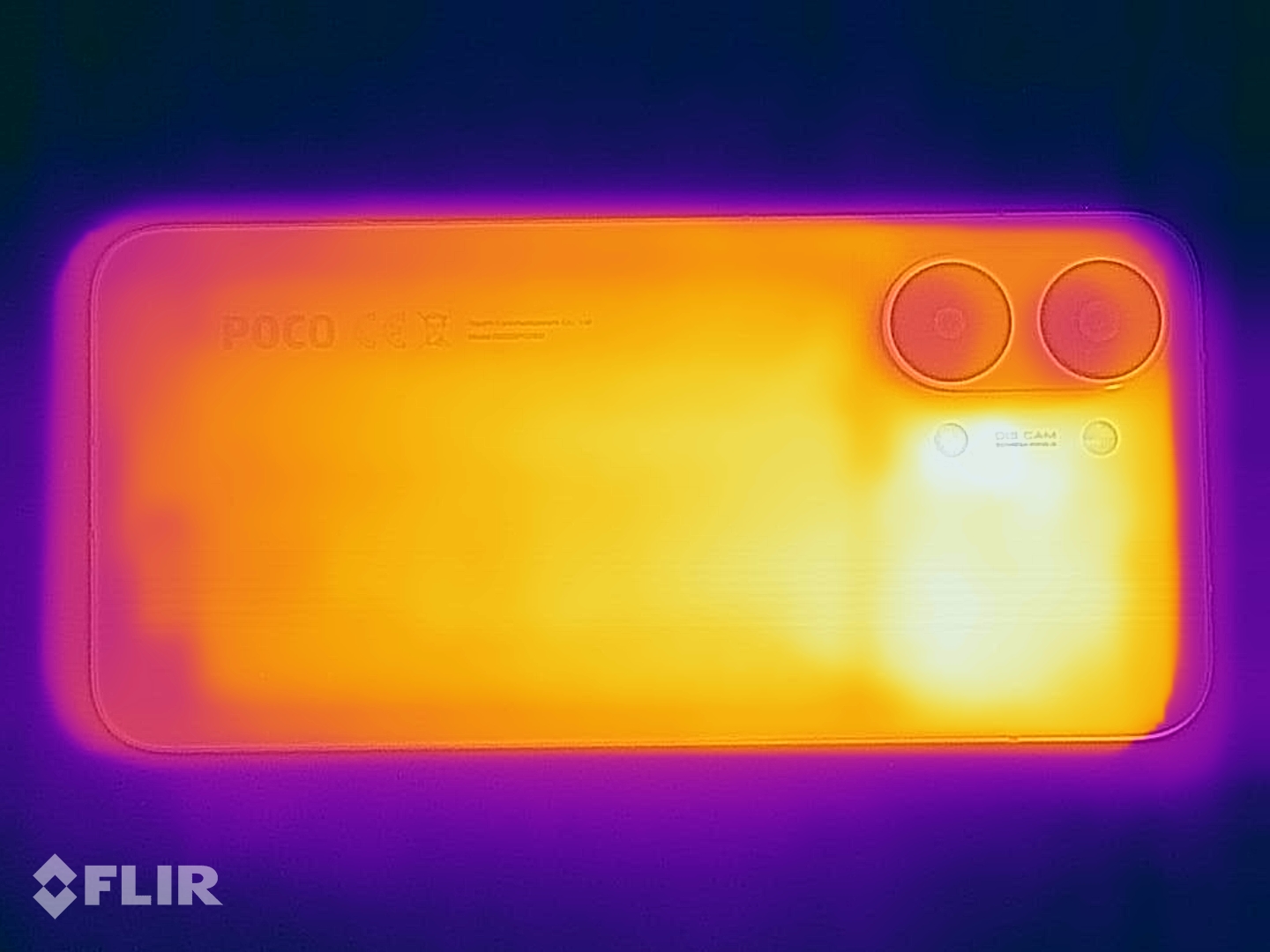
During the stress test using the Burnout Benchmark, the device's surface temperatures rose well above 40 °C across a large area. Moreover, the Poco X8 Pro Max gets quite warm in your hands while gaming, though it never feels uncomfortable.
In the 3DMark stress tests, the SoC was throttled significantly. Although this is generally not noticeable during everyday use, it can cost a few frames while gaming, as our PUBG test above showed.
(±) The maximum temperature on the upper side is 42.9 °C / 109 F, compared to the average of 35.4 °C / 96 F, ranging from 21.9 to 247 °C for the class Smartphone.
(±) The bottom heats up to a maximum of 43 °C / 109 F, compared to the average of 34.1 °C / 93 F
(+) In idle usage, the average temperature for the upper side is 26.7 °C / 80 F, compared to the device average of 33 °C / 91 F.
3DMark stress tests
| 3DMark | |
| Wild Life Stress Test Stability | |
| Motorola Edge 70 Fusion | |
| Xiaomi 15T | |
| Xiaomi Poco F8 Pro | |
| Xiaomi Poco X7 Pro | |
| Samsung Galaxy S25 FE | |
| Xiaomi Poco X8 Pro Max | |
| Wild Life Extreme Stress Test | |
| Motorola Edge 70 Fusion | |
| Xiaomi 15T | |
| Xiaomi Poco F8 Pro | |
| Xiaomi Poco X8 Pro Max | |
| Xiaomi Poco X7 Pro | |
| Samsung Galaxy S25 FE | |
| Solar Bay Stress Test Stability | |
| Xiaomi 15T | |
| Xiaomi Poco F8 Pro | |
| Xiaomi Poco X8 Pro Max | |
| Samsung Galaxy S25 FE | |
| Xiaomi Poco X7 Pro | |
| Steel Nomad Light Stress Test Stability | |
| Xiaomi 15T | |
| Xiaomi Poco X8 Pro Max | |
| Xiaomi Poco X7 Pro | |
| Samsung Galaxy S25 FE | |
Speakers
Given their placement and size, the two speakers on the Poco phone seemed quite promising at first, but they are actually rather disappointing. Even at medium volume, the sound feels very confined, muffled, and sometimes distorted.
In this case, it’s better to use external devices such as headphones or external speakers for audio output.
Xiaomi Poco X8 Pro Max audio analysis
(+) | speakers can play relatively loud (91.6 dB)
Bass 100 - 315 Hz
(-) | nearly no bass - on average 23.6% lower than median
(+) | bass is linear (6.2% delta to prev. frequency)
Mids 400 - 2000 Hz
(±) | reduced mids - on average 6.8% lower than median
(+) | mids are linear (6.1% delta to prev. frequency)
Highs 2 - 16 kHz
(±) | higher highs - on average 6% higher than median
(+) | highs are linear (5.7% delta to prev. frequency)
Overall 100 - 16.000 Hz
(±) | linearity of overall sound is average (18.4% difference to median)
Compared to same class
» 20% of all tested devices in this class were better, 9% similar, 71% worse
» The best had a delta of 11%, average was 34%, worst was 136%
Compared to all devices tested
» 41% of all tested devices were better, 8% similar, 51% worse
» The best had a delta of 4%, average was 23%, worst was 136%
Samsung Galaxy S25 FE audio analysis
(+) | speakers can play relatively loud (92 dB)
Bass 100 - 315 Hz
(-) | nearly no bass - on average 19.3% lower than median
(+) | bass is linear (4.6% delta to prev. frequency)
Mids 400 - 2000 Hz
(±) | higher mids - on average 5.7% higher than median
(+) | mids are linear (4.9% delta to prev. frequency)
Highs 2 - 16 kHz
(±) | higher highs - on average 5.9% higher than median
(+) | highs are linear (4.6% delta to prev. frequency)
Overall 100 - 16.000 Hz
(±) | linearity of overall sound is average (17.3% difference to median)
Compared to same class
» 12% of all tested devices in this class were better, 8% similar, 80% worse
» The best had a delta of 11%, average was 34%, worst was 136%
Compared to all devices tested
» 33% of all tested devices were better, 8% similar, 59% worse
» The best had a delta of 4%, average was 23%, worst was 136%
Battery life - A huge 8,500-mAh battery inside the Poco X8 Pro Max
Power consumption
The Poco smartphone's power consumption is generally low—it's only slightly too high when idling with the screen brightness set to minimum.
The X8 Pro Max exclusively supports wired charging, but at up to 100 watts. This isn’t limited to Xiaomi’s HyperCharge; it also worked with USB-PD during our test. Using a compatible power adapter, the battery was fully charged in 56 minutes. Unfortunately, this didn’t work as quickly with an older 120-watt power adapter from Xiaomi, where a full charge would've taken over three hours.
| Off / Standby |   0.09 / 0.14 Watt 0.09 / 0.14 Watt |
| Idle |  1.19 / 1.23 / 1.43 Watt 1.19 / 1.23 / 1.43 Watt |
| Load |
6.8 / 11.45 Watt |
    
| |
Key:
min: ,
med: ,
max: Metrahit Energy | |
| Xiaomi Poco X8 Pro Max 8500 mAh | Xiaomi Poco F8 Pro 6210 mAh | Samsung Galaxy S25 FE 4900 mAh | Xiaomi 15T 5500 mAh | Xiaomi Poco X7 Pro 6000 mAh | Average Mediatek Dimensity 9500s | Average of class Smartphone | |
|---|---|---|---|---|---|---|---|
| Power Consumption | 1% | -2% | 4% | -0% | -13% | -1% | |
| Idle Minimum * (Watt) | 1.19 | 0.83 30% | 0.87 27% | 0.8 33% | 1.07 10% | 1.363 ? -15% | 0.903 ? 24% |
| Idle Average * (Watt) | 1.23 | 1.37 -11% | 1.48 -20% | 1.2 2% | 1.29 -5% | 1.543 ? -25% | 1.479 ? -20% |
| Idle Maximum * (Watt) | 1.43 | 1.56 -9% | 1.52 -6% | 1.26 12% | 1.36 5% | 1.777 ? -24% | 1.677 ? -17% |
| Load Average * (Watt) | 6.8 | 8.71 -28% | 6.76 1% | 6.8 -0% | 6.14 10% | 6.8 ? -0% | 6.66 ? 2% |
| Load Maximum * (Watt) | 11.45 | 8.74 24% | 12.89 -13% | 14.32 -25% | 13.94 -22% | 11.5 ? -0% | 10.6 ? 7% |
* ... smaller is better
Power consumption: Geekbench (150 cd/m²)
Power consumption: GFXbench (150 cd/m²)
Runtimes
The Poco X8 Pro Max delivers excellent runtimes, but during our real-world Wi-Fi test with the display brightness set to 150 cd/m², we would have expected it to last longer than the just under 20 hours it actually did. Perhaps Xiaomi can address this issue with a future update.
| Xiaomi Poco X8 Pro Max 8500 mAh | Xiaomi Poco F8 Pro 6210 mAh | Samsung Galaxy S25 FE 4900 mAh | Motorola Edge 70 Fusion 7000 mAh | Xiaomi 15T 5500 mAh | Xiaomi Poco X7 Pro 6000 mAh | |
|---|---|---|---|---|---|---|
| Battery runtime | -2% | -17% | 16% | -18% | -13% | |
| Reader / Idle (h) | 35.2 | 40.6 15% | 39.3 12% | 26.8 -24% | 33 -6% | |
| H.264 (h) | 32 | 25.1 -22% | 23.3 -27% | 21.3 -33% | ||
| WiFi v1.3 (h) | 23.2 | 22.8 -2% | 15.1 -35% | 24.5 6% | 17.2 -26% | 19.7 -15% |
| Load (h) | 4.2 | 3.1 -26% | 5.4 29% | 4.5 7% | 4.3 2% |
Notebookcheck total rating
The Poco X8 Pro Max is a powerhouse when it comes to battery life and performance, but it falls short in terms of its camera, speakers, and certain missing features.
Xiaomi Poco X8 Pro Max
- 08/13/2026 v8
Daniel Schmidt
 Total Sustainability Score:
 Possible alternatives compared
Image | Model / Review | Price | Weight | Drive | Display |
|---|---|---|---|---|---|
1. 85.6%  | Xiaomi Poco X8 Pro Max Mediatek Dimensity 9500s ⎘ ARM Immortalis-G925 MC11 ⎘ 12 GB Memory, 512 GB UFS 4.x | Amazon: $489.99 List Price: 470€ | 218 g | 512 GB UFS 4.1 Flash | 6.83" 2772x1280 447 PPI AMOLED |
2. 85.4%  | Xiaomi Poco F8 Pro Qualcomm Snapdragon 8 Elite ⎘ Qualcomm Adreno 830 ⎘ 12 GB Memory, 512 GB UFS 4.x | Amazon: $639.72 List Price: 700€ | 199 g | 512 GB UFS 4.1 Flash | 6.59" 2510x1156 419 PPI AMOLED |
3. 85.6%  | Samsung Galaxy S25 FE Samsung Exynos 2400 ⎘ Samsung Xclipse 940 ⎘ 8 GB Memory, 256 GB UFS 4.x | List Price: 809€ | 190 g | 256 GB UFS 4.0 Flash | 6.70" 2340x1080 382 PPI AMOLED |
4. 77.4%  | Motorola Edge 70 Fusion Qualcomm Snapdragon 7s Gen 3 ⎘ Qualcomm Adreno 810 ⎘ 8 GB Memory, 256 GB UFS 3.1 | List Price: 420€ | 193 g | 256 GB UFS 3.1 Flash | 6.78" 2772x1272 450 PPI AMOLED |
5. 84.8%  | Xiaomi 15T MediaTek Dimensity 8400 ⎘ ARM Mali-G720 MP7 ⎘ 12 GB Memory, 512 GB UFS 4.x | List Price: 650€ | 194 g | 512 GB UFS 4.1 Flash | 6.83" 2772x1280 447 PPI AMOLED |
Transparency
The selection of devices to be reviewed is made by our editorial team. The test sample was given to the author by the manufacturer free of charge for the purposes of review. There was no third-party influence on this review, nor did the manufacturer receive a copy of this review before publication. There was no obligation to publish this review. As an independent media company, Notebookcheck is not subjected to the authority of manufacturers, retailers or publishers.
This is how Notebookcheck is testing
Every year, Notebookcheck independently reviews hundreds of laptops and smartphones using standardized procedures to ensure that all results are comparable. We have continuously developed our test methods for around 20 years and set industry standards in the process. In our test labs, high-quality measuring equipment is utilized by experienced technicians and editors. These tests involve a multi-stage validation process. Our complex rating system is based on hundreds of well-founded measurements and benchmarks, which maintains objectivity. Further information on our test methods can be found here.
 Add as a preferred source on Google


