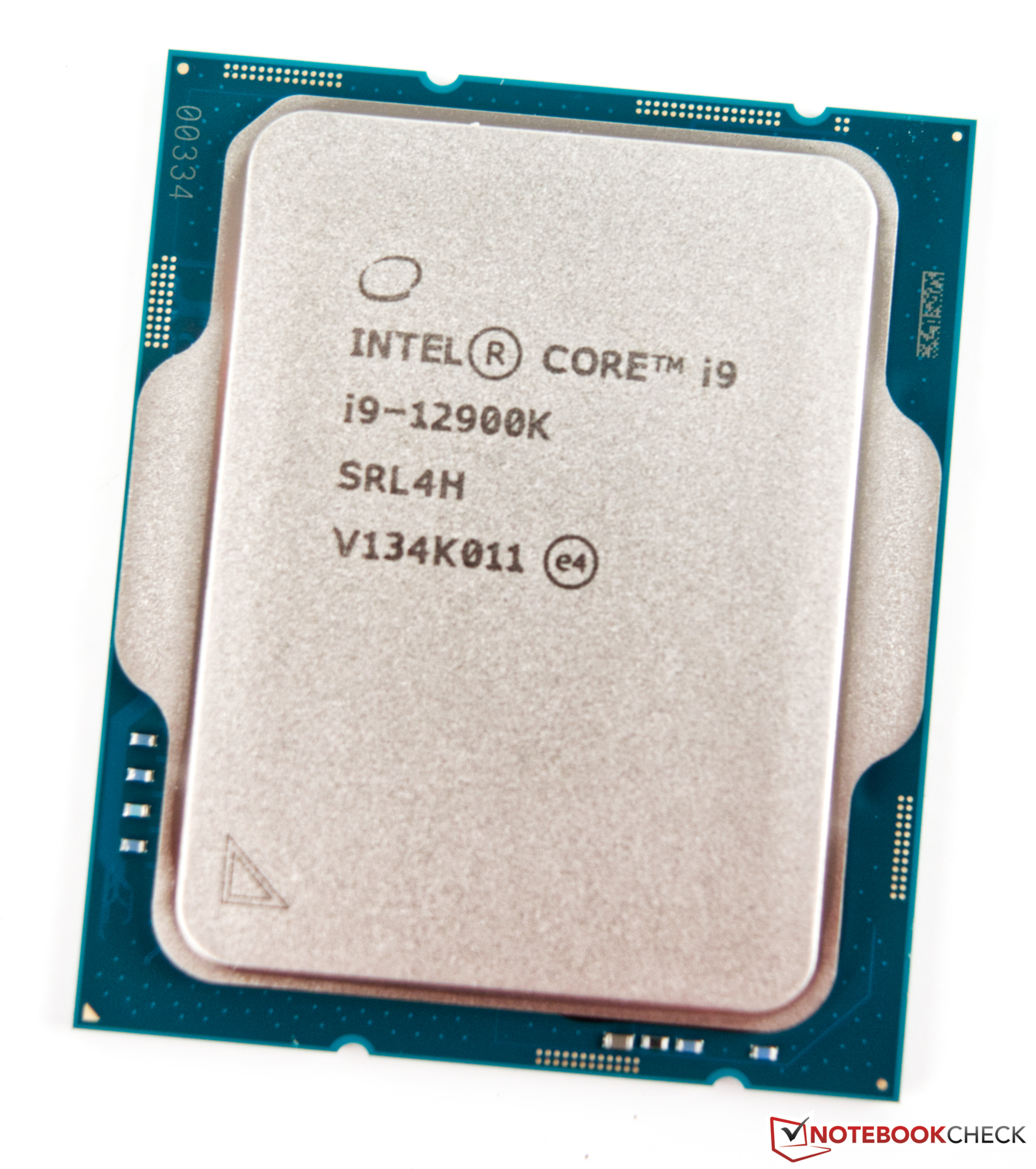
The Intel Core i9-12900K is a high end CPU for desktops based on the Alder Lake architecture. It was first announced in November 2021 and offers 8 performance cores and 8 efficiency cores. The performance cores (P-cores) support HyperThreading, leading to 24 Threads that can be processed at once. The performance cores can clock with up to 5.2 GHz (Turbo Boost Max 3.0), the efficiency cores can clock with up to 3.9 GHz. All cores can use 30 MB Smart Cache. The integrated memory controller supports up to 128 GB DDR5 with 4800 MT/s (dual channel).
The Thread Director (in hardware) can support the operating system to decide which thread to use on the performance or efficiency cores for the best performance.
For AI tasks, the CPU also integrates GNA 3.0 and DL Boost (most likely only using AVX2). Quick Sync in version 8 is the same as in the Rocket Lake CPUs and supports MPEG-2, AVC, VC-1 decode, JPEG, VP8 decode, VP9, HEVC and AV1 decode in hardware.
The integrated graphics adapter is based on the Xe architecture and called Intel UHD Graphics 770. It clocks between 300 and 1.55 GHz.
Performance
The average 12900K in our database nearly matches the Ryzen 9 3950X and the Ryzen 9 5950X in multi-thread performance. This is a great result, as of mid 2022.
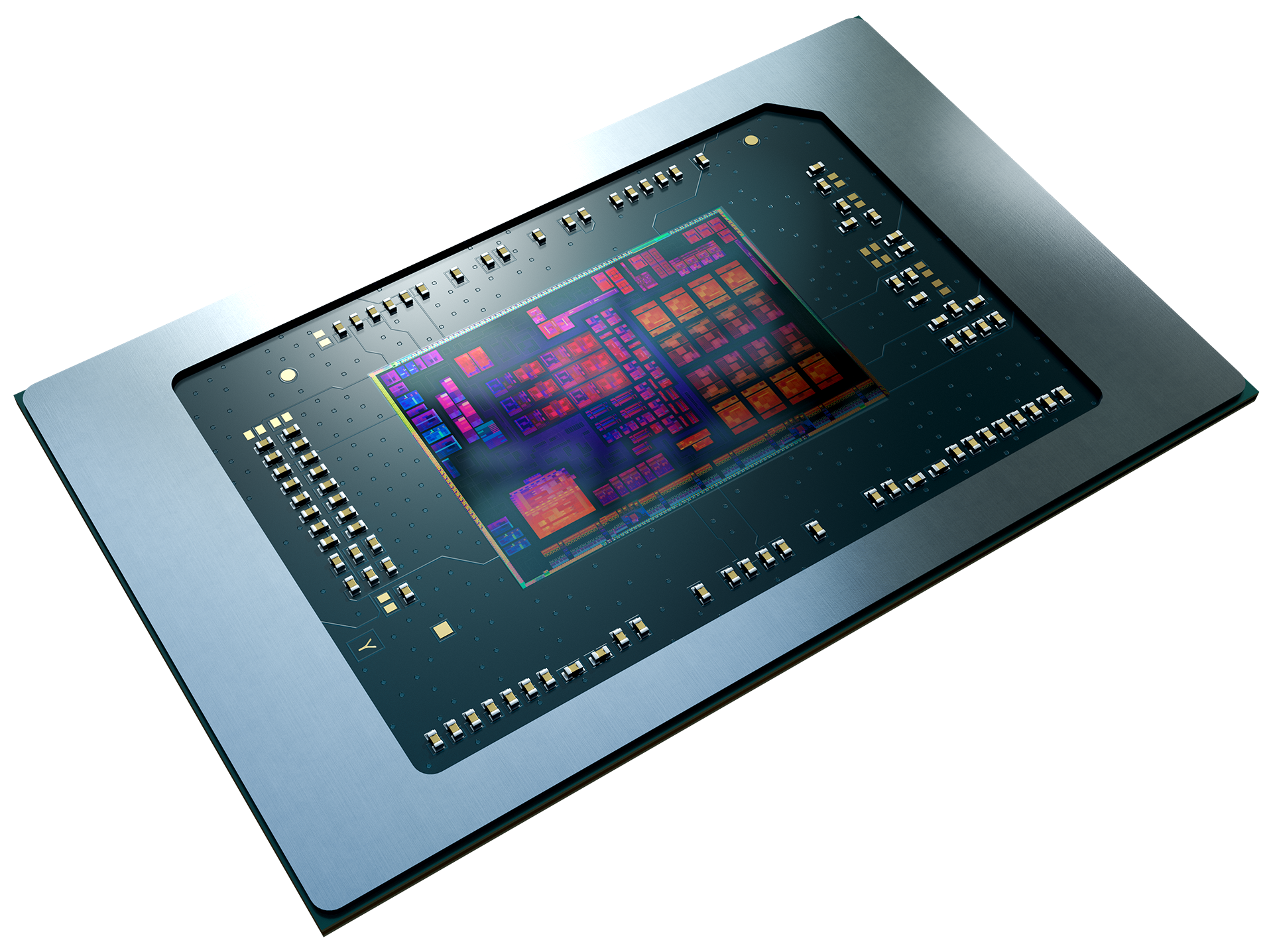
The AMD Ryzen 9 PRO 7940HS is a fast high-end laptop processor of the Phoenix series. It offers 8 cores (octa core) based on the Zen 4 architecture that supports hyperthreading (16 threads). The cores clock from 4 (base) up to 5.2 GHz (single core boost). The processor includes 8 MB L2 cache and 16 MB L3 cache.
Compared to the consumer Ryzen 9 7940HS, the PRO models offer additional security, manageability, and reliability features designed for professional users and workstation environments.
The performance of the R9 PRO 7940HS should be slightly higher than the old top model Ryzen 9 6980HX (8 Zen 3 cores with up to 4.9 GHz) at 54W TDP and Ryzen 9 6980HS at 35W TDP. Compared to the higher end Dragon Range series, the 7940HS should be similar to the Ryzen 7 7745HX (also 8 Zen 4 cores, max 5.1 GHz, 55W tDP, 32 MB L3).
The chip integrates a modern and fasts RDNA 3 graphics card (iGPU) called Radeon 780M with 12 CUs and up to 2.8 GHz clock speed. Furthermore, the Phoenix series include a video engine with AV1 de- and encoding, a new Xilinx FPGA based XDNA AI accelerator (Ryzen AI) that should be faster than the AI engine in the Apple M2 SOC and a dual-channel DDR5-5600 / LPDDR5x-7500 memory controller (with ECC support). The connectivity features includes 2 possible USB 4 (40 Gbps) ports and 20 PCIe 4.0 lanes for a GPU and SSDs.
The Phoenix series uses a single monolithic design (unlike the chiplet design of the 7045HX series) and is manufactured in the modern 4nm process at TSMC. The TDP can be configured between 35 and 45 Watt.
Average Benchmarks Intel Core i9-12900K → 100%n=23
Average Benchmarks AMD Ryzen 9 PRO 7940HS → 74%n=23
- Range of benchmark values for this graphics card - Average benchmark values for this graphics card * Smaller numbers mean a higher performance 1 This benchmark is not used for the average calculation
v1.35
log 07. 03:41:33
#0 ran 0s before starting gpusingle class +0s ... 0s
#1 checking url part for id 13851 +0s ... 0s
#2 checking url part for id 15052 +0s ... 0s
#3 redirected to Ajax server, took 1767753693s time from redirect:0 +0s ... 0s
#4 did not recreate cache, as it is less than 5 days old! Created at Tue, 06 Jan 2026 15:10:37 +0100 +0s ... 0s
#5 composed specs +0.006s ... 0.006s
#6 did output specs +0s ... 0.006s
#7 getting avg benchmarks for device 13851 +0.004s ... 0.011s
#8 got single benchmarks 13851 +0.009s ... 0.02s
#9 getting avg benchmarks for device 15052 +0.004s ... 0.024s
#10 got single benchmarks 15052 +0.006s ... 0.03s
#11 got avg benchmarks for devices +0s ... 0.03s
#12 min, max, avg, median took s +0.041s ... 0.071s






 - Average benchmark values for this graphics card


 Add as a preferred