


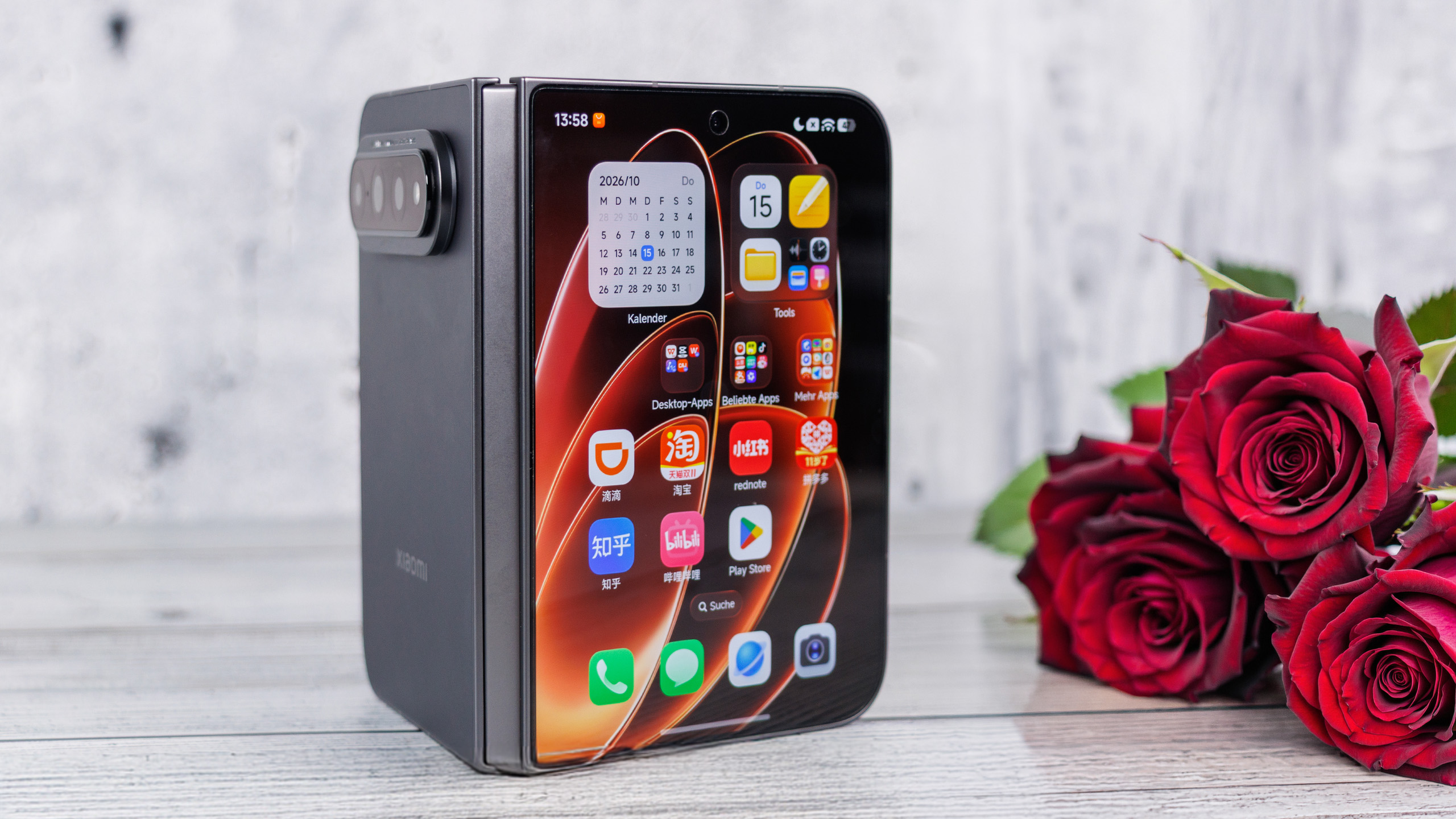
Verdict on the Xiaomi 18 Fold
The Xiaomi 18 Fold impresses with its unusual form factor, high-quality build and powerful hardware. In particular both of its bright OLED screens, its impressive camera features as well as its amazing runtimes of around 26 hours during our WLAN test left a lasting impression on us. The device's nearly invisible display fold also contributed positively to this.
That being said, the foldable isn't completely without its flaws. Its locating accuracy could do with being better, its speakers are missing bass and its display flickering may well affect sensitive users. Additionally, the phone's missing Android Auto and unclear update delivery further limits its suitability for everyday use.
A positive, on the other hand, is that the Chinese software now supports a wider range of languages and Google services continue to work reliably.
Pros
Cons
Price and availability

At the time of testing, the Xiaomi 18 Fold is intended exclusively for the Chinese market, but can be easily imported, for example via our loan provider TradingShenzhen.

- $1,614.99Samsung Galaxy Z Fold8 Unlocked Android Smartphone, 256GB Lavender | All-New Shape, Content-Native Ratio, Customized Processor, 4800 mAh Battery, 12 GB Memory, Dual 50 MP Camera, My FanCam
- $1,582.85Samsung Galaxy Z Fold8 Unlocked Android Smartphone, 256GB Graphite | All-New Shape, Content-Native Ratio, Customized Processor, 4800 mAh Battery, 12 GB Memory, Dual 50 MP Camera, My FanCam
- $1,899.99Samsung Galaxy Z Fold8 Unlocked Android Smartphone, 512GB Lavender | All-New Shape, Content-Native Ratio, Customized Processor, 4800 mAh Battery, 12 GB Memory, Dual 50 MP Camera, My FanCam
Table of Contents
- Verdict on the Xiaomi 18 Fold
- Specifications: Xiaomi 18 Fold
- Case - The Xiaomi 18 Fold is not dustproof
- Connectivity - The foldable Xiaomi phone with up to 1 TB of storage
- Software - The Fold comes with HyperOS 4.0
- Communication and GNSS - No 6 GHz WLAN
- Telephone functions and call quality
- Cameras - The Xiaomi 18 Fold has a telephoto lens
- Accessories and warranty - The Fold comes with a charger
- Input devices and operation - A fingerprint scanner inside the power button
- Foldable display - Xiaomi has chosen bright OLEDs
- Performance - The Foldable with an Xring O3 SoC
- Emissions - The SoC is throttled under load
- Battery life - The foldable with 6,000 mAh
- Notebookcheck total rating
- Possible alternatives compared
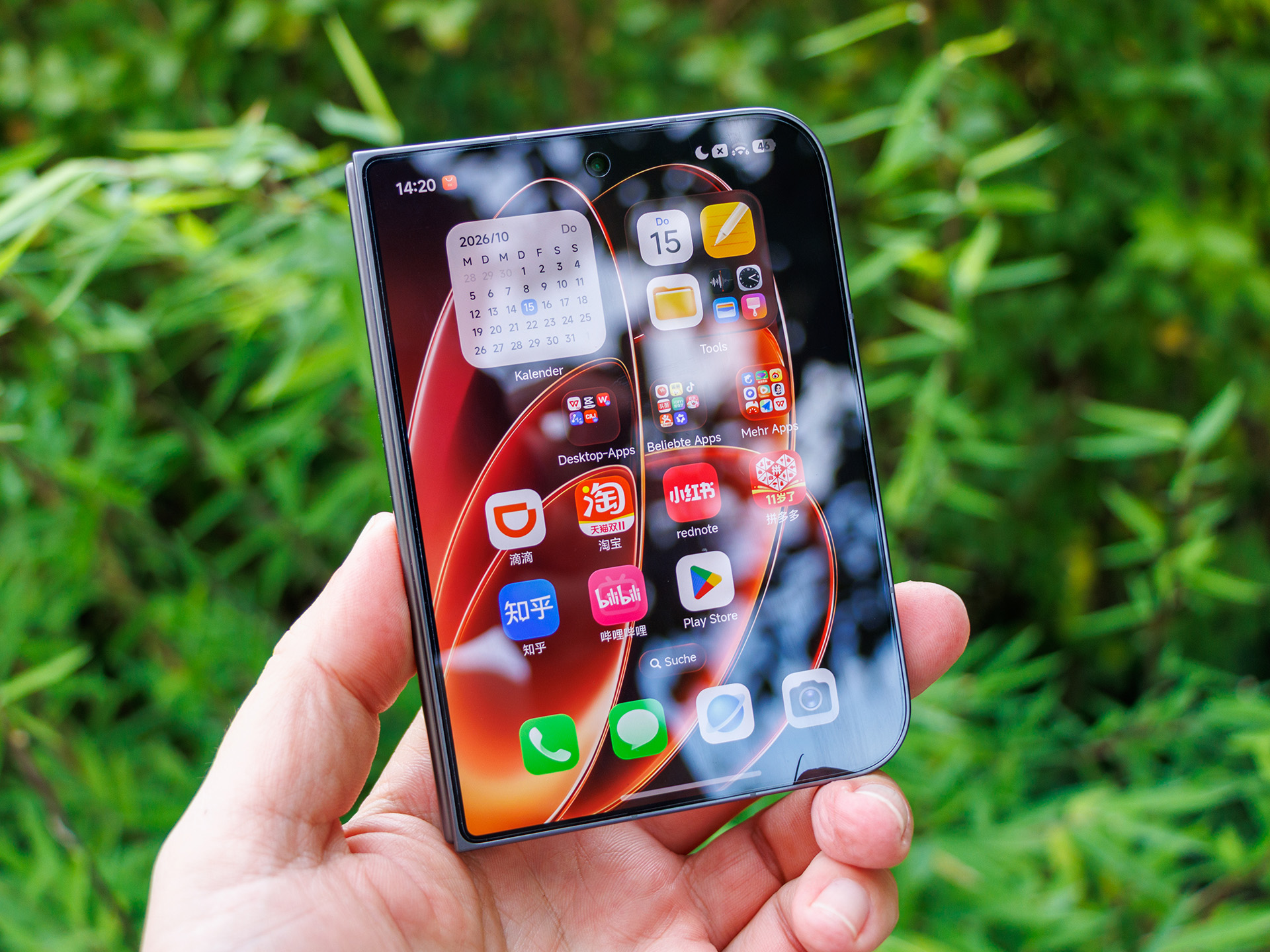
With the release of the Xiaomi 18 Fold, the Chinese manufacturer has gone its on way. Instead of a classic oblong smartphone format, this model features an unusually wide case which, when folded open, offers a generously sized workspace. This makes the foldable phone an interesting alternative to the Samsung Galaxy Z Fold8.
However, it's not just its form factor that scores points for the Xiaomi phone: An in-house processor, two particularly bright OLED displays and a large battery all aim to keep the competition at bay. Our review will clear up whether this concept works just as well from a technical standpoint.
Specifications: Xiaomi 18 Fold
Case - The Xiaomi 18 Fold is not dustproof
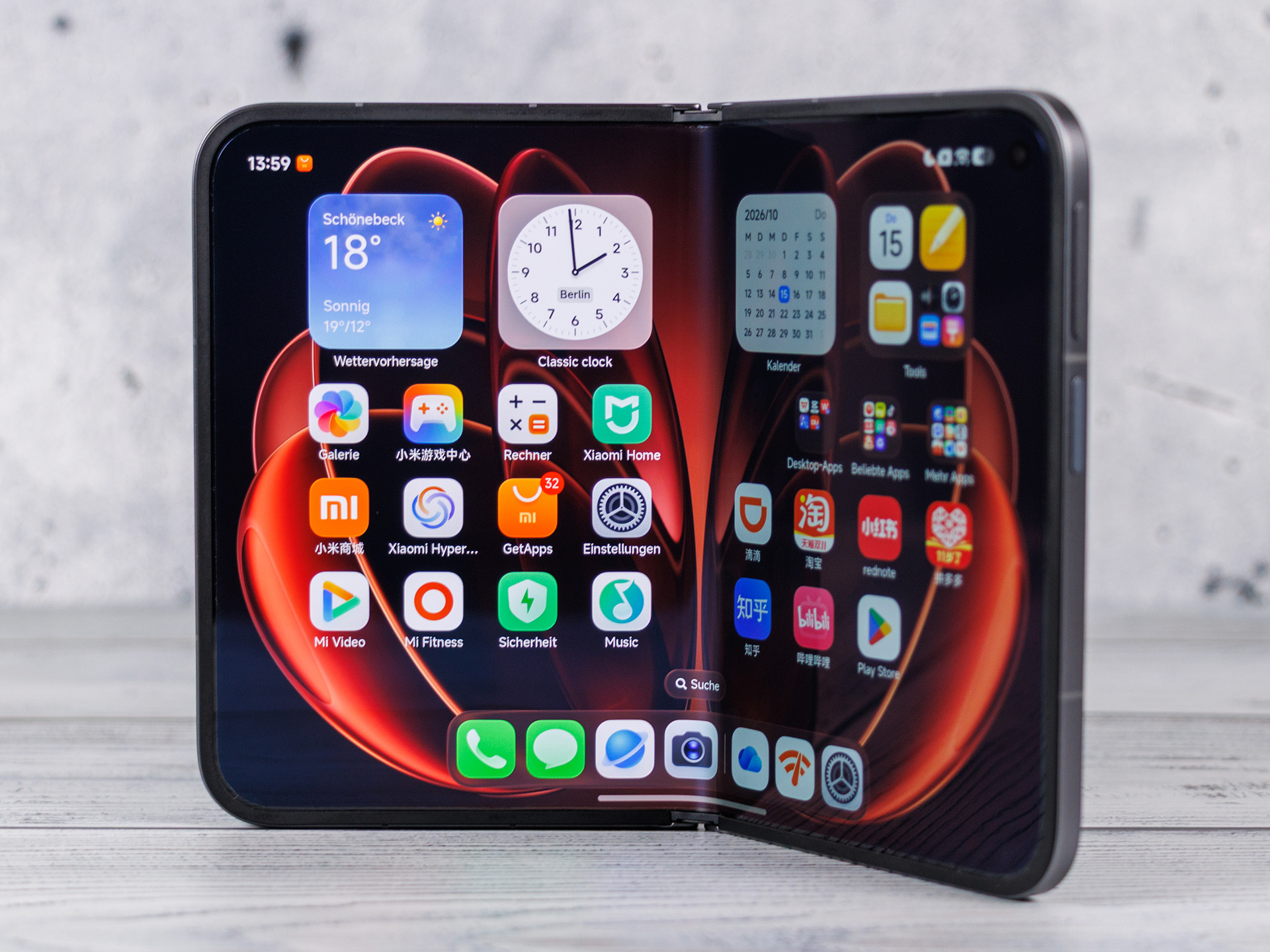
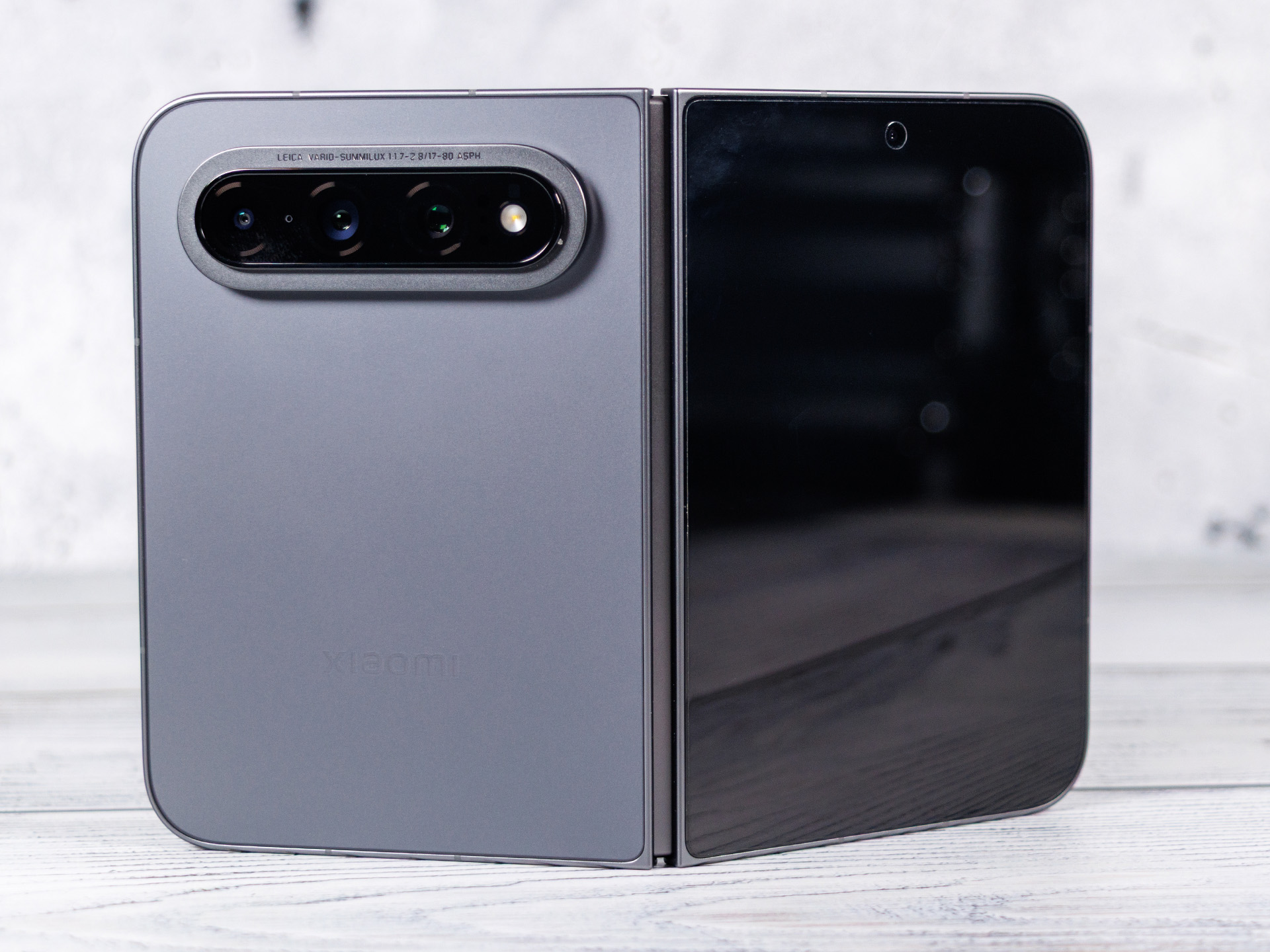
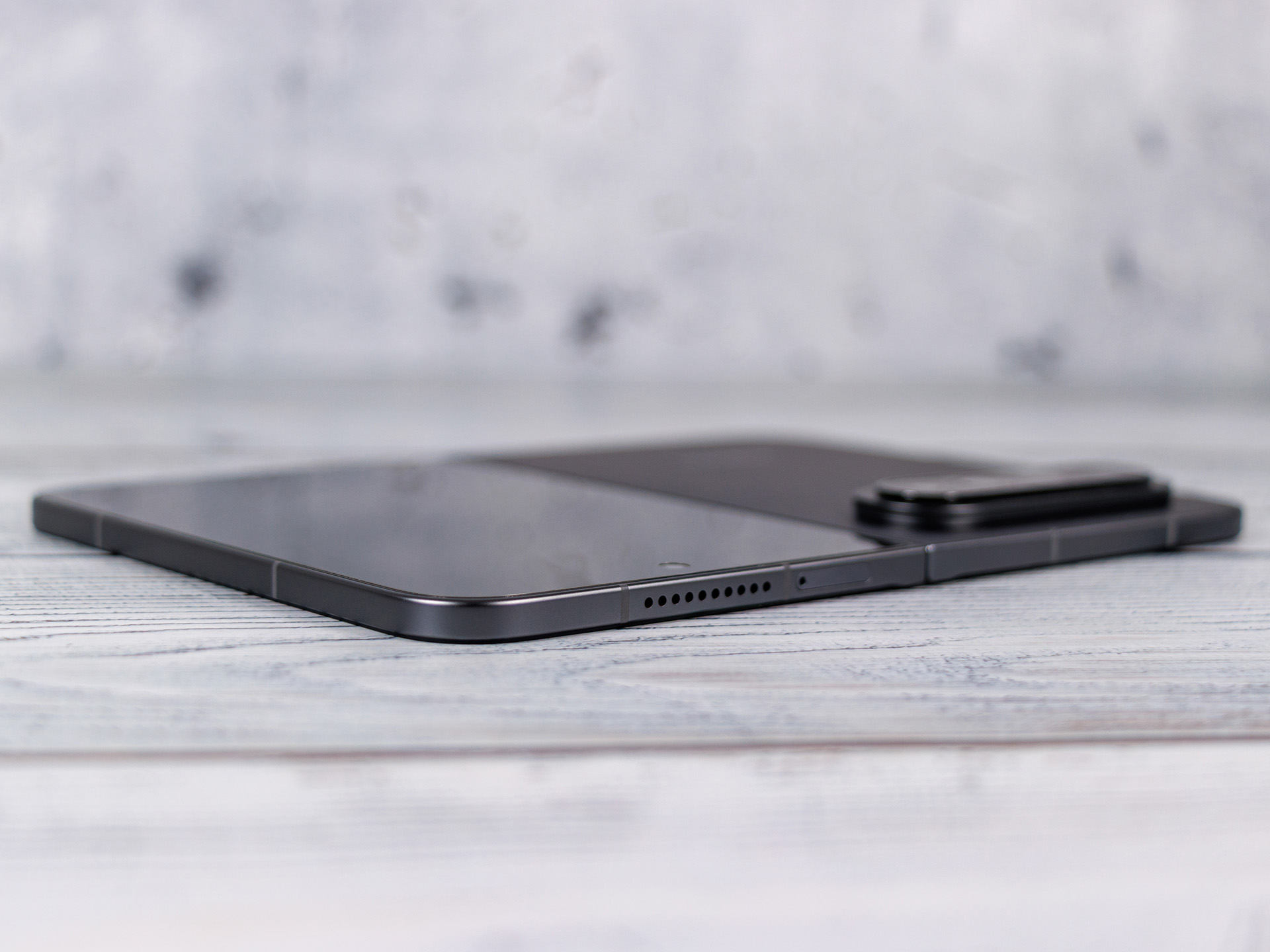
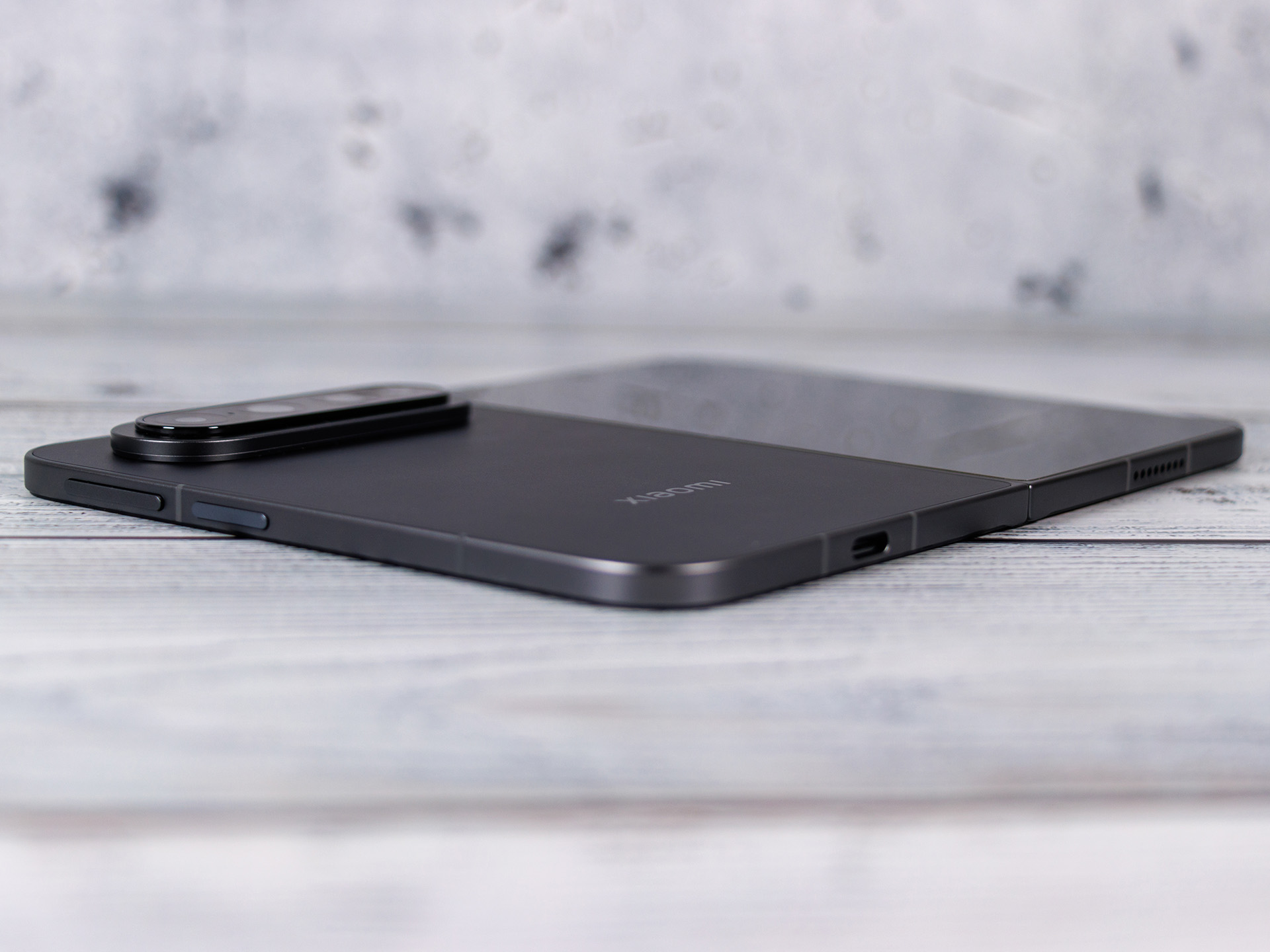
The Xiaomi 18 Fold comes in red, white and black. Folded open, it is said to have a thickness of 5.03 millimeters, however, we measured 5.5 millimeters. Folded shut, Xiaomi has indicated a thickness of 10.68 millimeters, whereas we measured 11 millimeters, or up to 15.6 millimeters with the camera included.
The Fold feels comfortable to hold, and your first impression will be that of a stable and high-quality build. However, we noted some creaking noises when attempting to twist the phone while folded open. The fold on its display is hardly noticeable and you only become aware of it if you actively try to feel for it. However, if you press a little harder on the screen, you sometimes get the impression that it is slightly padded underneath.
The foldable phone is IP58 certified, making it waterproof but not completely dustproof.
Connectivity - The foldable Xiaomi phone with up to 1 TB of storage
The Xiaomi Mi 18 Fold boasts a nearly full connectivity setup. Highlights include a fast USB 3.2 port, which also allows for wired screen mirroring, an IR blaster, and even UWB support.
The foldable phone is available in the following storage capacities:
- 12 / 256 GB: 10,999 RMB (approx. $1,645)
- 12 / 512 GB: 11,999 RMB (approx. $1,795)
- 16 / 512 GB: 12,999 RMB (approx. $1,946 Euro)
- 16 / 1,024 GB: 14,999 RMB (approx. $2,244 Euro)
Users do, however, have to make do without fully fledged eSIM support.
Software - The Fold comes with HyperOS 4.0
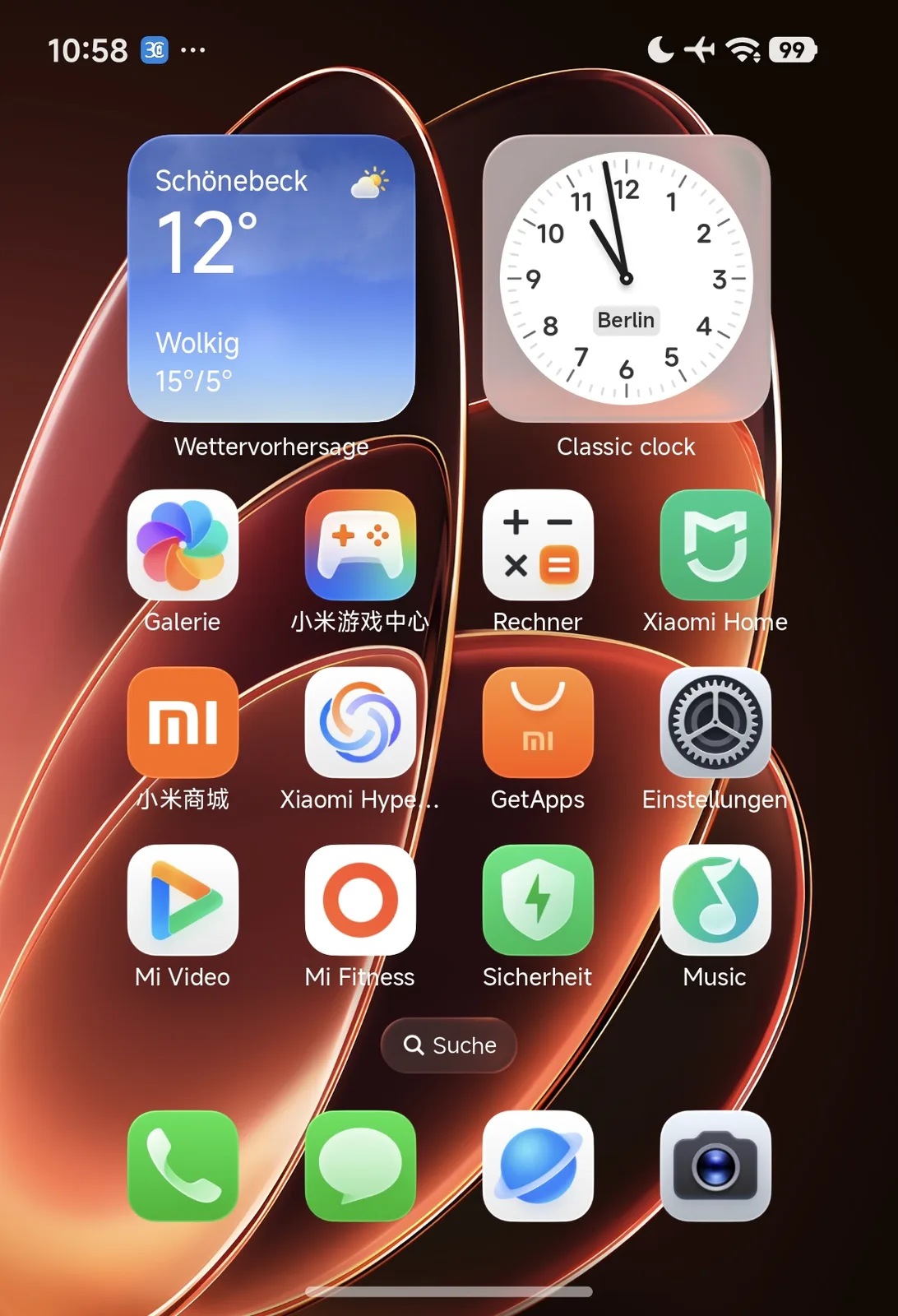
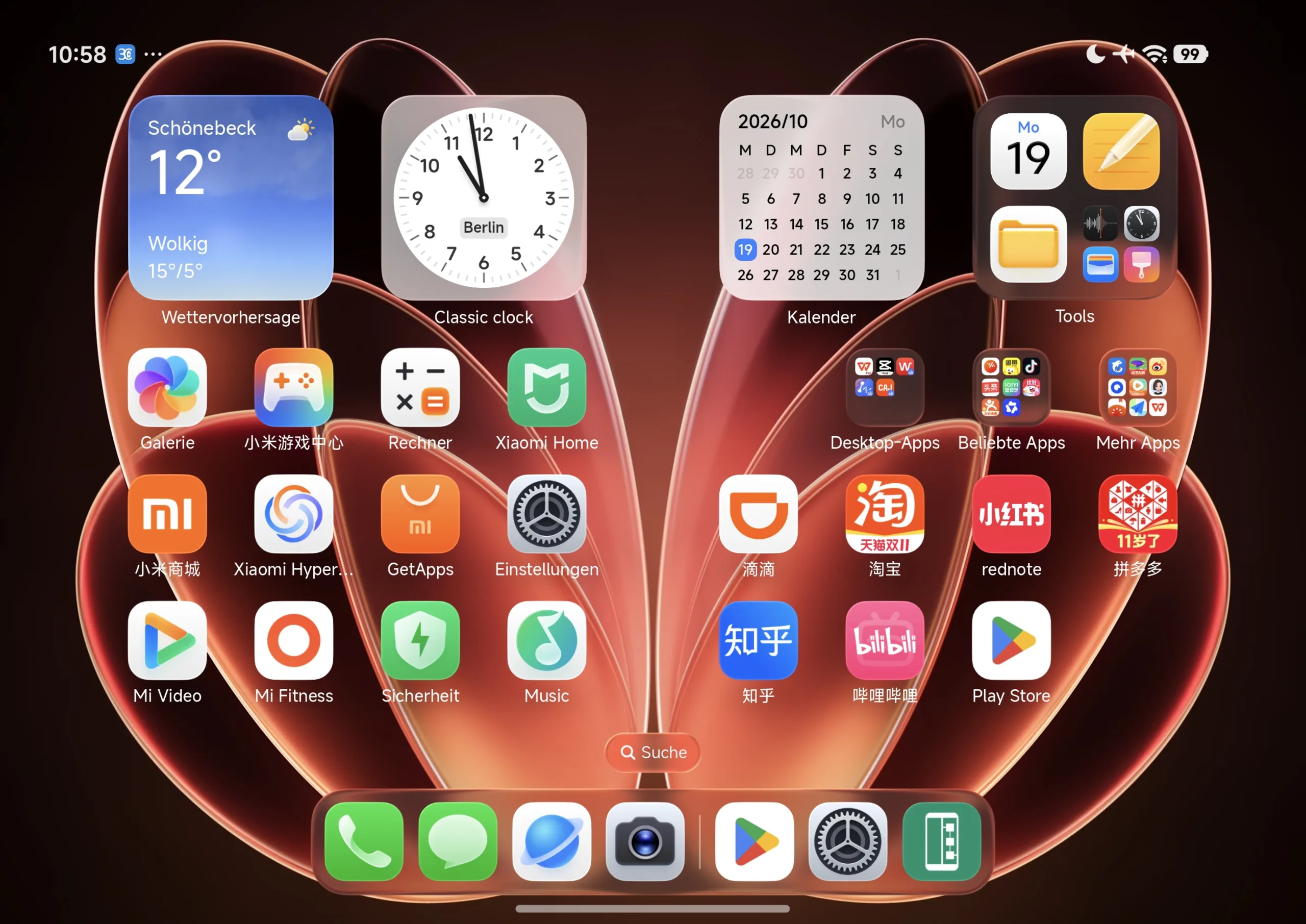
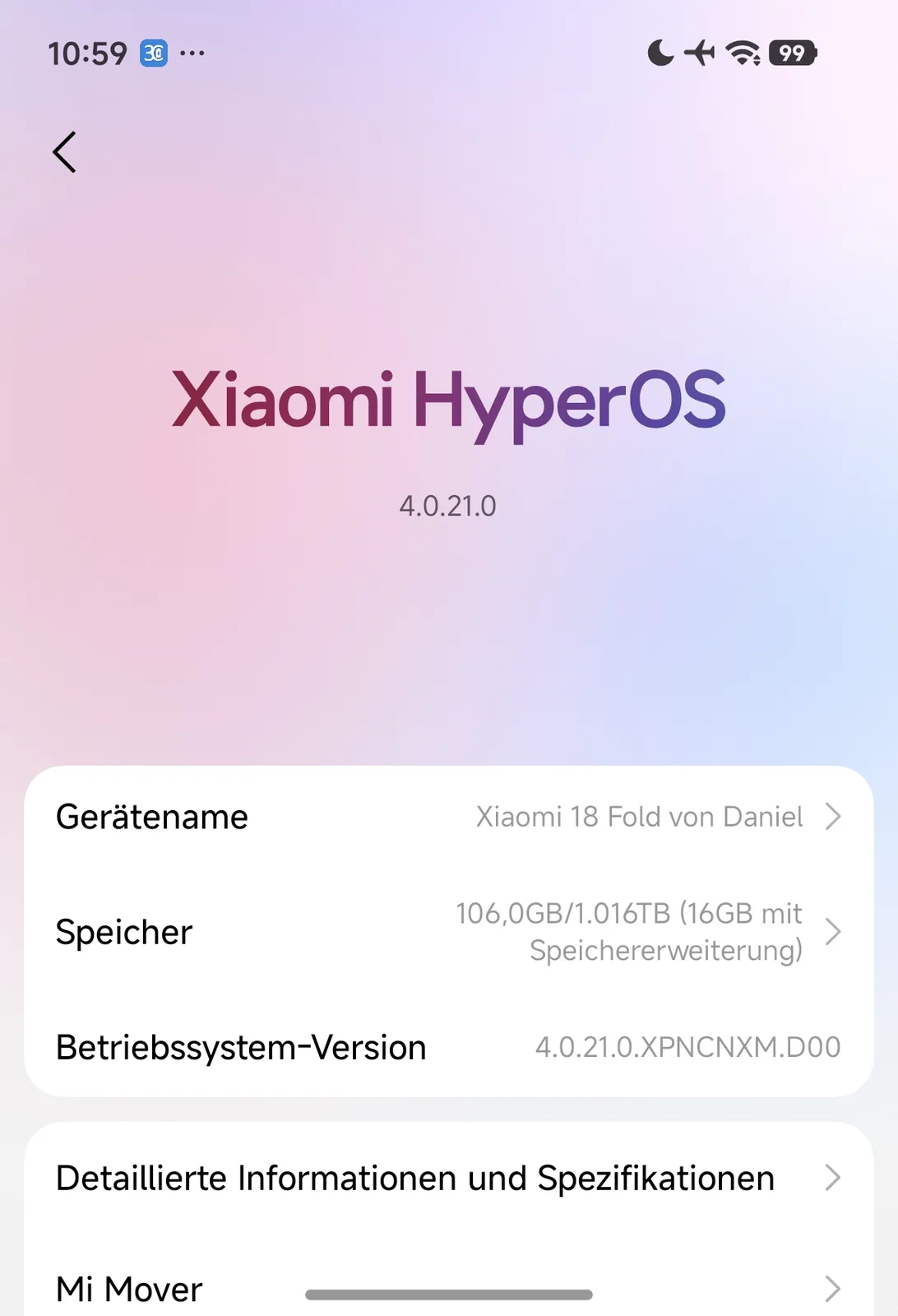
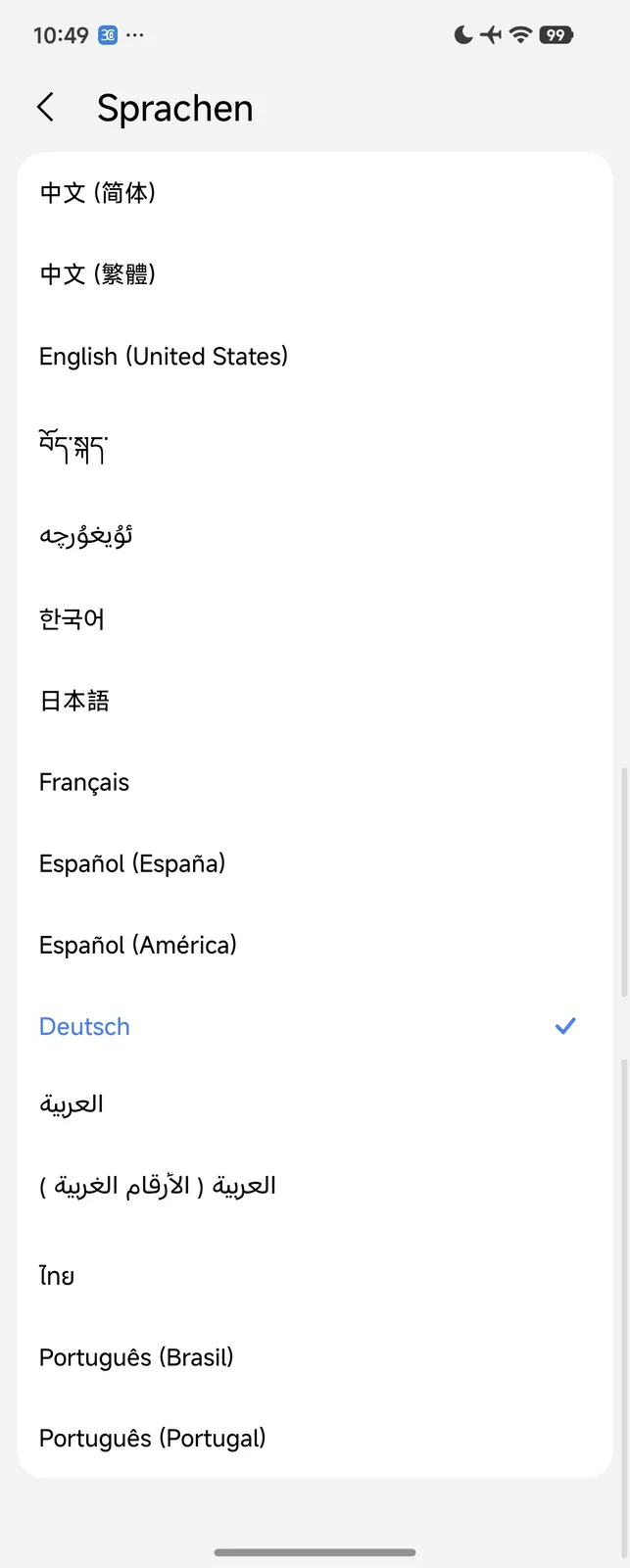
The Xiaomi 18 Fold comes delivered with HyperOS 4.0 installed, which uses Android 17 as its base. All the most important Google services come pre-installed and only require activating—this is done as soon as you install the Play Store. Users of the import version also don't have to make any compromises when it comes to the system language: Xiaomi has significantly expanded the language selection of its Chinese models, with German, for example, now being supported.
The device comes with lots of third-party apps pre-installed but thankfully, these can be completely deactivated. There is still some advertising to be found in the system, but this is less intrusive as with cheaper Xiaomi smartphone models. Limitations still exist when it comes to connecting smartwatches via Wear OS. Android Auto also didn't work during our test. On the flip side, it has a Google Play Protect certification.
The manufacturer has not yet made any mention of a concrete update guarantee for its Xiaomi 18 Fold. In general, Xiaomi delivers security updates for at least two years, with individual models receiving support for much longer. It remains to be seen how long the foldable phone will receive Android updates.
Sustainability
There is very little concrete information available regarding the sustainability of the Xiaomi 18 Fold, including information on the use of recycled materials, its CO₂ footprint as well as its repairability. Moreover, the limited available service for imported devices and unclear update support make long-term use a little difficult.
Communication and GNSS - No 6 GHz WLAN
The Xiaomi Mi 18 Fold supports a wide range of mobile network frequencies and exhibits good reception in urban areas.
It also seems to perform well over Wi-Fi, but it doesn't support the 6 GHz band.
| Networking | |
| Xiaomi 18 Fold | |
| iperf3 transmit Wi-Fi6/7 RT-BE96U | |
| iperf3 receive Wi-Fi6/7 RT-BE96U | |
| Samsung Galaxy Z Fold8 | |
| iperf3 transmit Wi-Fi6/7 RT-BE96U | |
| iperf3 transmit Wi-Fi6/7 RT-BE96U | |
| iperf3 receive Wi-Fi6/7 RT-BE96U | |
| iperf3 receive Wi-Fi6/7 RT-BE96U | |
| Honor Magic V6 | |
| iperf3 transmit AXE11000 | |
| iperf3 receive AXE11000 | |
| iperf3 transmit AXE11000 6GHz | |
| iperf3 receive AXE11000 6GHz | |
| Motorola Razr Fold | |
| iperf3 transmit Wi-Fi6/7 RT-BE96U | |
| iperf3 receive Wi-Fi6/7 RT-BE96U | |
| Vivo X Fold6 | |
| iperf3 transmit Wi-Fi6/7 RT-BE96U | |
| iperf3 transmit Wi-Fi6/7 RT-BE96U | |
| iperf3 receive Wi-Fi6/7 RT-BE96U | |
| iperf3 receive Wi-Fi6/7 RT-BE96U | |
| Oppo Find N6 | |
| iperf3 transmit AXE11000 | |
| iperf3 receive AXE11000 | |
| iperf3 transmit AXE11000 6GHz | |
| iperf3 receive AXE11000 6GHz | |
| Average 802.11 a/b/g/n/ac/ax/be | |
| iperf3 transmit AXE11000 | |
| iperf3 receive AXE11000 | |
| iperf3 transmit AXE11000 6GHz | |
| iperf3 receive AXE11000 6GHz | |
| iperf3 transmit Wi-Fi6/7 RT-BE96U | |
| iperf3 receive Wi-Fi6/7 RT-BE96U | |
| Average of class Smartphone | |
| iperf3 transmit AXE11000 | |
| iperf3 receive AXE11000 | |
| iperf3 transmit AXE11000 6GHz | |
| iperf3 receive AXE11000 6GHz | |
| iperf3 transmit Wi-Fi6/7 RT-BE96U | |
| iperf3 receive Wi-Fi6/7 RT-BE96U | |
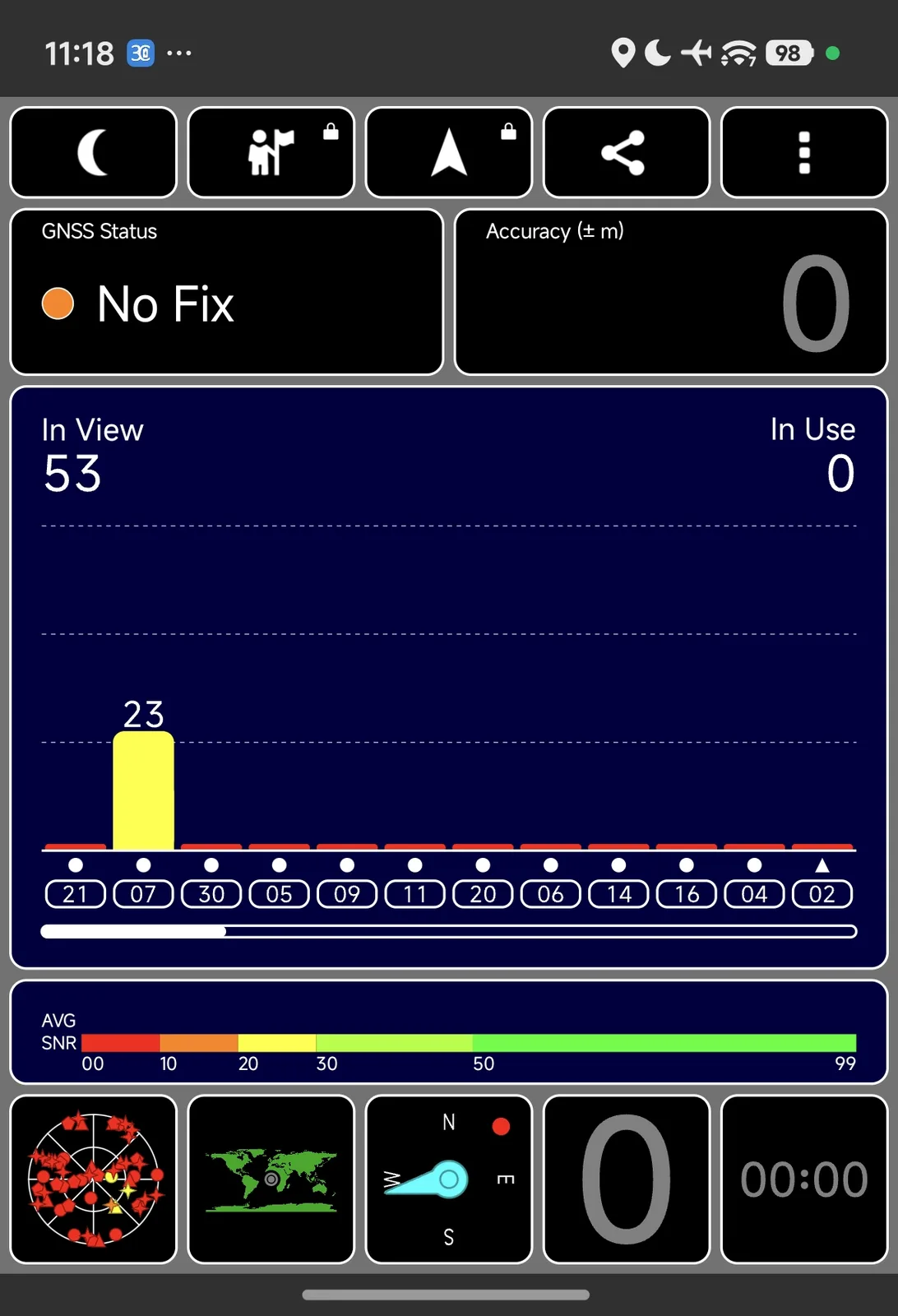
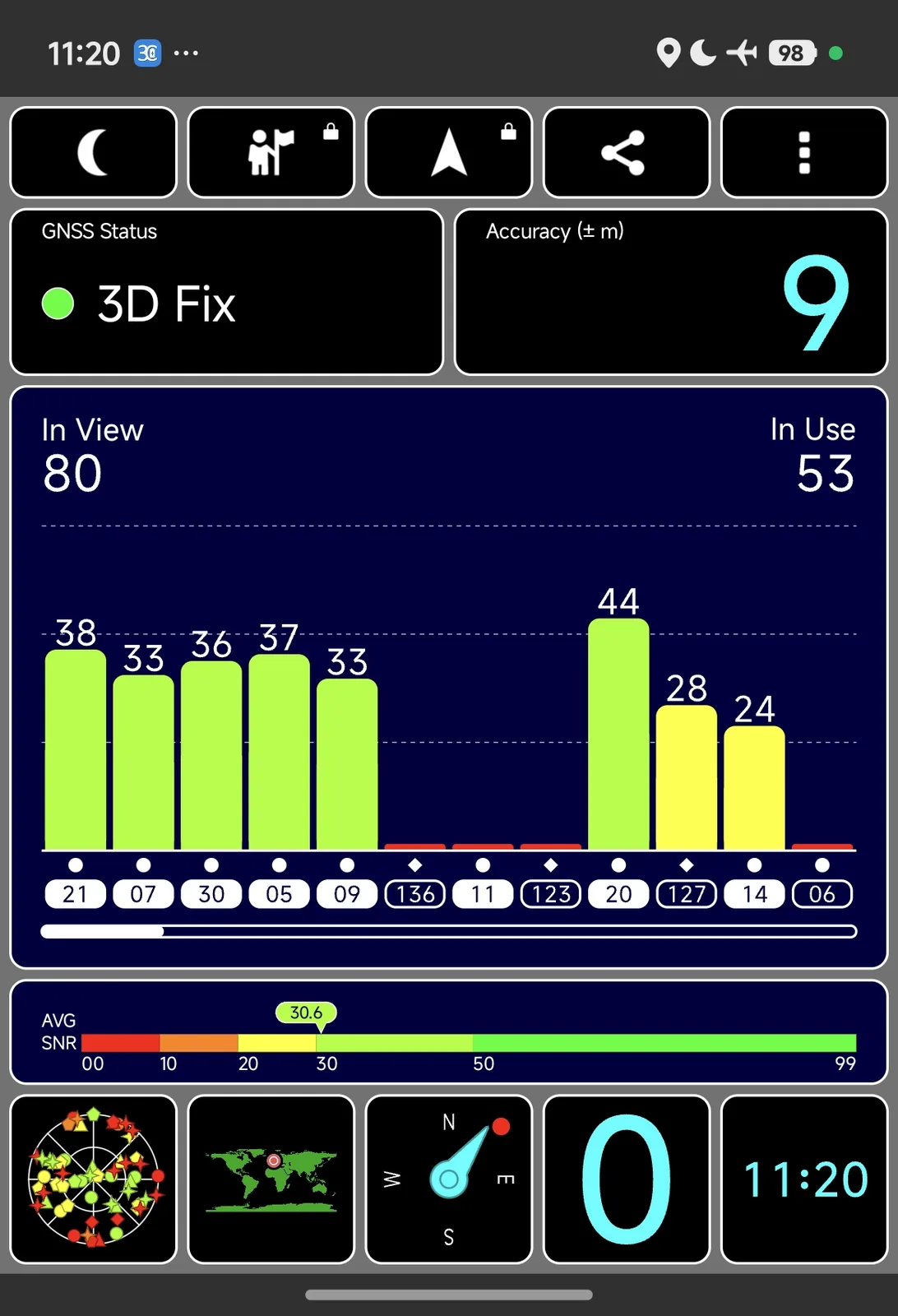
The phone wasn't able to locate us via satellite indoors and even outdoors we would wish to have seen higher accuracy.
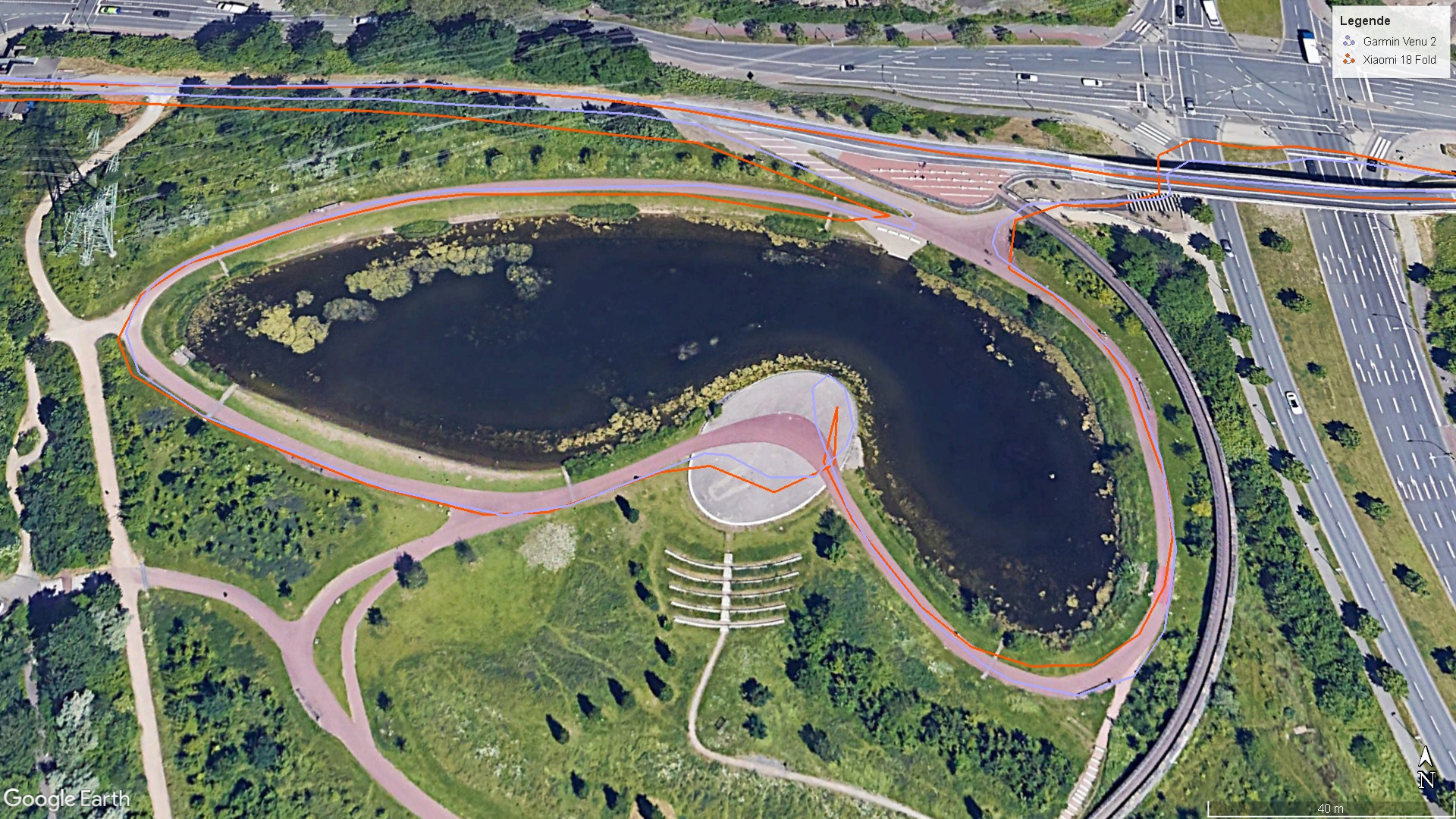
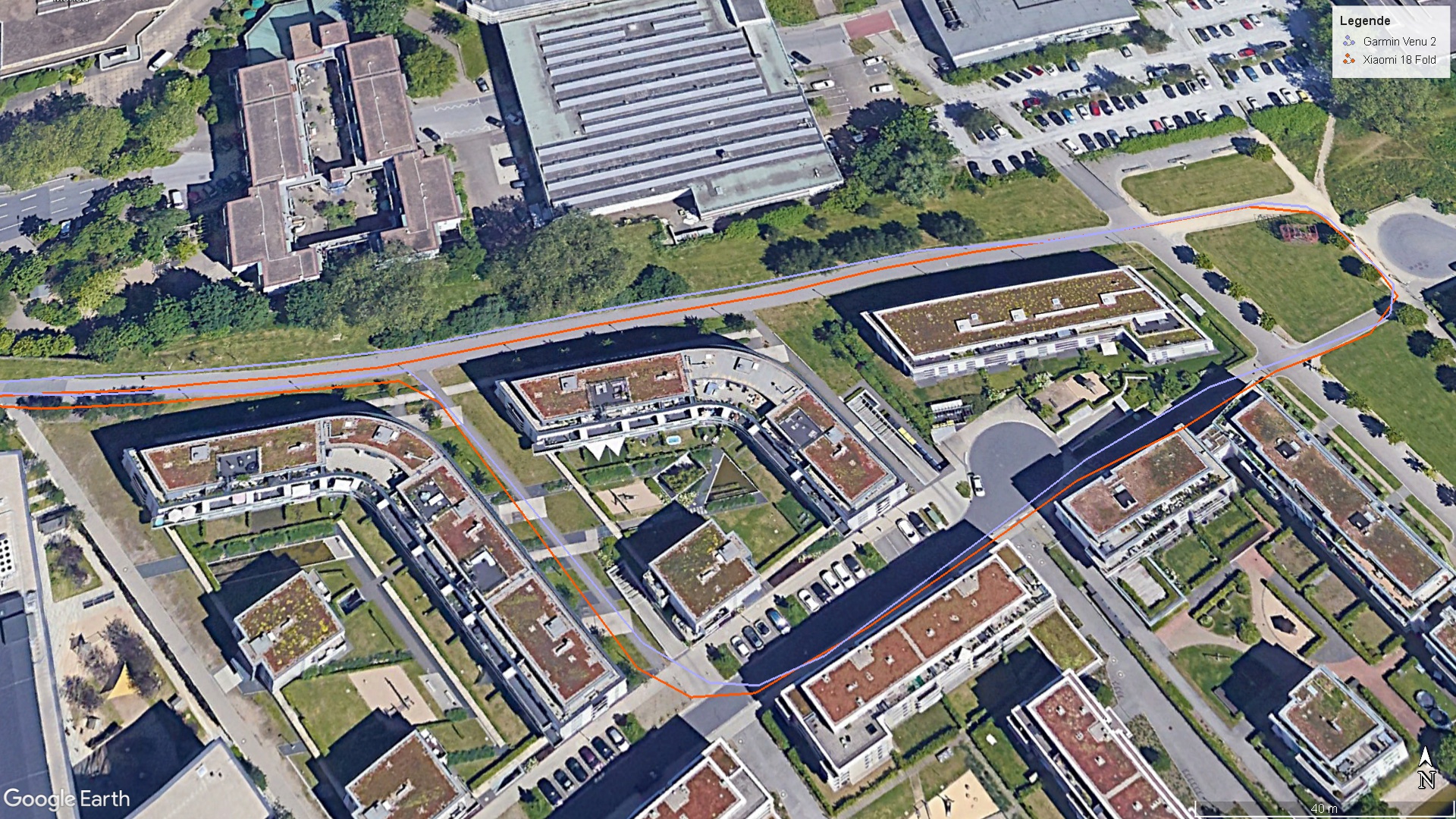
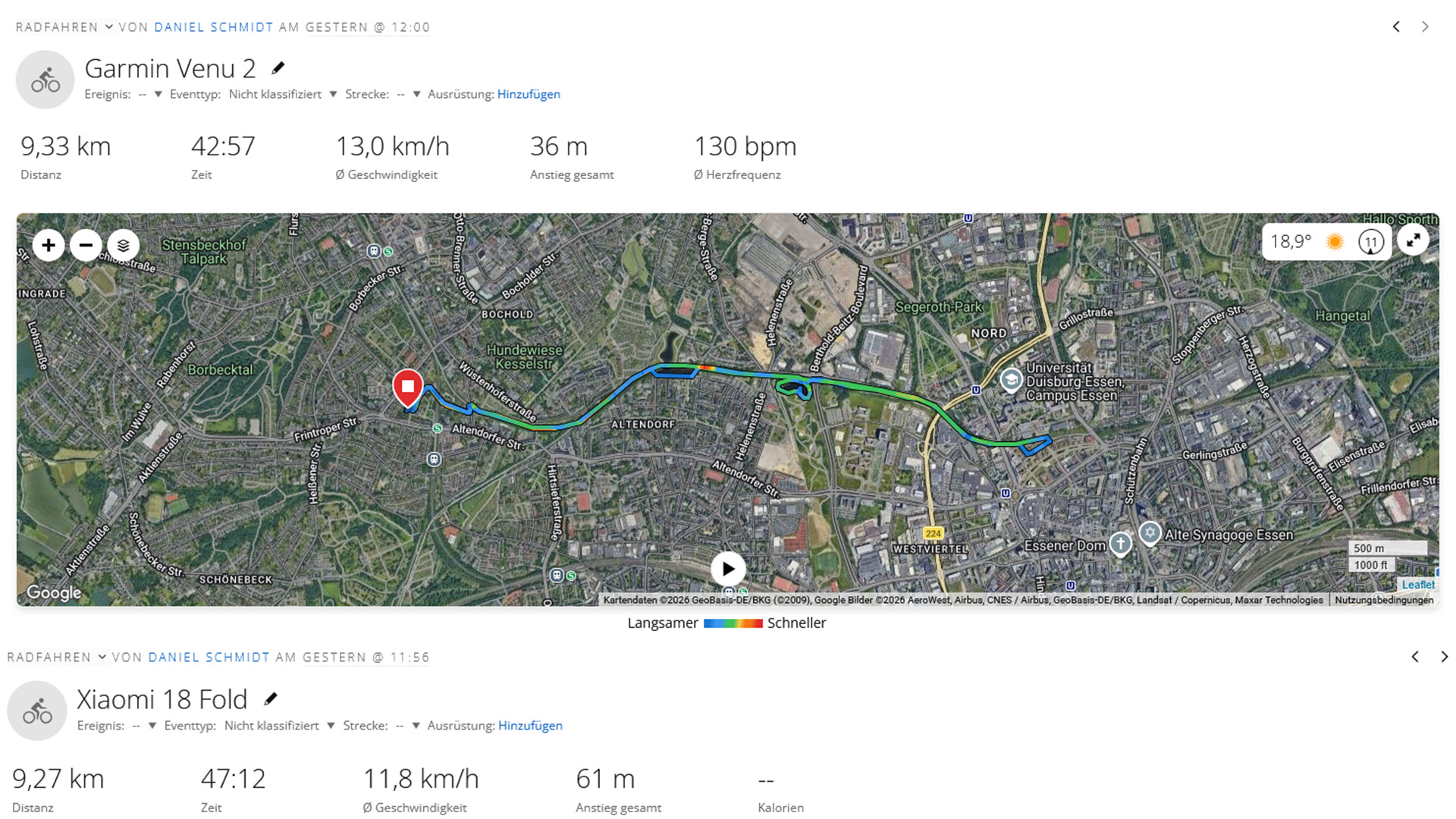
On our bike ride, the Xiaomi Mi 18 Fold recorded the 9.27-kilometer route with largely good accuracy. Compared to the Garmin Venu 2 (9.33 km), we noted only minor deviations. However, occasional inaccuracies occurred in built-up areas and during changes of direction. Overall, the foldable device delivers good locating performance.
Telephone functions and call quality
The Xiaomi 18 Fold has space for two Nano SIM cards, but it has no fully fledged eSIM support. Instead, Xiaomi has integrated so called Mi Roaming—but this is aimed primarily at the Chinese market.
Call quality is clear and natural-sounding with the phone held up to your ear, however, we noted the occasional background noise breaking through, and the voice of the Fold user sometimes sounded a little boxed in.
Cameras - The Xiaomi 18 Fold has a telephoto lens

The phone's front-facing camera takes appealing selfies with good sharpness and decent levels of detail. That being said, the photos are edited a little too heavily: Skin looks artificially smooth and red tones have been enhanced. Users can record video in Full HD at 60fps at best.
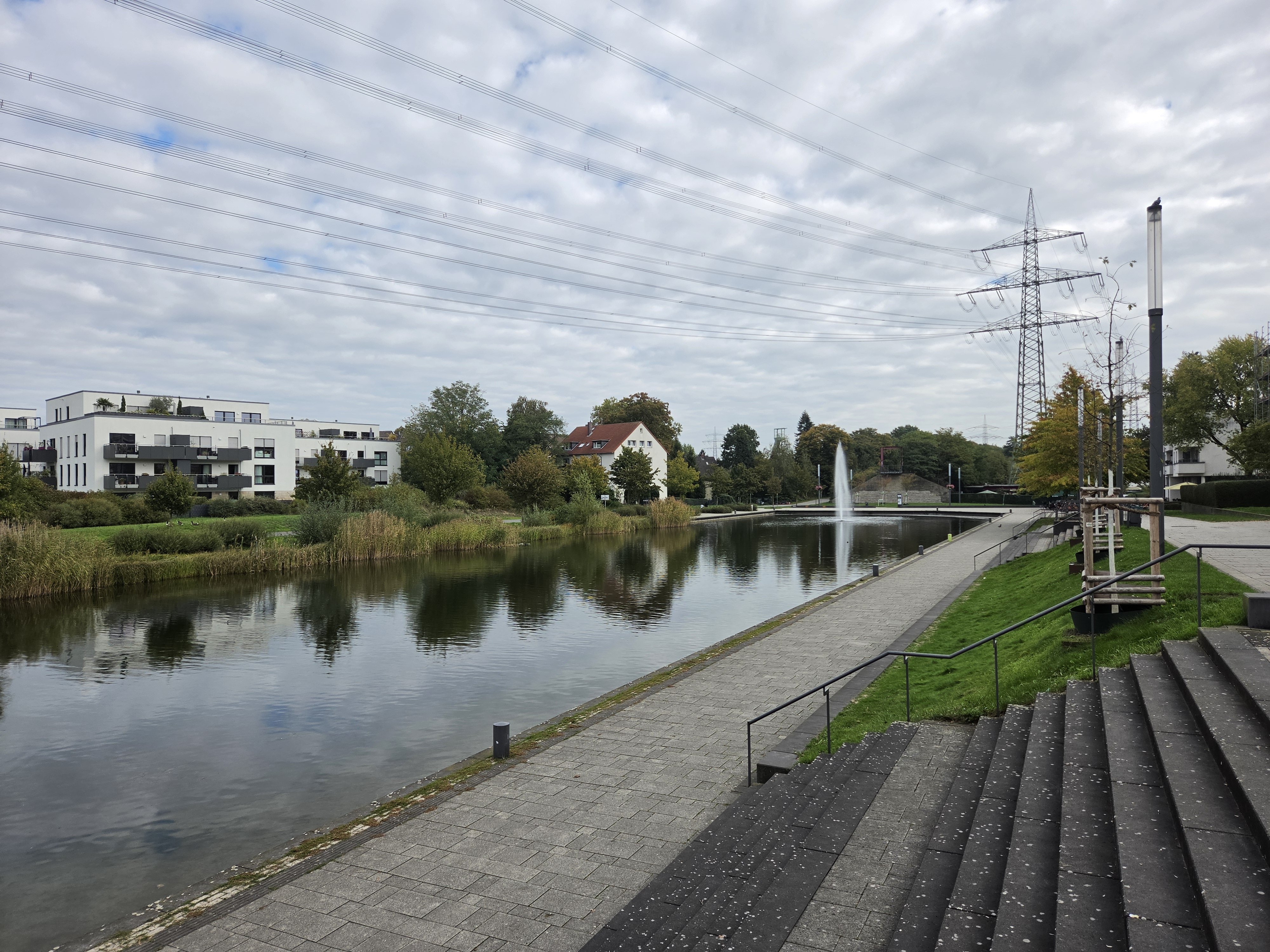
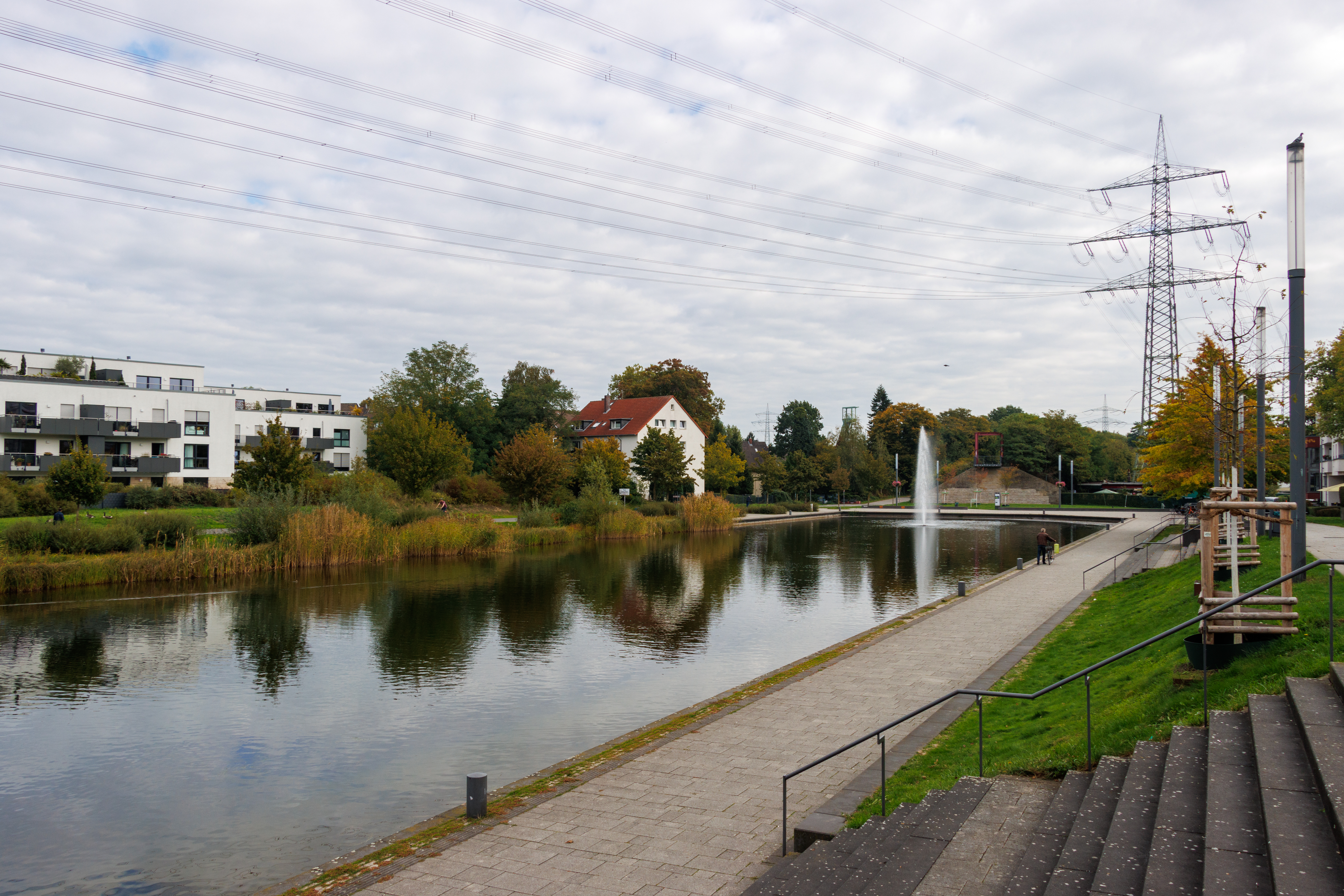
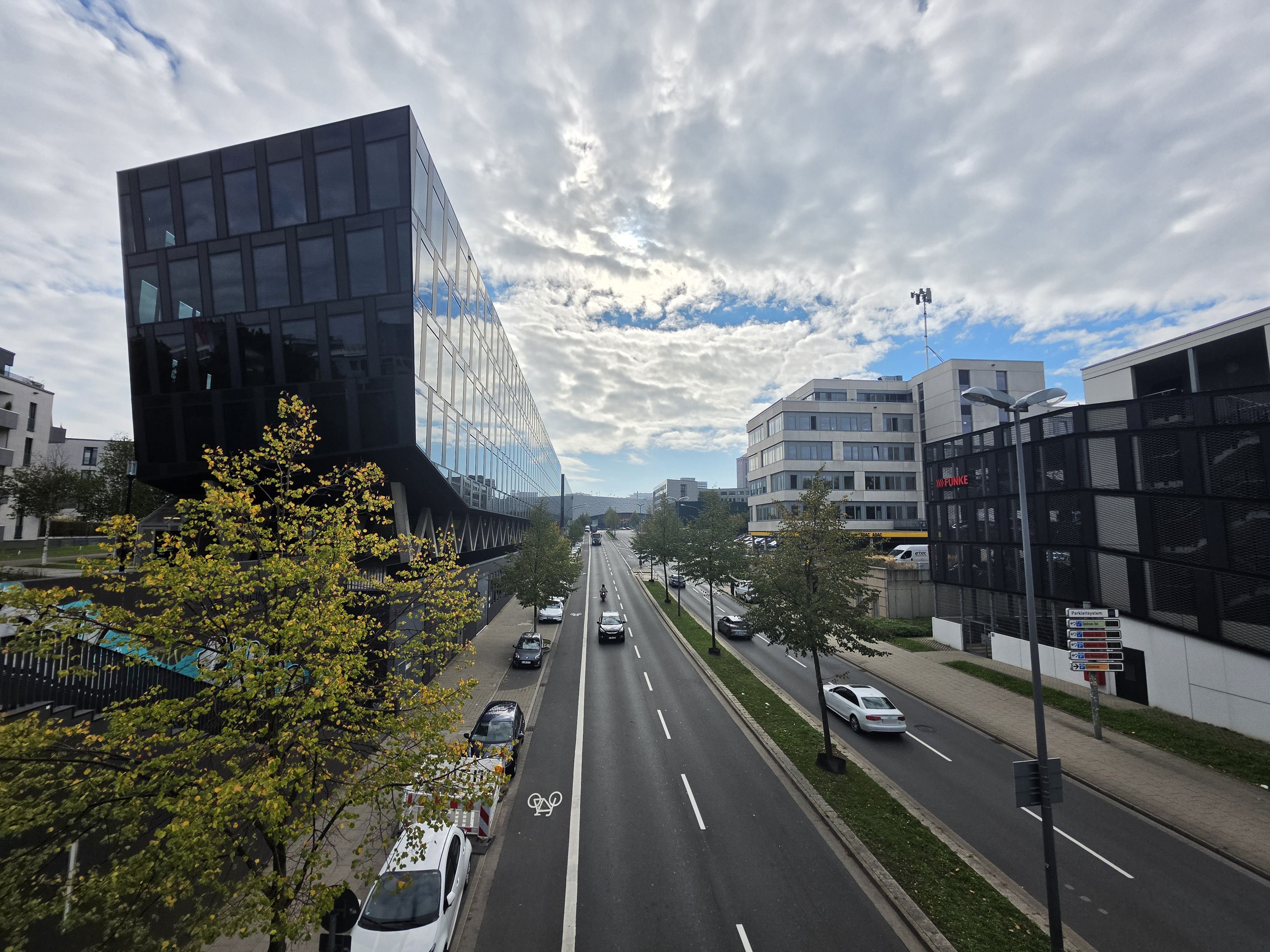
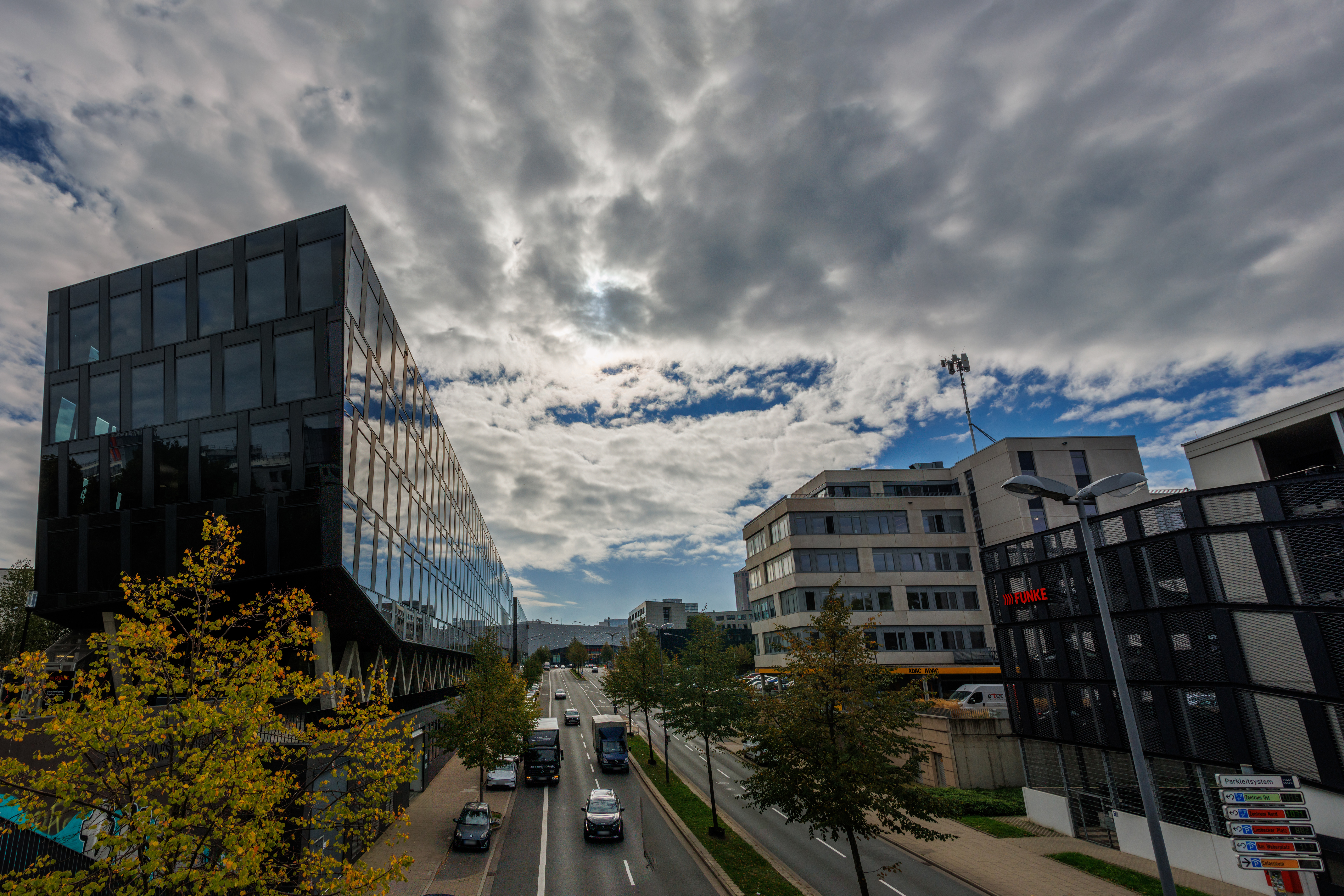
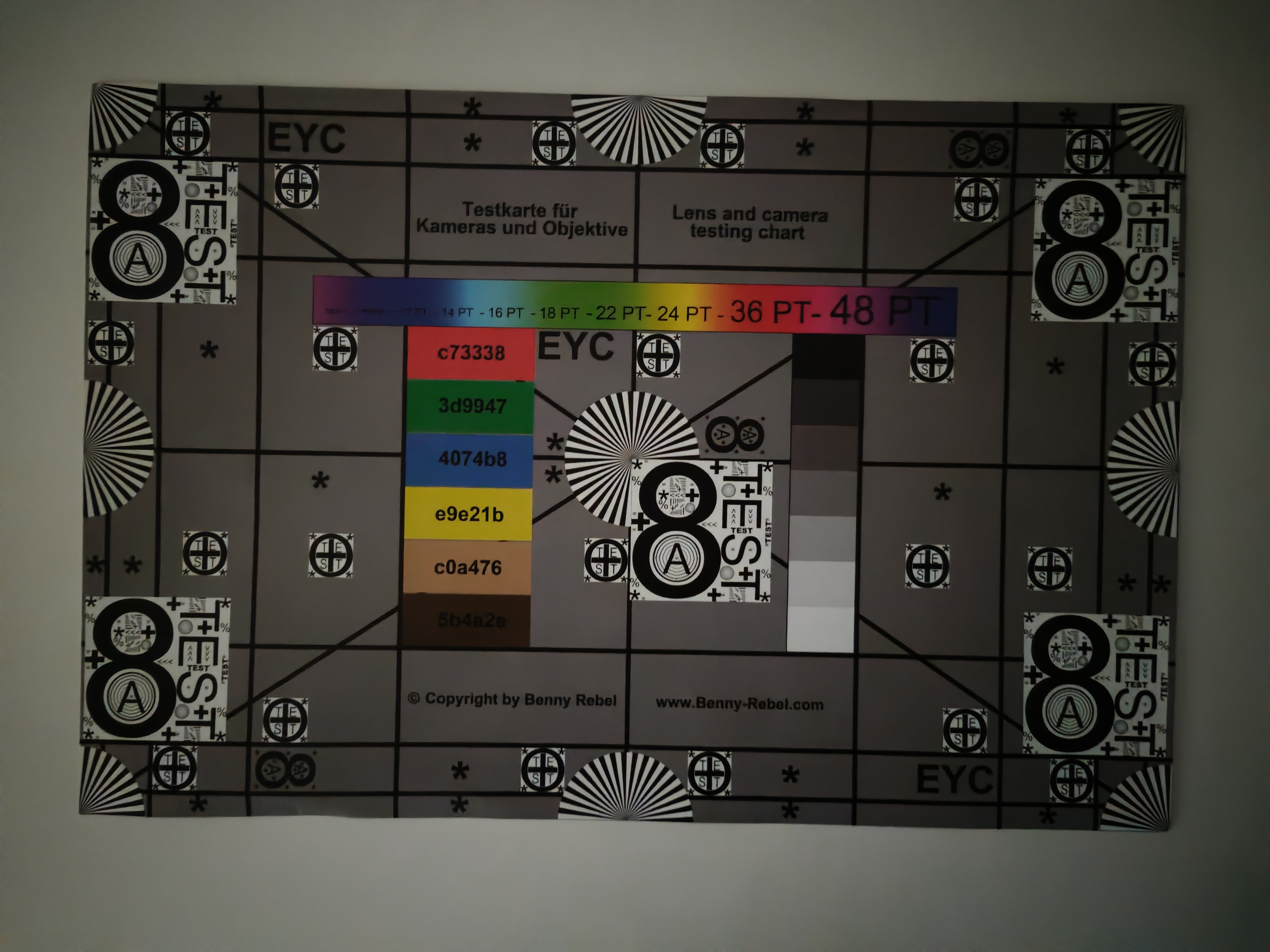
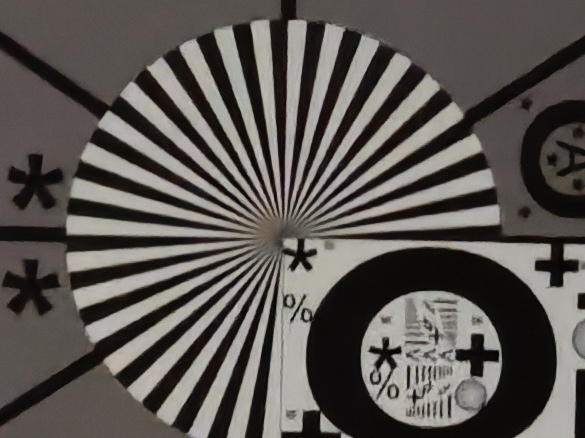
In daylight, the Xiaomi 18 Fold's main camera delivers detailed shots with vivid colors and nice dynamics. Fine structures are generally captured cleanly, however, the phone tends to make colors appear a little too saturated. Even in low-light conditions, it takes nice photos, although we noted quite a loss of detail in the darker parts of the shots. If you choose to use the 200 megapixel mode, you'll need a little patience, and the Live View mode is hardly usable in the dark.
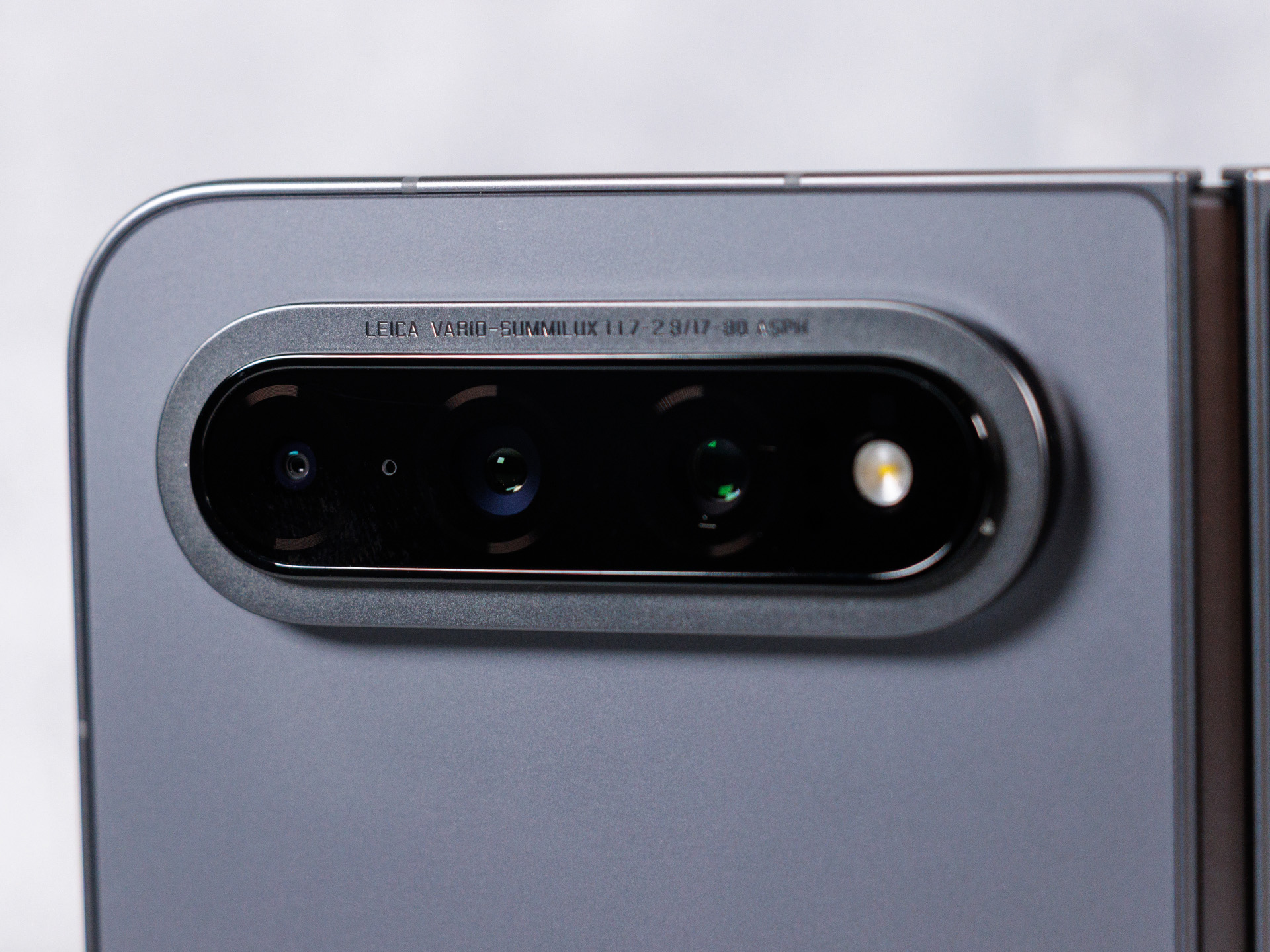
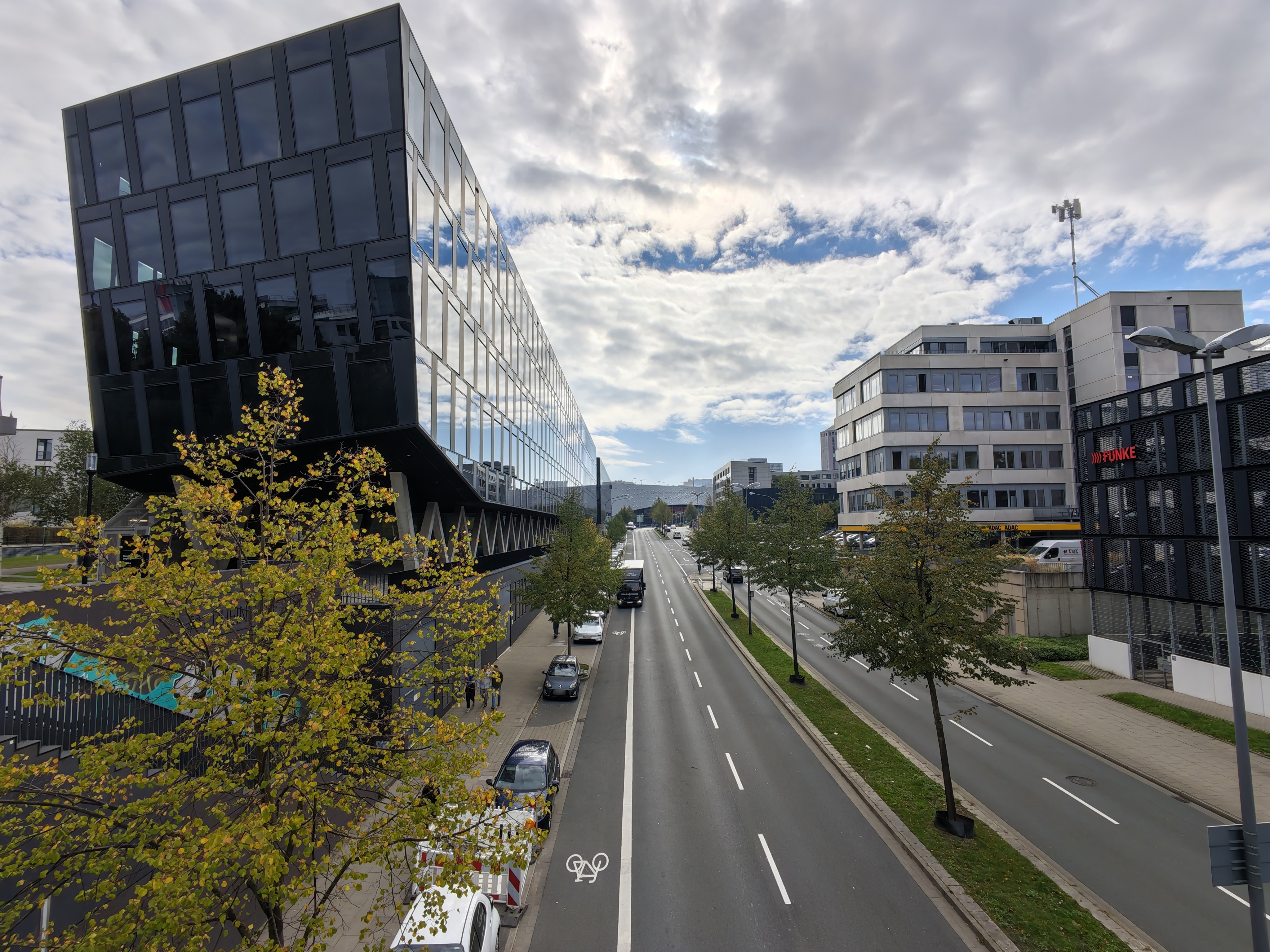
The device's ultra-wide-angle lens delivers decent picture quality and a large dynamic range, but photos lose some sharpness toward the edges. The telephoto lens features a 3.5x opticial zoom (max. 100x digital zoom) and even when zoomed in to 5x, it still delivers detailed shots. Fine structures, on the other hand, look a little too artificially sharpened by the software's automatic editing.
The phone's main camera can record video in up to 8K at 24fps or Ultra HD at 60fps.
Image comparison
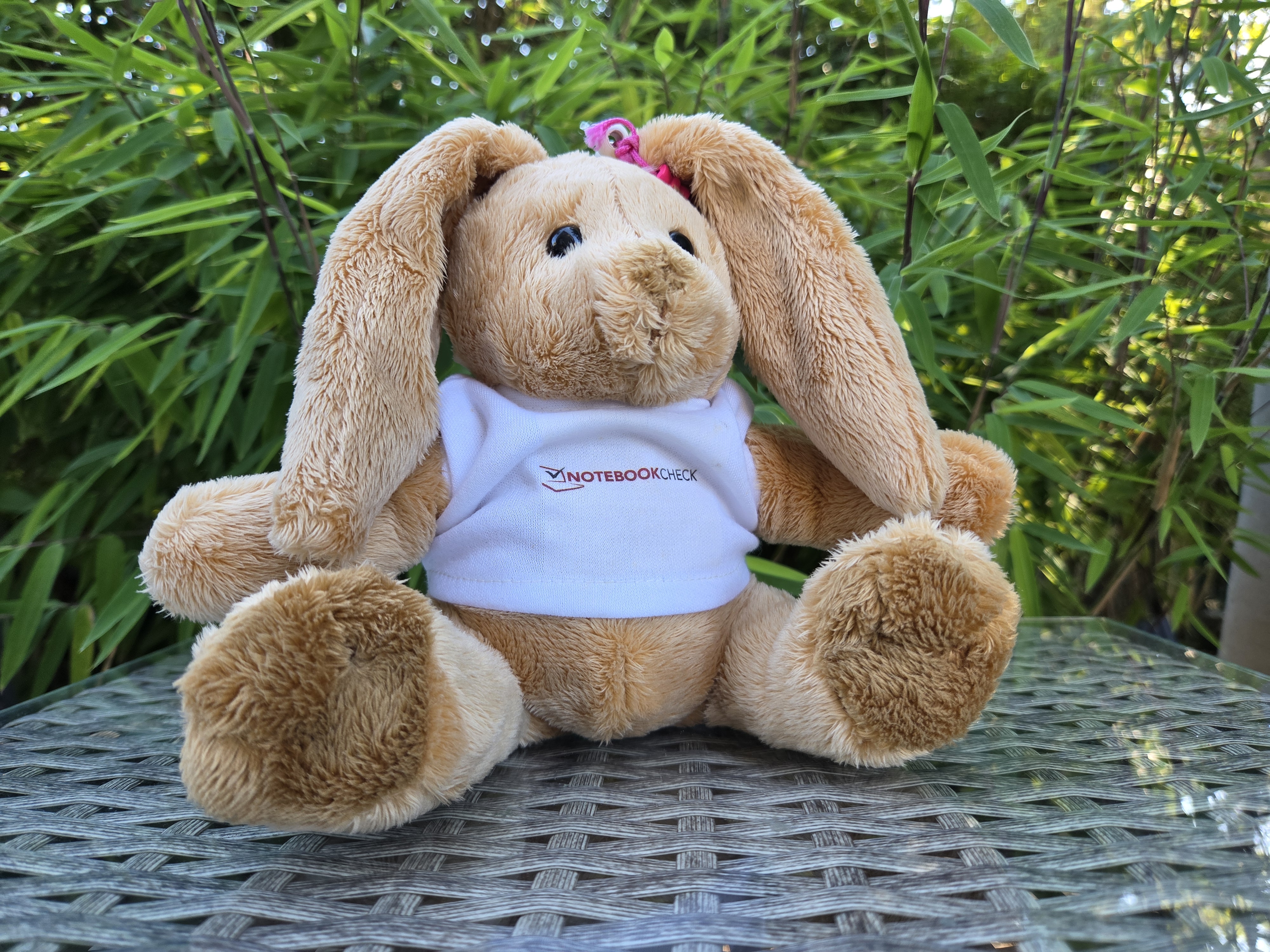
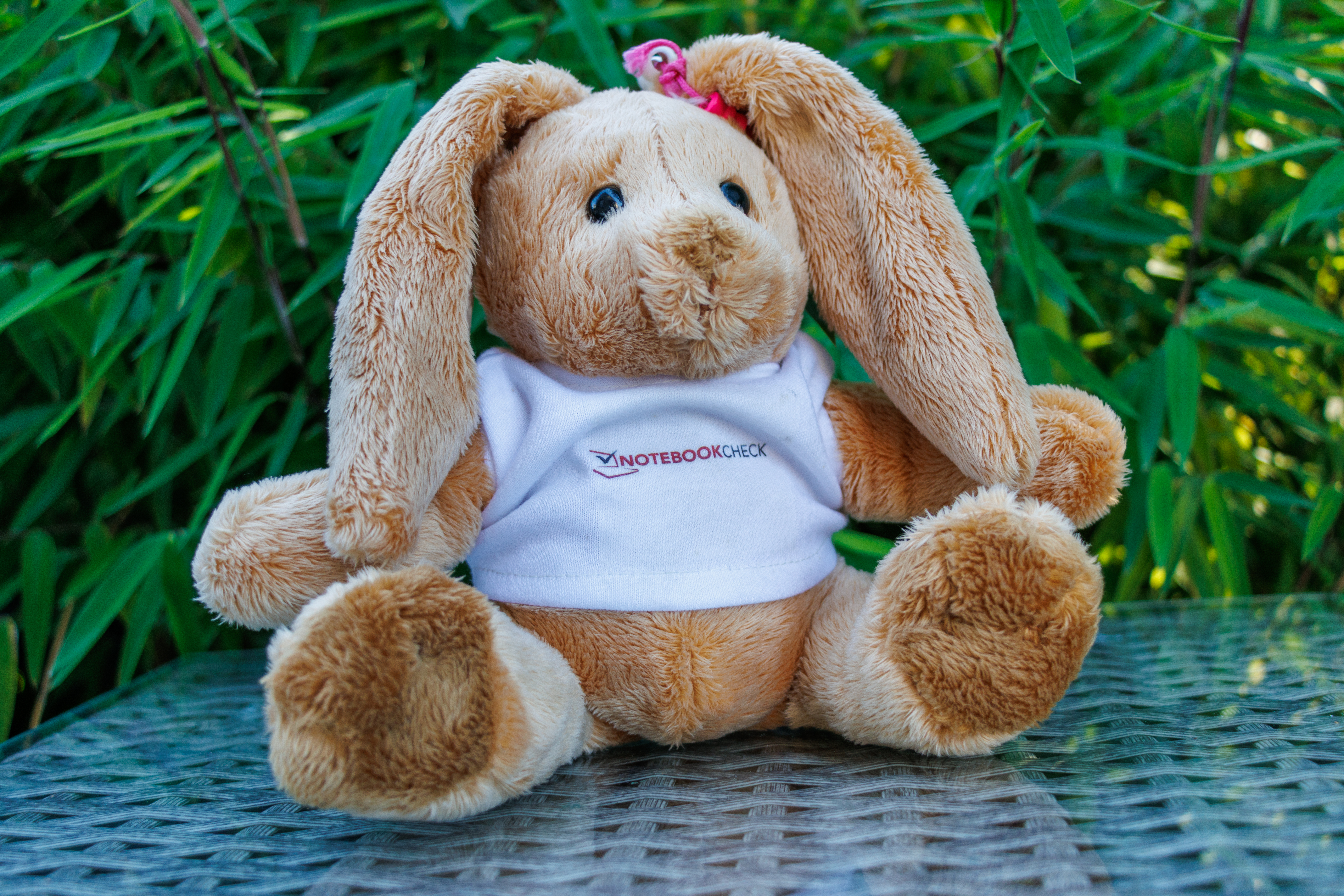
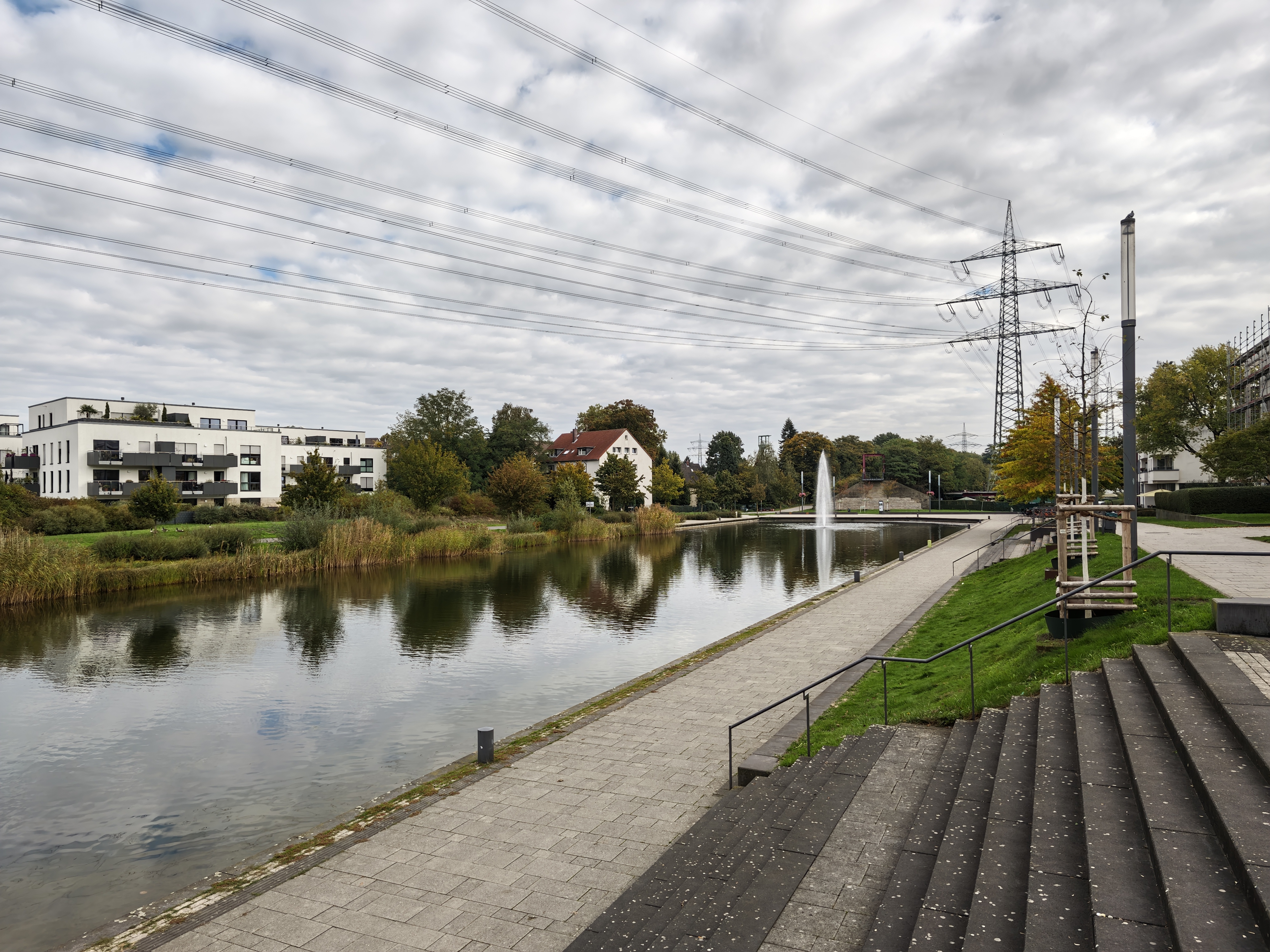
Choose a scene and navigate within the first image. One click changes the position on touchscreens. One click on the zoomed-in image opens the original in a new window. The first image shows the scaled photograph of the test device.
Main cameraMain cameraUltra-wide angle5x zoomLow light











Accessories and warranty - The Fold comes with a charger
The Xiaomi 18 Fold's scope of delivery includes a plastic case, a 67 watt charger as well as a USB cable (Type-A to Type-C).
Depending on where the phone is officially for sale, you'll need to check the individual retailer's warranty policy. The statutory warranty depends on the seller's location.
Input devices and operation - A fingerprint scanner inside the power button
Both of the Xiaomi 18 Fold's touchscreens are nice and smooth, and they reliably register touches across the entire screen—however, they don't support stylus input.
The linear vibration motor provides gentle yet precise feedback and can be customized in the device's settings.
For biometric security, a fingerprint sensor is integrated into the power button, unlocking the smartphone quickly and reliably. Facial recognition via the front camera is also supported. A dedicated security chip completes the package.


Foldable display - Xiaomi has chosen bright OLEDs
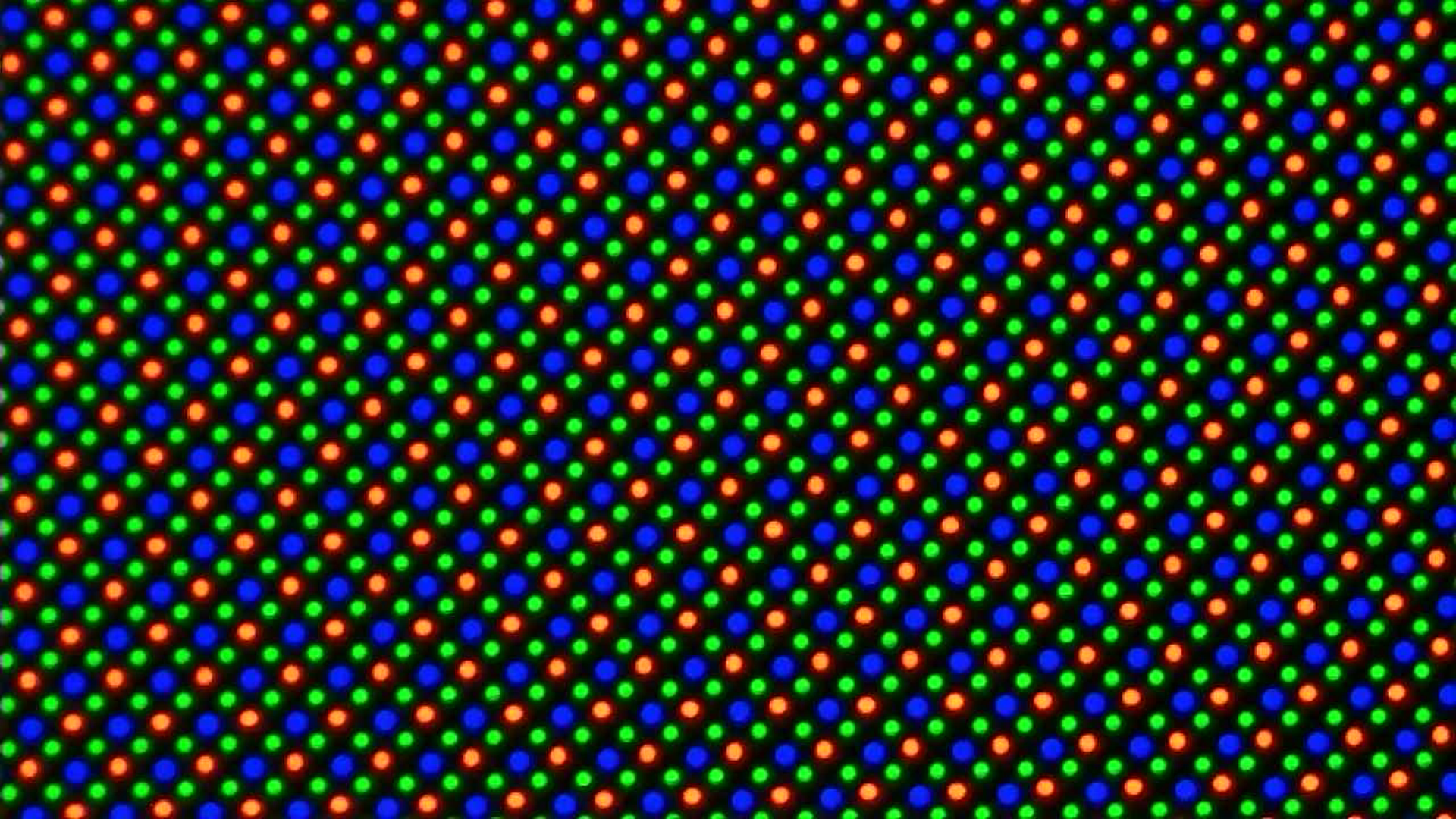
The Xiaomi 18 Fold's foldable OLED display boasts a sharp picture, smooth 120 Hz refresh rate and high brightness. In HDR mode, we measured up to 3,759 cd/m², while manually it reached 621 cd/m².
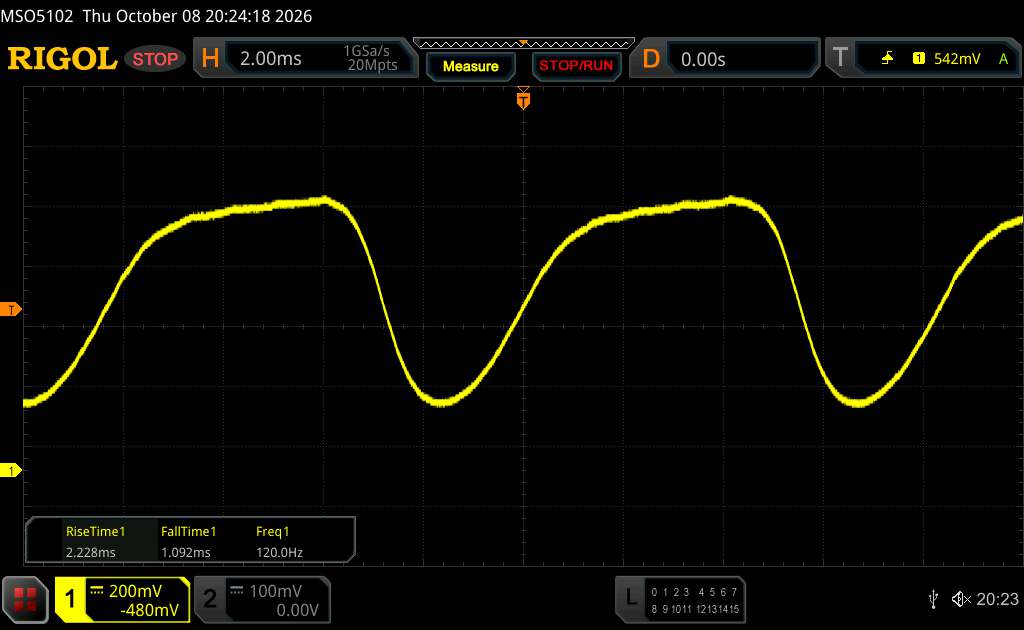
At minimum brightness, there was noticeable flickering visible at 120 Hz, along with a secondary frequency of 1,315 Hz. This pronounced low-frequency modulation may be problematic for sensitive individuals.
| |||||||||||||||||||||||||
Brightness Distribution: 96 %
Center on Battery: 1226 cd/m²
Contrast: ∞:1 (Black: 0 cd/m²)
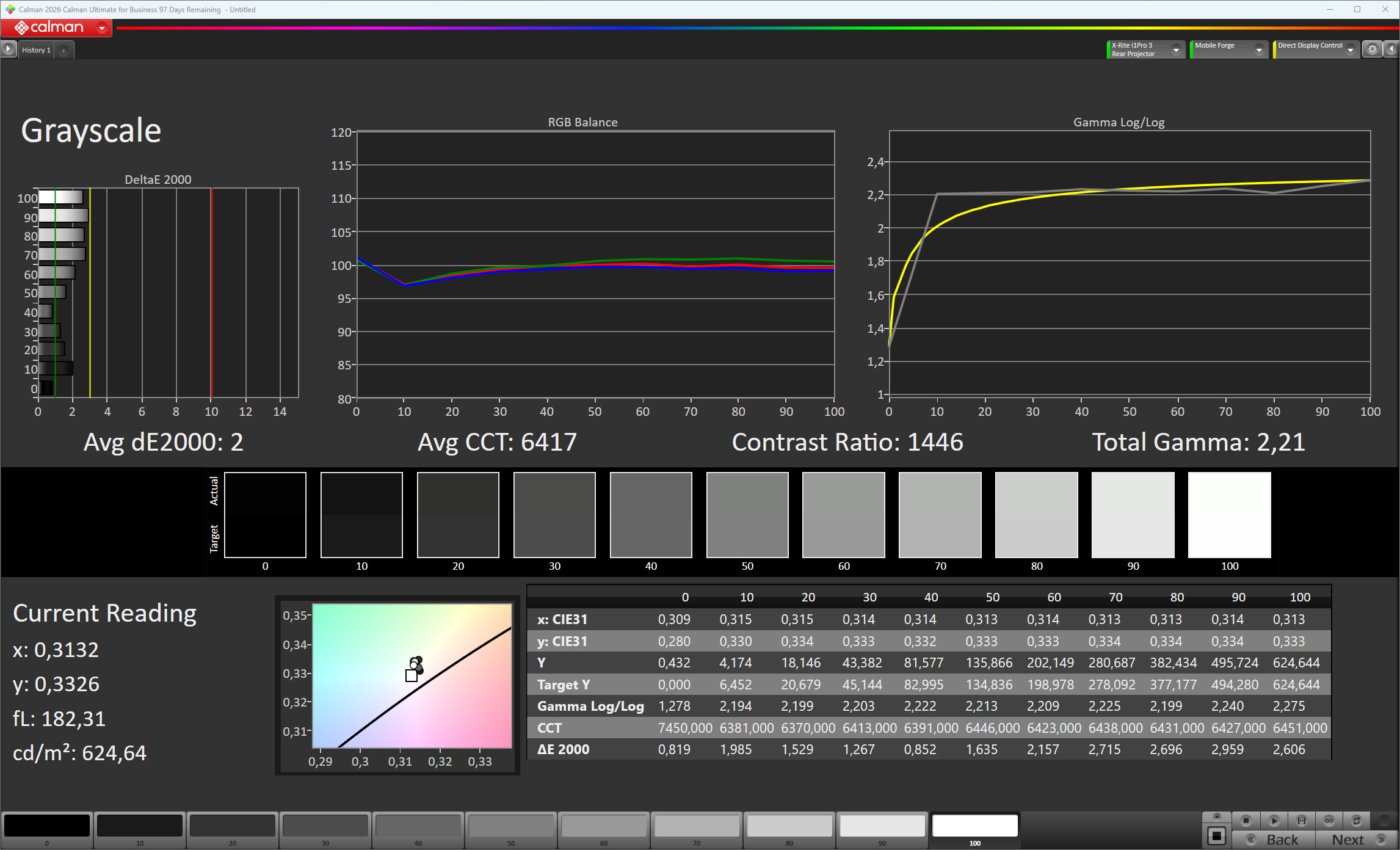
ΔE ColorChecker Calman: 1.6 | ∀{0.5-29.43 Ø4.68}
ΔE Greyscale Calman: 2 | ∀{0.09-98 Ø4.93}
100% sRGB (Calman 2D)
Gamma: 2.21
CCT: 6417 K
| Xiaomi 18 Fold AMOLED, 2364x1672, 7.6" | Samsung Galaxy Z Fold8 Dynamic AMOLED 2X, 2448x1848, 7.6" | Honor Magic V6 OLED, 2352x2172, 8" | Motorola Razr Fold OLED, 2484x2232, 8.1" | Vivo X Fold6 AMOLED, 2504x2312, 8" | Oppo Find N6 OLED, 2480x2248, 8.1" | |
|---|---|---|---|---|---|---|
| Display | -2% | -2% | 7% | -28% | -55% | |
| APL18 Peak Brightness (cd/m²) | 2933 | 3152 7% | 1229 -58% | 3568 22% | 2118 -28% | 1353 -54% |
| HDR Peak Brightness (cd/m²) | 3759 | 3358 -11% | 5773 54% | 3466 -8% | 2735 -27% | 1697 -55% |
| Response Times | -29% | -11% | -99% | -33% | -9% | |
| Response Time Grey 50% / Grey 80% * (ms) | 0.5 ? | 0.67 ? -34% | 0.65 ? -30% | 1.6 ? -220% | 0.84 ? -68% | 0.52 ? -4% |
| Response Time Black / White * (ms) | 0.86 ? | 1.14 ? -33% | 0.84 ? 2% | 1.3 ? -51% | 1.1 ? -28% | 1.05 ? -22% |
| PWM Frequency (Hz) | 120 | 240 | 120 | 180 | 90 | 180 |
| PWM Amplitude * (%) | 14.36 | 17.24 -20% | 15.15 -6% | 18 -25% | 14.67 -2% | 14.43 -0% |
| Screen | -6% | -1% | 23% | 34% | 5% | |
| Brightness middle (cd/m²) | 1226 | 1406 15% | 1291 5% | 1236 1% | 1245 2% | 1179 -4% |
| Brightness (cd/m²) | 1251 | 1404 12% | 1184 -5% | |||
| Brightness Distribution (%) | 96 | 98 2% | 98 2% | |||
| Black Level * (cd/m²) | ||||||
| Colorchecker dE 2000 * | 1.6 | 2.4 -50% | 1.4 13% | 1 37% | 0.7 56% | 1.6 -0% |
| Colorchecker dE 2000 max. * | 3.4 | 3.8 -12% | 3.5 -3% | 2.44 28% | 1.6 53% | 2.9 15% |
| Greyscale dE 2000 * | 2 | 2 -0% | 2.4 -20% | 1.5 25% | 1.5 25% | 1.6 20% |
| Gamma | 2.21 100% | 2.04 108% | 2.26 97% | 2.145 103% | 2.19 100% | 2.24 98% |
| CCT | 6417 101% | 6446 101% | 6804 96% | 6537 99% | 6390 102% | 6662 98% |
| Total Average (Program / Settings) | -12% /
-11% | -5% /
-5% | -23% /
-21% | -9% /
-2% | -20% /
-10% |
* ... smaller is better
Screen Flickering / PWM (Pulse-Width Modulation)
| Screen flickering / PWM detected | 120 Hz Amplitude: 14.36 % Secondary Frequency: 1315 Hz | 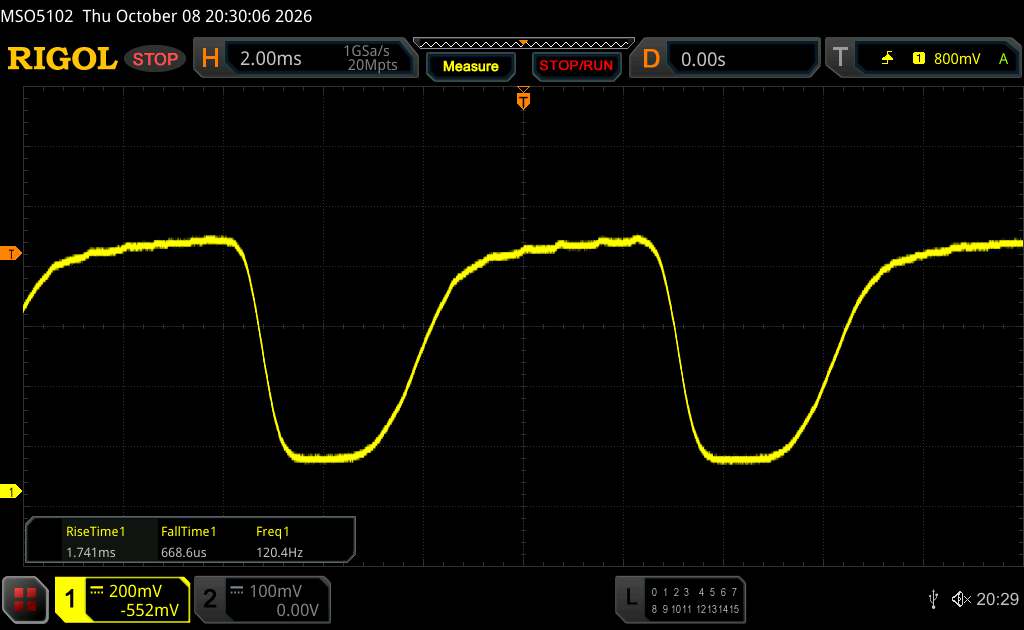 | |
The display backlight flickers at 120 Hz (worst case, e.g., utilizing PWM) . The frequency of 120 Hz is very low, so the flickering may cause eyestrain and headaches after extended use. In comparison: 52 % of all tested devices do not use PWM to dim the display. If PWM was detected, an average of 7575 (minimum: 5 - maximum: 343500) Hz was measured. | |||
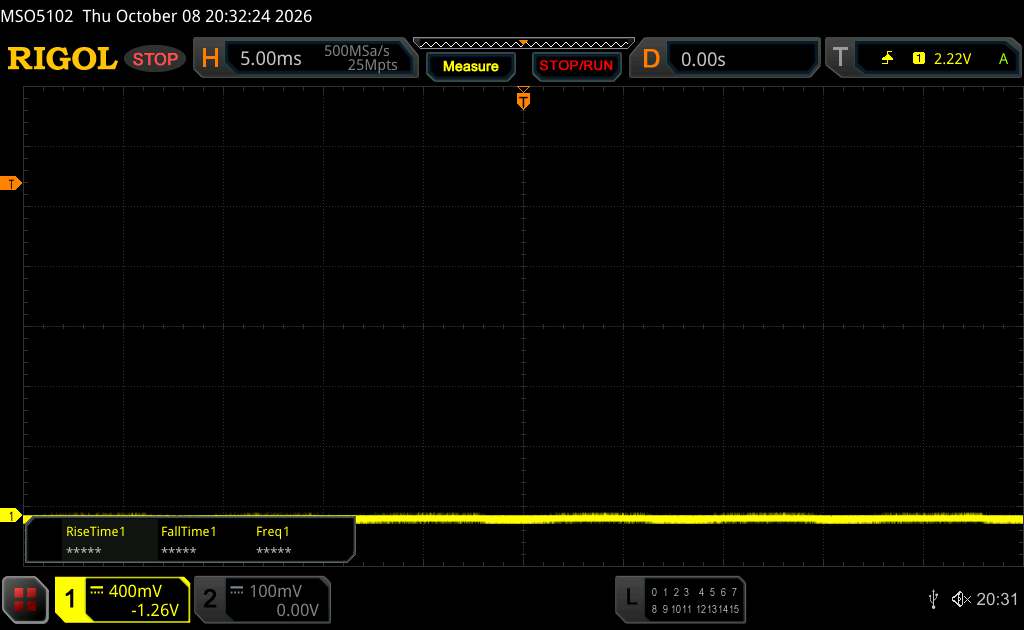
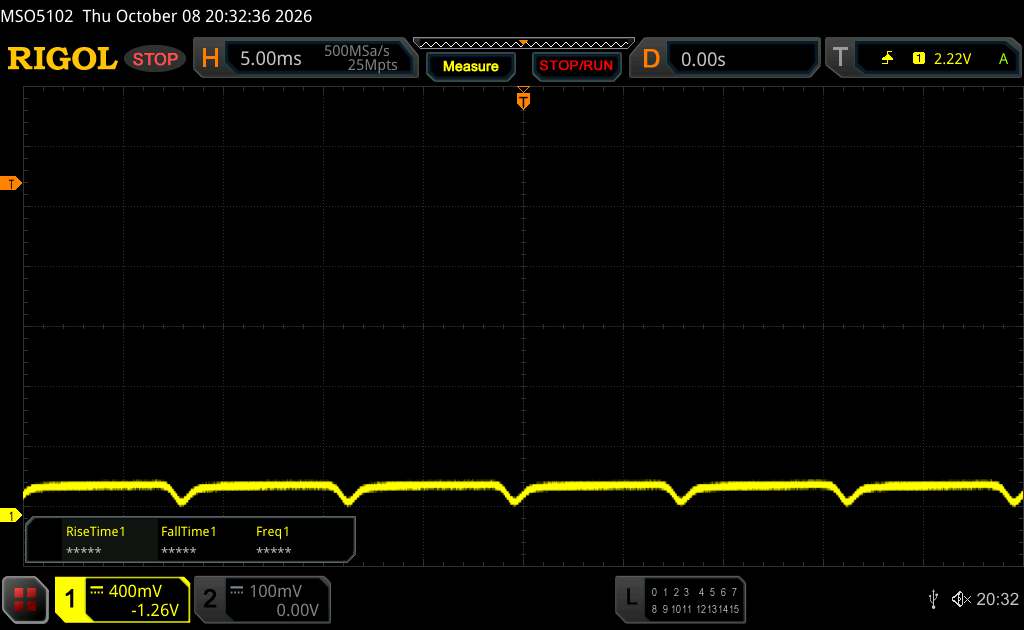
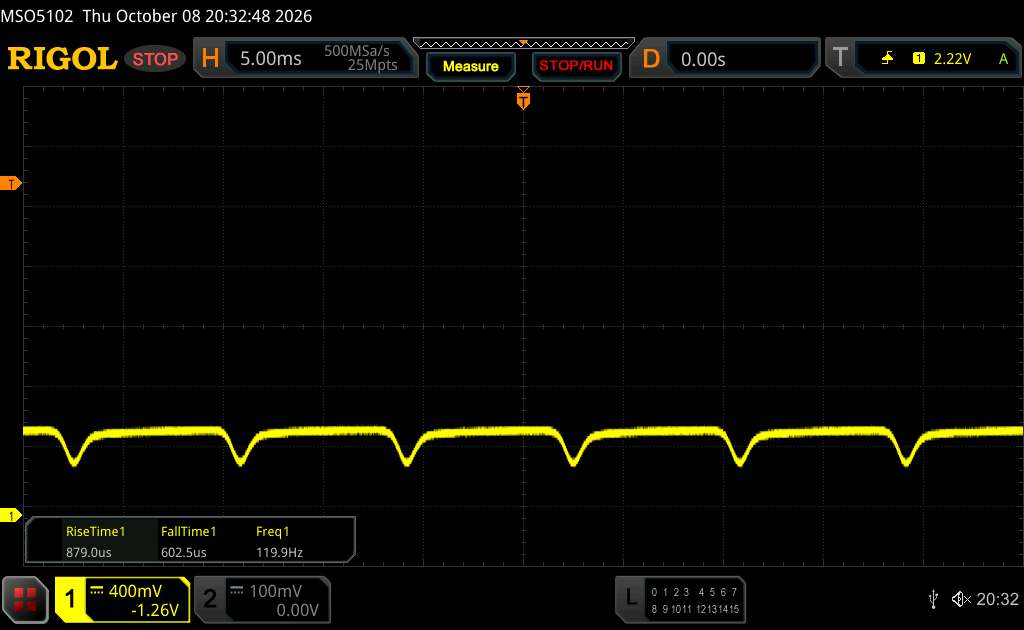
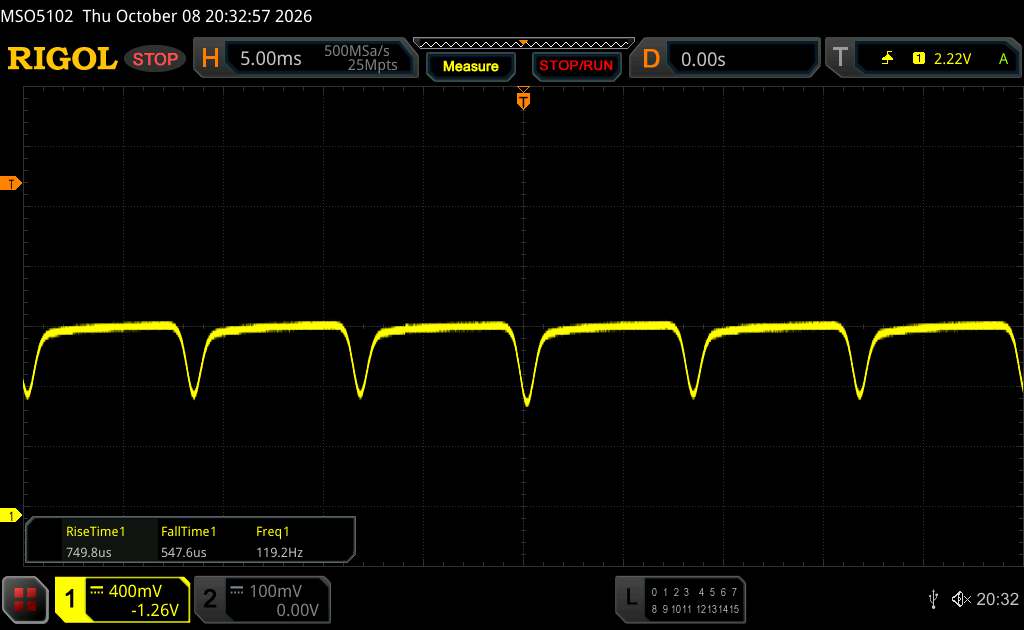
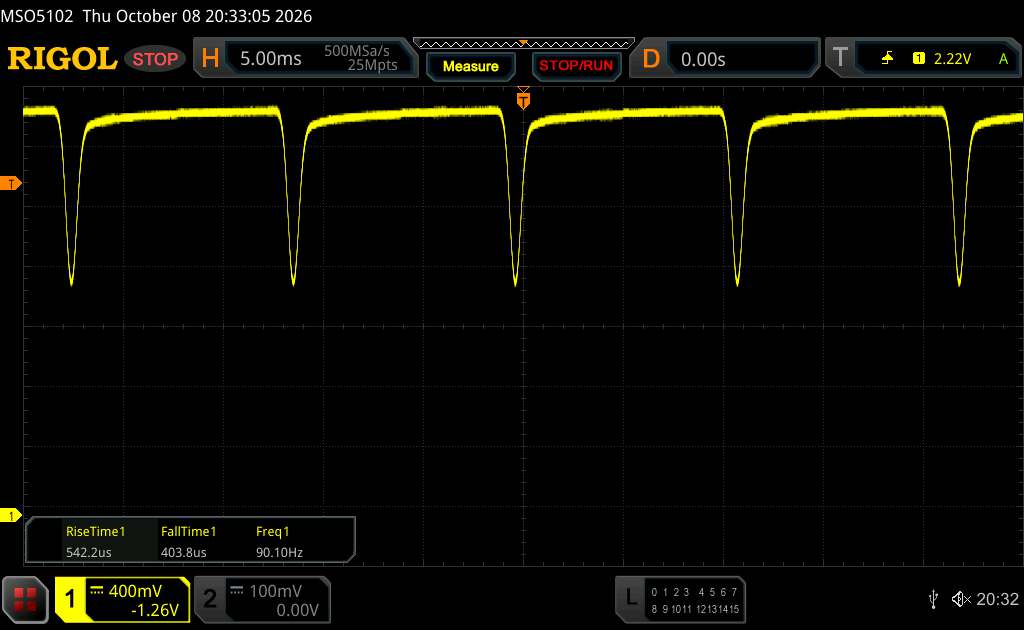
Measurement series with fixed zoom level and different brightness settings (The amplitude curve at minimum brightness appears flat, but this is due to the scaling. The enlarged version of the amplitude at minimum brightness can be seen in the info box.)
The foldable OLED panel does similarly well when it comes to color reproduction. Using the Pro Warm profile, it exhibits very high color accuracy and fully covers the sRGB color space. Only a few individual hues show slightly larger deviations.


Display Response Times
| ↔ Response Time Black to White | ||
|---|---|---|
| 0.86 ms ... rise ↗ and fall ↘ combined | ↗ 0.457 ms rise | 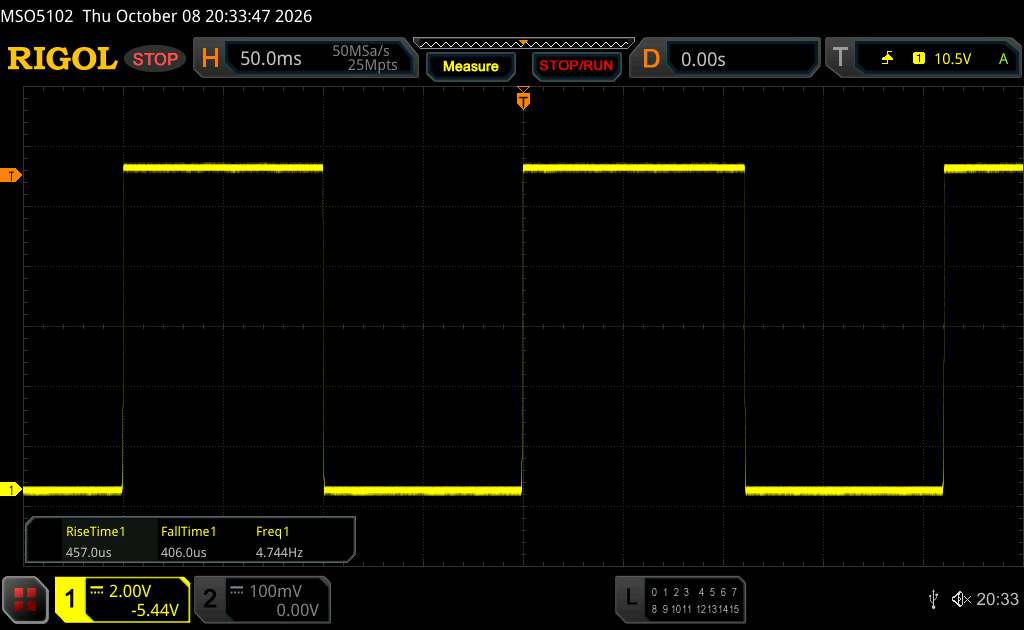 |
| ↘ 0.406 ms fall | ||
| The screen shows very fast response rates in our tests and should be very well suited for fast-paced gaming. In comparison, all tested devices range from 0.1 (minimum) to 240 (maximum) ms. » 3 % of all devices are better. This means that the measured response time is better than the average of all tested devices (19.6 ms). | ||
| ↔ Response Time 50% Grey to 80% Grey | ||
| 0.5 ms ... rise ↗ and fall ↘ combined | ↗ 0.2675 ms rise | 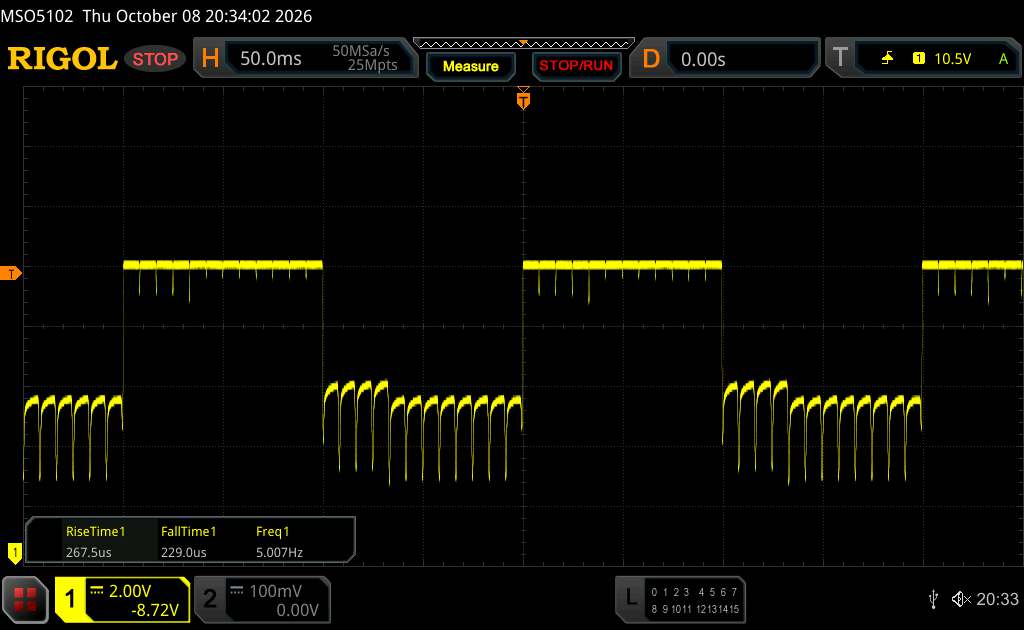 |
| ↘ 0.229 ms fall | ||
| The screen shows very fast response rates in our tests and should be very well suited for fast-paced gaming. In comparison, all tested devices range from 0.13 (minimum) to 636 (maximum) ms. » 1 % of all devices are better. This means that the measured response time is better than the average of all tested devices (30.7 ms). | ||
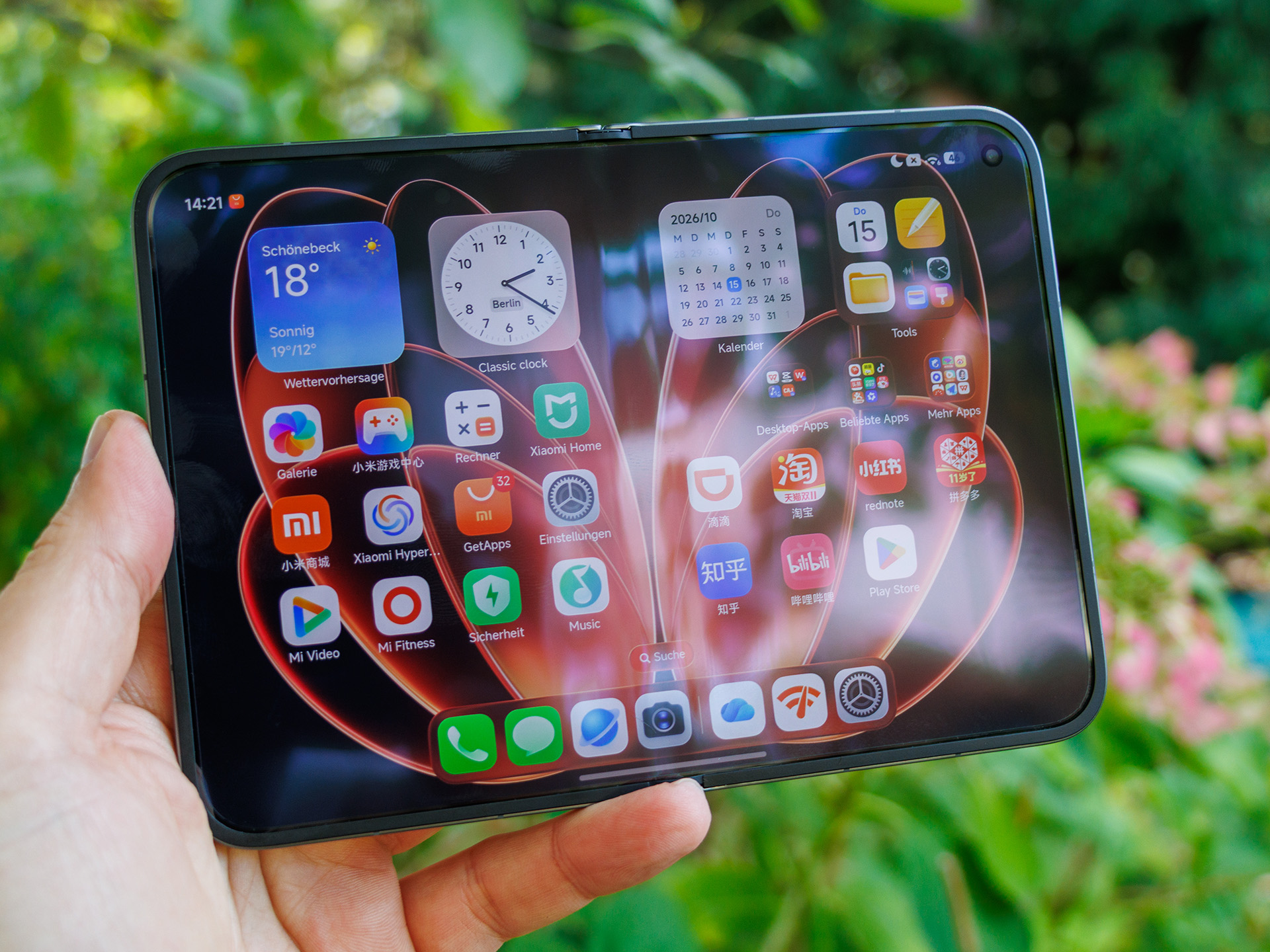
Outdoors, the Xiaomi 18 Fold's screen remains legible even in bright surroundings.
At oblique viewing angles, colors are depicted a little cooler and the brightness isn't quite as high.

Cover display

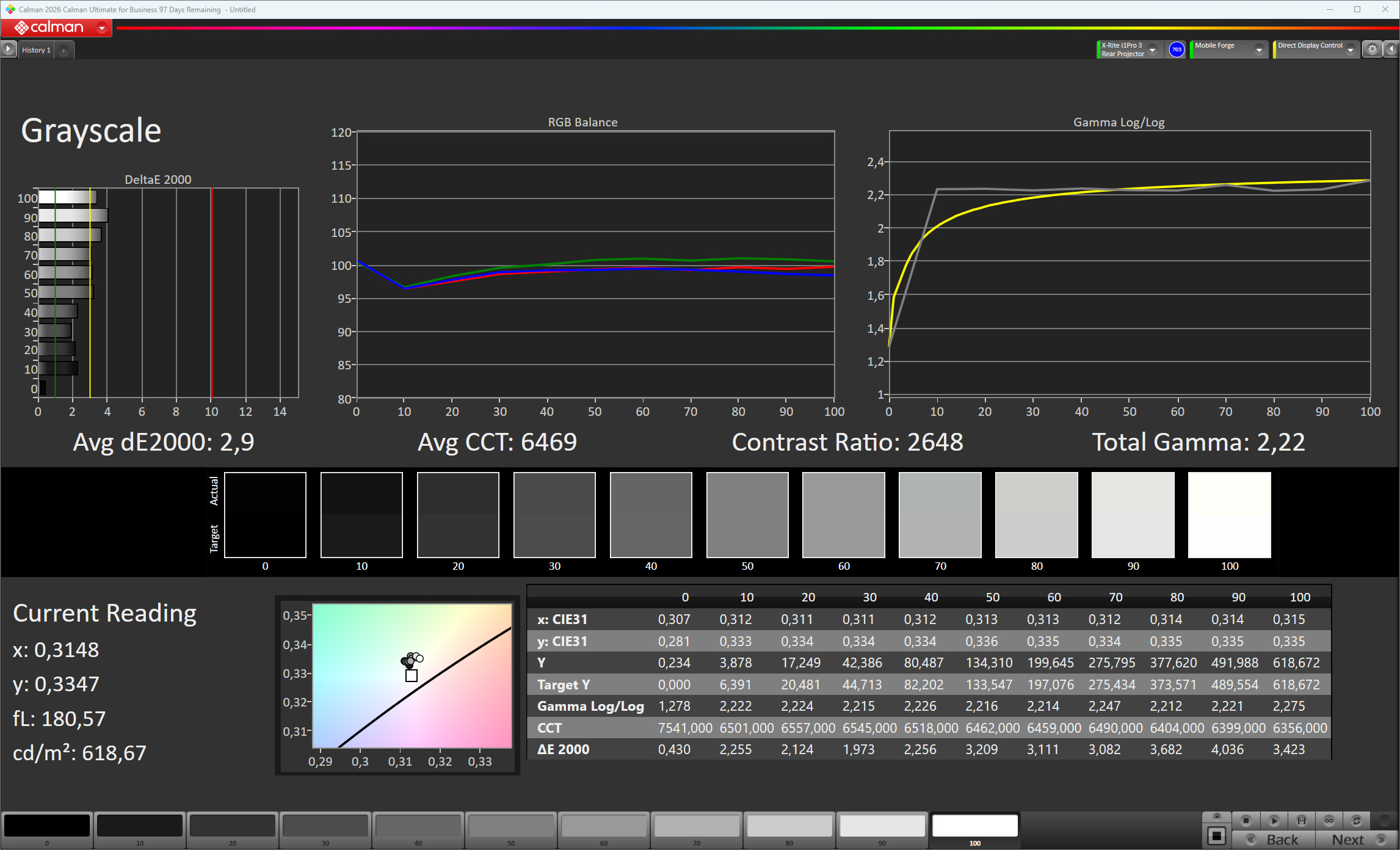
| Xiaomi 18 Fold AMOLED, 1712x1168, 5.4" | Samsung Galaxy Z Fold8 AMOLED, 1972x1248, 5.5" | Vivo X Fold6 2528x1120, 6.5" | Oppo Find N6 OLED, 2616x1140, 6.6" | |
|---|---|---|---|---|
| Display | 2% | -7% | -22% | -52% |
| APL18 Peak Brightness (cd/m²) | 3049 4% | 3012 3% | 2413 -18% | 1201 -59% |
| HDR Peak Brightness (cd/m²) | 3735 -1% | 3163 -16% | 2788 -26% | 2067 -45% |
| Response Times | -51% | -23% | -67% | -48% |
| Response Time Grey 50% / Grey 80% * (ms) | 0.97 ? -94% | 1.13 ? -126% | 0.92 ? -84% | |
| Response Time Black / White * (ms) | 1.14 ? -33% | 1.35 ? -57% | 1.22 ? -42% | |
| PWM Frequency (Hz) | 120 | 240 | 90 | 90 |
| PWM Amplitude * (%) | 17.91 -25% | 17.65 -23% | 17 -18% | 17 -18% |
| Screen | ||||
| Brightness middle (cd/m²) | 1322 | 1349 | 1401 | 1180 |
| Brightness (cd/m²) | 1327 | 1362 | 1175 | |
| Brightness Distribution (%) | 97 | 98 | 97 | |
| Black Level * (cd/m²) | ||||
| Colorchecker dE 2000 * | 1.6 | 2.4 | 0.7 | 1.5 |
| Colorchecker dE 2000 max. * | 4 | 3.8 | 1.6 | 2.7 |
| Greyscale dE 2000 * | 2.9 | 2 | 1.2 | 2.2 |
| Gamma | 2.22 99% | 2.04 108% | 2.24 98% | 2.26 97% |
| CCT | 6469 100% | 6517 100% | 6412 101% | 6710 97% |
| Total Average (Program / Settings) | -25% /
-30% | -15% /
-12% | -45% /
-49% | -50% /
-50% |
* ... smaller is better
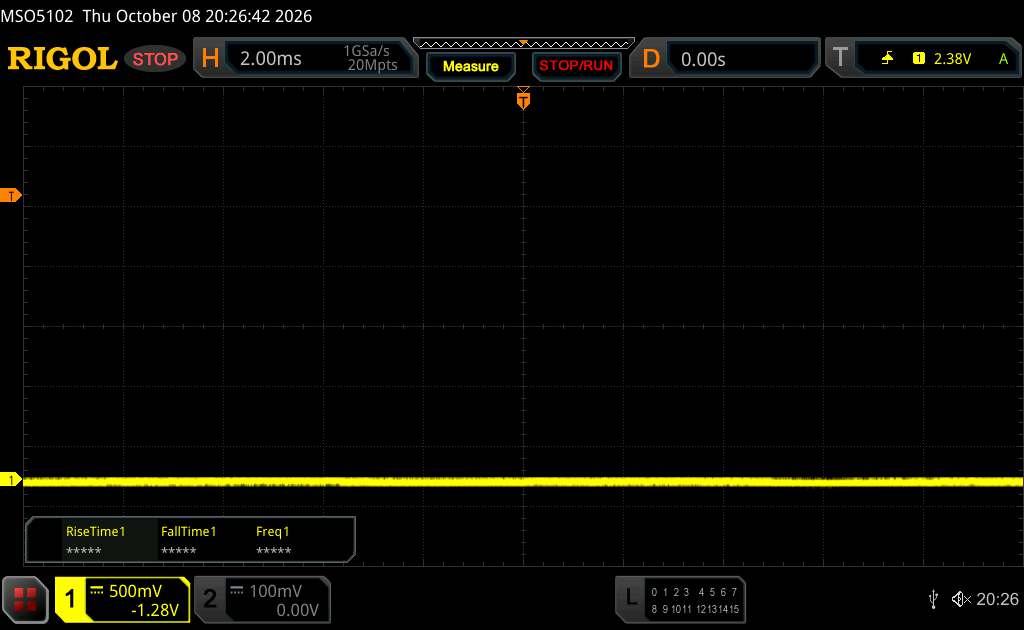
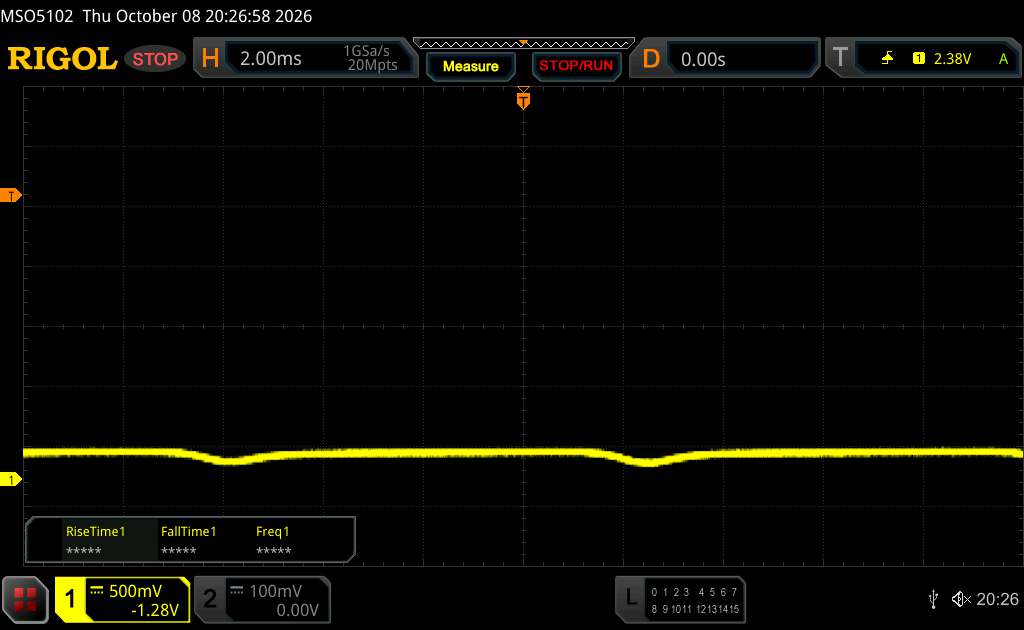
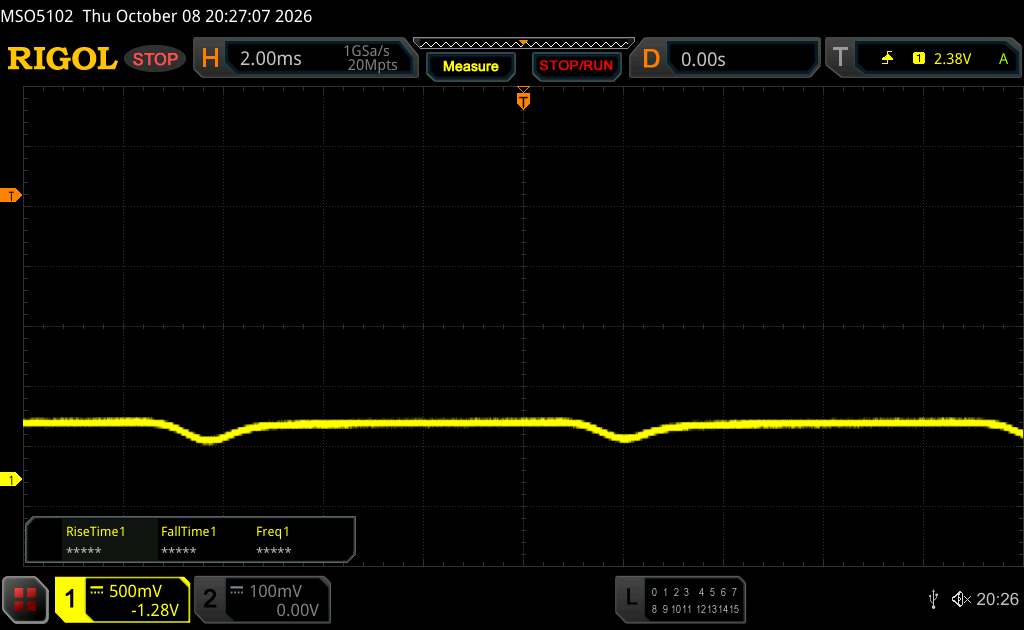
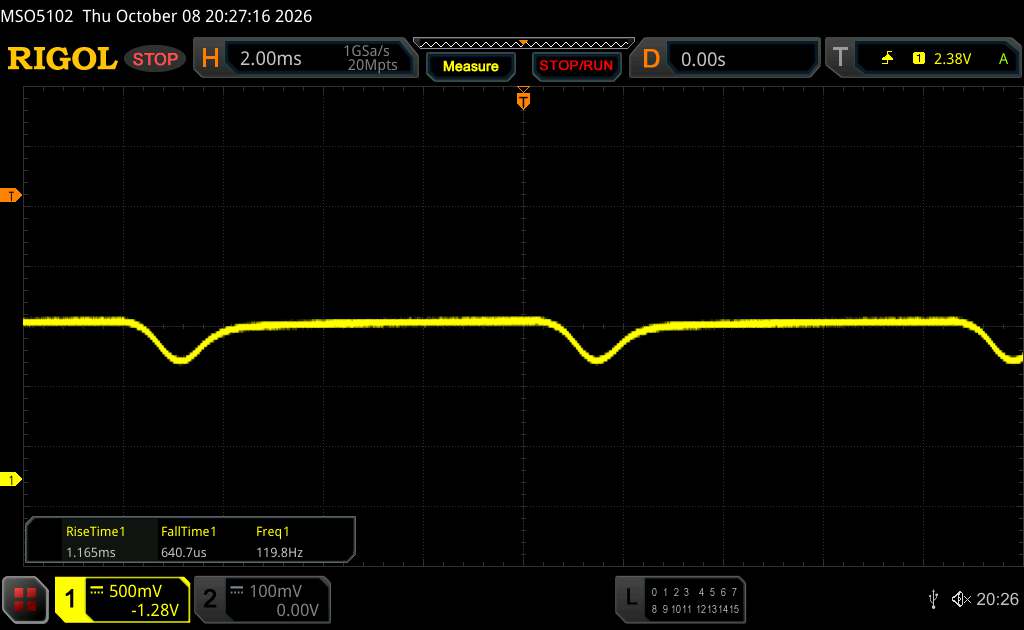
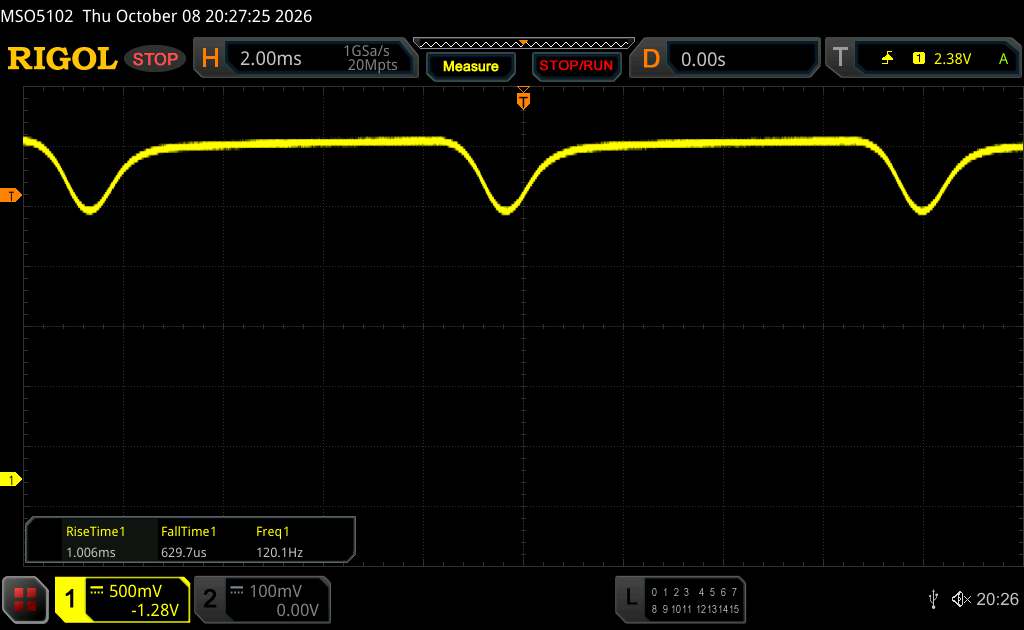
Measurement series with fixed zoom level and different brightness settings (The amplitude curve at minimum brightness appears flat, but this is due to the scaling. The enlarged version of the amplitude at minimum brightness can be seen in the info box.)



Performance - The Foldable with an Xring O3 SoC
The Xiaomi 18 Fold uses Xiaomi's own Xring O3 SoC, which is among the most powerful chipsets available and even features state-of-the-art LPDDR6 RAM in its largest memory configuration.
During everyday use, the system runs smoothly. However, it didn't always excel during our benchmark tests, as even last year's Snapdragon processors performed faster in the Geekbench single-core performance test. The Fold also delivered a mixed bag during the Geekbench AI test.
| PCMark for Android - Work 3.x | |
| Average of class Smartphone (4507 - 28557, n=127, last 2 years) | |
| Oppo Find N6 | |
| Xiaomi 18 Fold | |
| Average Xiaomi Xring O3 (n=1) | |
| Samsung Galaxy Z Fold8 | |
| Antutu v11 - Score | |
| Average Xiaomi Xring O3 (4450644 - 5228014, n=2) | |
| Xiaomi 18 Fold (11.1.5) | |
| Oppo Find N6 (11.1.2) | |
| Samsung Galaxy Z Fold8 (11.1.5) | |
| Average of class Smartphone (519159 - 4450644, n=46, last 2 years) | |
| Antutu v12 - Score | |
| Xiaomi 18 Fold (12.0.1) | |
| Average Xiaomi Xring O3 (n=1) | |
| Samsung Galaxy Z Fold8 (12.0.1) | |
| Average of class Smartphone (573642 - 4764073, n=11, last 2 years) | |
| CrossMark - Overall | |
| Honor Magic V6 | |
| Samsung Galaxy Z Fold8 | |
| Oppo Find N6 | |
| Vivo X Fold6 | |
| Average of class Smartphone (376 - 2856, n=106, last 2 years) | |
| Xiaomi 18 Fold (Error) | |
| UL Procyon AI Inference for Android - Overall Score NNAPI | |
| Samsung Galaxy Z Fold8 | |
| Average of class Smartphone (2895 - 66164, n=97, last 2 years) | |
| Xiaomi 18 Fold | |
| Average Xiaomi Xring O3 (n=1) | |
| AImark - Score v3.x | |
| Average of class Smartphone (293 - 307528, n=65, last 2 years) | |
| Xiaomi 18 Fold | |
| Average Xiaomi Xring O3 (n=1) | |
| AI Benchmark - Score V6 | |
| Oppo Find N6 | |
| Samsung Galaxy Z Fold8 | |
| Average of class Smartphone (55.6 - 22780, n=78, last 2 years) | |
| Xiaomi 18 Fold | |
Graphics processing is handled by the integrated ARM Mali G2-Ultra NX MP16, which promises high performance but didn't always excel during the benchmark tests in practice. This was especially true with ray tracing activated.
This also proved to affect gaming negatively; for example, we could only run PUBG Mobile in HD.
GFXBench (DX / GLBenchmark) 2.7: T-Rex Onscreen | 1920x1080 T-Rex Offscreen
GFXBench 3.0: on screen Manhattan Onscreen OGL | 1920x1080 1080p Manhattan Offscreen
GFXBench 3.1: on screen Manhattan ES 3.1 Onscreen | 1920x1080 Manhattan ES 3.1 Offscreen
GFXBench: on screen Car Chase Onscreen | 1920x1080 Car Chase Offscreen | on screen Aztec Ruins High Tier Onscreen | 2560x1440 Aztec Ruins High Tier Offscreen | on screen Aztec Ruins Normal Tier Onscreen | 1920x1080 Aztec Ruins Normal Tier Offscreen | 3840x2160 4K Aztec Ruins High Tier Offscreen
| 3DMark / Wild Life Extreme Unlimited | |
| Xiaomi 18 Fold | |
| Samsung Galaxy Z Fold8 | |
| Oppo Find N6 | |
| Honor Magic V6 | |
| Motorola Razr Fold | |
| Vivo X Fold6 | |
| 3DMark / Wild Life Extreme | |
| Xiaomi 18 Fold (Play-Store-Version) | |
| Xiaomi 18 Fold (Press-Version) | |
| Samsung Galaxy Z Fold8 | |
| Oppo Find N6 | |
| Honor Magic V6 | |
| Motorola Razr Fold | |
| Vivo X Fold6 | |
| 3DMark / Wild Life Unlimited Score | |
| Xiaomi 18 Fold | |
| Samsung Galaxy Z Fold8 | |
| Oppo Find N6 | |
| Honor Magic V6 | |
| Motorola Razr Fold | |
| Vivo X Fold6 | |
| 3DMark / Solar Bay Score | |
| Xiaomi 18 Fold (Play-Store-Version) | |
| Xiaomi 18 Fold (Press-Version) | |
| Samsung Galaxy Z Fold8 | |
| Honor Magic V6 | |
| Vivo X Fold6 | |
| Oppo Find N6 | |
| 3DMark / Solar Bay Unlimited Score | |
| Samsung Galaxy Z Fold8 | |
| Xiaomi 18 Fold | |
| Honor Magic V6 | |
| Vivo X Fold6 | |
| Oppo Find N6 | |
| 3DMark / Solar Bay Extreme Score | |
| Honor Magic V6 | |
| Oppo Find N6 | |
| Samsung Galaxy Z Fold8 | |
| Xiaomi 18 Fold | |
| Vivo X Fold6 | |
| 3DMark / Solar Bay Extreme Unlimited Score | |
| Oppo Find N6 | |
| Xiaomi 18 Fold | |
| Honor Magic V6 | |
| Samsung Galaxy Z Fold8 | |
| Vivo X Fold6 | |
| 3DMark / Steel Nomad Light Unlimited Score | |
| Xiaomi 18 Fold | |
| Samsung Galaxy Z Fold8 | |
| Oppo Find N6 | |
| Honor Magic V6 | |
| Vivo X Fold6 | |
| 3DMark / Steel Nomad Light Score | |
| Xiaomi 18 Fold | |
| Samsung Galaxy Z Fold8 | |
| Oppo Find N6 | |
| Honor Magic V6 | |
| Vivo X Fold6 | |
| GFXBench (DX / GLBenchmark) 2.7 / T-Rex Onscreen | |
| Samsung Galaxy Z Fold8 | |
| Xiaomi 18 Fold | |
| Oppo Find N6 | |
| GFXBench (DX / GLBenchmark) 2.7 / T-Rex Offscreen | |
| Xiaomi 18 Fold | |
| Oppo Find N6 | |
| Samsung Galaxy Z Fold8 | |
| GFXBench 3.0 / Manhattan Onscreen OGL | |
| Samsung Galaxy Z Fold8 | |
| Xiaomi 18 Fold | |
| Oppo Find N6 | |
| GFXBench 3.0 / 1080p Manhattan Offscreen | |
| Oppo Find N6 | |
| Samsung Galaxy Z Fold8 | |
| Xiaomi 18 Fold | |
| GFXBench 3.1 / Manhattan ES 3.1 Onscreen | |
| Samsung Galaxy Z Fold8 | |
| Xiaomi 18 Fold | |
| Oppo Find N6 | |
| GFXBench 3.1 / Manhattan ES 3.1 Offscreen | |
| Xiaomi 18 Fold | |
| Oppo Find N6 | |
| Samsung Galaxy Z Fold8 | |
| GFXBench / Car Chase Onscreen | |
| Samsung Galaxy Z Fold8 | |
| Samsung Galaxy Z Fold8 (foldable Screen) | |
| Xiaomi 18 Fold | |
| Honor Magic V6 | |
| Oppo Find N6 | |
| GFXBench / Car Chase Offscreen | |
| Oppo Find N6 | |
| Xiaomi 18 Fold | |
| Samsung Galaxy Z Fold8 | |
| Honor Magic V6 | |
| GFXBench / Aztec Ruins High Tier Onscreen | |
| Samsung Galaxy Z Fold8 | |
| Samsung Galaxy Z Fold8 (foldable Screen) | |
| Xiaomi 18 Fold | |
| Vivo X Fold6 | |
| Honor Magic V6 | |
| Motorola Razr Fold | |
| Oppo Find N6 | |
| GFXBench / Aztec Ruins High Tier Offscreen | |
| Oppo Find N6 | |
| Samsung Galaxy Z Fold8 | |
| Xiaomi 18 Fold | |
| Honor Magic V6 | |
| Motorola Razr Fold | |
| Vivo X Fold6 | |
| GFXBench / Aztec Ruins Normal Tier Onscreen | |
| Samsung Galaxy Z Fold8 | |
| Samsung Galaxy Z Fold8 (foldable Screen) | |
| Xiaomi 18 Fold | |
| Vivo X Fold6 | |
| Honor Magic V6 | |
| Motorola Razr Fold | |
| Oppo Find N6 | |
| GFXBench / Aztec Ruins Normal Tier Offscreen | |
| Xiaomi 18 Fold | |
| Samsung Galaxy Z Fold8 | |
| Oppo Find N6 | |
| Motorola Razr Fold | |
| Vivo X Fold6 | |
| Honor Magic V6 | |
| GFXBench / 4K Aztec Ruins High Tier Offscreen | |
| Xiaomi 18 Fold | |
| Samsung Galaxy Z Fold8 | |
| Oppo Find N6 | |
| Honor Magic V6 | |
| Motorola Razr Fold | |
| Vivo X Fold6 | |
| Jetstream 2 | |
| 2.0 Total | |
| Samsung Galaxy Z Fold8 (Chrome 151) | |
| Vivo X Fold6 (Chrome 151) | |
| Xiaomi 18 Fold (Chrome 153) | |
| Average Xiaomi Xring O3 (n=1) | |
| Average of class Smartphone (63.9 - 423, n=115, last 2 years) | |
| 2.2 Total | |
| Honor Magic V6 (Chrome 149) | |
| Samsung Galaxy Z Fold8 (Chrome 151) | |
| Xiaomi 18 Fold (Chrome 153) | |
| Average Xiaomi Xring O3 (n=1) | |
| Vivo X Fold6 (Chrome 151) | |
| Average of class Smartphone (2 - 480, n=105, last 2 years) | |
| Motorola Razr Fold (Chrome 150) | |
| Oppo Find N6 (Chrome 147) | |
| Speedometer 2.0 - Result 2.0 | |
| Xiaomi 18 Fold (Chrome 153) | |
| Average Xiaomi Xring O3 (n=1) | |
| Average of class Smartphone (49.3 - 733, n=72, last 2 years) | |
| Speedometer 3 - Score 3.0 | |
| Xiaomi 18 Fold (Chrome 153) | |
| Average Xiaomi Xring O3 (n=1) | |
| Average of class Smartphone (3.06 - 56.5, n=81, last 2 years) | |
| WebXPRT 4 - Overall | |
| Xiaomi 18 Fold (Chrome 153) | |
| Average Xiaomi Xring O3 (n=1) | |
| Average of class Smartphone (56 - 278, n=89, last 2 years) | |
| Oppo Find N6 (Chrome 147) | |
| WebXPRT 5 - Overall | |
| Samsung Galaxy Z Fold8 (Chrome 151) | |
| Average of class Smartphone (19 - 139, n=29, last 2 years) | |
| Xiaomi 18 Fold (Chrome 153) | |
| Average Xiaomi Xring O3 (n=1) | |
| Octane V2 - Total Score | |
| Samsung Galaxy Z Fold8 (Chrome 151) | |
| Xiaomi 18 Fold (Chrome 153) | |
| Average Xiaomi Xring O3 (n=1) | |
| Oppo Find N6 (Chrome 147) | |
| Average of class Smartphone (6015 - 160221, n=130, last 2 years) | |
| Mozilla Kraken 1.1 - Total | |
| Average of class Smartphone (216 - 2718, n=119, last 2 years) | |
| Oppo Find N6 (Chrome 147) | |
| Xiaomi 18 Fold (Chrome 153) | |
| Average Xiaomi Xring O3 (n=1) | |
| Samsung Galaxy Z Fold8 (Chrome 151) | |
* ... smaller is better
| Xiaomi 18 Fold | Samsung Galaxy Z Fold8 | Honor Magic V6 | Motorola Razr Fold | Oppo Find N6 | Average 1TB UFS 4.1 Flash | Average of class Smartphone | |
|---|---|---|---|---|---|---|---|
| AndroBench 3-5 | -25% | -5% | -7% | -7% | -14% | -43% | |
| Sequential Read 256KB (MB/s) | 3813.53 | 3837.61 1% | 3921.41 3% | 3719.8 -2% | 3861.06 1% | 3720 ? -2% | 2286 ? -40% |
| Sequential Write 256KB (MB/s) | 4055.19 | 2079.58 -49% | 3992.25 -2% | 3758 -7% | 3531.83 -13% | 3835 ? -5% | 1987 ? -51% |
| Random Read 4KB (MB/s) | 427.61 | 526.14 23% | 411.38 -4% | 403.4 -6% | 446.52 4% | 365 ? -15% | 320 ? -25% |
| Random Write 4KB (MB/s) | 799.11 | 211.94 -73% | 667.68 -16% | 695.6 -13% | 637.68 -20% | 517 ? -35% | 367 ? -54% |
Emissions - The SoC is throttled under load
Temperature
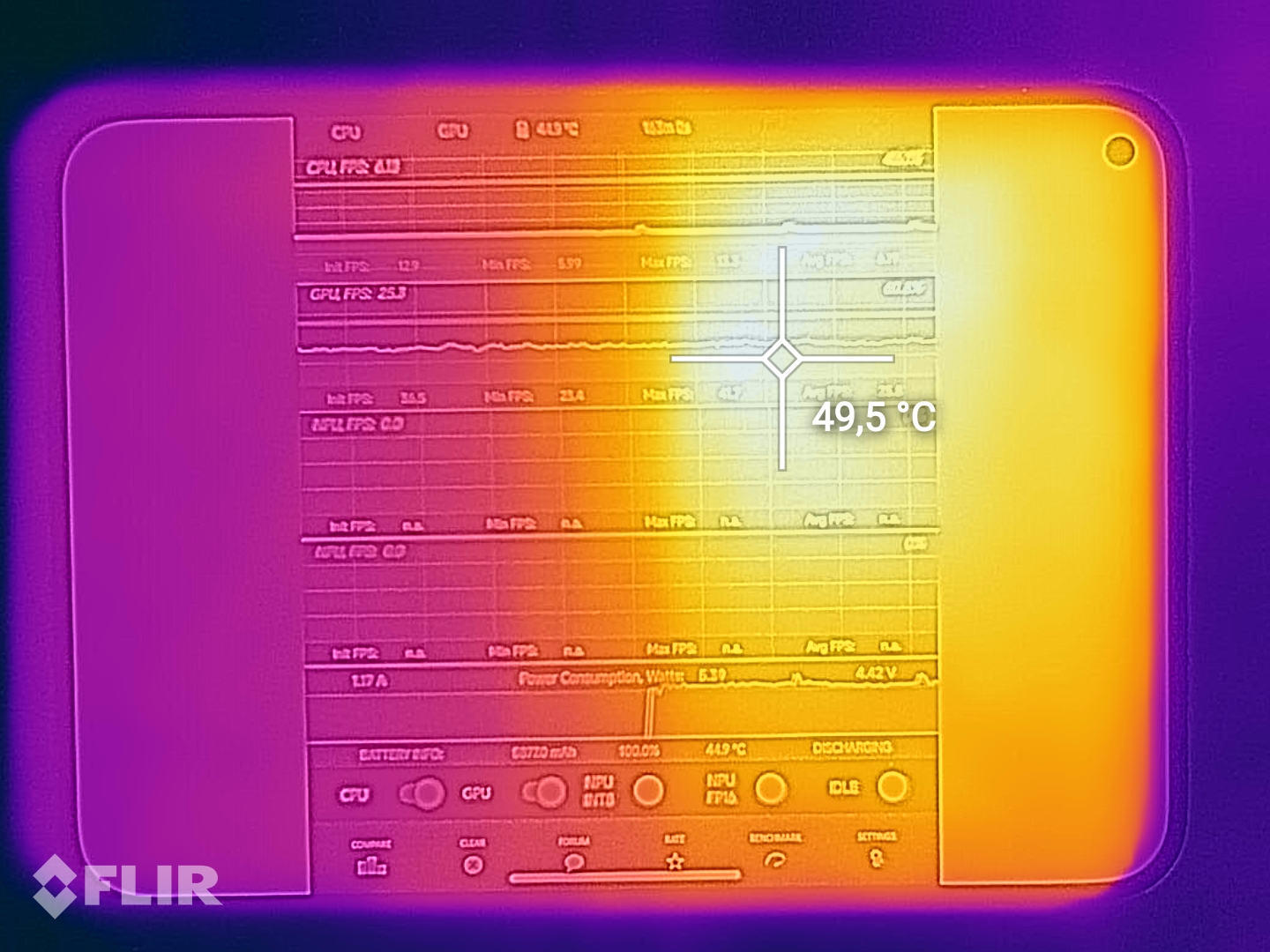
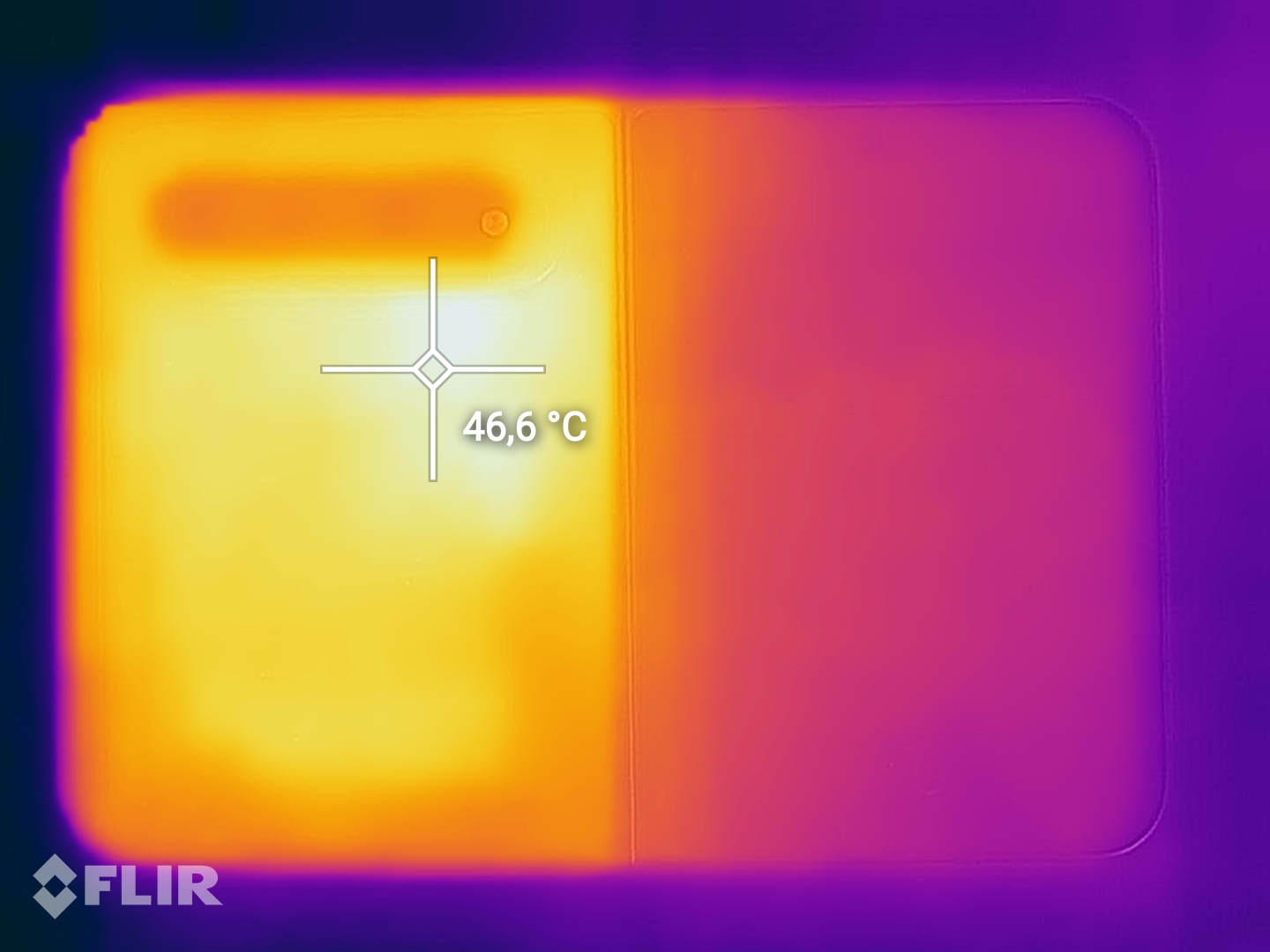
The phone's surface temperatures can get quite high in some areas, but generally always remain within a safe range.
During the 3DMark stress tests, the Xiaomi Mi 18 Fold lost a lot of performance and even ended up being slightly slower than the Galaxy Z Fold 8.
(-) The maximum temperature on the upper side is 46.9 °C / 116 F, compared to the average of 35.4 °C / 96 F, ranging from 21.9 to 247 °C for the class Smartphone.
(±) The bottom heats up to a maximum of 44.3 °C / 112 F, compared to the average of 34.1 °C / 93 F
(+) In idle usage, the average temperature for the upper side is 25 °C / 77 F, compared to the device average of 33 °C / 91 F.
3DMark Stress Tests
| 3DMark | |
| Wild Life Stress Test Stability | |
| Vivo X Fold6 | |
| Xiaomi 18 Fold | |
| Samsung Galaxy Z Fold8 | |
| Oppo Find N6 | |
| Wild Life Extreme Stress Test | |
| Motorola Razr Fold | |
| Samsung Galaxy Z Fold8 | |
| Xiaomi 18 Fold | |
| Honor Magic V6 | |
| Oppo Find N6 | |
| Solar Bay Stress Test Stability | |
| Samsung Galaxy Z Fold8 | |
| Motorola Razr Fold | |
| Xiaomi 18 Fold | |
| Oppo Find N6 | |
| Solar Bay Extreme Stress Test Stability | |
| Xiaomi 18 Fold | |
| Motorola Razr Fold | |
| Samsung Galaxy Z Fold8 | |
| Oppo Find N6 | |
| Steel Nomad Light Stress Test Stability | |
| Motorola Razr Fold | |
| Samsung Galaxy Z Fold8 | |
| Vivo X Fold6 | |
| Xiaomi 18 Fold | |
| Honor Magic V6 | |
| Oppo Find N6 | |
Speakers
The Xiaomi 18 Fold's speakers reach a high maximum volume and boast good midrange frequencies. However, it's severely lacking in bass, while trebles are significantly emphasized. This makes the sound somewhat thin and treble-heavy. Nevertheless, the device's playback is perfectly adequate for videos and speech.
Xiaomi 18 Fold audio analysis
(+) | speakers can play relatively loud (85.3 dB)
Bass 100 - 315 Hz
(-) | nearly no bass - on average 17.1% lower than median
(±) | linearity of bass is average (11.9% delta to prev. frequency)
Mids 400 - 2000 Hz
(+) | balanced mids - only 4.6% away from median
(+) | mids are linear (5.2% delta to prev. frequency)
Highs 2 - 16 kHz
(±) | higher highs - on average 6.9% higher than median
(±) | linearity of highs is average (7.3% delta to prev. frequency)
Overall 100 - 16.000 Hz
(±) | linearity of overall sound is average (18.2% difference to median)
Compared to same class
» 19% of all tested devices in this class were better, 8% similar, 73% worse
» The best had a delta of 11%, average was 34%, worst was 136%
Compared to all devices tested
» 40% of all tested devices were better, 7% similar, 53% worse
» The best had a delta of 4%, average was 23%, worst was 136%
Samsung Galaxy Z Fold8 audio analysis
(+) | speakers can play relatively loud (91.9 dB)
Bass 100 - 315 Hz
(-) | nearly no bass - on average 18.9% lower than median
(+) | bass is linear (6.9% delta to prev. frequency)
Mids 400 - 2000 Hz
(±) | reduced mids - on average 6.3% lower than median
(+) | mids are linear (6.7% delta to prev. frequency)
Highs 2 - 16 kHz
(±) | higher highs - on average 6.3% higher than median
(+) | highs are linear (4.2% delta to prev. frequency)
Overall 100 - 16.000 Hz
(±) | linearity of overall sound is average (17.3% difference to median)
Compared to same class
» 12% of all tested devices in this class were better, 8% similar, 80% worse
» The best had a delta of 11%, average was 34%, worst was 136%
Compared to all devices tested
» 33% of all tested devices were better, 8% similar, 59% worse
» The best had a delta of 4%, average was 23%, worst was 136%
Battery life - The foldable with 6,000 mAh
Power consumption
The Xiaomi 18 Fold's power consumption is low and well-balanced; only its standby power consumption could be lower.
| Off / Standby |   0.05 / 0.32 Watt |
| Idle |  0.5 / 0.88 / 0.9 Watt |
| Load |
8.19 / 8.86 Watt |
    
| |
Key:
min: ,
med: ,
max: Metrahit Energy | |
| Xiaomi 18 Fold 6000 mAh | Samsung Galaxy Z Fold8 4800 mAh | Honor Magic V6 6660 mAh | Motorola Razr Fold 6000 mAh | Vivo X Fold6 7000 mAh | Average Xiaomi Xring O3 | Average of class Smartphone | |
|---|---|---|---|---|---|---|---|
| Power Consumption | -67% | -71% | -86% | -60% | 0% | -48% | |
| Idle Minimum * (Watt) | 0.5 | 0.66 -32% | 0.92 -84% | 1.1 -120% | 0.73 -46% | 0.5 ? -0% | 0.904 ? -81% |
| Idle Average * (Watt) | 0.88 | 1.5 -70% | 1.39 -58% | 1.3 -48% | 1.43 -63% | 0.88 ? -0% | 1.479 ? -68% |
| Idle Maximum * (Watt) | 0.9 | 1.6 -78% | 1.53 -70% | 1.7 -89% | 1.55 -72% | 0.9 ? -0% | 1.679 ? -87% |
| Load Average * (Watt) | 8.19 | 14.79 -81% | 8.19 ? -0% | 6.68 ? 18% | |||
| Load Maximum * (Watt) | 8.86 | 15.47 -75% | 8.86 ? -0% | 10.6 ? -20% |
* ... smaller is better
Power consumption: Geekbench (150 cd/m²)
Power consumption: GFXbench (150 cd/m²)
Runtimes
During our Wi-Fi test, the Xiaomi 18 Fold impressively demonstrated its endurance, delivering an enormously long runtime of 26 hours.
| Battery runtime - WiFi v1.3 | |
| Xiaomi 18 Fold | |
| Samsung Galaxy Z Fold8 | |
| Honor Magic V6 | |
| Motorola Razr Fold | |
| Vivo X Fold6 | |
| Oppo Find N6 | |
Notebookcheck total rating
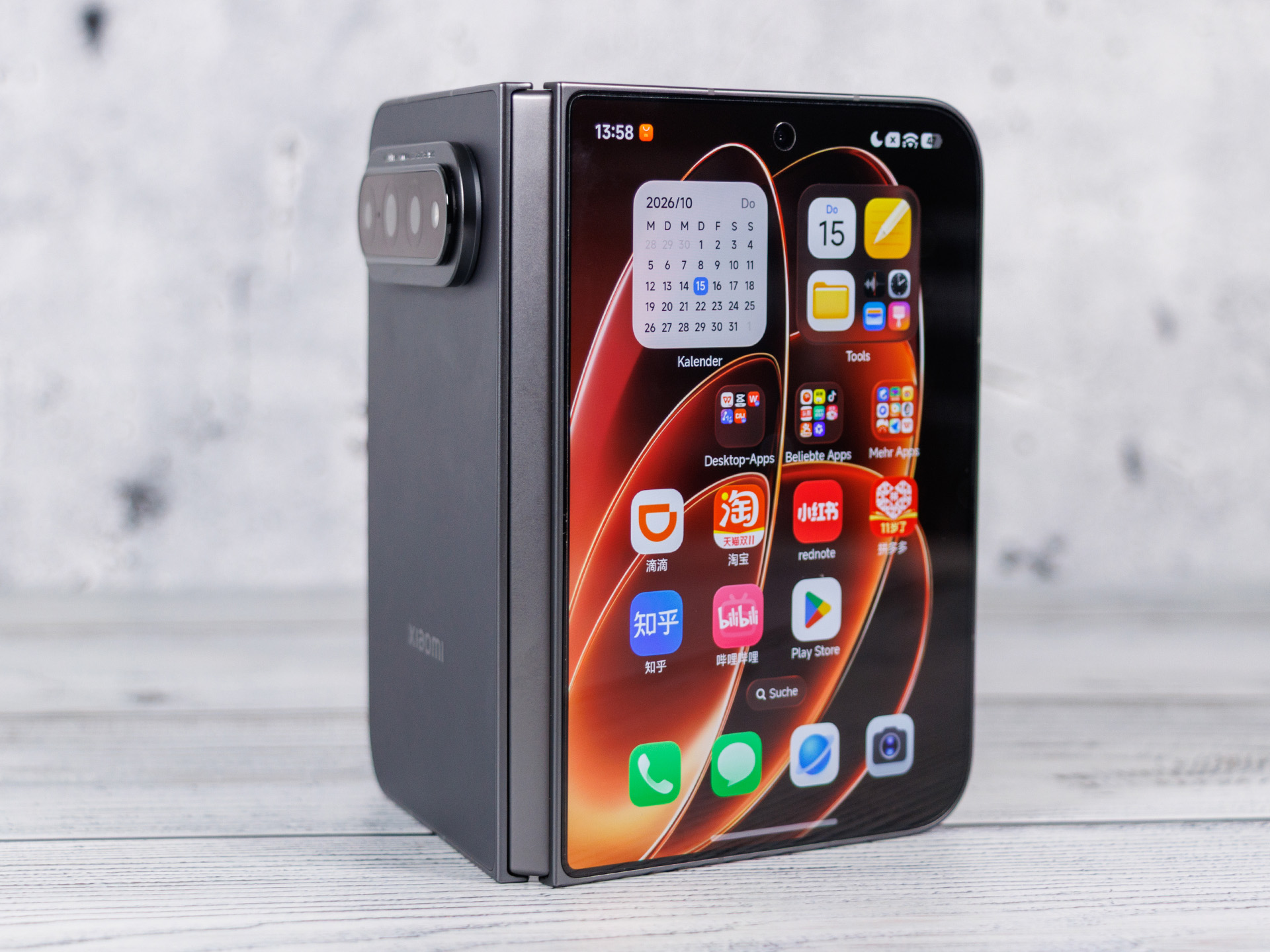
The Xiaomi 18 Fold impresses with its format, brilliant displays and enormous battery life, but has to make some compromises in terms of software and everyday usability.
Xiaomi 18 Fold
- 10/19/2026 v8
Daniel Schmidt
 Total Sustainability Score:
Possible alternatives compared
Image | Model / Review | Price | Weight | Drive | Display |
|---|---|---|---|---|---|
1. 87.9%  | Xiaomi 18 Fold Xiaomi Xring O3 ⎘ ARM Mali G2-Ultra NX MP16 ⎘ 16 GB Memory, 1024 GB UFS 4.x | Amazon: 1. $1,614.99 Samsung Galaxy Z Fold8 Unloc... 2. $1,582.85 Samsung Galaxy Z Fold8 Unloc... 3. $1,899.99 Samsung Galaxy Z Fold8 Unloc... | 219 g | 1TB UFS 4.1 Flash | 7.58" 2364x1672 382 PPI AMOLED |
2. 88.2%  | Samsung Galaxy Z Fold8 Qualcomm Snapdragon 8 Elite Gen 5 for Galaxy ⎘ Qualcomm Adreno 840 ⎘ 12 GB Memory, 256 GB UFS 4.x | List Price: 1999€ | 201 g | 256 GB UFS 4.0 Flash | 7.60" 2448x1848 404 PPI Dynamic AMOLED 2X |
3. 88.1%  | Honor Magic V6 Qualcomm Snapdragon 8 Elite Gen 5 ⎘ Qualcomm Adreno 840 ⎘ 16 GB Memory, 512 GB UFS 4.x | Amazon: 1. $1,750.00 HONOR Magic V6 5G PNM-N49 (G... 2. $1,780.00 HONOR Magic V6 5G PNM-N49 (G... 3. $1,949.00 HONOR Magic V6 5G PNM-N49 (G... List Price: 2300€ | 224 g | 512 GB UFS 4.1 Flash | 7.95" 2352x2172 403 PPI OLED |
4. 85.8%  | Motorola Razr Fold Qualcomm Snapdragon 8 Gen 5 ⎘ Qualcomm Adreno 829 ⎘ 16 GB Memory, 512 GB UFS 4.x | List Price: 1999€ | 243 g | 512 GB UFS 4.1 Flash | 8.10" 2484x2232 412 PPI OLED |
5. 87.3%  | Vivo X Fold6 MediaTek Dimensity 9500 ⎘ Arm Mali G1- Ultra MC12 ⎘ 12 GB Memory, 512 GB UFS 4.x | 235 g | 512 GB UFS 4.1 Flash | 8.02" 2504x2312 425 PPI AMOLED | |
6. 86.4%  | Oppo Find N6 Qualcomm Snapdragon 8 Elite Gen 5 ⎘ Qualcomm Adreno 840 ⎘ 16 GB Memory, 512 GB UFS 4.x | 225 g | 512 GB UFS 4.1 Flash | 8.12" 2480x2248 412 PPI OLED |
Transparency
The selection of devices to be reviewed is made by our editorial team. The test sample was provided to the author as a loan by the manufacturer or retailer for the purpose of this review. The lender had no influence on this review, nor did the manufacturer receive a copy of this review before publication. There was no obligation to publish this review. As an independent media company, Notebookcheck is not subjected to the authority of manufacturers, retailers or publishers.
This is how Notebookcheck is testing
Every year, Notebookcheck independently reviews hundreds of laptops and smartphones using standardized procedures to ensure that all results are comparable. We have continuously developed our test methods for around 20 years and set industry standards in the process. In our test labs, high-quality measuring equipment is utilized by experienced technicians and editors. These tests involve a multi-stage validation process. Our complex rating system is based on hundreds of well-founded measurements and benchmarks, which maintains objectivity. Further information on our test methods can be found here.
 Add as a preferred source on Google


