




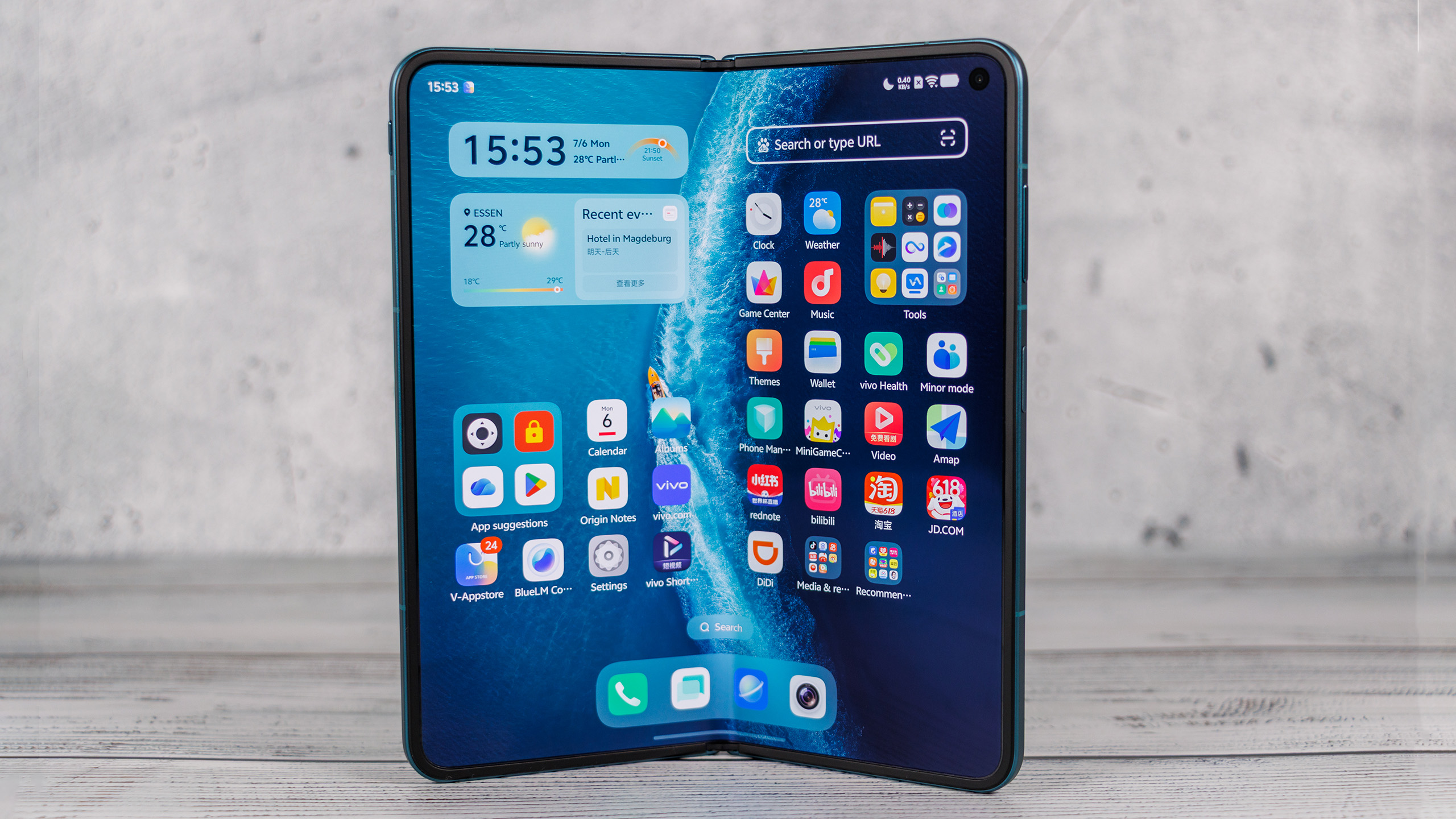
Conclusion on the Vivo X Fold6
The Vivo X Fold6 impressively demonstrates just how mature modern foldables have become. With its bright 120 Hz display, the powerful MediaTek Dimensity 9500, and, above all, the 7,000 mAh battery, it delivers exactly what you’d expect from a high-end foldable smartphone in everyday use: plenty of power, tremendous endurance, and a display that transforms into a mobile workspace when unfolded.
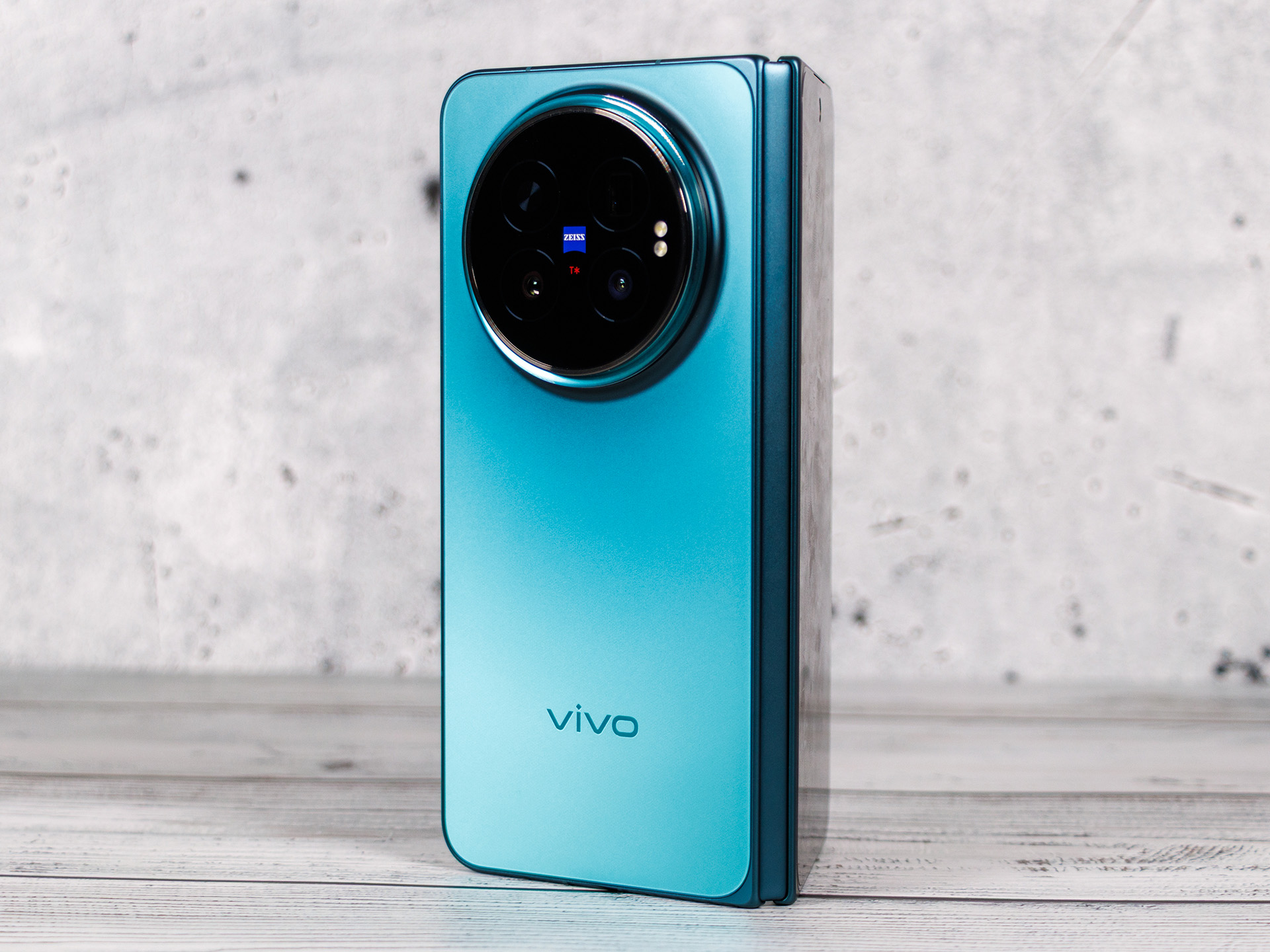
Particularly exciting is the new 200 MP main camera, developed in collaboration with Zeiss. It makes the X Fold6 a versatile camera phone and, compared to its predecessor, offers an improved main sensor above all else.
However, the X Fold6 isn’t entirely without compromises. The extra weight compared to the X Fold5 is noticeable in a negative way, and the crease in the display remains visible and palpable even when the device is unfolded.
While the large battery gives the smartphone longer battery life, it also contributes to the increased weight.
In our testing, we also didn’t reach the promised brightness of 5,000 cd/m², but the X Fold6 remains easy to read outdoors.
The SoC offers plenty of performance, but the cooling isn’t optimal, as the Vivo foldable can’t even complete a single stress test. The USB port is also slower than promised.
In the Chinese variant tested here, we also found that 6 GHz Wi-Fi and eSIM support were missing. However, it’s quite possible that these features will be added in the global version. In return, the battery will likely be smaller.
The Vivo X Fold6 is nonetheless an impressively well-rounded foldable. It combines high-end performance with a large, outstanding display and an exceptionally high battery capacity.
While the generational leap isn’t equally significant across every category, the camera and battery life make the X Fold6 one of the most interesting foldable smartphones of its generation.
Update: 02.10.2026
The vivo X Fold6 is now officially available in Europe as well. We therefore took a closer look at the global version and compared it directly with the Chinese model tested here. Despite largely identical hardware, there are some interesting differences in software and connectivity.
We’ve also updated our measurements: The global version supports Wi-Fi 7 in the 6-GHz band and achieved transfer rates of up to 4.2 Gbit/s in our Wi-Fi test. We also repeated the battery test with the global model. Despite having a slightly smaller nominal battery capacity of 6,900 mAh instead of 7,000 mAh, it lasted only two minutes less than the Chinese-market version - so it’s practically a tie.
We’ve summarized the other differences regarding eSIM, Bluetooth, camera tuning, software, storage options, and warranty, as well as whether the cheaper Chinese import is still worth it, in our detailed comparison between the Chinese and global vivo X Fold6.
Pros
Cons
Price and Availability
At the time of testing, the Vivo X Fold6 is only available in China, but a global version is expected to follow. It can be purchased as an import through retailers like TradingShenzhen.

Table of Contents
- Conclusion on the Vivo X Fold6
- Specifications: Vivo X Fold6
- Design and features: Appealing foldable with a deceptive USB spec
- Communication and operation: No 6 GHz Wi-Fi in the Vivo X Fold6
- Cameras: A powerful 200 MP triple-camera setup for the X Fold6
- Foldable Display: Rated up to 5,000 cd/m² peak
- BOE cover display
- Performance, emissions, and battery Life: Gets very hot during stress
- Notebookcheck's overall impressions of the Vivo X Fold6
- Potential alternatives in comparison
Specifications: Vivo X Fold6
Design and features: Appealing foldable with a deceptive USB spec
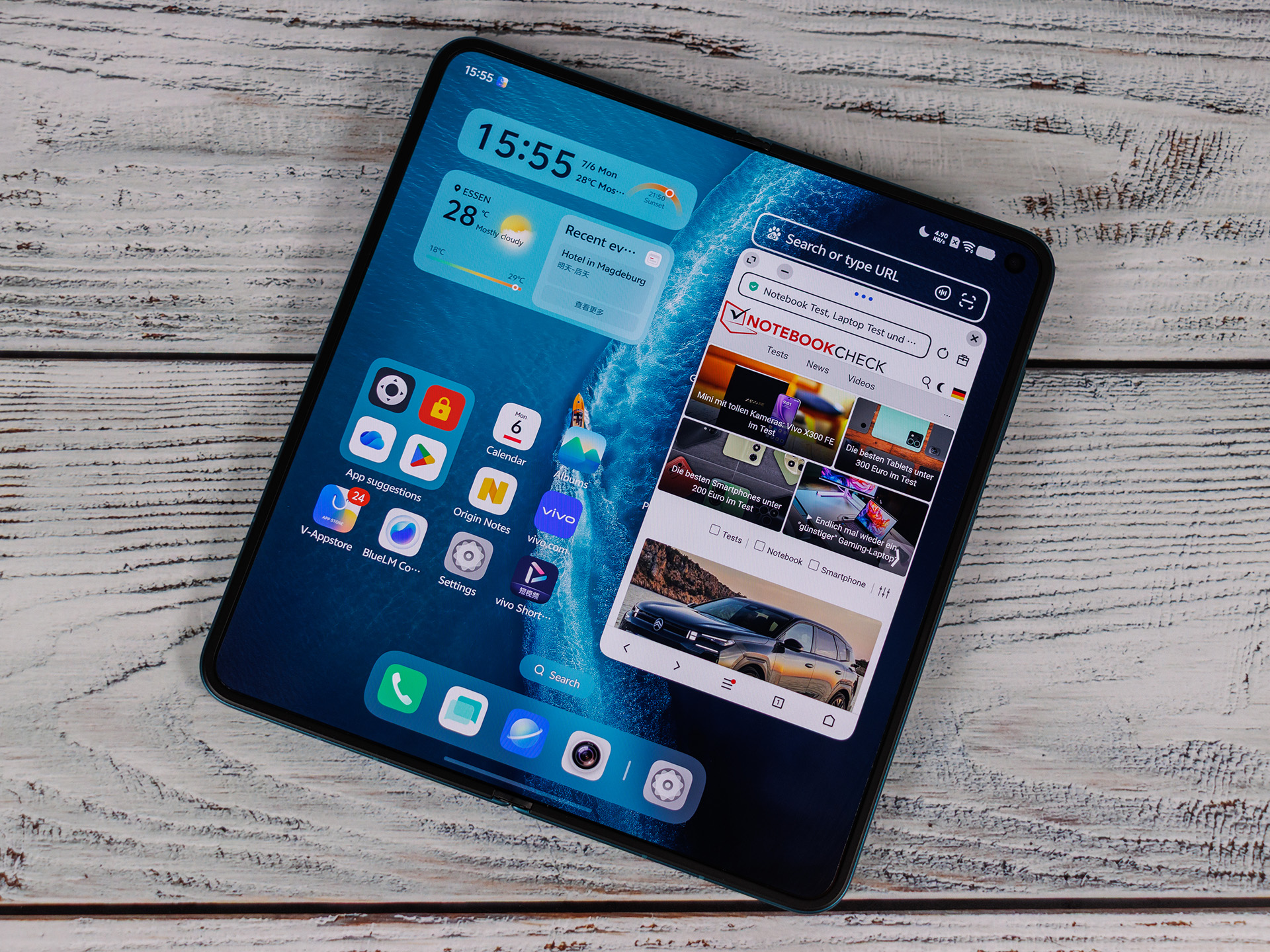
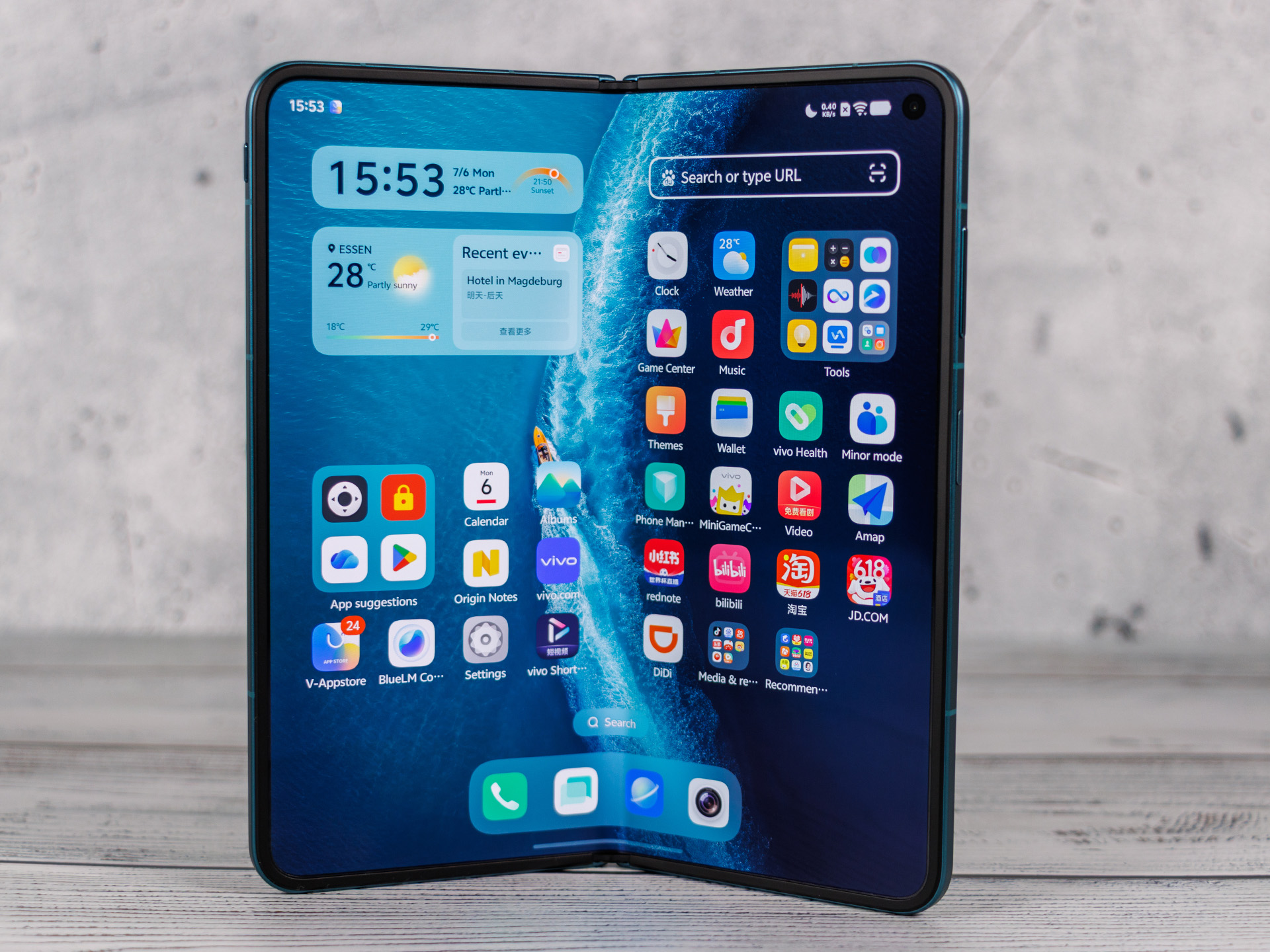
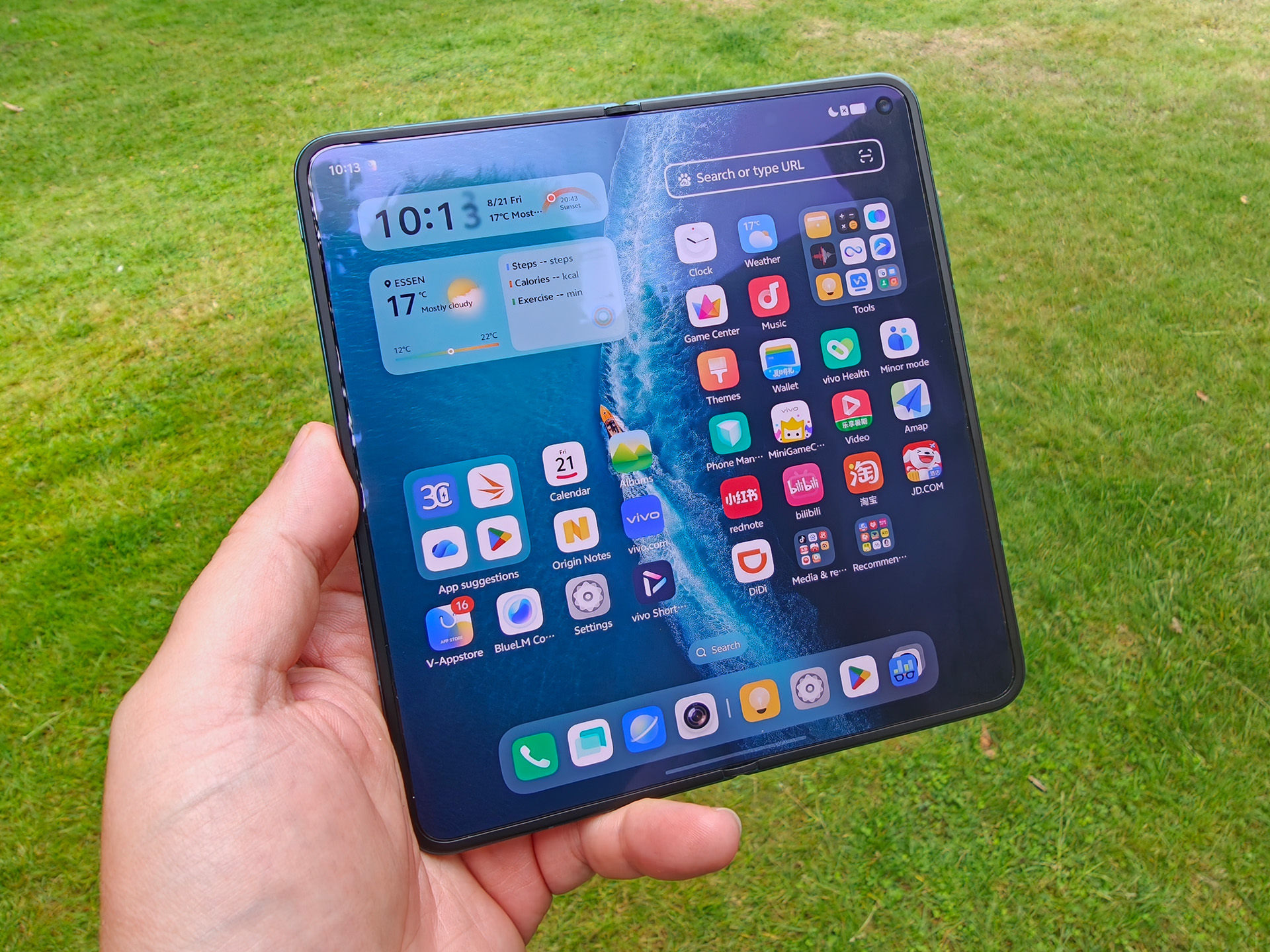
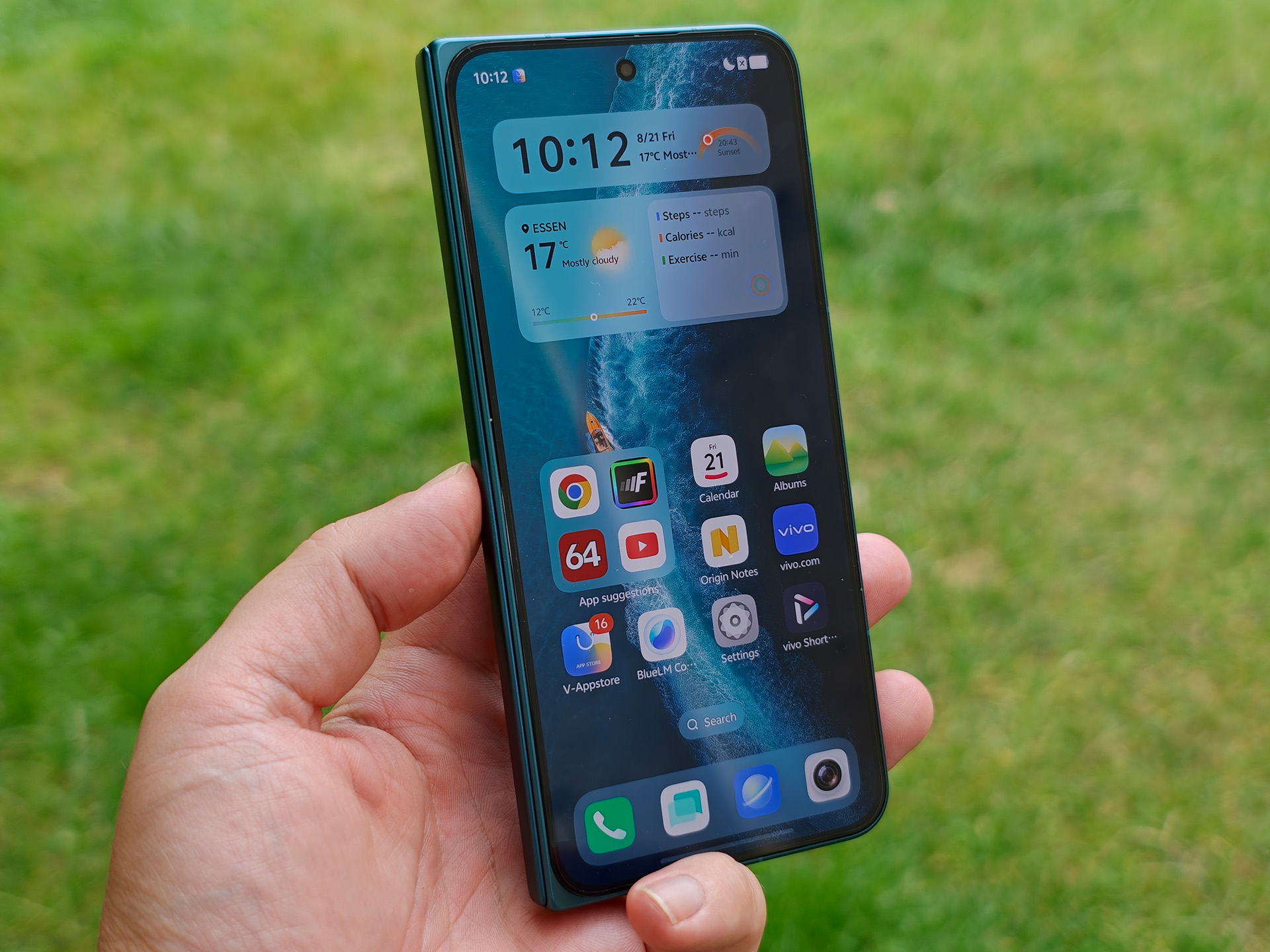
The Vivo X Fold6 is a visually and tactilely appealing foldable that fits comfortably in the hand but is heavier than its predecessor, the X Fold5. Unlike the Oppo Find N6, the display crease is more noticeable and visible, but this does not interfere with everyday use. The foldable phone is IP59-certified.
The X Fold6 is available in the following storage configurations: 12 / 256 GB, 12 / 512 GB, 16 / 512 GB, and 16 / 1,024 GB. Which of these configurations will be included in the global version will likely vary from market to market.
There is no concrete information on software updates yet, but the update cycle for Chinese models is usually shorter than for those intended for Europe.
Vivo specifies the USB port as USB 3.2 Gen 2. However, in a copy test, we only achieved around 350 MB/s, which suggests it is more likely USB 3.2 Gen 1.
Communication and operation: No 6 GHz Wi-Fi in the Vivo X Fold6
Unlike its X Fold5, the Vivo X Fold6 does not support 6 GHz 6E Wi-Fi. However, high data transfer rates are still possible thanks to fast Wi-Fi 7. The foldable offers broad coverage across various mobile frequencies.
The voice quality is impressive and delivers natural communication, though the suppression of ambient noise could be a bit better. While most noise is filtered out, the user’s voice sounds somewhat muffled as a result.
The Chinese version of the X Fold6 does not support eSIM, but this feature will likely be added to the global model later.
| Networking | |
| Vivo X Fold6 | |
| iperf3 transmit Wi-Fi6/7 RT-BE96U | |
| iperf3 transmit Wi-Fi6/7 RT-BE96U | |
| iperf3 receive Wi-Fi6/7 RT-BE96U | |
| iperf3 receive Wi-Fi6/7 RT-BE96U | |
| Huawei Mate X7 | |
| iperf3 transmit AXE11000 | |
| iperf3 receive AXE11000 | |
| Honor Magic V6 | |
| iperf3 transmit AXE11000 | |
| iperf3 receive AXE11000 | |
| iperf3 transmit AXE11000 6GHz | |
| iperf3 receive AXE11000 6GHz | |
| Oppo Find N6 | |
| iperf3 transmit AXE11000 | |
| iperf3 receive AXE11000 | |
| iperf3 transmit AXE11000 6GHz | |
| iperf3 receive AXE11000 6GHz | |
| Average 802.11 a/b/g/n/ac/ax/be | |
| iperf3 transmit AXE11000 | |
| iperf3 receive AXE11000 | |
| iperf3 transmit AXE11000 6GHz | |
| iperf3 receive AXE11000 6GHz | |
| iperf3 transmit Wi-Fi6/7 RT-BE96U | |
| iperf3 receive Wi-Fi6/7 RT-BE96U | |
| Average of class Smartphone | |
| iperf3 transmit AXE11000 | |
| iperf3 receive AXE11000 | |
| iperf3 transmit AXE11000 6GHz | |
| iperf3 receive AXE11000 6GHz | |
| iperf3 transmit Wi-Fi6/7 RT-BE96U | |
| iperf3 receive Wi-Fi6/7 RT-BE96U | |
Cameras: A powerful 200 MP triple-camera setup for the X Fold6
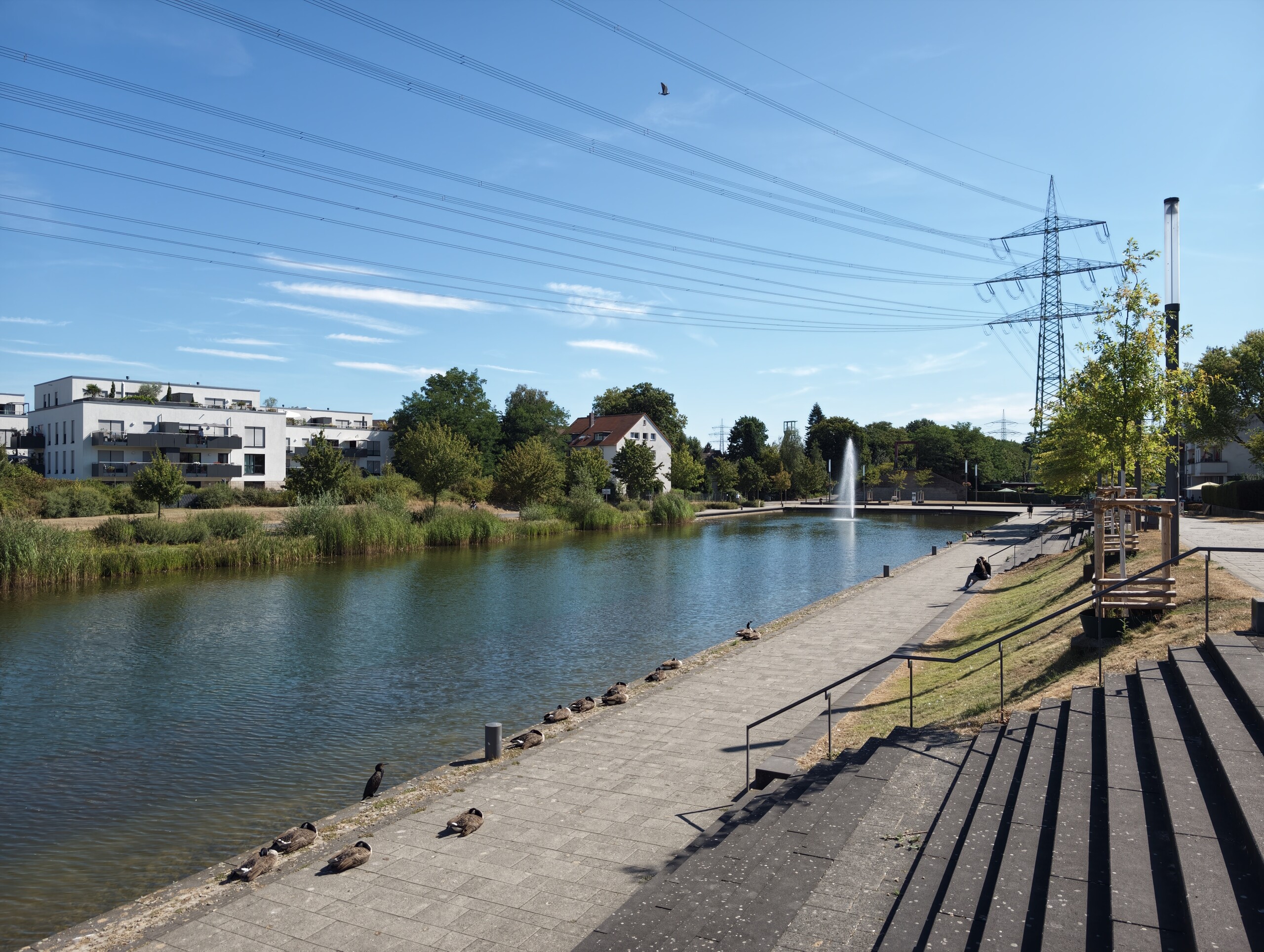
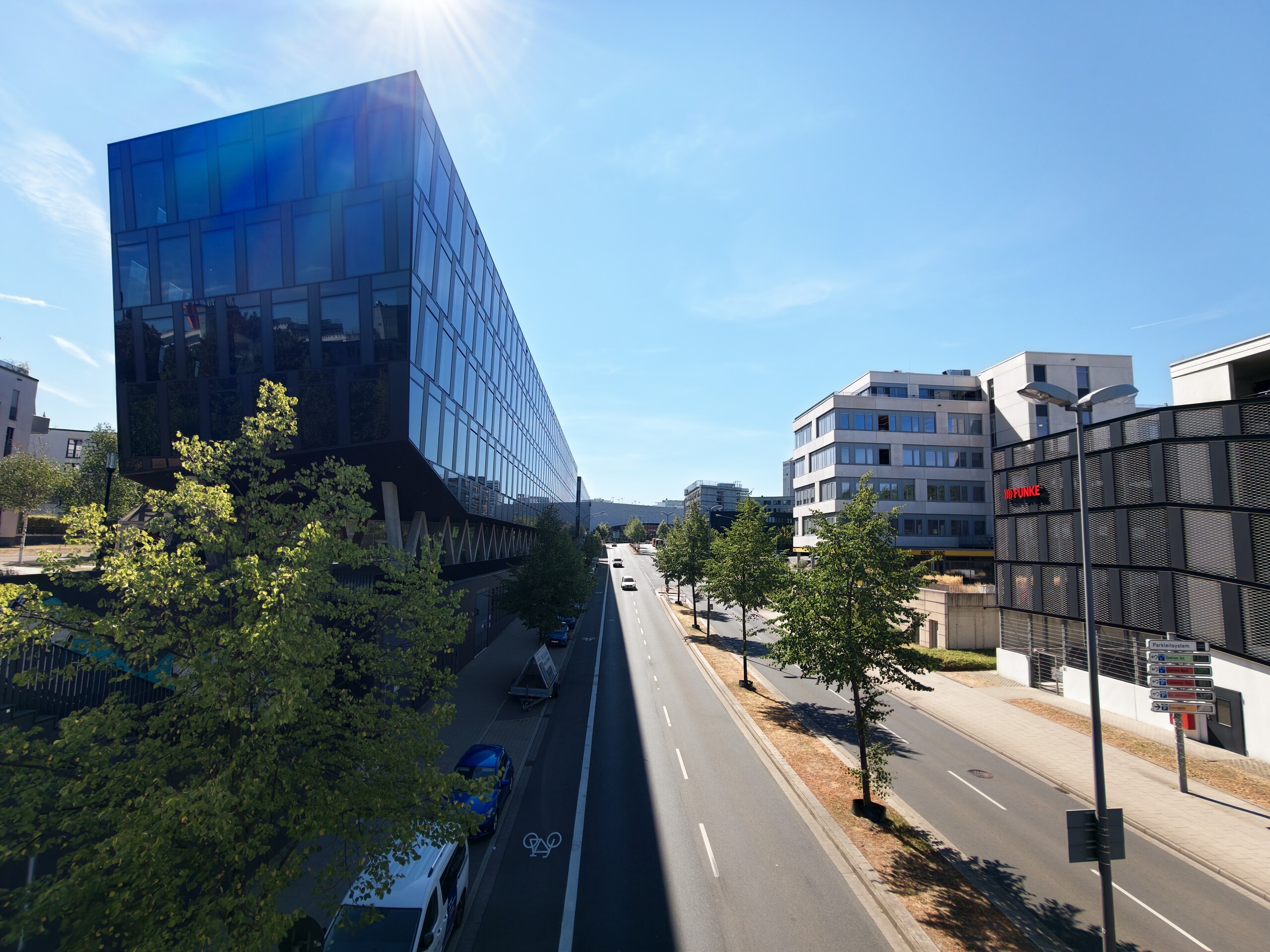
The Vivo X Fold6’s new 200 MP primary camera has a slightly larger sensor than the X Fold5 and takes good photos. The optical zoom also delivers good results and is supported by AI at higher zoom levels, though this tends to make the images look somewhat artificial.
The weakest lens is the ultra-wide-angle one, but that’s just nitpicking.
| Aspect ratio | Resolution | |
|---|---|---|
| Photo | 4:3 / 16:9 / 1:1 / Full | 12 / 50 / 200 MP |
| Video (Main camera) | 16:9 / Wide | HD (30 fps) Full HD (30 / 60 fps) Ultra HD (30 / 60 / 120 fps) 8K (30 fps) |
| Video (Front Camera) | 16:9 / Wide | Full HD (30 fps) |
Image comparison
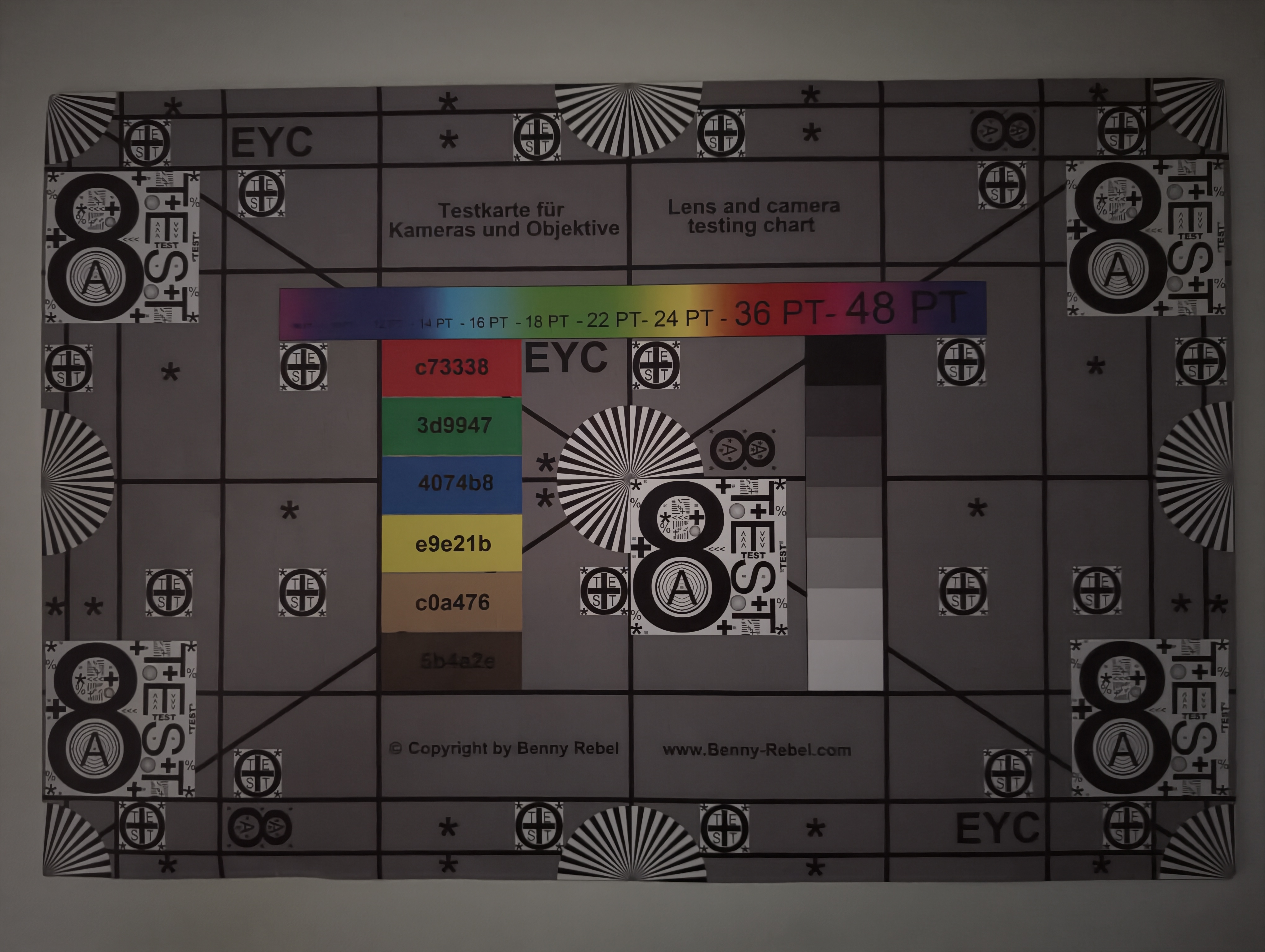
Choose a scene and navigate within the first image. One click changes the position on touchscreens. One click on the zoomed-in image opens the original in a new window. The first image shows the scaled photograph of the test device.
















Foldable Display: Rated up to 5,000 cd/m² peak
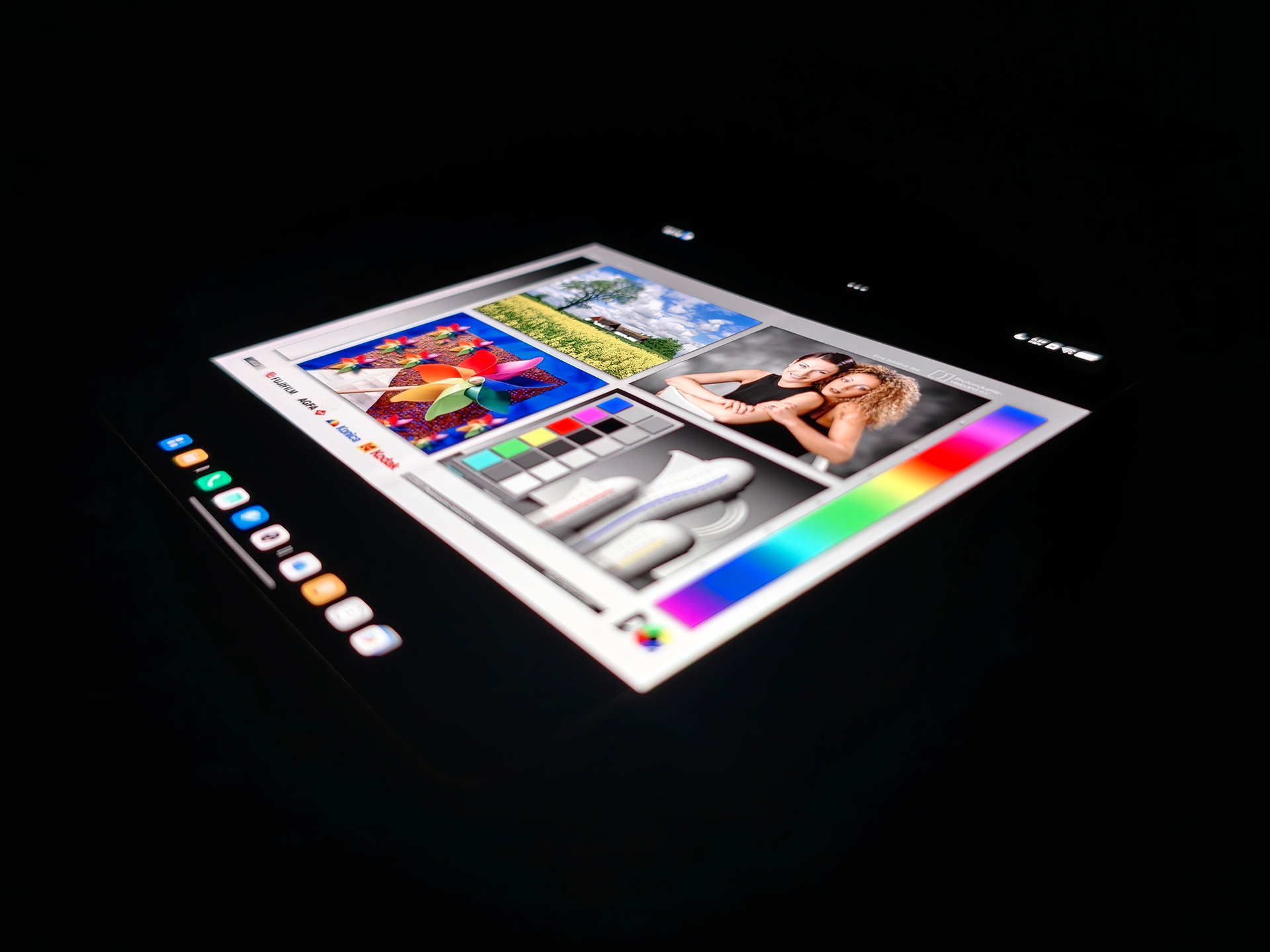
Both displays are rated to reach up to 5,000 cd/m² peak brightness, but this was not achieved in testing. This likely requires the white area to be very small.
Thanks to high-frequency PWM dimming, the panel is relatively easy on the eyes; however, the underlying flicker at a low 90 Hz is a drawback.
| |||||||||||||||||||||||||
Center on Battery: 1245 cd/m²
Contrast: ∞:1 (Black: 0 cd/m²)
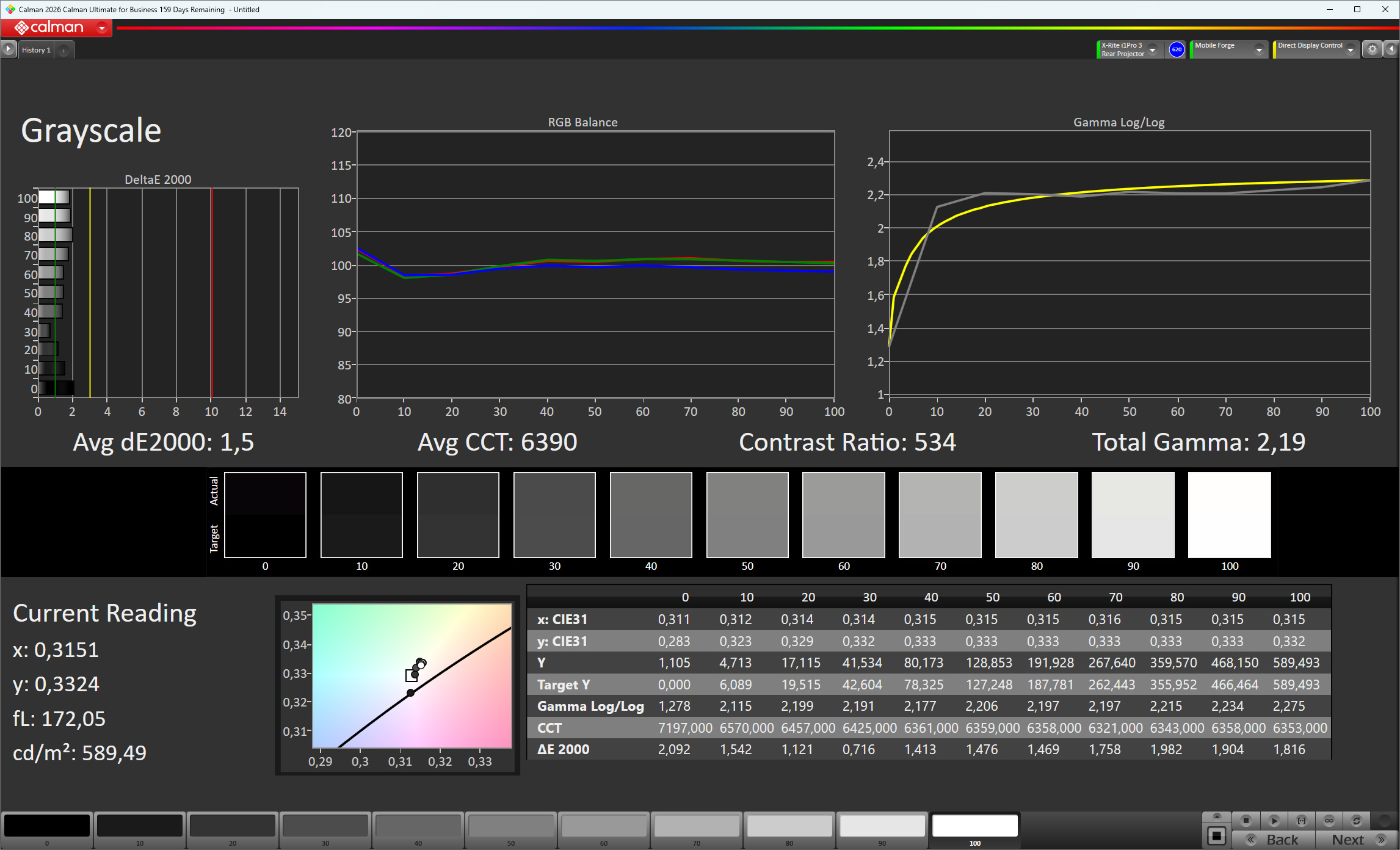
ΔE ColorChecker Calman: 0.7 | ∀{0.5-29.43 Ø4.69}
ΔE Greyscale Calman: 1.5 | ∀{0.09-98 Ø4.94}
99.3% sRGB (Calman 2D)
Gamma: 2.19
CCT: 6390 K
| Vivo X Fold6 AMOLED, 2504x2312, 8" | Huawei Mate X7 OLED, 2416x2210, 8" | Honor Magic V6 OLED, 2352x2172, 8" | Oppo Find N6 OLED, 2480x2248, 8.1" | |
|---|---|---|---|---|
| Display | -38% | 35% | -37% | |
| APL18 Peak Brightness (cd/m²) | 2118 | 1467 -31% | 1229 -42% | 1353 -36% |
| HDR Peak Brightness (cd/m²) | 2735 | 1496 -45% | 5773 111% | 1697 -38% |
| Response Times | 8% | 15% | 15% | |
| Response Time Grey 50% / Grey 80% * (ms) | 0.84 ? | 0.71 ? 15% | 0.65 ? 23% | 0.52 ? 38% |
| Response Time Black / White * (ms) | 1.1 ? | 0.93 ? 15% | 0.84 ? 24% | 1.05 ? 5% |
| PWM Frequency (Hz) | 90 | 360 | 120 | 180 |
| PWM Amplitude * (%) | 14.67 | 15.59 -6% | 15.15 -3% | 14.43 2% |
| Screen | -65% | -69% | -56% | |
| Brightness middle (cd/m²) | 1245 | 1005 -19% | 1291 4% | 1179 -5% |
| Black Level * (cd/m²) | ||||
| Colorchecker dE 2000 * | 0.7 | 1.4 -100% | 1.4 -100% | 1.6 -129% |
| Colorchecker dE 2000 max. * | 1.6 | 3.1 -94% | 3.5 -119% | 2.9 -81% |
| Greyscale dE 2000 * | 1.5 | 2.2 -47% | 2.4 -60% | 1.6 -7% |
| Gamma | 2.19 100% | 2.25 98% | 2.26 97% | 2.24 98% |
| CCT | 6390 102% | 6890 94% | 6804 96% | 6662 98% |
| Brightness (cd/m²) | 1021 | 1184 | ||
| Brightness Distribution (%) | 97 | 98 | ||
| Total Average (Program / Settings) | -32% /
-35% | -6% /
-18% | -26% /
-28% |
* ... smaller is better
Screen Flickering / PWM (Pulse-Width Modulation)
| Screen flickering / PWM detected | 90 Hz Amplitude: 14.67 % Secondary Frequency: 2083 Hz | 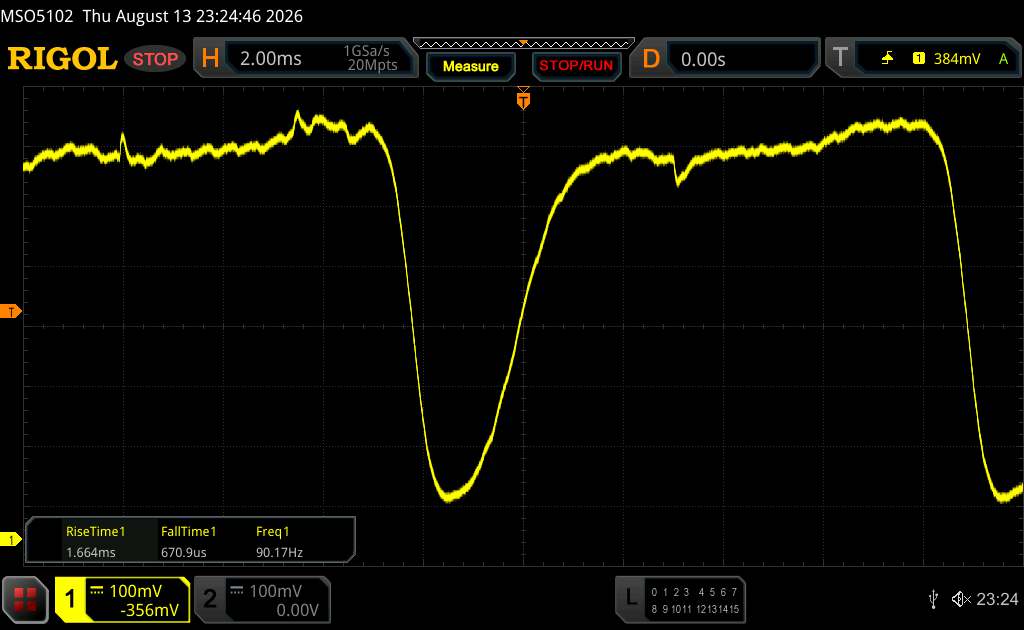 | |
The display backlight flickers at 90 Hz (worst case, e.g., utilizing PWM) . The frequency of 90 Hz is very low, so the flickering may cause eyestrain and headaches after extended use. In comparison: 52 % of all tested devices do not use PWM to dim the display. If PWM was detected, an average of 7614 (minimum: 5 - maximum: 343500) Hz was measured. | |||
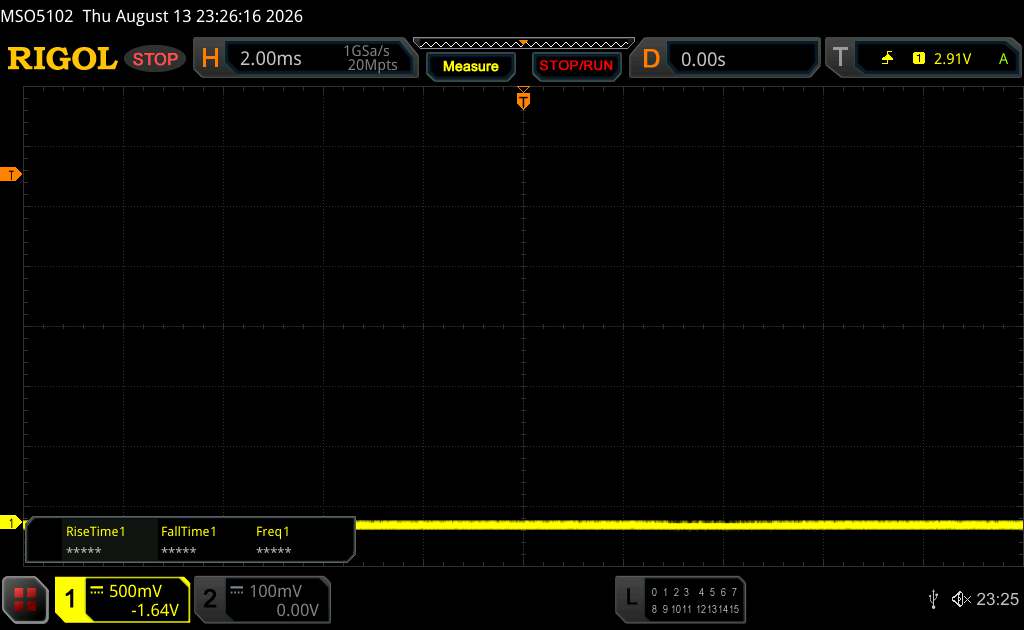
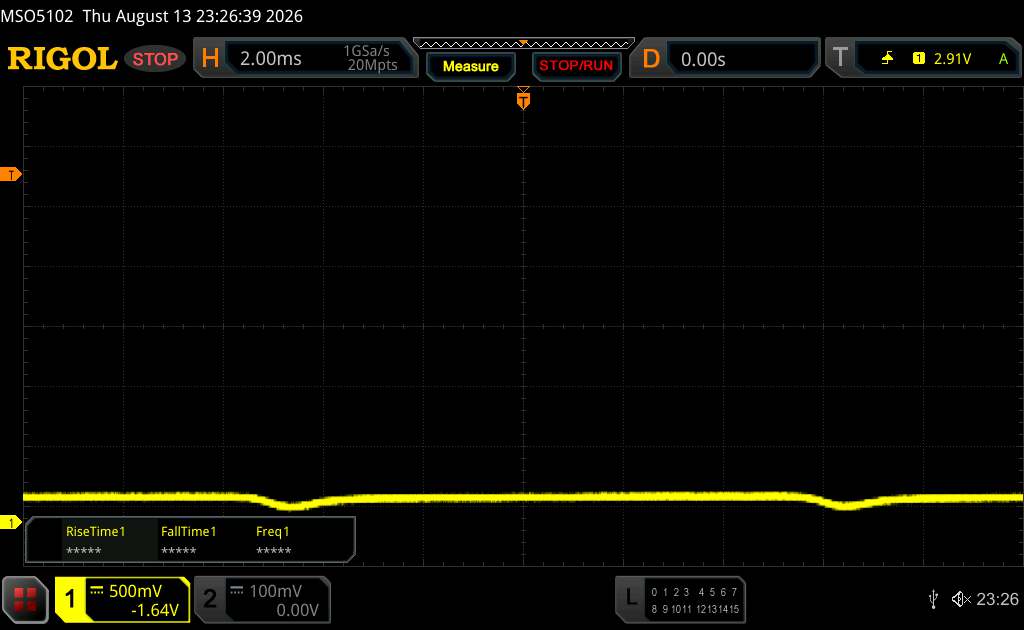
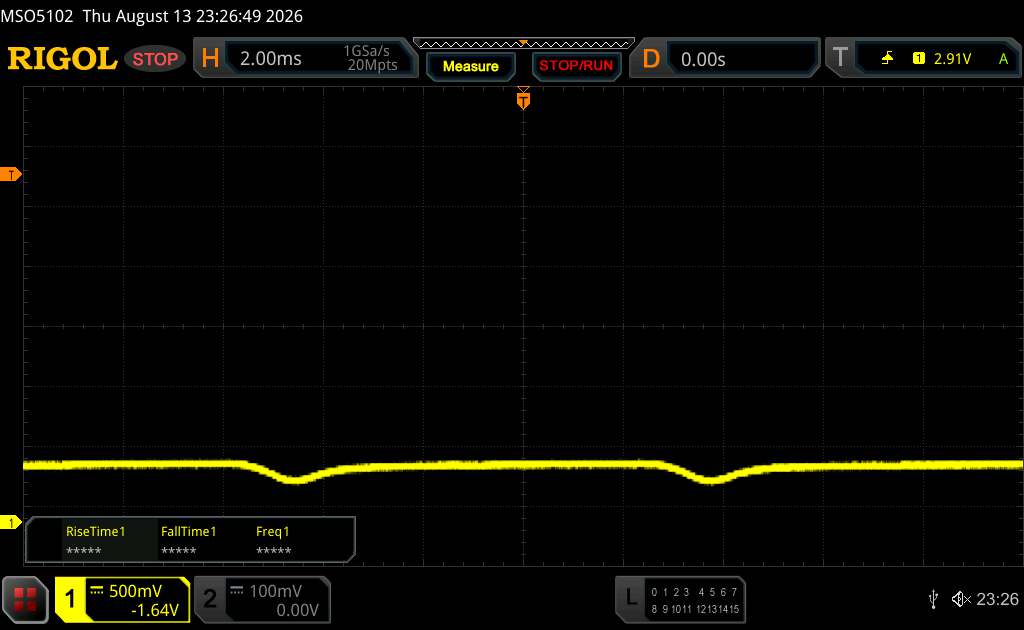
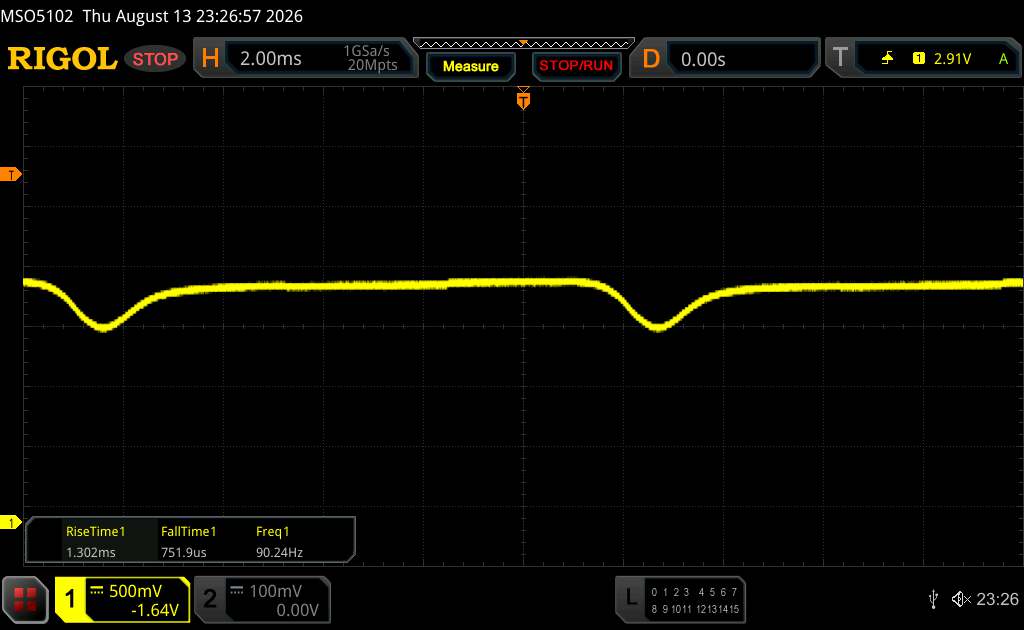
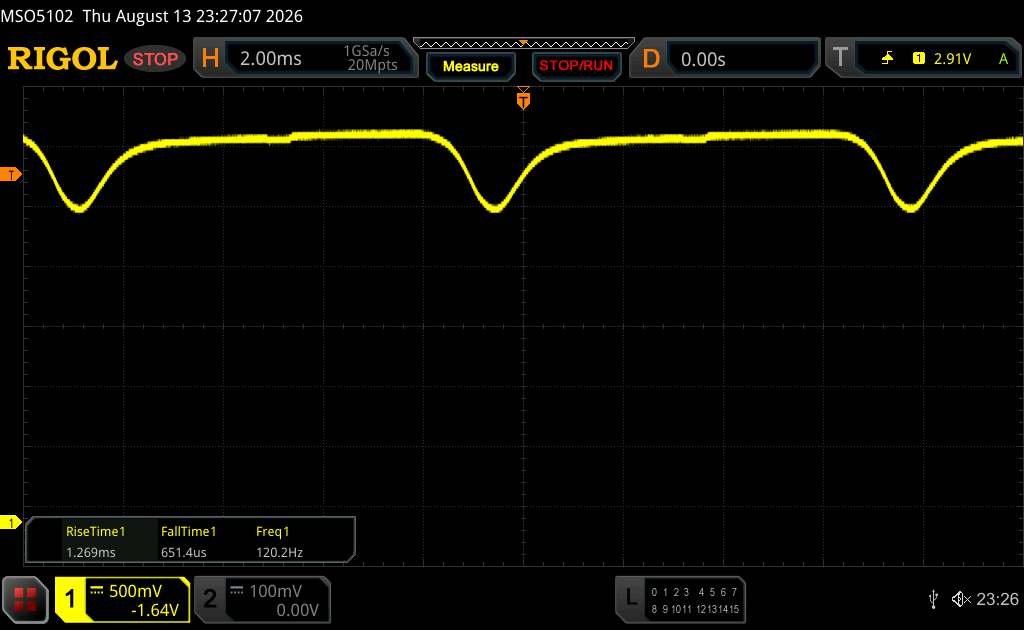
Series of measurements with a fixed zoom level and different brightness settings (Although the amplitude curve at minimum brightness appears flat, this is due to the scaling. The info box shows a magnified version of the amplitude at minimum brightness.)


Display Response Times
| ↔ Response Time Black to White | ||
|---|---|---|
| 1.1 ms ... rise ↗ and fall ↘ combined | ↗ 0.5785 ms rise | 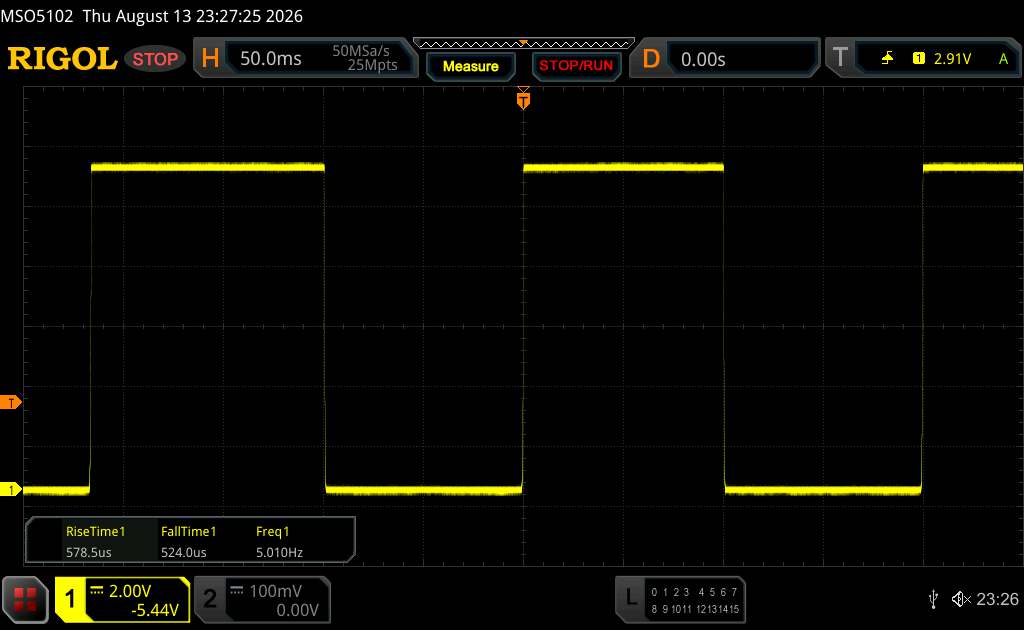 |
| ↘ 0.524 ms fall | ||
| The screen shows very fast response rates in our tests and should be very well suited for fast-paced gaming. In comparison, all tested devices range from 0.1 (minimum) to 240 (maximum) ms. » 5 % of all devices are better. This means that the measured response time is better than the average of all tested devices (19.7 ms). | ||
| ↔ Response Time 50% Grey to 80% Grey | ||
| 0.84 ms ... rise ↗ and fall ↘ combined | ↗ 0.4865 ms rise | 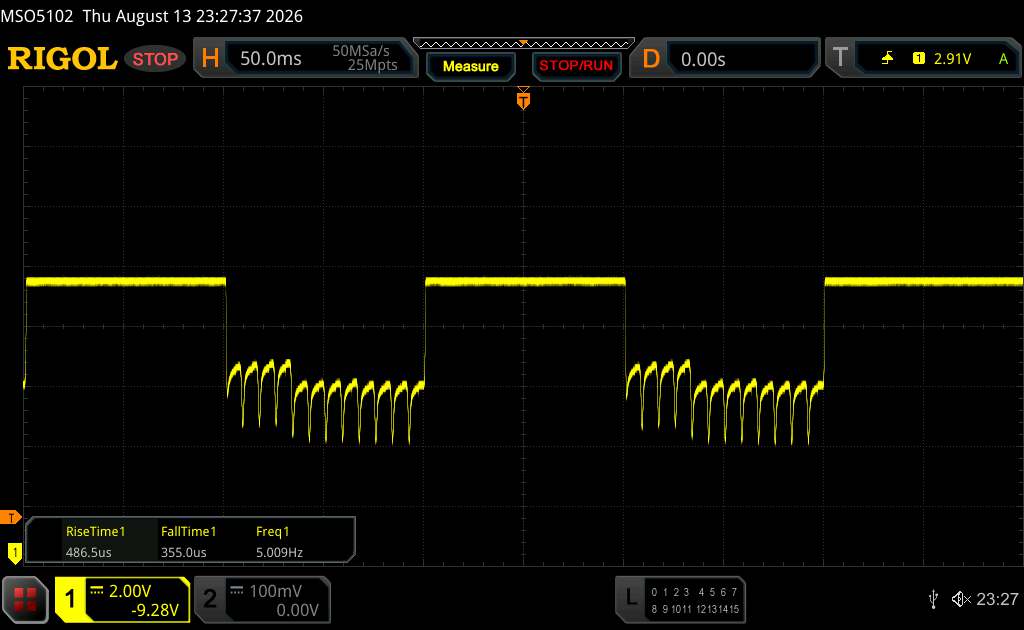 |
| ↘ 0.355 ms fall | ||
| The screen shows very fast response rates in our tests and should be very well suited for fast-paced gaming. In comparison, all tested devices range from 0.13 (minimum) to 636 (maximum) ms. » 3 % of all devices are better. This means that the measured response time is better than the average of all tested devices (30.7 ms). | ||
BOE cover display
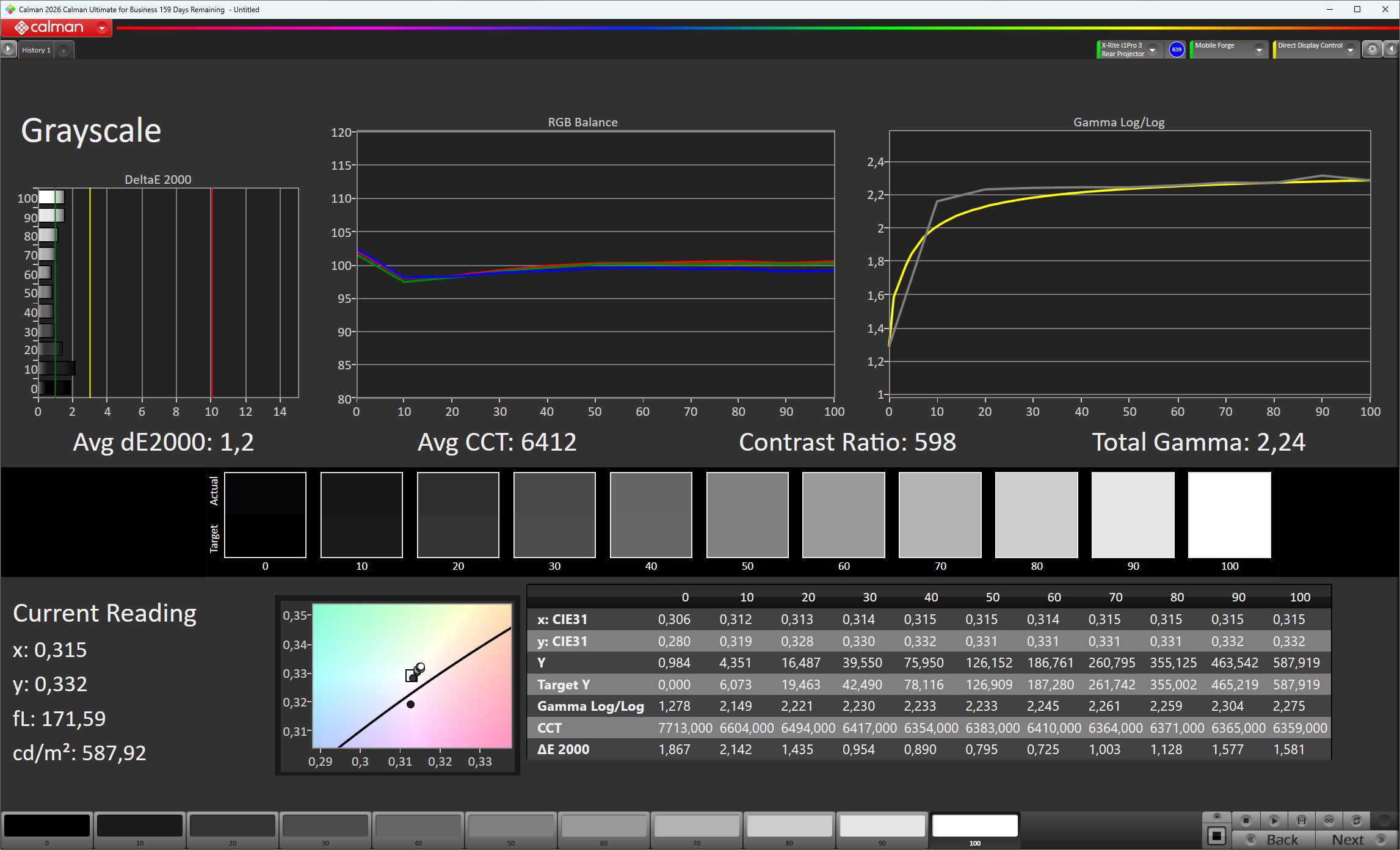
The X Fold6’s external display operates with similar specifications as its bigger brother; unfortunately, this also means that its base flicker rate is 90 Hz.
However, at minimum brightness, we also measure high-frequency PWM dimming at 4,166 Hz.
| Vivo X Fold6 2528x1120, 6.5" | Huawei Mate X7 OLED, 2444x1080, 6.5" | Oppo Find N6 OLED, 2616x1140, 6.6" | Honor Magic V6 OLED, 2420x1080, 6.5" | |
|---|---|---|---|---|
| Display | 8% | 29% | -34% | 59% |
| APL18 Peak Brightness (cd/m²) | 2413 14% | 3010 42% | 1201 -43% | 2505 18% |
| HDR Peak Brightness (cd/m²) | 2788 2% | 3145 15% | 2067 -24% | 5450 99% |
| Response Times | -25% | -20% | -12% | |
| Response Time Grey 50% / Grey 80% * (ms) | 1.13 ? -35% | 1.19 ? -42% | 0.92 ? -10% | |
| Response Time Black / White * (ms) | 1.35 ? -23% | 1.29 ? -17% | 1.22 ? -11% | |
| PWM Frequency (Hz) | 90 | 360 | 90 | |
| PWM Amplitude * (%) | 17 -16% | 14.6 -0% | 17 -16% | |
| Screen | ||||
| Brightness middle (cd/m²) | 1401 | 1572 | 1180 | 1909 |
| Black Level * (cd/m²) | ||||
| Colorchecker dE 2000 * | 0.7 | 1.1 | 1.5 | 1.1 |
| Colorchecker dE 2000 max. * | 1.6 | 3.1 | 2.7 | 2.7 |
| Greyscale dE 2000 * | 1.2 | 4.1 | 2.2 | 2 |
| Gamma | 2.24 98% | 2.26 97% | 2.26 97% | 2.28 96% |
| CCT | 6412 101% | 6980 93% | 6710 97% | 6747 96% |
| Brightness (cd/m²) | 1570 | 1175 | ||
| Brightness Distribution (%) | 96 | 97 | ||
| Total Average (Program / Settings) | -9% /
-12% | 5% /
-0% | -23% /
-21% | 59% /
59% |
* ... smaller is better


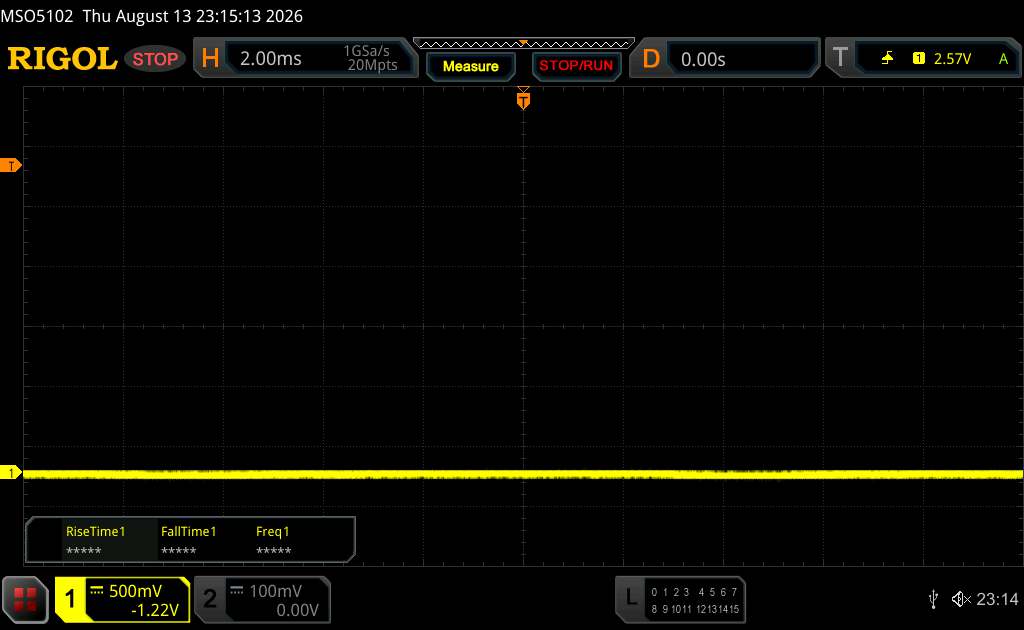
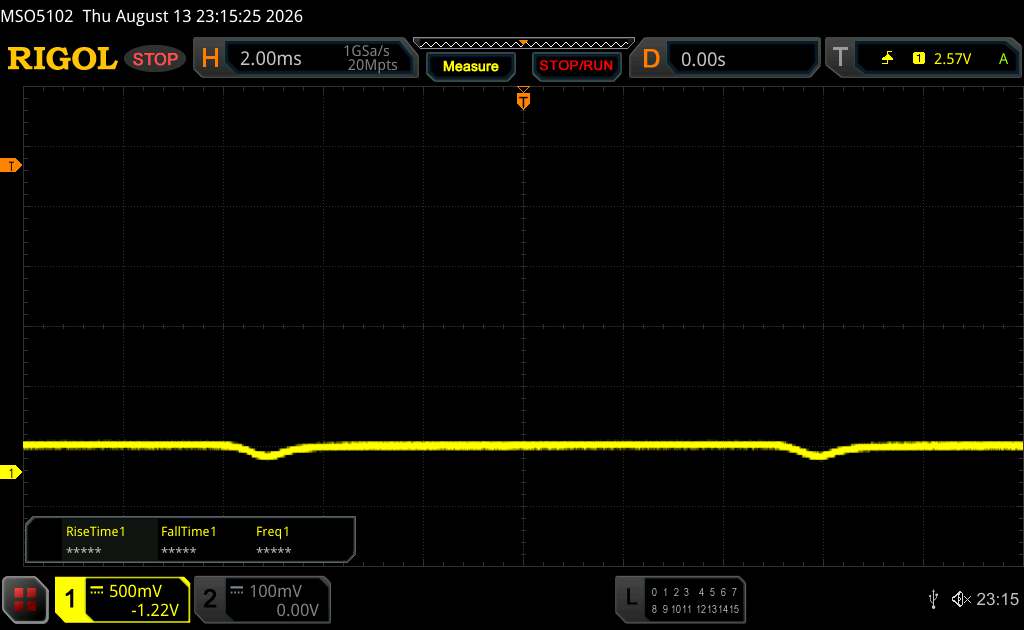
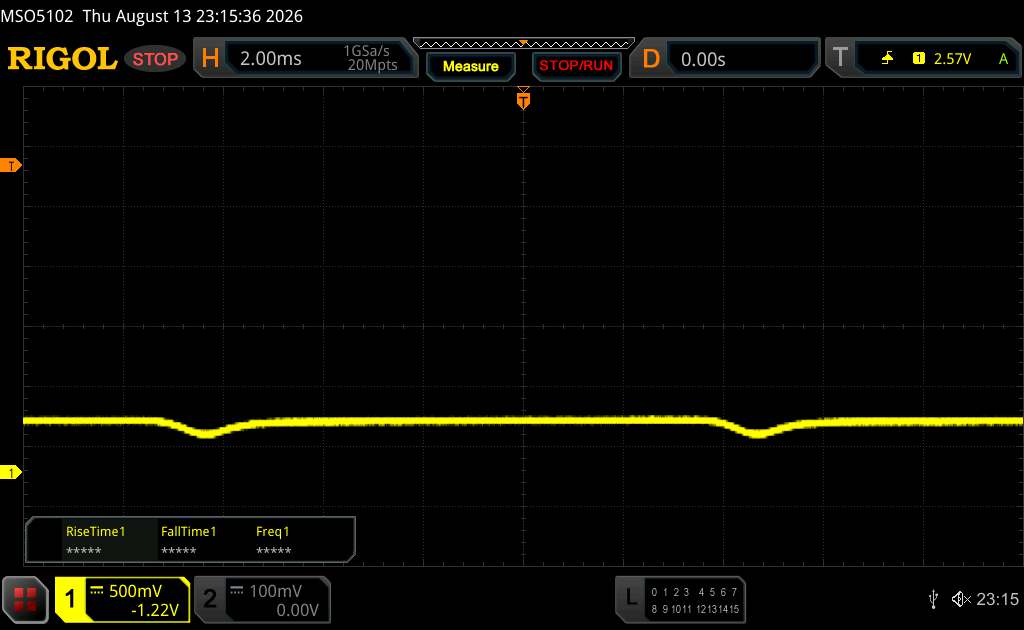
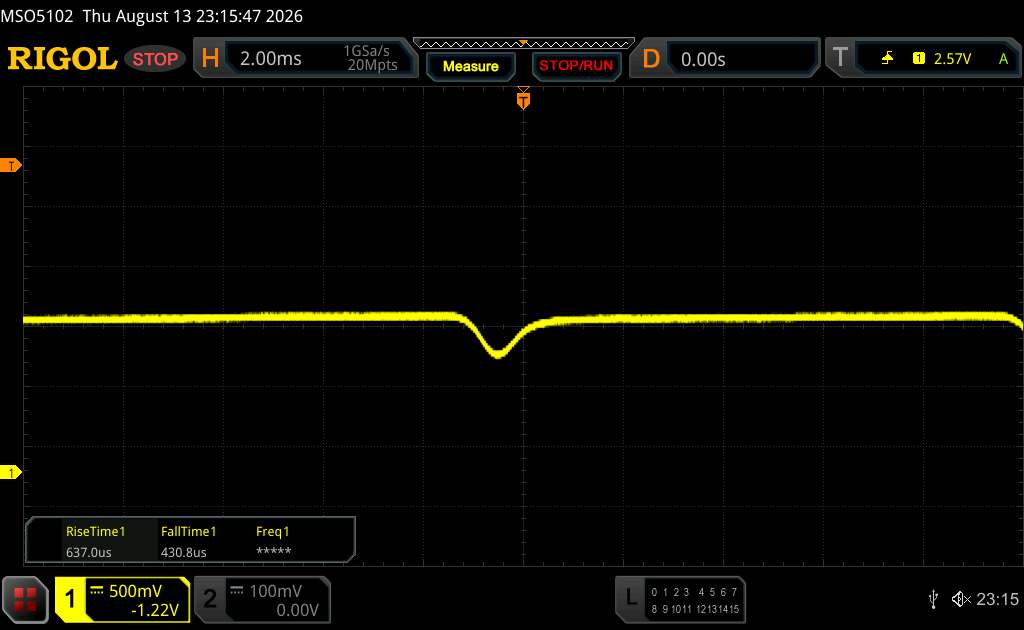
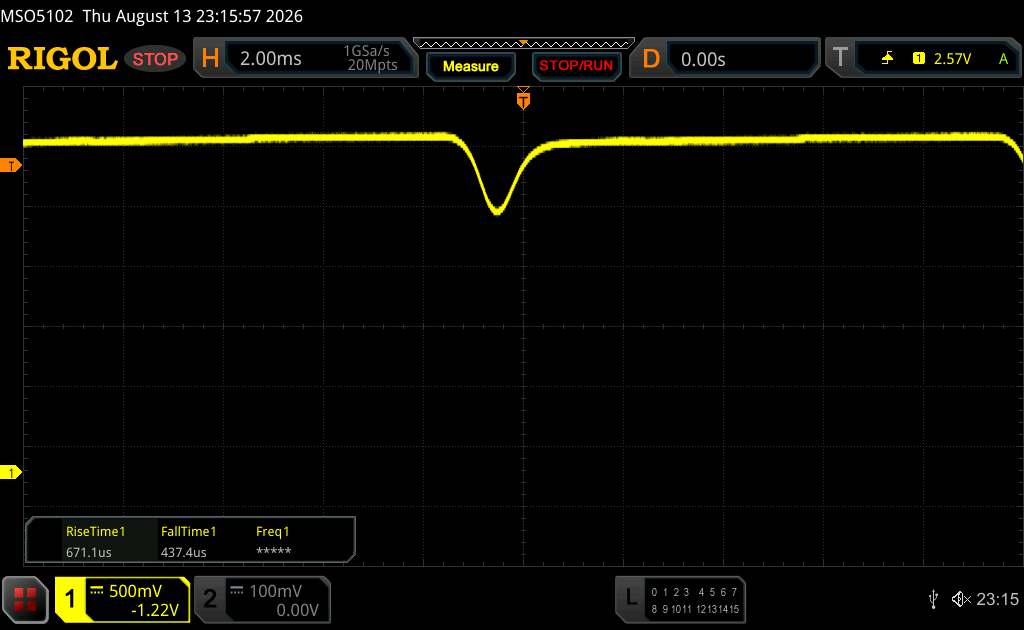
Series of measurements with a fixed zoom level and varying brightness settings (Although the amplitude curve at minimum brightness appears flat, this is due to the scaling. The info box shows a magnified version of the amplitude at minimum brightness.)

Performance, emissions, and battery Life: Gets very hot during stress
The Vivo X Fold6 can get very hot and therefore crashes during all 3DMark stress tests. That’s why we used a different method to determine how much this affects performance.
To do this, we first ran Geekbench 6.7 from a cold start (3,181 single / 9,511 points multi) and then again after 15 minutes of continuous load (2,959 single / 8,974 points multi), during which the X Fold6 lost about 7% and 6% of its performance, respectively.
In everyday use, this isn’t noticeably apparent.
| Vivo X Fold6 | Huawei Mate X7 | Honor Magic V6 | Oppo Find N6 | Average 512 GB UFS 4.1 Flash | Average of class Smartphone | |
|---|---|---|---|---|---|---|
| AndroBench 3-5 | 116% | 88% | 81% | 64% | 8% | |
| Sequential Read 256KB (MB/s) | 1440.32 | 4365.76 203% | 3921.41 172% | 3861.06 168% | 3616 ? 151% | 2278 ? 58% |
| Sequential Write 256KB (MB/s) | 1424.84 | 4112.78 189% | 3992.25 180% | 3531.83 148% | 3225 ? 126% | 1971 ? 38% |
| Random Read 4KB (MB/s) | 372.99 | 463.43 24% | 411.38 10% | 446.52 20% | 414 ? 11% | 317 ? -15% |
| Random Write 4KB (MB/s) | 734.36 | 1071.05 46% | 667.68 -9% | 637.68 -13% | 498 ? -32% | 362 ? -51% |
(-) The maximum temperature on the upper side is 46.9 °C / 116 F, compared to the average of 35.4 °C / 96 F, ranging from 21.9 to 247 °C for the class Smartphone.
(±) The bottom heats up to a maximum of 44.4 °C / 112 F, compared to the average of 34.1 °C / 93 F
3DMark Stress Tests
| 3DMark | |
| Wild Life Stress Test Stability | |
| Vivo X Fold6 | |
| Oppo Find N6 | |
| Huawei Mate X7 | |
| Wild Life Extreme Stress Test | |
| Honor Magic V6 | |
| Huawei Mate X7 | |
| Oppo Find N6 | |
| Solar Bay Stress Test Stability | |
| Huawei Mate X7 | |
| Oppo Find N6 | |
| Solar Bay Extreme Stress Test Stability | |
| Oppo Find N6 | |
| Steel Nomad Light Stress Test Stability | |
| Huawei Mate X7 | |
| Vivo X Fold6 | |
| Honor Magic V6 | |
| Oppo Find N6 | |
Vivo X Fold6 audio analysis
(+) | speakers can play relatively loud (88.1 dB)
Bass 100 - 315 Hz
(±) | reduced bass - on average 14.9% lower than median
(±) | linearity of bass is average (8.4% delta to prev. frequency)
Mids 400 - 2000 Hz
(±) | higher mids - on average 8.5% higher than median
(±) | linearity of mids is average (7.8% delta to prev. frequency)
Highs 2 - 16 kHz
(±) | higher highs - on average 5.6% higher than median
(+) | highs are linear (4.2% delta to prev. frequency)
Overall 100 - 16.000 Hz
(±) | linearity of overall sound is average (18.4% difference to median)
Compared to same class
» 20% of all tested devices in this class were better, 9% similar, 71% worse
» The best had a delta of 11%, average was 34%, worst was 136%
Compared to all devices tested
» 41% of all tested devices were better, 8% similar, 51% worse
» The best had a delta of 4%, average was 23%, worst was 136%
Honor Magic V6 audio analysis
(+) | speakers can play relatively loud (85.3 dB)
Bass 100 - 315 Hz
(-) | nearly no bass - on average 16.8% lower than median
(±) | linearity of bass is average (11.3% delta to prev. frequency)
Mids 400 - 2000 Hz
(+) | balanced mids - only 4.5% away from median
(±) | linearity of mids is average (7.6% delta to prev. frequency)
Highs 2 - 16 kHz
(±) | higher highs - on average 7.7% higher than median
(+) | highs are linear (3.2% delta to prev. frequency)
Overall 100 - 16.000 Hz
(±) | linearity of overall sound is average (17.7% difference to median)
Compared to same class
» 15% of all tested devices in this class were better, 8% similar, 77% worse
» The best had a delta of 11%, average was 34%, worst was 136%
Compared to all devices tested
» 36% of all tested devices were better, 8% similar, 56% worse
» The best had a delta of 4%, average was 23%, worst was 136%
| Off / Standby |   0.08 / 0.12 Watt 0.08 / 0.12 Watt |
| Idle |  0.73 / 1.43 / 1.55 Watt 0.73 / 1.43 / 1.55 Watt |
    
| |
Key:
min: ,
med: ,
max: Metrahit Energy | |
| Vivo X Fold6 7000 mAh | Huawei Mate X7 5525 mAh | Honor Magic V6 6660 mAh | Oppo Find N6 6000 mAh | Average MediaTek Dimensity 9500 | Average of class Smartphone | |
|---|---|---|---|---|---|---|
| Power Consumption | 6% | -7% | -9% | -25% | -12% | |
| Idle Minimum * (Watt) | 0.73 | 0.53 27% | 0.92 -26% | 0.79 -8% | 0.94 ? -29% | 0.901 ? -23% |
| Idle Average * (Watt) | 1.43 | 1.53 -7% | 1.39 3% | 1.6 -12% | 1.717 ? -20% | 1.483 ? -4% |
| Idle Maximum * (Watt) | 1.55 | 1.56 -1% | 1.53 1% | 1.66 -7% | 1.946 ? -26% | 1.677 ? -8% |
| Load Average * (Watt) | 10.75 | 8 ? | 6.82 ? | |||
| Load Maximum * (Watt) | 11.31 | 13.3 ? | 10.8 ? |
* ... smaller is better
| Battery runtime - WiFi v1.3 | |
| Vivo X Fold6 | |
| Huawei Mate X7 | |
| Honor Magic V6 | |
| Oppo Find N6 | |
Notebookcheck's overall impressions of the Vivo X Fold6
Those willing to accept a little extra weight and the typical compromises of foldable devices in exchange for the versatility will get an exceptionally strong overall package with the Vivo X Fold6.
Vivo X Fold6
- 10/02/2026 v8
Daniel Schmidt
 Total Sustainability Score:
 Potential alternatives in comparison
Image | Model / Review | Price | Weight | Drive | Display |
|---|---|---|---|---|---|
1. 87.3%  | Vivo X Fold6 MediaTek Dimensity 9500 ⎘ Arm Mali G1- Ultra MC12 ⎘ 12 GB Memory, 512 GB UFS 4.x | 235 g | 512 GB UFS 4.1 Flash | 8.02" 2504x2312 425 PPI AMOLED | |
2. 84.5%  | Huawei Mate X7 HiSilicon Kirin 9030 Pro ⎘ HiSilicon Maleoon 935 ⎘ 16 GB Memory, 512 GB UFS 4.x | List Price: 2099€ | 236 g | 512 GB UFS 4.1 Flash | 8.00" 2416x2210 409 PPI OLED |
3. 88.1%  | Honor Magic V6 Qualcomm Snapdragon 8 Elite Gen 5 ⎘ Qualcomm Adreno 840 ⎘ 16 GB Memory, 512 GB UFS 4.x | Amazon: 1. $1,840.00 HONOR Magic V6 5G PNM-N49 (G... 2. $1,840.00 HONOR Magic V6 5G PNM-N49 (G... 3. $1,760.00 HONOR Magic V6 5G PNM-N49 (G... List Price: 2300€ | 224 g | 512 GB UFS 4.1 Flash | 7.95" 2352x2172 403 PPI OLED |
4. 86.4%  | Oppo Find N6 Qualcomm Snapdragon 8 Elite Gen 5 ⎘ Qualcomm Adreno 840 ⎘ 16 GB Memory, 512 GB UFS 4.x | 225 g | 512 GB UFS 4.1 Flash | 8.12" 2480x2248 412 PPI OLED |
Transparency
The selection of devices to be reviewed is made by our editorial team. The test sample was provided to the author as a loan by the manufacturer or retailer for the purpose of this review. The lender had no influence on this review, nor did the manufacturer receive a copy of this review before publication. There was no obligation to publish this review. As an independent media company, Notebookcheck is not subjected to the authority of manufacturers, retailers or publishers.
This is how Notebookcheck is testing
Every year, Notebookcheck independently reviews hundreds of laptops and smartphones using standardized procedures to ensure that all results are comparable. We have continuously developed our test methods for around 20 years and set industry standards in the process. In our test labs, high-quality measuring equipment is utilized by experienced technicians and editors. These tests involve a multi-stage validation process. Our complex rating system is based on hundreds of well-founded measurements and benchmarks, which maintains objectivity. Further information on our test methods can be found here.
 Add as a preferred source on Google


