




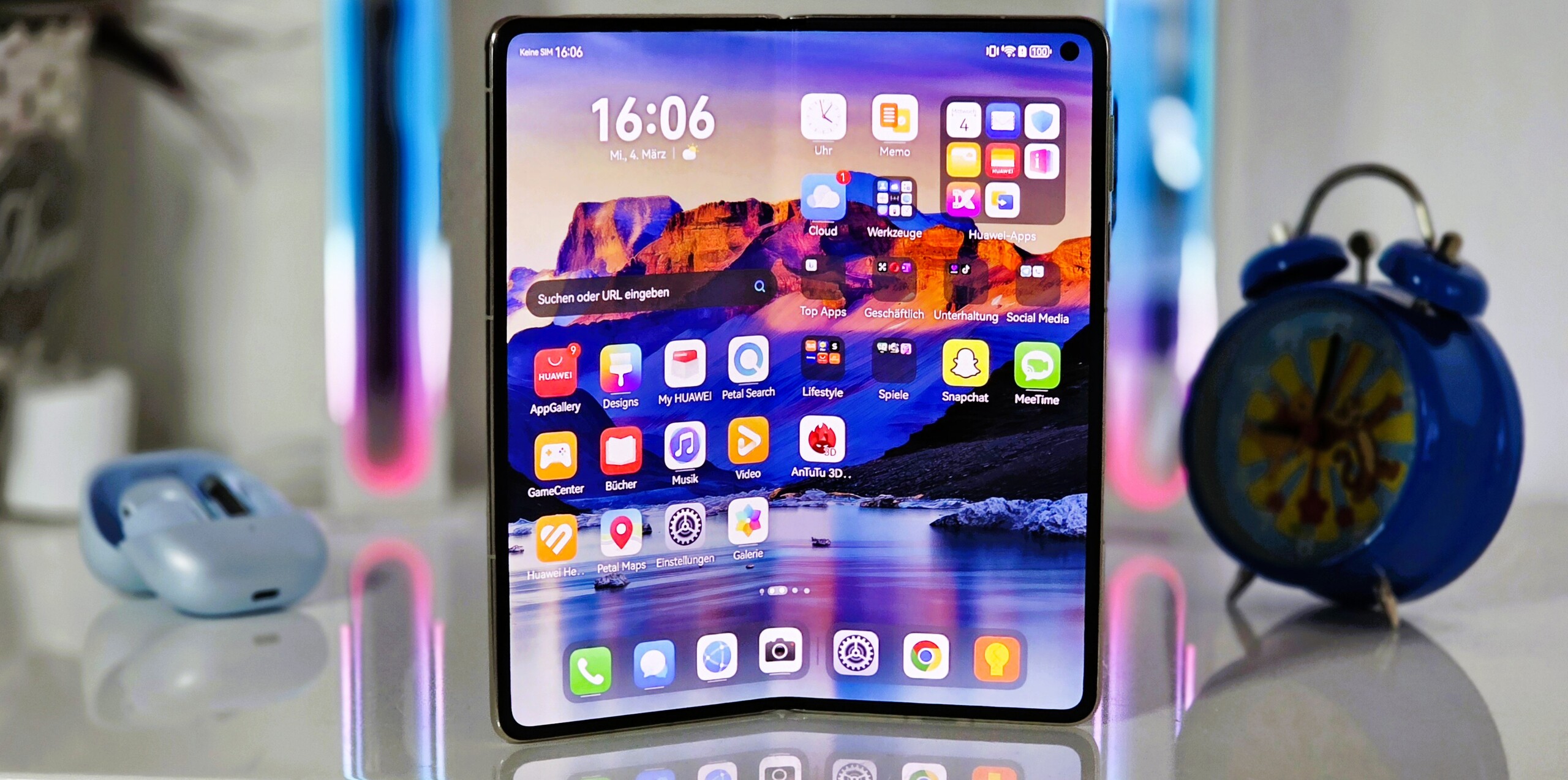
Verdict on the Huawei Mate X7
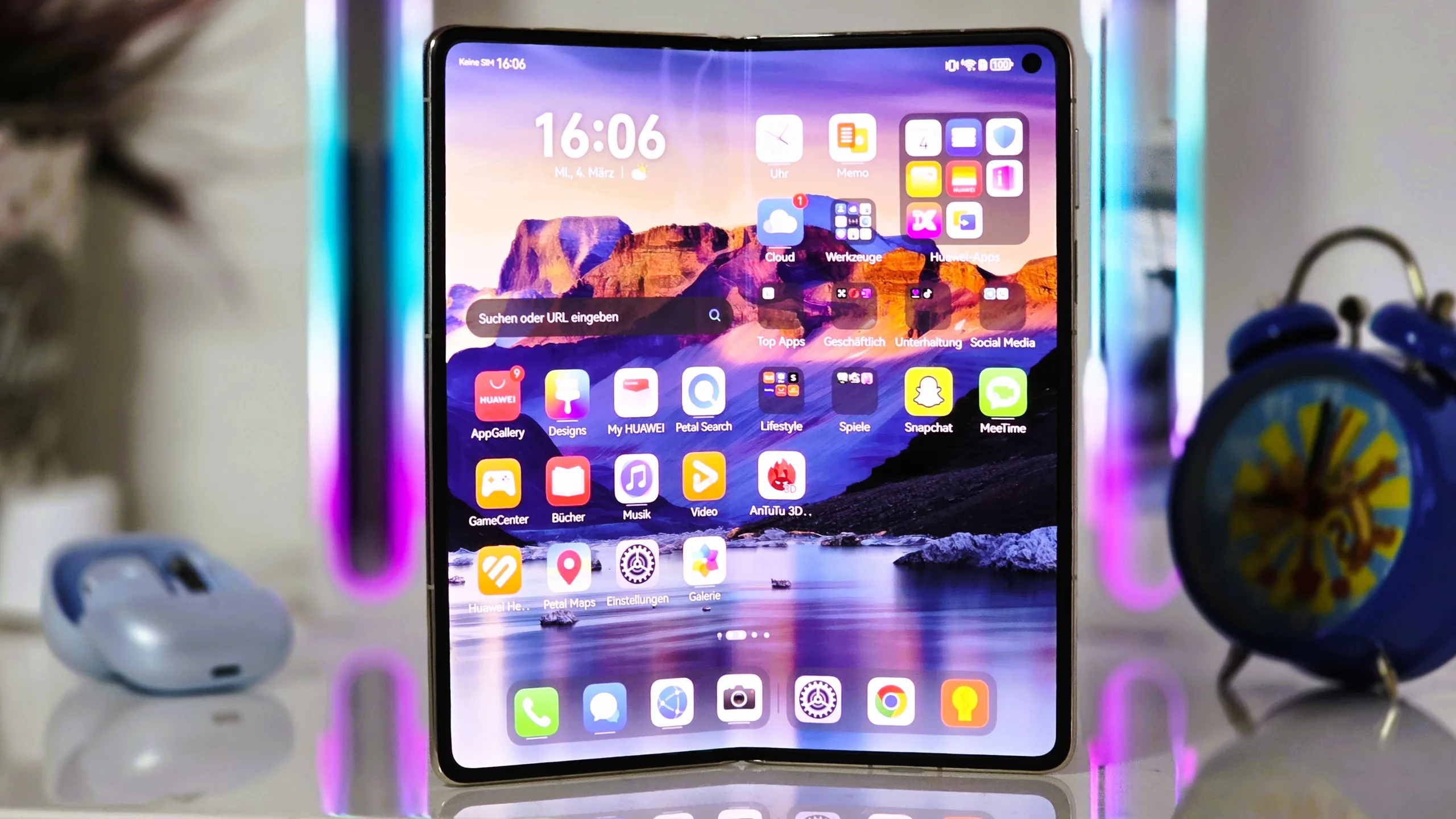
The Mate X7 is a solid foldable with a strong camera setup, but for a 2026 foldable, it does not always match rival flagship foldables in terms of technology. It also has weaknesses in key areas such as cellular connectivity and performance. Without 5G support and with a Kirin 9030 Pro that performs adequately in everyday use but is nowhere near Snapdragon flagships, it is hard to recommend, at least at Huawei’s intended price point.
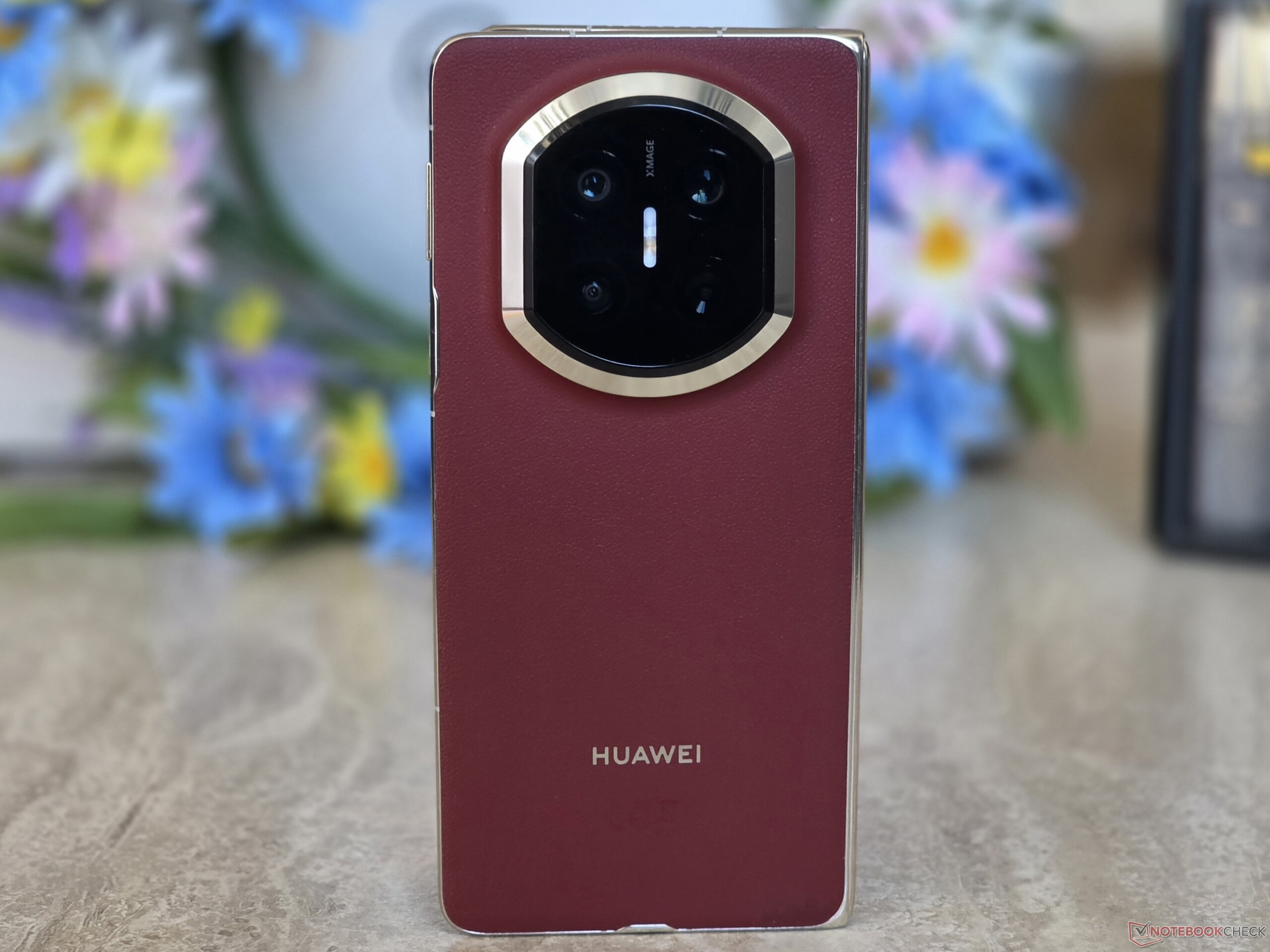
Despite its very slim body, the cameras deserve special mention. For a thin foldable, the Mate X7 is exceptionally well positioned. The main camera in particular delivers excellent images, and thanks to its variable aperture and outstanding periscope telephoto lens, Huawei currently likely offers the best overall package for photo quality in the foldable segment, even if low-light performance could have been slightly better given the RYYB sensor.
Pros
Cons
Price and availability of the Huawei Mate X7
The Huawei Mate X7, with 16 GB of RAM and 512 GB of flash storage, has an MSRP of €2,099 (approx. $2,406). The foldable phone is available from Amazon Germany or directly from Huawei.
Translator’s note: Huawei smartphones are not officially available in North America.
Table of Contents
- Verdict on the Huawei Mate X7
- Specifications
- Case and features - Foldable smartphone carries a weight disadvantage
- Connectivity and operation - Android phone with Wi-Fi 7
- Software and sustainability - Huawei's super-thin phone still without Google
- Cameras - Android phone with OIS and 50 MPix
- Foldable display - Android smartphone with 8-inch OLED
- Cover display - Brighter than the large OLED screen
- Performance, emissions and battery life - Foldable phone with a new chipset
- Notebookcheck overall rating
- Possible alternatives in comparison
Specifications
Case and features - Foldable smartphone carries a weight disadvantage
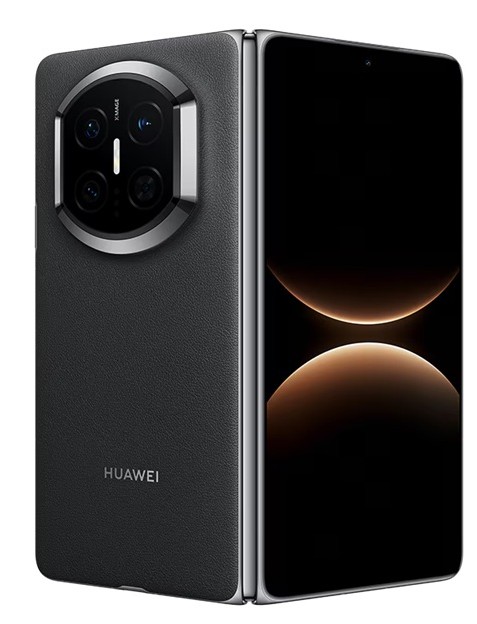
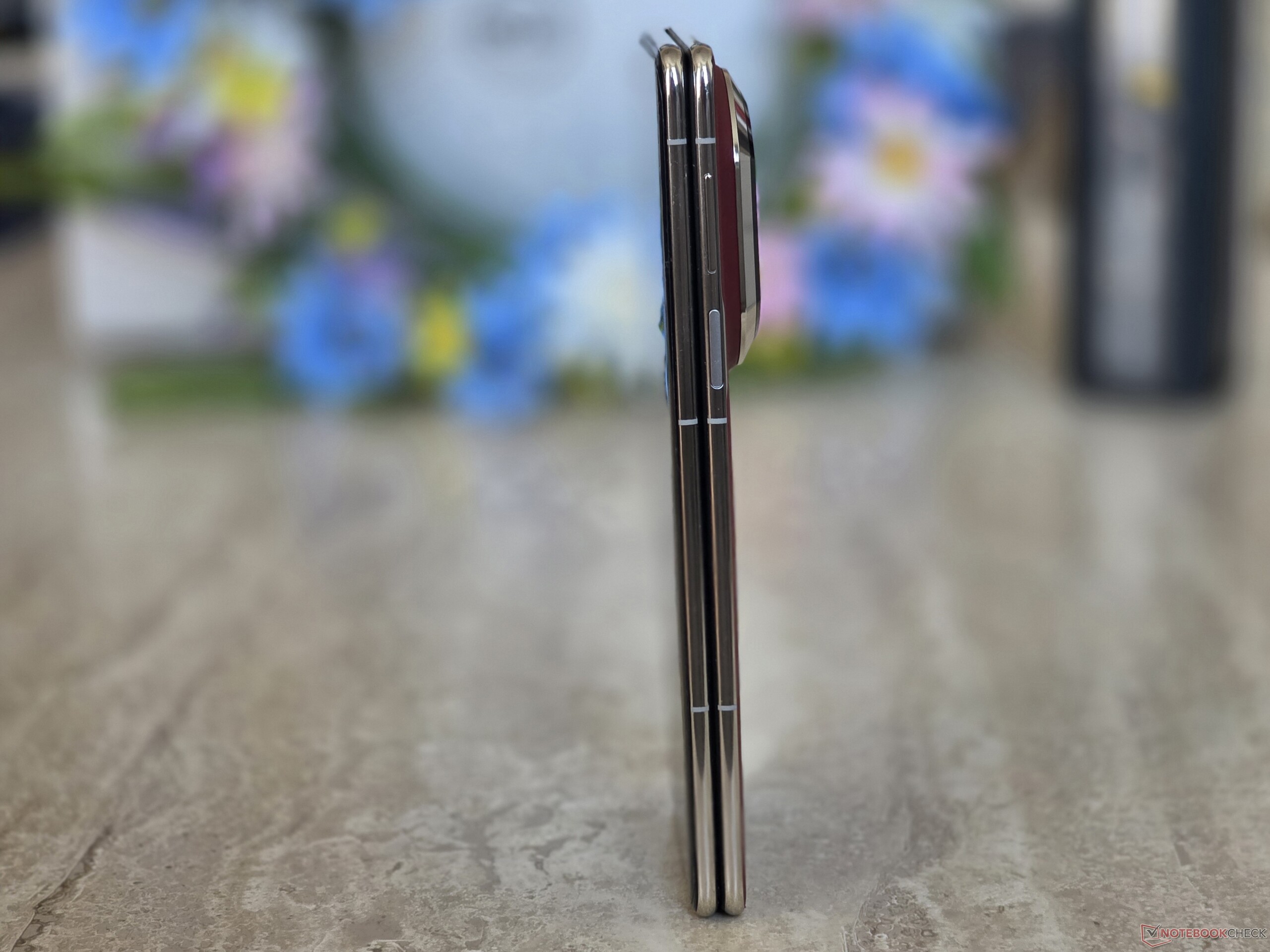
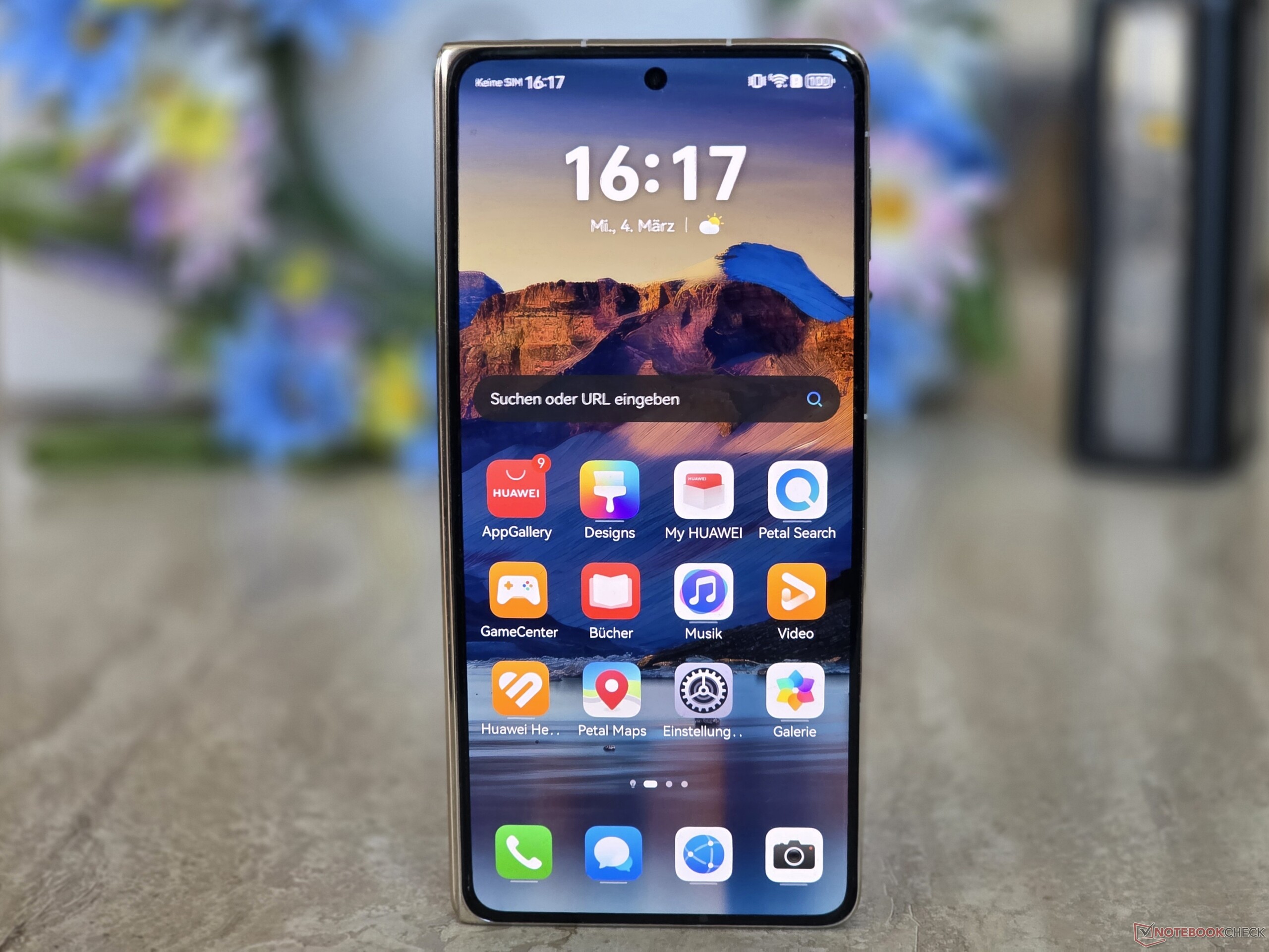
When unfolded, Huawei’s foldable measures just 4.5 mm; when folded, the Mate X7 comes in at 9.5 mm. That makes the foldable only slightly thicker than a current flagship phone. However, the Mate X7 does face some criticism for its weight of 236 grams, as the Galaxy Z Fold7 and Magic V5 are significantly lighter.
The chassis not only feels premium, but is also IP59-certified and therefore water-resistant. The crease is by no means pronounced, but it is clearly noticeable. Given the approaching wave of crease-free competitors waiting in the wings, Huawei is no longer state of the art in this respect for 2026 either.
Unlike the Mate X6, the 2026 model now comes with a USB 3.1 port. In addition to wired display output, including an optional desktop mode, this also enables fast data transfers.
Connectivity and operation - Android phone with Wi-Fi 7
The Huawei Mate X7 is equipped with NearLink and supports Wi-Fi 7, but it does not use the 6 GHz band. In combination with our reference router, the Asus ROG Rapture GT-AXE11000, the foldable shows minor weaknesses, although the comparatively slow Wi-Fi transfer speeds are unlikely to be noticeable in everyday use.
The foldable smartphone does not support 5G and connects only to LTE networks. It supports dual SIM with either two nano-SIMs or a combination of one nano-SIM and one eSIM. Call quality is natural and clear.
For biometric security, there is a capacitive fingerprint sensor integrated into the power button, which impresses with good recognition rates and fast response times.
| Networking | |
| Huawei Mate X7 | |
| iperf3 transmit AXE11000 | |
| iperf3 receive AXE11000 | |
| Samsung Galaxy Z Fold7 | |
| iperf3 transmit AXE11000 6GHz | |
| iperf3 receive AXE11000 6GHz | |
| Vivo X Fold 5 | |
| iperf3 transmit AXE11000 6GHz | |
| iperf3 receive AXE11000 6GHz | |
| Honor Magic V5 | |
| iperf3 transmit AXE11000 6GHz | |
| iperf3 receive AXE11000 6GHz | |
| Oppo Find N5 | |
| iperf3 transmit AXE11000 | |
| iperf3 receive AXE11000 | |
| Average 802.11 a/b/g/n/ac/ax/be | |
| iperf3 transmit AXE11000 | |
| iperf3 receive AXE11000 | |
| iperf3 transmit AXE11000 6GHz | |
| iperf3 receive AXE11000 6GHz | |
| Average of class Smartphone | |
| iperf3 transmit AXE11000 | |
| iperf3 receive AXE11000 | |
| iperf3 transmit AXE11000 6GHz | |
| iperf3 receive AXE11000 6GHz | |
Software and sustainability - Huawei's super-thin phone still without Google
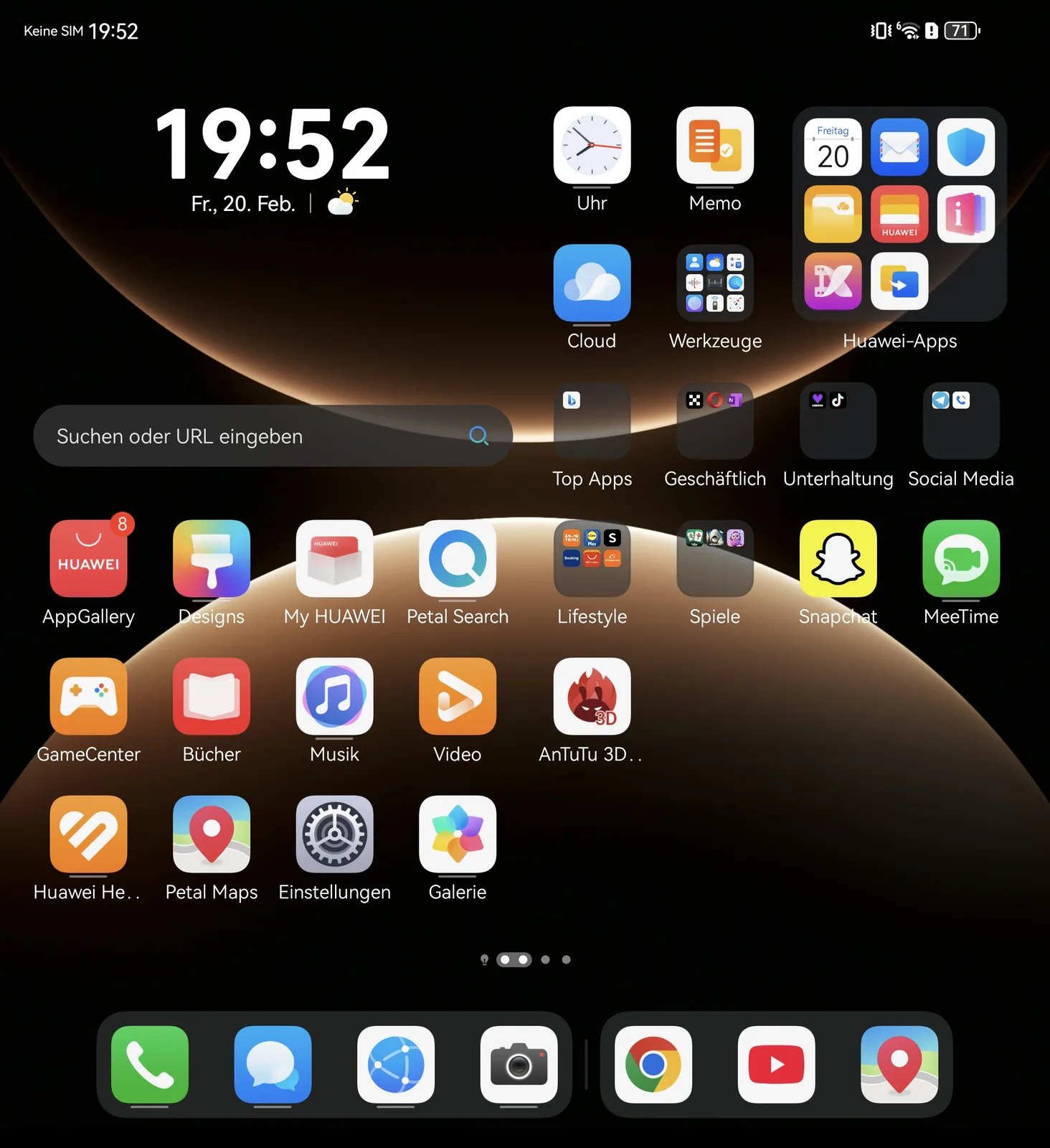
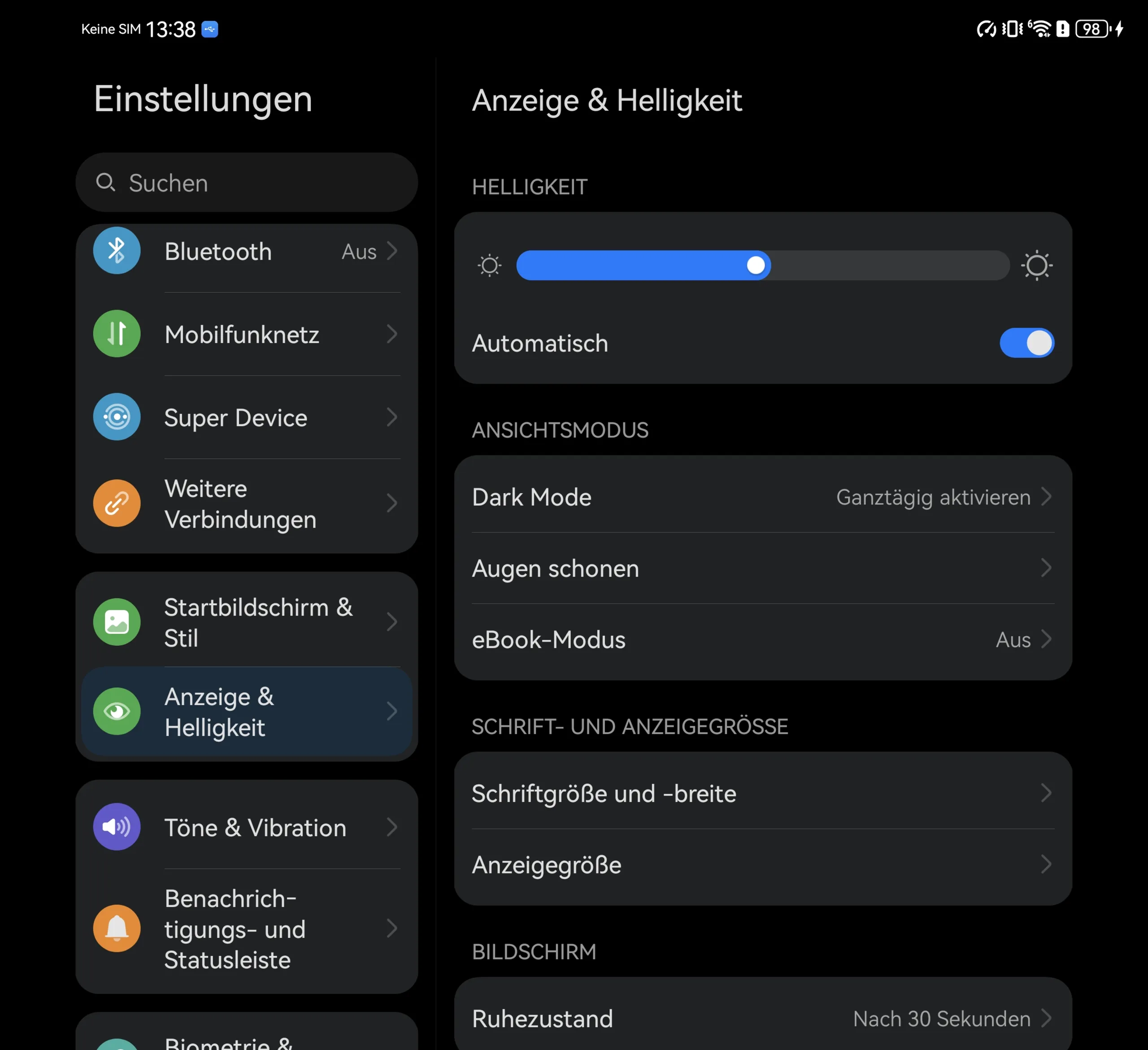
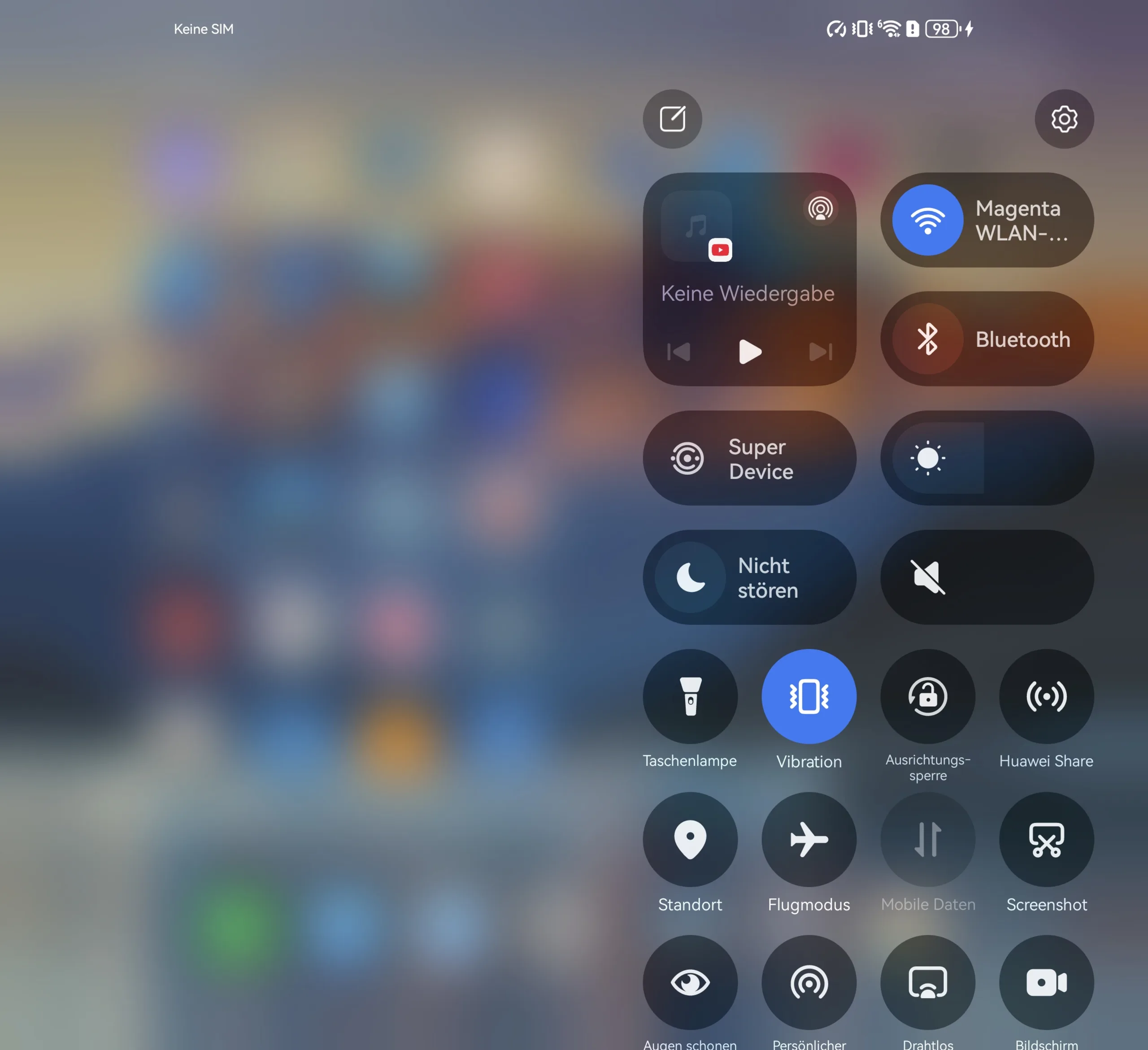
The Huawei Mate X7 ships with EMUI 15, which is based on open-source Android 12. It also comes without preinstalled Google services or Google apps. Users who find Huawei’s AppGallery insufficient can turn to the Aurora Store instead, which provides full access to the Google Play Store library.
Compared with its predecessor, update support has improved significantly. Due to the new EU regulation, Huawei must also, at least in theory, provide security updates for its smartphones for a minimum of five years. This is noted for the foldable in the EPREL database.
Huawei provides little information on sustainability. There are no details on its CO2 footprint or the use of recycled materials. One positive point, however, is that the outer packaging is made of cardboard and the packaging materials do not use plastic.
Cameras - Android phone with OIS and 50 MPix

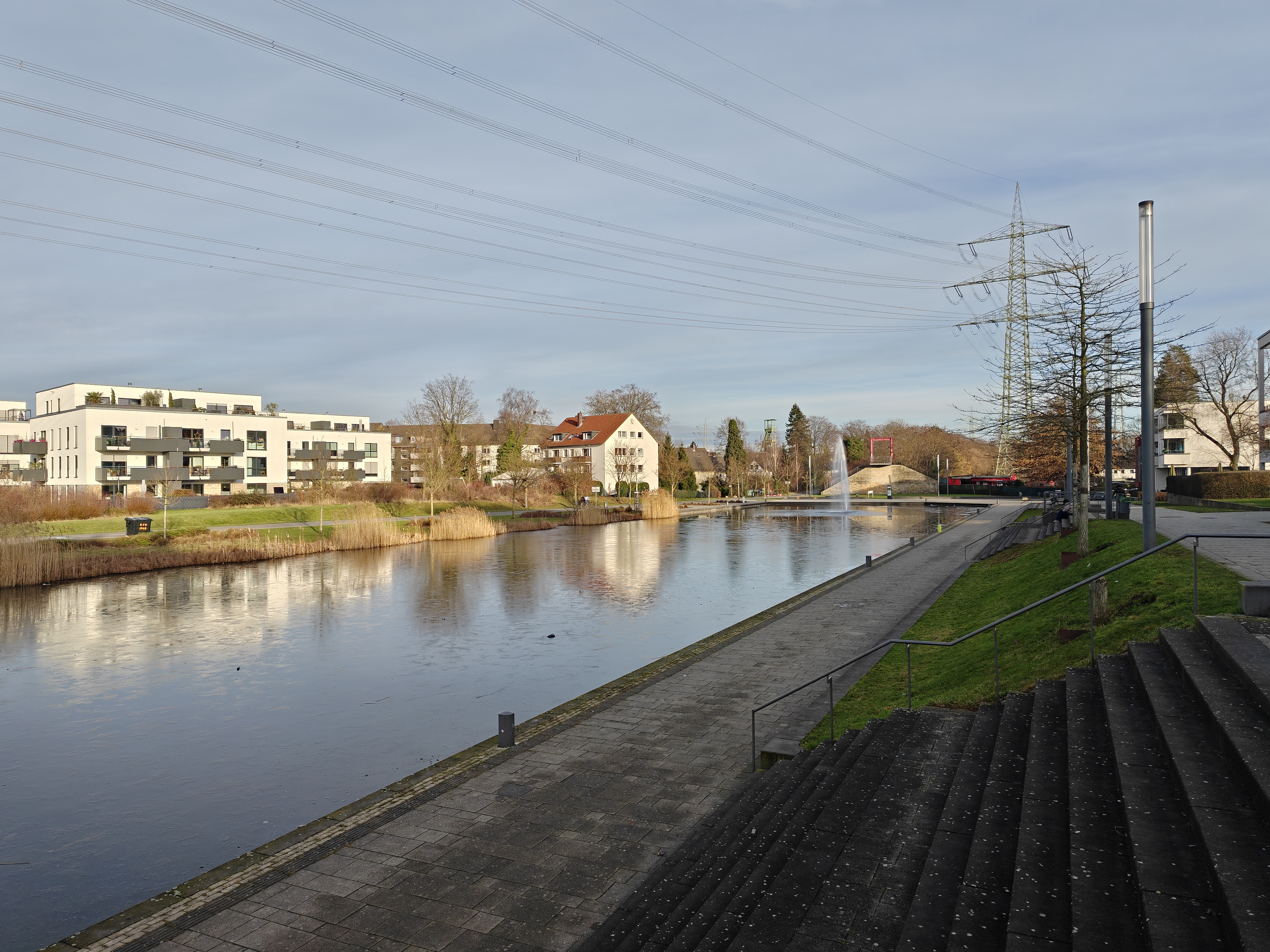
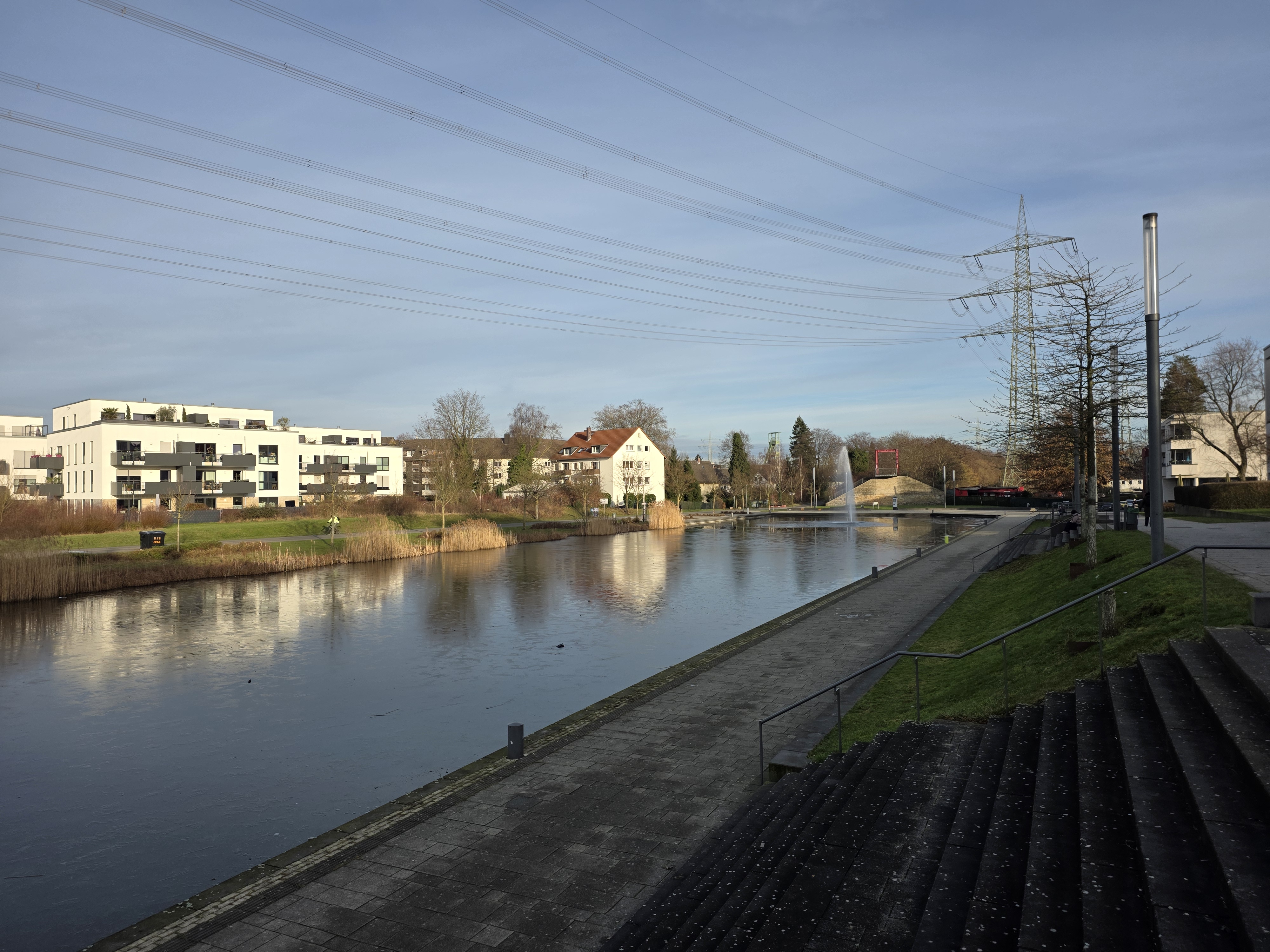
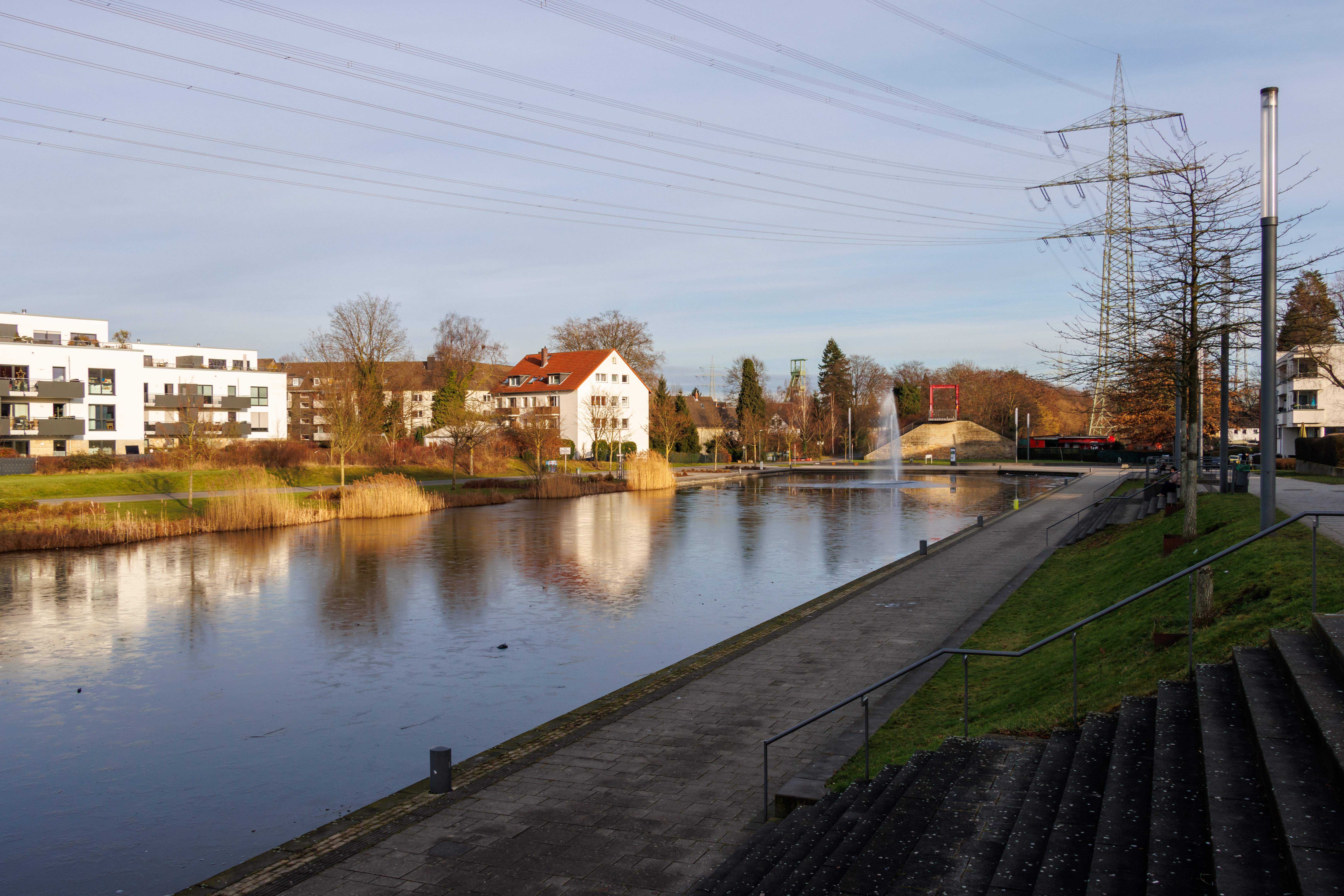
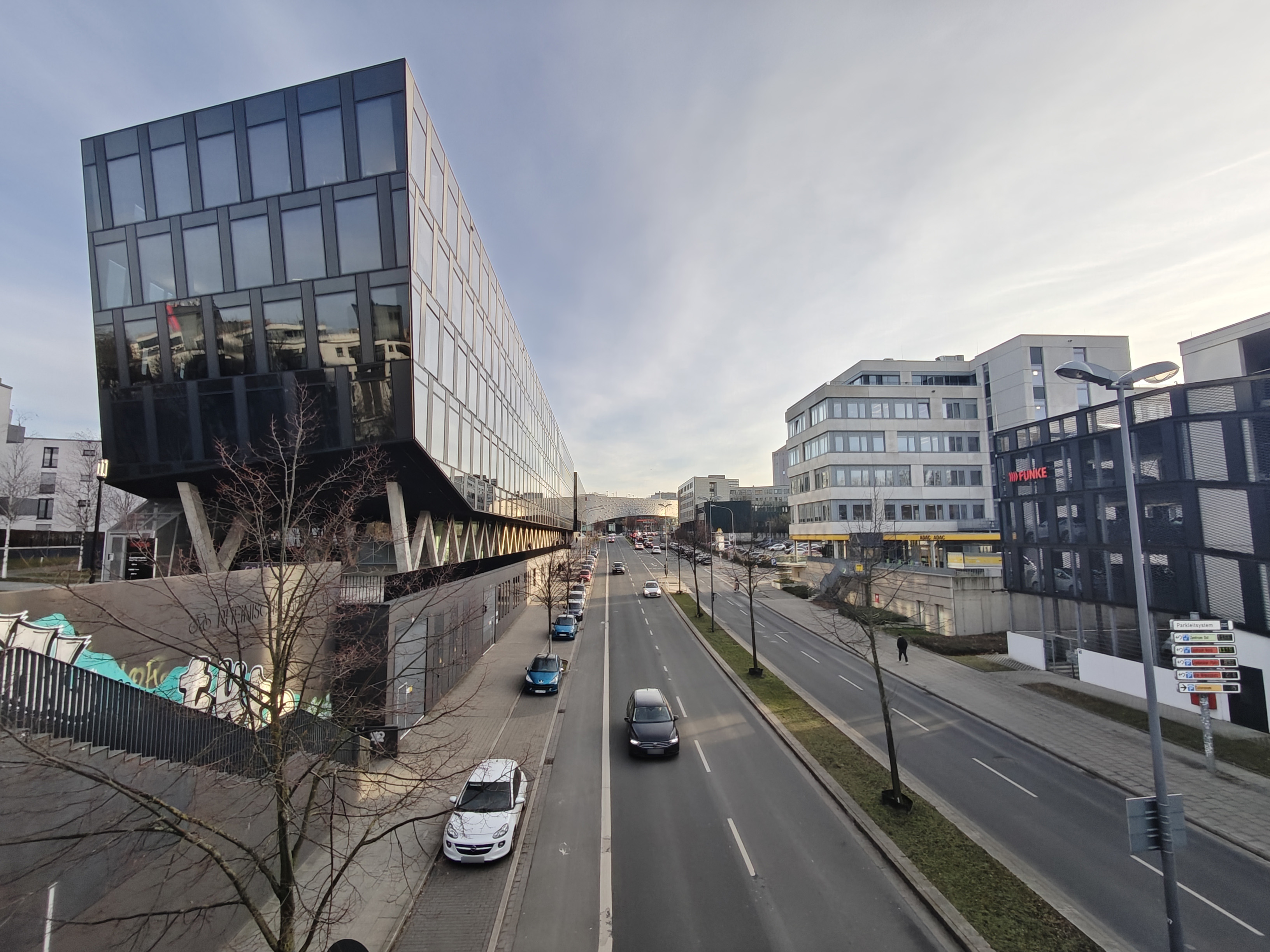
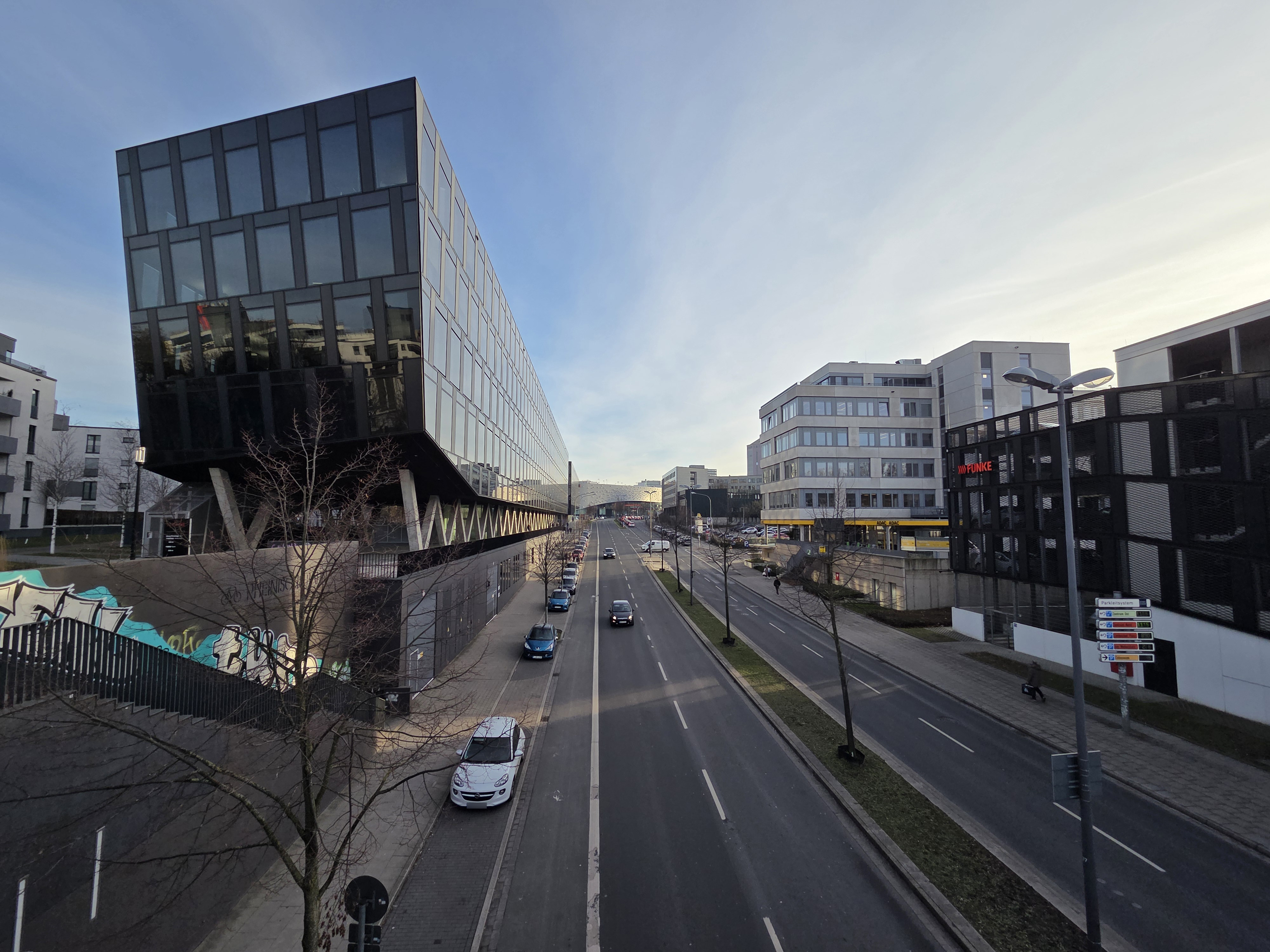
The Mate X7 features a 50 MP main camera with a 1/1.28-inch sensor that is fairly large for a foldable. Huawei’s foldable also offers a variable aperture of f/1.49 to f/4.0.
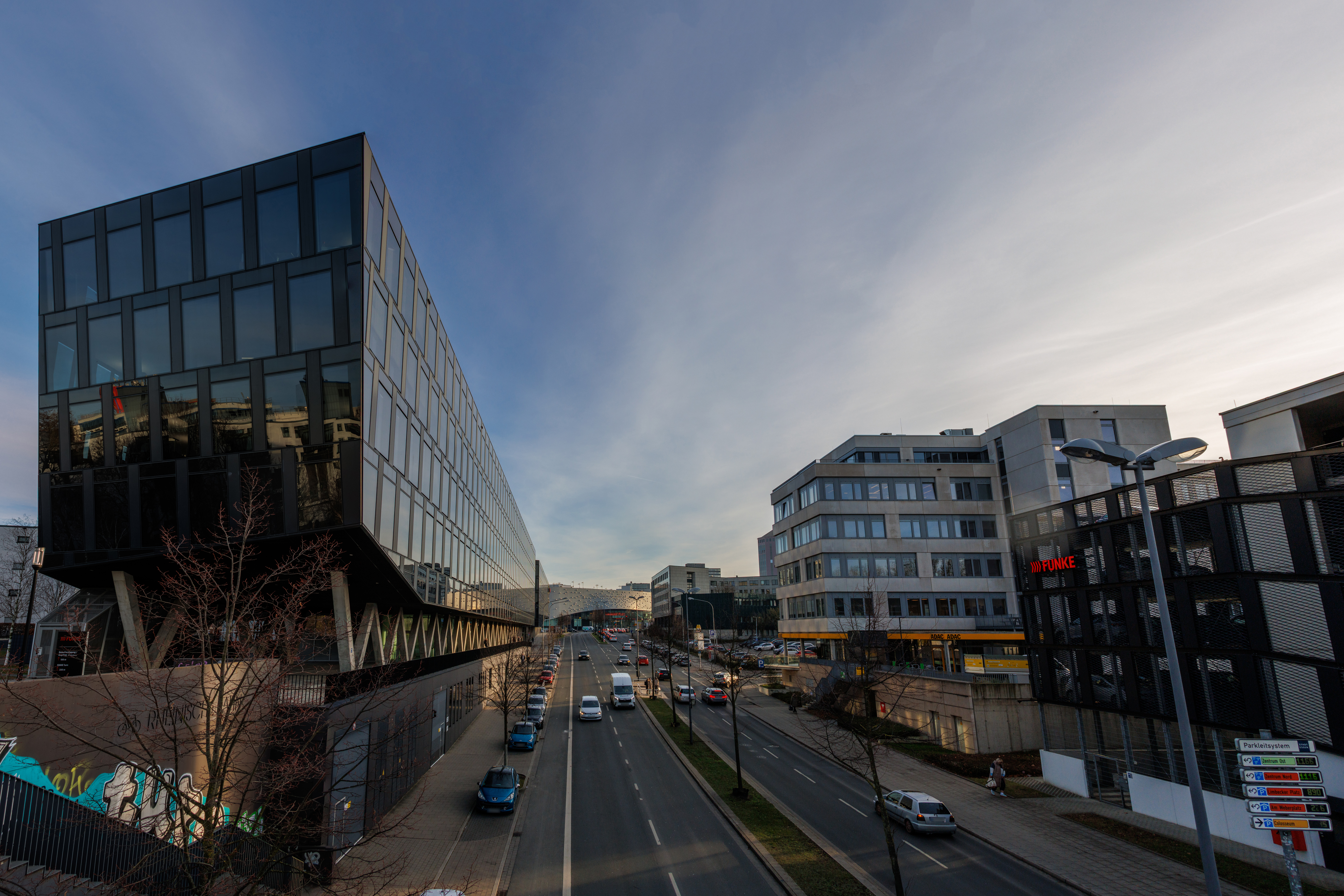
The results are not quite top-tier, but they are remarkably good for a super-slim smartphone. We particularly like the sharpness and dynamic range. In low light, we would have expected slightly better illumination given the RYYB sensor. Even so, the Mate X7 is still no worse than a Galaxy Z Fold 7.
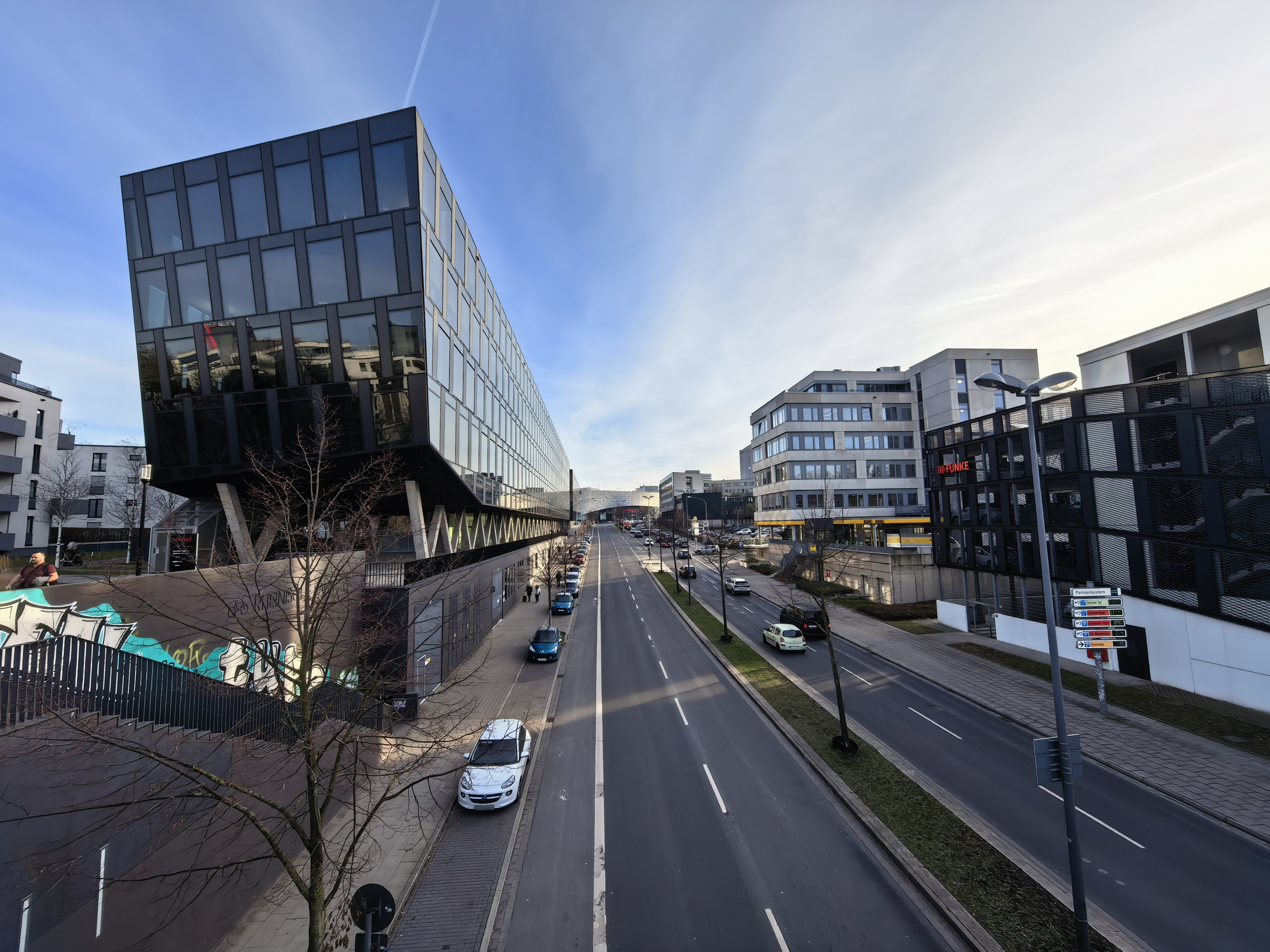
However, the Huawei phone’s biggest advantage lies beyond the main camera. The 40 MP ultra-wide camera and especially the 50 MP periscope telephoto camera with 3.5x zoom are first-rate for this product category and make the difference.





Image comparison
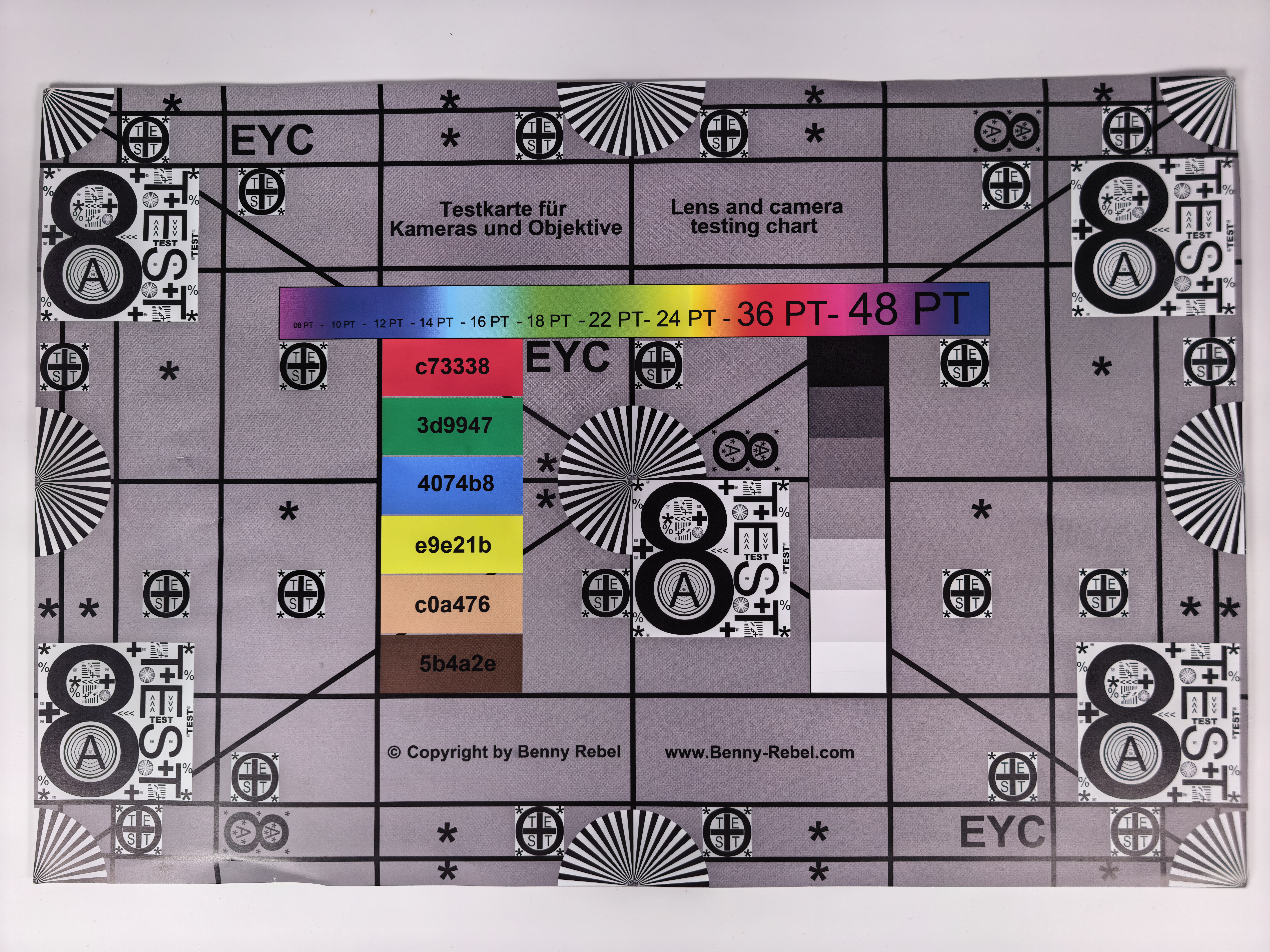
Choose a scene and navigate within the first image. One click changes the position on touchscreens. One click on the zoomed-in image opens the original in a new window. The first image shows the scaled photograph of the test device.
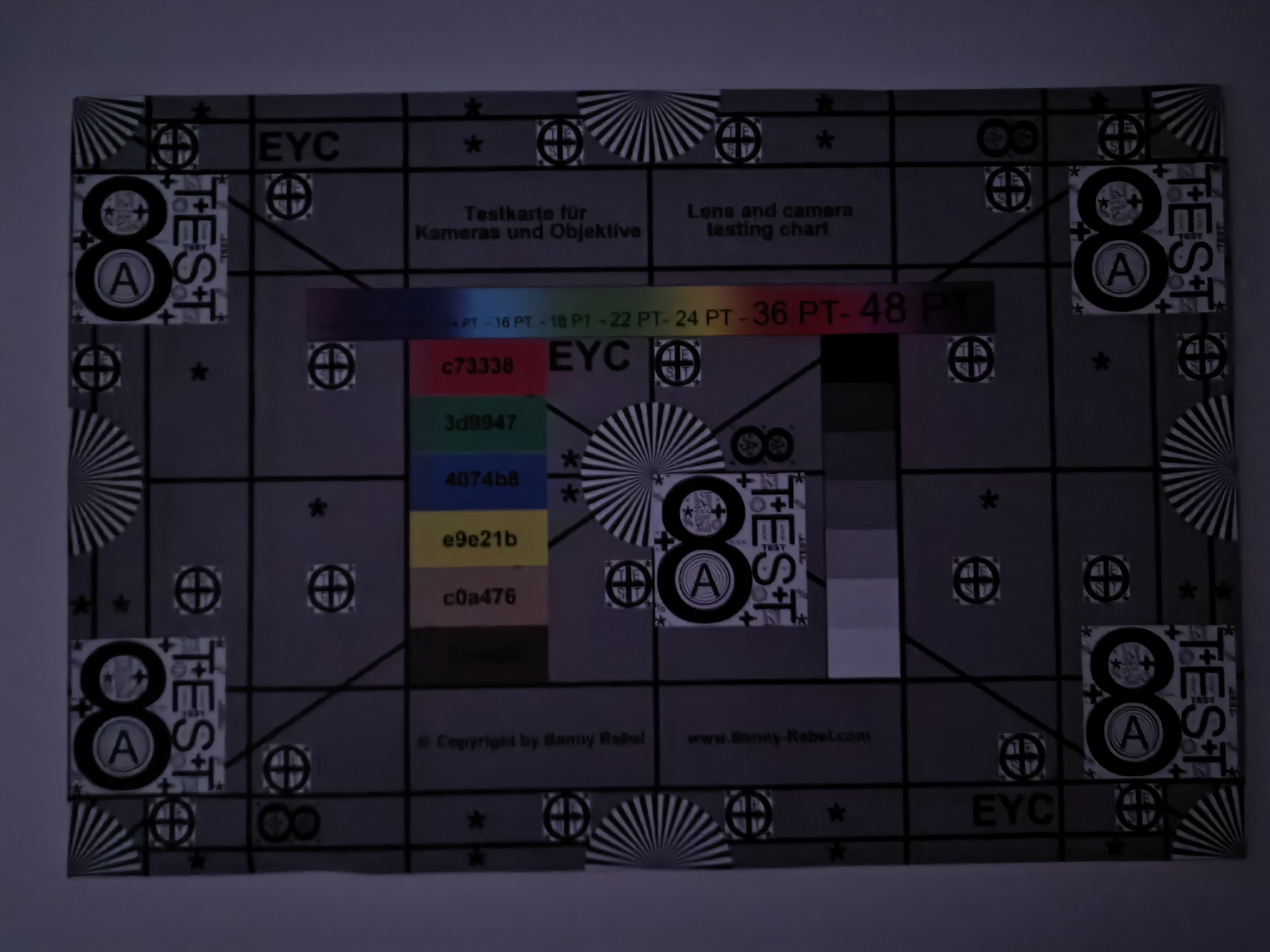
Main cameraMain cameraLow LightWide angleZoom 5x
















Foldable display - Android smartphone with 8-inch OLED
The foldable 120 Hz main display measures 8 inches and, thanks to its resolution of 2,416 x 2,210 pixels, achieves a pixel density of 409 ppi. In our APL measurement, we recorded peak brightness of around 1,500 cd/m², and the same applies to HDR videos at 1,496 cd/m². These are solid values, but Samsung’s foldables are significantly brighter.
Using the oscilloscope, we measured a base frequency of 360 Hz. However, high-frequency PWM dimming of more than 1,500 Hz is also used, so any health effects for sensitive users should remain limited.
| |||||||||||||||||||||||||
Brightness Distribution: 97 %
Center on Battery: 1005 cd/m²
Contrast: ∞:1 (Black: 0 cd/m²)
ΔE ColorChecker Calman: 1.4 | ∀{0.5-29.43 Ø4.68}
ΔE Greyscale Calman: 2.2 | ∀{0.09-98 Ø4.93}
99.8% sRGB (Calman 2D)
Gamma: 2.25
CCT: 6890 K
| Huawei Mate X7 OLED, 2416x2210, 8" | Samsung Galaxy Z Fold7 Dynamic AMOLED 2X, 2184x1968, 8" | Vivo X Fold 5 AMOLED LTPO, 2480x2200, 8" | Honor Magic V5 OLED, 2352x2172, 8" | Oppo Find N5 AMOLED, 2480x2248, 8.1" | |
|---|---|---|---|---|---|
| Screen | -4% | 27% | 32% | 5% | |
| Brightness middle (cd/m²) | 1005 | 1311 30% | 1085 8% | 1330 32% | 1240 23% |
| Brightness (cd/m²) | 1021 | 1307 28% | 1065 4% | 1357 33% | 1179 15% |
| Brightness Distribution (%) | 97 | 95 -2% | 96 -1% | 93 -4% | 91 -6% |
| Black Level * (cd/m²) | |||||
| Colorchecker dE 2000 * | 1.4 | 2.4 -71% | 0.68 51% | 0.7 50% | 1.36 3% |
| Colorchecker dE 2000 max. * | 3.1 | 3.4 -10% | 1.6 48% | 2 35% | 3.06 1% |
| Greyscale dE 2000 * | 2.2 | 2.2 -0% | 1.1 50% | 1.2 45% | 2.4 -9% |
| Gamma | 2.25 98% | 2.03 108% | 2.247 98% | 2.25 98% | 2.239 98% |
| CCT | 6890 94% | 6413 101% | 6545 99% | 6596 99% | 6353 102% |
* ... smaller is better
| Display / APL18 Peak Brightness | |
| Samsung Galaxy Z Fold7 | |
| Huawei Mate X7 | |
| Honor Magic V5 | |
| Display / HDR Peak Brightness | |
| Honor Magic V5 | |
| Samsung Galaxy Z Fold7 | |
| Huawei Mate X7 | |
Screen Flickering / PWM (Pulse-Width Modulation)
| Screen flickering / PWM detected | 360 Hz Amplitude: 15.59 % Secondary Frequency: 1562 Hz | 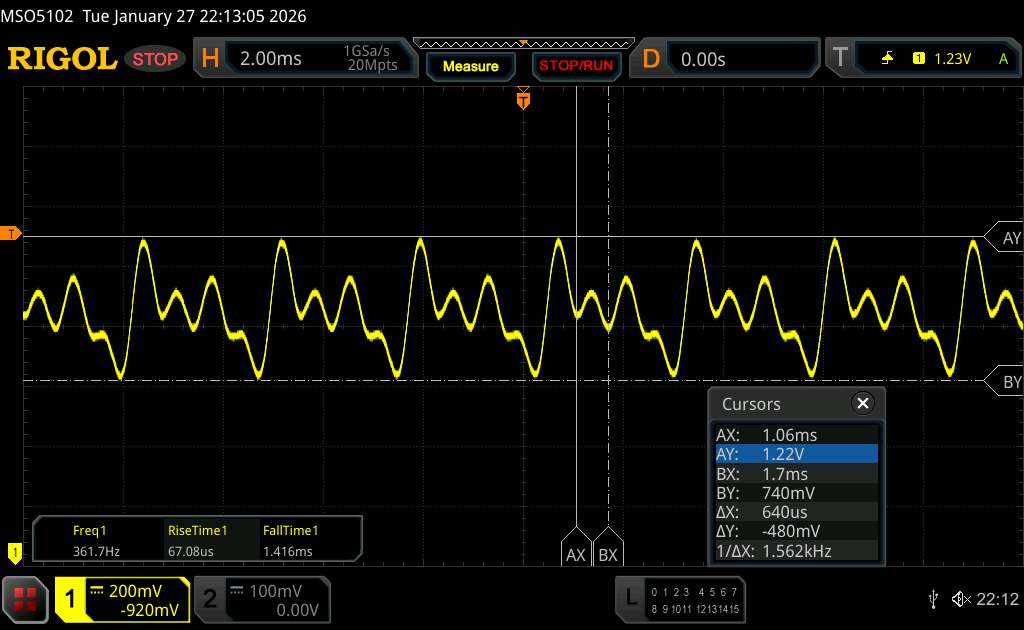 | |
The display backlight flickers at 360 Hz (worst case, e.g., utilizing PWM) . The frequency of 360 Hz is relatively high, so most users sensitive to PWM should not notice any flickering. However, there are reports that some users are still sensitive to PWM at 500 Hz and above, so be aware. In comparison: 52 % of all tested devices do not use PWM to dim the display. If PWM was detected, an average of 7572 (minimum: 5 - maximum: 343500) Hz was measured. | |||
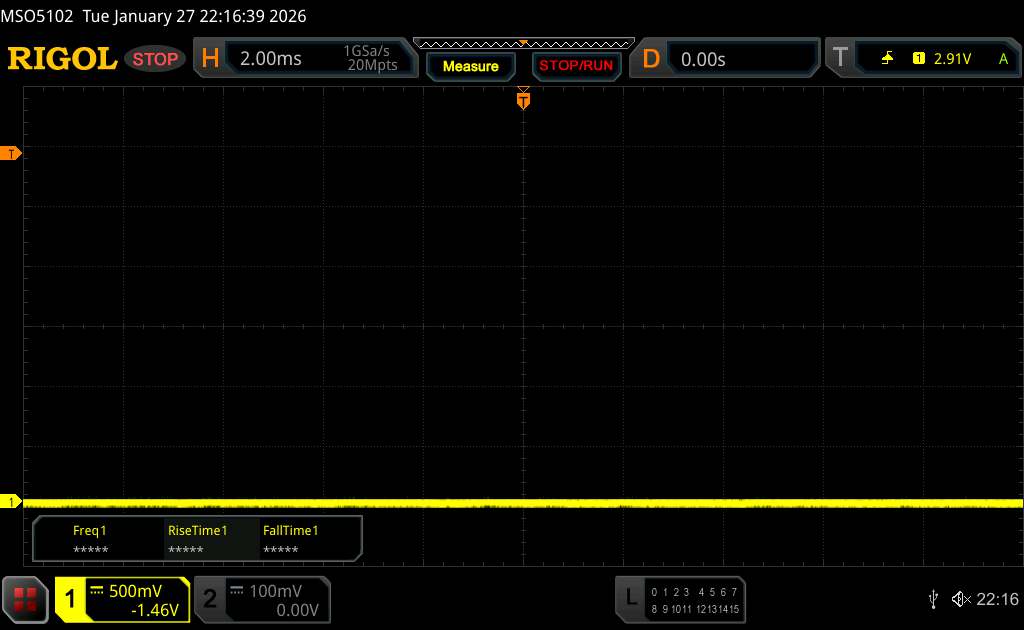
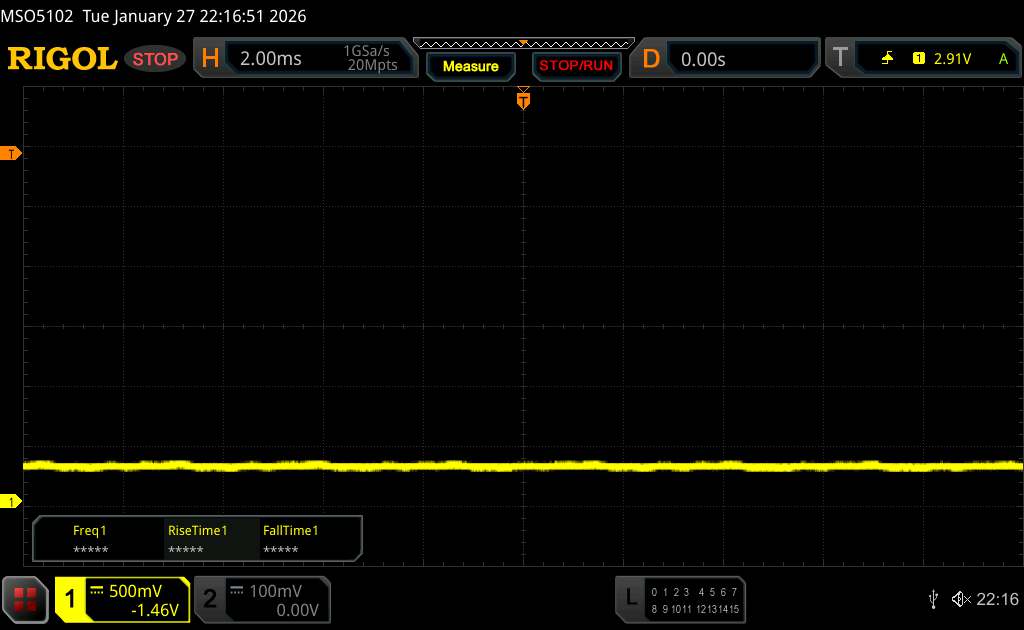
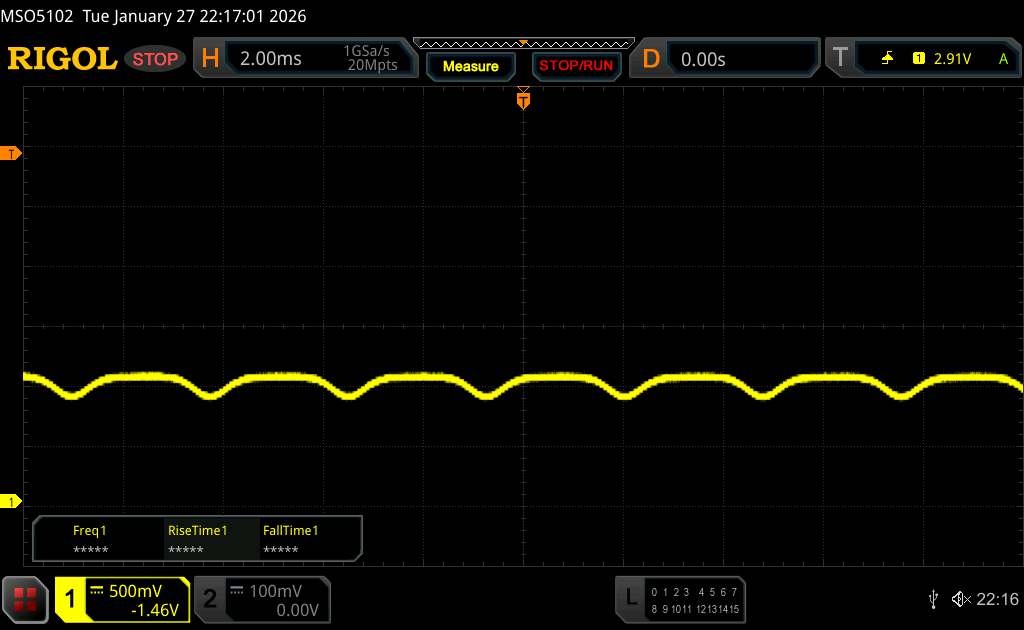
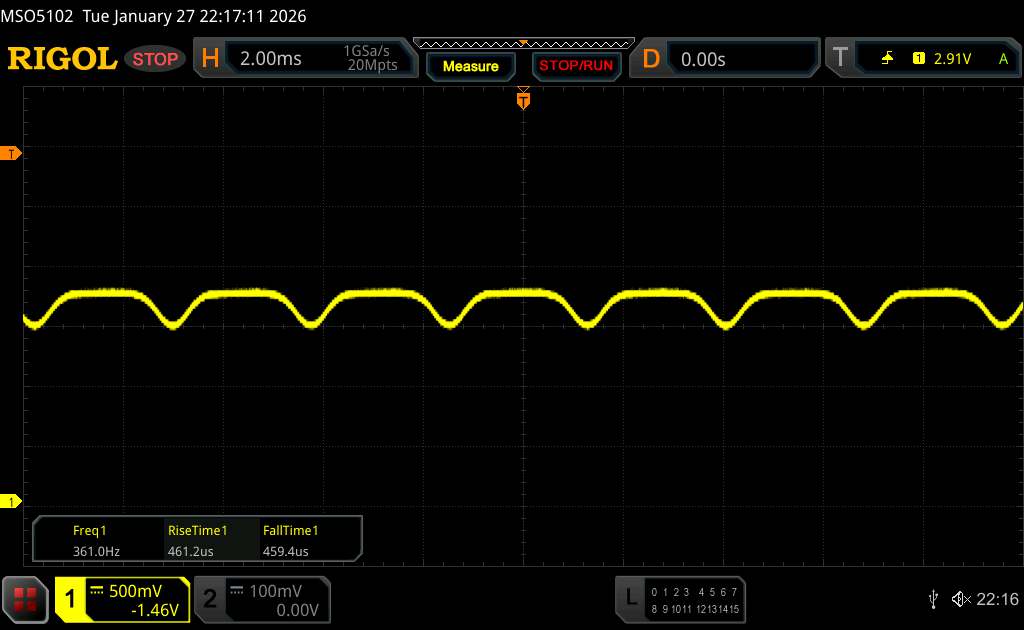
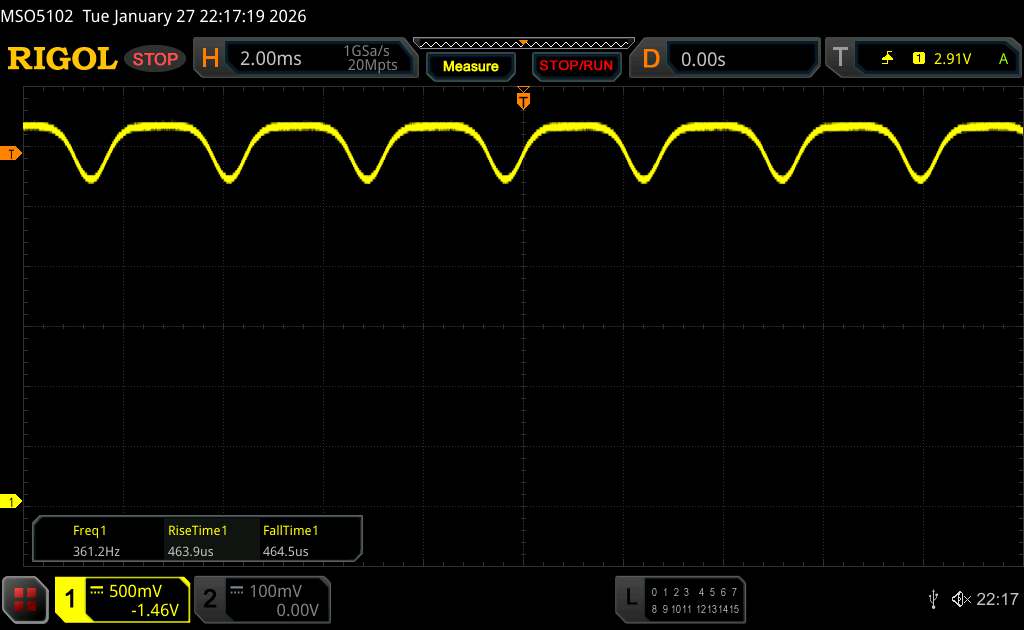
Measurement series with fixed zoom level and different brightness settings (The amplitude curve at minimum brightness looks flat, but this is due to the scaling. The info box shows the enlarged version of the amplitude at minimum brightness)


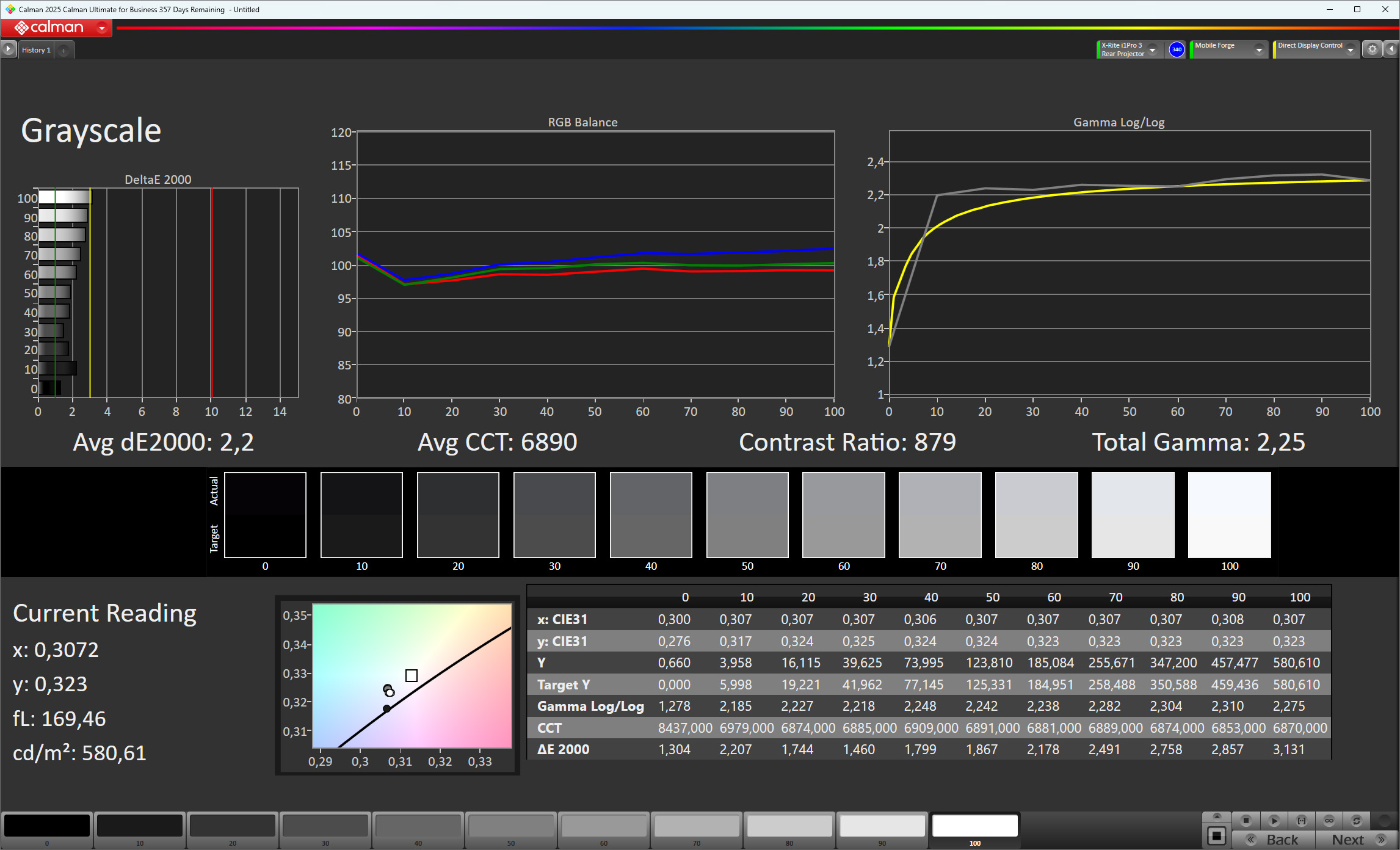
Display Response Times
| ↔ Response Time Black to White | ||
|---|---|---|
| 0.93 ms ... rise ↗ and fall ↘ combined | ↗ 0.516 ms rise | 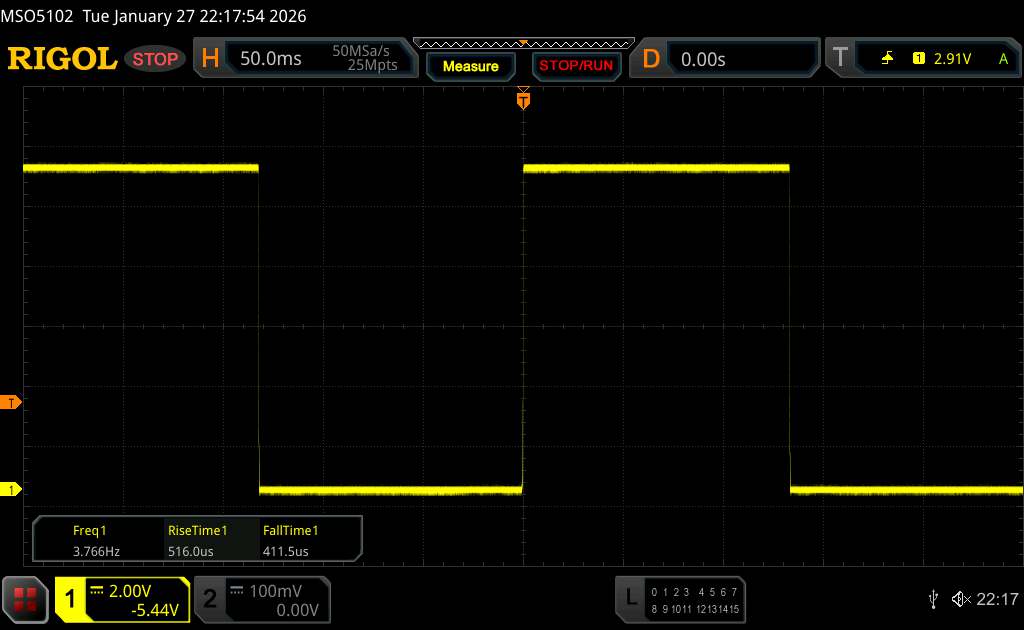 |
| ↘ 0.4115 ms fall | ||
| The screen shows very fast response rates in our tests and should be very well suited for fast-paced gaming. In comparison, all tested devices range from 0.1 (minimum) to 240 (maximum) ms. » 4 % of all devices are better. This means that the measured response time is better than the average of all tested devices (19.6 ms). | ||
| ↔ Response Time 50% Grey to 80% Grey | ||
| 0.71 ms ... rise ↗ and fall ↘ combined | ↗ 0.3535 ms rise | 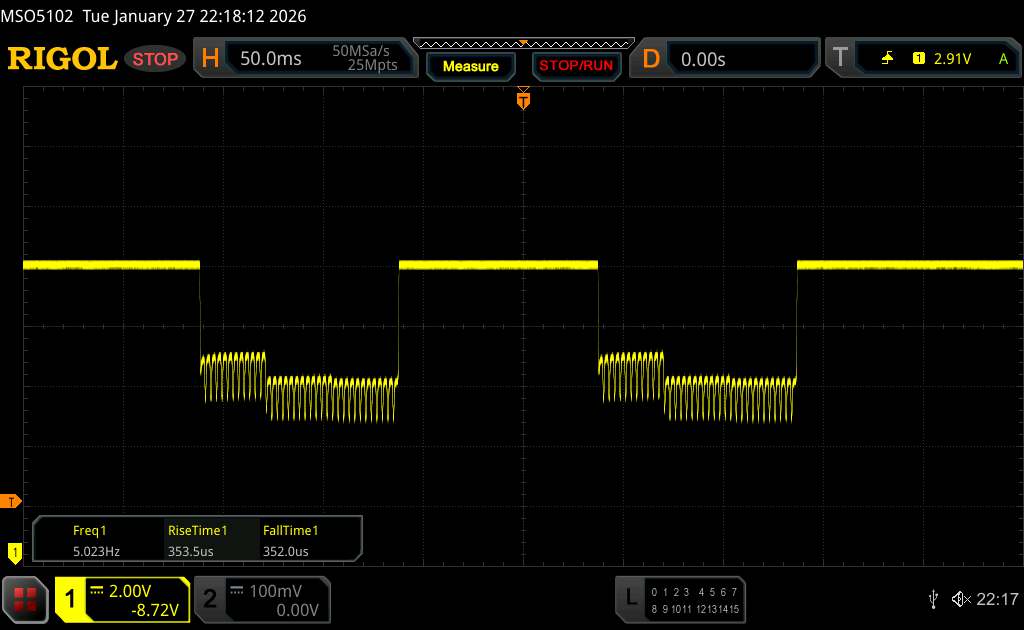 |
| ↘ 0.352 ms fall | ||
| The screen shows very fast response rates in our tests and should be very well suited for fast-paced gaming. In comparison, all tested devices range from 0.13 (minimum) to 636 (maximum) ms. » 3 % of all devices are better. This means that the measured response time is better than the average of all tested devices (30.7 ms). | ||
Cover display - Brighter than the large OLED screen
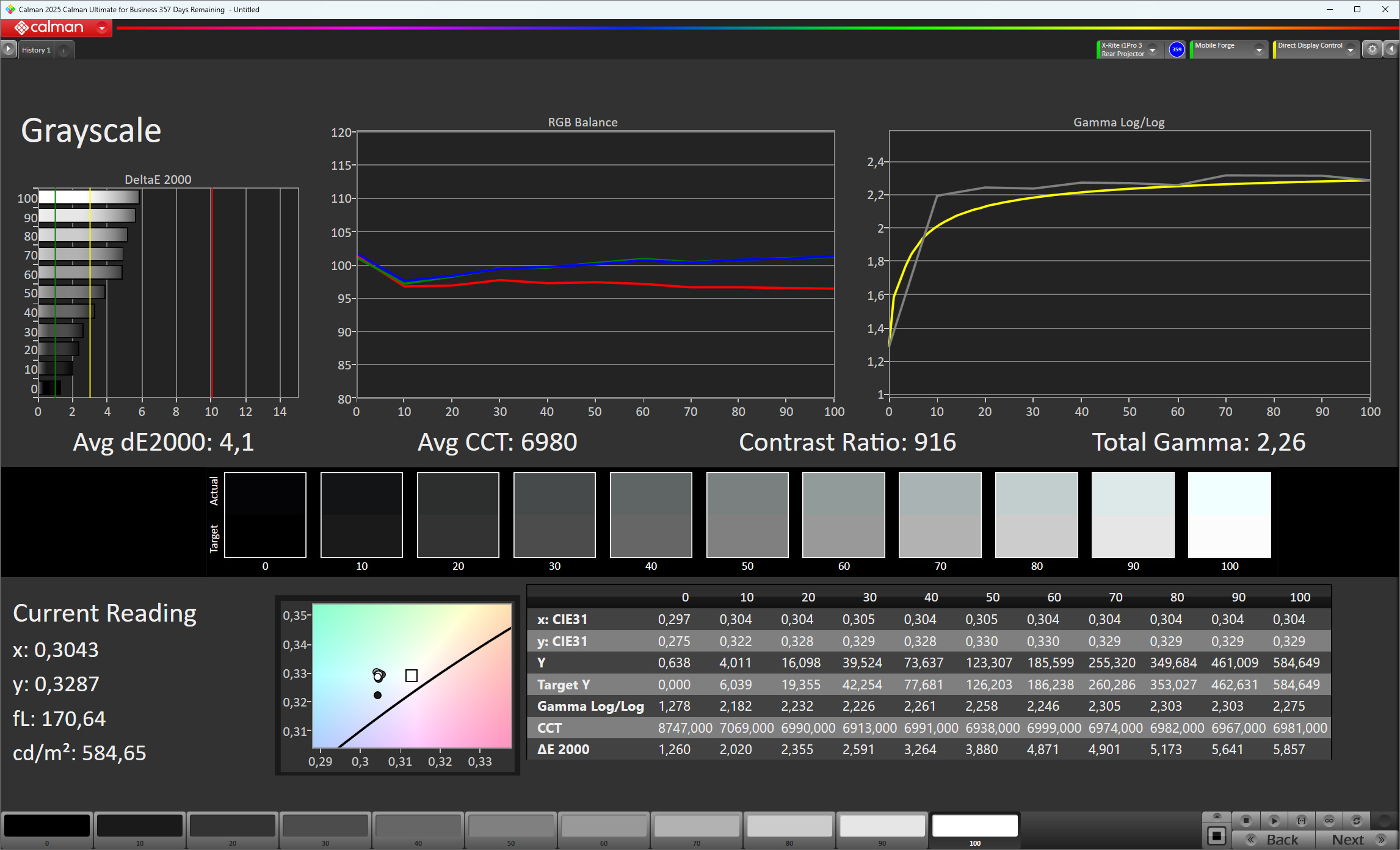
The 6.49-inch outer display is also a 120 Hz LTPO AMOLED panel, but we measured higher peak brightness here. In both the reduced white area test (APL18: 2,672 cd/m²) and the HDR measurement (2,759 cd/m²), the smaller of the two screens is significantly brighter.
Color reproduction is also on par with the foldable panel and very accurate. Huawei also makes no compromises when it comes to PWM dimming and uses the same technology here.
| Huawei Mate X7 OLED, 2444x1080, 6.5" | Samsung Galaxy Z Fold7 Dynamic AMOLED 2X, 2520x1080, 6.5" | Oppo Find N5 2616x1140, 6.6" | Honor Magic V5 OLED, 2376x1060, 6.4" | |
|---|---|---|---|---|
| Screen | ||||
| Brightness middle (cd/m²) | 1572 | 1348 | 1358 | 1701 |
| Brightness (cd/m²) | 1570 | 1346 | 1328 | 1691 |
| Brightness Distribution (%) | 96 | 94 | 96 | 97 |
| Black Level * (cd/m²) | ||||
| Colorchecker dE 2000 * | 1.1 | 2.2 | 1.14 | 0.7 |
| Colorchecker dE 2000 max. * | 3.1 | 2.9 | 2.21 | 2 |
| Greyscale dE 2000 * | 4.1 | 2.3 | 1.5 | 1.7 |
| Gamma | 2.26 97% | 2.04 108% | 2.213 99% | 2.22 99% |
| CCT | 6980 93% | 6461 101% | 6504 100% | 6396 102% |
* ... smaller is better
| Display / APL18 Peak Brightness | |
| Huawei Mate X7 | |
| Samsung Galaxy Z Fold7 | |
| Honor Magic V5 | |
| Display / HDR Peak Brightness | |
| Honor Magic V5 | |
| Huawei Mate X7 | |
| Samsung Galaxy Z Fold7 | |


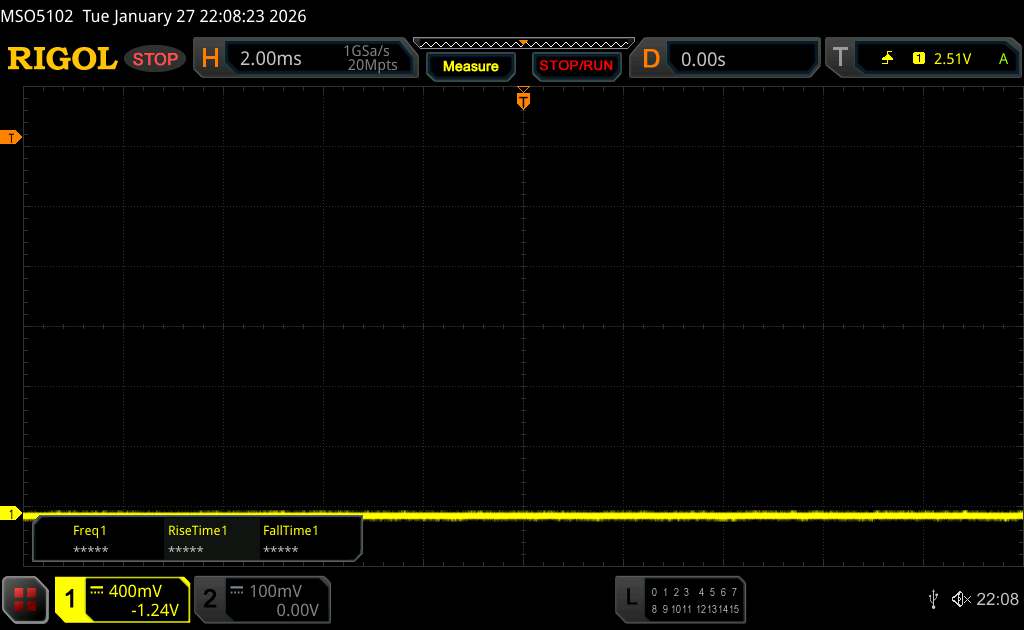
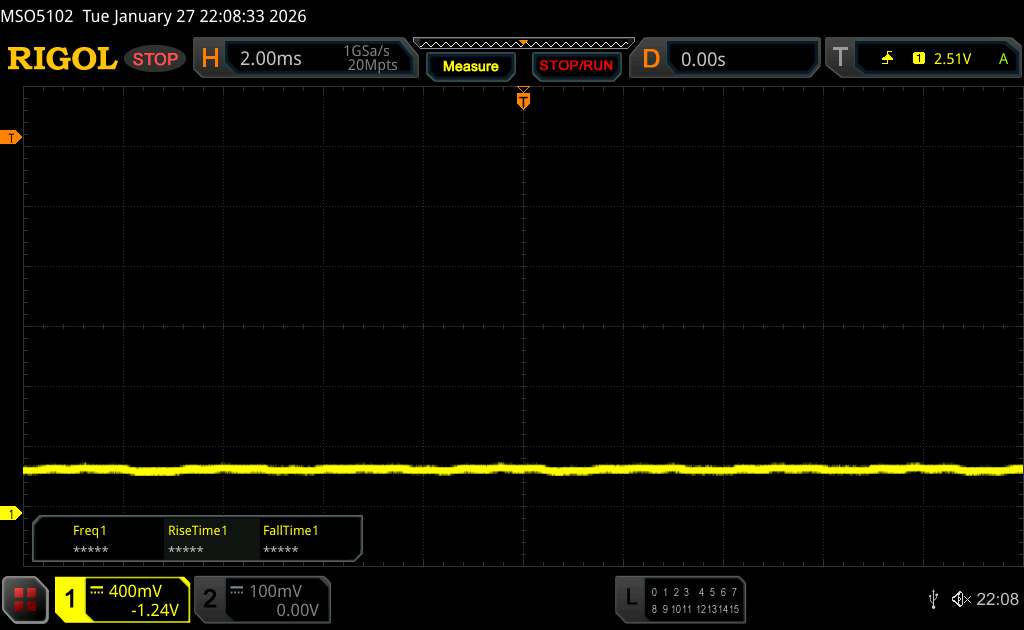
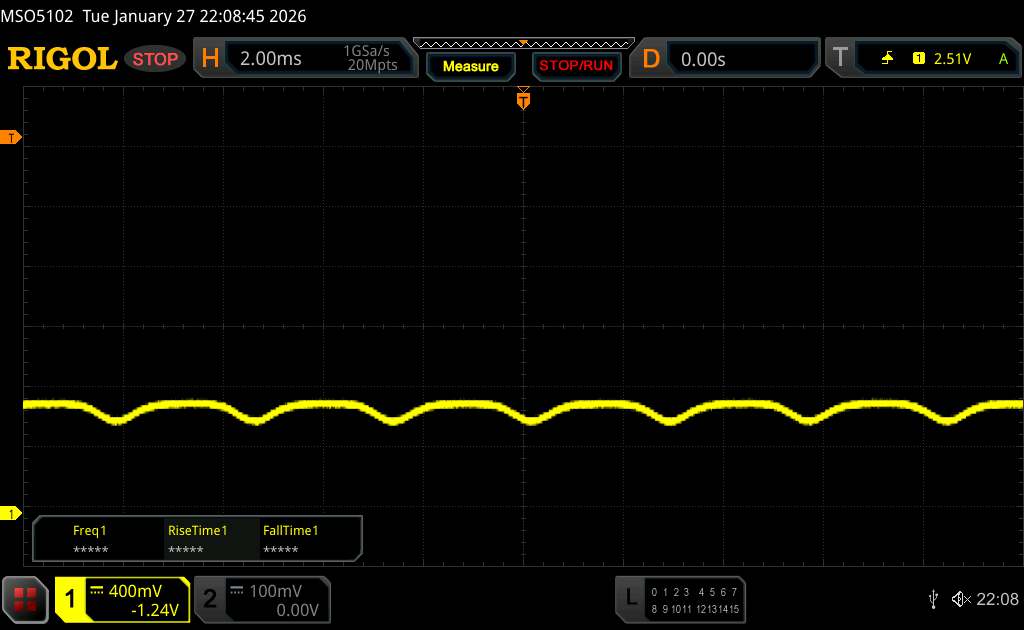
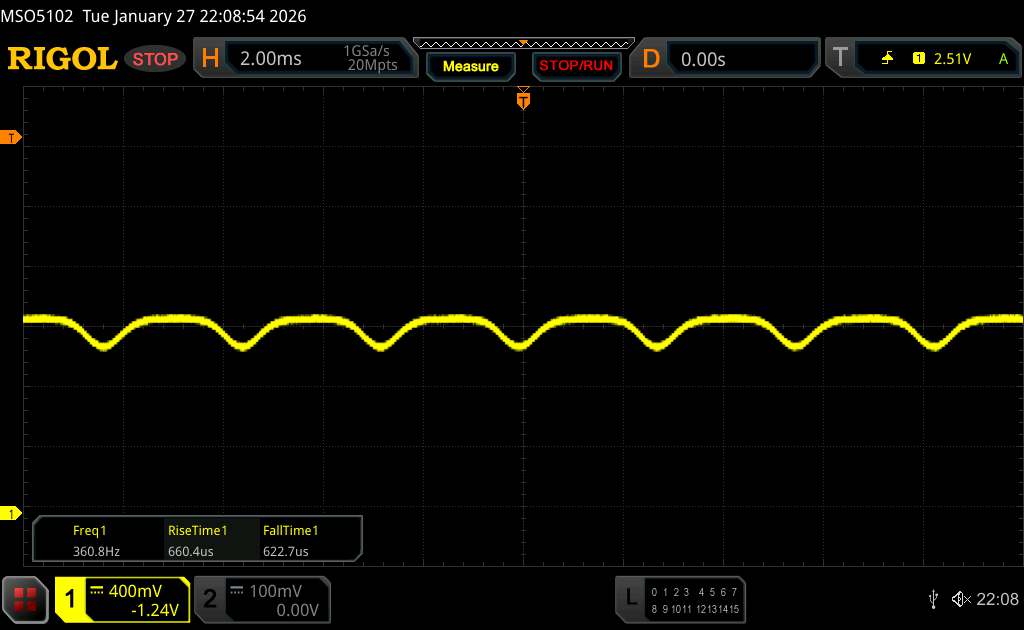
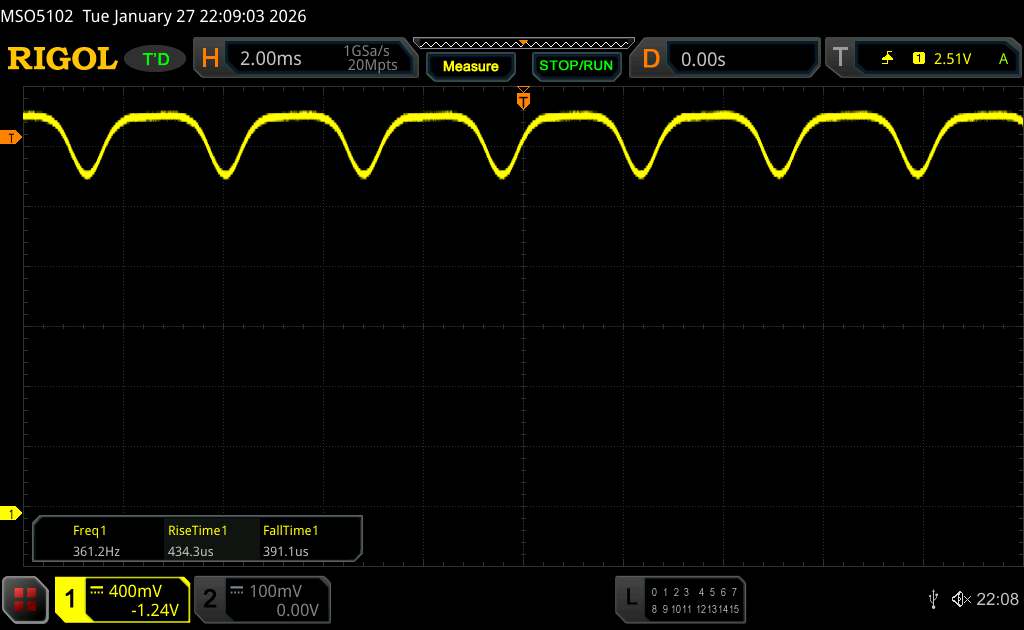
Measurement series with fixed zoom level and different brightness settings (The amplitude curve at minimum brightness looks flat, but this is due to the scaling. The info box shows the enlarged version of the amplitude at minimum brightness)
Performance, emissions and battery life - Foldable phone with a new chipset
Huawei’s foldable flagship is powered by the new HiSilicon Kirin 9030 Pro. Although there is no official information on it outside China, Huawei confirmed to us that the Pro version is installed. In everyday use, the Mate X7 delivers satisfactory system performance, even with the high-resolution inner display.
In benchmarks, however, both the CPU and GPU clearly trail competing foldables. The SoC in the Mate X7 is not really any faster than the Kirin 9020 in the Pura smartphones and is more in line with a mid-range cell phone. According to Geekbench, the benchmark uses 9 cores and 14 hyperthreads. That also does not really match the specifications of a Kirin 9030, which likely has only 10 threads.
The Huawei flagship also throttles quite noticeably in the 3DMark stress tests. In the worst case, the Kirin 9030 Pro with its Maleoon 935 cuts performance in half.
The Mate X7 has a 5,600 mAh battery that can be charged at up to 66 watts via USB-C and 50 watts wirelessly. In our Wi-Fi test, the foldable with the large inner display lasted around 17 hours. That is not bad, but it is not on par with Oppo's 2025 flagship either. A full charge takes about 45 minutes.
| Jetstream 2 - 2.2 Total | |
| Vivo X Fold 5 | |
| Average HiSilicon Kirin 9030 Pro (191.7 - 274, n=2) | |
| Average of class Smartphone (2 - 480, n=105, last 2 years) | |
| Huawei Mate X7 | |
| Oppo Find N5 | |
| Huawei Mate X7 | Samsung Galaxy Z Fold7 | Vivo X Fold 5 | Honor Magic V5 | Oppo Find N5 | Average 512 GB UFS 4.1 Flash | Average of class Smartphone | |
|---|---|---|---|---|---|---|---|
| AndroBench 3-5 | -40% | -32% | -33% | -38% | -26% | -49% | |
| Sequential Read 256KB (MB/s) | 4365.76 | 4080.35 -7% | 3879.64 -11% | 3870.06 -11% | 3437.47 -21% | 3616 ? -17% | 2258 ? -48% |
| Sequential Write 256KB (MB/s) | 4112.78 | 2239.55 -46% | 3545.98 -14% | 3360.06 -18% | 3251.98 -21% | 3225 ? -22% | 1973 ? -52% |
| Random Read 4KB (MB/s) | 463.43 | 403.69 -13% | 311.09 -33% | 279.8 -40% | 269.51 -42% | 414 ? -11% | 318 ? -31% |
| Random Write 4KB (MB/s) | 1071.05 | 51.23 -95% | 309.42 -71% | 391.94 -63% | 339.32 -68% | 498 ? -54% | 370 ? -65% |
(-) The maximum temperature on the upper side is 45.2 °C / 113 F, compared to the average of 35.4 °C / 96 F, ranging from 21.9 to 247 °C for the class Smartphone.
(±) The bottom heats up to a maximum of 40.9 °C / 106 F, compared to the average of 34.1 °C / 93 F
(+) In idle usage, the average temperature for the upper side is 24.5 °C / 76 F, compared to the device average of 33 °C / 91 F.
3DMark Stress Tests
| 3DMark | |
| Wild Life Stress Test Stability | |
| Honor Magic V5 | |
| Oppo Find N5 | |
| Samsung Galaxy Z Fold7 | |
| Huawei Mate X7 | |
| Wild Life Extreme Stress Test | |
| Vivo X Fold 5 | |
| Huawei Mate X7 | |
| Oppo Find N5 | |
| Solar Bay Stress Test Stability | |
| Vivo X Fold 5 | |
| Oppo Find N5 | |
| Huawei Mate X7 | |
| Steel Nomad Light Stress Test Stability | |
| Huawei Mate X7 | |
| Oppo Find N5 | |
| Samsung Galaxy Z Fold7 | |
| Honor Magic V5 | |
Huawei Mate X7 audio analysis
(+) | speakers can play relatively loud (84 dB)
Bass 100 - 315 Hz
(-) | nearly no bass - on average 18.1% lower than median
(±) | linearity of bass is average (14.5% delta to prev. frequency)
Mids 400 - 2000 Hz
(+) | balanced mids - only 4.3% away from median
(+) | mids are linear (6.8% delta to prev. frequency)
Highs 2 - 16 kHz
(+) | balanced highs - only 4% away from median
(+) | highs are linear (6.7% delta to prev. frequency)
Overall 100 - 16.000 Hz
(±) | linearity of overall sound is average (16.4% difference to median)
Compared to same class
» 7% of all tested devices in this class were better, 6% similar, 87% worse
» The best had a delta of 11%, average was 34%, worst was 136%
Compared to all devices tested
» 28% of all tested devices were better, 6% similar, 66% worse
» The best had a delta of 4%, average was 23%, worst was 136%
Oppo Find N5 audio analysis
(±) | speaker loudness is average but good (80.3 dB)
Bass 100 - 315 Hz
(±) | reduced bass - on average 11.7% lower than median
(±) | linearity of bass is average (13.8% delta to prev. frequency)
Mids 400 - 2000 Hz
(±) | higher mids - on average 6.3% higher than median
(+) | mids are linear (6.6% delta to prev. frequency)
Highs 2 - 16 kHz
(±) | higher highs - on average 5.3% higher than median
(±) | linearity of highs is average (11.4% delta to prev. frequency)
Overall 100 - 16.000 Hz
(±) | linearity of overall sound is average (17.8% difference to median)
Compared to same class
» 15% of all tested devices in this class were better, 9% similar, 76% worse
» The best had a delta of 11%, average was 34%, worst was 136%
Compared to all devices tested
» 37% of all tested devices were better, 8% similar, 55% worse
» The best had a delta of 4%, average was 23%, worst was 136%
| Battery runtime - WiFi v1.3 | |
| Huawei Mate X7 | |
| Samsung Galaxy Z Fold7 | |
| Vivo X Fold 5 | |
| Honor Magic V5 | |
| Oppo Find N5 | |
Notebookcheck overall rating
The Mate X7 is a good foldable, but it still trails the foldable elite in several areas, not just the SoC. Unfortunately, the price does not reflect that.
Huawei Mate X7
- 03/11/2026 v8
Marcus Herbrich
 Total Sustainability Score:
 Possible alternatives in comparison
Image | Model / Review | Price | Weight | Drive | Display |
|---|---|---|---|---|---|
1. 84.5%  | Huawei Mate X7 HiSilicon Kirin 9030 Pro ⎘ HiSilicon Maleoon 935 ⎘ 16 GB Memory, 512 GB UFS 4.x | List Price: 2099€ | 236 g | 512 GB UFS 4.1 Flash | 8.00" 2416x2210 409 PPI OLED |
2. 87.2%  | Samsung Galaxy Z Fold7 Qualcomm Snapdragon 8 Elite for Galaxy ⎘ Qualcomm Adreno 830 ⎘ 12 GB Memory, 256 GB UFS 4.x | List Price: 2099€ | 215 g | 256 GB UFS 4.0 Flash | 8.00" 2184x1968 367 PPI Dynamic AMOLED 2X |
3. 85.4%  | Vivo X Fold 5 Qualcomm Snapdragon 8 Gen 3 ⎘ Qualcomm Adreno 750 ⎘ 16 GB Memory, 512 GB UFS 4.x | Amazon: 1. $437.95 Google Pixel Fold, 256GB, Ob... 2. $1,331.19 OnePlus Open, 16GB RAM+512GB... 3. $552.66 Samsung Galaxy Z Fold 5 5G U... List Price: 1300€ | 217 g | 512 GB UFS 4.1 Flash | 8.03" 2480x2200 413 PPI AMOLED LTPO |
4. 88.1%  | Honor Magic V5 Qualcomm Snapdragon 8 Elite ⎘ Qualcomm Adreno 830 ⎘ 16 GB Memory, 512 GB UFS 4.x | 217 g | 512 GB UFS 4.1 Flash | 7.95" 2352x2172 403 PPI OLED | |
5. 87%  | Oppo Find N5 Qualcomm Snapdragon 8 Elite ⎘ Qualcomm Adreno 830 ⎘ 12 GB Memory, 512 GB UFS 4.x | Amazon: 1. $2,275.00 OPPO Find N5 Dual-SIM 512GB ... 2. $989.95 OnePlus Open Dual SIM, 512GB... 3. $2,599.00 OPPO Find N6 Dual-SIM 512GB ... List Price: 1577€ | 229 g | 512 GB UFS 4.0 Flash | 8.12" 2480x2248 412 PPI AMOLED |
Transparency
The selection of devices to be reviewed is made by our editorial team. The test sample was provided to the author as a loan by the manufacturer or retailer for the purpose of this review. The lender had no influence on this review, nor did the manufacturer receive a copy of this review before publication. There was no obligation to publish this review. As an independent media company, Notebookcheck is not subjected to the authority of manufacturers, retailers or publishers.
This is how Notebookcheck is testing
Every year, Notebookcheck independently reviews hundreds of laptops and smartphones using standardized procedures to ensure that all results are comparable. We have continuously developed our test methods for around 20 years and set industry standards in the process. In our test labs, high-quality measuring equipment is utilized by experienced technicians and editors. These tests involve a multi-stage validation process. Our complex rating system is based on hundreds of well-founded measurements and benchmarks, which maintains objectivity. Further information on our test methods can be found here.
 Add as a preferred source on Google


