




Verdict on the Oppo Pad Mini
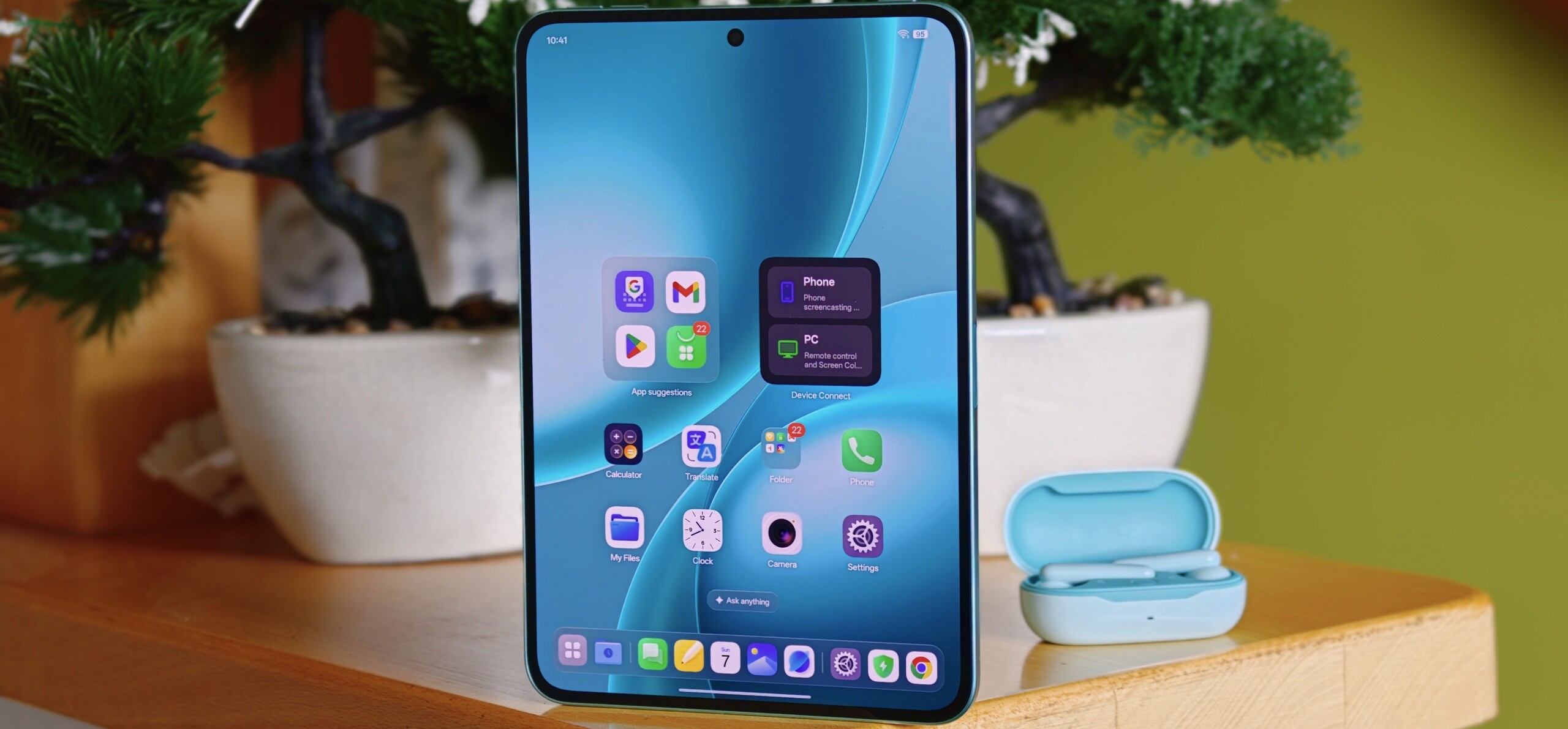
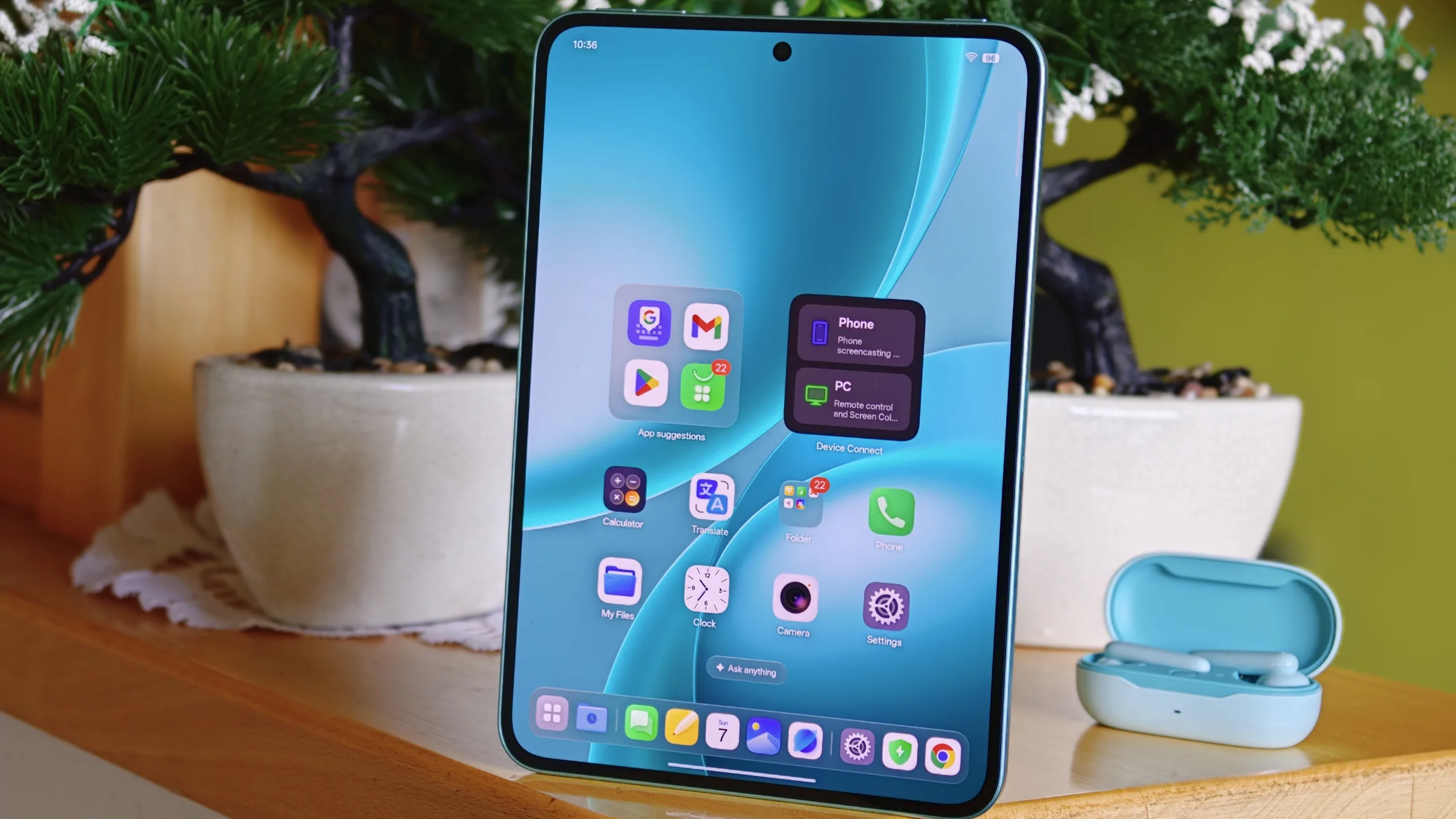
The Oppo Pad Mini offers a tablet experience unmatched in the current market. In the areas that matter most for a tablet—display, battery, and design—the Oppo Pad is miles ahead of the competition. In a direct comparison, even an Apple iPad Mini, with its thick bezels, looks like an entry-level device.
Tablet fans will currently find a super-lightweight metal unibody case with very narrow display bezels, paired with a bright OLED screen and extra-long battery life, only in the Pad Mini. While Lenovo does offer a slightly more powerful mini-tablet in its lineup—the Legion Tab Gen 5—the Oppo Pad's Snapdragon 8 Gen 5 delivers more than enough power for everyday use and ensures a consistently smooth user experience.
The lack of a cellular modem with location tracking capabilities, as well as the absence of a fingerprint sensor and limited availability in Europe, somewhat detract from the overall impression of the otherwise excellent Oppo Pad Mini.
Pros
Cons
Price and Availability of the Oppo Pad Mini

In China, the Oppo Pad Mini with 12 GB of LPDDR5X RAM is available for 4,499 CNY, which is equivalent to about 580 euros (~US$650). At our rental partner Trading Shenzhen, the compact tablet starts at 640 euros. The matte Soft Light version is priced at around 720 euros. A European launch seems unlikely.

- $199.99XIAOMI Redmi Pad 2 9.7" Only WiFi (No Calls or Text) 2K 120Hz Octa Core Global ROM 7600mAh Bluetooth 8MP Model 2603ARP14G (Silver, 128GB + 4GB)
- $124.81Lenovo Tab One - Lightweight Tablet - up to 12.5 Hours of YouTube Streaming - 8.7" HD Display - 4 GB Memory - 64 GB Storage - MediaTek Helio G85 - Includes Folio Case
- $569.00Apple iPad mini (A17 Pro): Apple Intelligence, 8.3-inch Liquid Retina Display, 128GB, Wi-Fi 6E, 12MP Front/12MP Back Camera, Touch ID, All-Day Battery Life — Space Gray
Table of Contents
- Verdict on the Oppo Pad Mini
- Oppo Pad Mini Specifications
- Case and Features - Compact tablet with fast USB 3.2
- Communication and Usability - Small "Android" Tablet with WiFi 7, but Without a Fingerprint Sensor
- Software and Sustainability - Alternative to the iPad Mini with Android 16
- Camera - Oppo Pad Mini with wide-angle lens and document mode for college and school
- Display - Compact Tablet with an OLED Screen
- Performance, Emissions, and Battery Life — Compact Android Tablet with Snapdragon and Fast RAM
- Notebookcheck Overall Rating
- Possible alternatives comparison
Oppo Pad Mini Specifications
Case and Features - Compact tablet with fast USB 3.2
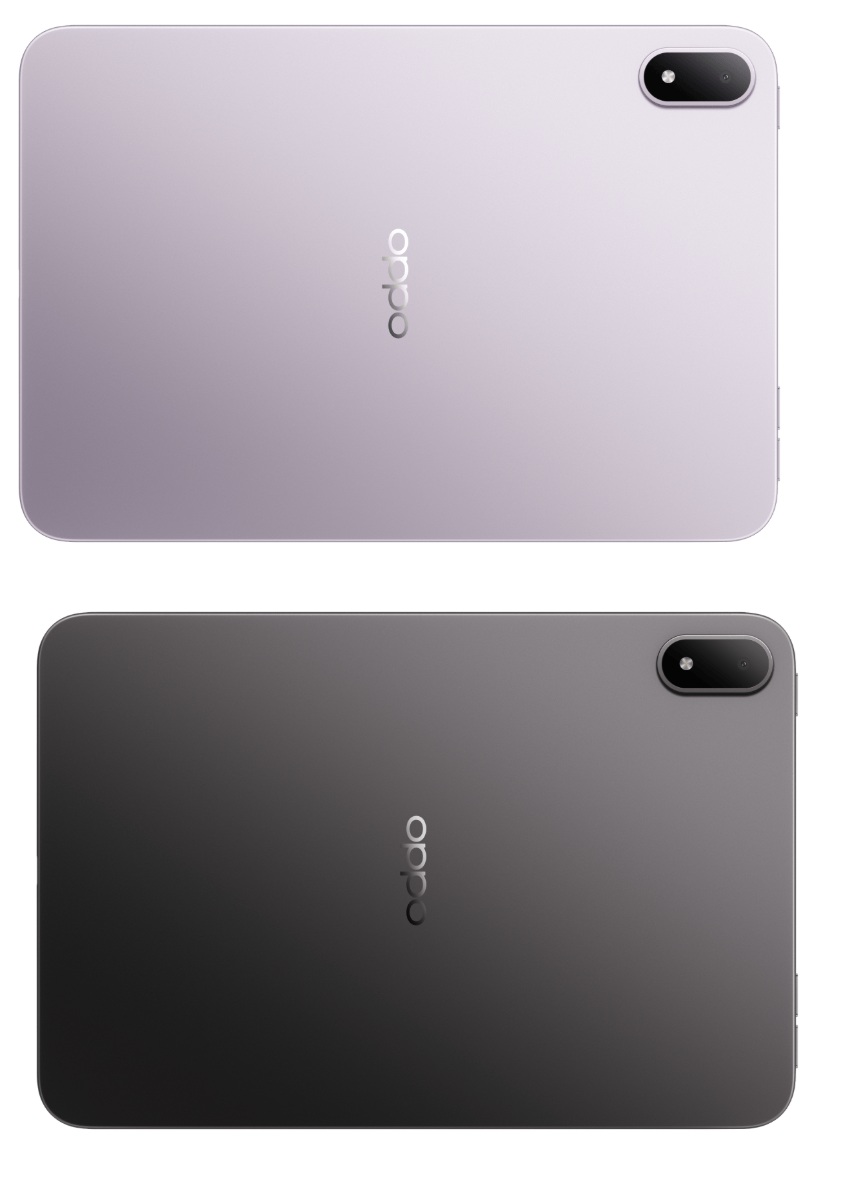
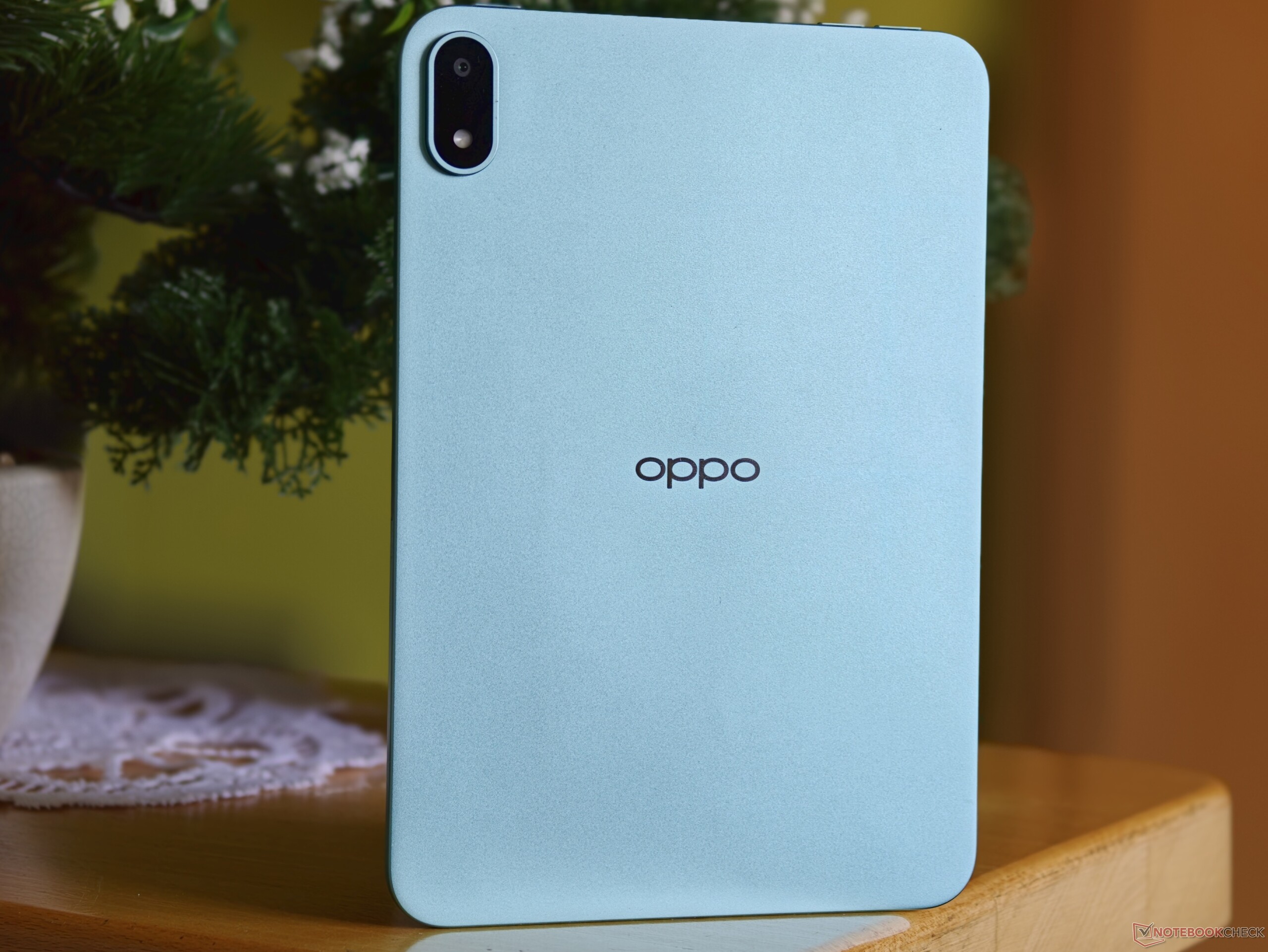
The Pad Mini feels very high-quality in your hands. The combination of the metal unibody design, a glass front, and a slim chassis makes this compact Oppo tablet a real pleasure to hold. The matte back is also relatively resistant to fingerprints.
The screen-to-body ratio of over 89% is also very impressive—absolutely remarkable for a small tablet. By comparison: An iPad Mini (2024) only achieves about 77% here. According to Oppo, the OLED display is surrounded by narrow bezels measuring exactly 2.99 millimeters on all sides.
The Pad Mini does not have an IP rating. However, the Oppo tablet features a fast USB 3.2 port with DisplayPort video output. It also supports fast charging at up to 67 watts and Hi-Res Bluetooth codecs, such as LDAC and LHDC 5.0.
Communication and Usability - Small "Android" Tablet with WiFi 7, but Without a Fingerprint Sensor
This compact Oppo tablet supports the fast Wi-Fi 7 standard, including the 6 GHz band. In our tests with a Wi-Fi 6E router, we achieved high and consistent transfer speeds. When paired with the Asus ROG Rapture GT-AXE11000, peak speeds of over 2,000 Mbit/s are possible.
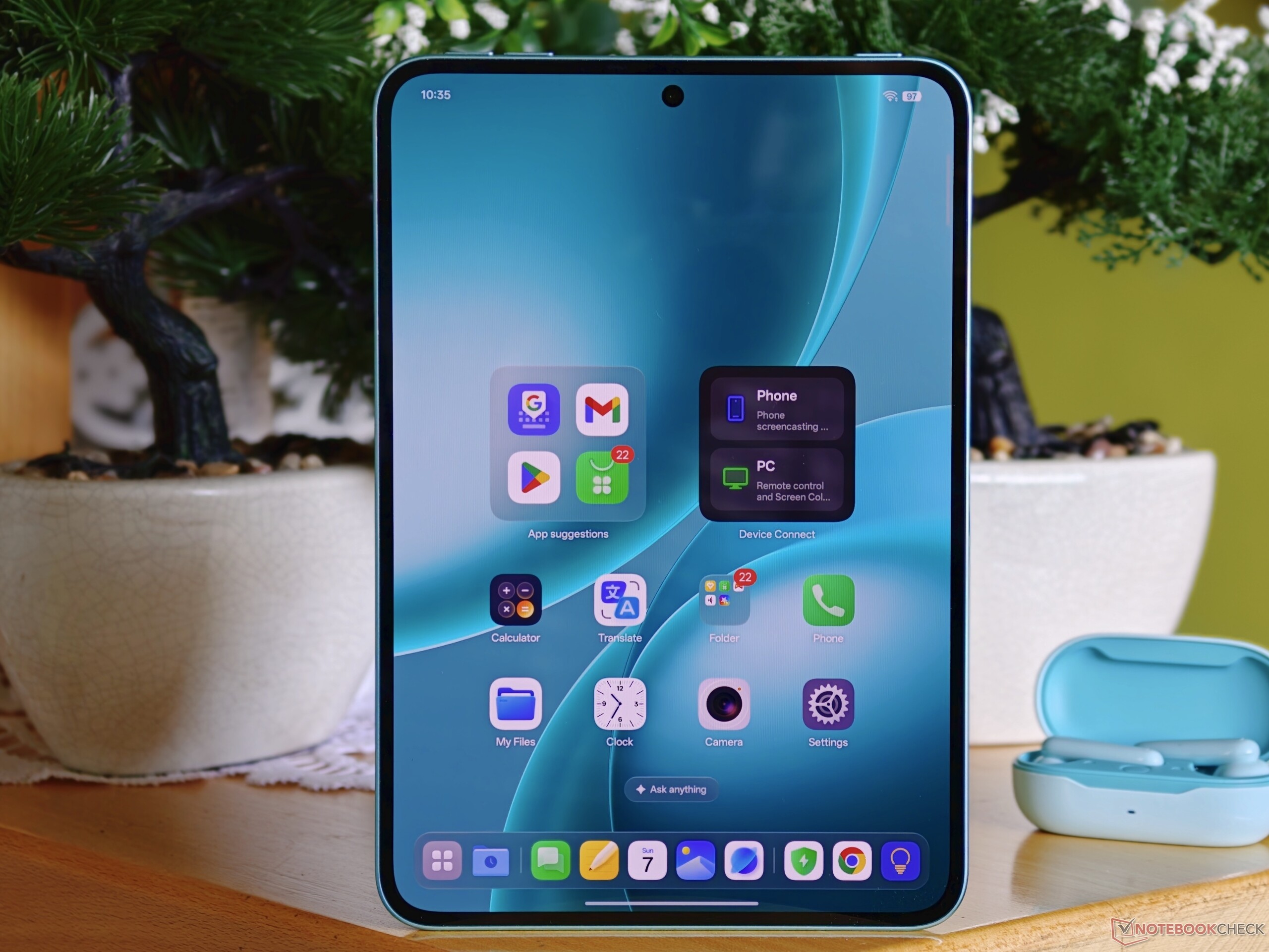
Unfortunately, the Oppo tablet lacks mobile internet connectivity. The manufacturer has also omitted a fingerprint sensor—we find ourselves missing both features on a compact tablet like the Pad Mini, as they would make for a very exciting smartphone replacement.
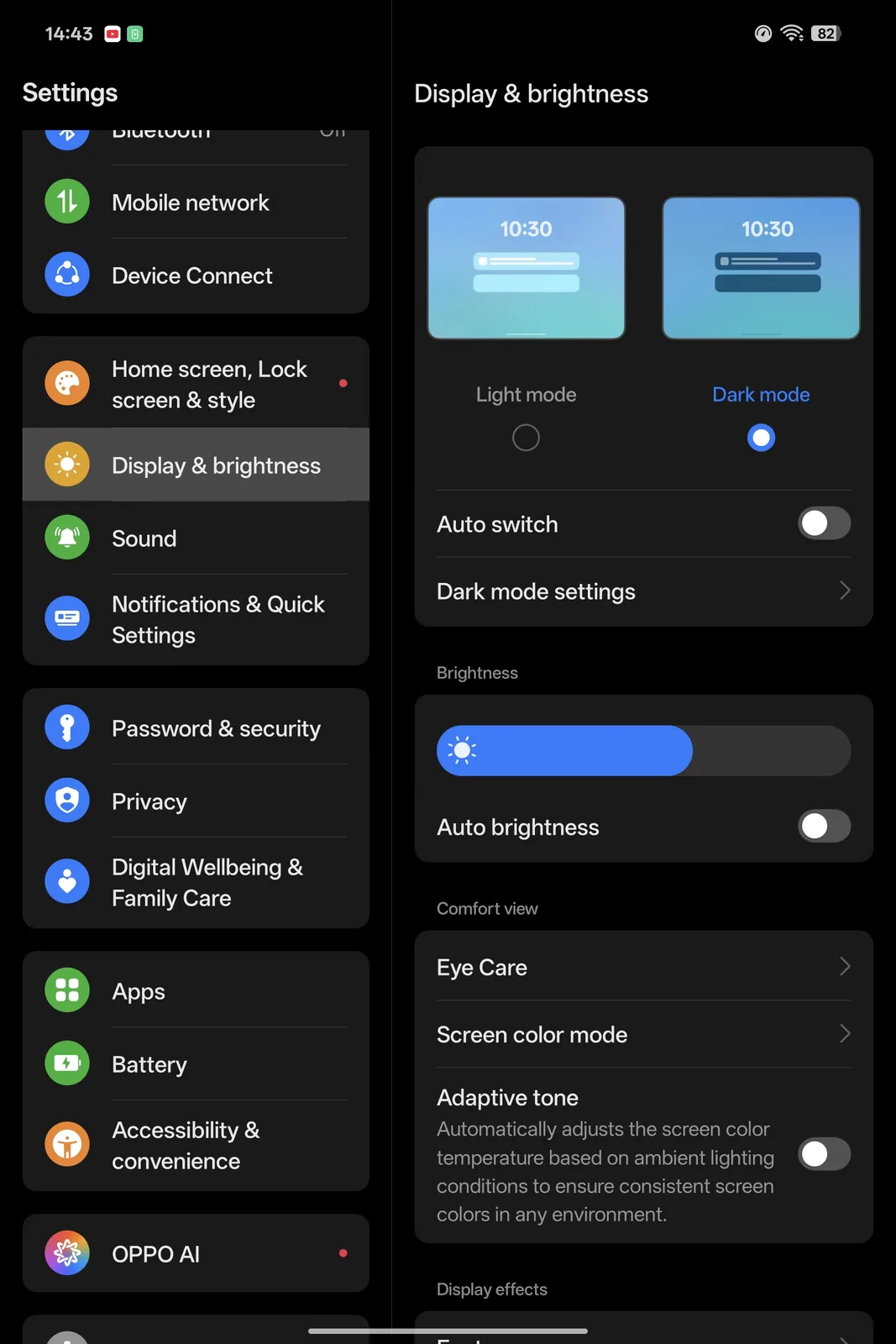
Input on the 144-Hz OLED panel is processed without delay. The device can be operated using either a finger or the Oppo Pencil 3. The previous generation (Pencil 2 Pro or OnePlus Stylo 2) did not work in our test. There is no built-in vibration motor.
| Networking | |
| Oppo Pad Mini | |
| iperf3 transmit AXE11000 6GHz | |
| iperf3 receive AXE11000 6GHz | |
| Lenovo Legion Tab 5 (Legion Y700 Gen5) | |
| iperf3 transmit AXE11000 6GHz | |
| iperf3 receive AXE11000 6GHz | |
| Xiaomi Pad Mini | |
| iperf3 transmit AXE11000 | |
| iperf3 receive AXE11000 | |
| Apple iPad Mini 7 (2024) | |
| iperf3 transmit AXE11000 | |
| iperf3 receive AXE11000 | |
| iperf3 transmit AXE11000 6GHz | |
| iperf3 receive AXE11000 6GHz | |
| Average 802.11 a/b/g/n/ac/ax/be | |
| iperf3 transmit AXE11000 | |
| iperf3 receive AXE11000 | |
| iperf3 transmit AXE11000 6GHz | |
| iperf3 receive AXE11000 6GHz | |
| Average of class Tablet | |
| iperf3 transmit AXE11000 | |
| iperf3 receive AXE11000 | |
| iperf3 transmit AXE11000 6GHz | |
| iperf3 receive AXE11000 6GHz | |
Software and Sustainability - Alternative to the iPad Mini with Android 16
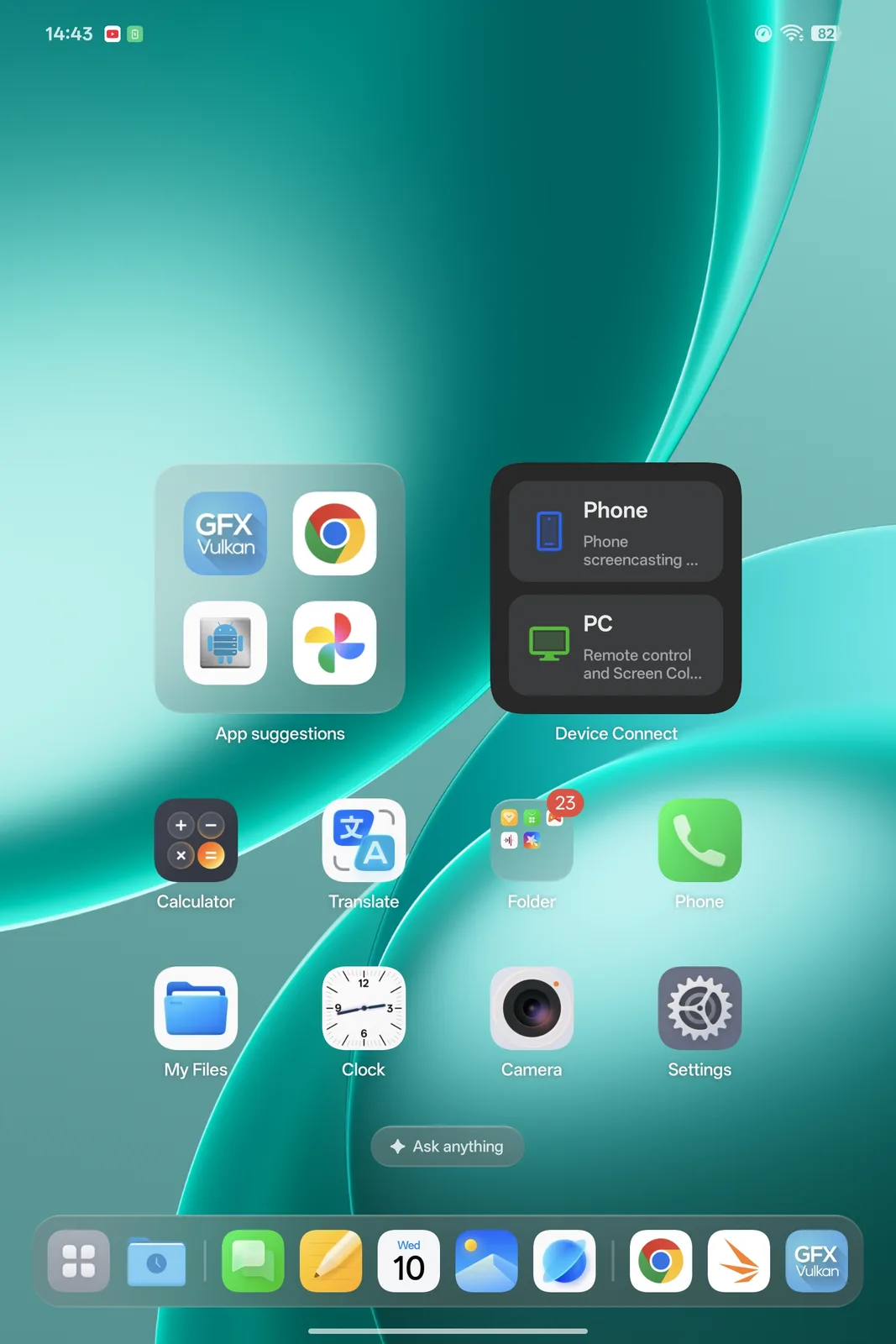
The Pad Mini comes with ColorOS 16, based on Android 16, and includes English as a system language. The manufacturer has not disclosed how long this compact tablet will receive updates.
We also couldn’t find any information about the materials used or the percentage of recycled content in the Oppo tablet. The packaging appears to be plastic-free.
Camera - Oppo Pad Mini with wide-angle lens and document mode for college and school

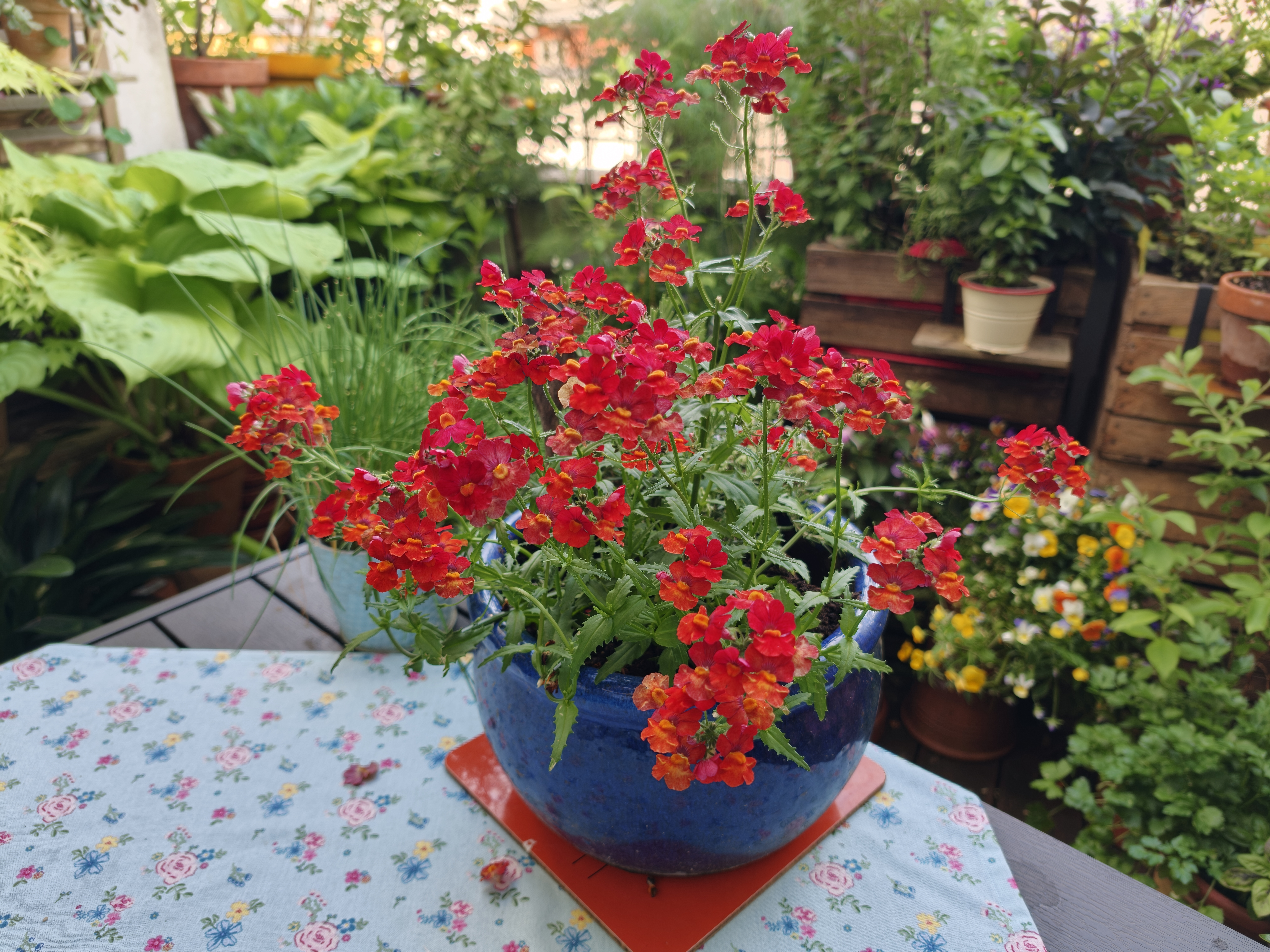
The rear camera has a resolution of 13 MP and an aperture of f/2.2. The sensor also supports HDR and 4K30 video.
This compact tablet is well-suited for taking photos in daylight. Both the sharpness and color reproduction are quite good. But even in low light, the Pad Mini delivers usable results—it’s not really any worse than an iPhone 17 in this regard.
For scanning documents as a digital notepad, there’s a special photo mode with text recognition. Digital zoom is available up to 10x.
Image comparison
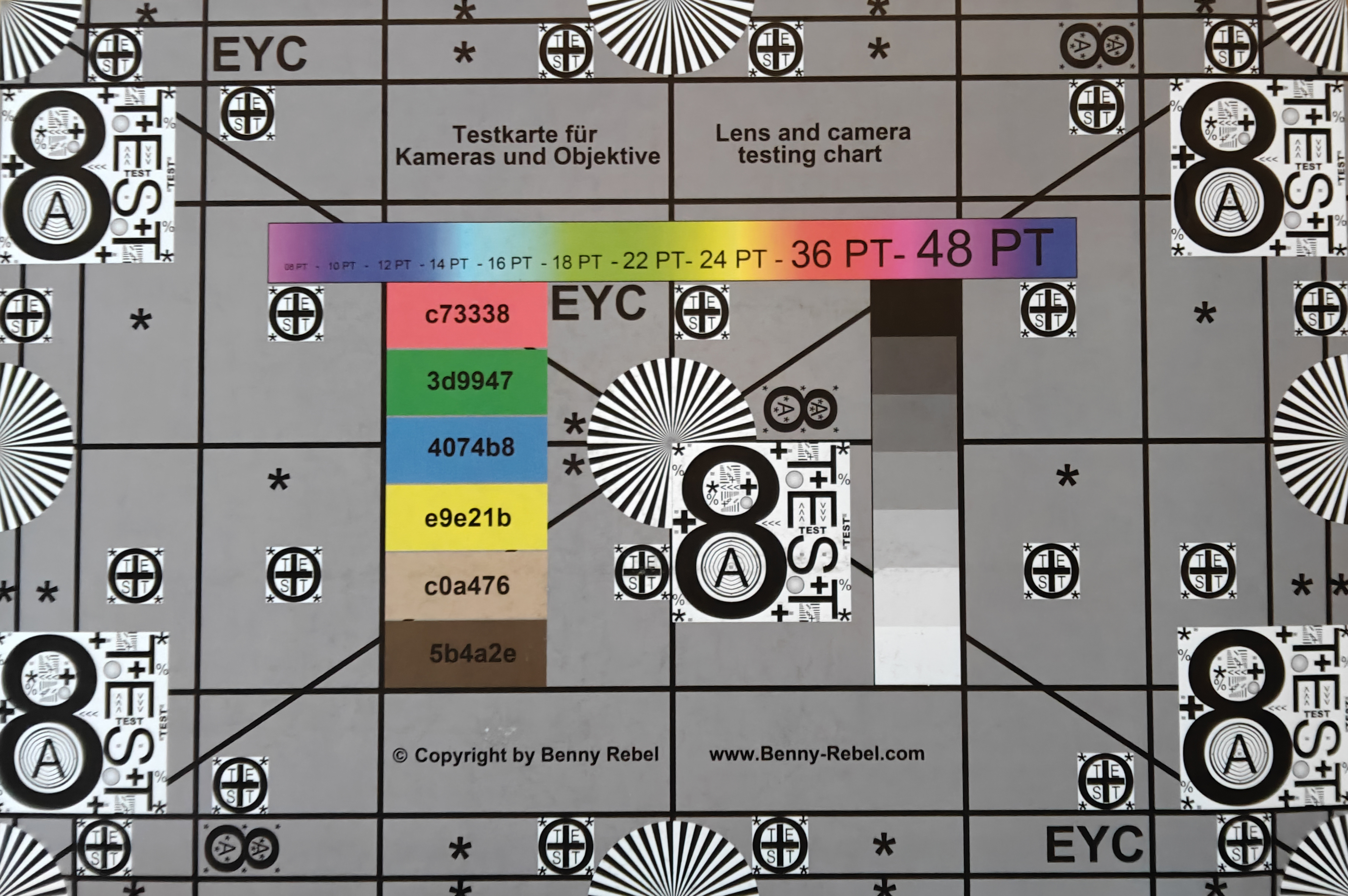
Choose a scene and navigate within the first image. One click changes the position on touchscreens. One click on the zoomed-in image opens the original in a new window. The first image shows the scaled photograph of the test device.
Main cameraMain cameraLow Light
















Display - Compact Tablet with an OLED Screen
The Pad Mini’s OLED panel measures 8.8 inches and has a 3:2 aspect ratio. Thanks to its high 1,680p resolution, the display achieves a high pixel density of nearly 350 ppi. Compared to the competition, the Oppo tablet offers high brightness. Especially when it comes to the APL18 pattern—which is relevant for everyday use—the Pad Mini is in a league of its own. But the high-contrast OLED panel is also well-suited for HDR content.
Oppo uses pulse-width modulation (PWM) to control screen brightness—we measured a base frequency of about 90 Hz using Rigol software. Oppo also employs high-frequency PWM dimming at 3,840 Hz, which minimizes the negative effects of flicker.
| |||||||||||||||||||||||||
Brightness Distribution: 95 %
Center on Battery: 1142 cd/m²
Contrast: ∞:1 (Black: 0 cd/m²)
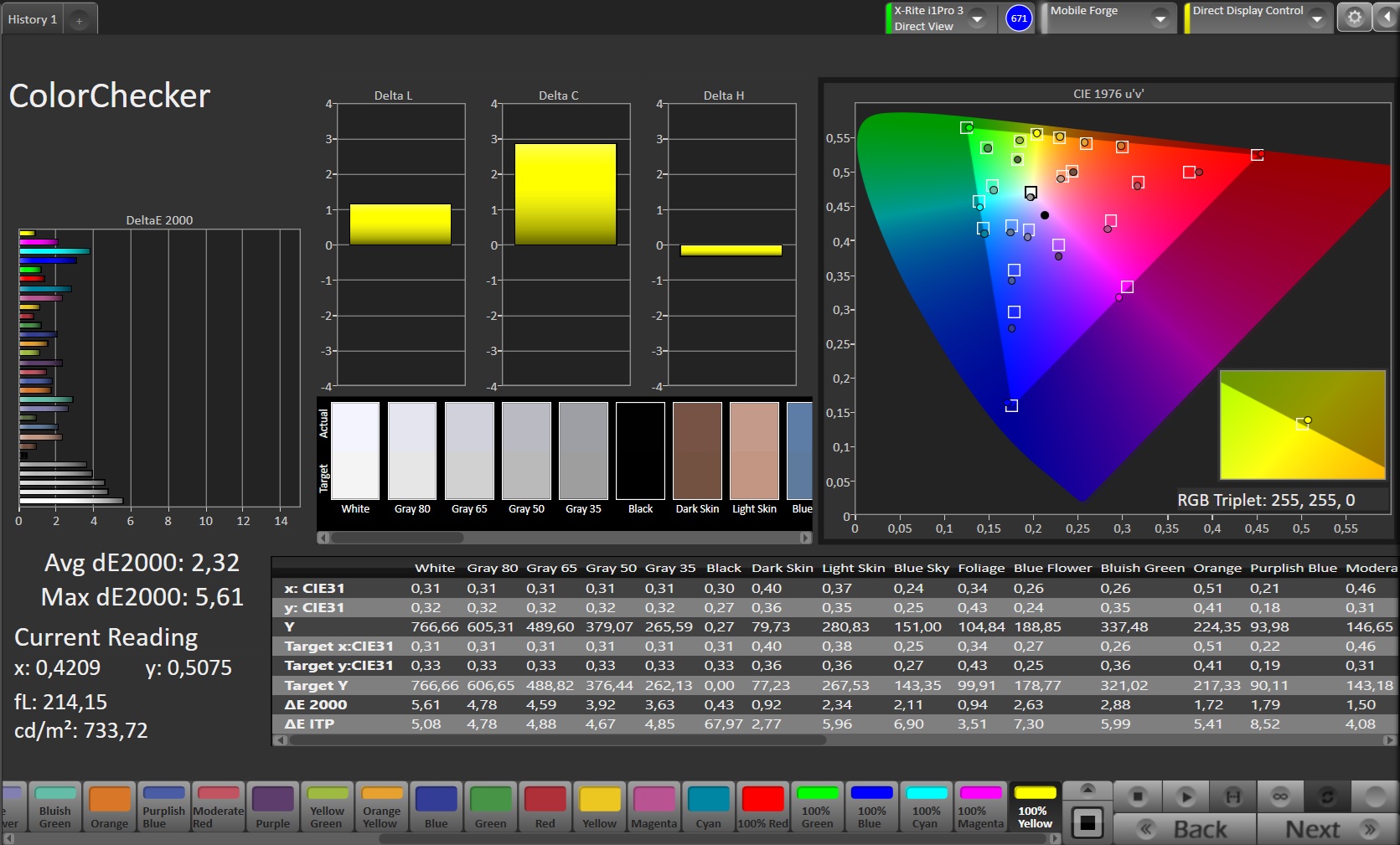
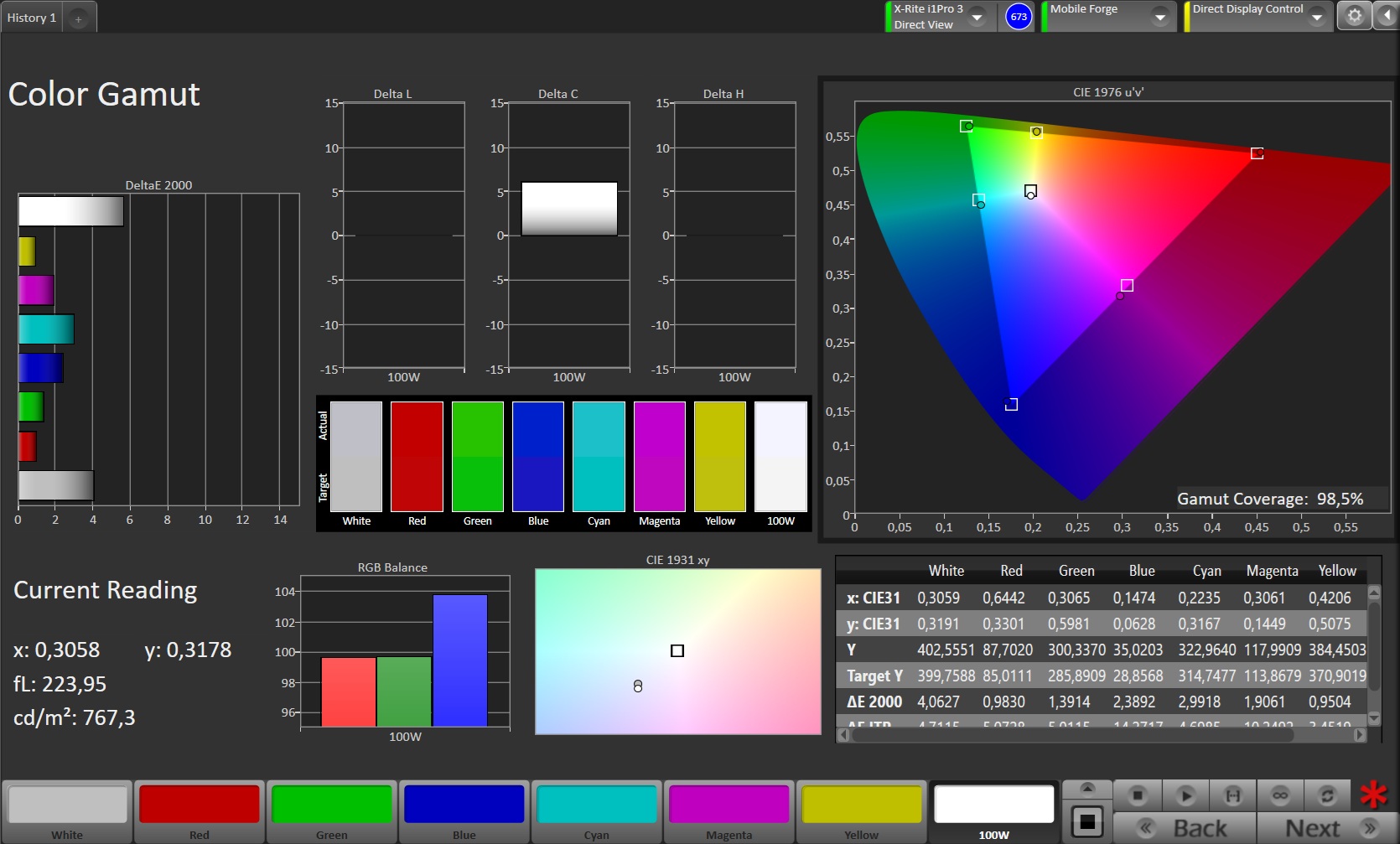
ΔE ColorChecker Calman: 2.32 | ∀{0.5-29.43 Ø4.7}
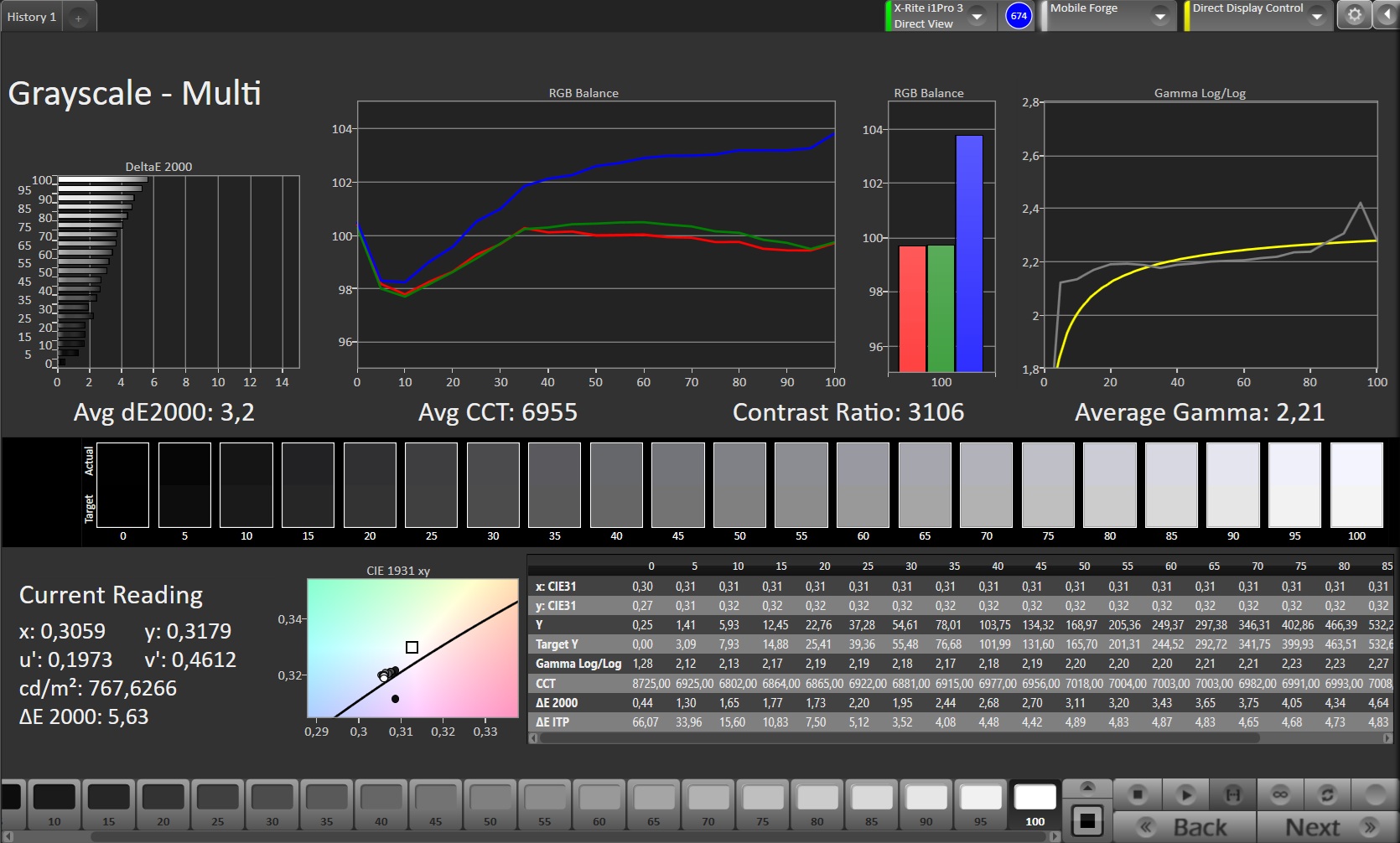
ΔE Greyscale Calman: 3.2 | ∀{0.09-98 Ø4.95}
98.5% sRGB (Calman 2D)
Gamma: 2.21
CCT: 6955 K
| Oppo Pad Mini AMOLED, 2520x1680, 8.8" | Lenovo Legion Tab 5 (Legion Y700 Gen5) IPS, 3040x1904, 8.8" | Xiaomi Pad Mini TFT-LCD, 3008x1880, 8.8" | Apple iPad Mini 7 (2024) IPS, 2266x1488, 8.3" | |
|---|---|---|---|---|
| Screen | -39% | -9% | -12% | |
| Brightness middle (cd/m²) | 1142 | 582 -49% | 681 -40% | 525 -54% |
| Brightness (cd/m²) | 1110 | 560 -50% | 675 -39% | 512 -54% |
| Brightness Distribution (%) | 95 | 93 -2% | 95 0% | 91 -4% |
| Black Level * (cd/m²) | 0.53 | 0.57 | 0.43 | |
| Colorchecker dE 2000 * | 2.32 | 3.77 -63% | 2 14% | 2 14% |
| Colorchecker dE 2000 max. * | 5.61 | 9.18 -64% | 4.7 16% | 4.3 23% |
| Greyscale dE 2000 * | 3.2 | 3.4 -6% | 3.4 -6% | 3 6% |
| Gamma | 2.21 100% | 2.588 85% | 2.22 99% | 2.2 100% |
| CCT | 6955 93% | 6353 102% | 6922 94% | 7109 91% |
| Contrast (:1) | 1098 | 1195 | 1221 |
* ... smaller is better
| Display / APL18 Peak Brightness | |
| Oppo Pad Mini | |
| Lenovo Legion Tab 5 (Legion Y700 Gen5) | |
| Display / HDR Peak Brightness | |
| Oppo Pad Mini | |
| Lenovo Legion Tab 5 (Legion Y700 Gen5) | |
Screen Flickering / PWM (Pulse-Width Modulation)
| Screen flickering / PWM detected | 91 Hz Amplitude: 16 % | 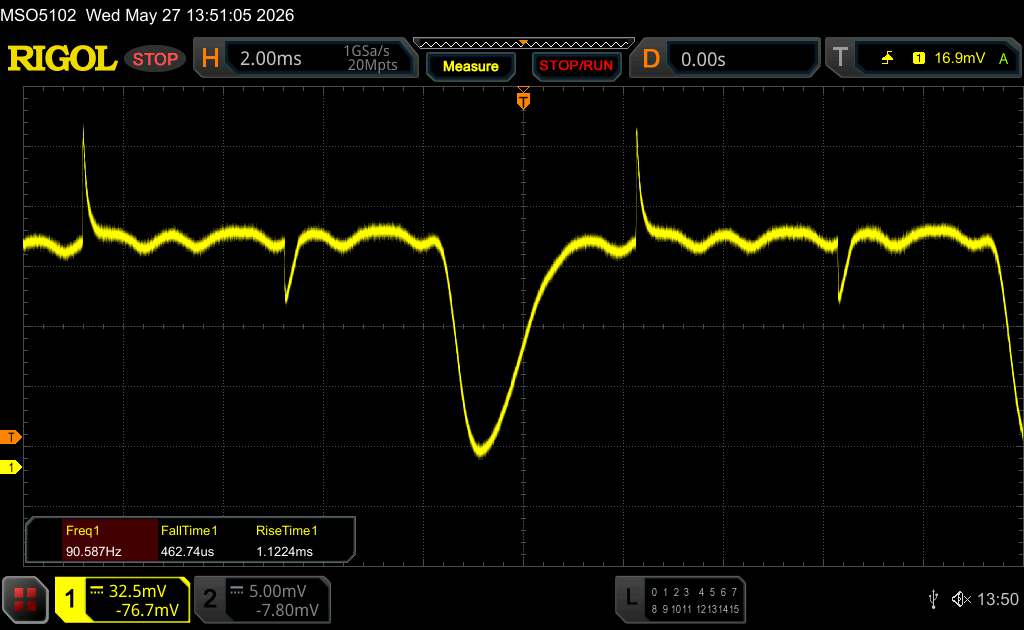 | |
The display backlight flickers at 91 Hz (worst case, e.g., utilizing PWM) . The frequency of 91 Hz is very low, so the flickering may cause eyestrain and headaches after extended use. In comparison: 52 % of all tested devices do not use PWM to dim the display. If PWM was detected, an average of 7656 (minimum: 5 - maximum: 343500) Hz was measured. | |||
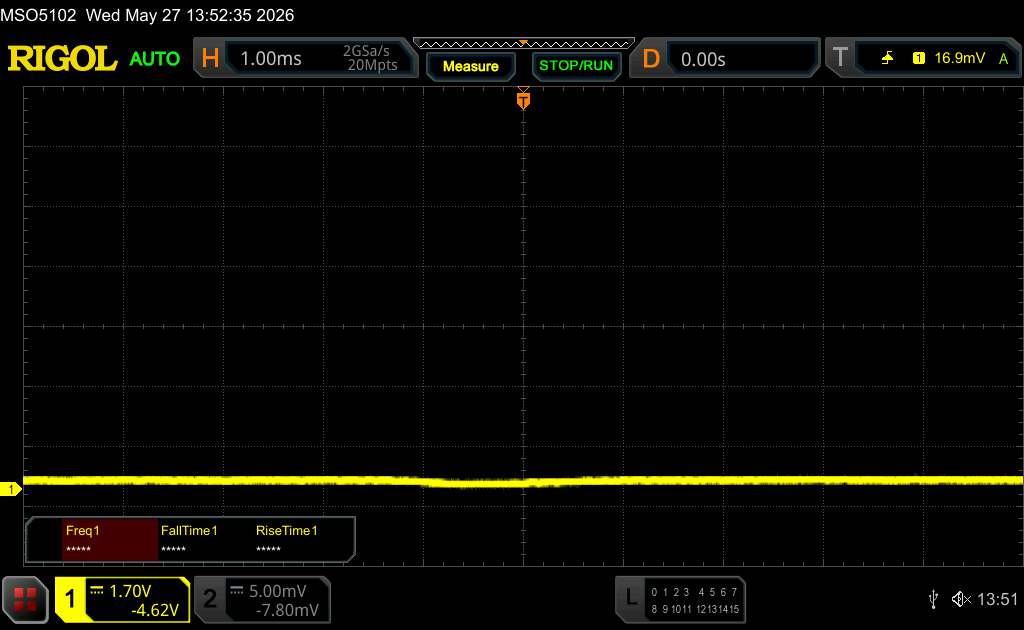
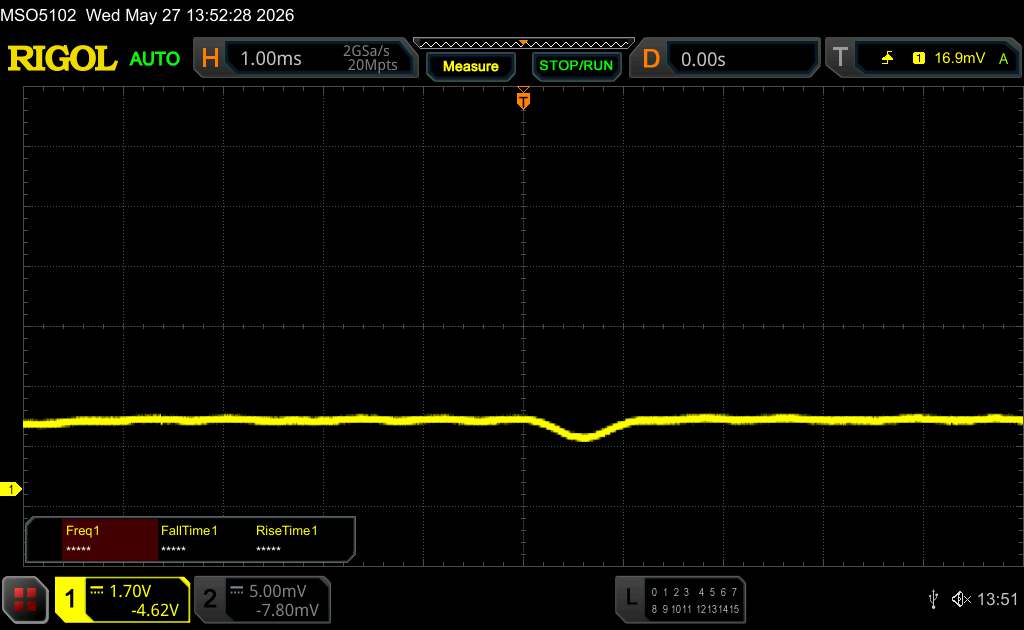
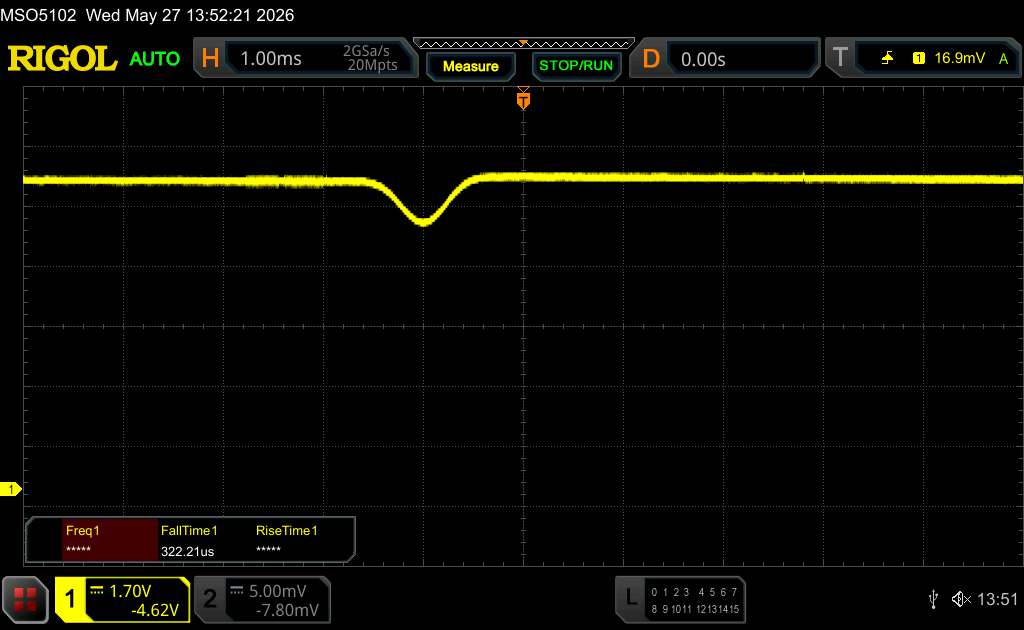
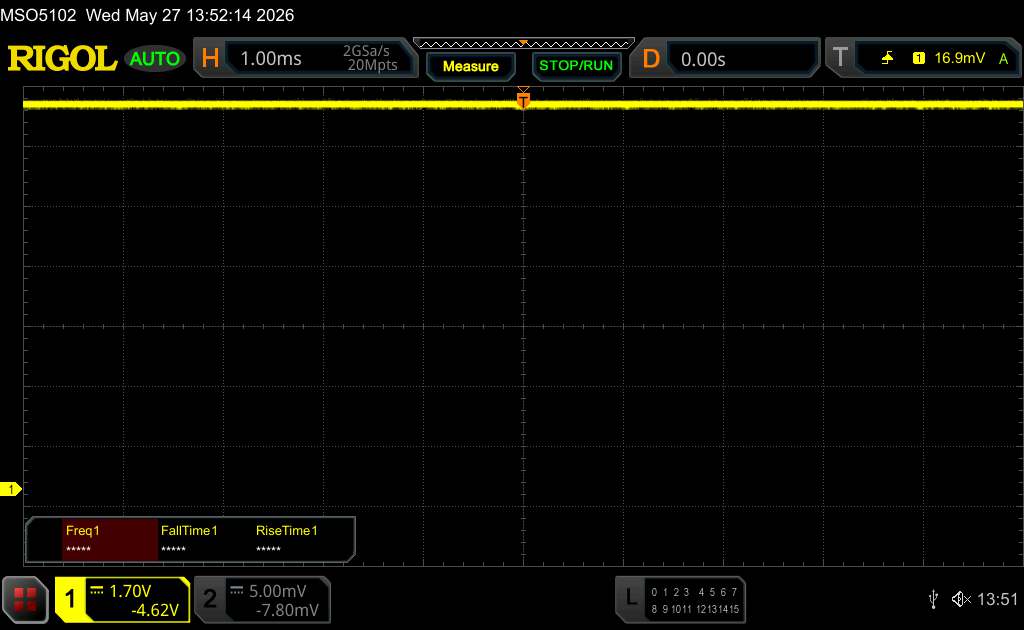
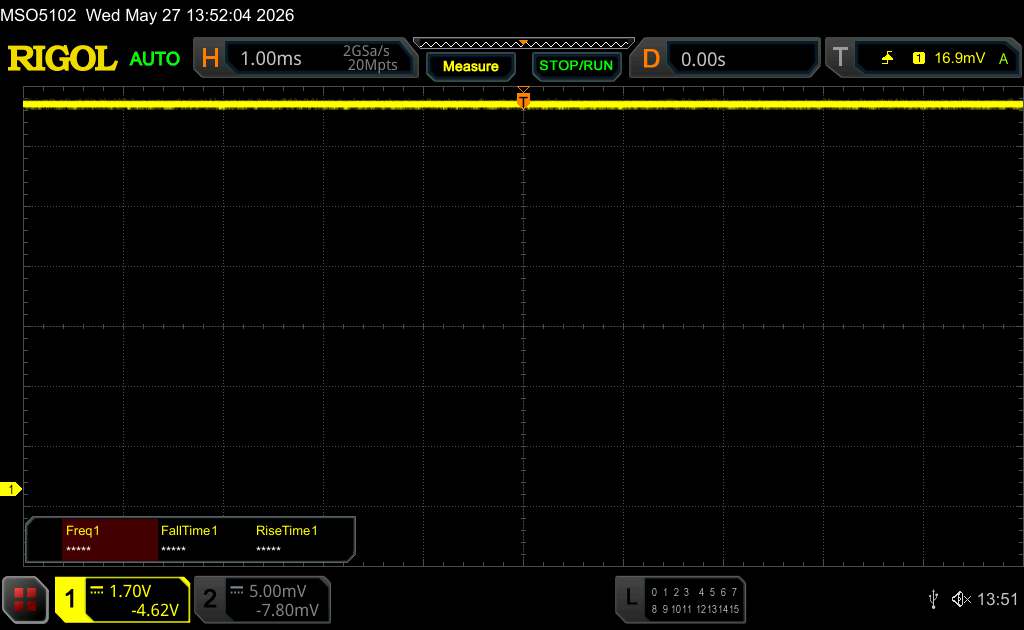
Series of measurements with a fixed zoom level and different brightness settings (Although the amplitude curve at minimum brightness appears flat, this is due to the scaling. The info box shows a magnified version of the amplitude at minimum brightness.)
We use the Calman analysis software to examine color deviations. The "Natural" profile targets the sRGB color space. Differences in individual colors are barely noticeable to the naked eye, but the measured DeltaE values might still be slightly lower.
Display Response Times
| ↔ Response Time Black to White | ||
|---|---|---|
| 0.4 ms ... rise ↗ and fall ↘ combined | ↗ 0.2 ms rise | 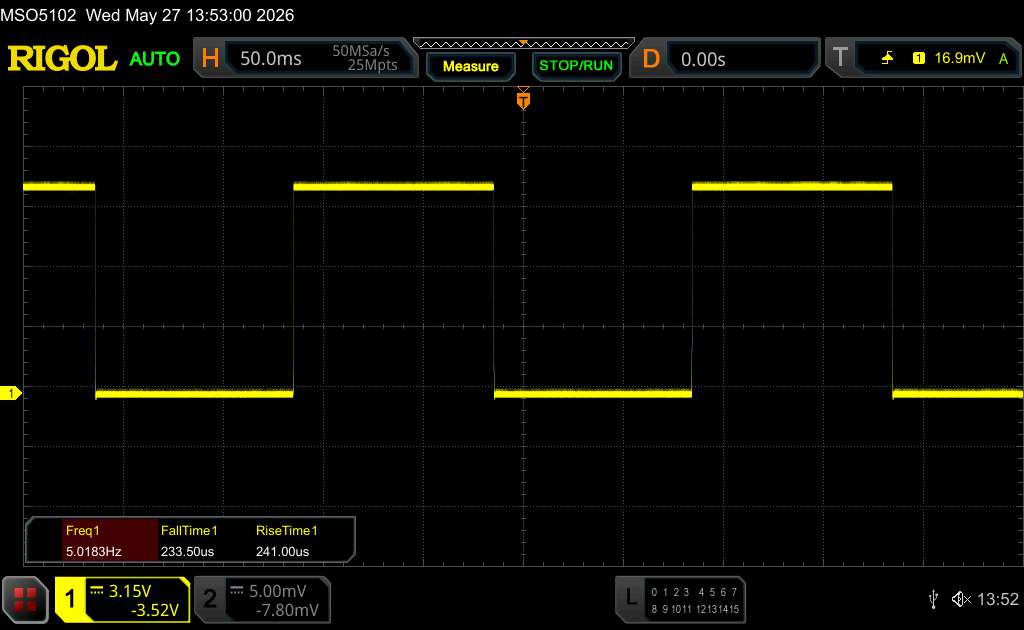 |
| ↘ 0.2 ms fall | ||
| The screen shows very fast response rates in our tests and should be very well suited for fast-paced gaming. In comparison, all tested devices range from 0.1 (minimum) to 240 (maximum) ms. » 0 % of all devices are better. This means that the measured response time is better than the average of all tested devices (19.7 ms). | ||
| ↔ Response Time 50% Grey to 80% Grey | ||
| 0.4 ms ... rise ↗ and fall ↘ combined | ↗ 0.2 ms rise | 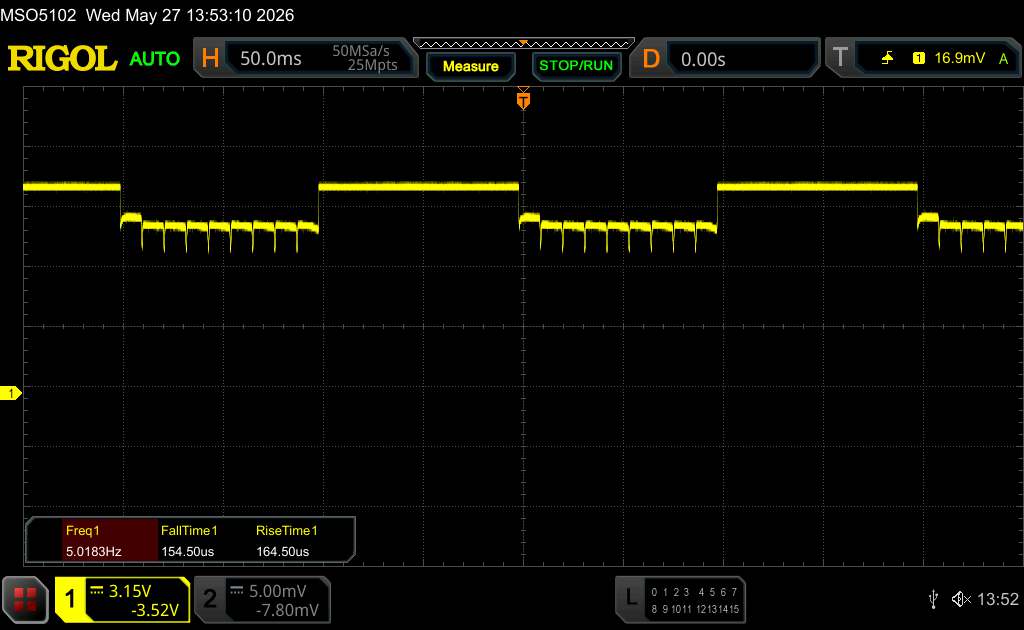 |
| ↘ 0.2 ms fall | ||
| The screen shows very fast response rates in our tests and should be very well suited for fast-paced gaming. In comparison, all tested devices range from 0.13 (minimum) to 636 (maximum) ms. » 1 % of all devices are better. This means that the measured response time is better than the average of all tested devices (30.8 ms). | ||
Performance, Emissions, and Battery Life — Compact Android Tablet with Snapdragon and Fast RAM
Oppo has equipped its compact tablet with the Snapdragon 8 Gen 5 without Elite, yet the Pad Mini still delivers impressive performance. It uses the same chipset as the OnePlus 15R, but it is actually slower than the Lenovo Legion Tab 5. Even the Adreno 829 doesn’t achieve top scores, though over 40 fps in GFXBench’s demanding 4K test is more than enough for casual gaming.
The Pad Mini really shines in our battery test with a display brightness set to 150 cd/m². At 27.5 hours, the Oppo tablet is in a league of its own, lasting more than twice as long as an iPad Mini.
| Jetstream 2 - 2.2 Total | |
| Average Qualcomm Snapdragon 8 Gen 5 (165.4 - 338, n=4) | |
| Oppo Pad Mini | |
| Average of class Tablet (61.3 - 579, n=43, last 2 years) | |
| Xiaomi Pad Mini | |
| Oppo Pad Mini | Lenovo Legion Tab 5 (Legion Y700 Gen5) | Xiaomi Pad Mini | Average 256 GB UFS 4.1 Flash | Average of class Tablet | |
|---|---|---|---|---|---|
| AndroBench 3-5 | -14% | -43% | -12% | -49% | |
| Sequential Read 256KB (MB/s) | 3896.34 | 3952.6 1% | 3585.32 -8% | 3537 ? -9% | 2121 ? -46% |
| Sequential Write 256KB (MB/s) | 3487.12 | 3621 4% | 1573.27 -55% | 3223 ? -8% | 1715 ? -51% |
| Random Read 4KB (MB/s) | 488.94 | 362.1 -26% | 411.55 -16% | 432 ? -12% | 280 ? -43% |
| Random Write 4KB (MB/s) | 766.82 | 489.6 -36% | 48.23 -94% | 614 ? -20% | 331 ? -57% |
(-) The maximum temperature on the upper side is 49.1 °C / 120 F, compared to the average of 33.7 °C / 93 F, ranging from 20.7 to 53.2 °C for the class Tablet.
(-) The bottom heats up to a maximum of 46.8 °C / 116 F, compared to the average of 33.2 °C / 92 F
(+) In idle usage, the average temperature for the upper side is 27 °C / 81 F, compared to the device average of 30 °C / 86 F.
3DMark Stress Tests
| 3DMark | |
| Wild Life Stress Test Stability | |
| Apple iPad Mini 7 (2024) | |
| Xiaomi Pad Mini | |
| Oppo Pad Mini | |
| Wild Life Extreme Stress Test | |
| Lenovo Legion Tab 5 (Legion Y700 Gen5) | |
| Apple iPad Mini 7 (2024) | |
| Xiaomi Pad Mini | |
| Oppo Pad Mini | |
Oppo Pad Mini audio analysis
(±) | speaker loudness is average but good (80.7 dB)
Bass 100 - 315 Hz
(-) | nearly no bass - on average 15.9% lower than median
(-) | bass is not linear (19.4% delta to prev. frequency)
Mids 400 - 2000 Hz
(±) | higher mids - on average 6.7% higher than median
(+) | mids are linear (6.7% delta to prev. frequency)
Highs 2 - 16 kHz
(+) | balanced highs - only 3.6% away from median
(±) | linearity of highs is average (7.6% delta to prev. frequency)
Overall 100 - 16.000 Hz
(±) | linearity of overall sound is average (21.3% difference to median)
Compared to same class
» 64% of all tested devices in this class were better, 6% similar, 30% worse
» The best had a delta of 7%, average was 21%, worst was 130%
Compared to all devices tested
» 60% of all tested devices were better, 7% similar, 33% worse
» The best had a delta of 4%, average was 23%, worst was 136%
Lenovo Legion Tab 5 (Legion Y700 Gen5) audio analysis
(+) | speakers can play relatively loud (84.5 dB)
Bass 100 - 315 Hz
(±) | reduced bass - on average 12.4% lower than median
(±) | linearity of bass is average (12.2% delta to prev. frequency)
Mids 400 - 2000 Hz
(±) | higher mids - on average 6.1% higher than median
(±) | linearity of mids is average (7.2% delta to prev. frequency)
Highs 2 - 16 kHz
(±) | higher highs - on average 5.3% higher than median
(±) | linearity of highs is average (12.4% delta to prev. frequency)
Overall 100 - 16.000 Hz
(±) | linearity of overall sound is average (17% difference to median)
Compared to same class
» 42% of all tested devices in this class were better, 3% similar, 55% worse
» The best had a delta of 7%, average was 21%, worst was 130%
Compared to all devices tested
» 31% of all tested devices were better, 8% similar, 61% worse
» The best had a delta of 4%, average was 23%, worst was 136%
| Oppo Pad Mini 8000 mAh | Lenovo Legion Tab 5 (Legion Y700 Gen5) 9000 mAh | Xiaomi Pad Mini 7500 mAh | Apple iPad Mini 7 (2024) 5078 mAh | |
|---|---|---|---|---|
| Battery runtime | ||||
| WiFi v1.3 (h) | 27.6 | 22 -20% | 19.6 -29% | 12 -57% |
Notebookcheck Overall Rating
The Oppo Pad Mini is a really good tablet, but unfortunately it probably won't be officially released in Europe.
It's also a shame that it doesn't offer a cellular option. If it did, this handy tablet from Oppo would have been an interesting alternative to a smartphone.
Oppo Pad Mini
- 06/14/2026 v8
Marcus Herbrich
 Total Sustainability Score:
 Possible alternatives comparison
Image | Model / Review | Price | Weight | Drive | Display |
|---|---|---|---|---|---|
1. 89.9%  | Oppo Pad Mini Qualcomm Snapdragon 8 Gen 5 ⎘ Qualcomm Adreno 829 ⎘ 12 GB Memory, 256 GB UFS 4.x | Amazon: 1. $199.99 XIAOMI Redmi Pad 2 9.7" Only... 2. $124.81 Lenovo Tab One - Lightweight... 3. $569.00 Apple iPad mini (A17 Pro): A... List Price: 640€ | 279 g | 256 GB UFS 4.1 Flash | 8.80" 2520x1680 344 PPI AMOLED |
2. 88.3%  | Lenovo Legion Tab 5 (Legion Y700 Gen5) Qualcomm Snapdragon 8 Elite Gen 5 ⎘ Qualcomm Adreno 840 ⎘ 12 GB Memory, 256 GB UFS 4.x | Amazon: 1. $13.99 Suttkue for Lenovo Legion Ta... 2. $10.99 AUXEXYO 2 Pack Matte Screen ... 3. $649.99 Lenovo 8.8" Legion Tab Gen 3... List Price: 899€ | 360 g | 256 GB UFS 4.1 Flash | 8.80" 3040x1904 343 PPI IPS |
3. 88.5%  | Xiaomi Pad Mini Mediatek Dimensity 9400+ ⎘ ARM Immortalis-G925 MC12 ⎘ 12 GB Memory, 512 GB UFS 4.x | Amazon: 1. $159.99 XIAOMI Redmi Pad 2 9.7" Only... 2. $199.99 XIAOMI Redmi Pad 2 9.7" Only... 3. $379.50 XIAOMI Pad 8 Ai WiFi Version... List Price: 500€ | 326 g | 512 GB UFS 4.1 Flash | 8.80" 3008x1880 403 PPI TFT-LCD |
4. 86.6%  | Apple iPad Mini 7 (2024) Apple A17 Pro ⎘ Apple A17 Pro GPU ⎘ 8 GB Memory, 512 GB SSD | List Price: 1149€ | 297 g | Apple 512GB NVMe | 8.30" 2266x1488 327 PPI IPS |
Transparency
The selection of devices to be reviewed is made by our editorial team. The test sample was provided to the author as a loan by the manufacturer or retailer for the purpose of this review. The lender had no influence on this review, nor did the manufacturer receive a copy of this review before publication. There was no obligation to publish this review. As an independent media company, Notebookcheck is not subjected to the authority of manufacturers, retailers or publishers.
This is how Notebookcheck is testing
Every year, Notebookcheck independently reviews hundreds of laptops and smartphones using standardized procedures to ensure that all results are comparable. We have continuously developed our test methods for around 20 years and set industry standards in the process. In our test labs, high-quality measuring equipment is utilized by experienced technicians and editors. These tests involve a multi-stage validation process. Our complex rating system is based on hundreds of well-founded measurements and benchmarks, which maintains objectivity. Further information on our test methods can be found here.
 Add as a preferred source on Google


