




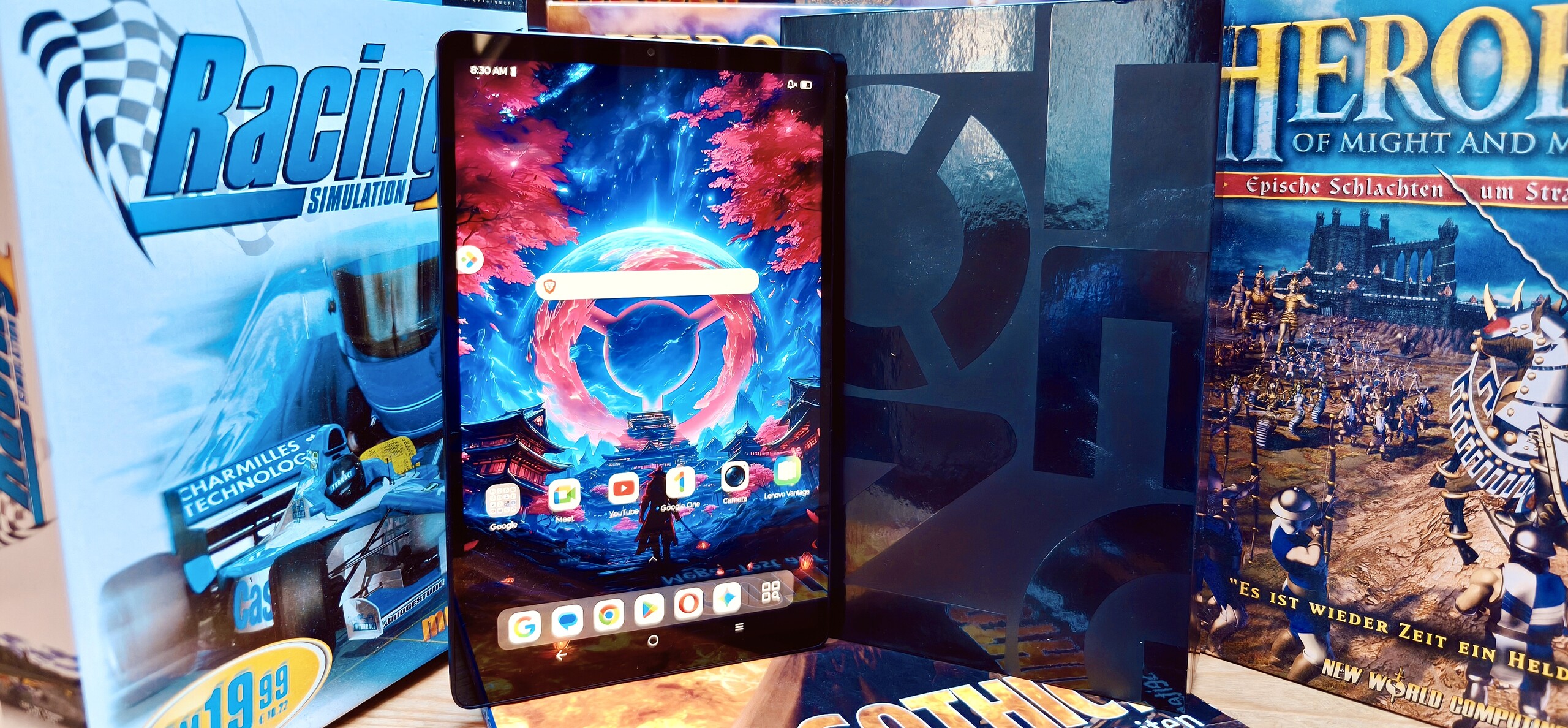
Verdict on the Lenovo Legion Tab TB323FU
If you are looking for a handy gaming tablet with the latest Android, a lightning-fast display and extremely high performance, then the Lenovo Legion Tab Gen 5 in 2026 will be a must-have. The Chinese manufacturer also provides a generous amount of RAM and a large battery, which enables long gaming sessions.
The design with RGB LED effects on the back and the high-quality metal casing will appeal to gamers, but won't scare off other users either. There is also fast Wi-Fi and unusual but clever features for a gaming tablet, such as a microSD slot and two USB ports including a DisplayPort.
The cameras are only of lower standard but you get very fast internet. Unfortunately, there is no 5G option and no satellite positioning.
The high temperatures under load could also be annoying when gaming, especially when using the tablet as a handheld.
Overall, the Lenovo Legion Tab 5 offers comprehensive gaming features. The progress compared to its predecessor is clearly visible, whether in terms of screen, WLAN speed or features.
However, you also have to pay a relatively high price for this.
Pros
Cons
Price and availability
The Lenovo Legion Tab 5th generation is currently only available directly from Lenovo in selected countries.
A search at amazon.com already brings up some accessories, so the tablet should be available soon.

- $10.49Fintie Case for Lenovo Legion Tab Gen 5 Y700 (2026) TB323FU 8.8 inch Tablet
- $8.99Suttkue for Lenovo Legion Tab Gen 3/Gen 5 (2025/2026) 8.8 inch/Legion Y700 (2023,2025) 8.8 inch Screen Protector,9H Hardness, Anti-Scratch, Tempered Glass flim, Case Friendly, Anti-Scratch,(2pack)
- $7.99Gerutek 2 Pack Screen Protector for Lenovo Legion Tab Y700 8.8 inch Gen 5-1
Table of Contents
- Verdict on the Lenovo Legion Tab TB323FU
- Specifications
- Case and features - With RGB effects
- Communication and operation - High-speed WLAN
- Software and sustainability - four years of secure gaming
- Cameras - For snapshots
- Display - Very fast and no PWM
- Performance, emissions and battery life - High performance, long battery life
- Notebookcheck overall rating
- Possible alternatives in comparison
Specifications
Case and features - With RGB effects
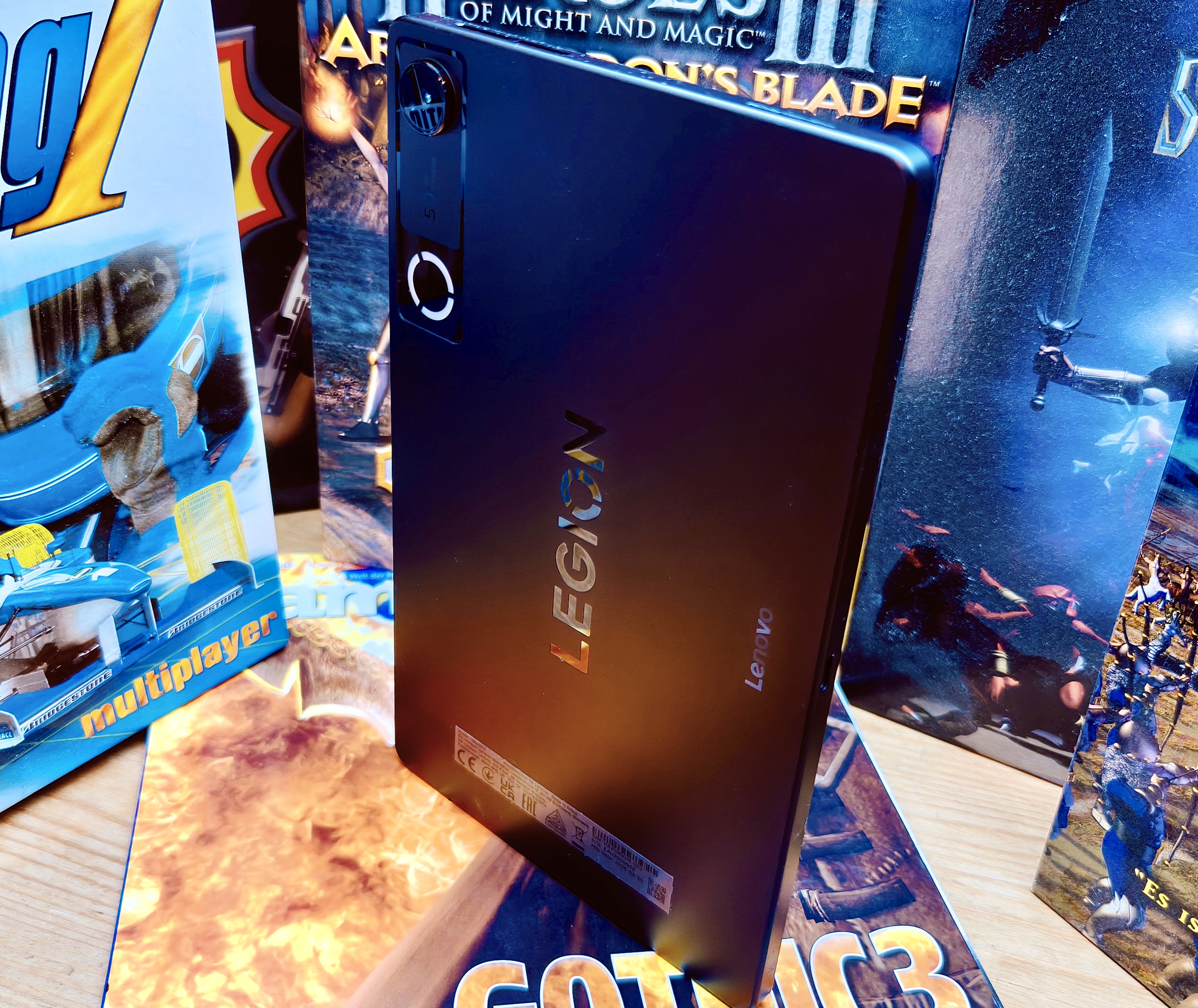
The high-quality metal casing of the Lenovo Legion Tab TB323FU is discreet enough to be of interest even to people who are not into gaming: it comes in either black or white and with a circular LED light element under the camera module. It mirrors the RGB lighting of many gaming PCs and can be used individually. Conveniently, it also functions as a notification LED.
The chassis is sturdily built and can hardly be twisted. The screen edges are relatively narrow, giving the tablet a very modern look. However, there is no protection against water and no special display glass is mentioned. However, the Legion Tab feels good in the hand and is not too heavy at 360 grams.
Lenovo offers two USB ports, a USB 2.0 port on the short side and a USB 3.2 port with up to 10 GBit/s data throughput and a display port on the long side.
12 GB of RAM is ample, and there is a choice of 256 GB or 512 GB mass storage, with even larger storage options available in Asia.



| SD Card Reader - average JPG Copy Test (av. of 3 runs) | |
| Lenovo Legion Tab 5 (Legion Y700 Gen5) | |
| Average of class Tablet (10.2 - 79.2, n=44, last 2 years) | |
Cross Platform Disk Test (CPDT)
Communication and operation - High-speed WLAN
WiFi 7 is integrated as the fastest Wi-Fi standard. The Legion Tab 5 therefore achieves very fast data rates and can easily utilize a gigabit Internet connection. Unfortunately, there is no cellular option or satellite positioning.
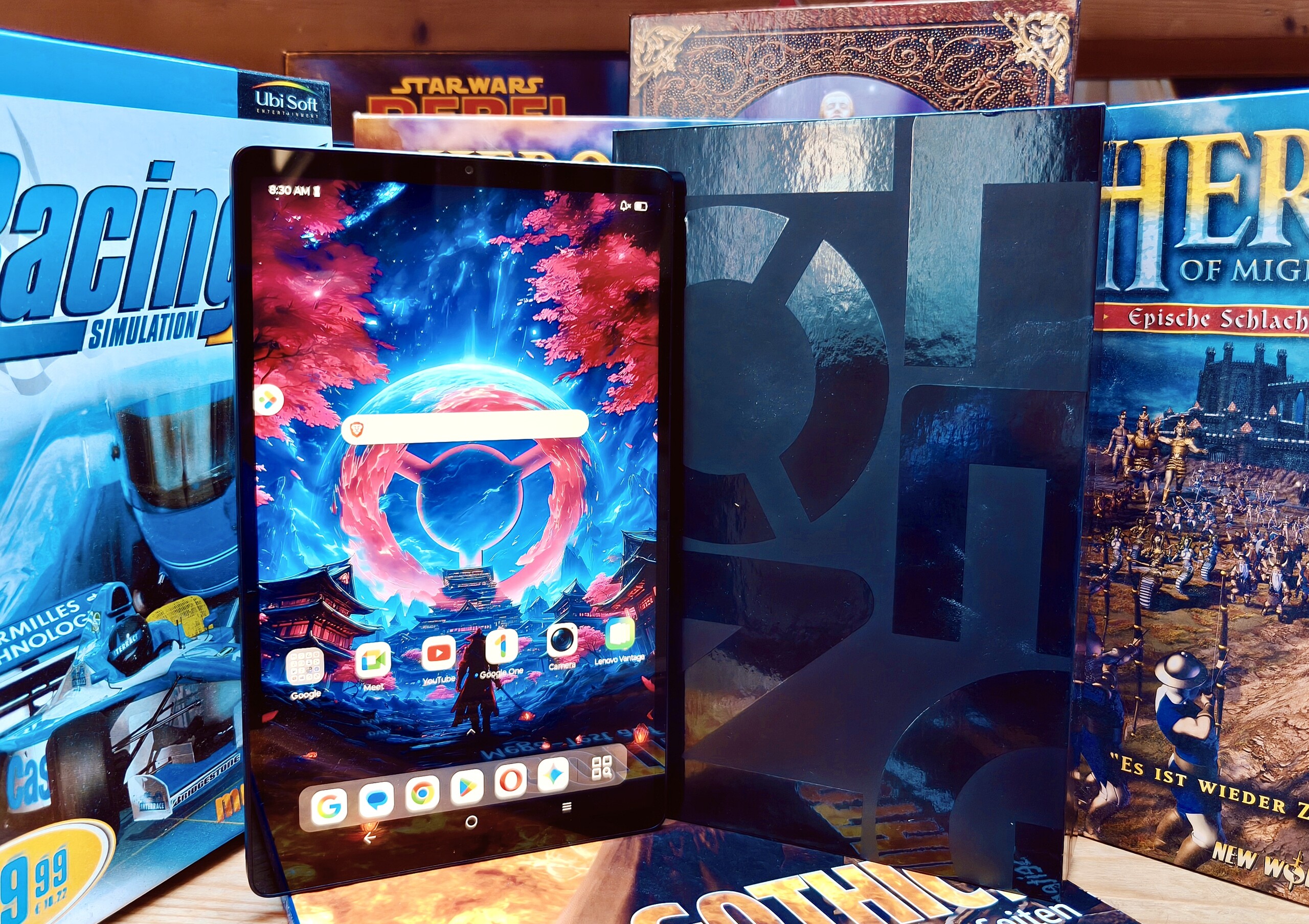
The touchscreen is scanned up to 480 times per second and the screen can display up to 165 images per second, making very smooth input possible. However, the maximum frame rate is probably only used in exceptional cases: Most mobile games do not support it.
What is missing is a fingerprint sensor; only the face can be used for biometric recognition. The front camera has to do without additional sensors. Although this works reliably in the test, it is not so secure.
An active stylus is supported, which further expands the usage options.
| Networking | |
| Lenovo Legion Tab 5 (Legion Y700 Gen5) | |
| iperf3 transmit AXE11000 6GHz | |
| iperf3 receive AXE11000 6GHz | |
| Lenovo Legion Tab TB321FU | |
| iperf3 transmit AXE11000 6GHz | |
| iperf3 receive AXE11000 6GHz | |
| Xiaomi Pad Mini | |
| iperf3 transmit AXE11000 | |
| iperf3 receive AXE11000 | |
| Nubia RedMagic Astra | |
| iperf3 transmit AXE11000 | |
| iperf3 receive AXE11000 | |
| iperf3 transmit AXE11000 6GHz | |
| iperf3 receive AXE11000 6GHz | |
| Average 802.11 a/b/g/n/ac/ax/be | |
| iperf3 transmit AXE11000 | |
| iperf3 receive AXE11000 | |
| iperf3 transmit AXE11000 6GHz | |
| iperf3 receive AXE11000 6GHz | |
| Average of class Tablet | |
| iperf3 transmit AXE11000 | |
| iperf3 receive AXE11000 | |
| iperf3 transmit AXE11000 6GHz | |
| iperf3 receive AXE11000 6GHz | |
Software and sustainability - four years of secure gaming
Android 16 is pre-installed on the Lenovo Legion Tab 2026.
Lenovo has not yet published information on the update periods. The predecessors received 4 years of updates, as well as three new Android versions. Software support can therefore be expected until 2030. However, the EU may still veto this, as new devices actually have to be supported for longer.
In terms of sustainability, Lenovo only sets general and long-term goals. Specific data on the Legion Tab 5 is not yet available.
Cameras - For snapshots

Traditionally, the camera equipment is not the strong point of tablets. However, a fairly compact tablet like the Legion Tab 5 could also be used for taking photos on the go.
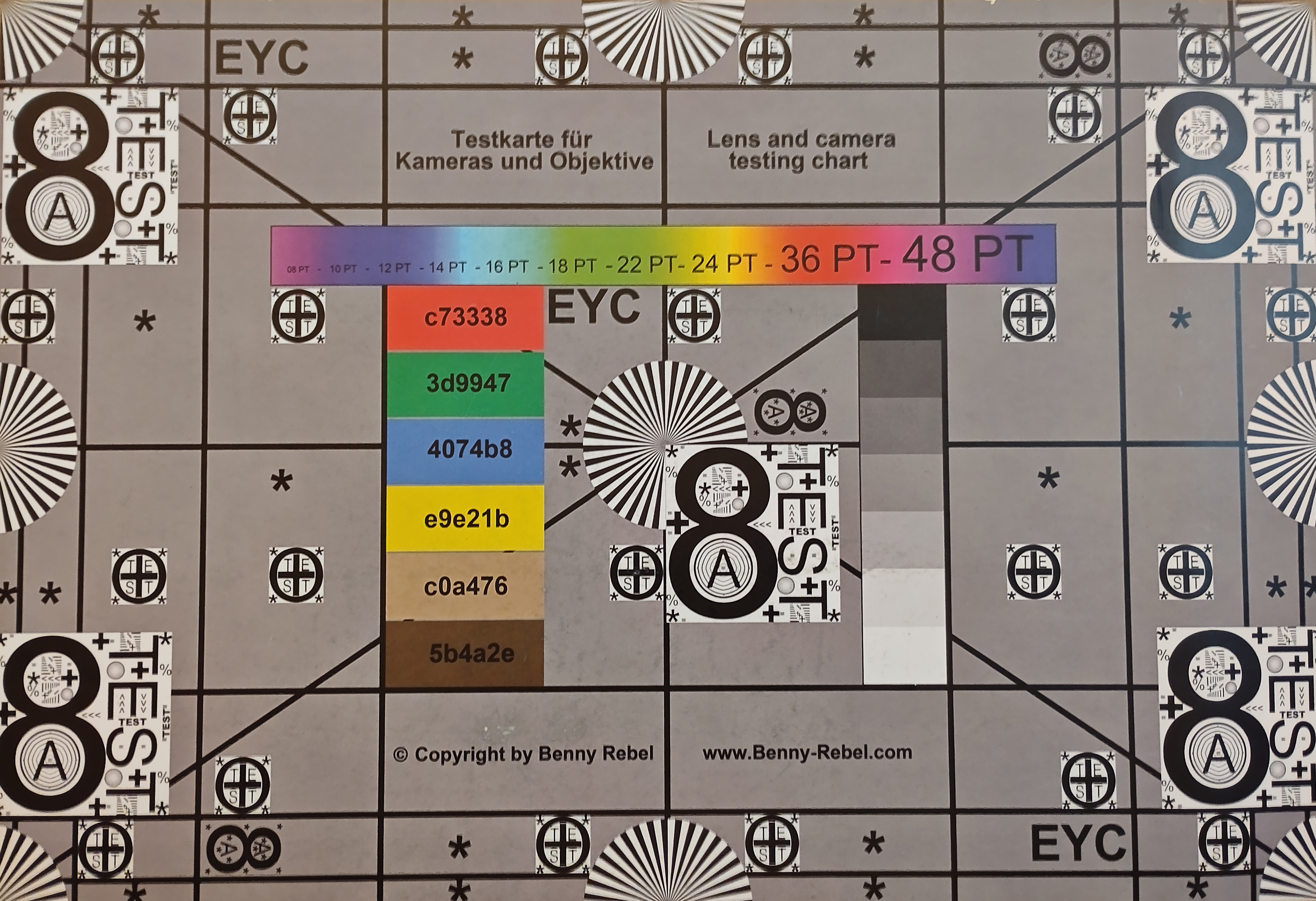
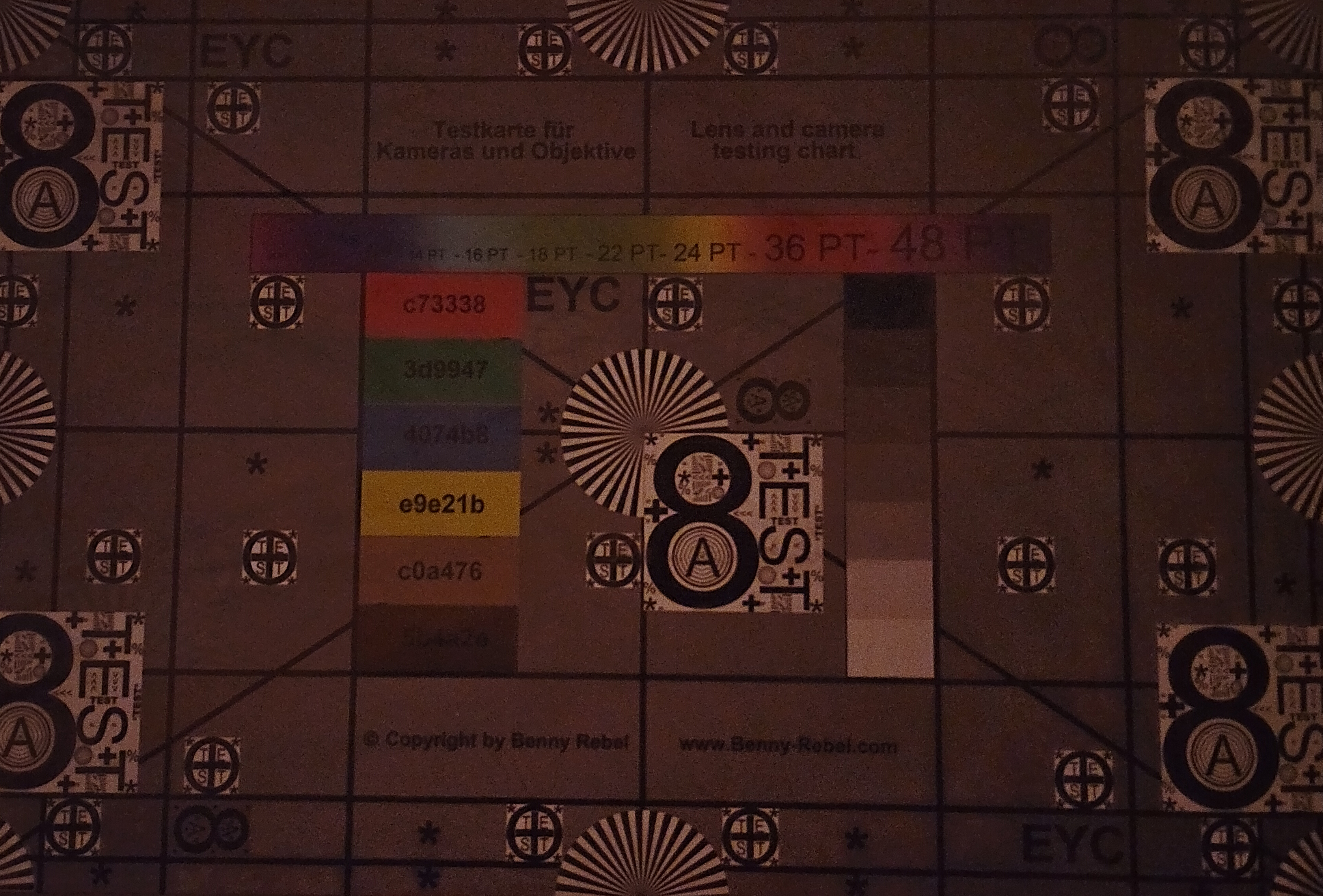
There is a 50-megapixel camera on the back and the SoC has the capabilities for fast and high-quality image processing. However, the dynamic range, level of detail and the display of difficult colors such as yellow or red only remain at a mediocre level.
The automatic mode also selects a strange white balance when shooting in low light, but still manages to produce a reasonably sharp image with a medium dynamic range.
Image comparison
Choose a scene and navigate within the first image. One click changes the position on touchscreens. One click on the zoomed-in image opens the original in a new window. The first image shows the scaled photograph of the test device.
Hauptkamera PflanzeHauptkamera UmgebungHauptkamera Low Light















Display - Very fast and no PWM
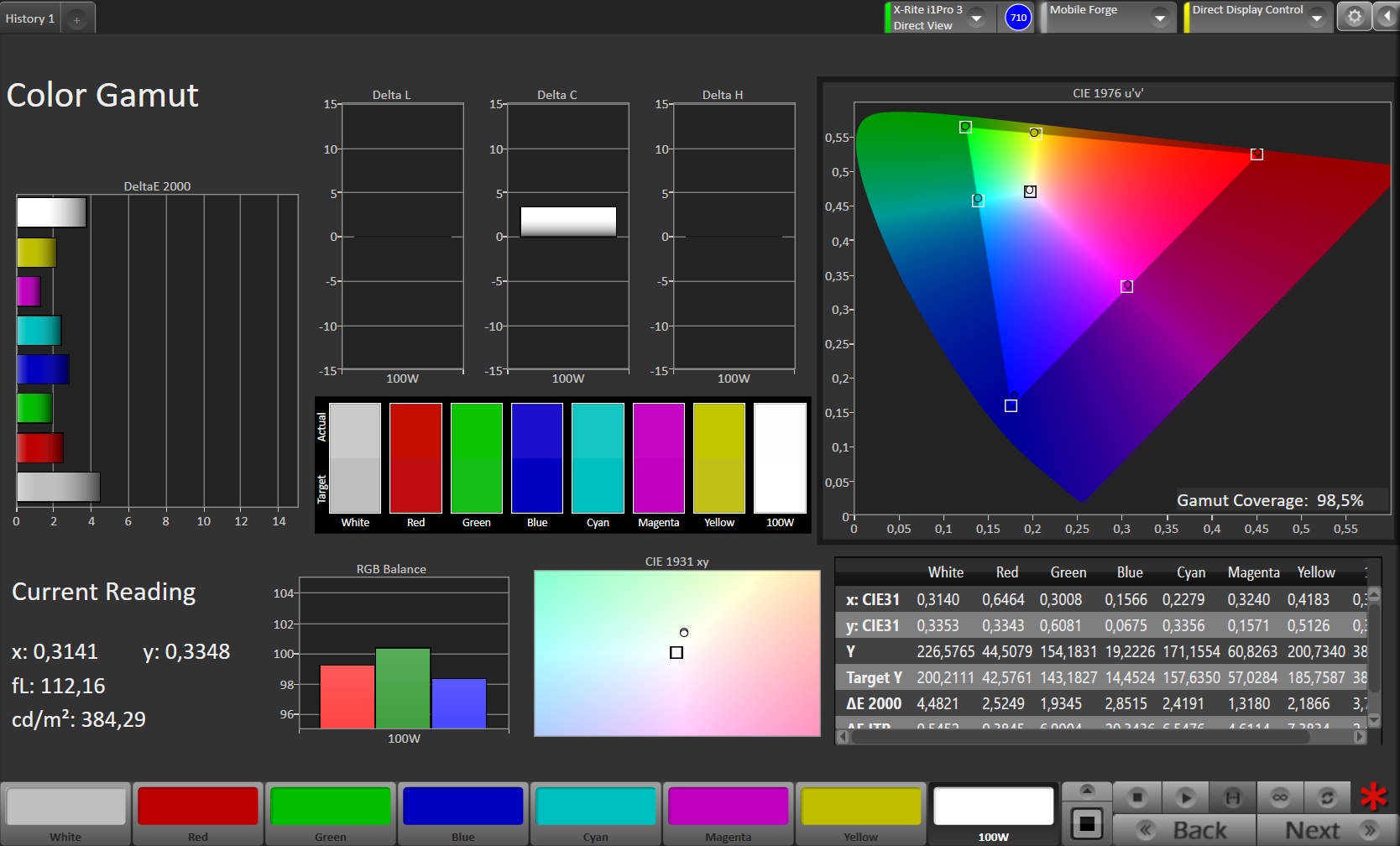
The IPS screen can be significantly brighter than in the predecessor, the Legion Tab 3.
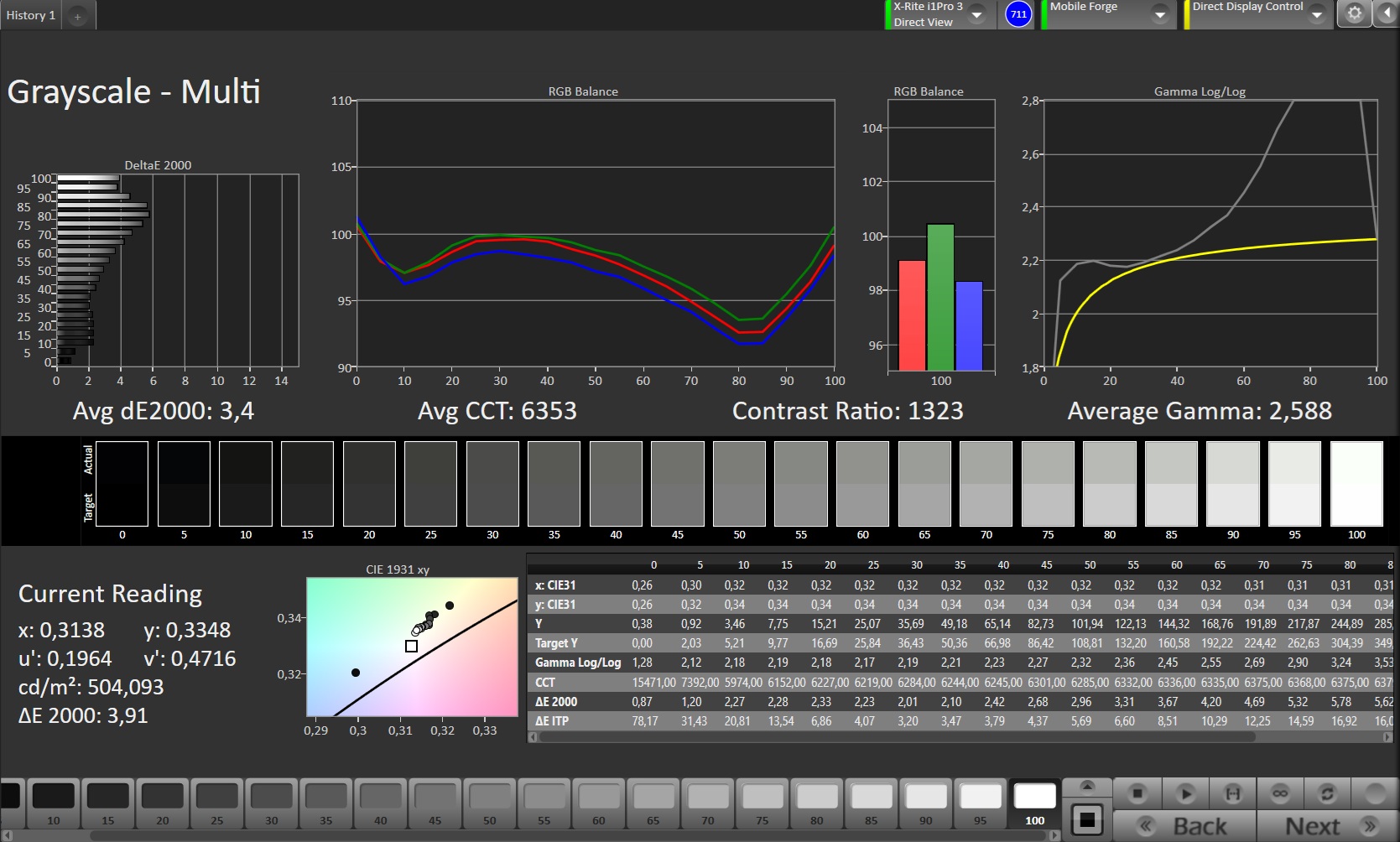
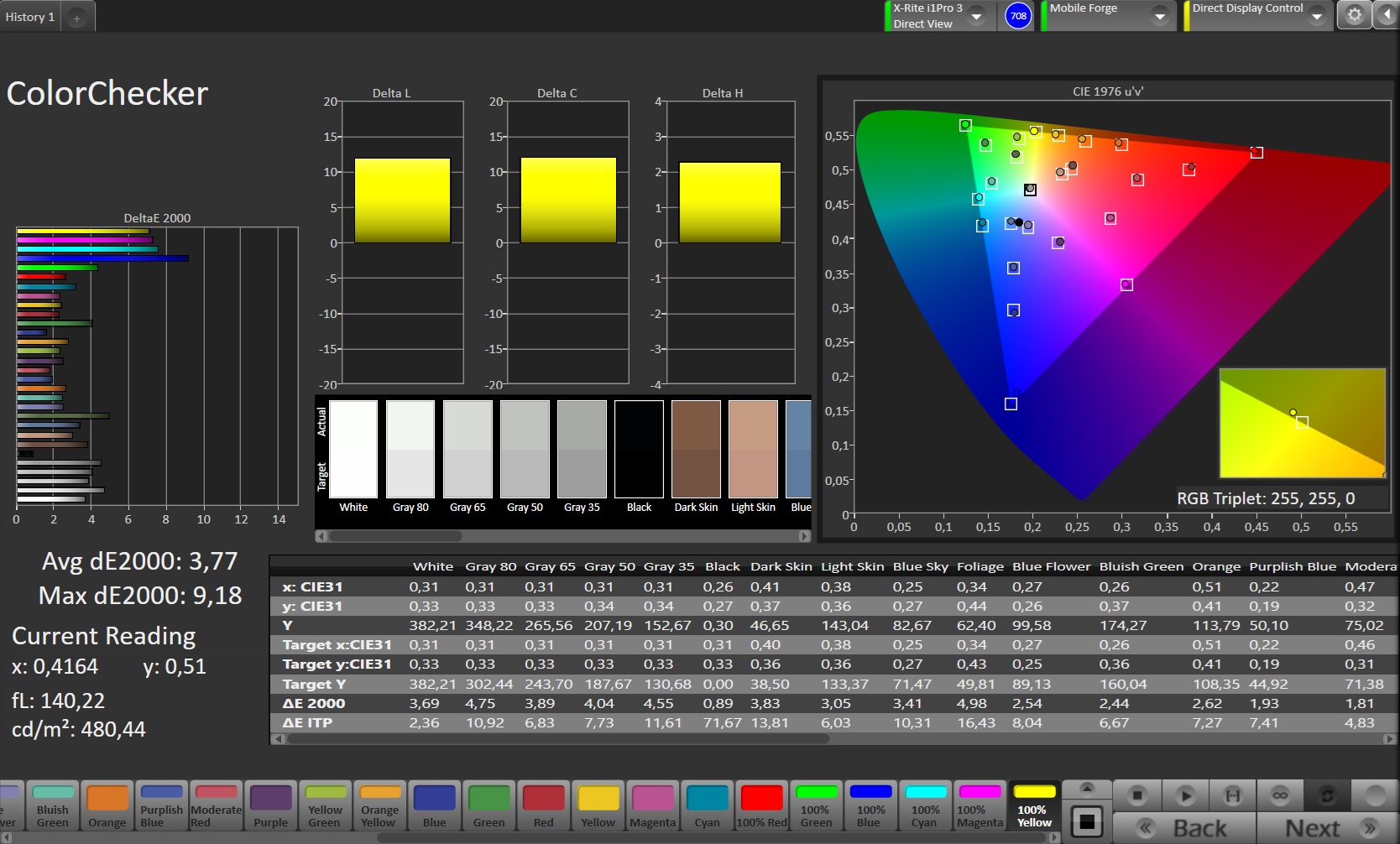
However, the color display is either too bright or a little too dark, depending on the hue; fortunately, there is no color cast. The resolution has also been increased and beats that of most other handy tablets.
We did not notice any PWM flickering.
| |||||||||||||||||||||||||
Brightness Distribution: 93 %
Center on Battery: 582 cd/m²
Contrast: 1098:1 (Black: 0.53 cd/m²)
ΔE ColorChecker Calman: 3.77 | ∀{0.5-29.43 Ø4.69}
ΔE Greyscale Calman: 3.4 | ∀{0.09-98 Ø4.94}
Gamma: 2.588
CCT: 6353 K
| Lenovo Legion Tab 5 (Legion Y700 Gen5) IPS, 3040x1904, 8.8" | Lenovo Legion Tab TB321FU LTPS, 2560x1600, 8.8" | Xiaomi Pad Mini TFT-LCD, 3008x1880, 8.8" | Nubia RedMagic Astra OLED, 2400x1504, 9.1" | |
|---|---|---|---|---|
| Screen | 18% | 17% | 67% | |
| Brightness middle (cd/m²) | 582 | 441 -24% | 681 17% | 1017 75% |
| Brightness (cd/m²) | 560 | 420 -25% | 675 21% | 1023 83% |
| Brightness Distribution (%) | 93 | 91 -2% | 95 2% | 94 1% |
| Black Level * (cd/m²) | 0.53 | 0.5 6% | 0.57 -8% | |
| Contrast (:1) | 1098 | 882 -20% | 1195 9% | |
| Colorchecker dE 2000 * | 3.77 | 1.08 71% | 2 47% | 0.6 84% |
| Colorchecker dE 2000 max. * | 9.18 | 2.52 73% | 4.7 49% | 1.1 88% |
| Greyscale dE 2000 * | 3.4 | 1.1 68% | 3.4 -0% | 1 71% |
| Gamma | 2.588 85% | 2.19 100% | 2.22 99% | 2.22 99% |
| CCT | 6353 102% | 6655 98% | 6922 94% | 6401 102% |
* ... smaller is better
| Display / APL18 Peak Brightness | |
| Nubia RedMagic Astra | |
| Lenovo Legion Tab 5 (Legion Y700 Gen5) | |
| Display / HDR Peak Brightness | |
| Nubia RedMagic Astra | |
| Lenovo Legion Tab 5 (Legion Y700 Gen5) | |
Screen Flickering / PWM (Pulse-Width Modulation)
| Screen flickering / PWM not detected | 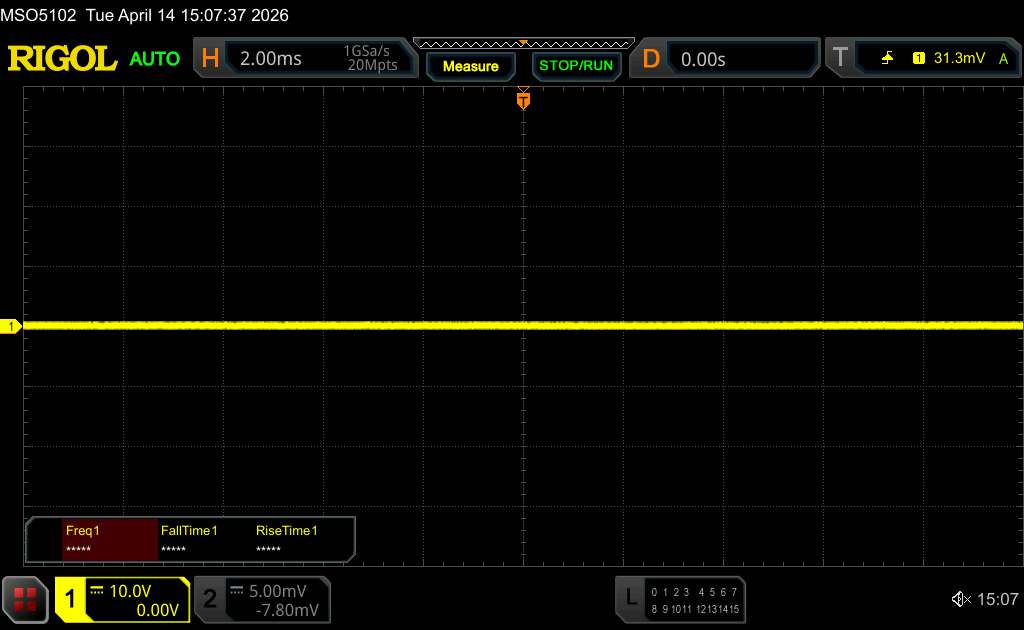 | ||
In comparison: 52 % of all tested devices do not use PWM to dim the display. If PWM was detected, an average of 7625 (minimum: 5 - maximum: 343500) Hz was measured. | |||
Display Response Times
| ↔ Response Time Black to White | ||
|---|---|---|
| 14 ms ... rise ↗ and fall ↘ combined | ↗ 9.9 ms rise | 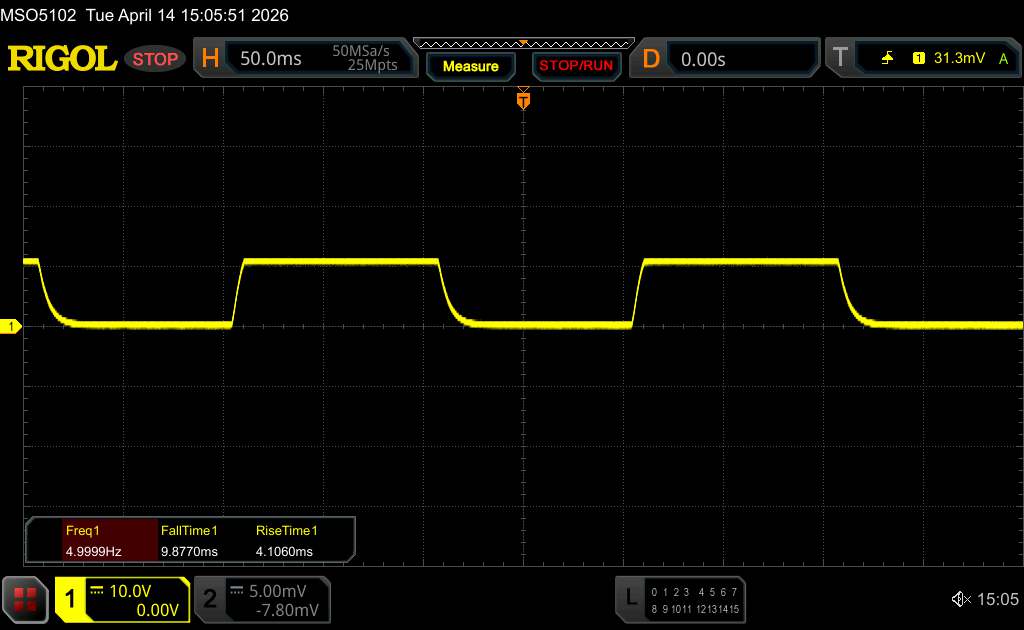 |
| ↘ 4.1 ms fall | ||
| The screen shows good response rates in our tests, but may be too slow for competitive gamers. In comparison, all tested devices range from 0.1 (minimum) to 240 (maximum) ms. » 35 % of all devices are better. This means that the measured response time is better than the average of all tested devices (19.7 ms). | ||
| ↔ Response Time 50% Grey to 80% Grey | ||
| 26.9 ms ... rise ↗ and fall ↘ combined | ↗ 15.5 ms rise | 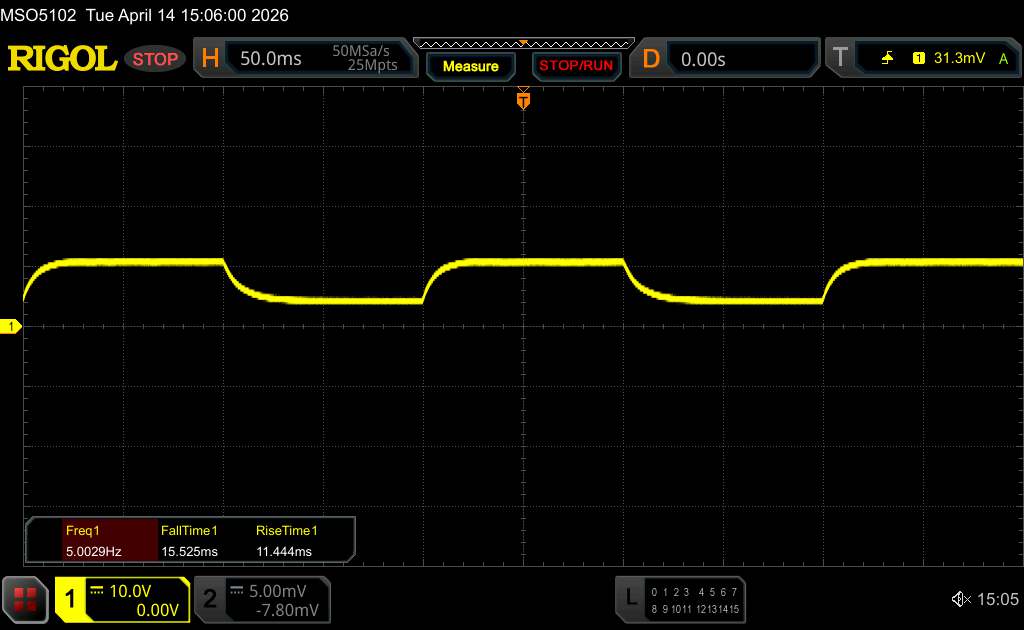 |
| ↘ 11.4 ms fall | ||
| The screen shows relatively slow response rates in our tests and may be too slow for gamers. In comparison, all tested devices range from 0.13 (minimum) to 636 (maximum) ms. » 37 % of all devices are better. This means that the measured response time is better than the average of all tested devices (30.7 ms). | ||
Performance, emissions and battery life - High performance, long battery life
Thanks to the Qualcomm Snapdragon 8 Elite Gen 5 the Legion Tab 5 is equipped with a cutting-edge SoC that is one of the fastest on the market. And you can tell: you will hardly find more power in any other tablet at the moment.
However, cooling is difficult in the rather compact casing, resulting in high casing temperatures after prolonged use, which can also make it uncomfortable to hold the tablet in your hand. The SoC also throttles significantly in the 3DMark stress tests.
The speakers could be a little louder, but deliver a well-tuned sound that also allows a few low mids to be heard. Many audio codecs are available for the wireless connection of headphones.
The battery has also been significantly increased and now delivers up to 9,000 mAh. This enables a runtime of 22 hours in our WLAN test with a fairly mild load. This means you should be able to get by for two days without charging.
| Lenovo Legion Tab 5 (Legion Y700 Gen5) | Lenovo Legion Tab TB321FU | Xiaomi Pad Mini | Nubia RedMagic Astra | Average 256 GB UFS 4.1 Flash | Average of class Tablet | |
|---|---|---|---|---|---|---|
| AndroBench 3-5 | -2% | -36% | 17% | 2% | -39% | |
| Sequential Read 256KB (MB/s) | 3952.6 | 3984.3 1% | 3585.32 -9% | 4092.9 4% | 3396 ? -14% | 2098 ? -47% |
| Sequential Write 256KB (MB/s) | 3621 | 3483.56 -4% | 1573.27 -57% | 3772.8 4% | 3103 ? -14% | 1691 ? -53% |
| Random Read 4KB (MB/s) | 362.1 | 355.12 -2% | 411.55 14% | 474.8 31% | 419 ? 16% | 279 ? -23% |
| Random Write 4KB (MB/s) | 489.6 | 483.73 -1% | 48.23 -90% | 632.6 29% | 586 ? 20% | 329 ? -33% |
(-) The maximum temperature on the upper side is 46.9 °C / 116 F, compared to the average of 33.7 °C / 93 F, ranging from 20.7 to 53.2 °C for the class Tablet.
(-) The bottom heats up to a maximum of 47.8 °C / 118 F, compared to the average of 33.2 °C / 92 F
(+) In idle usage, the average temperature for the upper side is 23.6 °C / 74 F, compared to the device average of 30 °C / 86 F.
3DMark Stress Tests
| 3DMark | |
| Wild Life Stress Test Stability | |
| Nubia RedMagic Astra | |
| Lenovo Legion Tab TB321FU | |
| Xiaomi Pad Mini | |
| Wild Life Extreme Stress Test | |
| Lenovo Legion Tab TB321FU | |
| Nubia RedMagic Astra | |
| Lenovo Legion Tab 5 (Legion Y700 Gen5) | |
| Xiaomi Pad Mini | |
| Solar Bay Stress Test Stability | |
| Nubia RedMagic Astra | |
| Lenovo Legion Tab TB321FU | |
| Lenovo Legion Tab 5 (Legion Y700 Gen5) | |
| Xiaomi Pad Mini | |
| Steel Nomad Light Stress Test Stability | |
| Lenovo Legion Tab TB321FU | |
| Nubia RedMagic Astra | |
| Xiaomi Pad Mini | |
Lenovo Legion Tab 5 (Legion Y700 Gen5) audio analysis
(+) | speakers can play relatively loud (84.5 dB)
Bass 100 - 315 Hz
(±) | reduced bass - on average 12.4% lower than median
(±) | linearity of bass is average (12.2% delta to prev. frequency)
Mids 400 - 2000 Hz
(±) | higher mids - on average 6.1% higher than median
(±) | linearity of mids is average (7.2% delta to prev. frequency)
Highs 2 - 16 kHz
(±) | higher highs - on average 5.3% higher than median
(±) | linearity of highs is average (12.4% delta to prev. frequency)
Overall 100 - 16.000 Hz
(±) | linearity of overall sound is average (17% difference to median)
Compared to same class
» 42% of all tested devices in this class were better, 3% similar, 55% worse
» The best had a delta of 7%, average was 21%, worst was 130%
Compared to all devices tested
» 31% of all tested devices were better, 8% similar, 61% worse
» The best had a delta of 4%, average was 23%, worst was 136%
Nubia RedMagic Astra audio analysis
(+) | speakers can play relatively loud (90.2 dB)
Bass 100 - 315 Hz
(-) | nearly no bass - on average 21% lower than median
(±) | linearity of bass is average (9.8% delta to prev. frequency)
Mids 400 - 2000 Hz
(+) | balanced mids - only 2.6% away from median
(+) | mids are linear (4.4% delta to prev. frequency)
Highs 2 - 16 kHz
(±) | higher highs - on average 6.9% higher than median
(+) | highs are linear (6.4% delta to prev. frequency)
Overall 100 - 16.000 Hz
(±) | linearity of overall sound is average (17.6% difference to median)
Compared to same class
» 44% of all tested devices in this class were better, 5% similar, 51% worse
» The best had a delta of 7%, average was 21%, worst was 130%
Compared to all devices tested
» 35% of all tested devices were better, 8% similar, 57% worse
» The best had a delta of 4%, average was 23%, worst was 136%
| Lenovo Legion Tab 5 (Legion Y700 Gen5) 9000 mAh | Lenovo Legion Tab TB321FU 6550 mAh | Xiaomi Pad Mini 7500 mAh | Nubia RedMagic Astra 8200 mAh | |
|---|---|---|---|---|
| Battery runtime | -24% | -11% | -45% | |
| Reader / Idle (h) | 51.4 | 44.2 -14% | ||
| WiFi v1.3 (h) | 22 | 17.3 -21% | 19.6 -11% | 12.2 -45% |
| Load (h) | 4.2 | 2.6 -38% | ||
| H.264 (h) | 20.2 |
Notebookcheck overall rating
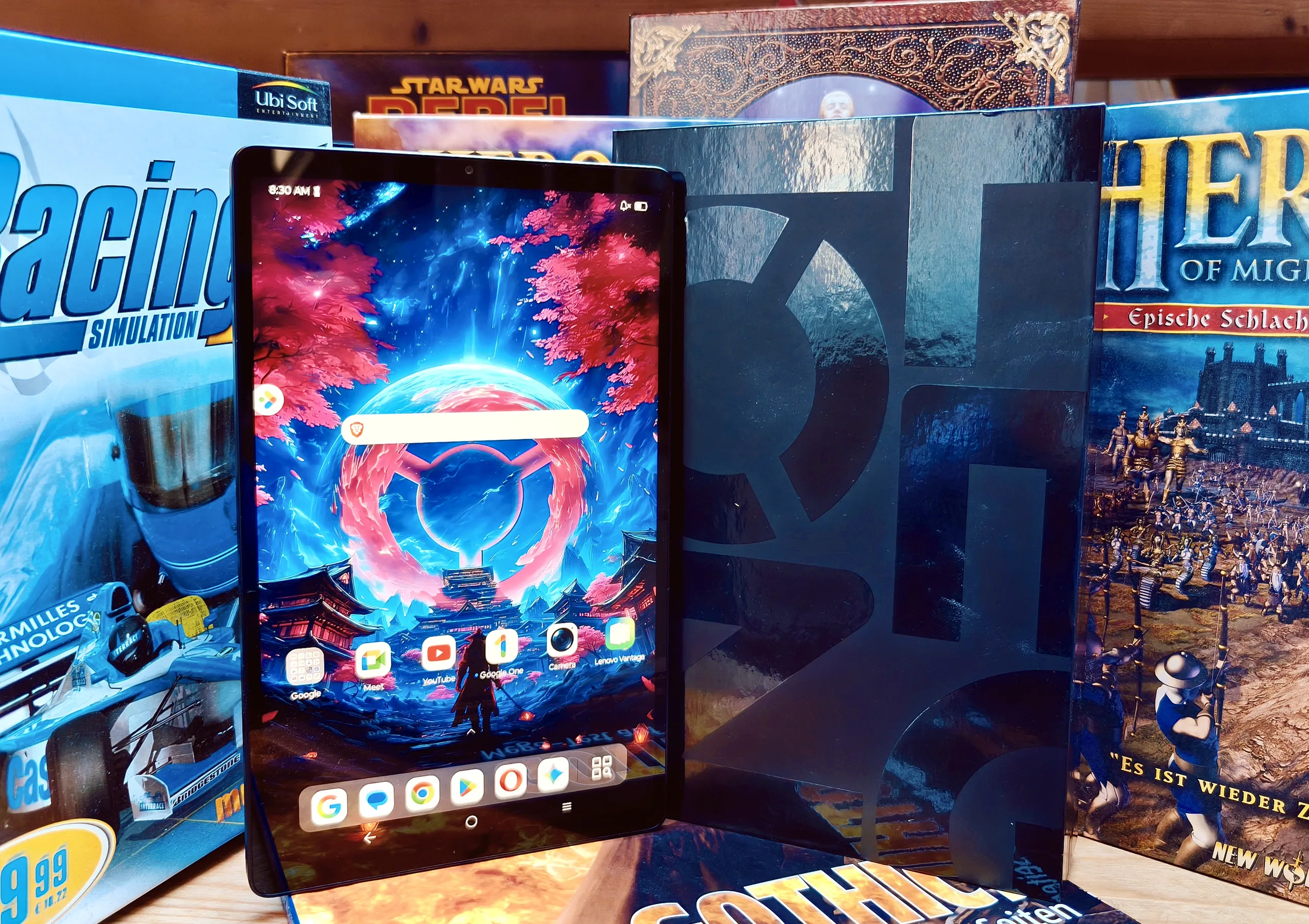
The Lenovo Legion Tab 5 is an expensive but very high-quality and cleverly equipped gaming tablet.
Lenovo Legion Tab 5 (Legion Y700 Gen5)
- 05/01/2026 v8
Florian Schmitt
 Total Sustainability Score:
 Possible alternatives in comparison
Image | Model / Review | Price | Weight | Drive | Display |
|---|---|---|---|---|---|
1. 88.3%  | Lenovo Legion Tab 5 (Legion Y700 Gen5) Qualcomm Snapdragon 8 Elite Gen 5 ⎘ Qualcomm Adreno 840 ⎘ 12 GB Memory, 256 GB UFS 4.x | Amazon: 1. $10.49 Fintie Case for Lenovo Legio... 2. $8.99 Suttkue for Lenovo Legion Ta... 3. $7.99 Gerutek 2 Pack Screen Protec... List Price: 899€ | 360 g | 256 GB UFS 4.1 Flash | 8.80" 3040x1904 343 PPI IPS |
2. 86.5%  | Lenovo Legion Tab TB321FU Qualcomm Snapdragon 8 Gen 3 ⎘ Qualcomm Adreno 750 ⎘ 12 GB Memory, 256 GB UFS 4.x | List Price: 599€ | 350 g | 256 GB UFS 4.0 Flash | 8.80" 2560x1600 343 PPI LTPS |
3. 88.5%  | Xiaomi Pad Mini Mediatek Dimensity 9400+ ⎘ ARM Immortalis-G925 MC12 ⎘ 12 GB Memory, 512 GB UFS 4.x | Amazon: 1. $159.99 XIAOMI Redmi Pad 2 9.7" Only... 2. $414.39 XIAOMI Pad 8 Ai WiFi Version... 3. $179.99 XIAOMI Redmi Pad 2 9.7" Only... List Price: 500€ | 326 g | 512 GB UFS 4.1 Flash | 8.80" 3008x1880 403 PPI TFT-LCD |
4. 87.7%  | Nubia RedMagic Astra Qualcomm Snapdragon 8 Elite ⎘ Qualcomm Adreno 830 ⎘ 16 GB Memory, 512 GB UFS 4.x | Amazon: List Price: 649€ | 370 g | 512 GB UFS 4.1 Flash | 9.06" 2400x1504 313 PPI OLED |
Transparency
The selection of devices to be reviewed is made by our editorial team. The test sample was freely purchased by the author at his/her own expense. The lender had no influence on this review, nor did the manufacturer receive a copy of this review before publication. There was no obligation to publish this review. As an independent media company, Notebookcheck is not subjected to the authority of manufacturers, retailers or publishers.
This is how Notebookcheck is testing
Every year, Notebookcheck independently reviews hundreds of laptops and smartphones using standardized procedures to ensure that all results are comparable. We have continuously developed our test methods for around 20 years and set industry standards in the process. In our test labs, high-quality measuring equipment is utilized by experienced technicians and editors. These tests involve a multi-stage validation process. Our complex rating system is based on hundreds of well-founded measurements and benchmarks, which maintains objectivity. Further information on our test methods can be found here.
 Add as a preferred source on Google


