Notebookcheck Logo
Vivo X300 FE Review

The mini version of one of the best camera smartphones saves a lot of money – Vivo X300 FE Smartphone Review

Compact and affordable.

The handy Vivo X300 FE costs half as much as the Ultra model and cuts corners in all the right places: The battery is barely smaller, some cameras are more light-sensitive, and when it comes to performance, the phone can handle almost anything. Is Vivo producing the strongest competitor to its top-of-the-line model?
Florian Schmitt 👁 (translated by Florian Schmitt) Published 🇩🇪
5G Android ARM Smartphone

Conclusion on the Vivo X300 FE

Vivo demonstrates that, with just a few minor compromises, it’s possible to bring the price of a smartphone well below 1,000 euros without sacrificing that high-end feel. The X300 FE is compact yet features a massive battery with an endurance that puts many significantly more expensive phones to shame.

The camera system features slightly smaller sensors than the manufacturer’s top-of-the-line models, but some of these are actually more light-sensitive than those in the larger models and delivered very good image quality in our review. It also comes with high-end accessories like the Zeiss super-telephoto lens.

While the Snapdragon 8 Gen 5 isn't quite a top-of-the-line SoC, it's more than sufficient for the vast majority of tasks. The high-quality build and fast charging are additional pluses, as are the fast storage and the generous 12 GB of RAM.

The only thing you’ll have to do without is a high-speed USB port, but the long update window makes up for it.

Pros

+ Good value for the price
+ Compact, high-quality design
+ Long battery life
+ High-performance camera with good image quality
+ Fast UFS 4.1 storage
+ Plenty of RAM
+ Very fast Wi-Fi 7
+ Seven years of updates

Cons

- USB 2.0 only
- Noticeable heating under load
- Throttling under sustained load
- Wide-angle camera lacks detail
- Speaker volume is low

Price and Availability

In the US, you will have to look for an import version of the Vivo X300 FE as the phone is not being sold there officially.

In many other parts of the world, the phone is available for around US$ 1,100.

Amazon Logo
  • $14.99
    QUIETIP Magnetic Case for vivo X300 FE with Screen Protector,[Compatible with MagSafe] Translucent Matte Drop Protection Cover,Black
  • $963.30
    Samsung Galaxy S26 Ultra, Unlocked Android Smartphone, 256GB, Privacy Display, Galaxy AI, AI Camera, Super Fast Charging 3.0, Durable Battery, 2026, US 1 Year Warranty, Sky Blue
  • $869.73
    Samsung Galaxy S26, Unlocked Android Smartphone, 512GB, Powerful Processor, Galaxy AI, Immersive Viewing, Durable Battery, 2026, US 1 Year Warranty, Black

Specifications

Vivo X300 FE (X300 Series)
Processor
Qualcomm Snapdragon 8 Gen 5 8c/8t, 2 x 3.8 GHz Qualcomm Oryon Gen 3 Prime, 6 x 3.3 GHz Qualcomm Oryon Gen 3 Performance, Oryon v3
Graphics adapter
Memory
12 GB 
Display
6.31 inch 19.5:9, 2640 x 1216 pixel 461 PPI, capacitive touchscreen, AMOLED, glossy: yes, HDR, 120 Hz
Storage
512 GB UFS 4.1 Flash, 512 GB 
, 485 GB free
Connections
1 USB 2.0, USB-C Power Delivery (PD), 1 Infrared, Audio Connections: audio via USB-C, 1 Fingerprint Reader, NFC, Brightness Sensor, Sensors: accelerometer, gyro, proximity, compass
Networking
802.11 a/​b/​g/​n/​ac/​ax/​be (a/b/g/n = Wi-Fi 4/ac = Wi-Fi 5/ax = Wi-Fi 6/ Wi-Fi 6E 6 GHz be = Wi-Fi 7), Bluetooth 6.0, 2G (850/​900/​1800/​1900), 3G (B1/​B2/​B4/​B5/​B6/​B8/​B19), 4G (B1/​B2/​B3/​B4/​B5/​B7/​B8/​B12/​B13/​B17/​B18/​B19/​B20/​B25/​B26/​B28/​B32/​B34/​B38/​B39/​B40/​B41/​B42/​B43/​B48/​B66/​B71), 5G (n1/​n2/​n3/​n5/​n7/​n8/​n18/​n20/​n25/​n26/​n28/​n38/​n40/​n41/​n48/​n66/​n71/​n75/​n77/​n78), Dual SIM, LTE, 5G, GPS
Size
height x width x depth (in mm): 8.2 x 150.8 x 71.8 ( = 0.32 x 5.94 x 2.83 in)
Battery
6500 mAh Lithium-Ion, 90 Watt charging, 40 Watt wireless charging
Charging
wireless charging, fast charging / Quickcharge
Operating System
Android 16
Camera
Primary Camera: 50 MPix f/​1.57, phase shift AF, Laser AF, OIS, dual LED flash, Videos @4320p/​30fps (camera 1); 50.0MP, f/​2.65, phase shift AF, OIS, 3x optical zoom, Periscope tele (camera 2); 8.0MP, f/​2.2, wide angle (camera 3)
Secondary Camera: 50 MPix f/2.0, 20mm, Videos @2160p/​30fps
Additional features
Speakers: stereo speakers (hybrid), Keyboard: Virtual keyboard, USB cable, SIM tool, silicone bumper, 24 Months Warranty, IP68/​IP69 certified, SAR 0.955W/​kg (head), 1.206W/​kg (body), fanless, waterproof
Weight
190.2 g ( = 6.71 oz / 0.42 pounds)
Price
899 Euro
Note: The manufacturer may use components from different suppliers including display panels, drives or memory sticks with similar specifications.


Case and Features – High Quality thanks to Metal and Glass

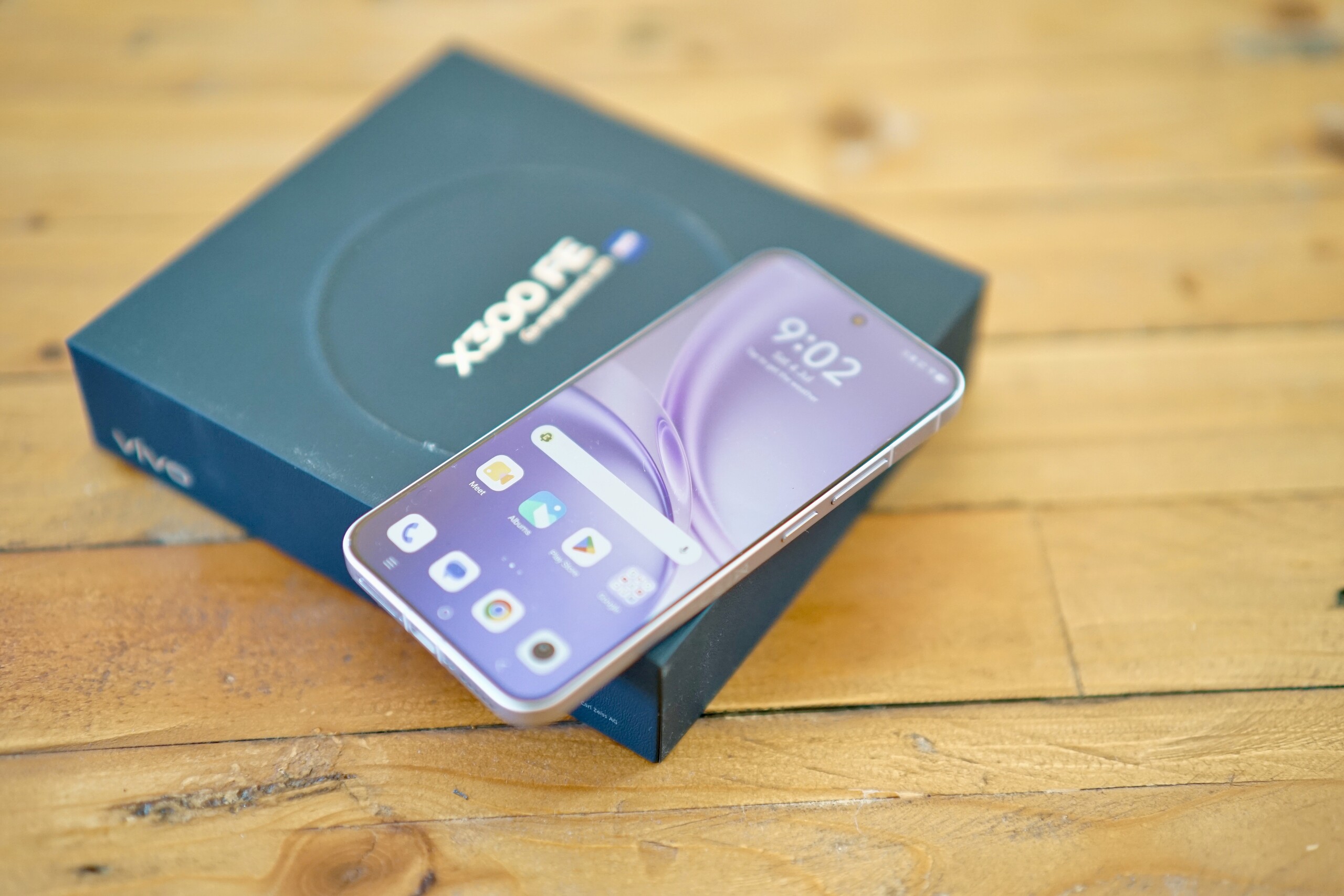
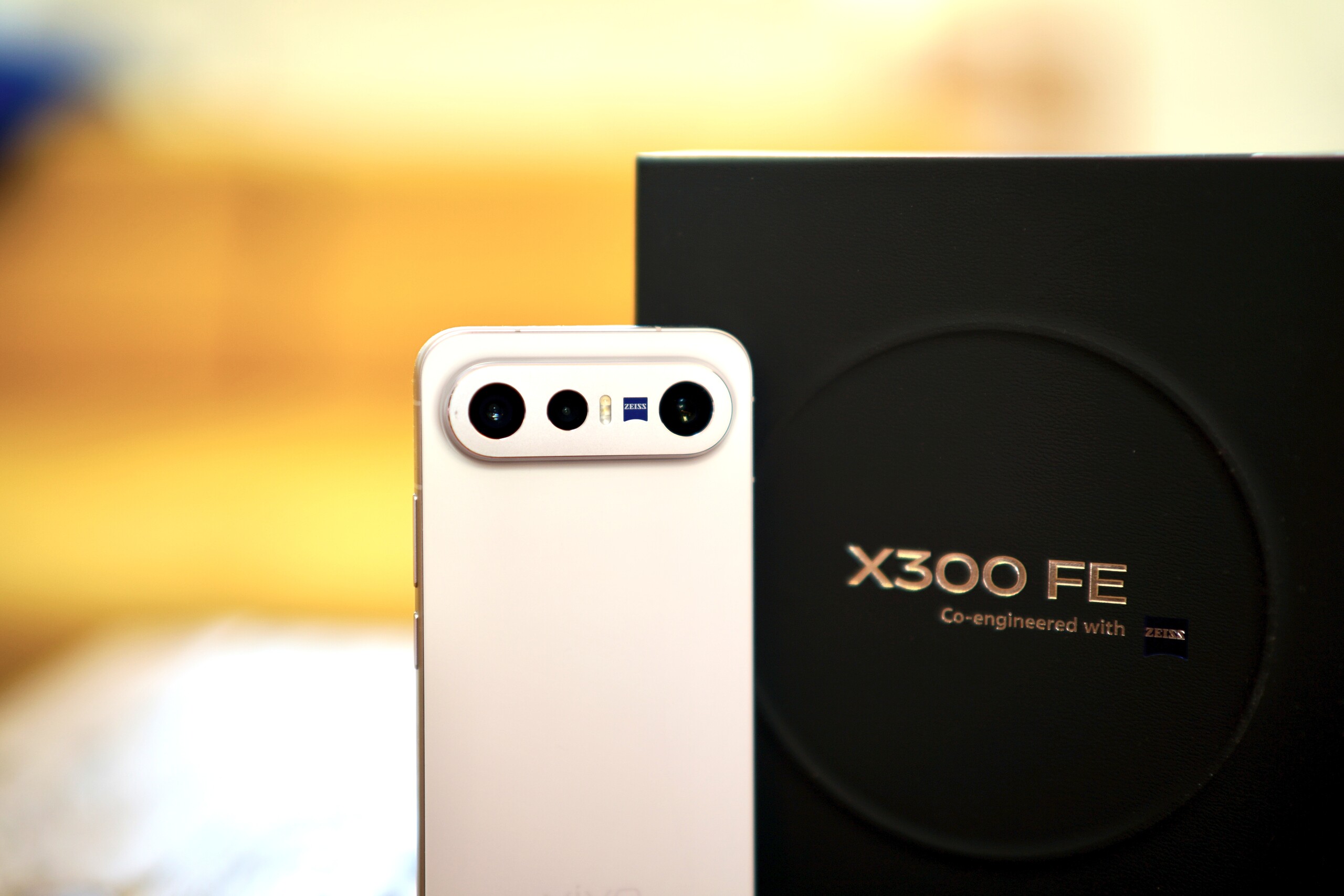
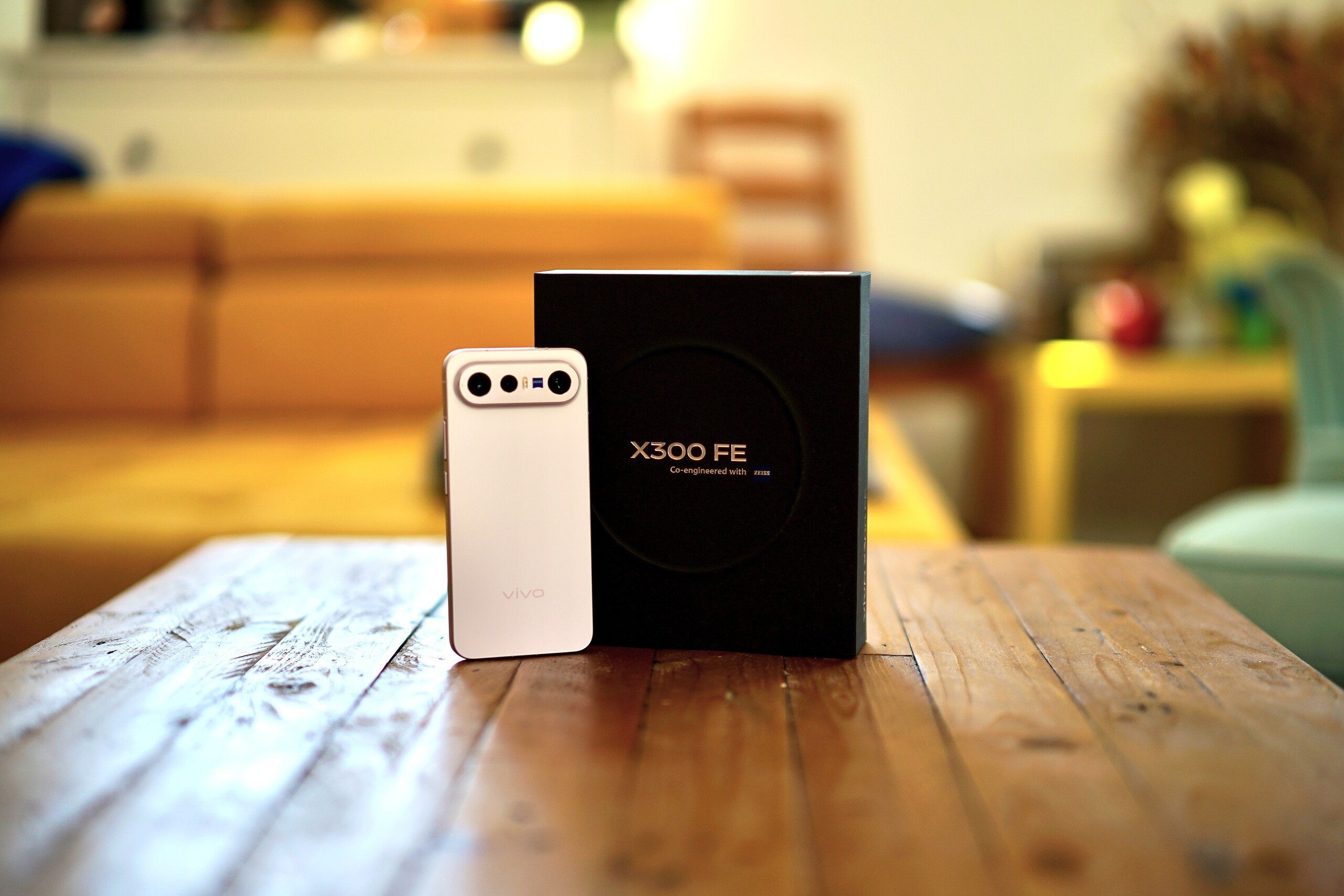
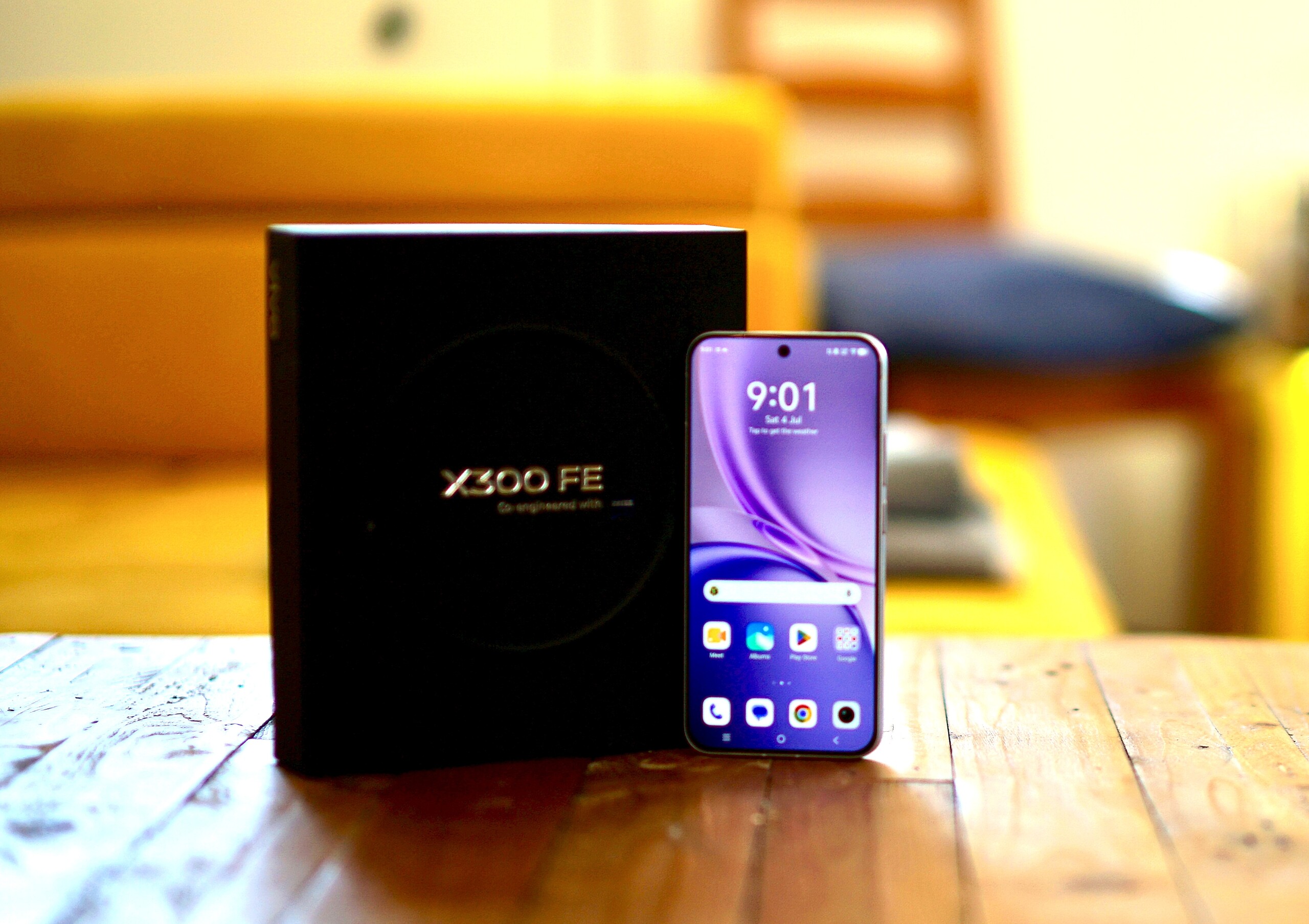
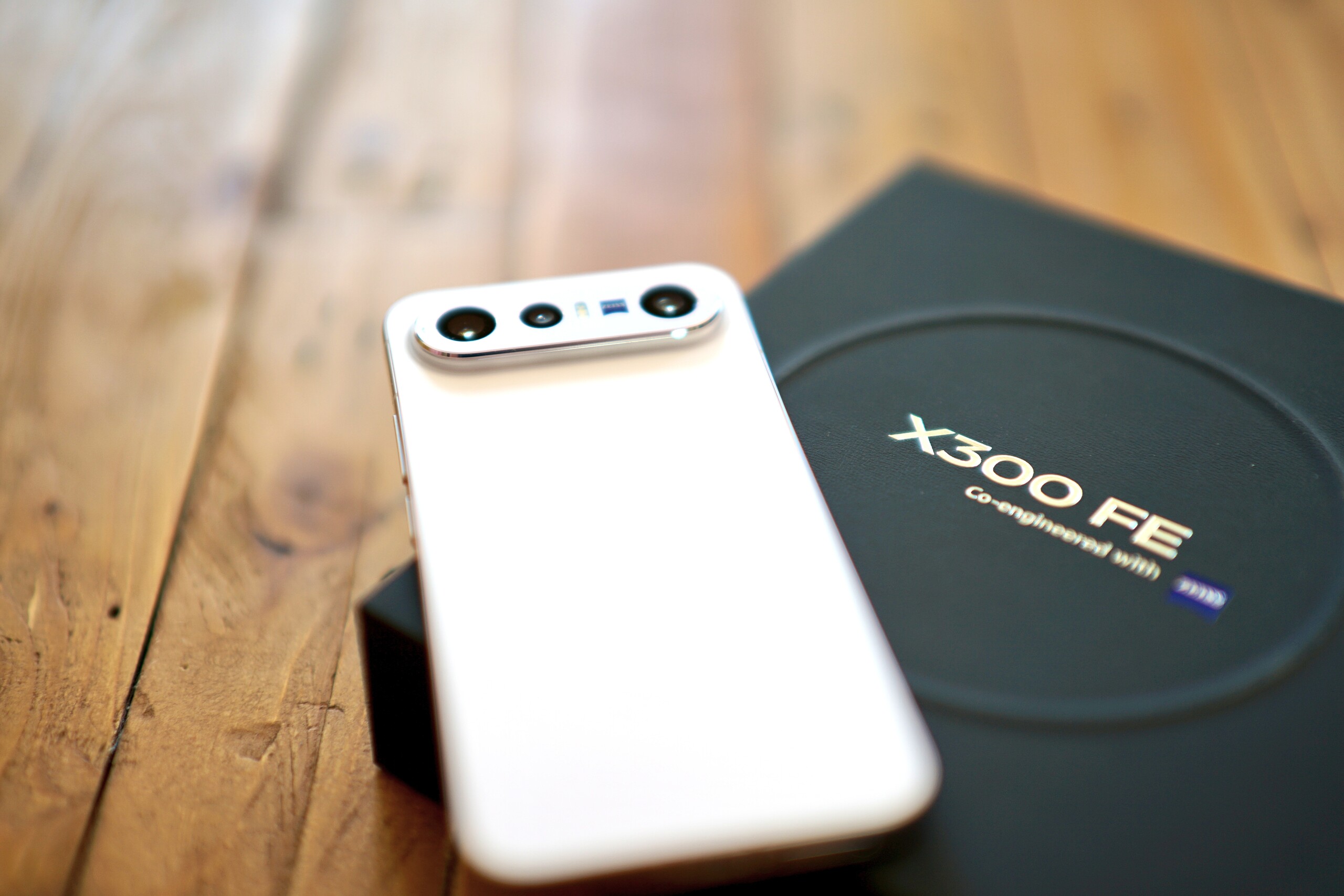
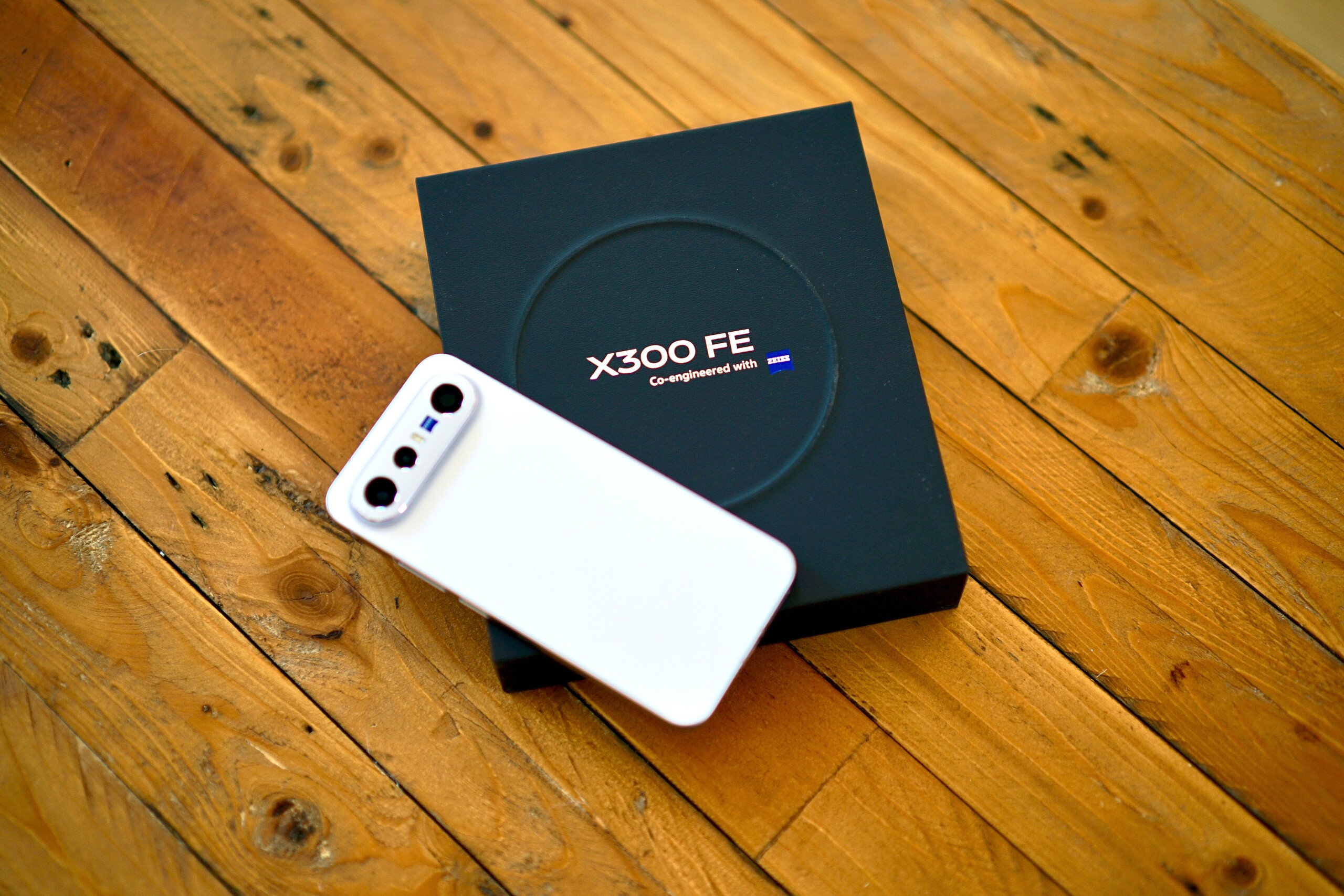
Visually, the Vivo X300 FE differs significantly from its larger siblings: The camera module is housed in an oval-framed strip that spans the entire width of the body, rather than in a round module like on the larger X300 models. This design is reminiscent of Google’s Pixel smartphones. The Zeiss branding makes it clear that high-quality optics are built into the device.

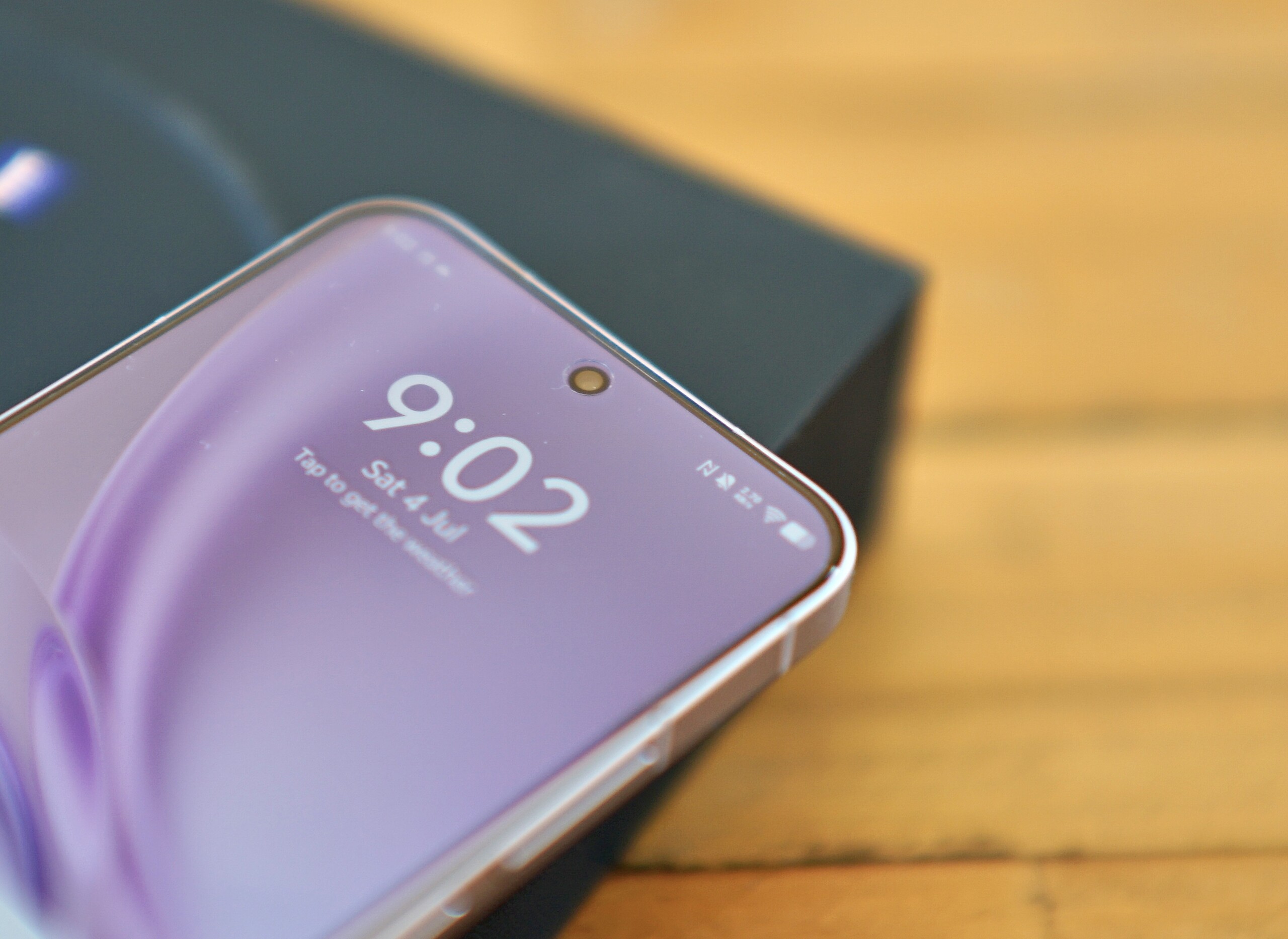
Purple and dark gray are the color options; internationally, a green version is also available. The back is made of matte glass and, combined with a metal frame, gives it a very high-quality look. The phone is very sturdily built and did not bend during our test. Narrow bezels around the display give the phone a modern look.

Weighing just over 190 grams, the Vivo X300 FE is lightweight, yet it offers IP68/IP69 protection against water and dust.

Unfortunately, it lacks the fast USB 3.2 port found on the top-of-the-line models; this model only features USB 2.0. It comes with 512 GB of storage and 12 GB of RAM; internationally, a model with 256 GB of storage is also available.
Vivo X300 FE Review
Vivo X300 FE Review
Vivo X300 FE Review
Vivo X300 FE Review
Vivo X300 FE Review
Vivo X300 FE Review
Vivo X300 FE Review
Vivo X300 FE Review
Vivo X300 FE Review

Size Comparison

153.9 mm / 6.06 in 73 mm / 2.87 in 9 mm / 0.3543 in 183 g0.4034 lbs150.8 mm / 5.94 in 71.8 mm / 2.83 in 8.2 mm / 0.3228 in 190.2 g0.4193 lbs150.6 mm / 5.93 in 71.8 mm / 2.83 in 8.4 mm / 0.3307 in 194 g0.4277 lbs150.5 mm / 5.93 in 71.7 mm / 2.82 in 8.4 mm / 0.3307 in 198 g0.4365 lbs149.6 mm / 5.89 in 71.7 mm / 2.82 in 7.2 mm / 0.2835 in 167 g0.3682 lbs148 mm / 5.83 in 105 mm / 4.13 in 1 mm / 0.03937 in 1.5 g0.00331 lbs

Communication and Usability – Lightning-Fast Wi-Fi on the China Phone

The phone supports a wide range of 4G and 5G frequencies, allowing you to connect to a cellular network almost anywhere in the world.

It features fast Wi-Fi 7, and our Asus RT-BE96U router connects to the phone using this very fast Wi-Fi standard. This enables speeds of up to 1,958 Mbit/s. That’s more than enough for fast home networks, and the connection proved very stable in our test.

The screen displays up to 120 frames per second and the touchscreen is precise and highly responsive, offering a smooth gliding experience for your finger.

The fingerprint reader is hidden relatively high up behind the screen. It responds very quickly to a finger placed on it and unlocks the phone instantly. Face recognition can also be used to unlock the phone.

Networking
Vivo X300 FE
802.11 a/​b/​g/​n/​ac/​ax/​be
iperf3 transmit Wi-Fi6/7 RT-BE96U
1479 (min: 1211) MBit/s ∼67%
iperf3 receive Wi-Fi6/7 RT-BE96U
1892 (min: 1838) MBit/s ∼86%
Google Pixel 10a
Wi-Fi 6E
iperf3 transmit Wi-Fi6/7 RT-BE96U
853 (min: 681) MBit/s ∼39%
iperf3 receive Wi-Fi6/7 RT-BE96U
743 (min: 711) MBit/s ∼34%
Oppo Find X9s Pro
802.11 a/​b/​g/​n/​ac/​ax/​be
iperf3 transmit AXE11000 6GHz
1225 (min: 729) MBit/s ∼92%
iperf3 receive AXE11000 6GHz
1976 (min: 1754) MBit/s ∼100%
Samsung Galaxy S26
802.11 a/​b/​g/​n/​ac/​ax/​be
iperf3 transmit AXE11000
900 (min: 446) MBit/s ∼94%
iperf3 receive AXE11000
844 (min: 789) MBit/s ∼81%
iperf3 transmit AXE11000 6GHz
1334 (min: 695) MBit/s ∼100%
iperf3 receive AXE11000 6GHz
1245 (min: 1159) MBit/s ∼63%
OnePlus 15T
802.11 a/​b/​g/​n/​ac/​ax/​be
iperf3 transmit RT-BE96U WiFi7
1354 (min: 960) MBit/s ∼91%
iperf3 receive RT-BE96U WiFi7
1951 (min: 1727) MBit/s ∼100%
Average 802.11 a/​b/​g/​n/​ac/​ax/​be
 
iperf3 transmit AXE11000
956 (min: 595) MBit/s ∼100%
iperf3 receive AXE11000
1040 (min: 459) MBit/s ∼100%
iperf3 transmit AXE11000 6GHz
1289 (min: 508) MBit/s ∼97%
iperf3 receive AXE11000 6GHz
1495 (min: 719) MBit/s ∼76%
iperf3 transmit RT-BE96U WiFi7
1488 (min: 1354) MBit/s ∼100%
iperf3 receive RT-BE96U WiFi7
1746 (min: 1411) MBit/s ∼89%
iperf3 transmit Wi-Fi6/7 RT-BE96U
2213 (min: 370) MBit/s ∼100%
iperf3 receive Wi-Fi6/7 RT-BE96U
2196 (min: 407) MBit/s ∼100%
Average of class Smartphone
 
iperf3 transmit AXE11000
696 (min: 52.5) MBit/s ∼73%
iperf3 receive AXE11000
742 (min: 52.2) MBit/s ∼71%
iperf3 transmit AXE11000 6GHz
1260 (min: 287) MBit/s ∼94%
iperf3 receive AXE11000 6GHz
1387 (min: 339) MBit/s ∼70%
iperf3 transmit RT-BE96U WiFi7
1455 (min: 341) MBit/s ∼98%
iperf3 receive RT-BE96U WiFi7
1587 (min: 343) MBit/s ∼81%
iperf3 transmit Wi-Fi6/7 RT-BE96U
1933 (min: 407) MBit/s ∼87%
iperf3 receive Wi-Fi6/7 RT-BE96U
1874 (min: 398) MBit/s ∼85%
01002003004005006007008009001000110012001300140015001600170018001900Tooltip
Vivo X300 FE; iperf3 transmit Wi-Fi6/7 RT-BE96U; iperf 3.1.3: Ø1478 (1211-1586) MBit/s
Vivo X300 FE; iperf3 receive Wi-Fi6/7 RT-BE96U; iperf 3.1.3: Ø1892 (1838-1958) MBit/s

Software and Sustainability – Updates like Samsung's

The security patches date from May 2026 and are updated approximately every two months. With a good internet connection, the system completes updates within a few minutes.

The manufacturer promises seven years of update support, as well as five new versions of Android. This is a very long update period that can rival that of Apple or Samsung.

The packaging is plastic-free, but otherwise there is little information about the smartphone’s sustainability.

Cameras – They live up to their Name

Front Camera Photo
Front Camera Photo

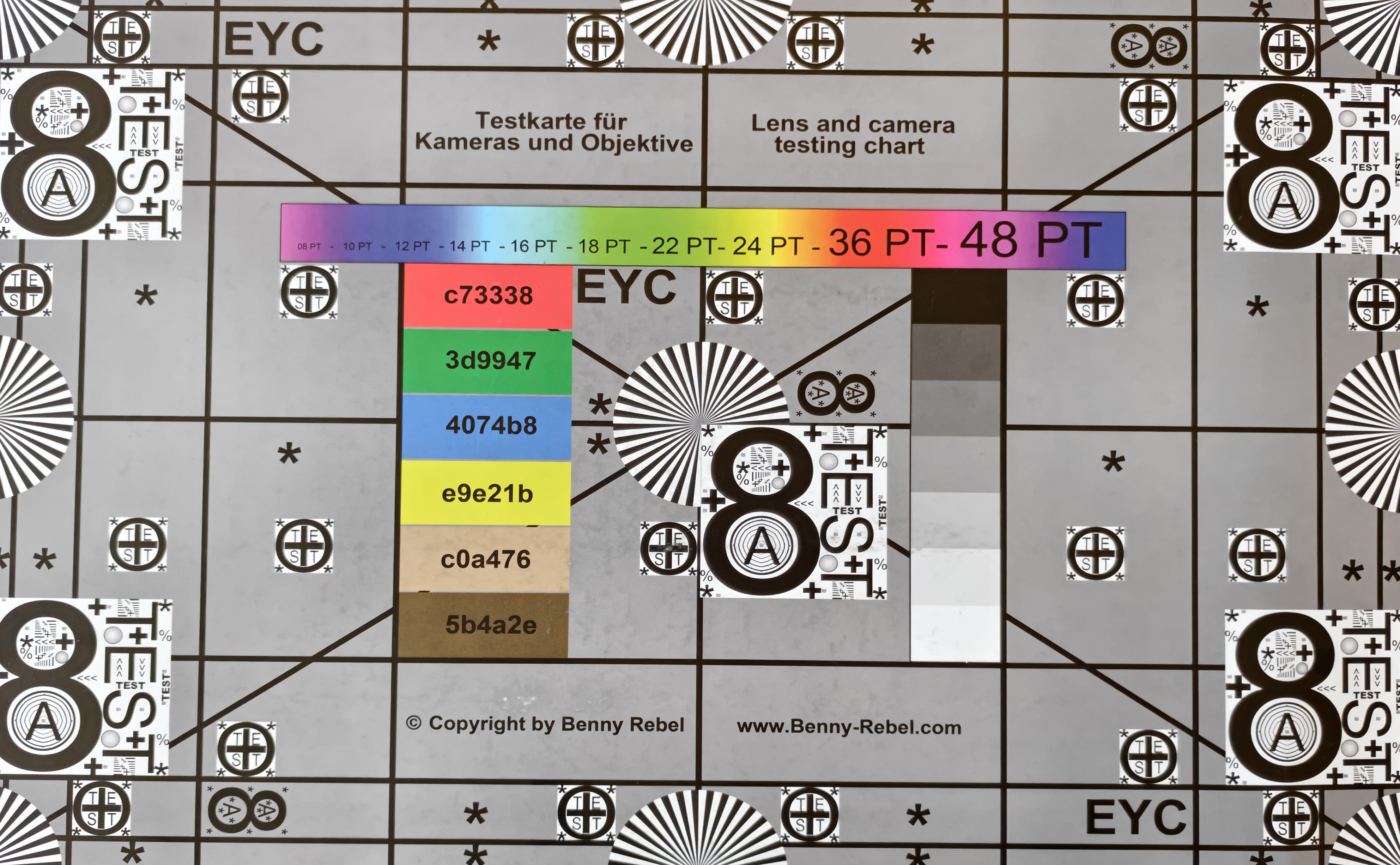
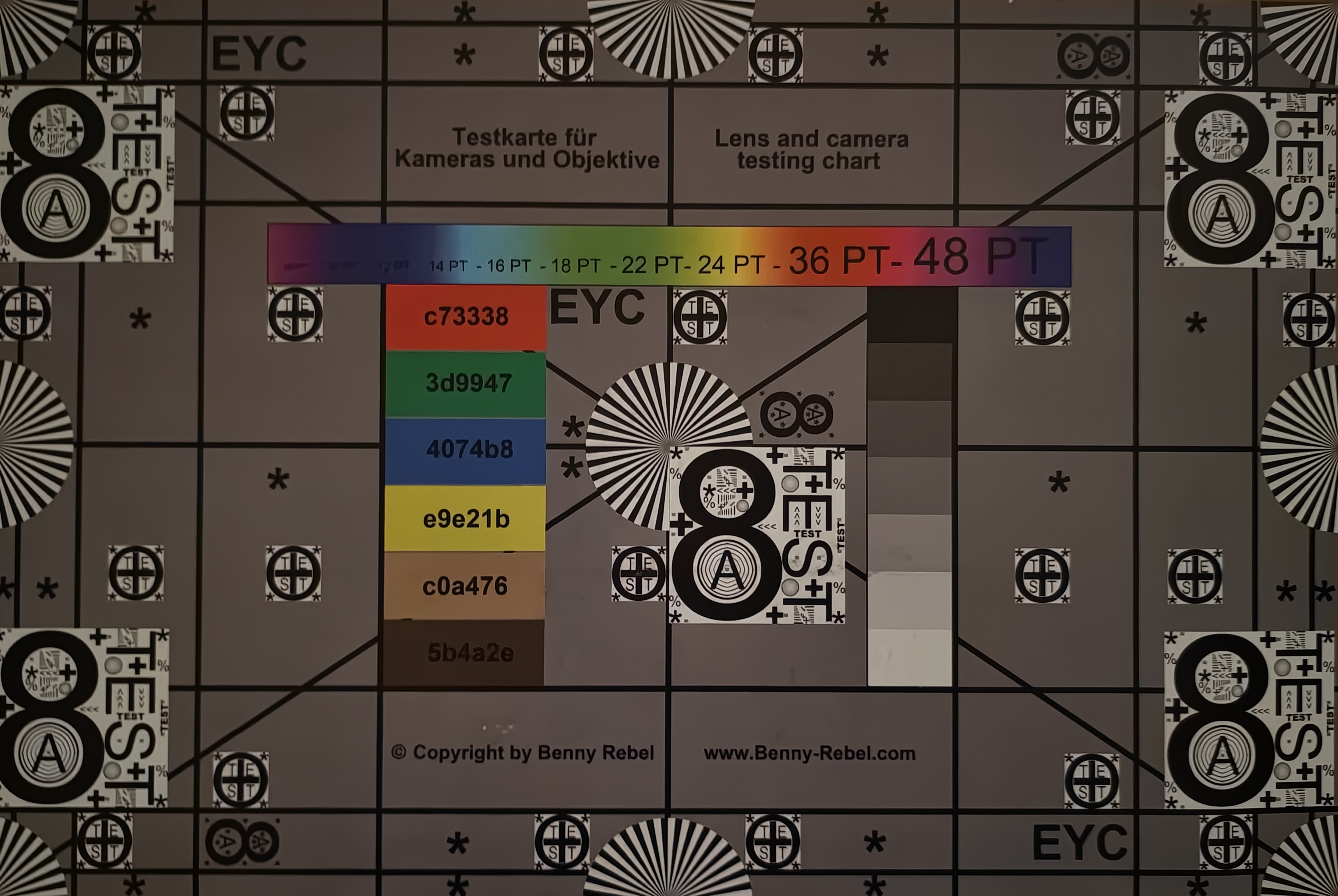
The main camera offers 50 megapixels and a very high light sensitivity of f/1.57. It is based on the Sony IMX921 sensor and delivers high-quality images with sharp detail and accurate reproduction of difficult colors such as red or yellow. Even fine details are clearly visible.

The telephoto camera offers a 3x optical zoom; however, since its focal length is already twice that of the standard camera, this results in a hybrid zoom of up to 6x magnification. Images look very appealing up to 10x zoom; beyond that, AI takes over the post-processing up to 100x, which leads to imprecise results. Nevertheless, this feature works well as a substitute for binoculars, for example.

The 8-megapixel wide-angle camera takes decent snapshots, though it lacks precision in the details.

A 50-megapixel camera is available for selfies. Self-portraits appear detailed, and the dynamic range is acceptable.

Image comparison

Choose a scene and navigate within the first image. One click changes the position on touchscreens. One click on the zoomed-in image opens the original in a new window. The first image shows the scaled photograph of the test device.

Hauptkamera PflanzeHauptkamera UmgebungHauptkamera Low LightUltraweitwinkel

orginal image
click to load images
ColorChecker
15.2 ∆E
10 ∆E
14.6 ∆E
16.2 ∆E
12.1 ∆E
8.6 ∆E
9.1 ∆E
16 ∆E
10.4 ∆E
7.5 ∆E
7.2 ∆E
5.6 ∆E
15.2 ∆E
13.2 ∆E
10.7 ∆E
3 ∆E
10.9 ∆E
13.5 ∆E
3.3 ∆E
6 ∆E
10.5 ∆E
12.7 ∆E
8 ∆E
2.8 ∆E
ColorChecker Vivo X300 FE: 10.09 ∆E min: 2.77 - max: 16.19 ∆E
ColorChecker
10.4 ∆E
11.3 ∆E
10.8 ∆E
9.3 ∆E
12.6 ∆E
13.3 ∆E
8.6 ∆E
10.1 ∆E
11.8 ∆E
8.2 ∆E
7.8 ∆E
12 ∆E
9.9 ∆E
9.3 ∆E
7.4 ∆E
7.8 ∆E
11.4 ∆E
16.3 ∆E
14 ∆E
10.6 ∆E
9.4 ∆E
11.4 ∆E
10.4 ∆E
11.1 ∆E
ColorChecker Vivo X300 FE: 10.63 ∆E min: 7.45 - max: 16.32 ∆E

Display – HDR and high PWM Frequency

The Vivo X300 FE features a bright screen, though it can't quite keep up with the best phones.

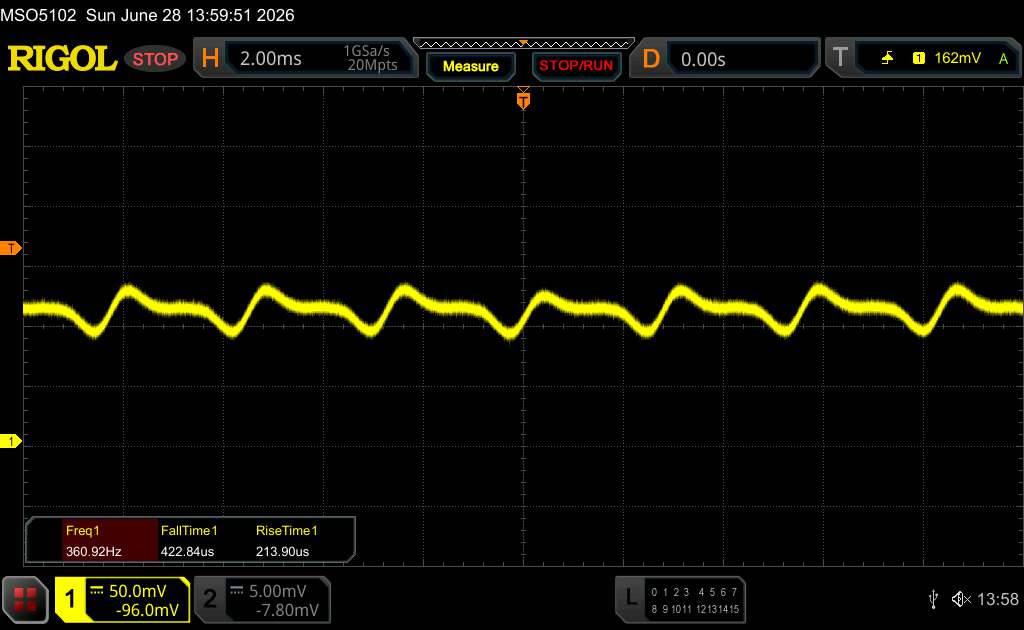
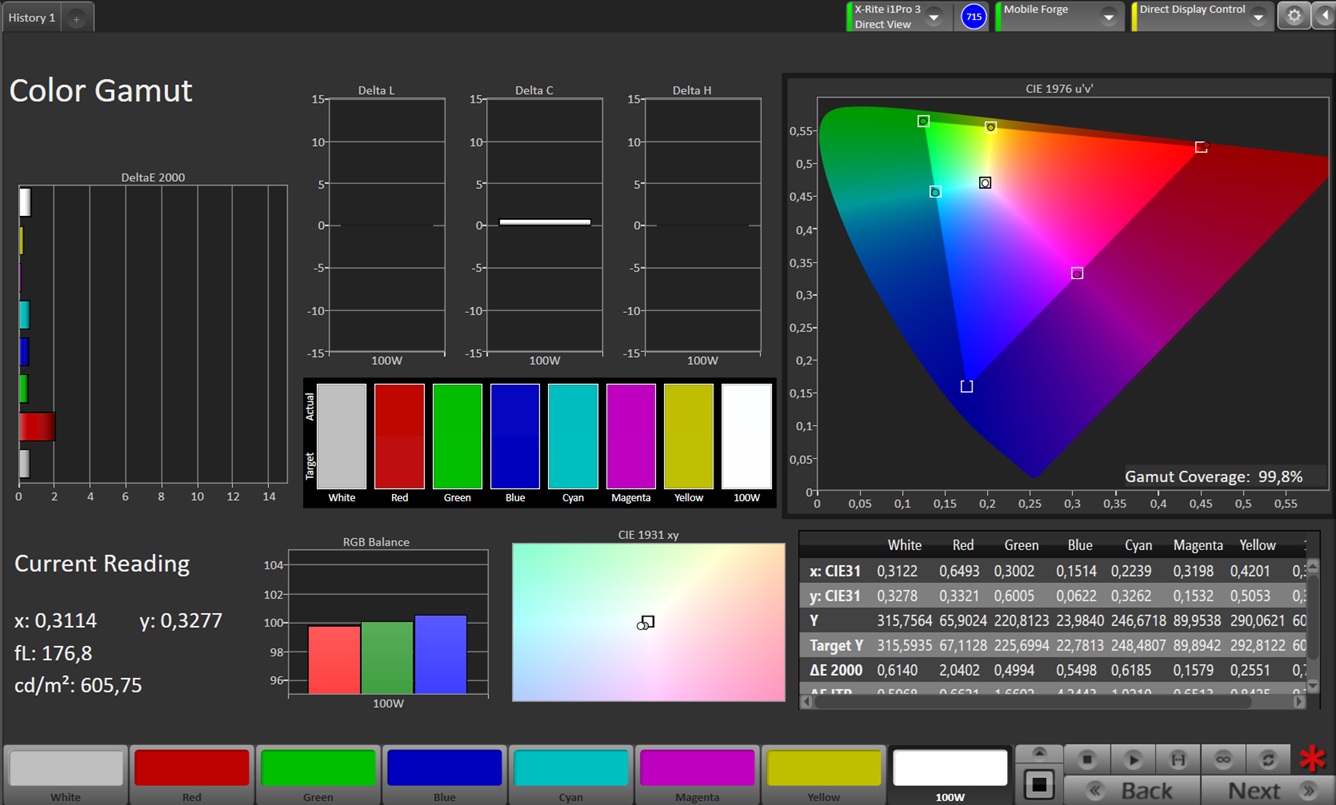
Nevertheless, it offers HDR support, accurate color reproduction, and a high PWM rate of over 360 Hz, which can be an advantage for people who are sensitive to it.

1086
cd/m²
1091
cd/m²
1054
cd/m²
1066
cd/m²
1096
cd/m²
1052
cd/m²
1005
cd/m²
1042
cd/m²
1077
cd/m²
Distribution of brightness
tested with X-Rite i1Pro 3
Maximum: 1096 cd/m² (Nits) Average: 1063.2 cd/m² Minimum: 1.9 cd/m²
Brightness Distribution: 92 %
Center on Battery: 1096 cd/m²
Contrast: ∞:1 (Black: 0 cd/m²)
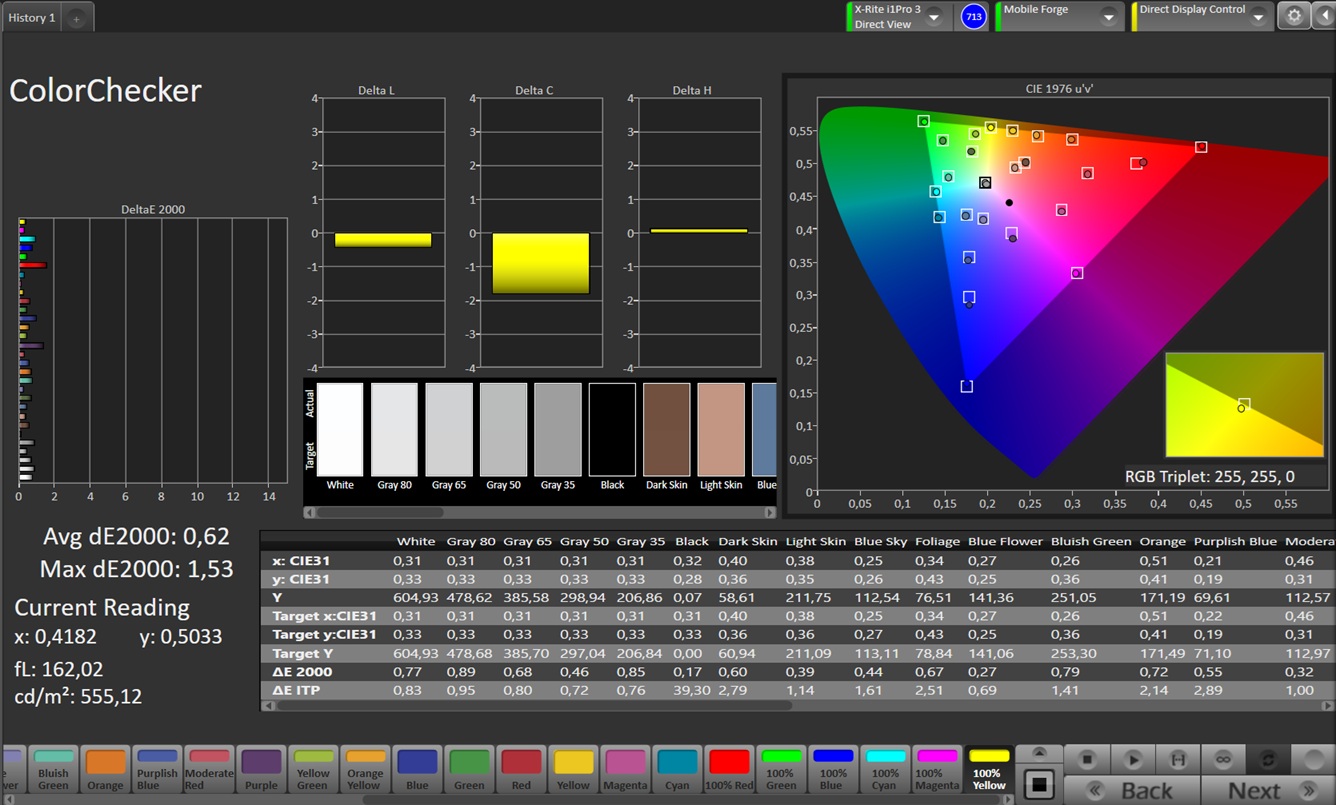
ΔE ColorChecker Calman: 0.62 | ∀{0.5-29.43 Ø4.72}
ΔE Greyscale Calman: 1 | ∀{0.09-98 Ø4.97}
99.8% sRGB (Calman 2D)
Gamma: 2.24
CCT: 6573 K
Vivo X300 FE
AMOLED, 2640x1216, 6.3"
Google Pixel 10a
pOLED, 2424x1080, 6.3"
Oppo Find X9s Pro
LTPO OLED, 2640x1216, 6.3"
Samsung Galaxy S26
Dynamic AMOLED 2XDynamic AMOLED 2X, 8 Bit color depth, 2340x1080, 6.3"
OnePlus 15T
OLED, 2640x1216, 6.3"
Display
45%
-17%
30%
18%
APL18 Peak Brightness (cd/m²)
2035
3050
50%
1769
-13%
2645
30%
1745
-14%
HDR Peak Brightness (cd/m²)
2100
2925
39%
1688
-20%
2730
30%
3125
49%
Response Times
1%
-102%
16%
-292%
Response Time Grey 50% / Grey 80% * (ms)
1.3 ?(0.6, 0.7)
1.42 ?(0.562, 0.859)
-9%
3.1 ?(1.6, 1.5)
-138%
0.62 ?(0.3275, 0.296)
52%
12.4 ?(12.1, 0.3)
-854%
Response Time Black / White * (ms)
1.1 ?(0.6, 0.5)
1.07 ?(0.556, 0.51)
3%
3 ?(1.4, 1.6)
-173%
1.32 ?(0.6345, 0.6865)
-20%
1.2 ?(0.6, 0.6)
-9%
PWM Frequency (Hz)
360.9
240
167.1
240
120.7
PWM Amplitude * (%)
16
14.71
8%
15
6%
13.6
15%
18
-13%
Screen
-34%
-121%
-81%
-118%
Brightness middle (cd/m²)
1096
2205
101%
1133
3%
1341
22%
1119
2%
Brightness (cd/m²)
1063
1108
4%
1337
26%
1101
4%
Brightness Distribution (%)
92
96
4%
96
4%
96
4%
Black Level * (cd/m²)
Colorchecker dE 2000 *
0.62
1.4
-126%
2.29
-269%
2.4
-287%
2.22
-258%
Colorchecker dE 2000 max. *
1.53
2.3
-50%
5.32
-248%
4
-161%
5.18
-239%
Greyscale dE 2000 *
1
1.6
-60%
3.2
-220%
1.9
-90%
3.2
-220%
Gamma
2.24 98%
2.23 99%
2.229 99%
2.06 107%
2.243 98%
CCT
6573 99%
6715 97%
7113 91%
6497 100%
7147 91%
Total Average (Program / Settings)
4% / -5%
-80% / -97%
-12% / -34%
-131% / -141%

* ... smaller is better

Screen Flickering / PWM (Pulse-Width Modulation)

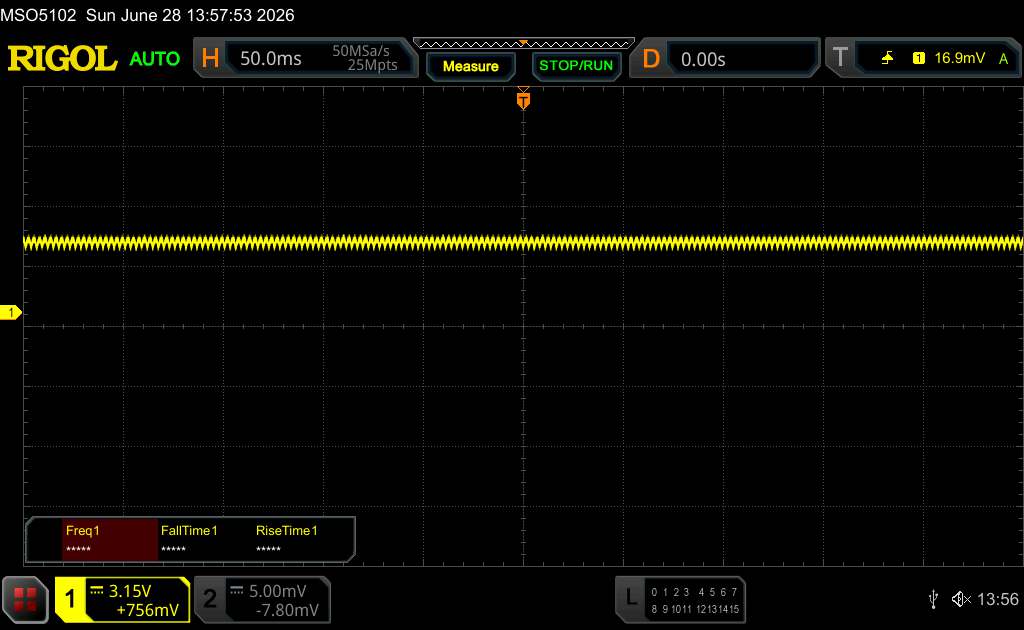
To dim the screen, some notebooks will simply cycle the backlight on and off in rapid succession - a method called Pulse Width Modulation (PWM) . This cycling frequency should ideally be undetectable to the human eye. If said frequency is too low, users with sensitive eyes may experience strain or headaches or even notice the flickering altogether.
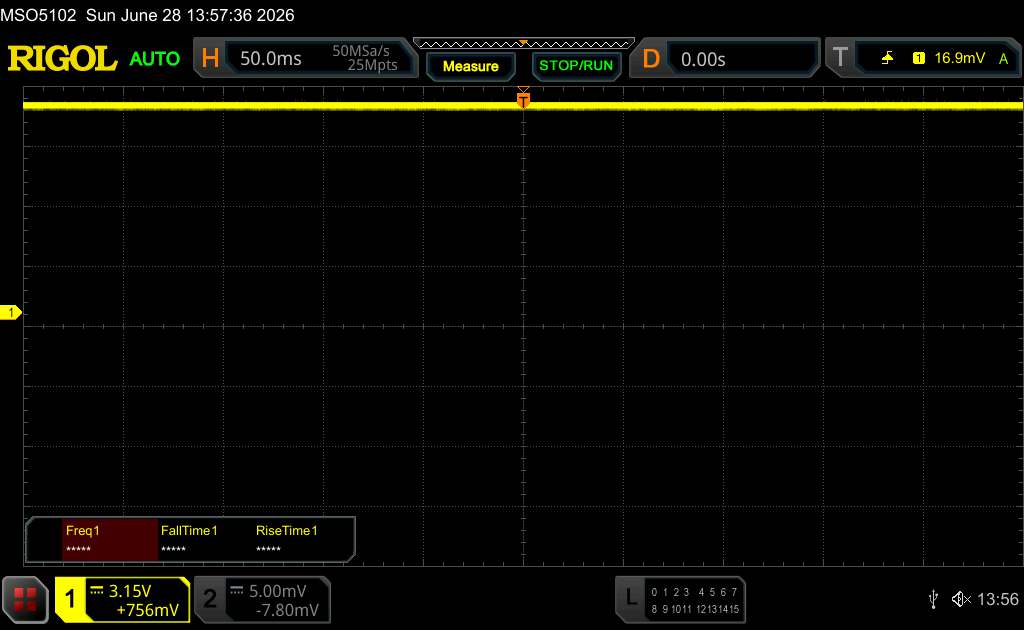
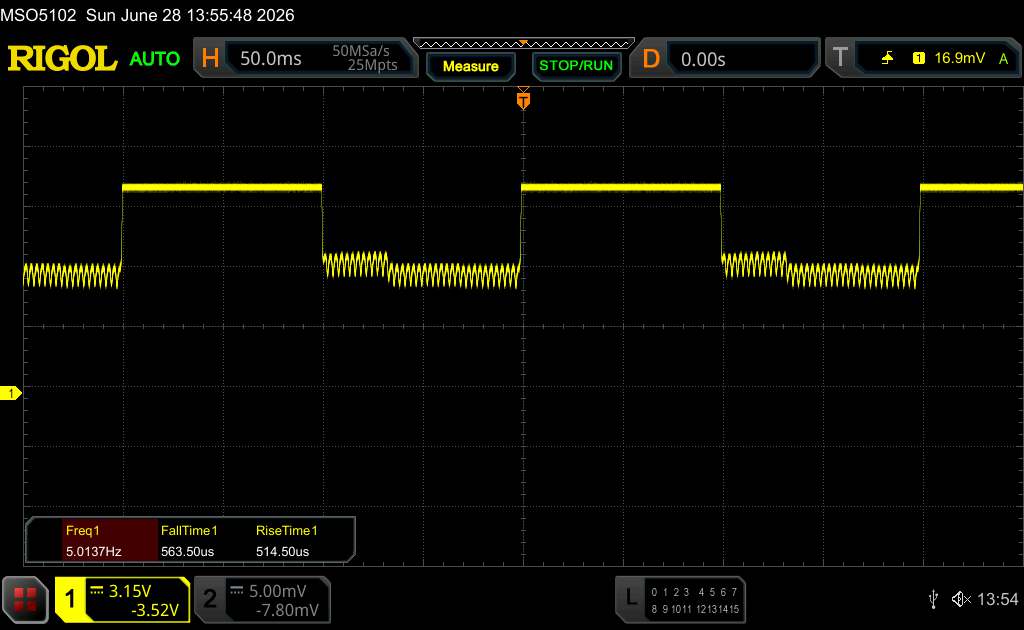
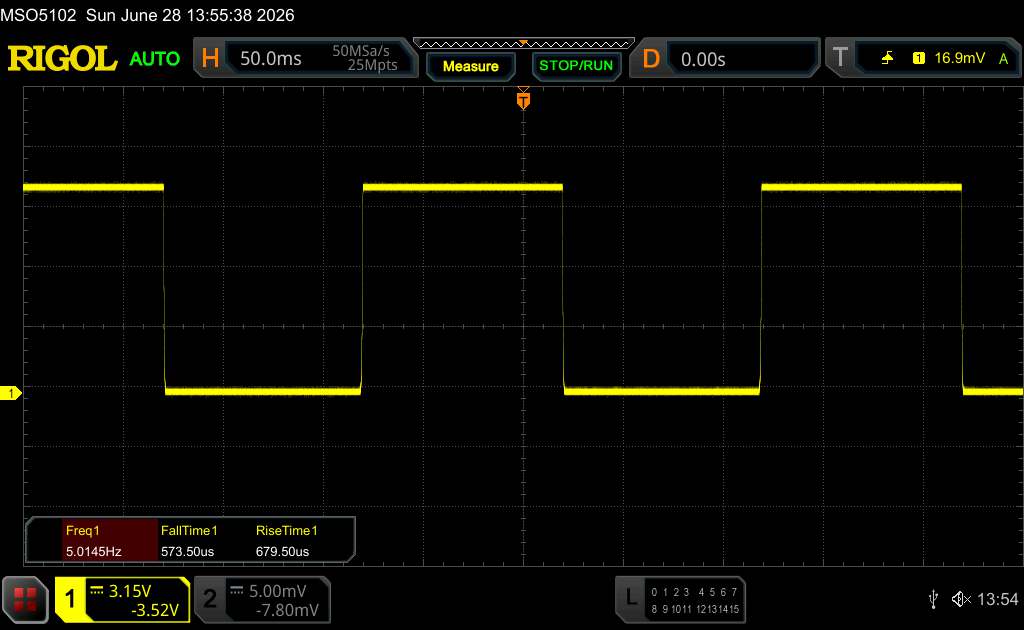
Screen flickering / PWM detected 360.9 Hz
Amplitude: 16 %

The display backlight flickers at 360.9 Hz (worst case, e.g., utilizing PWM) .

The frequency of 360.9 Hz is relatively high, so most users sensitive to PWM should not notice any flickering. However, there are reports that some users are still sensitive to PWM at 500 Hz and above, so be aware.

In comparison: 52 % of all tested devices do not use PWM to dim the display. If PWM was detected, an average of 7769 (minimum: 5 - maximum: 343500) Hz was measured.

minimum brightness
minimum brightness
25% brightness
25% brightness
50% brightness
50% brightness
75% brightness
75% brightness
100% brightness
100% brightness

Series of measurements with a fixed zoom level and different brightness settings (Although the amplitude curve at minimum brightness appears flat, this is due to the scaling. The info box shows a magnified version of the amplitude at minimum brightness.)
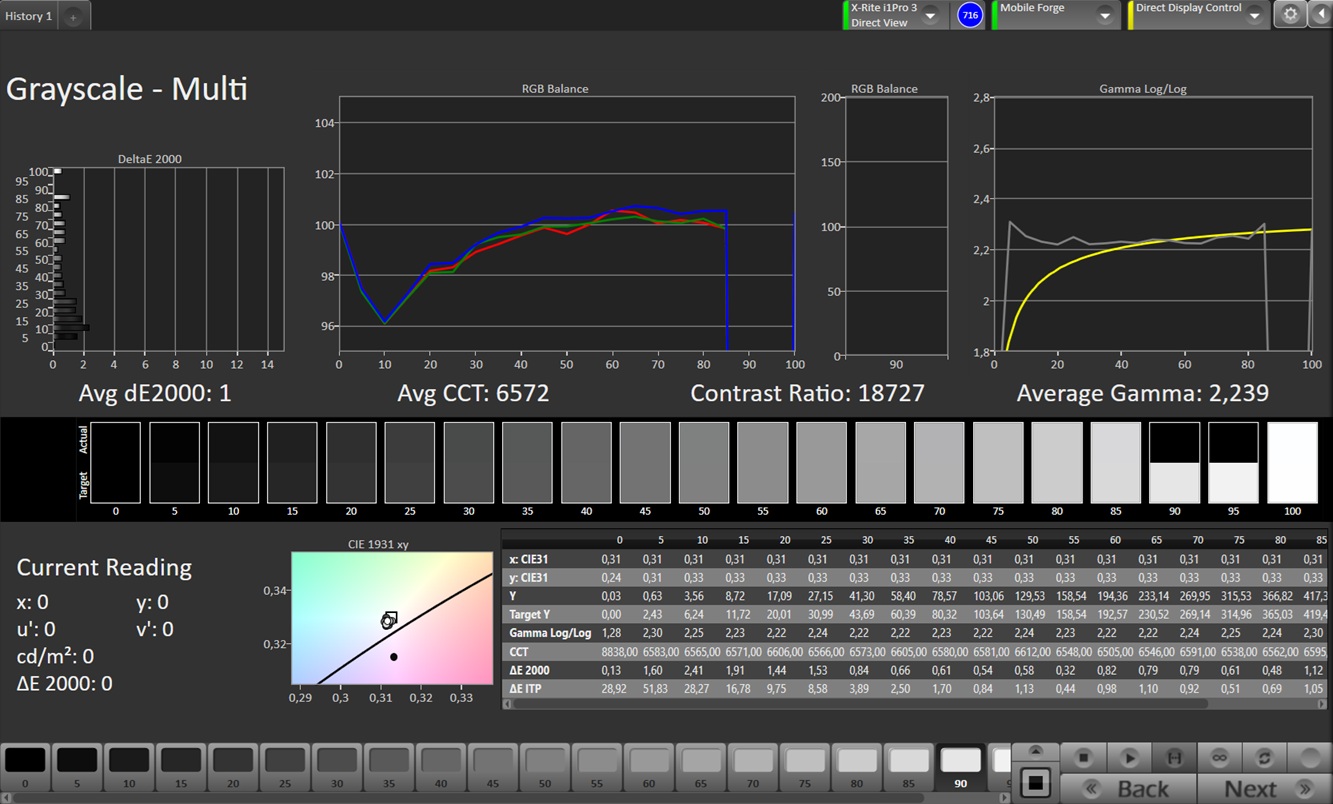
CalMAN Grayscale
CalMAN Grayscale
CalMAN Color Accuracy
CalMAN Color Space
CalMAN Color Space

Display Response Times

Display response times show how fast the screen is able to change from one color to the next. Slow response times can lead to afterimages and can cause moving objects to appear blurry (ghosting). Gamers of fast-paced 3D titles should pay special attention to fast response times.
       Response Time Black to White
1.1 ms ... rise ↗ and fall ↘ combined↗ 0.6 ms rise
↘ 0.5 ms fall
The screen shows very fast response rates in our tests and should be very well suited for fast-paced gaming.
In comparison, all tested devices range from 0.1 (minimum) to 240 (maximum) ms. » 5 % of all devices are better.
This means that the measured response time is better than the average of all tested devices (19.8 ms).
       Response Time 50% Grey to 80% Grey
1.3 ms ... rise ↗ and fall ↘ combined↗ 0.6 ms rise
↘ 0.7 ms fall
The screen shows very fast response rates in our tests and should be very well suited for fast-paced gaming.
In comparison, all tested devices range from 0.165 (minimum) to 636 (maximum) ms. » 6 % of all devices are better.
This means that the measured response time is better than the average of all tested devices (31 ms).

Performance, emissions, and battery life — Not quite top-tier, but very fast

The Snapdragon 8 Gen 5 can't quite keep up with Qualcomm's elite models or the MediaTek Dimensity 9500, but it’s still a very powerful SoC that can handle the vast majority of tasks with ease.

Thanks to the very fast UFS 4.1 storage, data transfers are speedy and load times are short.

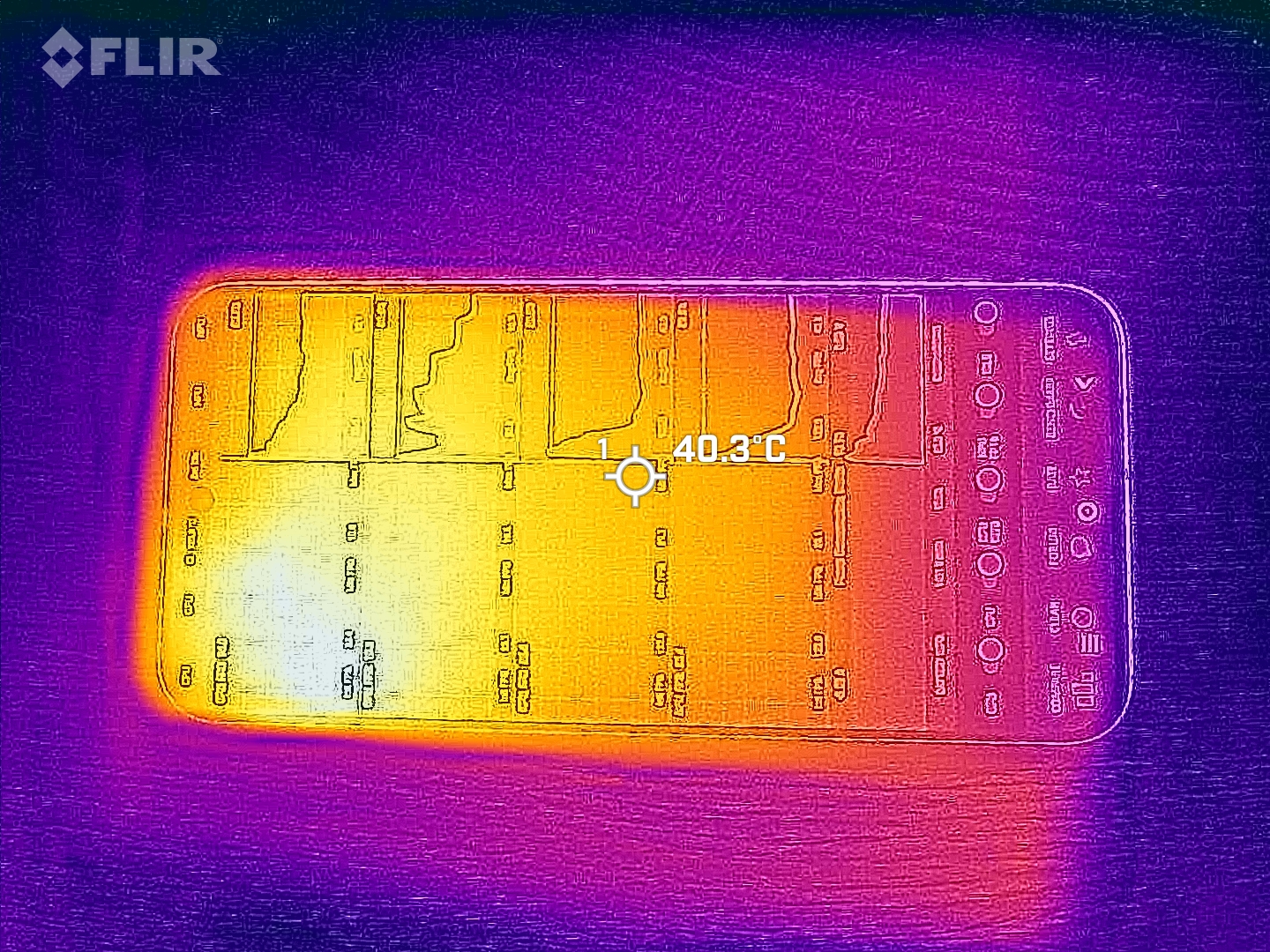
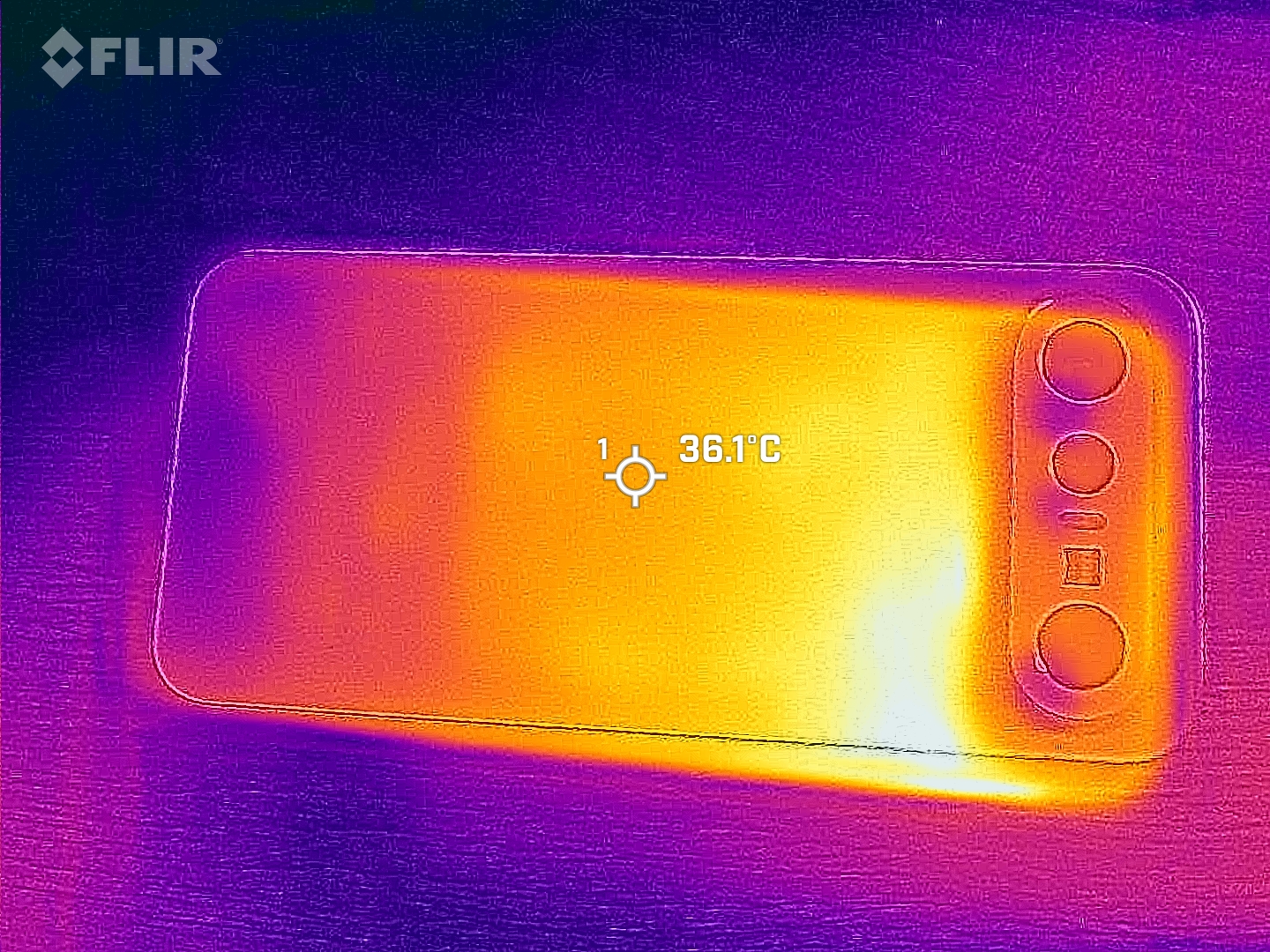
The maximum temperature under prolonged load is 116.06 °F (46.7 °C), which is noticeable and can become problematic. The SoC throttles after prolonged use, resulting in a power loss of about 30%.

The speaker on the bottom edge is supplemented by the earpiece and doesn’t reach very high volumes. The sound is well-balanced overall, and it’s perfectly fine for listening to pop songs.

The battery, with a capacity of 6,500 mAh, is generously sized but can’t compete with a OnePlus 15T, which offers an additional 1,000 mAh. 

Accordingly, the battery life of 24:45 hours in our Wi-Fi test is good, but not outstanding. The Vivo X300 FE offers fast charging at up to 90 watts and even wireless charging at up to 40 watts.

Geekbench 6.7
Single-Core
OnePlus 15T
Qualcomm Snapdragon 8 Elite Gen 5, Adreno 840, 16384
3621 Points +27%
Oppo Find X9s Pro
MediaTek Dimensity 9500, Mali-G1 Ultra MC12, 16384
3299 Points +15%
Samsung Galaxy S26
Samsung Exynos 2600, Xclipse 960, 12288
3060 Points +7%
Average Qualcomm Snapdragon 8 Gen 5
  (2857 - 3027, n=5)
2915 Points +2%
Vivo X300 FE
Qualcomm Snapdragon 8 Gen 5, Adreno 829, 12288
2857 Points
Average of class Smartphone
  (196 - 3883, n=199, last 2 years)
1867 Points -35%
Google Pixel 10a
Google Tensor G4, Mali-G715 MP7, 8192
1682 Points -41%
Multi-Core
OnePlus 15T
Qualcomm Snapdragon 8 Elite Gen 5, Adreno 840, 16384
10976 Points +18%
Samsung Galaxy S26
Samsung Exynos 2600, Xclipse 960, 12288
10388 Points +12%
Average Qualcomm Snapdragon 8 Gen 5
  (9276 - 10438, n=5)
9698 Points +5%
Oppo Find X9s Pro
MediaTek Dimensity 9500, Mali-G1 Ultra MC12, 16384
9402 Points +1%
Vivo X300 FE
Qualcomm Snapdragon 8 Gen 5, Adreno 829, 12288
9276 Points
Average of class Smartphone
  (830 - 11811, n=199, last 2 years)
5544 Points -40%
Google Pixel 10a
Google Tensor G4, Mali-G715 MP7, 8192
4309 Points -54%
3DMark
Wild Life Unlimited Score
OnePlus 15T
Qualcomm Snapdragon 8 Elite Gen 5, Adreno 840, 16384
29901 Points +39%
Samsung Galaxy S26
Samsung Exynos 2600, Xclipse 960, 12288
26692 Points +24%
Oppo Find X9s Pro
MediaTek Dimensity 9500, Mali-G1 Ultra MC12, 16384
26325 Points +23%
Vivo X300 FE
Qualcomm Snapdragon 8 Gen 5, Adreno 829, 12288
21446 Points
Average Qualcomm Snapdragon 8 Gen 5
  (21167 - 21522, n=4)
21330 Points -1%
Average of class Smartphone
  (271 - 30892, n=182, last 2 years)
12455 Points -42%
Google Pixel 10a
Google Tensor G4, Mali-G715 MP7, 8192
9702 Points -55%
Wild Life Extreme
Oppo Find X9s Pro
MediaTek Dimensity 9500, Mali-G1 Ultra MC12, 16384
7167 Points +45%
Samsung Galaxy S26
Samsung Exynos 2600, Xclipse 960, 12288
7122 Points +44%
OnePlus 15T
Qualcomm Snapdragon 8 Elite Gen 5, Adreno 840, 16384
6856 Points +38%
Average Qualcomm Snapdragon 8 Gen 5
  (4959 - 5623, n=4)
5440 Points +10%
Vivo X300 FE
Qualcomm Snapdragon 8 Gen 5, Adreno 829, 12288
4959 Points
Average of class Smartphone
  (61 - 8263, n=183, last 2 years)
3262 Points -34%
Google Pixel 10a
Google Tensor G4, Mali-G715 MP7, 8192
2695 Points -46%
Wild Life Extreme Unlimited
Oppo Find X9s Pro
MediaTek Dimensity 9500, Mali-G1 Ultra MC12, 16384
7211 Points +46%
OnePlus 15T
Qualcomm Snapdragon 8 Elite Gen 5, Adreno 840, 16384
6813 Points +38%
Samsung Galaxy S26
Samsung Exynos 2600, Xclipse 960, 12288
6788 Points +38%
Average Qualcomm Snapdragon 8 Gen 5
  (4926 - 5623, n=4)
5395 Points +10%
Vivo X300 FE
Qualcomm Snapdragon 8 Gen 5, Adreno 829, 12288
4926 Points
Average of class Smartphone
  (62 - 8271, n=182, last 2 years)
3248 Points -34%
Google Pixel 10a
Google Tensor G4, Mali-G715 MP7, 8192
2660 Points -46%
GFXBench
on screen Aztec Ruins Normal Tier Onscreen
Samsung Galaxy S26
Samsung Exynos 2600, Xclipse 960, 12288
120 fps +100%
Average Qualcomm Snapdragon 8 Gen 5
  (60 - 120, n=4)
75 fps +25%
Average of class Smartphone
  (6.2 - 166, n=195, last 2 years)
61.5 fps +2%
Google Pixel 10a
Google Tensor G4, Mali-G715 MP7, 8192
60 fps 0%
Oppo Find X9s Pro
MediaTek Dimensity 9500, Mali-G1 Ultra MC12, 16384
60 fps 0%
OnePlus 15T
Qualcomm Snapdragon 8 Elite Gen 5, Adreno 840, 16384
60 fps 0%
Vivo X300 FE
Qualcomm Snapdragon 8 Gen 5, Adreno 829, 12288
60 fps
1920x1080 Aztec Ruins Normal Tier Offscreen
Oppo Find X9s Pro
MediaTek Dimensity 9500, Mali-G1 Ultra MC12, 16384
311 fps +29%
OnePlus 15T
Qualcomm Snapdragon 8 Elite Gen 5, Adreno 840, 16384
305 fps +27%
Samsung Galaxy S26
Samsung Exynos 2600, Xclipse 960, 12288
279 fps +16%
Vivo X300 FE
Qualcomm Snapdragon 8 Gen 5, Adreno 829, 12288
241 fps
Average Qualcomm Snapdragon 8 Gen 5
  (226 - 244, n=4)
238 fps -1%
Average of class Smartphone
  (3.4 - 378, n=195, last 2 years)
132.1 fps -45%
Google Pixel 10a
Google Tensor G4, Mali-G715 MP7, 8192
120 fps -50%
on screen Aztec Ruins High Tier Onscreen
Samsung Galaxy S26
Samsung Exynos 2600, Xclipse 960, 12288
120 fps +100%
Oppo Find X9s Pro
MediaTek Dimensity 9500, Mali-G1 Ultra MC12, 16384
72 fps +20%
Average Qualcomm Snapdragon 8 Gen 5
  (58 - 105, n=4)
70.8 fps +18%
OnePlus 15T
Qualcomm Snapdragon 8 Elite Gen 5, Adreno 840, 16384
60 fps 0%
Vivo X300 FE
Qualcomm Snapdragon 8 Gen 5, Adreno 829, 12288
60 fps
Google Pixel 10a
Google Tensor G4, Mali-G715 MP7, 8192
59 fps -2%
Average of class Smartphone
  (3.7 - 144, n=196, last 2 years)
50.3 fps -16%
2560x1440 Aztec Ruins High Tier Offscreen
Oppo Find X9s Pro
MediaTek Dimensity 9500, Mali-G1 Ultra MC12, 16384
151 fps +47%
OnePlus 15T
Qualcomm Snapdragon 8 Elite Gen 5, Adreno 840, 16384
127 fps +23%
Samsung Galaxy S26
Samsung Exynos 2600, Xclipse 960, 12288
117 fps +14%
Vivo X300 FE
Qualcomm Snapdragon 8 Gen 5, Adreno 829, 12288
103 fps
Average Qualcomm Snapdragon 8 Gen 5
  (95 - 107, n=4)
100.5 fps -2%
Average of class Smartphone
  (1.2 - 151, n=195, last 2 years)
51.1 fps -50%
Google Pixel 10a
Google Tensor G4, Mali-G715 MP7, 8192
44 fps -57%
3840x2160 4K Aztec Ruins High Tier Offscreen
Oppo Find X9s Pro
MediaTek Dimensity 9500, Mali-G1 Ultra MC12, 16384
63 fps +43%
Samsung Galaxy S26
Samsung Exynos 2600, Xclipse 960, 12288
58 fps +32%
OnePlus 15T
Qualcomm Snapdragon 8 Elite Gen 5, Adreno 840, 16384
53 fps +20%
Vivo X300 FE
Qualcomm Snapdragon 8 Gen 5, Adreno 829, 12288
44 fps
Average Qualcomm Snapdragon 8 Gen 5
  (42 - 44, n=4)
43.3 fps -2%
Average of class Smartphone
  (0.54 - 63, n=195, last 2 years)
23.3 fps -47%
Google Pixel 10a
Google Tensor G4, Mali-G715 MP7, 8192
20 fps -55%
Geekbench AI
Single Precision NPU 1.7
Samsung Galaxy S26
Samsung Exynos 2600, Xclipse 960, 12288
753 Points +81%
Average of class Smartphone
  (80 - 5210, n=114, last 2 years)
663 Points +59%
OnePlus 15T
Qualcomm Snapdragon 8 Elite Gen 5, Adreno 840, 16384
545 Points +31%
Average Qualcomm Snapdragon 8 Gen 5
  (409 - 673, n=4)
501 Points +20%
Vivo X300 FE
Qualcomm Snapdragon 8 Gen 5, Adreno 829, 12288
417 Points
Google Pixel 10a
Google Tensor G4, Mali-G715 MP7, 8192
386 Points -7%
Oppo Find X9s Pro
MediaTek Dimensity 9500, Mali-G1 Ultra MC12, 16384
243 Points -42%
Half Precision NPU 1.7
Google Pixel 10a
Google Tensor G4, Mali-G715 MP7, 8192
4973 Points +1093%
Average of class Smartphone
  (80 - 36297, n=114, last 2 years)
2573 Points +517%
Samsung Galaxy S26
Samsung Exynos 2600, Xclipse 960, 12288
759 Points +82%
OnePlus 15T
Qualcomm Snapdragon 8 Elite Gen 5, Adreno 840, 16384
544 Points +30%
Average Qualcomm Snapdragon 8 Gen 5
  (410 - 675, n=4)
503 Points +21%
Vivo X300 FE
Qualcomm Snapdragon 8 Gen 5, Adreno 829, 12288
417 Points
Oppo Find X9s Pro
MediaTek Dimensity 9500, Mali-G1 Ultra MC12, 16384
229 Points -45%
Quantized NPU 1.7
Google Pixel 10a
Google Tensor G4, Mali-G715 MP7, 8192
9392 Points +898%
Average of class Smartphone
  (124 - 49889, n=114, last 2 years)
3869 Points +311%
Samsung Galaxy S26
Samsung Exynos 2600, Xclipse 960, 12288
1623 Points +72%
OnePlus 15T
Qualcomm Snapdragon 8 Elite Gen 5, Adreno 840, 16384
1299 Points +38%
Average Qualcomm Snapdragon 8 Gen 5
  (895 - 1578, n=4)
1189 Points +26%
Vivo X300 FE
Qualcomm Snapdragon 8 Gen 5, Adreno 829, 12288
941 Points
Oppo Find X9s Pro
MediaTek Dimensity 9500, Mali-G1 Ultra MC12, 16384
478 Points -49%
CrossMark
Overall
Samsung Galaxy S26
Samsung Exynos 2600, Xclipse 960, 12288
2257 Points +50%
OnePlus 15T
Qualcomm Snapdragon 8 Elite Gen 5, Adreno 840, 16384
1999 Points +33%
Oppo Find X9s Pro
MediaTek Dimensity 9500, Mali-G1 Ultra MC12, 16384
1721 Points +14%
Average Qualcomm Snapdragon 8 Gen 5
  (1289 - 2129, n=4)
1676 Points +11%
Vivo X300 FE
Qualcomm Snapdragon 8 Gen 5, Adreno 829, 12288
1504 Points
Average of class Smartphone
  (376 - 2856, n=117, last 2 years)
1240 Points -18%
Google Pixel 10a
Google Tensor G4, Mali-G715 MP7, 8192
1008 Points -33%
Productivity
Samsung Galaxy S26
Samsung Exynos 2600, Xclipse 960, 12288
1806 Points +51%
OnePlus 15T
Qualcomm Snapdragon 8 Elite Gen 5, Adreno 840, 16384
1687 Points +41%
Oppo Find X9s Pro
MediaTek Dimensity 9500, Mali-G1 Ultra MC12, 16384
1399 Points +17%
Average Qualcomm Snapdragon 8 Gen 5
  (1000 - 1802, n=4)
1358 Points +14%
Vivo X300 FE
Qualcomm Snapdragon 8 Gen 5, Adreno 829, 12288
1193 Points
Average of class Smartphone
  (388 - 2366, n=117, last 2 years)
1117 Points -6%
Google Pixel 10a
Google Tensor G4, Mali-G715 MP7, 8192
1083 Points -9%
Creativity
Samsung Galaxy S26
Samsung Exynos 2600, Xclipse 960, 12288
2056 Points +69%
OnePlus 15T
Qualcomm Snapdragon 8 Elite Gen 5, Adreno 840, 16384
1559 Points +28%
Average Qualcomm Snapdragon 8 Gen 5
  (1044 - 1556, n=4)
1279 Points +5%
Oppo Find X9s Pro
MediaTek Dimensity 9500, Mali-G1 Ultra MC12, 16384
1265 Points +4%
Vivo X300 FE
Qualcomm Snapdragon 8 Gen 5, Adreno 829, 12288
1217 Points
Average of class Smartphone
  (310 - 2123, n=117, last 2 years)
1011 Points -17%
Google Pixel 10a
Google Tensor G4, Mali-G715 MP7, 8192
942 Points -23%
Responsiveness
Oppo Find X9s Pro
MediaTek Dimensity 9500, Mali-G1 Ultra MC12, 16384
7987 Points +40%
OnePlus 15T
Qualcomm Snapdragon 8 Elite Gen 5, Adreno 840, 16384
7094 Points +25%
Average Qualcomm Snapdragon 8 Gen 5
  (5198 - 9127, n=4)
6681 Points +17%
Samsung Galaxy S26
Samsung Exynos 2600, Xclipse 960, 12288
5833 Points +3%
Vivo X300 FE
Qualcomm Snapdragon 8 Gen 5, Adreno 829, 12288
5688 Points
Average of class Smartphone
  (466 - 13407, n=117, last 2 years)
3905 Points -31%
Google Pixel 10a
Google Tensor G4, Mali-G715 MP7, 8192
995 Points -83%
Jetstream 2 - 2.0 Total
Vivo X300 FE
Qualcomm Snapdragon 8 Gen 5, Adreno 829, 12288
302 Points
Samsung Galaxy S26
Samsung Exynos 2600, Xclipse 960, 12288
273.066 Points -10%
OnePlus 15T
Qualcomm Snapdragon 8 Elite Gen 5, Adreno 840, 16384
271.964 Points -10%
Average Qualcomm Snapdragon 8 Gen 5
  (180.6 - 322, n=3)
268 Points -11%
Average of class Smartphone
  (60.2 - 423, n=126, last 2 years)
161.9 Points -46%
Vivo X300 FEGoogle Pixel 10aOppo Find X9s ProSamsung Galaxy S26OnePlus 15TAverage 512 GB UFS 4.1 FlashAverage of class Smartphone
AndroBench 3-5
-42%
-25%
-22%
29%
-2%
-34%
Sequential Read 256KB (MB/s)
3752.1
1689.27
-55%
3375.6
-10%
3923.49
5%
4115.87
10%
Sequential Write 256KB (MB/s)
3222.5
826.38
-74%
1987.03
-38%
2718.09
-16%
4076.12
26%
Random Read 4KB (MB/s)
421.6
326.53
-23%
434.19
3%
418.42
-1%
578.74
37%
Random Write 4KB (MB/s)
508.6
430.37
-15%
239.9
-53%
124.05
-76%
721.05
42%
Max. Load
 46.7 °C
116 F
46.2 °C
115 F
43.6 °C
110 F
 
 46.7 °C
116 F
46.5 °C
116 F
46.3 °C
115 F
 
 46.3 °C
115 F
45.2 °C
113 F
43.4 °C
110 F
 
Maximum: 46.7 °C = 116 F
Average: 45.7 °C = 114 F
40.9 °C
106 F
43.9 °C
111 F
41.9 °C
107 F
41.1 °C
106 F
43.2 °C
110 F
44.1 °C
111 F
40.9 °C
106 F
44.5 °C
112 F
44.7 °C
112 F
Maximum: 44.7 °C = 112 F
Average: 42.8 °C = 109 F
Power Supply (max.)  43.1 °C = 110 F | Room Temperature 22 °C = 72 F | Fluke t3000FC (calibrated), Voltcraft IR-260
(-) The average temperature for the upper side under maximal load is 45.7 °C / 114 F, compared to the average of 33 °C / 91 F for the devices in the class Smartphone.
(-) The maximum temperature on the upper side is 46.7 °C / 116 F, compared to the average of 35.3 °C / 96 F, ranging from 21.9 to 247 °C for the class Smartphone.
(±) The bottom heats up to a maximum of 44.7 °C / 112 F, compared to the average of 34 °C / 93 F
(+) In idle usage, the average temperature for the upper side is 29.1 °C / 84 F, compared to the device average of 33 °C / 91 F.

3DMark Stress Tests

3DMark
Wild Life Stress Test Stability
Oppo Find X9s Pro
Mali-G1 Ultra MC12, Dimensity 9500, 512 GB UFS 4.1 Flash
98.6 %
Google Pixel 10a
Mali-G715 MP7, Tensor G4, 128 GB UFS 3.1 Flash
66.4 %
OnePlus 15T
Adreno 840, SD 8 Elite Gen 5, 512 GB UFS 4.1 Flash
46.4 %
Samsung Galaxy S26
Xclipse 960, Exynos 2600, 256 GB UFS 4.0 Flash
45.2 %
Wild Life Extreme Stress Test
Vivo X300 FE
Adreno 829, SD 8 Gen 5, 512 GB UFS 4.1 Flash
77 %
Google Pixel 10a
Mali-G715 MP7, Tensor G4, 128 GB UFS 3.1 Flash
68.7 % -11%
Oppo Find X9s Pro
Mali-G1 Ultra MC12, Dimensity 9500, 512 GB UFS 4.1 Flash
60.1 % -22%
Samsung Galaxy S26
Xclipse 960, Exynos 2600, 256 GB UFS 4.0 Flash
48.8 % -37%
OnePlus 15T
Adreno 840, SD 8 Elite Gen 5, 512 GB UFS 4.1 Flash
46.2 % -40%
Solar Bay Stress Test Stability
Vivo X300 FE
Adreno 829, SD 8 Gen 5, 512 GB UFS 4.1 Flash
72.8 %
Samsung Galaxy S26
Xclipse 960, Exynos 2600, 256 GB UFS 4.0 Flash
51.2 % -30%
Steel Nomad Light Stress Test Stability
Vivo X300 FE
Adreno 829, SD 8 Gen 5, 512 GB UFS 4.1 Flash
98.7 %
Google Pixel 10a
Mali-G715 MP7, Tensor G4, 128 GB UFS 3.1 Flash
76.9 % -22%
Oppo Find X9s Pro
Mali-G1 Ultra MC12, Dimensity 9500, 512 GB UFS 4.1 Flash
70.3 % -29%
Samsung Galaxy S26
Xclipse 960, Exynos 2600, 256 GB UFS 4.0 Flash
50 % -49%
05101520Tooltip
Vivo X300 FE; Wild Life Extreme Stress Test; 1.1.14.3: Ø16.9 (16.2-21) %
Vivo X300 FE; Solar Bay Stress Test Stability; 1.0.17.4: Ø16.7 (15-20.6) %
Vivo X300 FE; Steel Nomad Light Stress Test Stability; 1.0.6.2: Ø7.44 (7.38-7.48) %
Heat Map Front
Heat Map Front
Heat Map (Back Side)
dB(A) 0102030405060708090Deep BassMiddle BassHigh BassLower RangeMidsHigher MidsLower HighsMid HighsUpper HighsSuper Highs2018.228.32521.627.43124.527.94027.527.65028.732.46324.332.18016.735.110015.535.912516.33516025.238.720031.348.825028.750.631529.448.840036.850.250033.357.563036.364.280038.264100028.867.7125012.568.7160017.571.5200018.972.6250023.371.2315024.168.440002466.950002562.5630023.953.1800024.455.21000020.359.91250020.259.81600020.346.1SPL41.679.9N3.240.3median 24.1median 59.8Delta4.89.936.339.230.340.52736.139.842.742.343.72442.623.645.421.247.420.451.322.655.119.855.517.859.314.961.816.26214.568.212.973.112.875.911.277.712.182.111.980.511.482.41285.212.183.213.379.813.176.412.9791375.212.870.212.864.614.262.825.392.40.790.6median 13median 75.21.910hearing rangehide median Pink NoiseVivo X300 FESamsung Galaxy S26
Frequency diagram (checkboxes can be checked and unchecked to compare devices)
Vivo X300 FE audio analysis

(±) | speaker loudness is average but good (79.9 dB)
Bass 100 - 315 Hz
(-) | nearly no bass - on average 16.8% lower than median
(±) | linearity of bass is average (9% delta to prev. frequency)
Mids 400 - 2000 Hz
(±) | higher mids - on average 7.7% higher than median
(±) | linearity of mids is average (8.5% delta to prev. frequency)
Highs 2 - 16 kHz
(±) | higher highs - on average 5.9% higher than median
(±) | linearity of highs is average (10.6% delta to prev. frequency)
Overall 100 - 16.000 Hz
(±) | linearity of overall sound is average (28.9% difference to median)
Compared to same class
» 76% of all tested devices in this class were better, 3% similar, 20% worse
» The best had a delta of 11%, average was 34%, worst was 134%
Compared to all devices tested
» 87% of all tested devices were better, 2% similar, 11% worse
» The best had a delta of 4%, average was 24%, worst was 134%

Samsung Galaxy S26 audio analysis

(+) | speakers can play relatively loud (92.4 dB)
Bass 100 - 315 Hz
(-) | nearly no bass - on average 20.1% lower than median
(+) | bass is linear (4.4% delta to prev. frequency)
Mids 400 - 2000 Hz
(±) | higher mids - on average 5.6% higher than median
(+) | mids are linear (4.8% delta to prev. frequency)
Highs 2 - 16 kHz
(+) | balanced highs - only 4.7% away from median
(+) | highs are linear (5.3% delta to prev. frequency)
Overall 100 - 16.000 Hz
(±) | linearity of overall sound is average (16.3% difference to median)
Compared to same class
» 7% of all tested devices in this class were better, 5% similar, 88% worse
» The best had a delta of 11%, average was 34%, worst was 134%
Compared to all devices tested
» 27% of all tested devices were better, 6% similar, 68% worse
» The best had a delta of 4%, average was 24%, worst was 134%

Battery Runtime
WiFi Websurfing
24h 45min
Vivo X300 FE
6500 mAh
Google Pixel 10a
5100 mAh
Oppo Find X9s Pro
7025 mAh
Samsung Galaxy S26
4300 mAh
OnePlus 15T
7500 mAh
Battery runtime
-19%
10%
-29%
38%
WiFi v1.3 (h)
24.8
20
-19%
27.3
10%
17.7
-29%
34.3
38%
Reader / Idle (h)
51
H.264 (h)
28.7
Load (h)
3.2

Notebookcheck Overall Rating

The Vivo X300 FE is compact and quite affordable for a high-end phone.

It offers a wealth of features, long battery life, and excellent cameras.

Vivo X300 FE Review
Vivo X300 FE Review

Vivo X300 FE - 07/06/2026 v8
Florian Schmitt

Chassis
91%
Keyboard
72 / 75 → 96%
Pointing Device
93%
Connectivity
52 / 69 → 75%
Weight
89%
Battery
94%
Display
92%
Games Performance
46 / 55 → 84%
Application Performance
84 / 85 → 99%
AI Performance
28%
Temperature
84%
Noise
100%
Audio
63 / 90 → 70%
Camera
78%
Average
65%
86%
Smartphone - Weighted Average
CO2 Emissions
No Data
Materials
10%
Packaging
90%
Power Use
50%
Repairability
15%
Software Updates
96.7%
Recycle Logo Total Sustainability Score: 43.6%

A Comparison of Possible Alternatives

Image
Model / Review
Price
Weight
Drive
Display
1.
86%
Vivo X300 FE
Vivo X300 FE
Qualcomm Snapdragon 8 Gen 5 ⎘
Qualcomm Adreno 829 ⎘
12 GB Memory, 512 GB UFS 4.x
Amazon: List Price: 899€190.2 g512 GB UFS 4.1 Flash6.31"
2640x1216
461 PPI
AMOLED
2.
85.3%
Google Pixel 10a
Google Pixel 10a
Google Tensor G4 ⎘
ARM Mali-G715 MP7 ⎘
8 GB Memory, 128 GB UFS 3.1
Amazon: List Price: 549€183 g128 GB UFS 3.1 Flash6.30"
2424x1080
421 PPI
pOLED
3.
87%
Oppo Find X9s Pro
Oppo Find X9s Pro
MediaTek Dimensity 9500 ⎘
Arm Mali G1- Ultra MC12 ⎘
16 GB Memory, 512 GB UFS 4.x
Amazon:
1. $10.80
linsuyu Case Compatible with...
2. $13.99
TNKISRY Screen Guard for Opp...
3. $10.80
Jiajihua Case Compatible wit...
List Price: 800€
198 g512 GB UFS 4.1 Flash6.32"
2640x1216
460 PPI
LTPO OLED
4.
88.3%
Samsung Galaxy S26
Samsung Galaxy S26
Samsung Exynos 2600 ⎘
Samsung Xclipse 960 ⎘
12 GB Memory, 256 GB UFS 4.x
Amazon: List Price: 999€167 g256 GB UFS 4.0 Flash6.30"
2340x1080
409 PPI
Dynamic AMOLED 2XDynamic AMOLED 2X, 8 Bit color depth
5.
86%
OnePlus 15T
OnePlus 15T
Qualcomm Snapdragon 8 Elite Gen 5 ⎘
Qualcomm Adreno 840 ⎘
16 GB Memory, 512 GB UFS 4.x
Amazon:
1. $989.34
Samsung Galaxy S26+, Unlocke...
2. $499.00
Google Pixel 10a - 30+ Hours...
3. $268.99
OnePlus 10T, 128GB + 8GB RAM...
List Price: 600€
194 g512 GB UFS 4.1 Flash6.32"
2640x1216
460 PPI
OLED

Transparency

The selection of devices to be reviewed is made by our editorial team. The test sample was freely purchased by the author at his/her own expense. The lender had no influence on this review, nor did the manufacturer receive a copy of this review before publication. There was no obligation to publish this review. As an independent media company, Notebookcheck is not subjected to the authority of manufacturers, retailers or publishers.

This is how Notebookcheck is testing

Every year, Notebookcheck independently reviews hundreds of laptops and smartphones using standardized procedures to ensure that all results are comparable. We have continuously developed our test methods for around 20 years and set industry standards in the process. In our test labs, high-quality measuring equipment is utilized by experienced technicians and editors. These tests involve a multi-stage validation process. Our complex rating system is based on hundreds of well-founded measurements and benchmarks, which maintains objectivity. Further information on our test methods can be found here.

Google LogoAdd as a preferred source on Google
Mail Logo
static version load dynamic
Loading Comments
Comment on this article
> Expert Reviews and News on Laptops, Smartphones and Tech Innovations > Reviews > The mini version of one of the best camera smartphones saves a lot of money – Vivo X300 FE Smartphone Review
Florian Schmitt, 2026-07- 6 (Update: 2026-07- 6)