




Verdict on the Vivo X300 Ultra
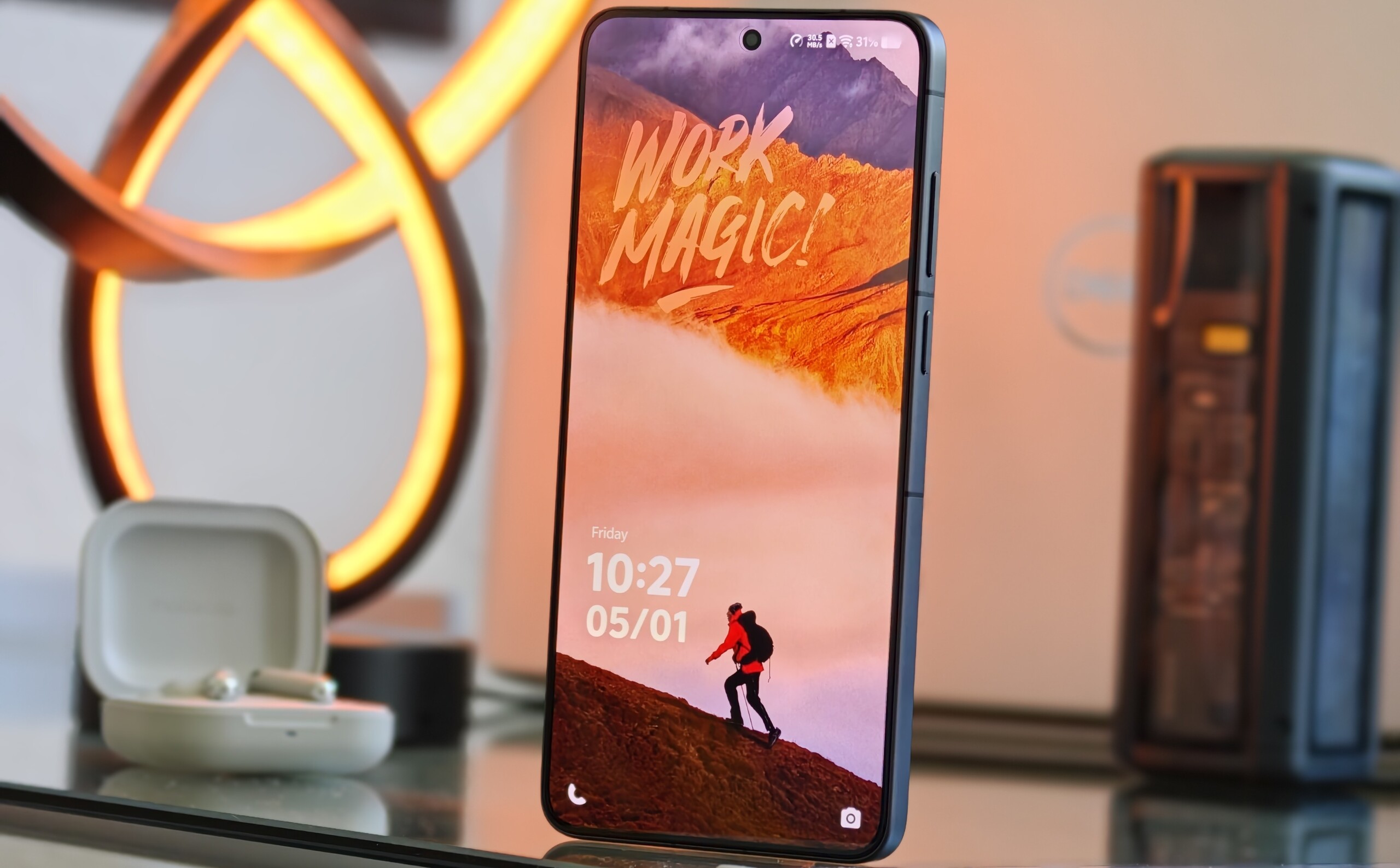
As with the Pro model, Vivo has taken a noticeable step forward with the X300 Ultra's cameras compared to the previous generation. However, the X300 Ultra only just manages to replace our previous top camera rating, the X300 Pro.
The color reproduction of the otherwise excellent camera setup shows surprisingly large weaknesses despite the new color sensor.
Photo and video enthusiasts will still get their money's worth with the Vivo flagship.
The uncompromising equipment with three extra-large image sensors seems to have come at a price due to the DRAM crisis. Some compromises in the Ultra model can be seen in several areas, be it the speakers or the omission of the dedicated camera button.
The Vivo X300 Ultra does not appear to be optimally positioned in terms of cooling due to the high heat emissions and pronounced throttling.
Despite our criticisms, the flagship from Vivo is a great smartphone and on par with the high-end competition. But apart from the cameras, it is at times a shade worse than the Find X9 Ultra or the Galaxy S26 Ultra.
Update May 15, 2026: Vivo has released an update that improves the camera’s color reproduction and power management oft he device. We have updated our review accordingly. Read all details in this article.
Pros
Cons
Pricing and availability of the Vivo X300 Ultra

The RRP for the only storage option of the Vivo X300 Ultra planned in Europe with 16 GB RAM and 1 TB storage is a hefty €1,999.
We received an import model from Trading Shenzhen with 512 GB storage for less than €1,000.

- $1,649.00vivo X300 Ultra 5G Unlocked Smartphone|China Version|16GB+512G | Full GOOG Service| Snapdragon 8 Elite Gen 5| 200MP Z EISS Main Camera| 6.82" 144Hz 2K AMOLED Display| 6600mAh Battery+100W Fast Charge
- $1,064.10Samsung Galaxy S26 Ultra, Unlocked Android Smartphone, 256GB, Black
- $1,649.00vivo X300 Ultra 5G Unlocked Smartphone | China Version | 16GB+512GB | Snapdragon 8 Elite Gen 5 | 200MP 35mm Z EISS Main Camera | 6.82" 144Hz 2K AMOLED Display | 6600mAh Battery+100W Fast Charge
Table of Contents
- Verdict on the Vivo X300 Ultra
- Specifications of the Vivo X300 Ultra
- Build: Waterproof flagship phone with thin edges
- Features: Vivo smartphone with fast USB 3.2
- Software: Vivo X300 Ultra comes with Android 16
- Communication and GNSS: Vivo X300 Ultra with Wi-Fi 7 and 5G
- Phone functions and voice quality: X300 Ultra supports dual SIM and eSIM
- Cameras: High-end smartphone with Sony sensor and OIS
- Accessories and Warranty: Vivo X300 Ultra with and without a charger
- Input devices and operation: Flagship phone relies on ultrasonic fingerprint
- Display: Vivo X300 Ultra with large OLED screen
- Performance: Flagship phone with high-end chipset from Qualcomm
- Emissions: High waste heat and high throttling in the Vivo X300 Ultra
- Battery life: X300 Ultra with an XXL battery
- Notebookcheck's overall impressions of the Vivo X300 Ultra
- Potential competitors in comparison
Specifications of the Vivo X300 Ultra
Build: Waterproof flagship phone with thin edges

The Vivo X300 Ultra offers IP69 and IP68 certification similar to other flagship devices in its class like the Xiaomi 17 Ultra.
At 8.2 mm, our Black variant is slightly thinner and, at 232 g, slightly lighter than the other color options, but the Vivo flagship is still not handy. All versions of the flagship phone have an efficient screen-to-body ratio of 90.3% in common.
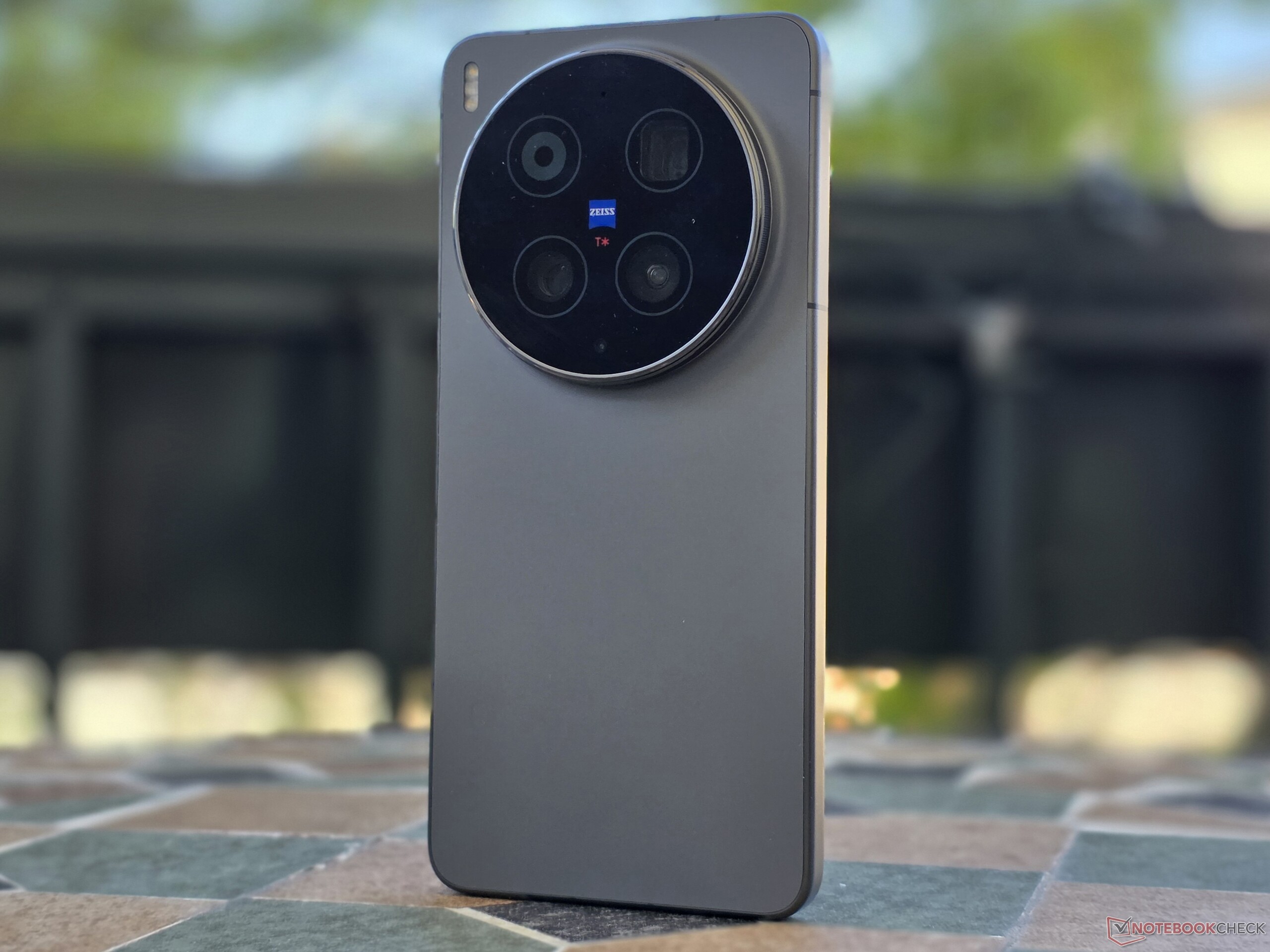
The frame is made of matte aluminum, while the front and back are covered by the company's own Armor Glass. The powerful camera module on the back makes the X300 Ultra look a little top-heavy, but we don't find this annoying in practical use.



Features: Vivo smartphone with fast USB 3.2
The variant available in Europe comes with fast UFS 4.1 memory and LPDDR5X Ultra Pro RAM, while the smaller memory options available in China (256 GB, 512 GB) are offered with the LPDDR5X Ultra standard.
The USB port of the X300 Ultra supports the fast 3.2 standard including image output and OTG support. An NFC chip and an infrared blaster are also integrated.
The Vivo phone does not come with ultra-wideband wireless technology.
Software: Vivo X300 Ultra comes with Android 16
Vivo relies on its own OriginOS for its X300 Ultra, which is based on Android 16 at the time of testing and supports a variety of languages, including German, in the Chinese version.
According to the manufacturer, Android updates will be available for five years and security patches will be updated for seven years.
Interestingly, Vivo also advertises this update guarantee for China, which is rather unusual there.


Sustainability
The Vivo X300 Ultra comes in outer packaging with no visible plastic, but the box is shrink-wrapped. No information on sustainability has yet been provided.
Communication and GNSS: Vivo X300 Ultra with Wi-Fi 7 and 5G
Whether from China or Europe, the X300 Ultra has a wide range of frequencies for all mobile phone standards. However, if you want to use an eSIM, you have to use the global model.
In addition, Bluetooth 6.0 is only supported by the global version on the software side; for regulatory reasons, only version 5.4 is included in the China version.
Modern Wi-Fi 7 is available for the WLAN, including the fast 6 GHz band. In the test, we achieved a very high transmission speed of nearly 2,000 Mbps at the peak.
| Networking | |
| Vivo X300 Ultra | |
| iperf3 transmit RT-BE96U WiFi7 | |
| iperf3 receive RT-BE96U WiFi7 | |
| Samsung Galaxy S26 Ultra | |
| iperf3 transmit AXE11000 | |
| iperf3 receive AXE11000 | |
| iperf3 transmit AXE11000 6GHz | |
| iperf3 receive AXE11000 6GHz | |
| Xiaomi 17 Ultra | |
| iperf3 transmit AXE11000 | |
| iperf3 receive AXE11000 | |
| iperf3 transmit AXE11000 6GHz | |
| iperf3 receive AXE11000 6GHz | |
| iperf3 transmit RT-BE96U WiFi7 | |
| iperf3 receive RT-BE96U WiFi7 | |
| Vivo X200 Ultra | |
| iperf3 transmit AXE11000 | |
| iperf3 receive AXE11000 | |
| Oppo Find X9 Pro | |
| iperf3 transmit AXE11000 | |
| iperf3 receive AXE11000 | |
| Average 802.11 a/b/g/n/ac/ax/be | |
| iperf3 transmit AXE11000 | |
| iperf3 receive AXE11000 | |
| iperf3 transmit AXE11000 6GHz | |
| iperf3 receive AXE11000 6GHz | |
| iperf3 transmit RT-BE96U WiFi7 | |
| iperf3 receive RT-BE96U WiFi7 | |
| Average of class Smartphone | |
| iperf3 transmit AXE11000 | |
| iperf3 receive AXE11000 | |
| iperf3 transmit AXE11000 6GHz | |
| iperf3 receive AXE11000 6GHz | |
| iperf3 transmit RT-BE96U WiFi7 | |
| iperf3 receive RT-BE96U WiFi7 | |


Tri-band connectivity is available for satellite positioning. On a short bike ride, we compare the Vivo X300 Ultra with a Garmin Venu 2, where the X300 Ultra hardly shows any significant inaccuracies and is ideally suited for navigation tasks.


Phone functions and voice quality: X300 Ultra supports dual SIM and eSIM


The Vivo phone supports dual SIM with two nano SIMs. The global version also supports two eSIMs, which can be used in combination with a physical SIM card.
Similar to the Xiaomi 15T, Vivo is equipping its X300 Ultra with a walkie-talkie function. This makes it possible to make phone calls or exchange messages with other compatible Vivo devices via a long-range Bluetooth connection without a cellular service.
Cameras: High-end smartphone with Sony sensor and OIS

The collaboration with Zeiss naturally comes into play again with the X300 Ultra. The Vivo phone's camera hardware is first-class for a smartphone.
All three cameras offer a large sensor, starting with the 1/1.12-inch format for the Sony LYT-901 main camera, 1/1.28-inch for the Sony LYT-818 ultra-wide angle, and 1/1.4-inch for the ISOCELL HP0 telephoto sensor.
For comparison, the main camera of an iPhone 17 with 1/1.55-inch sensor is significantly smaller than the smallest sensor of the X300 Ultra.
The 12 MP photos with the new 200 MP main camera of the Vivo phone are appealing, and we really like the focusing and image sharpness. A new pixel binning standard is also on board that results in 25 MP shots for more details.
Low-light motifs also benefit from the best photo algorithm currently available for smartphones and the improved in-house image chip VS1+.


In contrast to the Apple iPhone 17 Pro, the Vivo X300 Ultra uses a significantly longer focal length of 35 mm, which makes perfect sense, as the ultra-wide angle also delivers very convincing results and can pass as the main camera in terms of quality.
The same applies to zooming with the new 200 MP camera with 3.7x optical magnification. Compared to the X200 Ultra a smaller aperture is required, but thanks to the high resolution and sensor cropping, even photos taken at 10x are very detailed and hardly over-sharpened.
Does this mean Vivo has achieved the best possible setup in a smartphone? Unfortunately, not.
The new color-sensing camera of the Vivo X300 Ultra with its 12 color channels is not yet convincing. It is supposed to make more natural colors possible, but our measured deviations are very high and the brightening of the colors is pronounced for a high-end smartphone.
Update, May 15: A new color accuracy measurement taken after the update now shows significantly lower values.


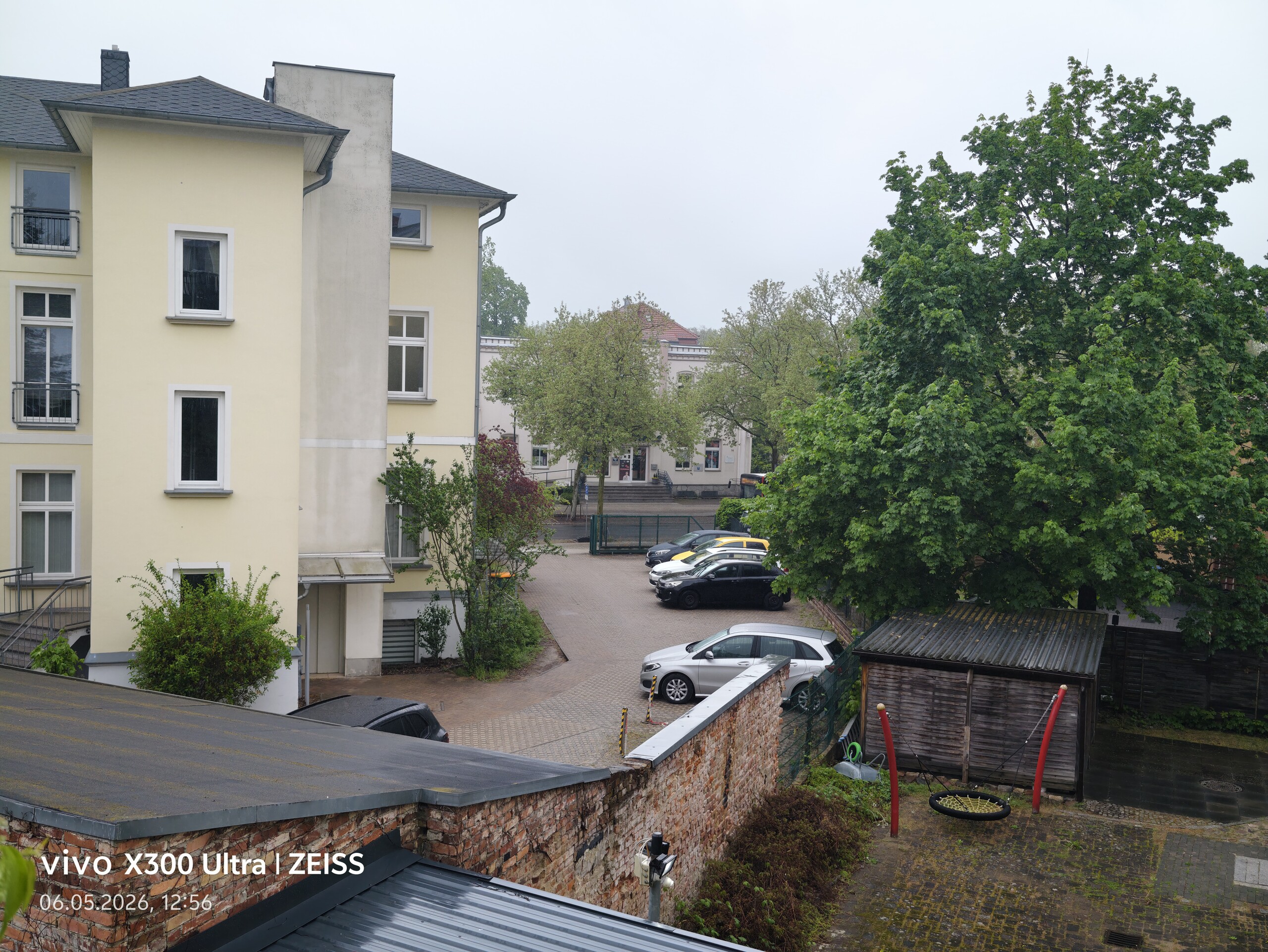

Image comparison
Choose a scene and navigate within the first image. One click changes the position on touchscreens. One click on the zoomed-in image opens the original in a new window. The first image shows the scaled photograph of the test device.
Main cameraMain cameraLow lightUltra-wide angle


Accessories and Warranty: Vivo X300 Ultra with and without a charger
The scope of delivery includes a USB cable, a protective cover, and a 100 W power adapter for the Chinese version. Trading Shenzhen also includes an EU adapter for the sockets used in this country.
Vivo is again offering a photography kit including a Zeiss teleconverter lens as an option for its flagship for around €490.
The warranty period is 12 months as an import. In the case of our test device from Trading Shenzhen, it is also possible to send the Vivo phone to a German shipping address in the event of a warranty claim.
Input devices and operation: Flagship phone relies on ultrasonic fingerprint
Inputs via the touchscreen are implemented quickly and the vibration motor also provides first-class feedback.
Thanks to the 3D ultrasonic sensor, fingerprints are recognized quickly and highly reliably.


Display: Vivo X300 Ultra with large OLED screen

The Vivo phone's 6.82-inch OLED display has a high 1,440p resolution and works with a 1 Hz to 144 Hz variable refresh rate.
We did not quite reach the advertised peak brightness of 4,500 nits in our measurement but came very close with HDR content.
In terms of eye protection, the X300 Ultra works with a high-frequency PWM dimming of up to 2,160 Hz at refresh rates of 1-120 Hz and up to 2,592 Hz at 144 Hz. However, the basic flicker is quite low at 110 Hz.
| |||||||||||||||||||||||||
Brightness Distribution: 96 %
Center on Battery: 1568 cd/m²
Contrast: ∞:1 (Black: 0 cd/m²)
ΔE ColorChecker Calman: 1.23 | ∀{0.5-29.43 Ø4.69}
ΔE Greyscale Calman: 1.9 | ∀{0.09-98 Ø4.94}
99.8% sRGB (Calman 2D)
Gamma: 2.251
CCT: 6552 K
| Vivo X300 Ultra LTPO OLED, 3168x1440, 6.8" | Samsung Galaxy S26 Ultra Dynamic AMOLED 2X, 3120x1440, 6.9" | Xiaomi 17 Ultra AMOLED, 2608x1200, 6.9" | Vivo X200 Ultra AMOLED, 3168x1440, 6.8" | Oppo Find X9 Pro LTPO AMOLED, 2772x1272, 6.8" | |
|---|---|---|---|---|---|
| Screen | -23% | 3% | 4% | 2% | |
| Brightness middle (cd/m²) | 1568 | 1339 -15% | 1303 -17% | 1286 -18% | 1105 -30% |
| Brightness (cd/m²) | 1535 | 1381 -10% | 1300 -15% | 1238 -19% | 1084 -29% |
| Brightness Distribution (%) | 96 | 94 -2% | 98 2% | 93 -3% | 95 -1% |
| Black Level * (cd/m²) | |||||
| Colorchecker dE 2000 * | 1.23 | 2.5 -103% | 1.12 9% | 1.04 15% | 1.02 17% |
| Colorchecker dE 2000 max. * | 3.22 | 3.8 -18% | 2.25 30% | 2.26 30% | 2.32 28% |
| Greyscale dE 2000 * | 1.9 | 1.7 11% | 1.7 11% | 1.6 16% | 1.4 26% |
| Gamma | 2.251 98% | 2.05 107% | 2.242 98% | 2.249 98% | 2.244 98% |
| CCT | 6552 99% | 6498 100% | 6404 101% | 6575 99% | 6411 101% |
* ... smaller is better
| Display / APL18 Peak Brightness | |
| Xiaomi 17 Ultra | |
| Samsung Galaxy S26 Ultra | |
| Vivo X300 Ultra | |
| Display / HDR Peak Brightness | |
| Vivo X300 Ultra | |
| Xiaomi 17 Ultra | |
| Samsung Galaxy S26 Ultra | |
Screen Flickering / PWM (Pulse-Width Modulation)
| Screen flickering / PWM detected | 110 Hz |  | |
The display backlight flickers at 110 Hz (worst case, e.g., utilizing PWM) . The frequency of 110 Hz is very low, so the flickering may cause eyestrain and headaches after extended use. In comparison: 52 % of all tested devices do not use PWM to dim the display. If PWM was detected, an average of 7632 (minimum: 5 - maximum: 343500) Hz was measured. | |||


Measurement series with fixed zoom level and different brightness settings (The amplitude curve at minimum brightness looks flat, but this is due to the scaling. The info box shows the enlarged version of the amplitude at minimum brightness)
Our color analysis with the Xrite spectrometer and the Calman Ultimate analysis software from Portrait Displays shows slight deviations for the OLED screen of the Vivo phone.
We achieve the best result in the "Professional" color mode.


Display Response Times
| ↔ Response Time Black to White | ||
|---|---|---|
| 0.9 ms ... rise ↗ and fall ↘ combined | ↗ 0.5 ms rise |  |
| ↘ 0.4 ms fall | ||
| The screen shows very fast response rates in our tests and should be very well suited for fast-paced gaming. In comparison, all tested devices range from 0.1 (minimum) to 240 (maximum) ms. » 3 % of all devices are better. This means that the measured response time is better than the average of all tested devices (19.7 ms). | ||
| ↔ Response Time 50% Grey to 80% Grey | ||
| 1.2 ms ... rise ↗ and fall ↘ combined | ↗ 0.6 ms rise |  |
| ↘ 0.6 ms fall | ||
| The screen shows very fast response rates in our tests and should be very well suited for fast-paced gaming. In comparison, all tested devices range from 0.13 (minimum) to 636 (maximum) ms. » 6 % of all devices are better. This means that the measured response time is better than the average of all tested devices (30.8 ms). | ||


Performance: Flagship phone with high-end chipset from Qualcomm
On board the Ultra model is Qualcomm's latest flagship chip, unlike the X300 Pro that uses a MediaTek Dimensity 9500 SoC.
The Snapdragon 8 Elite Gen 5 is significantly faster than the Snapdragon 8 Elite in the Vivo X200 Ultra, but the single-core values of the Vivo flagship are somewhat low in Geekbench.
| Antutu v10 - Total Score | |
| Oppo Find X9 Pro | |
| Average Qualcomm Snapdragon 8 Elite Gen 5 (2390211 - 4185521, n=7) | |
| Vivo X200 Ultra | |
| Average of class Smartphone (264891 - 3269237, n=78, last 2 years) | |
| CrossMark - Overall | |
| Vivo X300 Ultra | |
| Samsung Galaxy S26 Ultra | |
| Average Qualcomm Snapdragon 8 Elite Gen 5 (1698 - 2856, n=19) | |
| Vivo X200 Ultra | |
| Average of class Smartphone (376 - 2856, n=110, last 2 years) | |
| UL Procyon AI Inference for Android - Overall Score NNAPI | |
| Samsung Galaxy S26 Ultra | |
| Xiaomi 17 Ultra | |
| Vivo X200 Ultra | |
| Average Qualcomm Snapdragon 8 Elite Gen 5 (10671 - 24487, n=12) | |
| Average of class Smartphone (2895 - 78695, n=94, last 2 years) | |
| Oppo Find X9 Pro | |
The GPU benchmarks show a similar picture. The Adreno 840 in the X300 Ultra works with the handbrake somewhat applied, although over 120 fps in GFXBench high-tier tests should easily be sufficient for high-frame rate gaming.
GFXBench (DX / GLBenchmark) 2.7: T-Rex Onscreen | 1920x1080 T-Rex Offscreen
GFXBench 3.0: on screen Manhattan Onscreen OGL | 1920x1080 1080p Manhattan Offscreen
GFXBench 3.1: on screen Manhattan ES 3.1 Onscreen | 1920x1080 Manhattan ES 3.1 Offscreen
GFXBench: on screen Car Chase Onscreen | 1920x1080 Car Chase Offscreen | on screen Aztec Ruins High Tier Onscreen | 2560x1440 Aztec Ruins High Tier Offscreen | on screen Aztec Ruins Normal Tier Onscreen | 1920x1080 Aztec Ruins Normal Tier Offscreen | 3840x2160 4K Aztec Ruins High Tier Offscreen
| 3DMark / Wild Life Extreme Unlimited | |
| Samsung Galaxy S26 Ultra | |
| Vivo X300 Ultra | |
| Oppo Find X9 Pro | |
| Xiaomi 17 Ultra | |
| Vivo X200 Ultra | |
| 3DMark / Wild Life Extreme | |
| Samsung Galaxy S26 Ultra | |
| Vivo X300 Ultra | |
| Oppo Find X9 Pro | |
| Xiaomi 17 Ultra | |
| Vivo X200 Ultra | |
| 3DMark / Wild Life Unlimited Score | |
| Samsung Galaxy S26 Ultra | |
| Xiaomi 17 Ultra | |
| Vivo X300 Ultra | |
| Oppo Find X9 Pro | |
| Vivo X200 Ultra | |
| 3DMark / Solar Bay Score | |
| Oppo Find X9 Pro | |
| Samsung Galaxy S26 Ultra | |
| Vivo X300 Ultra | |
| Xiaomi 17 Ultra | |
| Vivo X200 Ultra | |
| 3DMark / Solar Bay Unlimited Score | |
| Oppo Find X9 Pro | |
| Samsung Galaxy S26 Ultra | |
| Vivo X300 Ultra | |
| Xiaomi 17 Ultra | |
| Vivo X200 Ultra | |
| 3DMark / Steel Nomad Light Unlimited Score | |
| Oppo Find X9 Pro | |
| Samsung Galaxy S26 Ultra | |
| Vivo X300 Ultra | |
| Xiaomi 17 Ultra | |
| Vivo X200 Ultra | |
| 3DMark / Steel Nomad Light Score | |
| Oppo Find X9 Pro | |
| Samsung Galaxy S26 Ultra | |
| Vivo X300 Ultra | |
| Xiaomi 17 Ultra | |
| Vivo X200 Ultra | |
| GFXBench (DX / GLBenchmark) 2.7 / T-Rex Onscreen | |
| Vivo X200 Ultra | |
| Samsung Galaxy S26 Ultra | |
| Xiaomi 17 Ultra | |
| Vivo X300 Ultra | |
| Oppo Find X9 Pro | |
| GFXBench (DX / GLBenchmark) 2.7 / T-Rex Offscreen | |
| Oppo Find X9 Pro | |
| Samsung Galaxy S26 Ultra | |
| Vivo X200 Ultra | |
| Vivo X300 Ultra | |
| Xiaomi 17 Ultra | |
| GFXBench 3.0 / Manhattan Onscreen OGL | |
| Vivo X200 Ultra | |
| Samsung Galaxy S26 Ultra | |
| Xiaomi 17 Ultra | |
| Vivo X300 Ultra | |
| Oppo Find X9 Pro | |
| GFXBench 3.0 / 1080p Manhattan Offscreen | |
| Oppo Find X9 Pro | |
| Samsung Galaxy S26 Ultra | |
| Vivo X200 Ultra | |
| Vivo X300 Ultra | |
| Xiaomi 17 Ultra | |
| GFXBench 3.1 / Manhattan ES 3.1 Onscreen | |
| Vivo X200 Ultra | |
| Samsung Galaxy S26 Ultra | |
| Xiaomi 17 Ultra | |
| Vivo X300 Ultra | |
| Oppo Find X9 Pro | |
| GFXBench 3.1 / Manhattan ES 3.1 Offscreen | |
| Samsung Galaxy S26 Ultra | |
| Oppo Find X9 Pro | |
| Vivo X300 Ultra | |
| Vivo X200 Ultra | |
| Xiaomi 17 Ultra | |
| GFXBench / Car Chase Onscreen | |
| Vivo X200 Ultra | |
| Xiaomi 17 Ultra | |
| Vivo X300 Ultra | |
| Samsung Galaxy S26 Ultra | |
| Oppo Find X9 Pro | |
| GFXBench / Car Chase Offscreen | |
| Vivo X300 Ultra | |
| Vivo X200 Ultra | |
| Samsung Galaxy S26 Ultra | |
| Xiaomi 17 Ultra | |
| Oppo Find X9 Pro | |
| GFXBench / Aztec Ruins High Tier Onscreen | |
| Xiaomi 17 Ultra | |
| Vivo X300 Ultra | |
| Samsung Galaxy S26 Ultra | |
| Vivo X200 Ultra | |
| Oppo Find X9 Pro | |
| GFXBench / Aztec Ruins High Tier Offscreen | |
| Vivo X300 Ultra | |
| Samsung Galaxy S26 Ultra | |
| Xiaomi 17 Ultra | |
| Vivo X200 Ultra | |
| Oppo Find X9 Pro | |
| GFXBench / Aztec Ruins Normal Tier Onscreen | |
| Vivo X200 Ultra | |
| Samsung Galaxy S26 Ultra | |
| Xiaomi 17 Ultra | |
| Vivo X300 Ultra | |
| Oppo Find X9 Pro | |
| GFXBench / Aztec Ruins Normal Tier Offscreen | |
| Samsung Galaxy S26 Ultra | |
| Vivo X300 Ultra | |
| Vivo X200 Ultra | |
| Xiaomi 17 Ultra | |
| Oppo Find X9 Pro | |
| GFXBench / 4K Aztec Ruins High Tier Offscreen | |
| Samsung Galaxy S26 Ultra | |
| Xiaomi 17 Ultra | |
| Vivo X200 Ultra | |
| Vivo X300 Ultra | |
| Oppo Find X9 Pro | |
| Jetstream 2 - 2.0 Total | |
| Samsung Galaxy S26 Ultra (Chrome 146) | |
| Vivo X300 Ultra (Chrome 147) | |
| Average Qualcomm Snapdragon 8 Elite Gen 5 (70.1 - 409, n=9) | |
| Average of class Smartphone (63.9 - 423, n=110, last 2 years) | |
| Speedometer 2.0 - Result 2.0 | |
| Samsung Galaxy S26 Ultra (Chrome 146) | |
| Average Qualcomm Snapdragon 8 Elite Gen 5 (229 - 624, n=4) | |
| Average of class Smartphone (49.3 - 733, n=68, last 2 years) | |
| Speedometer 3 - Score 3.0 | |
| Samsung Galaxy S26 Ultra (Chrome 146) | |
| Xiaomi 17 Ultra (Chrome 143) | |
| Vivo X200 Ultra (Chrome 137) | |
| Average Qualcomm Snapdragon 8 Elite Gen 5 (14.4 - 31.4, n=7) | |
| Oppo Find X9 Pro (Chrome 141) | |
| Average of class Smartphone (3.06 - 45.5, n=77, last 2 years) | |
| WebXPRT 4 - Overall | |
| Xiaomi 17 Ultra (Chrome 143) | |
| Average Qualcomm Snapdragon 8 Elite Gen 5 (102 - 278, n=10) | |
| Vivo X200 Ultra (Chrome 137) | |
| Average of class Smartphone (56 - 278, n=86, last 2 years) | |
| Oppo Find X9 Pro (Chrome 141) | |
| Octane V2 - Total Score | |
| Xiaomi 17 Ultra (Chrome 143) | |
| Vivo X300 Ultra (Chrome 147) | |
| Samsung Galaxy S26 Ultra (Chrome 146) | |
| Vivo X200 Ultra (Chrome 137) | |
| Average Qualcomm Snapdragon 8 Elite Gen 5 (47984 - 126661, n=15) | |
| Oppo Find X9 Pro (Chrome 141) | |
| Average of class Smartphone (6015 - 126661, n=131, last 2 years) | |
| Mozilla Kraken 1.1 - Total | |
| Average of class Smartphone (281 - 2718, n=114, last 2 years) | |
| Oppo Find X9 Pro (Chrome 141) | |
| Average Qualcomm Snapdragon 8 Elite Gen 5 (284 - 799, n=19) | |
| Vivo X200 Ultra | |
| Xiaomi 17 Ultra (Chrome 143) | |
| Vivo X300 Ultra (Chrome 147) | |
| Samsung Galaxy S26 Ultra (Chrome 146) | |
* ... smaller is better
| Vivo X300 Ultra | Samsung Galaxy S26 Ultra | Xiaomi 17 Ultra | Vivo X200 Ultra | Oppo Find X9 Pro | Average 512 GB UFS 4.1 Flash | Average of class Smartphone | |
|---|---|---|---|---|---|---|---|
| AndroBench 3-5 | 3% | 46% | 20% | -17% | 23% | -17% | |
| Sequential Read 256KB (MB/s) | 2143.53 | 3626.09 69% | 3987.92 86% | 3358.64 57% | 3219.8 50% | 3608 ? 68% | 2291 ? 7% |
| Sequential Write 256KB (MB/s) | 2352.64 | 1658.91 -29% | 3974.23 69% | 2998.87 27% | 1239.76 -47% | 3219 ? 37% | 1971 ? -16% |
| Random Read 4KB (MB/s) | 365.12 | 513.44 41% | 547.56 50% | 462.41 27% | 367.54 1% | 412 ? 13% | 316 ? -13% |
| Random Write 4KB (MB/s) | 661.37 | 207.16 -69% | 524.05 -21% | 459.33 -31% | 176.98 -73% | 496 ? -25% | 361 ? -45% |
Emissions: High waste heat and high throttling in the Vivo X300 Ultra
Temperature
The surface temperatures of the X300 Ultra rise sharply under load to a level that can become quite uncomfortable.
The waste heat also seems to be problematic on the inside, as the Vivo smartphone's consistency is not particularly high in the 3DMark stress tests.
(-) The maximum temperature on the upper side is 54.8 °C / 131 F, compared to the average of 35.3 °C / 96 F, ranging from 21.9 to 247 °C for the class Smartphone.
(-) The bottom heats up to a maximum of 51.3 °C / 124 F, compared to the average of 34.1 °C / 93 F
(+) In idle usage, the average temperature for the upper side is 26.8 °C / 80 F, compared to the device average of 33 °C / 91 F.
3DMark Stress Tests
| 3DMark | |
| Wild Life Stress Test Stability | |
| Oppo Find X9 Pro | |
| Xiaomi 17 Ultra | |
| Vivo X300 Ultra | |
| Vivo X200 Ultra | |
| Samsung Galaxy S26 Ultra | |
| Wild Life Extreme Stress Test | |
| Xiaomi 17 Ultra | |
| Vivo X300 Ultra | |
| Vivo X200 Ultra | |
| Samsung Galaxy S26 Ultra | |
| Oppo Find X9 Pro | |


Loudspeaker
The stereo speakers provide a decent sound output. The sound is characterized by mid and high frequencies, although our measurements show a dip in the super tweeters. Bass is barely perceptible.
Vivo X300 Ultra audio analysis
(+) | speakers can play relatively loud (84.3 dB)
Bass 100 - 315 Hz
(-) | nearly no bass - on average 24.7% lower than median
(-) | bass is not linear (17.9% delta to prev. frequency)
Mids 400 - 2000 Hz
(±) | higher mids - on average 5.5% higher than median
(±) | linearity of mids is average (9.8% delta to prev. frequency)
Highs 2 - 16 kHz
(+) | balanced highs - only 3.3% away from median
(+) | highs are linear (5.6% delta to prev. frequency)
Overall 100 - 16.000 Hz
(±) | linearity of overall sound is average (21.2% difference to median)
Compared to same class
» 41% of all tested devices in this class were better, 8% similar, 51% worse
» The best had a delta of 11%, average was 34%, worst was 136%
Compared to all devices tested
» 59% of all tested devices were better, 7% similar, 34% worse
» The best had a delta of 4%, average was 23%, worst was 136%
Samsung Galaxy S26 Ultra audio analysis
(+) | speakers can play relatively loud (92 dB)
Bass 100 - 315 Hz
(-) | nearly no bass - on average 22.6% lower than median
(+) | bass is linear (5.2% delta to prev. frequency)
Mids 400 - 2000 Hz
(+) | balanced mids - only 4.9% away from median
(+) | mids are linear (4.8% delta to prev. frequency)
Highs 2 - 16 kHz
(+) | balanced highs - only 3.4% away from median
(+) | highs are linear (1.8% delta to prev. frequency)
Overall 100 - 16.000 Hz
(±) | linearity of overall sound is average (15.9% difference to median)
Compared to same class
» 5% of all tested devices in this class were better, 5% similar, 90% worse
» The best had a delta of 11%, average was 34%, worst was 136%
Compared to all devices tested
» 25% of all tested devices were better, 5% similar, 70% worse
» The best had a delta of 4%, average was 23%, worst was 136%
Battery life: X300 Ultra with an XXL battery
Energy consumption
The 6,600 mAh battery in the Vivo X300 Ultra can be charged with up to 100 W via USB-C and up to 40 W wirelessly.
As with the X200 Ultra, the power consumption in idle mode is noticeably high — but even more so with the X300 Ultra.
Update, May 15: A new power consumption measurement taken after the update shows significantly lower values.
| Off / Standby |   0.1 / 0.2 Watt 0.1 / 0.2 Watt |
| Idle |  0.57 / 1.1 / 1.26 Watt 0.57 / 1.1 / 1.26 Watt |
| Load |
8.6 / 12.4 Watt |
    
| |
Key:
min: ,
med: ,
max: Metrahit Energy | |
| Vivo X300 Ultra 6600 mAh | Samsung Galaxy S26 Ultra 5000 mAh | Xiaomi 17 Ultra 6800 mAh | Vivo X200 Ultra 6000 mAh | Oppo Find X9 Pro 7500 mAh | Average Qualcomm Snapdragon 8 Elite Gen 5 | Average of class Smartphone | |
|---|---|---|---|---|---|---|---|
| Power Consumption | -24% | -6% | -124% | 5% | -18% | -18% | |
| Idle Minimum * (Watt) | 0.57 | 0.56 2% | 0.8 -40% | 1.6 -181% | 0.6 -5% | 0.882 ? -55% | 0.893 ? -57% |
| Idle Average * (Watt) | 1.1 | 1.18 -7% | 1.1 -0% | 2.9 -164% | 1 9% | 1.373 ? -25% | 1.489 ? -35% |
| Idle Maximum * (Watt) | 1.26 | 1.33 -6% | 1.2 5% | 3.7 -194% | 1.3 -3% | 1.586 ? -26% | 1.682 ? -33% |
| Load Average * (Watt) | 8.6 | 14.91 -73% | 6.1 29% | 10.6 -23% | 6.9 20% | 8.01 ? 7% | 6.85 ? 20% |
| Load Maximum * (Watt) | 12.4 | 16.58 -34% | 15.3 -23% | 19.5 -57% | 11.9 4% | 11.4 ? 8% | 10.7 ? 14% |
* ... smaller is better
Power consumption: Geekbench (150 cd/m²)
Power consumption: GFXbench (150 cd/m²)
Battery run times
The X300 Ultra performs convincingly with good run times in our WLAN battery test at an adjusted display brightness of 150 cd/m².
However, the phone is a long way off from the endurance of a Find X9 Pro with a 7,500 mAh battery.
| Vivo X300 Ultra 6600 mAh | Samsung Galaxy S26 Ultra 5000 mAh | Xiaomi 17 Ultra 6800 mAh | Vivo X200 Ultra 6000 mAh | Oppo Find X9 Pro 7500 mAh | |
|---|---|---|---|---|---|
| Battery runtime | |||||
| WiFi v1.3 (h) | 23 | 17.9 -22% | 25.9 13% | 23.3 1% | 34.3 49% |
Notebookcheck's overall impressions of the Vivo X300 Ultra
The Vivo X300 Ultra offers photo and video enthusiasts one of the best, rather possibly the best camera package in a 2026 smartphone.

Vivo X300 Ultra
- 05/15/2026 v8
Marcus Herbrich
 Total Sustainability Score:
 Potential competitors in comparison
Image | Model / Review | Price | Weight | Drive | Display |
|---|---|---|---|---|---|
1. 89.1%  | Vivo X300 Ultra Qualcomm Snapdragon 8 Elite Gen 5 ⎘ Qualcomm Adreno 840 ⎘ 16 GB Memory, 512 GB UFS 4.x | List Price: 1999€ | 232 g | 512 GB UFS 4.1 Flash | 6.82" 3168x1440 510 PPI LTPO OLED |
2. 89.8%  | Samsung Galaxy S26 Ultra Qualcomm Snapdragon 8 Elite Gen 5 for Galaxy ⎘ Qualcomm Adreno 840 ⎘ 12 GB Memory, 256 GB UFS 4.x | List Price: 1449€ | 214 g | 256 GB UFS 4.0 Flash | 6.90" 3120x1440 498 PPI Dynamic AMOLED 2X |
3. 90.4%  | Xiaomi 17 Ultra Qualcomm Snapdragon 8 Elite Gen 5 ⎘ Qualcomm Adreno 840 ⎘ 16 GB Memory, 512 GB UFS 4.x | Amazon: 1. $1,349.50 XIAOMI 17 Ultra Ai 5G (Compa... 2. $1,399.50 XIAOMI 17 Ultra Ai 5G (Compa... 3. $1,191.63 XIAOMI 17 Ultra Ai 5G (Compa... List Price: 950€ | 224 g | 512 GB UFS 4.1 Flash | 6.90" 2608x1200 416 PPI AMOLED |
4. 88.3%  | Vivo X200 Ultra Qualcomm Snapdragon 8 Elite ⎘ Qualcomm Adreno 830 ⎘ 16 GB Memory, 1024 GB UFS 4.x | Amazon: 1. $1,179.98 Samsung Galaxy S26 Ultra, Un... 2. $565.64 Nothing Phone (3) Cell Phone... 3. $286.57 Motorola Moto G Stylus - 202... List Price: 890€ | 229 g | 1 TB UFS 4.0 Flash | 6.82" 3168x1440 510 PPI AMOLED |
5. 87.7%  | Oppo Find X9 Pro MediaTek Dimensity 9500 ⎘ Arm Mali G1- Ultra MC12 ⎘ 16 GB Memory, 512 GB UFS 4.x | Amazon: 1. $1,909.00 OPPO Find X9 Pro Dual-SIM 51... 2. $1,949.00 OPPO Find X9 Ultra Dual-SIM ... 3. $1,064.10 Samsung Galaxy S26 Ultra, Un... List Price: 1299€ | 224 g | 512 GB UFS 4.1 Flash | 6.78" 2772x1272 450 PPI LTPO AMOLED |
Transparency
The selection of devices to be reviewed is made by our editorial team. The test sample was provided to the author as a loan by the manufacturer or retailer for the purpose of this review. The lender had no influence on this review, nor did the manufacturer receive a copy of this review before publication. There was no obligation to publish this review. As an independent media company, Notebookcheck is not subjected to the authority of manufacturers, retailers or publishers.
This is how Notebookcheck is testing
Every year, Notebookcheck independently reviews hundreds of laptops and smartphones using standardized procedures to ensure that all results are comparable. We have continuously developed our test methods for around 20 years and set industry standards in the process. In our test labs, high-quality measuring equipment is utilized by experienced technicians and editors. These tests involve a multi-stage validation process. Our complex rating system is based on hundreds of well-founded measurements and benchmarks, which maintains objectivity. Further information on our test methods can be found here.
 Add as a preferred source on Google


