





Verdict on the Samsung Galaxy Z Fold8 Ultra
With the Galaxy Z Fold8 Ultra, Samsung is introducing the “Ultra” designation to its foldable lineup for the first time. From a technical standpoint, however, the leap from the Fold7 is much smaller than the new name suggests. We don’t see any significant improvements in performance or features compared to last year’s model.
In our view, the typical “Ultra” features that Samsung has defined for its S-series models over the years are missing. First and foremost, stylus support—which once made the Fold a productive tool—should have been a given for an Ultra Fold model. The camera setup of a Galaxy S26 Ultra is also missing; instead, the high-end Galaxy foldable gets a minor camera update, though the photo quality it delivers is remarkable for such a thin phone.
Overall, the “Ultra” designation feels like a strategic preemptive move against Apple’s competition, even though the iPhone Ultra hasn’t even been unveiled yet and the form factor is more in line with the Fold8.
Nevertheless, the new Fold generation is a top-tier foldable phone. The body feels very high-quality, and the new hinge is beyond reproach. The same applies to the Fold8 Ultra’s supply of updates and security patches.
Anyone accustomed to the unusual square aspect ratio in daily use will struggle to find a better foldable display, particularly since the large 8.0-inch OLED screen now has a new anti-glare coating and is marginally sharper than on the Fold7. However, this increase in pixel density reduces the performance advantage of the latest Qualcomm GPU in our on-screen benchmark results.
Despite the small battery, the Samsung smartphone’s runtimes are excellent; we measured over 17 hours. This shows that efficient power management, such as that found in One UI, can largely compensate for a battery capacity deficit on paper compared to competitors from China. Under light load, the Galaxy phone remains below 2 watts in our measurements.
Pros
Cons
Price and Availability of the Samsung Galaxy Z Fold8 Ultra
The Samsung Galaxy Z Fold8 Ultra is available in Graphite, Cream, and Violet Shadow, as well as Green Shadow (exclusive to Samsung), starting at an MSRP of $2,099 euros, including on Amazon.de.

Table of Contents
- Verdict on the Samsung Galaxy Z Fold8 Ultra
- Specifications of the Samsung Galaxy Z Fold8 Ultra
- Design and Features - Ultra-thin Android smartphone is a lightweight
- Communication and Usability - The Galaxy phone’s Flex Titanium technology makes you forget about the crease—or at least almost
- Camera - Ultra-thin Android phone with a 200-megapixel camera and telephoto lens
- Display - Large OLED screen with limitations in PWM dimming
- Cover Display
- Performance, Emissions, and Battery Life—Samsung’s Foldable Smartphone Is Faster Than the Competition
- Notebookcheck Overall Rating
- Possible Alternatives Comparison
Specifications of the Samsung Galaxy Z Fold8 Ultra
Design and Features - Ultra-thin Android smartphone is a lightweight
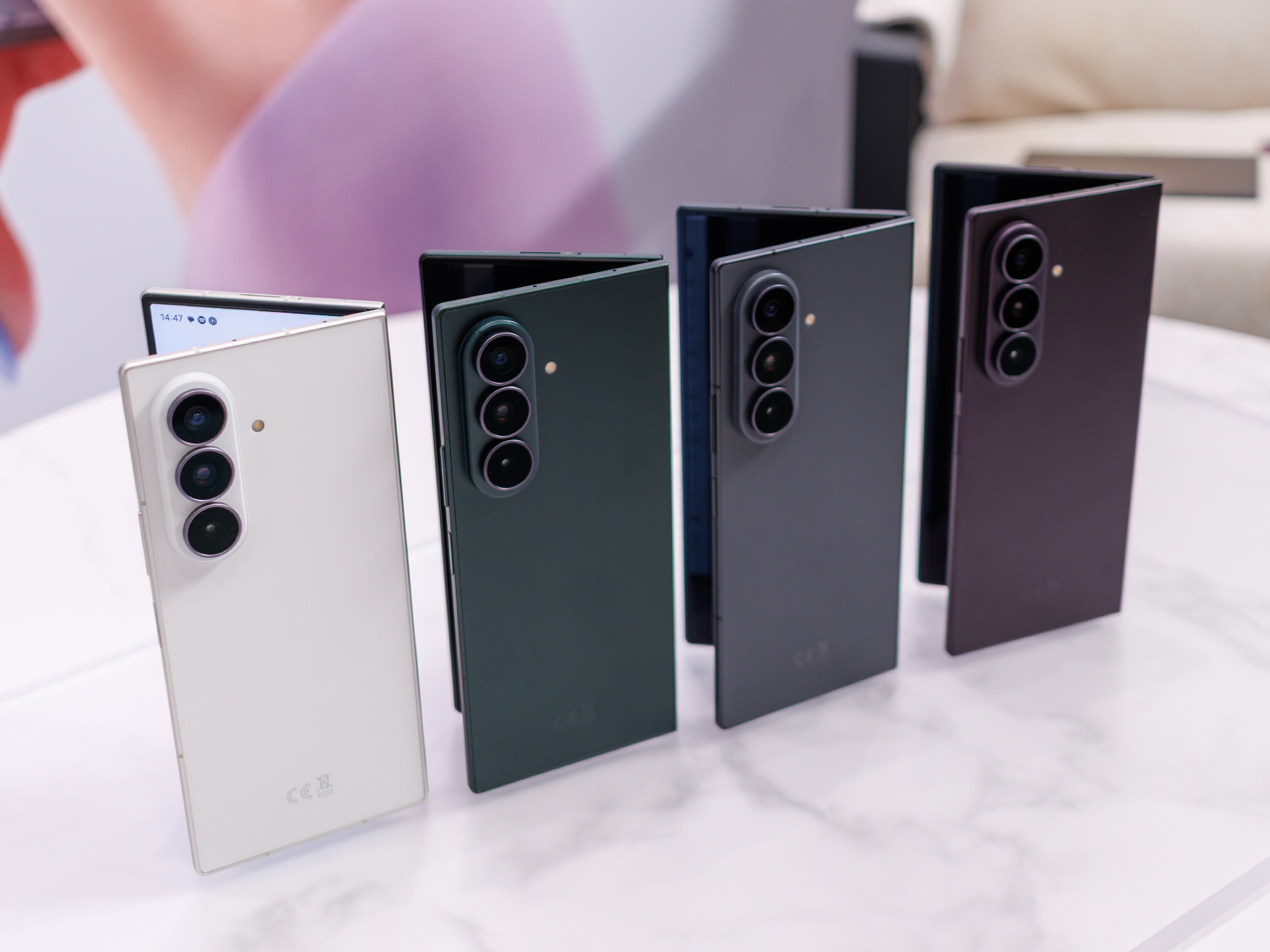
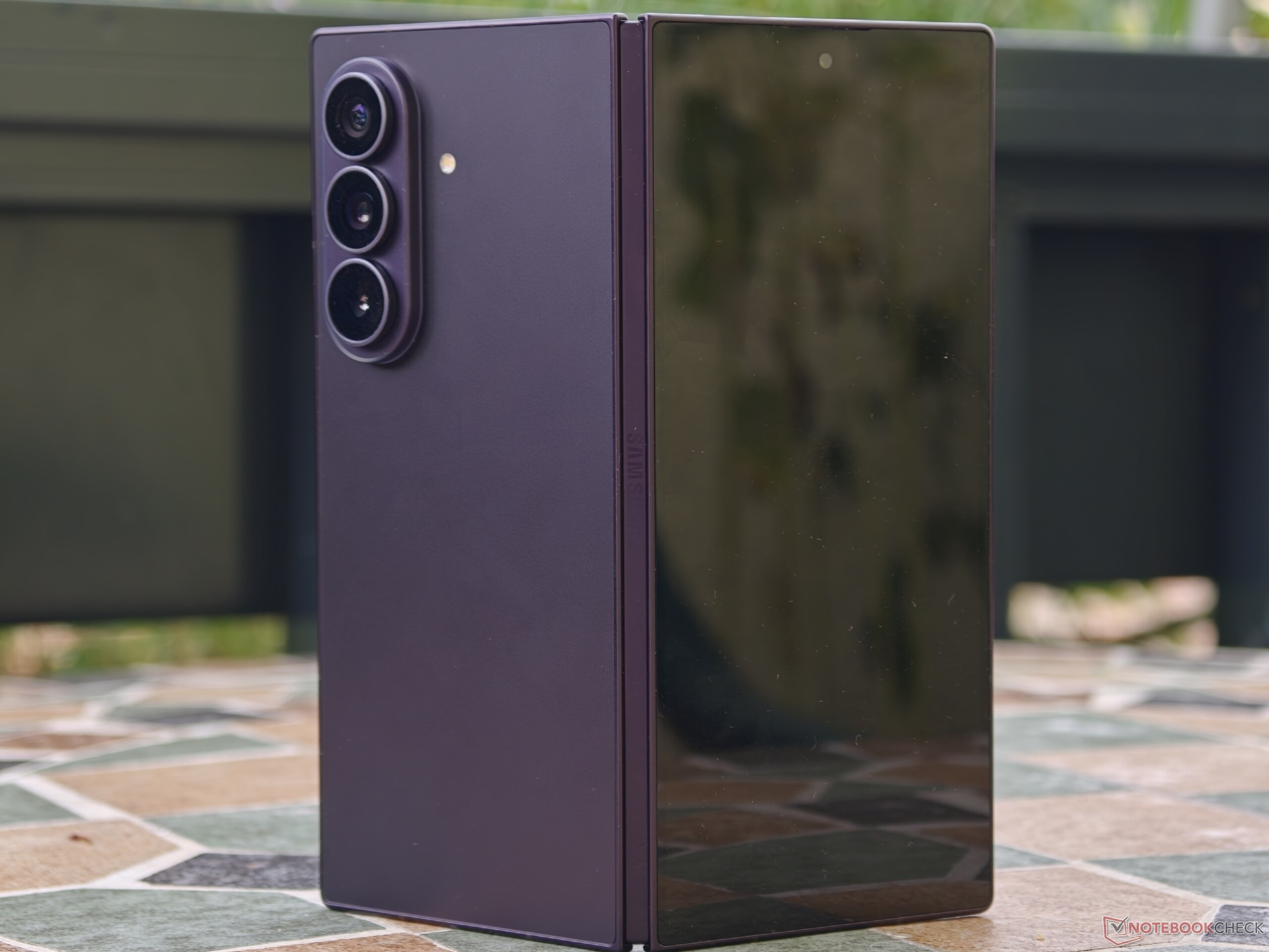
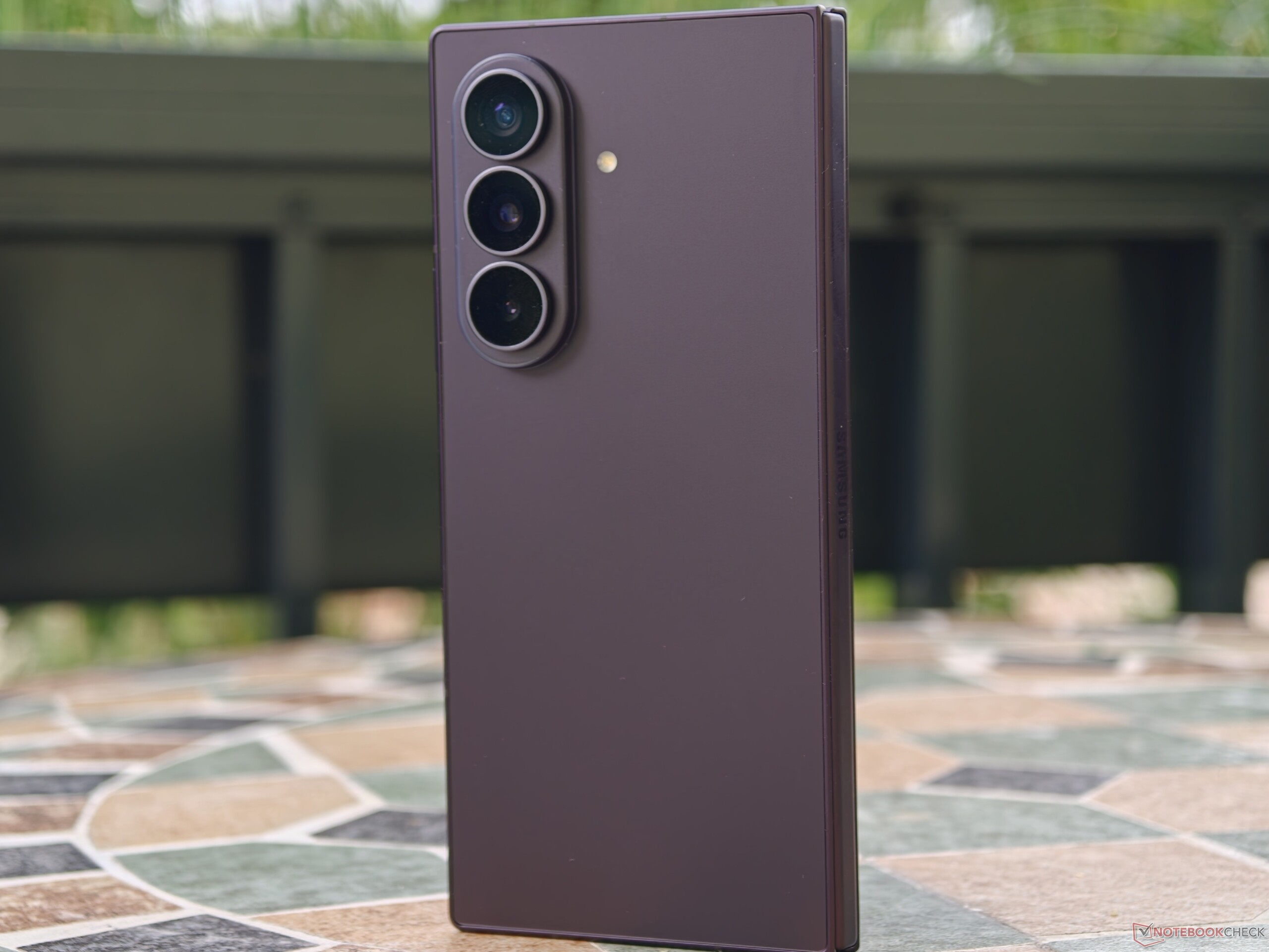
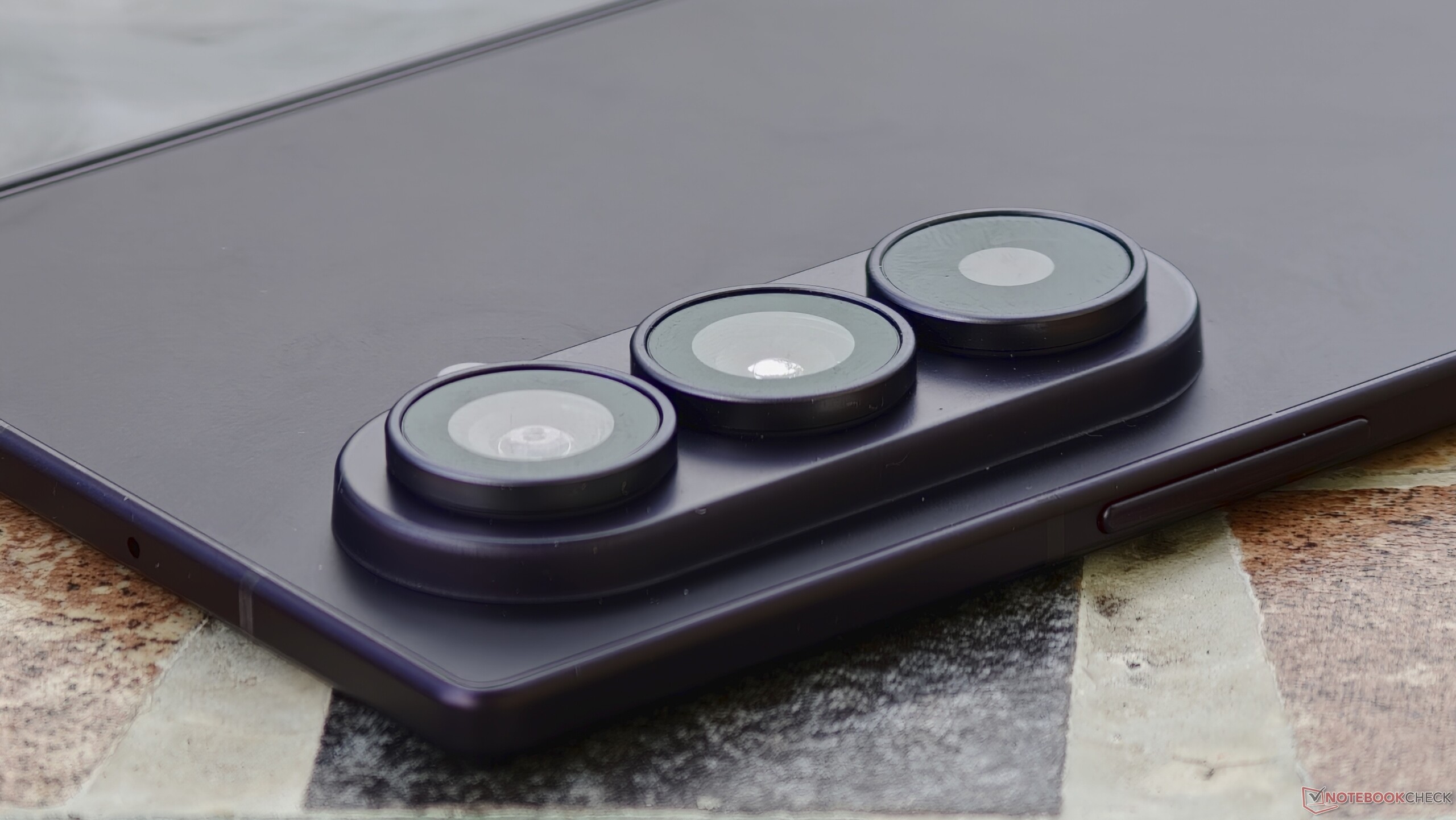
The Galaxy Z Fold8 Ultra makes a distinctly high-quality impression. The hinge operates smoothly and precisely. The opening angles adjust over a wide range and stay reliably in place.
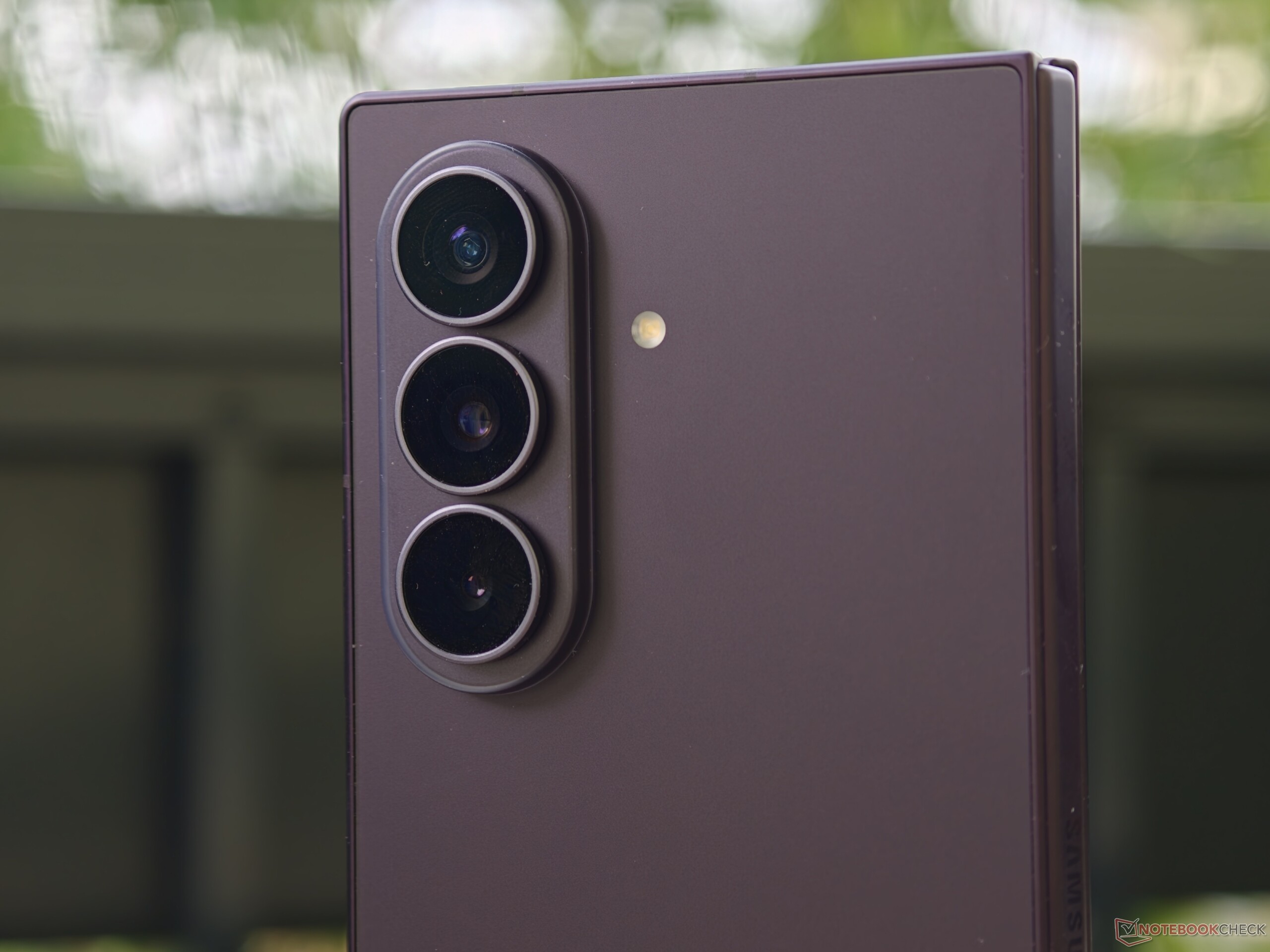
When unfolded, the Fold8 Ultra measures just 4.1 millimeters, making it one of the thinnest foldables available. When folded, it is as thick as a typical Android flagship. Despite its large display area, it remains remarkably light at 215 grams. When lying on a table, however, the Fold8 Ultra exhibits the same weakness as the Fold7. Due to the camera module, the Samsung foldable wobbles significantly when closed.
The IP48 certification offers good water resistance but does not completely keep out fine dust. Given the complex hinge mechanism, this remains a risk factor during use—for example, at the beach—since small sand particles can impair mobility over time.

Communication and Usability - The Galaxy phone’s Flex Titanium technology makes you forget about the crease—or at least almost
The Fold8 Ultra uses Wi-Fi 7, including the 6-GHz band, and achieves very high data rates when paired with our reference router. On the cellular side, the Samsung phone supports all current standards and offers a wide range of frequencies and good voice quality.
Unlocking is enabled by a fingerprint sensor integrated into the side power button, which works quickly but is hard to feel because the button is deeply recessed. Neither the 6.5-inch external OLED panel nor the 8-inch main display support stylus input. However, the crease of the Dynamic AMOLED 2X panel is barely noticeable.
| Networking | |
| Samsung Galaxy Z Fold8 Ultra | |
| iperf3 transmit Wi-Fi6/7 RT-BE96U | |
| iperf3 receive Wi-Fi6/7 RT-BE96U | |
| Motorola Razr Fold | |
| iperf3 transmit Wi-Fi6/7 RT-BE96U | |
| iperf3 receive Wi-Fi6/7 RT-BE96U | |
| Vivo X Fold6 | |
| iperf3 transmit Wi-Fi6/7 RT-BE96U | |
| iperf3 receive Wi-Fi6/7 RT-BE96U | |
| Samsung Galaxy Z Fold7 | |
| iperf3 transmit AXE11000 6GHz | |
| iperf3 receive AXE11000 6GHz | |
| Average 802.11 a/b/g/n/ac/ax/be | |
| iperf3 transmit AXE11000 6GHz | |
| iperf3 receive AXE11000 6GHz | |
| iperf3 transmit Wi-Fi6/7 RT-BE96U | |
| iperf3 receive Wi-Fi6/7 RT-BE96U | |
| Average of class Smartphone | |
| iperf3 transmit AXE11000 6GHz | |
| iperf3 receive AXE11000 6GHz | |
| iperf3 transmit Wi-Fi6/7 RT-BE96U | |
| iperf3 receive Wi-Fi6/7 RT-BE96U | |
Camera - Ultra-thin Android phone with a 200-megapixel camera and telephoto lens
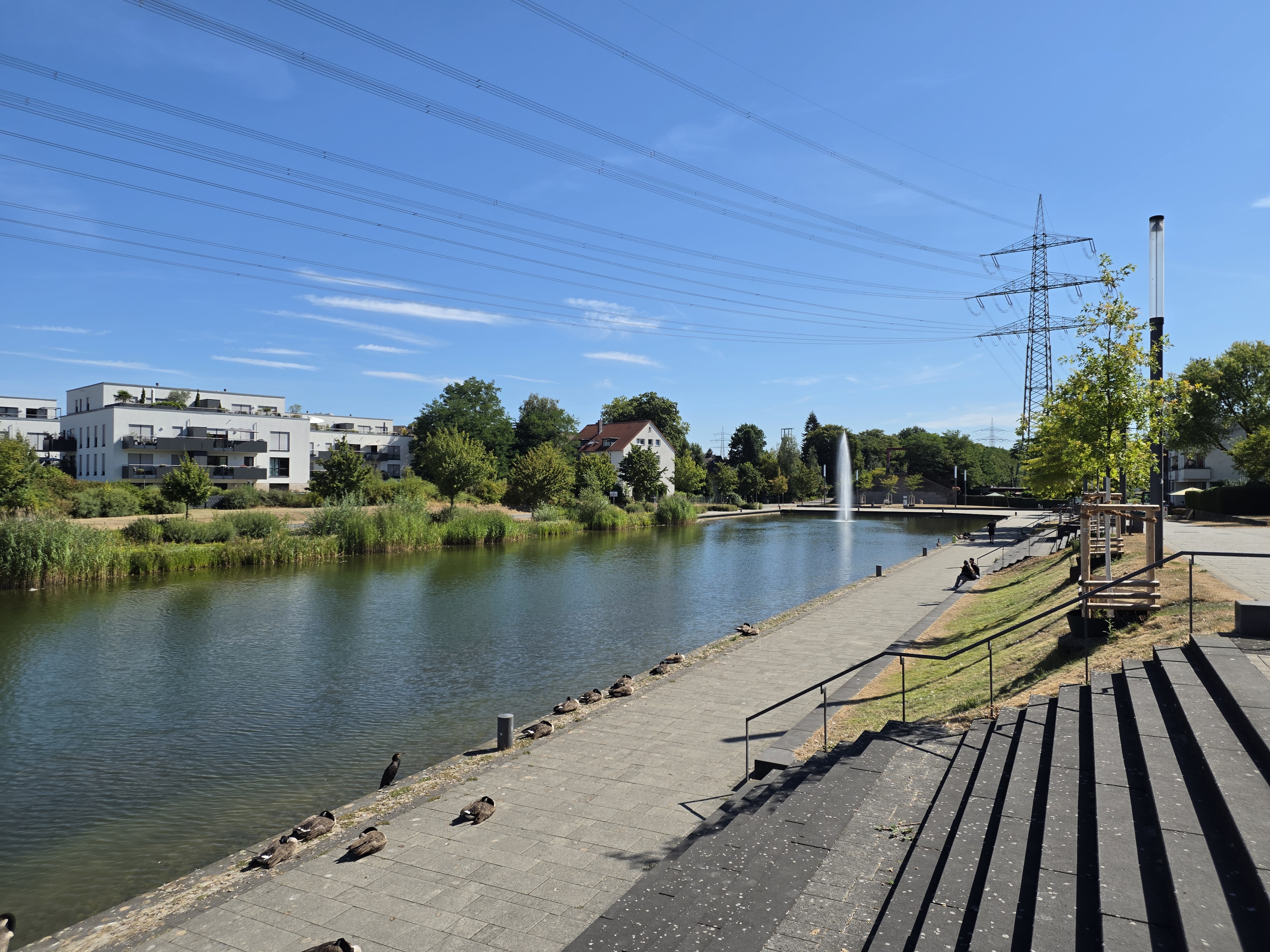
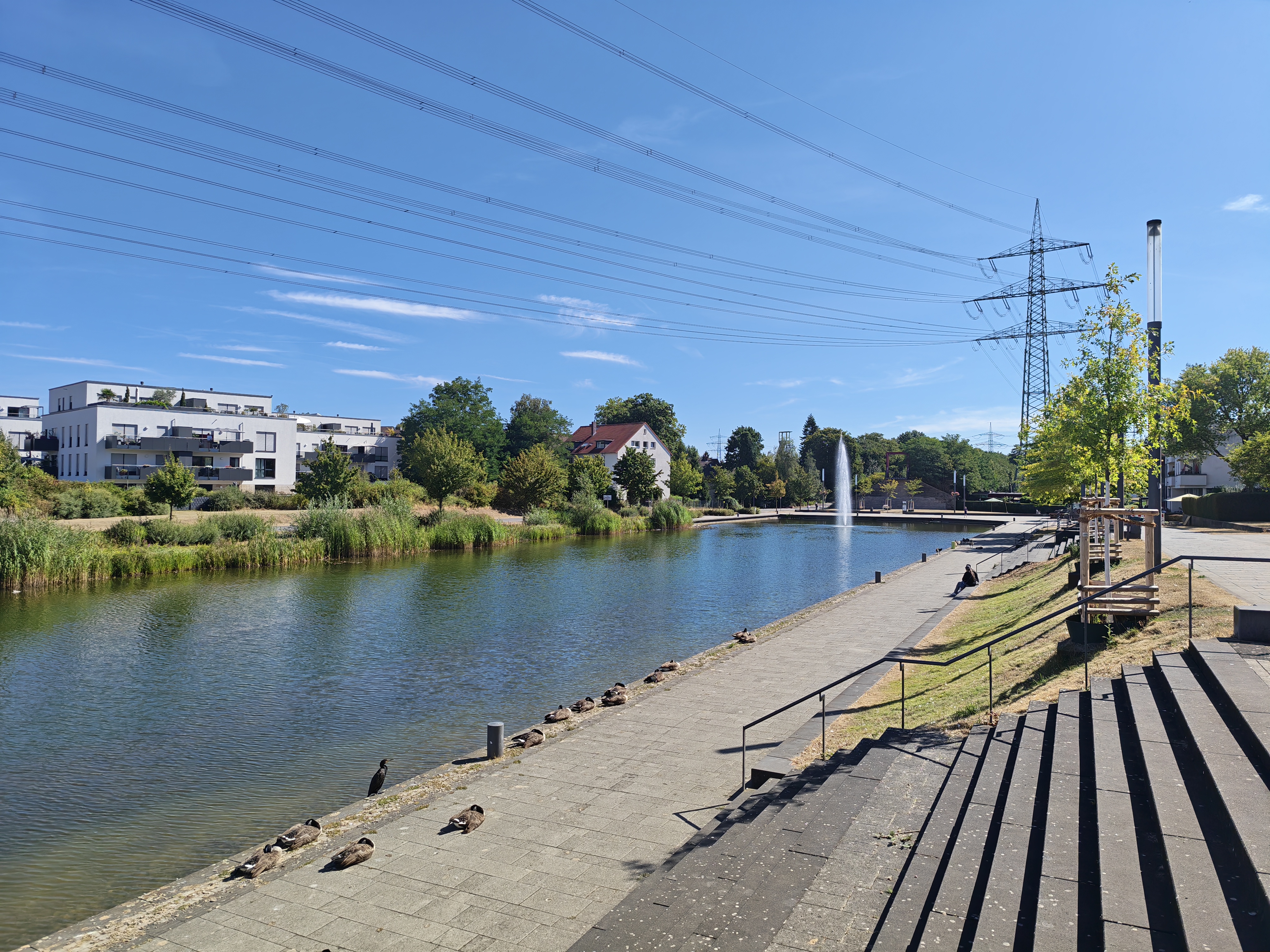
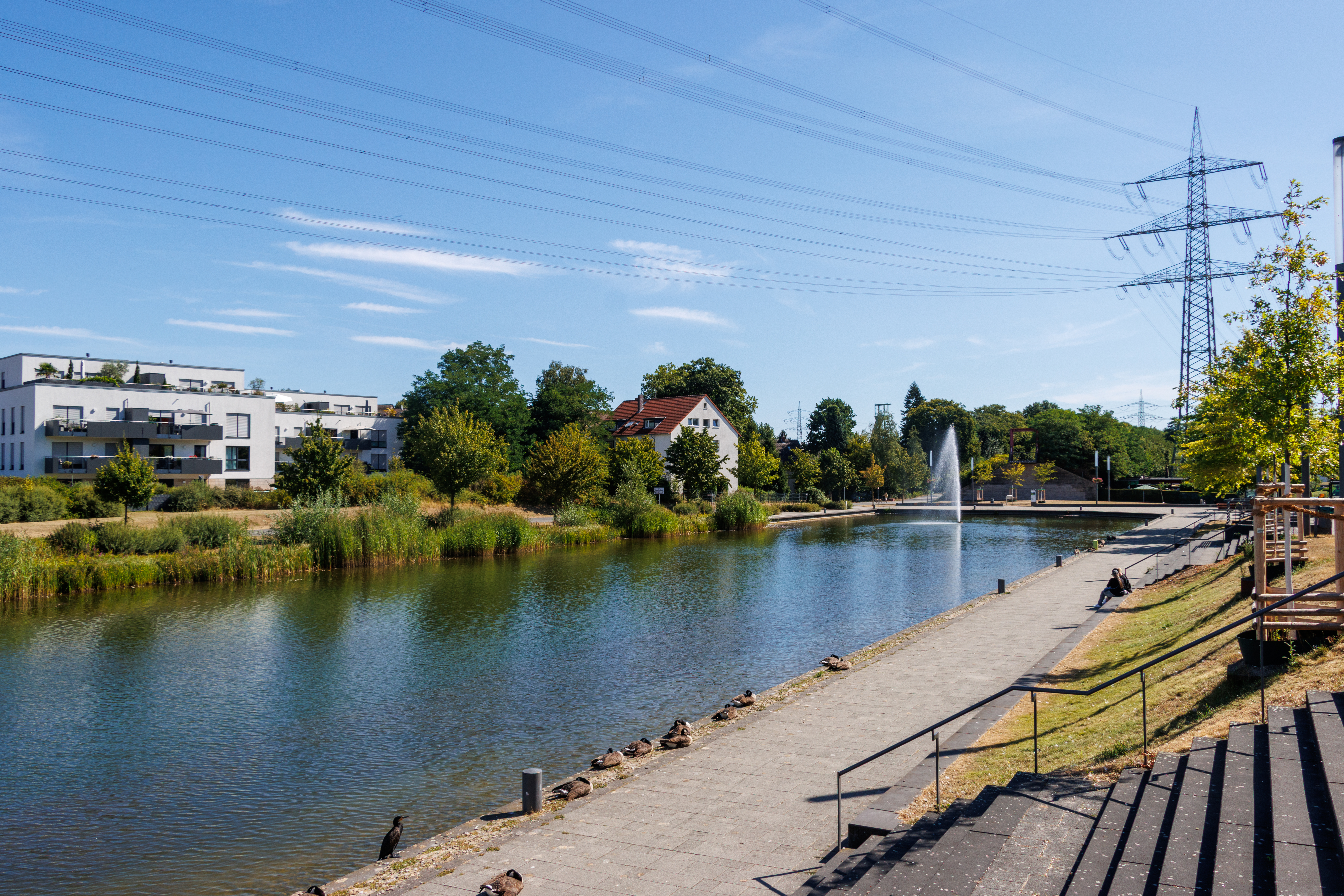
In terms of photo quality, the Fold7’s successor doesn’t represent a real leap forward, as virtually nothing has changed in terms of hardware. Only the ultra-wide-angle camera has received a sensor upgrade, though the size increase—from 1/2.55" to 1/2.52"—is minimal.
However, the 200-MP main camera with a 1/1.3-inch sensor and OIS delivers very good photos in daylight. While contours appear slightly oversharpened, the colors are spot-on for a smartphone. Despite the relatively small sensor for an Ultra model, low-light shots are of very high quality.
Given the Fold8, the inclusion of a periscope telephoto lens with 3x optical zoom is not something to be taken for granted in such a thin phone. This lets you take sharp photos with beautiful portraits. Beyond the 3x zoom, however, images quickly become blurry and lack detail.

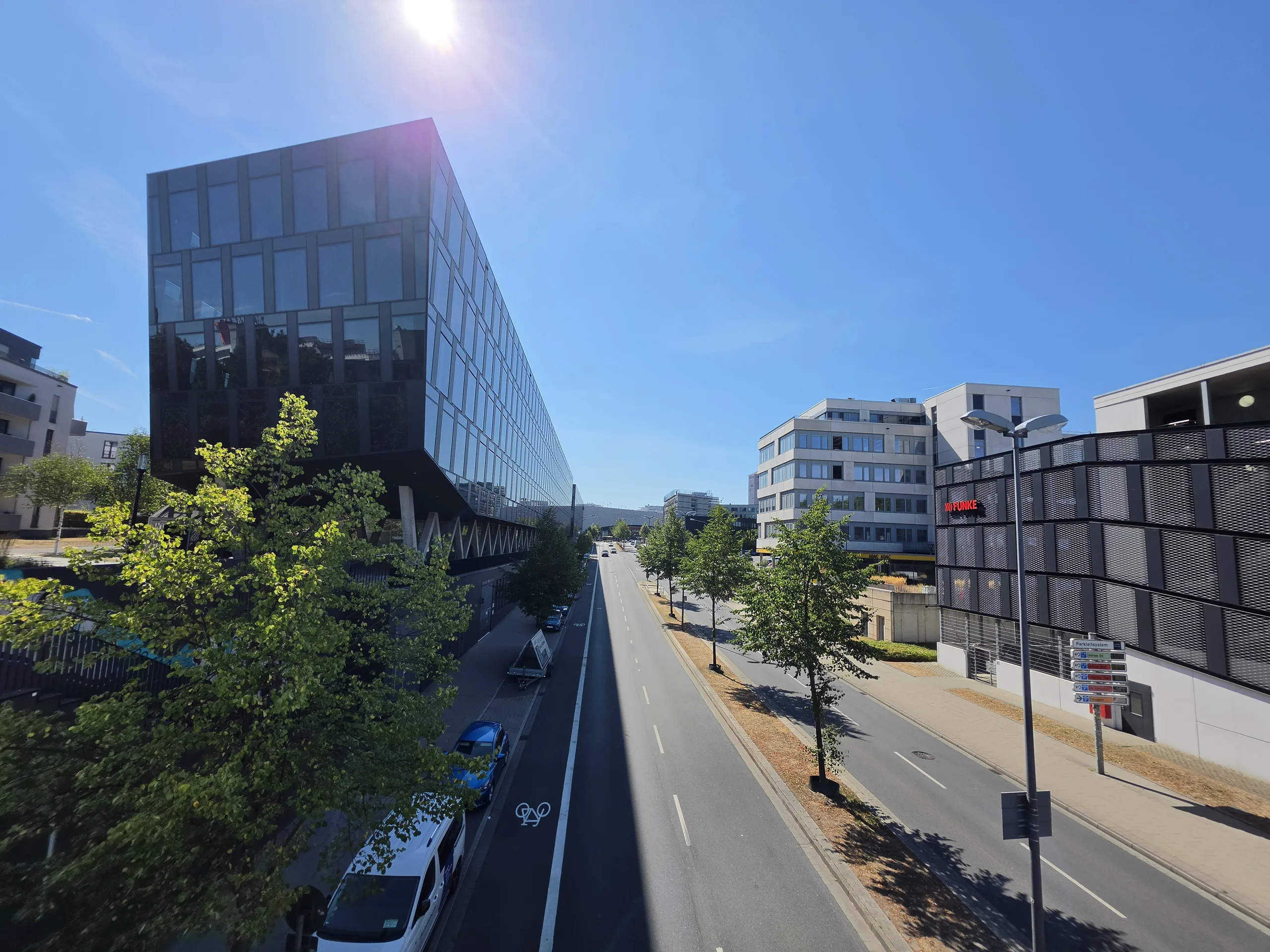



Image comparison
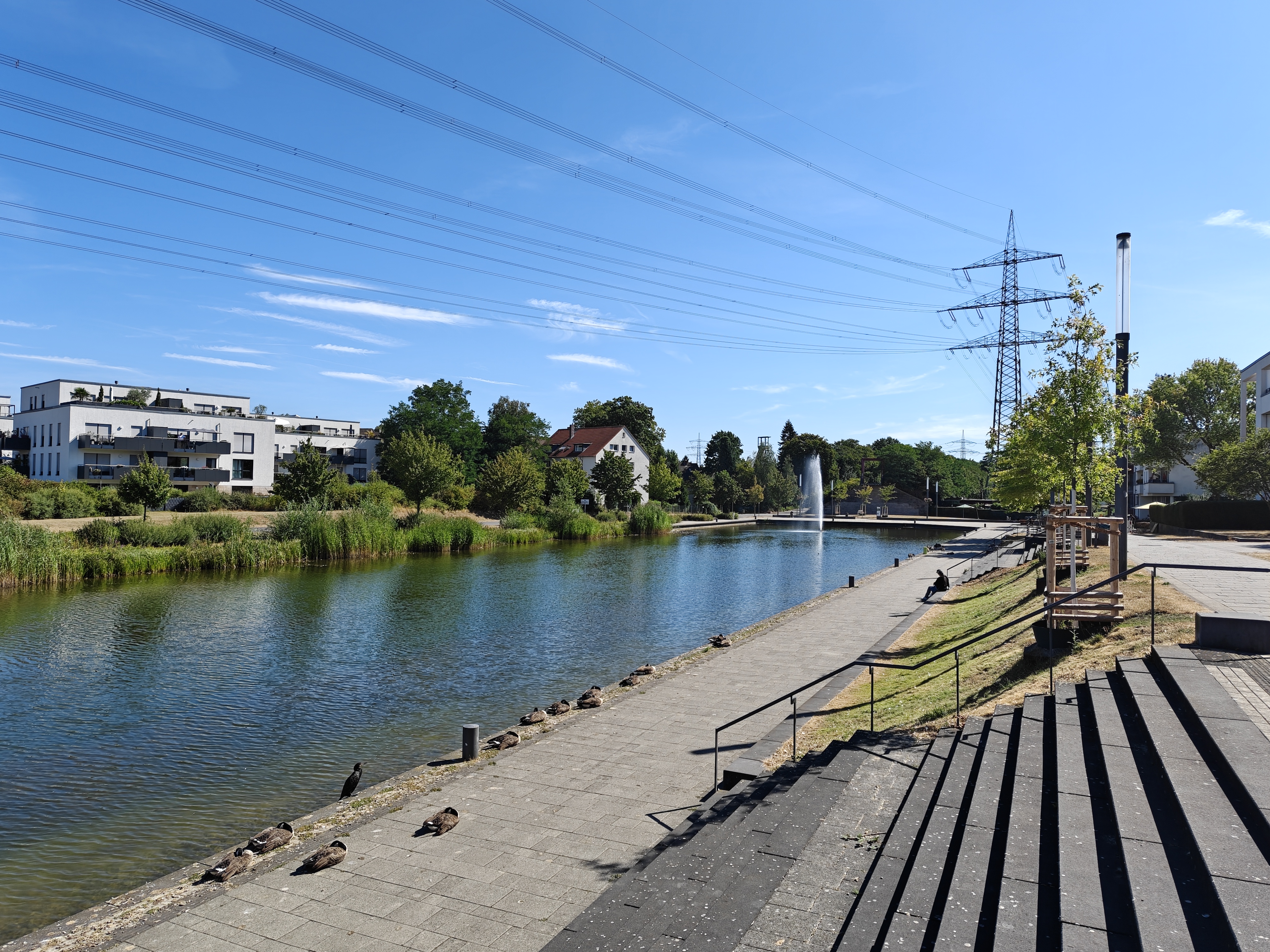
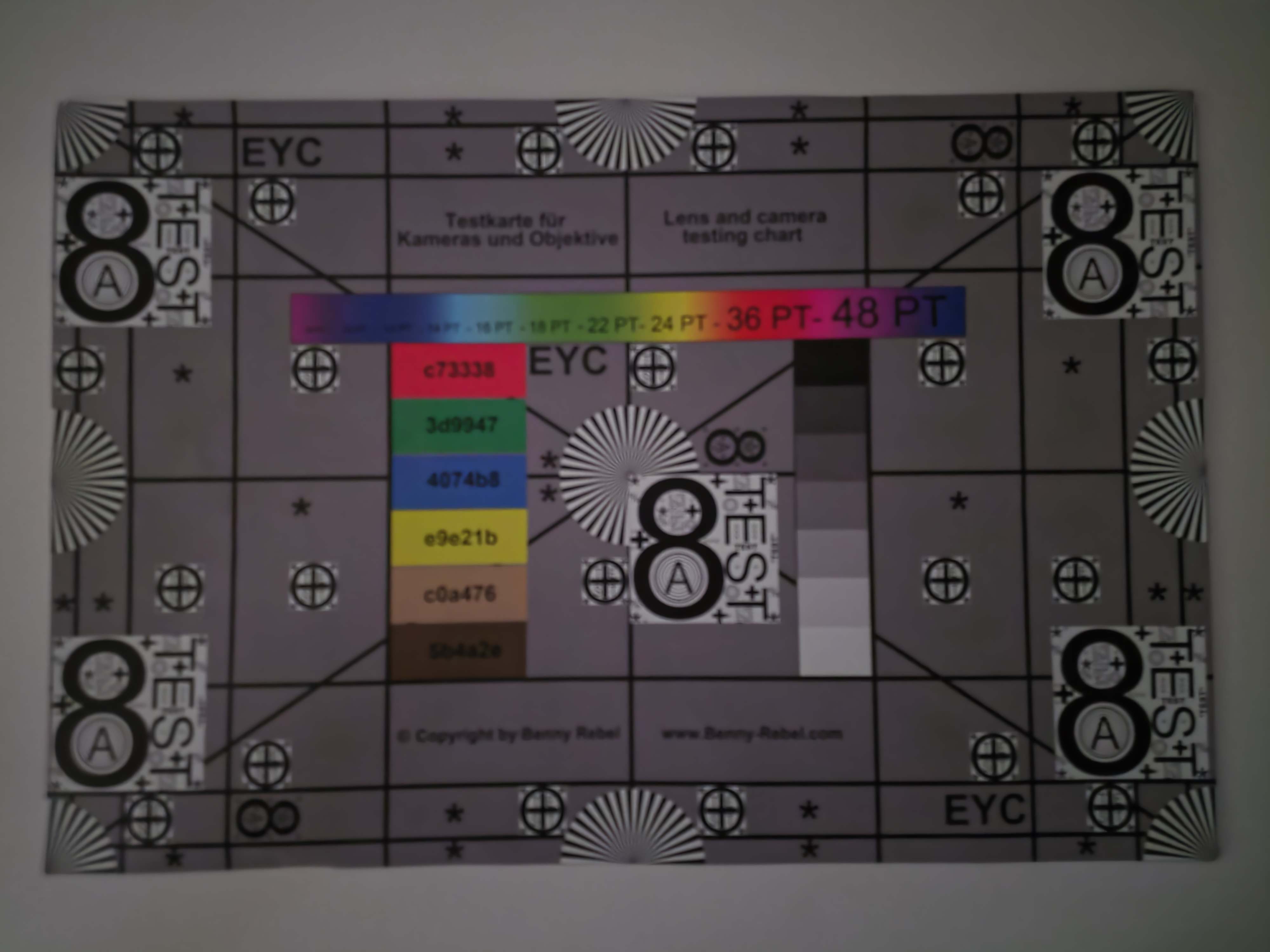
Choose a scene and navigate within the first image. One click changes the position on touchscreens. One click on the zoomed-in image opens the original in a new window. The first image shows the scaled photograph of the test device.




Display - Large OLED screen with limitations in PWM dimming
The foldable 8-inch main display is slightly sharper than that of the Fold7 and also slightly brighter. However, the peak brightness of the new Motorola Razr Fold is still a tad higher.
Nevertheless, the 120-Hz panel is top-notch and a pleasure to look at—at least if users don’t mind the typical OLED flicker. Samsung still does not offer high-frequency PWM dimming. In our oscilloscope measurements, we recorded a base frequency of 240 Hz. For PWM dimming, we only reached 480 Hz.
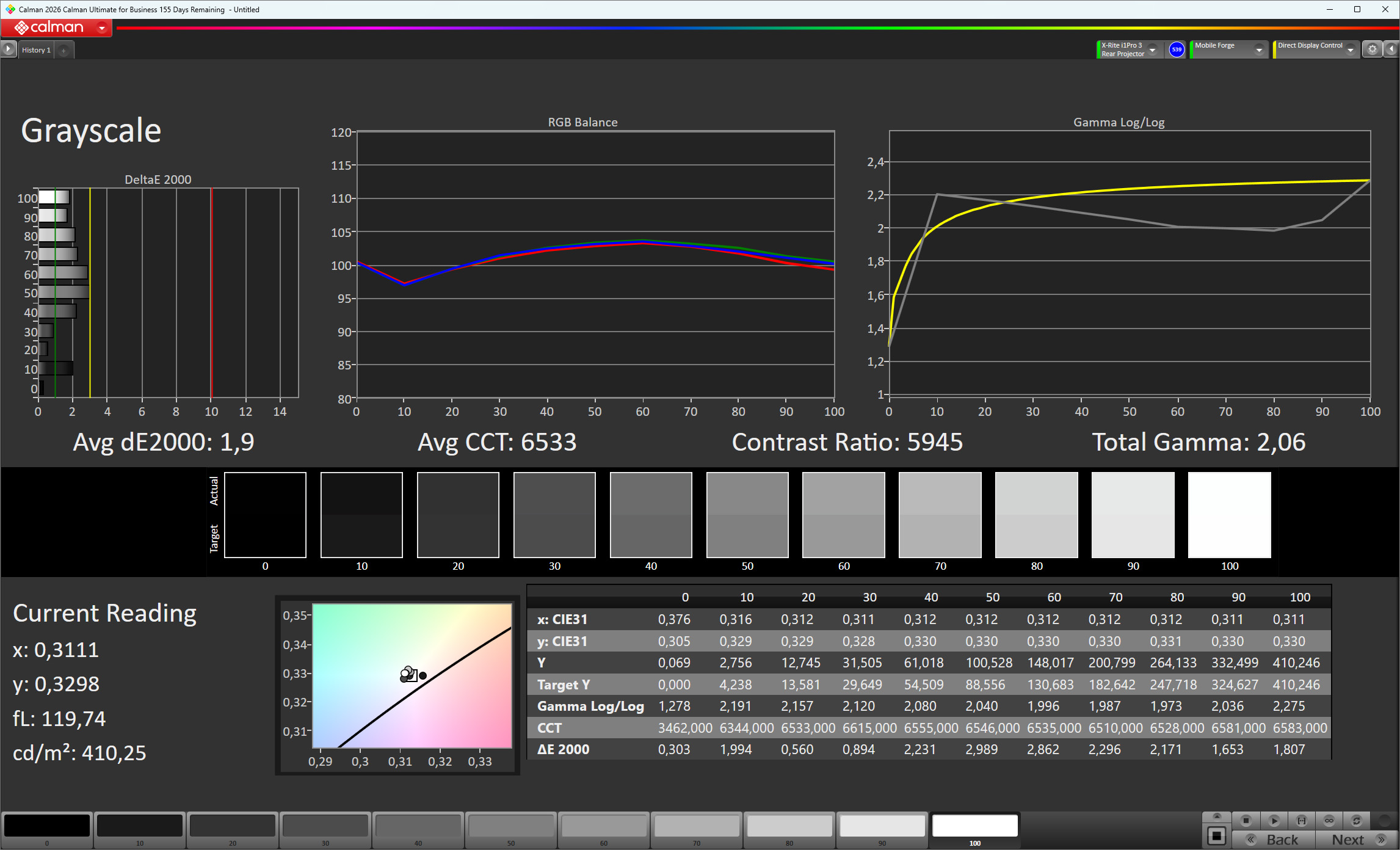
The 6.5-inch AMOLED cover display in a 21:9 aspect ratio has nearly the same characteristics as the main screen.
| |||||||||||||||||||||||||
Center on Battery: 1339 cd/m²
Contrast: ∞:1 (Black: 0 cd/m²)
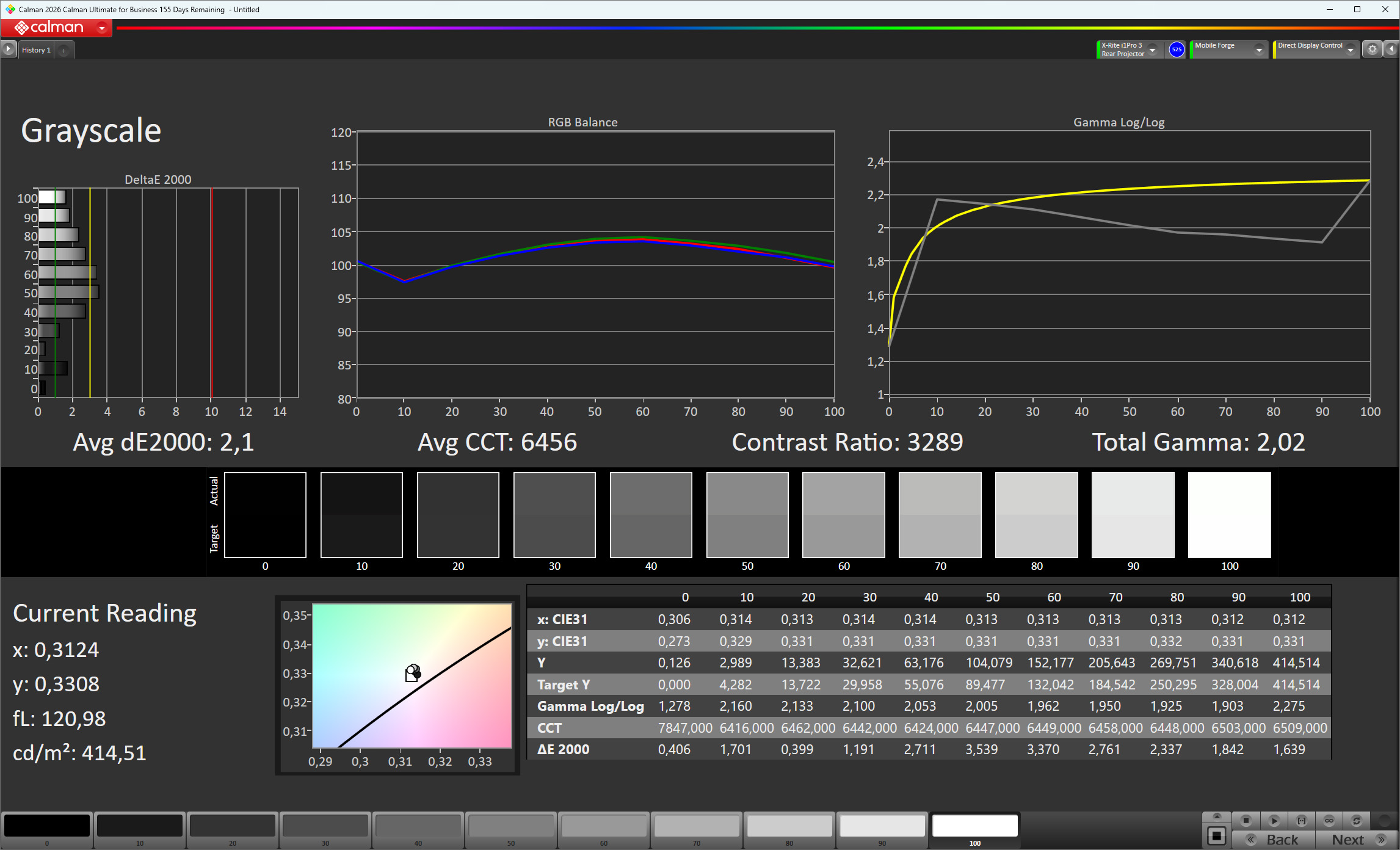
ΔE ColorChecker Calman: 2.7 | ∀{0.5-29.43 Ø4.7}
ΔE Greyscale Calman: 2.1 | ∀{0.09-98 Ø4.95}
97.9% sRGB (Calman 2D)
Gamma: 2.02
CCT: 6456 K
| Samsung Galaxy Z Fold8 Ultra AMOLED, 2504x2256, 8" | Motorola Razr Fold OLED, 2484x2232, 8.1" | Vivo X Fold6 AMOLED, 2504x2312, 8" | Samsung Galaxy Z Fold7 Dynamic AMOLED 2X, 2184x1968, 8" | |
|---|---|---|---|---|
| Display | 14% | -22% | -15% | |
| APL18 Peak Brightness (cd/m²) | 2996 | 3568 19% | 2118 -29% | 2570 -14% |
| HDR Peak Brightness (cd/m²) | 3188 | 3466 9% | 2735 -14% | 2708 -15% |
| Response Times | -75% | -16% | -12% | |
| Response Time Grey 50% / Grey 80% * (ms) | 0.56 ? | 1.6 ? -186% | 0.84 ? -50% | 0.67 ? -20% |
| Response Time Black / White * (ms) | 1.21 ? | 1.3 ? -7% | 1.1 ? 9% | 1.4 ? -16% |
| PWM Frequency (Hz) | 240 | 180 | 90 | 240 |
| PWM Amplitude * (%) | 13.7 | 18 -31% | 14.67 -7% | 13.73 -0% |
| Screen | 32% | 40% | 6% | |
| Brightness middle (cd/m²) | 1339 | 1236 -8% | 1245 -7% | 1311 -2% |
| Black Level * (cd/m²) | ||||
| Colorchecker dE 2000 * | 2.7 | 1 63% | 0.7 74% | 2.4 11% |
| Colorchecker dE 2000 max. * | 4.2 | 2.44 42% | 1.6 62% | 3.4 19% |
| Greyscale dE 2000 * | 2.1 | 1.5 29% | 1.5 29% | 2.2 -5% |
| Gamma | 2.02 109% | 2.145 103% | 2.19 100% | 2.03 108% |
| CCT | 6456 101% | 6537 99% | 6390 102% | 6413 101% |
| Brightness (cd/m²) | 1307 | |||
| Brightness Distribution (%) | 95 | |||
| Total Average (Program / Settings) | -10% /
-8% | 1% /
7% | -7% /
-5% |
* ... smaller is better
Screen Flickering / PWM (Pulse-Width Modulation)
| Screen flickering / PWM detected | 240 Hz Amplitude: 13.7 % Secondary Frequency: 480 Hz | 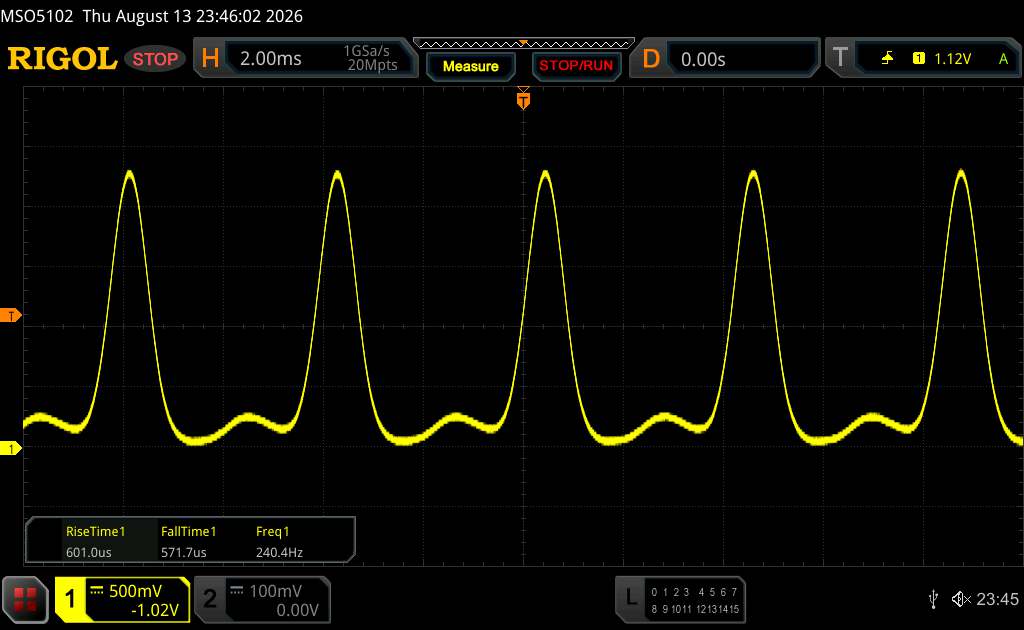 | |
The display backlight flickers at 240 Hz (worst case, e.g., utilizing PWM) . The frequency of 240 Hz is relatively low, so sensitive users will likely notice flickering and experience eyestrain at the stated brightness setting and below. In comparison: 52 % of all tested devices do not use PWM to dim the display. If PWM was detected, an average of 7665 (minimum: 5 - maximum: 343500) Hz was measured. | |||
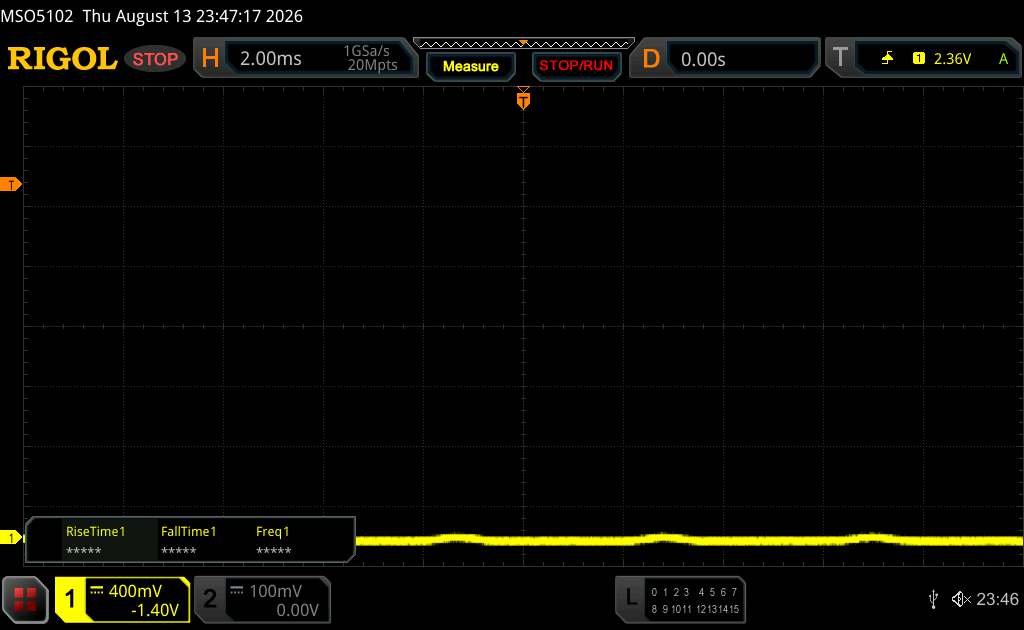
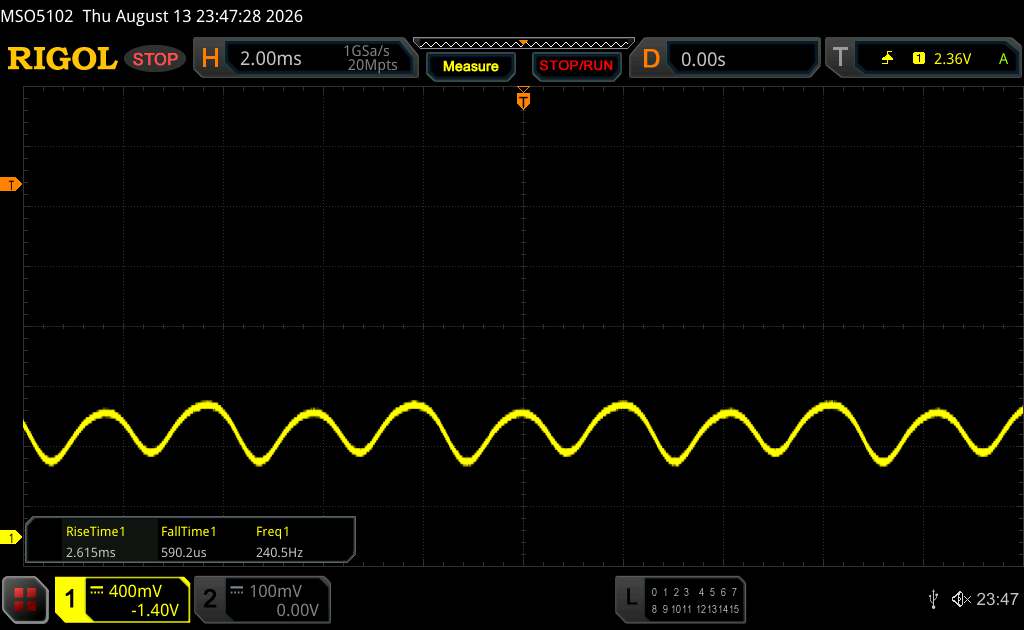
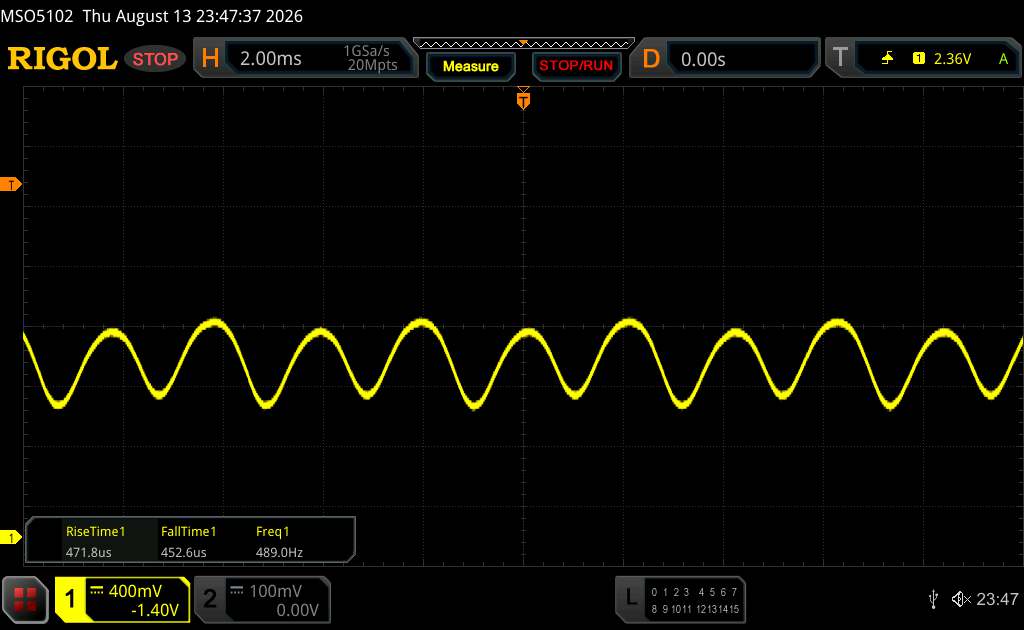
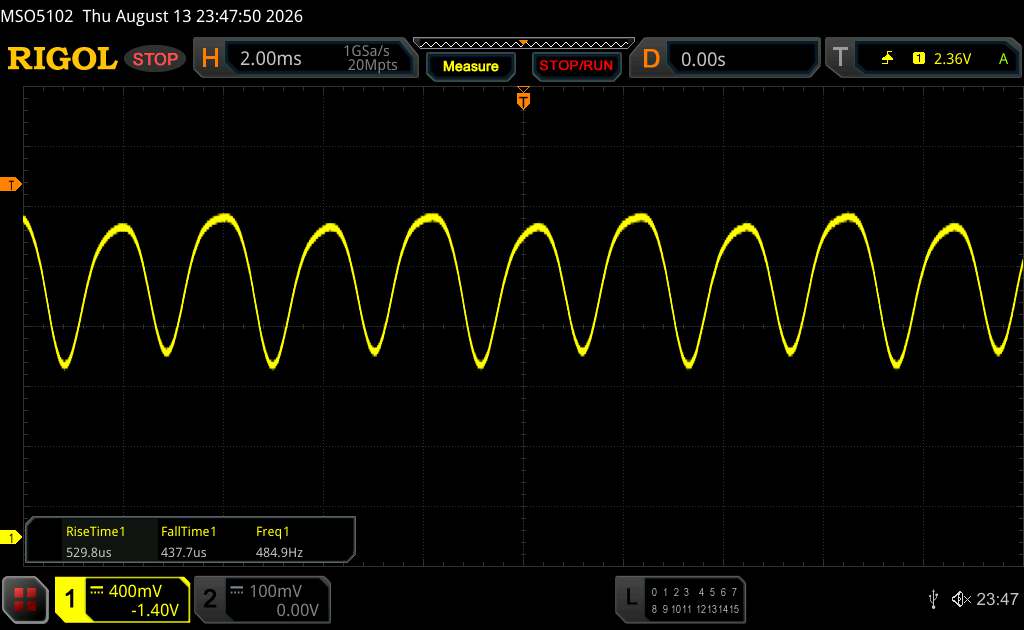
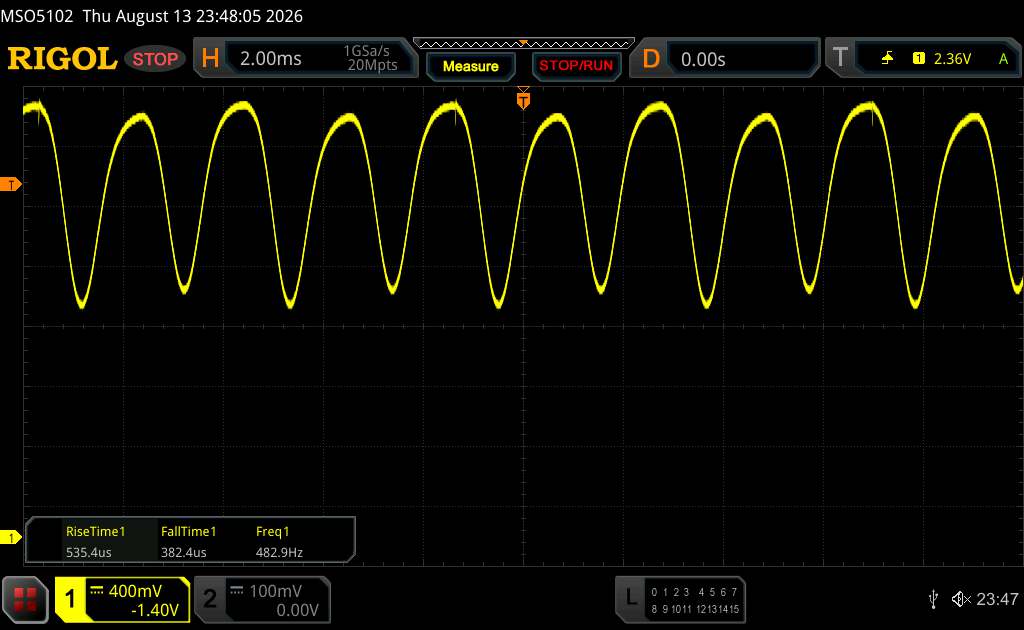
Measurement series with a fixed zoom level and different brightness settings (Although the amplitude curve at minimum brightness appears flat, this is due to the scaling. The info box shows a magnified version of the amplitude at minimum brightness.)


Display Response Times
| ↔ Response Time Black to White | ||
|---|---|---|
| 1.21 ms ... rise ↗ and fall ↘ combined | ↗ 0.6145 ms rise | 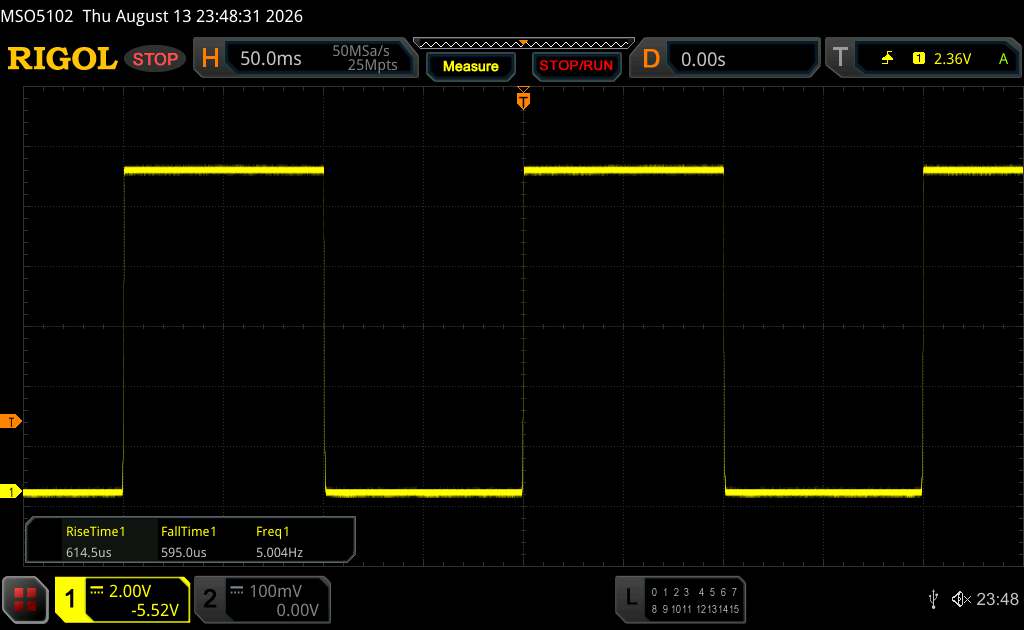 |
| ↘ 0.595 ms fall | ||
| The screen shows very fast response rates in our tests and should be very well suited for fast-paced gaming. In comparison, all tested devices range from 0.1 (minimum) to 240 (maximum) ms. » 7 % of all devices are better. This means that the measured response time is better than the average of all tested devices (19.7 ms). | ||
| ↔ Response Time 50% Grey to 80% Grey | ||
| 0.56 ms ... rise ↗ and fall ↘ combined | ↗ 0.306 ms rise | 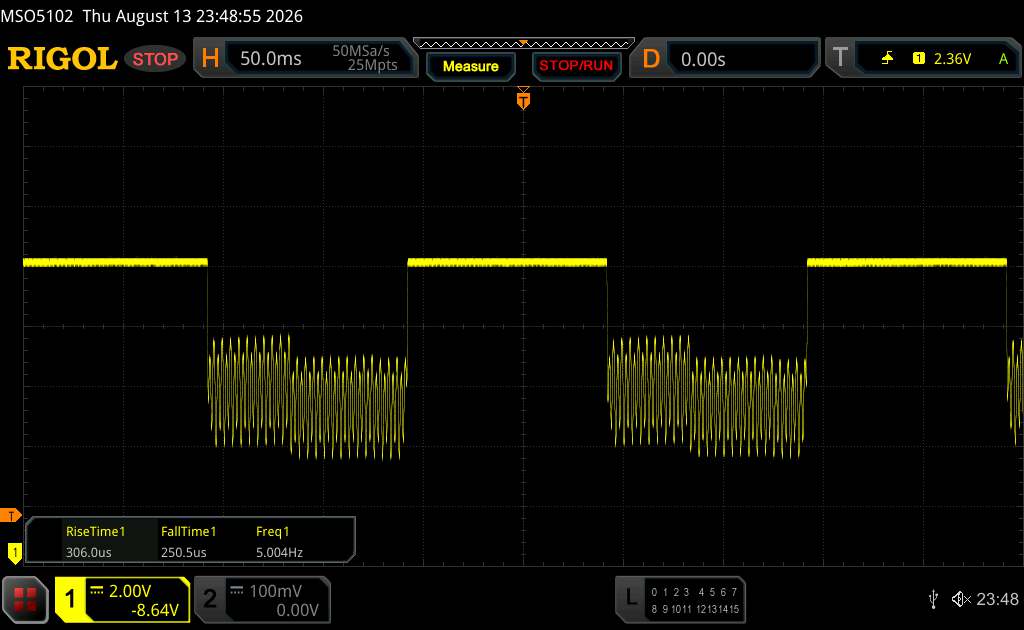 |
| ↘ 0.2505 ms fall | ||
| The screen shows very fast response rates in our tests and should be very well suited for fast-paced gaming. In comparison, all tested devices range from 0.13 (minimum) to 636 (maximum) ms. » 1 % of all devices are better. This means that the measured response time is better than the average of all tested devices (30.8 ms). | ||
Cover Display
| Samsung Galaxy Z Fold8 Ultra AMOLED, 2520x1080, 6.5" | Vivo X Fold6 2528x1120, 6.5" | Samsung Galaxy Z Fold7 Dynamic AMOLED 2X, 2520x1080, 6.5" | |
|---|---|---|---|
| Display | 4% | -16% | -15% |
| APL18 Peak Brightness (cd/m²) | 3068 2% | 2413 -19% | 2600 -13% |
| HDR Peak Brightness (cd/m²) | 3334 5% | 2788 -13% | 2661 -17% |
| Response Times | -31% | -46% | -6% |
| Response Time Grey 50% / Grey 80% * (ms) | 0.9 ? -61% | 1.13 ? -102% | 0.66 ? -18% |
| Response Time Black / White * (ms) | 1.23 ? -2% | 1.35 ? -12% | 1.03 ? 15% |
| PWM Frequency (Hz) | 240 | 90 | 240 |
| PWM Amplitude * (%) | 17.92 -31% | 17 -24% | 15.59 -14% |
| Screen | |||
| Brightness middle (cd/m²) | 1271 | 1401 | 1348 |
| Black Level * (cd/m²) | |||
| Colorchecker dE 2000 * | 2.3 | 0.7 | 2.2 |
| Colorchecker dE 2000 max. * | 3.6 | 1.6 | 2.9 |
| Greyscale dE 2000 * | 1.9 | 1.2 | 2.3 |
| Gamma | 2.06 107% | 2.24 98% | 2.04 108% |
| CCT | 6533 99% | 6412 101% | 6461 101% |
| Brightness (cd/m²) | 1346 | ||
| Brightness Distribution (%) | 94 | ||
| Total Average (Program / Settings) | -14% /
-17% | -31% /
-34% | -11% /
-9% |
* ... smaller is better
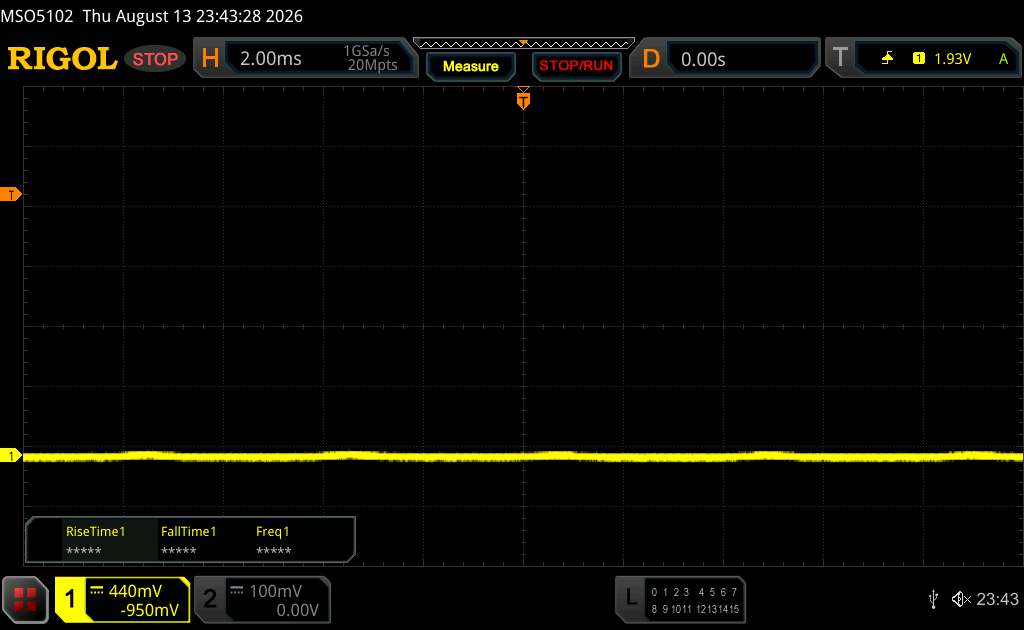
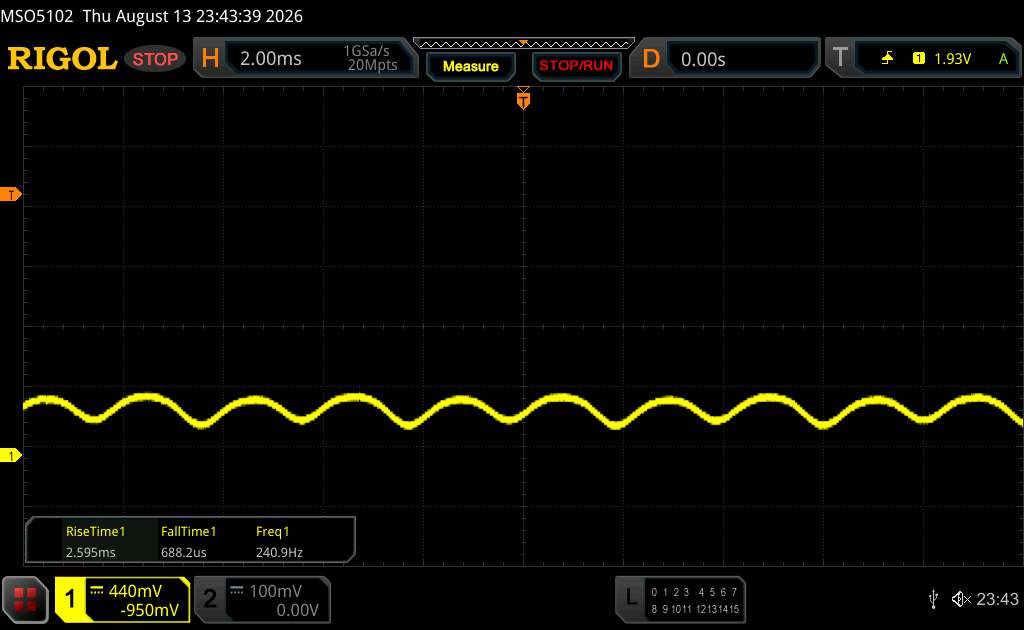
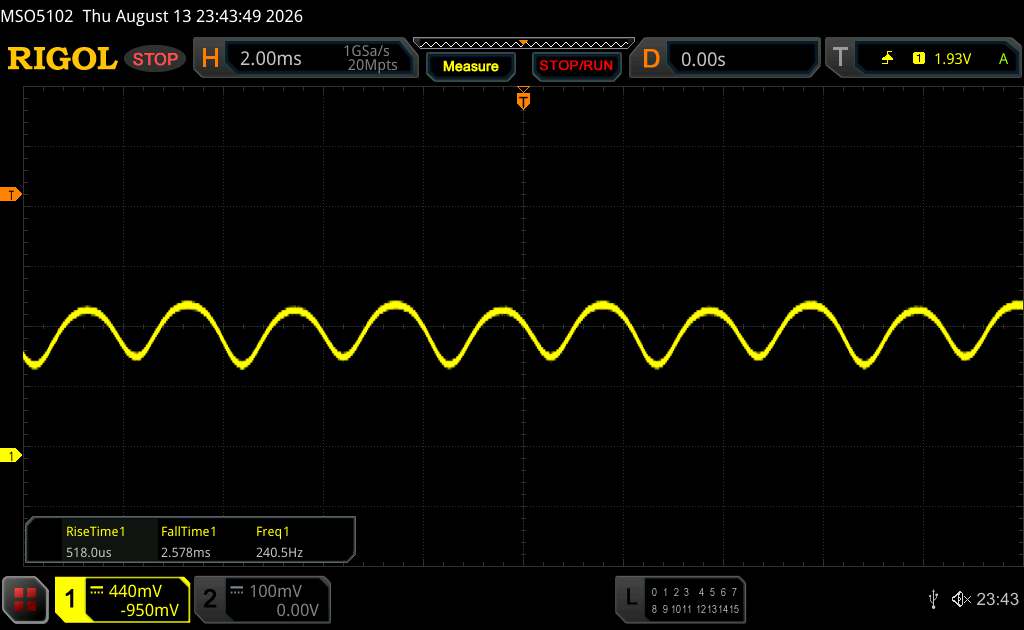
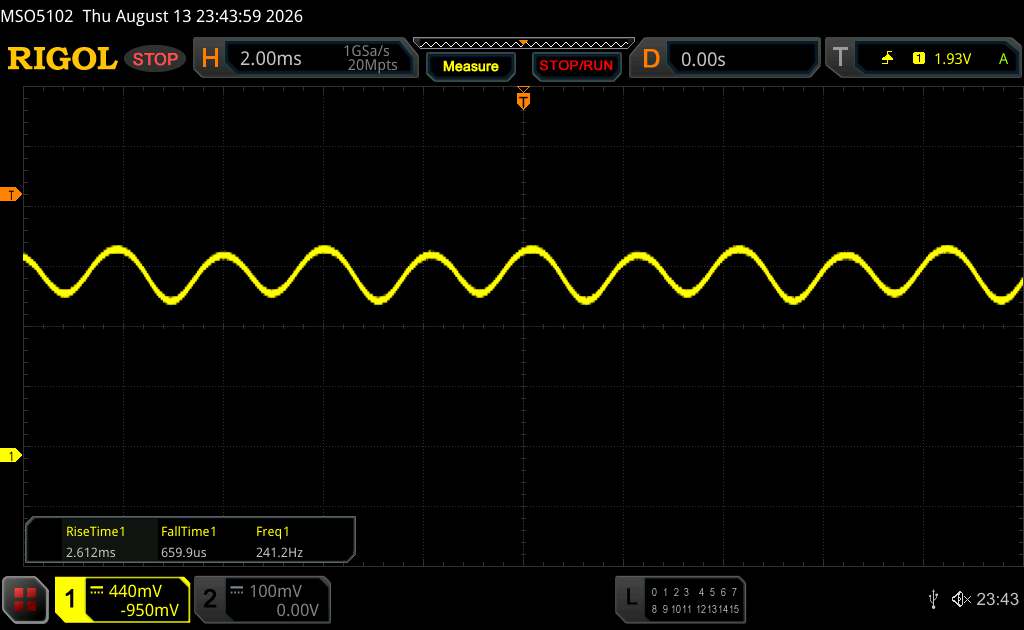
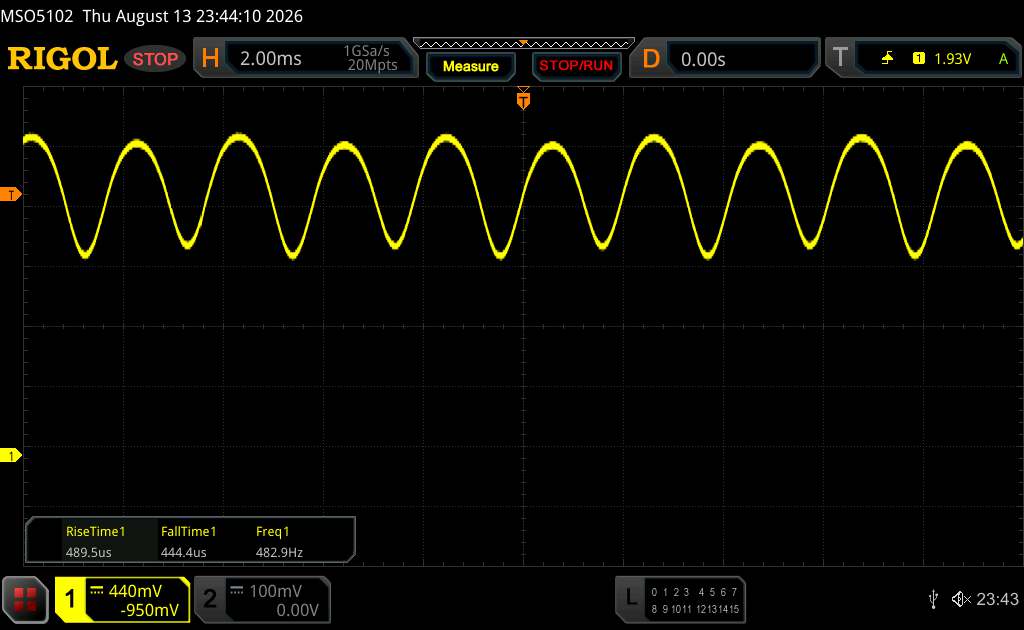
Series of measurements with a fixed zoom level and different brightness settings (Although the amplitude curve at minimum brightness appears flat, this is due to the scaling. The info box shows a magnified version of the amplitude at minimum brightness.)


Performance, Emissions, and Battery Life—Samsung’s Foldable Smartphone Is Faster Than the Competition
If you’re looking for a high-performance smartphone, the Fold8 Ultra delivers despite its ultra-slim design. Thanks to the Galaxy-specific version of the Snapdragon 8 Elite Gen 5, the Samsung foldable is actually a bit faster than the Honor Magic V6 in Geekbench and significantly outperforms the Vivo X Fold6. When using the small outer panel, the FPS score nearly doubles in the GFXBench on-screen test (Aztec Ruins High Tier: 118 FPS).
However, it’s noticeable that the benchmarks yield significantly lower results even after just “normal” use (web browsing and watching YouTube videos). This is also very evident in the 3DMark Wild Life Stress Tests. A marked drop in the frame rate is already noticeable between the first and second runs.
| Samsung Galaxy Z Fold8 Ultra | Motorola Razr Fold | Vivo X Fold6 | Samsung Galaxy Z Fold7 | Average 256 GB UFS 4.0 Flash | Average of class Smartphone | |
|---|---|---|---|---|---|---|
| AndroBench 3-5 | 63% | 29% | -26% | 15% | -8% | |
| Sequential Read 256KB (MB/s) | 3878.5 | 3719.8 -4% | 1440.32 -63% | 4080.35 5% | 3615 ? -7% | 2278 ? -41% |
| Sequential Write 256KB (MB/s) | 2498.21 | 3758 50% | 1424.84 -43% | 2239.55 -10% | 2641 ? 6% | 1960 ? -22% |
| Random Read 4KB (MB/s) | 514.09 | 403.4 -22% | 372.99 -27% | 403.69 -21% | 391 ? -24% | 316 ? -39% |
| Random Write 4KB (MB/s) | 211.53 | 695.6 229% | 734.36 247% | 51.23 -76% | 394 ? 86% | 362 ? 71% |
(-) The maximum temperature on the upper side is 50.7 °C / 123 F, compared to the average of 35.3 °C / 96 F, ranging from 21.9 to 247 °C for the class Smartphone.
(-) The bottom heats up to a maximum of 50.4 °C / 123 F, compared to the average of 34.1 °C / 93 F
3DMark Stress Tests
| 3DMark | |
| Wild Life Stress Test Stability | |
| Samsung Galaxy Z Fold8 Ultra | |
| Samsung Galaxy Z Fold7 | |
| Steel Nomad Light Stress Test Stability | |
| Motorola Razr Fold | |
| Samsung Galaxy Z Fold7 | |
| Samsung Galaxy Z Fold8 Ultra | |
Samsung Galaxy Z Fold8 Ultra audio analysis
(+) | speakers can play relatively loud (87.1 dB)
Bass 100 - 315 Hz
(-) | nearly no bass - on average 16.5% lower than median
(±) | linearity of bass is average (10.1% delta to prev. frequency)
Mids 400 - 2000 Hz
(±) | reduced mids - on average 5.3% lower than median
(+) | mids are linear (6.4% delta to prev. frequency)
Highs 2 - 16 kHz
(±) | higher highs - on average 5.6% higher than median
(+) | highs are linear (3% delta to prev. frequency)
Overall 100 - 16.000 Hz
(±) | linearity of overall sound is average (15.3% difference to median)
Compared to same class
» 3% of all tested devices in this class were better, 3% similar, 94% worse
» The best had a delta of 11%, average was 34%, worst was 136%
Compared to all devices tested
» 22% of all tested devices were better, 4% similar, 73% worse
» The best had a delta of 4%, average was 23%, worst was 136%
Samsung Galaxy Z Fold7 audio analysis
(+) | speakers can play relatively loud (89.5 dB)
Bass 100 - 315 Hz
(-) | nearly no bass - on average 21.4% lower than median
(±) | linearity of bass is average (10% delta to prev. frequency)
Mids 400 - 2000 Hz
(±) | reduced mids - on average 5% lower than median
(+) | mids are linear (5.2% delta to prev. frequency)
Highs 2 - 16 kHz
(±) | higher highs - on average 5.9% higher than median
(+) | highs are linear (4.4% delta to prev. frequency)
Overall 100 - 16.000 Hz
(±) | linearity of overall sound is average (17.1% difference to median)
Compared to same class
» 10% of all tested devices in this class were better, 8% similar, 82% worse
» The best had a delta of 11%, average was 34%, worst was 136%
Compared to all devices tested
» 31% of all tested devices were better, 8% similar, 60% worse
» The best had a delta of 4%, average was 23%, worst was 136%
| Off / Standby |   0.05 / 0.16 Watt 0.05 / 0.16 Watt |
| Idle |  0.67 / 1.95 / 2.17 Watt 0.67 / 1.95 / 2.17 Watt |
    
| |
Key:
min: ,
med: ,
max: Metrahit Energy | |
| Samsung Galaxy Z Fold8 Ultra 5000 mAh | Motorola Razr Fold 6000 mAh | Vivo X Fold6 7000 mAh | Samsung Galaxy Z Fold7 4400 mAh | Average Qualcomm Snapdragon 8 Elite Gen 5 for Galaxy | Average of class Smartphone | |
|---|---|---|---|---|---|---|
| Power Consumption | -3% | 16% | 20% | 16% | 6% | |
| Idle Minimum * (Watt) | 0.67 | 1.1 -64% | 0.73 -9% | 0.63 6% | 0.63 ? 6% | 0.876 ? -31% |
| Idle Average * (Watt) | 1.95 | 1.3 33% | 1.43 27% | 1.48 24% | 1.543 ? 21% | 1.458 ? 25% |
| Idle Maximum * (Watt) | 2.17 | 1.7 22% | 1.55 29% | 1.55 29% | 1.7 ? 22% | 1.649 ? 24% |
* ... smaller is better
| Battery runtime - WiFi v1.3 | |
| Samsung Galaxy Z Fold8 Ultra | |
| Motorola Razr Fold | |
| Vivo X Fold6 | |
| Samsung Galaxy Z Fold7 | |
Notebookcheck Overall Rating
Those who appreciate the square form factor will find the Fold8 Ultra to be a fantastic—though unfortunately also very expensive—foldable smartphone.

Samsung Galaxy Z Fold8 Ultra
- 09/05/2026 v8
Marcus Herbrich
 Total Sustainability Score:
 Possible Alternatives Comparison
Image | Model / Review | Price | Weight | Drive | Display |
|---|---|---|---|---|---|
1. 88% 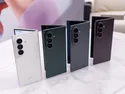 | Samsung Galaxy Z Fold8 Ultra Qualcomm Snapdragon 8 Elite Gen 5 for Galaxy ⎘ Qualcomm Adreno 840 ⎘ 12 GB Memory, 256 GB UFS 4.x | Amazon: List Price: 2199€ | 215 g | 256 GB UFS 4.0 Flash | 8.00" 2504x2256 421 PPI AMOLED |
2. 85.8%  | Motorola Razr Fold Qualcomm Snapdragon 8 Gen 5 ⎘ Qualcomm Adreno 829 ⎘ 16 GB Memory, 512 GB UFS 4.x | Amazon: List Price: 1999€ | 243 g | 512 GB UFS 4.1 Flash | 8.10" 2484x2232 412 PPI OLED |
3. 87.6%  | Vivo X Fold6 MediaTek Dimensity 9500 ⎘ Arm Mali G1- Ultra MC12 ⎘ 12 GB Memory, 512 GB UFS 4.x | Amazon: 1. $12.77 NEOYUKL Tempered Glass for V... 2. $21.49 TMHOPETRADE for vivo X Fold6... 3. $21.49 TMHOPETRADE for vivo X Fold6... | 235 g | 512 GB UFS 4.1 Flash | 8.02" 2504x2312 425 PPI AMOLED |
4. 87.2% 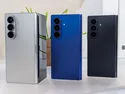 | Samsung Galaxy Z Fold7 Qualcomm Snapdragon 8 Elite for Galaxy ⎘ Qualcomm Adreno 830 ⎘ 12 GB Memory, 256 GB UFS 4.x | Amazon: List Price: 2099€ | 215 g | 256 GB UFS 4.0 Flash | 8.00" 2184x1968 367 PPI Dynamic AMOLED 2X |
Transparency
The selection of devices to be reviewed is made by our editorial team. The test sample was provided to the author as a loan by the manufacturer or retailer for the purpose of this review. The lender had no influence on this review, nor did the manufacturer receive a copy of this review before publication. There was no obligation to publish this review. As an independent media company, Notebookcheck is not subjected to the authority of manufacturers, retailers or publishers.
This is how Notebookcheck is testing
Every year, Notebookcheck independently reviews hundreds of laptops and smartphones using standardized procedures to ensure that all results are comparable. We have continuously developed our test methods for around 20 years and set industry standards in the process. In our test labs, high-quality measuring equipment is utilized by experienced technicians and editors. These tests involve a multi-stage validation process. Our complex rating system is based on hundreds of well-founded measurements and benchmarks, which maintains objectivity. Further information on our test methods can be found here.
 Add as a preferred source on Google


