




Honor Magic8 Pro: Strange behavior with automatic brightness control
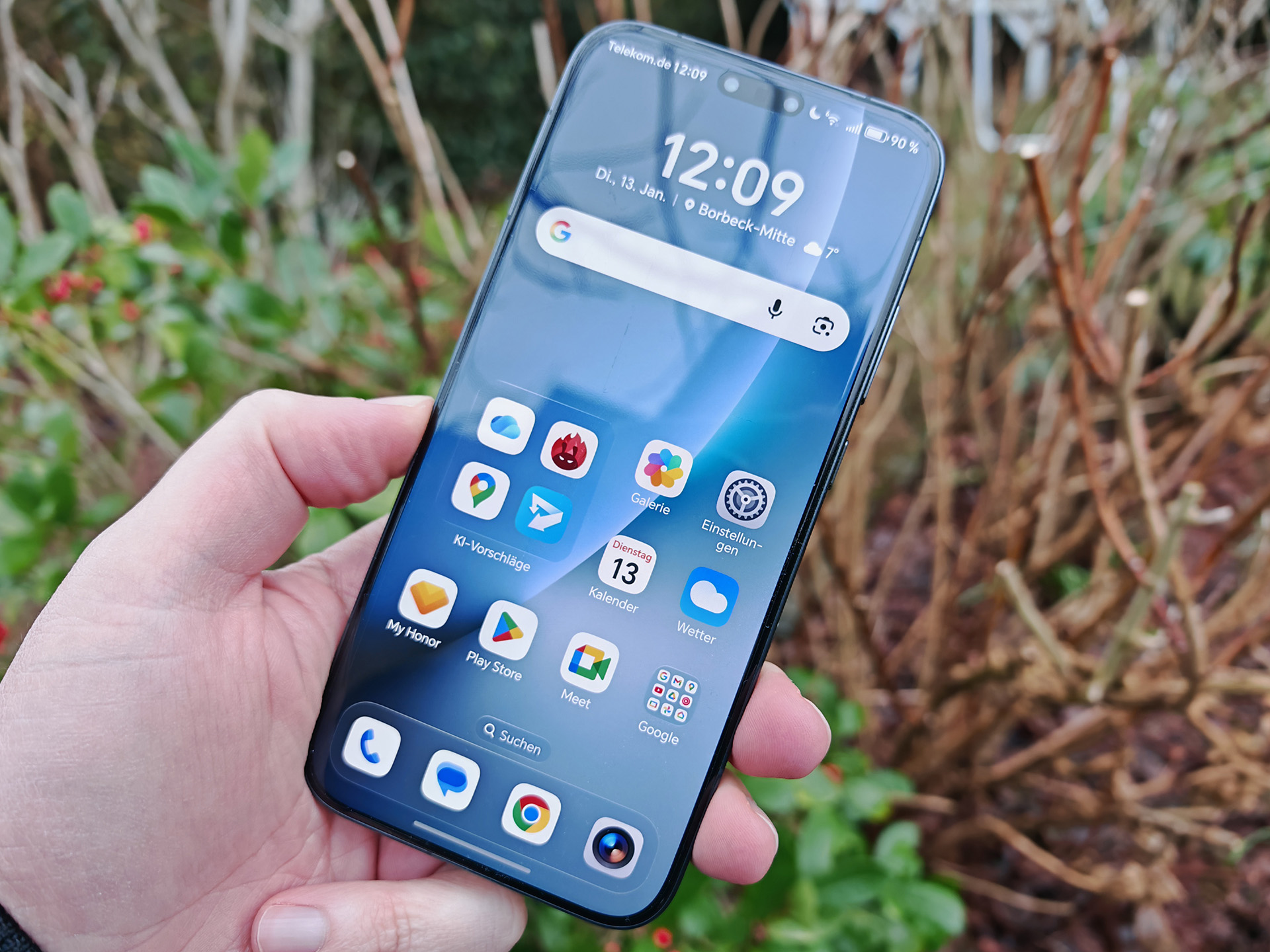
The Honor Magic8 Pro achieved a very good result in the test. The smartphone's 6.71-inch OLED display plays a major role in this, as it offers everything your heart desires: the high resolution allows for a crystal-clear pixel density of 458 PPI. Thanks to modern LTPO technology, the refresh rate can be automatically adjusted by the system between 1 Hz and 120 Hz, which offers great energy-saving potential. It also supports all common HDR standards. Honor has also come up with some clever ideas for protecting your eyes (find out more here), including high-frequency PWM dimming.
Display brightness is of central importance: a lot of luminosity is required to ensure the best possible readability outdoors or impressive HDR scenes. In the dark, the display should be able to dim as far as possible to minimize strain on the eyes.

Display brightness is of central importance: a lot of luminosity is required to ensure the best possible readability outdoors or impressive HDR scenes. In the dark, the display should be able to dim as far as possible to minimize strain on the eyes.
While the peak brightness for HDR is at an absolute top level at over 6,000 cd/m² and the brightness on a pure white surface (1,809 cd/m²) or on a smaller white surface (3,233 cd/m²) also delivers excellent values, the Honor Magic8 Pro shows weaknesses at minimum brightness. Honor advertises a minimum brightness of 1 nit, which we also achieved in our review, to be precise: 1.07 cd/m².
The sticking point is that we can only measure this when manually adjusting the display brightness. When we leave the control to the ambient light sensor, the brightness is never reduced to the minimum, but always remains slightly above it (see screenshot), which corresponds to a brightness of 9.24 cd/m². This can be quite bright in the dark and often forces us to manually reduce the brightness further in everyday use. This seems to be intentional, as we also noticed this behavior with the Magic7 Pro.
Source
 Add as a preferred source on Google


