Notebookcheck Logo

Intel Core Ultra 9 288V vs Intel Core Ultra 5 228V

Intel Core Ultra 9 288V

► remove from comparison Intel Core Ultra 9 288V

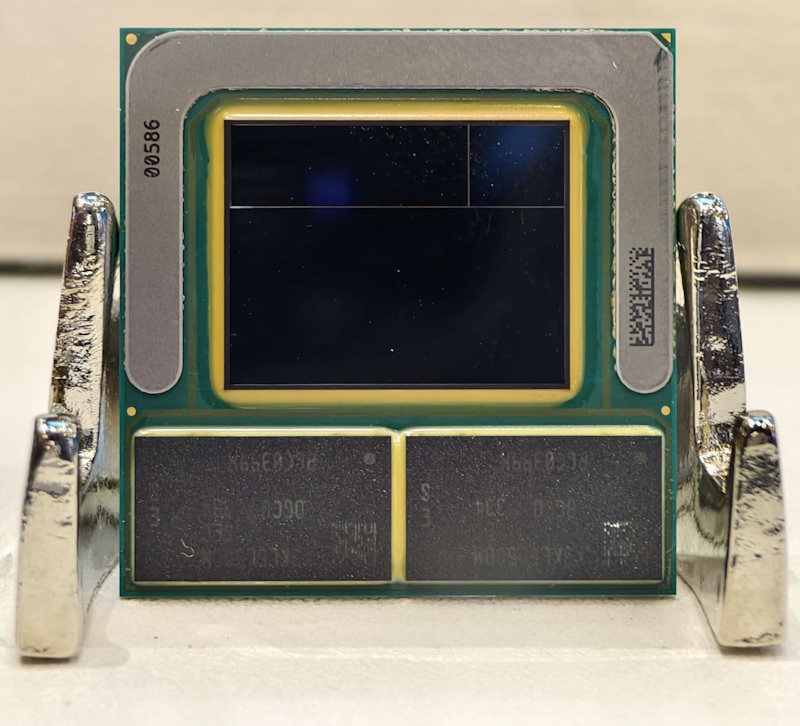
The Intel Core Ultra 7 288V is the fastest Lunar Lake family processor as of Nov 2024 thanks to its higher TDP power target and higher clock speeds. This is an SoC for use in tablets and laptops of the slimmer kind that was unveiled in Autumn 2024. It sports 4 new Skymont E-cores and 4 new Lion Cove P-cores running at up to 3.7 GHz and 5.1 GHz respectively, along with the promising new Arc 140V iGPU and 32 GB of on-package, non-replaceable LPDDR5x-8533 RAM. A new 48 TOPS neural engine, Thunderbolt 4 and PCIe 5 SSD support are included as well. A vPro-enabled version of the CPU became available in early 2025.

Architecture and Features

Lunar Lake is built using the Foveros technology (stacking several dies on top of each other and next to each other), just like Meteor Lake was. The new chips make use of the enormous BGA2833 socket interface. Of the 8 cores, not a single one is Hyper-Threading-enabled which is the opposite of what AMD currently does with its Zen 5/5c chips.

Intel claims Lion Cove cores bring a 14% IPC improvement over Redwood Cove. For Skymont and Crestmont, the difference is much higher at 68%. Several tweaks and improvements are present here, such as the Low Latency Fabric that is supposed to make small data transfers between cores/caches a lot faster. The 288V has a very healthy 12 MB of level 3 cache; elsewhere, it has 4 PCIe 5 and 4 PCIe 4 lanes for connecting various kinds of devices, including NVMe SSDs at up to 15.75 GB/s. Thunderbolt 4 support is onboard by default, as is support for CNVi WiFi 7 + BT 5.4 cards from Intel. The 48 TOPS "AI Boost" neural engine is present along with technologies such as Threat Detection to make AI-enabled applications such as the Windows Defender more powerful.

Intel is predicted to get short of on-package RAM in subsequent CPU generations.

Performance

The 288V should be just a couple of percentage points faster than the Core Ultra 7 165U and Core i7-1360P in multi-threaded tasks.

Generally speaking, the 256V, 258V, 266V, 268V, 288V are faster than the 226V, 228V, 236V and 228V due to the difference in their last-level cache size (8 MB vs 12 MB) as well as clock speeds. However, the difference in performance between the slowest Lunar Lake chip, the 226V, and the fastest chip, the 288V is fairly small at around 10% to 15%. It depends on the TDP figures of the laptops being pitted against each other more than on anything else.

Graphics

The Arc Graphics 140V is here to replace the Arc 8 iGPU. Its 8 Xe² architecture "cores" run at up to 2,050 MHz and it also has 8 ray tracing units at its disposal. The adapter is DirectX 12 Ultimate-enabled and able to HW-decode a long list of popular video codecs such as h.266 VVC, h.265 HEVC, h.264 AVC, AV1 and VP9. Three SUHD 4320p monitors can be used simultaneously with this iGPU.

All 2023 and 2024 games are playable at 1080p on low graphics settings or higher with this iGPU. We got well over 30 fps in Ghost of Tsushima and almost 40 fps in Baldur's Gate 3. This means the Radeon 780M gets left behind while the Radeon 890M reigns supreme.

Power consumption

Unlike the slower 268V, 266V, 258V, 256V, 238V, 236V, 228V and 226V, this 2nd generation Core Ultra processor is supposed to consume 30 W when under long-term workloads rather than 17 W. The Intel-recommended short-term power limit for all of them is identical: 37 W.

Intel Core Ultra 5 228V

► remove from comparison Intel Core Ultra 5 228V

The Intel Core Ultra 5 228V is one of the 2 slowest Lunar Lake family processors as of Nov 2024. This is an SoC for use in tablets and laptops of the slimmer kind that was unveiled in Autumn 2024. It features 4 new Skymont E-cores and 4 new Lion Cove P-cores running at up to 3.5 GHz and 4.5 GHz respectively, along with the new Arc 130V iGPU and 32 GB of on-package LPDDR5x-8533 RAM. A new 40 TOPS neural engine, Thunderbolt 4 and PCIe 5 SSD support are included as well.

The only difference between this chip and the Ultra 5 226V is the amount of on-package, non-replaceable RAM: 32 GB vs 16 GB respectively.

Architecture and Features

Lunar Lake is built using the Foveros technology (stacking several dies on top of each other and next to each other), just like Meteor Lake was. The new chips make use of the enormous BGA2833 socket interface. Of the 8 cores, not a single one is Hyper-Threading-enabled which is the opposite of what AMD currently does with its Zen 5/5c chips.

Intel claims Lion Cove cores bring a 14% IPC improvement over Redwood Cove. For Skymont and Crestmont, the difference is much higher at 68%. Several tweaks and improvements are present here, such as the Low Latency Fabric that is supposed to make small data transfers between cores/caches a lot faster. The 228V's level 3 cache is pretty small as compared to more expensive Ultra 7 2xxV and Ultra 9 2xxV chips at 8 MB vs 12 MB. Elsewhere, the 228V has 4 PCIe 5 and 4 PCIe 4 lanes for connecting various kinds of devices, including NVMe SSDs at up to 15.75 GB/s. Thunderbolt 4 support is onboard by default, as is support for CNVi WiFi 7 + BT 5.4 cards from Intel. The 40 TOPS "AI Boost" neural engine is present along with technologies such as Threat Detection to make AI-enabled applications such as the Windows Defender more powerful.

Intel is predicted to get short of on-package RAM in subsequent CPU generations.

Performance

Our in-house testing of an Acer laptop powered by the 226V which is essentially the same chip revealed the latter to be about as fast as the Ryzen 7 7730U and the Ryzen 7 7735U in multi-threaded tasks which is OK but not mind-blowing for late 2024. It is worth noting that the laptop in question does not use the Intel-recommended 17 W long-term power target; instead, the processor gets 30 W to eat which affects its benchmark scores significantly.

Generally speaking, the 226V, 228V, 236V and 238V are slower than the 256V, 258V, 266V, 268V, 288V due to the difference in their last-level cache size as well as clock speeds. However, the difference in performance between the slowest Lunar Lake chip, the 226V, and the fastest chip, the 288V is fairly small at around 10% to 15%. Exact figures depend on the TDP values of the laptops being pitted against each other more than on anything else.

Graphics

The Arc Graphics 130V has 7 Xe² architecture "cores" running at up to 1,850 MHz, as well as 7 ray tracing units at its disposal. This is a direct successor to the Arc 7 iGPU; it is DirectX 12 Ultimate-enabled and able to HW-decode a long list of video codecs such as h.266 VVC, h.265 HEVC, h.264 AVC, AV1 and VP9. Three SUHD 4320p monitors can be used simultaneously with this iGPU.

Its performance can be vastly different depending on which benchmarks and games one runs. Oftentimes, it isn't much faster than its direct predecessor, the Arc 7. It is clear the 130V isn't fast enough to run most triple-A 2024 games at 1080p. However, it's still more than good enough for an occasional gaming session.

Power consumption

This 2nd generation Core Ultra processor is supposed to consume 17 W when under long-term workloads. The Intel-recommended short-term power limit for the chip sits at 37 W.

ModelIntel Core Ultra 9 288VIntel Core Ultra 5 228V
CodenameLunar LakeLunar Lake
SeriesIntel Lunar LakeIntel Lunar Lake
Series: Lunar Lake Lunar Lake
Intel Core Ultra 9 288V « 3.3 - 5.1 GHz8 / 8 cores12 MB L3
Intel Core Ultra 7 268V compare2.2 - 5 GHz8 / 8 cores12 MB L3
Intel Core Ultra 7 266V compare2.2 - 5 GHz8 / 8 cores12 MB L3
Intel Core Ultra 7 258V compare2.2 - 4.8 GHz8 / 8 cores12 MB L3
Intel Core Ultra 7 256V compare2.2 - 4.8 GHz8 / 8 cores12 MB L3
Intel Core Ultra 5 238V compare2.1 - 4.7 GHz8 / 8 cores8 MB L3
Intel Core Ultra 5 236V compare2.1 - 4.7 GHz8 / 8 cores8 MB L3
Intel Core Ultra 5 228V2.1 - 4.5 GHz8 / 8 cores8 MB L3
Intel Core Ultra 5 226V compare2.1 - 4.5 GHz8 / 8 cores8 MB L3
Intel Core Ultra 9 288V3.3 - 5.1 GHz8 / 8 cores12 MB L3
Intel Core Ultra 7 268V compare2.2 - 5 GHz8 / 8 cores12 MB L3
Intel Core Ultra 7 266V compare2.2 - 5 GHz8 / 8 cores12 MB L3
Intel Core Ultra 7 258V compare2.2 - 4.8 GHz8 / 8 cores12 MB L3
Intel Core Ultra 7 256V compare2.2 - 4.8 GHz8 / 8 cores12 MB L3
Intel Core Ultra 5 238V compare2.1 - 4.7 GHz8 / 8 cores8 MB L3
Intel Core Ultra 5 236V compare2.1 - 4.7 GHz8 / 8 cores8 MB L3
Intel Core Ultra 5 228V « 2.1 - 4.5 GHz8 / 8 cores8 MB L3
Intel Core Ultra 5 226V compare2.1 - 4.5 GHz8 / 8 cores8 MB L3
Clock3300 - 5100 MHz2100 - 4500 MHz
L1 Cache1.4 MB1.4 MB
L2 Cache14 MB14 MB
L3 Cache12 MB8 MB
Cores / Threads8 / 8
4 x 5.1 GHz Intel Lion Cove P-Core
4 x 3.7 GHz Intel Skymont E-Core
8 / 8
4 x 4.5 GHz Intel Lion Cove P-Core
4 x 3.5 GHz Intel Skymont E-Core
TDP30 Watt17 Watt
TDP Turbo PL237 Watt37 Watt
Technology3 nm3 nm
max. Temp.100 °C100 °C
SocketBGA2833BGA2833
FeaturesLPDDR5x-8533 RAM, PCIe 5 + PCIe 4, USB 4, AI Boost NPU (48 TOPS), Thread Director, PSE, Threat Detection, MMX, SSE, SSE2, SSE3, SSSE3, SSE4.1, SSE4.2, AES, AVX, AVX2, AVX-VNNi, FMA3, SHALPDDR5x-8533 RAM, PCIe 5 + PCIe 4, USB 4, AI Boost NPU (40 TOPS), Thread Director, PSE, Threat Detection, MMX, SSE, SSE2, SSE3, SSSE3, SSE4.1, SSE4.2, AES, AVX, AVX2, AVX-VNNi, FMA3, SHA
iGPUIntel Arc Graphics 140V (300 - 2050 MHz)Intel Arc Graphics 130V (300 - 1850 MHz)
NPU / AI48 TOPS INT840 TOPS INT8
Chip AI120 TOPS INT897 TOPS INT8
Architecturex86x86
Announced
Manufacturerark.intel.comark.intel.com

Benchmarks

Performance Rating - CB R15 + R20 + 7-Zip + X265 + Blender + 3DM11 CPU - Core Ultra 9 288V
39.5 pt (66%)
Restrict / Search: Model: Max. age: years
Performance Rating - CB R15 + R20 + 7-Zip + X265 + Blender + 3DM11 CPU - Core Ultra 5 228V
36.5 pt (61%)
Restrict / Search: Model: Max. age: years
Cinebench 2024 - Cinebench 2024 CPU Single Core
min: 122     avg: 123.5     median: 122.2 (61%)     max: 127.7 Points
min: 97.8     avg: 105.2     median: 105.2 (53%)     max: 112.5 Points
Cinebench 2024 - Cinebench 2024 CPU Multi Core
min: 493     avg: 581     median: 579.5 (11%)     max: 670 Points
min: 482     avg: 494     median: 494 (9%)     max: 506 Points
Cinebench R23 - Cinebench R23 Multi Core
min: 9091     avg: 10097     median: 10178 (9%)     max: 10941 Points
min: 9787     avg: 9932     median: 9932 (9%)     max: 10077 Points
Cinebench R23 - Cinebench R23 Single Core
min: 1794     avg: 1929     median: 1950 (79%)     max: 2013 Points
min: 1755     avg: 1758     median: 1758 (71%)     max: 1761 Points
Cinebench R20 - Cinebench R20 CPU (Single Core)
min: 703     avg: 743     median: 748 (81%)     max: 777 Points
min: 677     avg: 678     median: 677.5 (74%)     max: 678 Points
Cinebench R20 - Cinebench R20 CPU (Multi Core)
min: 4091     avg: 4162     median: 4164 (10%)     max: 4230 Points
min: 3820     avg: 3874     median: 3873.5 (9%)     max: 3927 Points
Cinebench R15 - Cinebench R15 CPU Multi 64 Bit
min: 1500     avg: 1574     median: 1583 (10%)     max: 1640 Points
min: 1470     avg: 1503     median: 1502.5 (9%)     max: 1535 Points
Cinebench R15 - Cinebench R15 CPU Single 64 Bit
min: 294     avg: 301.5     median: 301.5 (84%)     max: 309 Points
min: 261     avg: 267     median: 267 (74%)     max: 273 Points
Cinebench R11.5 - Cinebench R11.5 CPU Multi 64 Bit
19.8 Points (26%)
18.8 Points (24%)
Cinebench R11.5 - Cinebench R11.5 CPU Single 64 Bit
3.6 Points (85%)
3.3 Points (79%)
Cinebench R10 - Cinebench R10 Rend. Single (32bit)
10697 Points (65%)
10037 Points (61%)
Cinebench R10 - Cinebench R10 Rend. Multi (32bit)
45377 Points (33%)
41480 Points (30%)
Cinebench R10 - Cinebench R10 Rend. Multi (64bit)
66113 Points (42%)
Cinebench R10 - Cinebench R10 Rend. Single (64bit)
15516 Points (19%)
wPrime 2.10 - wPrime 2.0 1024m *
145.3 s (2%)
285.1 s (3%)
wPrime 2.10 - wPrime 2.0 32m *
5 s (1%)
9.2 s (2%)
WinRAR - WinRAR 4.0
8613 Points (14%)
4978 Points (8%)
7-Zip 18.03 - 7-Zip 18.03 Multi Thread 4 runs
min: 32105     avg: 34617     median: 35851 (21%)     max: 36683 MIPS
min: 28714     avg: 31173     median: 31172.5 (18%)     max: 33631 MIPS
7-Zip 18.03 - 7-Zip 18.03 Single Thread 4 runs
min: 5734     avg: 5919     median: 5968 (70%)     max: 5993 MIPS
min: 5257     avg: 5292     median: 5291.5 (62%)     max: 5326 MIPS
X264 HD Benchmark 4.0 - x264 Pass 2
77.1 fps (2%)
91.4 fps (2%)
X264 HD Benchmark 4.0 - x264 Pass 1
265.5 fps (7%)
290.3 fps (7%)
HWBOT x265 Benchmark v2.2 - HWBOT x265 4k Preset
min: 11.2     avg: 12.9     median: 13.1 (23%)     max: 14.3 fps
min: 10.6     avg: 11.2     median: 11.2 (20%)     max: 11.8 fps
TrueCrypt - TrueCrypt Serpent
0.7 GB/s (21%)
0.7 GB/s (20%)
TrueCrypt - TrueCrypt Twofish
1.4 GB/s (24%)
1.3 GB/s (22%)
TrueCrypt - TrueCrypt AES
7.7 GB/s (20%)
6.8 GB/s (18%)
Blender - Blender 3.3 Classroom CPU *
min: 507     avg: 576     median: 541 (7%)     max: 681 Seconds
min: 676     avg: 689     median: 689 (9%)     max: 702 Seconds
Blender - Blender 2.79 BMW27 CPU *
min: 310     avg: 380.5     median: 385.5 (3%)     max: 441 Seconds
min: 388     avg: 402     median: 402 (3%)     max: 416 Seconds
R Benchmark 2.5 - R Benchmark 2.5 *
min: 0.4218     avg: 0.4     median: 0.4 (9%)     max: 0.4503 sec
min: 0.4856     avg: 0.5     median: 0.5 (11%)     max: 0.492 sec
3DMark 06 - CPU - 3DMark 06 - CPU
12505 Points (27%)
11286 Points (24%)
Super Pi mod 1.5 XS 1M - Super Pi mod 1.5 XS 1M *
7.7 s (2%)
8.6 s (2%)
Super Pi mod 1.5 XS 2M - Super Pi mod 1.5 XS 2M *
16.8 s (1%)
19 s (1%)
Super Pi Mod 1.5 XS 32M - Super Pi mod 1.5 XS 32M *
624 s (3%)
417 s (2%)
3DMark 11 - 3DM11 Performance Physics
min: 15218     avg: 15418     median: 15437 (38%)     max: 15599 Points
min: 13540     avg: 14088     median: 14087.5 (35%)     max: 14635 Points
3DMark - 3DMark Cloud Gate Physics
min: 14279     avg: 14312     median: 14311.5 (36%)     max: 14344 Points
3DMark - 3DMark Fire Strike Standard Physics
min: 20839     avg: 21471     median: 21782 (39%)     max: 21791 Points
min: 18054     avg: 18950     median: 18950 (34%)     max: 19846 Points
3DMark - 3DMark Time Spy CPU
min: 7143     avg: 7890     median: 8134 (34%)     max: 8394 Points
min: 5987     avg: 6844     median: 6844 (29%)     max: 7701 Points
Geekbench 6.5 - Geekbench 6.5 Single-Core
min: 2797     avg: 2843     median: 2844 (66%)     max: 2887 Points
min: 2562     avg: 2584     median: 2585 (60%)     max: 2605 Points
Geekbench 6.5 - Geekbench 6.5 Multi-Core
min: 10969     avg: 11050     median: 11049 (43%)     max: 11190 Points
min: 10036     avg: 10234     median: 10313 (40%)     max: 10353 Points
Geekbench 5.5 - Geekbench 5.1 - 5.5 64 Bit Single-Core
min: 2024     avg: 2077     median: 2094 (70%)     max: 2114 Points
min: 1811     avg: 1873     median: 1904 (64%)     max: 1905 Points
Geekbench 5.5 - Geekbench 5.1 - 5.5 64 Bit Multi-Core
min: 9588     avg: 9655     median: 9631 (17%)     max: 9745 Points
min: 8979     avg: 9066     median: 9051 (16%)     max: 9169 Points
Geekbench 5.0 - Geekbench 5.0 64 Bit Single-Core
1840 Points (8%)
Geekbench 5.0 - Geekbench 5.0 64 Bit Multi-Core
9020 Points (28%)
Geekbench 4.4 - Geekbench 4.1 - 4.4 64 Bit Single-Core
8929 Points (89%)
8099 Points (81%)
Geekbench 4.4 - Geekbench 4.1 - 4.4 64 Bit Multi-Core
33906 Points (33%)
32114 Points (31%)
Geekbench 3 - Geekbench 3 32 Bit Multi-Core
35112 Points (62%)
Geekbench 3 - Geekbench 3 32 Bit Single-Core
7657 Points (100%)
Geekbench 2 - 32 Bit - Geekbench Stream
18896 Points (100%)
Geekbench 2 - 32 Bit - Geekbench Memory
14465 Points (100%)
Geekbench 2 - 32 Bit - Geekbench Floating Point
22707 Points (45%)
Geekbench 2 - 32 Bit - Geekbench Integer
25180 Points (51%)
Geekbench 2 - 32 Bit - Geekbench Total Score
21543 Points (56%)
Mozilla Kraken 1.1 - Kraken 1.1 Total Score *
min: 466     avg: 469     median: 469 (1%)     max: 472 ms
min: 499     avg: 522     median: 521.5 (1%)     max: 544 ms
Sunspider - Sunspider 1.0 Total Score *
54.1 ms (1%)
Octane V2 - Octane V2 Total Score
min: 119899     avg: 120717     median: 120716 (80%)     max: 121534 Points
94967 Points (63%)
WebXPRT 4 - WebXPRT 4 Score
min: 282     avg: 302.7     median: 284 (74%)     max: 342 Points
min: 250     avg: 258     median: 258 (67%)     max: 266 Points
WebXPRT 3 - WebXPRT 3 Score
min: 297     avg: 339.3     median: 300 (54%)     max: 421 Points
min: 274     avg: 281     median: 281 (50%)     max: 288 Points
CrossMark - CrossMark Overall
min: 1654     avg: 1713     median: 1725 (65%)     max: 1740 Points
min: 1514     avg: 1542     median: 1542 (58%)     max: 1570 Points
Power Consumption - Prime95 Power Consumption - external Monitor *
63.4 Watt (11%)
min: 45.9     avg: 48.8     median: 48.8 (8%)     max: 51.7 Watt
Power Consumption - Cinebench R15 Multi Power Consumption - external Monitor *
61.8 Watt (11%)
53.5 Watt (10%)
Power Consumption - Idle Power Consumption - external Monitor *
8.6 Watt (6%)
min: 3.87     avg: 5.1     median: 5.1 (3%)     max: 6.33 Watt
Power Consumption - Idle Power Consumption 150cd 1min *
min: 6.63     avg: 9.8     median: 9.8 (7%)     max: 12.9 Watt
min: 4.73     avg: 5.5     median: 5.5 (4%)     max: 6.3 Watt
Power Consumption - Power Efficiency - Cinebench R15 Multi external Monitor
26.5 Points per Watt (20%)
28.7 Points per Watt (21%)

Average Benchmarks Intel Core Ultra 9 288V → 100% n=44

Average Benchmarks Intel Core Ultra 5 228V → 90% n=44

- Range of benchmark values for this graphics card
red legend - Average benchmark values for this graphics card
* Smaller numbers mean a higher performance
1 This benchmark is not used for the average calculation

Add one or more devices and compare

In the following list you can select (and also search for) devices that should be added to the comparison. You can select more than one device.

restrict list:
v1.35
log 31. 16:26:22

#0 ran 0s before starting gpusingle class +0s ... 0s

#1 checking url part for id 17915 +0s ... 0s

#2 checking url part for id 17999 +0s ... 0s

#3 redirected to Ajax server, took 1767194781s time from redirect:1 +0s ... 0s

#4 did not recreate cache, as it is less than 5 days old! Created at Wed, 31 Dec 2025 05:18:59 +0100 +0s ... 0s

#5 composed specs +0.01s ... 0.01s

#6 did output specs +0s ... 0.01s

#7 getting avg benchmarks for device 17915 +0.004s ... 0.014s

#8 got single benchmarks 17915 +0.008s ... 0.023s

#9 getting avg benchmarks for device 17999 +0.004s ... 0.027s

#10 got single benchmarks 17999 +0.005s ... 0.032s

#11 got avg benchmarks for devices +0s ... 0.032s

#12 min, max, avg, median took s +0.05s ... 0.082s

#13 return log +0.003s ... 0.084s

Please share our article, every link counts!
Mail Logo
Google Logo Add as a preferred
source on Google
> Expert Reviews and News on Laptops, Smartphones and Tech Innovations > Benchmarks / Tech > Processor Comparison - Head 2 Head
Redaktion, 2017-09- 8 (Update: 2023-07- 1)