


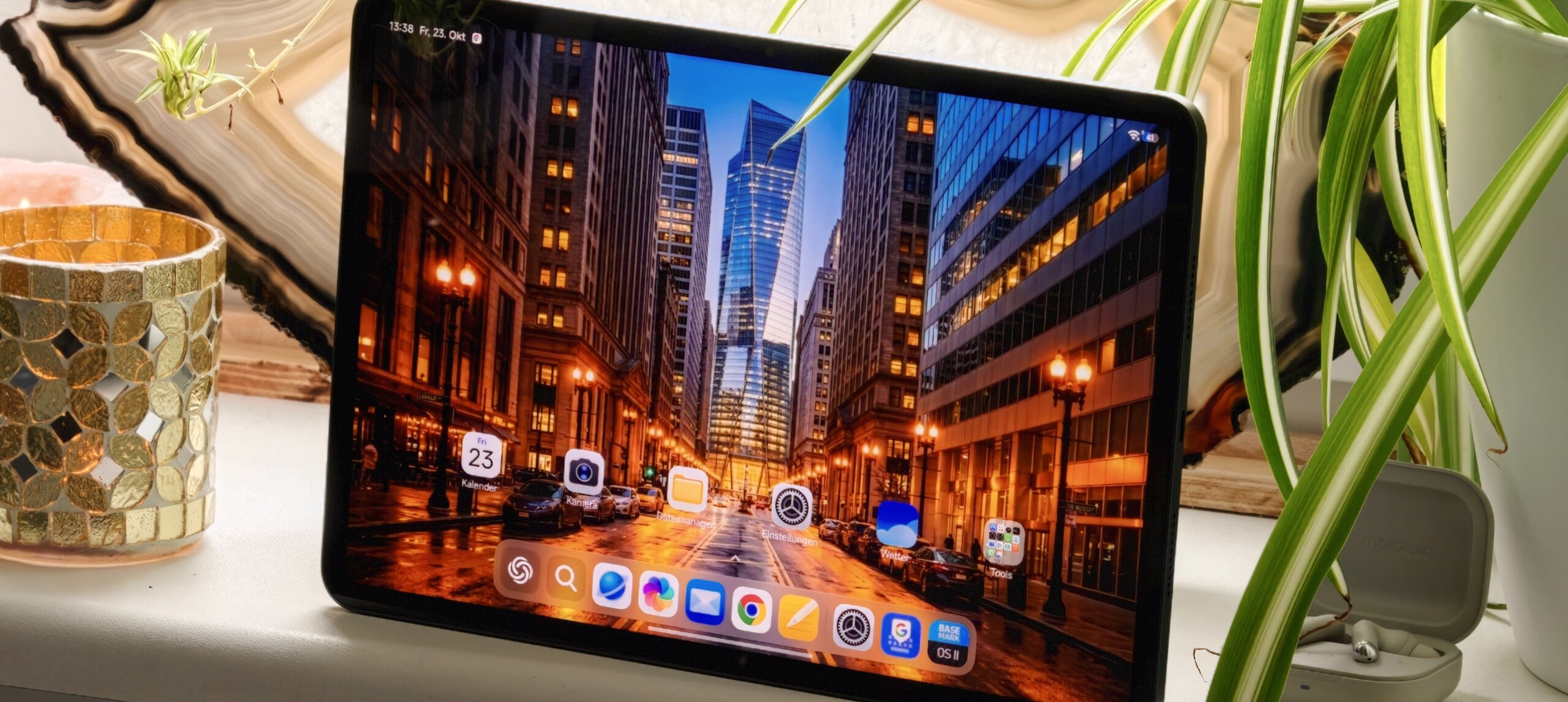
Verdict - Xiaomi Pad 9
The Xiaomi Pad 9 is an excellent mid-range tablet and an affordable alternative to the 11-inch iPad Air. However, given the minimal changes from its predecessor, the name "Pad 8S" would arguably have been more fitting. In fact, we could have easily referred back to our 2025 review. Despite its slightly larger battery, the Pad 9 doesn't deliver better results in our battery test, with our power-consumption measurements revealing a concerning level of inefficiency. However, our test data does highlight two noticeable differences beyond what's on the spec sheet: the Pad 9’s LCD screen is slightly brighter than that of the Pad 8, while, on the other hand, Xiaomi has cut costs on the speakers for its 2026 model.
Setting the Pad 8 aside, Pad 9 buyers still get an excellent price-to-performance ratio, especially compared to an 11-inch iPad or iPad Air. This affordable mid-range tablet boasts a top-tier display lacking PWM (pulse-width modulation) flickering. However, Xiaomi now faces strong competition in the form of the Honor MagicPad 4, which offers an OLED panel and higher performance at a similar price point.
It is a pity that Xiaomi continues to do without a fingerprint sensor. That said, with its stylus support and desktop mode, the Pad 9 remains a very good choice for school and university students.
Pros
Cons
Price and availability - Xiaomi Pad 9

In China, the Xiaomi Pad 9 starts at the equivalent of approximately $425, while the top-tier configuration costs around $560. As an import, the mid-range tablet starts at about $525. Details regarding an international launch are not yet available, though a global release is likely. For the Pad 8, the recommended retail price (RRP) started at around $500.
Table of Contents
- Verdict - Xiaomi Pad 9
- Specifications - Xiaomi Pad 9
- Case - An affordable Android tablet with an IP52 rating and matte screen
- Features - A reasonably-priced Xiaomi tablet with fast USB 3.2 and OTG
- Software - The Xiaomi tablet comes with HyperOS 4 and Android 17
- Communication and GNSS - The Xiaomi Pad 9 with WiFi 7 but without 5G
- Cameras - An Android tablet with HDR, but lacking autofocus
- Accessories and warranty - The Xiaomi tablet works with a stylus
- Input devices and operation - Xiaomi Pad lacks a fingerprint sensor
- Display - Xiaomi hasn't opted for an OLED screen, but PWM is absent
- Performance - The Xiaomi Pad 9 packs a Snapdragon 8s Gen 4
- Emissions - The Android tablet remains cool under load
- Battery life - The Xiaomi tablet does fast charging
- Notebookcheck overall rating
- Possible alternatives compared
Specifications - Xiaomi Pad 9
Case - An affordable Android tablet with an IP52 rating and matte screen
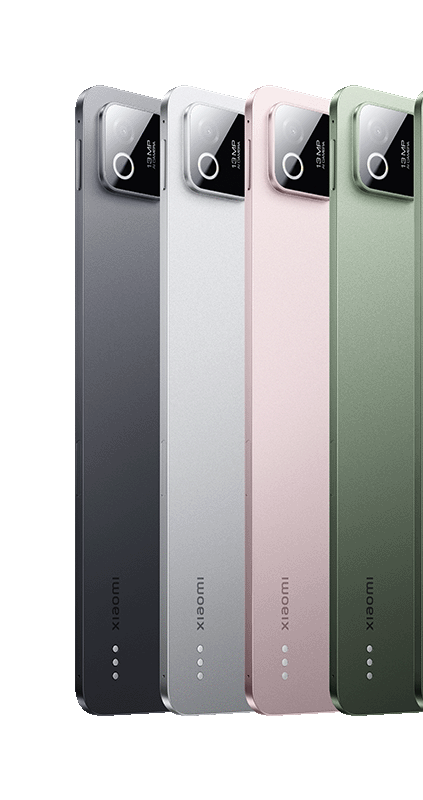
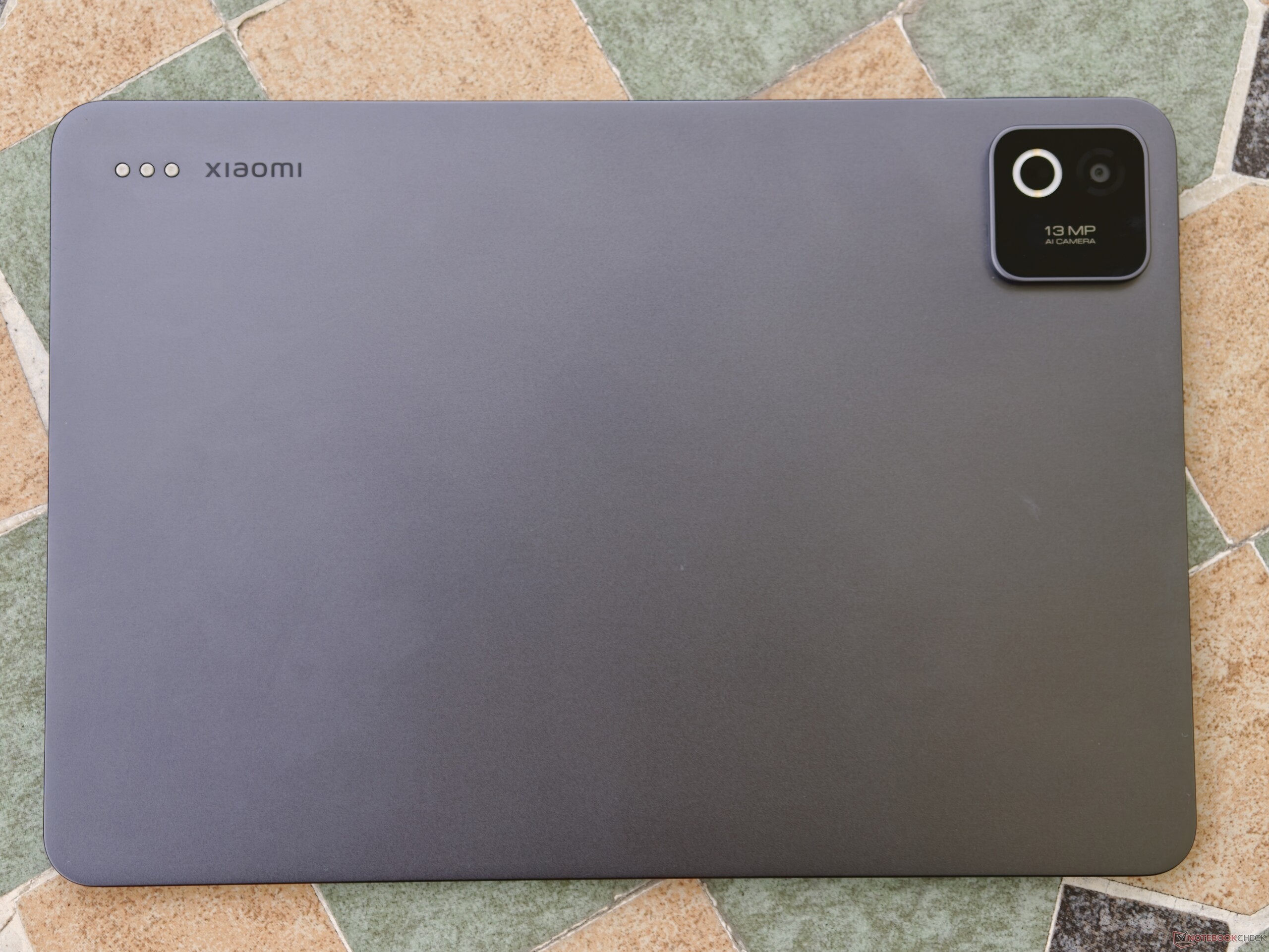
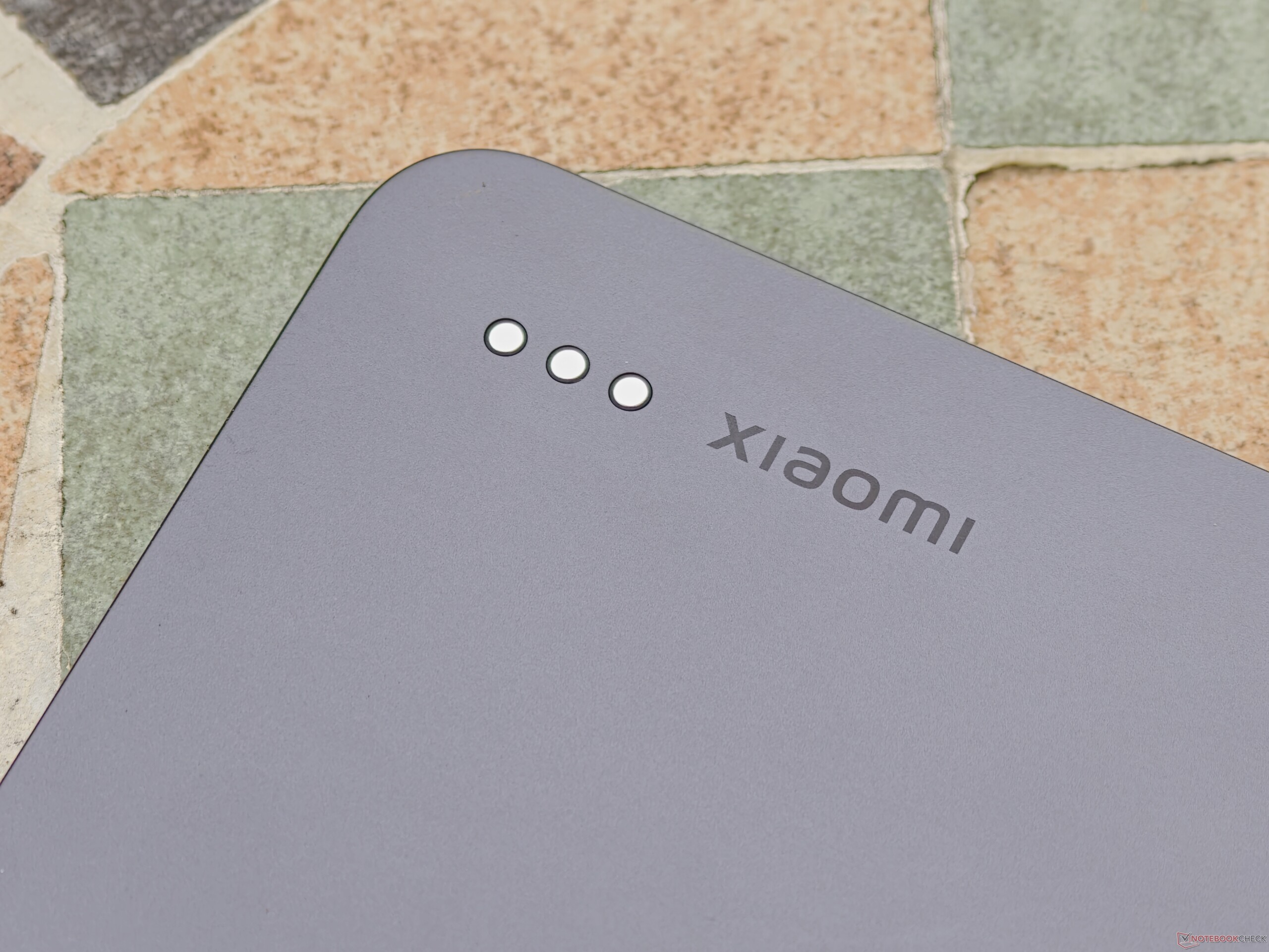
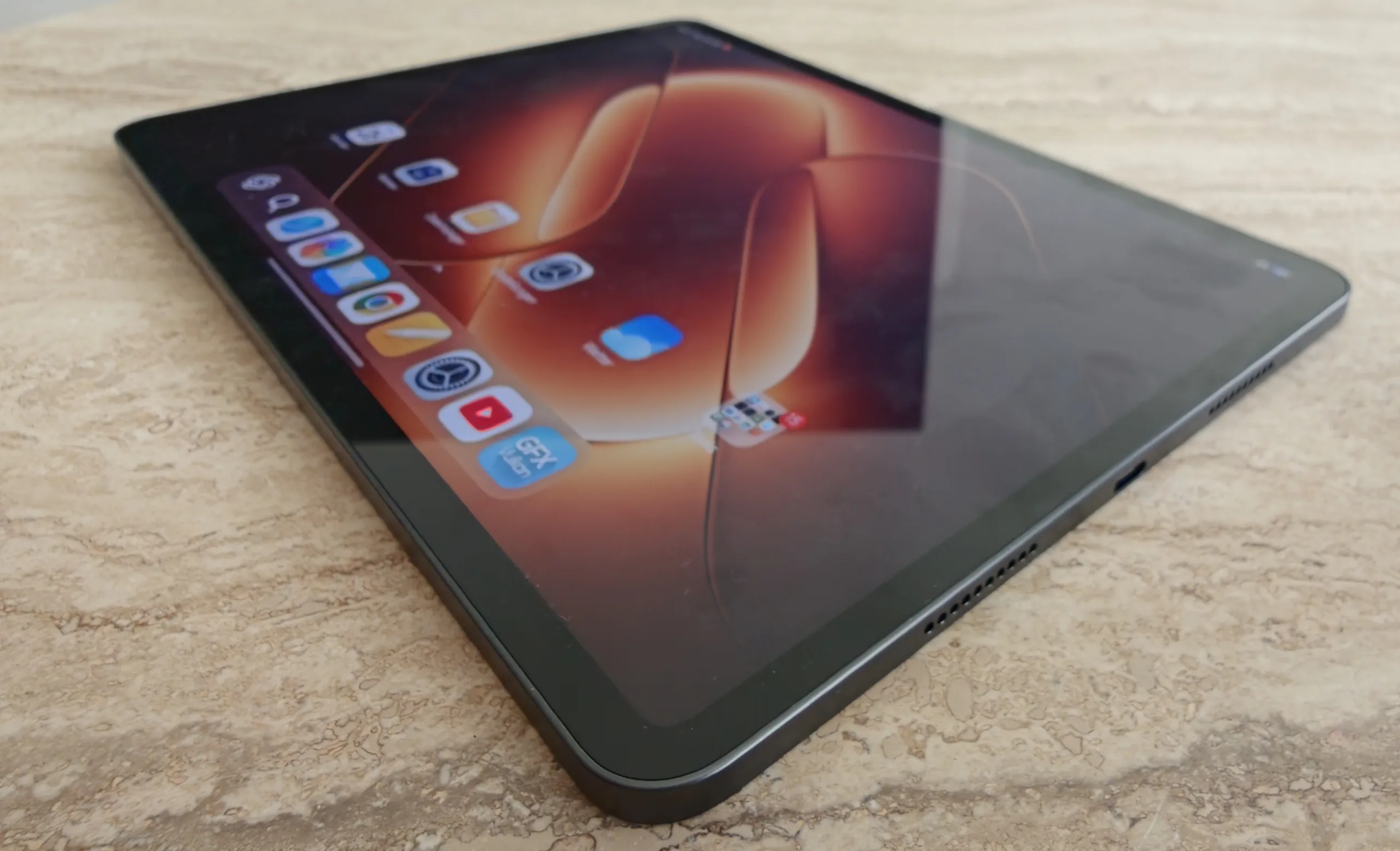
The Pad 9's design remains unchanged compared to the Pad 8; however, the larger battery means it's only slightly heavier. At less than 6 millimeters, the Xiaomi tablet's aluminum unibody feels pleasantly thin and premium. Furthermore, a screen-to-body ratio of nearly 86 percent is quite impressive for the mid-range segment—a figure that is even beyond the significantly more expensive Apple iPad Air 11.
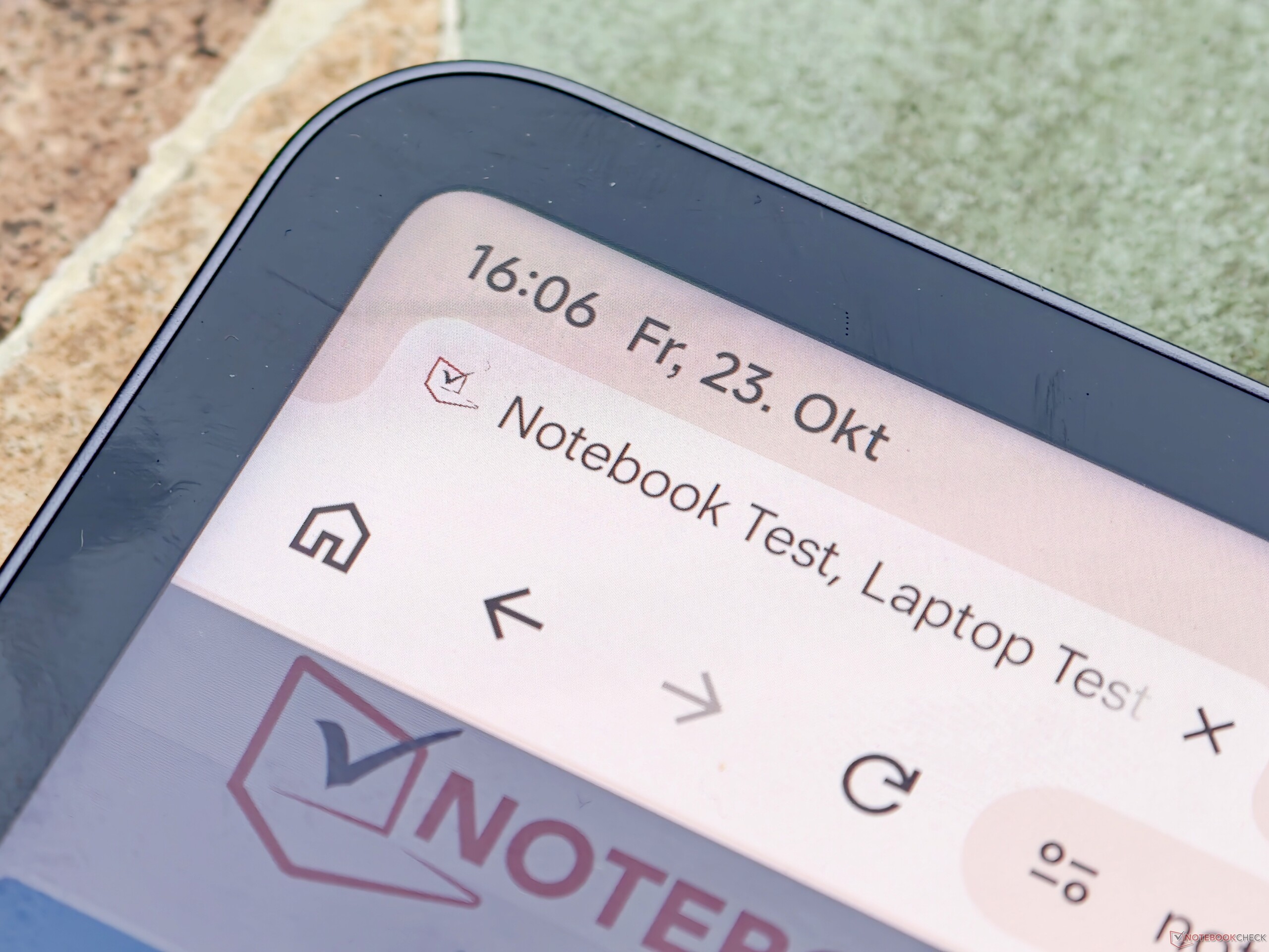
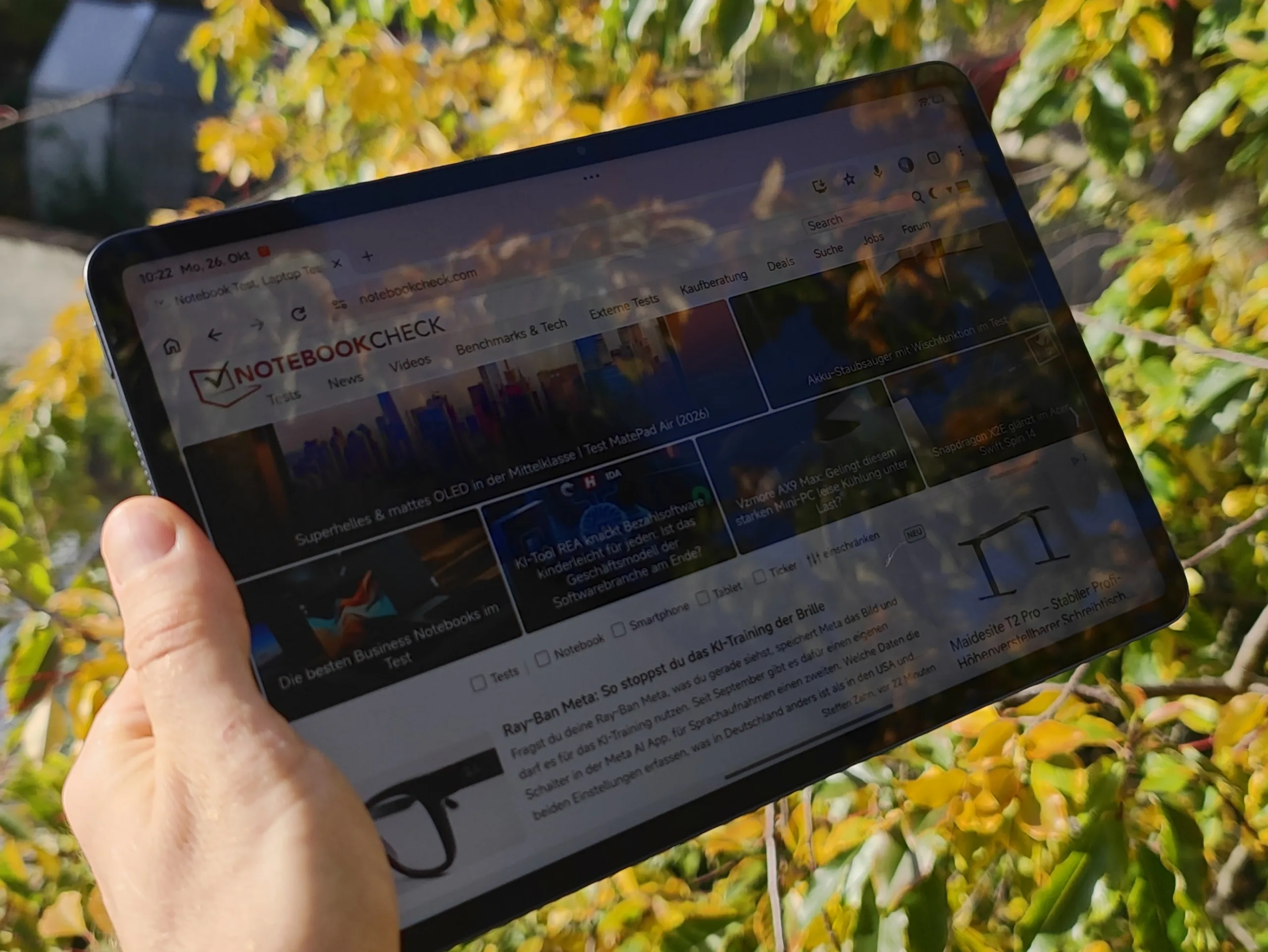
Any potential buyers can purchase the Pad 9 in a matte "Soft-Light" version. This version is significantly easier to read outdoors than our glossy model, which is prone to noticeable reflections. Thanks to its IP52 rating, this mid-range tablet can also be used without any issues in the garden or on a university campus, even on a rainy day.
Features - A reasonably-priced Xiaomi tablet with fast USB 3.2 and OTG
For storage and memory, Xiaomi uses modern standards, though the base model is slightly less advanced, featuring LPDDR5X RAM and UFS 3.1 storage. Our 256 GB review unit, by contrast, is equipped with 12 GB of LPDDR5T RAM—offering higher bandwidth—along with UFS 4.1 storage. All model versions incorporate FBO (File-Based Optimization) technology.
The Pad 9's USB-C port adheres to the USB 3.2 Gen 1 specification, ensuring high-speed data transfer. For a mid-range device, the feature set is excellent and includes an infrared blaster, stylus support, DisplayPort functionality, NFC, and OTG (On-The-Go) capability.
Software - The Xiaomi tablet comes with HyperOS 4 and Android 17
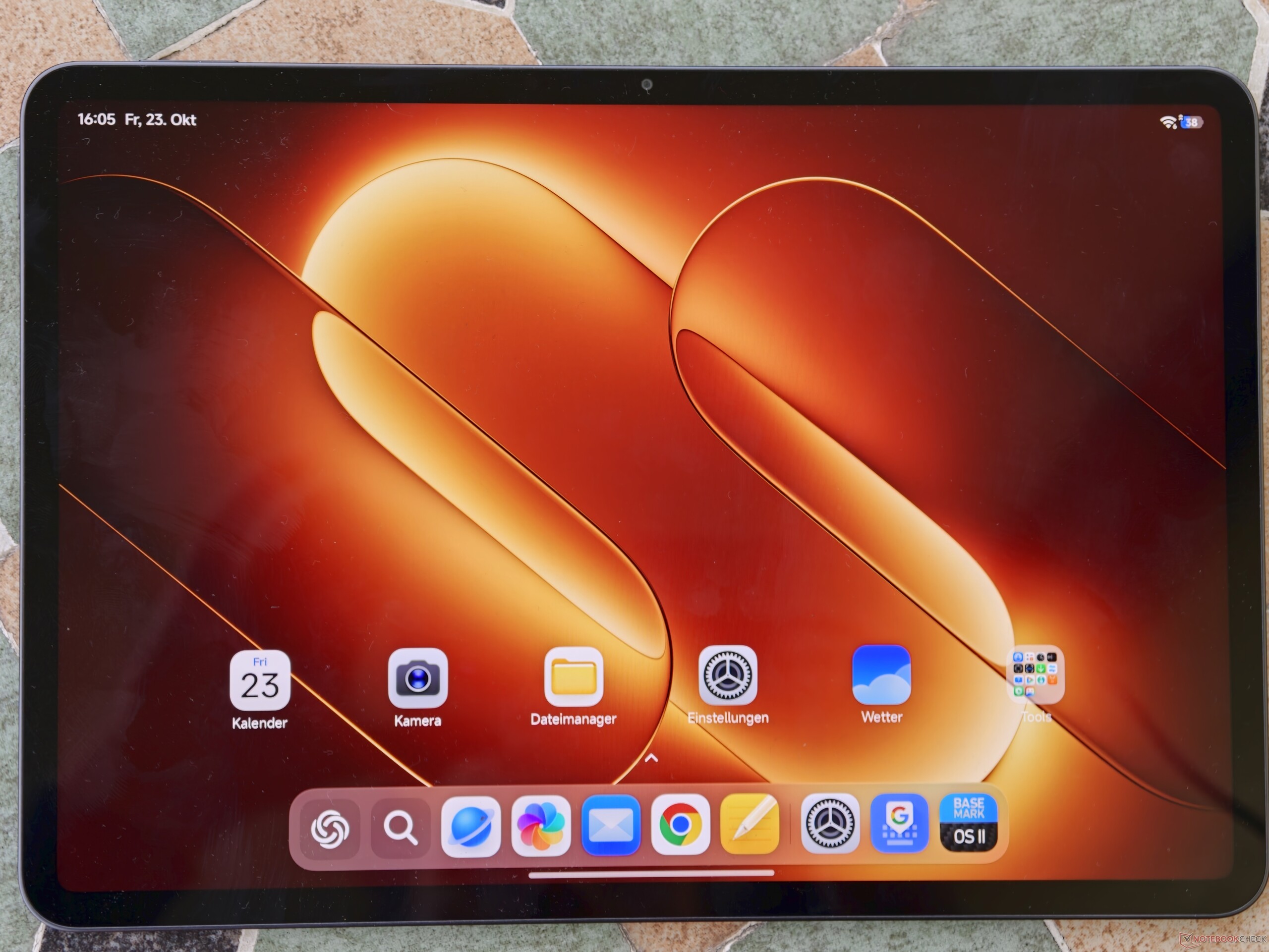
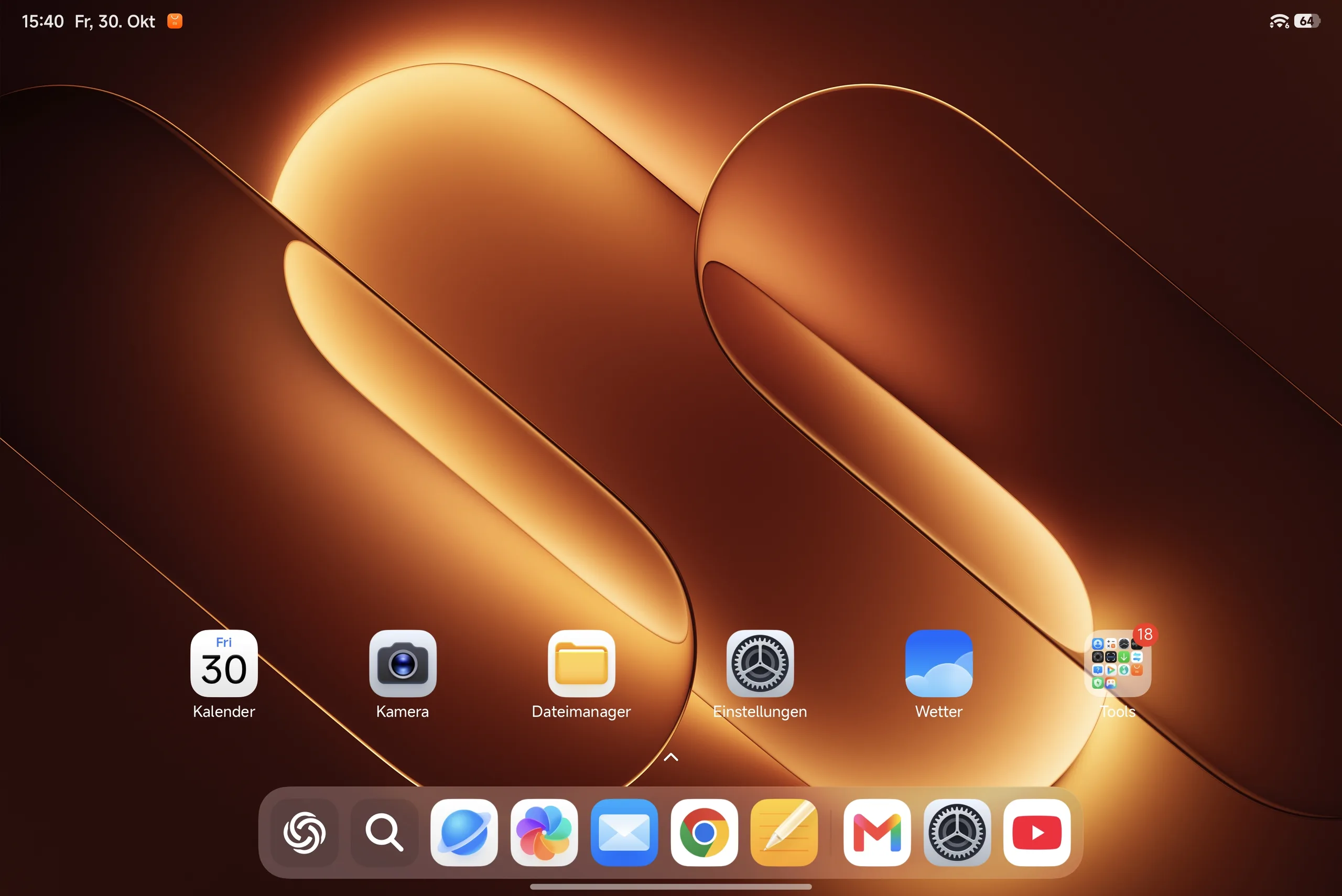
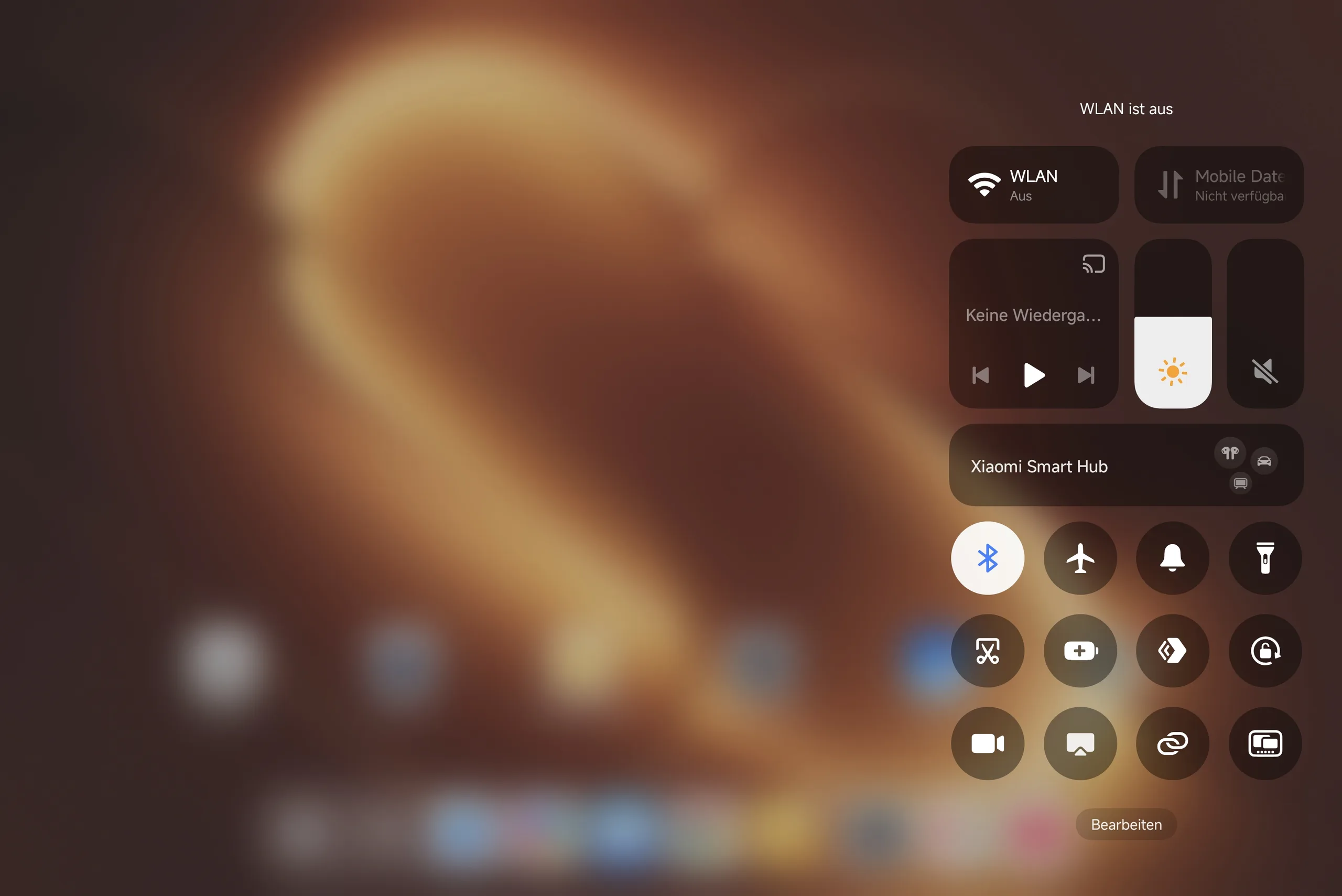
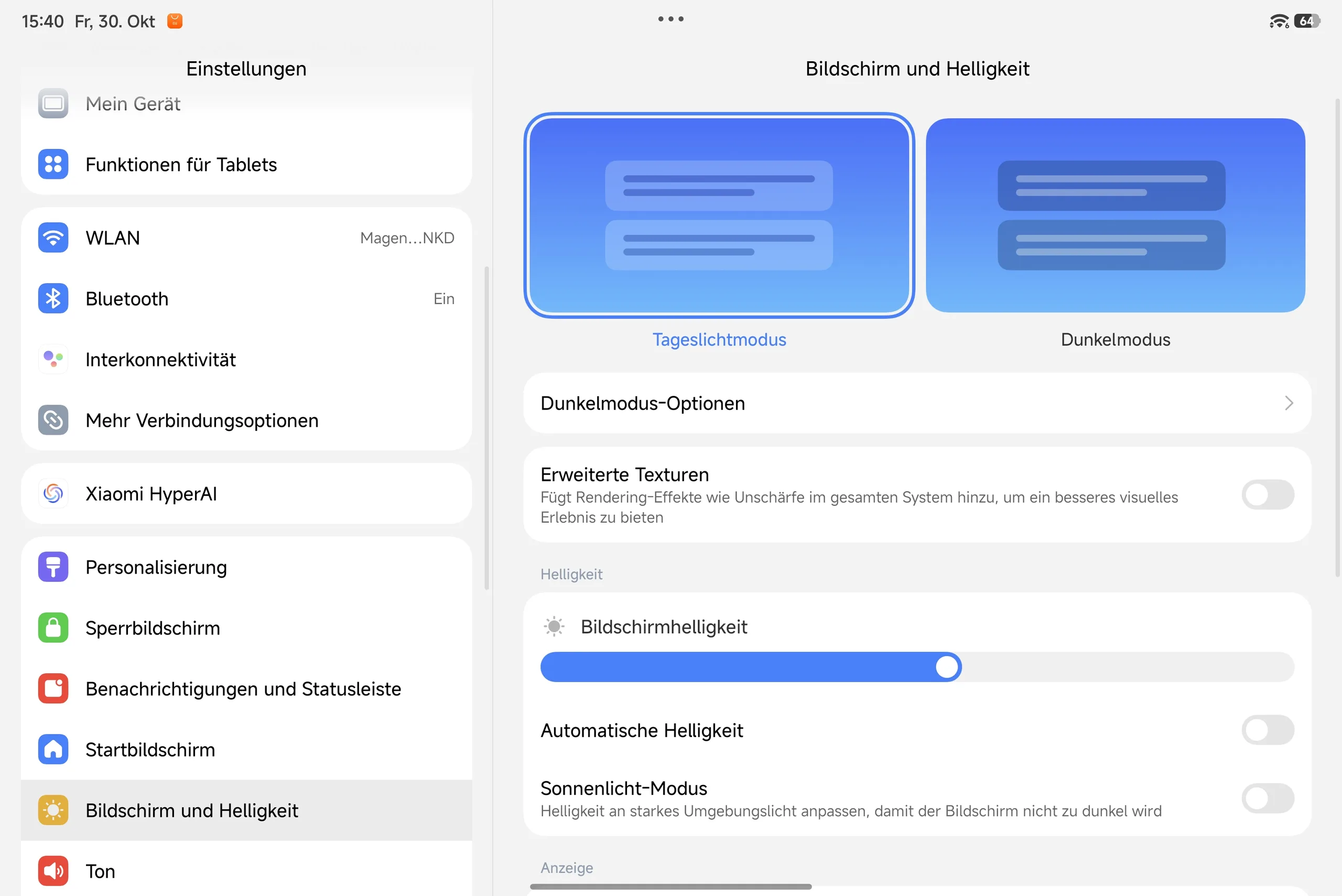
The mid-range tablet ships with Android 17. With HyperOS 4, Xiaomi is now implementing native support for the German language, even in models intended for the Chinese market. This means the new Pad 9 can be used in many different languages, even when imported.
Xiaomi has not officially stated how long the Chinese version will receive updates, but according to reports, the premium tablet will receive 4 major operating system upgrades and 5 to 6 years of security updates.
In Europe, a global version of the Pad 9 is subject to EU regulations and is virtually guaranteed to receive 6 years of security updates.
Sustainability
We were unable to find any information regarding the materials used or the recycled content for this mid-range tablet. Unlike Apple or Samsung, Xiaomi has significant room for improvement when it comes to being transparent about the materials used in its products. It is also difficult to gauge how repair-friendly the device is, though it is unlikely to differ much from the Pad 8.
On a positive note, the packaging appears to be entirely plastic-free.
Communication and GNSS - The Xiaomi Pad 9 with WiFi 7 but without 5G
The Pad 9 supports WiFi 7; however, in our Chinese version tests, there is no way to utilize the high-speed 6 GHz frequency band for WiFi transmissions. Xiaomi does not offer a 5G version with satellite-based positioning. While the Pad 9 can determine its location using WiFi and a digital compass, this is not sufficient for navigation purposes.
| Networking | |
| Xiaomi Pad 9 | |
| iperf3 transmit Wi-Fi6/7 RT-BE96U | |
| iperf3 receive Wi-Fi6/7 RT-BE96U | |
| Apple iPad 10 | |
| iperf3 transmit AXE11000 | |
| iperf3 receive AXE11000 | |
| Oppo Pad 5 | |
| iperf3 transmit Wi-Fi6/7 RT-BE96U | |
| iperf3 receive Wi-Fi6/7 RT-BE96U | |
| Honor MagicPad 4 | |
| iperf3 transmit AXE11000 | |
| iperf3 receive AXE11000 | |
| iperf3 transmit AXE11000 6GHz | |
| iperf3 receive AXE11000 6GHz | |
| Xiaomi Pad 8 | |
| iperf3 transmit AXE11000 6GHz | |
| iperf3 receive AXE11000 6GHz | |
| Average 802.11 a/b/g/n/ac/ax/be | |
| iperf3 transmit AXE11000 | |
| iperf3 receive AXE11000 | |
| iperf3 transmit AXE11000 6GHz | |
| iperf3 receive AXE11000 6GHz | |
| iperf3 transmit Wi-Fi6/7 RT-BE96U | |
| iperf3 receive Wi-Fi6/7 RT-BE96U | |
| Average of class Tablet | |
| iperf3 transmit AXE11000 | |
| iperf3 receive AXE11000 | |
| iperf3 transmit AXE11000 6GHz | |
| iperf3 receive AXE11000 6GHz | |
| iperf3 transmit Wi-Fi6/7 RT-BE96U | |
| iperf3 receive Wi-Fi6/7 RT-BE96U | |
Cameras - An Android tablet with HDR, but lacking autofocus

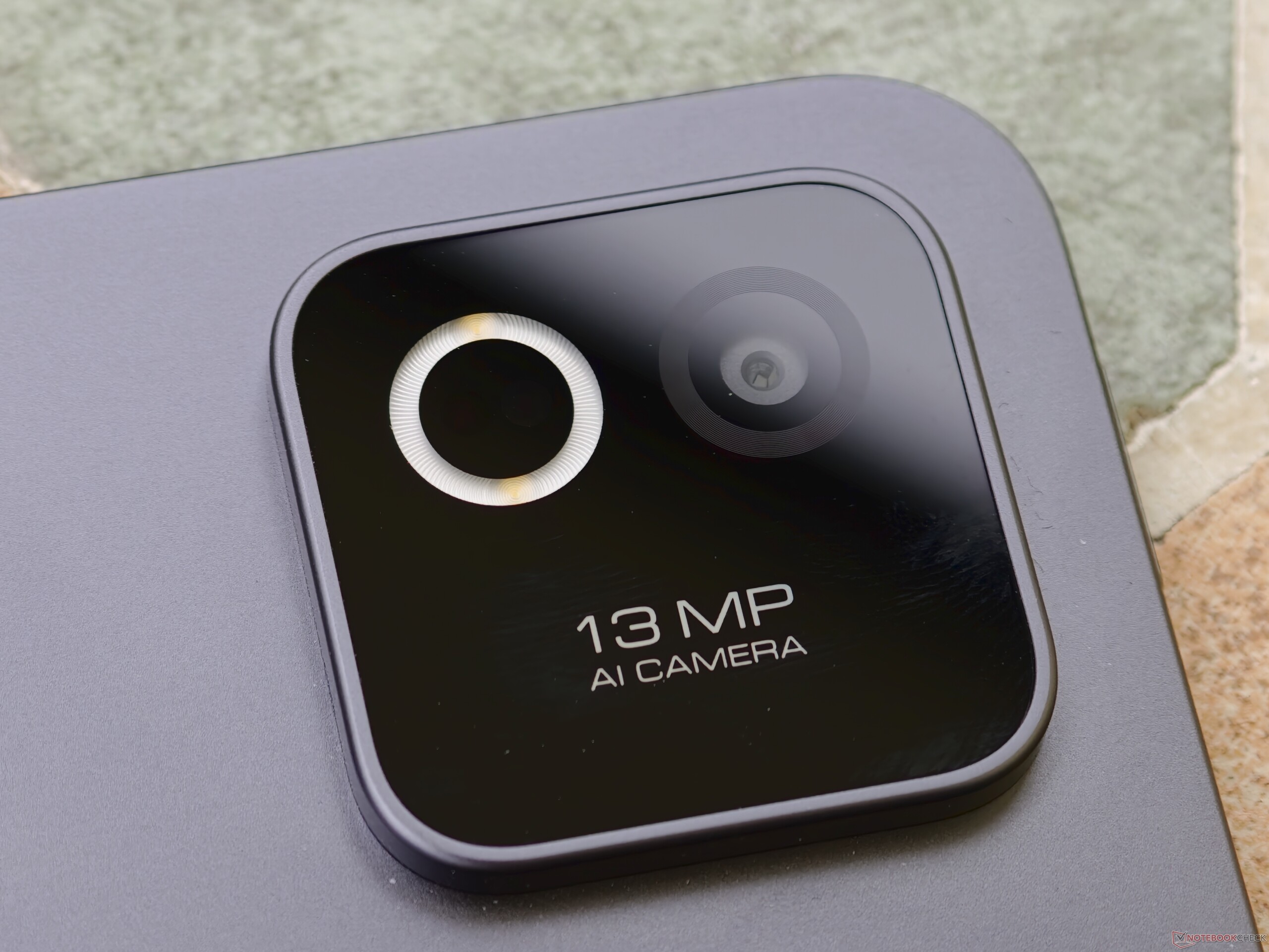
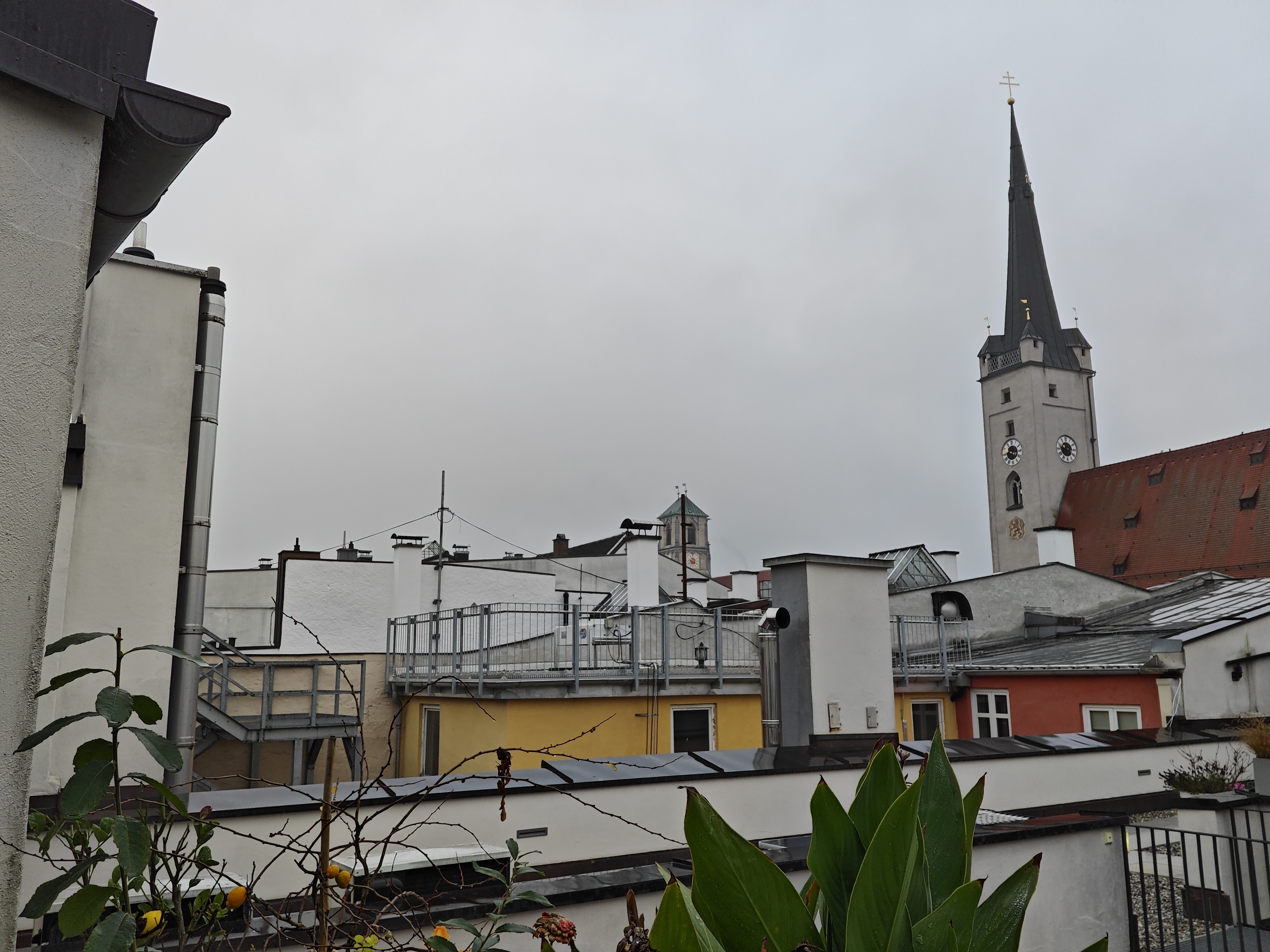
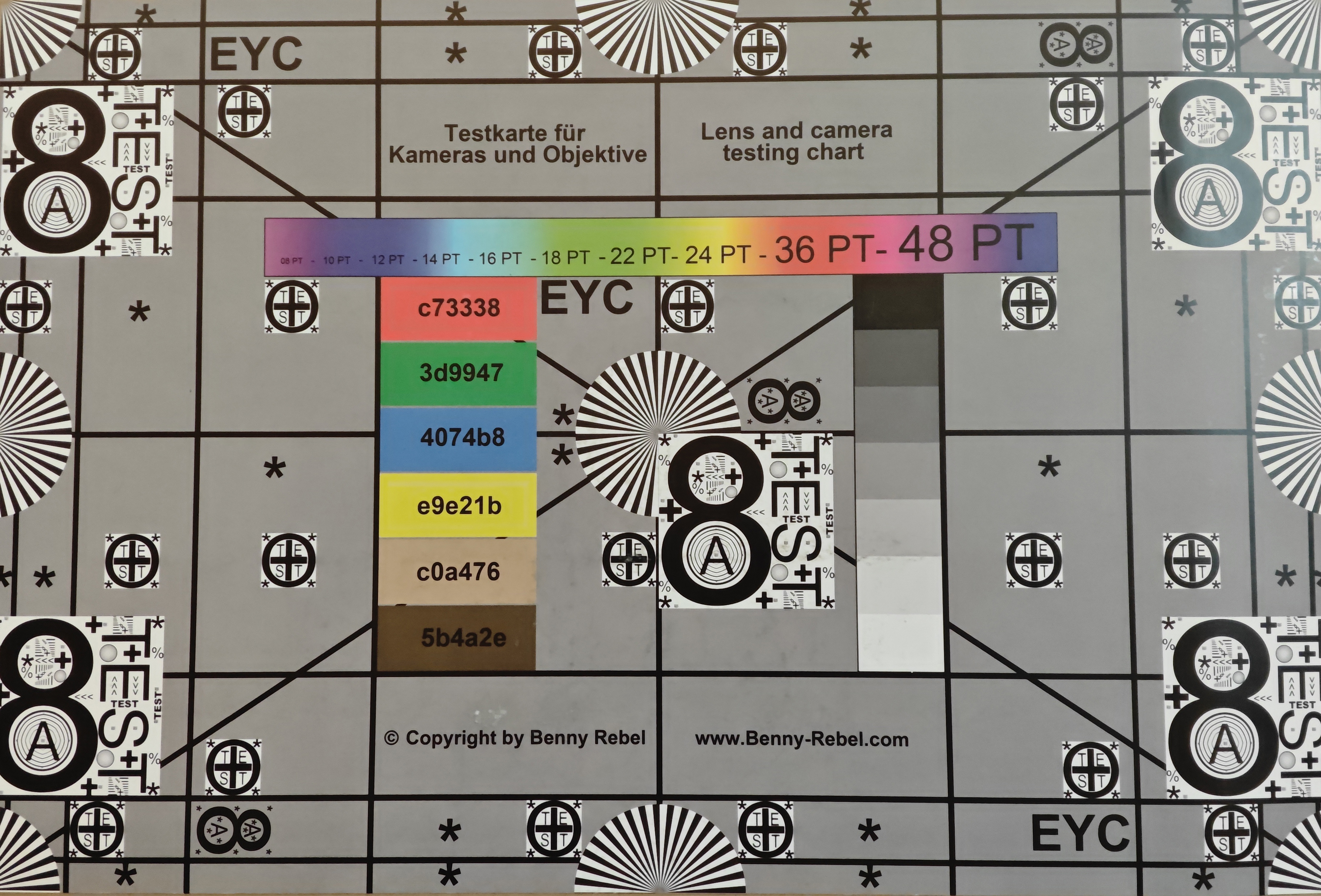
The Pad 9's camera setup is solid for a mid-range tablet and remains unchanged from the Pad 8. The 13-megapixel rear camera captures sharp snapshots and can record video at up to 4K resolution at 30 fps. While it supports HDR, it still lacks autofocus. For use in academic settings—such as university or school—there is a teleprompter feature and a dedicated document mode.
The 8-megapixel wide-angle front camera is well-suited for video calls, capturing a wide field of view that includes much of the surrounding environment. The device is equipped with four microphones for this purpose. Additionally, the "HyperConnect" feature allows the Pad 9 to connect to a Xiaomi smartphone, enabling it to function as a webcam.
















Accessories and warranty - The Xiaomi tablet works with a stylus
The package includes a 45-watt fast-charging power adapter and a USB Type-C cable. For its version with the Nano Soft Light display, Xiaomi also includes a cleaning cloth. The Focus Pen Pro is available as an optional accessory and is priced at around $100. Furthermore, a matching QWERTY keyboard case is also available as an accessory. The keyboard case for the Pad 8 should also fit the Pad 9, as their dimensions are identical.
Our imported device comes with a 12-month warranty. In the event of a warranty claim, Trading Shenzhen allows the device to be sent to a German shipping address.
Input devices and operation - Xiaomi Pad lacks a fingerprint sensor
The 144 Hz panel's touchscreen can be operated precisely using finger input. Magnetic interfaces ensure maximum productivity, and they allow you to connect a keyboard case via a pin connector and also charge the Focus Pen Pro. With 16,384 levels of pressure sensitivity, taking handwritten notes or drawing should be no problem. However, Xiaomi does not specify an exact latency figure.
Unfortunately, this mid-range tablet lacks a fingerprint sensor. The only available option is 2D facial recognition via the front-facing camera—a method of authentication that is both quite insecure and prone to errors.


Display - Xiaomi hasn't opted for an OLED screen, but PWM is absent

According to the spec sheet, the Pad 9’s LCD screen—which includes Dolby Vision support and 12-bit color depth—is identical to that of its predecessor. However, our measurements show that this 144 Hz panel is slightly brighter than the one in the Pad 8, and in terms of display quality, it is at least a cut above the iPad Air 11.
That said, the OLED panel found in the mid-range Honor MagicPad 4 is notably brighter and offers superior contrast, though the Pad 9’s black levels are by no means poor.
On the other hand, the Xiaomi tablet carries TÜV certifications for flicker-free, eye-friendly viewing and does not use PWM (pulse-width modulation)—a major advantage for sensitive users.
| |||||||||||||||||||||||||
Brightness Distribution: 90 %
Center on Battery: 785 cd/m²
Contrast: 1635:1 (Black: 0.48 cd/m²)
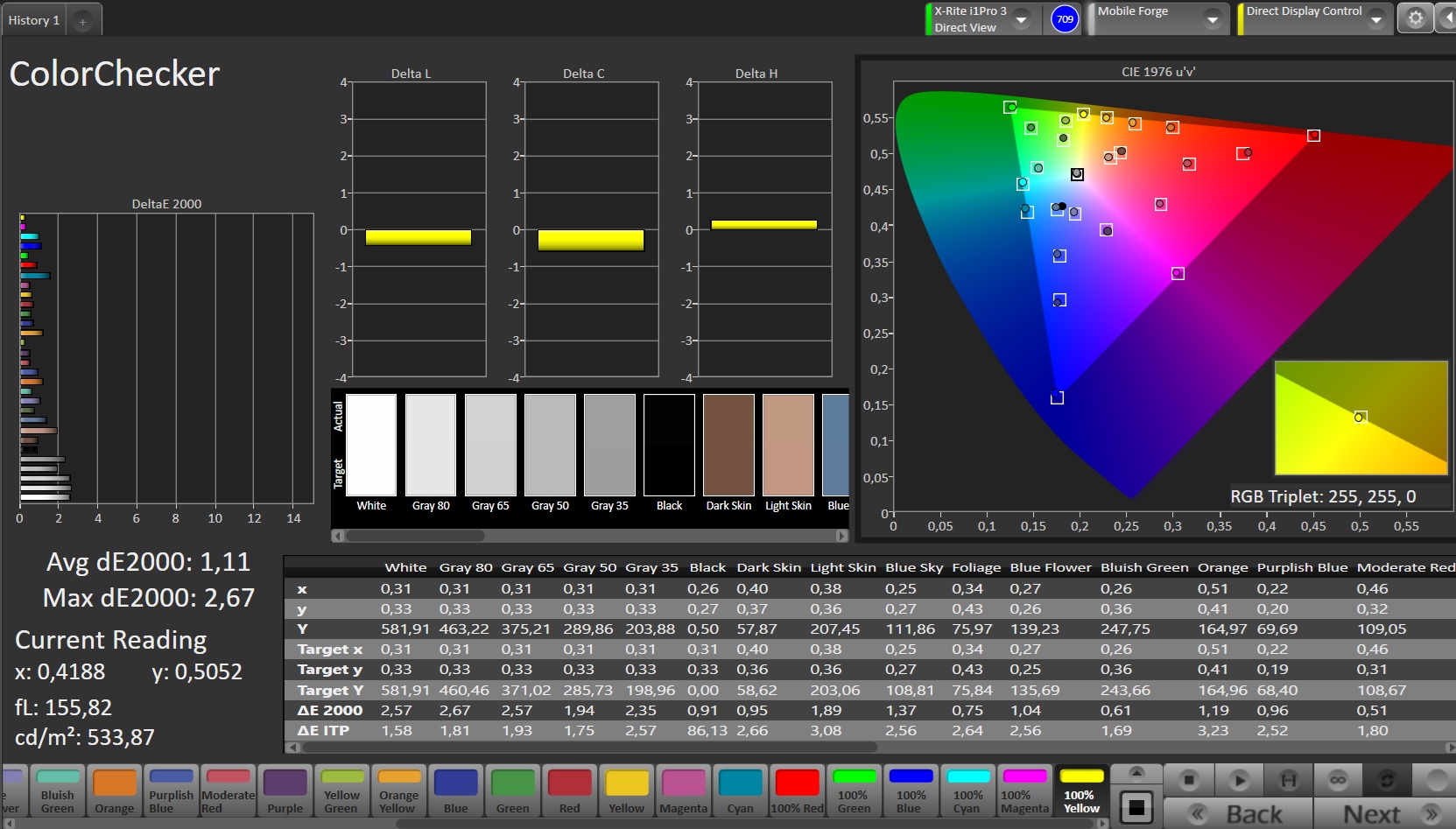
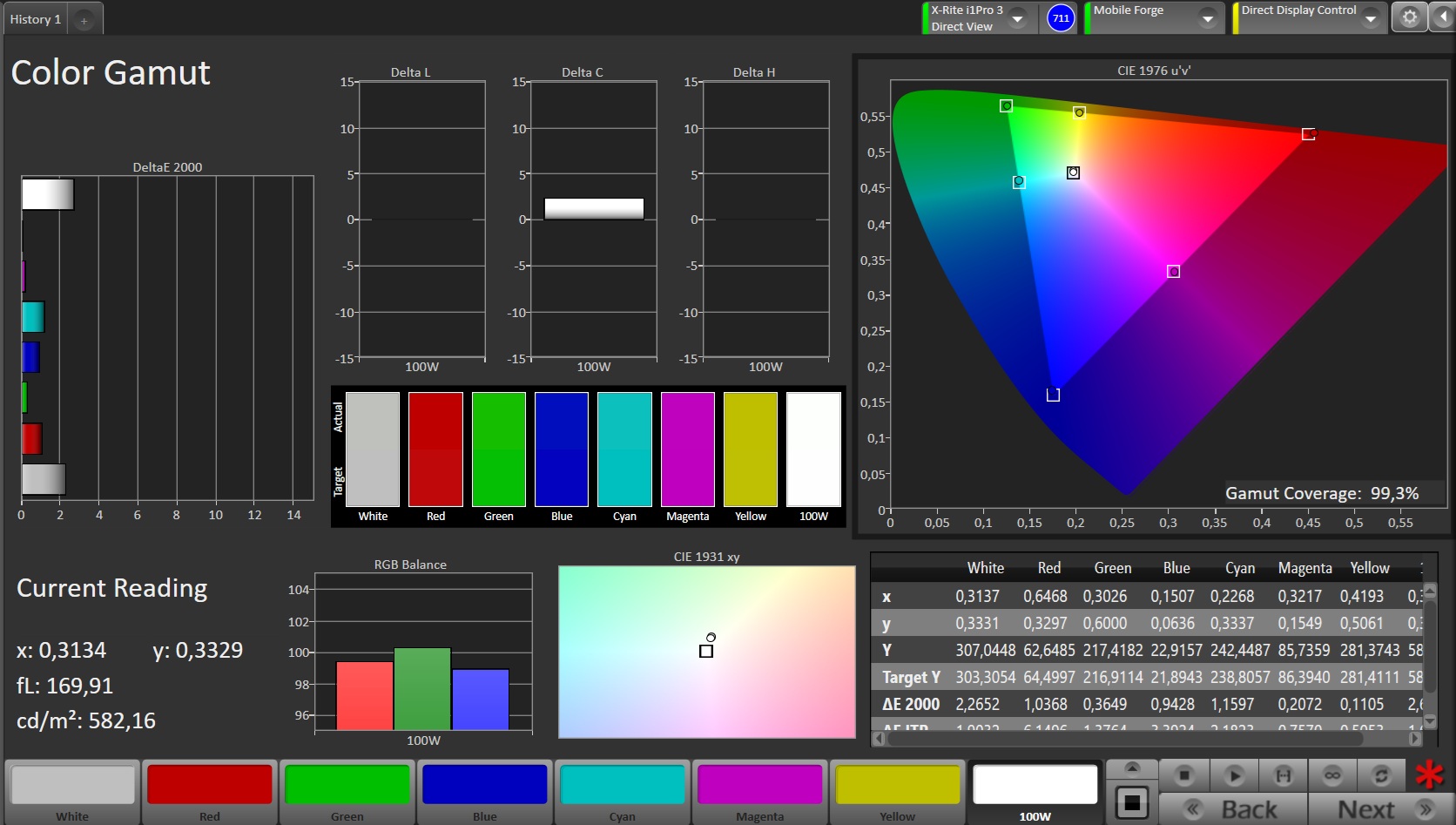
ΔE ColorChecker Calman: 1.11 | ∀{0.5-29.43 Ø4.68}
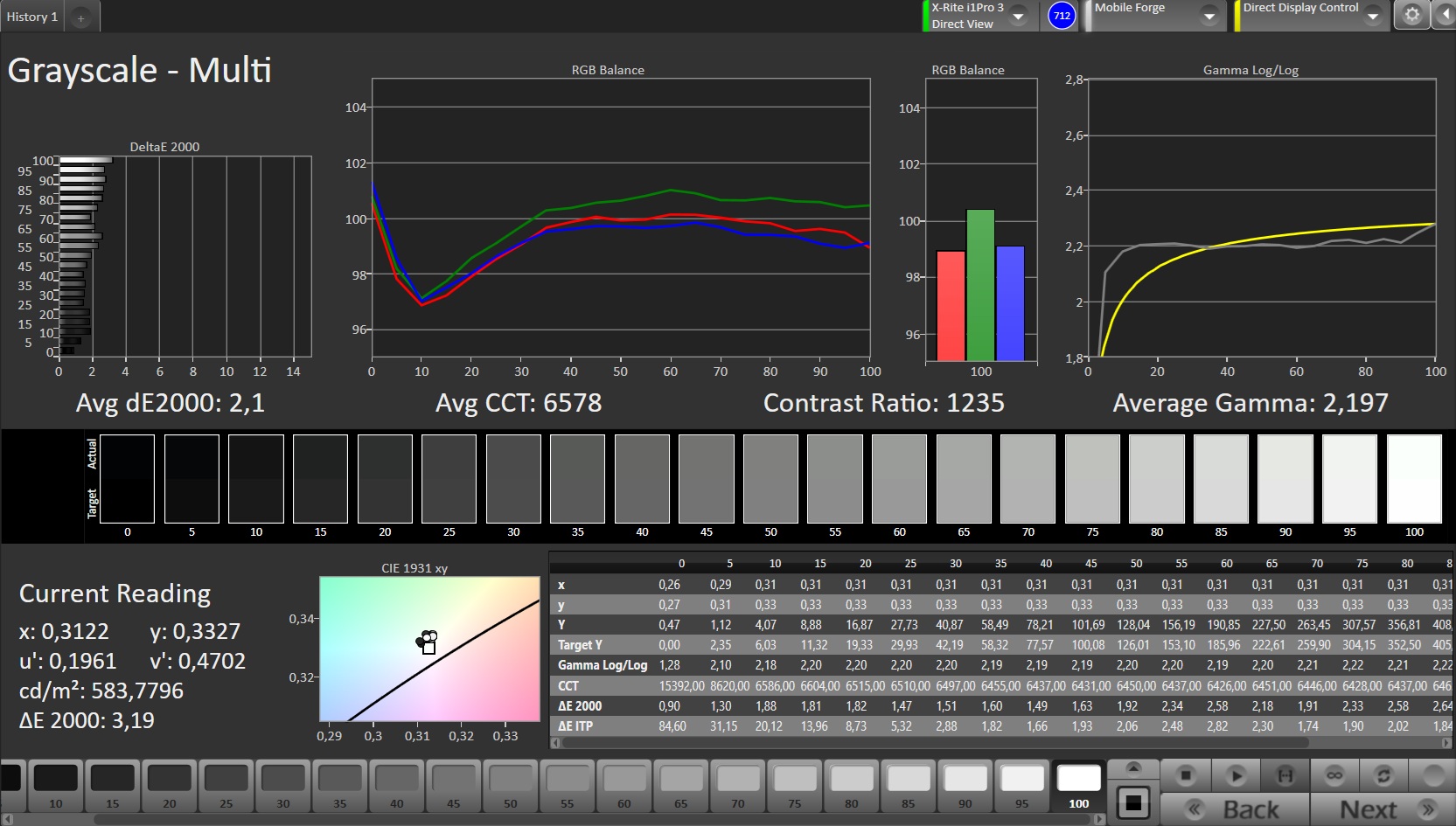
ΔE Greyscale Calman: 2.1 | ∀{0.09-98 Ø4.93}
99.3% sRGB (Calman 2D)
Gamma: 2.197
CCT: 6578 K
| Xiaomi Pad 9 LCD, 3200x2136, 11.2" | Oppo Pad 5 LCD, 2800x1980, 12.1" | Honor MagicPad 4 OLED, 3000x1920, 12.3" | Xiaomi Pad 8 IPS, 3200x2136, 11.2" | Apple iPad 11 (2025) IPS, 2360x1640, 10.9" | Apple iPad Air 11 M4 2026 IPS, 2360x1640, 10.9" | |
|---|---|---|---|---|---|---|
| Display | 15% | 239% | -32% | -35% | ||
| APL18 Peak Brightness (cd/m²) | 802 | 903 13% | 2337 191% | 547 -32% | 526 -34% | |
| HDR Peak Brightness (cd/m²) | 799 | 926 16% | 3084 286% | 546 -32% | 508 -36% | |
| Response Times | 27% | 69% | -11% | -50% | 17% | |
| Response Time Grey 50% / Grey 80% * (ms) | 28.8 ? | 25.1 ? 13% | 16.6 ? 42% | 33.6 ? -17% | 43.55 ? -51% | 29.6 ? -3% |
| Response Time Black / White * (ms) | 22 ? | 13.1 ? 40% | 0.91 ? 96% | 23.2 ? -5% | 32.59 ? -48% | 14.1 ? 36% |
| PWM Frequency (Hz) | 60 | 21120 | ||||
| PWM Amplitude * (%) | 16.05 | |||||
| Screen | -20% | 19% | 3% | -49% | -30% | |
| Brightness middle (cd/m²) | 785 | 892 14% | 829 6% | 627 -20% | 526 -33% | 513 -35% |
| Brightness (cd/m²) | 740 | 862 16% | 827 12% | 613 -17% | 531 -28% | 510 -31% |
| Brightness Distribution (%) | 90 | 93 3% | 90 0% | 96 7% | 93 3% | 98 9% |
| Black Level * (cd/m²) | 0.48 | 0.8 -67% | 0.3 37% | 0.99 -106% | 0.45 6% | |
| Contrast (:1) | 1635 | 1115 -32% | 2090 28% | 531 -68% | 1140 -30% | |
| Colorchecker dE 2000 * | 1.11 | 1.17 -5% | 0.9 19% | 1.25 -13% | 1.9 -71% | 1.92 -73% |
| Colorchecker dE 2000 max. * | 2.67 | 4.67 -75% | 1.7 36% | 2.95 -10% | 4 -50% | 4.12 -54% |
| Greyscale dE 2000 * | 2.1 | 2.3 -10% | 1.3 38% | 1.8 14% | 2.9 -38% | 2.8 -33% |
| Gamma | 2.197 100% | 2.415 91% | 2.25 98% | 2.183 101% | 2.14 103% | 2.222 99% |
| CCT | 6578 99% | 6856 95% | 6601 98% | 6898 94% | 6982 93% | 7102 92% |
| Total Average (Program / Settings) | 7% /
-6% | 109% /
73% | -4% /
0% | -44% /
-46% | -16% /
-23% |
* ... smaller is better
Screen Flickering / PWM (Pulse-Width Modulation)
| Screen flickering / PWM not detected | 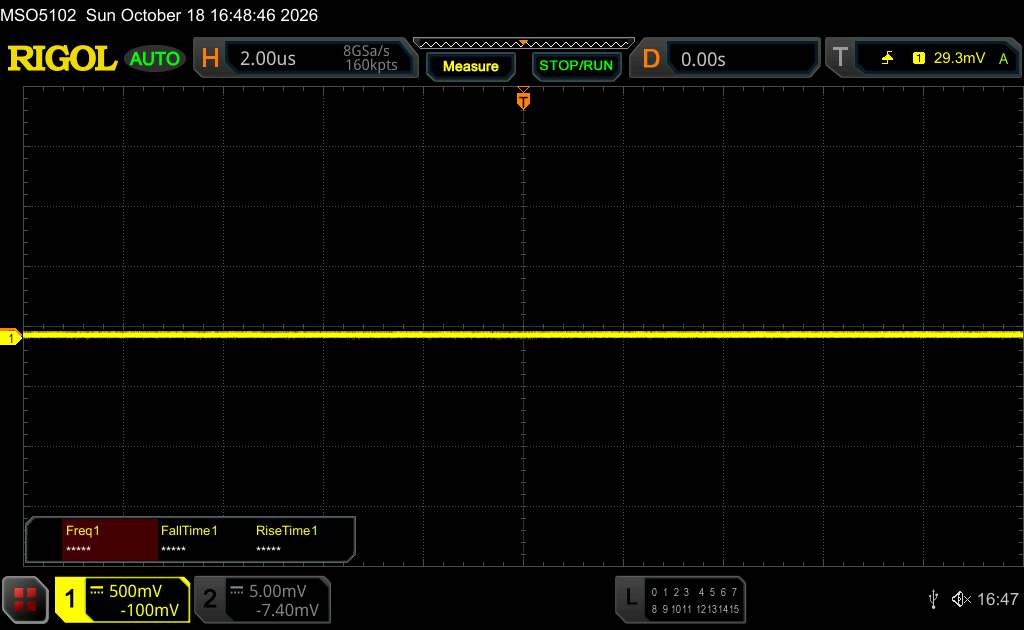 | ||
In comparison: 52 % of all tested devices do not use PWM to dim the display. If PWM was detected, an average of 7556 (minimum: 5 - maximum: 343500) Hz was measured. | |||
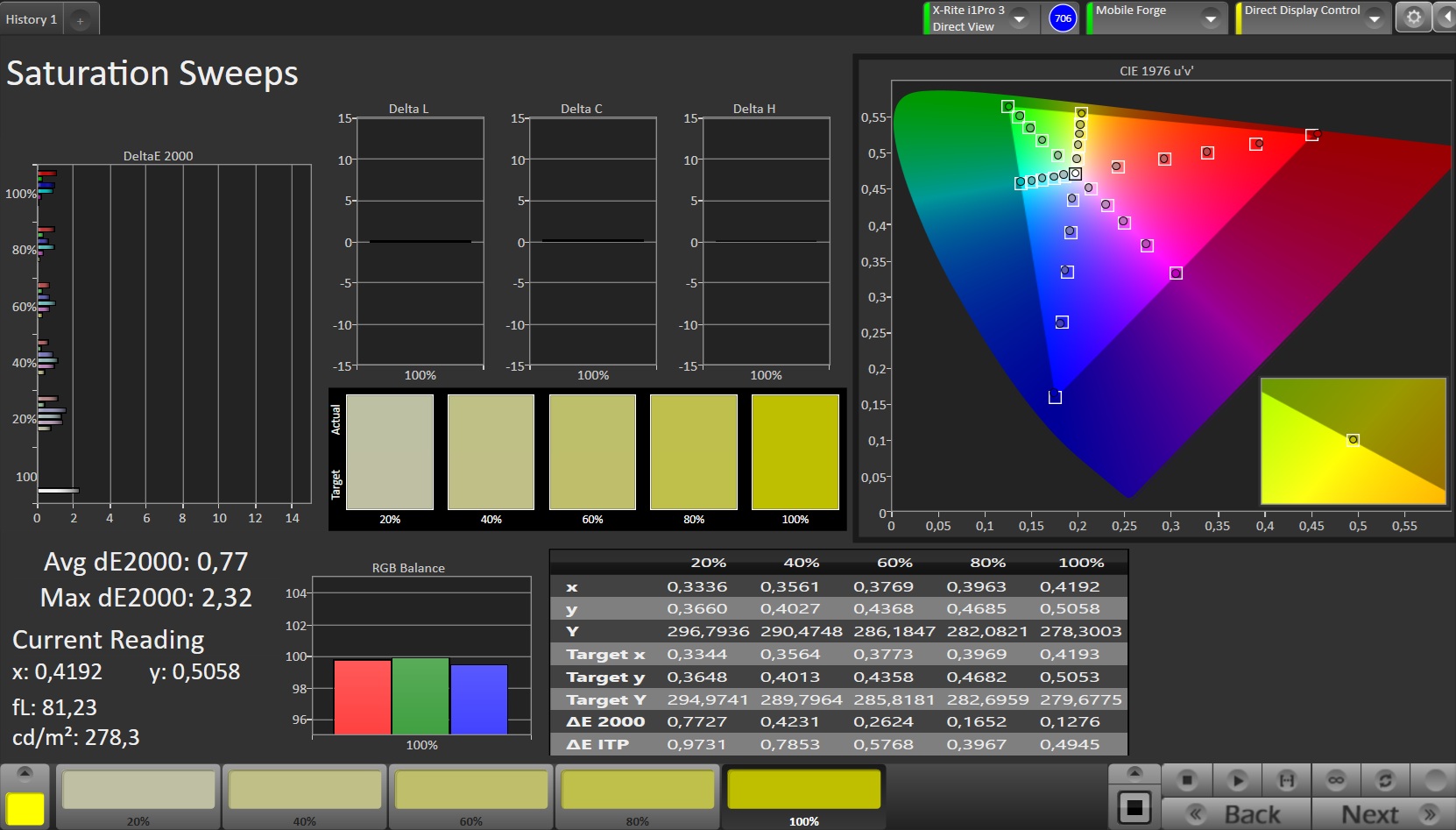
We examined color calibration using the Calcam analysis software. Our measured DeltaE values in the sRGB color space fall within the target range (<3) and are very low. Furthermore, the grayscale shows no color cast whatsoever.
Display Response Times
| ↔ Response Time Black to White | ||
|---|---|---|
| 22 ms ... rise ↗ and fall ↘ combined | ↗ 10.8 ms rise | 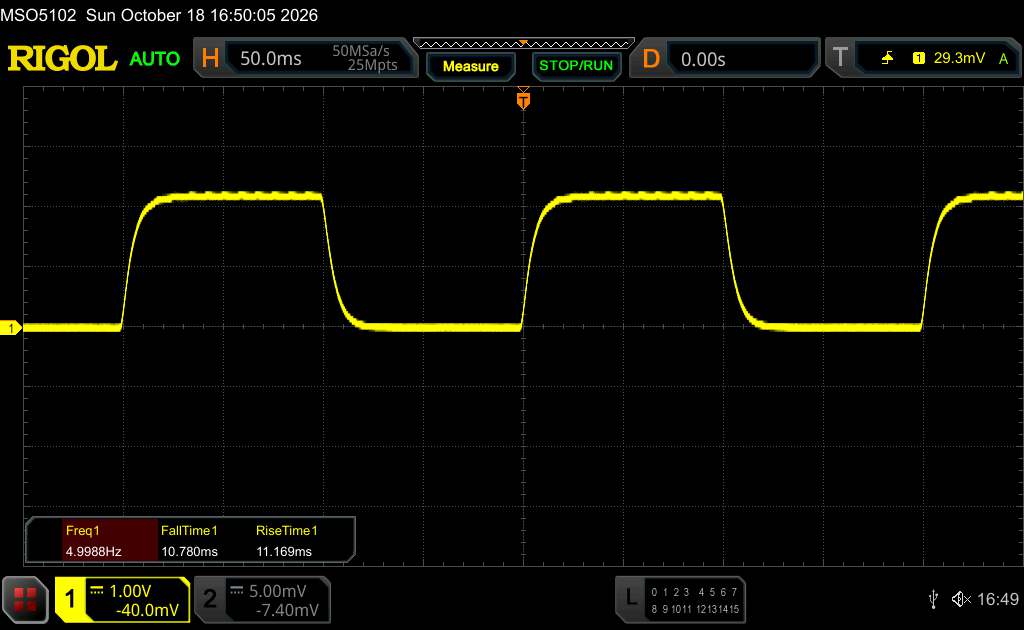 |
| ↘ 11.2 ms fall | ||
| The screen shows good response rates in our tests, but may be too slow for competitive gamers. In comparison, all tested devices range from 0.1 (minimum) to 240 (maximum) ms. » 49 % of all devices are better. This means that the measured response time is worse than the average of all tested devices (19.6 ms). | ||
| ↔ Response Time 50% Grey to 80% Grey | ||
| 28.8 ms ... rise ↗ and fall ↘ combined | ↗ 14.6 ms rise | 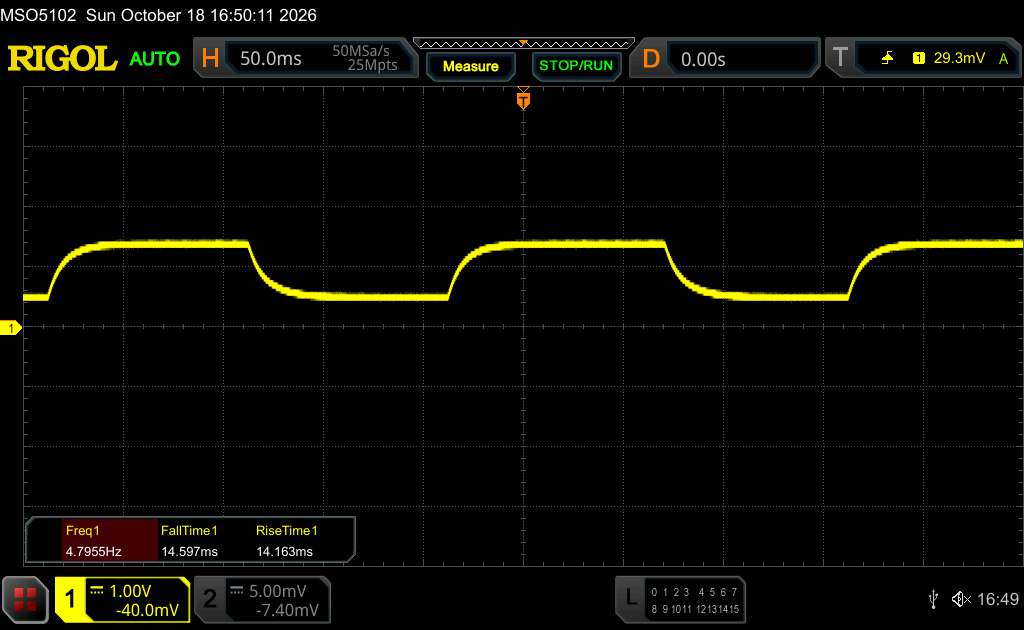 |
| ↘ 14.2 ms fall | ||
| The screen shows relatively slow response rates in our tests and may be too slow for gamers. In comparison, all tested devices range from 0.13 (minimum) to 636 (maximum) ms. » 39 % of all devices are better. This means that the measured response time is similar to the average of all tested devices (30.6 ms). | ||
Performance - The Xiaomi Pad 9 packs a Snapdragon 8s Gen 4
Working away under the hood of the Xiaomi Pad 9 is the same SoC as its predecessor, the Snapdragon 8s Gen 4. This chipset hits decent performance levels and handles everyday tasks effortlessly; however, the Snapdragon 8 Gen 5 in the MagicPad 4 is quite a bit faster.
| CrossMark - Overall | |
| Honor MagicPad 4 | |
| Xiaomi Pad 9 | |
| Average of class Tablet (319 - 2375, n=49, last 2 years) | |
| Average Qualcomm Snapdragon 8s Gen 4 SM8735 (783 - 1522, n=3) | |
| Oppo Pad 5 | |
| UL Procyon AI Inference for Android - Overall Score NNAPI | |
| Oppo Pad 5 | |
| Honor MagicPad 4 | |
| Average of class Tablet (3600 - 76852, n=54, last 2 years) | |
| Xiaomi Pad 9 | |
| Average Qualcomm Snapdragon 8s Gen 4 SM8735 (16446 - 17362, n=4) | |
| Xiaomi Pad 8 | |
| Antutu v12 - Score | |
| Average of class Tablet (1176407 - 4798294, n=3, last 2 years) | |
| Xiaomi Pad 9 | |
| Average Qualcomm Snapdragon 8s Gen 4 SM8735 (n=1) | |
In terms of graphics, the integrated Adreno 825 is certainly impressive for the mid-range segment. In the GFXBench 4K test, the Pad 9 achieved more than twice as many frames per second as an iPad 11. However, the Xiaomi tablet also met its match in GPU tests—specifically, when compared to the MagicPad 4.
GFXBench (DX / GLBenchmark) 2.7: T-Rex Onscreen | 1920x1080 T-Rex Offscreen
GFXBench 3.0: on screen Manhattan Onscreen OGL | 1920x1080 1080p Manhattan Offscreen
GFXBench 3.1: on screen Manhattan ES 3.1 Onscreen | 1920x1080 Manhattan ES 3.1 Offscreen
GFXBench: on screen Car Chase Onscreen | 1920x1080 Car Chase Offscreen | on screen Aztec Ruins High Tier Onscreen | 2560x1440 Aztec Ruins High Tier Offscreen | on screen Aztec Ruins Normal Tier Onscreen | 1920x1080 Aztec Ruins Normal Tier Offscreen | 3840x2160 4K Aztec Ruins High Tier Offscreen
| 3DMark / Wild Life Extreme Unlimited | |
| Apple iPad Air 11 M4 2026 | |
| Honor MagicPad 4 | |
| Xiaomi Pad 9 | |
| Xiaomi Pad 8 | |
| Apple iPad 11 (2025) | |
| Apple iPad 10 | |
| Oppo Pad 5 | |
| 3DMark / Wild Life Extreme | |
| Apple iPad Air 11 M4 2026 | |
| Honor MagicPad 4 | |
| Xiaomi Pad 9 | |
| Xiaomi Pad 8 | |
| Apple iPad 11 (2025) | |
| Apple iPad 10 | |
| Oppo Pad 5 | |
| 3DMark / Wild Life Unlimited Score | |
| Honor MagicPad 4 | |
| Xiaomi Pad 9 | |
| Xiaomi Pad 8 | |
| Apple iPad 11 (2025) | |
| Apple iPad 10 | |
| Oppo Pad 5 | |
| 3DMark / Solar Bay Score | |
| Apple iPad Air 11 M4 2026 | |
| Honor MagicPad 4 | |
| Xiaomi Pad 9 | |
| Xiaomi Pad 8 | |
| Apple iPad 11 (2025) | |
| 3DMark / Solar Bay Unlimited Score | |
| Apple iPad Air 11 M4 2026 | |
| Honor MagicPad 4 | |
| Xiaomi Pad 8 | |
| Xiaomi Pad 9 | |
| Apple iPad 11 (2025) | |
| 3DMark / Steel Nomad Light Unlimited Score | |
| Apple iPad Air 11 M4 2026 | |
| Honor MagicPad 4 | |
| Xiaomi Pad 8 | |
| Xiaomi Pad 9 | |
| Oppo Pad 5 | |
| 3DMark / Steel Nomad Light Score | |
| Apple iPad Air 11 M4 2026 | |
| Honor MagicPad 4 | |
| Xiaomi Pad 9 | |
| Xiaomi Pad 8 | |
| Oppo Pad 5 | |
| GFXBench (DX / GLBenchmark) 2.7 / T-Rex Onscreen | |
| Xiaomi Pad 8 | |
| Apple iPad 10 | |
| Apple iPad 11 (2025) | |
| Oppo Pad 5 | |
| Honor MagicPad 4 | |
| Xiaomi Pad 9 | |
| GFXBench (DX / GLBenchmark) 2.7 / T-Rex Offscreen | |
| Honor MagicPad 4 | |
| Xiaomi Pad 9 | |
| Xiaomi Pad 8 | |
| Apple iPad 11 (2025) | |
| Apple iPad 10 | |
| Oppo Pad 5 | |
| GFXBench 3.0 / Manhattan Onscreen OGL | |
| Xiaomi Pad 8 | |
| Apple iPad 10 | |
| Apple iPad 11 (2025) | |
| Honor MagicPad 4 | |
| Xiaomi Pad 9 | |
| Oppo Pad 5 | |
| GFXBench 3.0 / 1080p Manhattan Offscreen | |
| Honor MagicPad 4 | |
| Xiaomi Pad 8 | |
| Xiaomi Pad 9 | |
| Apple iPad 11 (2025) | |
| Apple iPad 10 | |
| Oppo Pad 5 | |
| GFXBench 3.1 / Manhattan ES 3.1 Onscreen | |
| Xiaomi Pad 8 | |
| Apple iPad 11 (2025) | |
| Honor MagicPad 4 | |
| Xiaomi Pad 9 | |
| Apple iPad 10 | |
| Oppo Pad 5 | |
| GFXBench 3.1 / Manhattan ES 3.1 Offscreen | |
| Honor MagicPad 4 | |
| Xiaomi Pad 9 | |
| Xiaomi Pad 8 | |
| Apple iPad 11 (2025) | |
| Apple iPad 10 | |
| Oppo Pad 5 | |
| GFXBench / Car Chase Onscreen | |
| Apple iPad 11 (2025) | |
| Honor MagicPad 4 | |
| Xiaomi Pad 9 | |
| Apple iPad 10 | |
| Xiaomi Pad 8 | |
| Oppo Pad 5 | |
| GFXBench / Car Chase Offscreen | |
| Honor MagicPad 4 | |
| Xiaomi Pad 9 | |
| Xiaomi Pad 8 | |
| Apple iPad 11 (2025) | |
| Apple iPad 10 | |
| Oppo Pad 5 | |
| GFXBench / Aztec Ruins High Tier Onscreen | |
| Honor MagicPad 4 | |
| Xiaomi Pad 9 | |
| Apple iPad 11 (2025) | |
| Xiaomi Pad 8 | |
| Apple iPad 10 | |
| Oppo Pad 5 | |
| GFXBench / Aztec Ruins High Tier Offscreen | |
| Honor MagicPad 4 | |
| Xiaomi Pad 9 | |
| Xiaomi Pad 8 | |
| Apple iPad 11 (2025) | |
| Apple iPad 10 | |
| Oppo Pad 5 | |
| GFXBench / Aztec Ruins Normal Tier Onscreen | |
| Honor MagicPad 4 | |
| Xiaomi Pad 9 | |
| Xiaomi Pad 8 | |
| Apple iPad 11 (2025) | |
| Apple iPad 10 | |
| Oppo Pad 5 | |
| GFXBench / Aztec Ruins Normal Tier Offscreen | |
| Honor MagicPad 4 | |
| Xiaomi Pad 9 | |
| Xiaomi Pad 8 | |
| Apple iPad 11 (2025) | |
| Apple iPad 10 | |
| Oppo Pad 5 | |
| GFXBench / 4K Aztec Ruins High Tier Offscreen | |
| Honor MagicPad 4 (vulkan) | |
| Xiaomi Pad 9 (vulkan) | |
| Xiaomi Pad 8 | |
| Apple iPad 11 (2025) | |
| Apple iPad 10 | |
| Oppo Pad 5 (vulkan) | |
| Jetstream 2 | |
| 2.0 Total | |
| Honor MagicPad 4 (Chrome 148) | |
| Xiaomi Pad 8 (Chrome 142) | |
| Average Qualcomm Snapdragon 8s Gen 4 SM8735 (174.8 - 245, n=5) | |
| Average of class Tablet (48 - 420, n=52, last 2 years) | |
| Apple iPad 10 (Safari Mobile 16.1) | |
| 2.2 Total | |
| Honor MagicPad 4 (Chrome 148) | |
| Xiaomi Pad 9 (Chrome 155) | |
| Average Qualcomm Snapdragon 8s Gen 4 SM8735 (251 - 271, n=3) | |
| Average of class Tablet (61.3 - 579, n=50, last 2 years) | |
| Oppo Pad 5 (Chrome 14ß) | |
| Speedometer 3 - Score 3.0 | |
| Xiaomi Pad 9 (Chrome 155) | |
| Xiaomi Pad 8 (Chrome 142) | |
| Average Qualcomm Snapdragon 8s Gen 4 SM8735 (19.7 - 23.9, n=4) | |
| Average of class Tablet (3 - 49.1, n=50, last 2 years) | |
| Octane V2 - Total Score | |
| Honor MagicPad 4 (Chrome 148) | |
| Xiaomi Pad 9 (Chrome 155) | |
| Average Qualcomm Snapdragon 8s Gen 4 SM8735 (71781 - 72432, n=4) | |
| Xiaomi Pad 8 (Chrome 142) | |
| Apple iPad 10 (Safari Mobile 16.1) | |
| Average of class Tablet (4497 - 138481, n=69, last 2 years) | |
| Oppo Pad 5 (Chrome 14ß) | |
| Mozilla Kraken 1.1 - Total | |
| Oppo Pad 5 (Chrome 14ß) | |
| Average of class Tablet (243 - 13119, n=65, last 2 years) | |
| Apple iPad 10 (Safari Mobile 16.1) | |
| Xiaomi Pad 8 (Chrome 142) | |
| Average Qualcomm Snapdragon 8s Gen 4 SM8735 (498 - 534, n=4) | |
| Xiaomi Pad 9 (Chrome 155) | |
| Honor MagicPad 4 (Chrome 148) | |
| WebXPRT 5 - Overall | |
| Honor MagicPad 4 (Chrome 148) | |
| Xiaomi Pad 9 (Chrome 155) | |
| Average Qualcomm Snapdragon 8s Gen 4 SM8735 (n=1) | |
| Average of class Tablet (19 - 102, n=12, last 2 years) | |
| Oppo Pad 5 (Chrome 14ß) | |
* ... smaller is better
| Xiaomi Pad 9 | Oppo Pad 5 | Honor MagicPad 4 | Xiaomi Pad 8 | Average 256 GB UFS 4.1 Flash | Average of class Tablet | |
|---|---|---|---|---|---|---|
| AndroBench 3-5 | -52% | -17% | -17% | -3% | -40% | |
| Sequential Read 256KB (MB/s) | 4122.2 | 1922.71 -53% | 1978.75 -52% | 3899.2 -5% | 3497 ? -15% | 2238 ? -46% |
| Sequential Write 256KB (MB/s) | 3871.93 | 1674.97 -57% | 1752.63 -55% | 3391.2 -12% | 3196 ? -17% | 1809 ? -53% |
| Random Read 4KB (MB/s) | 398.01 | 208.83 -48% | 513.85 29% | 325.1 -18% | 426 ? 7% | 286 ? -28% |
| Random Write 4KB (MB/s) | 511.79 | 266.49 -48% | 574.85 12% | 348.2 -32% | 587 ? 15% | 346 ? -32% |
Emissions - The Android tablet remains cool under load
Temperature
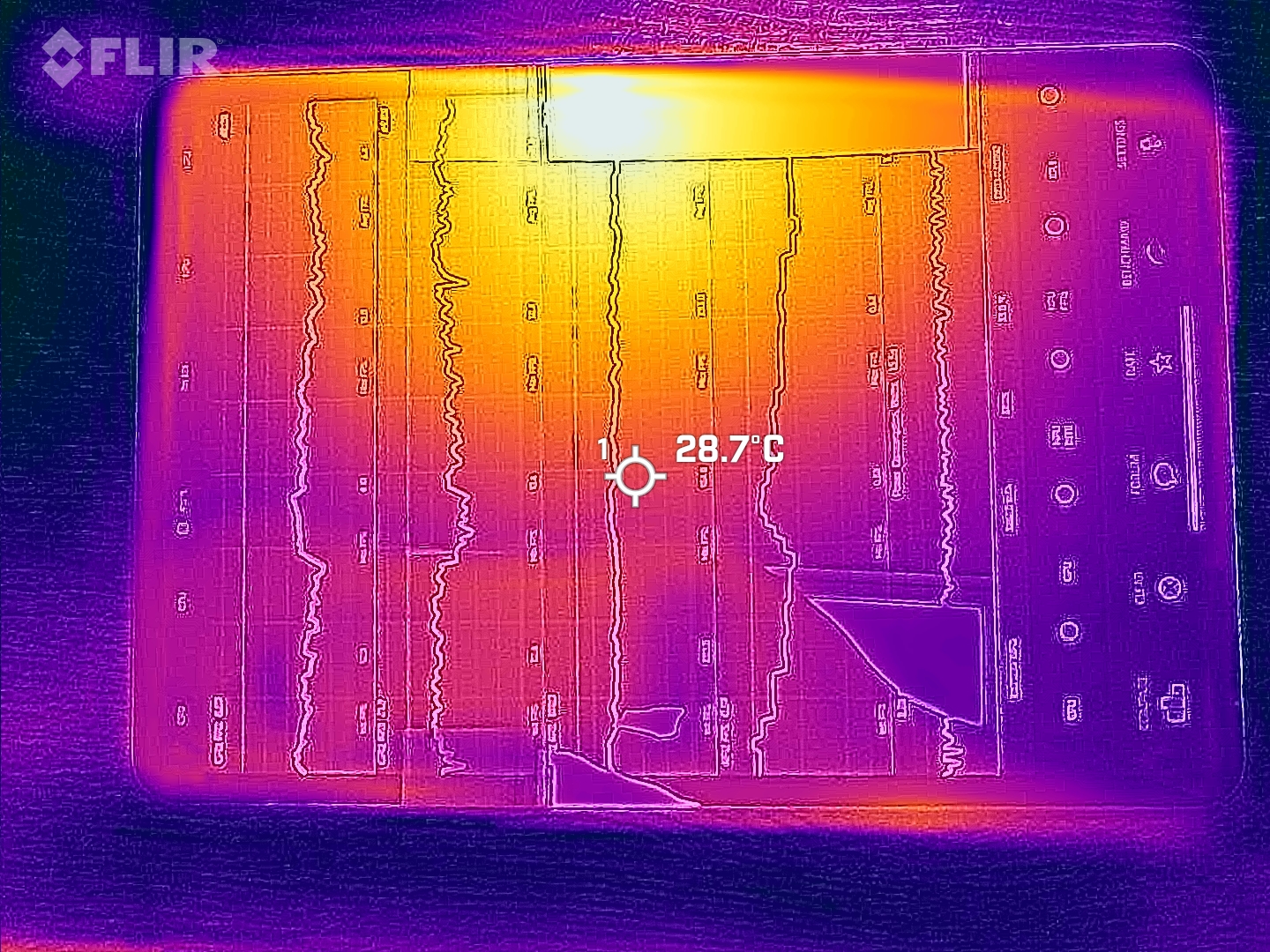
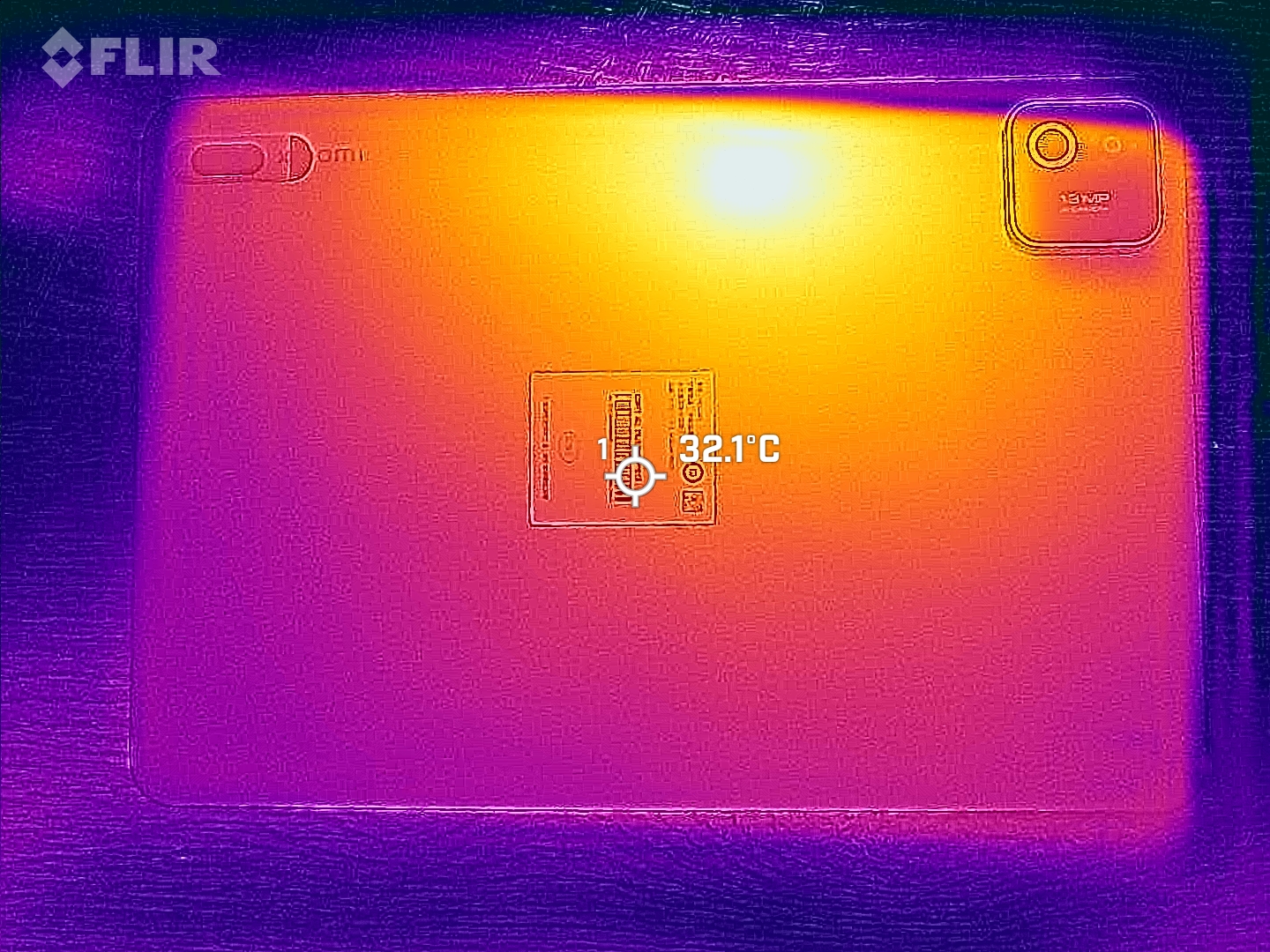
The Pad 9's case didn't reach high temperatures, either at idle or under load. As a result, performance remained relatively consistent during 3DMark stress tests, and we observed no significant drop in frame rates (greater than 20 percent).
(±) The maximum temperature on the upper side is 40.9 °C / 106 F, compared to the average of 33.9 °C / 93 F, ranging from 20.7 to 307 °C for the class Tablet.
(±) The bottom heats up to a maximum of 40.6 °C / 105 F, compared to the average of 33.2 °C / 92 F
(+) In idle usage, the average temperature for the upper side is 26.2 °C / 79 F, compared to the device average of 30 °C / 86 F.
3DMark Stress Tests
| 3DMark | |
| Wild Life Stress Test Stability | |
| Oppo Pad 5 | |
| Honor MagicPad 4 | |
| Apple iPad 10 | |
| Xiaomi Pad 9 | |
| Xiaomi Pad 8 | |
| Wild Life Extreme Stress Test | |
| Oppo Pad 5 | |
| Honor MagicPad 4 | |
| Apple iPad 10 | |
| Xiaomi Pad 9 | |
| Xiaomi Pad 8 | |
| Solar Bay Stress Test Stability | |
| Honor MagicPad 4 | |
| Xiaomi Pad 8 | |
| Xiaomi Pad 9 | |
| Steel Nomad Light Stress Test Stability | |
| Oppo Pad 5 | |
| Xiaomi Pad 9 | |
| Xiaomi Pad 8 | |
Speakers
This mid-range Xiaomi tablet's sound profile is characterized by mid- and high-frequency tones. In our measurements, the "pink noise" response of the 2026 model is less linear than that of the Pad 8; the Pad 9 shows a slight drop in performance, particularly at the low-frequency and ultra-high-frequency ends of the spectrum.
Anyone preferring more bass will enjoy the device's support for the use of preferred headphones—either wirelessly via Bluetooth 5.4 or via a wired connection through the USB port. A wide range of wireless audio codecs is also supported.
Xiaomi Pad 9 audio analysis
(+) | speakers can play relatively loud (85.1 dB)
Bass 100 - 315 Hz
(±) | reduced bass - on average 14% lower than median
(±) | linearity of bass is average (11.9% delta to prev. frequency)
Mids 400 - 2000 Hz
(±) | higher mids - on average 6% higher than median
(+) | mids are linear (5.7% delta to prev. frequency)
Highs 2 - 16 kHz
(+) | balanced highs - only 2.9% away from median
(+) | highs are linear (6.3% delta to prev. frequency)
Overall 100 - 16.000 Hz
(±) | linearity of overall sound is average (16.8% difference to median)
Compared to same class
» 41% of all tested devices in this class were better, 5% similar, 54% worse
» The best had a delta of 7%, average was 21%, worst was 130%
Compared to all devices tested
» 30% of all tested devices were better, 7% similar, 62% worse
» The best had a delta of 4%, average was 23%, worst was 136%
Xiaomi Pad 8 audio analysis
(+) | speakers can play relatively loud (86.9 dB)
Bass 100 - 315 Hz
(±) | reduced bass - on average 13% lower than median
(±) | linearity of bass is average (11.4% delta to prev. frequency)
Mids 400 - 2000 Hz
(±) | higher mids - on average 5.2% higher than median
(+) | mids are linear (5.6% delta to prev. frequency)
Highs 2 - 16 kHz
(+) | balanced highs - only 3.1% away from median
(+) | highs are linear (6.2% delta to prev. frequency)
Overall 100 - 16.000 Hz
(+) | overall sound is linear (11.9% difference to median)
Compared to same class
» 15% of all tested devices in this class were better, 5% similar, 80% worse
» The best had a delta of 7%, average was 21%, worst was 130%
Compared to all devices tested
» 9% of all tested devices were better, 3% similar, 88% worse
» The best had a delta of 4%, average was 23%, worst was 136%
Battery life - The Xiaomi tablet does fast charging
Power consumption
The Pad 9 features a large 9720 mAh dual-cell battery. It supports 45W fast charging and is compatible with a wide range of protocols (PD3.0, QC3+). It also offers 22.5W reverse charging, which can power devices such as headphones or a smartwatch.
When completely depleted, the battery takes approximately 1.5 hours to reach a 100 percent charge.
In terms of power consumption, the device’s idle draw is relatively high—notably higher than that of the Pad 8. Furthermore, significant power spikes can occur when the device is under heavy load.
| Off / Standby |   0.1 / 0.2 Watt |
| Idle |  4 / 4.1 / 4.6 Watt |
| Load |
7.4 / 16.4 Watt |
    
| |
Key:
min: ,
med: ,
max: Metrahit Energy | |
| Xiaomi Pad 9 9720 mAh | Apple iPad 10 7606 mAh | Oppo Pad 5 10420 mAh | Honor MagicPad 4 10100 mAh | Xiaomi Pad 8 9200 mAh | Average Qualcomm Snapdragon 8s Gen 4 SM8735 | Average of class Tablet | |
|---|---|---|---|---|---|---|---|
| Power Consumption | -16% | 43% | -6% | 40% | 36% | 12% | |
| Idle Minimum * (Watt) | 4 | 1.34 66% | 1.8 55% | 3.53 12% | 1.3 67% | 1.72 ? 57% | 2.14 ? 46% |
| Idle Average * (Watt) | 4.1 | 7.78 -90% | 1.9 54% | 4.77 -16% | 2 51% | 2.06 ? 50% | 3.71 ? 10% |
| Idle Maximum * (Watt) | 4.6 | 7.89 -72% | 2.1 54% | 4.86 -6% | 2.3 50% | 2.4 ? 48% | 4.11 ? 11% |
| Load Average * (Watt) | 7.4 | 9.05 -22% | 6.7 9% | 11.21 -51% | 6.6 11% | 7.21 ? 3% | 8.83 ? -19% |
| Load Maximum * (Watt) | 16.4 | 9.98 39% | 9 45% | 11.67 29% | 13.3 19% | 12.9 ? 21% | 14.7 ? 10% |
* ... smaller is better
Power consumption: Geekbench (150 cd/m²)
Power consumption: GFXbench (150 cd/m²)
Battery runtime
In our real-life Wi-Fi web-browsing test, the Xiaomi Pad 9 ran for 19 hours of continuous use with the display brightness set to 150 cd/m². Although this is an excellent result compared to iPads, it is somewhat disappointing when measured against its predecessor's battery life.
| Xiaomi Pad 9 9720 mAh | Apple iPad 10 7606 mAh | Oppo Pad 5 10420 mAh | Honor MagicPad 4 10100 mAh | Xiaomi Pad 8 9200 mAh | |
|---|---|---|---|---|---|
| Battery runtime | |||||
| WiFi v1.3 (h) | 19.6 | 10.8 -45% | 19.1 -3% | 13.1 -33% | 20.7 6% |
Notebookcheck overall rating
The Xiaomi Pad 9 left us with mixed impressions. On the one hand, this mid-range tablet represents an excellent overall package for under $500, but on the other, hardly any improvements are to be found compared to its predecessor.
If you can find a good deal on the Pad 8, you can go ahead and buy it without hesitation, given how minimal the differences are.

Xiaomi Pad 9
- 10/31/2026 v8
Marcus Herbrich
 Total Sustainability Score:
Possible alternatives compared
Image | Model / Review | Price | Weight | Drive | Display |
|---|---|---|---|---|---|
1. 88.1%  | Xiaomi Pad 9 Qualcomm Snapdragon 8s Gen 4 SM8735 ⎘ Qualcomm Adreno 825 ⎘ 12 GB Memory, 256 GB UFS 4.x | List Price: 400€ | 485 g | 256 GB UFS 4.1 Flash | 11.20" 3200x2136 344 PPI LCD |
2. 80.9%  | Oppo Pad 5 MediaTek Dimensity 7300 ⎘ ARM Mali-G615 MP2 ⎘ 8 GB Memory, 128 GB UFS 3.1 | List Price: 459€ | 577 g | 128 GB UFS 3.1 Flash | 12.10" 2800x1980 283 PPI LCD |
3. 89.6%  | Honor MagicPad 4 Qualcomm Snapdragon 8 Gen 5 ⎘ Qualcomm Adreno 829 ⎘ 12 GB Memory, 256 GB UFS 4.x | List Price: 600€ | 450 g | 256 GB UFS 4.0 Flash | 12.30" 3000x1920 290 PPI OLED |
4. 87.1%  | Xiaomi Pad 8 Qualcomm Snapdragon 8s Gen 4 SM8735 ⎘ Qualcomm Adreno 825 ⎘ 12 GB Memory, 256 GB UFS 4.x | List Price: 437€ | 485 g | 256 GB UFS 4.1 Flash | 11.20" 3200x2136 344 PPI IPS |
5. 83.9%  | Apple iPad 11 (2025) Apple A16 Bionic ⎘ Apple A16 GPU 4-Core ⎘ 6 GB Memory, 128 GB NVMe | List Price: 399€ | 477 g | 128 GB NVMe | 10.86" 2360x1640 265 PPI IPS |
Transparency
The selection of devices to be reviewed is made by our editorial team. The test sample was provided to the author as a loan by the manufacturer or retailer for the purpose of this review. The lender had no influence on this review, nor did the manufacturer receive a copy of this review before publication. There was no obligation to publish this review. As an independent media company, Notebookcheck is not subjected to the authority of manufacturers, retailers or publishers.
This is how Notebookcheck is testing
Every year, Notebookcheck independently reviews hundreds of laptops and smartphones using standardized procedures to ensure that all results are comparable. We have continuously developed our test methods for around 20 years and set industry standards in the process. In our test labs, high-quality measuring equipment is utilized by experienced technicians and editors. These tests involve a multi-stage validation process. Our complex rating system is based on hundreds of well-founded measurements and benchmarks, which maintains objectivity. Further information on our test methods can be found here.
 Add as a preferred source on Google


