


Verdict - Xiaomi Pad 9 Pro Max
You certainly wouldn't call the Pad 9 Pro Max a bargain; however, given the price tags of the Galaxy Tab S12 Ultra and iPad Pro 13, Xiaomi’s flagship tablet—priced under £1,000—represents a remarkable technological statement. Unfortunately, it remains unclear how widely the Pro Max model will be officially available in Europe.
With its proprietary chipset, Xiaomi impressively shows that the device—and especially the Xring O3—can compete at the very top, particularly when it comes to GPU performance. It also features a high-quality, slim chassis, exceptional battery life, and an extensive feature set. Of particular note is the brilliant "DisplayPort-in" feature—a capability that every flagship tablet should have from now on.
When paired with its comprehensive range of accessories, the Pad 9 Pro Max serves not only as a compelling PC replacement but also as a practical extension for a laptop. Although the bright 13.3-inch display cannot quite match the black levels seen on an OLED panel, it has the advantage of being completely free from PWM (pulse-width modulation) flicker.
Pros
Cons
Price and availability - Xiaomi Pad 9 Pro Max

In China, Xiaomi offers the Pad 9 Pro Max starting at the equivalent of $730 (12 GB + 256 GB). The top-tier model, featuring 16 GB of RAM and 1 TB of storage, costs the equivalent of approximately $1,119. At our device provider, Trading Shenzhen, prices start at around $1,000. Xiaomi has not yet provided any information regarding an international market launch outside of China.
Table of Contents
- Verdict - Xiaomi Pad 9 Pro Max
- Specifications - Xiaomi Pad 9 Pro Max
- Case - A waterproof Android tablet with an IP68 rating?
- Features - The Xiaomi Pad 9 Pro Max comes with USB 3.2 and video output
- Software - The Xiaomi Pad 9 Pro Max has Android 17 and HyperOS 4
- Communication and GNSS - A big Android tablet without 5G, but with WiFi 7
- Cameras - A Xiaomi tablet boasting 50 megapixels
- Accessories and warranty - A Xiaomi tablet with a stylus and charger
- Input devices and operation - An Android tablet with a fingerprint sensor
- Display - A large 3:2 screen but no OLED
- Performance - XRing O3 instead of Snapdragon 8 Elite Extreme Gen 6
- Emissions - A large Android tablet with low temperatures
- Battery life - An Android tablet mit 120-watt fast charging
- Notebookcheck overall rating
- Possible alternatives compared
Specifications - Xiaomi Pad 9 Pro Max
Case - A waterproof Android tablet with an IP68 rating?
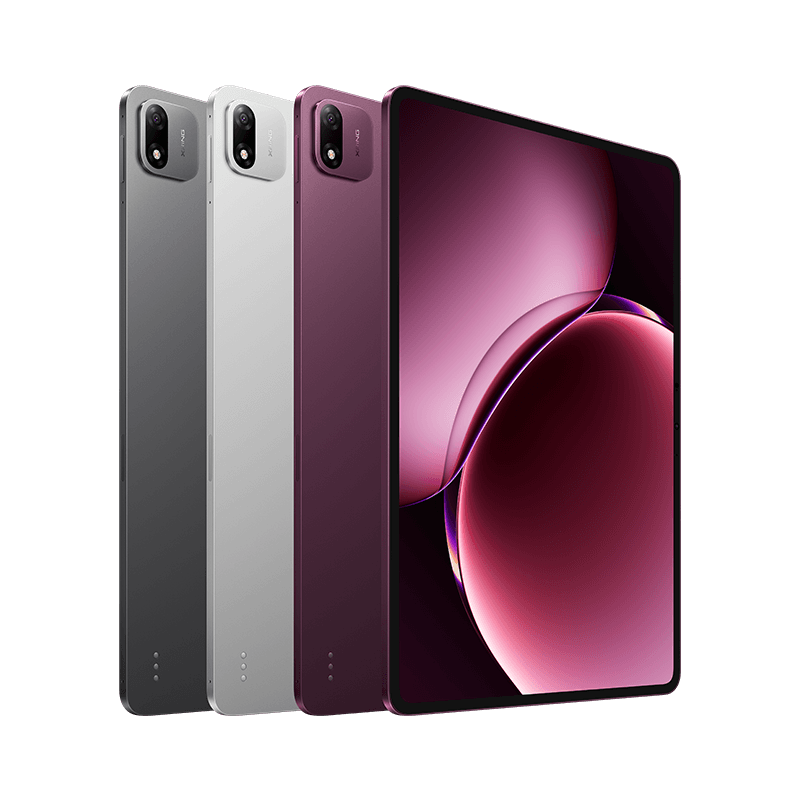
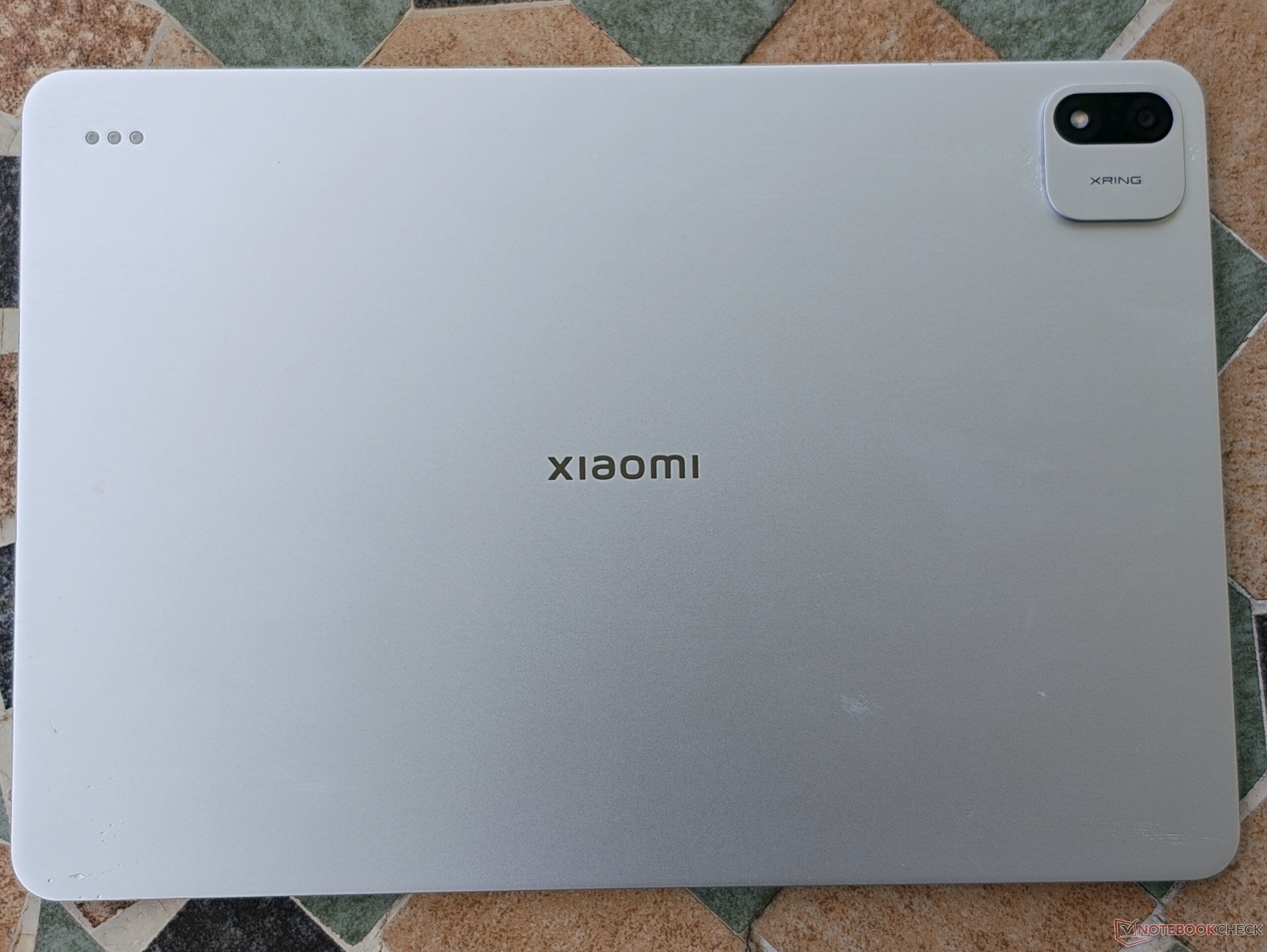
At 13.3 inches, the Pad 9 Pro Max is a very large tablet, yet, at under 6 millimeters, it feels pleasantly thin. Tipping the scales at 645 grams, it is also not particularly heavy for its size. That said, Xiaomi’s flagship cannot exactly be described as portable.
The unibody is crafted from aluminum and feels very premium. Thanks to an IP68 rating, the Pad 9 Pro Max is both dustproof and waterproof.
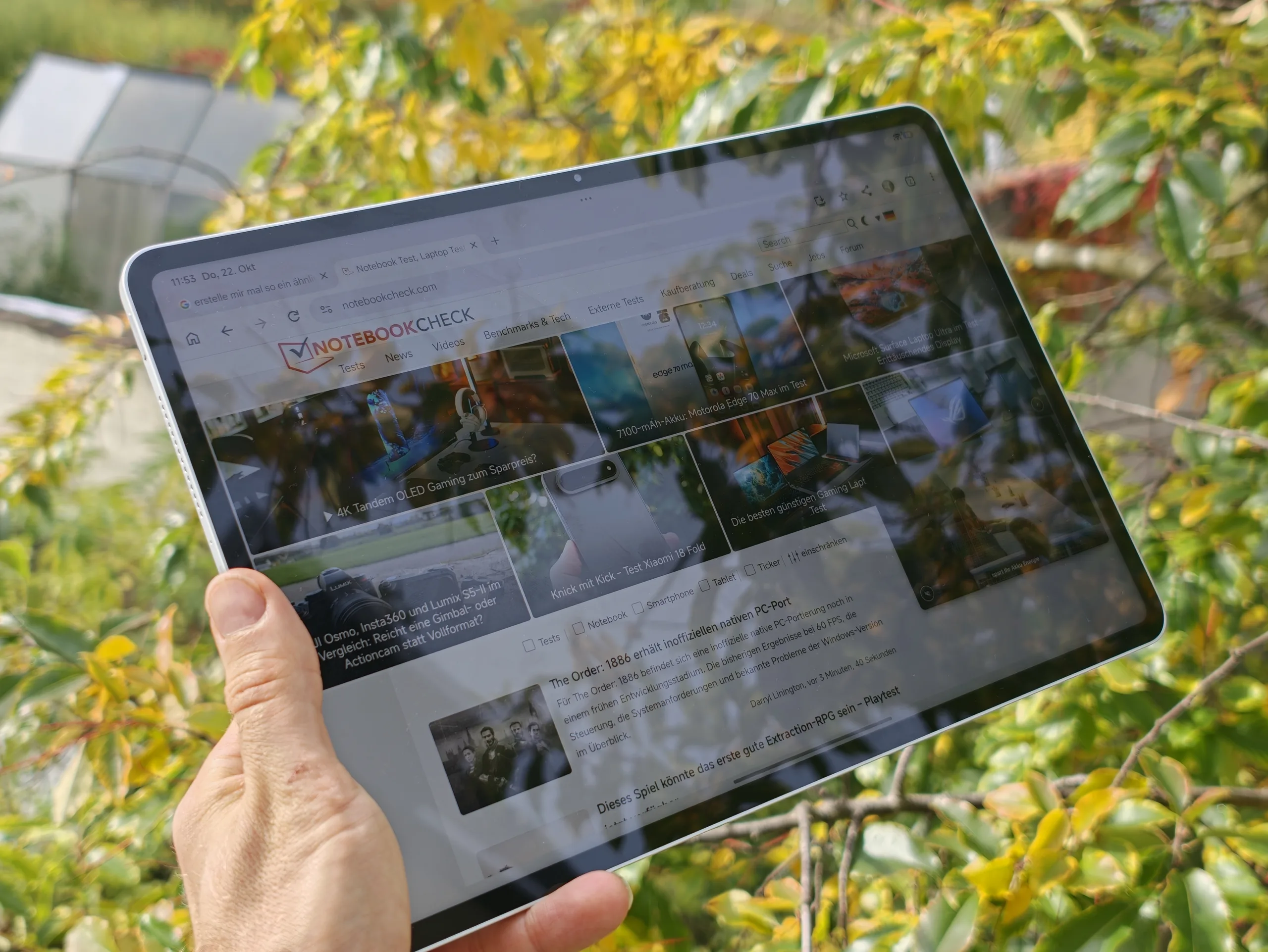
Xiaomi offers its flagship tablet with the choice of either a glossy display or a matte "Soft-Light" version.
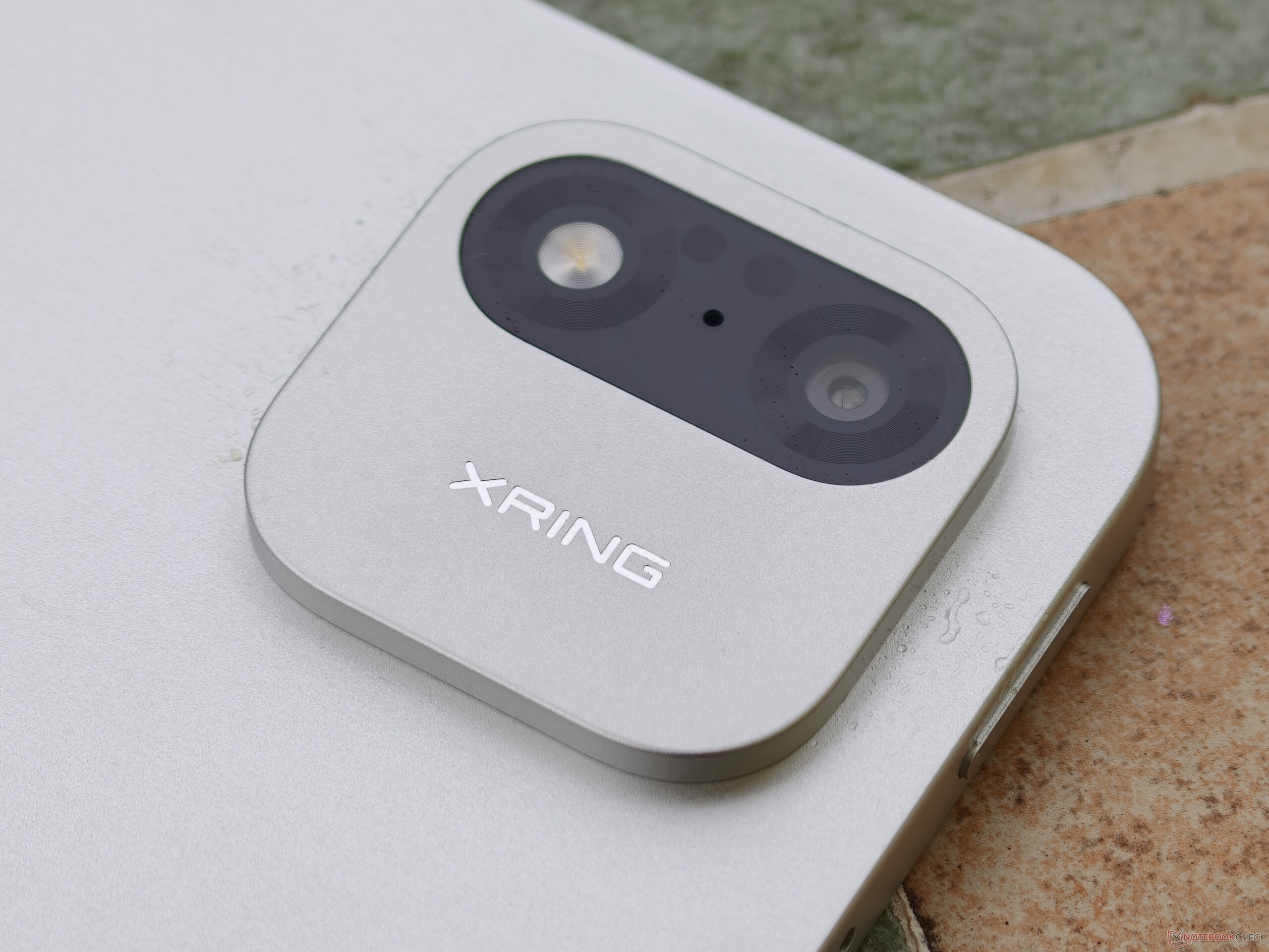
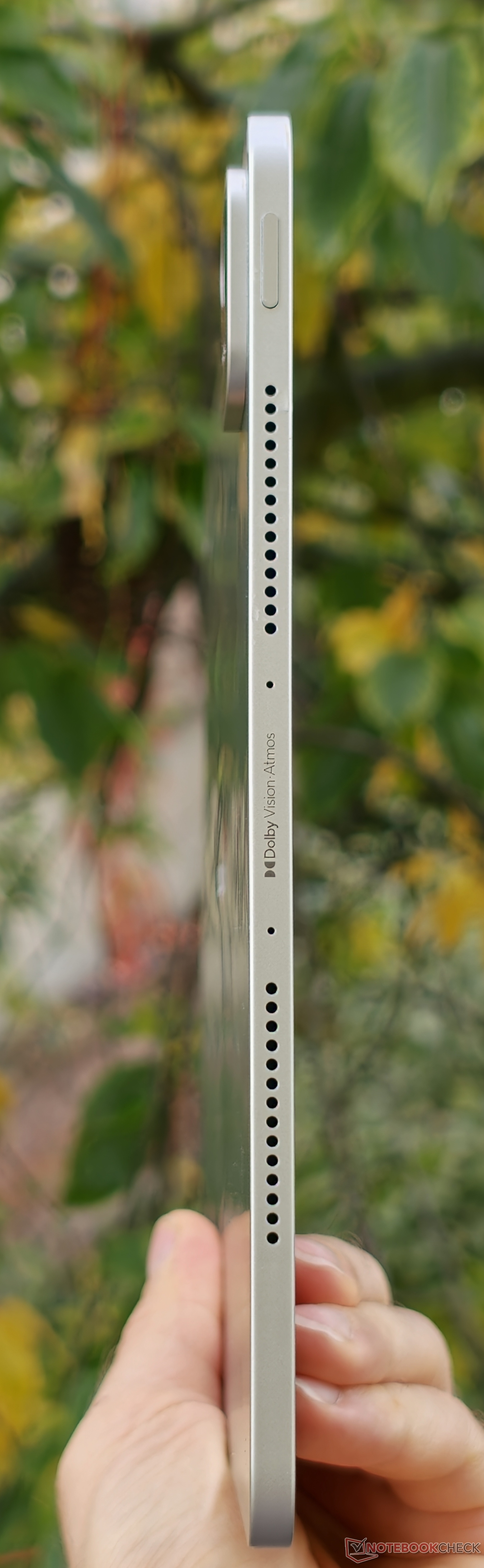
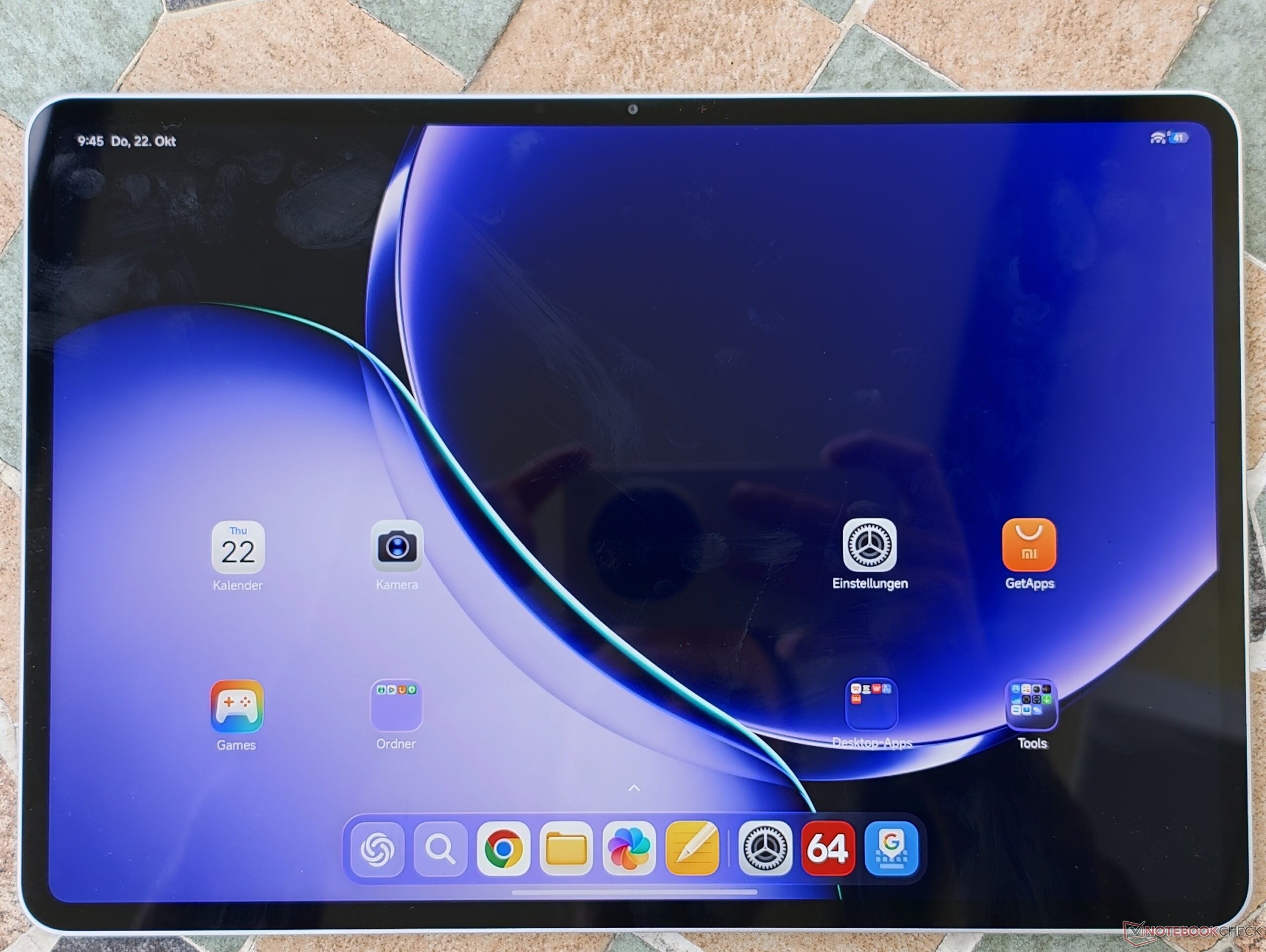
Features - The Xiaomi Pad 9 Pro Max comes with USB 3.2 and video output
The Pad 9 Pro Max features a high-speed USB-C port (USB 3.2) that supports video output and even includes a DisplayPort input for both video and audio. This lets the 13.3-inch screen serve as a portable secondary display for a laptop. An infrared transmitter is also included.
For system memory (RAM), Xiaomi utilizes different technologies depending on the specific configuration. While the base model uses LPDDR5X, higher-tier models feature LPDDR5T, and the top-tier version employs LPDDR6 RAM—delivering exceptionally high memory bandwidth and fast response times. For data storage, Xiaomi uses high-speed UFS 4.1 flash storage throughout the lineup, complemented by FBO (File-Based Optimization) technology.
Software - The Xiaomi Pad 9 Pro Max has Android 17 and HyperOS 4
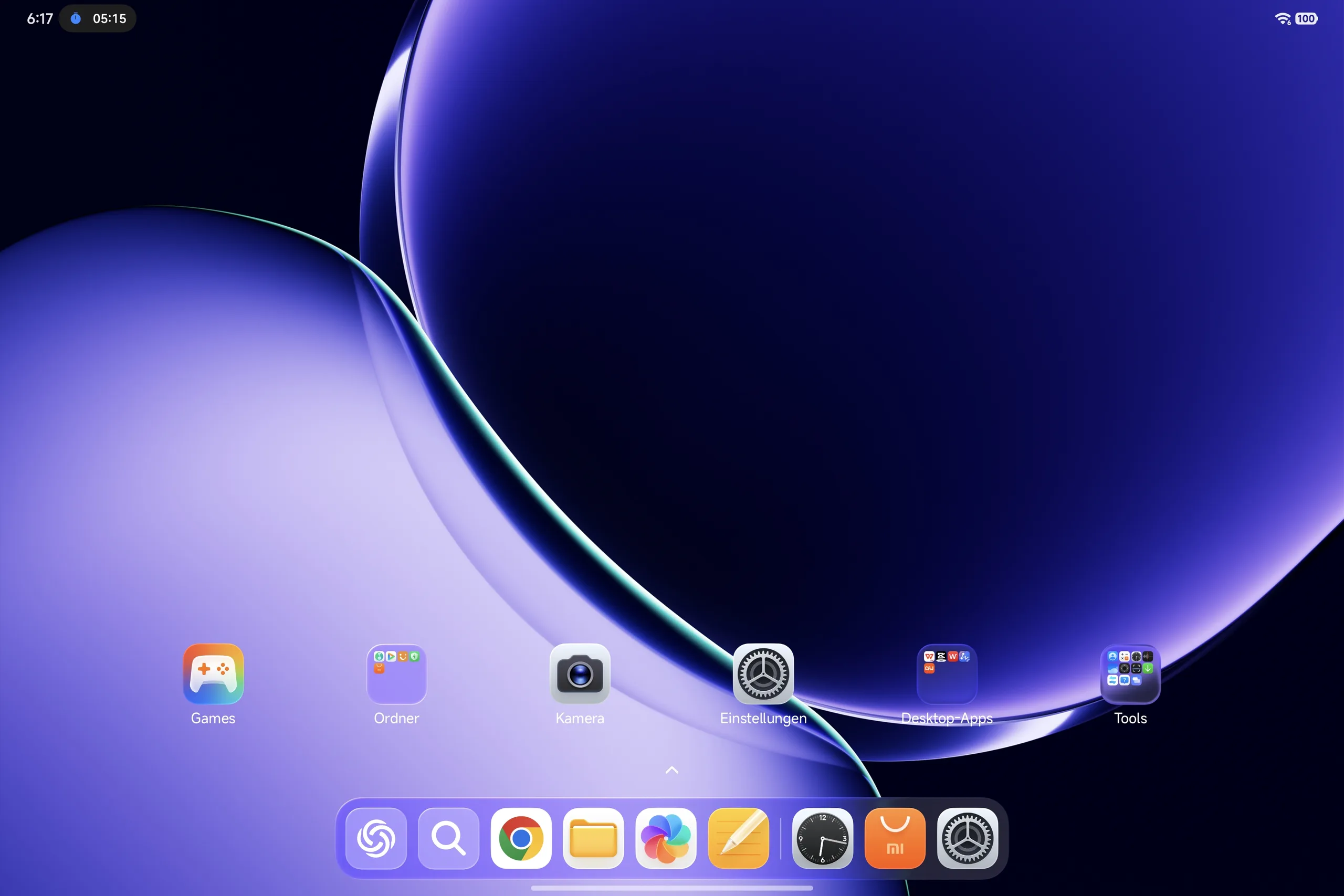
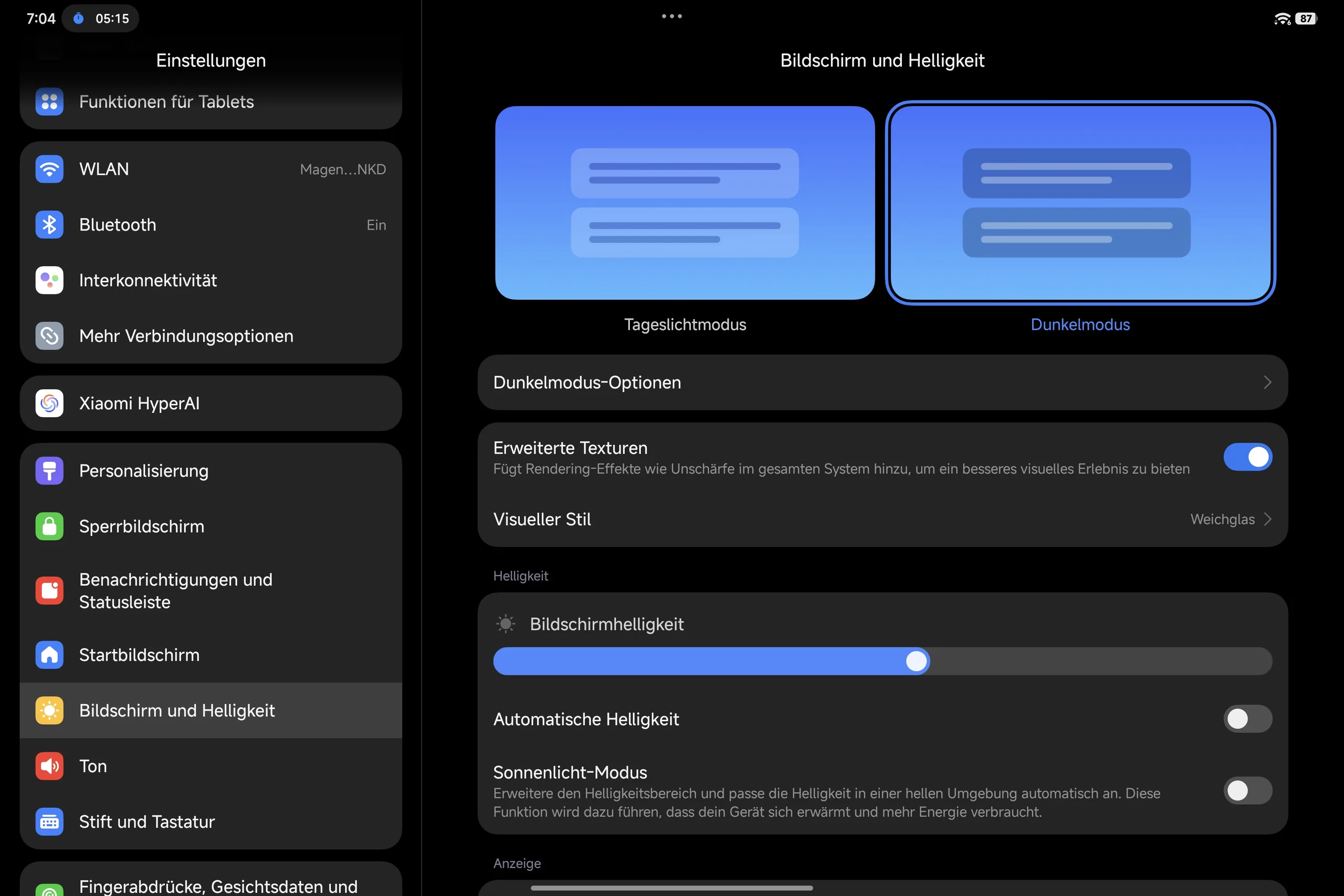
The Pad 9 Pro Max runs the latest version of HyperOS 4, which offers additional features specifically designed for large displays. These include multitasking features that let you divide the screen into up to six separate sections. File management and document viewing have also been enhanced with new features modelled on a PC interface.
Xiaomi has not officially stated how long the Chinese version of the device will receive updates; however, according to reports, the premium tablet is set to receive four major operating system upgrades and five to six years of security updates.
Sustainability
Xiaomi hasn't provided information regarding the ecological footprint or environmental initiatives for its premium tablet. The packaging appears to be made of cardboard and contains no plastic.
Communication and GNSS - A big Android tablet without 5G, but with WiFi 7
For wireless communication, the Xiaomi Pad 9 Pro Max is equipped with Wi-Fi 7, including MIMO (2×2) support. In our tests, the flagship tablet demonstrated fast communication speeds, though it proved to be slower than current high-end smartphones, such as the Oppo Find X9 Ultra.
For Bluetooth, Xiaomi uses both the 6.0 standard and "Dual Bluetooth," which allows multiple audio devices to be connected simultaneously.
Xiaomi does not offer a cellular connectivity option or satellite-based positioning. While the Pad 9 Pro Max can determine its location using Wi-Fi and a digital compass, this is insufficient for navigation purposes.
| Networking | |
| Xiaomi Pad 9 Pro Max | |
| iperf3 transmit Wi-Fi6/7 RT-BE96U | |
| iperf3 receive Wi-Fi6/7 RT-BE96U | |
| OnePlus Pad 4 | |
| iperf3 transmit Wi-Fi6/7 RT-BE96U | |
| iperf3 receive Wi-Fi6/7 RT-BE96U | |
| Apple iPad Air 13 M4 2026 | |
| iperf3 receive RT-BE96U WiFi7 | |
| iperf3 transmit RT-BE96U WiFi7 | |
| Lenovo Idea Tab Pro Gen 2 | |
| iperf3 transmit AXE11000 6GHz | |
| iperf3 receive AXE11000 6GHz | |
| Average 802.11 a/b/g/n/ac/ax/be | |
| iperf3 transmit AXE11000 6GHz | |
| iperf3 receive AXE11000 6GHz | |
| iperf3 transmit Wi-Fi6/7 RT-BE96U | |
| iperf3 receive Wi-Fi6/7 RT-BE96U | |
| iperf3 receive RT-BE96U WiFi7 | |
| iperf3 transmit RT-BE96U WiFi7 | |
| Average of class Tablet | |
| iperf3 transmit AXE11000 6GHz | |
| iperf3 receive AXE11000 6GHz | |
| iperf3 transmit Wi-Fi6/7 RT-BE96U | |
| iperf3 receive Wi-Fi6/7 RT-BE96U | |
| iperf3 receive RT-BE96U WiFi7 | |
| iperf3 transmit RT-BE96U WiFi7 | |
Cameras - A Xiaomi tablet boasting 50 megapixels

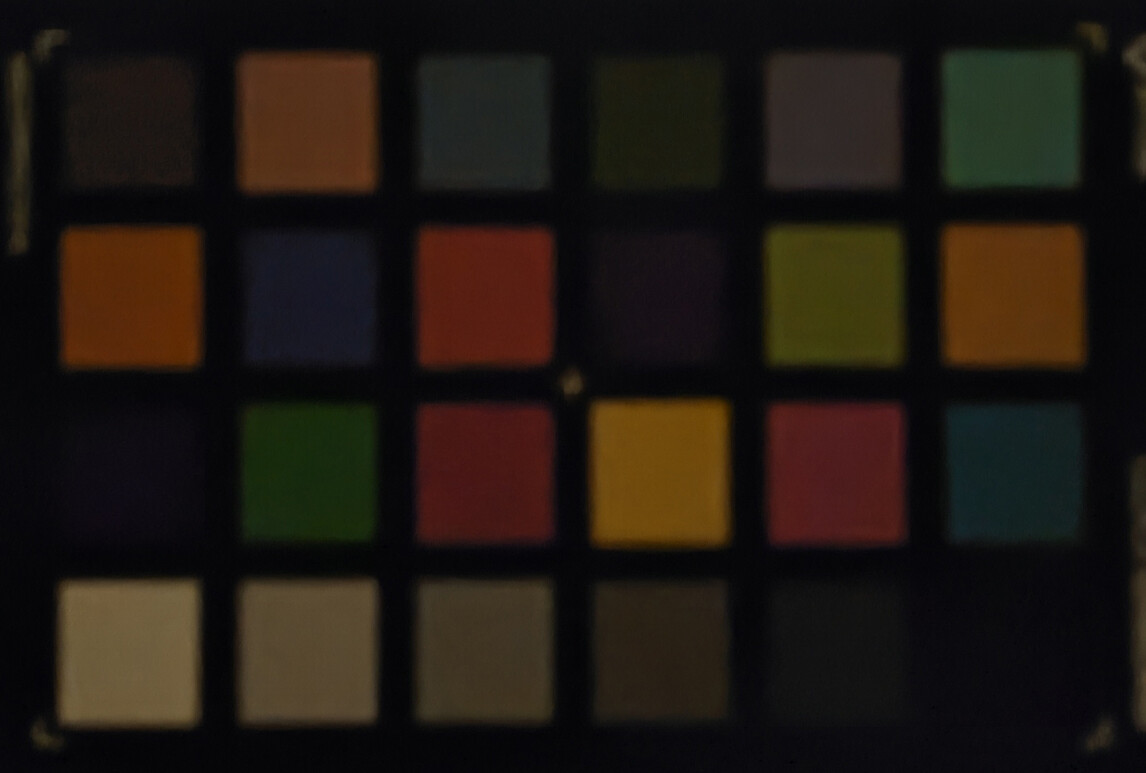
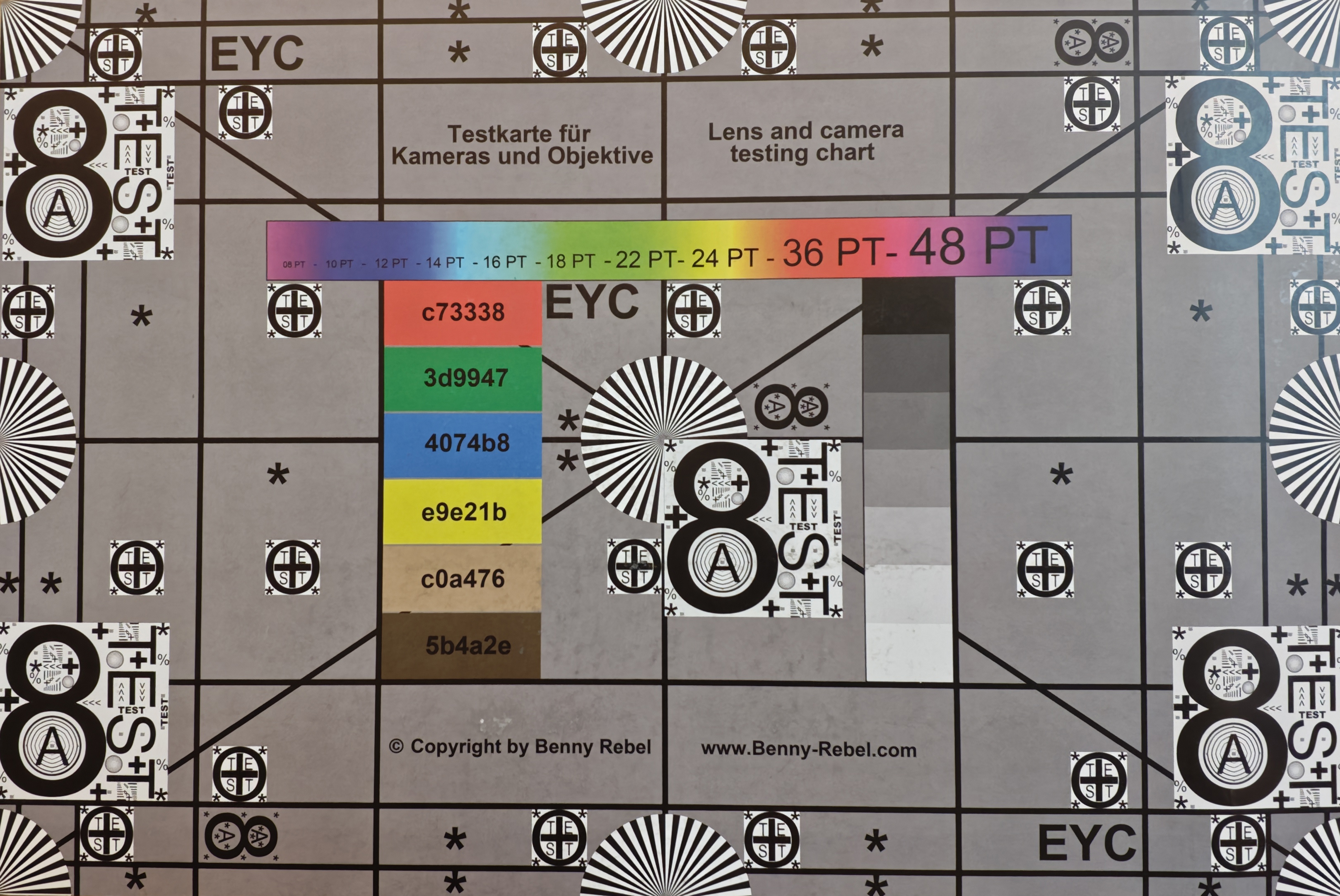
For a tablet, the Pad 9 Pro Max's rear-facing camera is perfectly adequate. The 50-megapixel sensor supports 4K video recording at up to 60 frames per second and includes autofocus—though the latter is not always entirely reliable.
Nevertheless, photos captured with the Xiaomi tablet are solid and well-suited for digitizing notes or course materials. Xiaomi also includes a variety of shooting modes, such as a document mode, a "Pro" mode for manual adjustments, and a dedicated 50-megapixel high-resolution mode.
For video calls and online meetings, there is a 32-megapixel ultra-wide-angle front camera, complemented by an array of six microphones that provide 360-degree voice capture. However, this camera is limited to 1080p video recording and lacks autofocus. The quality can best be described as acceptable.
















Accessories and warranty - A Xiaomi tablet with a stylus and charger
Out of the box, it includes a 120-watt fast-charging power adapter and a USB Type-C cable, and the version with the Nano Soft Light display also includes a cleaning cloth.
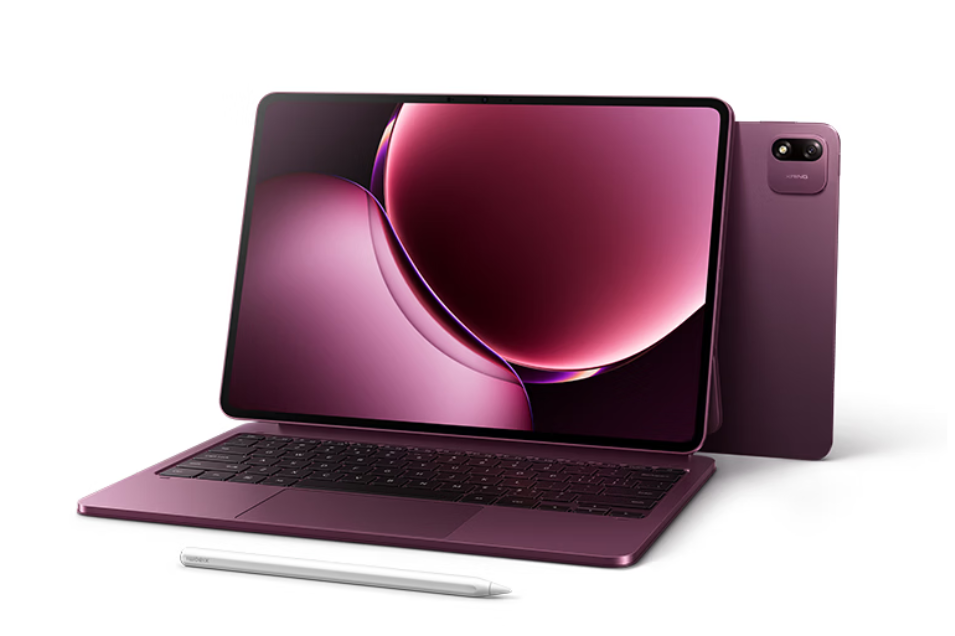
Optional accessories are available, including the Focus Pen Pro—which features 16,384 levels of pressure sensitivity (price: $109) as well as a matching QWERTY keyboard case (price:$221).
Our imported device possesses a 12-month warranty, and Trading Shenzhen also sends the device to German shipping addresses.
Input devices and operation - An Android tablet with a fingerprint sensor
The Pad 9 Pro features a responsive touchscreen that accurately registers finger inputs. Thanks to a refresh rate of up to 144 Hz, navigation and animations are performed exceptionally smoothly.
One nice touch is that this premium tablet includes a fingerprint sensor integrated into the power button, which should be quite easy to reach with your left hand. The sensor’s recognition accuracy and speed are also impressive. For additional biometric security, 2D facial recognition is also available.



Display - A large 3:2 screen but no OLED
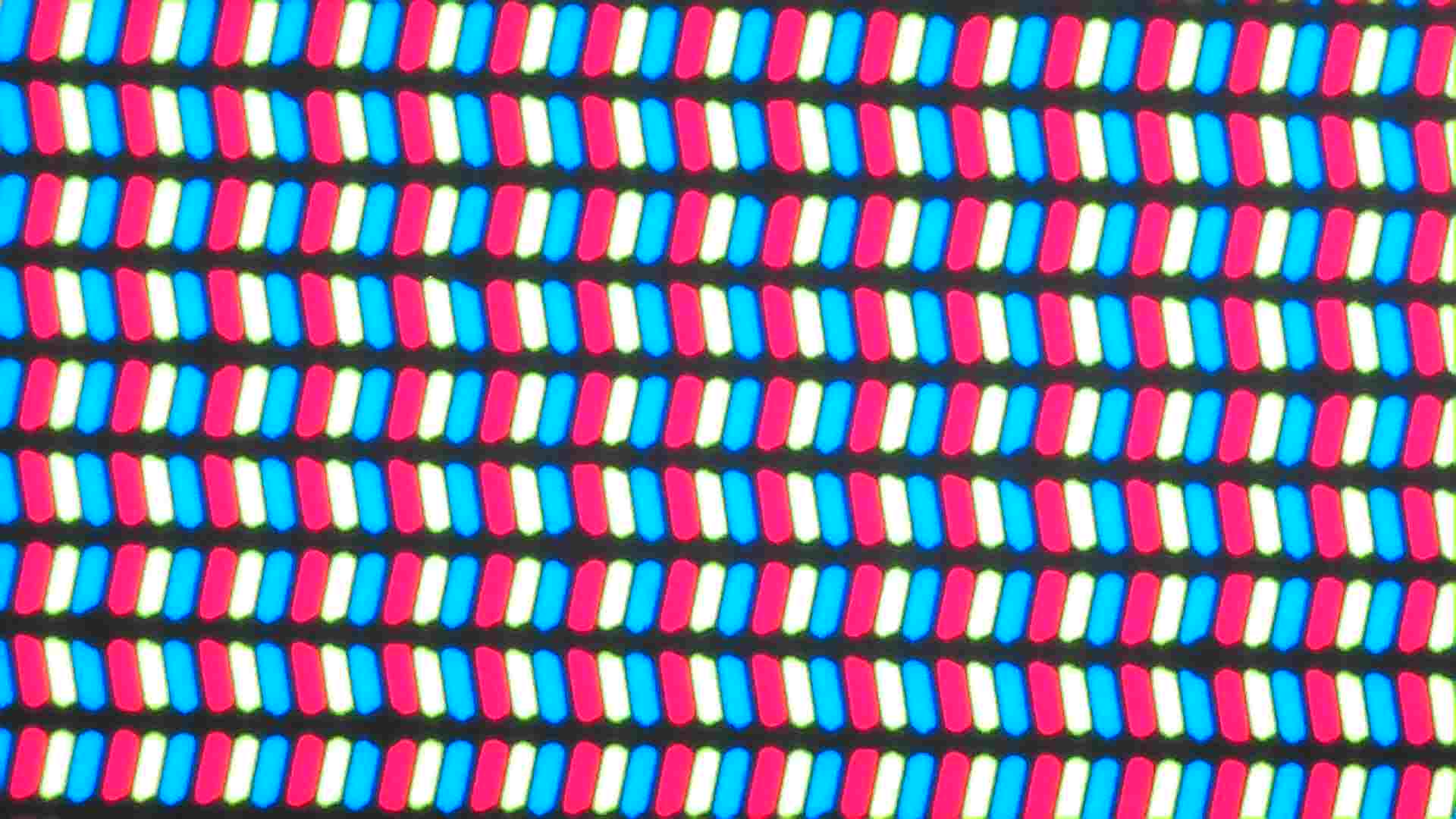
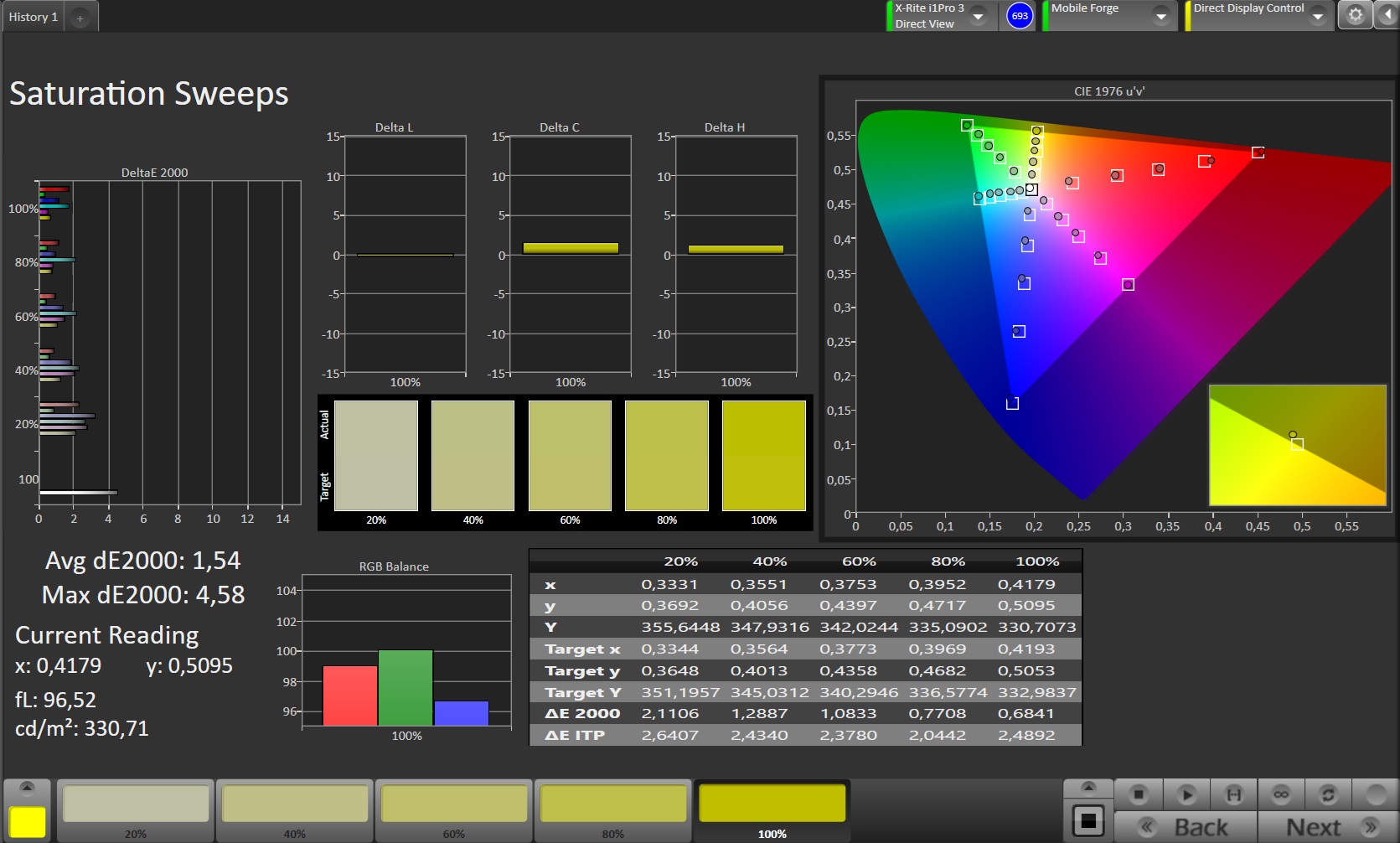
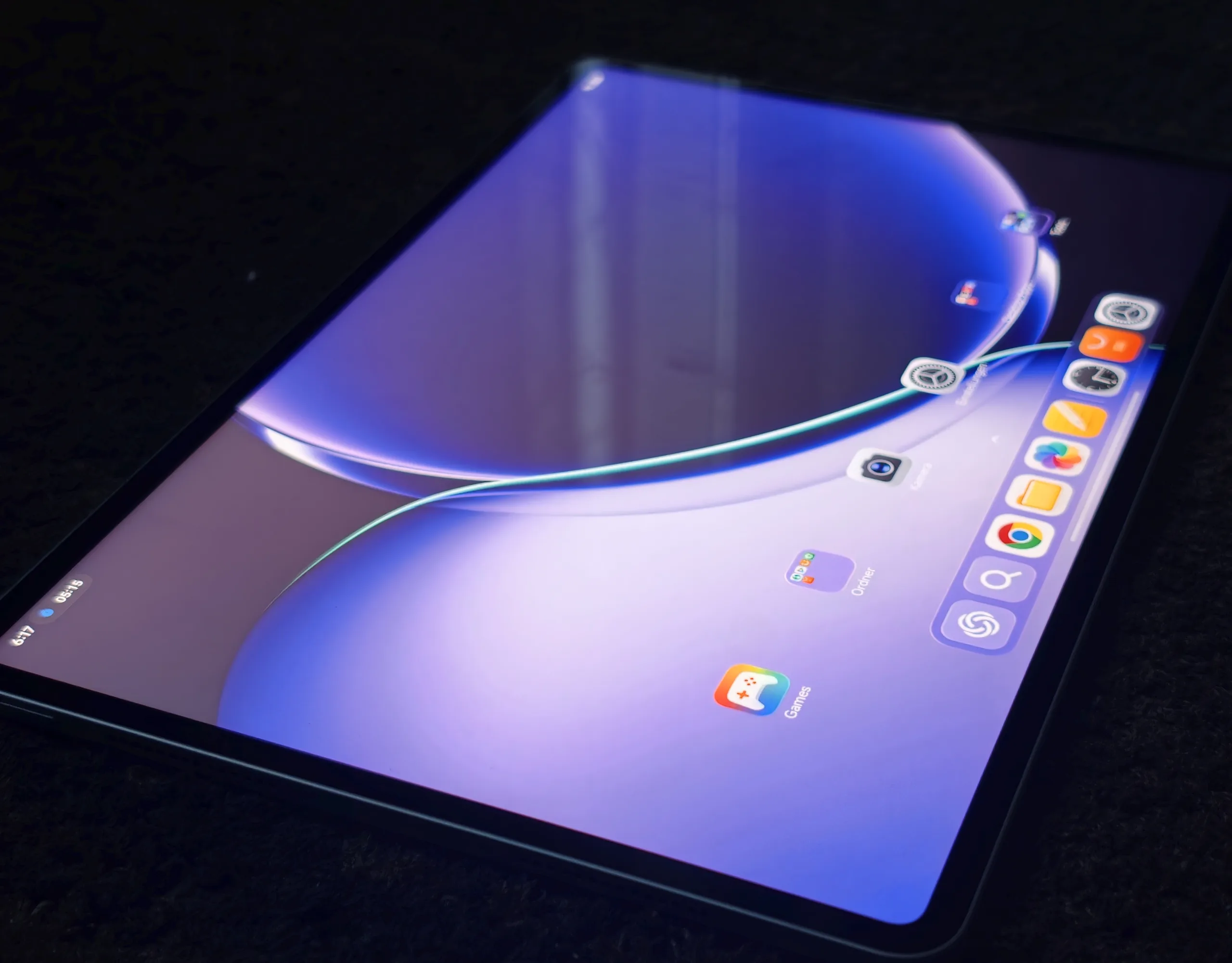
The Pad 9 Pro Max features a 13.3-inch LCD screen with a 3:2 aspect ratio and a pixel density of over 300 PPI. According to Xiaomi, the panel can achieve a brightness of up to 1,000 nits—a figure we were able to confirm in our own HDR and APL18 measurements.
The panel also supports HDR10, HDR Vivid, and Dolby Vision for the playback of HDR content.
Furthermore, the Pad 9 Pro Max excels in the area of eye comfort. The display holds TÜV Rheinland certifications for low hardware-level blue light emissions, flicker-free performance, and eye-friendly adaptive adjustments, alongside DC dimming across the entire brightness range. By doing so, Xiaomi avoids using PWM (pulse-width modulation) flickering for brightness control, thereby reducing potential strain for users sensitive to such issues.
| |||||||||||||||||||||||||
Brightness Distribution: 93 %
Center on Battery: 877 cd/m²
Contrast: 1349:1 (Black: 0.65 cd/m²)
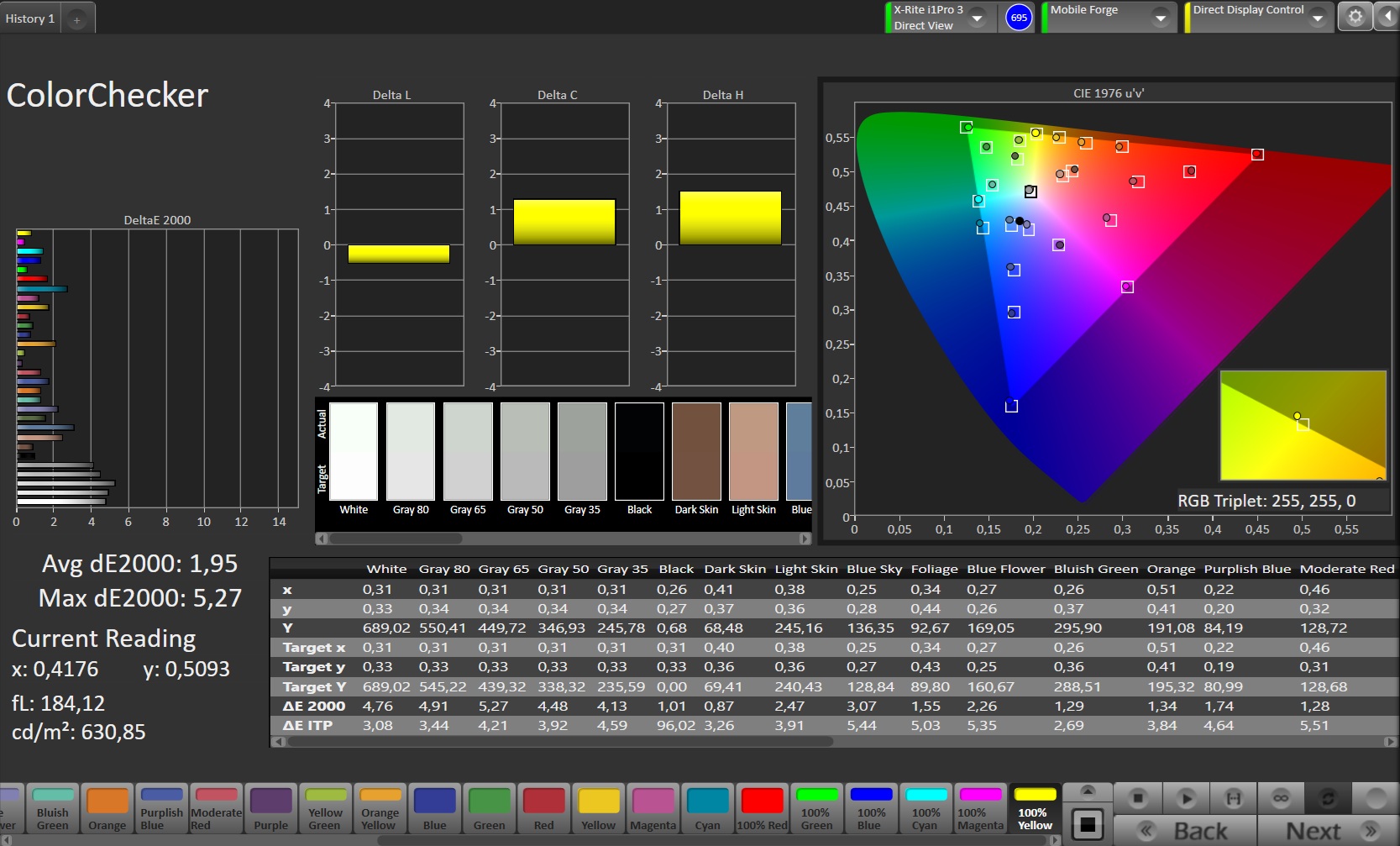
ΔE ColorChecker Calman: 1.95 | ∀{0.5-29.43 Ø4.68}
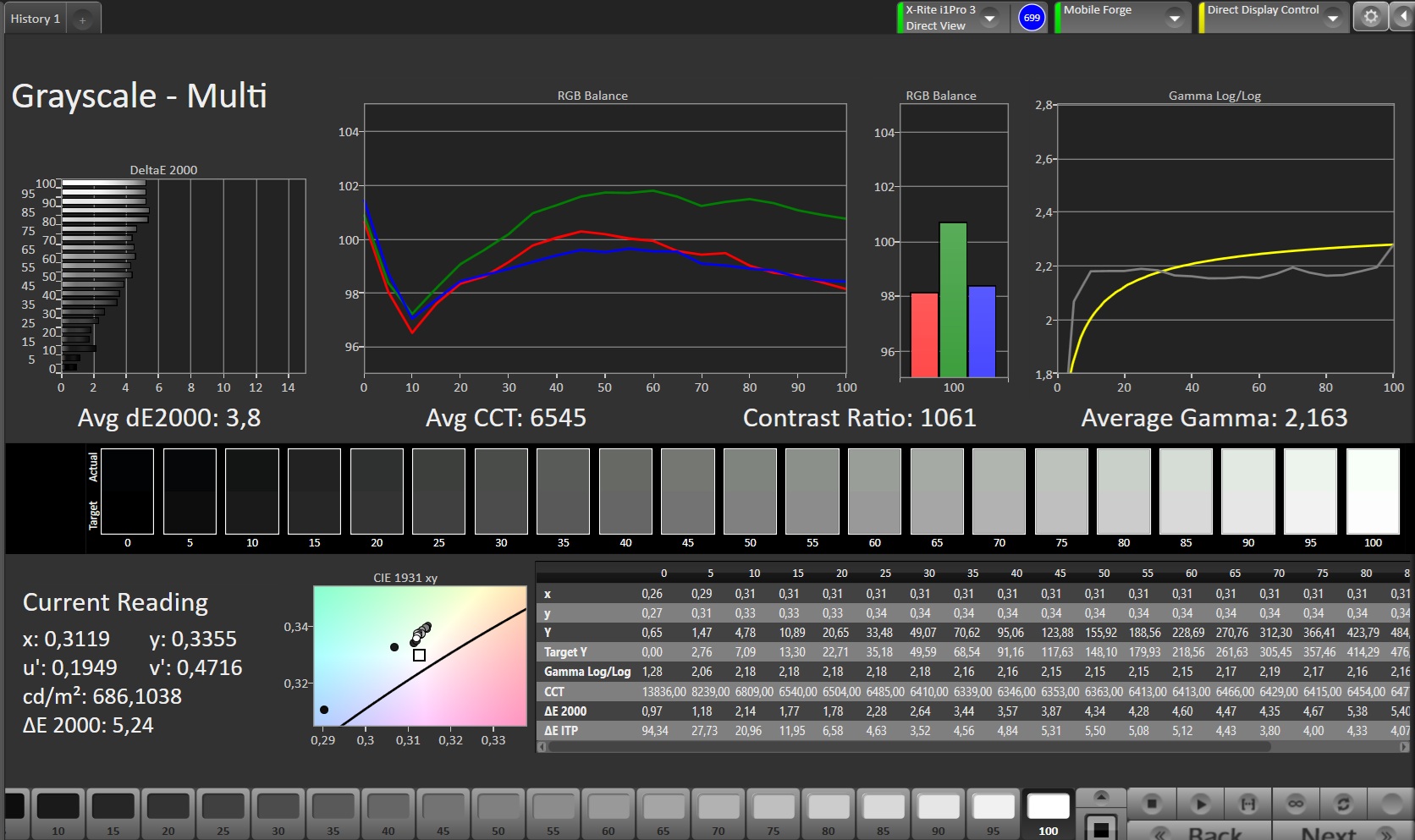
ΔE Greyscale Calman: 3.8 | ∀{0.09-98 Ø4.93}
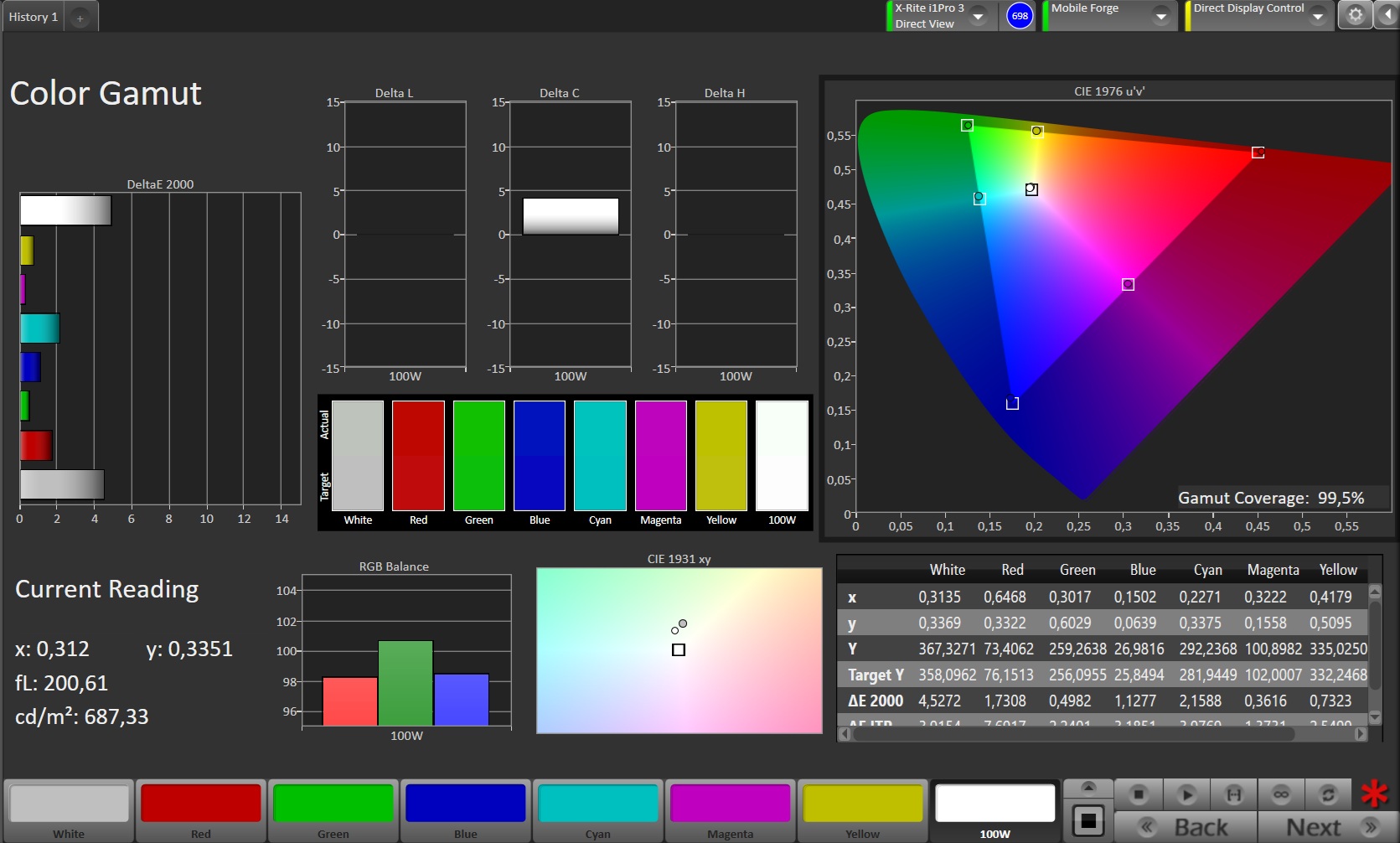
99.5% sRGB (Calman 2D)
Gamma: 2.163
CCT: 6545 K
| Xiaomi Pad 9 Pro Max LCD, 3408x2272, 13.3" | OnePlus Pad 4 IPS, 3392x2400, 13.2" | Apple iPad Air 13 M4 2026 IPS, 2732x2048, 12.9" | Lenovo Idea Tab Pro Gen 2 IPS, 3504x2109, 13" | |
|---|---|---|---|---|
| Display | -8% | -35% | -25% | |
| APL18 Peak Brightness (cd/m²) | 987 | 924 -6% | 644 -35% | 751 -24% |
| HDR Peak Brightness (cd/m²) | 994 | 906 -9% | 652 -34% | 738 -26% |
| Response Times | -33% | 26% | 34% | |
| Response Time Grey 50% / Grey 80% * (ms) | 32.1 ? | 37.3 ? -16% | 18.8 ? 41% | 22.8 ? 29% |
| Response Time Black / White * (ms) | 21.8 ? | 32.6 ? -50% | 19.5 ? 11% | 13.6 ? 38% |
| PWM Frequency (Hz) | ||||
| PWM Amplitude * (%) | ||||
| Screen | 6% | 14% | 7% | |
| Brightness middle (cd/m²) | 877 | 901 3% | 625 -29% | 618 -30% |
| Brightness (cd/m²) | 847 | 862 2% | 613 -28% | 599 -29% |
| Brightness Distribution (%) | 93 | 93 0% | 96 3% | 92 -1% |
| Black Level * (cd/m²) | 0.65 | 0.85 -31% | 0.4 38% | 0.5 23% |
| Contrast (:1) | 1349 | 1060 -21% | 1563 16% | 1236 -8% |
| Colorchecker dE 2000 * | 1.95 | 1.63 16% | 1.49 24% | 1.59 18% |
| Colorchecker dE 2000 max. * | 5.27 | 4.2 20% | 3.18 40% | 3.79 28% |
| Greyscale dE 2000 * | 3.8 | 1.5 61% | 2.1 45% | 1.7 55% |
| Gamma | 2.163 102% | 2.292 96% | 2.19 100% | 2.399 92% |
| CCT | 6545 99% | 6806 96% | 6940 94% | 6583 99% |
| Total Average (Program / Settings) | -12% /
-3% | 2% /
8% | 5% /
6% |
* ... smaller is better
Screen Flickering / PWM (Pulse-Width Modulation)
| Screen flickering / PWM not detected | 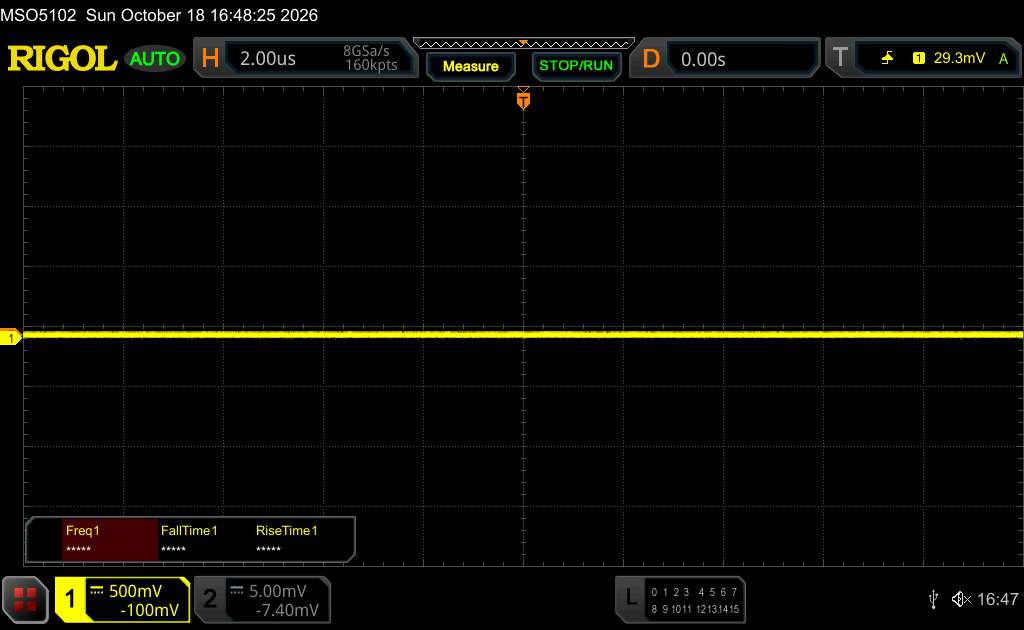 | ||
In comparison: 52 % of all tested devices do not use PWM to dim the display. If PWM was detected, an average of 7567 (minimum: 5 - maximum: 343500) Hz was measured. | |||
A series of measurements with a fixed zoom level and various brightness settings (Although the amplitude waveform appears flat at minimum brightness, this is due to the scaling. An enlarged version of the amplitude at minimum brightness is shown in the information box.)
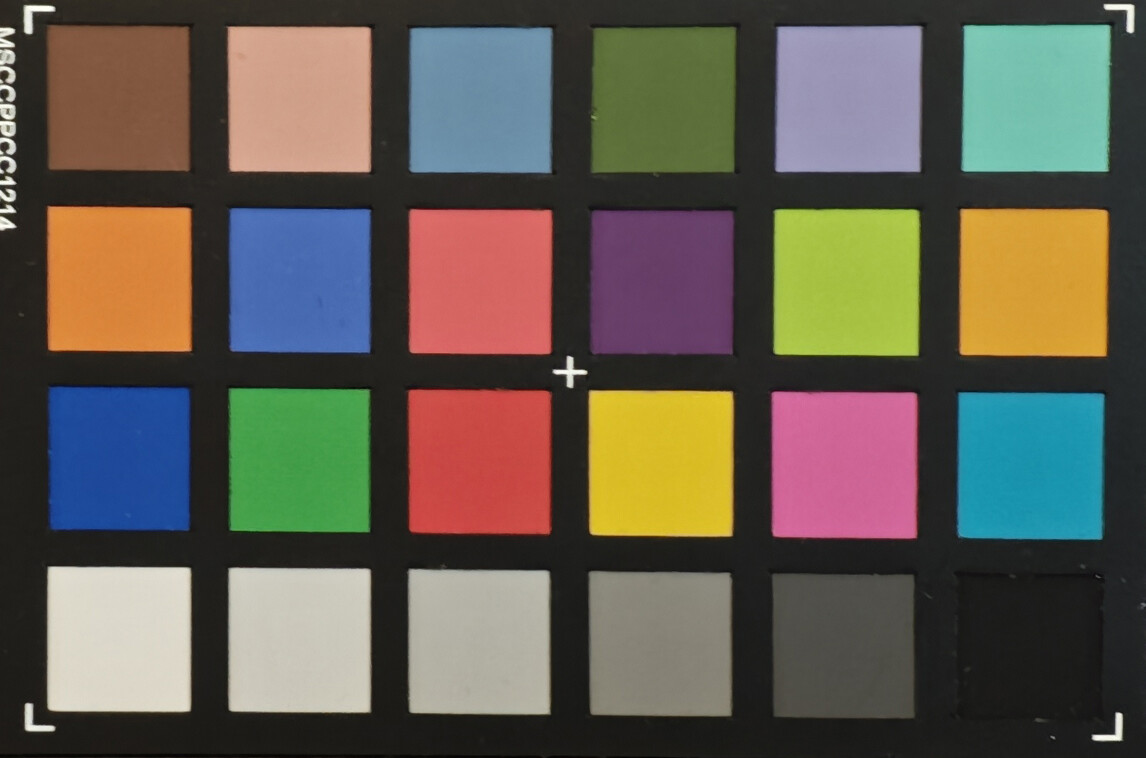
In our display measurements, the 12-bit panel demonstrated good color accuracy; however, we did not achieve the extremely low deviations from the reference colors (a value of <1) that Xiaomi has specified for the Pad 9 Pro Max.
Display Response Times
| ↔ Response Time Black to White | ||
|---|---|---|
| 21.8 ms ... rise ↗ and fall ↘ combined | ↗ 11 ms rise | 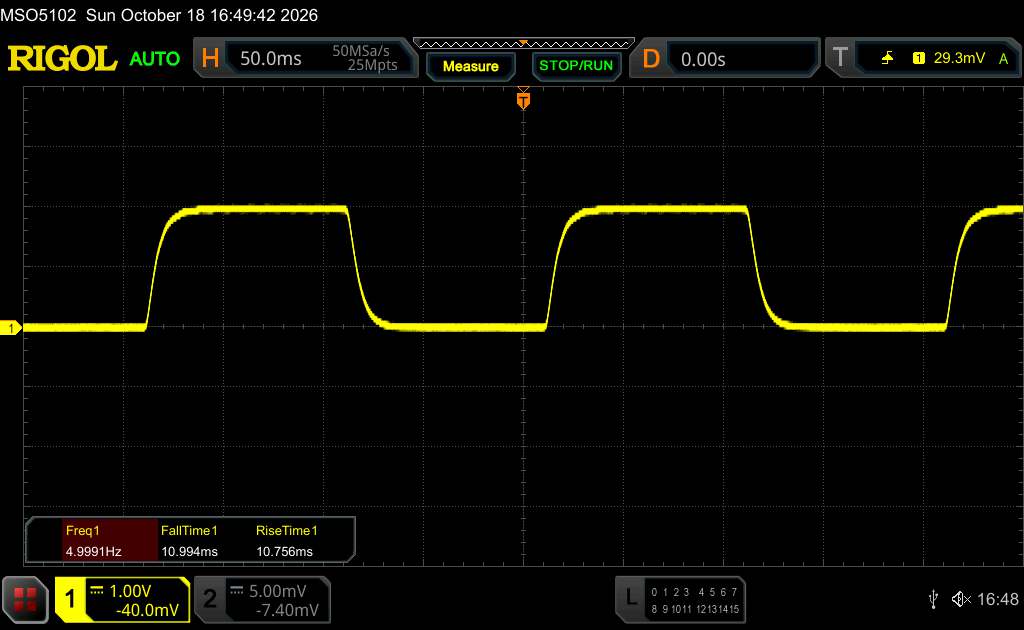 |
| ↘ 10.8 ms fall | ||
| The screen shows good response rates in our tests, but may be too slow for competitive gamers. In comparison, all tested devices range from 0.1 (minimum) to 240 (maximum) ms. » 49 % of all devices are better. This means that the measured response time is worse than the average of all tested devices (19.6 ms). | ||
| ↔ Response Time 50% Grey to 80% Grey | ||
| 32.1 ms ... rise ↗ and fall ↘ combined | ↗ 18.9 ms rise | 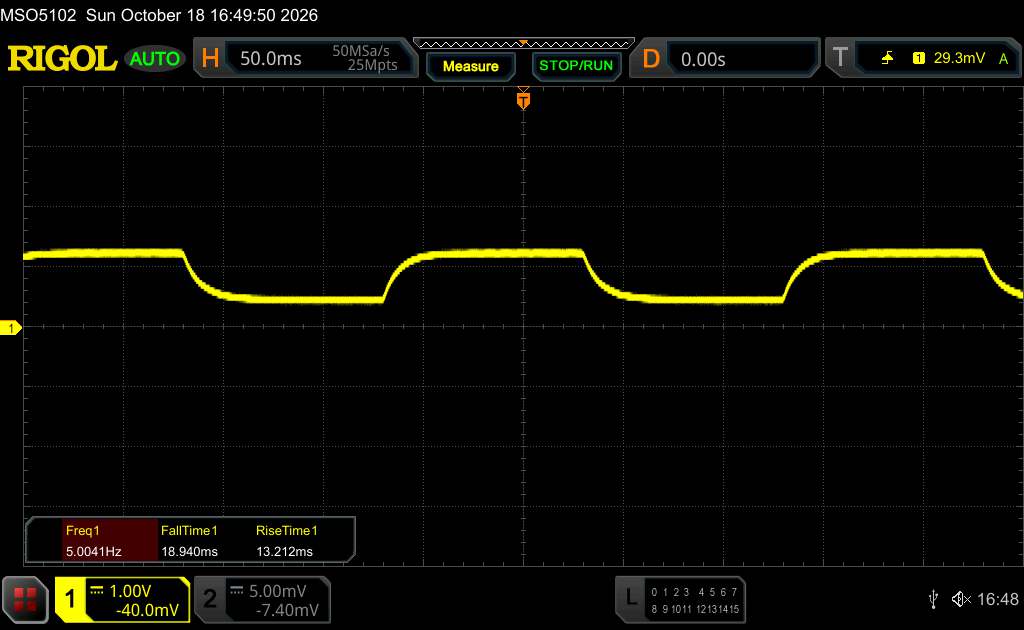 |
| ↘ 13.2 ms fall | ||
| The screen shows slow response rates in our tests and will be unsatisfactory for gamers. In comparison, all tested devices range from 0.13 (minimum) to 636 (maximum) ms. » 45 % of all devices are better. This means that the measured response time is similar to the average of all tested devices (30.6 ms). | ||
Performance - XRing O3 instead of Snapdragon 8 Elite Extreme Gen 6
The Pad 9 Pro is powered by Xiaomi’s own Xring O3 chipset with 10 high-performance CPU cores and a maximum clock frequency of up to 4.35 GHz. The results in our benchmark tests are, in some cases, exceptionally good, while other tests—such as the AI benchmarks—are merely okay. Our Pad 9 Pro Max is equipped with up to 16 GB of RAM and 512 GB of storage.
In Geekbench 6, Xiaomi’s flagship tablet achieves scores similar to those of the iPad Air and its M4 chipset. For a second-generation chipset, this is truly remarkable, making the GPU the Xring SoC's standout strength.
| PCMark for Android - Work 3.x | |
| Xiaomi Pad 9 Pro Max | |
| Average Xiaomi Xring O3 (13230 - 15565, n=2) | |
| Average of class Tablet (7084 - 27428, n=57, last 2 years) | |
| CrossMark - Overall | |
| OnePlus Pad 4 | |
| Xiaomi Pad 9 Pro Max | |
| Average Xiaomi Xring O3 (n=1) | |
| Average of class Tablet (319 - 2375, n=49, last 2 years) | |
| Lenovo Idea Tab Pro Gen 2 | |
| UL Procyon AI Inference for Android - Overall Score NNAPI | |
| Xiaomi Pad 9 Pro Max | |
| OnePlus Pad 4 | |
| Average of class Tablet (3600 - 76852, n=54, last 2 years) | |
| Average Xiaomi Xring O3 (15784 - 21338, n=2) | |
| AImark - Score v3.x | |
| Average of class Tablet (252 - 50153, n=37, last 2 years) | |
| Xiaomi Pad 9 Pro Max | |
| Average Xiaomi Xring O3 (1703 - 2098, n=2) | |
| AI Benchmark - Score V6 | |
| OnePlus Pad 4 | |
| Average of class Tablet (70.4 - 22476, n=38, last 2 years) | |
| Xiaomi Pad 9 Pro Max | |
| Average Xiaomi Xring O3 (n=1) | |
The built-in G2 Ultra NX GPU has 16 cores and delivers graphics performance few would have expected. The manufacturer claims up to 85 percent more power, which we didn't measure, but 85 FPS in the 4K test and 144 FPS in the high-tier GFXBench on-screen test are impressive. This inevitably raises the question of why Google's Tensor chips possess such low-level GPU power.
GFXBench (DX / GLBenchmark) 2.7: T-Rex Onscreen | 1920x1080 T-Rex Offscreen
GFXBench 3.0: on screen Manhattan Onscreen OGL | 1920x1080 1080p Manhattan Offscreen
GFXBench 3.1: on screen Manhattan ES 3.1 Onscreen | 1920x1080 Manhattan ES 3.1 Offscreen
GFXBench: on screen Car Chase Onscreen | 1920x1080 Car Chase Offscreen | on screen Aztec Ruins High Tier Onscreen | 2560x1440 Aztec Ruins High Tier Offscreen | on screen Aztec Ruins Normal Tier Onscreen | 1920x1080 Aztec Ruins Normal Tier Offscreen | 3840x2160 4K Aztec Ruins High Tier Offscreen
| 3DMark / Wild Life Extreme Unlimited | |
| Xiaomi Pad 9 Pro Max | |
| Apple iPad Air 13 M4 2026 | |
| OnePlus Pad 4 | |
| Lenovo Idea Tab Pro Gen 2 | |
| Google Pixel 10 Pro XL | |
| 3DMark / Wild Life Extreme | |
| Xiaomi Pad 9 Pro Max | |
| OnePlus Pad 4 | |
| Apple iPad Air 13 M4 2026 | |
| Lenovo Idea Tab Pro Gen 2 | |
| Google Pixel 10 Pro XL | |
| 3DMark / Wild Life Unlimited Score | |
| Xiaomi Pad 9 Pro Max | |
| OnePlus Pad 4 | |
| Lenovo Idea Tab Pro Gen 2 | |
| Google Pixel 10 Pro XL | |
| 3DMark / Solar Bay Score | |
| Xiaomi Pad 9 Pro Max | |
| OnePlus Pad 4 | |
| Apple iPad Air 13 M4 2026 | |
| 3DMark / Solar Bay Unlimited Score | |
| Xiaomi Pad 9 Pro Max | |
| Apple iPad Air 13 M4 2026 | |
| OnePlus Pad 4 | |
| 3DMark / Solar Bay Extreme Score | |
| Xiaomi Pad 9 Pro Max | |
| 3DMark / Steel Nomad Light Unlimited Score | |
| Xiaomi Pad 9 Pro Max | |
| Apple iPad Air 13 M4 2026 | |
| OnePlus Pad 4 | |
| Google Pixel 10 Pro XL | |
| 3DMark / Steel Nomad Light Score | |
| Xiaomi Pad 9 Pro Max | |
| Apple iPad Air 13 M4 2026 | |
| OnePlus Pad 4 | |
| Google Pixel 10 Pro XL | |
| GFXBench (DX / GLBenchmark) 2.7 / T-Rex Onscreen | |
| Xiaomi Pad 9 Pro Max | |
| Google Pixel 10 Pro XL | |
| OnePlus Pad 4 | |
| GFXBench (DX / GLBenchmark) 2.7 / T-Rex Offscreen | |
| Xiaomi Pad 9 Pro Max | |
| OnePlus Pad 4 | |
| Google Pixel 10 Pro XL | |
| GFXBench 3.0 / Manhattan Onscreen OGL | |
| Xiaomi Pad 9 Pro Max | |
| Google Pixel 10 Pro XL | |
| OnePlus Pad 4 | |
| GFXBench 3.0 / 1080p Manhattan Offscreen | |
| OnePlus Pad 4 | |
| Xiaomi Pad 9 Pro Max | |
| Google Pixel 10 Pro XL | |
| GFXBench 3.1 / Manhattan ES 3.1 Onscreen | |
| Xiaomi Pad 9 Pro Max | |
| Google Pixel 10 Pro XL | |
| OnePlus Pad 4 | |
| GFXBench 3.1 / Manhattan ES 3.1 Offscreen | |
| OnePlus Pad 4 | |
| Xiaomi Pad 9 Pro Max | |
| Google Pixel 10 Pro XL | |
| GFXBench / Car Chase Onscreen | |
| Xiaomi Pad 9 Pro Max | |
| Google Pixel 10 Pro XL | |
| OnePlus Pad 4 | |
| GFXBench / Car Chase Offscreen | |
| Xiaomi Pad 9 Pro Max | |
| OnePlus Pad 4 | |
| Google Pixel 10 Pro XL | |
| GFXBench / Aztec Ruins High Tier Onscreen | |
| Xiaomi Pad 9 Pro Max | |
| Google Pixel 10 Pro XL | |
| OnePlus Pad 4 | |
| Lenovo Idea Tab Pro Gen 2 | |
| GFXBench / Aztec Ruins High Tier Offscreen | |
| Xiaomi Pad 9 Pro Max | |
| OnePlus Pad 4 | |
| Lenovo Idea Tab Pro Gen 2 | |
| Google Pixel 10 Pro XL | |
| GFXBench / Aztec Ruins Normal Tier Onscreen | |
| Xiaomi Pad 9 Pro Max | |
| Google Pixel 10 Pro XL | |
| OnePlus Pad 4 | |
| Lenovo Idea Tab Pro Gen 2 | |
| GFXBench / Aztec Ruins Normal Tier Offscreen | |
| Xiaomi Pad 9 Pro Max | |
| OnePlus Pad 4 | |
| Lenovo Idea Tab Pro Gen 2 | |
| Google Pixel 10 Pro XL | |
| GFXBench / 4K Aztec Ruins High Tier Offscreen | |
| Xiaomi Pad 9 Pro Max (vulkan) | |
| OnePlus Pad 4 | |
| Lenovo Idea Tab Pro Gen 2 | |
| Google Pixel 10 Pro XL | |
| Jetstream 2 | |
| 2.0 Total | |
| Apple iPad Air 13 M4 2026 (Safari 26) | |
| Lenovo Idea Tab Pro Gen 2 (Chrome 147) | |
| Average Xiaomi Xring O3 (n=1) | |
| Average of class Tablet (48 - 420, n=52, last 2 years) | |
| 2.2 Total | |
| OnePlus Pad 4 (Chrome 150) | |
| Average Xiaomi Xring O3 (201 - 282, n=2) | |
| Average of class Tablet (61.3 - 579, n=50, last 2 years) | |
| Xiaomi Pad 9 Pro Max (Chrome 155) | |
| Speedometer 2.0 - Result 2.0 | |
| Average Xiaomi Xring O3 (298 - 345, n=2) | |
| Xiaomi Pad 9 Pro Max (Chrome 155) | |
| Average of class Tablet (45 - 790, n=34, last 2 years) | |
| Speedometer 3 - Score 3.0 | |
| Average Xiaomi Xring O3 (17.8 - 19.8, n=2) | |
| Xiaomi Pad 9 Pro Max (Chrome 155) | |
| Average of class Tablet (3 - 49.1, n=50, last 2 years) | |
| Octane V2 - Total Score | |
| OnePlus Pad 4 (Chrome 150) | |
| Average Xiaomi Xring O3 (64895 - 69812, n=2) | |
| Xiaomi Pad 9 Pro Max (Chrome 155) | |
| Average of class Tablet (4497 - 138481, n=69, last 2 years) | |
| Mozilla Kraken 1.1 - Total | |
| Average of class Tablet (243 - 13119, n=65, last 2 years) | |
| Xiaomi Pad 9 Pro Max | |
| Average Xiaomi Xring O3 (551 - 644, n=2) | |
| OnePlus Pad 4 (Chrome 150) | |
* ... smaller is better
| Xiaomi Pad 9 Pro Max | OnePlus Pad 4 | Lenovo Idea Tab Pro Gen 2 | Average 512 GB UFS 4.1 Flash | Average of class Tablet | |
|---|---|---|---|---|---|
| AndroBench 3-5 | -4% | -43% | -19% | -48% | |
| Sequential Read 256KB (MB/s) | 4091.7 | 3997.64 -2% | 1912.4 -53% | 3626 ? -11% | 2238 ? -45% |
| Sequential Write 256KB (MB/s) | 4112.6 | 3702.2 -10% | 1852.7 -55% | 3243 ? -21% | 1809 ? -56% |
| Random Read 4KB (MB/s) | 449.54 | 472.13 5% | 347.8 -23% | 414 ? -8% | 286 ? -36% |
| Random Write 4KB (MB/s) | 761.22 | 700.22 -8% | 438.3 -42% | 504 ? -34% | 346 ? -55% |
Emissions - A large Android tablet with low temperatures
Temperature
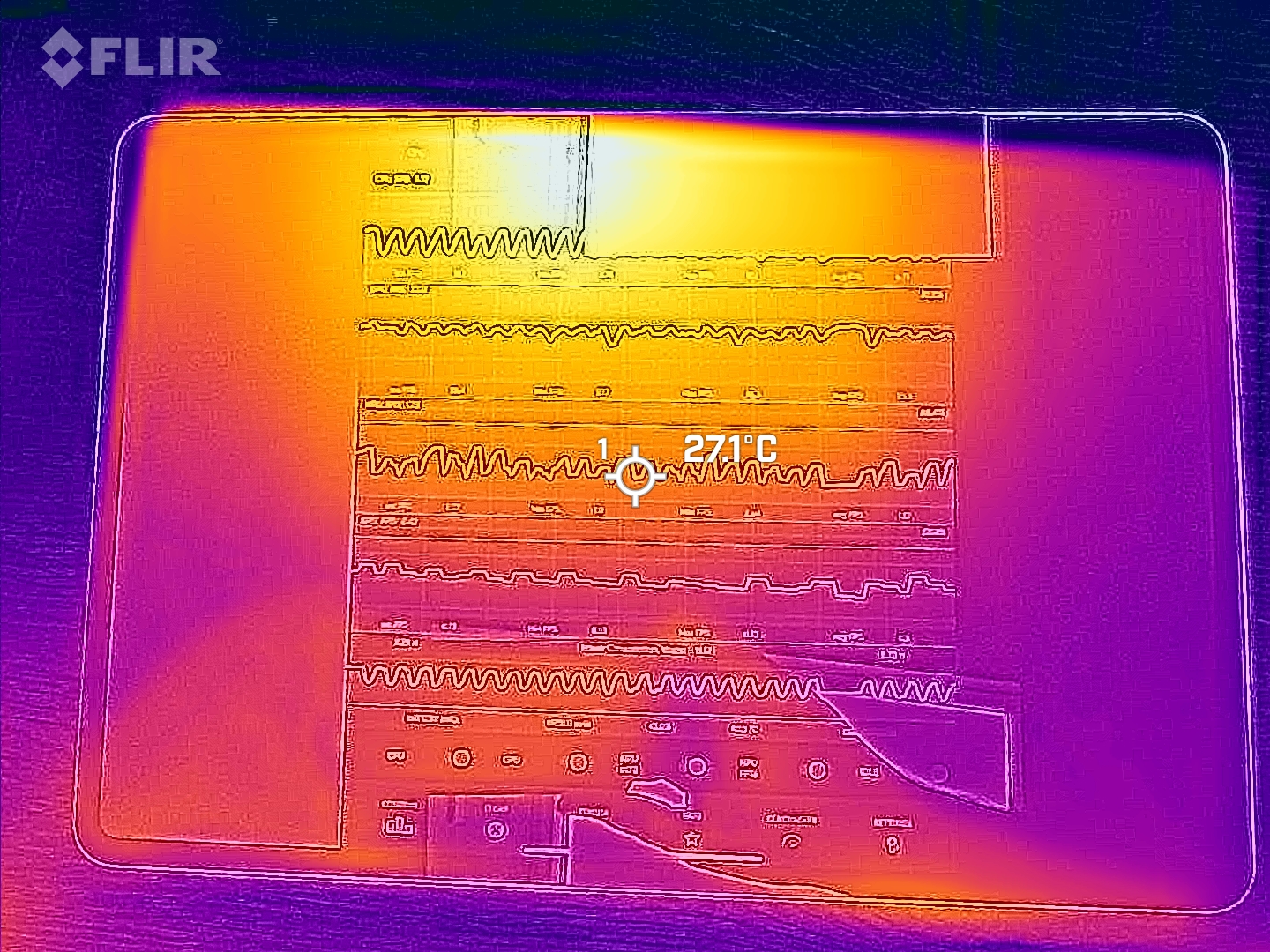
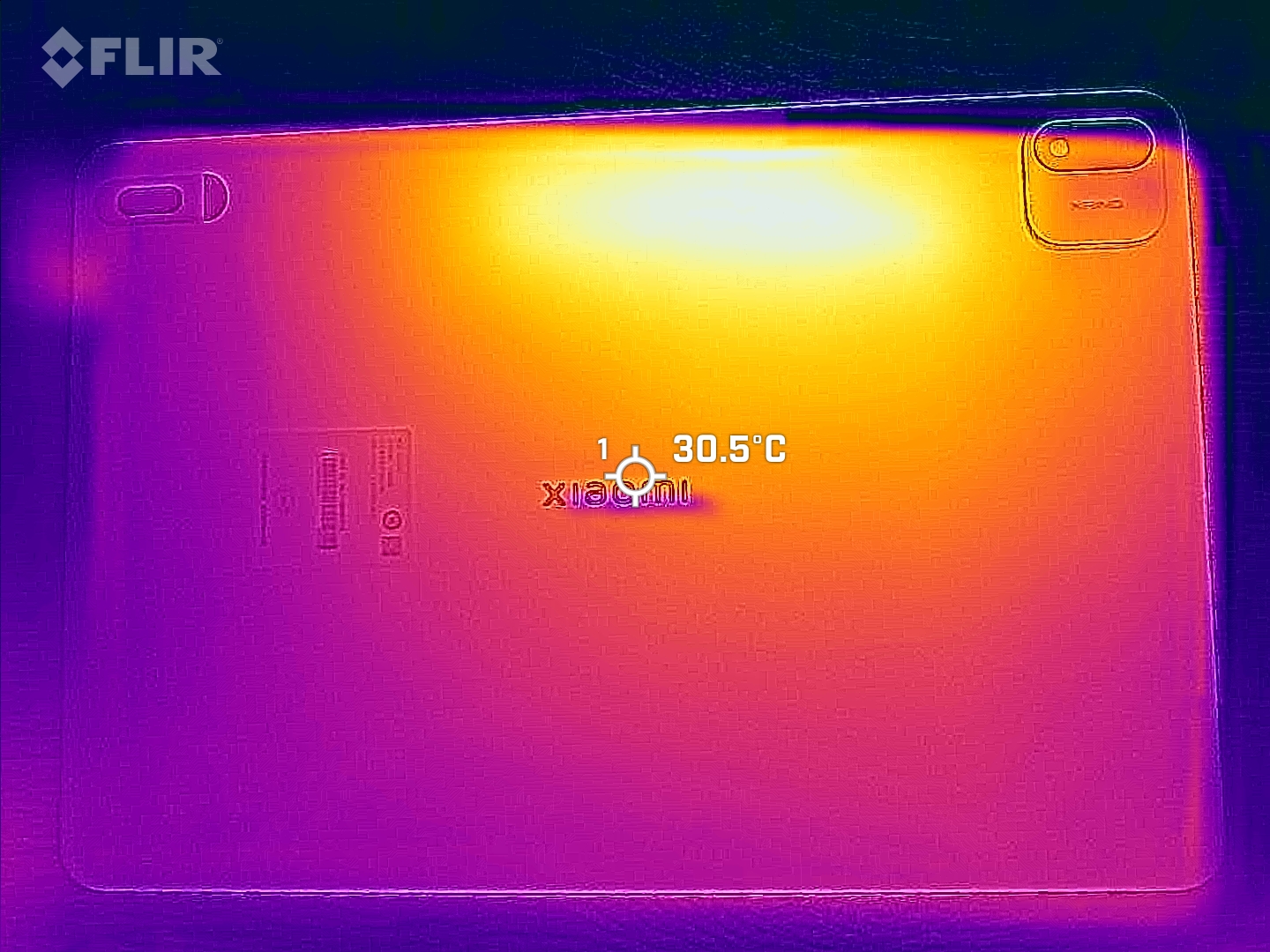
Xiaomi promotes its flagship tablet by highlighting a new vapor chamber (VC) cooling system, complemented by graphite-based heat dissipation. Under load, this keeps the device’s case quite cool—even in the "hot spot" area, we measured a peak temperature of only 42 °C.
But what's going on on the inside? We examined the device's throttling behavior using 3DMark stress tests, and the performance dropped by a maximum of about 40 percent—a slightly larger reduction than we had anticipated.
(+) The maximum temperature on the upper side is 39.3 °C / 103 F, compared to the average of 33.7 °C / 93 F, ranging from 20.7 to 53.2 °C for the class Tablet.
(±) The bottom heats up to a maximum of 42.3 °C / 108 F, compared to the average of 33.2 °C / 92 F
(+) In idle usage, the average temperature for the upper side is 25.1 °C / 77 F, compared to the device average of 30 °C / 86 F.
3DMark Stress Tests
| 3DMark | |
| Wild Life Stress Test Stability | |
| Lenovo Idea Tab Pro Gen 2 | |
| Xiaomi Pad 9 Pro Max | |
| Wild Life Extreme Stress Test | |
| Lenovo Idea Tab Pro Gen 2 | |
| OnePlus Pad 4 | |
| Apple iPad Air 13 M4 2026 | |
| Xiaomi Pad 9 Pro Max | |
| Solar Bay Stress Test Stability | |
| Apple iPad Air 13 M4 2026 | |
| Lenovo Idea Tab Pro Gen 2 | |
| OnePlus Pad 4 | |
| Xiaomi Pad 9 Pro Max | |
| Solar Bay Extreme Stress Test Stability | |
| OnePlus Pad 4 | |
| Steel Nomad Light Stress Test Stability | |
| OnePlus Pad 4 | |
| Xiaomi Pad 9 Pro Max | |
| Apple iPad Air 13 M4 2026 | |
Speakers
The Pad 9 Pro Max features a total of 8 speakers. However, they don't all cover the same frequency range, as specific drivers are dedicated to either high or low frequencies. The latter, in particular, could use a touch more power. The maximum volume also leans toward the lower end of the spectrum.
High-resolution audio output is supported wirelessly via Bluetooth. Anyone using wired headphones will need to connect them via the USB port.
Xiaomi Pad 9 Pro Max audio analysis
(+) | speakers can play relatively loud (84.4 dB)
Bass 100 - 315 Hz
(±) | reduced bass - on average 13% lower than median
(±) | linearity of bass is average (7.6% delta to prev. frequency)
Mids 400 - 2000 Hz
(+) | balanced mids - only 4.3% away from median
(+) | mids are linear (4.1% delta to prev. frequency)
Highs 2 - 16 kHz
(+) | balanced highs - only 3.2% away from median
(+) | highs are linear (6.5% delta to prev. frequency)
Overall 100 - 16.000 Hz
(+) | overall sound is linear (14.1% difference to median)
Compared to same class
» 29% of all tested devices in this class were better, 4% similar, 67% worse
» The best had a delta of 7%, average was 21%, worst was 130%
Compared to all devices tested
» 17% of all tested devices were better, 4% similar, 79% worse
» The best had a delta of 4%, average was 23%, worst was 136%
OnePlus Pad 4 audio analysis
(+) | speakers can play relatively loud (87.9 dB)
Bass 100 - 315 Hz
(±) | reduced bass - on average 8.6% lower than median
(±) | linearity of bass is average (8.1% delta to prev. frequency)
Mids 400 - 2000 Hz
(±) | higher mids - on average 5.6% higher than median
(+) | mids are linear (4.9% delta to prev. frequency)
Highs 2 - 16 kHz
(+) | balanced highs - only 3.4% away from median
(+) | highs are linear (6.2% delta to prev. frequency)
Overall 100 - 16.000 Hz
(+) | overall sound is linear (10.1% difference to median)
Compared to same class
» 6% of all tested devices in this class were better, 4% similar, 89% worse
» The best had a delta of 7%, average was 21%, worst was 130%
Compared to all devices tested
» 5% of all tested devices were better, 2% similar, 94% worse
» The best had a delta of 4%, average was 23%, worst was 136%
Battery life - An Android tablet mit 120-watt fast charging
Power consumption
The Pad 9 Pro Max houses a large 12,000 mAh battery that charges via a USB-C port at up to 120 watts. On top of that, the flagship tablet supports wired reverse charging at up to 27 watts.
A glance at the Xiaomi tablet's efficiency reveals both its strengths and weaknesses. While our idle power consumption measurements are quite high, the energy consumption under load is notably low.
| Off / Standby |   0.1 / 0.2 Watt |
| Idle |  4.2 / 4.3 / 4.7 Watt |
| Load |
5.6 / 11.7 Watt |
    
| |
Key:
min: ,
med: ,
max: Metrahit Energy | |
| Xiaomi Pad 9 Pro Max 12000 mAh | OnePlus Pad 4 13380 mAh | Average Xiaomi Xring O3 | Average of class Tablet | |
|---|---|---|---|---|
| Power Consumption | 31% | 23% | -2% | |
| Idle Minimum * (Watt) | 4.2 | 1.3 69% | 2.35 ? 44% | 2.15 ? 49% |
| Idle Average * (Watt) | 4.3 | 1.8 58% | 2.59 ? 40% | 3.74 ? 13% |
| Idle Maximum * (Watt) | 4.7 | 2.2 53% | 2.8 ? 40% | 4.14 ? 12% |
| Load Average * (Watt) | 5.6 | 6.9 -23% | 6.9 ? -23% | 8.83 ? -58% |
| Load Maximum * (Watt) | 11.7 | 12.1 -3% | 10.3 ? 12% | 14.7 ? -26% |
* ... smaller is better
Power consumption: Geekbench (150 cd/m²)
Power consumption: GFXbench (150 cd/m²)
Battery runtimes
To ensure our Wi-Fi battery test results are comparable, we always use a standardized display brightness setting. In this test, the Pad 9 Pro Max performed exceptionally well, with a runtime of over 24 hours.
| Xiaomi Pad 9 Pro Max 12000 mAh | OnePlus Pad 4 13380 mAh | Apple iPad Air 13 M4 2026 9705 mAh | Lenovo Idea Tab Pro Gen 2 10200 mAh | |
|---|---|---|---|---|
| Battery runtime | ||||
| WiFi v1.3 (h) | 24.9 | 25.3 2% | 13.4 -46% | 14.2 -43% |
Notebookcheck overall rating
Whether the Pro Max model will ever reach European shores remains questionable. For anyone who doesn't mind importing, this Xiaomi flagship offers one of the most powerful tablets on the market at a relatively affordable price—starting at under $1,000 for the base model.

Xiaomi Pad 9 Pro Max
- 10/30/2026 v8
Marcus Herbrich
 Total Sustainability Score:
Possible alternatives compared
Image | Model / Review | Price | Weight | Drive | Display |
|---|---|---|---|---|---|
1. 88.7%  | Xiaomi Pad 9 Pro Max Xiaomi Xring O3 ⎘ ARM Mali G2-Ultra NX MP16 ⎘ 16 GB Memory, 512 GB UFS 4.x | Amazon: 1. $639.50 XIAOMI Pad 8 Pro Ai WiFi Ver... 2. $295.40 XIAOMI Redmi Pad 2 PRO Only ... 3. $540.00 XIAOMI Pad 8 Pro Ai WiFi Ver... List Price: 900€ | 645 g | 512 GB UFS 4.1 Flash | 13.30" 3408x2272 308 PPI LCD |
2. 87.8%  | OnePlus Pad 4 Qualcomm Snapdragon 8 Elite Gen 5 ⎘ Qualcomm Adreno 840 ⎘ 12 GB Memory, 256 GB UFS 4.x | List Price: 799€ | 672 g | 256 GB UFS 4.1 Flash | 13.20" 3392x2400 315 PPI IPS |
3. 87.1%  | Apple iPad Air 13 M4 2026 Apple M4 8-Core ⎘ Apple M4 9-Core GPU ⎘ 12 GB Memory, 128 GB NVMe | List Price: 849€ | 616 g | 128 GB NVMe | 12.90" 2732x2048 265 PPI IPS |
4. 86.5%  | Lenovo Idea Tab Pro Gen 2 Qualcomm Snapdragon 8s Gen 4 SM8735 ⎘ Qualcomm Adreno 825 ⎘ 8 GB Memory, 128 GB UFS 3.1 | List Price: 529€ | 598 g | 128 GB UFS 3.1 Flash | 13.00" 3504x2109 315 PPI IPS |
Transparency
The selection of devices to be reviewed is made by our editorial team. The test sample was provided to the author as a loan by the manufacturer or retailer for the purpose of this review. The lender had no influence on this review, nor did the manufacturer receive a copy of this review before publication. There was no obligation to publish this review. As an independent media company, Notebookcheck is not subjected to the authority of manufacturers, retailers or publishers.
This is how Notebookcheck is testing
Every year, Notebookcheck independently reviews hundreds of laptops and smartphones using standardized procedures to ensure that all results are comparable. We have continuously developed our test methods for around 20 years and set industry standards in the process. In our test labs, high-quality measuring equipment is utilized by experienced technicians and editors. These tests involve a multi-stage validation process. Our complex rating system is based on hundreds of well-founded measurements and benchmarks, which maintains objectivity. Further information on our test methods can be found here.
 Add as a preferred source on Google


