




Review verdict for the Asus Zenbook 14 - Affordable all-rounder facing stiff internal competition
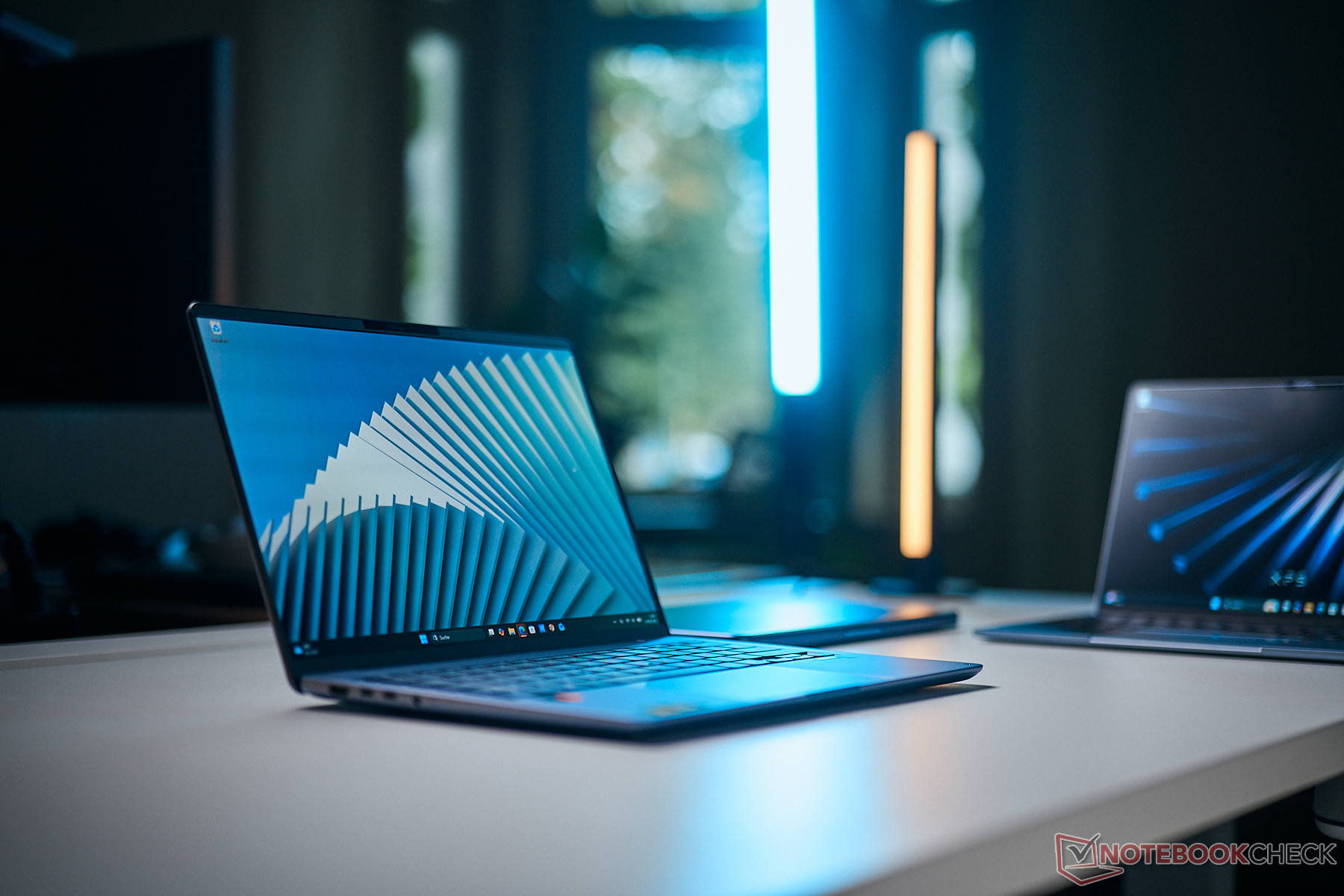
The Asus Zenbook 14 is an affordable laptop designed for everyday use. It was developed to compete directly with the Apple MacBook Neo and other Windows laptops featuring the latest Intel Wildcat Lake processors, such as the Dell XPS 13. Asus has equipped this model with a Qualcomm Snapdragon processor and offers the laptop at a starting price of $799. However, this base price only gets you 8 GB of RAM; those seeking more performance must pay $999 for the model with 16 GB of RAM and 512 GB SSD storage.
While this price is certainly reasonable given the current market, the notebook requires some noticeable compromises in daily use. A key factor is the Snapdragon processor, a first-generation chip, which results in generally modest performance levels.
Another drawback concerns the OLED panel. Although it delivers good subjective image quality, its peak brightness of 300 nits is low, making the display appear quite dim in brighter environments. The chassis features high-quality construction and is pleasantly lightweight at 1.1 kg. Furthermore, the Zenbook 14 impresses with excellent input devices, a sufficient selection of ports, and a good sound system. You also get excellent battery life results with more than 20 hours in our Wi-Fi test at 150 nits.
The biggest problem facing the new Zenbook 14 is competition from its own ranks: the Zenbook A14 is currently still available for $869 and offers a significantly better overall package (faster CPU, 16 GB of RAM and a 512 GB SSD). For less money, buyers get noticeably better specifications, a brighter screen, and longer battery life. Since the previous year's model is even slightly lighter, weighing in at under 1 kg, there is absolutely no reason to opt for the successor as long as remaining stocks of the A14 are available.
 Add as a preferred source on Google


No comments for this article
