




NVIDIA RTX 1000 Ada Generation Laptop vs NVIDIA RTX 500 Ada Generation Laptop
NVIDIA RTX 1000 Ada Generation Laptop
► remove from comparison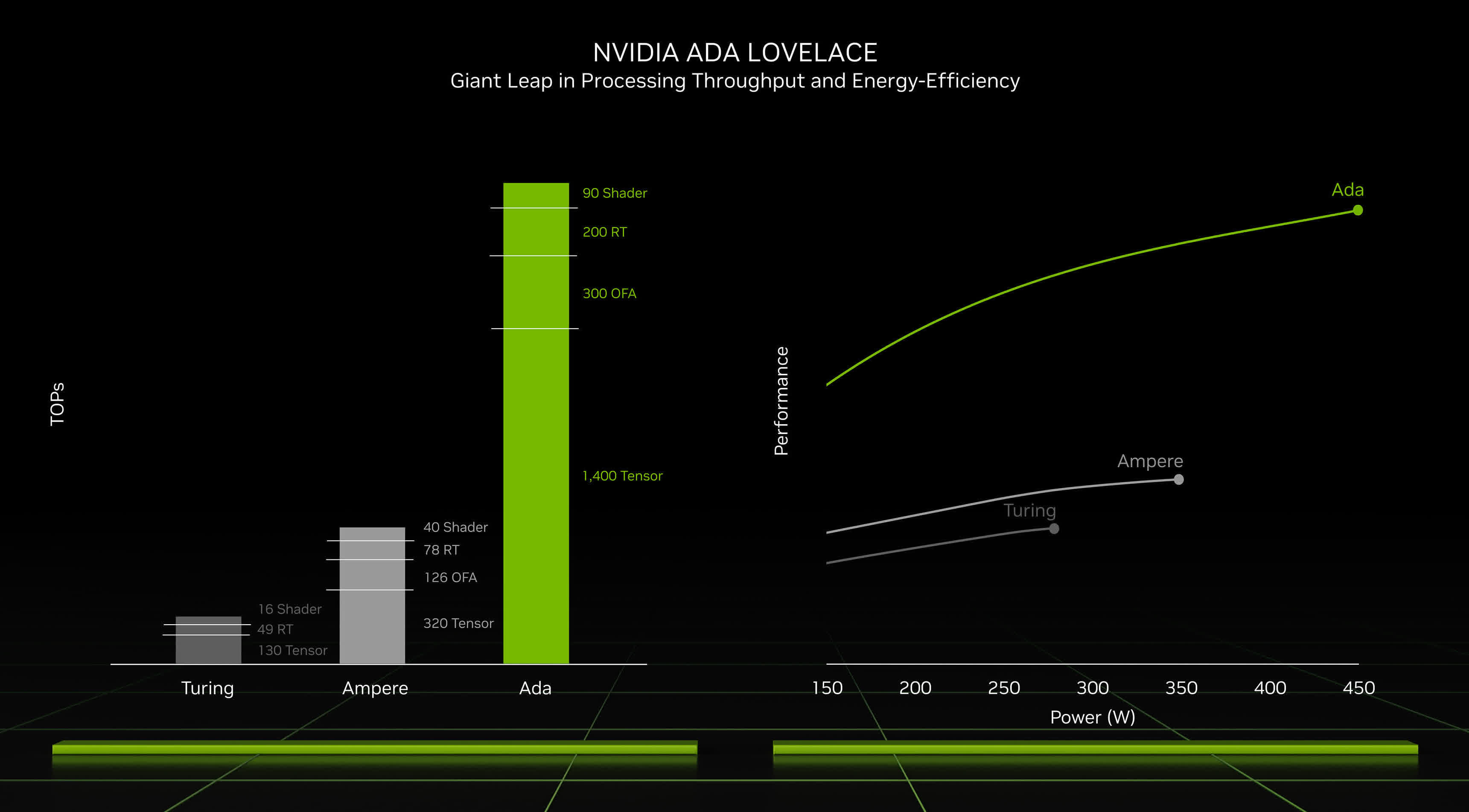
The Nvidia RTX 1000 Ada Generation Laptop GPU, not to be confused with the A1000, P1000 or T1000, is a lower-end professional graphics card for use in laptops that sports 2,560 CUDA cores and 6 GB of GDDR6 VRAM. It would be fair to say that this is a GeForce RTX 4050 (Laptop) in disguise; consequently, both are powered by the AD107 chip and are fast enough to handle most games at 1080p with quality set to High. The product was launched in February 2024; it leverages TSMC's 5 nm process and the Ada Lovelace architecture. The Nvidia-recommended TGP range for the card is very wide at 35 W to 140 W leading to bizarre performance differences between different systems powered by what is supposed to be the same product.
Quadro series graphics cards ship with much different BIOS and drivers than GeForce cards and are targeted at professional users rather than gamers. Commercial product design, large-scale calculations, simulation, data mining, 24 x 7 operation, certified drivers - if any of this sounds familiar, then a Quadro card will make you happy.
Architecture and Features
Ada Lovelace brings a range of improvements over older graphics cards utilizing the outgoing Ampere architecture. It's not just a better manufacturing process and a higher number of CUDA cores that we have here; under-the-hood refinements are plentiful, including an immensely larger L2 cache, an optimized ray tracing routine (a different way to determine what is transparent and what isn't is used), and other changes. Naturally, these graphics cards can both encode and decode some of the most widely used video codecs, AVC, HEVC and AV1 included; they also support a host of proprietary Nvidia technologies, including Optimus and DLSS 3, and they can certainly be used for various AI applications.
The RTX 1000 Ada features 20 RT cores of the 3rd generation, 80 Tensor cores of the 4th generation and 2,560 CUDA cores. Increase those numbers by 20%, and you get the RTX 2000 Ada - as long as we pay no attention to clock speed differences, of course. Unlike costlier Ada Generation professional laptop graphics cards, the RTX 1000 comes with just 6 GB of non-ECC VRAM; the lack of error correction makes this card less suitable for super-important tasks and round-the-clock operation. The VRAM is just 96-bit wide, delivering a not-so-impressive bandwidth of ~192 GB/s.
The RTX 1000 Ada Generation makes use of the PCI-Express 4 protocol, just like Ampere-based cards did. 8K SUHD monitors are supported, however, DP 1.4a video outputs may prove to be a bottleneck down the line.
Performance
While we are yet to test a single laptop powered by an RTX 1000 Ada as of late February, we have plenty of performance data for the RTX 4050 Laptop. Based on that, we expect a run-of-the-mill RTX 2000 Ada to deliver:
- a Blender 3.3 Classroom CUDA score of around 54 seconds
- a 3DMark 11 GPU score of around 27,000 points
- around 50 fps in GTA V (1440p - Highest settings possible, 16x AF, 4x MSAA, FXAA)
- upwards of 30 fps in Cyberpunk 2077 (1440p - High settings, Ultra RT, "Quality" DLSS)
Nvidia's marketing materials mention "up to 12.1 TFLOPS" of performance, a downgrade compared to 14.5 TFLOPS delivered by the RTX 2000 Ada.
Your mileage may vary depending on how competent the cooling solution of your laptop is and how high the TGP power target of the RTX 1000 Ada is.
Power consumption
Nvidia no longer divides its laptop graphics cards into Max-Q and non-max-Q models. Instead, laptop makers are free to set the TGP according to their needs, and the range can sometimes be shockingly wide. This is exactly the case with the RTX 1000, as the lowest value recommended for it sits at just 35 W while the highest is 300% higher at 140 W (this most likely includes Dynamic Boost). The slowest system built around an RTX 1000 Ada can easily be half as fast as the fastest one.
Last but not the least, the improved 5 nm process (TSMC 4N) the RTX 1000 is built with makes for decent energy efficiency, as of early 2024.
NVIDIA RTX 500 Ada Generation Laptop
► remove from comparisonThe Nvidia RTX 500 Ada Generation, not to be confused with the A500, P500 and the T500, is a lower-end professional graphics card for use in laptops that sports 2,048 CUDA cores and a paltry 4 GB of GDDR6 VRAM. We believe this graphics card to be a heavily cut-down GeForce RTX 4050 Laptop; therefore, both should employ the Ada Lovelace AD107 chip built with TSMC's 5 nm process. The RTX 500 was launched in February 2024. The Nvidia-recommended TGP range for this graphics card is moderately wide at 35 W to 60 W [the second figure includes the Dynamic Boost, it seems] leading to noticeable performance differences between different systems powered by what is supposed to be the same graphics card.
Quadro series graphics cards ship with much different BIOS and drivers than GeForce cards and are targeted at professional users rather than gamers. Commercial product design, large-scale calculations, simulation, data mining, 24 x 7 operation, certified drivers - if any of this sounds familiar, then a Quadro card will make you happy.
Architecture and Features
Ada Lovelace brings a range of improvements over older graphics cards utilizing the outgoing Ampere architecture. It's not just a better manufacturing process and a higher number of CUDA cores that we have here; under-the-hood refinements are plentiful, including an immensely larger L2 cache, an optimized ray tracing routine (a different way to determine what is transparent and what isn't is used), and other changes. Naturally, these graphics cards can both encode and decode some of the most widely used video codecs, AVC, HEVC and AV1 included; they also support a host of proprietary Nvidia technologies, including Optimus and DLSS 3, and they can certainly be used for various AI applications.
The RTX 500 Ada features 16 RT cores of the 3rd generation, 64 Tensor cores of the 4th generation and 2,048 CUDA cores. Increase those numbers by 25%, and you get the RTX 1000 Ada - as long as we pay no attention to clock speed differences, of course. Unlike costlier Ada Generation professional laptop graphics cards, the RTX 500 comes with just 4 GB of non-ECC VRAM; the lack of error correction makes this card less suitable for super-important tasks and round-the-clock operation. The VRAM is just 64-bit wide, delivering an anemic bandwidth of ~128 GB/s.
The RTX 500 Ada Generation makes use of the PCI-Express 4 protocol, just like Ampere-based cards did. 8K SUHD monitors are supported, however, DP 1.4a video outputs may prove to be a bottleneck down the line.
Performance
At 50 W (35 W + 15 W Dynamic Boost), the graphics card can handle most 2023 and 2024 games like Baldur's Gate 3 at 1080p on high graphics settings. With a Geekbench 6.2 OpenCL GPU score of 61,500 points and a Blender v3.3 Classroom CUDA score of 71 seconds, it's clear the Ada is so much faster than any integrated GPUs on the market including the 890M.
Power consumption
With the latest Nvidia graphics cards, laptop makers are free to set the TGP according to their needs within a fairly wide range. With the RTX 500 Ada, we have the lowest value recommended sitting at just at 35 W while the highest value is 60 W [this most likely includes Dynamic Boost]. Real-world performance of the slowest RTX 500 Ada will probably be around 40% lower than that of the fastest one.
Last but not the least, the improved 5 nm process (TSMC 4N) the AD107 chip is built with makes for decent energy efficiency, as of early 2024.
| NVIDIA RTX 1000 Ada Generation Laptop | NVIDIA RTX 500 Ada Generation Laptop | |||||||||||||||||||||||||||||||||||||||||||
| RTX Ada Generation Laptop Series |
|
| ||||||||||||||||||||||||||||||||||||||||||
| Codename | GN21-X2 | |||||||||||||||||||||||||||||||||||||||||||
| Architecture | Ada Lovelace | Ada Lovelace | ||||||||||||||||||||||||||||||||||||||||||
| Pipelines | 2560 - unified | 2048 - unified | ||||||||||||||||||||||||||||||||||||||||||
| TMUs | 80 | 64 | ||||||||||||||||||||||||||||||||||||||||||
| ROPs | 32 | 32 | ||||||||||||||||||||||||||||||||||||||||||
| Raytracing Cores | 20 | 16 | ||||||||||||||||||||||||||||||||||||||||||
| Tensor / AI Cores | 80 | 64 | ||||||||||||||||||||||||||||||||||||||||||
| AI GPU | 193 TOPS INT8 | 154 TOPS INT8 | ||||||||||||||||||||||||||||||||||||||||||
| Cache | L2: 12 MB | L1: 2 MB, L2: 12 MB | ||||||||||||||||||||||||||||||||||||||||||
| Memory Speed | 16000 effective = 2000 MHz | 12000 effective = 1500 MHz | ||||||||||||||||||||||||||||||||||||||||||
| Memory Bus Width | 96 Bit | 64 Bit | ||||||||||||||||||||||||||||||||||||||||||
| Memory Type | GDDR6 | GDDR6 | ||||||||||||||||||||||||||||||||||||||||||
| Max. Amount of Memory | 6 GB | 4 GB | ||||||||||||||||||||||||||||||||||||||||||
| Shared Memory | no | no | ||||||||||||||||||||||||||||||||||||||||||
| Memory Bandwidth | 192 GB/s | 128 GB/s | ||||||||||||||||||||||||||||||||||||||||||
| API | DirectX 12 Ultimate, Shader 6.7, OpenGL 4.6, OpenCL 3.0, Vulkan 1.3 | DirectX 12 Ultimate, Shader 6.7, OpenGL 4.6, OpenCL 3.0, Vulkan 1.3 | ||||||||||||||||||||||||||||||||||||||||||
| Power Consumption | 115 Watt (35 - 115 Watt TGP) | 60 Watt (35 - 60 Watt TGP) | ||||||||||||||||||||||||||||||||||||||||||
| technology | 5 nm | 5 nm | ||||||||||||||||||||||||||||||||||||||||||
| PCIe | 4.0 x16 | 4.0 x16 | ||||||||||||||||||||||||||||||||||||||||||
| Displays | 4 Displays (max.), HDMI 2.1, DisplayPort 1.4a | 4 Displays (max.), HDMI 2.1, DisplayPort 1.4a | ||||||||||||||||||||||||||||||||||||||||||
| Notebook Size | large | medium sized | ||||||||||||||||||||||||||||||||||||||||||
| Date of Announcement | 27.02.2024 | 27.02.2024 | ||||||||||||||||||||||||||||||||||||||||||
| Link to Manufacturer Page | images.nvidia.com | images.nvidia.com | ||||||||||||||||||||||||||||||||||||||||||
| Core Speed | 1485 - 2025 (Boost) MHz |

Benchmarks
3DM Vant. Perf. total + NVIDIA RTX 500 Ada Generation Laptop
specvp12 sw-03 + NVIDIA RTX 500 Ada Generation Laptop
Cinebench R15 OpenGL 64 Bit + NVIDIA RTX 500 Ada Generation Laptop
Average Benchmarks NVIDIA RTX 500 Ada Generation Laptop → 0% n=0
 - Average benchmark values for this graphics card
* Smaller numbers mean a higher performance
1 This benchmark is not used for the average calculation
Game Benchmarks
The following benchmarks stem from our benchmarks of review laptops. The performance depends on the used graphics memory, clock rate, processor, system settings, drivers, and operating systems. So the results don't have to be representative for all laptops with this GPU. For detailed information on the benchmark results, click on the fps number.

F1 25
2025
F1 24
2024
Ghost of Tsushima
2024


Total War Pharaoh
2023

Cyberpunk 2077
2023
Baldur's Gate 3
2023
F1 23
2023
F1 22
2022
Far Cry 6
2021
Strange Brigade
2018
Far Cry 5
2018
X-Plane 11.11
2018

Dota 2 Reborn
2015
The Witcher 3
2015
GTA V
2015| NVIDIA RTX 1000 Ada Generation Laptop | NVIDIA RTX 500 Ada Generation Laptop | |||||||||||||
|---|---|---|---|---|---|---|---|---|---|---|---|---|---|---|
| low | med. | high | ultra | QHD | 4K | low | med. | high | ultra | QHD | 4K | |||
| F1 25 | 130 | 96.9 | 74 | 7.44 | ||||||||||
| F1 24 | 112.9 | 80.8 | 26.5 | 16 | 22 | |||||||||
| Ghost of Tsushima | 56.4 | 47.1 | 40.2 | 30.9 | 22 | |||||||||
| Avatar Frontiers of Pandora | 42 | 38 | 32 | 20 | ||||||||||
| Call of Duty Modern Warfare 3 2023 | 88 | 78 | 58 | 49 | 33 | |||||||||
| Total War Pharaoh | 199 | 129 | 73 | 56 | 39 | |||||||||
| Assassin's Creed Mirage | 78 | 69 | 55 | 40 | 32 | |||||||||
| Cyberpunk 2077 | 63 | 47 | 36 | 32 | 19.8 | |||||||||
| Baldur's Gate 3 | 75 | 58 | 47 | 46 | 26.8 | |||||||||
| F1 23 | 136.5 | 119.8 | 84.1 | 25 | 16 | |||||||||
| F1 22 | 150.4 | 134.4 | 99.6 | 32.9 | ||||||||||
| Far Cry 6 | 126 | 80 | 68 | |||||||||||
| Strange Brigade | 325 | 128 | 105 | 92 | 63 | |||||||||
| Far Cry 5 | 135 | 86 | 78 | 74 | 50 | |||||||||
| X-Plane 11.11 | 113 | 91 | 74 | |||||||||||
| Final Fantasy XV Benchmark | 140 | 74 | 54 | 36.1 | ||||||||||
| Dota 2 Reborn | 177 | 160 | 147 | 137 | ||||||||||
| The Witcher 3 | 278 | 175 | 91 | 51 | 36 | |||||||||
| GTA V | 183 | 178 | 139 | 67 | 45.1 | |||||||||
| NVIDIA RTX 1000 Ada Generation Laptop | NVIDIA RTX 500 Ada Generation Laptop | |||||||||||||
| low | med. | high | ultra | QHD | 4K | low | med. | high | ultra | QHD | 4K | < 30 fps < 60 fps < 120 fps ≥ 120 fps | | | | | | | < 30 fps < 60 fps < 120 fps ≥ 120 fps | 2 6 11 | 4 9 6 | 1 7 9 2 | 4 8 3 1 | 5 7 1 | |
For more games that might be playable and a list of all games and graphics cards visit our Gaming List


 Add as a preferred