




Pixel 11's new HiLight feature makes its flashlight noticeably dimmer than prior models

A side-by-side comparison shared with us by X user @multithreddy shows the Pixel 11 Pro producing noticeably weaker light output from both its camera flash and torch modes compared with the Galaxy Z TriFold, iPhone 17e, and even its own predecessor, the Pixel 9 Pro. The test was run with all phones set to a fixed manual exposure and their flashlight intensities set to maximum. The Pixel 11 Pro consistently came out as the dimmest of the group in both categories: general flashlight use and camera flash.
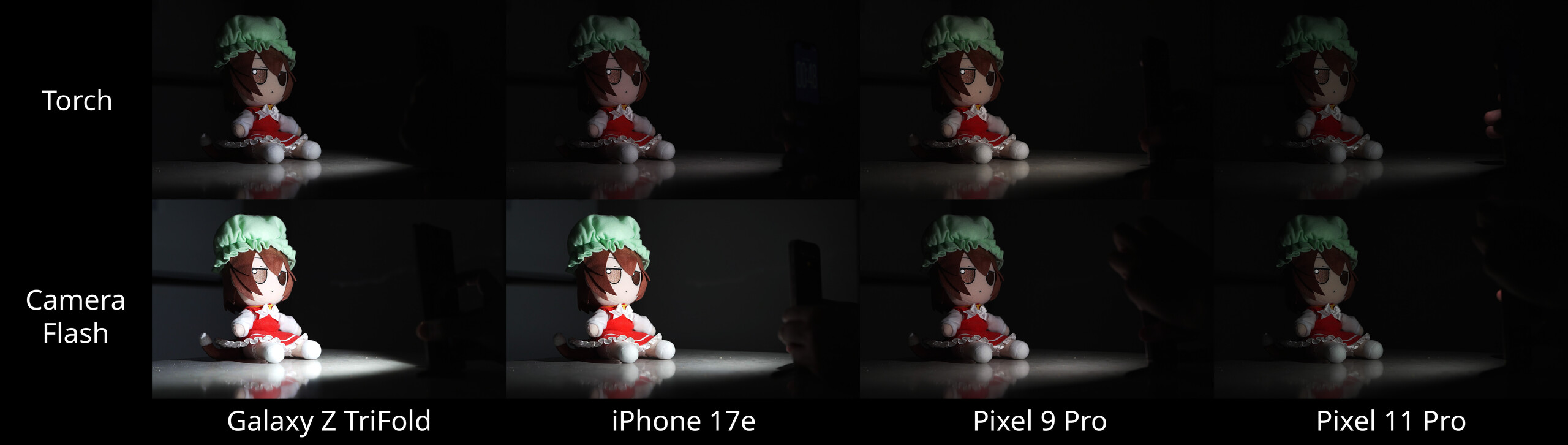
The likely cause can be traced to a hardware change Google made for the Pixel 11 series: HiLight, the new rear notification light that replaced the infrared temperature sensor found on earlier Pixel models. HiLight consists of eight RGB LEDs arranged in a ring around the main camera flash, with a single frosted white diffuser over them to blend the ring's light into a smooth glow. That same diffuser also sits directly over the primary flash LED, meaning the flash no longer has a dedicated lens or microlens to focus and project its light. Diffused light scatters rather than concentrates, which would account for both the shorter throw and the softer edge visible in the flash comparison shots. The tester provided us with a microscope image of the flashlight openings on the Pixel 11 Pro and Pixel 9 Pro.


Google has not commented on the difference in flash and torch brightness. The trade-off appears to be a side effect of fitting HiLight around the existing flash module rather than a deliberate downgrade. The Pixel 11 Pro is now available and is listed for $1,099.99 on Amazon for the 12GB/256GB configuration.*
Source(s)
 Add as a preferred source on Google


