




Google Pixel 11 turns American Sign Language into typed text
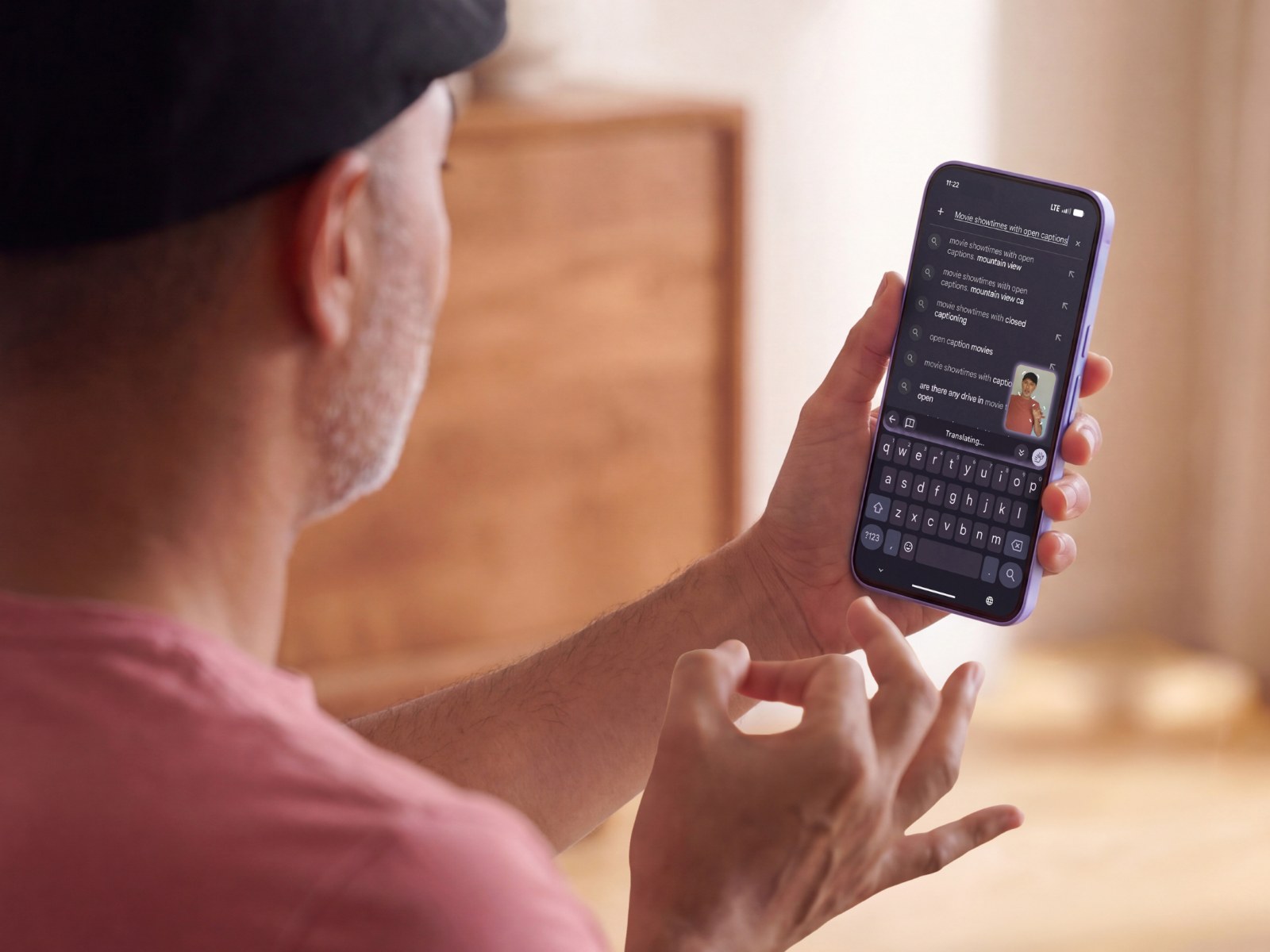
Google DeepMind unveiled a sign language translation model on Wednesday, and this one is not staying in the lab. SL2T, short for sign-language-to-text, now runs inside the Gboard keyboard and the Live Transcribe app on the Pixel 11. Sign, and you get text. It works anywhere you would normally type: web searches, messages, documents and Gemini prompts. Google is not charging extra for it.
For deaf users that is more than a convenience. Around 70 million people worldwide use one of the more than 200 sign languages as their primary language, and dictation, something hearing users have taken for granted for years, was never available to them. In Live Transcribe they can now answer back instead of typing their way through a conversation.
The camera never sends video to Google
The privacy design is the most interesting part. The model never sees the camera image. MediaPipe Holistic runs on the phone and reduces the footage to body landmarks, plain coordinates for hands, arms, head and face. Only those numbers travel to the server, and Google says the video is discarded immediately.
What Google left out matters just as much. Earlier systems translated through glosses, a coarse intermediate notation of individual signs that strips away much of what sign languages actually carry, including facial expression and use of space. SL2T goes straight from landmarks to text. Training used more than 100,000 hours of footage covering over 50 sign languages, roughly a quarter of it American Sign Language. On the FLEURS-ASL benchmark it scores 70 BLEURT, a measure of translation quality, without seeing the test data first.
One language only, and Google flags its own errors
The language list is the catch. At launch SL2T handles ASL into English and nothing else, so users of British, German or any other sign language are still waiting. Google promises more languages and more devices without naming a date.
Accuracy is not flawless either, and the company says so in its own examples. Fast fingerspelling turns prey into grey, a descriptive classifier drops out, a tense shifts when context is missing. The team did tackle the practical problems: latency during live translation, invented output when nobody is signing, left-handed signers, and one-handed signing, which becomes necessary the moment the other hand is holding the phone.
Deaf professionals were involved throughout. An advisory group called AISLAC accompanied the release and co-authored a report on what the model can and cannot do.
Pixel 11 only, for now
Trying the feature means buying a Pixel 11. Google opened preorders on 12 August, and as of 13 August the Google Store still lists the phone as a preorder at $899. Older handsets such as the Pixel 10 Pro miss out for the moment.
 Add as a preferred source on Google


