




Intel Pentium 8505 vs Intel Core Ultra 5 125H vs Intel Pentium 8500
Intel Pentium 8505
► remove from comparison
The Intel Pentium 8505 is an entry-level mobile CPU for thin and light laptops based on the Alder Lake architecture. It was announced in early 2022 and offers one performance core (P-cores, Golden Cove architecture) and 4 efficient cores (E-cores, Gracemont architecture). The P-cores support Hyper-Threading leading to 6 supported threads when combined with the E-cores. The clock rate ranges from 1.2 to 4.4 GHz on the performance cluster and 0.9 to 3.3 GHz on the efficient cluster. The performance of the E-cores should be similar to old Skylake cores (compare to the Core i7-6700HQ). All cores can use up to 8 MB L3-cache. Compared to the faster Core i3-1215U, the Pentium offers one less P-core.
Performance
This is a fairly unpopular CPU, if the fact that we have not tested a single system built around it as of August 2023 is any indication. That said, we have tested a few systems featuring the Core i3-1215U, a chip with the same clock speeds and the same 4 E-cores but with 2 P-cores instead of 1. Based on that, expect the 8505 to be 10% to 20% behind the Ryzen 3 5300U and the Core i7-1185G7, as far as multi-thread benchmark scores are concerned.
Your mileage may vary depending on how competent the cooling solution of your laptop is and how high the CPU power limits are.
Features
The integrated memory controller supports various memory types up to DDR5-4800, DDR4-3200, LPDDR5-5200, and LPDDR4x-4267. The Thread Director (in hardware) can support the operating system to decide which thread to use on the performance or efficient cores for the best performance. For AI tasks, the CPU also integrates GNA 3.0 and DL Boost (via AVX2). Quick Sync in version 8 is the same as in the Rocket Lake CPUs and supports MPEG-2, AVC, VC-1 decode, JPEG, VP8 decode, VP9, HEVC, and AV1 decode in hardware. The CPU only supports PCIe 4.0 (x8 for a GPU and two x4 for SSDs).
The integrated graphics adapter is based on the Xe-architecture and offers 48 of the 96 EUs (Execution Units) operating at up to 1.1 GHz.
Power consumption
The Pentium has a Base power consumption of 15 W, with 55 W being its maximum Intel-recommended Turbo power consumption. These values are fairly high; passive cooling solutions aren't really an option here.
The CPU is built with Intel's 3rd generation 10 nm process marketed as Intel 7 for decent, as of early 2023, energy efficiency.
Intel Core Ultra 5 125H
► remove from comparison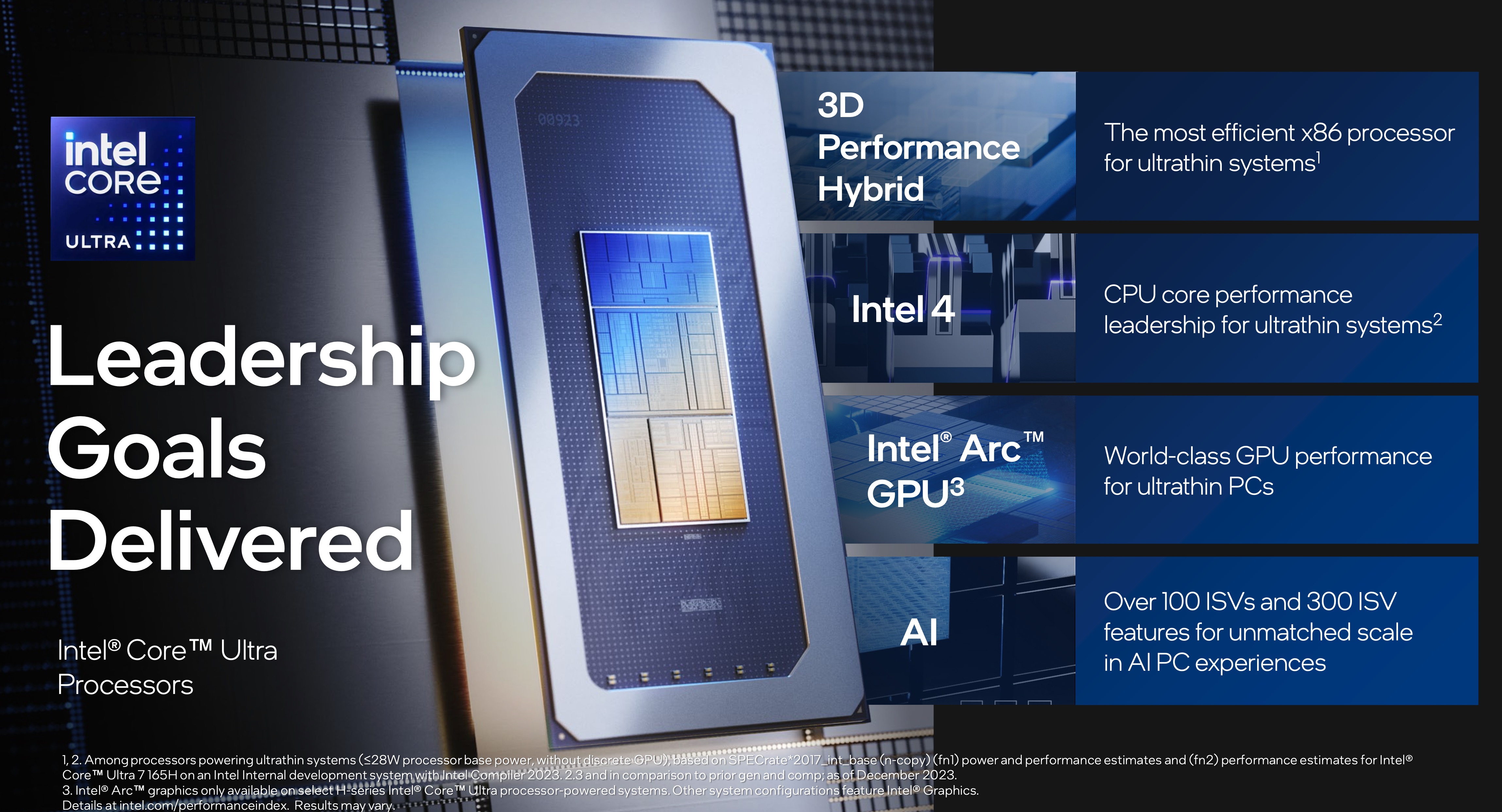
The Intel Core Ultra 5 125H is a mid-range Meteor Lake family chip that debuted in December 2023. This 1st Gen Core Ultra processor has come to replace 13th generation Core chips; it has 14 cores (4 + 8 + 2) and 18 threads at its disposal. Its Performance cores, of which there are 4, are HT-enabled and run at up to 4.5 GHz while its Efficient cores, of which there are 10 (8 main cores plus 2 extra ones found in the Low Power Island), run at up to 3.6 GHz. The 7-core Arc GPU, just out of the oven, serves as the integrated graphics adapter - this runs at up to 2.20 GHz - and there is a bevy of other brand-new technologies on offer as well, including the integrated AI Boost NPU with two Gen 3 engines for hardware AI workload acceleration.
Architecture and Features
With Meteor Lake, Intel intends to deliver higher CPU performance, higher GPU performance and at the same time, longer battery life than what Raptor Lake chips were capable of. The company also wants a large piece of the AI cake and is working with Microsoft and other partners to make that happen. As a result, Windows Defender is now AI-enabled, meaning it can use the Intel NPU to take some of the load off the main CPU cores. We also get this new Intel Device Discovery technology that is designed to give us a better hardware-based remote laptop management than ever before; and, to make things even better, Intel now offers a dedicated Arc Pro graphics driver for workstations.
This generation of Intel Core processors features Redwood architecture P-cores and Crestmont architecture E-cores. Both come with slight architectural improvements over Raptor Cove and Gracemont respectively for slightly higher performance-per-clock figures; the interesting thing is that of the 10 E-cores, two are actually a separate cluster located on what Intel calls a "Low Power Island". Essentially, the latter is an SoC within an SoC that can stay active while most other parts of the chip are temporarily switched off to save power. The low-power E-cores run at up to 2.5 GHz. Intel hopes this approach will let it deliver unprecedentedly low power consumption figures when under low load, boosting battery life of laptops and tablets powered by Meteor Lake.
To build its Meteor Lake processors, Intel uses the Foveros technology (stacking several chips on top of each other). This is a cost-cutting measure more than anything else, as manufacturing several small dies on several different processes is so much cheaper than making a huge single die and hoping that there are no defects in it that will require disabling some parts of it.
Elsewhere, the Core Ultra 5 125H comes with 18 MB of L3 cache which is a significant reduction compared to the 24 MB that the 155H, the 165H and the 185H have. The processor has a very healthy number of PCIe 5 and PCIe 4 lanes for NVMe SSD speeds up to 15.7 GB/s; it supports RAM running at up to 7467 MHz (DDR5-5600, LPDDR5-7467, LPDDR5x-7467, to be specific - which is about as good as what 8040 series Ryzen chips have). Naturally, the 125H features built-in Thunderbolt 4 support and Intel CNVi Wi-Fi support. It is also worth mentioning that Intel chose to keep native SATA III support that AMD had removed from its Ryzen processors quite a while ago.
The 125H is compatible with 64-bit Windows 10, 64-bit Windows 11 and with many Linux distros.
Performance
While we have no way of knowing what the 125H will be like, as of December 2023, it's safe to expect the chip to be slightly slower than the Ryzen 7 7735HS (Zen 3 Plus, 8 cores, 16 threads, up to 4.75 GHz), as far as multi-thread performance is concerned.
Either way, real-world performance of the chip may vary significantly depending on how high the CPU power limits are and how competent the cooling solution of the system is.
Graphics
The 7-core Arc GPU running at up to 2.20 GHz is set to overshadow the Radeon 760M; just like the 8-core Arc GPU, this graphics adapter is set to be miles ahead of the aging Xe-series integrated GPUs. As long as one chooses to take Intel's word for it, that is.
A proper DX12 Ultimate graphics adapter, the Arc is no stranger to ray tracing and other modern technologies including AI frame generation (XeSS). It will let you connect up to four SUHD 4320p monitors and it will both HW-encode and HW-encode the most widely used video codecs including AVC, HEVC and AV1 in a fast and efficient manner.
Your mileage may vary depending on how high the CPU power limits are, how competent the cooling solution of your system is, how fast the RAM of your system is. The latter is really important; Intel stresses that for the Arc to deliver the best results possible, multi-channel RAM configuration is a must.
Power consumption
The Base power consumption, in the case of the 125H, is 28 W while its maximum Turbo power consumption is supposed to be within 115 W. A powerful cooling solution is a must for any system powered by this chip.
This Core Ultra 5 series processor is comprised of five small chips ("tiles") that are connected using Intel's Foveros technology. The tile containing main CPU cores is produced on the fairly modern 7 nm Intel process marketed as Intel 4 while most other tiles (the iGPU, the I/O die, ...) are built with TSMC's N5 and N6 processes. The base tile is built with the old Intel 22FFL process.
Intel Pentium 8500
► remove from comparisonThe Intel Pentium 8500 is an entry-level low-power mobile CPU for thin and light laptops based on the Alder Lake architecture. It was announced in early 2022 and offers one performance core (P-cores, Golden Cove architecture) and 4 efficient cores (E-cores, Gracemont architecture). The P-cores support Hyper-Threading leading to 6 supported threads when combined with the E-cores. The clock rate ranges from 1 to 4.4 GHz on the performance cluster and 0.7 to 3.3 GHz on the efficient cluster. The performance of the E-cores should be similar to old Skylake cores (compare to the Core i7-6700HQ). All cores can use up to 8 MB L3-cache. Compared to the faster Core i3-1210U, the Pentium offers one less P-core.
Performance
While we have not tested a single system built around the 8500 as of August 2023, it's safe to expect the chip to be about 20% slower than the i3-1215U, as far as multi-thread performance is concerned. Which is pretty terrible as of Q3 2023.
Your mileage may vary depending on how high the CPU power limits are and how competent the cooling solution of your system is.
Features
The integrated memory controller supports various memory types up to DDR5-4800, DDR4-3200, LPDDR5-5200, and LPDDR4x-4267. The Thread Director (in hardware) can support the operating system to decide which thread to use on the performance or efficient cores for the best performance. For AI tasks, the CPU also integrates GNA 3.0 and DL Boost (via AVX2). Quick Sync in version 8 is the same as in the Rocket Lake CPUs and supports MPEG-2, AVC, VC-1 decode, JPEG, VP8 decode, VP9, HEVC, and AV1 decode in hardware. The CPU only supports PCIe 4.0 (x8 for a GPU and two x4 for SSDs).
The integrated graphics adapter is based on the Xe-architecture and offers 48 of the 96 EUs (Execution Units) operating at up to 0.8 GHz.
Power consumption
This Pentium has a Base power consumption of 9 W, with 29 W being its maximum Intel-recommended Turbo power consumption. TDP values this low allow for passively cooled laptops, tablets, mini-PCs as long as performance is not a priority.
The CPU is made with Intel's 3rd generation 10 nm process marketed as Intel 7 for decent, as of early 2023, energy efficiency.
| Model | Intel Pentium 8505 | Intel Core Ultra 5 125H | Intel Pentium 8500 | ||||||||||||||||||||||||||||||||||||||||||||||||||||||||||||||||||||||||||||||||||||||||||||||||||||||||||||||||||||||||||||||||||||
| Codename | Alder Lake-U | Meteor Lake-H | Alder Lake-U | ||||||||||||||||||||||||||||||||||||||||||||||||||||||||||||||||||||||||||||||||||||||||||||||||||||||||||||||||||||||||||||||||||||
| Series | Intel Alder Lake-M | Intel Meteor Lake-H | Intel Alder Lake-M | ||||||||||||||||||||||||||||||||||||||||||||||||||||||||||||||||||||||||||||||||||||||||||||||||||||||||||||||||||||||||||||||||||||
| Series: Alder Lake-M Alder Lake-U |
|
|
| ||||||||||||||||||||||||||||||||||||||||||||||||||||||||||||||||||||||||||||||||||||||||||||||||||||||||||||||||||||||||||||||||||||
| Clock | 900 - 4400 MHz | 3600 - 4500 MHz | 700 - 4400 MHz | ||||||||||||||||||||||||||||||||||||||||||||||||||||||||||||||||||||||||||||||||||||||||||||||||||||||||||||||||||||||||||||||||||||
| L1 Cache | 464 KB | 464 KB | |||||||||||||||||||||||||||||||||||||||||||||||||||||||||||||||||||||||||||||||||||||||||||||||||||||||||||||||||||||||||||||||||||||
| L2 Cache | 3.5 MB | 3.5 MB | |||||||||||||||||||||||||||||||||||||||||||||||||||||||||||||||||||||||||||||||||||||||||||||||||||||||||||||||||||||||||||||||||||||
| L3 Cache | 8 MB | 18 MB | 8 MB | ||||||||||||||||||||||||||||||||||||||||||||||||||||||||||||||||||||||||||||||||||||||||||||||||||||||||||||||||||||||||||||||||||||
| Cores / Threads | 5 / 6 | 14 / 18 4 x 4.5 GHz Intel Redwood Cove P-Core 8 x 3.6 GHz Intel Crestmont E-Core 2 x 2.5 GHz Intel Crestmont E-Core | 5 / 6 | ||||||||||||||||||||||||||||||||||||||||||||||||||||||||||||||||||||||||||||||||||||||||||||||||||||||||||||||||||||||||||||||||||||
| TDP | 15 Watt | 28 Watt | 9 Watt | ||||||||||||||||||||||||||||||||||||||||||||||||||||||||||||||||||||||||||||||||||||||||||||||||||||||||||||||||||||||||||||||||||||
| Technology | 10 nm | 7 nm | 10 nm | ||||||||||||||||||||||||||||||||||||||||||||||||||||||||||||||||||||||||||||||||||||||||||||||||||||||||||||||||||||||||||||||||||||
| max. Temp. | 100 °C | 110 °C | 100 °C | ||||||||||||||||||||||||||||||||||||||||||||||||||||||||||||||||||||||||||||||||||||||||||||||||||||||||||||||||||||||||||||||||||||
| Socket | BGA1744 | BGA2049 | BGA1744 | ||||||||||||||||||||||||||||||||||||||||||||||||||||||||||||||||||||||||||||||||||||||||||||||||||||||||||||||||||||||||||||||||||||
| Features | DDR4-3200/LPDDR4x-4266/DDR5-4800/LPDDR5-5200 RAM, PCIe 4, Thr. Director, DL Boost, GNA, MMX, SSE, SSE2, SSE3, SSSE3, SSE4.1, SSE4.2, AES, AVX, AVX2, FMA3, SHA | DDR5-5600/LPDDR5-7467/LPDDR5x-7467 RAM, PCIe 5, Thr. Director, DL Boost, AI Boost, vPro Essen., MMX, SSE, SSE2, SSE3, SSSE3, SSE4.1, SSE4.2, AES, AVX, AVX2, AVX-VNNI, FMA3, SHA | LPDDR4x-4266/LPDDR5-5200 RAM, PCIe 4, Thr. Director, DL Boost, GNA, MMX, SSE, SSE2, SSE3, SSSE3, SSE4.1, SSE4.2, AES, AVX, AVX2, FMA3, SHA | ||||||||||||||||||||||||||||||||||||||||||||||||||||||||||||||||||||||||||||||||||||||||||||||||||||||||||||||||||||||||||||||||||||
| iGPU | Intel UHD Graphics Xe G4 48EUs ( - 1100 MHz) | Intel Arc 7-Core iGPU ( - 2200 MHz) | Intel UHD Graphics Xe G4 48EUs ( - 800 MHz) | ||||||||||||||||||||||||||||||||||||||||||||||||||||||||||||||||||||||||||||||||||||||||||||||||||||||||||||||||||||||||||||||||||||
| Architecture | x86 | x86 | x86 | ||||||||||||||||||||||||||||||||||||||||||||||||||||||||||||||||||||||||||||||||||||||||||||||||||||||||||||||||||||||||||||||||||||
| Announced | |||||||||||||||||||||||||||||||||||||||||||||||||||||||||||||||||||||||||||||||||||||||||||||||||||||||||||||||||||||||||||||||||||||||
| Manufacturer | ark.intel.com | ark.intel.com | ark.intel.com | ||||||||||||||||||||||||||||||||||||||||||||||||||||||||||||||||||||||||||||||||||||||||||||||||||||||||||||||||||||||||||||||||||||
| NPU / AI | 11 TOPS INT8 |
Benchmarks

Average Benchmarks Intel Pentium 8505 → 100% n=2
Average Benchmarks Intel Core Ultra 5 125H → 146% n=2
Average Benchmarks Intel Pentium 8500 → 54% n=2
 - Average benchmark values for this graphics card
* Smaller numbers mean a higher performance
1 This benchmark is not used for the average calculation


 Add as a preferred