




JWST may have detected a supernova that exploded about 11.7 billion years ago
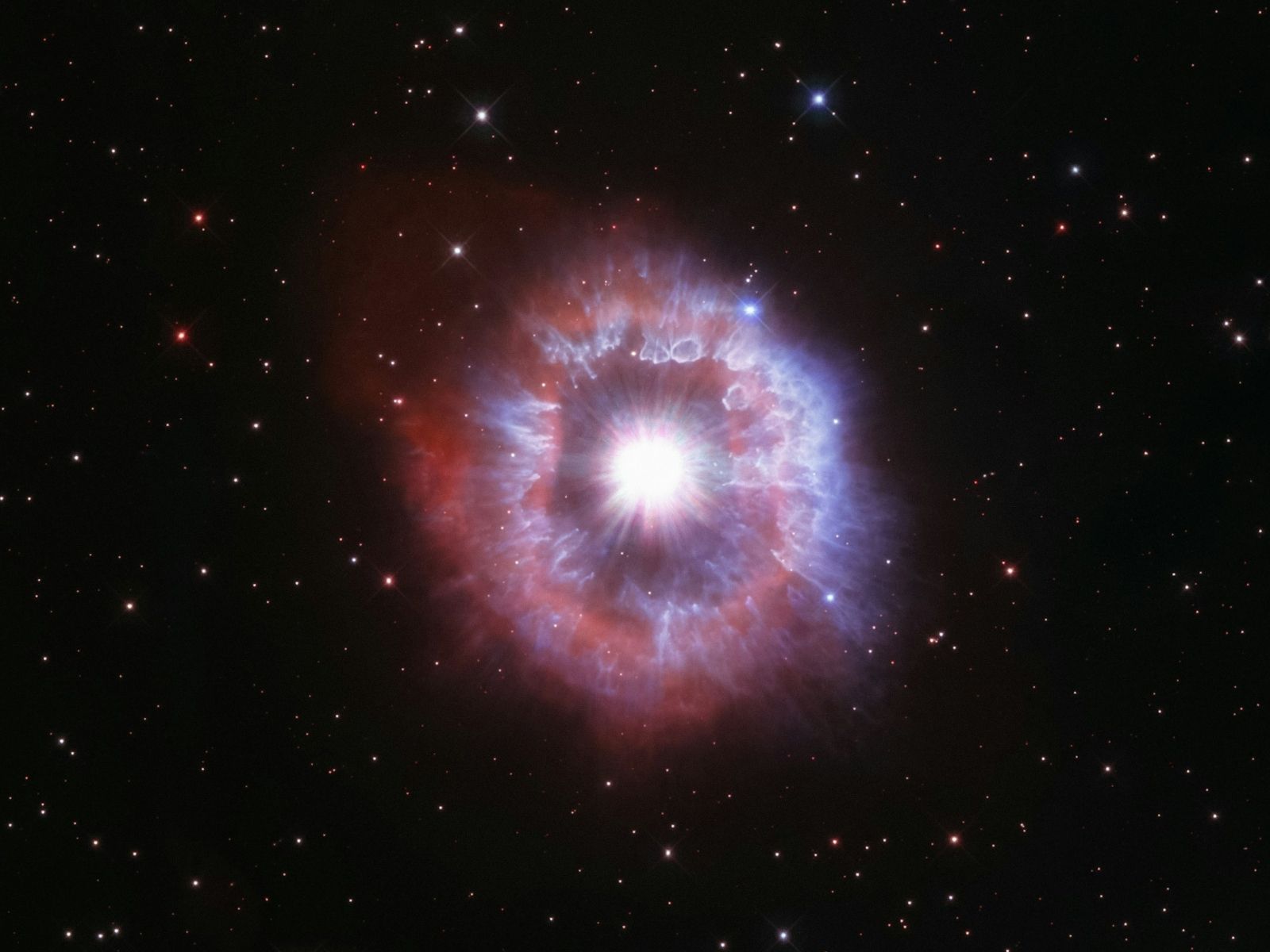
In the universe, supernovae are common events. But while they are difficult to observe, the James Webb Space Telescope may have detected a supernova that occurred when the universe was only about 2 billion years old.
Astronomers led by Valeria Aparicio of the Institute for Astronomy at the University of Hawaii used this telescope during the Cosmos-Web survey. That is how they discovered a supernova named SN 2023aeaf. While studying this event, they measured a redshift of 3.195. In other words, it is believed to have occurred about 11.7 billion years ago, in the early universe.
But they also wanted to learn more about the star that caused this event, as well as its host galaxy. To do so, they studied the spectrum of the galaxy, which led them to conclude that it was probably a young galaxy still in formation, with few heavier elements.
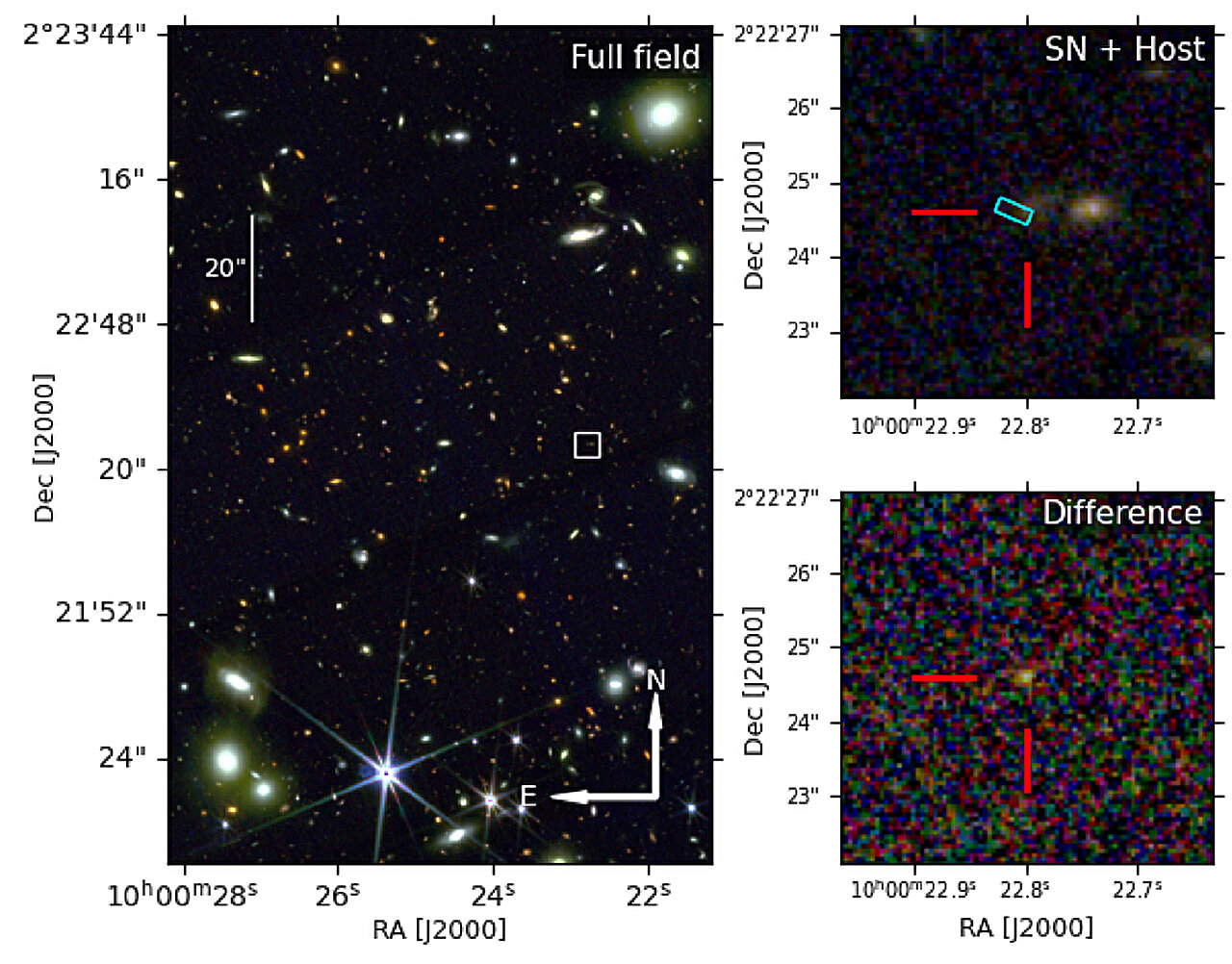
As for the star, astronomers used the Stella simulation software. By modeling the explosion, they found that the supernova was hot and blue and that the mass of the star was about 12 times that of the Sun. Furthermore, they estimate that there is a 97.2% probability that it is a Type II supernova. As a reminder, this type of event occurs when a massive star exhausts its nuclear fuel and its iron core collapses under its own gravity.
Source(s)
Image source: Valeria Aparicio et al., The Astrophysical Journal (2026) / NASA Hubble Space Telescope - Unsplash
 Add as a preferred source on Google


