




China wants robot dogs on the Moon to mine ice, build shelters, and support astronauts
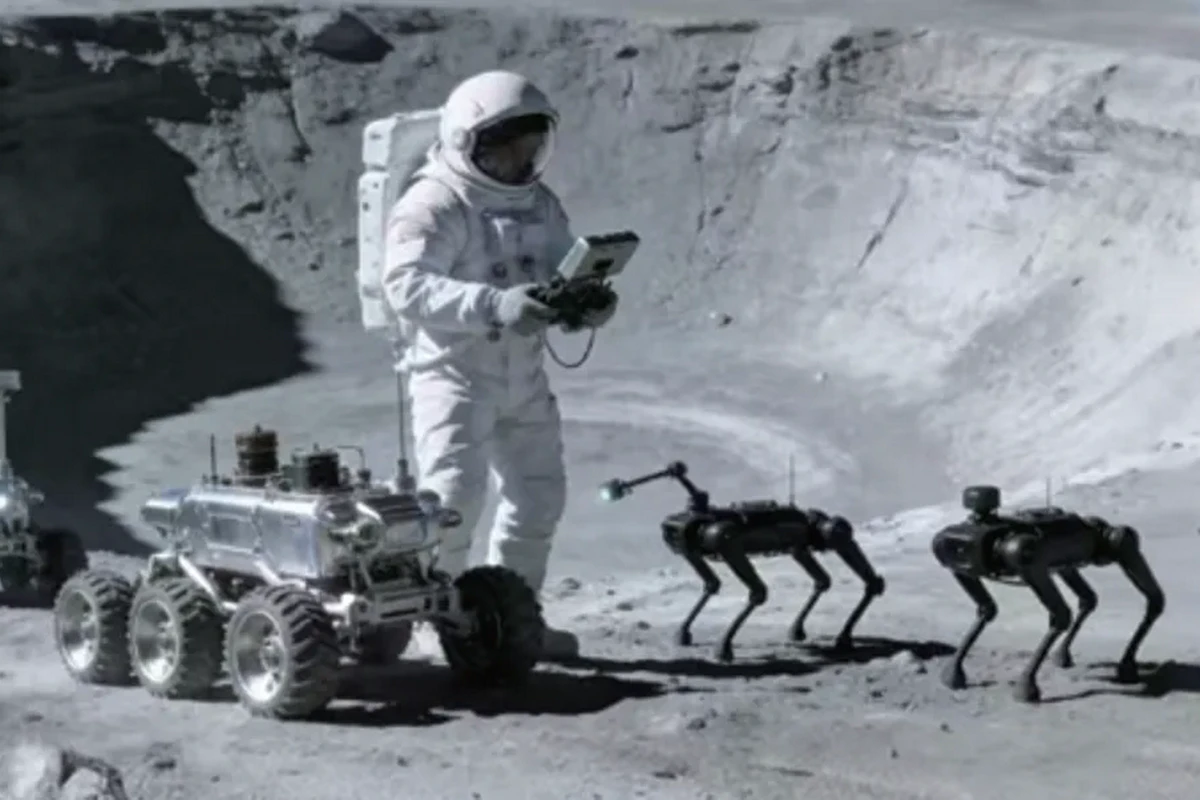
Chinese engineers have proposed making robot dogs permanent residents at future lunar bases, where the machines could help astronauts explore the surface, extract resources, build shelters, and even provide companionship during long periods of isolation.
The concept is outlined in a new study published in Chinese Space Science and Technology by researchers from the China Academy of Space Technology and its Beijing-based spacecraft systems engineering division. Unlike many previous proposals for using robots on the Moon, the researchers envision machines not only as tools for performing physical tasks but also as potential companions capable of communicating with astronauts and helping reduce the psychological strain of prolonged isolation.
The researchers argue that the Moon's harsh environment — including low gravity, intense radiation, extreme temperature swings, abrasive lunar dust, and communication delays with Earth — makes long-term missions relying exclusively on humans particularly difficult and risky. Their proposed solution is to divide responsibilities between astronauts and autonomous machines: humans would handle complex decisions, delicate operations, and unexpected problems, while robots would perform heavy, repetitive, and dangerous tasks.
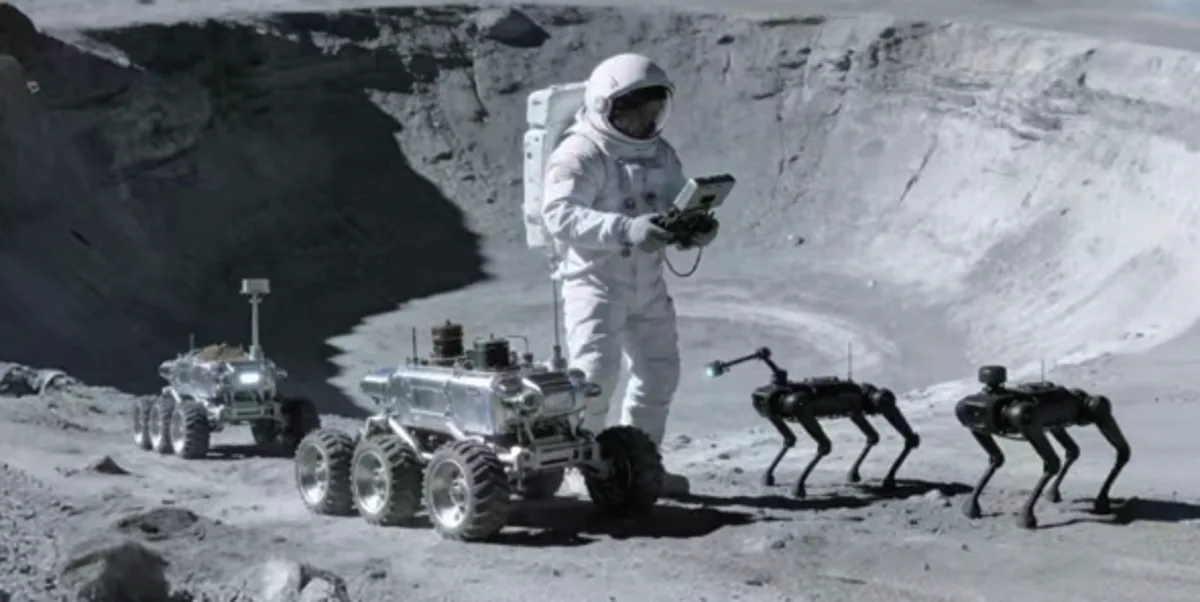
One proposed scenario involves an expedition in which three astronauts are accompanied by two robot dogs. One crew member would control the four-legged machines as they move ahead of the astronauts, survey the terrain, and identify potentially dangerous areas. A second astronaut would work directly on the lunar surface, collecting rock samples and carrying out precise operations. The third would remain inside a pressurized mobile module, coordinating the expedition and taking control of other robots when necessary.
Four-legged platforms are seen as especially useful for navigating difficult lunar terrain, where robots may need to cross rocks, ledges, and areas of uneven or loose ground.
The robots' role would extend well beyond exploration. The researchers divide the activities of a future lunar station into four broad areas: supporting the crew's daily needs, conducting scientific experiments, using local resources, and maintaining infrastructure.
Machines could be tasked with searching for and extracting water ice, processing mineral resources, constructing structures from locally available materials, and preparing lunar lava tubes for use as naturally protected habitats. Inside the living quarters, robots could monitor air quality and temperature, inspect equipment, clean rooms, tend plants, and even prepare food.
The researchers also envision a social role for the machines. A robotic companion could talk with crew members and offer a degree of emotional support, helping astronauts cope with the psychological strain of prolonged isolation far from Earth.
To coordinate this mixed human-robot workforce, the researchers propose a four-level architecture covering environmental perception, decision-making, action planning, and direct execution. The system would also allow four levels of human involvement, ranging from direct control to a highly autonomous mode in which a robot would contact a human only when it ran into an exceptional situation..
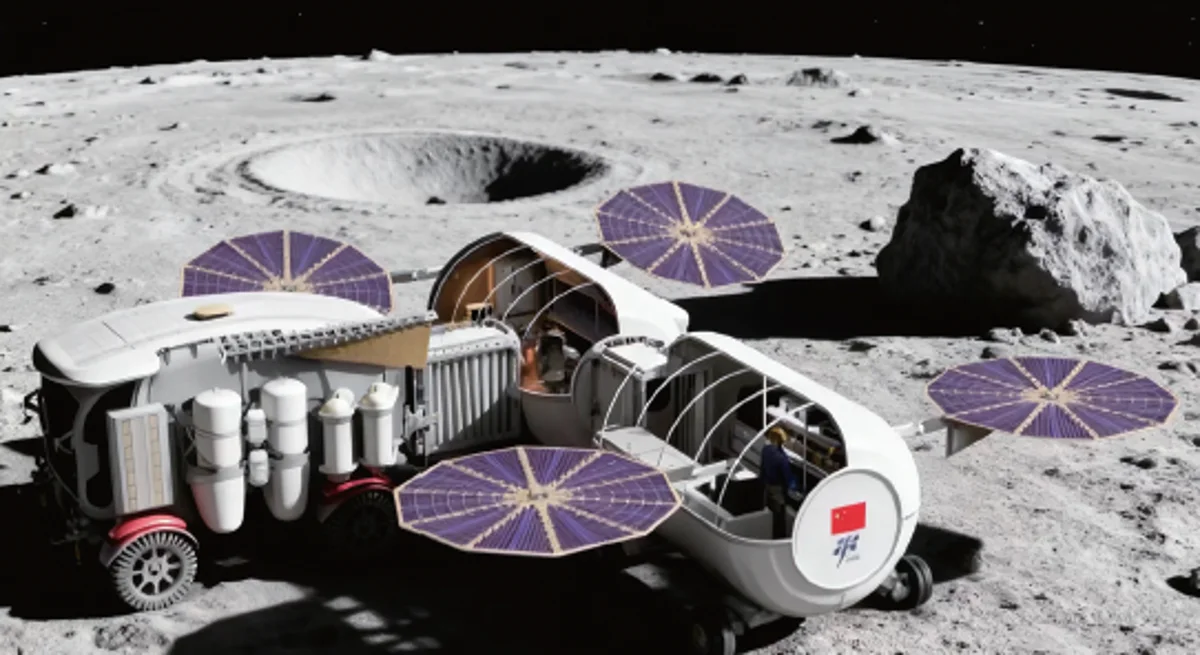
The concept is intended to form part of China's broader International Lunar Research Station (ILRS) program. According to China's published plans, an initial station near the Moon's south pole is expected to be established by 2035, with a later phase through 2045 envisioning a much larger lunar infrastructure centered around an orbital station
Source(s)
Chinese Space Science and Technology via SCMP
 Add as a preferred source on Google


