




A rare brown dwarf orbiting a massive star has been discovered by TESS

Since its launch, TESS (Transiting Exoplanet Survey Satellite) has enabled researchers to discover many new worlds. And recently, astronomers led by Nino Ephremidze at Harvard University have used data from this satellite to detect a brown dwarf orbiting a massive star.
Located about 700 light-years from Earth and named HIP 61637 b, this celestial object orbits very close to its host star, which is three times more massive than the Sun. Furthermore, it is the brightest and most massive star known to host a brown dwarf. Through their analysis, astronomers were able to determine that this system is about 396 million years old, making HIP 61637 b the seventh brown dwarf whose age is known.
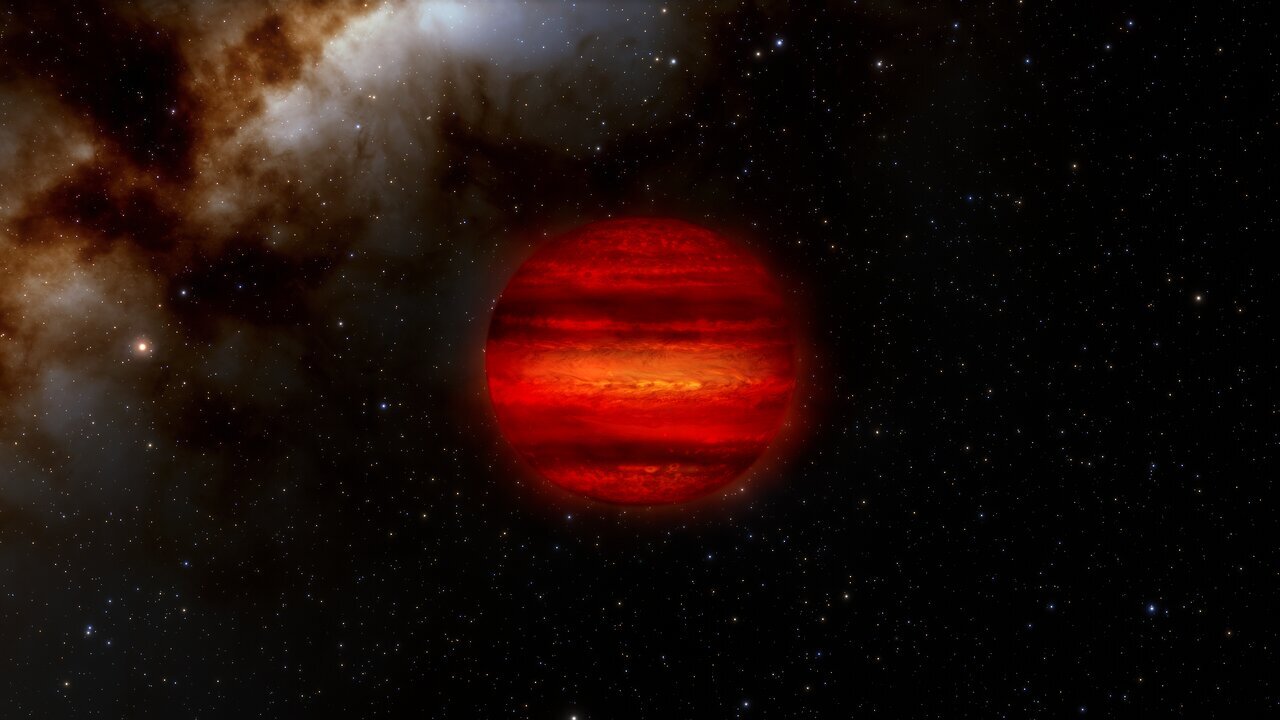
However, these objects remain in a category of their own. Indeed, they are too massive to be planets but not massive enough to become stars. In addition, astronomers still do not fully understand how they form.
Regarding HIP 61637 b, a hypothesis has been put forward. Based on its mass, which is 48 times that of Jupiter, astronomers believe it may have formed gradually within a disk, just as a planet would. As a result, this discovery could provide new clues to understanding whether these celestial objects form like stars or like planets.
Source(s)
Caution: This study has not yet been vetted by independent experts (Preprint).
Image source: NASA Hubble Space Telescope - Unsplash
 Add as a preferred source on Google


