




Curiosity captured a bizarre “combat tripod” on Mars — and science has an explanation
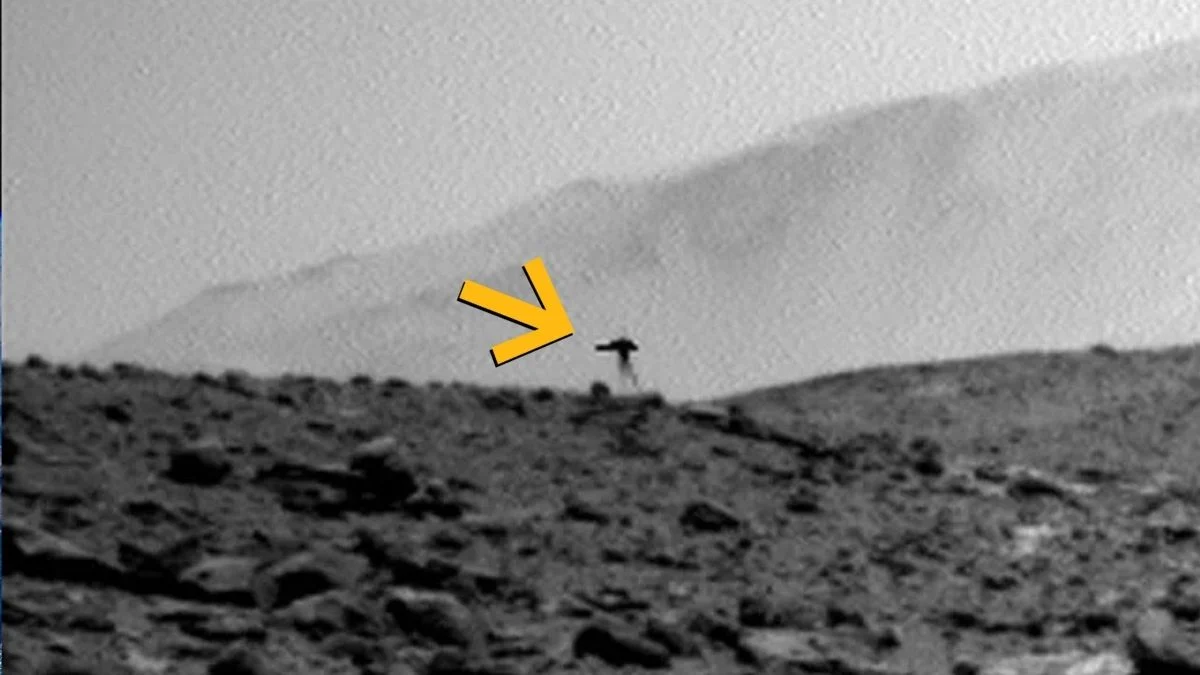
NASA’s Curiosity rover captured a bizarre object on Mars that looks remarkably like a tiny version of the alien war machines from H.G. Wells’ The War of the Worlds. The image, taken in Gale Crater, recently went viral on social media, prompting plenty of speculation about what appears to be a dark, tripod-like structure standing on the Martian surface.
There is, however, a much less exciting explanation. The object is most likely an image artifact caused by a high-energy particle hitting Curiosity’s NavCam sensor. These events are usually extremely brief and can appear in just a single frame — exactly what happened with Curiosity’s mysterious “tripod.”

The photo was taken on August 20, 2023, by the rover’s right navigation camera. Curiosity photographed the same scene 13 and 25 seconds earlier, but the strange object does not appear in either of those frames. That makes it highly unlikely that something was physically standing on the Martian surface.
Such artifacts are not unusual on Mars. Curiosity and NASA’s other rovers use cameras with CCD-type sensors that are exposed to high-energy particles from space. When one strikes the sensor, it can leave behind a bright or dark spot, streak or other strange-looking mark in the captured image.
Mars is particularly vulnerable to this phenomenon because it lacks a global magnetic field, while its atmosphere has only about 0.5 % of Earth’s mass. The planet therefore provides much less protection from particles arriving from space.
NASA imaging specialist Justin Maki noted back in 2014 that unusual bright spots caused by cosmic rays appeared in Curiosity’s images almost every week. Dark artifacts are possible too: NASA previously documented a small black mark in video from the rover that was also attributed to a cosmic-ray hit on the camera sensor.
That doesn't prove exactly what produced this particular “tripod.” Without an analysis from the Curiosity team, other camera or image-processing artifacts cannot be completely ruled out. Still, the fact that the object appears in only one of several consecutive frames is strong evidence that it originated inside the imaging system rather than floating above the Martian landscape.
Source(s)
 Add as a preferred source on Google


