




First tests are in: Can the Steam Controller really replace mouse and keyboard?
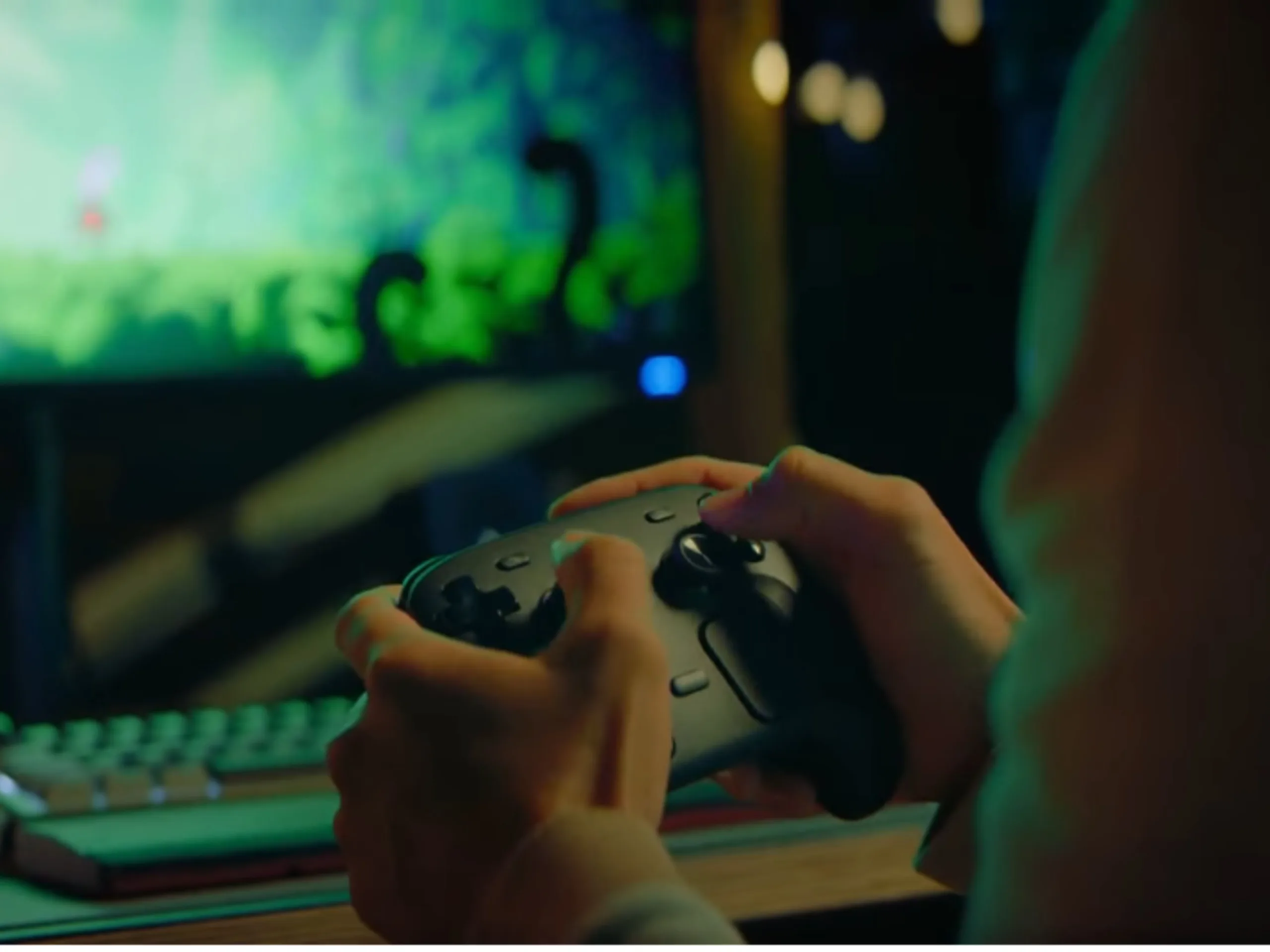
Valve has announced that the Steam Controller will launch on May 4 for around $100. Initial reviews are now available, offering insight into how well its control scheme – featuring TMR sticks, trackpads and a gyro sensor – actually works. German gaming magazine PC Games Hardware describes it as a powerful but specialized gamepad with a learning curve, while GameStar even calls it “the best PC gamepad for most users.” Meanwhile, Gamers Nexus praised the controller’s excellent repairability.
The Steam Controller isn’t a conventional gamepad – it’s a flexible input device designed specifically for PC gaming. Valve combines standard buttons, sticks and triggers with two trackpads, a gyro sensor, rear buttons and its Steam Input software, which allows full customization of controls. The goal is to expand the Steam ecosystem into the living room, especially in preparation for the Steam Machine. In theory, the controller should even make games designed for mouse and keyboard playable from the couch – but how well does that actually work?
Strong in controller-friendly games, but not perfect
According to PC Games Hardware, the controller works reliably right out of the box in games that already support gamepads. In Destiny 2, for example, it is recognized as a standard controller. The TMR sticks are a standout feature. They are not only less prone to stick drift than traditional potentiometer-based sticks, but also highly precise and can be fine-tuned with minimal dead zones via Steam Input. There are, however, some criticisms. The triggers feel relatively soft, lack a locking mechanism and are less customizable than those of the DualSense Wireless Controller. GameStar also points out that the D-pad is not ideal for fighting games, as diagonal inputs can be difficult to execute.
Mouse and keyboard replacement – only in certain scenarios
The controller’s key innovation lies in its touchpads. These allow mouse-like input and make it far easier to play PC games from the couch compared to standard analog sticks. In Anno 1800, building and navigation reportedly worked surprisingly well – especially at a slower pace. The controller also performed strongly in Civilization VII. The gyro sensor is another useful addition. By slightly tilting the controller, players can make fine adjustments, which helps with aiming or precise cursor movement. According to both major tests, this works particularly well when combined with sticks or trackpads.
However, once games require both precision and fast reactions, the limitations become clear. In Total War: Warhammer III, the controller was usable overall, but felt too indirect and slow in hectic situations. Early impressions suggest that the Steam Controller can indeed replace a mouse and keyboard – but only in specific types of games. In slower-paced genres like strategy or simulation, it performs surprisingly well. In fast-paced, micro-intensive gameplay, however, the trackpad-based input simply can’t keep up.
Source(s)
PC Games Hardware (in German)
Image source: Steam
 Add as a preferred source on Google


