




Update | Asus confirms RTX 5070 Ti is now discontinued as Nvidia effectively kills Blackwell 16 GB midrange, RTX 5060 Ti 16 GB next on the chopping block
January 17, 2026 02:30 AM GMT update
Following Nvidia's statement, Asus has issued a fresh clarification to Hardware Unboxed that it has no plans to stop selling the RTX 5070 Ti and RTX 5060 Ti.
We would like to clarify recent reports regarding the Asus GeForce RTX™ 5070 Ti and RTX™ 5060 Ti 16 GB. Certain media may have received incomplete information from an Asus PR representative regarding these products.
The GeForce RTX 5070 Ti and GeForce RTX 5060 Ti 16 GB have not been discontinued or designated as end-of-life (EOL). Asus has no plans to stop selling these models.
Current fluctuations in supply for both products are primarily due to memory supply constraints, which have temporarily affected production output and restocking cycles. As a result, availability may appear limited in certain markets, but this should not be interpreted as a production halt or product retirement.
Asus will continue to support the GeForce RTX 5070 Ti and RTX 5060 Ti 16 GB and is working closely with partners to stabilize supply as conditions improve."
January 15, 2025 06:44 PM GMT update
In a statement to Hardwareluxx.de (found at the very end of the article), Nvidia said it plans to continue shipping all GeForce SKUs.
— What changes are occurring in the GeForce ecosystem given the current memory market?
— Demand for GeForce RTX GPUs is strong, and memory supply is constrained. We continue to ship all GeForce SKUs and are working closely with our suppliers to maximize memory availability.
Slightly edited article continues as follows:
Lately, the AI boom has been bringing unsavory news by the day for gamers and general consumers looking to buy a decent GPU. Recently, we reported on how Nvidia and partners are increasing production of the RTX 5060 and RTX 5060 Ti 8 GB versions owing to rising memory chip costs.
Now, OEMs are unofficially confirming that the RTX 5070 Ti, and soon the RTX 5060 Ti 16 GB, will be designated end of life (EoL) status.
YouTube channel Hardware Unboxed has learnt from Asus, one of Nvidia's biggest add-in board (AiB) partners, that the company will no longer produce RTX 5070 Ti 16 GB cards. The OEM has informed the channel that they are facing a supply shortage of the GB203-based RTX 5070 Ti and have thus moved this GPU to EoL status. That means there will be no new RTX 5070 Ti cards after the current stock gets depleted at retailers.
The channel also notes that the RTX 5060 Ti 16 GB is all set to follow suit as AiBs are finding it difficult to source this VRAM variant of the GB206 GPU.
This lines up with Nvidia's new scheme of prioritizing the top-end GPU for each VRAM configuration as first reported by HKEPC. In this purported shift of plans, the highest GPU for a certain VRAM capacity is prioritized while other SKUs have reduced allocation.
For instance, the RTX 5060 and RTX 5060 Ti both come in 8 GB VRAM variants, so Nvidia's board partners will prioritize the RTX 5060 Ti 8 GB over the RTX 5060.
Three Blackwell GPUs, viz. the RTX 5060 Ti 16 GB, RTX 5070 Ti, and the RTX 5080, feature 16 GB VRAM, so AiBs will get higher RTX 5080 allocation while the other two get deprioritized.
There seem to be no allocation changes for the 12 GB RTX 5070, 24 GB RTX 5090D v2, and the flagship 32 GB RTX 5090.
The 5070 Ti is a great QHD 1440p card, even suitable for UHD 2160p with upscaling
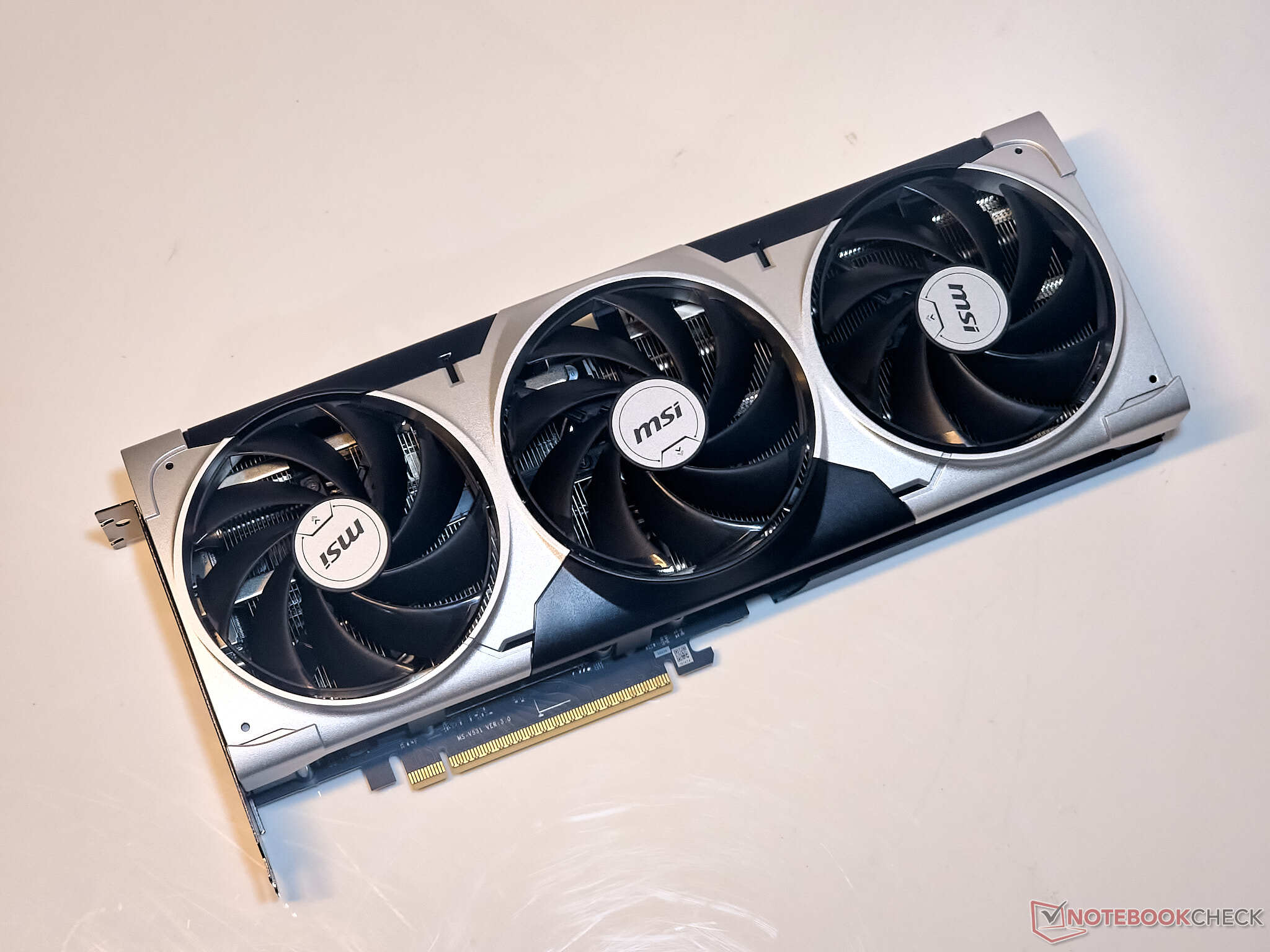
The RTX 5070 Ti originally launched at a $749 MSRP. There's no Founders Edition (FE) model for this card, so AiB pricing currently ranges anywhere from $830 (MSI RTX 5070 Ti Shadow 3X on Amazon) to a whopping $1,565.90 for an Aorus RTX 5070 Ti OC on Newegg.
If nothing changes, stocks are set to deplete fast and the ones remaining are likely to get listed at even higher prices, thus exacerbating the agony further.
This is such a shame as the RTX 5070 Ti otherwise makes for a great 1440p card and its only direct competitor is the AMD Radeon RX 9070 XT. With a helping hand from upscaling tech like DLSS 4.5 and multi-frame generation (MFG), 4K gaming is pretty much viable on the RTX 5070 Ti.
Meanwhile, the RTX 5060 Ti 16 GB looks poised to become the most sought-after GPU in the Blackwell generation. The card launched at a $429 MSRP and can be currently had at prices ranging from $546 (MSI RTX 5060 Ti 16G Ventus 2X OC) to $659 (Gigabyte RTX 5060 Ti Gaming OC 16G) on Amazon.
Given the current state of flux in the hardware world these days, it can be safely assumed that even this GPU would be sold at a higher markup in the coming days.
Source(s)
 Add as a preferred source on Google


