




Nvidia DLSS 4.5 brings 2nd‑gen Transformer and 6x multi‑frame gen to RTX 50 Blackwell; RTX 20 and RTX 30 stand to benefit with caveats
 CES 2026
While it may be surprising to some that Nvidia is not launching the rumored RTX 50 Super series GPUs today, the company has chosen to dangle a different kind of carrot in front of gamers. At CES 2026, Nvidia is announcing the arrival of DLSS 4.5.
DLSS 4's Transformer model brought about a marked improvement in upscaling visual fidelity compared to the convolution neural network (CNN) approach that previous versions of DLSS relied on. While the shift to Transformer was welcomed largely, it still had some deficiencies particularly with respect to ghosting and reduced temporal stability in certain games.
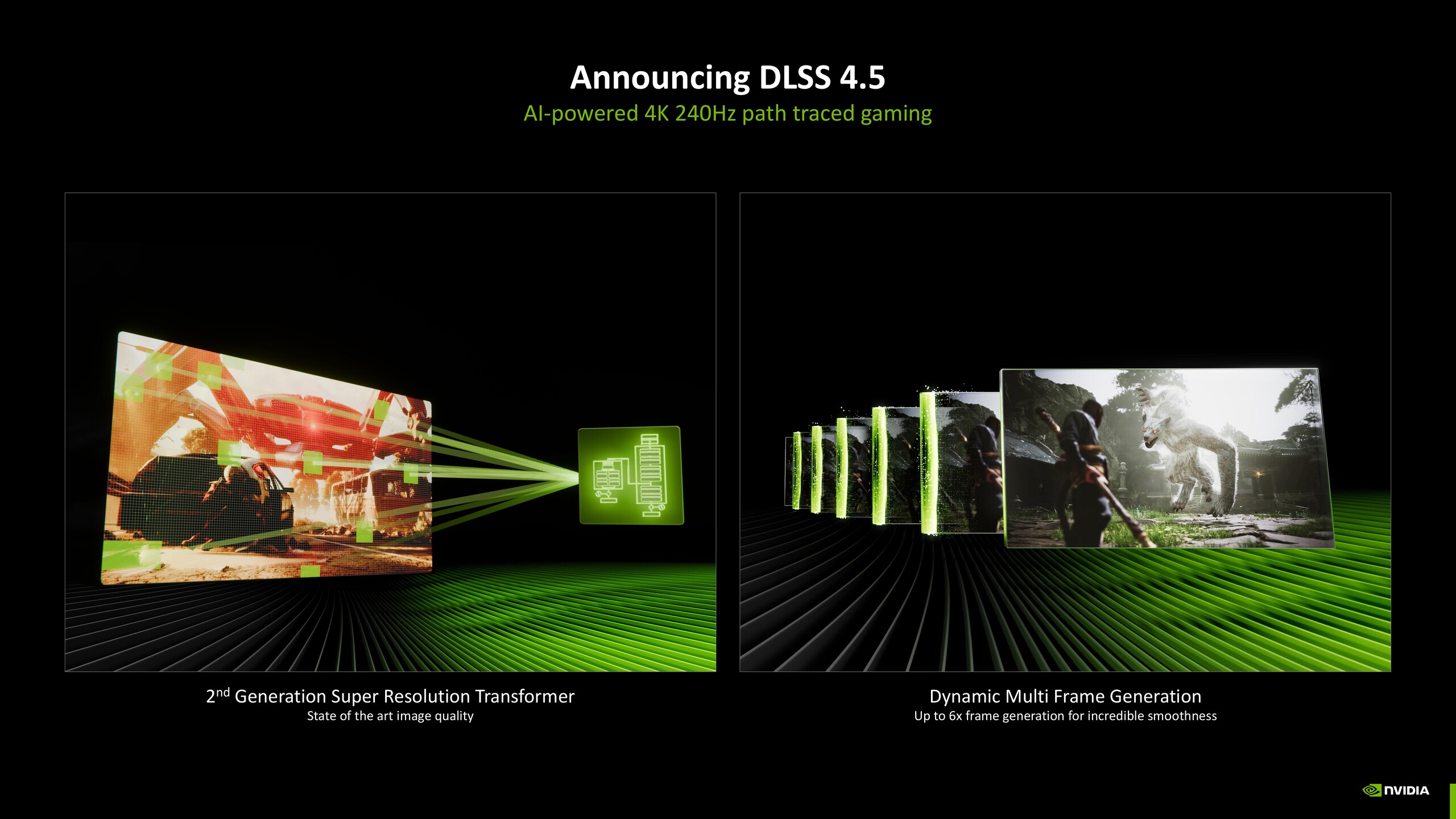
Nvidia hopes to change that today with the introduction of 2nd generation Transformer in DLSS 4.5 Super Resolution.
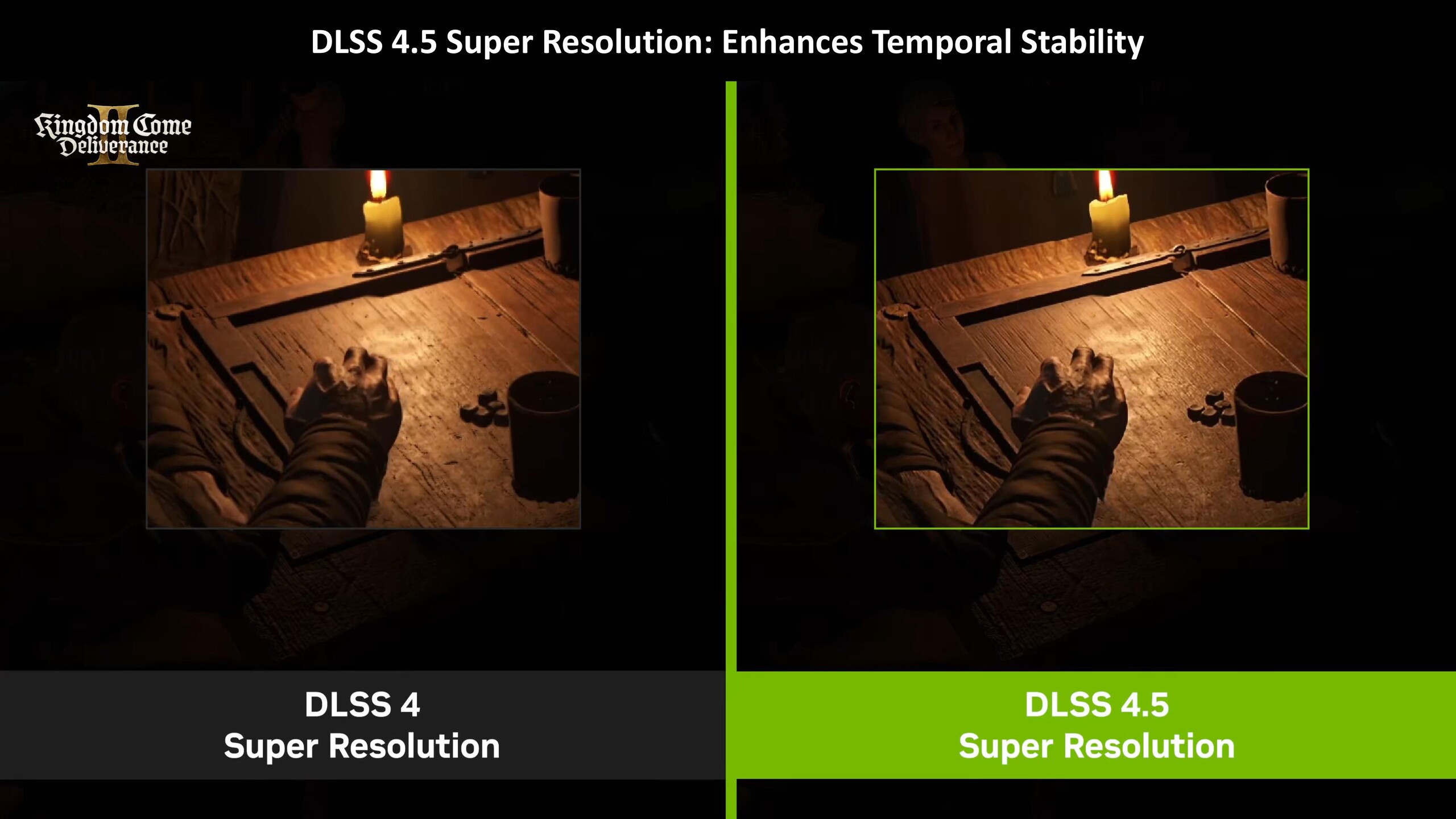
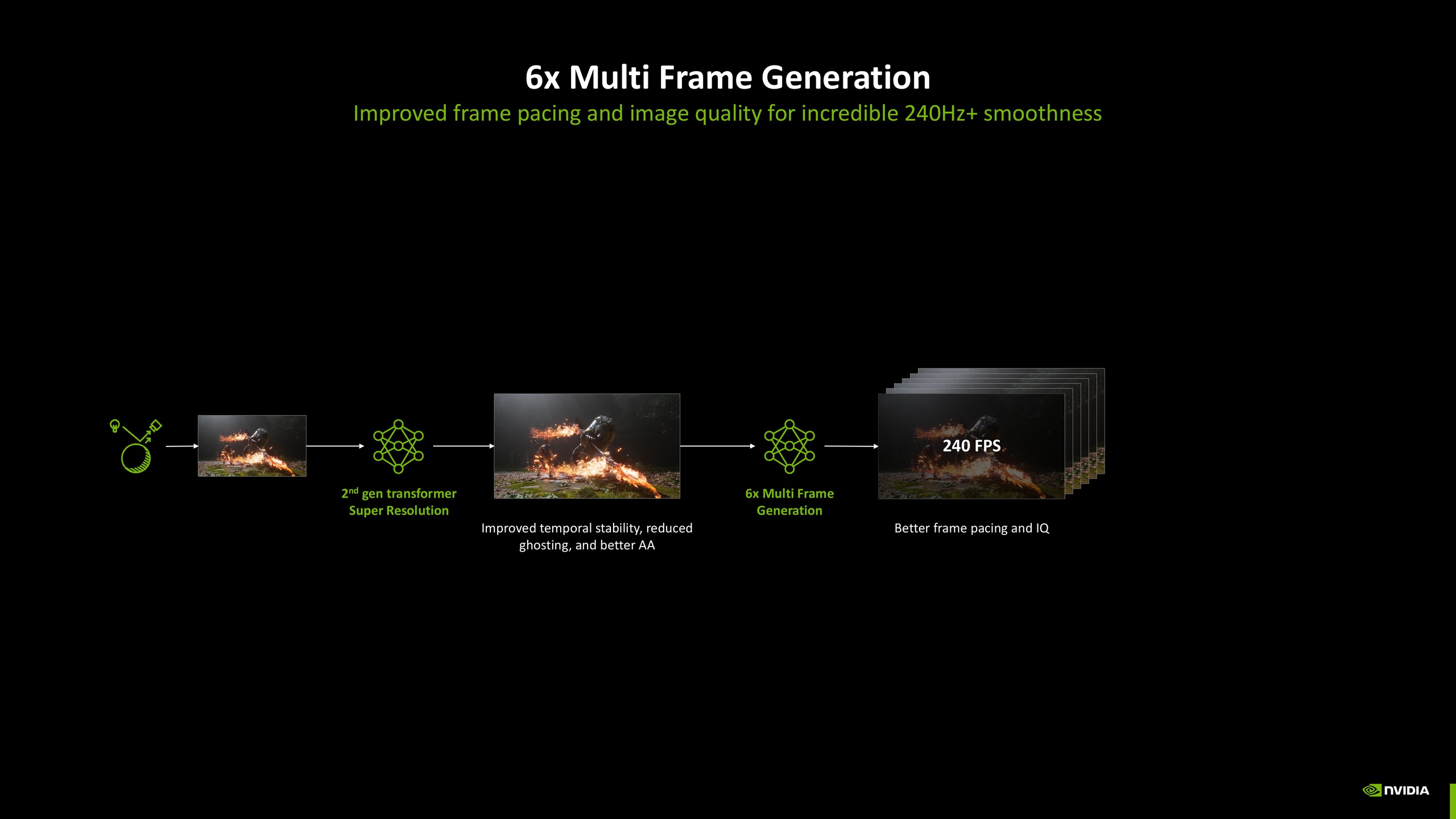
According to Nvidia, DLSS 4.5's 2nd gen Transformer allows for enhanced temporal stability — which should result in a sharper image — reduced ghosting artifacts, and better anti-aliasing.



That's the good part, but there are some gotchas!
Expect performance hits on older RTX GPUs
First up, it may be worth noting here that DLSS 4.5 only offers an updated Transformer model for upscaling. There are no changes coming to DLSS 4 ray reconstruction or Nvidia Reflex at the moment.
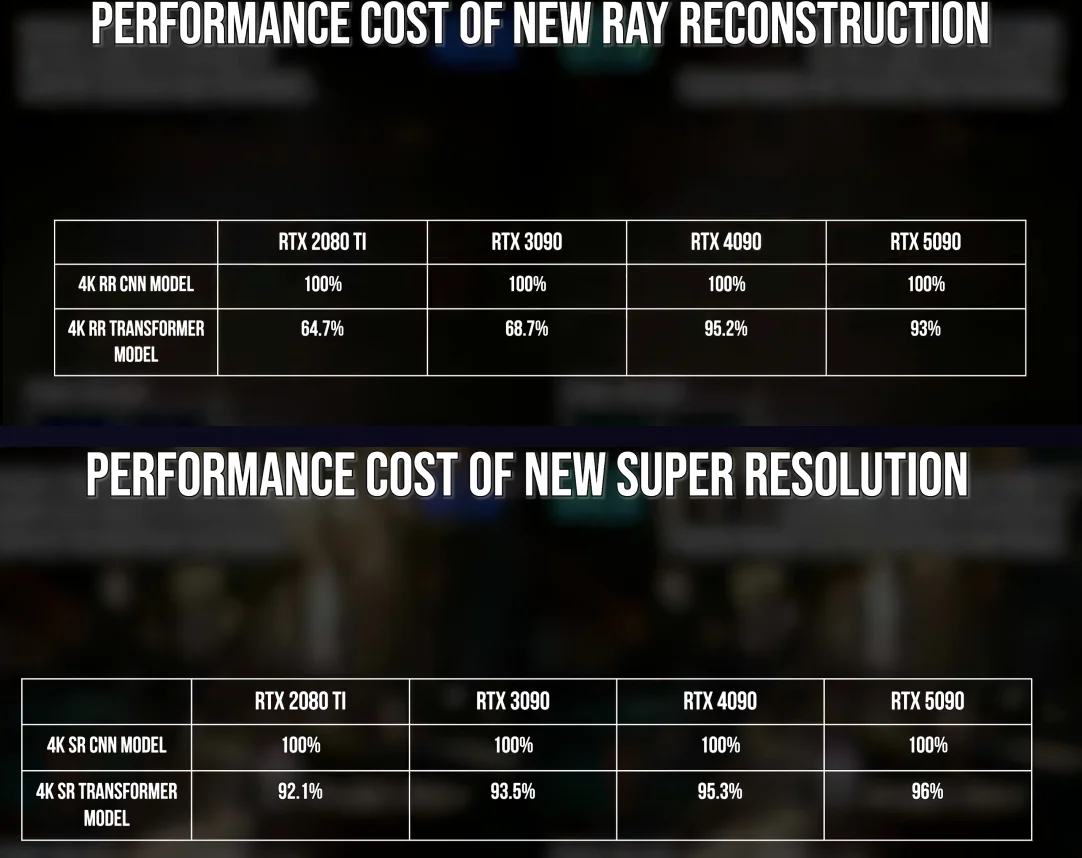
DLSS 4's Transformer comes with some performance overhead. As noted by Digital Foundry in their DLSS 4 deep dive, the Turing RTX 20 series and Ampere RTX 30 series cards experience a high penalty with Transformer because their Tensor cores support only FP16 inference natively.
With the Ada Lovelace RTX 40 generation, Nvidia added native FP8 to 4th gen Tensor cores, which greatly benefits Transformer-based upscaling. The latest Blackwell RTX 50 series GPUs feature 5th gen Tensor cores with native FP4 inference, which is the best way to run Transformer with minimal performance loss.
Nvidia indicated that the 2nd gen Transformer model in DLSS 4.5 is 5x more compute intensive and stands to benefit greatly from FP8 acceleration in RTX 40 series and above cards.
Therefore, it is not hard to estimate that older RTX 20 and RTX 30 series GPUs will take a relatively larger performance hit while enabling Transformer v2, the exact quantum of which can only be estimated after due testing.
MOAR generated frames, now up to 6x
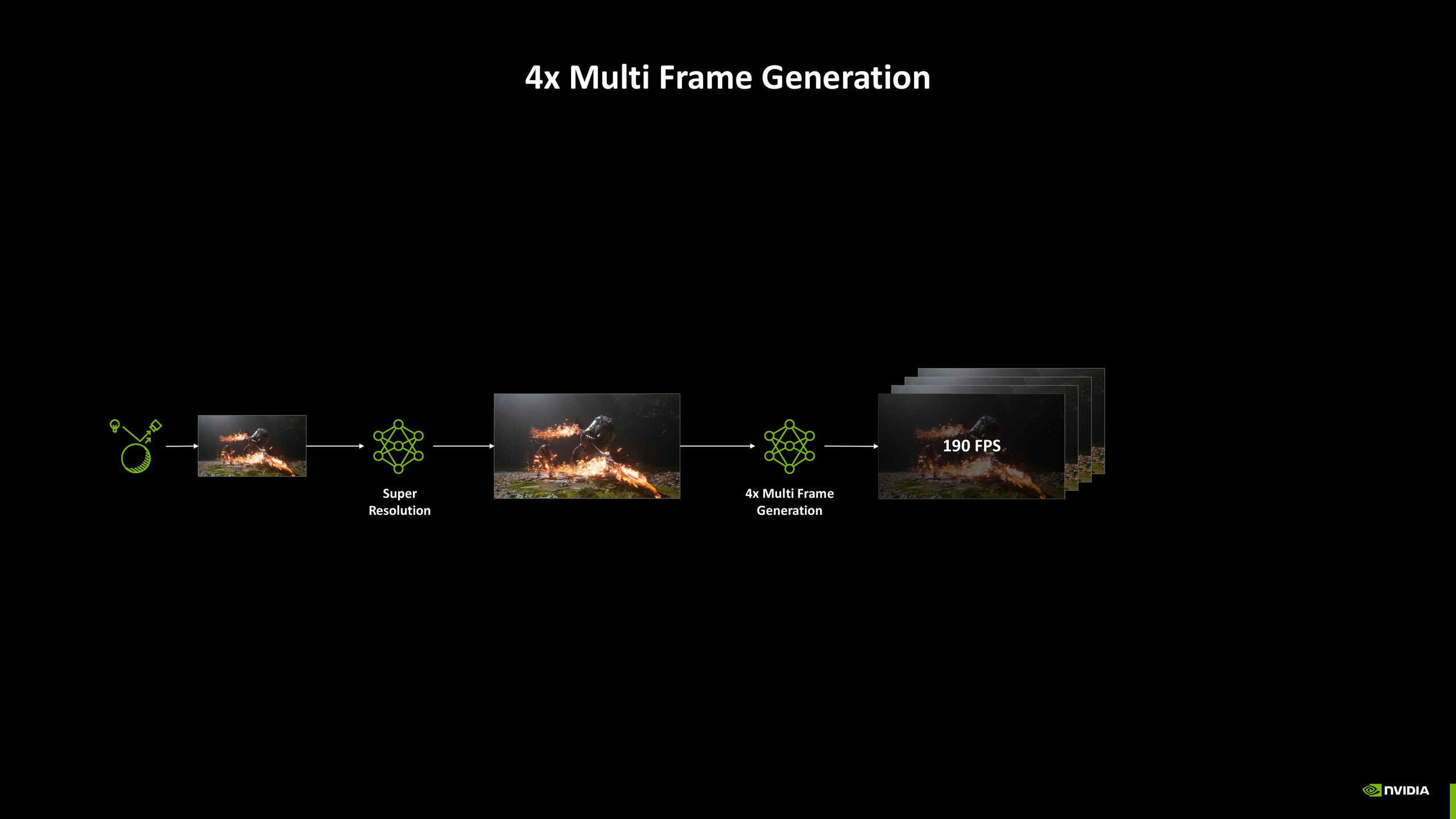
While Ada introduced frame generation thanks to the architecture's optical flow accelerator, RTX 50 Blackwell GPUs took things up a notch with multi-frame generation (MFG) up to 4x the base frame rate made possible by a nifty feature called hardware flip metering.
Although MFG dramatically increased smoothness and brought with it the perception of a higher frame rate, it was not without its concerns.
The major consternation was with respect to increased latency and input lag, a large part of which can be offset with Nvidia Reflex. The other major concern was glaring artifacts, especially in fast-paced scenes.
Together with the 2nd generation Transformer, Nvidia is now introducing MFG up to 6x on RTX 50 Blackwell GPUs. The company said MFG 6x offers improved frame pacing and quality to target 240 fps, given that 240 Hz monitors are increasingly becoming mainstream.
To that effect, DLSS 4.5 offers Dynamic Multi Frame Generation wherein the system can automatically determine the right MFG multiplier (up to a maximum 6x) to target the monitor's refresh rate.
According to Nvidia, DLSS 4.5 together with 6x MFG can yield up to 246 fps on an RTX 5080 at 4K with path tracing on in Black Myth: Wukong.


DLSS 4.5 available now via DLSS Override
You do not have to wait till game developers add DLSS 4.5 support to their titles. The Nvidia app should allow directly applying the DLSS 4.5 override to any DLSS-supported game in your library starting today.
And since performance penalties can be expected with older RTX cards, Nvidia is also offering the ability to toggle between CNN, Transformer v1, and Transformer v2 as desired.
MFG 6x, however, will only arrive in Spring 2026 for — you guessed it — RTX 50 series GPUs exclusively.

Source(s)
Nvidia CES 2026 Press Brief
 Add as a preferred source on Google


