




G-Sync Pulsar crowned biggest leap in gaming monitors since CRT by 3rd party benchmarks
 CES 2026
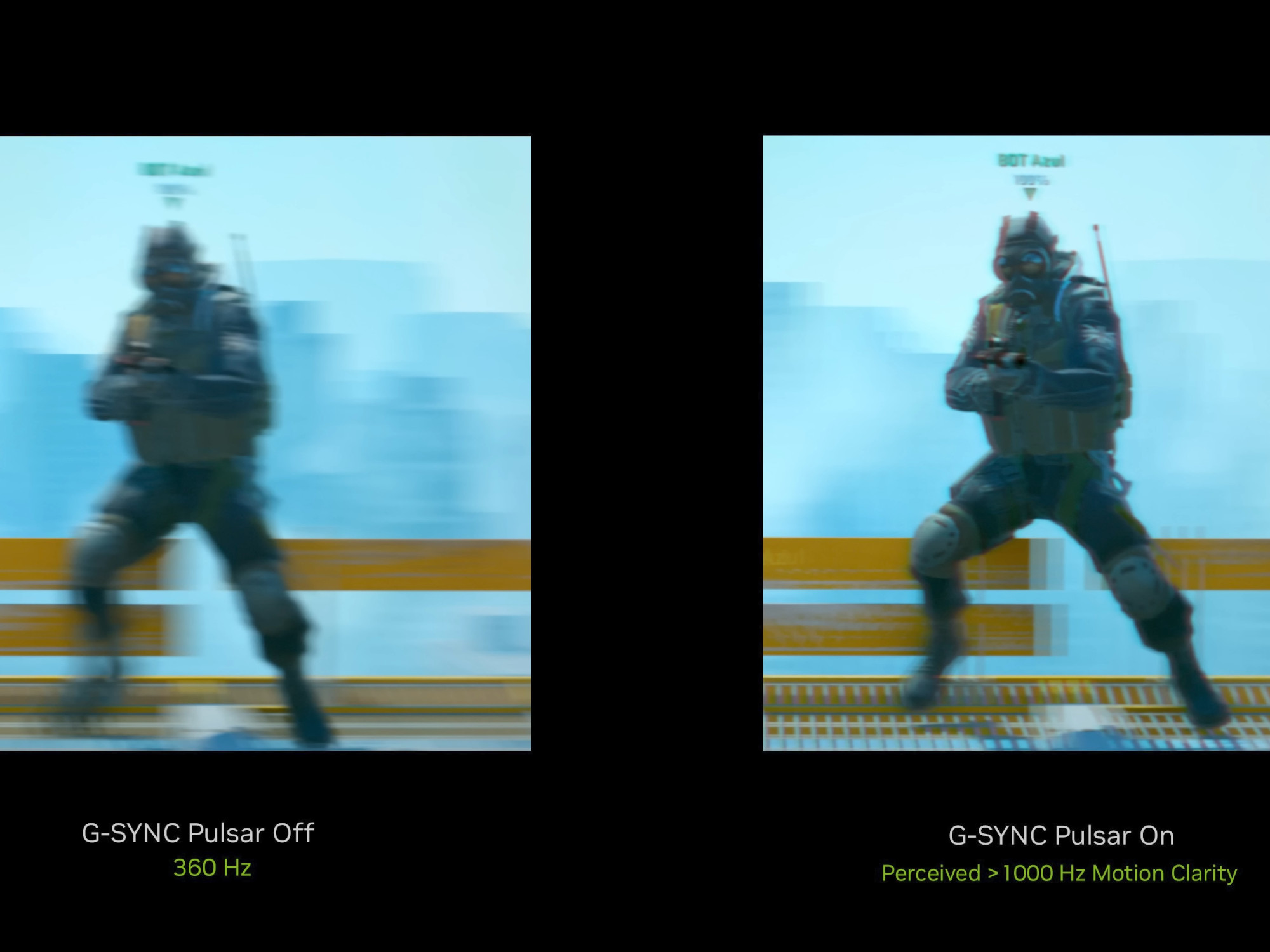
CES 2026 was a fairly underwhelming time for consumers not heavily invested in the advancement of AI initiatives—but the announcement of Nvidia's G-Sync Pulsar has broken through as a major paradigm shift for the future of PC gaming. G-Sync Pulsar is arguably the star of the show for gamers, particularly considering most hardware shown emphasizes AI functionality over gaming performance gains. Based on widely-available benchmarks and testimonies from a variety of reputable sources, Nvidia's G-Sync Pulsar genuinely offers the best motion clarity since the days of CRT monitors, which is huge news for competitive and enthusiast gamers. Nvidia compares it to effectively multiplying FPS by 4, but that's more of a flat-panel-centric comparison, and could be mistaken for DLSS Frame Gen-shilling—but what's happening here is a lot more interesting than that, in my opinion.
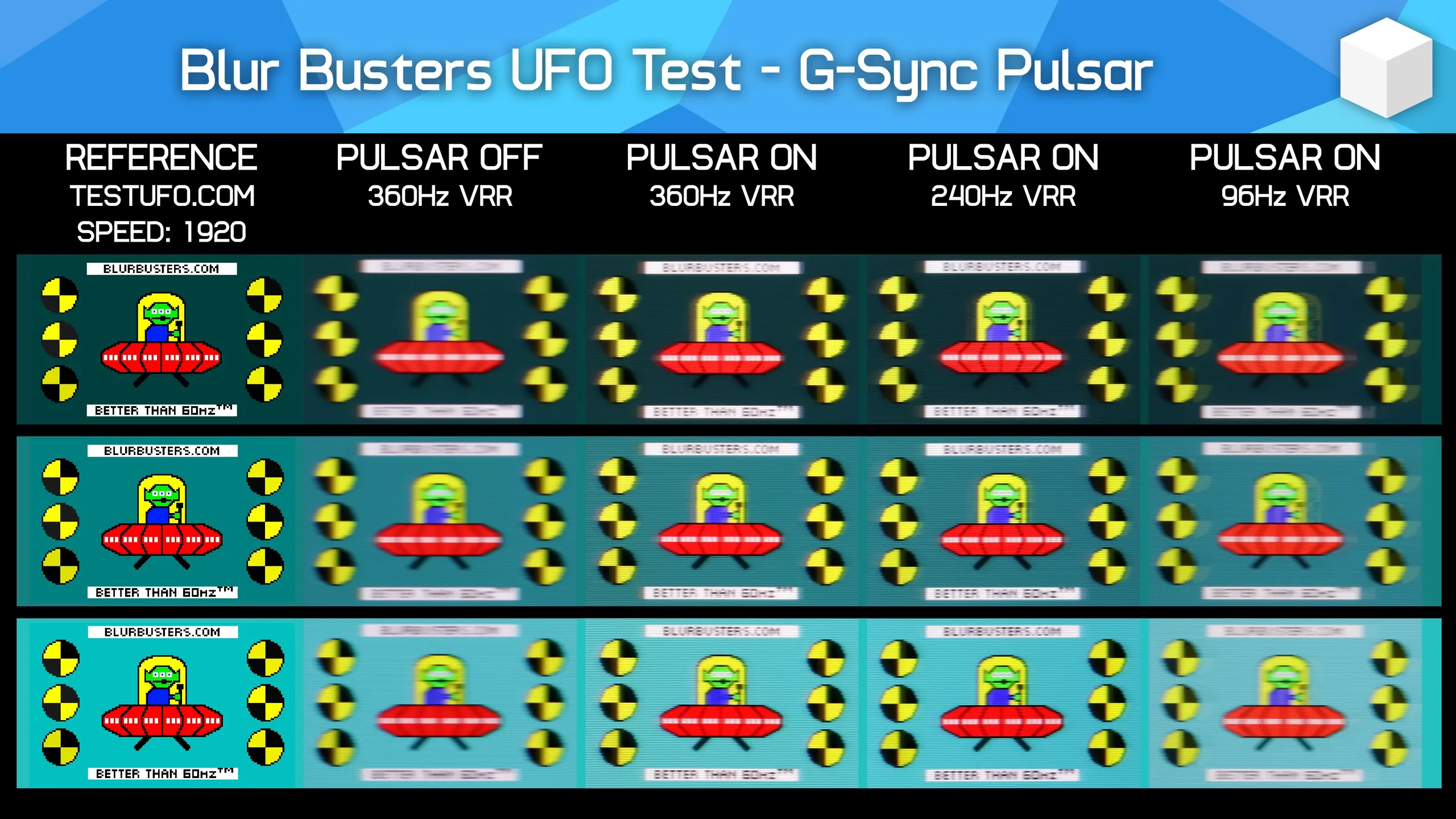
For a while now, OLED monitors have dominated as the superior gaming monitor tech, offering pixel response times comparable to CRTs, and infinite contrast while also achieving high color depth, unlike IPS panels. However, OLED panels are still held back by being a flat panel and thus a "sample & hold" display, and their per-pixel lighting is actually a mixed blessing. While Black Frame Insertion can alleviate sample & hold blur, it also creates noticeable flickering and lowered brightness, which isn't great for an already dimmer panel versus IPS. OLED still had better motion clarity (and contrast, colors, etc) than TN, IPS, and VA panels prior to G-Sync Pulsar thanks to near-perfect pixel response time, but each frame was still produced as an individual frame, which creates egregious motion blur compared to CRT at the same refresh rates.
G-Sync Pulsar fixes this issue for IPS panels by utilizing the unified backlight of IPS panels for a form of what's called backlight strobing. Backlight strobing isn't new, but achieving it with seamless VRR implementation to this extent certainly is. G-Sync Pulsar strobing is akin to the scanlines of a CRT, which means that you're actually looking at a screen where portions of it are refreshed every instant rather than the entire unit—it can look messy on video, but to the human eye, it creates the sharpest motion clarity yet seen on a flat panel. And indeed, it does make achieving 3-4X motion clarity on an IPS panel with G-Sync Pulsar versus one without possible, greatly lowering the input framerate required for clear motion. OLED's per-pixel backlighting, while superior for contrast, unfortunately means it's not compatible with the G-Sync Pulsar method.
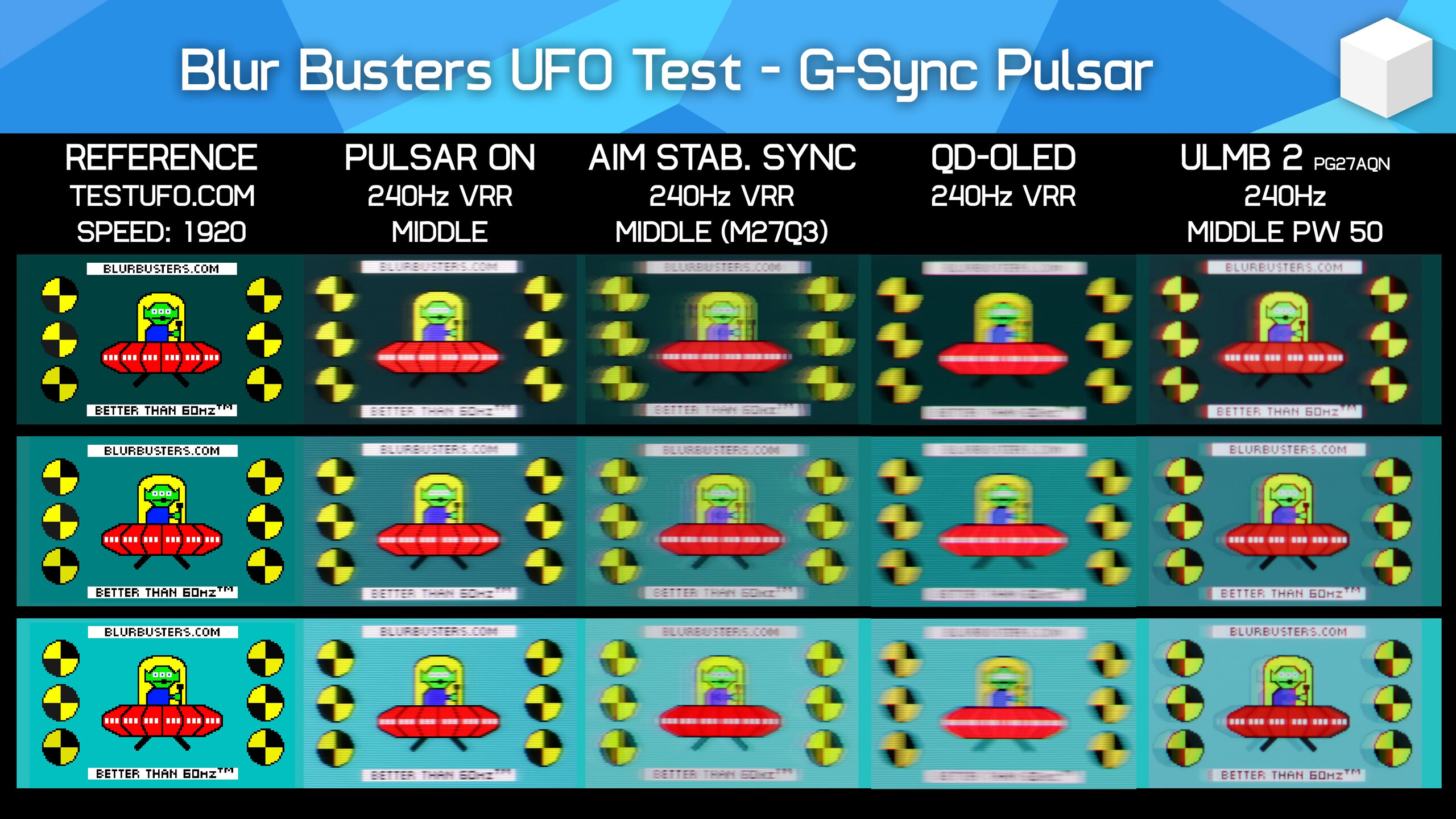
Motion clarity alone isn't everything—heightening true, native, non-generated Frames Per Second still tangibly reduces input lag. But for decades now, a market ruled by flat panels has seen raising FPS as the only way to improve motion clarity, and you still needed an underlying fast pixel response time for those benefits. This is why TN panels were the standard in eSports prior to Fast IPS becoming standard in late 2019/2020, and why IPS panels were slowly being phased out of high-end gaming monitors by OLEDs until the major advancement offered by G-Sync Pulsar.

It's limited, though. G-Sync Pulsar is limited to supported Nvidia GPUs on Windows 11, with no support yet announced for Linux or MacOS operating systems. Despite IPS panels having much worse contrast (and thus HDR) than OLED panels, G-Sync Pulsar is also fundamentally locked to IPS panels in its current form. There is some hope that this may come to OLEDs—as is, the Blur Busters CRT beam simulator shader, only compatible with 240Hz+ OLEDs, functions under a similar concept at the cost of high GPU utilization. But monitor-level support for this technology would be ideal, and widespread OLED support would make G-Sync Pulsar the unmatched standard for gaming display technology.
Additionally, at time of writing, G-Sync Pulsar is only offered for 75+ Hz content, which is very bad for games locked to 60 FPS due to emulation or game logic concerns, i.e. fighting games like Street Fighter 6 or Tekken 8. Fortunately, Digital Foundry has confirmed that Nvidia is working on a firmware patch for G-Sync Pulsar monitors to lower the Pulsar floor to 60 Hz, but this also means that drops below that framerate target in any title will still see the reintroduction of sample & hold blur. Like Digital Foundry's Richard Leadbetter and Blur Busters' Mark Rejhon, I agree that lowering the floor to 60 Hz is of utmost importance for retro gaming and certain genres locked to 60 FPS alike.
It's not perfect yet, but nothing is—and even in its imperfect state, it's still a massive improvement over current-generation gaming displays. A future of G-Sync Pulsar displays bringing CRT-level motion clarity to IPS panels is upon us, and in the farther future, this technology may even spread to other GPU vendors, operating systems, and display panel types. I can only hope that day is sooner rather than later, speaking as an avid player of retro games, fighting games, and stylish action titles that would all benefit immensely from this—not to mention popular eSports games. In my opinion, this technology also marks a key challenge for AMD and Intel moving into a new generation of display technology—for those GPUs to remain competitive with Nvidia's, equivalent functionality to G-Sync Pulsar will likely prove essential, just as G-Sync itself blasted the doors open to widespread VRR support and DLSS popularized GPU vendor upscaling technology.
Source(s)
Hardware Unboxed (Monitor Unboxed side channel Pulsar video) & Digital Foundry (Pulsar, BlurBusters OLED CRT shader/ShaderGlass videos) on YouTube
Other YouTubers and on-site reviewers speaking highly of Pulsar


 Add as a preferred