




Nvidia's recently unveiled G-Sync Pulsar tech aims to deliver 1000Hz-level motion clarity on 360Hz gaming monitors
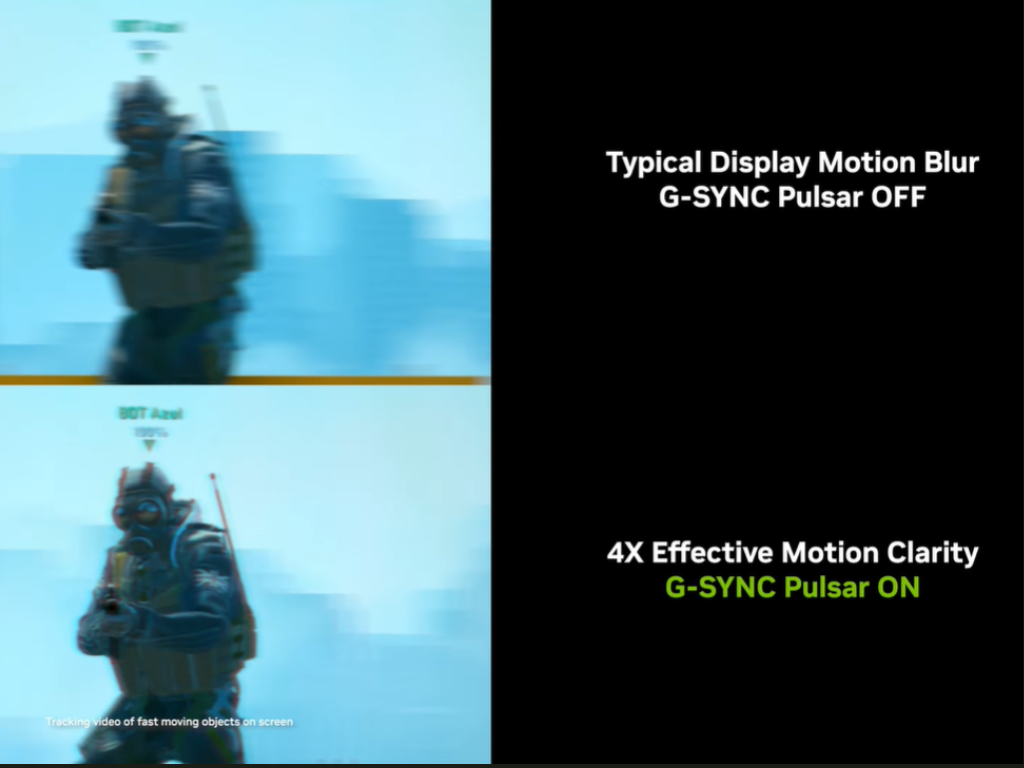
Nvidia recently announced its G-Sync Pulsar offering, a new display technology that combines VRR (variable refresh rate) syncing with a cutting-edge backlight strobing technique. Ironically, G-Sync Pulsar has been inspired by old CRT displays to offer motion clarity equal to “1000 Hz”. However, you’ll need a G-Sync Pulsar-supported display with a 360 Hz refresh rate.
Nvidia first announced its VRR offering in a G-Sync wrapper back in 2013, presenting it as an effective technique to minimize screen tearing and stuttering by synchronizing the GPU’s frame rate to your monitor’s refresh rate.
However, the newer G-Sync Pulsar tech ups the ante by mitigating motion blur at a deeper level, and it’s a pretty interesting technique. G-Sync Pulsar uses a rolling scan scheme in which the backlight pulses in horizontal units from top to bottom. It fires four times per frame, taking up nearly 25% of the frame time.
What this does is allow pixels to fully stabilize before being lit on screen, effectively reducing the ghosting and smearing that’s common on high-refresh-rate LCDs. G-Sync Pulsar subtly builds on how CRT monitors worked back in the day. CRT monitors used a scanning electron beam, resulting in smooth motion without the glare issues of modern backlighting techniques.
According to Team Green, G-Sync Pulsar “boosts effective motion clarity over 1000Hz on the debut Asus ROG Swift PG26 Series G-Sync gaming monitor.” While many are skeptical of Nvidia's new technique, G-Sync Pulsar aims to feel as smooth as a theoretical current-generation 1,000 Hz display, making games like Counter-Strike 2 and Anno 117: Pax Romana look clearer and more responsive.
All in all, Nvidia’s backlight strobing technique isn’t an entirely new phenomenon, but rather an evolution. It's actually been around for a while, reducing eye-tracking blur by inserting black frames between images for a brief moment. This helped mitigate pixel transitions. However, older implementations of this technique often dimmed the screen significantly and wouldn’t work in coherence with G-Sync or FreeSync.
Asus has tried to bring in ELMB Sync to compete with Zowie’s proprietary DYAC tech, but has made little inroads, given that DYAC remains one of the most popular offerings for CS2 players in particular.
Nvidia’s take on Pulsar supposedly works flawlessly at variable frame rates from 90 FPS upwards and aims to offer even better clarity than the 2nd-generation DYAC from Zowie, while allowing greater flexibility than the latter’s requirement for a fixed refresh rate to function.
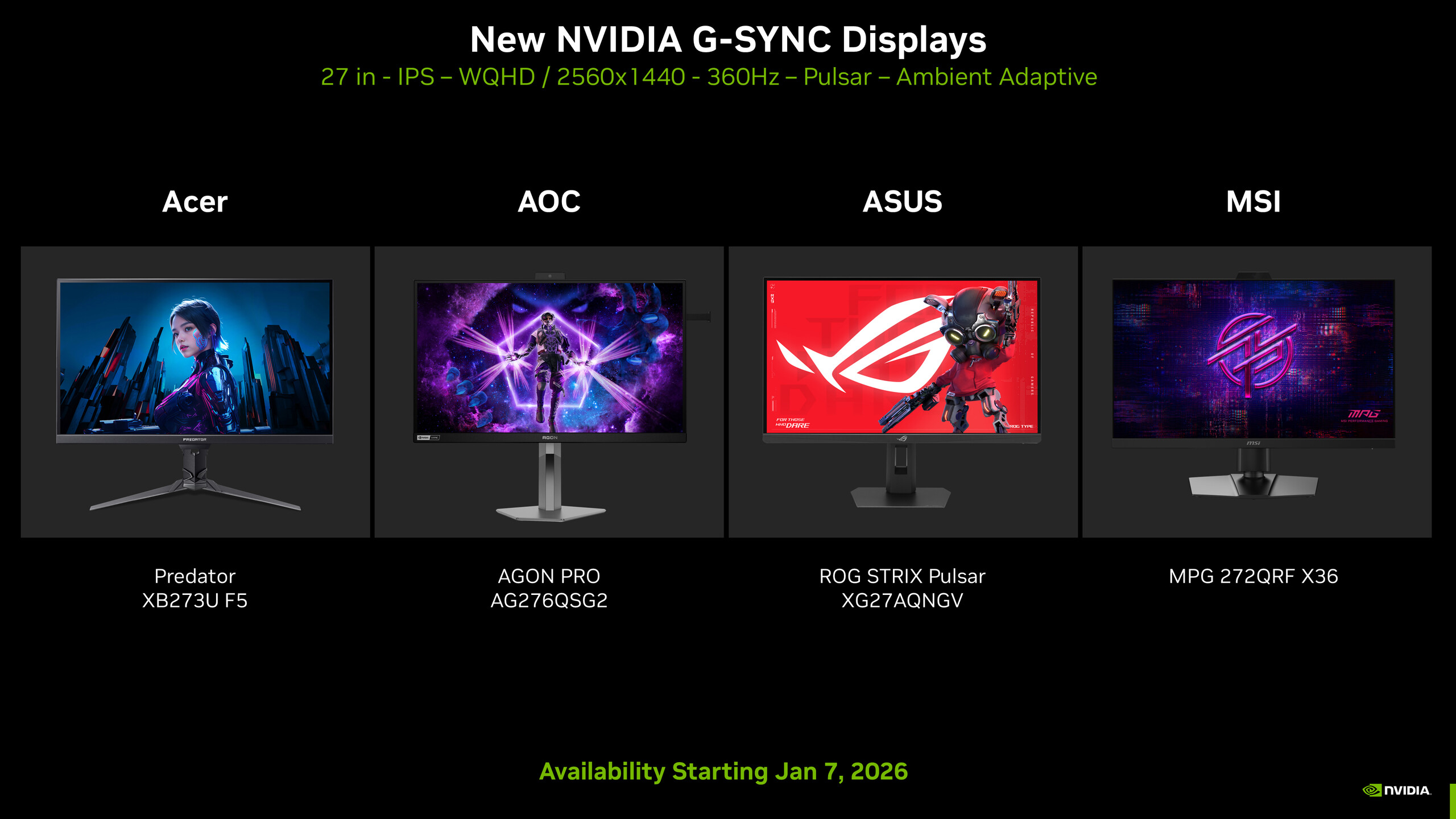
Four new monitors are launching with G-Sync Pulsar, including Acer Predator XB273U F5, AOC Agon Pro, Asus ROG Strix Pulsar, and MSI MPG 272QRF X36. All of these monitors feature 27-inch IPS LCD panels with a 1440p resolution, a 360 Hz refresh rate, and HDR support, starting at $599.
Unfortunately, G-Sync Pulsar won’t work on OLED panels because it relies on the backlights that LCD panels possess. OLED panels can’t replicate scanline pulsing because of how their display tech works, and while a 540Hz OLED display will come close, G-Sync Pulsar might just be the holy grail for some FPS players for the foreseeable future, thanks to its better handling of motion blur.
Early CES reviews have been overwhelmingly positive, with hands-on attendees reporting that they suddenly felt their eyes weren’t struggling to keep up with fast-moving objects.
Source(s)
 Add as a preferred source on Google


