




All the changes to the 2026 Prestige 16 that MSI probably didn't want you to know about
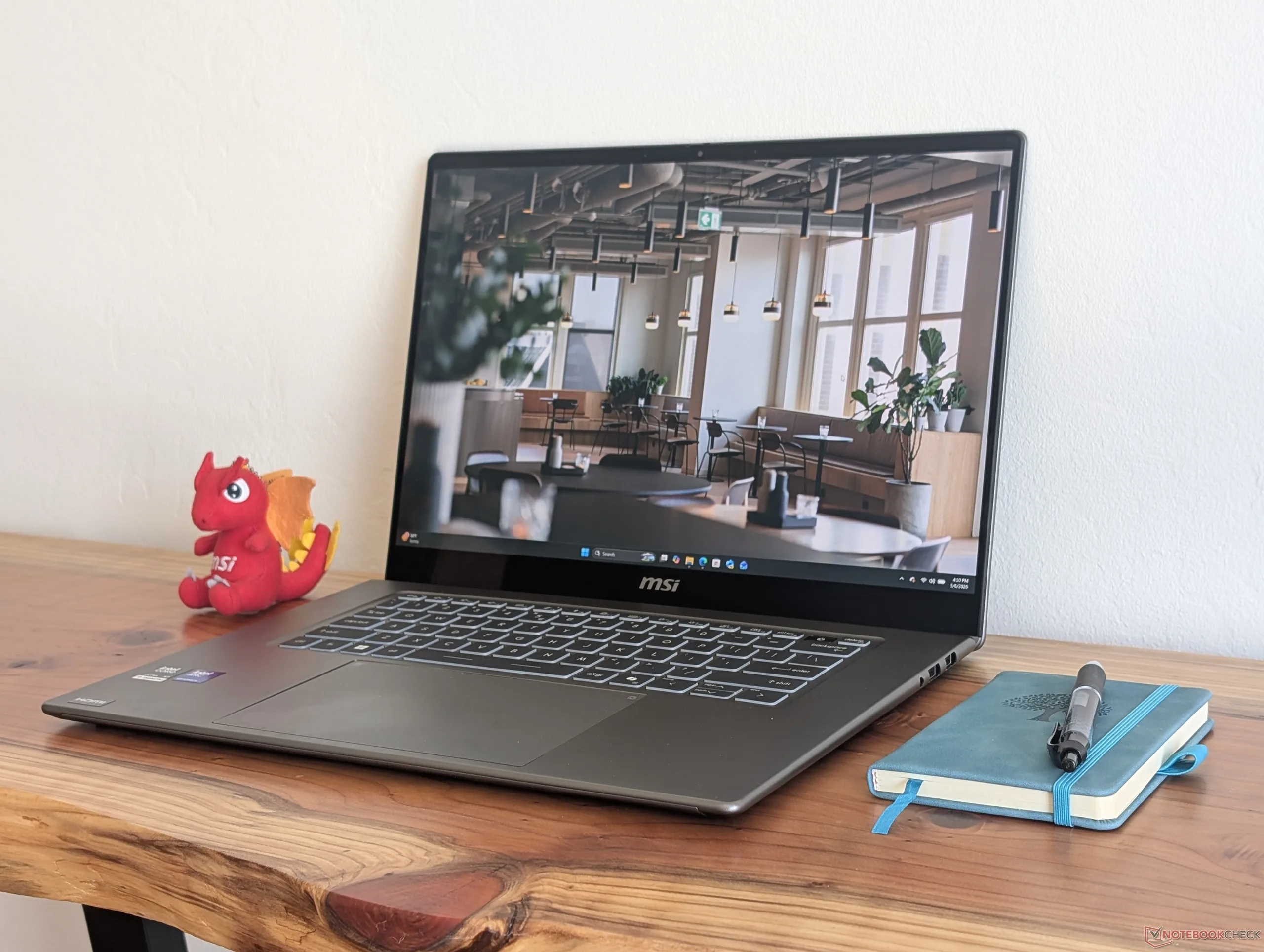
The latest Prestige 16 brings about some significant changes both inside and out when compared to the 2025 model. Most are welcomed, but some features have been lost during the transition. The table below is a snapshot comparison between the two models with their notable differences highlighted in bold:
| Specification | 2025 Prestige 16 AI Evo B2HMG | 2026 Prestige 16 AI+ C3MTG | |
|---|---|---|---|
| CPU | Arrow Lake up to Core Ultra 9 | Panther Lake up to Core Ultra X9 | |
| Numpad | Yes | No | |
| Storage | Up to two M.2 2280 SSDs | Supports only one M.2 2280 SSD | |
| Ports | 3.5 mm headset 1x USB-A 3.2 Gen. 2 HDMI 2.1 2x USB-C Thunderbolt 4 w/ DisplayPort + Power Delivery Kensington lock RJ-45 (1 Gbps) SD card reader | 3.5 mm headset 2x USB-A 3.2 Gen. 1 HDMI 2.1 2x USB-C Thunderbolt 4 w/ DisplayPort + Power Delivery | |
| Battery Capacity | 99.9 Wh | 81 Wh | |
| WLAN Runtime | 16.5 hours | 12.6 hours | |
| AC Adapter | 100 W | 65 W | |
| Clickpad | 15 x 9 cm | 16 x 10 cm | |
| Display | IPS only | OLED only | |
| Dimensions/Weight | 18.95 x 358.4 x 254.4/ 1.56 kg | 13.9 x 357.7 x 254.3 mm/ 1.64 kg |
In short, last year's model features a wider variety of ports, support for more storage drives, an integrated numpad, and a larger battery for longer runtimes. Users who value these specific attributes may find the older model still worthwhile as a result.
Even so, the changes to the newer model as a whole are arguably for the better. The updated chassis design in particular is much sleeker and thinner while the Panther Lake CPU offers an immense boost to performance-per-watt. Jumping from IPS to OLED may have reduced battery life to a degree, but the improved image quality and higher resolution are hard to ignore.
More benchmarks and performance comparisons between the models can be found on our review of the Prestige 16 AI+ C3MTG.
 Add as a preferred source on Google


