


Notebookcheck Logo

Wi-Fi 7 in the Schenker Connect 15: 3,500 Mbps - but what does that actually bring to day-to-day business use?
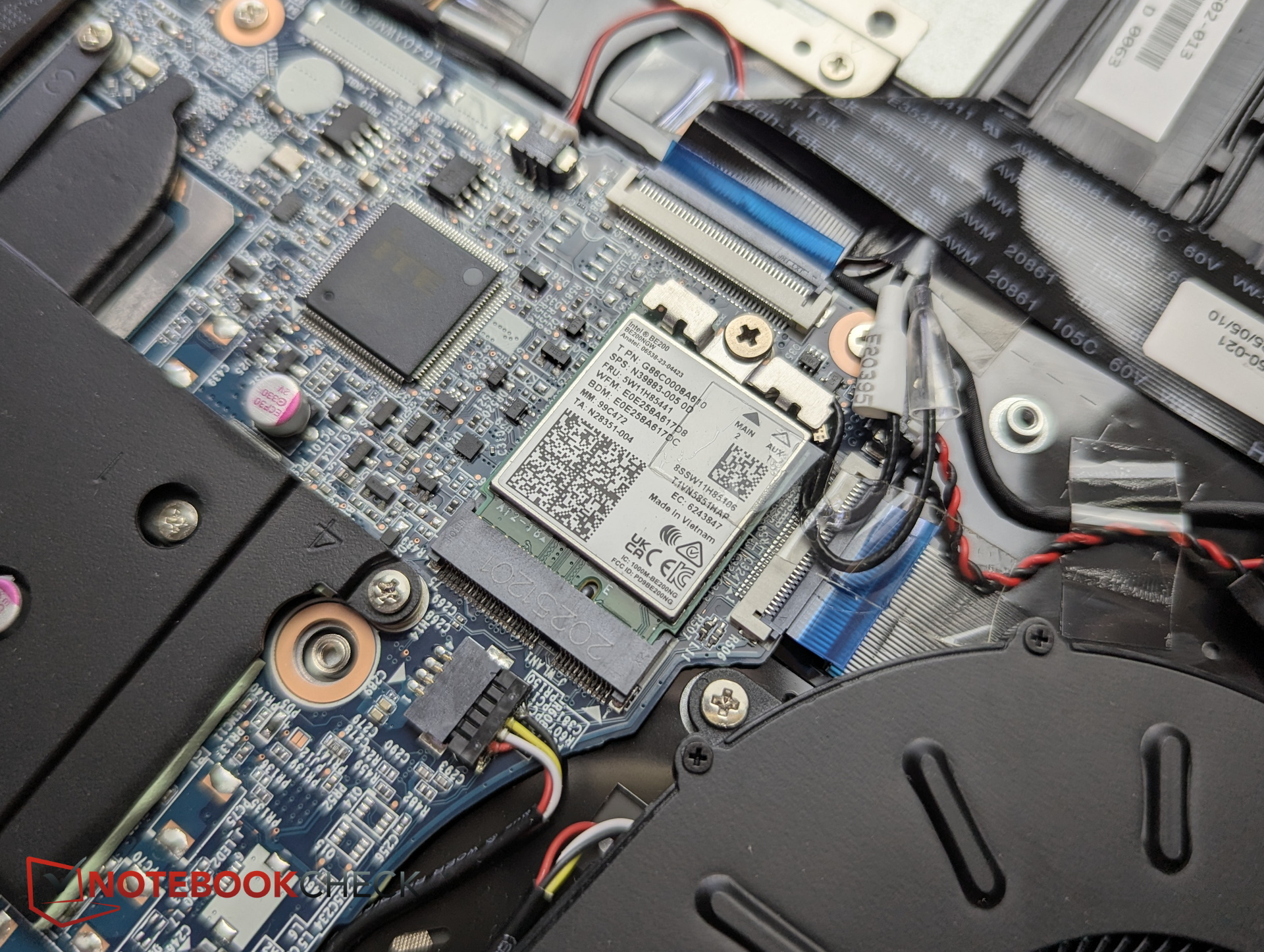
The Intel Wi-Fi 7 BE200 in the Schenker Connect 15
3,500 Mbps in a business laptop sounds impressive - but in the real world, very few people even have an internet connection fast enough to take advantage of that kind of bandwidth. The new wireless standard really shows its strengths where business notebooks are actually used: low latency, stable connections, and strong performance under heavy load in enterprise Wi-Fi environments.

The new Schenker Connect 15 business laptop (our review) comes with a range of enterprise-focused features, including a SmartCard reader, LTE module, and a removable, replaceable battery. It also features Intel’s Wi-Fi 7 BE200 wireless module.

Schenker Connect 15 with Wi-Fi 7 - How fast is it?

In our transfer tests, paired with our Asus BE19000 RT-BE996U Wi-Fi 7 router, the module delivered transfer rates of around 3,500 Mbps when sending and receiving data. By comparison, the average across office-class laptops we have tested comes in at roughly 1,300 Mbps.

Networking
iperf3 transmit AXE11000
Lenovo ThinkPad X9-15 Aura Edition
Intel BE201 320MHz
1656 (1540min - 1707max) MBit/s
Microsoft Surface Laptop 7 15 Lunar Lake
Intel BE201 320MHz
1640 (1449min, 1479.74P1 - 1710max) MBit/s
Average Intel Wi-Fi 7 BE200 320MHz
  (469 - 1685, n=47)
1264 MBit/s
Average of class Office
  (507 - 1911, n=60, last 2 years)
1184 MBit/s
Asus ExpertBook B1 BM1503CDA-S70031X
Realtek RTL8852BE
794 (748min - 816max) MBit/s
Lenovo IdeaPad Slim 3 15IRH10R
Realtek RTL8852BE
725 (621min - 775max) MBit/s
Acer Aspire Go 15 AG15-31P-34JP
Intel Wi-Fi 6 AX101
505 (476min - 536max) MBit/s
iperf3 receive AXE11000
Lenovo ThinkPad X9-15 Aura Edition
Intel BE201 320MHz
1568 (1525min - 1592max) MBit/s
Microsoft Surface Laptop 7 15 Lunar Lake
Intel BE201 320MHz
1562 (1469min, 1473.06P1 - 1610max) MBit/s
Average Intel Wi-Fi 7 BE200 320MHz
  (772 - 1745, n=47)
1427 MBit/s
Average of class Office
  (530 - 1775, n=61, last 2 years)
1350 MBit/s
Asus ExpertBook B1 BM1503CDA-S70031X
Realtek RTL8852BE
932 (863min - 953max) MBit/s
Lenovo IdeaPad Slim 3 15IRH10R
Realtek RTL8852BE
689 (517min - 830max) MBit/s
Acer Aspire Go 15 AG15-31P-34JP
Intel Wi-Fi 6 AX101
492 (445min - 516max) MBit/s
iperf3 transmit Wi-Fi6/7 RT-BE96U
Average of class Office
  (3587 - 3902, n=2, last 2 years)
3745 MBit/s +4%
Schenker Connect 15 (E26)
Intel Wi-Fi 7 BE200 320MHz
3587 (1151min - 4171max) MBit/s
Average Intel Wi-Fi 7 BE200 320MHz
  (n=1)
3587 MBit/s 0%
iperf3 receive Wi-Fi6/7 RT-BE96U
Schenker Connect 15 (E26)
Intel Wi-Fi 7 BE200 320MHz
3487 (1655min - 3716max) MBit/s
Average Intel Wi-Fi 7 BE200 320MHz
  (n=1)
3487 MBit/s 0%
Average of class Office
  (2811 - 3487, n=2, last 2 years)
3149 MBit/s -10%

3,500 Mbps in a laptop - The real advantage is not just speed

But what practical advantage does the Connect 15 actually gain from its Wi-Fi 7 performance over other business laptops? Most internet connections rarely go beyond 1,000 Mbps, so few users will ever fully tap into the Schenker’s wireless bandwidth.

The real benefit of Wi-Fi 7 goes beyond raw throughput and lies more in latency, stability, spectral efficiency, and performance in dense environments - exactly the kinds of scenarios where business devices are commonly used: offices, campuses, conference rooms, docking setups, VDI and remote workstations, large file and backup workflows, local AI or media pipelines, and more.

That extra speed can certainly be useful, for example when accelerating access to local servers and NAS systems or when handling backups and sync operations across a company LAN. But the bigger Wi-Fi 7 advantage shows up when multiple clients are active on the same wireless network at once, such as during video calls or interactive remote workloads like CAD on a remote workstation or screen sharing.

Many clients, packed conference rooms: The strength of Wi-Fi 7

Wi-Fi 7 can be a real asset in business laptops not just because it adds more gigabits per second, but also because it includes mechanisms that make wireless communication more efficient and resilient, reduce latency, and stabilize parallel connections. That translates into more reliable Teams, Zoom, and Meet sessions, better performance in crowded offices, faster syncs with SharePoint, OneDrive, or NAS systems, and more headroom for simultaneous workloads such as a call, an upload, a VPN connection, and a file transfer all at once. And in that regard, the Schenker Connect 15 appears to be well equipped.

Google LogoAdd as a preferred source on Google
Mail Logo
static version load dynamic
Loading Comments
Comment on this article
> Expert Reviews and News on Laptops, Smartphones and Tech Innovations > News > News Archive > Newsarchive 2026 06 > Wi-Fi 7 in the Schenker Connect 15: 3,500 Mbps - but what does that actually bring to day-to-day business use?
Christian Hintze, 2026-06-24 (Update: 2026-06-24)