




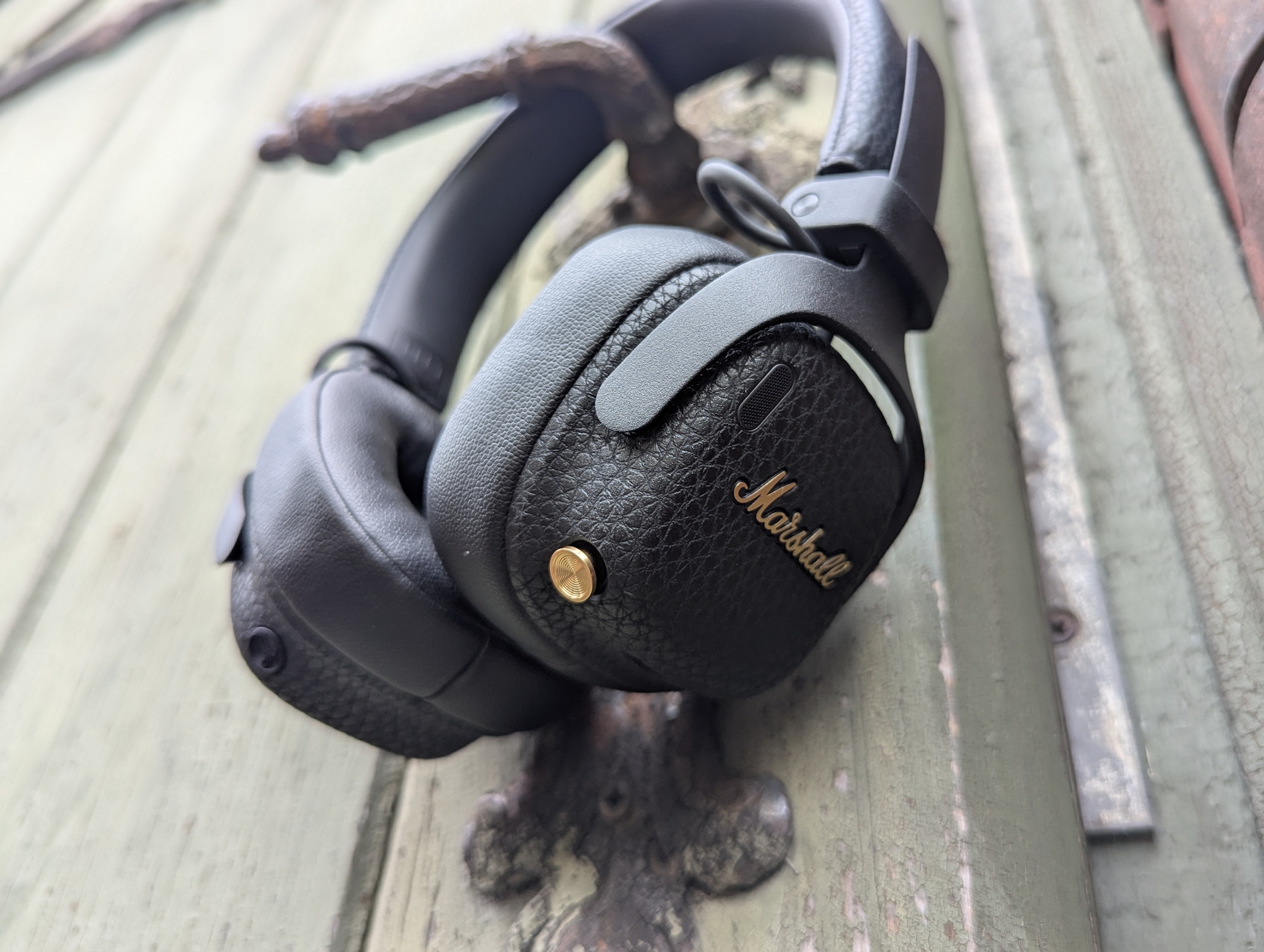
Marshall Milton A.N.C. review: Compact, foldable, and packed with features usually reserved for over-ear headphones
The commuter's rocker.
On-ear headphones have long been considered a compromise between comfort and technology. The Marshall Milton A.N.C. aims to change that by combining adaptive ANC, up to 80 hours of battery life, and a replaceable battery in a compact design. Our review reveals whether this unconventional concept delivers.Christian Hintze (translated by Christian Hintze) Published 🇩🇪 🇪🇸 ...
Verdict – Perhaps the most exciting premium on-ear headphone of the year
With the Milton, Marshall delivers something rarely seen before: a modern premium on-ear headphone with ANC that remains lightweight, foldable, and significantly more compact than traditional over-ear models.
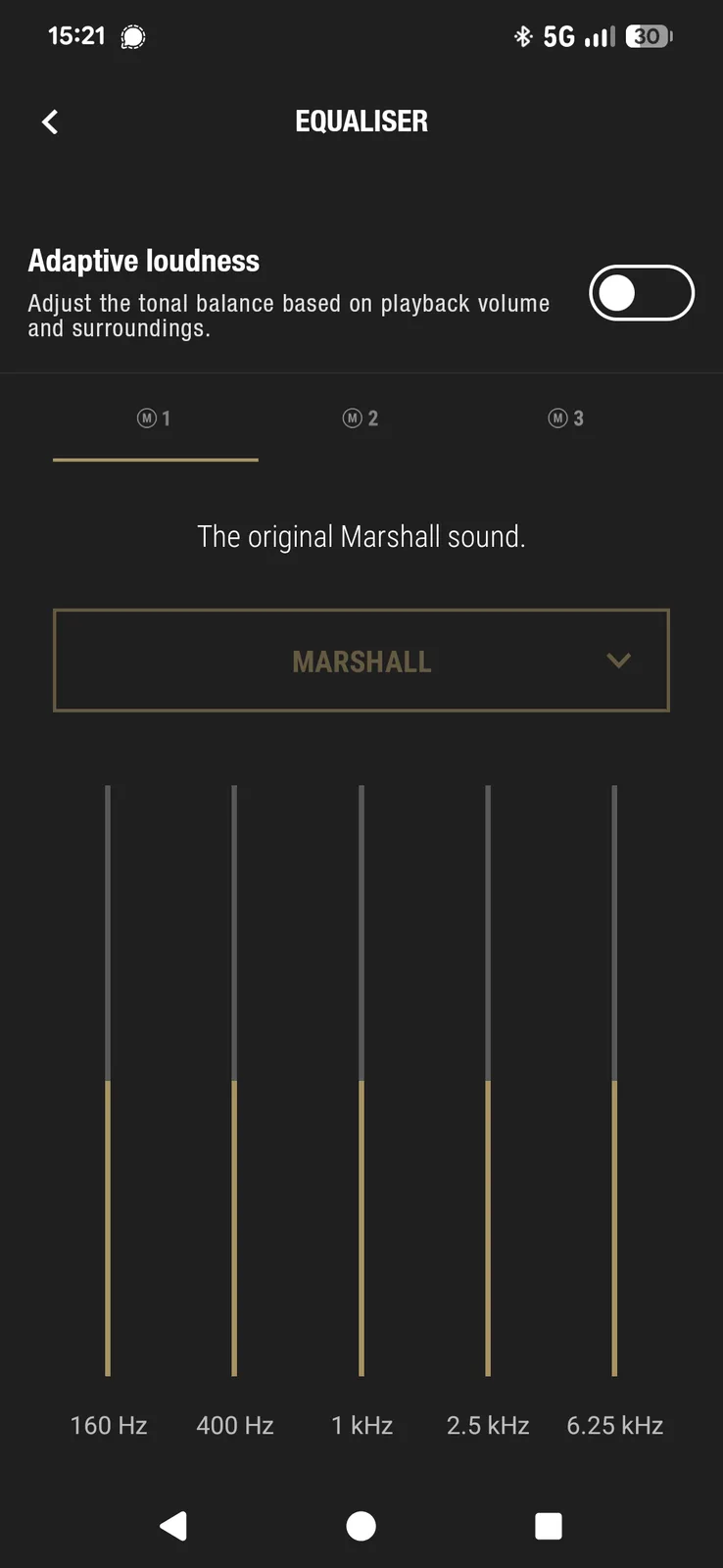
From a sound perspective, the Milton pushes the on-ear form factor close to its limits. Across our entire playlist, it reproduces a wide range of frequencies. The bass reaches surprisingly deep, while properly mastered tracks showcase crisp and detailed highs. The mids are slightly recessed, although they can easily be adjusted using the equalizer if desired.
Overall, the sound is powerful without sacrificing too much detail, making the listening experience especially enjoyable on the go. Combined with effective ANC, excellent battery life, premium build quality, and a replaceable battery that promises exceptional longevity, the Milton stands out as a remarkably complete package.
Pros
Cons
Table of Contents
- Verdict – Perhaps the most exciting premium on-ear headphone of the year
- Marshall Milton A.N.C.: Why this on-ear headphone stands out from the crowd
- Design & build quality – Major V styling meets Monitor III comfort
- Specifications – ANC, LDAC, and Bluetooth 6.0 in a compact package
- Marshall Bluetooth – EQ, Soundstage, and Adaptive Loudness
- Sound – Deep bass, clear highs
Marshall Milton A.N.C.: Why this on-ear headphone stands out from the crowd
Even in Berlin, they're easy to spot: people walking the streets or riding public transit wearing instantly recognizable Marshall headphones, most often from the Major series. Marshall has clearly carved out a successful niche, as on-ear headphones remain far less popular than today's dominant earbuds or the better-isolating over-ear models.
With the Milton, Marshall appears determined to strengthen that position. It is one of the very few on-ear headphones equipped with adaptive active noise cancellation, while also introducing several technical features rarely found in this category. The question is whether the concept works.
Design & build quality – Major V styling meets Monitor III comfort
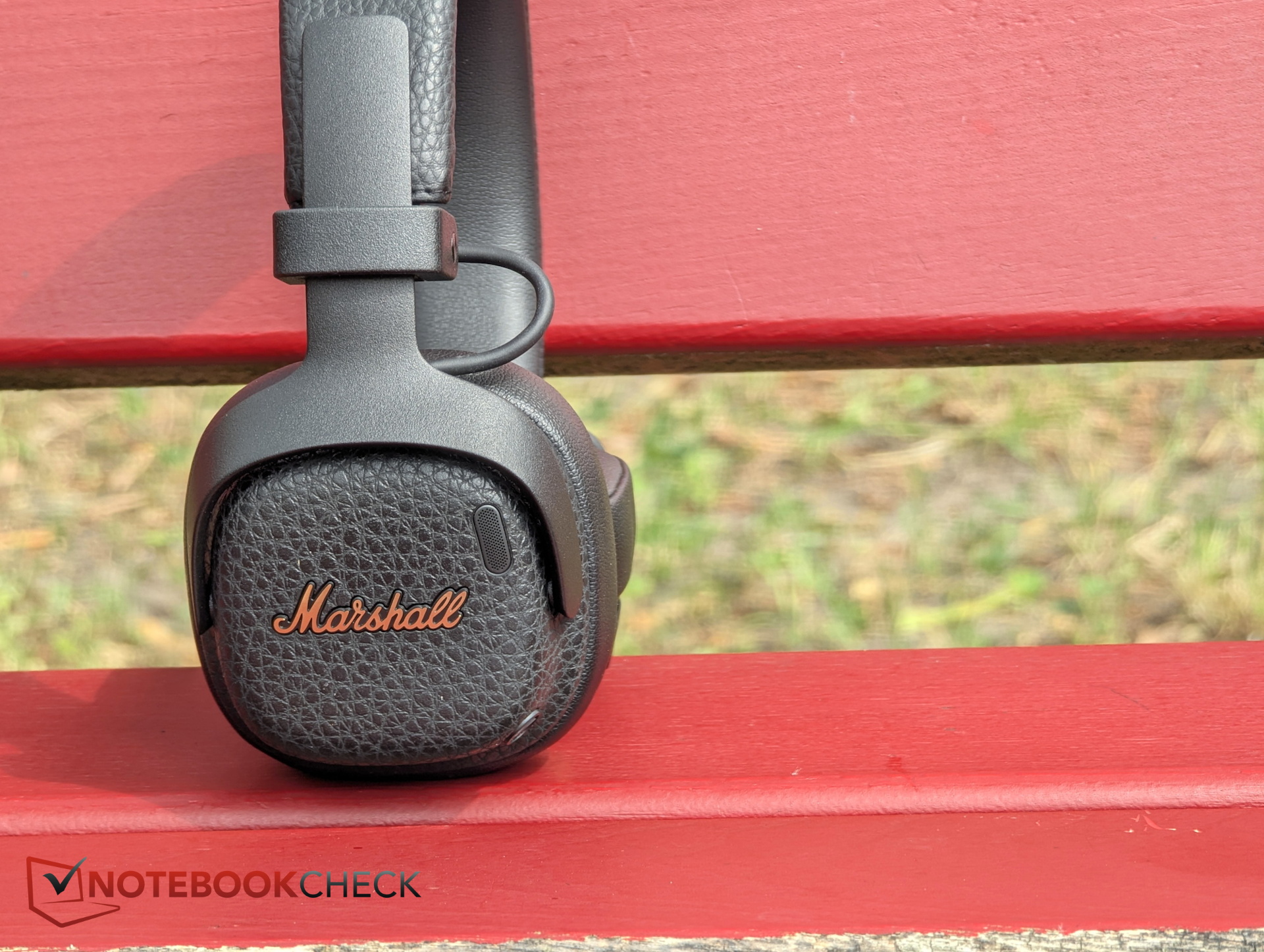
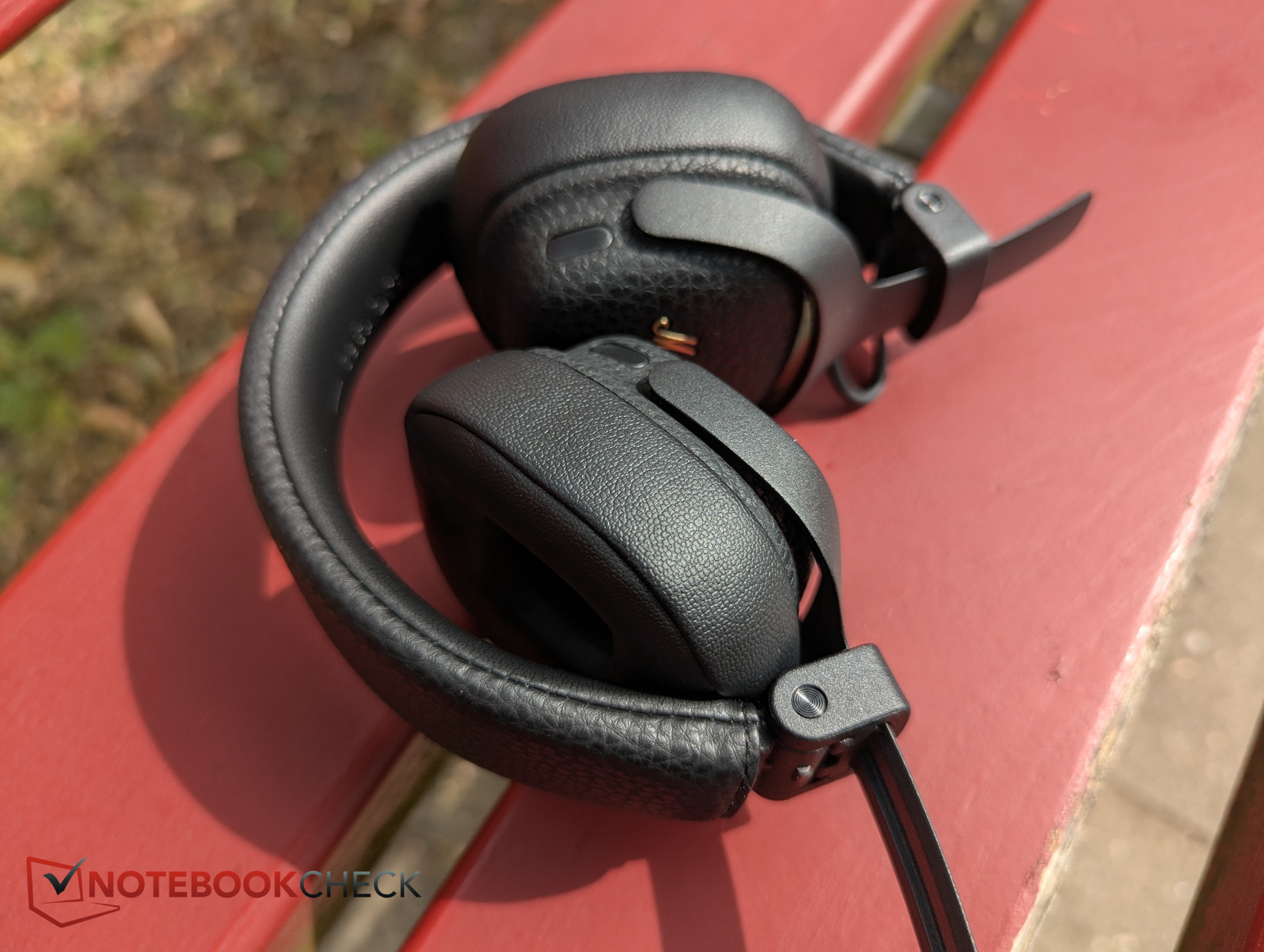
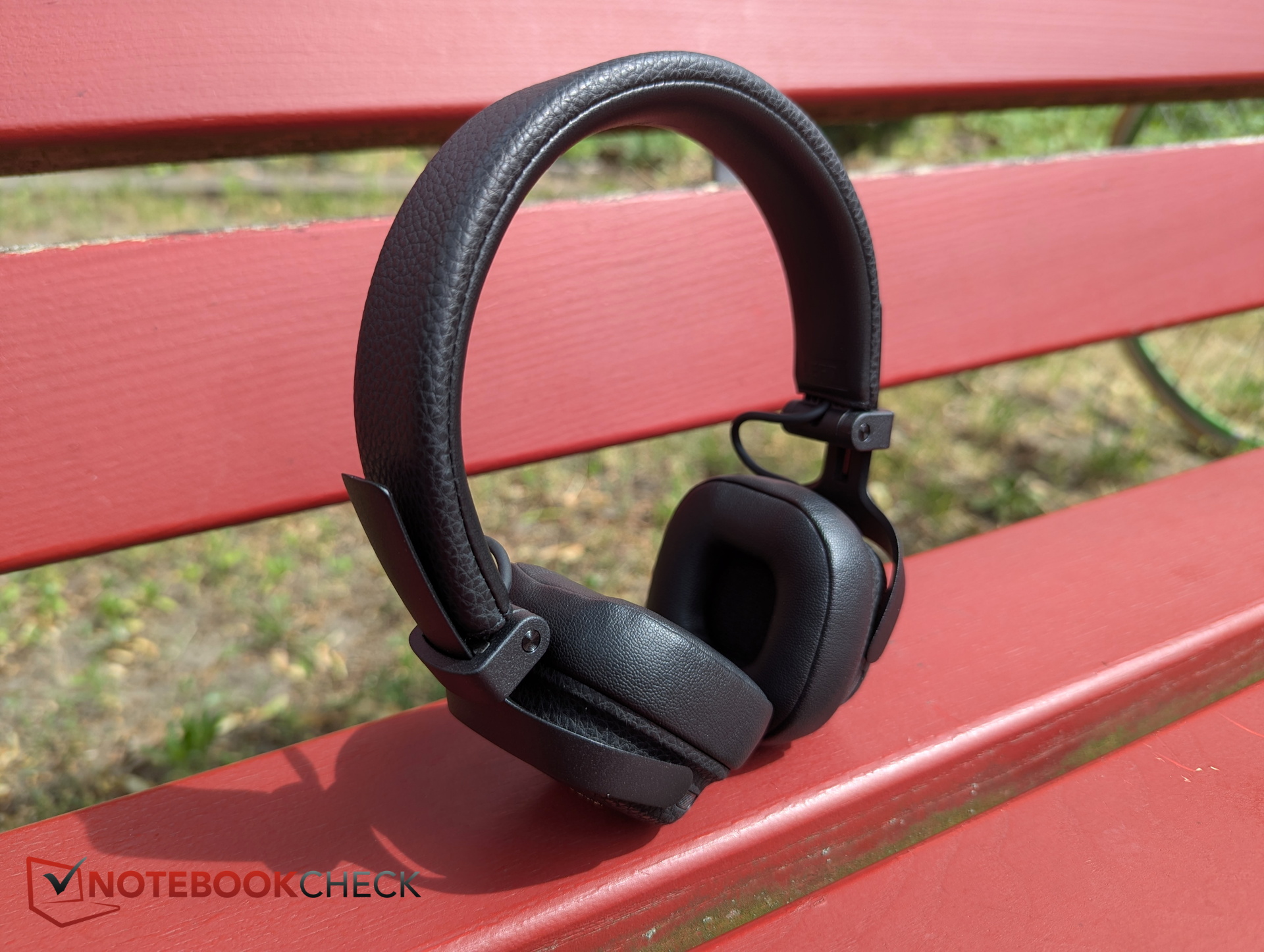
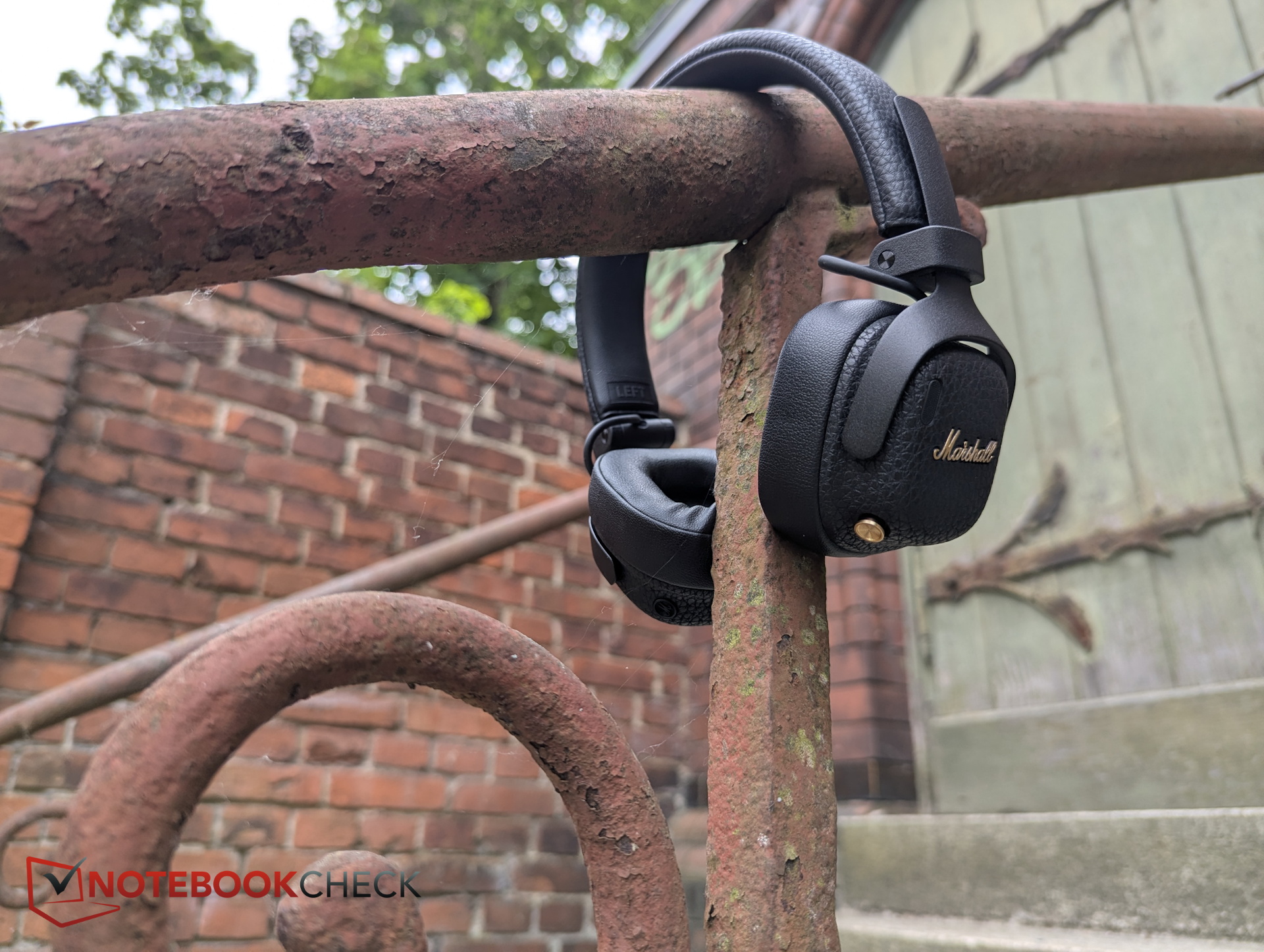
Marshall set out to create a hybrid of the Major V and the Monitor III. Visually, however, the Milton is about 80 percent Major. The earcups are no longer completely flat and now feature a slightly curved design, but the overall differences remain subtle. Anyone who appreciates the foldable on-ear concept and styling of the Major series will likely enjoy the Milton as well, although it occupies slightly more space when folded.
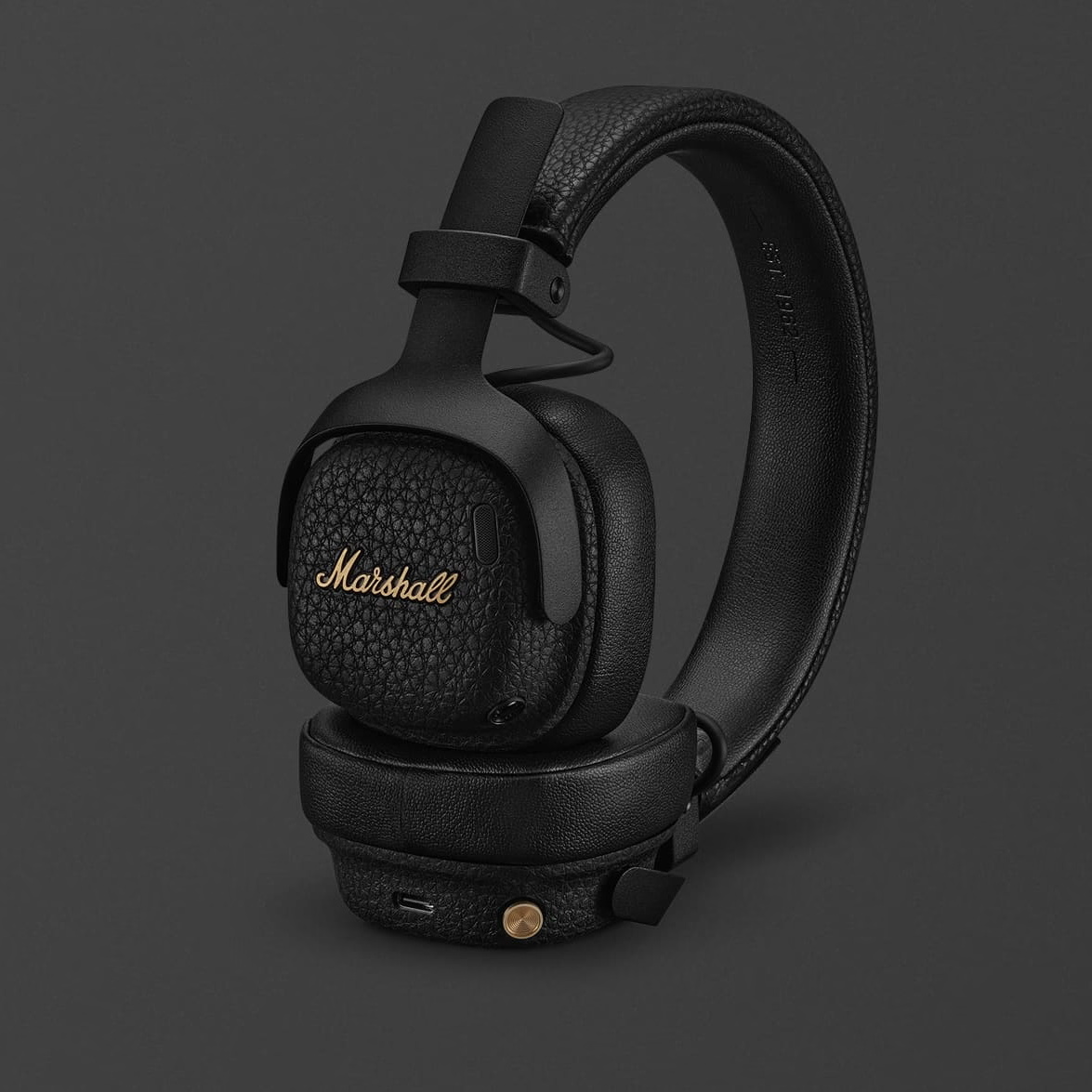
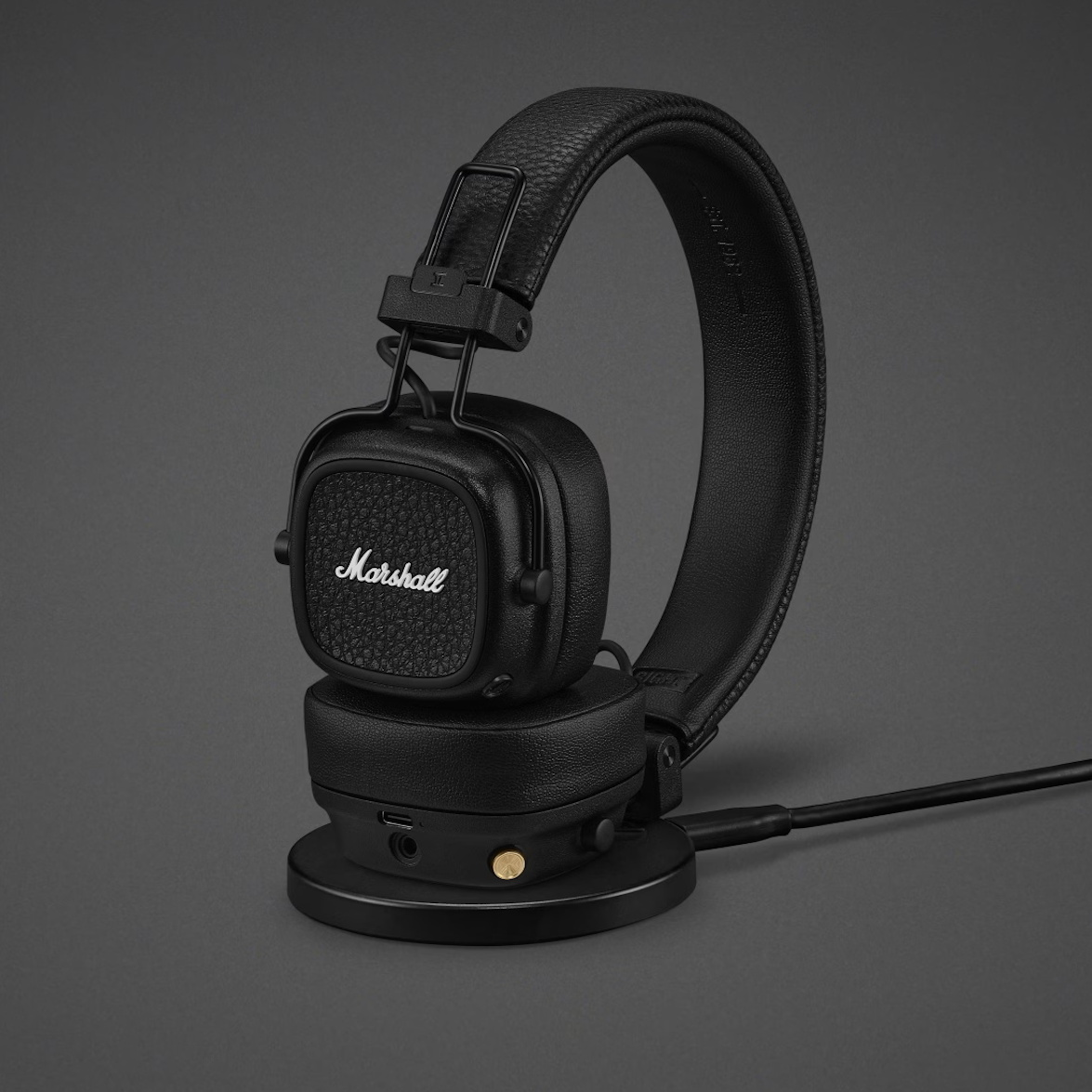
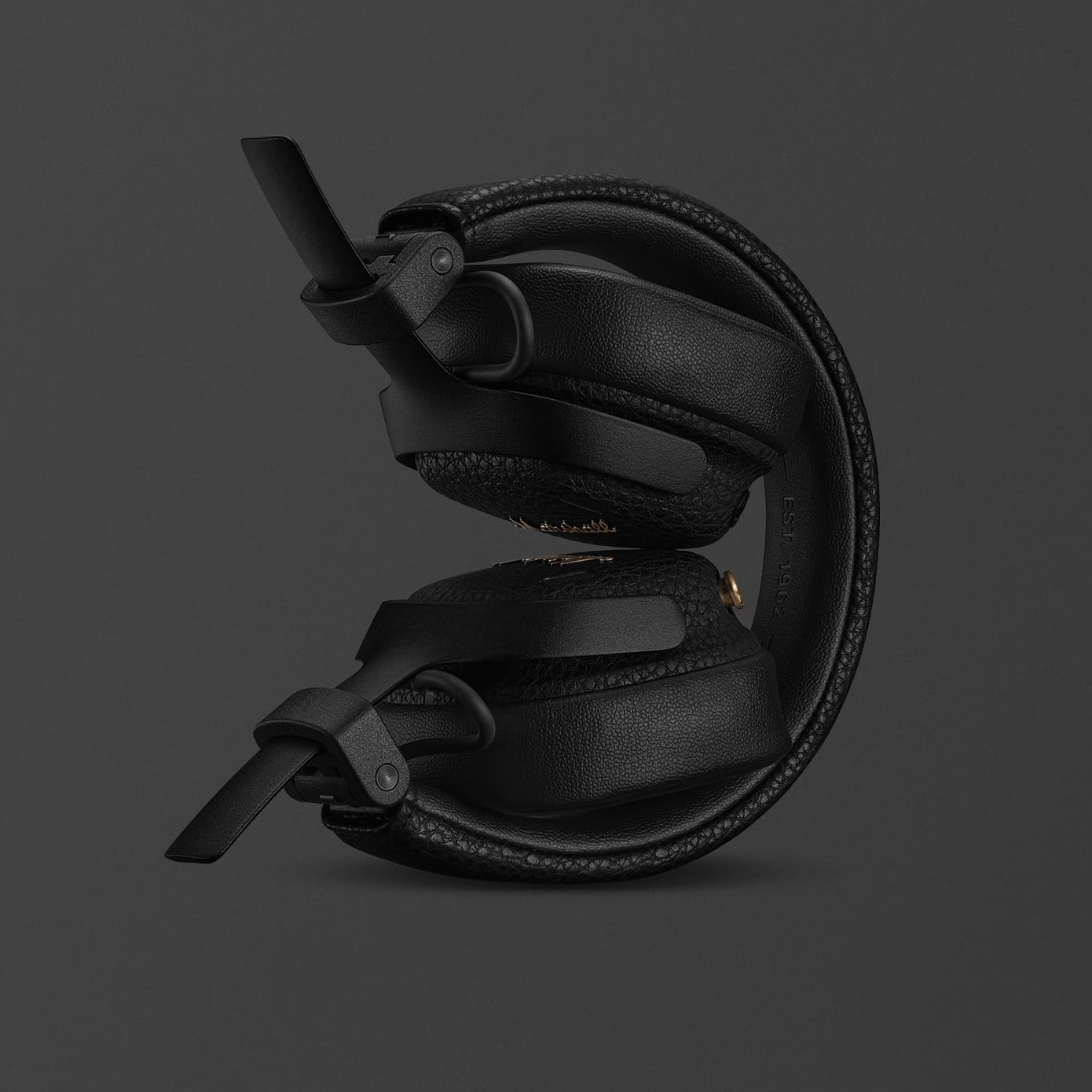
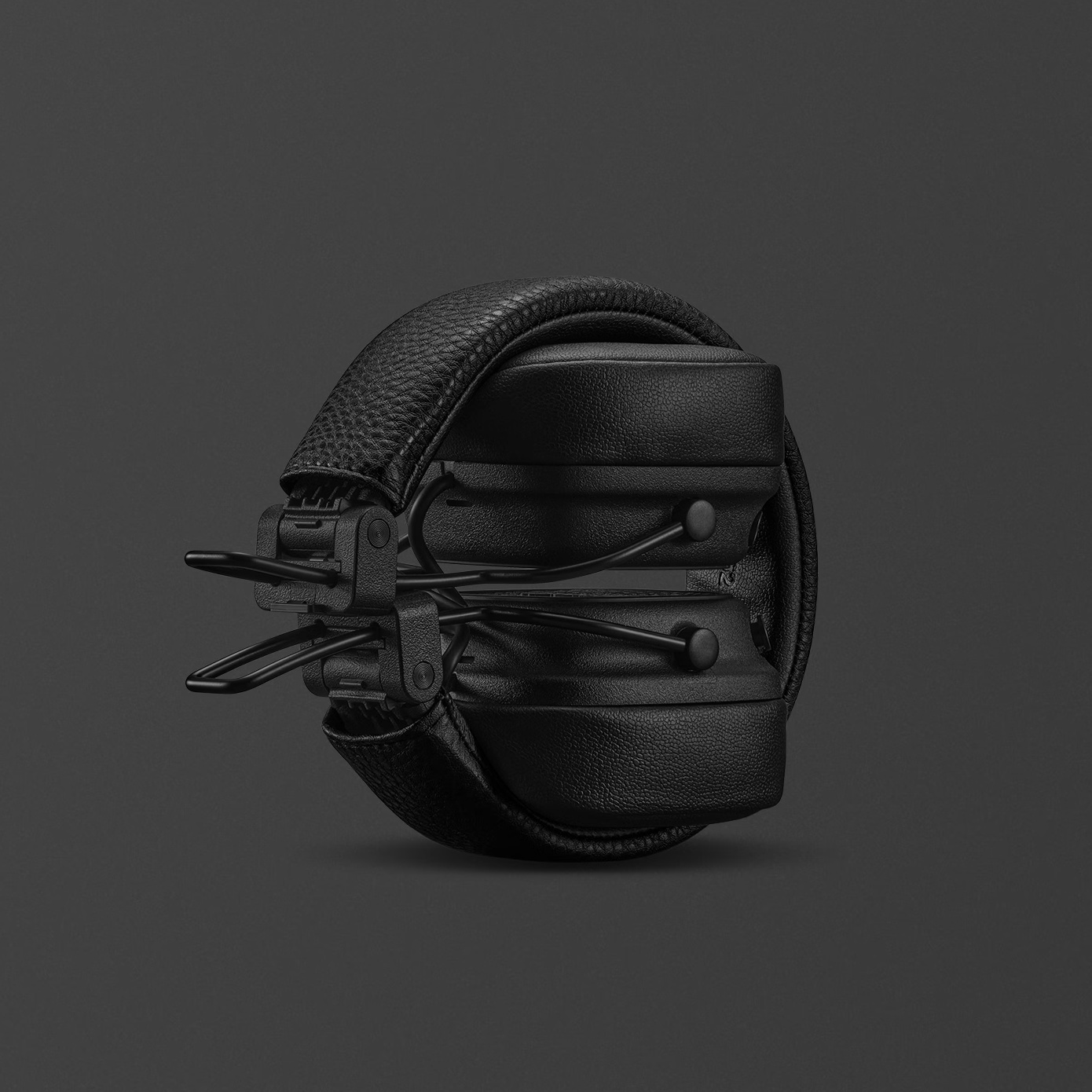
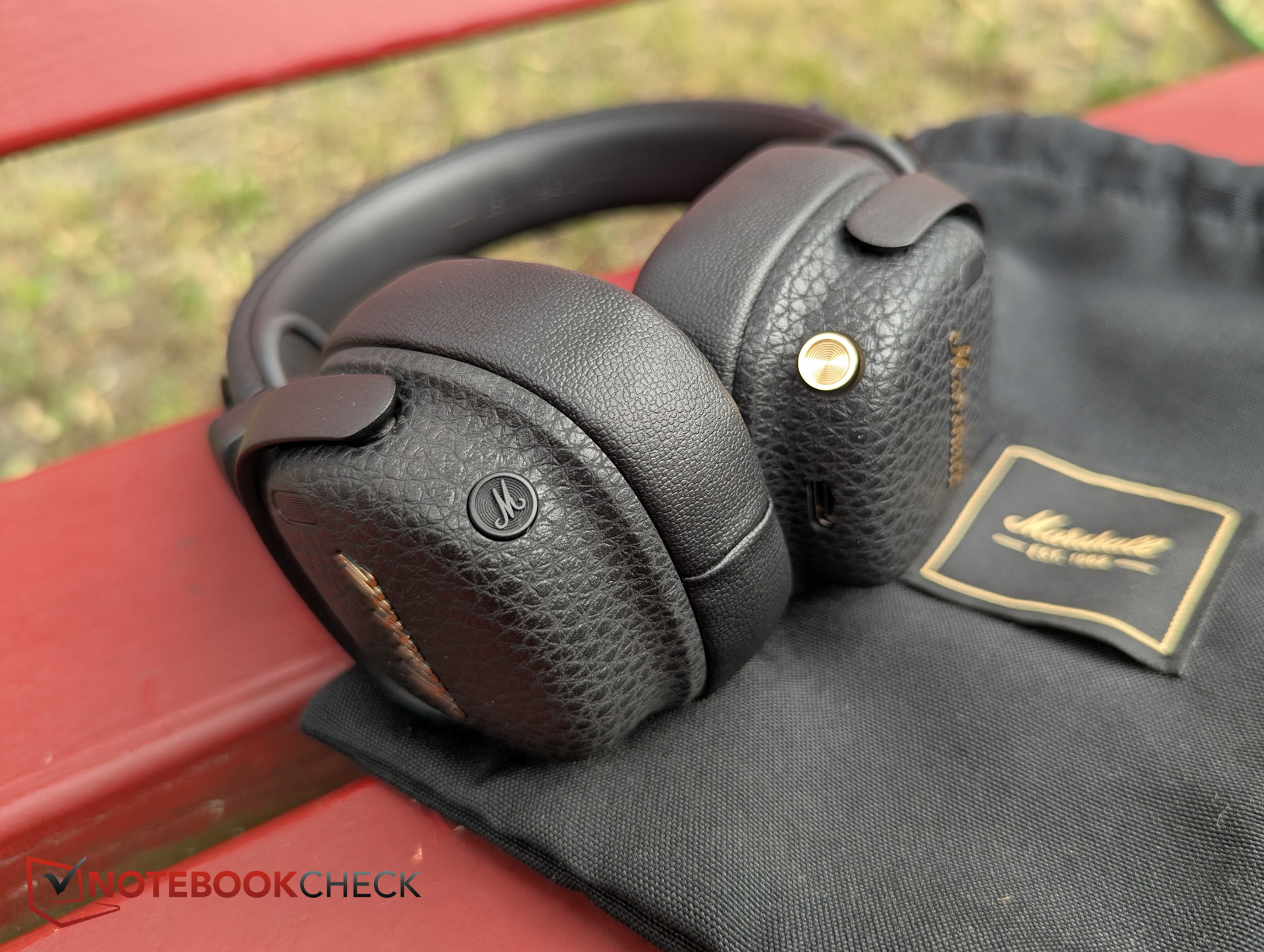
As expected from Marshall, every surface is covered in its signature textured PU leather. The headband feels exceptionally sturdy, tolerating heavy twisting without complaint before effortlessly returning to its original shape. Borrowing from the Monitor III, the ear cushions are now even softer and conform more naturally to the ears. This not only improves wearing comfort but also enhances ANC performance by minimizing gaps between the earcups and the ears.


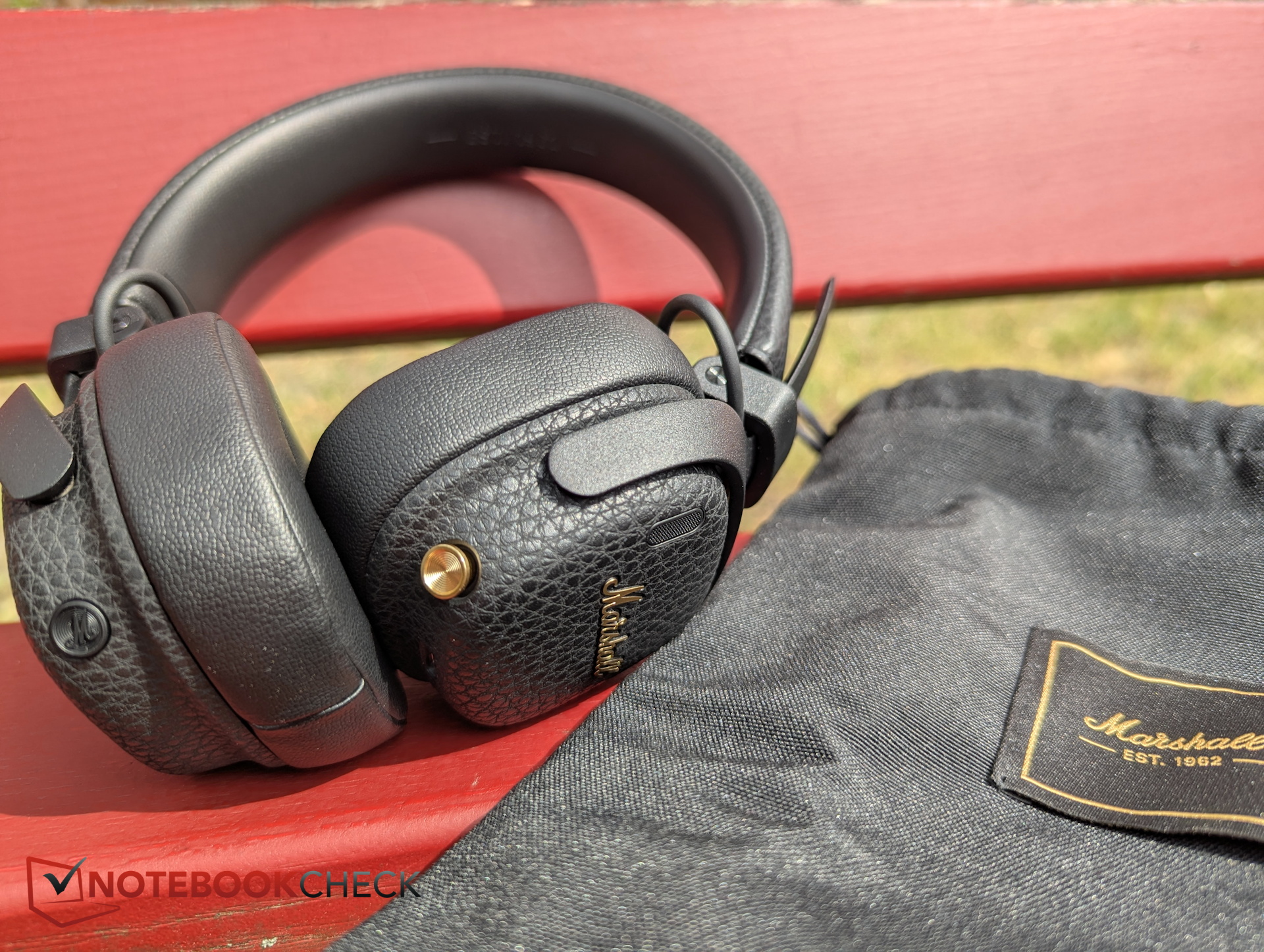
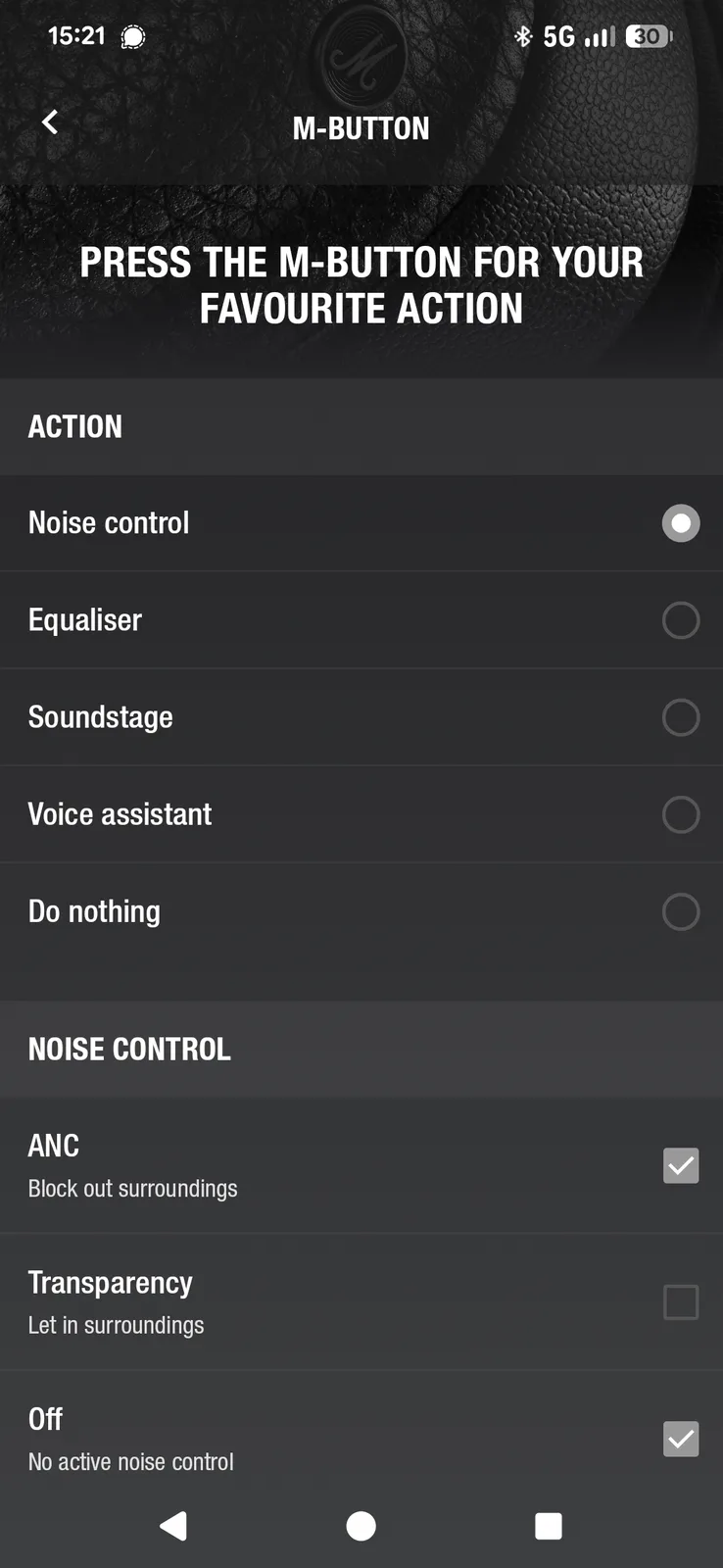
Marshall's iconic script logo naturally remains, alongside the familiar Control Knob joystick and the customizable M button. By default, the M button switches between ANC and Transparency mode, while a double press launches Spotify.
Included in the box is a compact black carrying pouch featuring a stylish Marshall patch, with a drawstring closure that securely tightens the opening.


Specifications – ANC, LDAC, and Bluetooth 6.0 in a compact package
While the Milton closely resembles the Major series visually, its technology has far more in common with the Monitor III. Most notably, it is one of the very few on-ear headphones to incorporate active noise cancellation. Implementing ANC in this form factor is considerably more challenging due to the non-over-ear design.
To make this possible, Marshall redesigned not only the ear cushions but the entire driver assembly. Since ANC requires additional power, the battery had to be enlarged, while the measurement microphones and supporting electronics also demand more internal space.
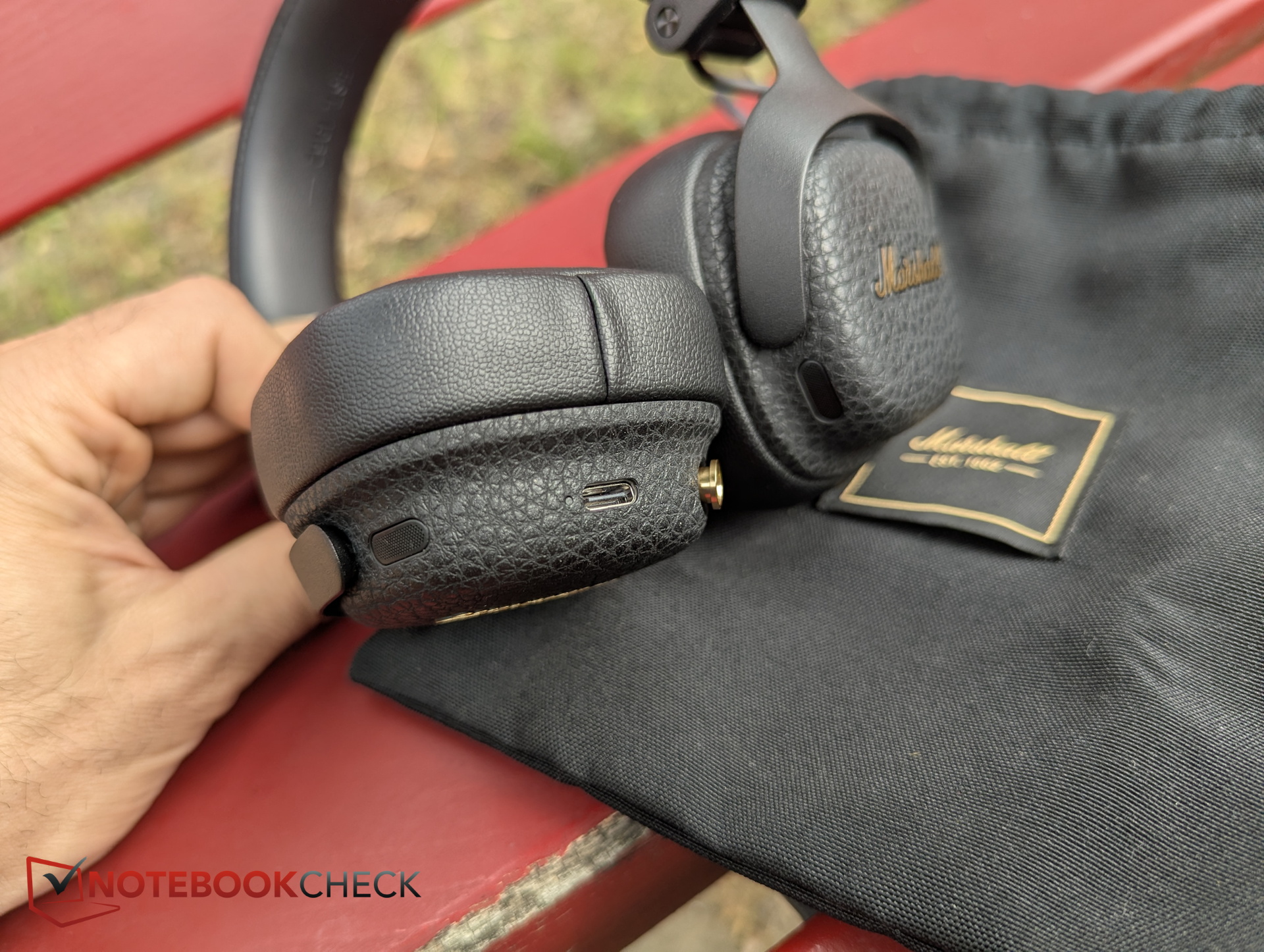
As a result, Marshall reduced the driver size from the Major V's 40 mm to 32 mm while completely redesigning it. The new driver can respond more quickly to the digital ANC adjustments without compromising sound quality—in fact, as we'll see later, it actually improves it.
| Feature | Marshall Milton | ||
| Driver | 32 mm | ||
| Frequency response | 20 Hz – 20 kHz (SBC, AAC, LC3); 20 Hz – 40 kHz (LDAC at 96 kHz) | ||
| Driver impedance | 32 ohms | ||
| Battery life | 80 hours without ANC; 50 hours with ANC (replaceable battery) | ||
| Connectivity | Bluetooth 6.0; USB-C to 3.5 mm cable | ||
| Codecs | SBC, AAC (MPEG-2), LC3, LDAC | ||
| Controls | Control Knob (joystick), M button | ||
| Microphones | 6 | ||
| Weight | 200 g | ||
| Features | ANC, foldable, quick charging, Soundstage/spatial audio, Adaptive Loudness, LDAC, companion app with EQ & M button customization | ||
| Price | €199 |
Marshall Bluetooth – EQ, Soundstage, and Adaptive Loudness
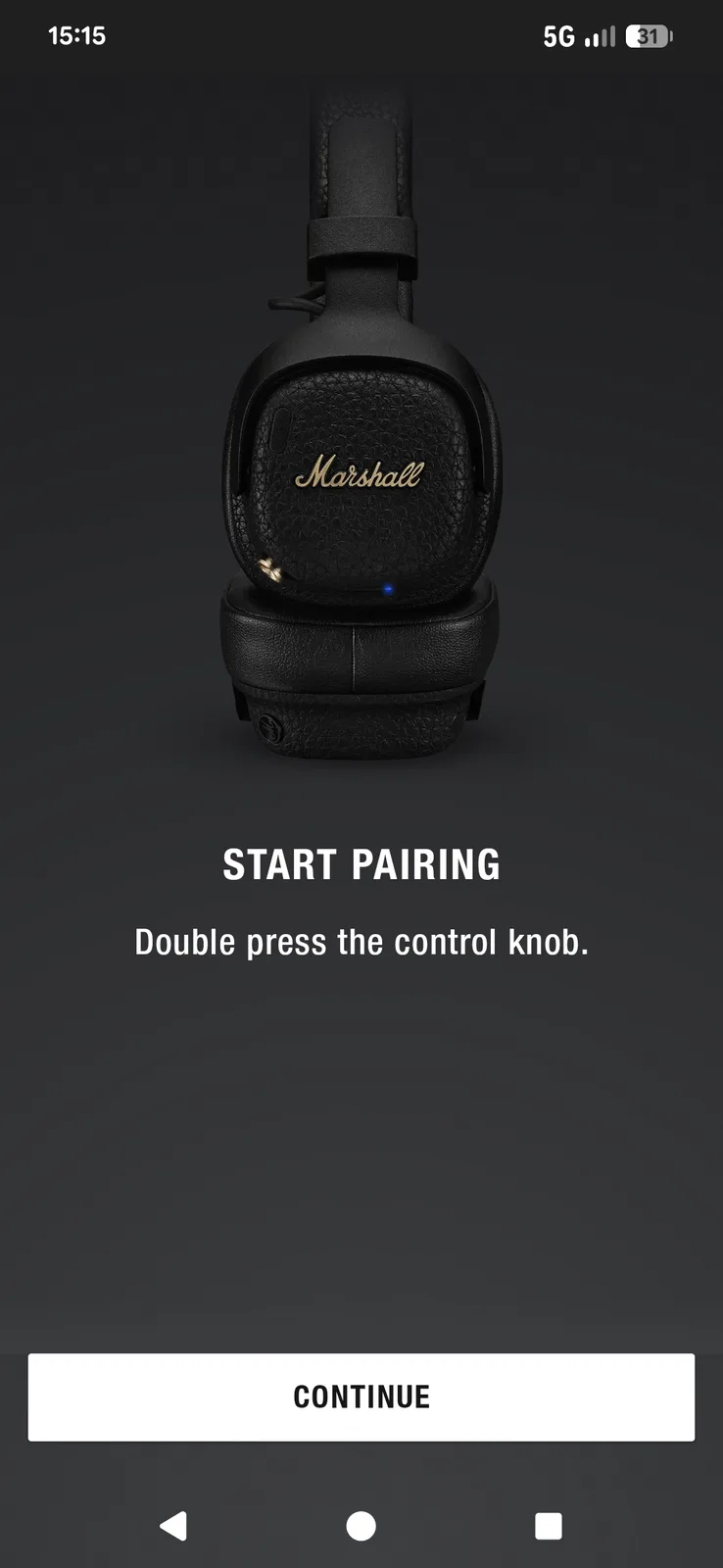
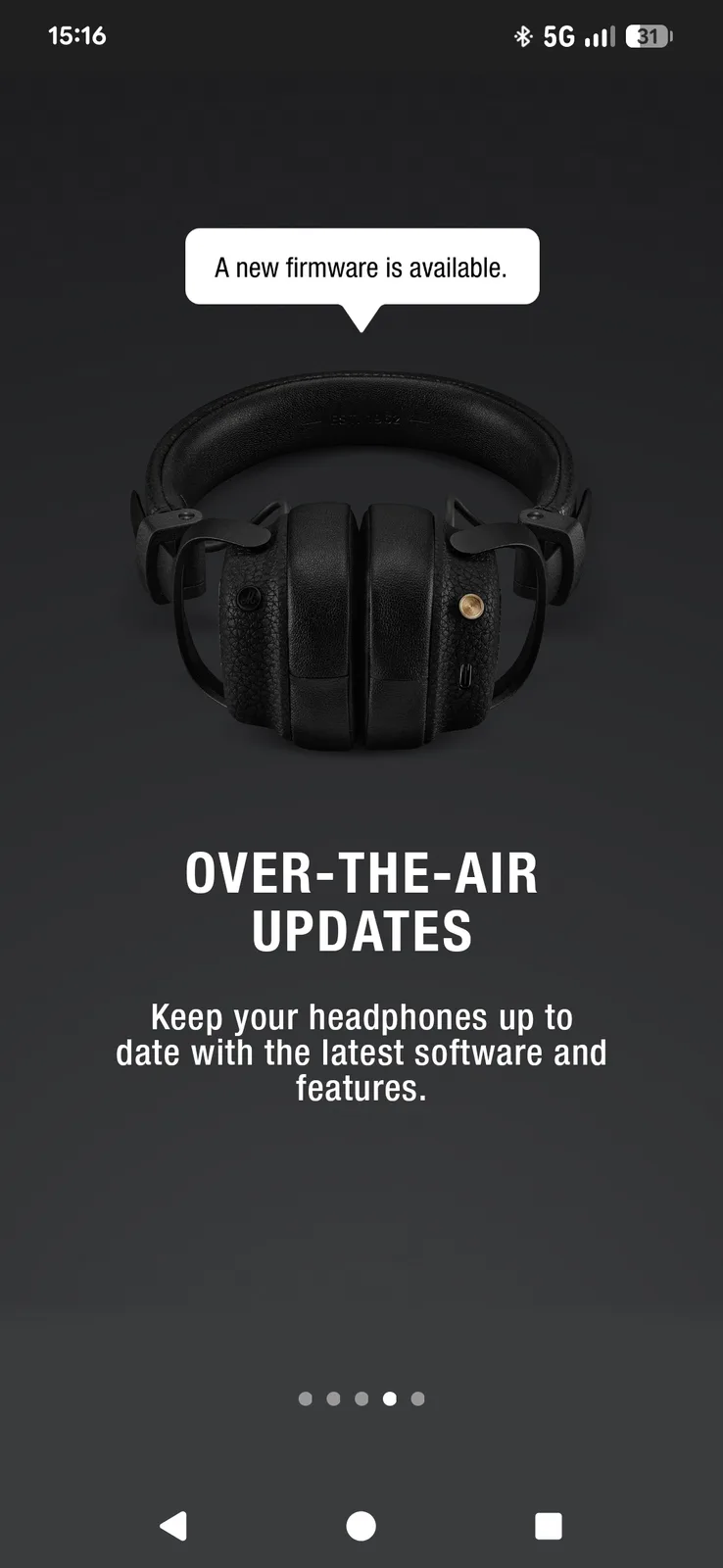
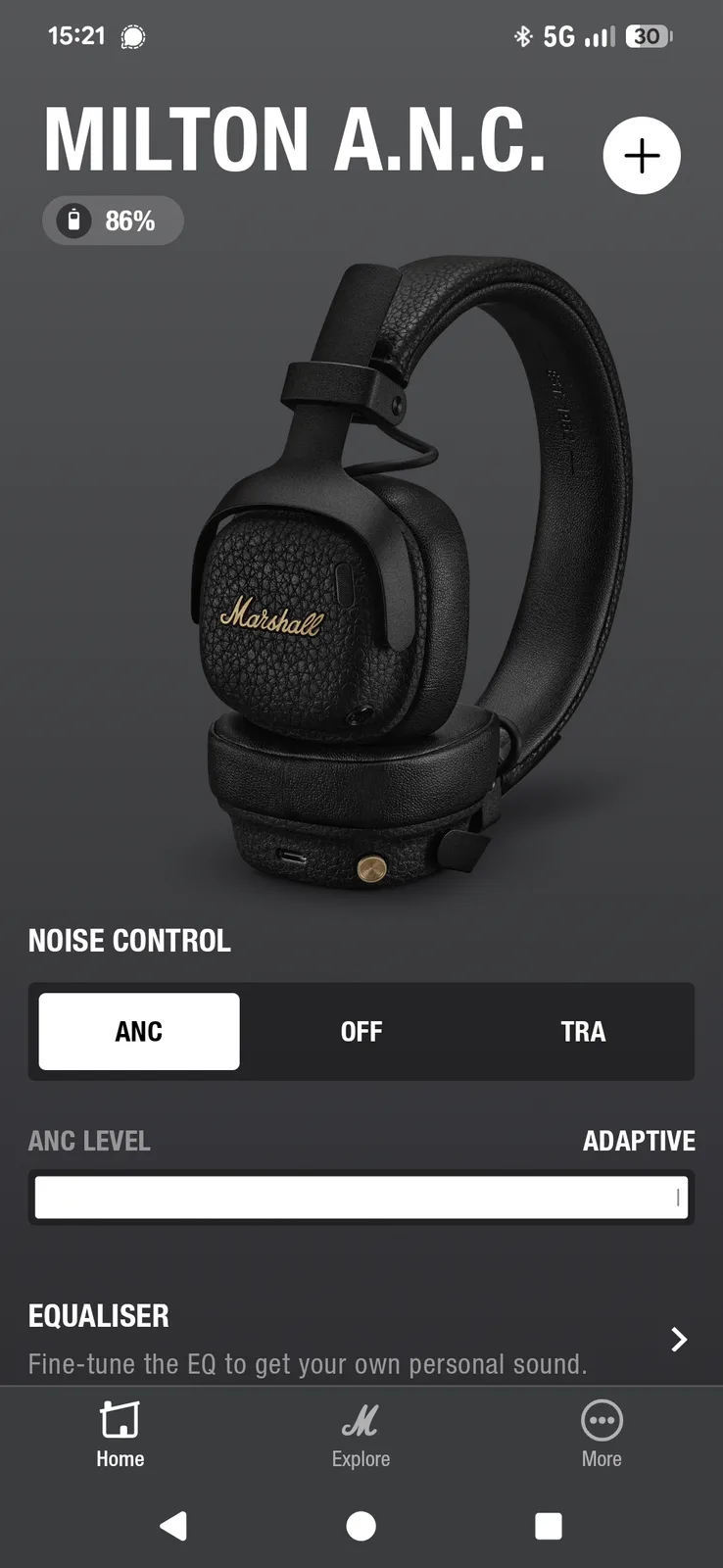
For a more in-depth look at the app, check out our review of the Marshall Monitor III. In short, it includes an equalizer with Marshall Signature Sound and two custom presets, Soundstage, Adaptive Loudness, ANC controls, Apple and Google Find support, battery settings, and firmware updates.
One aspect that proved frustrating during testing is that the app briefly lowers the music volume whenever settings such as EQ or Soundstage are changed. This makes direct A/B comparisons more difficult than if the changes were applied instantly.

Sound – Deep bass, clear highs
One immediately noticeable characteristic is that the Milton doesn't simply emphasize bass in the upper bass and lower midrange where kick drums sit. Instead, its low-end tuning feels considerably more refined. Bass extends impressively deep with a rich, full-bodied presentation, allowing both kick drums and bass lines to stand out clearly.
As is typical of Marshall's Signature Sound, the midrange is somewhat recessed, occasionally more than certain tracks would benefit from. The highs remain clear without becoming as sharp or forward as those of the Monitor III.
Activating the Soundstage feature adds extra energy to some songs, making the highs more present while also bringing the mids further into focus.
| Artist | Song | Listening experience | ||
|---|---|---|---|---|
| The Peach Kings | Thieves & Kings | The perfect track for the Milton, with deep, rich bass and crisp, sparkling highs. | ||
| Kings of Leon | Family Tree | The interplay between bass and guitar at the beginning is well separated, making both instruments easy to distinguish. | ||
| Kaleo | No Good | Excellent clarity with soaring guitar solos, heavy drums, and powerful bass response. | ||
| Kurt Vile | Pretty Pimpin | Full-bodied sound throughout, though the hi-hats feel slightly subdued in the final third; overall highs could be a bit more present. | ||
| Heartless Bastards | Only for You | The bright, slightly funky guitar stands out, giving the track a highly melodic character. | ||
| Aurora | Graveyard | Not quite as clean as on the Monitor III, but the incoming bass and strings are still well resolved. | ||
| The Notorious B.I.G. | Hypnotize | Outstanding low-end performance—the bass feels so physical you can almost sense the driver movement. | ||
| Leonard Cohen | You Want It Darker | Full and immersive overall; the bass line could be more defined and slightly tighter, though the track remains very enjoyable. | ||
| Robbie Robertson | Theme for The Irishman | The harmonica avoids harshness, toms sound weighty and rich, and the upright bass reaches deep with good clarity. | ||
| Little Hurricane | Trouble Ahead (Audiotree Live) | Shows strong treble performance without sacrificing low-end impact, thanks to the distinctive Audiotree mix. |
Transparency
The selection of devices to be reviewed is made by our editorial team. The test sample was given to the author by the manufacturer free of charge for the purposes of review. There was no third-party influence on this review, nor did the manufacturer receive a copy of this review before publication. There was no obligation to publish this review. As an independent media company, Notebookcheck is not subjected to the authority of manufacturers, retailers or publishers.
 Add as a preferred source on Google


