




This is why some people see the Steam Machine as a “technical marvel” despite the criticism
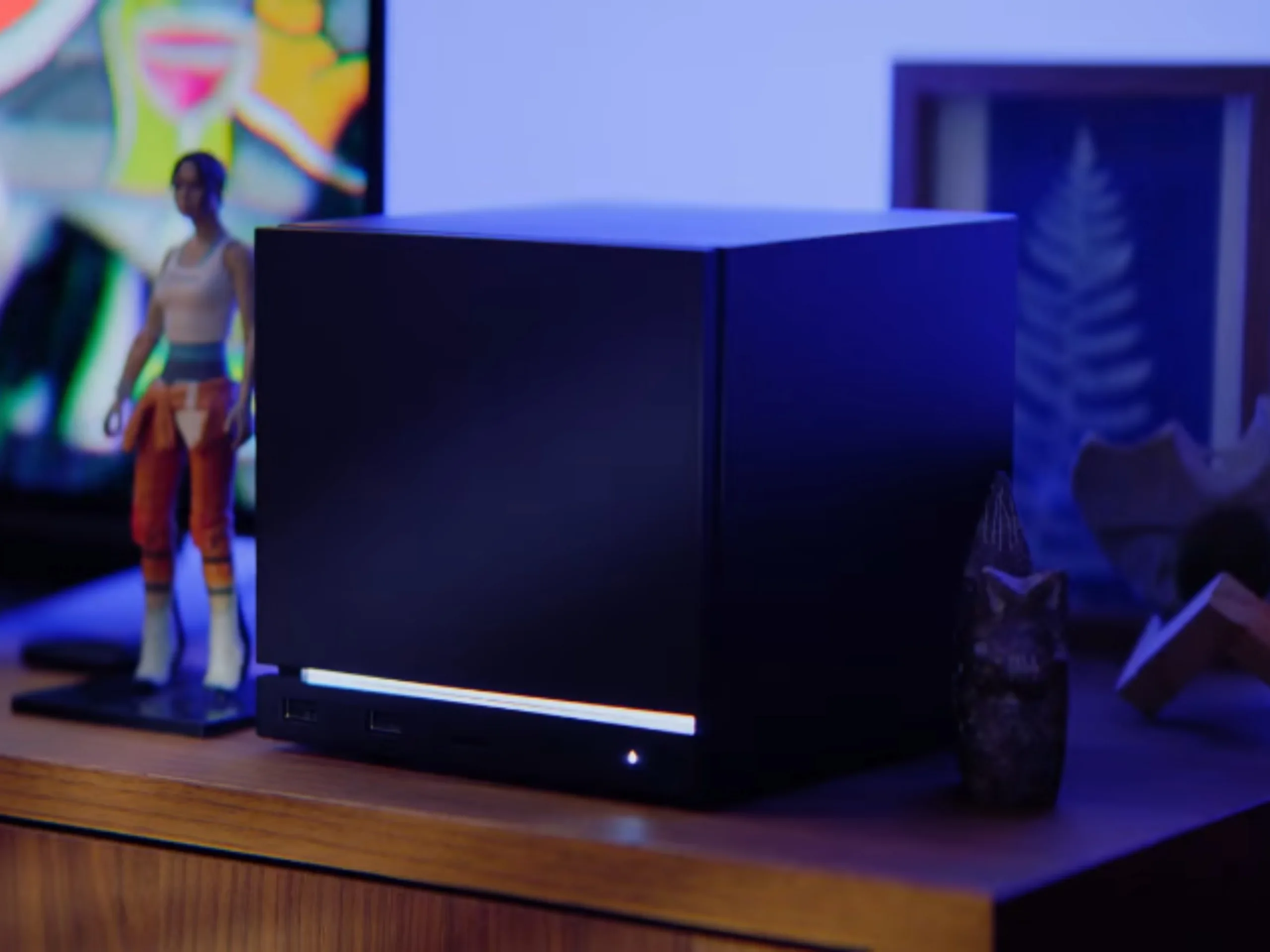
Since the Steam Machine was officially unveiled, social media has been full of debate about its price and performance. Reddit user u/baoonbao offers a different perspective in the Steam Machine subreddit. In his view, Valve’s living-room PC is technically underrated. He even calls it a “technical marvel.” His argument: fitting a mini-PC with comparable performance, cooling and noise levels into a 15-centimeter cube is far from easy.
Many users agree. The Steam Machine is not a traditional gaming PC, and its value should not be judged solely by how many FPS it can deliver in Cyberpunk 2077 or other graphically demanding games. Buyers are primarily paying for convenience. Alongside the pre-installed SteamOS, the compact cube design could be a major factor. Comparable systems take up significantly more space on a TV stand. Even mini-PCs positioned directly as Steam Machine competitors cannot match Valve’s compact dimensions. One recent example is LDLC’s “Stim Machine,” which measures 222 × 181 × 285 millimeters and therefore comes nowhere near the Steam Machine’s 156 × 152 × 162 millimeters.
Noise is another key argument. Anyone choosing a Steam Machine is also paying for a quiet living-room experience. Reddit user u/lightsworn55 asks, for example: “Do you really want a vacuum cleaner running at all times in your living room?” As PC Games explains in its review, the Steam Machine is said to be barely audible even under full load – something that cannot necessarily be said of the Xbox Series X or PS5. Even powerful gaming PCs can struggle to stay below 25 dB over longer periods. According to PC Games, this advantage is mainly due to the effective cooling system.
Still, Reddit is not entirely united on this point. Many users consider the term “technical marvel” exaggerated. After all, small gaming PCs have existed for quite some time. And whether a few centimeters really matter when better hardware is available at the same price remains debatable. Whether Valve’s living-room cube will ultimately break into the mainstream or remain a niche product will likely only become clear once the first gamers actually have it sitting under their TVs.
Source(s)
 Add as a preferred source on Google


