Samsung and Garmin smartwatches prove unreliable for measuring calorie burn
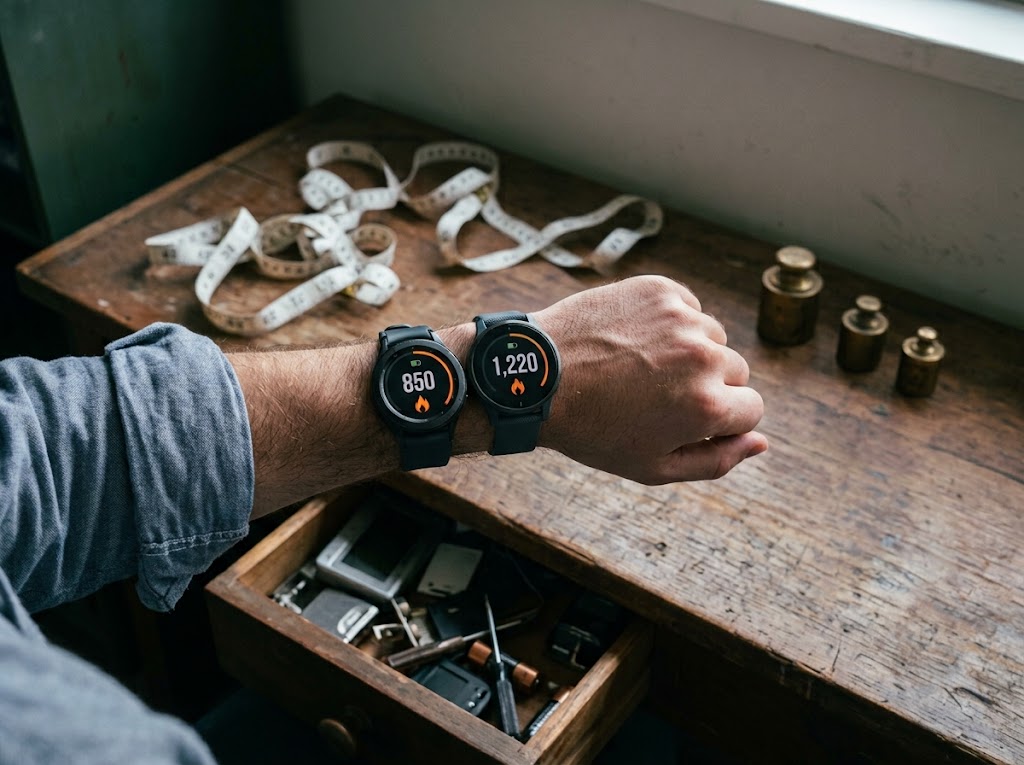
New research suggests that the calorie-burn estimates of smartwatches should not be treated as precise measurements. A Florida International University (FIU) study compared four popular fitness watches with indirect calorimetry, a laboratory method for measuring energy expenditure, during a controlled cycling workout. The results showed substantial discrepancies, with deviations of around 15% to 25%.
The Garmin Forerunner 955 and Samsung Galaxy Watch 5 produced the largest systematic overestimates, the Apple Watch Series 8 less so. Excluding seven implausible readings, the Fitbit Sense 2 was relatively accurate. However, the implausible readings made up 13% of its trials, giving Fitbit the largest average error rate of the four watches.
The peer-reviewed study, published in PLOS One, involved 58 adults who completed alternating moderate- and vigorous-intensity cycling intervals while wearing the devices. The researchers also found that calorie-estimation errors increased as participants' body-fat percentage rose, with the effect varying between devices.
The findings are particularly relevant to people using wearable calorie estimates to manage their weight or regulate food intake. Because an apparently precise number can substantially differ from actual energy expenditure, relying on such figures to determine a calorie deficit or how much food to consume can produce misleading results.
It should be noted, however, that this study does have a number of limitations. For example, the sample size of 58 participants is rather small. Only one type of exercise, namely a single, structured cycling protocol, was performed, meaning that the results cannot be generalized to running, walking, resistance training, swimming or ordinary day-to-day activity. Moreover, since this was one single exercise session, the researchers could not determine whether a smartwatch's algorithms might become more accurate through repeated use or adaptation to an individual. Lastly, participants wore all four devices, meaning strap tension, fit and sensor contact may have been affected.
Source(s)
 Add as a preferred source on Google