




Resident Evil Requiem runs at ~70 FPS on Apple silicon despite no macOS port
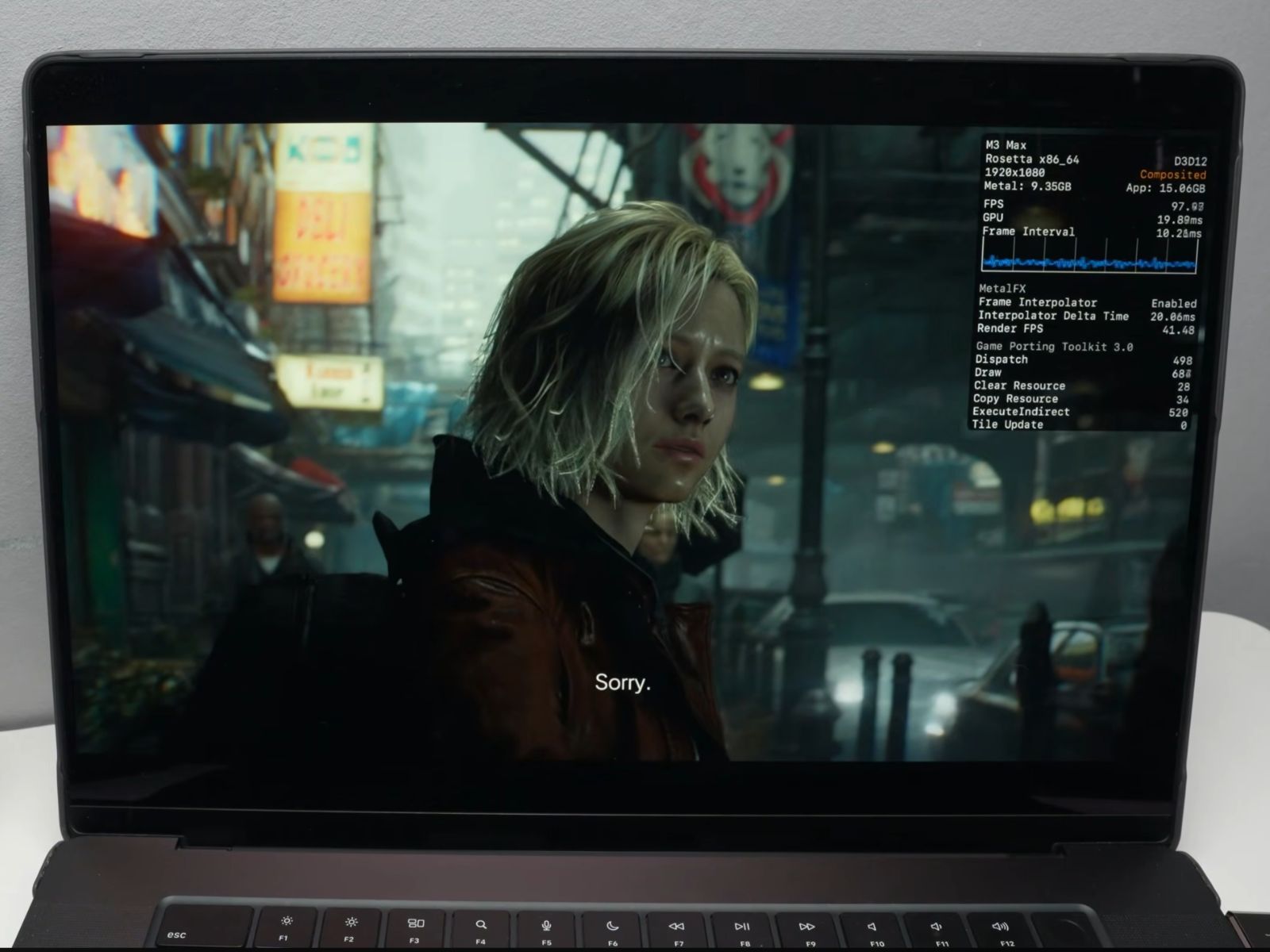
Capcom’s Resident Evil Requiem has launched on PC and consoles, and we also recently saw how well it runs on Linux. However, Mac users are still waiting for an official macOS version. That said, testing from the YouTube channel Andrew Tsai shows that the game can already run on Apple Silicon machines using CrossOver 26, delivering playable performance on newer chips.
According to testing, who also previously tested Cyberpunk 2077 on Macs, older Apple silicon chips such as M1 and M2 appear unable to run Resident Evil Requiem, with crashes occurring during launch. The creator suggests that one possible reason could be the lack of hardware mesh shader support, a feature the game appears to rely on heavily.
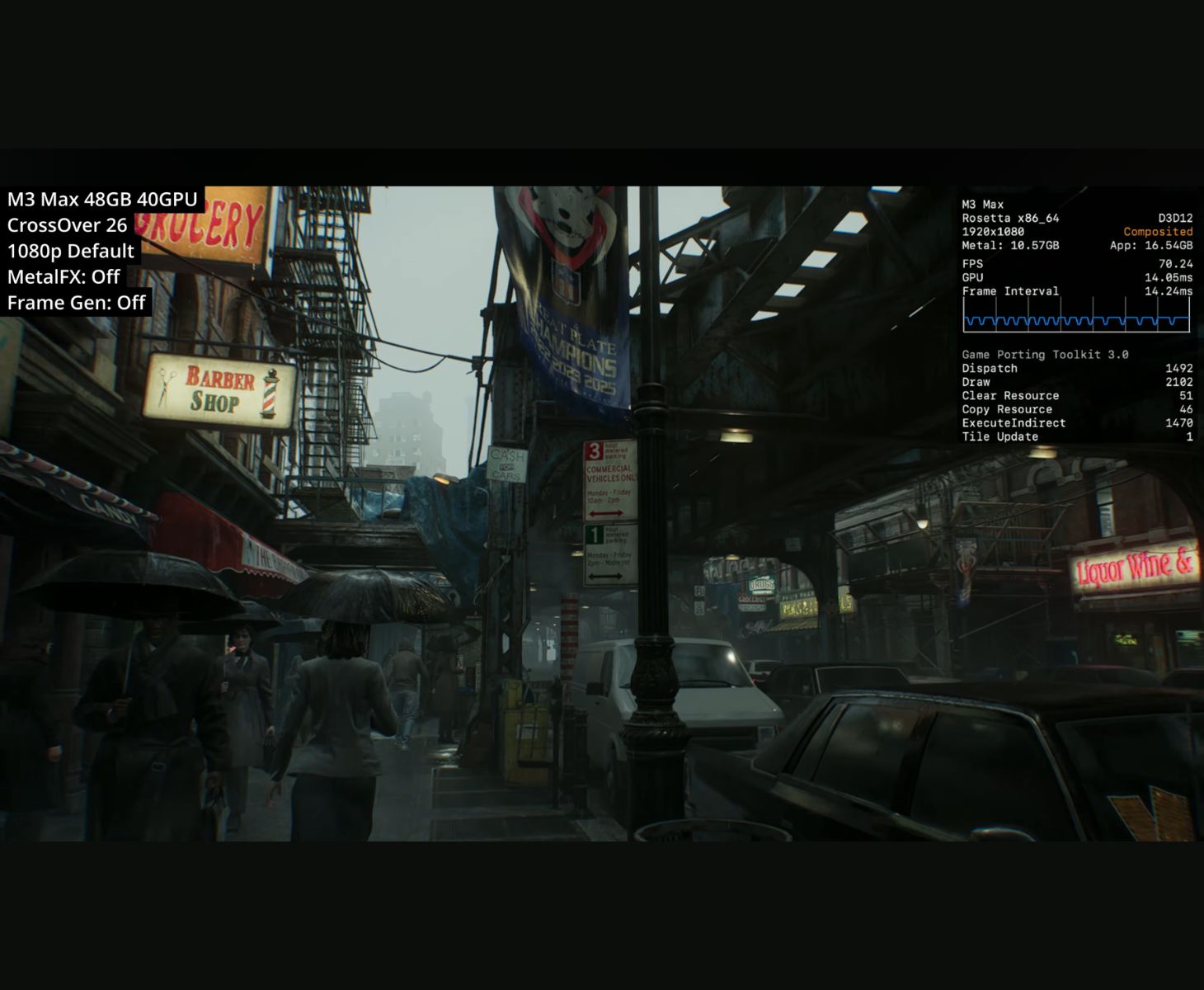
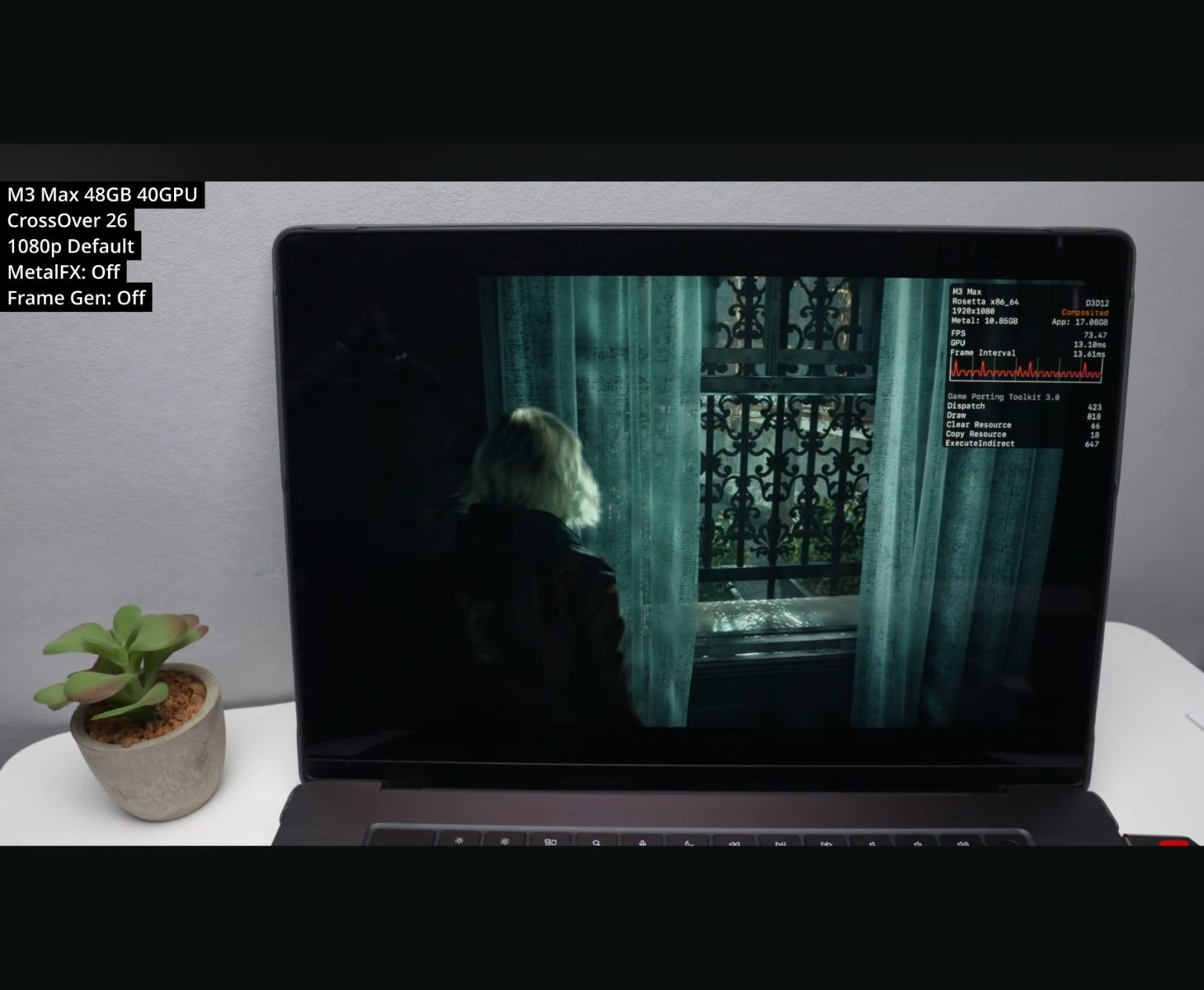
Newer machines fare much better. The game was run on an M3 Max MacBook Pro with 48 GB unified memory and a 40-core GPU through CrossOver 26. At native 1080p with default graphics settings, MetalFX disabled and frame generation turned off, the system maintained around 70 FPS in an open street scene, showing that the hardware can handle the game comfortably without relying on upscaling. The overlay also shows the title running through Apple’s Game Porting Toolkit layer with roughly 14 ms frame times, while using about 10.5 GB of GPU memory.
Indoor scenes appear to run even more smoothly, with performance climbing to around 73-75 FPS, and frame times hovering near 13-14 ms.
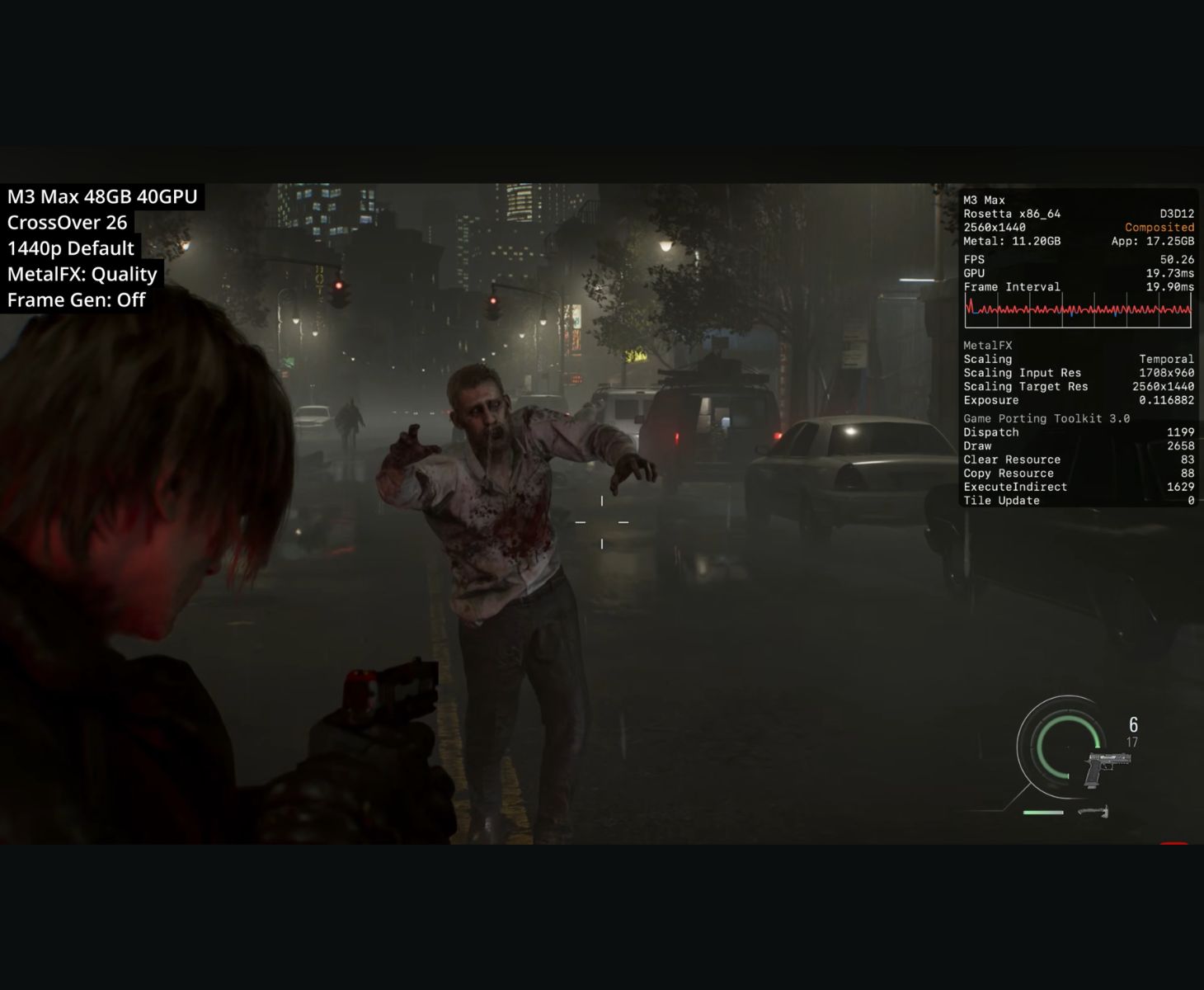
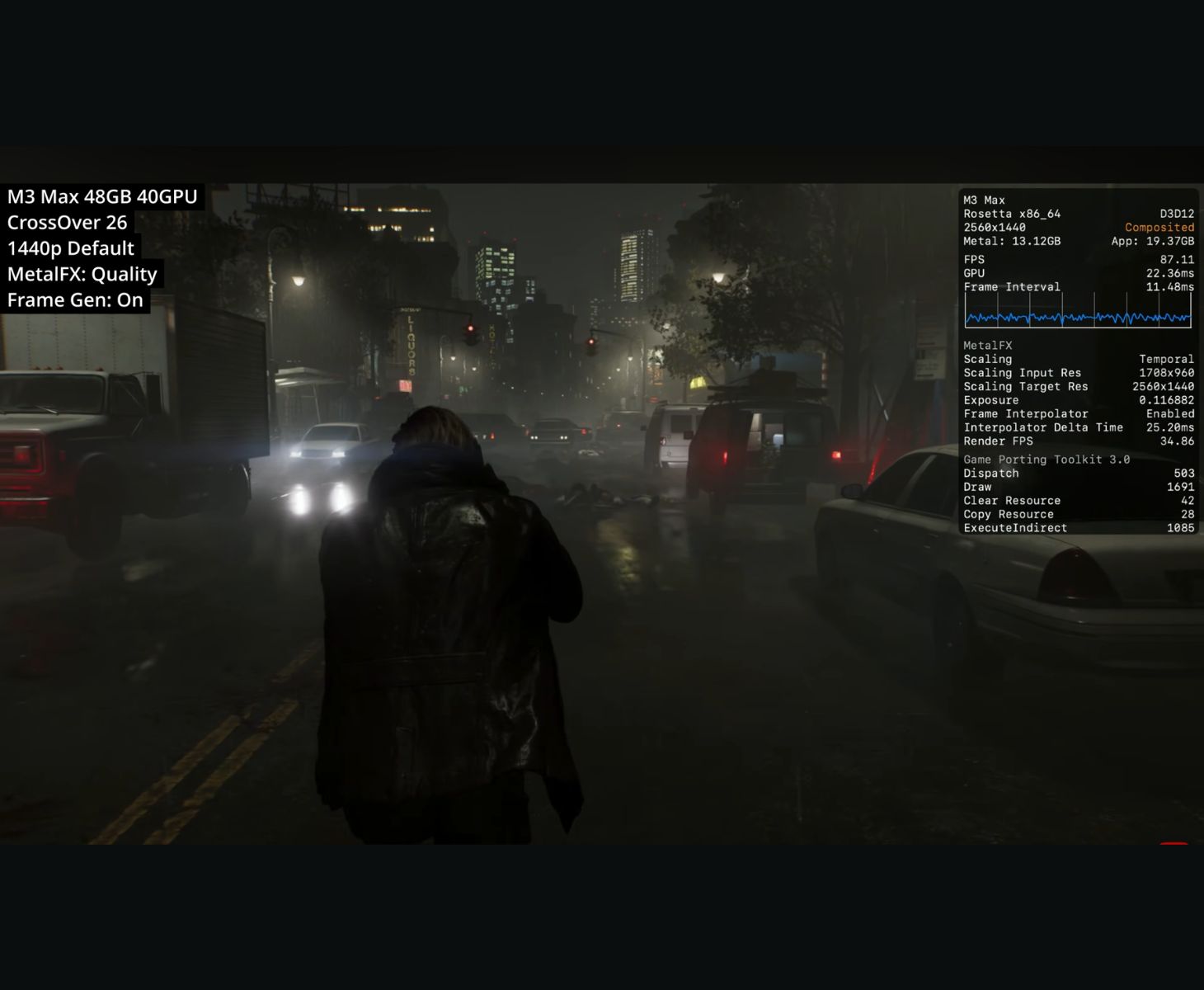
A separate test at 1440p using MetalFX Quality upscaling shows the game running at around 50 FPS, with frame times close to 19-20 ms. MetalFX is set to Quality, rendering internally at 1708 × 960 before scaling to 2560 × 1440, while frame generation remains disabled. The overlay also shows GPU memory usage of roughly 11.2 GB and application memory around 17.2 GB.
With frame generation enabled, performance improves noticeably. In the same 1440p MetalFX Quality setting, the game runs at around 87 FPS, with frame times close to 11-12 ms. The overlay also shows a render FPS of about 34-35 FPS, meaning the actual rendered frames are lower and frame generation helps increase the displayed frame rate. GPU memory usage rises slightly to about 13.1 GB, while application memory reaches around 19.3 GB.
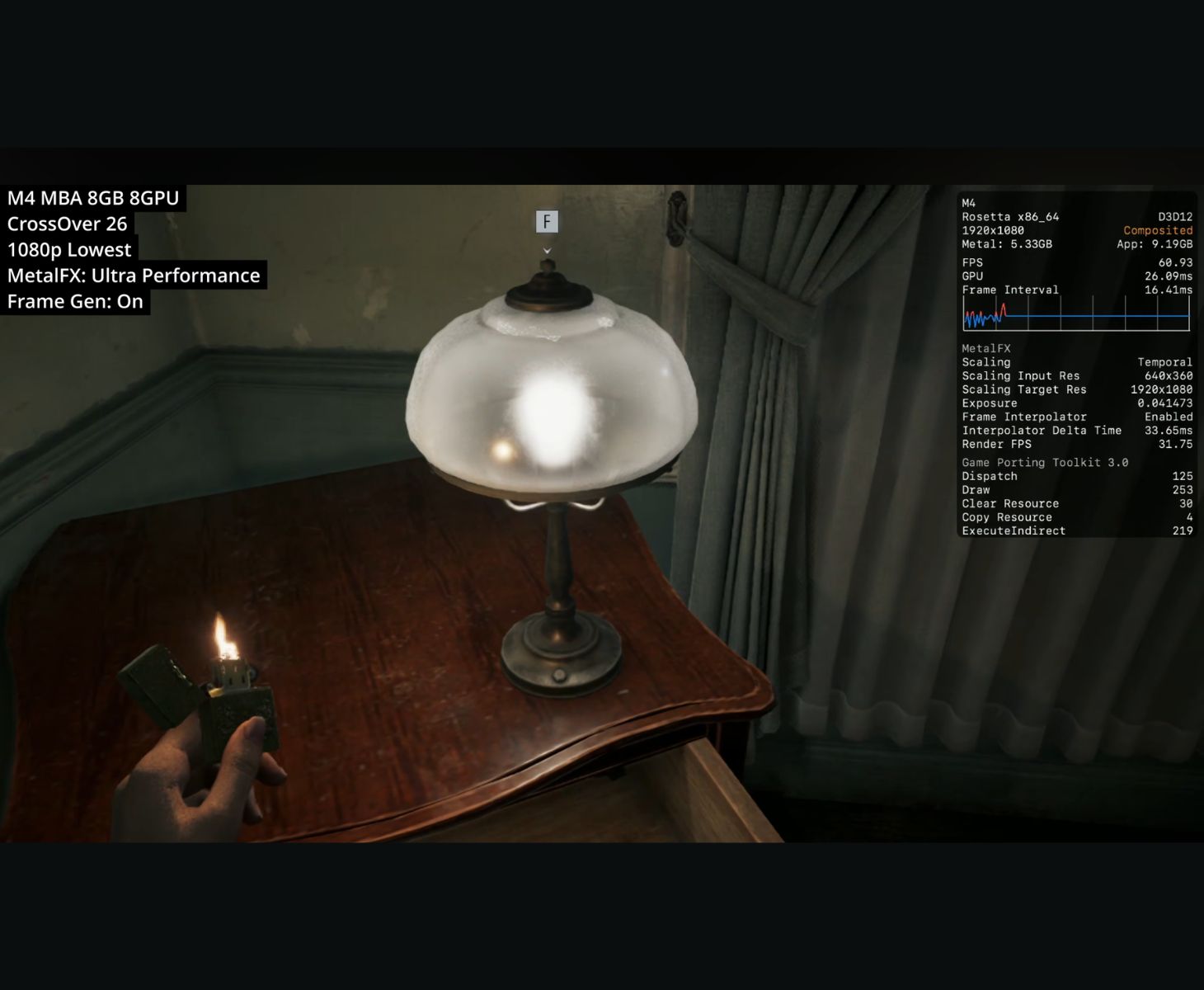
On the more affordable MacBook Air powered by the M4 chip, the game can still run with some adjustments. The game was set to 1080p with the lowest graphics preset, while MetalFX Ultra Performance upscaling and frame generation were enabled. In this configuration, the game reaches around 60 FPS, with frame times close to 16 ms. The overlay also shows a render FPS of roughly 31-32 FPS, indicating that frame generation helps boost the final frame rate. GPU memory usage sits around 5.3 GB, while application memory is about 9.1 GB.
Andrew also shows the entire process of how to set up CrossOver 26 and run the game on a Mac, so do check out the full video linked below for more details.
Source(s)
 Add as a preferred source on Google


