




Exclusive | Final Fantasy Tactics composer Hitoshi Sakimoto reveals "FFT is rock"
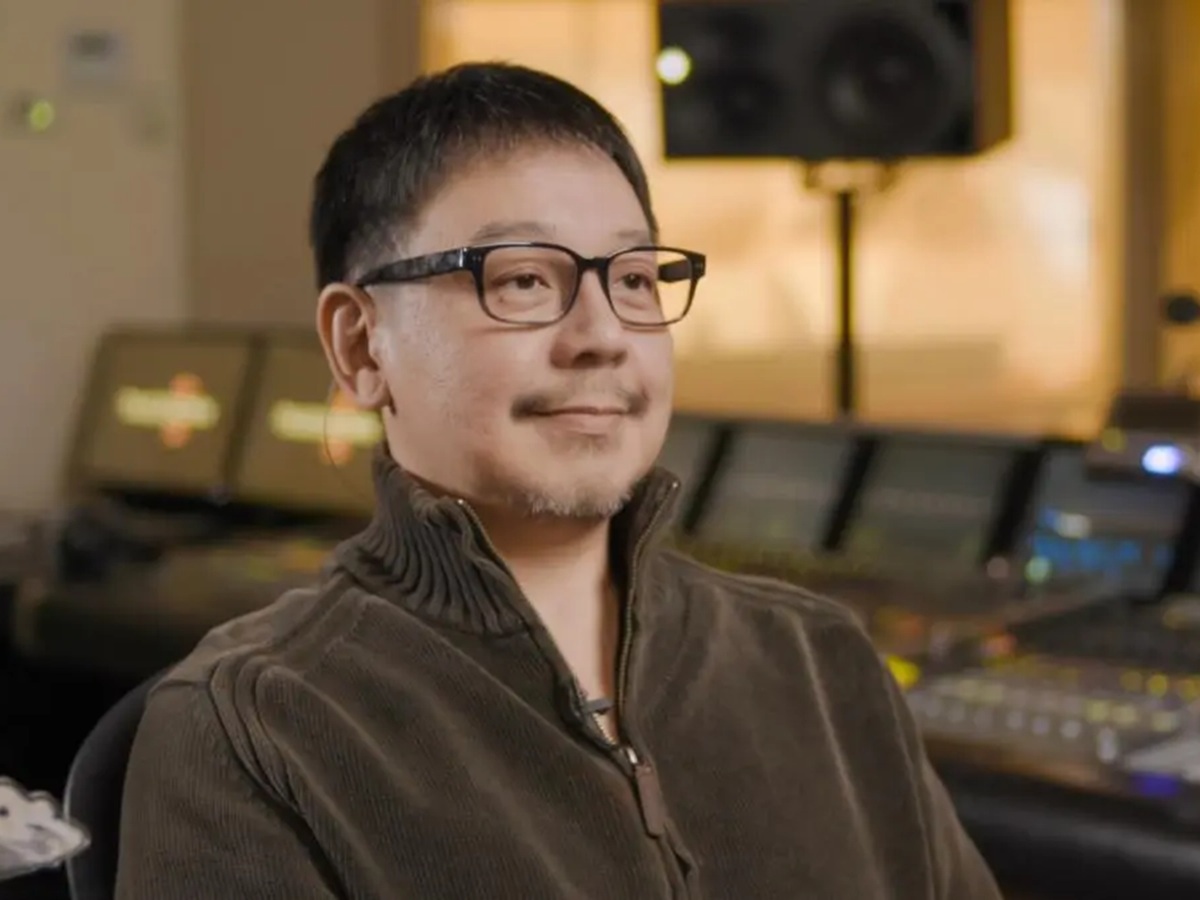
Hitoshi Sakimoto has spent 40 years writing music that most people first heard through a television speaker in a darkened bedroom. This June, that changes. The Japanese composer, best known for the sweeping orchestral scores behind Final Fantasy Tactics and Final Fantasy XII, will attend the Game Music Festival 2026 in London as the centrepiece of an evening celebrating four decades of his work.
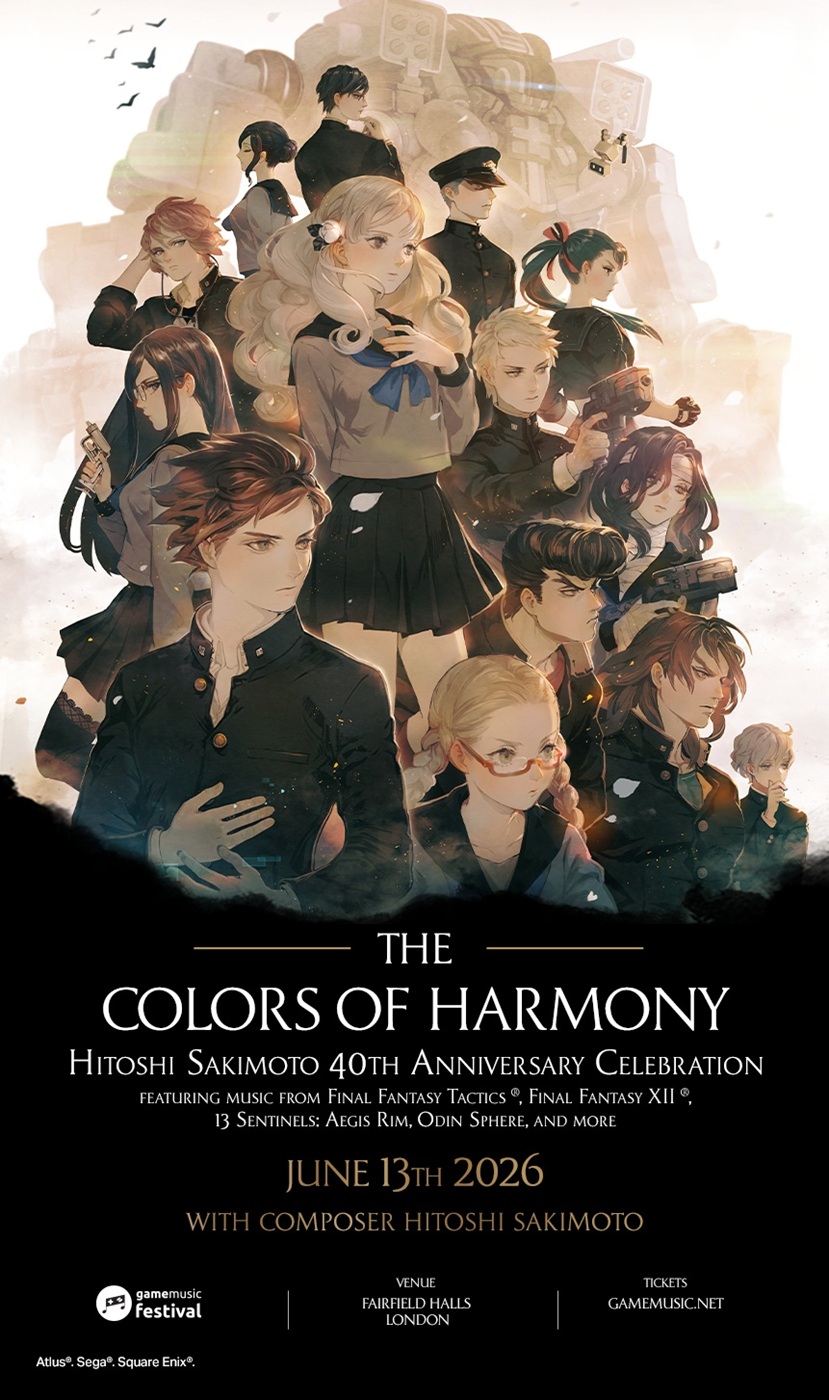
The concert, titled "The Colors of Harmony," takes place on June 13, 2026, at Fairfield Halls in Croydon and is one of five live orchestral events running across London throughout June. It features music from Sakimoto's Final Fantasy work alongside scores from Vanillaware titles, including 13 Sentinels: Aegis Rim and Odin Sphere Leifthrasir, performed by the London Mozart Players with Sakimoto himself present on the night.
Behind the festival are Mat and Marta Pawlak, president and vice president of the Game Music Foundation, a Poland-based organisation that has championed video game music as a serious concert hall art form since its first festival in 2018. In the years since, GMF has hosted officially licensed Final Fantasy concerts, brought the Philharmonia Orchestra to the Royal Festival Hall, and grown into one of Europe's most ambitious game music programmes.
Twenty nine years after Final Fantasy Tactics released, we sat down with Sakimoto and the Pawlaks to finally settle the debate that has never stopped: is Final Fantasy Tactics secretly a rock record? We also talk about Ivalice, the pressure of the Final Fantasy name, and what it means to finally hear that music played live.
"FFT is rock! The tuba and trombone act like a bass drum, with other instruments taking on the roles of snare and hi-hat." - Hitoshi Sakimoto
From Wrocław to London
GMF started in 2018 in Wroclaw and has since moved into venues like the Royal Festival Hall and Fairfield Halls in London. Mat and Marta, what did that journey actually look like, and at what point did you know the festival could operate at this scale?
We wanted to meet our audience halfway and get closer to people passionate about game music, so bringing the festival to London made perfect sense. There's a huge base of game fans there, and it's much easier for many to reach. Interest from industry folks was also picking up, which made expanding to London feel like the natural and right step.
I still remember chatting with Gareth Coker (the composer behind Ori and other hits) after one of our Wrocław concerts. We tossed around the idea of doing an Ori and the Blind Forest concert in London, and he lit up with enthusiasm. Together, we started working on a new London edition, kicking it off with "The Symphony of the Spirits" featuring music from Ori and the Will of the Wisps and Ori and the Blind Forest. That was a real turning point!
The pressure of Final Fantasy
Sakimoto, you are celebrating 40 years of composing this year. When you wrote the score for Final Fantasy Tactics back in 1997, did it feel like music that would still be performed live on stage nearly three decades later?
At the time I was composing, I was completely absorbed in the work and not thinking about the future at all. But after the game was released and I saw the strong response, I thought, "Well, at least it wasn't a total miss." It's a strange thing. Of course I'm happy when people appreciate my work, but I can't take their words at face value, and it often leaves me with mixed feelings. I did my best, of course, but I don't think I ever believed it was something that would fully stand on its own as a soundtrack.
Mat and Marta, GMF has now hosted two officially Square Enix licensed Final Symphony concerts, in 2023 and 2024, featuring music by Nobuo Uematsu and Masashi Hamauzu. For a community like Final Fantasy Union whose audience grew up with that music, what does it mean to bring those scores into a concert hall setting?
For the Final Fantasy community, many of these fans deeply appreciate the music and feel a strong emotional connection to the games and the music that accompanied them. Music acts as a carrier of those emotions. It brings back the feelings from playing the game and the life moments tied to it. For so many, hearing it live in a concert hall with a full orchestra, in top-notch quality, is incredibly valued. It lets them fully immerse in the music right there in the moment, without any distractions.
"Live performance is pure emotion. It's the opposite of logic." - Hitoshi Sakimoto
Sakimoto, what does it actually feel like to write music for a Final Fantasy title? Is there pressure attached to the legacy of that name, or does it free you?
I felt a great deal of pressure, especially with Final Fantasy XII. Participating as a creator in a work I personally loved was very difficult. For me, being a fan and being a creator are fundamentally at odds. In the end, the only thing I could do was try to completely forget that I was a fan of the series and approach it as an entirely new work, giving it my best.
You have spoken before about feeling the weight of Nobuo Uematsu's legacy when composing for Final Fantasy XII, to the point where you tried writing in his style before stepping back from it. What did that process teach you about your own voice?
It may sound cliché, but I was reminded that each person perceives the world and produces output through their own "input device" and mind, and that this differs completely from person to person. Even if I play the Final Fantasy series and listen to Uematsu's music, as long as it passes through my own filter, the approach will inevitably be different. At first, I struggled to accept that, but eventually I stopped overthinking it. It's obvious in hindsight, but I suppose I needed that time back then.
The sound of Ivalice
Final Fantasy Tactics and Final Fantasy XII sit very differently from each other tonally. One is grounded and almost militaristic, the other is sweeping and grand. How do you approach two games in the same franchise that demand such different emotional worlds?
As you said, musically speaking, FFT focuses on the emotional balance of people in wartime, while FFXII presents the entire world as vivid and full of hope. This reflects the kind of aftertaste that Mr. Matsuno wanted for each work. Concretely, with FFT, I aimed to convey the feeling of searching for one's own sense of justice within an oppressive world. With FFXII, I emphasized strong contrasts in color and worked to maintain that tone even in the heavier middle and later sections.
Ivalice, the world shared by Final Fantasy Tactics and Final Fantasy XII has a very specific sound. You have described it as pure orchestral because that is what fantasy should sound like. Has your definition of what fantasy sounds like shifted at all in the years since?
I'm not sure if "pure orchestra" is the right term, but I did try to use as many traditional orchestral instruments as possible. The orchestra is a well-established format, but it continues to evolve. I believe that ongoing effort is what has shaped its history and kept its brilliance alive. My orchestration is quite unconventional, but I tried to pack it with my ideals and hopes for the orchestra. That respect hasn't faded. Personally, I prefer orchestral sound without synthesizers and without relying on heavy mixing.
Are there moments in your Final Fantasy Tactics or Final Fantasy XII scores that you always felt were constrained by the hardware of the time and that a live orchestral performance finally lets you fully realise?
When I was working on game hardware, that was the finished form for me, and I aimed to achieve something that live instruments couldn't replicate. Of course, that made it extremely difficult to perform those pieces live as they were. But performance techniques have continued to improve, and more importantly, more musicians who love games are now willing to take on these challenges. I'm truly grateful for that.
Rock, code, and the orchestra – the long-standing debate put to bed
You started out building your own sound drivers before you composed. You were essentially a programmer first. How much does that technical foundation still shape how you think about music, particularly when it comes to adapting it for live performance?
I was a math nerd, but honestly, a mathematical approach didn't help my music. It may even have been harmful. (Laughs) Fortunately, I realized that early on, so I made it a rule to avoid logical reasoning when it comes to music. Instead, I trained myself to rely on my senses and build up intuition through experience while also exploring ways to create surprise. Live performance is pure emotion. It's the opposite of logic. But there are points where they intersect, and I've seen many new interpretations emerge from that intersection. There's so much to learn from live performance.
Your biggest stated influences are YMO, Kraftwerk, and progressive rock bands like Emerson, Lake and Palmer and early Genesis. Yet your game scores are almost entirely orchestral. How do you reconcile those two things, and does any of that electronic DNA still live inside the Final Fantasy Tactics and Final Fantasy XII scores?
Of course. It's definitely there. FFT is rock! The tuba and trombone act like a bass drum, with other instruments taking on the roles of the snare and hi-hat. Guitar-like rhythms weave through and drive the melody, and there's even a sense of vocals. While I incorporate the strengths of orchestral instruments, there's essentially a band structure underneath. There are even mechanical, techno-like beats from early electronic music in there too! (laughs)
You founded Basiscape to give yourself more creative freedom. How has running that studio changed how you write?
Honestly, I started the company hoping it would make things easier, but it turned out to be quite demanding (laughs). That said, being able to divide the work meant I could learn from people with completely different styles. That has been incredibly valuable. It's not just about technique. Diversity in ways of thinking is truly important.
Performing live
Game music is designed to loop, to respond, and to breathe differently depending on what the player does. When you adapt that for orchestra, what has to change, and what do you fight to keep?
This applies beyond just orchestras, but when we create soundtracks, we try to write music in a way that takes advantage of its inherent strengths. That means guiding emotions over a long period of time and evoking a universal sense of drama in the listener. Orchestral sound, in particular, has no unnecessary embellishments while offering a wide range of colors and dynamics, making it an ideal medium for that purpose.
Mat, as President of the Foundation, you take the strategic view. Final Fantasy has a global fanbase that is deeply attached to its music. How do you approach programming for an audience that already has a personal relationship with these scores before they even sit down?
I love that our concert audiences have such a strong emotional connection to the music we present. On one hand, it brings immense satisfaction. You can observe those emotions live during the performance. On the other hand, this emotional charge comes with great responsibility. It might sound strange, but I find my deepest focus on the music itself during rehearsals. During the concert, though, I love discreetly glancing at the audience and their focused, emotion-filled faces.
With the Final Fantasy series, it's especially pronounced. Its music stands a league above even in the already emotional world of video game scores when it comes to audience connection. This means dealing with listeners who have specific expectations, know the material by heart, and carry strong memories tied to it. Producing such a concert demands meticulous care and attention to every detail.
"Its music stands a league above even in the already emotional world of video game scores." - Mat Pawlak
Sakimoto, you have attended live performances of your work before, at Distant Worlds and at the Hoshirabe Orchestra concert in Tokyo. Does hearing an orchestra play music you wrote feel like listening to something familiar, or does it become something new each time?
It often feels new and very stimulating. The interpretations may differ from what I originally intended, but that's because arrangers felt those choices were necessary. I learn a lot from hearing that.
What inspires you when you hear your own work performed live in front of an audience?
Listening to my own music can feel a bit unsettling, but seeing the audience enjoy it and being immersed in that energy is incredibly comforting. It gives me the courage to keep moving forward. Being able to gain strength in that way is truly a blessing.
The Colors of Harmony
The concert is titled 'The Colors of Harmony'. What does that phrase mean to you personally in the context of a career that spans tactical RPGs, fantasy epics, Vanillaware's painterly worlds, and anime?
I didn't come up with the title, but it perfectly expresses the world I've been aiming for, which makes me very happy. I hope people enjoy the themes of each game and the music that brings them to life.
Mat and Marta, The Colors of Harmony focuses on Sakimoto's work specifically, rather than the broader Final Fantasy catalogue. For Final Fantasy fans who may not know his Vanillaware titles like 13 Sentinels or Odin Sphere, what would you want them to take away from hearing that music alongside the FF scores they already love?
We rarely do such comprehensive, cross-sectional concerts. More often, they're monographic, focusing on one game or series. In this case, we're doing an overview of the composer's body of work. That's the common thread for the entire score. Stylistically, the soundtracks might seem different at times, but ultimately, they're united by the artistic spirit of one creator. We thought this would be an intriguing experience. There will definitely be fans at the concert who know Hitoshi Sakimoto's entire oeuvre. For them, it'll be a true feast. There will also be people coming solely for the extensive FF segment, unfamiliar with his other titles. We hope it'll be a discovery of the unknown side of this Japanese master's creativity for them.
"When artists collaborate freely, they conjure something truly magical." - Marta Pawlak
Marta, your role at GMF centres on venues and the logistics of making these concerts actually happen. What does it take to bring a composer like Sakimoto to a stage like Fairfield Halls, and what does the audience never see that goes into a night like this?
To invite a composer requires meticulous planning and collaboration of many teams, as well as taking into account unexpected events and the flexibility to handle unexpected twists. First, we pitch the festival's vision to the composer and game developer, convincing them of the concert's idea.
Once we navigate the formal approvals and bureaucracy, we dive into the artistic side: hiring top-tier orchestrators to create arrangements suitable for a concert with compelling dramaturgy. Game soundtracks often span hours of music, so we make it into an engaging 1-1.5-hour concert that captivates listeners. At the same time, we have to take care of logistics, from setting the concert date through organizing travel and accommodation for the artist and their team. We have to take into account a lot of logistics-related risks, e.g., that adverse circumstances will not occur that prevent the composer's arrival.
The audience never sees the behind-the-scenes, the huge amount of emails, meetings with the composer and game developer, or adjusting schedules. It is many months of preparations and solving sudden problems that arise.
But the real cherry on top? Creating a welcoming atmosphere so everyone on stage feels at ease. When artists collaborate freely, they conjure something truly magical. Ultimately, success means thrilled audiences and happy performers, all savoring the final effect.
GMF also runs Gamemusic Records, releasing game soundtracks on vinyl. Is there any possibility of a Sakimoto vinyl release connected to the festival, and how does the record label sit alongside the live events in what you are building?
Our team sometimes sits down and dreams of releasing a compilation of all our concerts one day. It's a massive, complex licensing job, but who knows, maybe someday... :) For Hitoshi Sakimoto's music, I can tease that we're preparing something coming very soon. It'll be a real treat for his fans!
Sakimoto, The Colors of Harmony brings together your Vanillaware work alongside the Final Fantasy titles. For fans who only know you from one side of that catalogue, what do you hope they discover on the night?
Each game carries the director's thoughts about humanity and their hopes for human potential. Even the same director approaches each work differently. If people can feel that, I would be very happy.
The Colors of Harmony takes Sakimoto's career and puts it in a room. From the rock architecture hidden inside Final Fantasy Tactics to the painterly worlds of Vanillaware, it is all there on one night. If you have ever argued about what game music can be, June 13 is your answer.
Source(s)
 Add as a preferred source on Google


