


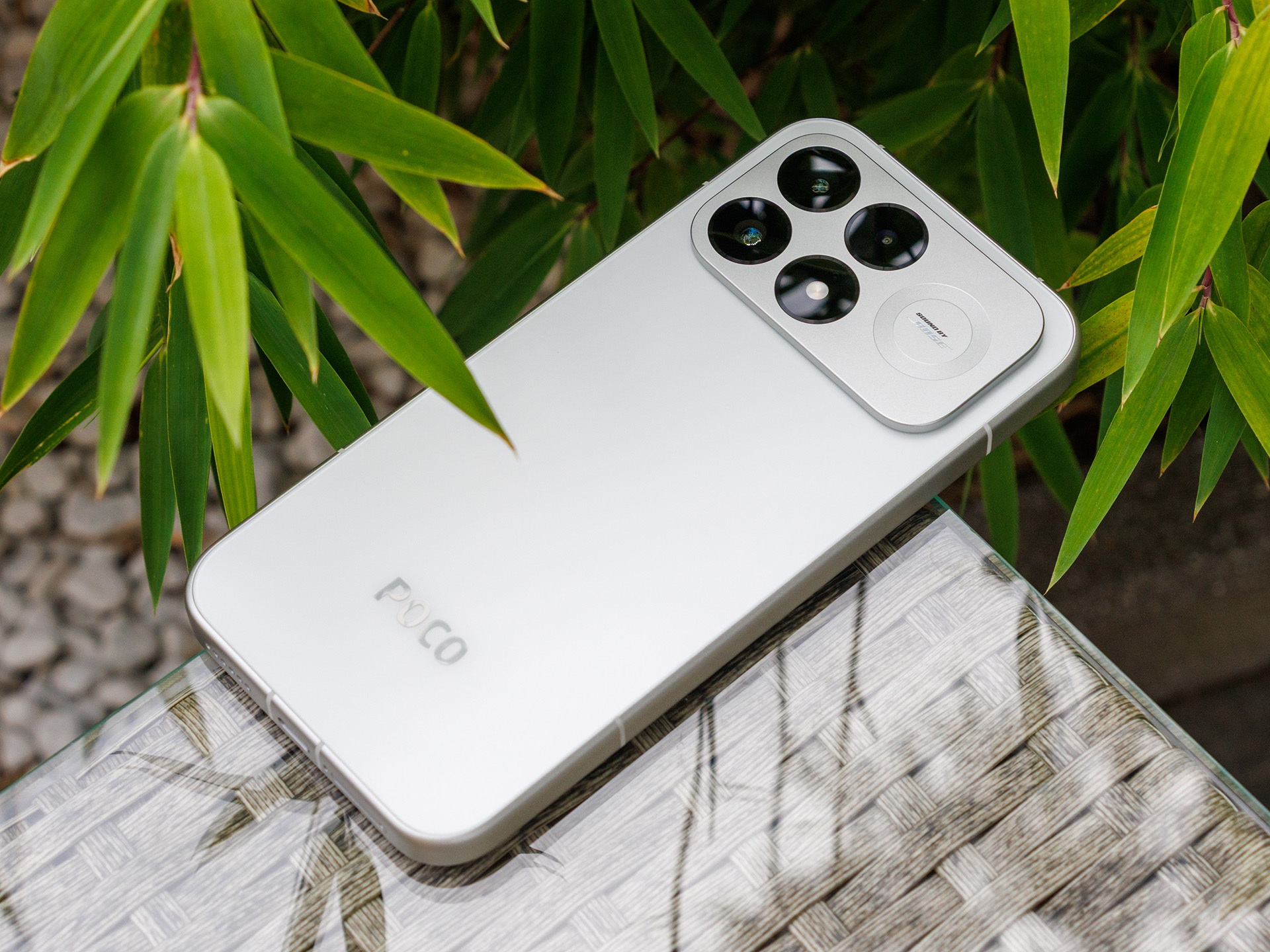
Verdict - Poco F9 Pro
The Poco F9 Pro offers high-level system performance, a bright AMOLED display boasting accurate color reproduction, and a long-lasting battery. In everyday situations, the fast ultrasonic fingerprint sensor, reliable location tracking, and the premium feel of the device’s case are also impressive.
Compared to the Poco F9 Ultra, however, buyers will have to put up with some compromises. Most notably, the significantly lower graphics performance, shorter battery life, and weaker speakers are considerable drawbacks. While the camera captures good detail in daylight, it exhibits noticeable color inaccuracies and struggles in low-light conditions. Furthermore, the device tends to get quite hot under load, and it is limited to USB 2.0 and Wi-Fi 7 (excluding the 6 GHz band).
Given its high MSRP of $699, the Poco F9 Pro is only moderately attractive. However, it becomes a more compelling option at the significantly lower street prices currently on offer—especially for users prioritizing strong everyday performance and who are willing to make compromises regarding the camera and overall feature set.
Pros
Cons
Price and availability
The Poco F9 Pro is available in 12/256 GB (RRP: $699) and 12/512 GB ($769) storage configurations and is already heavily discounted at retailers such as Amazon.
Table of Contents
- Verdict - Poco F9 Pro
- Specifications: Poco F9 Pro
- Case - A smartphone with Gorilla Glas 7i
- Features - Only USB 2.0 on board
- Software - HyperOS and six-year updates
- Communication and GNSS - No 6 GHz WiFi for the Poco F9 Pro
- Telephone functions and voice quality
- Cameras - Good details, but significant color deviations
- Accessories and warranty - Only a 12-month warranty
- Input devices and operation - Poco F9 Pro packs a fast ultrasound sensor
- Display - A bright AMOLED with PWM flickering
- Performance - A slimmed-down V Series in the Poco F9 Pro
- Emissions - The F9 Pro can get very hot
- Battery life - A 6,330 mAh smartphone
- Notebookcheck overall rating
- Possible alternatives compared
With its Poco F9 Pro, Xiaomi is offering a more affordable alternative to the previously reviewed Poco F9 Ultra. Instead of the standard Snapdragon 8 Elite Gen 5, it utilizes a scaled-down V-Series variant. Although Xiaomi has also trimmed back other features, the 6,330 mAh battery promises to deliver long-lasting performance.
Compared to its predecessor, the F8 Pro, the Poco F9 Pro is expected to show improvements, particularly in the areas of power and efficiency. In this review, we examine whether these updates prove effective in everyday use and determine just how significant the gap is between this device and the Ultra model.
Specifications: Poco F9 Pro
Case - A smartphone with Gorilla Glas 7i
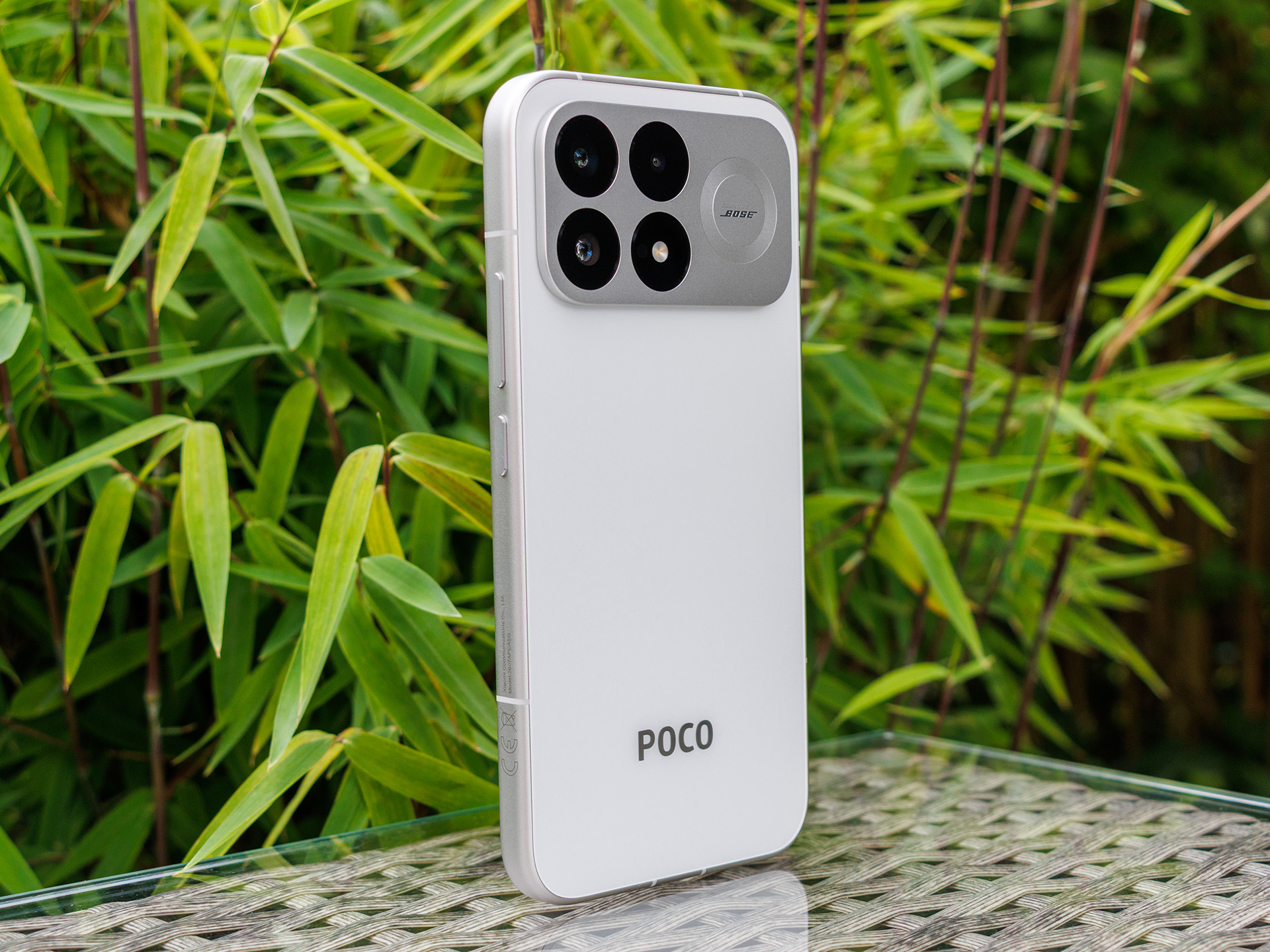
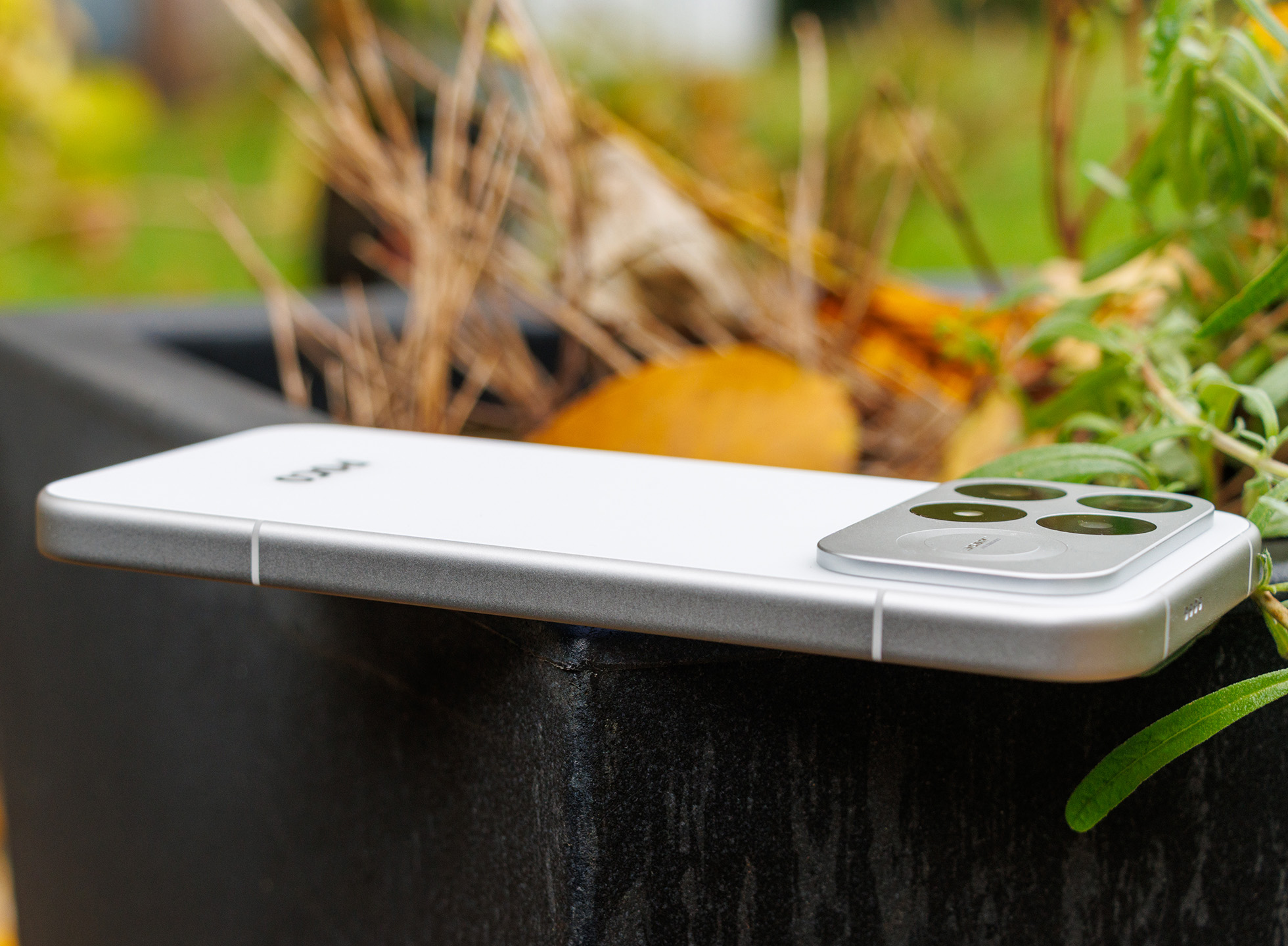
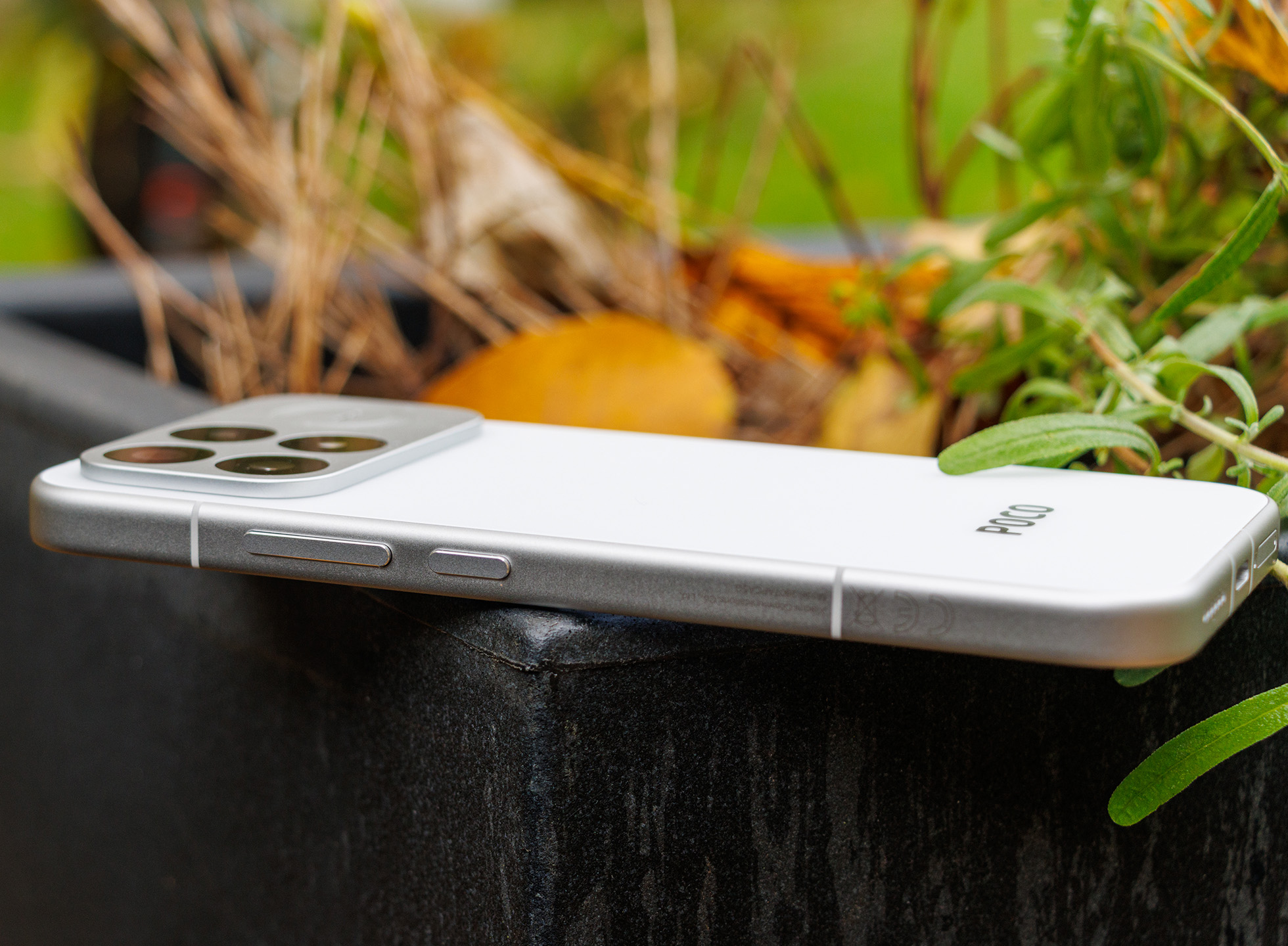
The Poco F9 Pro comes in White, Black, and Aurora Green. Despite Xiaomi stating a thickness of 8.79 mm, our measurements show 8.9 mm, increasing to as much as 11.6 mm when taking the camera bump into consideration.
Although the back of the Poco F9 Pro is made of fiberglass-reinforced plastic, it's still impressive. The matte finish feels premium and is largely resistant to fingerprints. Despite the shift to fiberglass compared to its predecessor, there is little to criticize regarding the device's overall feel, and the build quality is high, featuring tight, uniform gaps. However, the device does creak noticeably when subjected to torsional stress.
The Poco is water- and dust-resistant, possessing an IP68 rating.
Features - Only USB 2.0 on board
The Poco F9 Pro is relatively well equipped, but it still only features a slow USB 2.0 port that doesn't support video output. On top of this, it also lacks a built-in barometer.
Software - HyperOS and six-year updates
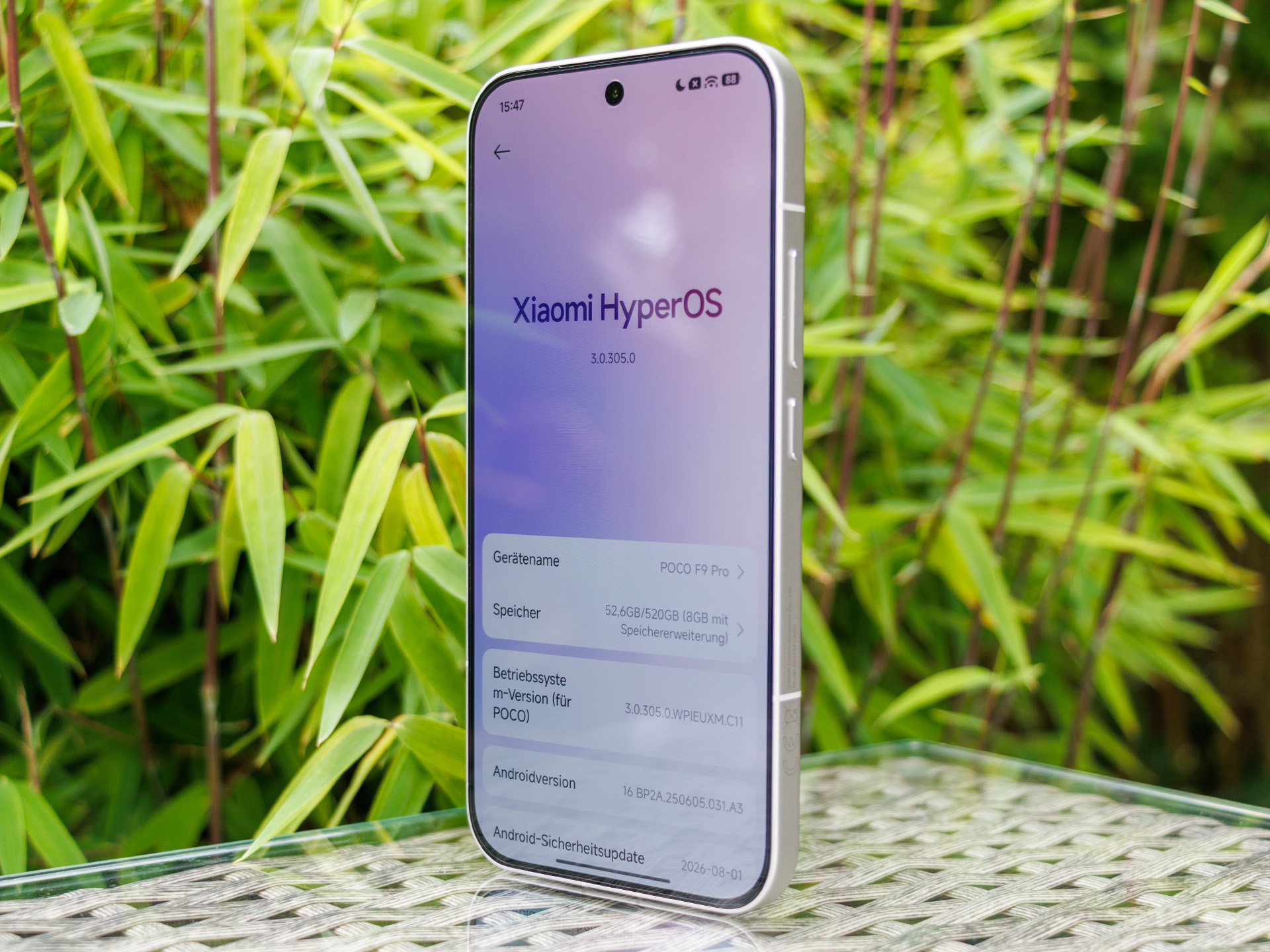
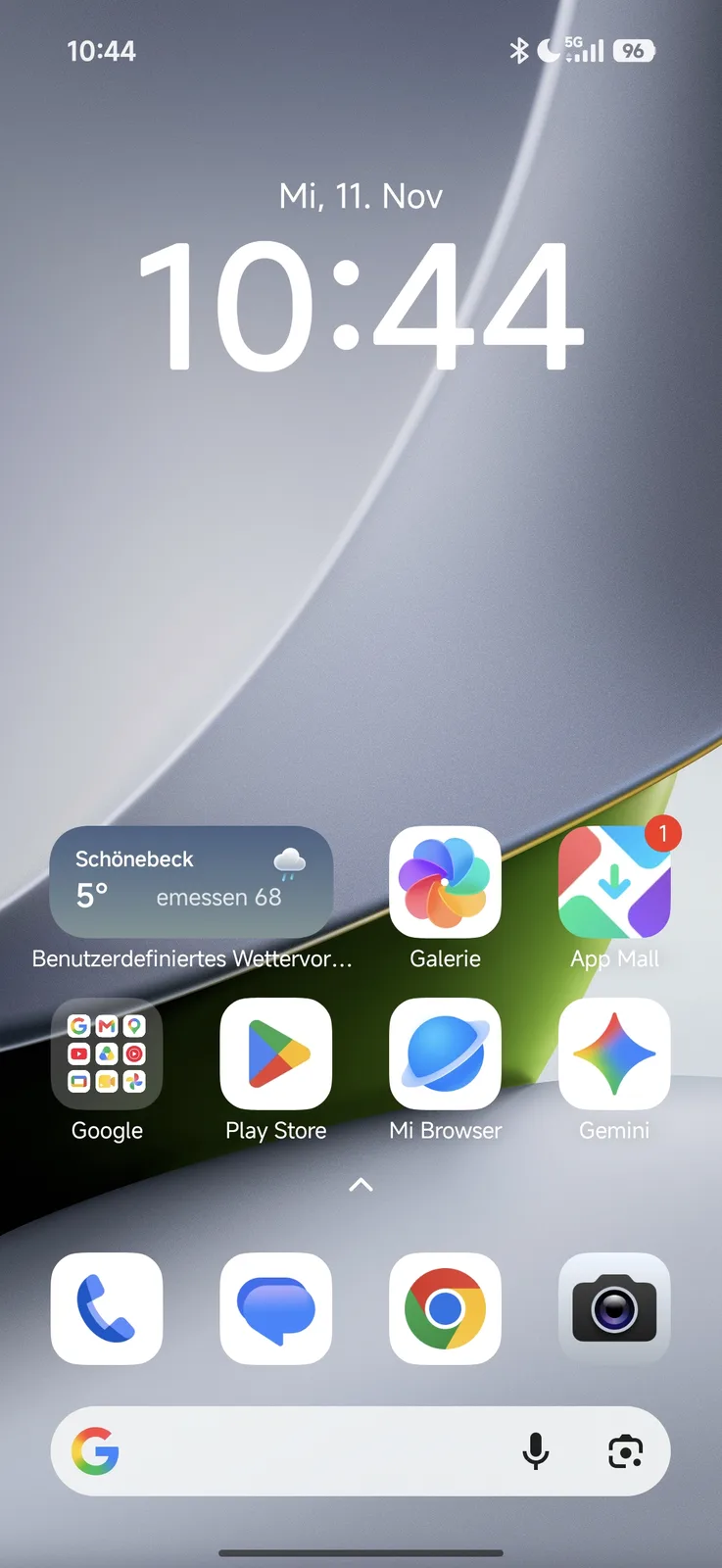
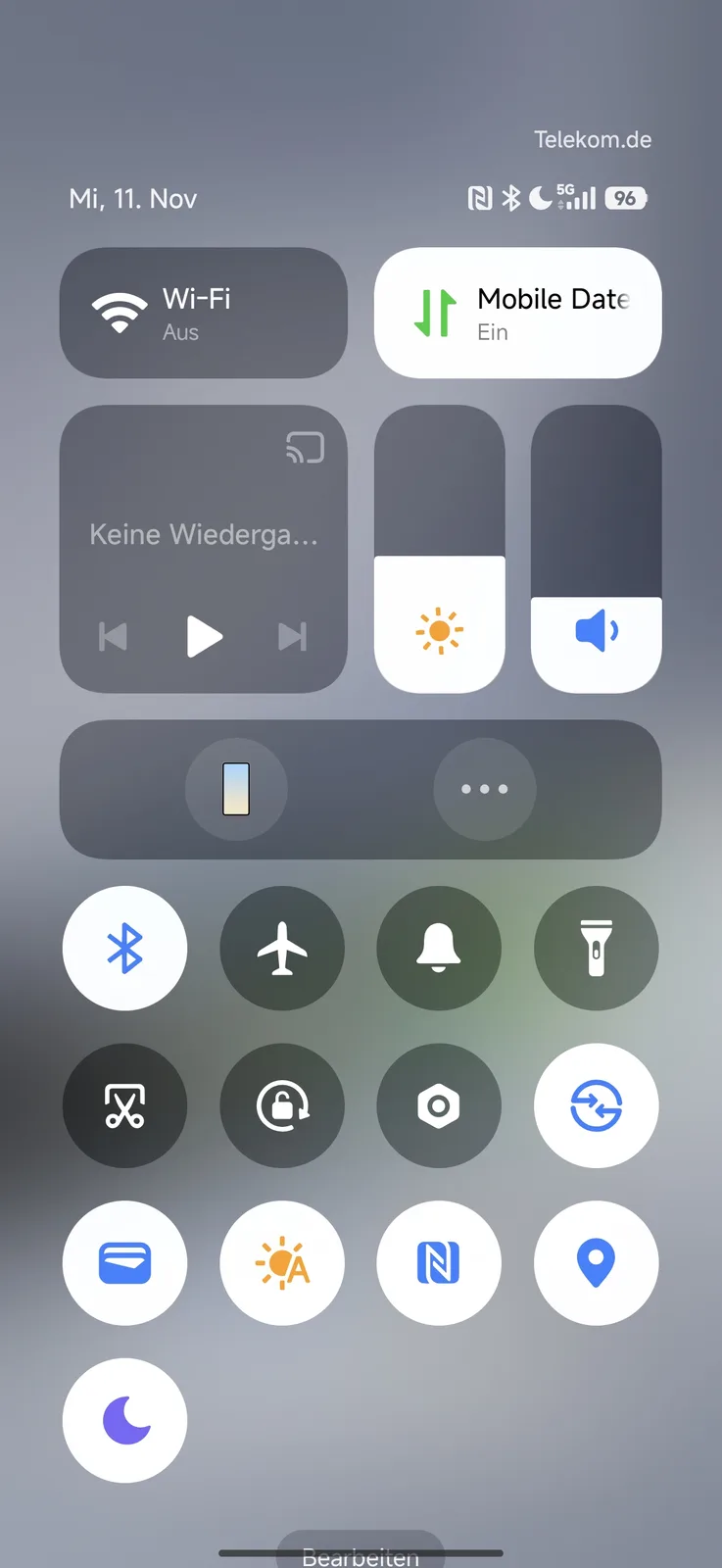
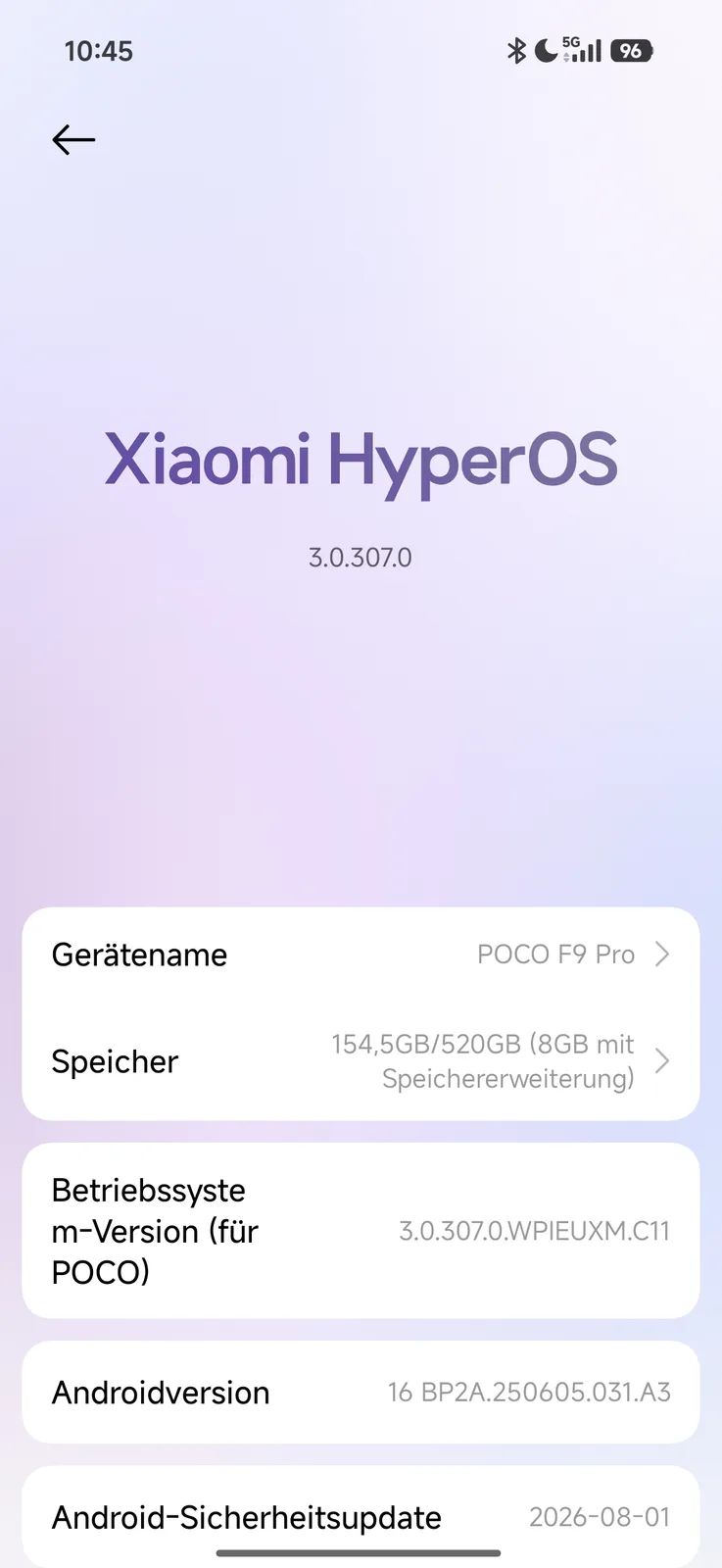
The Poco F9 Pro ships with Android 16 and HyperOS 3.0, and is set to receive four years of version updates, followed by an additional two years of security patches.
Advertising within the system is subtle but visible. Furthermore, Xiaomi pre-installs numerous third-party apps, all of which can be uninstalled.
Sustainability
The packaging mostly consists of cardboard. The smartphone is wrapped in a film that resembles compostable organic waste bags, but whether it is actually biodegradable remains unclear. Additionally, the entire box is shrink-wrapped in plastic.
There is no information regarding recycled materials or the carbon footprint. The smartphone is intended to be part of a self-repair program, but it is not yet listed there.
Communication and GNSS - No 6 GHz WiFi for the Poco F9 Pro
Although the Poco F9 Pro features modern Wi-Fi 7, support for the high-speed 6 GHz band is absent.
The mobile network frequency support is solid, and the Poco phone boasts good reception in a large city.
| Networking | |
| Xiaomi Poco F9 Pro | |
| iperf3 transmit Wi-Fi6/7 RT-BE96U | |
| iperf3 receive Wi-Fi6/7 RT-BE96U | |
| Nothing Phone (4a) Pro | |
| iperf3 transmit AXE11000 6GHz | |
| iperf3 receive AXE11000 6GHz | |
| Motorola Edge 70 Pro | |
| iperf3 transmit Wi-Fi6/7 RT-BE96U | |
| iperf3 receive Wi-Fi6/7 RT-BE96U | |
| Xiaomi 17T Pro | |
| iperf3 transmit Wi-Fi6/7 RT-BE96U | |
| iperf3 receive Wi-Fi6/7 RT-BE96U | |
| Samsung Galaxy S26 FE | |
| iperf3 transmit Wi-Fi6/7 RT-BE96U | |
| iperf3 receive Wi-Fi6/7 RT-BE96U | |
| Google Pixel 10a | |
| iperf3 transmit Wi-Fi6/7 RT-BE96U | |
| iperf3 receive Wi-Fi6/7 RT-BE96U | |
| Average 802.11 a/b/g/n/ac/ax/be | |
| iperf3 transmit AXE11000 6GHz | |
| iperf3 receive AXE11000 6GHz | |
| iperf3 transmit Wi-Fi6/7 RT-BE96U | |
| iperf3 receive Wi-Fi6/7 RT-BE96U | |
| Average of class Smartphone | |
| iperf3 transmit AXE11000 6GHz | |
| iperf3 receive AXE11000 6GHz | |
| iperf3 transmit Wi-Fi6/7 RT-BE96U | |
| iperf3 receive Wi-Fi6/7 RT-BE96U | |
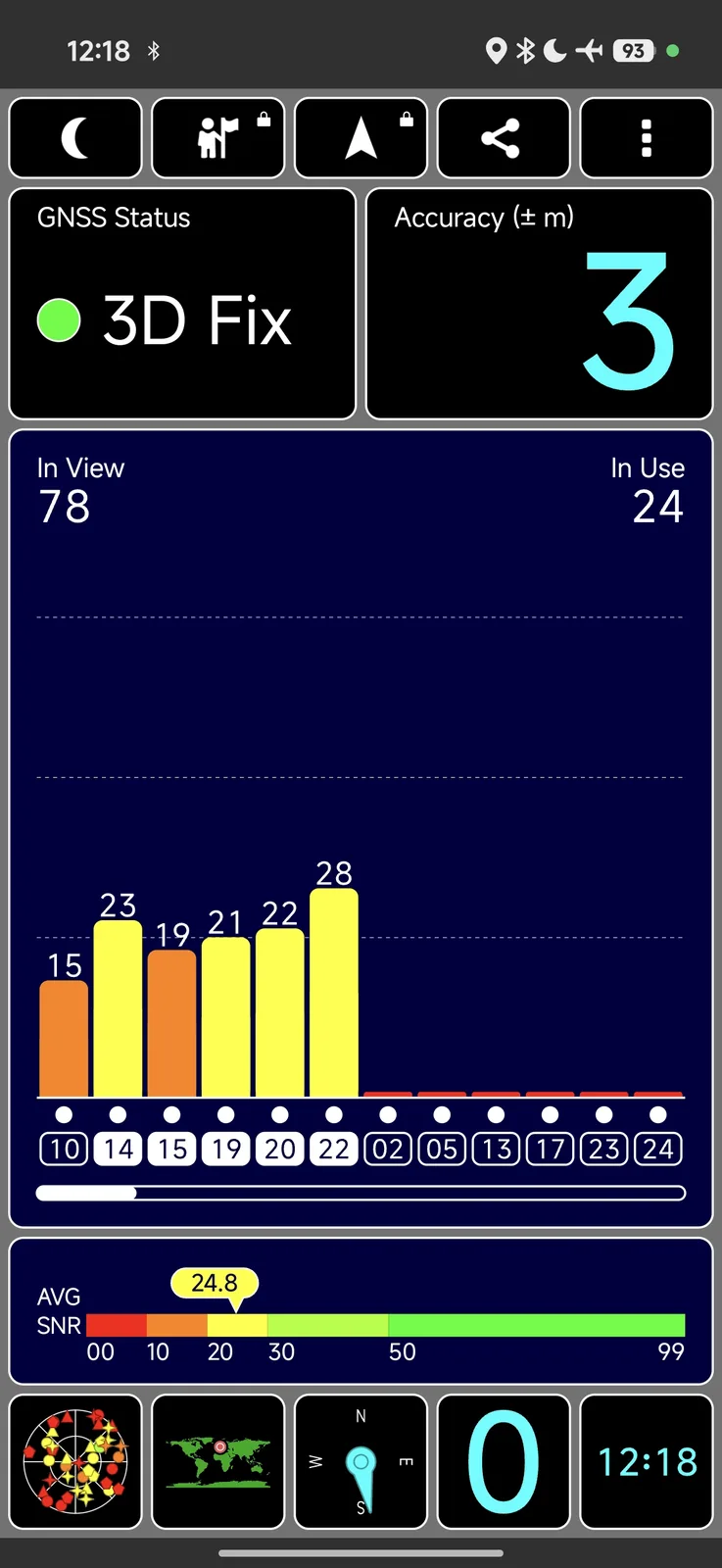
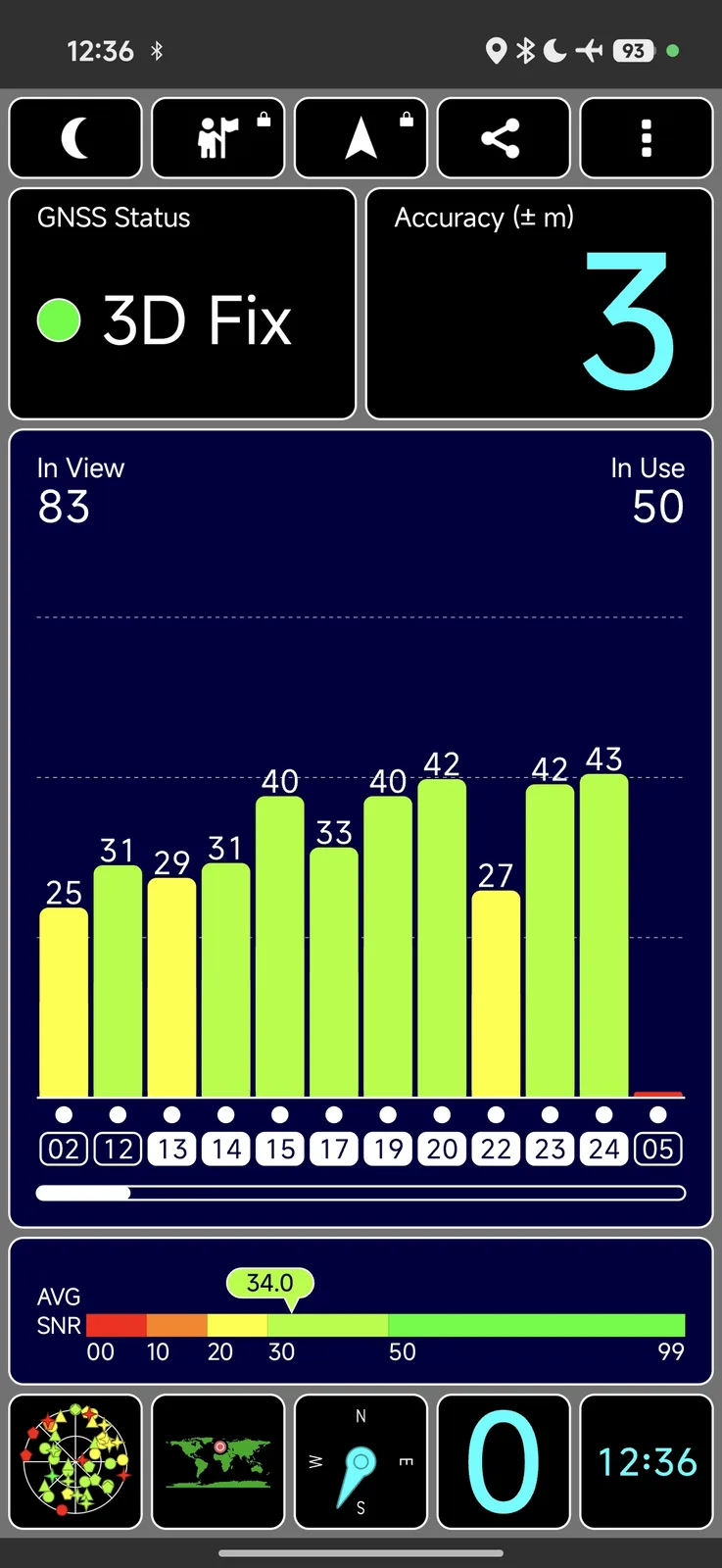
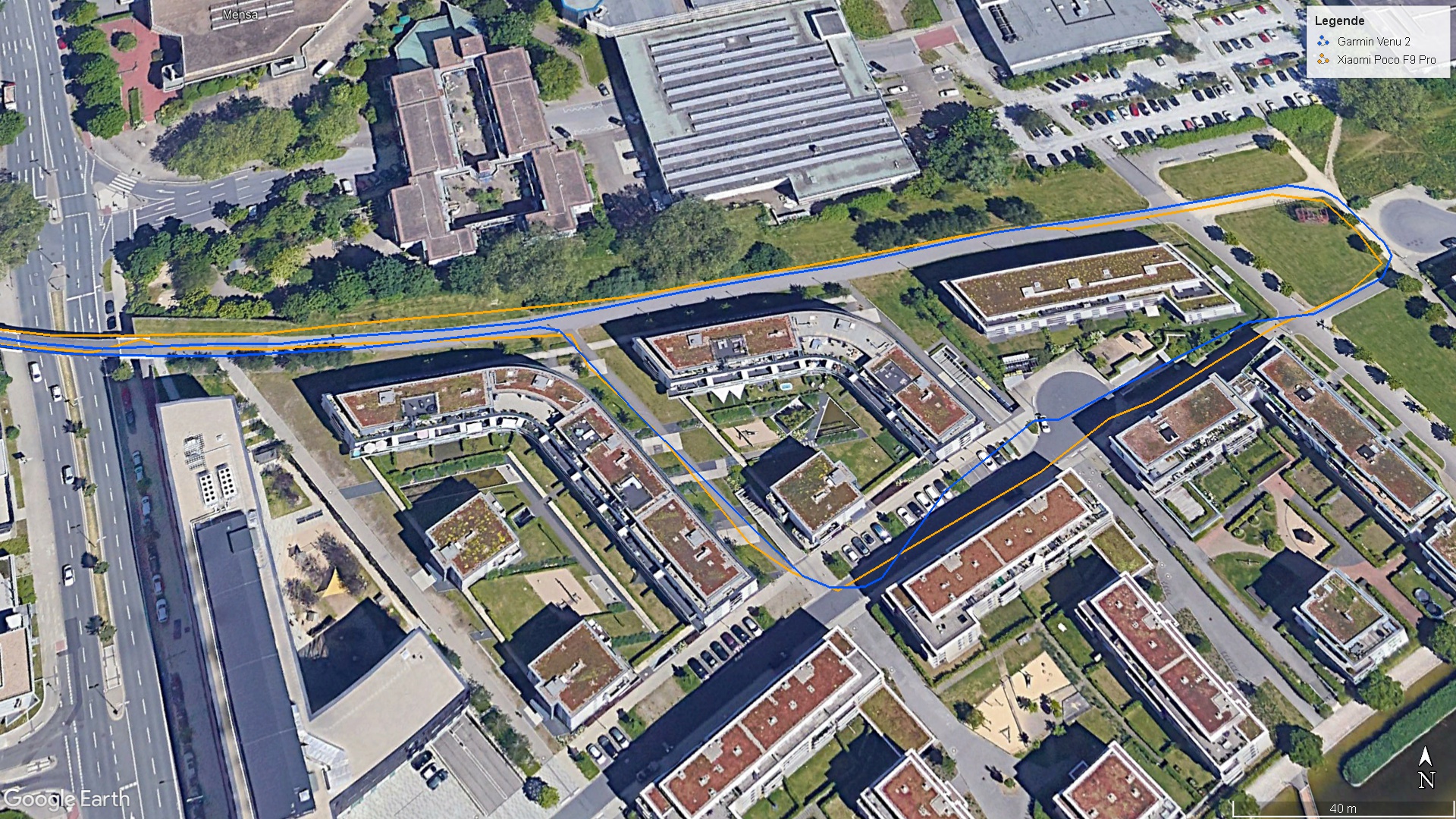
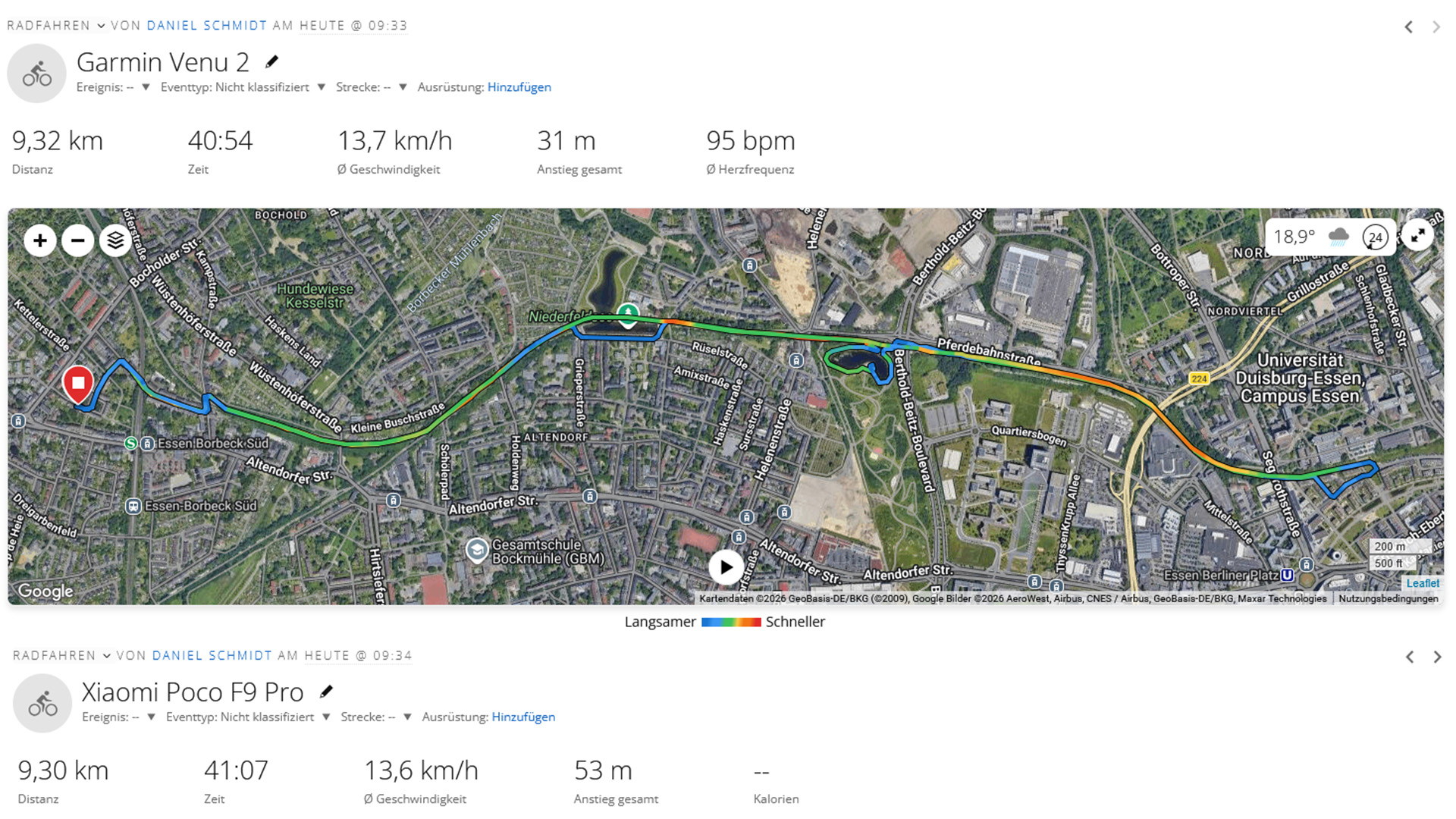
In our tests, the Poco F9 Pro determined its position quickly and accurately, even indoors. During a bicycle ride of approximately 9.3 kilometers, the smartphone tracked the route with a high degree of reliability. The recorded distance—9.30 kilometers—differed by only 20 meters from the reading provided by a Garmin Venu 2 (9.32 km).
Looking a closer look at the details, some minor discrepancies appear, particularly when changing direction or navigating narrower paths. In some instances, the recorded route deviates slightly from the path actually taken.

Telephone functions and voice quality
During phone calls, voices are reproduced naturally. However, the noise cancellation is unreliable, and the person on the other end of the line will occasionally hear loud ambient sounds. When the noise cancellation kicks in more strongly, your own voice can sometimes sound a bit muffled.
Cameras - Good details, but significant color deviations

The Poco F9 Pro's front-facing camera captures detailed selfies, but applies noticeable post-processing to sharpen facial contours and skin texture. This can make the face appear somewhat unnatural. Skin tones lean slightly warm, and the exposure is well-handled.
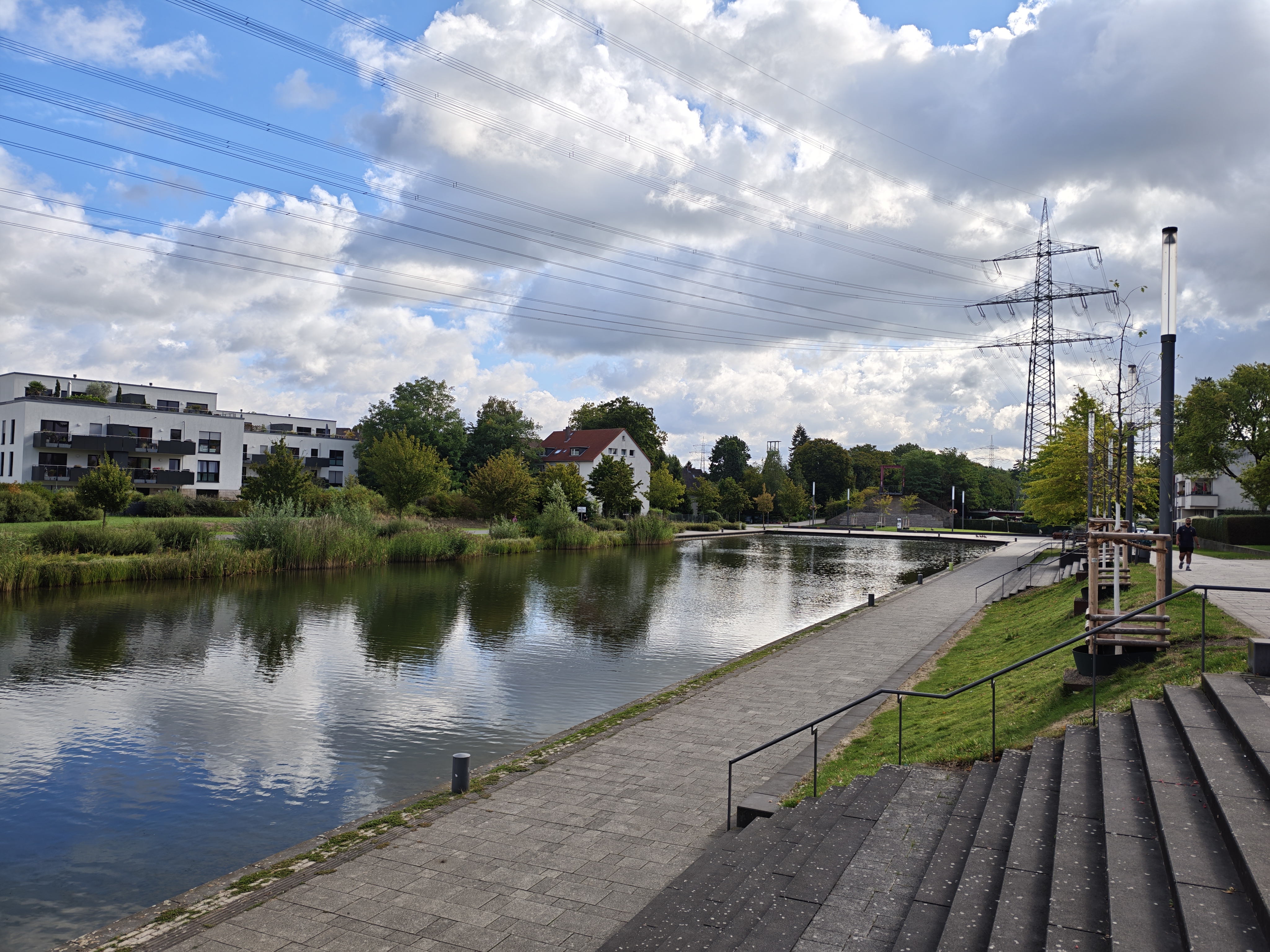
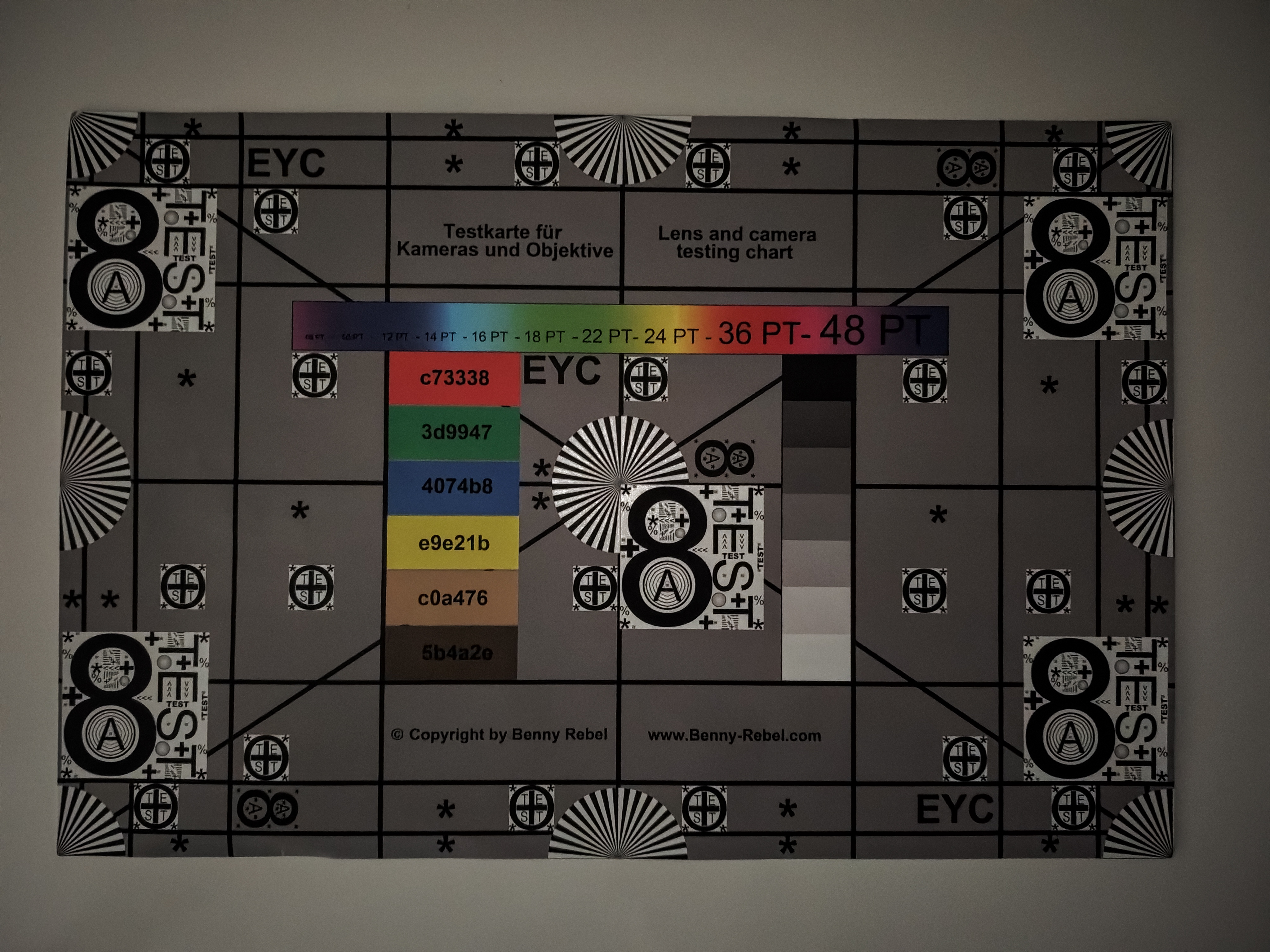
In daylight, the main camera captures detailed images with vibrant colors and a decent dynamic range. Fine textures are well-resolved, though slight sharpening is visible along high-contrast edges. However, color accuracy is poor, and under controlled lighting conditions, our ColorChecker tests show an average DeltaE deviation of 16.86, with some individual color patches reaching as high as 28.99. Green, blue, and gray tones, in particular, deviate significantly from their reference values.
In low-light conditions, the image quality drops noticeably, with dark areas losing detail and fine textures becoming softer.
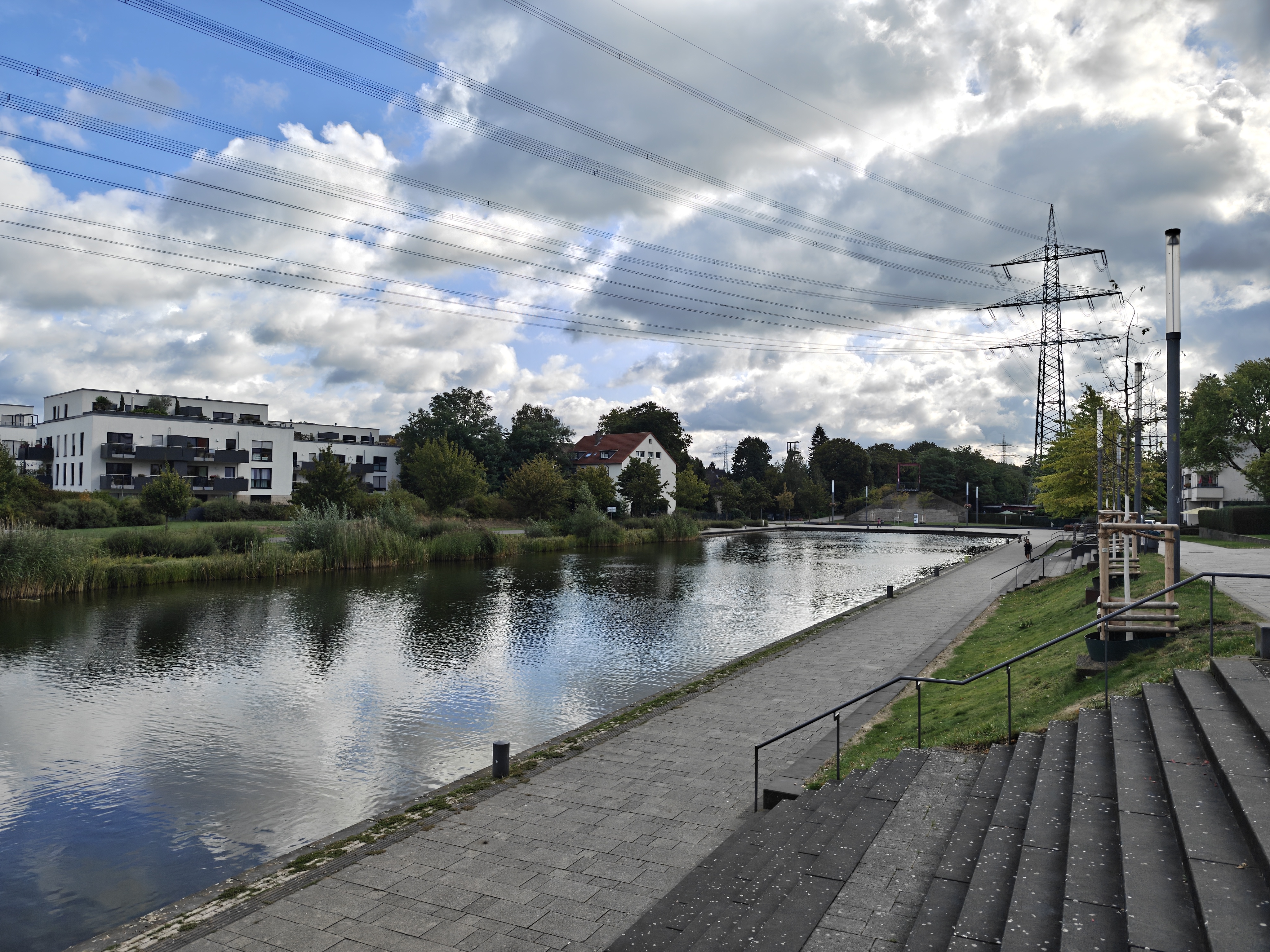
The ultra-wide-angle camera offers a usable dynamic range but captures less detail than the main camera—vegetation, in particular, appears soft, especially toward the edges of the frame. Fine details are also visibly lost when using 5x magnification.
The main camera can record video at up to Ultra HD resolution at 60 fps. The front-facing camera also supports UHD, but only at 30 fps; recording at 60 fps requires reducing the resolution to Full HD.
Image comparison
Choose a scene and navigate within the first image. One click changes the position on touchscreens. One click on the zoomed-in image opens the original in a new window. The first image shows the scaled photograph of the test device.
Main cameraMain cameraUltra-wide angle5x zoomLow light






















Accessories and warranty - Only a 12-month warranty
The Poco F9 Pro comes with a USB cable (Type-A to Type-C), a SIM eject tool, and a matte, translucent protective case.
In Germany, the manufacturer's warranty is limited to 12 months, but this does not affect the retailer's statutory warranty obligations. Additionally, users can opt for the "Xiaomi Care" insurance package, which provides two years of coverage for accidental damage (around $75) or, optionally, theft (around $110).
Input devices and operation - Poco F9 Pro packs a fast ultrasound sensor
The Poco F9 Pro's capacitive touchscreen responds quickly and precisely to touch input, and thanks to "Wet Touch 2.0," it also performs quite well when the user's fingers are wet. An ultrasonic fingerprint sensor is integrated into the display, offering both a high recognition rate and fast operation.
The haptic feedback from the linear vibration motor is crisp, though somewhat weak. Furthermore, the options for adjusting these settings are limited. The physical buttons are easy to reach, possess a short travel distance, and function reliably.
Display - A bright AMOLED with PWM flickering
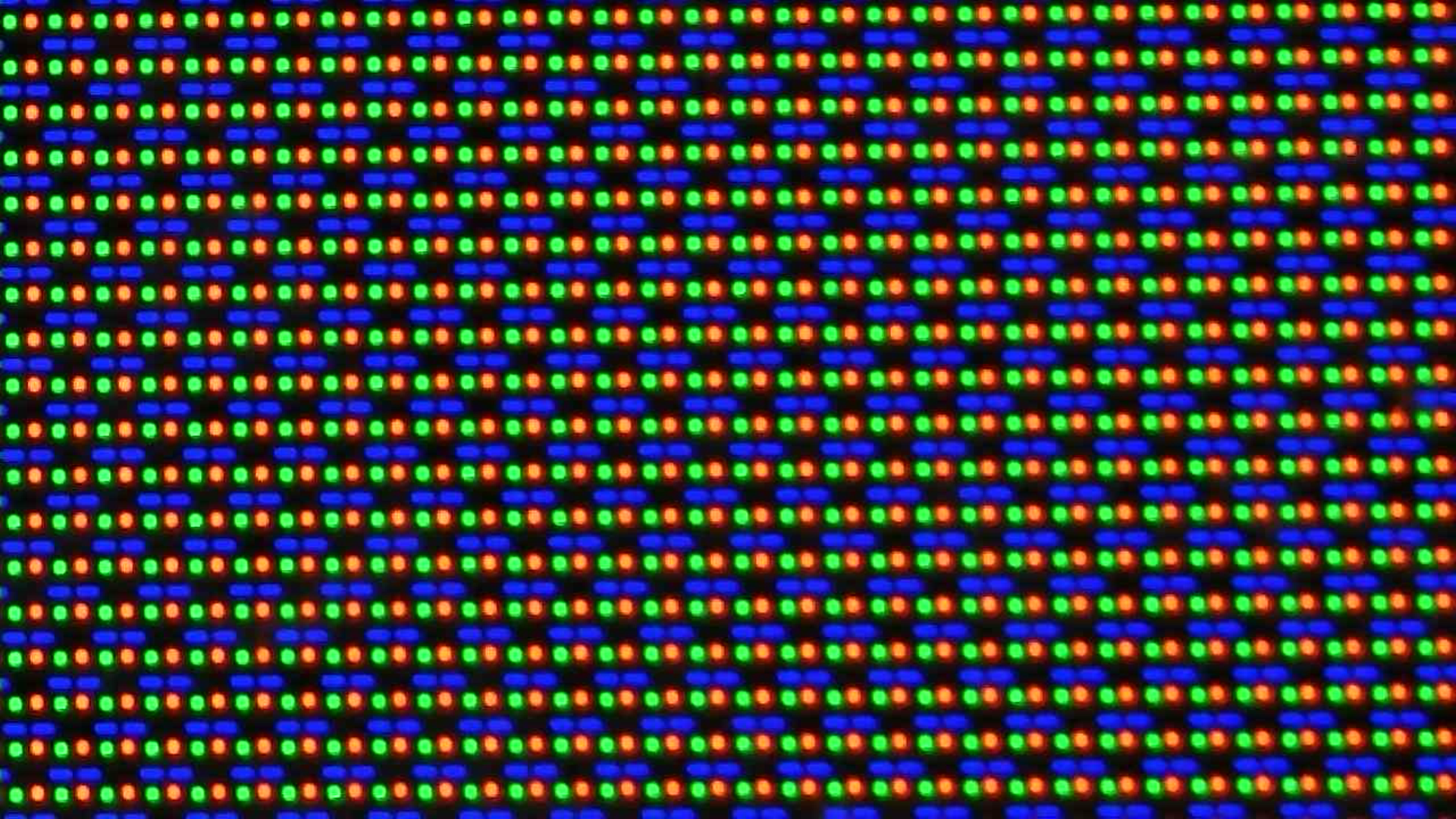
When displaying a full-screen white image, the Poco F9 Pro’s AMOLED display hits a brightness level of 1,200 cd/m² at the center, and with the ambient light sensor disabled, it can reach up to 851 cd/m². For a smaller white area (APL18), we measured 2,515 cd/m². Poco specifies a peak brightness of 10,000 cd/m²—a figure that applies only to HDR content and exceeds the limits of our measurement equipment, which caps out at 8,500 cd/m² (anything beyond that triggers an error message).
For brightness control, the F9 Pro utilizes DC dimming; however, our measurements at minimum brightness levels indicate that the panel behaves as if it were using high-frequency PWM dimming.
| |||||||||||||||||||||||||
Brightness Distribution: 97 %
Center on Battery: 1200 cd/m²
Contrast: ∞:1 (Black: 0 cd/m²)
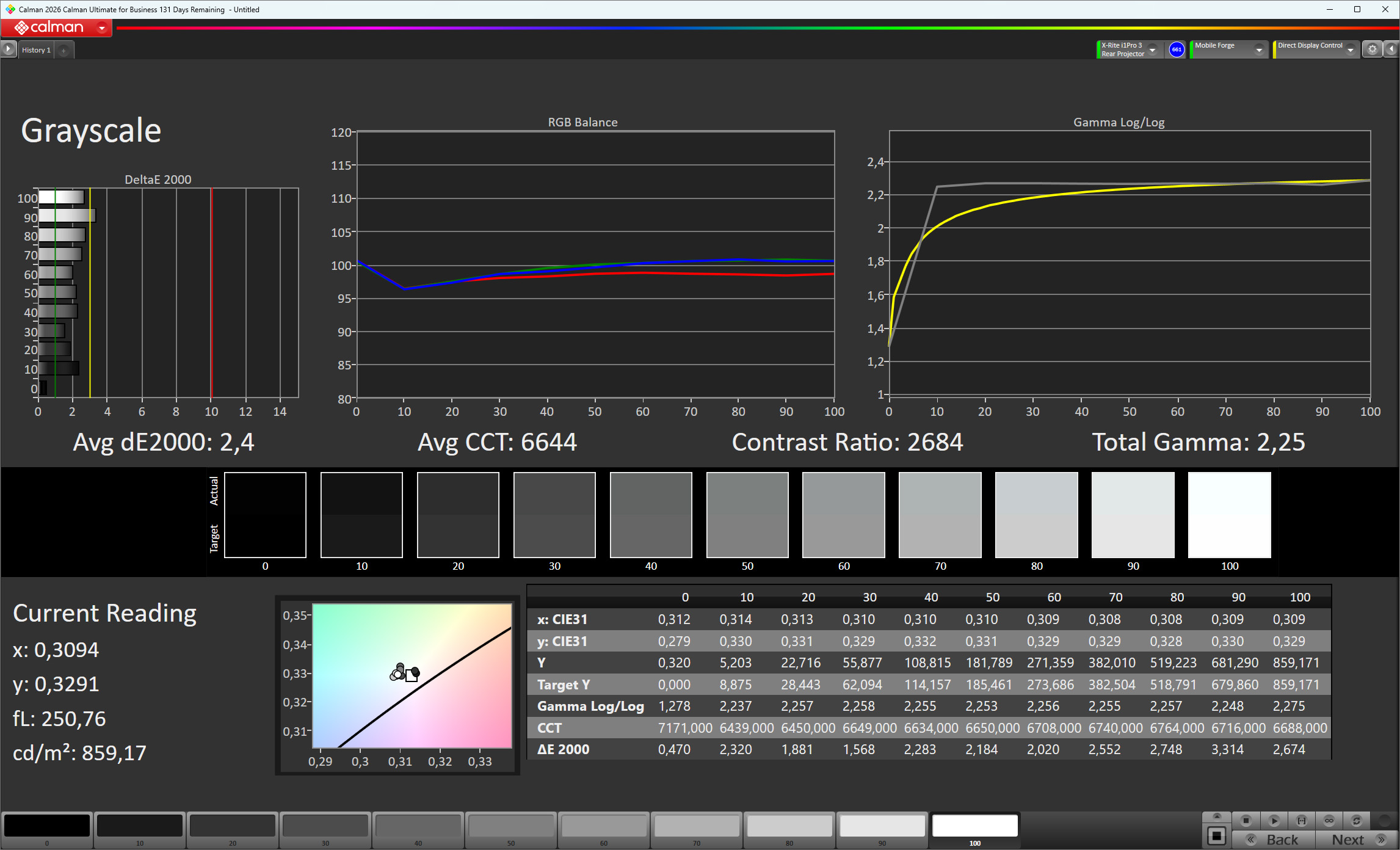
ΔE ColorChecker Calman: 1.4 | ∀{0.5-29.43 Ø4.68}
ΔE Greyscale Calman: 2.4 | ∀{0.09-98 Ø4.93}
100% sRGB (Calman 2D)
Gamma: 2.25
CCT: 6644 K
| Xiaomi Poco F9 Pro AMOLED, 2510x1156, 6.6" | Nothing Phone (4a) Pro AMOLED, 2800x1260, 6.8" | Motorola Edge 70 Pro AMOLED, 2772x1272, 6.8" | Xiaomi 17T Pro AMOLED, 2772x1280, 6.8" | Samsung Galaxy S26 FE AMOLED, 2340x1080, 6.7" | Google Pixel 10a pOLED, 2424x1080, 6.3" | |
|---|---|---|---|---|---|---|
| Display | -60% | -15% | -11% | -51% | -23% | |
| APL18 Peak Brightness (cd/m²) | 2515 | 1596 -37% | 3326 32% | 3507 39% | 1932 -23% | 3050 21% |
| HDR Peak Brightness (cd/m²) | 8500 | 1564 -82% | 3244 -62% | 3295 -61% | 1853 -78% | 2925 -66% |
| Response Times | 8% | -50% | -25% | -37% | -40% | |
| Response Time Grey 50% / Grey 80% * (ms) | 0.71 ? | 0.64 ? 10% | 1.6 ? -125% | 1.13 ? -59% | 1.3 ? -83% | 1.42 ? -100% |
| Response Time Black / White * (ms) | 0.87 ? | 0.84 ? 3% | 1 ? -15% | 1.01 ? -16% | 1.02 ? -17% | 1.07 ? -23% |
| PWM Frequency (Hz) | 120 | 90 | 144 | 120 | 240 | 240 |
| PWM Amplitude * (%) | 15.27 | 13.58 11% | 17 -11% | 15.46 -1% | 16.76 -10% | 14.71 4% |
| Screen | -4% | 34% | 3% | -8% | 37% | |
| Brightness middle (cd/m²) | 1200 | 1604 34% | 1684 40% | 1068 -11% | 1183 -1% | 2205 84% |
| Brightness (cd/m²) | 1193 | 1585 33% | 1626 36% | 1060 -11% | 1179 -1% | |
| Brightness Distribution (%) | 97 | 95 -2% | 94 -3% | 97 0% | 96 -1% | |
| Black Level * (cd/m²) | ||||||
| Colorchecker dE 2000 * | 1.4 | 1.9 -36% | 0.88 37% | 1.3 7% | 2.3 -64% | 1.4 -0% |
| Colorchecker dE 2000 max. * | 3.3 | 4.3 -30% | 1.89 43% | 2.5 24% | 3.2 3% | 2.3 30% |
| Greyscale dE 2000 * | 2.4 | 2.9 -21% | 1.2 50% | 2.2 8% | 2 17% | 1.6 33% |
| Gamma | 2.25 98% | 2.27 97% | 2.145 103% | 2.26 97% | 2.03 108% | 2.23 99% |
| CCT | 6644 98% | 7083 92% | 6469 100% | 6875 95% | 6520 100% | 6715 97% |
| Total Average (Program / Settings) | -19% /
-11% | -10% /
2% | -11% /
-7% | -32% /
-23% | -9% /
-2% |
* ... smaller is better
Screen Flickering / PWM (Pulse-Width Modulation)
| Screen flickering / PWM detected | 120 Hz Amplitude: 15.27 % Secondary Frequency: 4166 Hz | 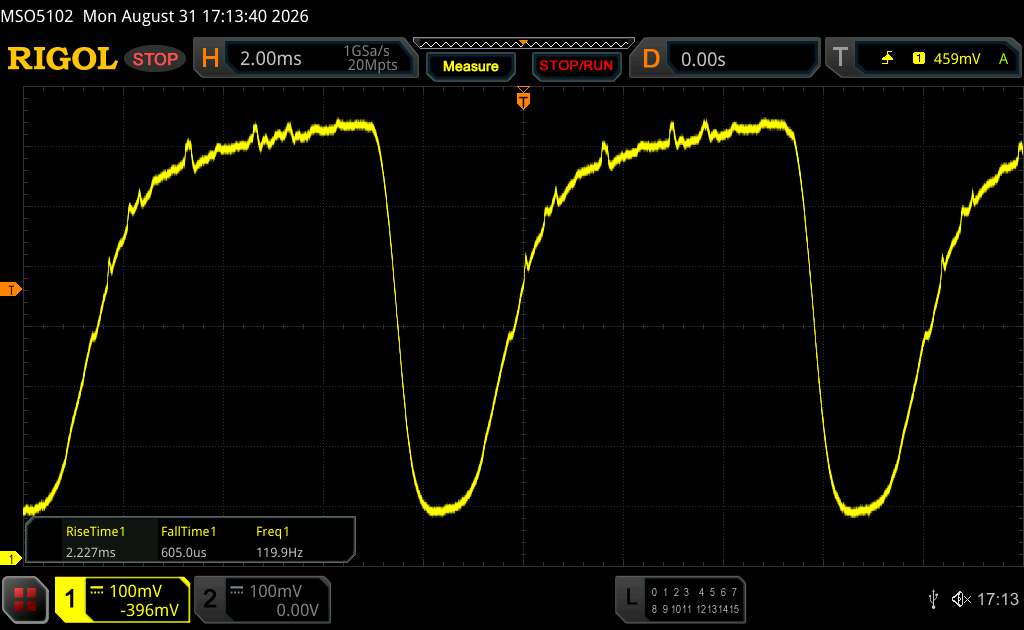 | |
The display backlight flickers at 120 Hz (worst case, e.g., utilizing PWM) . The frequency of 120 Hz is very low, so the flickering may cause eyestrain and headaches after extended use. In comparison: 52 % of all tested devices do not use PWM to dim the display. If PWM was detected, an average of 7544 (minimum: 5 - maximum: 343500) Hz was measured. | |||
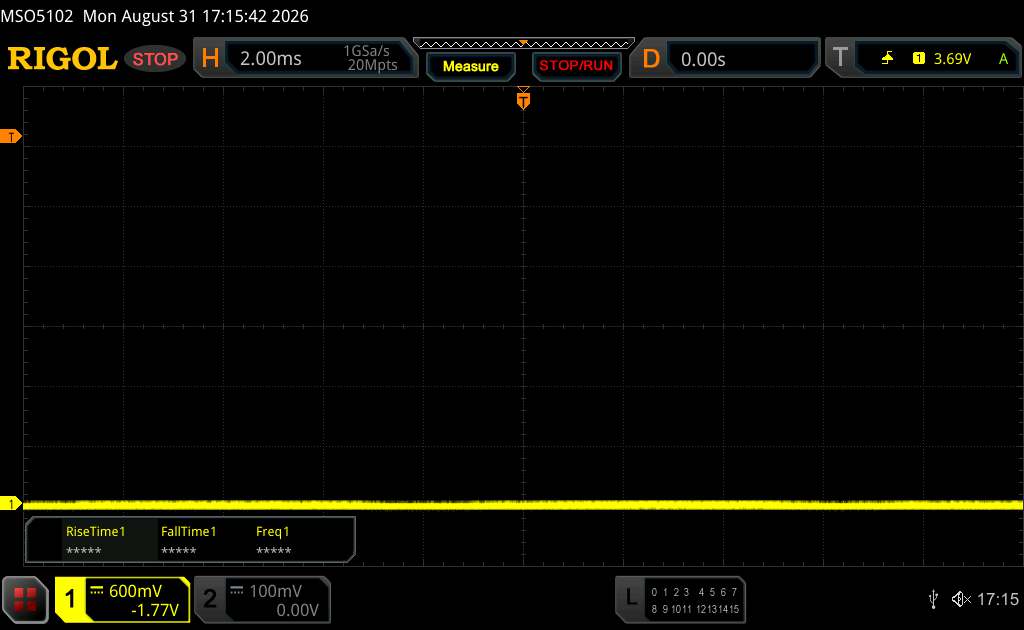
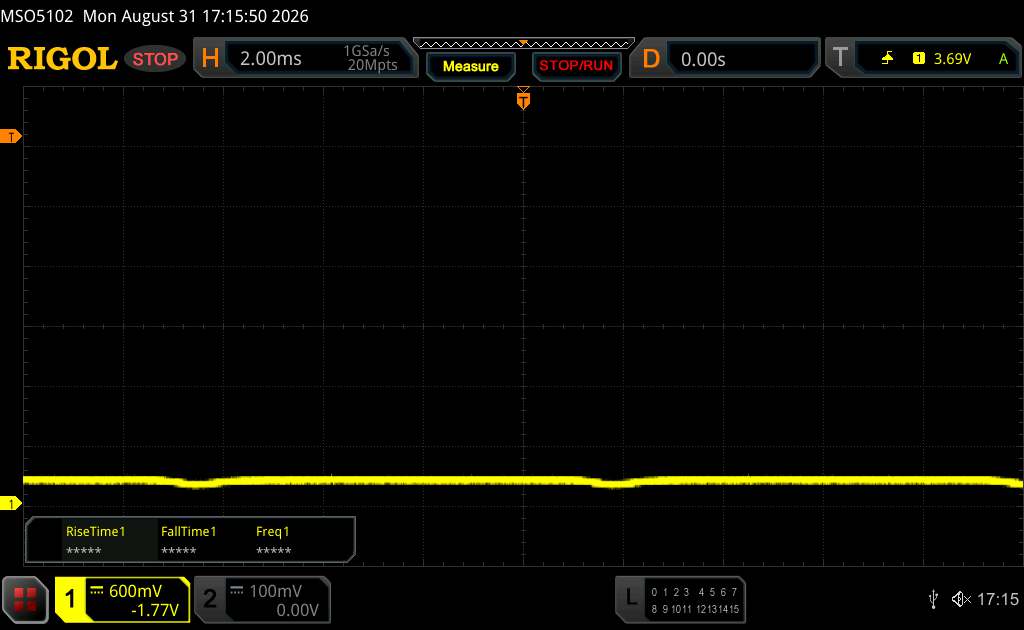
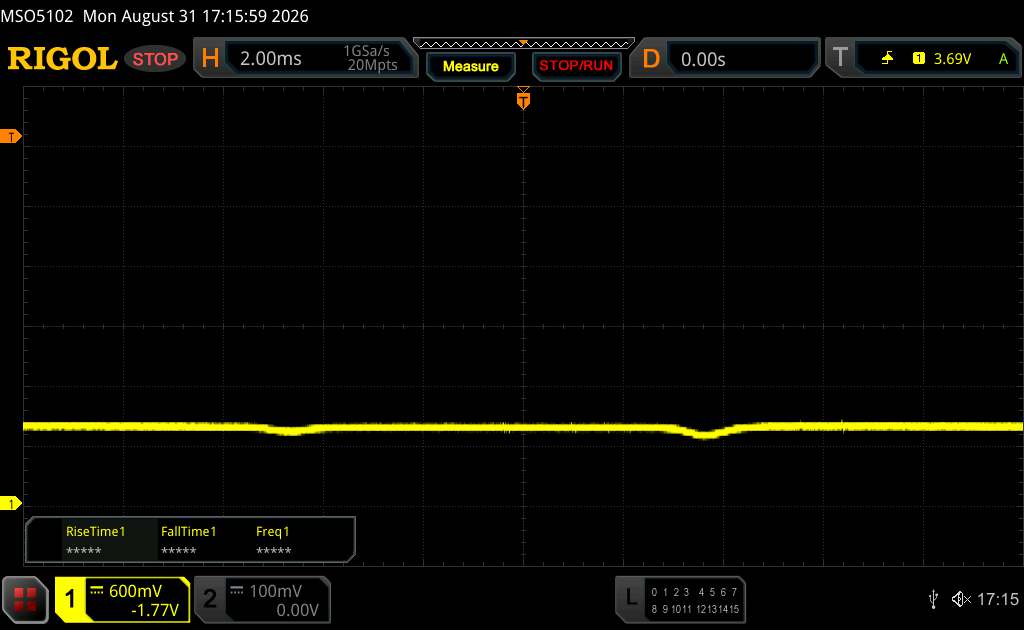
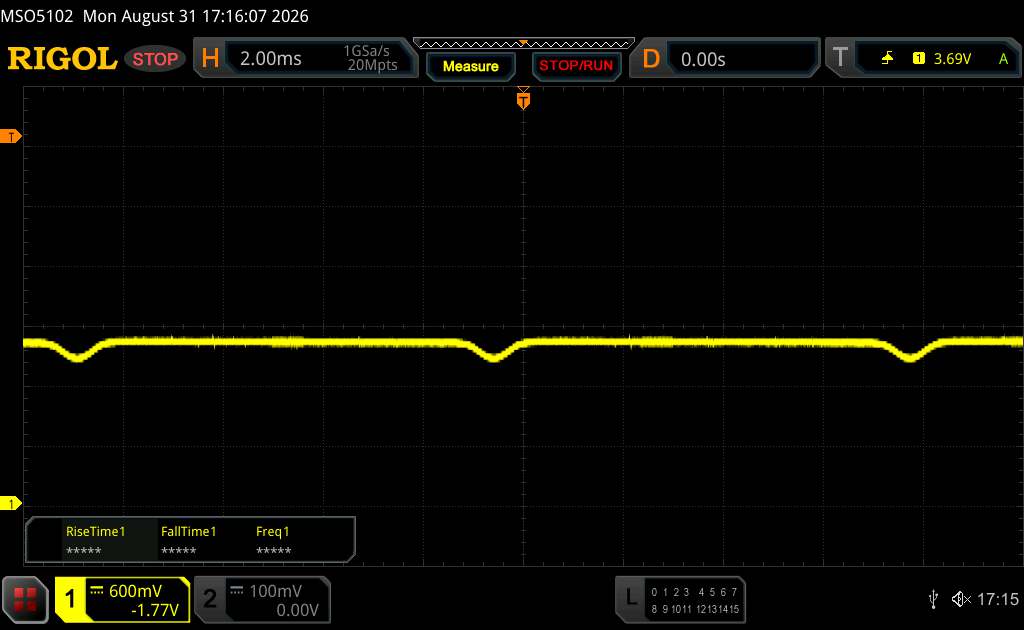
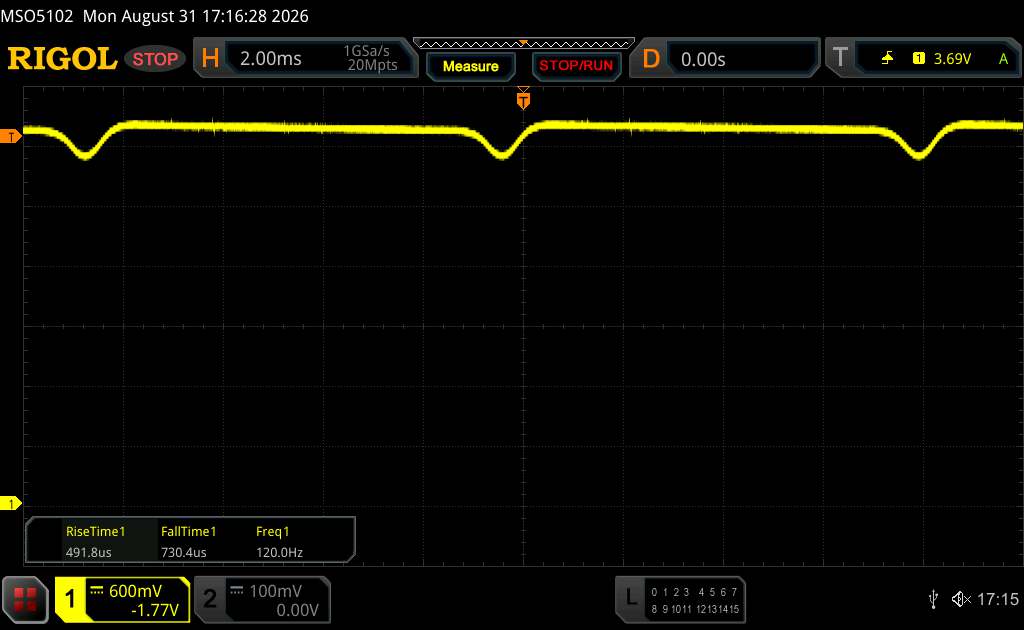
A series of measurements with a fixed zoom level and various brightness settings (Although the amplitude waveform appears flat at minimum brightness, this is due to the scaling. An enlarged version of the amplitude at minimum brightness is shown in the information box.)
Measurements taken with Calman show that color reproduction is precise, provided the Original Pro color scheme and Warm color temperature are selected; otherwise, the white balance tends toward the cooler side. We recorded average DeltaE deviations of 1.4 for the ColorChecker and 2.4 for grayscale levels.


Display Response Times
| ↔ Response Time Black to White | ||
|---|---|---|
| 0.87 ms ... rise ↗ and fall ↘ combined | ↗ 0.503 ms rise | 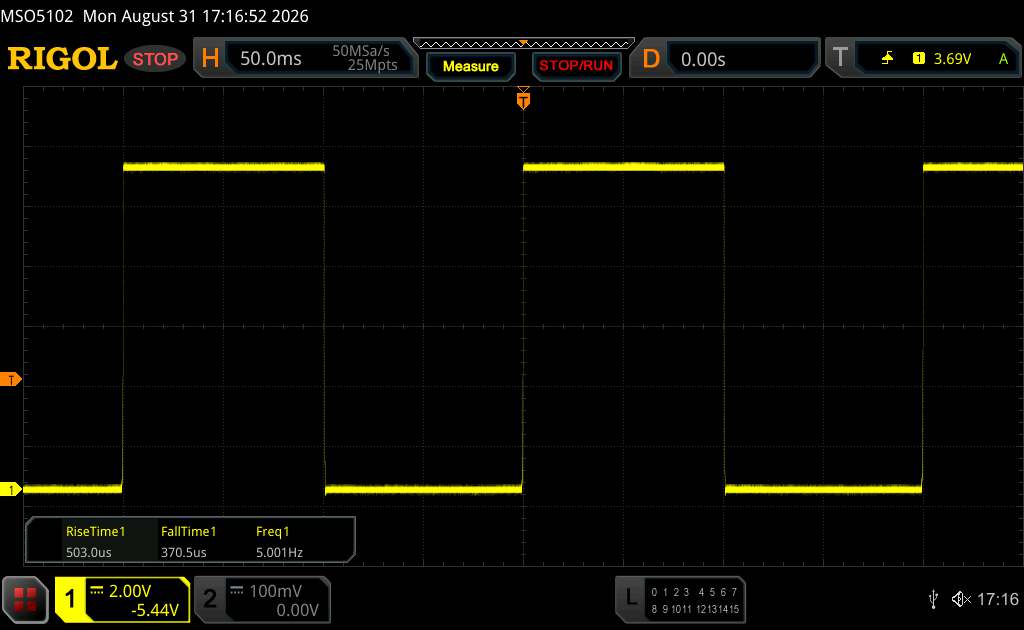 |
| ↘ 0.3705 ms fall | ||
| The screen shows very fast response rates in our tests and should be very well suited for fast-paced gaming. In comparison, all tested devices range from 0.1 (minimum) to 240 (maximum) ms. » 3 % of all devices are better. This means that the measured response time is better than the average of all tested devices (19.6 ms). | ||
| ↔ Response Time 50% Grey to 80% Grey | ||
| 0.71 ms ... rise ↗ and fall ↘ combined | ↗ 0.393 ms rise | 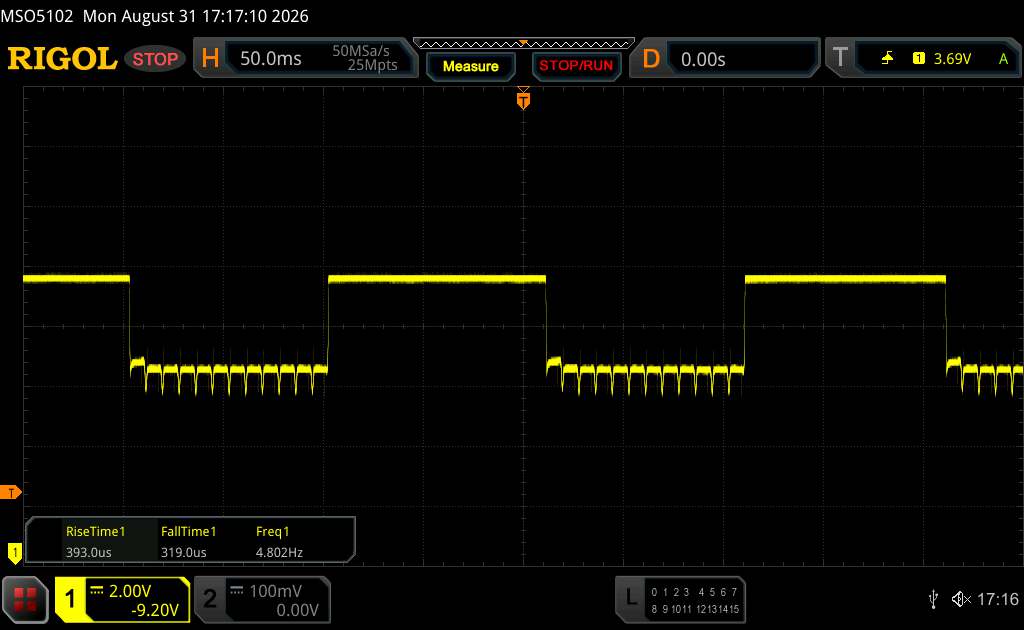 |
| ↘ 0.319 ms fall | ||
| The screen shows very fast response rates in our tests and should be very well suited for fast-paced gaming. In comparison, all tested devices range from 0.13 (minimum) to 636 (maximum) ms. » 3 % of all devices are better. This means that the measured response time is better than the average of all tested devices (30.6 ms). | ||
Outdoors, the Poco F9 Pro is relatively usable in most lighting conditions. Only in intense sunlight did we occasionally yearn for slightly higher display brightness.
Viewing angle stability is good even at wide angles; the brightness simply decreases slightly, and a subtle greenish tint becomes apparent.

Performance - A slimmed-down V Series in the Poco F9 Pro
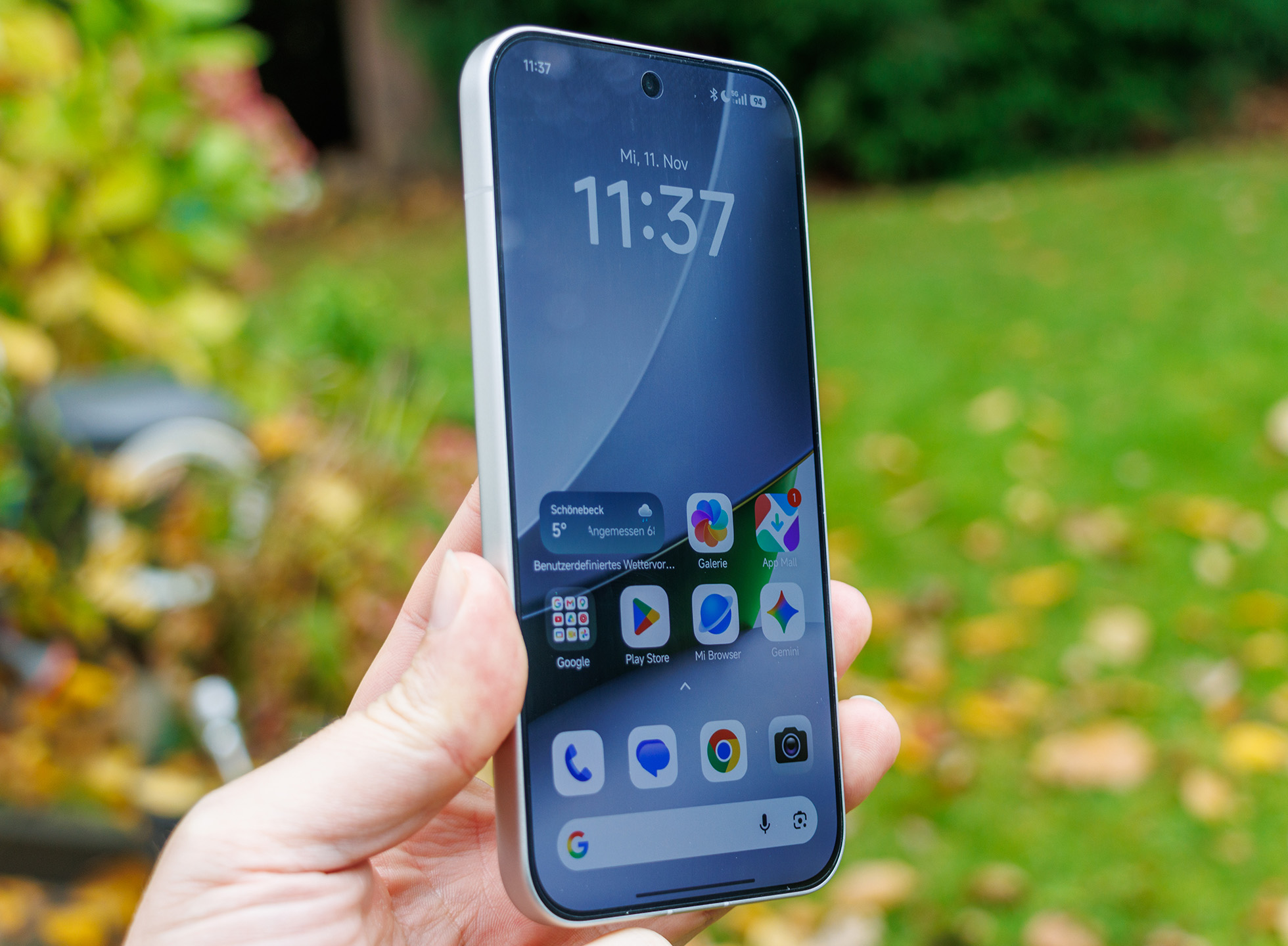
The Snapdragon 8 Elite Gen 5 V Series used in the Poco F9 Pro is a scaled-down version of the conventional Snapdragon 8 Elite Gen 5, which packs the same CPU and AI performance.
In everyday situations, this translates to high performance and smooth multitasking.
| UL Procyon AI Inference for Android - Overall Score NNAPI | |
| Average of class Smartphone (2895 - 66164, n=94, last 2 years) | |
| Xiaomi Poco F9 Ultra | |
| Xiaomi Poco F9 Pro | |
| Average Qualcomm Snapdragon 8 Elite Gen 5 V Series (n=1) | |
| Xiaomi 17T Pro | |
| AI Benchmark - Score V6 | |
| Xiaomi Poco F9 Ultra | |
| Xiaomi Poco F9 Pro | |
| Average Qualcomm Snapdragon 8 Elite Gen 5 V Series (n=1) | |
| Average of class Smartphone (55.6 - 22780, n=73, last 2 years) | |
Nominally, the Adreno 840 is also utilized in the Poco F9 Pro. This is where the major difference in the V series becomes apparent, since it consists of only two slices instead of three, and, as expected, performance is one-third lower.
GFXBench (DX / GLBenchmark) 2.7: T-Rex Onscreen | 1920x1080 T-Rex Offscreen
GFXBench 3.0: on screen Manhattan Onscreen OGL | 1920x1080 1080p Manhattan Offscreen
GFXBench 3.1: on screen Manhattan ES 3.1 Onscreen | 1920x1080 Manhattan ES 3.1 Offscreen
GFXBench: on screen Car Chase Onscreen | 1920x1080 Car Chase Offscreen | on screen Aztec Ruins High Tier Onscreen | 2560x1440 Aztec Ruins High Tier Offscreen | on screen Aztec Ruins Normal Tier Onscreen | 1920x1080 Aztec Ruins Normal Tier Offscreen | 3840x2160 4K Aztec Ruins High Tier Offscreen
| 3DMark / Wild Life Extreme Unlimited | |
| Xiaomi Poco F9 Ultra | |
| Xiaomi 17T Pro | |
| Xiaomi Poco F9 Pro | |
| Google Pixel 10a | |
| Nothing Phone (4a) Pro | |
| 3DMark / Wild Life Extreme | |
| Xiaomi Poco F9 Ultra (Press-Version) | |
| Xiaomi 17T Pro | |
| Samsung Galaxy S26 FE (Play-Store-Version) | |
| Samsung Galaxy S26 FE (Press-Version) | |
| Xiaomi Poco F9 Pro (Press-Version) | |
| Google Pixel 10a | |
| Nothing Phone (4a) Pro | |
| 3DMark / Wild Life Unlimited Score | |
| Xiaomi Poco F9 Ultra | |
| Xiaomi 17T Pro | |
| Xiaomi Poco F9 Pro | |
| Google Pixel 10a | |
| Nothing Phone (4a) Pro | |
| 3DMark / Solar Bay Score | |
| Xiaomi 17T Pro | |
| Xiaomi Poco F9 Ultra | |
| Xiaomi Poco F9 Pro | |
| 3DMark / Solar Bay Unlimited Score | |
| Xiaomi 17T Pro | |
| Xiaomi Poco F9 Ultra | |
| Xiaomi Poco F9 Pro | |
| 3DMark / Solar Bay Extreme Score | |
| Xiaomi 17T Pro | |
| Xiaomi Poco F9 Ultra | |
| Xiaomi Poco F9 Pro | |
| 3DMark / Solar Bay Extreme Unlimited Score | |
| Xiaomi Poco F9 Ultra | |
| Xiaomi 17T Pro | |
| Xiaomi Poco F9 Pro | |
| 3DMark / Steel Nomad Light Unlimited Score | |
| Xiaomi Poco F9 Ultra | |
| Xiaomi 17T Pro | |
| Xiaomi Poco F9 Pro | |
| Google Pixel 10a | |
| Nothing Phone (4a) Pro | |
| 3DMark / Steel Nomad Light Score | |
| Xiaomi Poco F9 Ultra | |
| Xiaomi 17T Pro | |
| Xiaomi Poco F9 Pro | |
| Google Pixel 10a | |
| Nothing Phone (4a) Pro | |
| GFXBench (DX / GLBenchmark) 2.7 / T-Rex Onscreen | |
| Xiaomi Poco F9 Ultra | |
| Xiaomi 17T Pro | |
| Xiaomi Poco F9 Pro | |
| GFXBench (DX / GLBenchmark) 2.7 / T-Rex Offscreen | |
| Xiaomi 17T Pro | |
| Xiaomi Poco F9 Ultra | |
| Xiaomi Poco F9 Pro | |
| GFXBench 3.0 / Manhattan Onscreen OGL | |
| Xiaomi Poco F9 Ultra | |
| Xiaomi 17T Pro | |
| Xiaomi Poco F9 Pro | |
| GFXBench 3.0 / 1080p Manhattan Offscreen | |
| Xiaomi Poco F9 Ultra | |
| Xiaomi 17T Pro | |
| Xiaomi Poco F9 Pro | |
| GFXBench 3.1 / Manhattan ES 3.1 Onscreen | |
| Xiaomi Poco F9 Ultra | |
| Xiaomi 17T Pro | |
| Xiaomi Poco F9 Pro | |
| GFXBench 3.1 / Manhattan ES 3.1 Offscreen | |
| Xiaomi 17T Pro | |
| Xiaomi Poco F9 Ultra | |
| Xiaomi Poco F9 Pro | |
| GFXBench / Car Chase Onscreen | |
| Xiaomi Poco F9 Ultra | |
| Xiaomi 17T Pro | |
| Xiaomi Poco F9 Pro | |
| Google Pixel 10a | |
| GFXBench / Car Chase Offscreen | |
| Xiaomi Poco F9 Ultra | |
| Xiaomi 17T Pro | |
| Xiaomi Poco F9 Pro | |
| Google Pixel 10a | |
| GFXBench / Aztec Ruins High Tier Onscreen | |
| Xiaomi Poco F9 Ultra | |
| Xiaomi 17T Pro | |
| Xiaomi Poco F9 Pro | |
| Google Pixel 10a | |
| Nothing Phone (4a) Pro | |
| GFXBench / Aztec Ruins High Tier Offscreen | |
| Xiaomi 17T Pro | |
| Xiaomi Poco F9 Ultra | |
| Xiaomi Poco F9 Pro | |
| Google Pixel 10a | |
| Nothing Phone (4a) Pro | |
| GFXBench / Aztec Ruins Normal Tier Onscreen | |
| Xiaomi Poco F9 Ultra | |
| Xiaomi 17T Pro | |
| Xiaomi Poco F9 Pro | |
| Nothing Phone (4a) Pro | |
| Google Pixel 10a | |
| GFXBench / Aztec Ruins Normal Tier Offscreen | |
| Xiaomi 17T Pro | |
| Xiaomi Poco F9 Ultra | |
| Xiaomi Poco F9 Pro | |
| Google Pixel 10a | |
| Nothing Phone (4a) Pro | |
| GFXBench / 4K Aztec Ruins High Tier Offscreen | |
| Xiaomi 17T Pro | |
| Xiaomi Poco F9 Ultra | |
| Xiaomi Poco F9 Pro | |
| Google Pixel 10a | |
| Nothing Phone (4a) Pro | |
| Jetstream 2 | |
| 2.0 Total | |
| Nothing Phone (4a) Pro (Chrome 147) | |
| Xiaomi Poco F9 Ultra (Chrome 153) | |
| Average of class Smartphone (63.9 - 423, n=108, last 2 years) | |
| Xiaomi Poco F9 Pro (Chrome 153) | |
| Average Qualcomm Snapdragon 8 Elite Gen 5 V Series (n=1) | |
| Xiaomi 17T Pro (Edge 149) | |
| Xiaomi 17T Pro (Opera 100) | |
| Xiaomi 17T Pro (Chrome 150) | |
| Xiaomi 17T Pro (Mi Browser V14) | |
| Xiaomi 17T Pro (Firefox 152) | |
| 2.2 Total | |
| Google Pixel 10a (Chrome 149) | |
| Nothing Phone (4a) Pro (Chrome 147) | |
| Average of class Smartphone (2 - 480, n=105, last 2 years) | |
| Xiaomi Poco F9 Ultra (Chrome 153) | |
| Xiaomi Poco F9 Pro (Chrome 153) | |
| Average Qualcomm Snapdragon 8 Elite Gen 5 V Series (n=1) | |
| Xiaomi 17T Pro (Edge 147) | |
| Xiaomi 17T Pro (Chrome 147) | |
| Speedometer 2.0 - Result 2.0 | |
| Average of class Smartphone (49.3 - 733, n=68, last 2 years) | |
| Xiaomi Poco F9 Pro (Chrome 153) | |
| Average Qualcomm Snapdragon 8 Elite Gen 5 V Series (n=1) | |
| Xiaomi 17T Pro (Chrome 150) | |
| Speedometer 3 - Score 3.0 | |
| Xiaomi Poco F9 Pro (Chrome 153) | |
| Average Qualcomm Snapdragon 8 Elite Gen 5 V Series (n=1) | |
| Average of class Smartphone (3.06 - 56.5, n=76, last 2 years) | |
| WebXPRT 4 - Overall | |
| Average of class Smartphone (56 - 278, n=84, last 2 years) | |
| Xiaomi Poco F9 Pro (Chrome 153) | |
| Average Qualcomm Snapdragon 8 Elite Gen 5 V Series (n=1) | |
| WebXPRT 5 - Overall | |
| Average of class Smartphone (19 - 139, n=31, last 2 years) | |
| Xiaomi Poco F9 Ultra (Chrome 153) | |
| Xiaomi Poco F9 Pro (Chrome 153) | |
| Average Qualcomm Snapdragon 8 Elite Gen 5 V Series (n=1) | |
| Xiaomi 17T Pro (Chrome 150) | |
| Octane V2 - Total Score | |
| Average of class Smartphone (6015 - 160221, n=123, last 2 years) | |
| Xiaomi Poco F9 Ultra (Chrome 153) | |
| Xiaomi Poco F9 Pro (Chrome 153) | |
| Average Qualcomm Snapdragon 8 Elite Gen 5 V Series (n=1) | |
| Xiaomi 17T Pro (Chrome 150) | |
| Mozilla Kraken 1.1 - Total | |
| Xiaomi 17T Pro (Chrome 150) | |
| Xiaomi Poco F9 Ultra (Chrome 153) | |
| Xiaomi Poco F9 Pro (Chrome 153) | |
| Average Qualcomm Snapdragon 8 Elite Gen 5 V Series (n=1) | |
| Average of class Smartphone (216 - 2718, n=114, last 2 years) | |
* ... smaller is better
| Xiaomi Poco F9 Pro | Nothing Phone (4a) Pro | Motorola Edge 70 Pro | Xiaomi 17T Pro | Google Pixel 10a | Xiaomi Poco F9 Ultra | Average 512 GB UFS 4.1 Flash | Average of class Smartphone | |
|---|---|---|---|---|---|---|---|---|
| AndroBench 3-5 | -31% | -20% | -35% | -49% | 7% | -12% | -39% | |
| Sequential Read 256KB (MB/s) | 4019.93 | 1977.37 -51% | 3765.9 -6% | 3021.51 -25% | 1689.27 -58% | 3907.08 -3% | 3625 ? -10% | 2308 ? -43% |
| Sequential Write 256KB (MB/s) | 3538.83 | 1738.18 -51% | 3745.6 6% | 2770.02 -22% | 826.38 -77% | 3938.71 11% | 3253 ? -8% | 2022 ? -43% |
| Random Read 4KB (MB/s) | 472.63 | 409.28 -13% | 399.6 -15% | 414.44 -12% | 326.53 -31% | 556.92 18% | 416 ? -12% | 323 ? -32% |
| Random Write 4KB (MB/s) | 611.63 | 547.62 -10% | 206.8 -66% | 108.71 -82% | 430.37 -30% | 628.46 3% | 510 ? -17% | 378 ? -38% |
Emissions - The F9 Pro can get very hot
Temperature
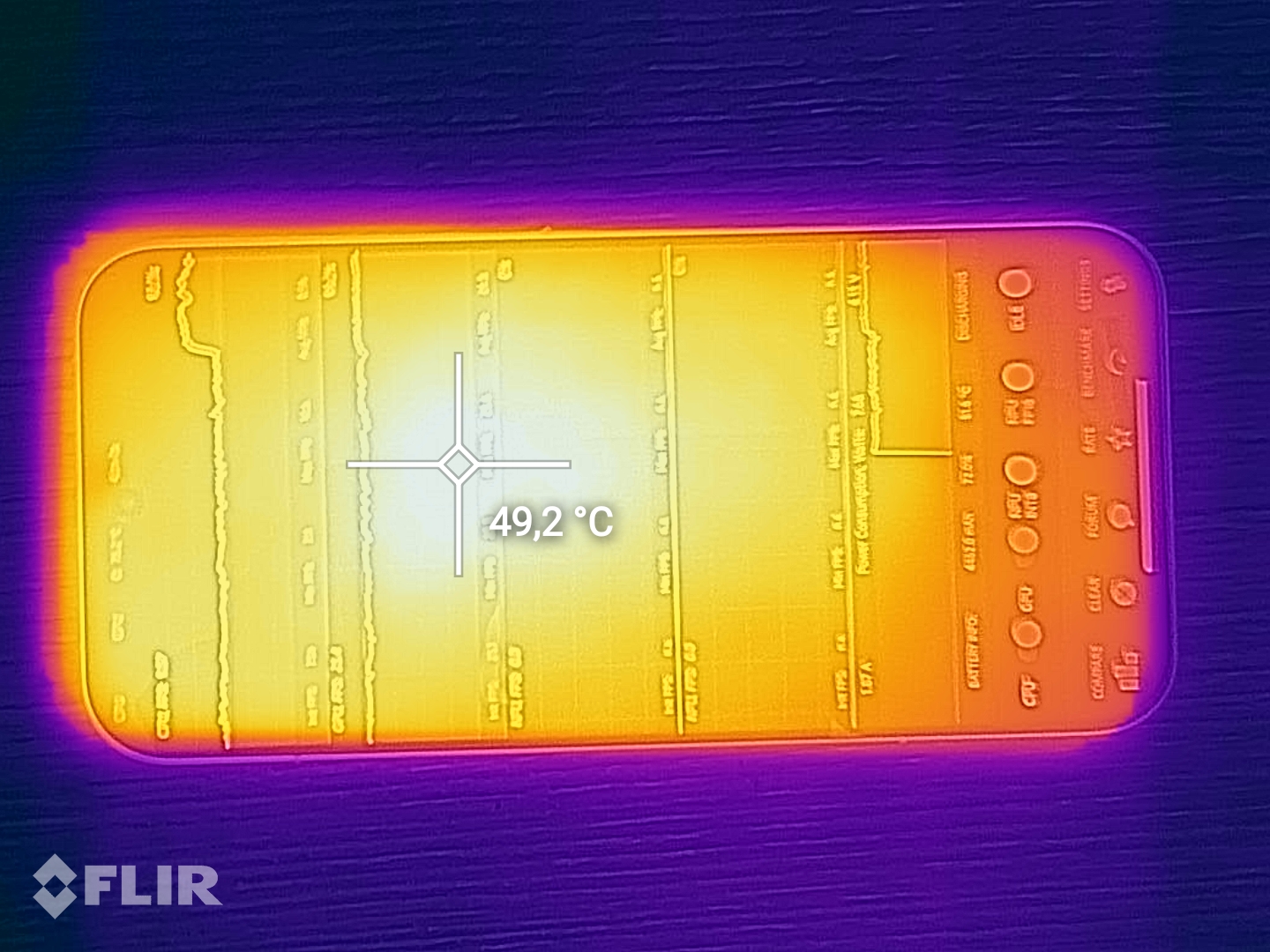
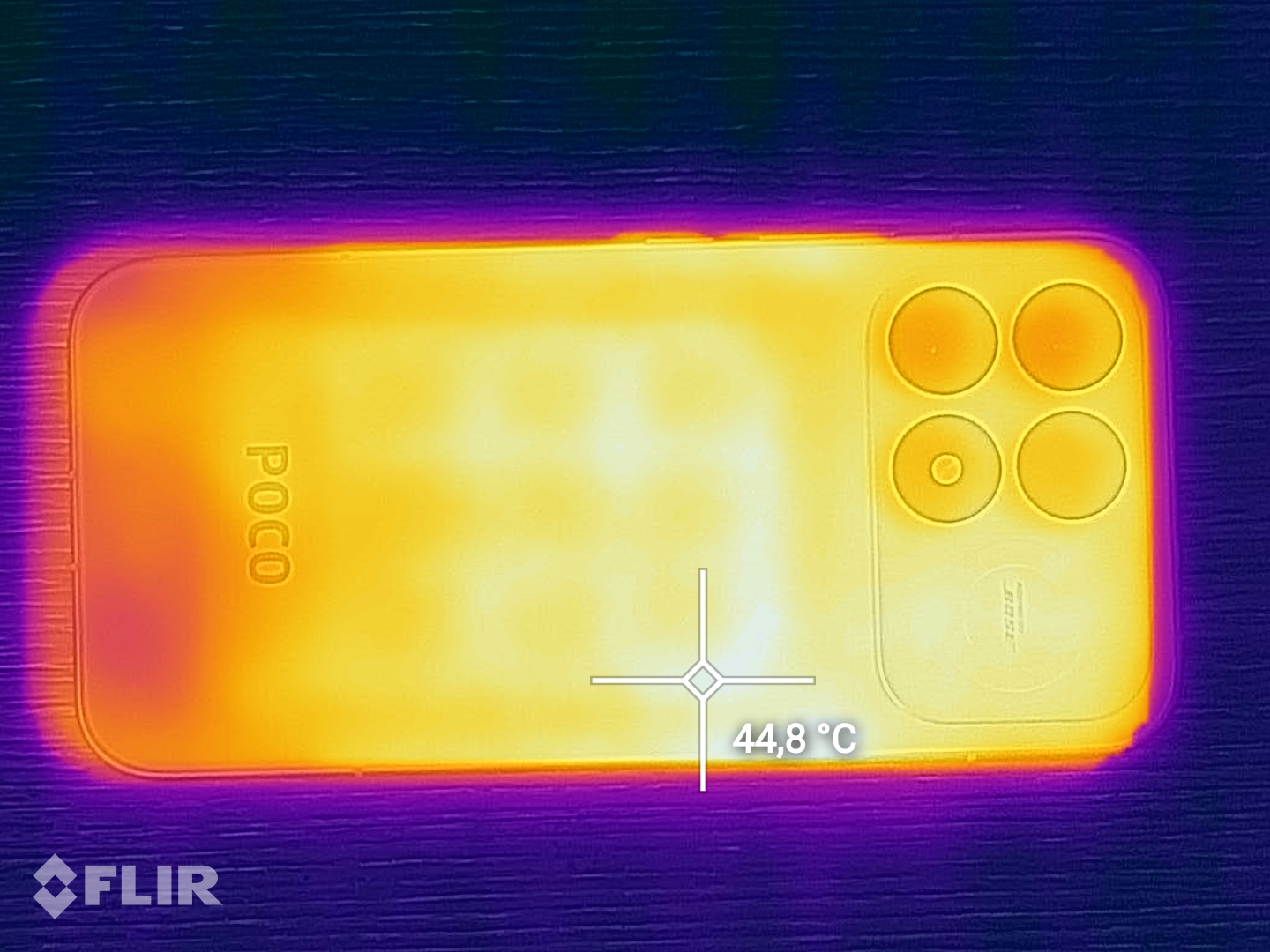
Under sustained load, the Poco F9 Pro's surface temperatures reach very high levels in some areas, even exceeding the 50-degree mark.
The loss in performance during the stress test is quite noticeable, though it is still within reasonable limits.
(-) The maximum temperature on the upper side is 50.3 °C / 123 F, compared to the average of 35.4 °C / 96 F, ranging from 21.9 to 247 °C for the class Smartphone.
(-) The bottom heats up to a maximum of 45.9 °C / 115 F, compared to the average of 34.1 °C / 93 F
(+) In idle usage, the average temperature for the upper side is 28.1 °C / 83 F, compared to the device average of 33 °C / 91 F.
3DMark Stress Tests
| 3DMark | |
| Wild Life Stress Test Stability | |
| Nothing Phone (4a) Pro | |
| Xiaomi Poco F9 Pro | |
| Xiaomi Poco F9 Ultra | |
| Google Pixel 10a | |
| Xiaomi 17T Pro | |
| Wild Life Extreme Stress Test | |
| Nothing Phone (4a) Pro | |
| Xiaomi Poco F9 Pro | |
| Xiaomi Poco F9 Ultra | |
| Google Pixel 10a | |
| Xiaomi 17T Pro | |
| Solar Bay Stress Test Stability | |
| Xiaomi Poco F9 Pro | |
| Xiaomi Poco F9 Ultra | |
| Xiaomi 17T Pro | |
| Solar Bay Extreme Stress Test Stability | |
| Xiaomi Poco F9 Pro | |
| Xiaomi Poco F9 Ultra | |
| Steel Nomad Light Stress Test Stability | |
| Nothing Phone (4a) Pro | |
| Xiaomi Poco F9 Ultra | |
| Xiaomi Poco F9 Pro | |
| Google Pixel 10a | |
| Xiaomi 17T Pro | |
Speakers
"Sound by Bose" does not always mean the same thing, and this is demonstrated by a direct comparison with the Poco F9 Ultra. The F9 Pro not only has one fewer speaker, but its sound profile is also less balanced and leans heavily toward the high frequencies. Still, this can be described as decent performance for a smartphone.
Xiaomi Poco F9 Pro audio analysis
(+) | speakers can play relatively loud (91 dB)
Bass 100 - 315 Hz
(-) | nearly no bass - on average 19.6% lower than median
(±) | linearity of bass is average (8.2% delta to prev. frequency)
Mids 400 - 2000 Hz
(±) | reduced mids - on average 6.3% lower than median
(±) | linearity of mids is average (7.4% delta to prev. frequency)
Highs 2 - 16 kHz
(±) | higher highs - on average 5.6% higher than median
(+) | highs are linear (2.9% delta to prev. frequency)
Overall 100 - 16.000 Hz
(±) | linearity of overall sound is average (17.2% difference to median)
Compared to same class
» 11% of all tested devices in this class were better, 8% similar, 80% worse
» The best had a delta of 11%, average was 34%, worst was 136%
Compared to all devices tested
» 32% of all tested devices were better, 8% similar, 59% worse
» The best had a delta of 4%, average was 23%, worst was 136%
Xiaomi 17T Pro audio analysis
(+) | speakers can play relatively loud (83.6 dB)
Bass 100 - 315 Hz
(-) | nearly no bass - on average 17.5% lower than median
(±) | linearity of bass is average (12.1% delta to prev. frequency)
Mids 400 - 2000 Hz
(±) | reduced mids - on average 6.6% lower than median
(+) | mids are linear (6.2% delta to prev. frequency)
Highs 2 - 16 kHz
(±) | higher highs - on average 6.6% higher than median
(+) | highs are linear (4.7% delta to prev. frequency)
Overall 100 - 16.000 Hz
(±) | linearity of overall sound is average (18.9% difference to median)
Compared to same class
» 24% of all tested devices in this class were better, 10% similar, 66% worse
» The best had a delta of 11%, average was 34%, worst was 136%
Compared to all devices tested
» 45% of all tested devices were better, 8% similar, 47% worse
» The best had a delta of 4%, average was 23%, worst was 136%
Battery life - A 6,330 mAh smartphone
Power consumption
The Poco F9 Pro's power consumption is somewhat high and is comparable to the F9 Ultra. Somewhat surprisingly, the energy requirements in GFXBench are nearly identical.
| Off / Standby |   0.13 / 0.46 Watt |
| Idle |  1.26 / 2.3 / 2.36 Watt |
| Load |
9.83 / 14.75 Watt |
    
| |
Key:
min: ,
med: ,
max: Metrahit Energy | |
| Xiaomi Poco F9 Pro 6330 mAh | Nothing Phone (4a) Pro 5080 mAh | Motorola Edge 70 Pro 6500 mAh | Xiaomi 17T Pro 7000 mAh | Samsung Galaxy S26 FE 4900 mAh | Google Pixel 10a 5100 mAh | Average Qualcomm Snapdragon 8 Elite Gen 5 V Series | Average of class Smartphone | |
|---|---|---|---|---|---|---|---|---|
| Power Consumption | 22% | 10% | 32% | 0% | 53% | 0% | 30% | |
| Idle Minimum * (Watt) | 1.26 | 1.01 20% | 1.4 -11% | 0.89 29% | 0.83 34% | 0.7 44% | 1.26 ? -0% | 0.897 ? 29% |
| Idle Average * (Watt) | 2.3 | 1.78 23% | 1.6 30% | 1.67 27% | 2.16 6% | 0.94 59% | 2.3 ? -0% | 1.478 ? 36% |
| Idle Maximum * (Watt) | 2.36 | 1.81 23% | 1.9 19% | 1.73 27% | 2.25 5% | 1.03 56% | 2.36 ? -0% | 1.685 ? 29% |
| Load Average * (Watt) | 9.83 | 9.7 1% | 6.27 36% | 13.4 -36% | 9.83 ? -0% | 6.86 ? 30% | ||
| Load Maximum * (Watt) | 14.75 | 13.2 11% | 8.63 41% | 16.07 -9% | 14.8 ? -0% | 10.7 ? 27% |
* ... smaller is better
Power consumption: Geekbench (150 cd/m²)
Power consumption: GFXbench (150 cd/m²)
Battery runtime
In our battery test involving web browsing over Wi-Fi, the Poco F9 Pro shut down a full four hours earlier than the Ultra. This came as no surprise, given their battery capacity differences.
| Battery runtime - WiFi v1.3 | |
| Xiaomi Poco F9 Pro | |
| Nothing Phone (4a) Pro | |
| Motorola Edge 70 Pro | |
| Xiaomi 17T Pro | |
| Google Pixel 10a | |
Notebookcheck overall rating
The Poco F9 Pro offers strong performance, a bright AMOLED display, and good battery life, but faces criticism regarding its camera, heat production, and feature set.
Xiaomi Poco F9 Pro
- 11/11/2026 v8
Daniel Schmidt
 Total Sustainability Score:
Possible alternatives compared
Image | Model / Review | Price | Weight | Drive | Display |
|---|---|---|---|---|---|
1. 85.7%  | Xiaomi Poco F9 Pro Qualcomm Snapdragon 8 Elite Gen 5 V Series ⎘ Qualcomm Adreno 840 V Series ⎘ 12 GB Memory, 512 GB UFS 4.x | List Price: 1000€ | 206 g | 512 GB UFS 4.1 Flash | 6.59" 2510x1156 419 PPI AMOLED |
2. 82.5%  | Nothing Phone (4a) Pro Qualcomm Snapdragon 7 Gen 4 SM7750-AB ⎘ Qualcomm Adreno 722 ⎘ 12 GB Memory, 256 GB UFS 3.1 | List Price: 549€ | 210 g | 256 GB UFS 3.1 Flash | 6.83" 2800x1260 450 PPI AMOLED |
3. 83.2%  | Motorola Edge 70 Pro MediaTek Dimensity 8500 ⎘ ARM Mali-G720 MP8 ⎘ 12 GB Memory, 512 GB UFS 4.x | Amazon: $539.50 List Price: 800€ | 183 g | 512 GB UFS 4.1 Flash | 6.78" 2772x1272 450 PPI AMOLED |
4. 85.7%  | Xiaomi 17T Pro MediaTek Dimensity 9500 ⎘ Arm Mali G1- Ultra MC12 ⎘ 12 GB Memory, 512 GB UFS 4.x | Amazon: $775.00 List Price: 1000€ | 219 g | 512 GB UFS 4.1 Flash | 6.83" 2772x1280 447 PPI AMOLED |
5. 12.7%  | Samsung Galaxy S26 FE Samsung Exynos 2500 ⎘ Samsung Xclipse 950 ⎘ 8 GB Memory, 128 GB UFS 3.1 | Amazon: 1. $599.99 Samsung Galaxy S26 FE, Unloc... 2. $618.38 Samsung Galaxy S26 FE, Unloc... 3. $699.99 Samsung Galaxy S26 FE, Unloc... List Price: 799€ | 193 g | 128 GB UFS 3.1 Flash | 6.70" 2340x1080 385 PPI AMOLED |
6. 85.3%  | Google Pixel 10a Google Tensor G4 ⎘ ARM Mali-G715 MP7 ⎘ 8 GB Memory, 128 GB UFS 3.1 | List Price: 549€ | 183 g | 128 GB UFS 3.1 Flash | 6.30" 2424x1080 421 PPI pOLED |
Transparency
The selection of devices to be reviewed is made by our editorial team. The test sample was provided to the author as a loan by the manufacturer or retailer for the purpose of this review. The lender had no influence on this review, nor did the manufacturer receive a copy of this review before publication. There was no obligation to publish this review. As an independent media company, Notebookcheck is not subjected to the authority of manufacturers, retailers or publishers.
This is how Notebookcheck is testing
Every year, Notebookcheck independently reviews hundreds of laptops and smartphones using standardized procedures to ensure that all results are comparable. We have continuously developed our test methods for around 20 years and set industry standards in the process. In our test labs, high-quality measuring equipment is utilized by experienced technicians and editors. These tests involve a multi-stage validation process. Our complex rating system is based on hundreds of well-founded measurements and benchmarks, which maintains objectivity. Further information on our test methods can be found here.
 Add as a preferred source on Google


