




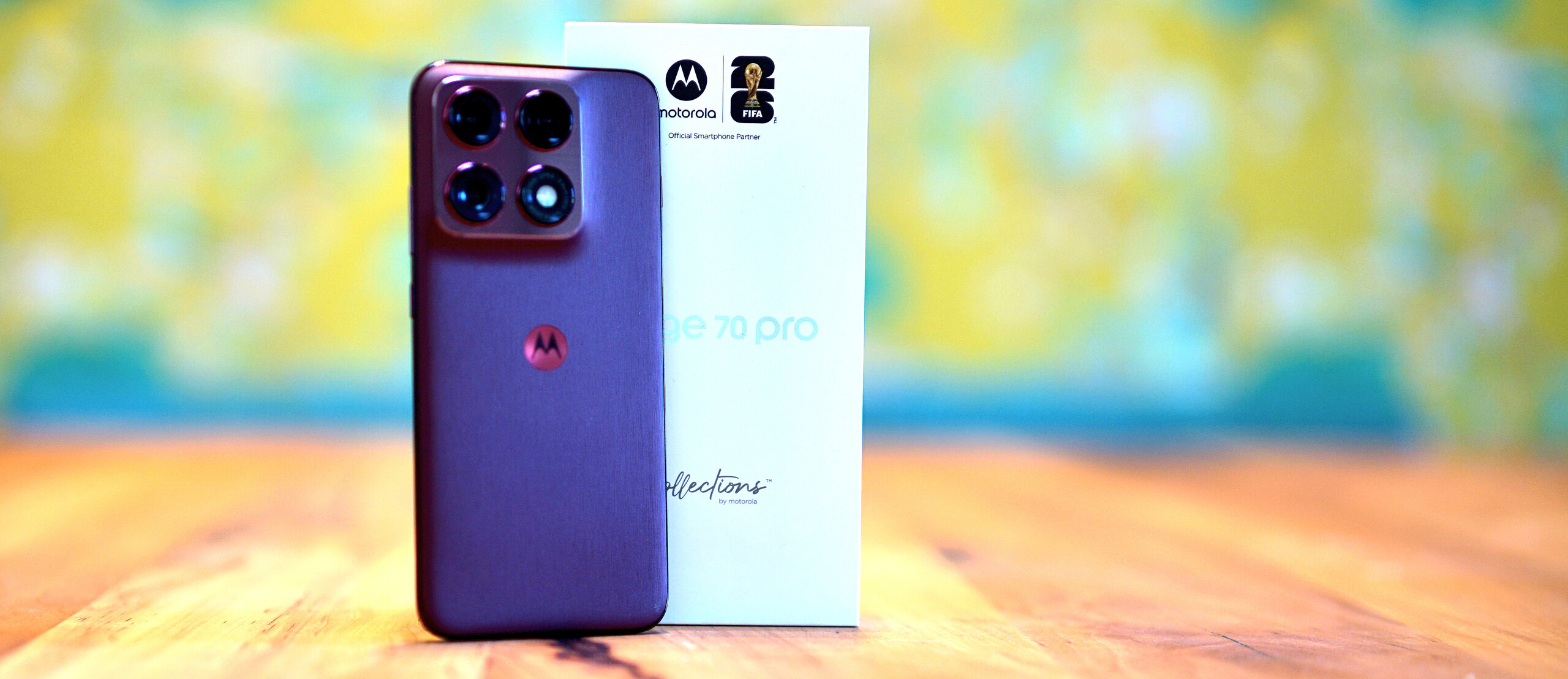
Verdict on the Motorola Edge 70 Pro
Motorola's high-end Edge 70 Pro smartphone impresses in many areas: it features a bright screen, battery life suitable for everyday use, a lightweight design, a beautifully crafted yet durable chassis, and truly excellent camera capabilities with zoom functions and sharp images in a variety of situations.
What’s frustrating, however, is that Motorola – as with other models – has equipped this phone with a rather underpowered SoC. While this is usually sufficient for smooth everyday use and can run many apps, it offers little in the way of performance headroom, causing the Edge 70 Pro to fall short of its direct competitors.
One advantage, however, is that price cuts are quite feasible for retailers; as a result, the phone is currently available for less than US$ 620.
On the downside, there’s also significant overheating under prolonged heavy use, noticeable throttling, and somewhat high power consumption, which is also reflected in the battery life relative to the battery capacity.
Overall, the Motorola Edge 70 Pro is an interesting smartphone that could pose a serious threat even to significantly more expensive models.
Pros
Cons
Price and Availability
The phone actually is available in many countries, e.g. at amazon.co.uk or also at amazon.in, but not in the US at the moment.
Table of Contents
- Verdict on the Motorola Edge 70 Pro
- Specifications
- Case – Choice of Color and Material
- Features – Significant Price Differences
- Software – 5 Years of Updates from Motorola
- Communications and GNSS – Global Mobile Communications
- Cameras – Bright Images
- Accessories and Warranty – No Power Supply
- Input Devices and Operation – For Fast Fingers
- Display – Brighter and More Accurate Screen
- Performance – We could have done better
- Emissions – Significant Reduction
- Battery Life – Good Endurance
- Notebookcheck Overall Rating
- A Comparison of Possible Alternatives
Specifications
Case – Choice of Color and Material
The design retains Motorola’s classic strengths: The camera module is elegantly integrated, the Pantone colors look beautiful, and IP68/IP69 certification ensures protection from the elements.
The slim design makes the phone look particularly elegant, especially when viewed from the side. And at 183 grams, it’s lighter than average. You don’t have to worry about the phone bending, though, because it’s very sturdily built and didn’t flex during our test.
Depending on the chosen case color, the back has a different texture, ranging from real wood to acetate to a silk-like finish.


Features – Significant Price Differences
This upper class phone is available in two storage configurations: 8 GB RAM / 256 GB storage or 12 GB RAM / 512 GB storage. We would recommend the higher storage option, but given the significant price differences, you should compare options before making a decision.
The smartphone has a USB 2.0 port, so data transfers are slow and there’s no wired video output.
The phone supports a nano-SIM but can also operate in dual-SIM mode via an eSIM. There is no microSD slot.
Software – 5 Years of Updates from Motorola
The Edge 70 Pro comes with Android 16. Security patches are scheduled to be released every two months through 2031. That’s significantly less than what Apple and Samsung offer—and actually falls short of the current EU directive.
During the initial setup, many games and apps are preinstalled if you’re not careful. Unfortunately, this feature has been enabled on many smartphones for some time now.
Sustainability
The packaging for the Motorola Edge 70 Pro contains no plastic. Unfortunately, the manufacturer does not provide any information on how much CO2 is generated during production and use; it merely states that CO2 emissions have been reduced by 25% compared to the previous generation.
Communications and GNSS – Global Mobile Communications
The phone supports many 4G and 5G frequencies, so you can use it while traveling to many parts of the world. During our test, reception was quite strong and didn’t drop out even in very challenging areas.
It features Wi-Fi 7, and when paired with our reference router, the Asus RT-BE96U, the phone achieves very high data rates—more than enough even for fast home networks. The connection is also very stable.
| Networking | |
| Motorola Edge 70 Pro | |
| iperf3 transmit Wi-Fi6/7 RT-BE96U | |
| iperf3 receive Wi-Fi6/7 RT-BE96U | |
| Motorola Edge 60 Pro | |
| iperf3 transmit AXE11000 6GHz | |
| iperf3 receive AXE11000 6GHz | |
| Vivo X300 | |
| iperf3 transmit AXE11000 6GHz | |
| iperf3 receive AXE11000 6GHz | |
| Xiaomi Poco X8 Pro | |
| iperf3 transmit AXE11000 | |
| iperf3 receive AXE11000 | |
| Samsung Galaxy S26+ | |
| iperf3 transmit AXE11000 | |
| iperf3 receive AXE11000 | |
| iperf3 transmit AXE11000 6GHz | |
| iperf3 receive AXE11000 6GHz | |
| Average 802.11 a/b/g/n/ac/ax/be | |
| iperf3 transmit AXE11000 | |
| iperf3 receive AXE11000 | |
| iperf3 transmit AXE11000 6GHz | |
| iperf3 receive AXE11000 6GHz | |
| iperf3 transmit Wi-Fi6/7 RT-BE96U | |
| iperf3 receive Wi-Fi6/7 RT-BE96U | |
| Average of class Smartphone | |
| iperf3 transmit AXE11000 | |
| iperf3 receive AXE11000 | |
| iperf3 transmit AXE11000 6GHz | |
| iperf3 receive AXE11000 6GHz | |
| iperf3 transmit Wi-Fi6/7 RT-BE96U | |
| iperf3 receive Wi-Fi6/7 RT-BE96U | |
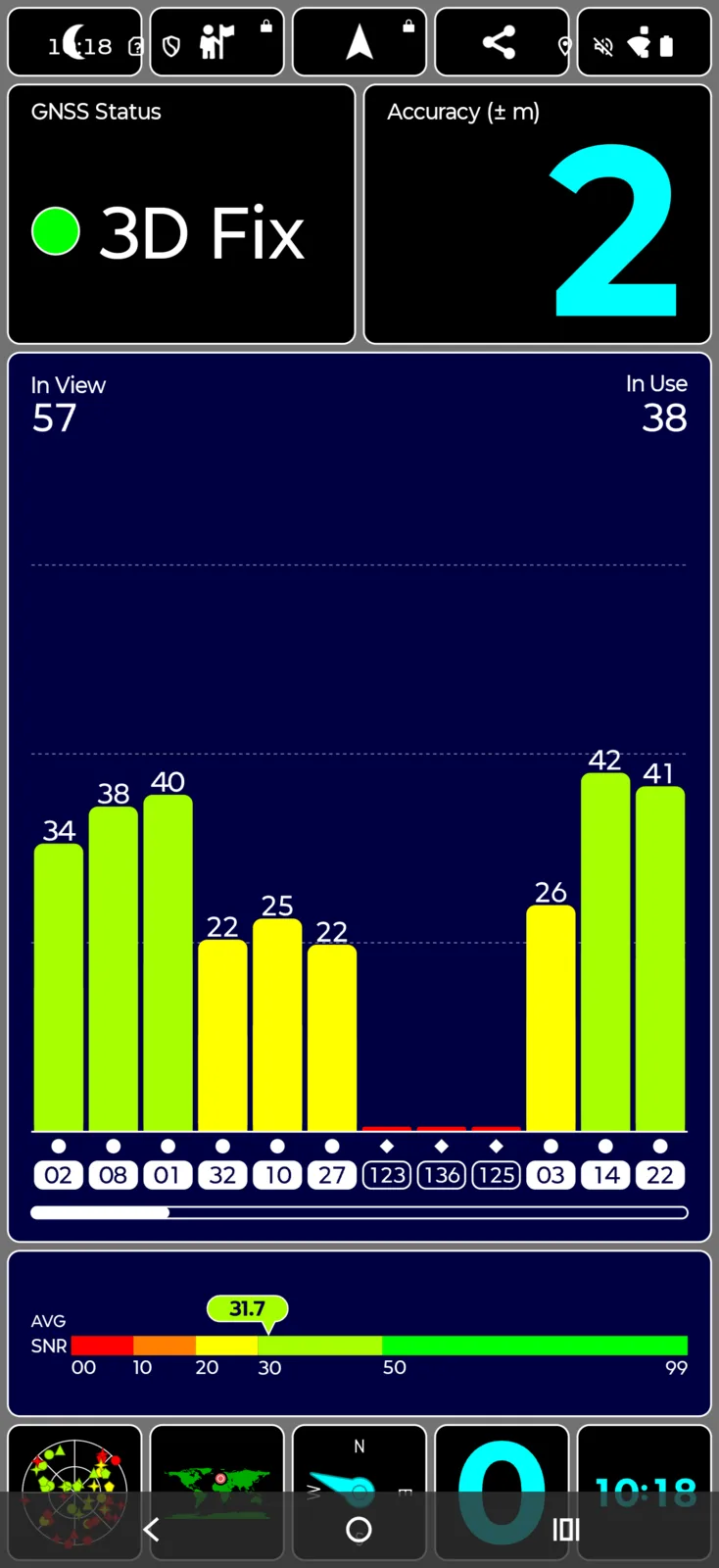
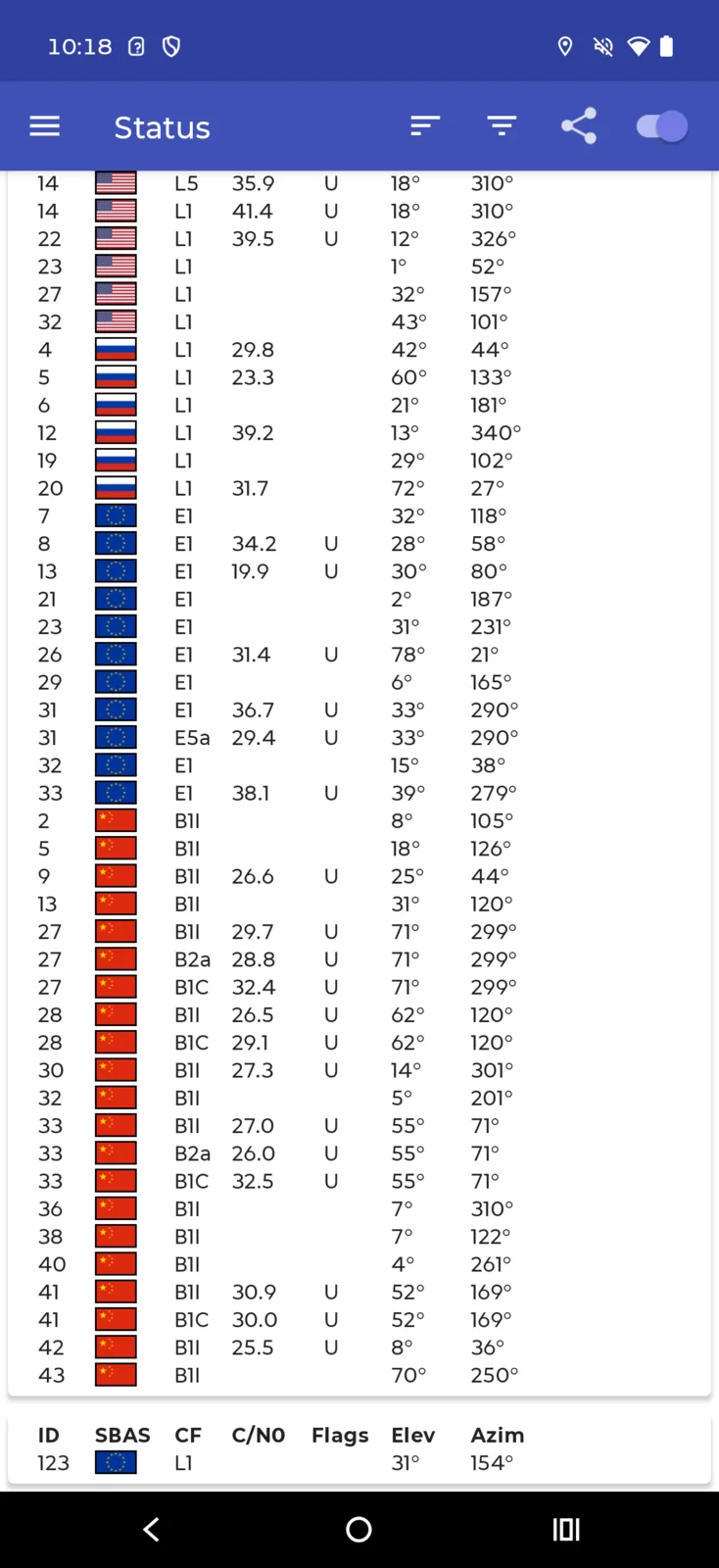
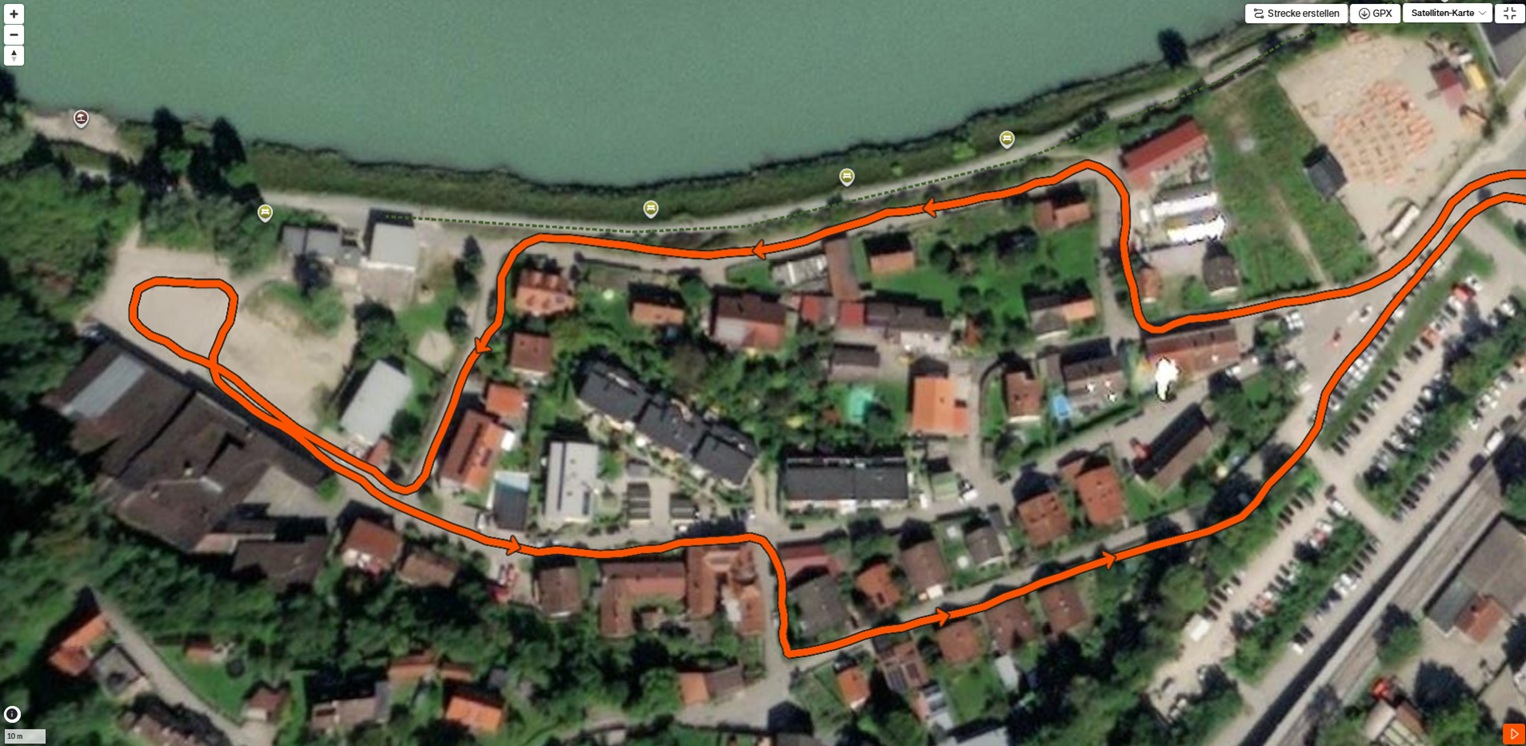
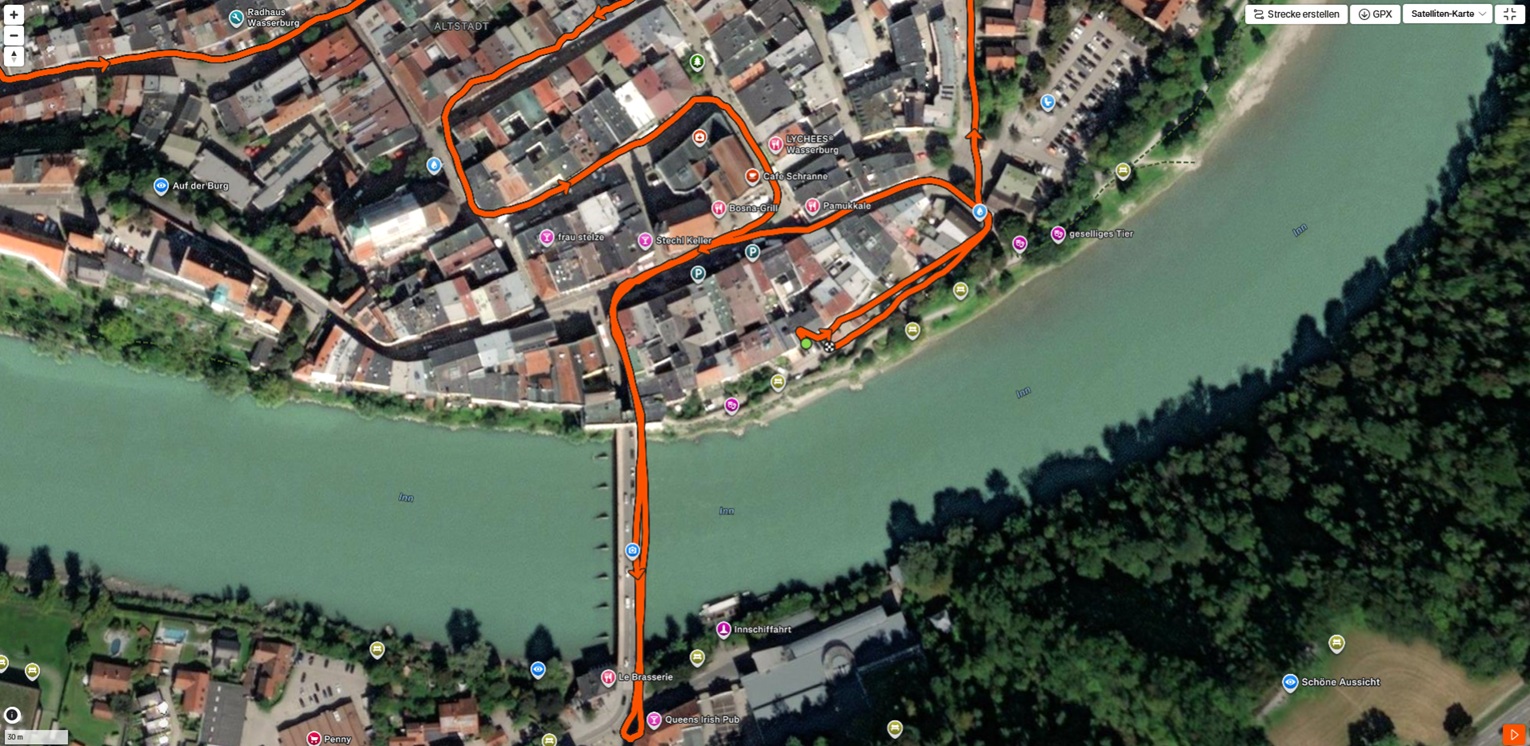
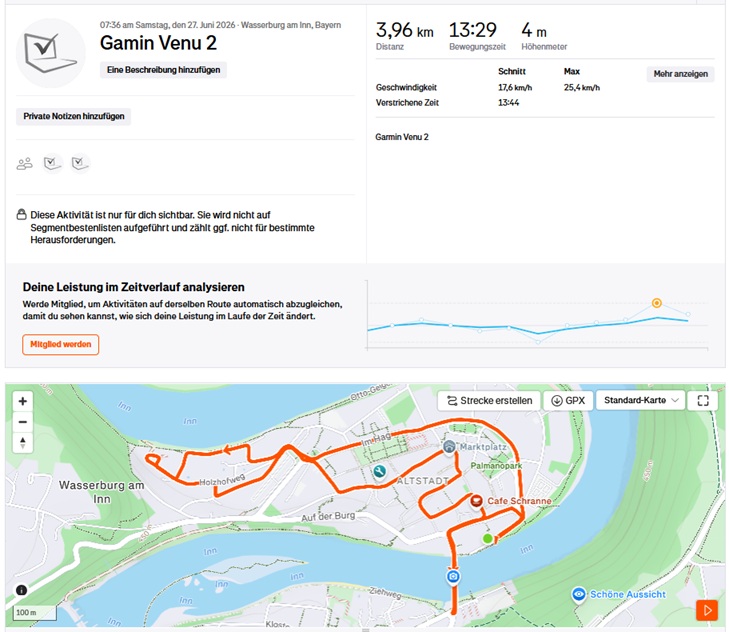
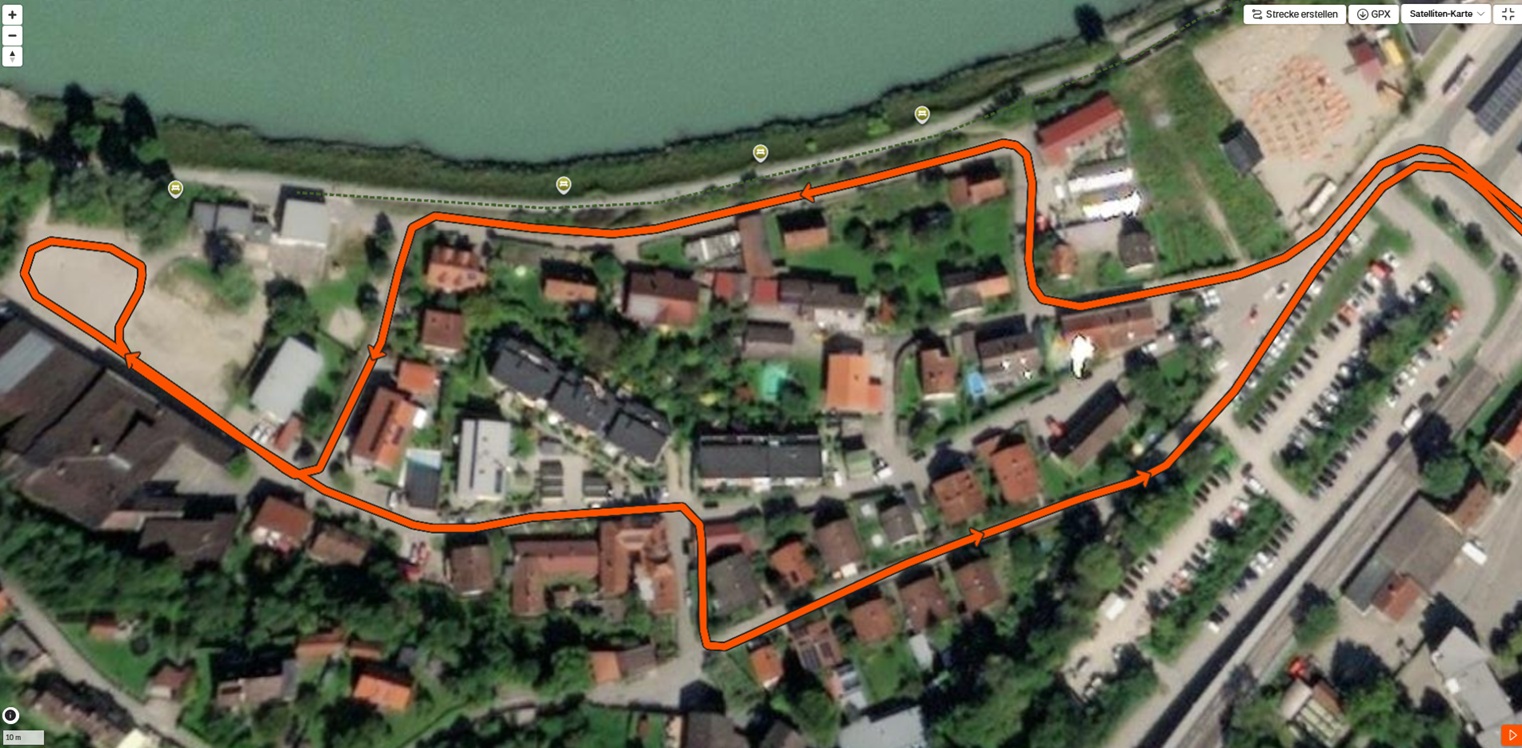
In general, a connection to the various satellite networks is established very quickly, and the location is determined accurately.
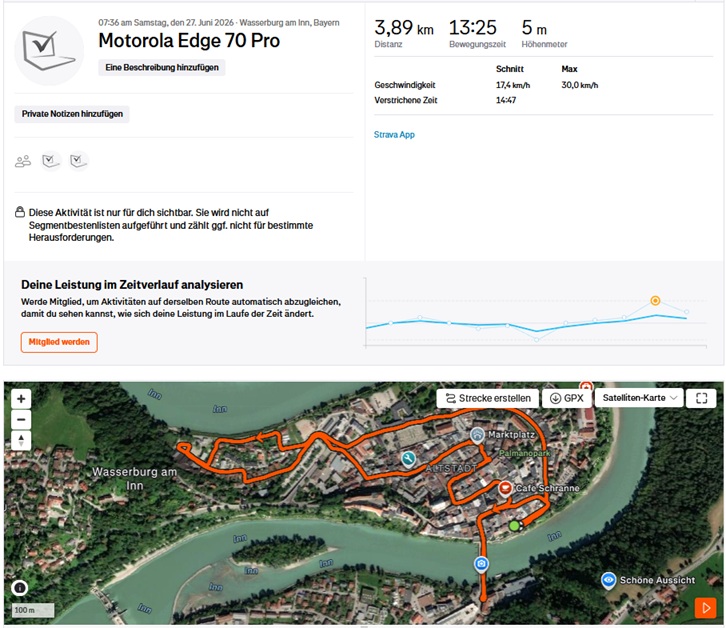
In open areas, location tracking is precise; in narrow alleys, however, it can deviate by a few meters, as we found in our field test. Overall, though, the Edge 70 Pro is well-suited for navigation.
Cameras – Bright Images

"50 megapixels everywhere" seems to be Motorola's motto: The Edge 70 Pro has four lenses—three on the back and one on the front—and they all have the same number of megapixels.
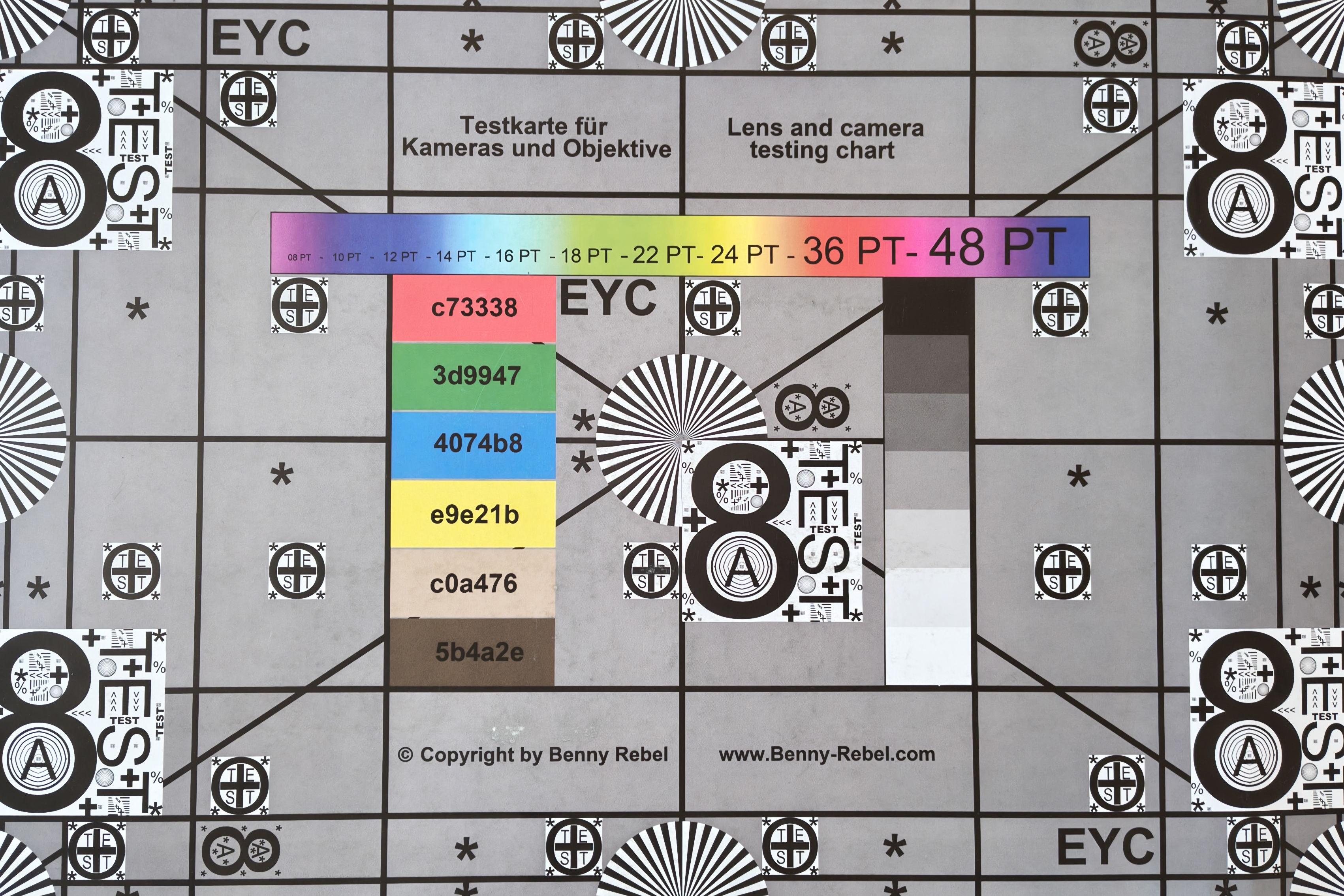
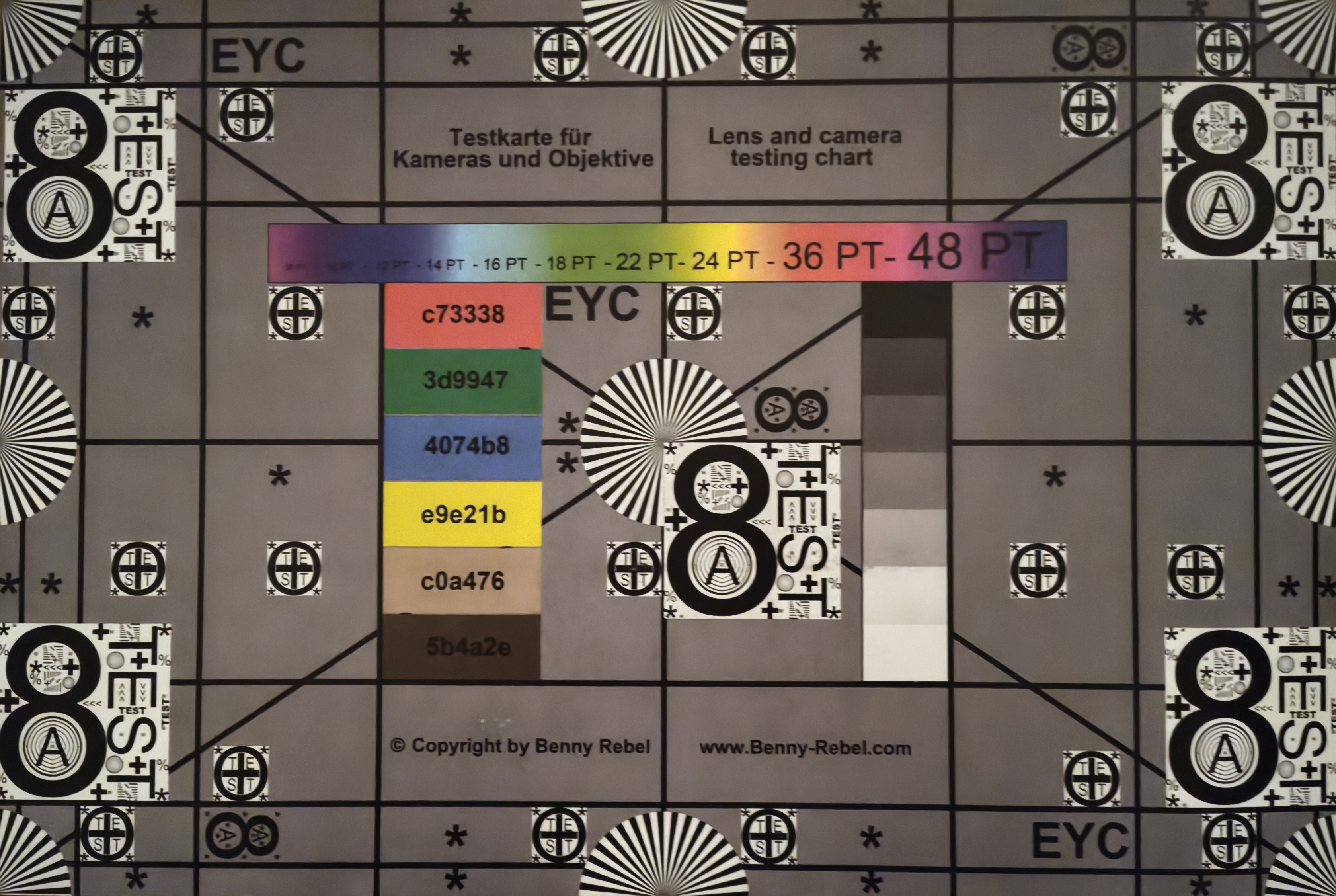
Photos from the main camera look sharp and are well-exposed—sometimes even a little too well, which can result in overexposed photos on very bright days. In dark environments, however, this is a blessing, as plenty of detail is preserved even in low-light areas.
Videos can be recorded in 4K at up to 60 fps and turn out well even in slightly darker rooms thanks to the high light sensitivity. The autofocus works almost imperceptibly.
The ultra-wide-angle camera distorts slightly at the corners but takes good snapshots overall.
The front camera takes very sharp selfies and also offers decent dynamic range.
Image comparison
Choose a scene and navigate within the first image. One click changes the position on touchscreens. One click on the zoomed-in image opens the original in a new window. The first image shows the scaled photograph of the test device.
Hauptkamera PflanzeHauptkamera UmgebungHauptkamera Low LightUltraweitwinkel




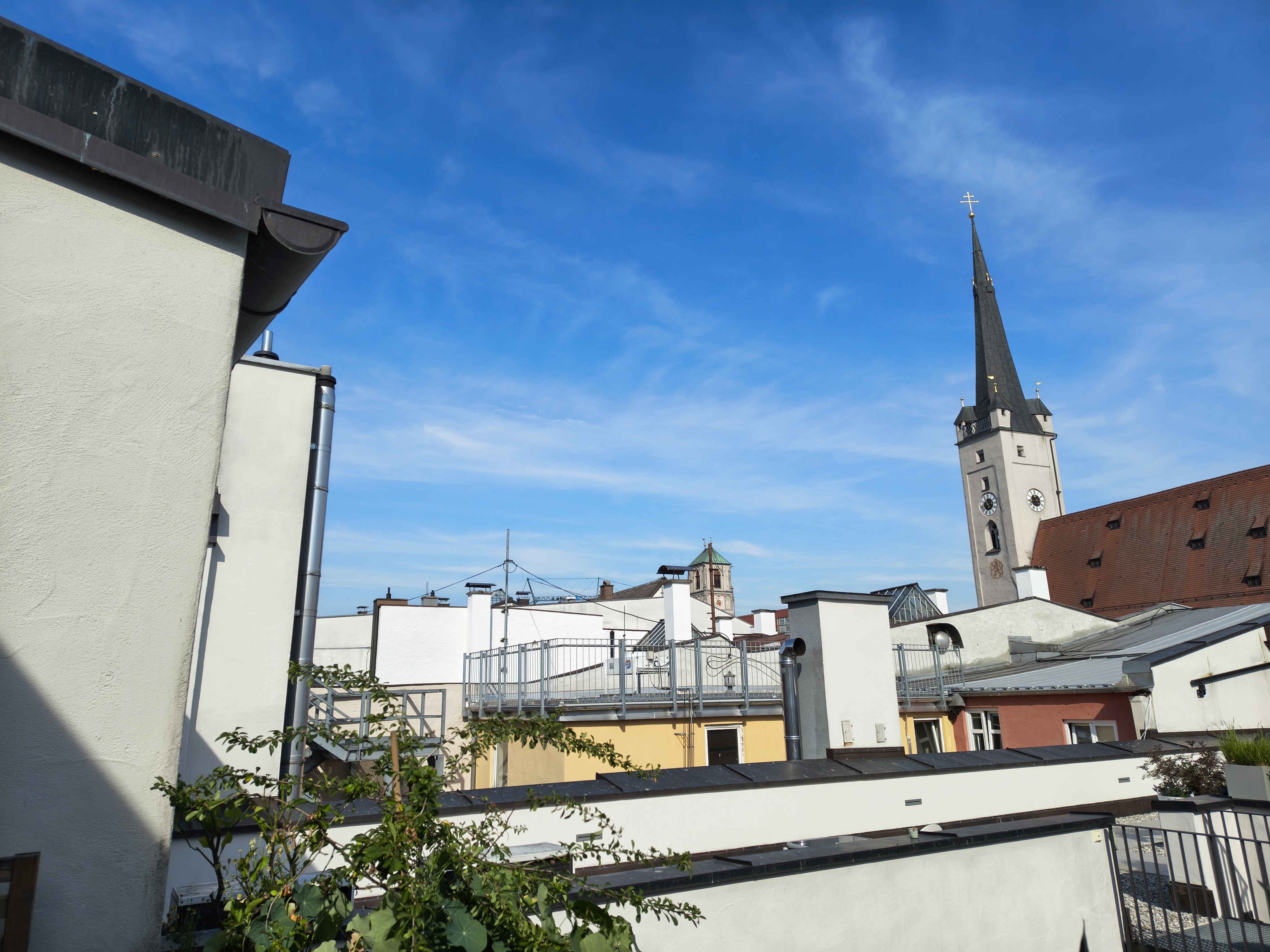
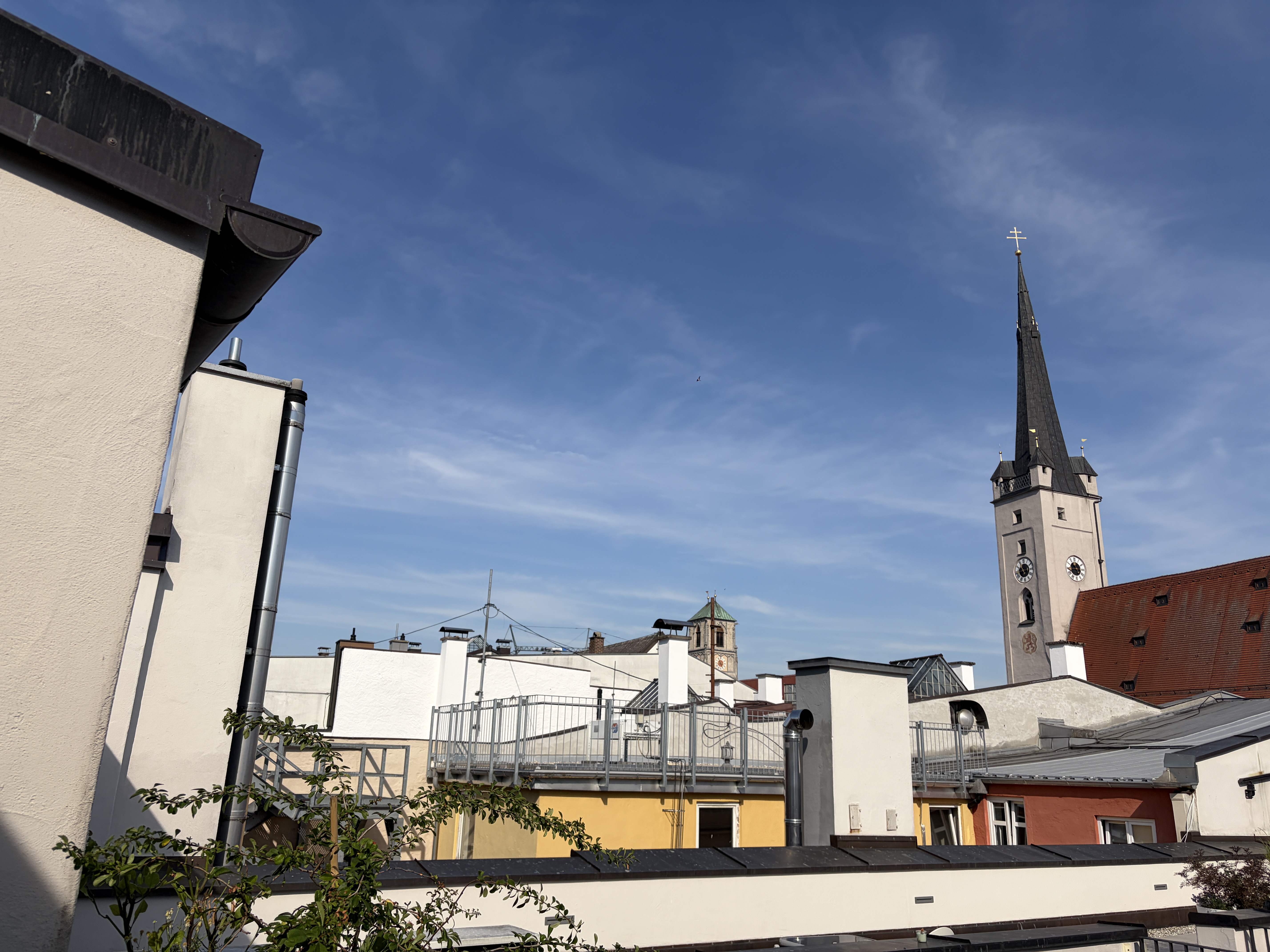
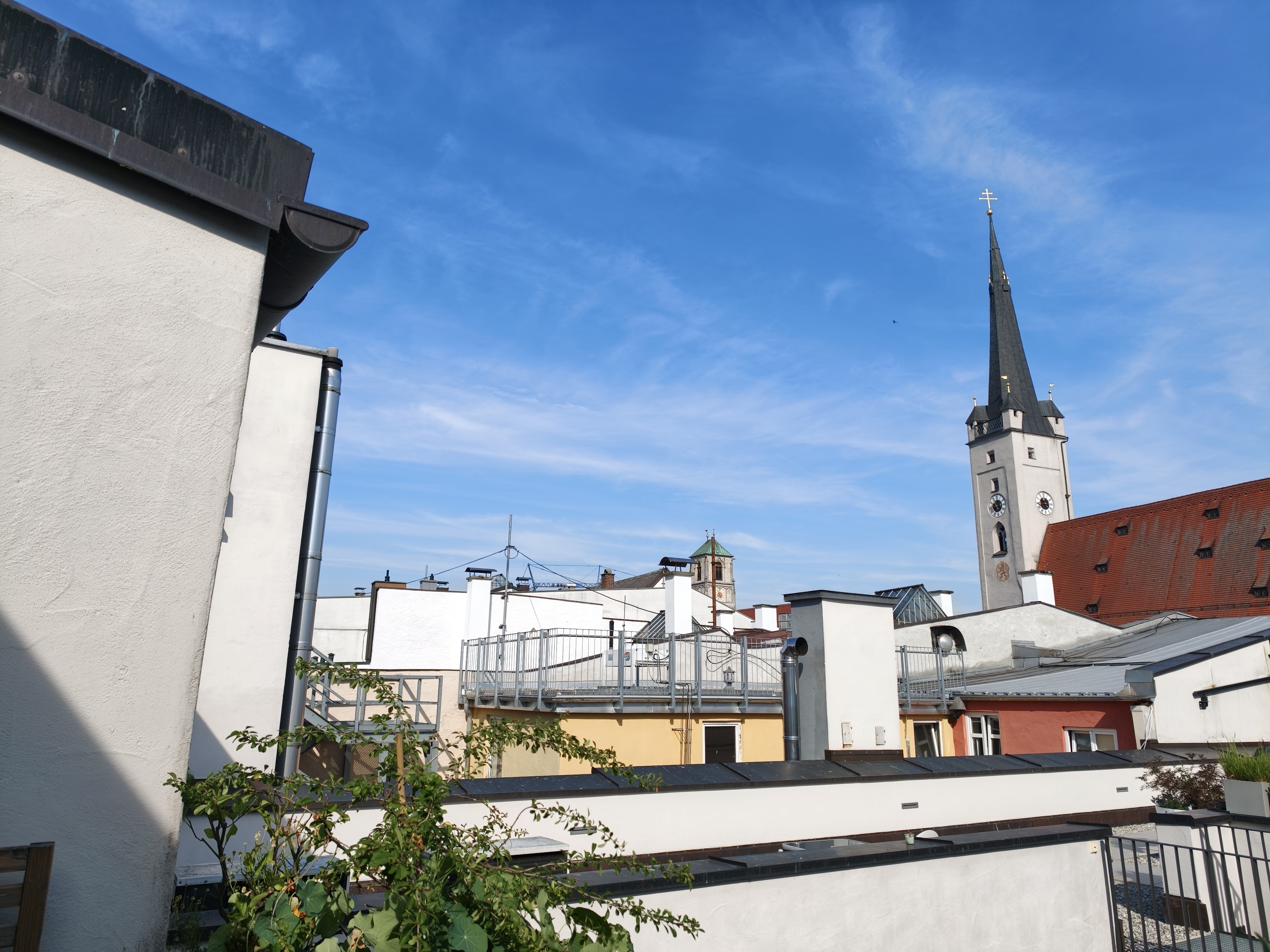
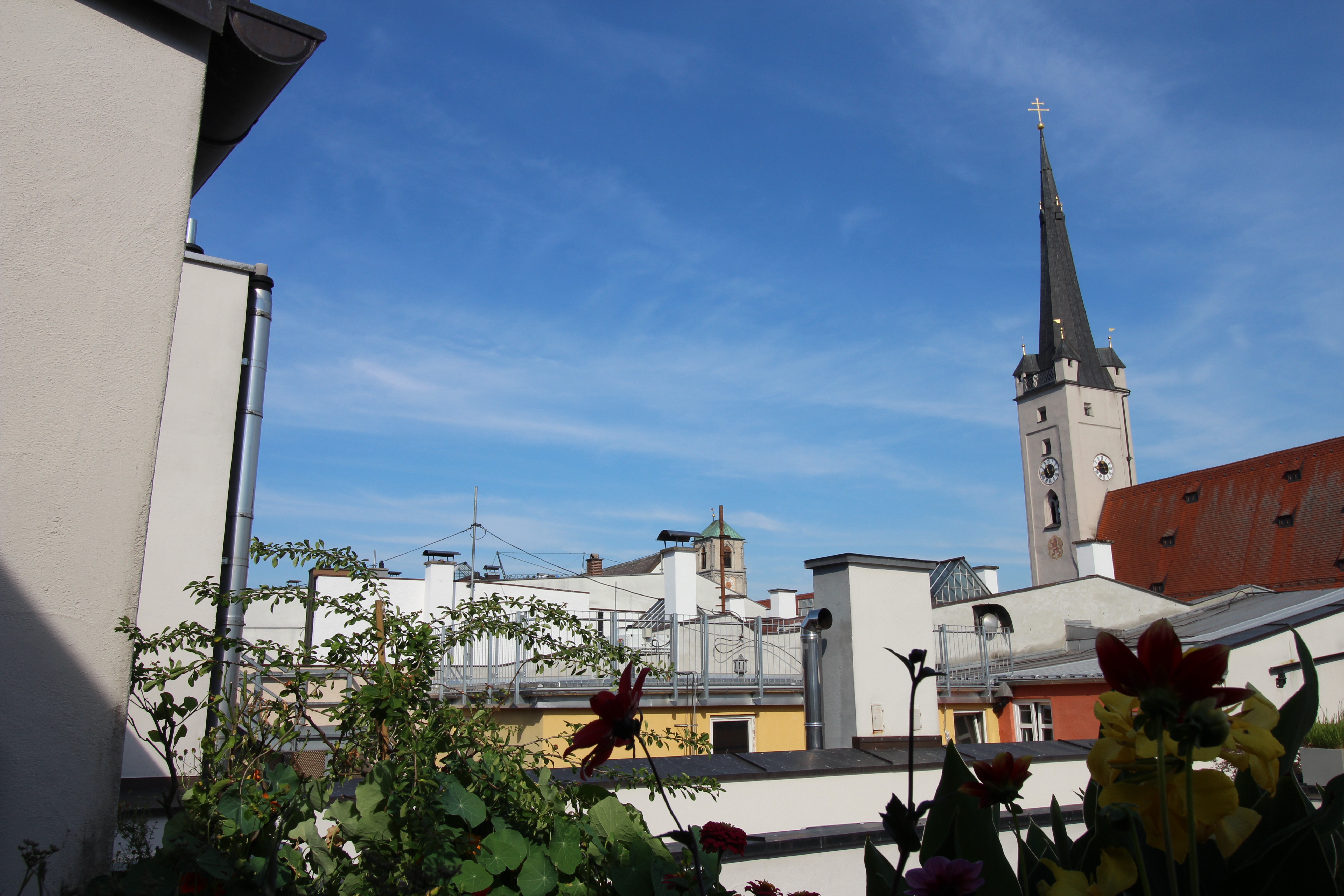




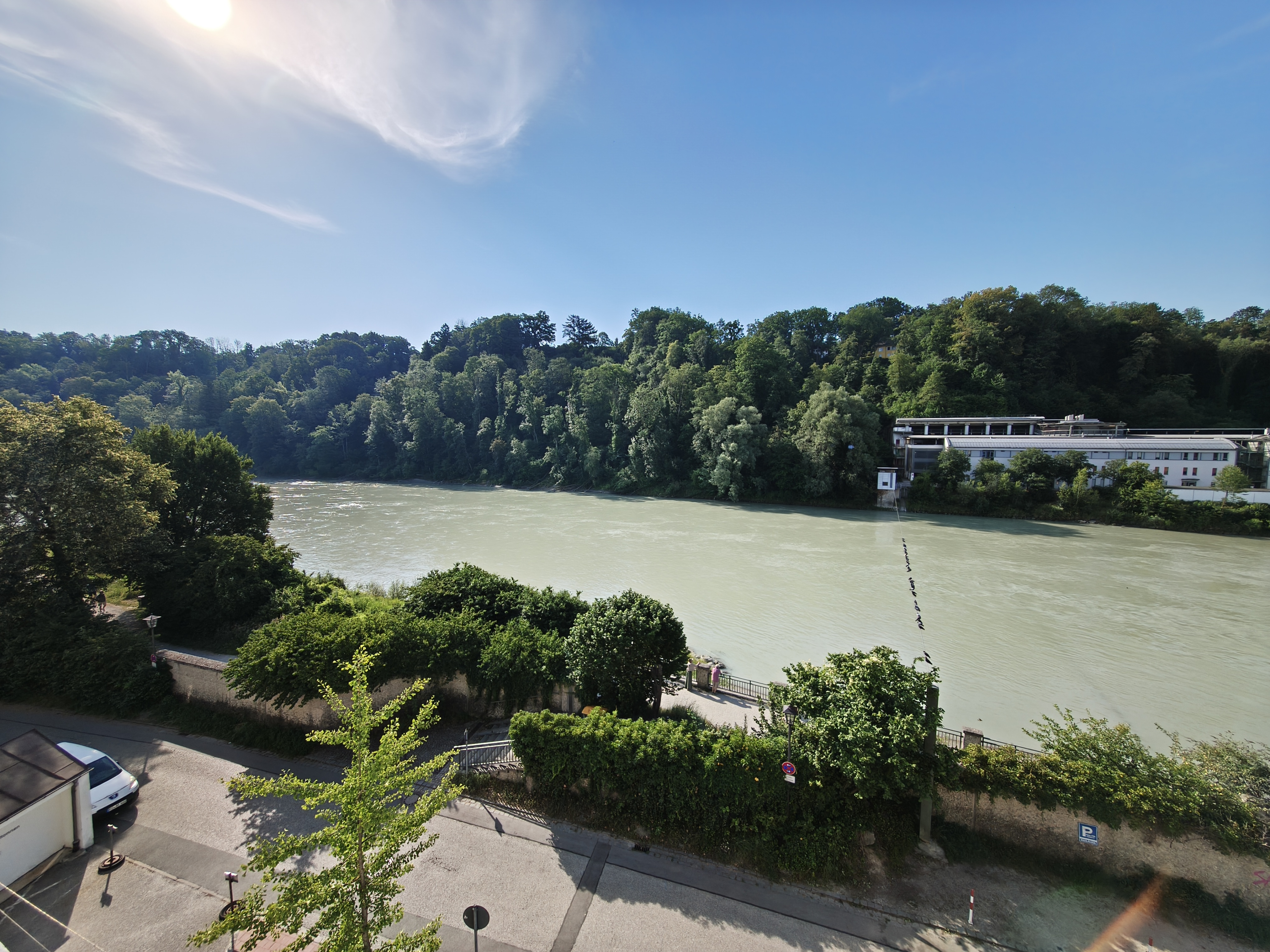
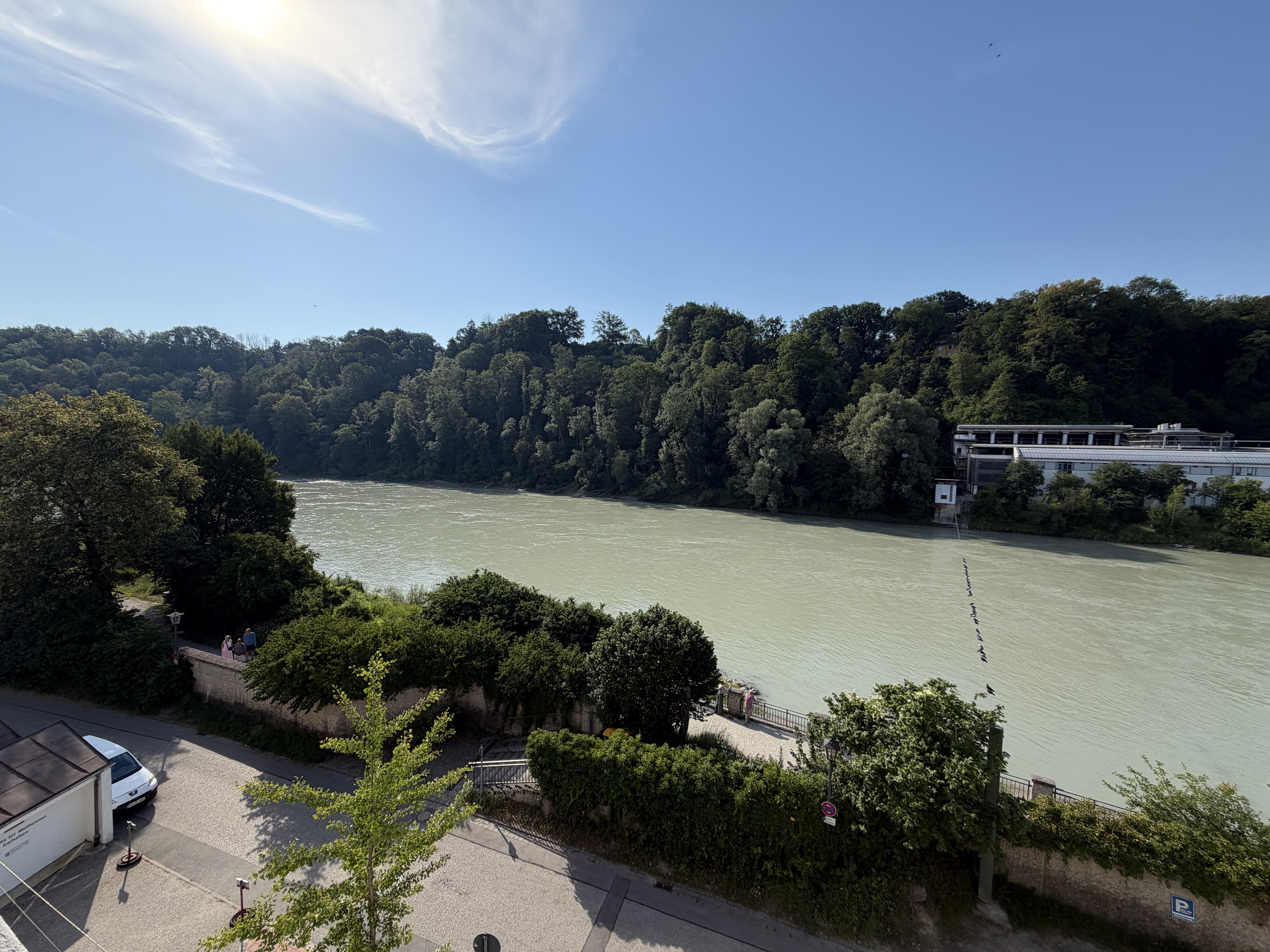

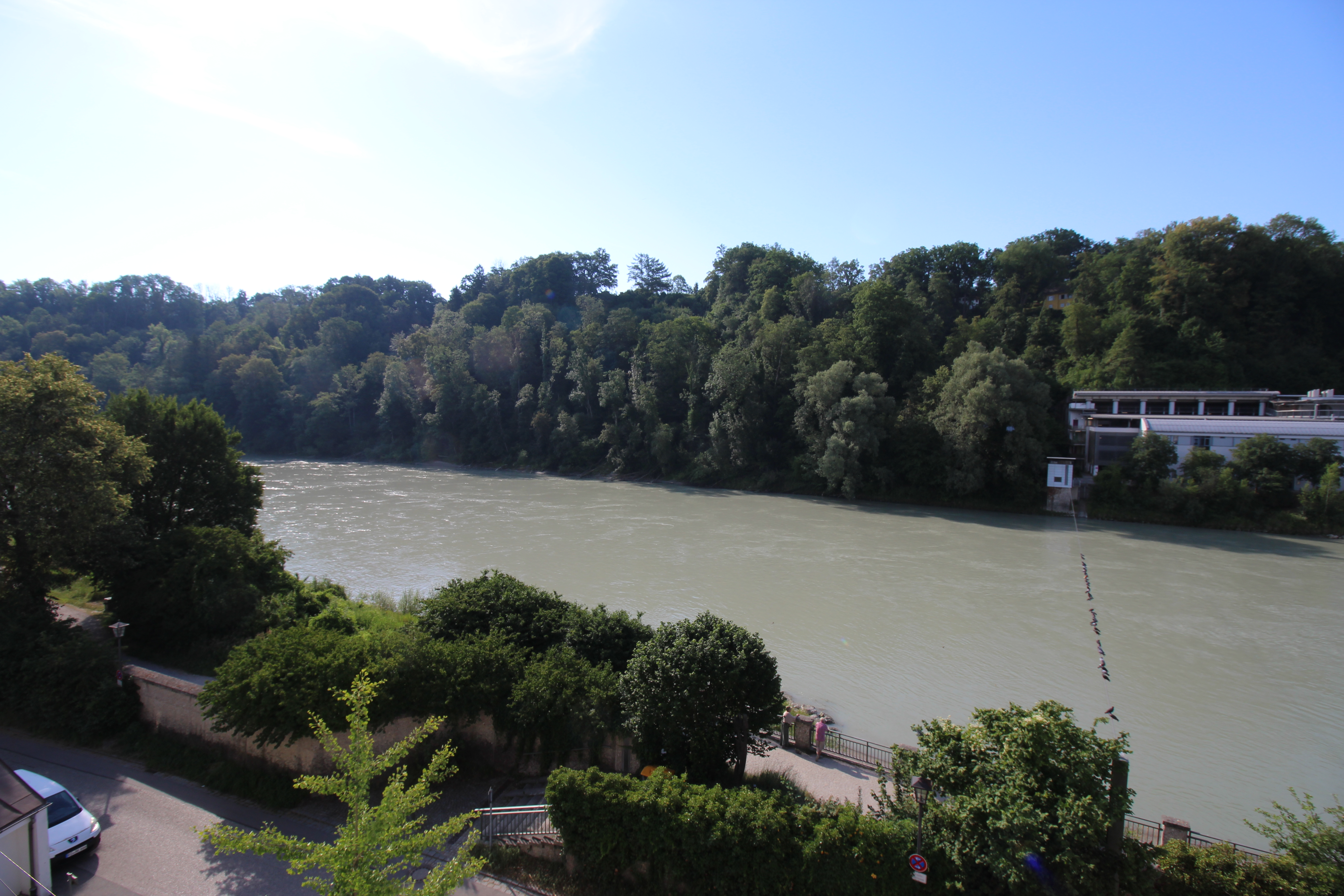
The telephoto lens with 3.5x periscope zoom lets you take impressive photos that come out well even at up to 10x magnification. That’s when the AI processing becomes very noticeable, but you can still use the phone as a substitute for binoculars.




Accessories and Warranty – No Power Supply
A USB cable and a silicone case—unfortunately, that’s all that comes in the box with the Motorola Edge 70 Pro, at least in Europe.
The warranty is valid for 24 months within the EU.
Input Devices and Operation – For Fast Fingers
The display offers a refresh rate of up to 144 Hz and a touch sampling rate of up to 360 Hz. Since the display can render many frames per second and samples touch input even more frequently, using the Motorola Edge 70 Pro feels very responsive.
The fingerprint sensor is hidden behind the screen. It’s positioned at a good height and unlocks the phone very quickly and reliably. Face recognition is also available; it worked well in our test, but isn’t quite as secure against tampering.
Display – Brighter and More Accurate Screen
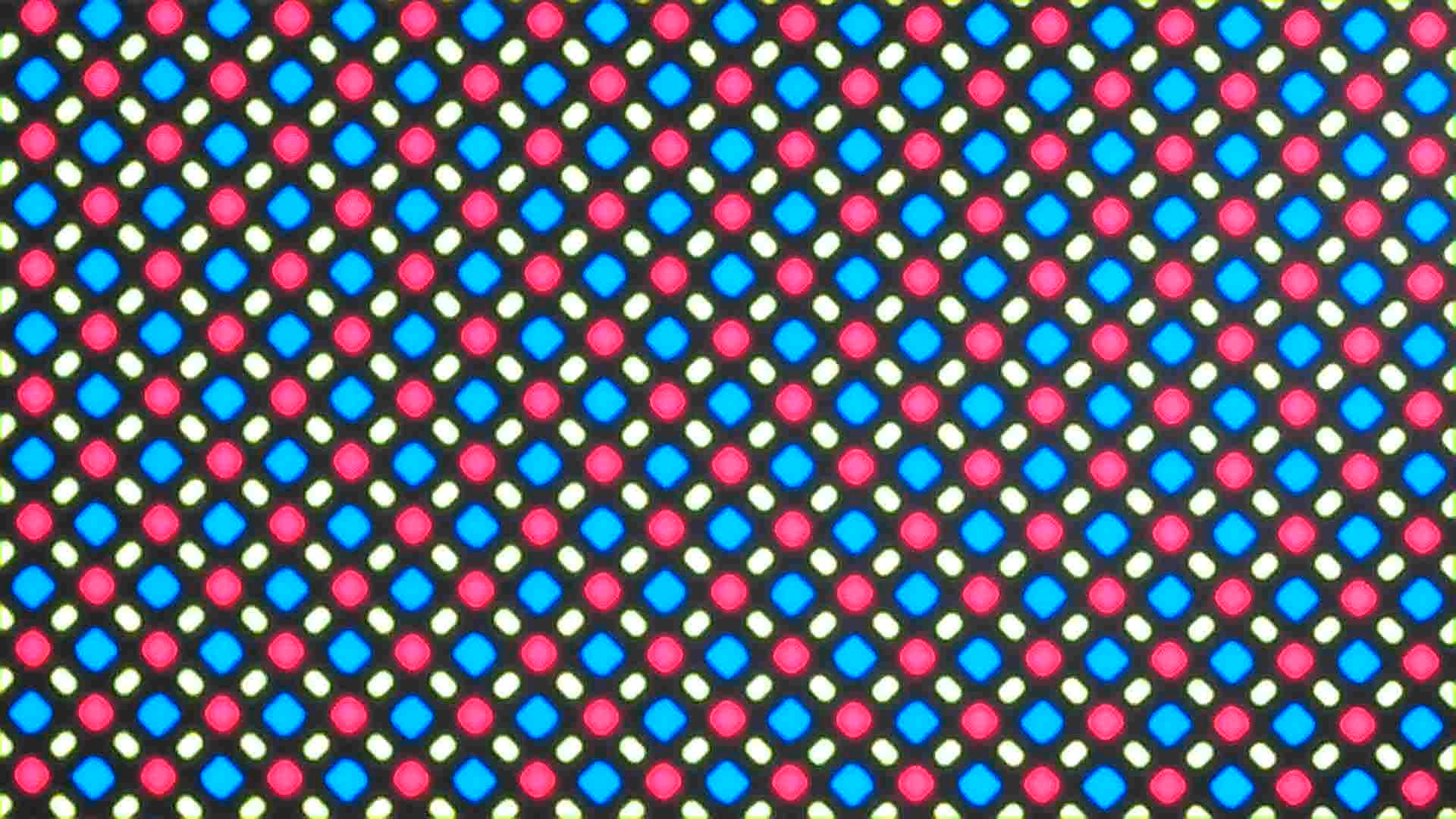
The OLED screen offers high resolution and can get very bright, reaching up to 1,684 cd/m² in normal operation. In our tests, it can even exceed 3,000 cd/m² on smaller areas.
However, we measured PWM flicker at a frequency of about 144 Hz. Therefore, people who are sensitive to this should test the screen before purchasing it.
| |||||||||||||||||||||||||
Brightness Distribution: 94 %
Center on Battery: 1684 cd/m²
Contrast: ∞:1 (Black: 0 cd/m²)
ΔE ColorChecker Calman: 0.88 | ∀{0.5-29.43 Ø4.69}
ΔE Greyscale Calman: 1.2 | ∀{0.09-98 Ø4.94}
100% sRGB (Calman 2D)
Gamma: 2.145
CCT: 6469 K
| Motorola Edge 70 Pro AMOLED, 2772x1272, 6.8" | Motorola Edge 60 Pro P-OLED, 2712x1220, 6.7" | Vivo X300 AMOLED, 2640x1216, 6.3" | Xiaomi Poco X8 Pro AMOLED, 2756x1268, 6.6" | Samsung Galaxy S26+ LTPO-AMOLED, 3120x1440, 6.7" | |
|---|---|---|---|---|---|
| Display | -1% | 5% | -14% | ||
| APL18 Peak Brightness (cd/m²) | 3326 | 2386 -28% | 3475 4% | 2751 -17% | |
| HDR Peak Brightness (cd/m²) | 3244 | 4072 26% | 3406 5% | 2875 -11% | |
| Response Times | -495% | 33% | 11% | -48% | |
| Response Time Grey 50% / Grey 80% * (ms) | 1.6 ? | 18.6 ? -1063% | 0.75 ? 53% | 1.11 ? 31% | 3.79 ? -137% |
| Response Time Black / White * (ms) | 1 ? | 1.8 ? -80% | 0.77 ? 23% | 1.05 ? -5% | 1.18 ? -18% |
| PWM Frequency (Hz) | 144 | 715.7 | 360 | 120 | 240 |
| PWM Amplitude * (%) | 17 | 75 -341% | 12.85 24% | 16.04 6% | 15.27 10% |
| Screen | -20% | -31% | -34% | -79% | |
| Brightness middle (cd/m²) | 1684 | 1099 -35% | 1537 -9% | 1104 -34% | 1384 -18% |
| Brightness (cd/m²) | 1626 | 1073 -34% | 1523 -6% | 1102 -32% | 1379 -15% |
| Brightness Distribution (%) | 94 | 91 -3% | 96 2% | 97 3% | 95 1% |
| Black Level * (cd/m²) | |||||
| Colorchecker dE 2000 * | 0.88 | 1.25 -42% | 1.4 -59% | 1.2 -36% | 2.8 -218% |
| Colorchecker dE 2000 max. * | 1.89 | 1.68 11% | 2.6 -38% | 2.4 -27% | 4.5 -138% |
| Greyscale dE 2000 * | 1.2 | 1.4 -17% | 2.1 -75% | 2.1 -75% | 2.2 -83% |
| Gamma | 2.145 103% | 2.031 108% | 2.28 96% | 2.22 99% | 2.05 107% |
| CCT | 6469 100% | 6403 102% | 6754 96% | 6472 100% | 6514 100% |
| Total Average (Program / Settings) | -258% /
-178% | 0% /
-8% | -6% /
-15% | -47% /
-59% |
* ... smaller is better
Screen Flickering / PWM (Pulse-Width Modulation)
| Screen flickering / PWM detected | 144 Hz Amplitude: 17 % | 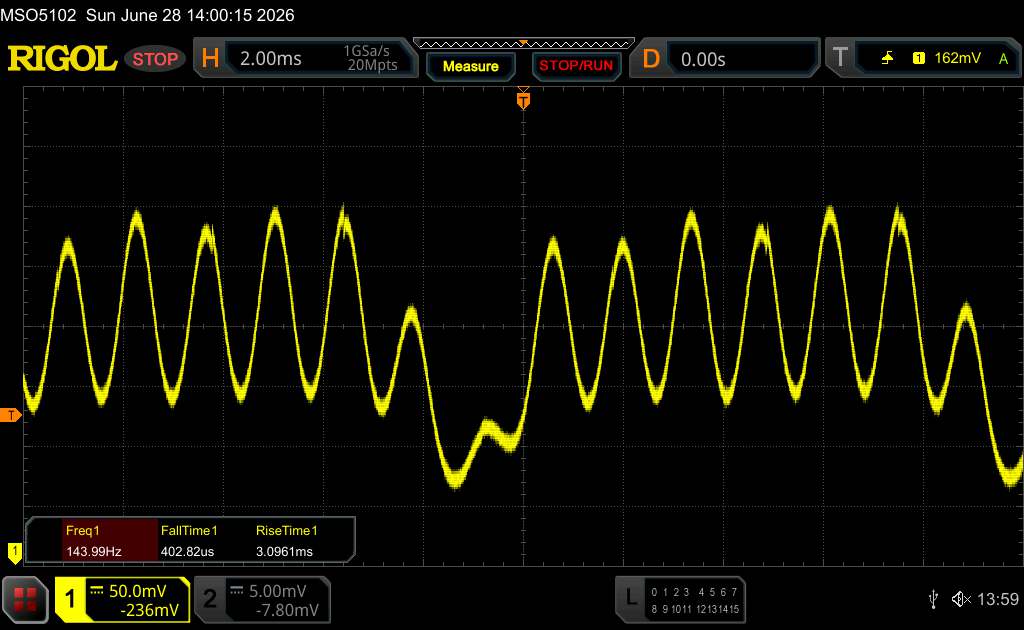 | |
The display backlight flickers at 144 Hz (worst case, e.g., utilizing PWM) . The frequency of 144 Hz is very low, so the flickering may cause eyestrain and headaches after extended use. In comparison: 52 % of all tested devices do not use PWM to dim the display. If PWM was detected, an average of 7605 (minimum: 5 - maximum: 343500) Hz was measured. | |||
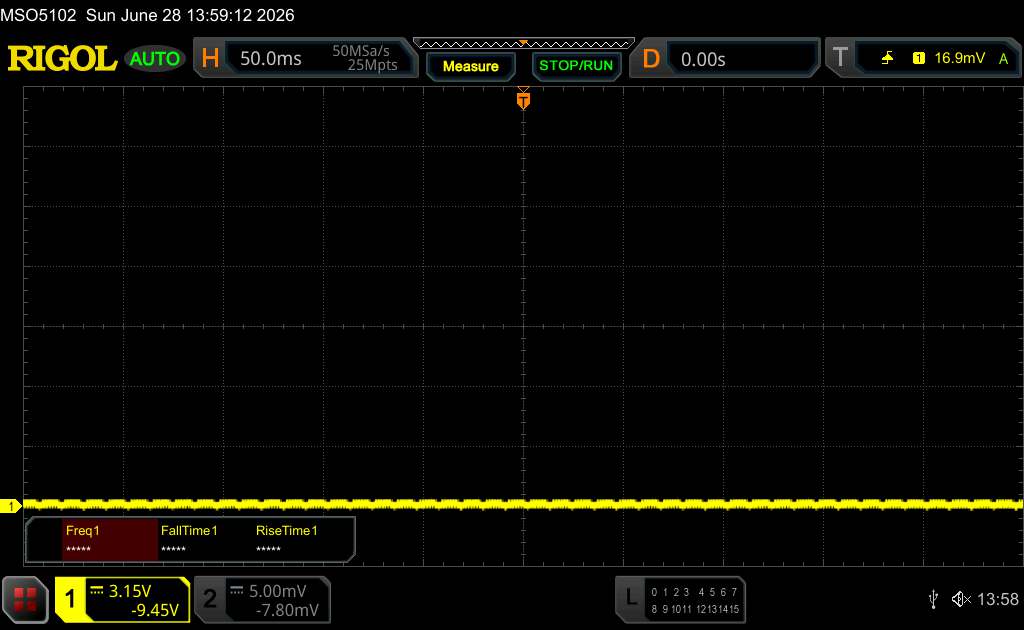
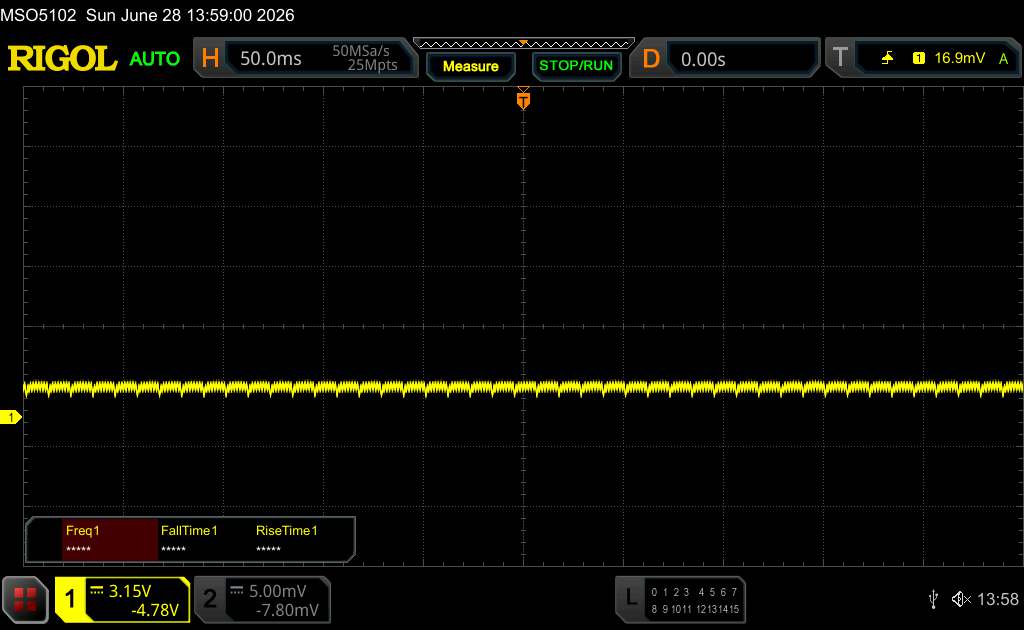
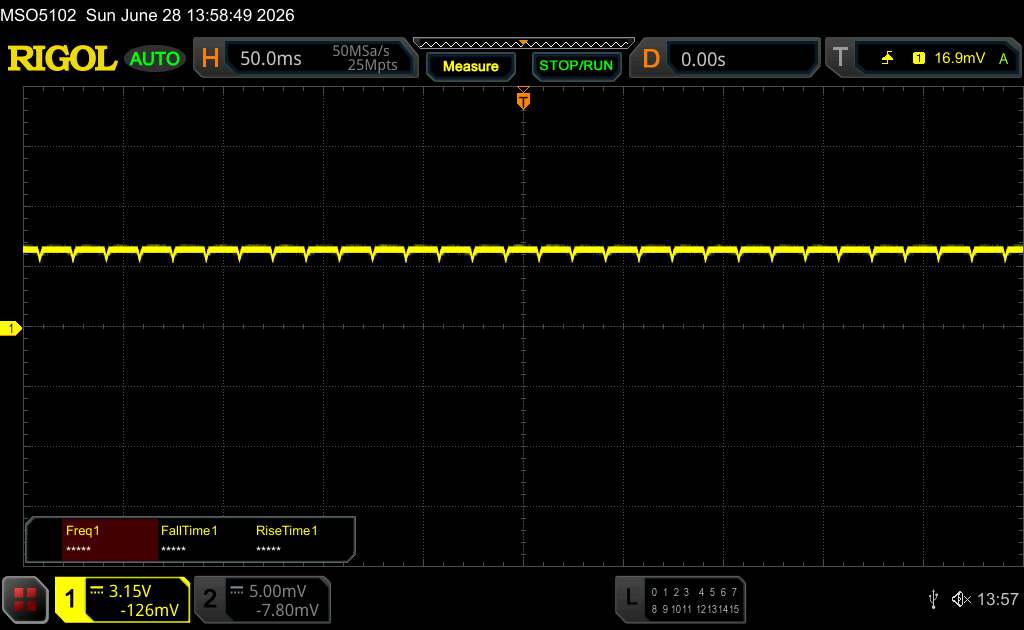
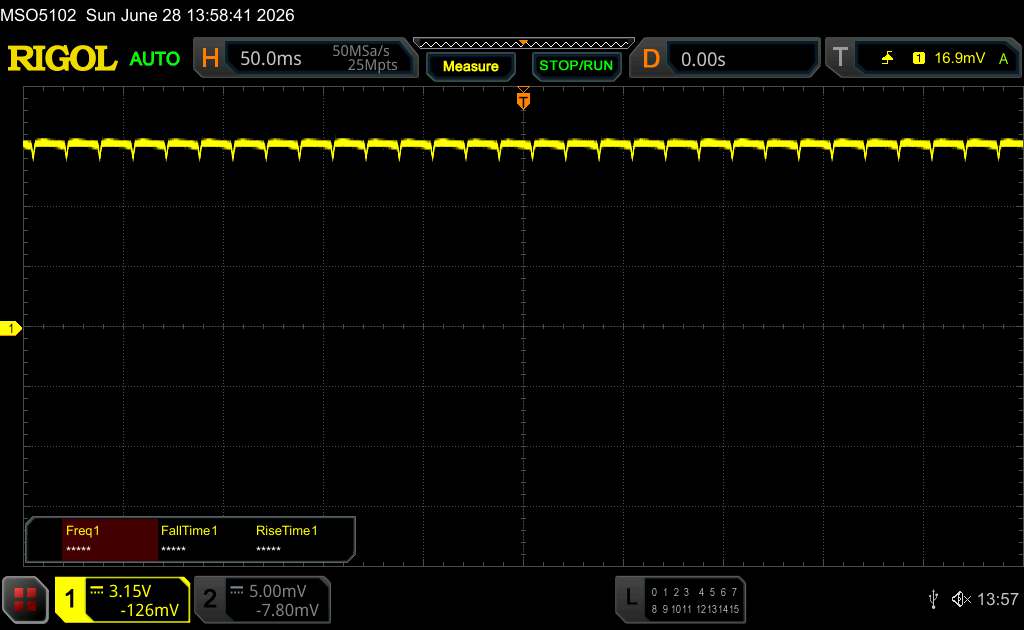
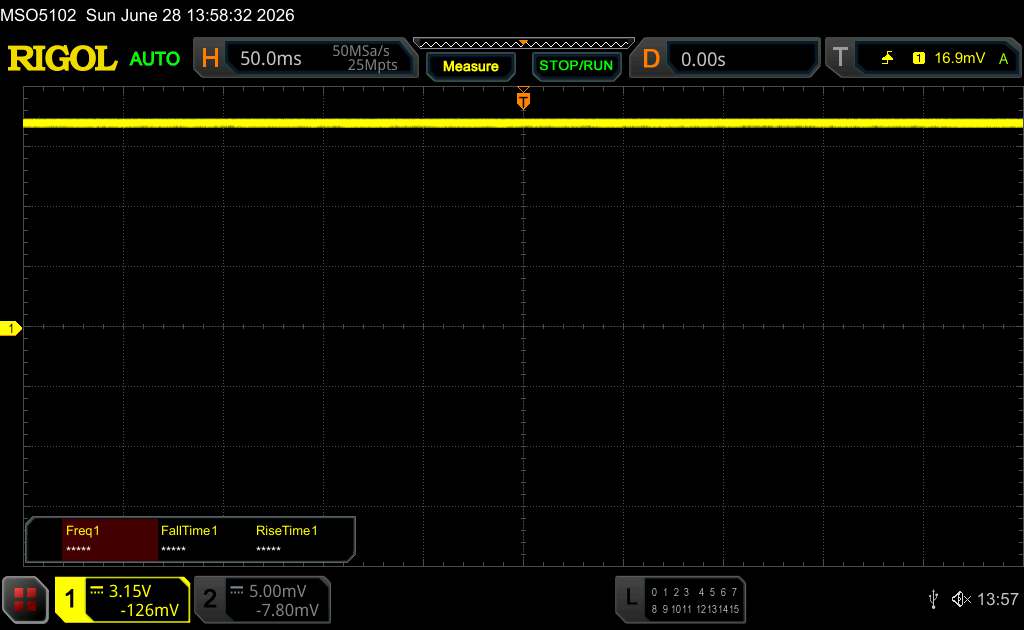
Series of measurements with a fixed zoom level and different brightness settings (Although the amplitude curve at minimum brightness appears flat, this is due to the scaling. The info box shows a magnified version of the amplitude at minimum brightness.)
We really like the color reproduction in "Natural" mode.
In general, images on the screen look vivid, and the contrast is very strong thanks to the OLED screen's true black.
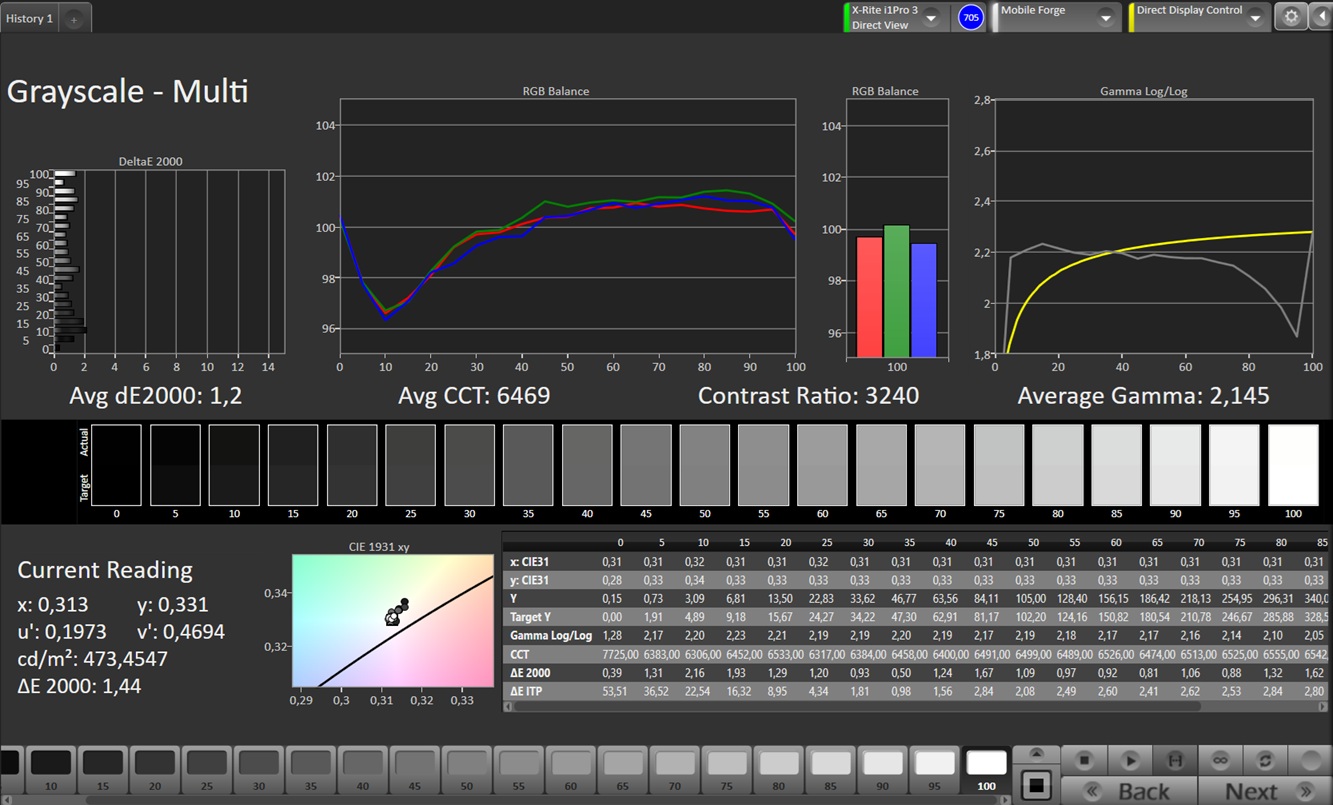
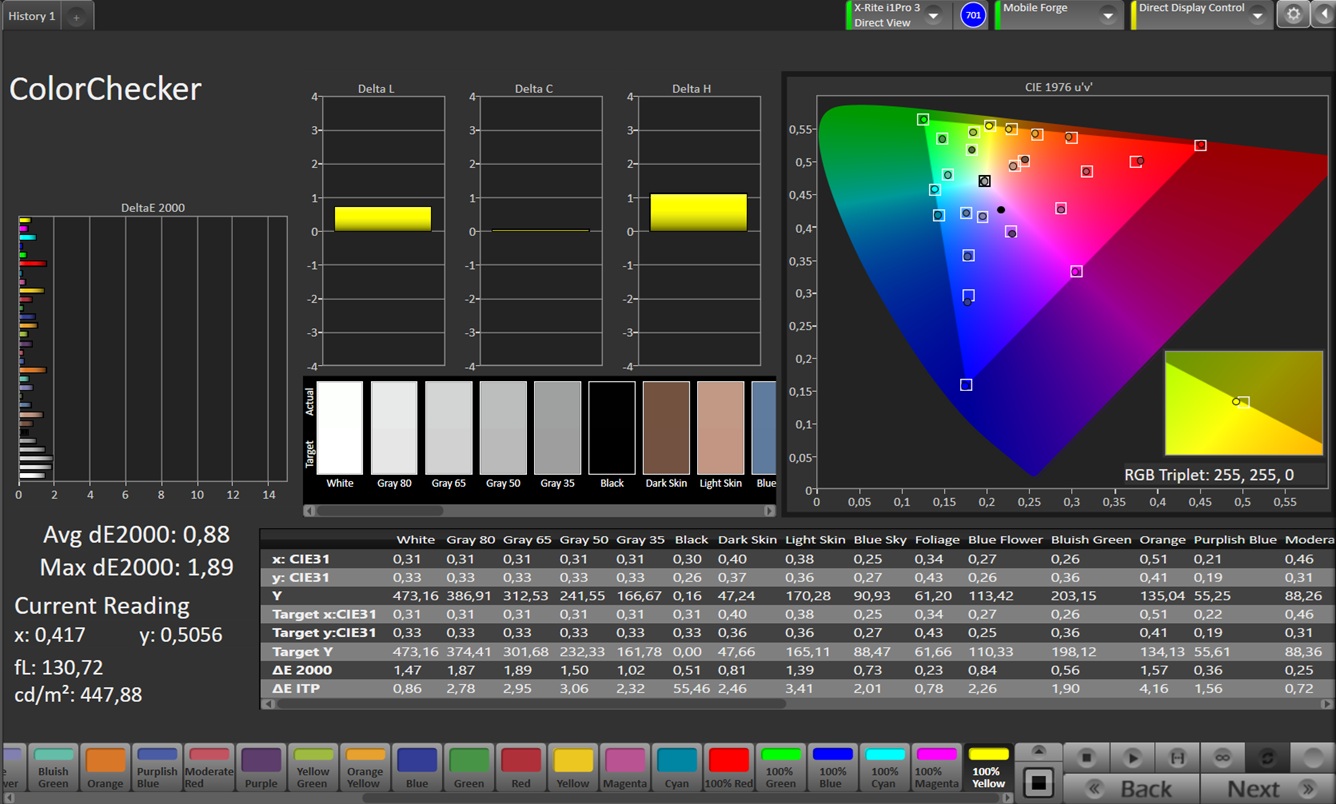
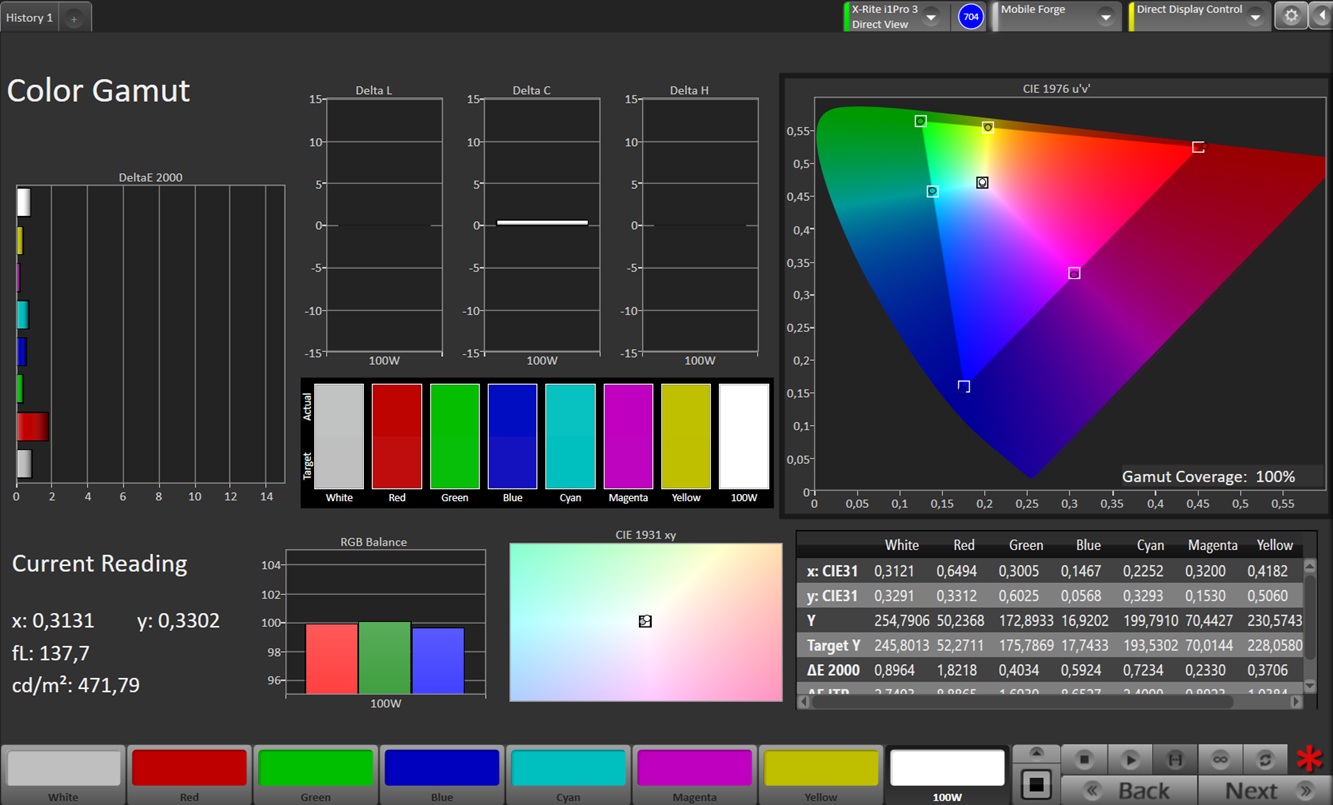
Display Response Times
| ↔ Response Time Black to White | ||
|---|---|---|
| 1 ms ... rise ↗ and fall ↘ combined | ↗ 0.5 ms rise | 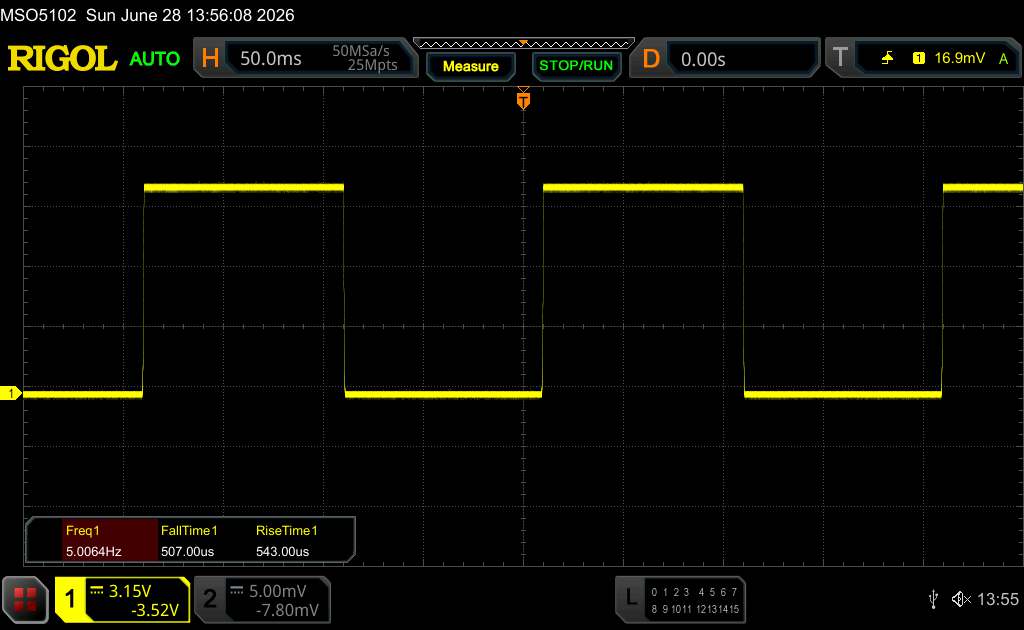 |
| ↘ 0.5 ms fall | ||
| The screen shows very fast response rates in our tests and should be very well suited for fast-paced gaming. In comparison, all tested devices range from 0.1 (minimum) to 240 (maximum) ms. » 4 % of all devices are better. This means that the measured response time is better than the average of all tested devices (19.7 ms). | ||
| ↔ Response Time 50% Grey to 80% Grey | ||
| 1.6 ms ... rise ↗ and fall ↘ combined | ↗ 0.8 ms rise | 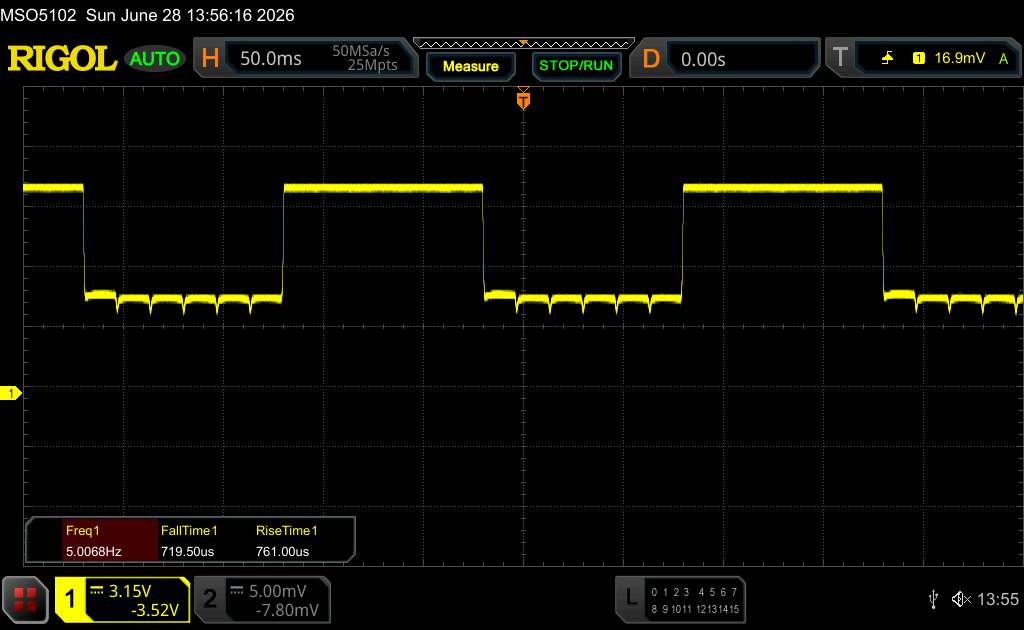 |
| ↘ 0.8 ms fall | ||
| The screen shows very fast response rates in our tests and should be very well suited for fast-paced gaming. In comparison, all tested devices range from 0.13 (minimum) to 636 (maximum) ms. » 8 % of all devices are better. This means that the measured response time is better than the average of all tested devices (30.7 ms). | ||
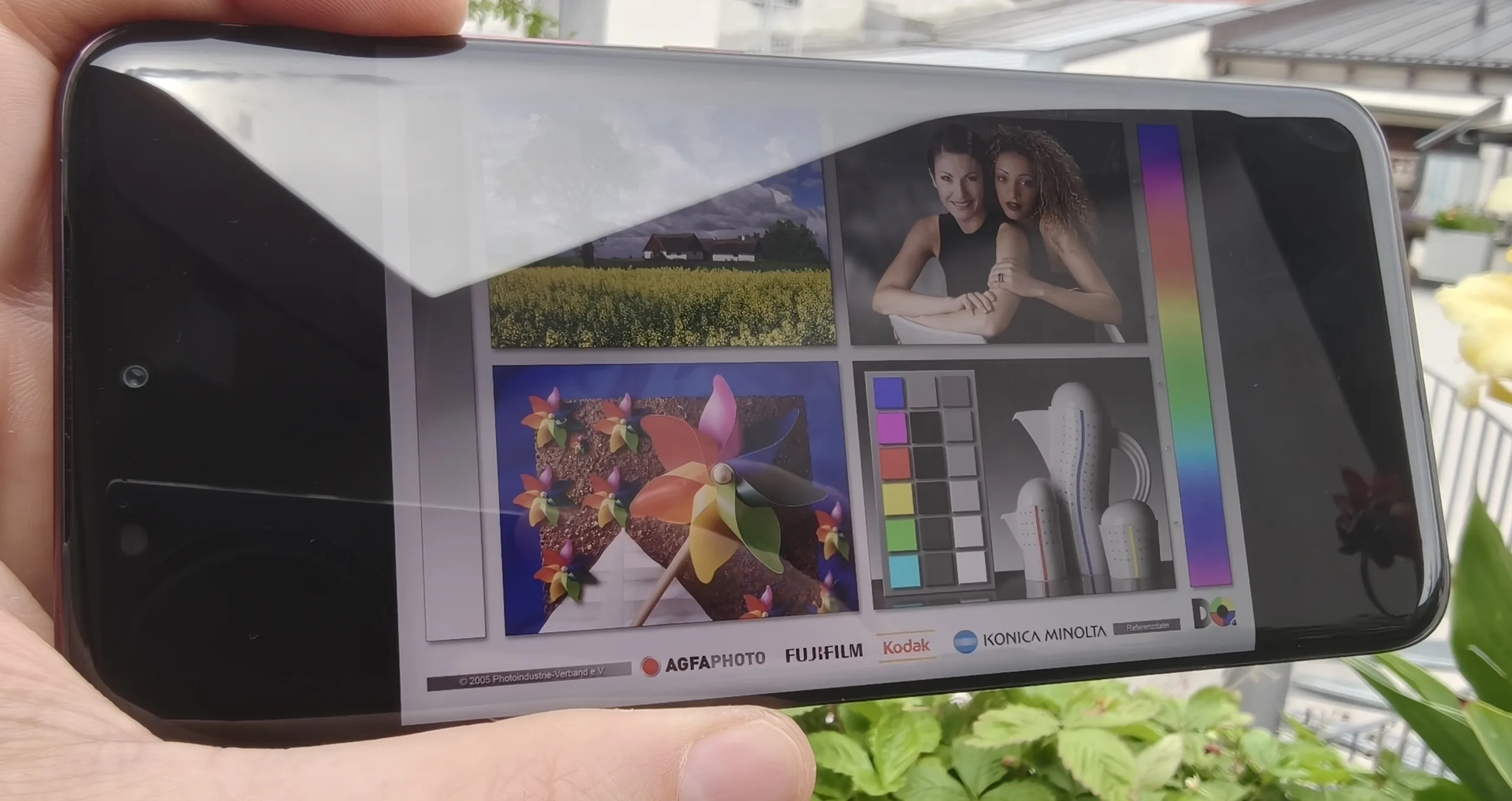
The screen can be used outdoors without any issues, even on bright days.
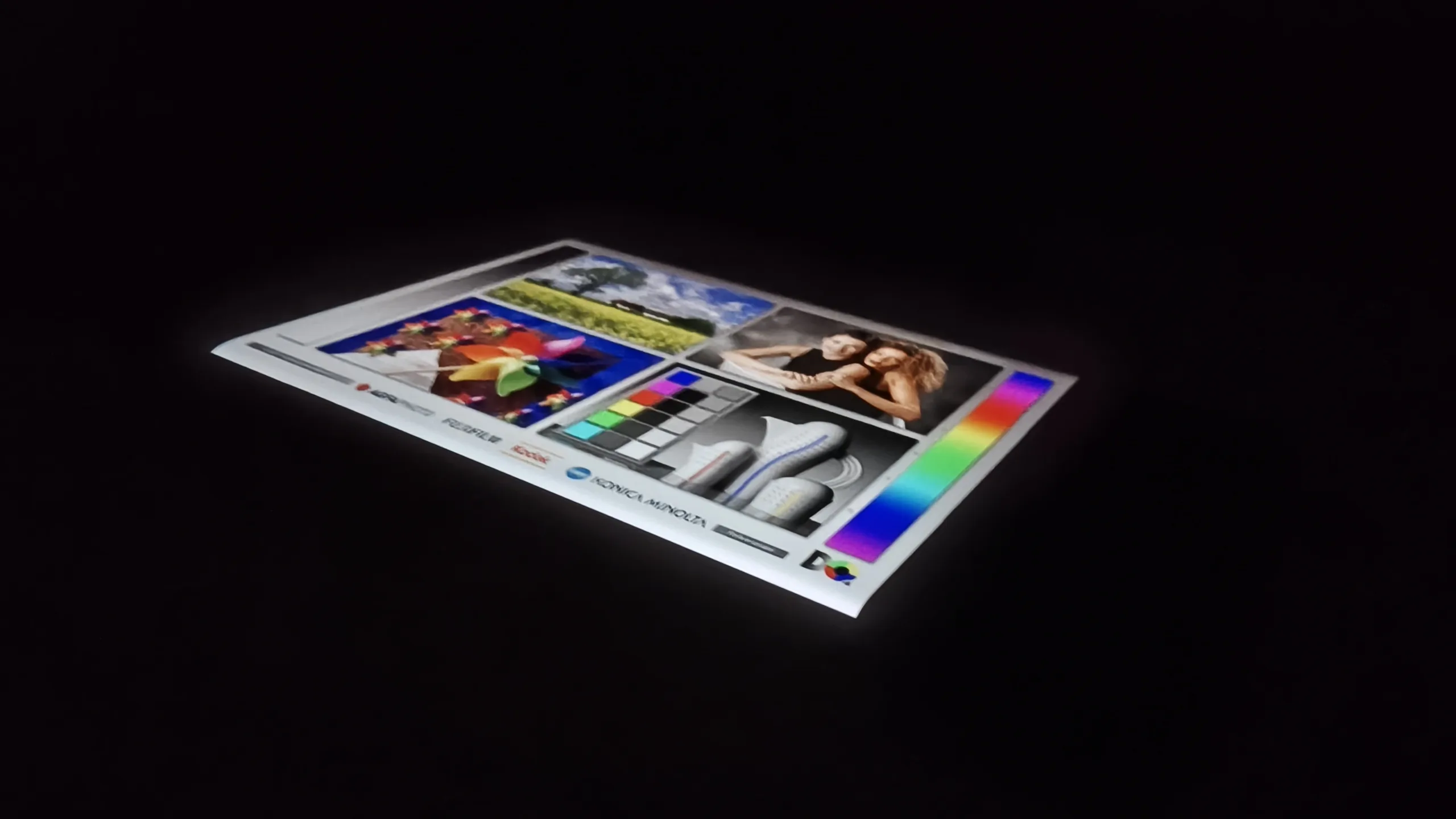
The viewing angles are also perfectly fine.
Performance – We could have done better
The MediaTek Dimensity 8500 SoC is certainly powerful, but there are much more speedy SoCs in the Motorola Edge 70 Pro’s price range, which is clearly reflected in the benchmark results.
In everyday use, the system usually runs smoothly, but it quickly reaches its limits with more demanding apps.
| Antutu v10 - Total Score | |
| Vivo X300 | |
| Motorola Edge 70 Pro | |
| Average MediaTek Dimensity 8500 (n=1) | |
| Average of class Smartphone (264891 - 3269237, n=75, last 2 years) | |
| Motorola Edge 60 Pro | |
| CrossMark - Overall | |
| Samsung Galaxy S26+ | |
| Xiaomi Poco X8 Pro | |
| Average of class Smartphone (376 - 2856, n=107, last 2 years) | |
| Average MediaTek Dimensity 8500 (1041 - 1287, n=3) | |
| Motorola Edge 70 Pro | |
| UL Procyon AI Inference for Android - Overall Score NNAPI | |
| Motorola Edge 70 Pro | |
| Motorola Edge 60 Pro | |
| Average MediaTek Dimensity 8500 (42896 - 63650, n=3) | |
| Xiaomi Poco X8 Pro | |
| Samsung Galaxy S26+ | |
| Average of class Smartphone (2895 - 66164, n=99, last 2 years) | |
| AImark - Score v3.x | |
| Xiaomi Poco X8 Pro | |
| Average MediaTek Dimensity 8500 (28680 - 29976, n=2) | |
| Motorola Edge 70 Pro | |
| Average of class Smartphone (293 - 307528, n=67, last 2 years) | |
| Samsung Galaxy S26+ | |
In terms of graphics performance, too, it only ranks in the middle compared to similarly priced phones. Most games run on the smartphone, but you won't get to experience truly enjoyable gameplay with high frame rates and completely smooth gameplay at high detail settings.
GFXBench (DX / GLBenchmark) 2.7: T-Rex Onscreen | 1920x1080 T-Rex Offscreen
GFXBench 3.0: on screen Manhattan Onscreen OGL | 1920x1080 1080p Manhattan Offscreen
GFXBench 3.1: on screen Manhattan ES 3.1 Onscreen | 1920x1080 Manhattan ES 3.1 Offscreen
GFXBench: on screen Car Chase Onscreen | 1920x1080 Car Chase Offscreen | on screen Aztec Ruins High Tier Onscreen | 2560x1440 Aztec Ruins High Tier Offscreen | on screen Aztec Ruins Normal Tier Onscreen | 1920x1080 Aztec Ruins Normal Tier Offscreen | 3840x2160 4K Aztec Ruins High Tier Offscreen
| 3DMark / Wild Life Extreme Unlimited | |
| Samsung Galaxy S26+ | |
| Vivo X300 | |
| Xiaomi Poco X8 Pro | |
| Motorola Edge 70 Pro | |
| Motorola Edge 60 Pro | |
| 3DMark / Wild Life Extreme | |
| Samsung Galaxy S26+ | |
| Vivo X300 | |
| Xiaomi Poco X8 Pro | |
| Motorola Edge 70 Pro | |
| Motorola Edge 60 Pro | |
| 3DMark / Wild Life Unlimited Score | |
| Samsung Galaxy S26+ | |
| Vivo X300 | |
| Xiaomi Poco X8 Pro | |
| Motorola Edge 70 Pro | |
| Motorola Edge 60 Pro | |
| 3DMark / Solar Bay Score | |
| Samsung Galaxy S26+ | |
| Motorola Edge 60 Pro | |
| Motorola Edge 70 Pro | |
| Xiaomi Poco X8 Pro | |
| 3DMark / Solar Bay Unlimited Score | |
| Samsung Galaxy S26+ | |
| Motorola Edge 60 Pro | |
| Motorola Edge 70 Pro | |
| Xiaomi Poco X8 Pro | |
| 3DMark / Steel Nomad Light Unlimited Score | |
| Samsung Galaxy S26+ | |
| Vivo X300 | |
| Motorola Edge 70 Pro | |
| Xiaomi Poco X8 Pro | |
| Motorola Edge 60 Pro | |
| 3DMark / Steel Nomad Light Score | |
| Samsung Galaxy S26+ | |
| Vivo X300 | |
| Motorola Edge 70 Pro | |
| Xiaomi Poco X8 Pro | |
| Motorola Edge 60 Pro | |
| GFXBench (DX / GLBenchmark) 2.7 / T-Rex Onscreen | |
| Samsung Galaxy S26+ | |
| Vivo X300 | |
| Motorola Edge 60 Pro | |
| Xiaomi Poco X8 Pro | |
| GFXBench (DX / GLBenchmark) 2.7 / T-Rex Offscreen | |
| Vivo X300 | |
| Samsung Galaxy S26+ | |
| Xiaomi Poco X8 Pro | |
| Motorola Edge 60 Pro | |
| GFXBench 3.0 / Manhattan Onscreen OGL | |
| Samsung Galaxy S26+ | |
| Vivo X300 | |
| Motorola Edge 60 Pro | |
| Xiaomi Poco X8 Pro | |
| GFXBench 3.0 / 1080p Manhattan Offscreen | |
| Vivo X300 | |
| Samsung Galaxy S26+ | |
| Motorola Edge 60 Pro | |
| Xiaomi Poco X8 Pro | |
| GFXBench 3.1 / Manhattan ES 3.1 Onscreen | |
| Samsung Galaxy S26+ | |
| Vivo X300 | |
| Xiaomi Poco X8 Pro | |
| Motorola Edge 60 Pro | |
| GFXBench 3.1 / Manhattan ES 3.1 Offscreen | |
| Vivo X300 | |
| Samsung Galaxy S26+ | |
| Xiaomi Poco X8 Pro | |
| Motorola Edge 60 Pro | |
| GFXBench / Car Chase Onscreen | |
| Samsung Galaxy S26+ | |
| Vivo X300 | |
| Motorola Edge 70 Pro | |
| Xiaomi Poco X8 Pro | |
| Motorola Edge 60 Pro | |
| GFXBench / Car Chase Offscreen | |
| Samsung Galaxy S26+ | |
| Vivo X300 | |
| Motorola Edge 70 Pro | |
| Xiaomi Poco X8 Pro | |
| Motorola Edge 60 Pro | |
| GFXBench / Aztec Ruins High Tier Onscreen | |
| Vivo X300 | |
| Samsung Galaxy S26+ | |
| Xiaomi Poco X8 Pro | |
| Motorola Edge 60 Pro | |
| GFXBench / Aztec Ruins High Tier Offscreen | |
| Vivo X300 | |
| Samsung Galaxy S26+ | |
| Xiaomi Poco X8 Pro | |
| Motorola Edge 60 Pro | |
| GFXBench / Aztec Ruins Normal Tier Onscreen | |
| Samsung Galaxy S26+ | |
| Vivo X300 | |
| Xiaomi Poco X8 Pro | |
| Motorola Edge 60 Pro | |
| GFXBench / Aztec Ruins Normal Tier Offscreen | |
| Vivo X300 | |
| Samsung Galaxy S26+ | |
| Xiaomi Poco X8 Pro | |
| Motorola Edge 60 Pro | |
| GFXBench / 4K Aztec Ruins High Tier Offscreen | |
| Vivo X300 | |
| Samsung Galaxy S26+ | |
| Xiaomi Poco X8 Pro | |
| Motorola Edge 60 Pro | |
The browser is fast, and even complex websites load quickly in our test.
| Jetstream 2 - 2.0 Total | |
| Samsung Galaxy S26+ (Chrome 146) | |
| Average of class Smartphone (63.9 - 423, n=117, last 2 years) | |
| Motorola Edge 70 Pro (Chrome 150) | |
| Average MediaTek Dimensity 8500 (n=1) | |
| Motorola Edge 60 Pro (Chrome 137.0.7151.115) | |
| Speedometer 2.0 - Result 2.0 | |
| Samsung Galaxy S26+ (Chrome 146) | |
| Average of class Smartphone (49.3 - 733, n=73, last 2 years) | |
| Motorola Edge 70 Pro (Chrome 150) | |
| Average MediaTek Dimensity 8500 (n=1) | |
| Motorola Edge 60 Pro (Chrome 137.0.7151.115) | |
| Speedometer 3 - Score 3.0 | |
| Samsung Galaxy S26+ (Chrome 146) | |
| Average of class Smartphone (3.06 - 56.5, n=82, last 2 years) | |
| Xiaomi Poco X8 Pro (Chrome 146) | |
| Average MediaTek Dimensity 8500 (10.5 - 13.9, n=2) | |
| Motorola Edge 70 Pro (Chrome 150) | |
| WebXPRT 4 - Overall | |
| Average of class Smartphone (56 - 278, n=90, last 2 years) | |
| Motorola Edge 60 Pro (Chrome 137.0.7151.115) | |
| Motorola Edge 70 Pro (Chrome 150) | |
| Average MediaTek Dimensity 8500 (n=1) | |
| Octane V2 - Total Score | |
| Samsung Galaxy S26+ (Chrome 146) | |
| Xiaomi Poco X8 Pro (Chrome 146) | |
| Average of class Smartphone (6015 - 160221, n=136, last 2 years) | |
| Average MediaTek Dimensity 8500 (39454 - 62098, n=3) | |
| Motorola Edge 70 Pro (Chrome 150) | |
| Motorola Edge 60 Pro (Chrome 137.0.7151.115) | |
| Mozilla Kraken 1.1 - Total | |
| Motorola Edge 60 Pro (Chrome 137.0.7151.115) | |
| Motorola Edge 70 Pro (Chrome 150) | |
| Average MediaTek Dimensity 8500 (822 - 959, n=3) | |
| Average of class Smartphone (216 - 2718, n=121, last 2 years) | |
| Xiaomi Poco X8 Pro (Chrome 146) | |
| Vivo X300 (Chrome 143) | |
| Samsung Galaxy S26+ (Chrome 146) | |
* ... smaller is better
The UFS 4.1 memory is among the fastest currently available in the memory chip market. This ensures fast data transfers and short loading times for apps.
| Motorola Edge 70 Pro | Motorola Edge 60 Pro | Vivo X300 | Xiaomi Poco X8 Pro | Samsung Galaxy S26+ | Average 512 GB UFS 4.1 Flash | Average of class Smartphone | |
|---|---|---|---|---|---|---|---|
| AndroBench 3-5 | 50% | 27% | -19% | -18% | 32% | -8% | |
| Sequential Read 256KB (MB/s) | 3765.9 | 3852.89 2% | 2056.87 -45% | 3576.86 -5% | 3574.74 -5% | 3616 ? -4% | 2278 ? -40% |
| Sequential Write 256KB (MB/s) | 3745.6 | 3842.42 3% | 1997.76 -47% | 3565.14 -5% | 2543.31 -32% | 3225 ? -14% | 1971 ? -47% |
| Random Read 4KB (MB/s) | 399.6 | 439.58 10% | 332.61 -17% | 324.76 -19% | 419.84 5% | 414 ? 4% | 317 ? -21% |
| Random Write 4KB (MB/s) | 206.8 | 585.66 183% | 654.09 216% | 112.05 -46% | 122.63 -41% | 498 ? 141% | 362 ? 75% |
Emissions – Significant Reduction
Temperature
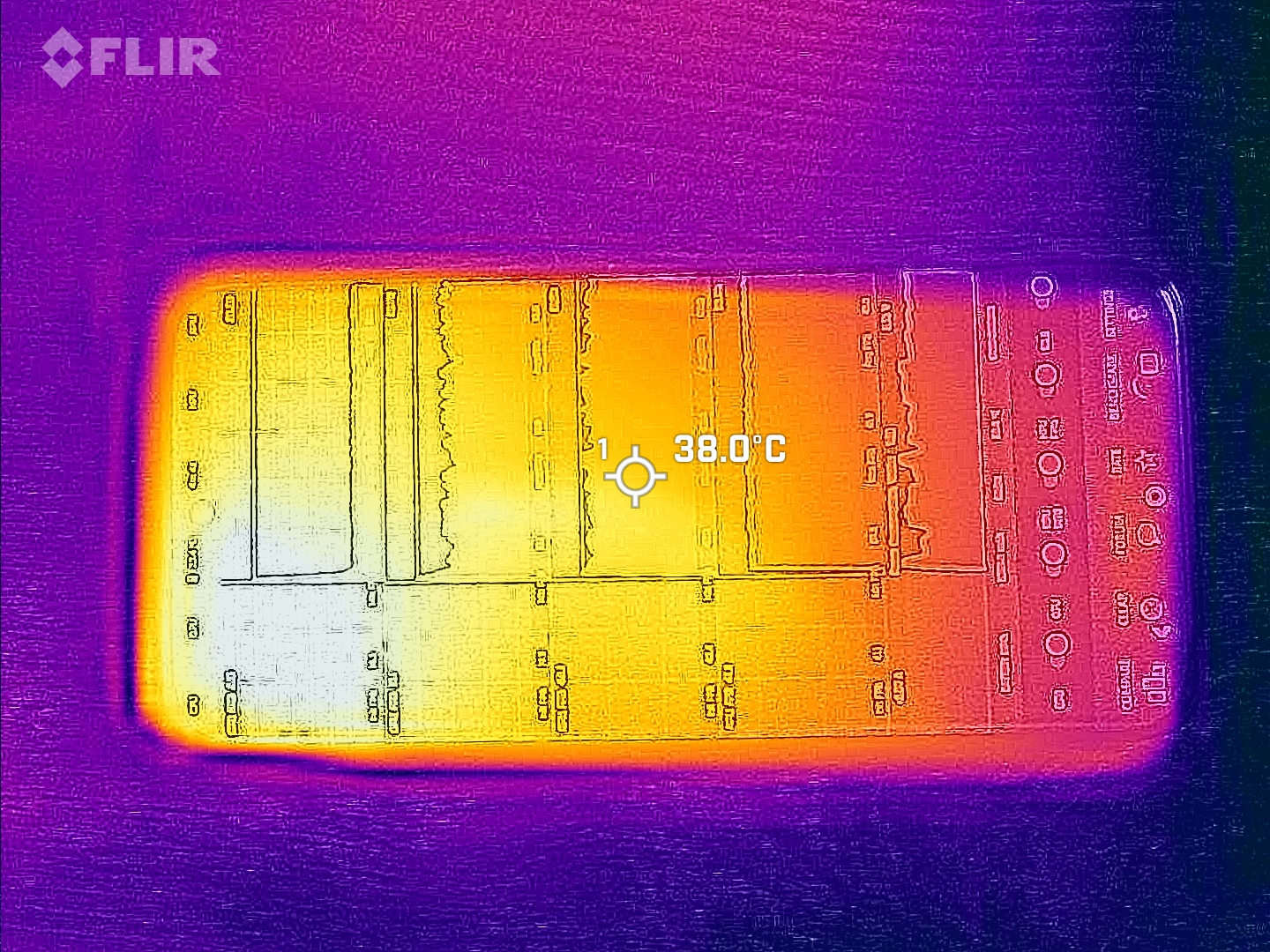
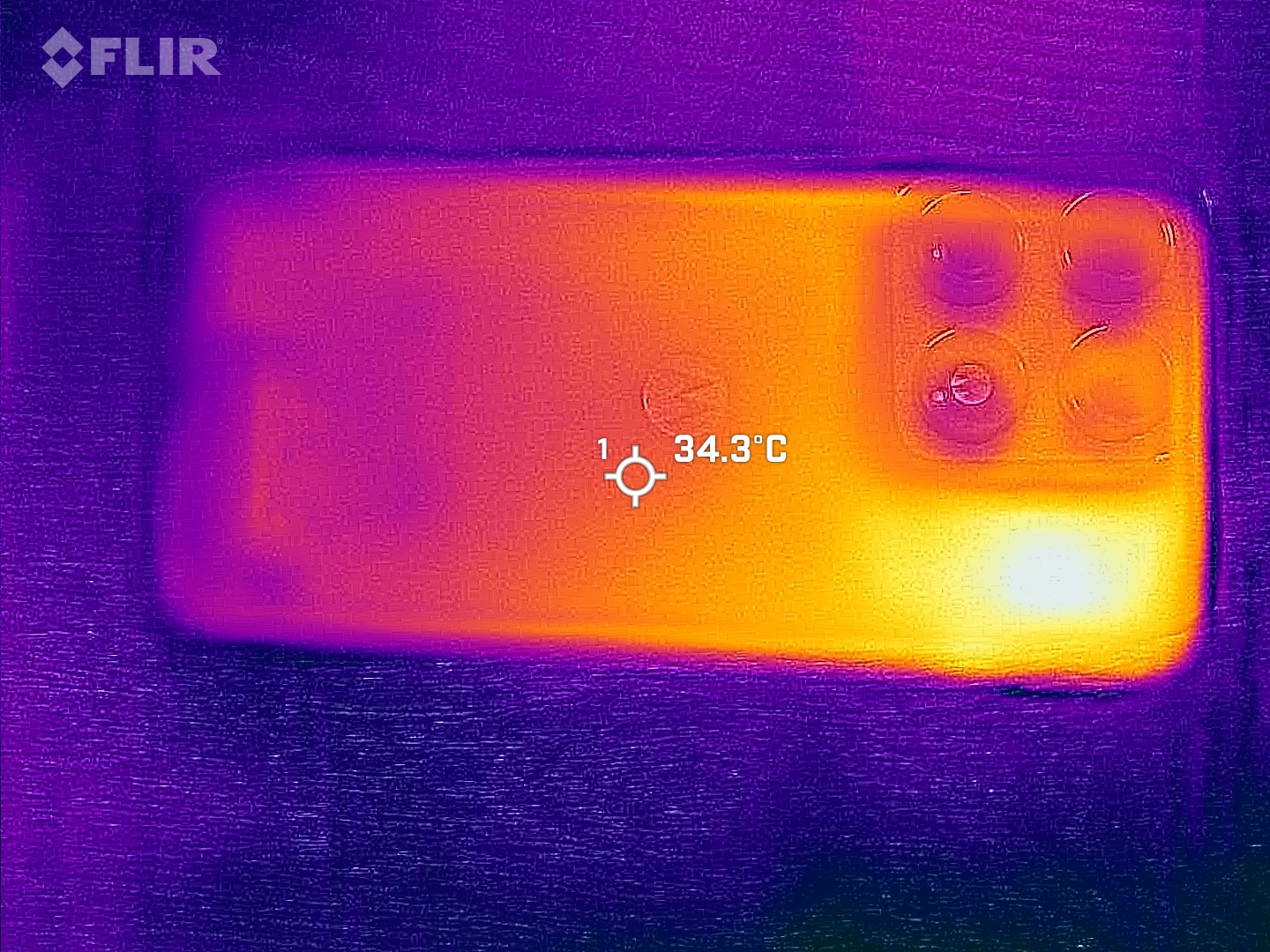
Temperatures on the case under heavy load can become problematic, especially since we’re still measuring at room temperature. On hot days outdoors, these temperatures can even exceed the 50°C mark.
This is also reflected in the sometimes severe throttling of the SoC, which we detect using the 3DMark stress tests. This problem was already present in the previous model, so it’s likely related to the slim design.
(-) The maximum temperature on the upper side is 47.8 °C / 118 F, compared to the average of 35.4 °C / 96 F, ranging from 21.9 to 247 °C for the class Smartphone.
(±) The bottom heats up to a maximum of 44.9 °C / 113 F, compared to the average of 34.1 °C / 93 F
(+) In idle usage, the average temperature for the upper side is 28.7 °C / 84 F, compared to the device average of 33 °C / 91 F.
3DMark Stress Tests
| 3DMark | |
| Wild Life Stress Test Stability | |
| Xiaomi Poco X8 Pro | |
| Samsung Galaxy S26+ | |
| Vivo X300 | |
| Motorola Edge 60 Pro | |
| Wild Life Extreme Stress Test | |
| Xiaomi Poco X8 Pro | |
| Samsung Galaxy S26+ | |
| Motorola Edge 70 Pro | |
| Vivo X300 | |
| Motorola Edge 60 Pro | |
| Solar Bay Stress Test Stability | |
| Xiaomi Poco X8 Pro | |
| Samsung Galaxy S26+ | |
| Motorola Edge 70 Pro | |
| Motorola Edge 60 Pro | |
| Steel Nomad Light Stress Test Stability | |
| Xiaomi Poco X8 Pro | |
| Samsung Galaxy S26+ | |
| Vivo X300 | |
| Motorola Edge 70 Pro | |
| Motorola Edge 60 Pro | |
Speaker
The speaker on the bottom edge is assisted by the earpiece, creating a fairly rich stereo sound that really shines with pop music. Even with classical music, the sound remains reasonably well-defined, and individual instruments are easy to make out.
Headphones and speakers can be connected via USB-C or Bluetooth and sound clear. Many audio codecs are available for wireless connectivity.
Motorola Edge 70 Pro audio analysis
(+) | speakers can play relatively loud (83.3 dB)
Bass 100 - 315 Hz
(-) | nearly no bass - on average 21.4% lower than median
(±) | linearity of bass is average (12.4% delta to prev. frequency)
Mids 400 - 2000 Hz
(±) | higher mids - on average 6.6% higher than median
(±) | linearity of mids is average (8.2% delta to prev. frequency)
Highs 2 - 16 kHz
(+) | balanced highs - only 3.3% away from median
(±) | linearity of highs is average (7.8% delta to prev. frequency)
Overall 100 - 16.000 Hz
(±) | linearity of overall sound is average (25.7% difference to median)
Compared to same class
» 64% of all tested devices in this class were better, 6% similar, 29% worse
» The best had a delta of 11%, average was 34%, worst was 136%
Compared to all devices tested
» 79% of all tested devices were better, 4% similar, 17% worse
» The best had a delta of 4%, average was 23%, worst was 136%
Samsung Galaxy S26+ audio analysis
(+) | speakers can play relatively loud (90.1 dB)
Bass 100 - 315 Hz
(-) | nearly no bass - on average 21.2% lower than median
(±) | linearity of bass is average (7.4% delta to prev. frequency)
Mids 400 - 2000 Hz
(±) | higher mids - on average 5.5% higher than median
(+) | mids are linear (5.5% delta to prev. frequency)
Highs 2 - 16 kHz
(+) | balanced highs - only 2.6% away from median
(+) | highs are linear (3.6% delta to prev. frequency)
Overall 100 - 16.000 Hz
(±) | linearity of overall sound is average (15% difference to median)
Compared to same class
» 2% of all tested devices in this class were better, 3% similar, 95% worse
» The best had a delta of 11%, average was 34%, worst was 136%
Compared to all devices tested
» 21% of all tested devices were better, 4% similar, 75% worse
» The best had a delta of 4%, average was 23%, worst was 136%
Battery Life – Good Endurance
Energy Intake
The Edge 70 Pro isn't the most energy-efficient phone in idle mode, and in our tests with various benchmarks, it struggles to return to low power consumption. Under load, power consumption is at a typical level.
| Off / Standby |   0.1 / 0.2 Watt 0.1 / 0.2 Watt |
| Idle |  1.4 / 1.6 / 1.9 Watt 1.4 / 1.6 / 1.9 Watt |
| Load |
9.7 / 13.2 Watt |
    
| |
Key:
min: ,
med: ,
max: Metrahit Energy | |
| Motorola Edge 70 Pro 6500 mAh | Motorola Edge 60 Pro 6000 mAh | Vivo X300 5360 mAh | Xiaomi Poco X8 Pro 6500 mAh | Samsung Galaxy S26+ 4900 mAh | Average MediaTek Dimensity 8500 | Average of class Smartphone | |
|---|---|---|---|---|---|---|---|
| Power Consumption | -8% | 7% | 30% | 11% | 13% | 21% | |
| Idle Minimum * (Watt) | 1.4 | 1.3 7% | 0.6 57% | 0.97 31% | 0.56 60% | 1.207 ? 14% | 0.901 ? 36% |
| Idle Average * (Watt) | 1.6 | 1.9 -19% | 2.02 -26% | 1.19 26% | 1.28 20% | 1.557 ? 3% | 1.483 ? 7% |
| Idle Maximum * (Watt) | 1.9 | 2.4 -26% | 2.08 -9% | 1.28 33% | 1.31 31% | 1.723 ? 9% | 1.677 ? 12% |
| Load Average * (Watt) | 9.7 | 8.6 11% | 5.99 38% | 12.38 -28% | 7.15 ? 26% | 6.82 ? 30% | |
| Load Maximum * (Watt) | 13.2 | 14.9 -13% | 10.53 20% | 16.9 -28% | 11.3 ? 14% | 10.8 ? 18% |
* ... smaller is better
Power consumption: Geekbench (150 cd/m²)
Power consumption: GFXbench (150 cd/m²)
Battery life
Motorola has managed to fit a 6,500 mAh battery into the device, despite its slim design. As a result, the phone delivers 21:37 hours of battery life in our real-world Wi-Fi test. That’s easily enough to last through a workday—and usually two.
Fast charging at up to 90 watts is possible, allowing the battery to fully recharge in under an hour. Wireless charging is also supported, and peripheral devices can be powered either via cable or wirelessly from the phone’s battery using reverse charging.
| Motorola Edge 70 Pro 6500 mAh | Motorola Edge 60 Pro 6000 mAh | Vivo X300 5360 mAh | Xiaomi Poco X8 Pro 6500 mAh | Samsung Galaxy S26+ 4900 mAh | |
|---|---|---|---|---|---|
| Battery runtime | 4% | -9% | -10% | -18% | |
| Reader / Idle (h) | 36.2 | ||||
| WiFi v1.3 (h) | 21.6 | 22.4 4% | 19.6 -9% | 19.4 -10% | 17.8 -18% |
| Load (h) | 5 |
Notebookcheck Overall Rating
A high-quality smartphone with versatile cameras and good battery life.
The Edge 70 Pro is already available at a relatively affordable price, but it could have used a faster SoC.

Motorola Edge 70 Pro
- 07/14/2026 v8
Florian Schmitt
 Total Sustainability Score:
 A Comparison of Possible Alternatives
Image | Model / Review | Price | Weight | Drive | Display |
|---|---|---|---|---|---|
1. 83.2%  | Motorola Edge 70 Pro MediaTek Dimensity 8500 ⎘ ARM Mali-G720 MP8 ⎘ 12 GB Memory, 512 GB UFS 4.x | Amazon: $599.00 List Price: 800€ | 183 g | 512 GB UFS 4.1 Flash | 6.78" 2772x1272 450 PPI AMOLED |
2. 81.5%  | Motorola Edge 60 Pro MediaTek Dimensity 8350 ⎘ ARM Mali-G615 MP6 ⎘ 12 GB Memory, 512 GB UFS 4.x | Amazon: 1. $479.99 Motorola Moto Edge 60 Pro 5G... 2. $459.99 Motorola Edge 60 Pro Dual-SI... 3. $331.99 Motorola Edge 60 16.9 Cm (6.... List Price: 600 Euro | 186 g | 512 GB UFS 4.0 Flash | 6.67" 2712x1220 446 PPI P-OLED |
3. 88%  | Vivo X300 MediaTek Dimensity 9500 ⎘ Arm Mali G1- Ultra MC12 ⎘ 12 GB Memory, 256 GB UFS 4.x | List Price: 1049€ | 190 g | 256 GB UFS 4.1 Flash | 6.31" 2640x1216 461 PPI AMOLED |
4. 83.8%  | Xiaomi Poco X8 Pro MediaTek Dimensity 8500 ⎘ ARM Mali-G720 MP8 ⎘ 12 GB Memory, 512 GB UFS 4.x | Amazon: $349.99 List Price: 400€ | 202 g | 512 GB UFS 4.1 Flash | 6.59" 2756x1268 460 PPI AMOLED |
5. 89%  | Samsung Galaxy S26+ Samsung Exynos 2600 ⎘ Samsung Xclipse 960 ⎘ 12 GB Memory, 256 GB UFS 4.x | List Price: 1249€ | 190 g | 256 GB UFS 4.0 Flash | 6.70" 3120x1440 513 PPI LTPO-AMOLED |
Transparency
The selection of devices to be reviewed is made by our editorial team. The test sample was provided to the author as a loan by the manufacturer or retailer for the purpose of this review. The lender had no influence on this review, nor did the manufacturer receive a copy of this review before publication. There was no obligation to publish this review. As an independent media company, Notebookcheck is not subjected to the authority of manufacturers, retailers or publishers.
This is how Notebookcheck is testing
Every year, Notebookcheck independently reviews hundreds of laptops and smartphones using standardized procedures to ensure that all results are comparable. We have continuously developed our test methods for around 20 years and set industry standards in the process. In our test labs, high-quality measuring equipment is utilized by experienced technicians and editors. These tests involve a multi-stage validation process. Our complex rating system is based on hundreds of well-founded measurements and benchmarks, which maintains objectivity. Further information on our test methods can be found here.
 Add as a preferred source on Google


