




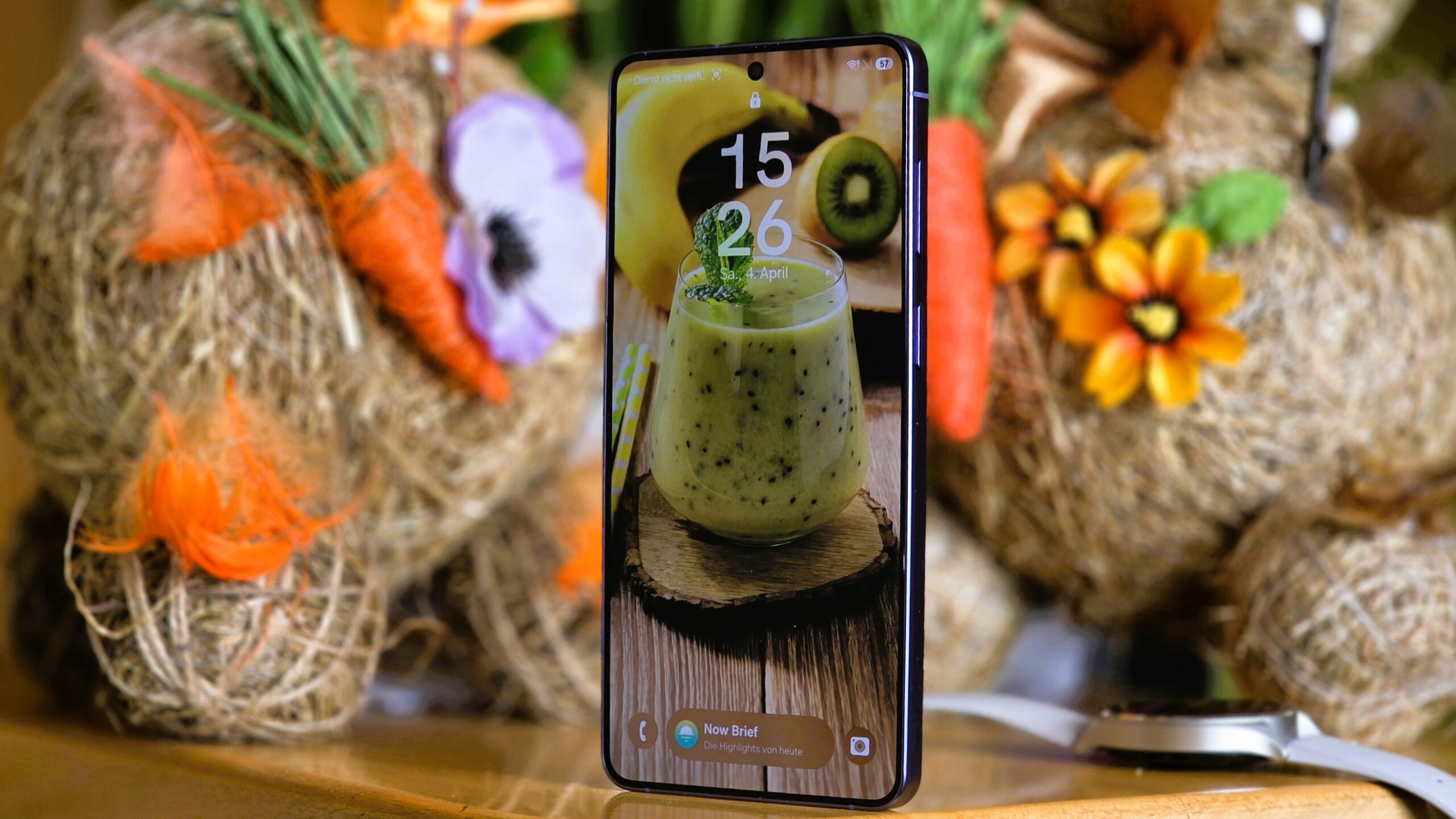
Verdict on the Samsung Galaxy S26+
In many ways, the Galaxy S26+ shows that it was only launched late in development as a replacement for the Galaxy S26 Edge, which was canceled at the last minute. It is therefore not surprising that upgrades to the Galaxy S25+ are very limited. Improvements to the Galaxy S26+ are few and far between and can only be seen in the chipset, as software advantages will be offset by future updates to the predecessor.
For the 2026 version, we would have liked to see at least one feature from the Ultra models to give it more of a reason to exist. Be it the frosted Gorilla Amour glass of the last generation or a stylus input for the large OLED screen.
What remains is a really good smartphone, but in some areas, such as battery or the cameras, it no longer looks quite up to date for the price range. The competition from China, such as the Vivo X300 Pro or Oppo Find X9 Pro, clearly has the edge here.
Pros
Cons
Price and availability of the Samsung Galaxy S26 Plus
The Galaxy S26+ can be purchased from the Samsung Online Store and online retailers, including Amazon.de, for an RRP starting at €1,249.

Table of Contents
- Verdict on the Samsung Galaxy S26+
- Specifications of the Samsung Galaxy S26+
- Case - Waterproof Samsung phone with IP rating
- Features - Android phone with USB 3.2
- Software - Long updates for the Galaxy cell phone
- Communication and GNSS - Android phone with 5G & WiFi 7
- Phone functions and voice quality - Galaxy S26 Plus with eSIM
- Camera - No upgrades for the Samsung phone
- Accessories and warranty - Android phone without power supply unit
- Input devices and operation - Galaxy S26 Plus with ultrasonic sensor
- Display - Large OLED screen with PWM dimming, but ...
- Performance - New Samsung chipset in the Galaxy phone
- Emissions - Samsung phone with hotspot
- Battery life - Galaxy S26 Plus still with "mini battery"
- Notebookcheck overall rating
- Possible alternatives in comparison
The Galaxy S26+ is the affordable flagship phone of the current S series with a large and sharp OLED screen. With the new Exynos 2600, Samsung once again has its own high-end chipset in its portfolio. We will also take a closer look at how Samsung's Exynos 2200 and Qualcomm's Snapdragon 8 Gen 5 SoC compare in this test. If you prefer something a little smaller, our Galaxy S26 is available here.
Specifications of the Samsung Galaxy S26+
Case - Waterproof Samsung phone with IP rating
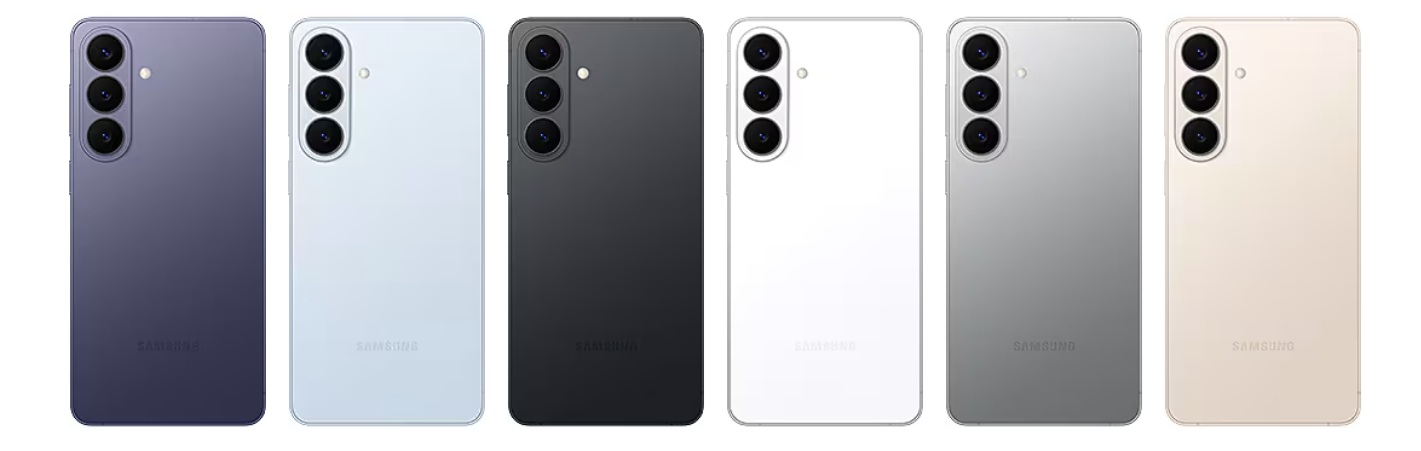
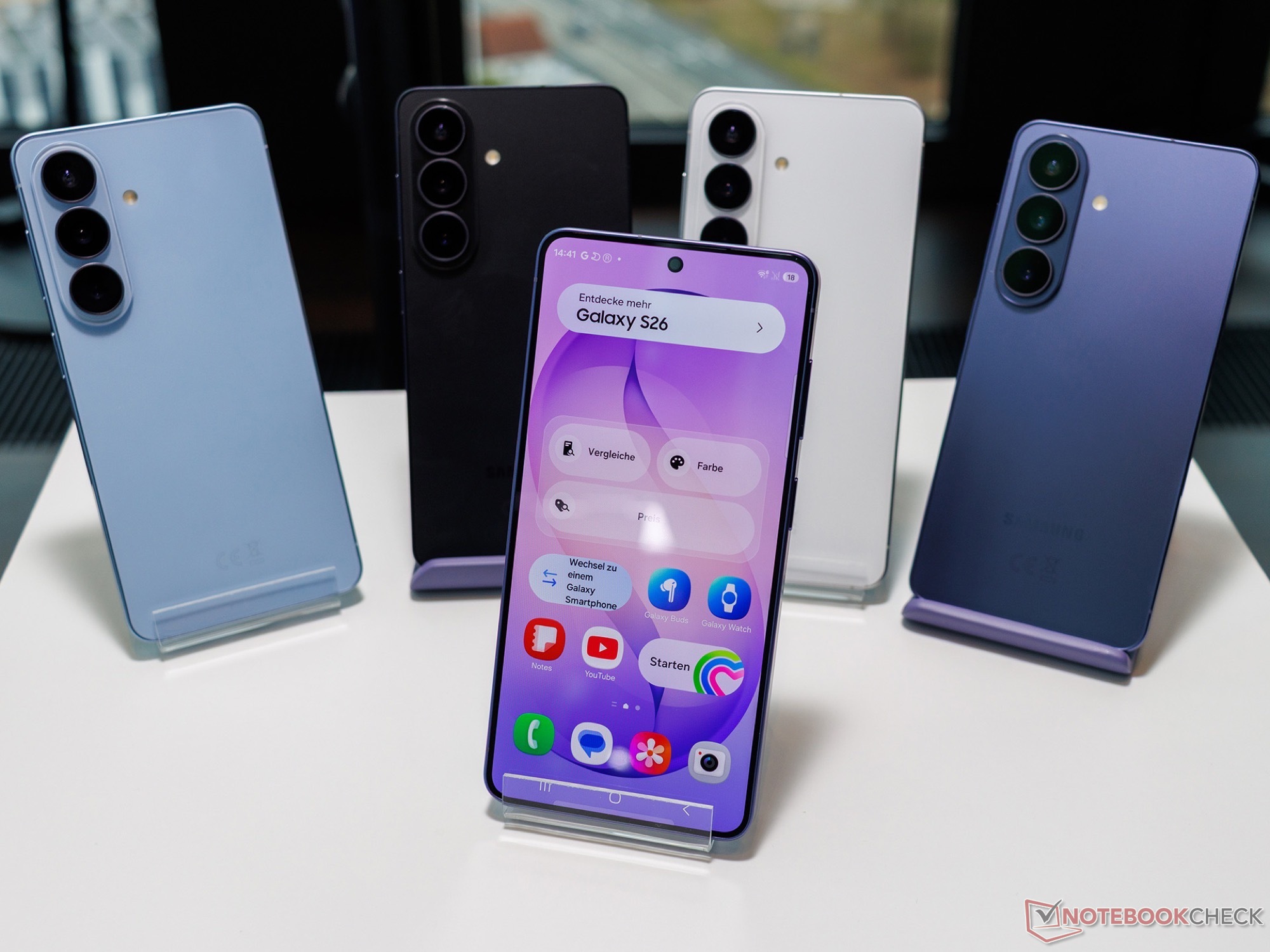
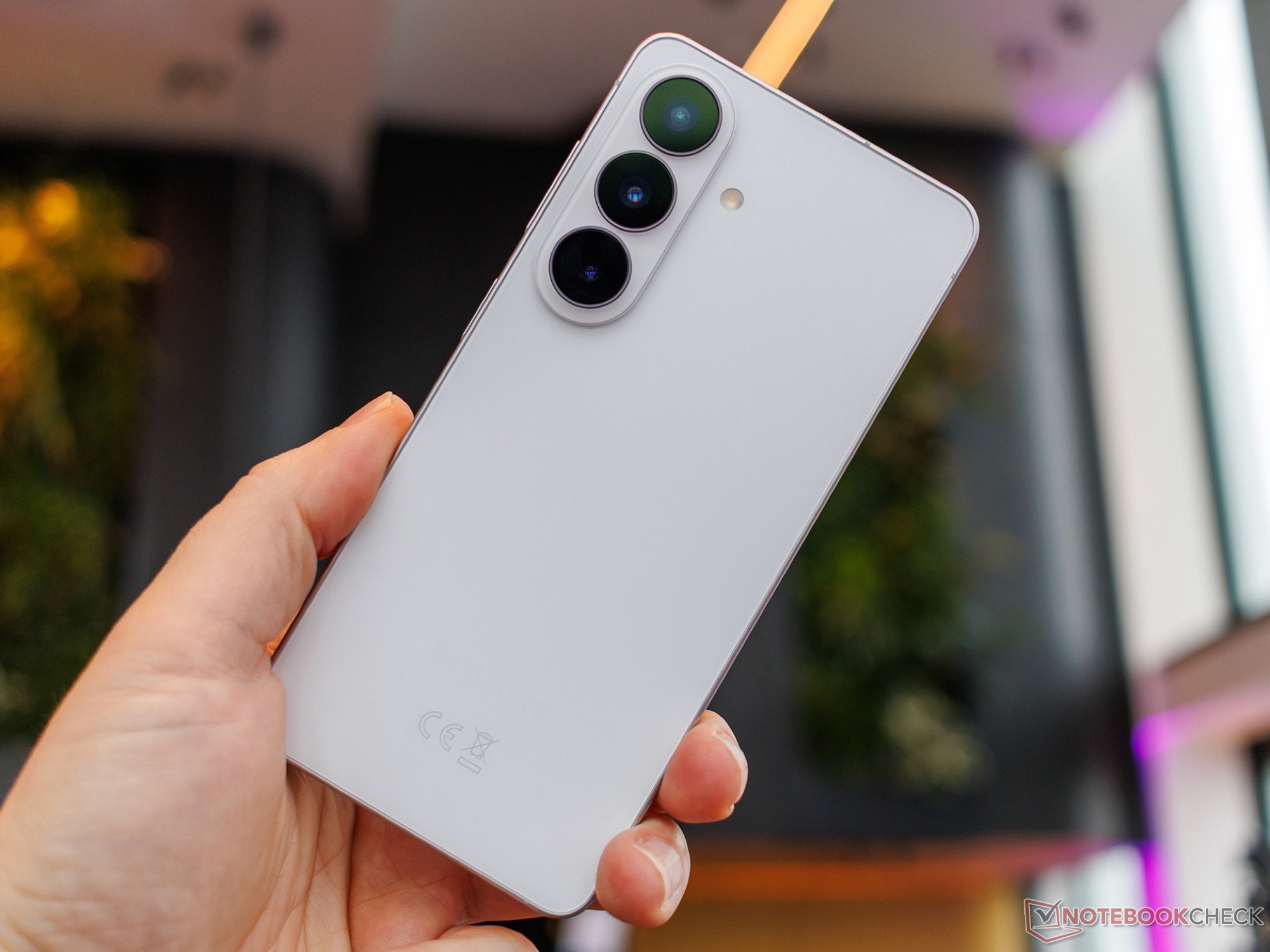
Visually, the Galaxy S26+ hardly differs from its predecessor. The dimensions and weight are identical. The build quality is very good.
The IP68-certified body feels high-quality and has very thin edges around the 6.7-inch OLED panel, thanks to the efficient display surface ratio of almost 91%.
Samsung has once again opted for Gorilla Glass Victus 2 as the protective glass instead of a frosted Gorilla Armor used for the Ultra models.
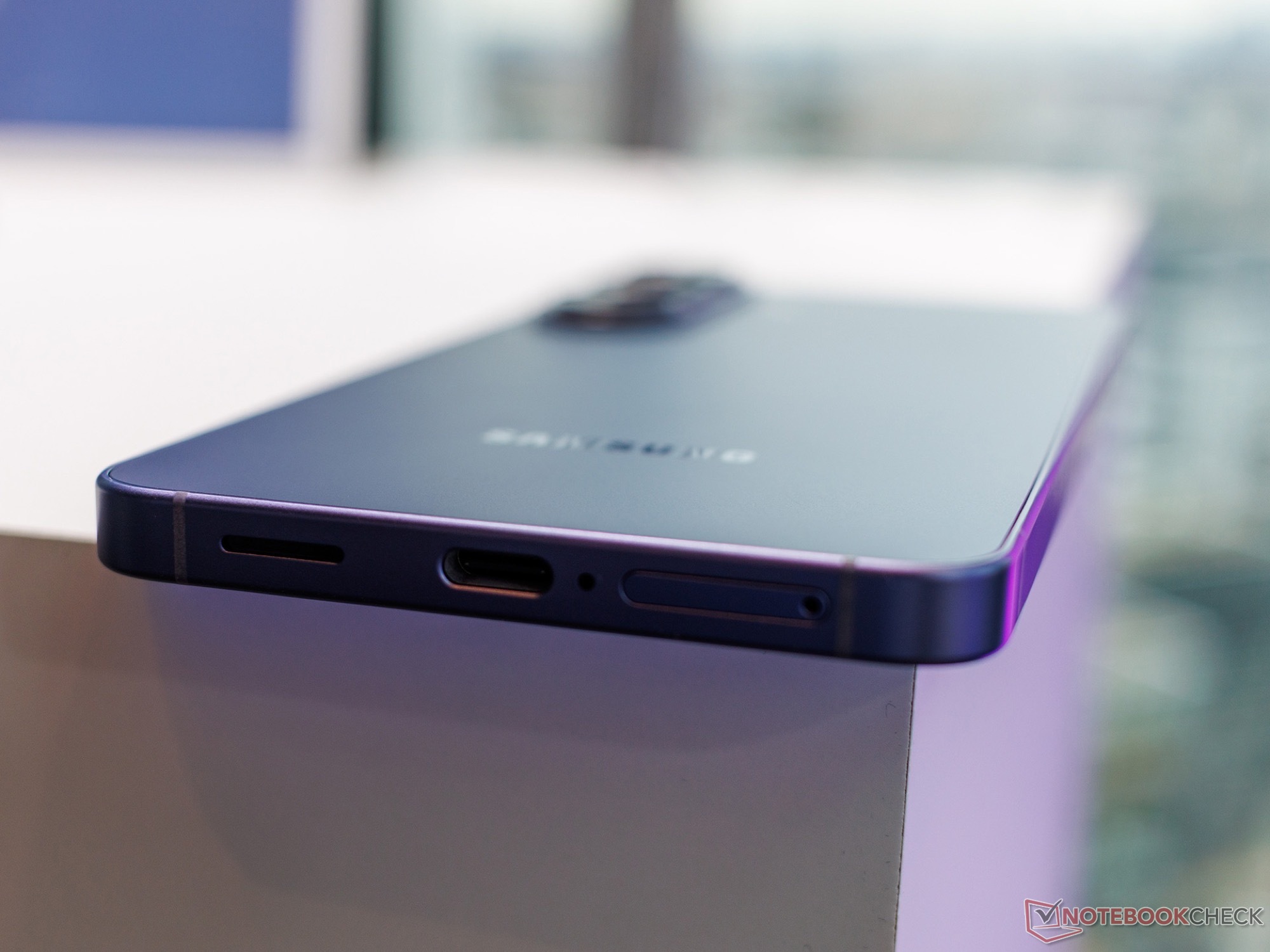
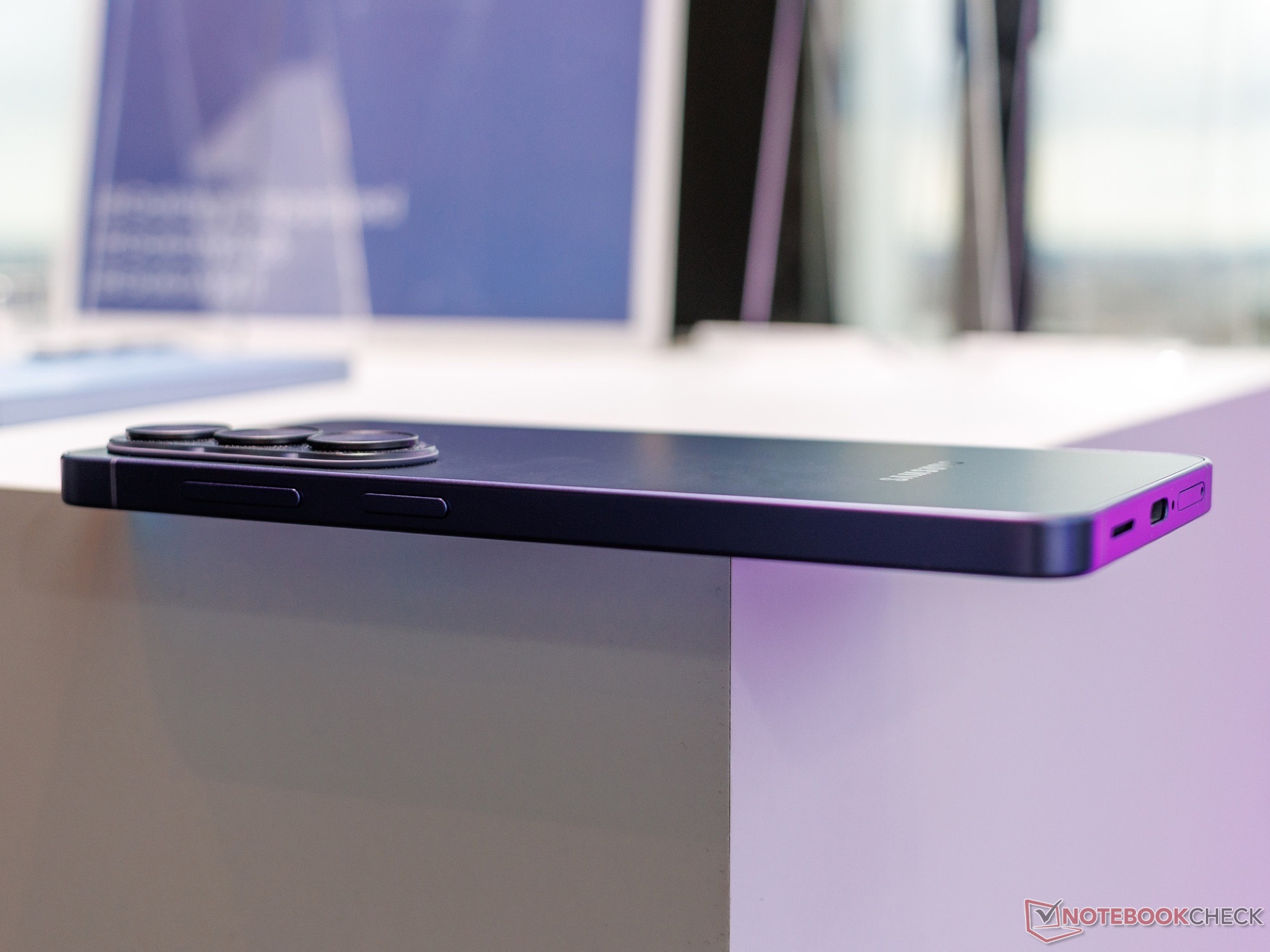
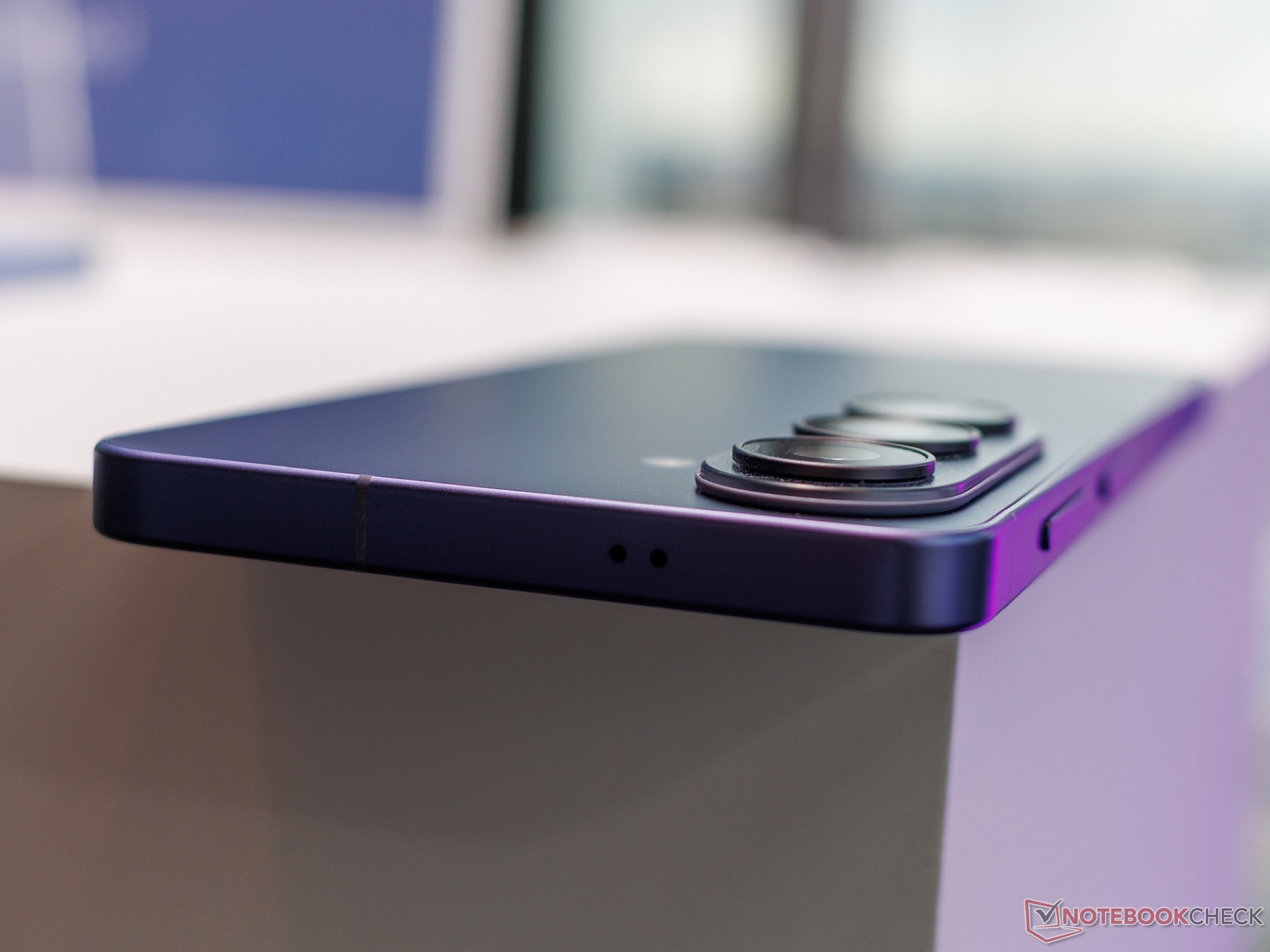
Features - Android phone with USB 3.2
Samsung has equipped its top-of-the-range phone very well. On board are a UWB chip, Samsung DeX, NFC, and a fast USB port (3.2 Gen. 1). The OTG-capable port supports wired image output.
With a Samsung Portable SSD T7, the Galaxy S26+ achieves a high data throughput of 391 MB/s. Connected data carriers can be formatted with exFAT or NTFS (only reading).
Software - Long updates for the Galaxy cell phone
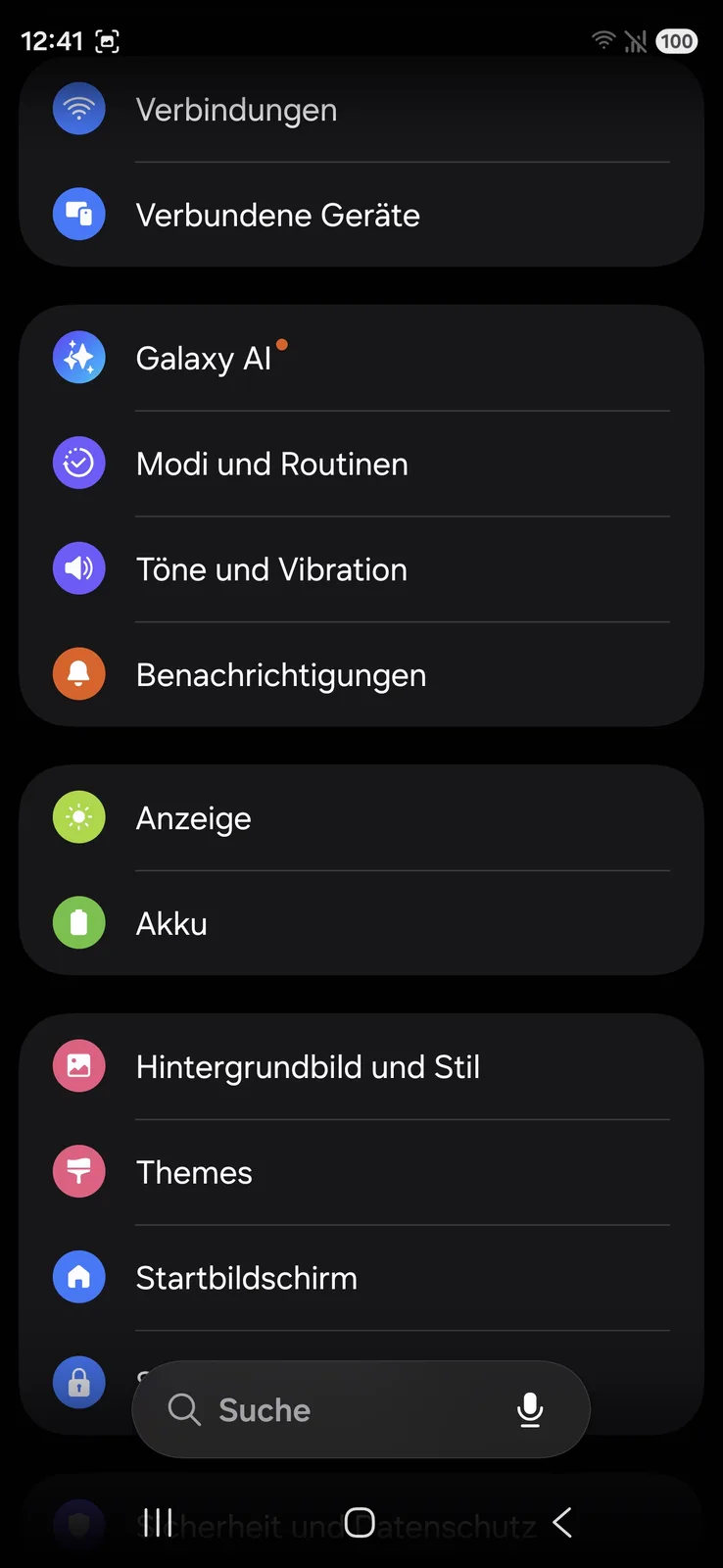
Samsung delivers the Galaxy S26+ with One UI 8.5 based on Android 16 and guarantees software updates for seven years. According to the manufacturer, security patches will be rolled out monthly.
Sustainability
Samsung strives for transparency in its smartphone division and also provides environmentally relevant data, such as the proportion of recycled materials or carbon emissions, for the Galaxy S26+.
Recycled materials are also used for the product packaging. Plastic is not used. In the EPREL database, the Samsung upper class is listed only under the reparability class "C".
Communication and GNSS - Android phone with 5G & WiFi 7
The Galaxy S26+ comes with a wide range of frequencies for all modern mobile communication standards. Fast Wi-Fi 7 is available for WLAN connections, including the 6 GHz band, enabling very high transmission rates at peak times in combination with our Asus ROG Rapture GT-AXE11000 reference router.
| Networking | |
| Samsung Galaxy S26+ | |
| iperf3 transmit AXE11000 | |
| iperf3 receive AXE11000 | |
| iperf3 transmit AXE11000 6GHz | |
| iperf3 receive AXE11000 6GHz | |
| Samsung Galaxy S25+ | |
| iperf3 transmit AXE11000 | |
| iperf3 receive AXE11000 | |
| iperf3 transmit AXE11000 6GHz | |
| iperf3 receive AXE11000 6GHz | |
| OnePlus 15 | |
| iperf3 transmit AXE11000 6GHz | |
| iperf3 receive AXE11000 6GHz | |
| Xiaomi Poco F8 Ultra | |
| iperf3 transmit AXE11000 | |
| iperf3 receive AXE11000 | |
| Motorola Signature | |
| iperf3 transmit AXE11000 | |
| iperf3 receive AXE11000 | |
| iperf3 transmit AXE11000 6GHz | |
| iperf3 receive AXE11000 6GHz | |
| Average 802.11 a/b/g/n/ac/ax/be | |
| iperf3 transmit AXE11000 | |
| iperf3 receive AXE11000 | |
| iperf3 transmit AXE11000 6GHz | |
| iperf3 receive AXE11000 6GHz | |
| Average of class Smartphone | |
| iperf3 transmit AXE11000 | |
| iperf3 receive AXE11000 | |
| iperf3 transmit AXE11000 6GHz | |
| iperf3 receive AXE11000 6GHz | |
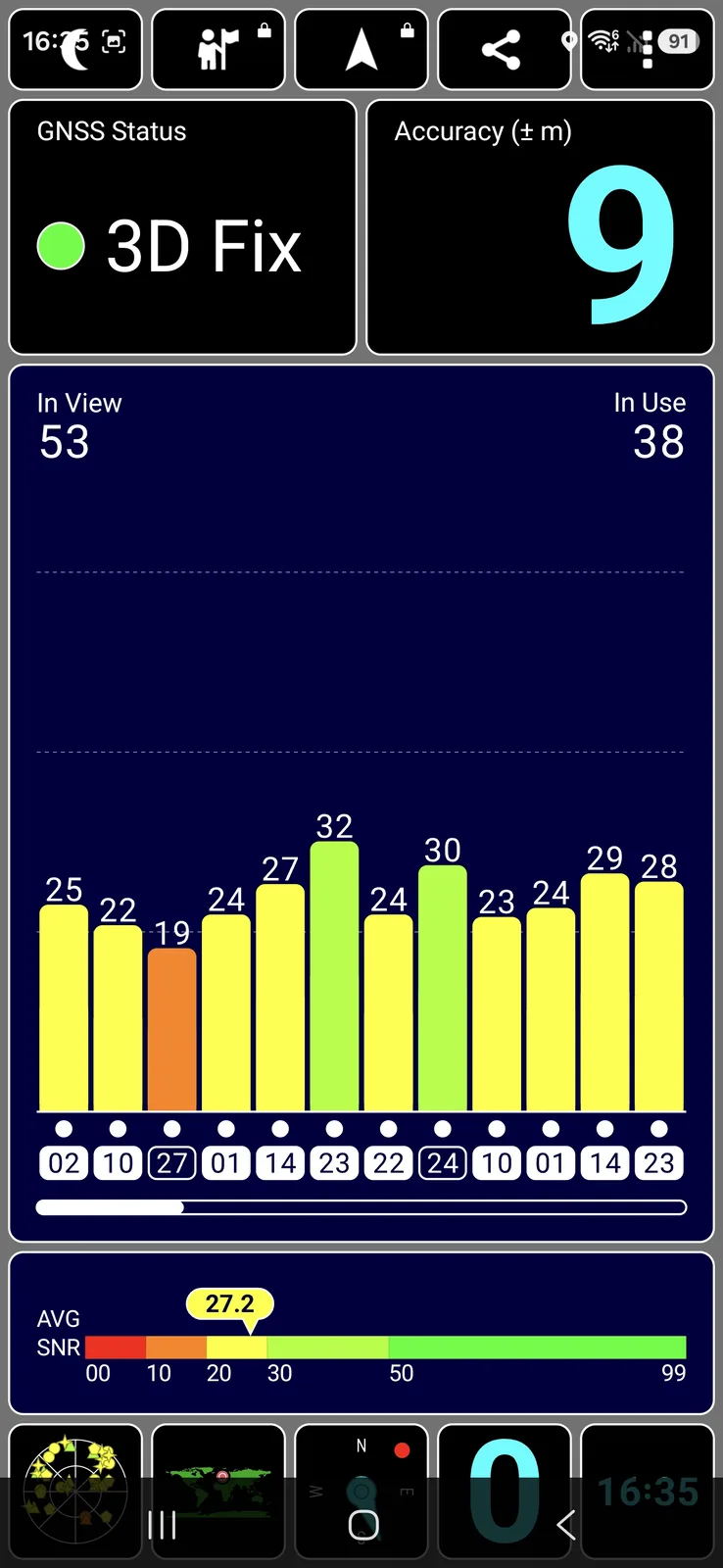
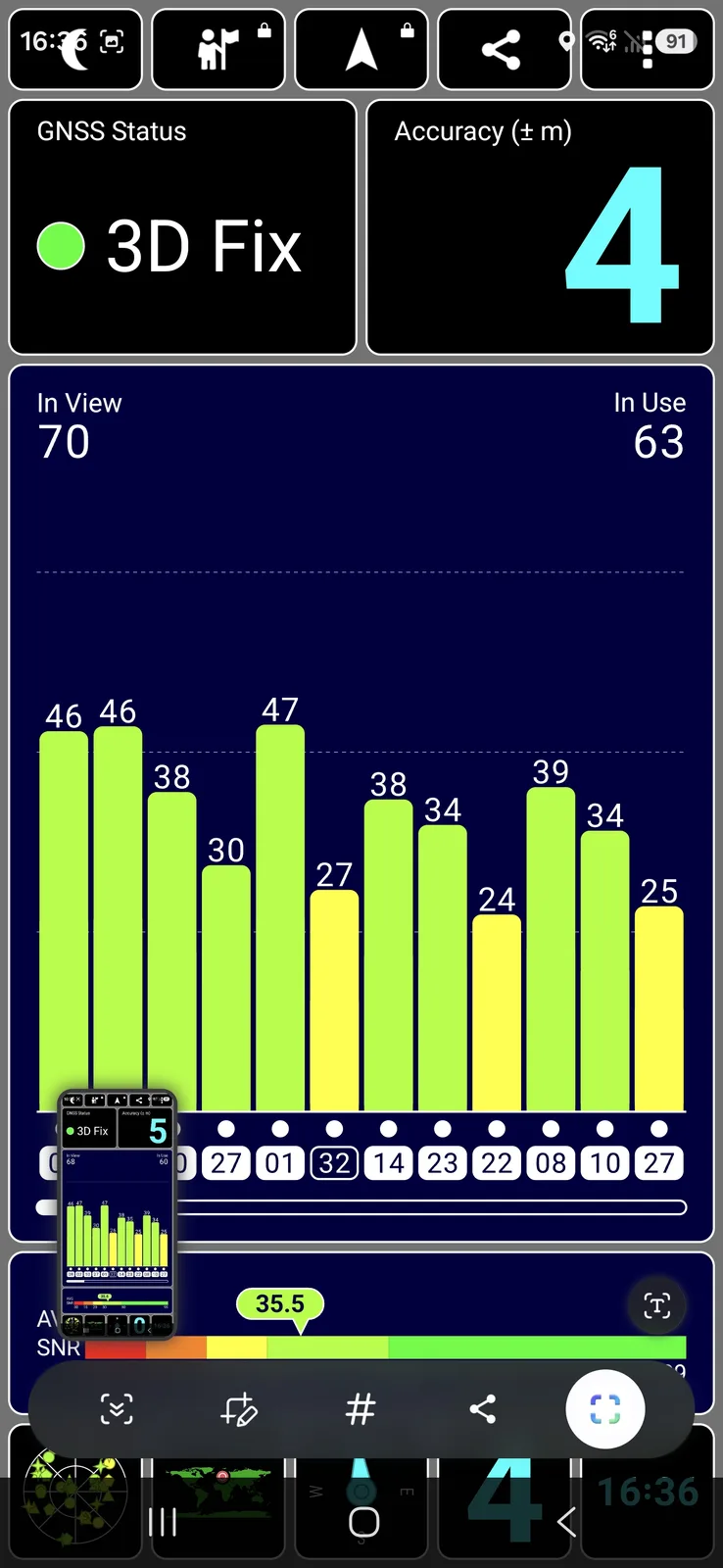
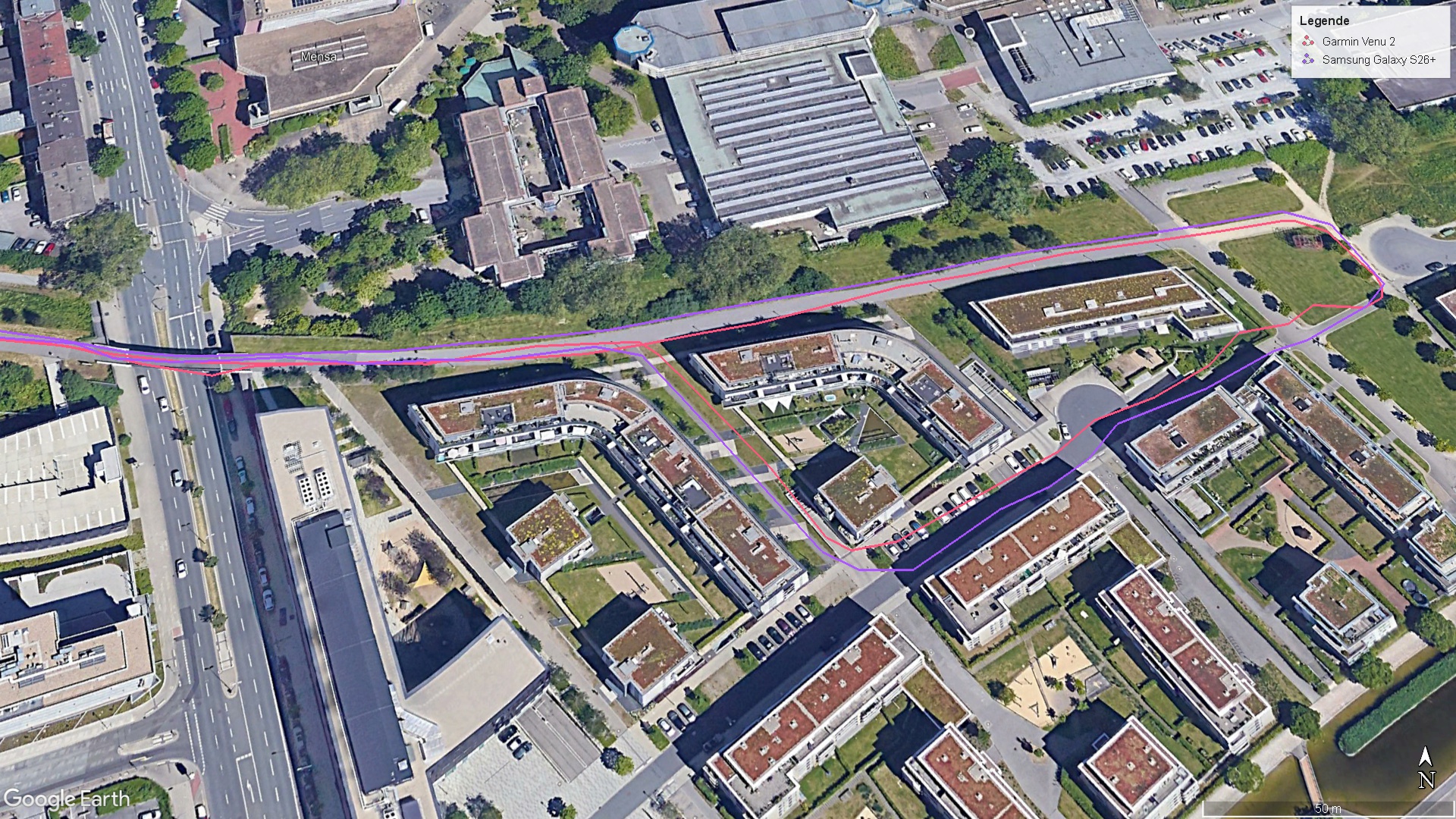
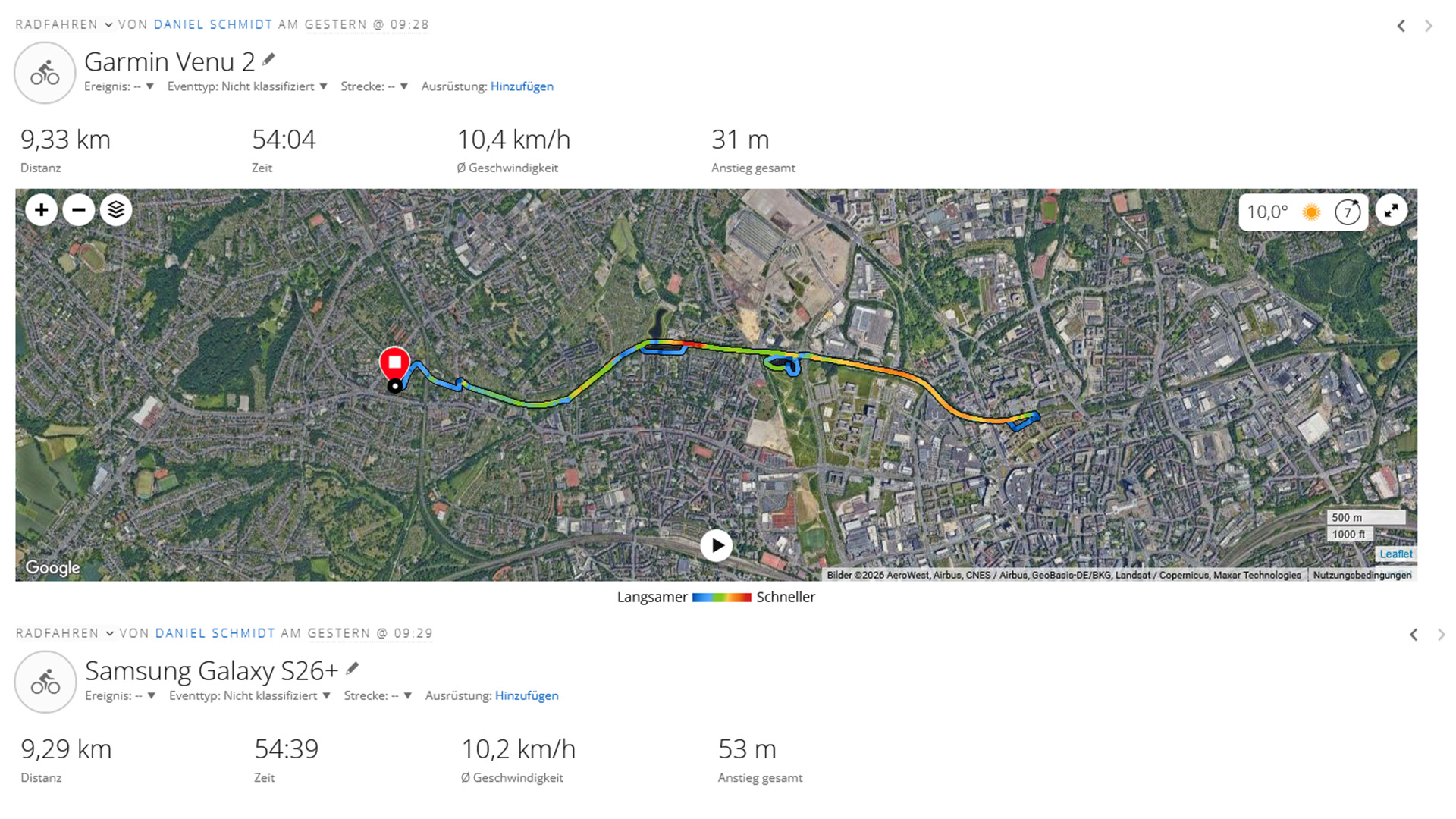
Dual-band connectivity in global satellite networks is available for positioning with the Galaxy S26+. The Satfix is highly accurate both indoors and outdoors.
We compare the Samsung phone with a Garmin Venu 2 on a bike ride. The deviations from our route are small in the test and, in some cases, better than those of our reference smartwatch.

Phone functions and voice quality - Galaxy S26 Plus with eSIM
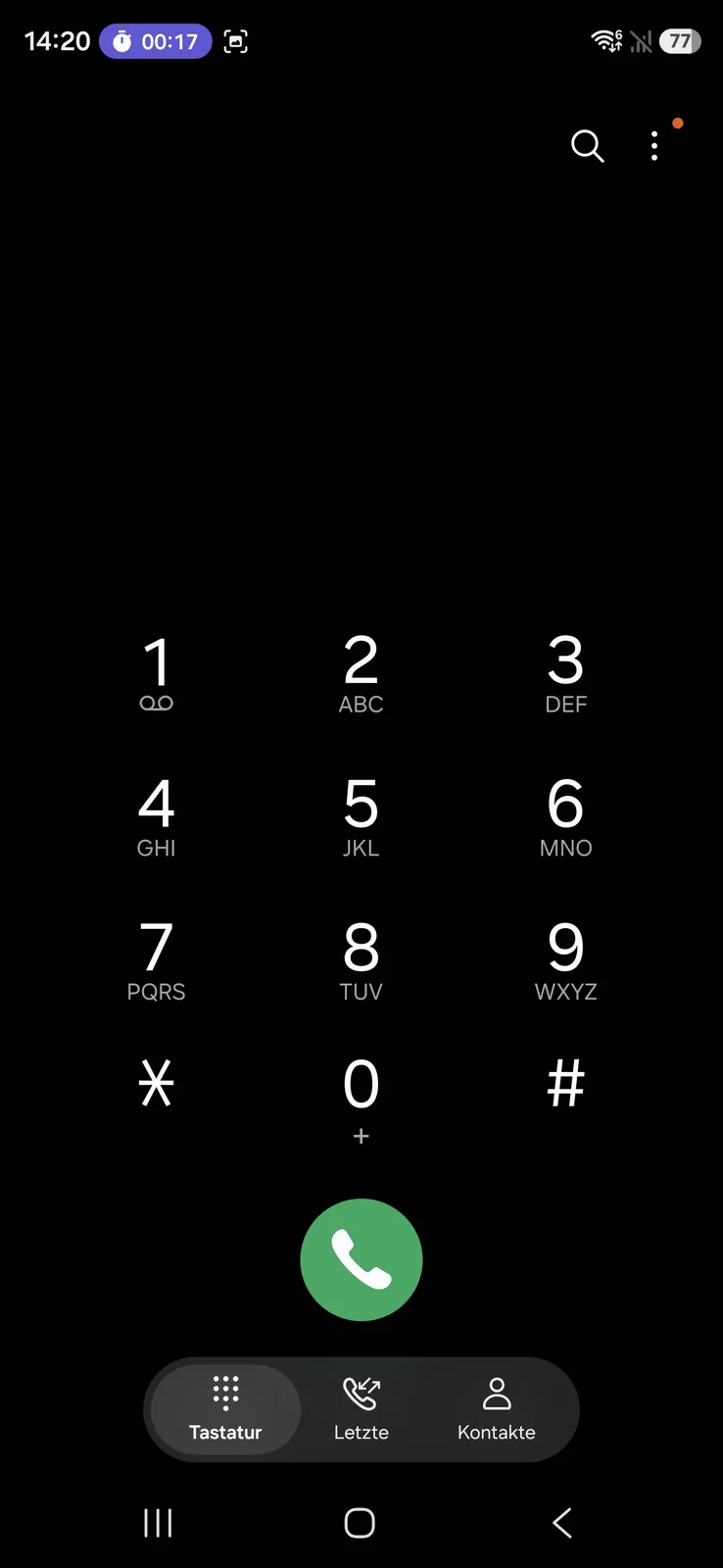
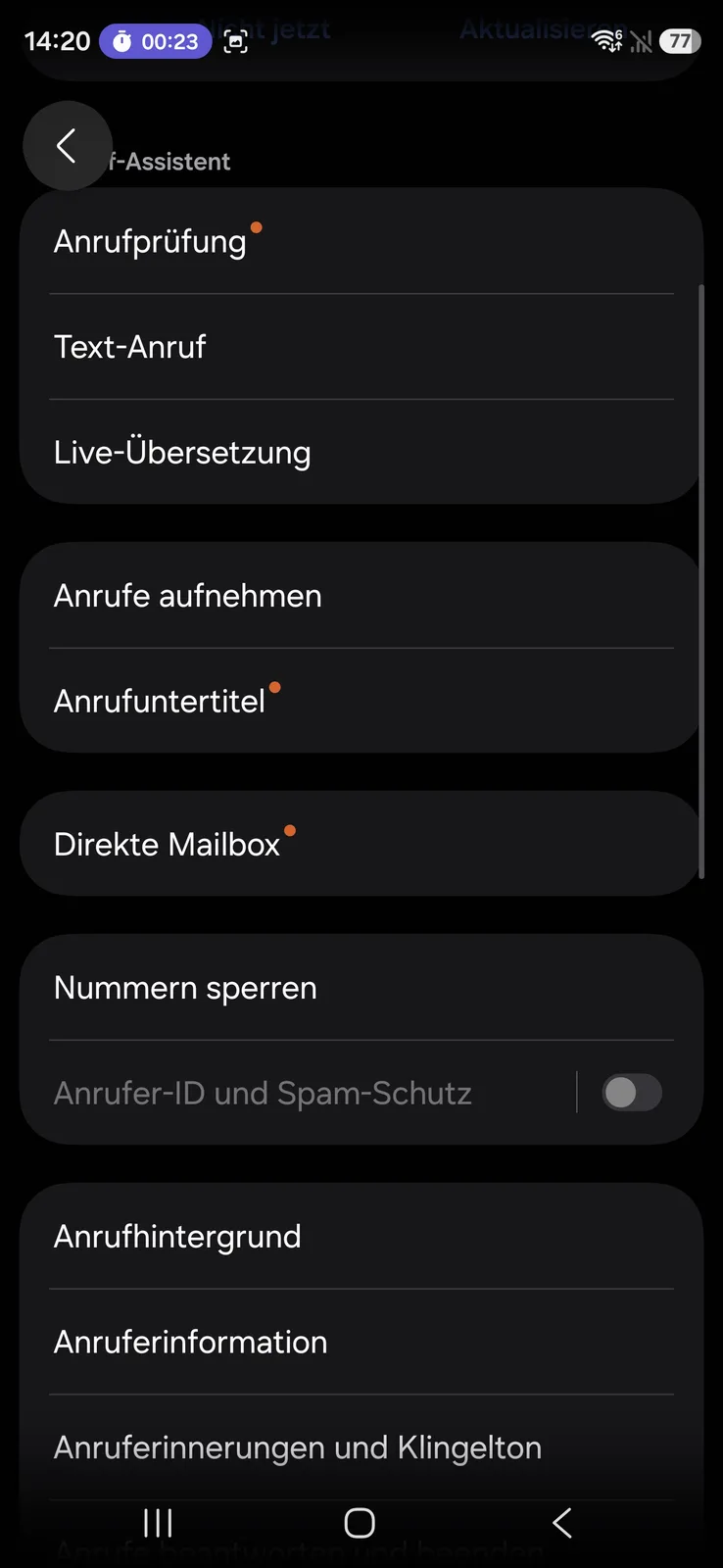
The Galaxy S26+ offers dual SIM with two NanoSIM cards as well as dual eSIM or a combination of both worlds. The voice quality of the Samsung phone is very good.
Camera - No upgrades for the Samsung phone

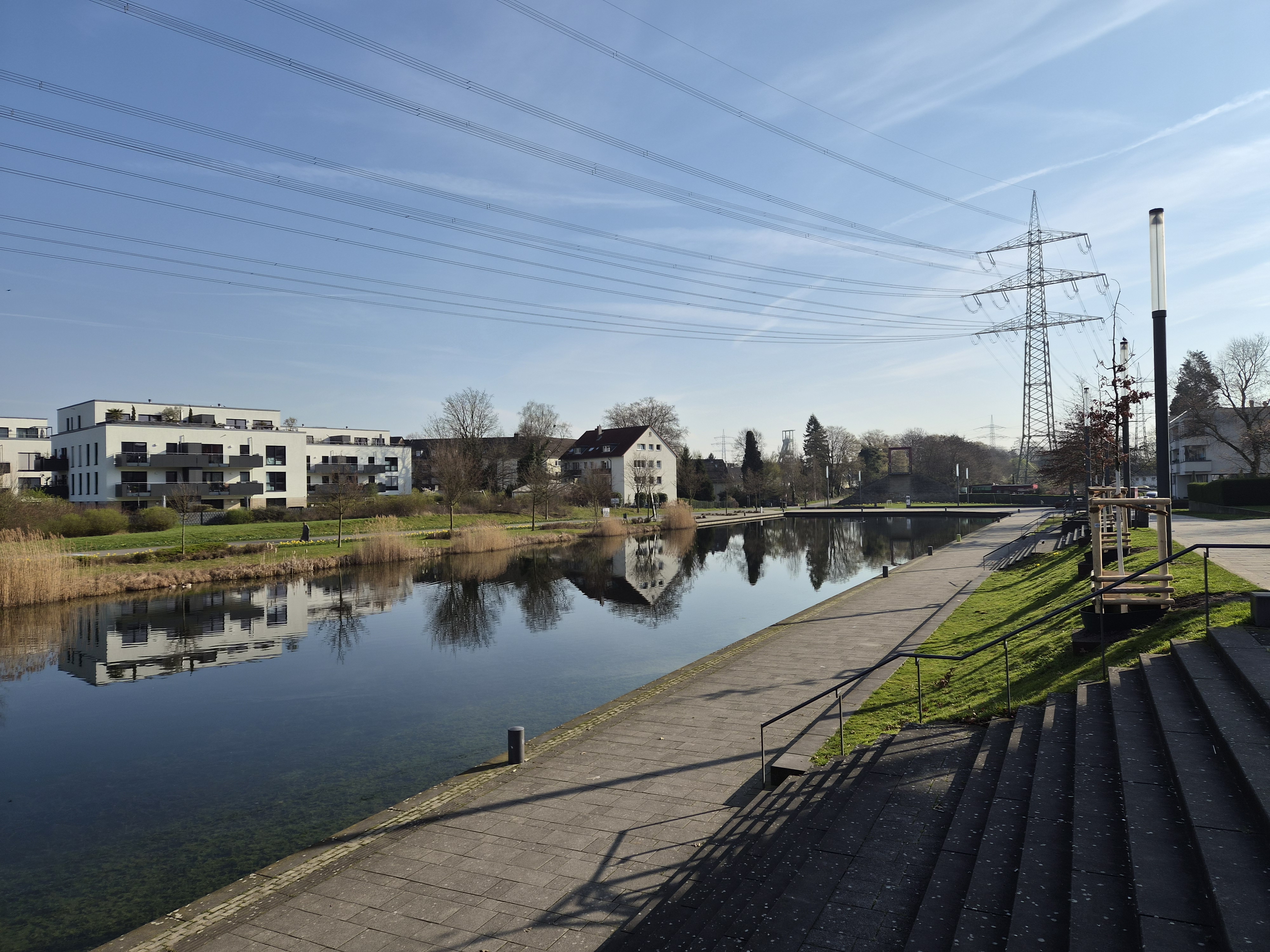
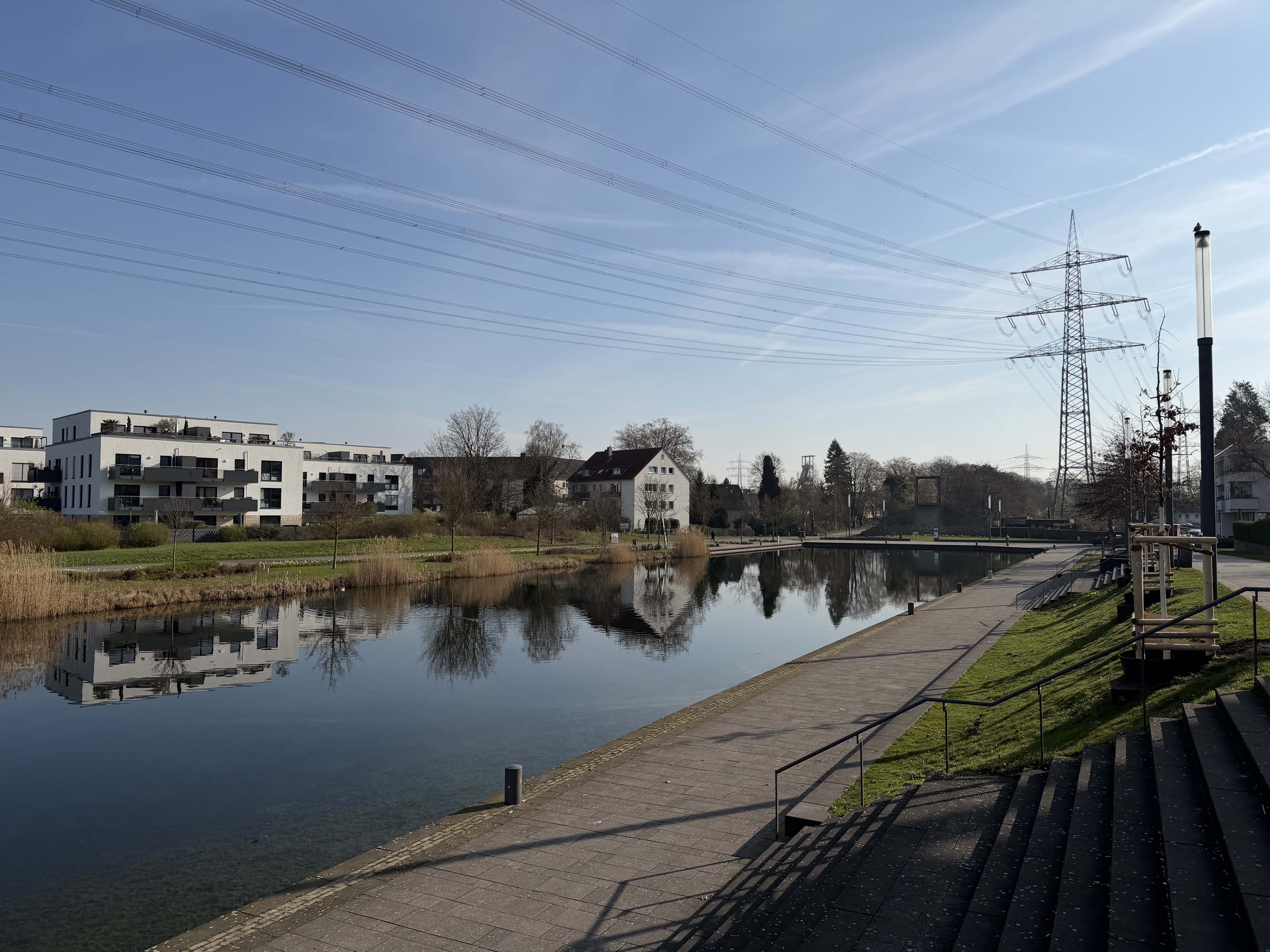
In view of the fact that the Galaxy S25+ already has a similar camera setup to its predecessor, the unchanged triple camera of the Galaxy S26+ is somewhat sobering. Nevertheless, beautiful photos are possible with the Samsung phone in daylight, although the artificial sharpening bothers us. Image details and sharpness are not at their best, especially in low light. However, the Galaxy S26+ has exceptionally well-tuned color reproduction.
At 12 MP and 10 MP, both the ultra-wide angle and the telephoto lens are not particularly high-resolution and do not allow pixel binning, but deliver solid to good results in good lighting conditions. Looking at a Vivo X300 Pro or Oppo Find X9 Pro, the Plus model of the S26 series, with its rather small image sensors, no longer really seems up to date.
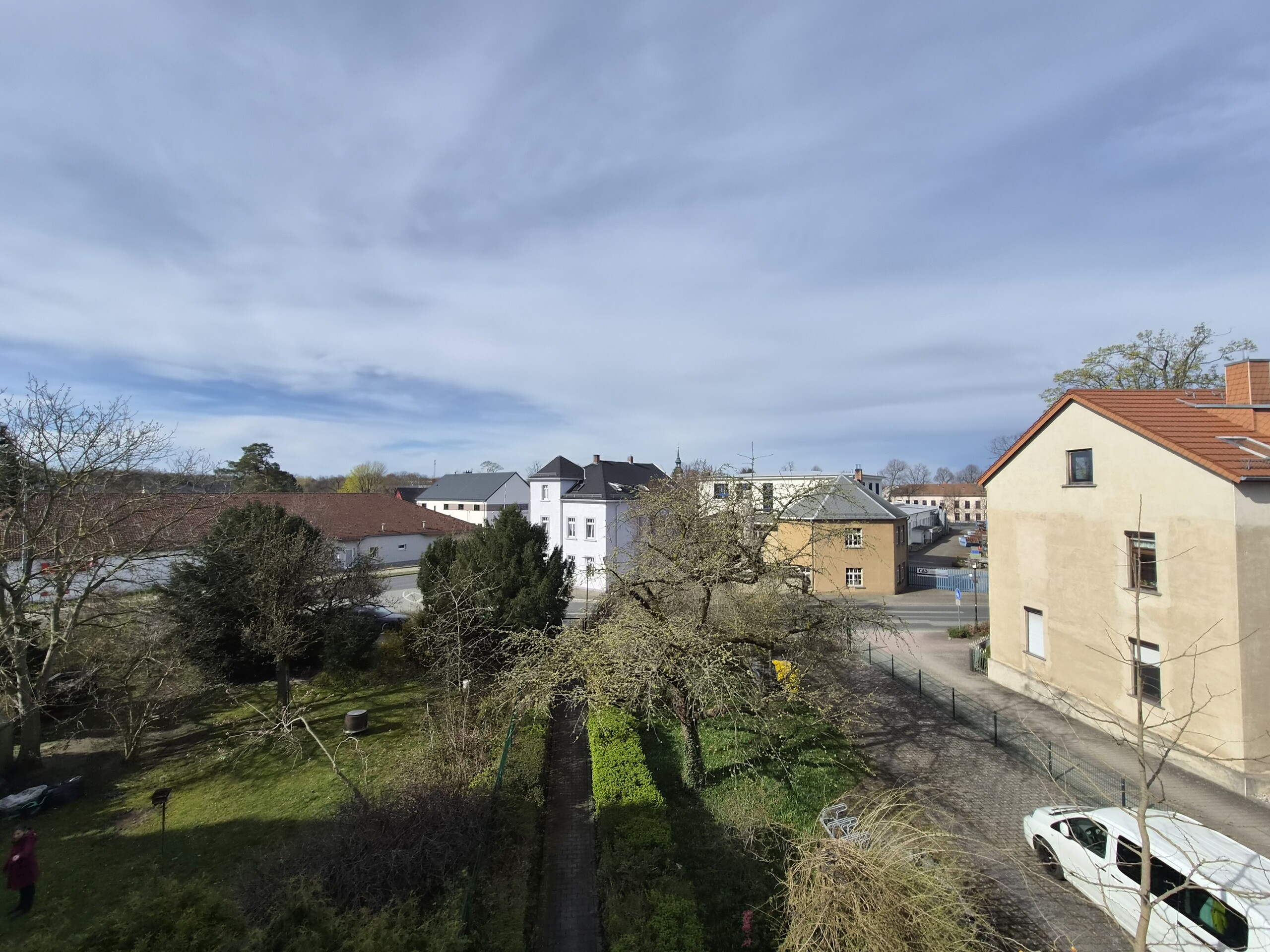
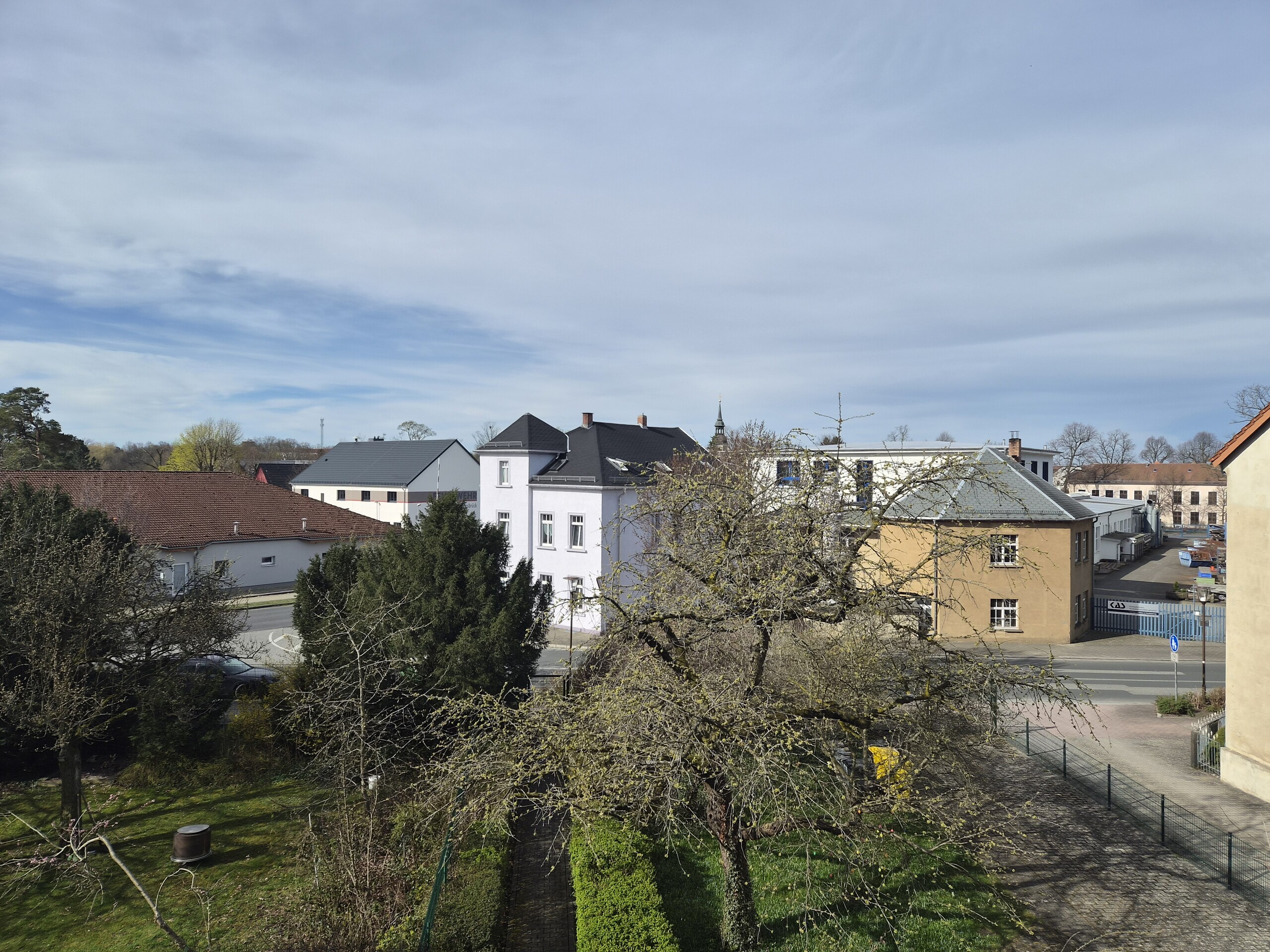
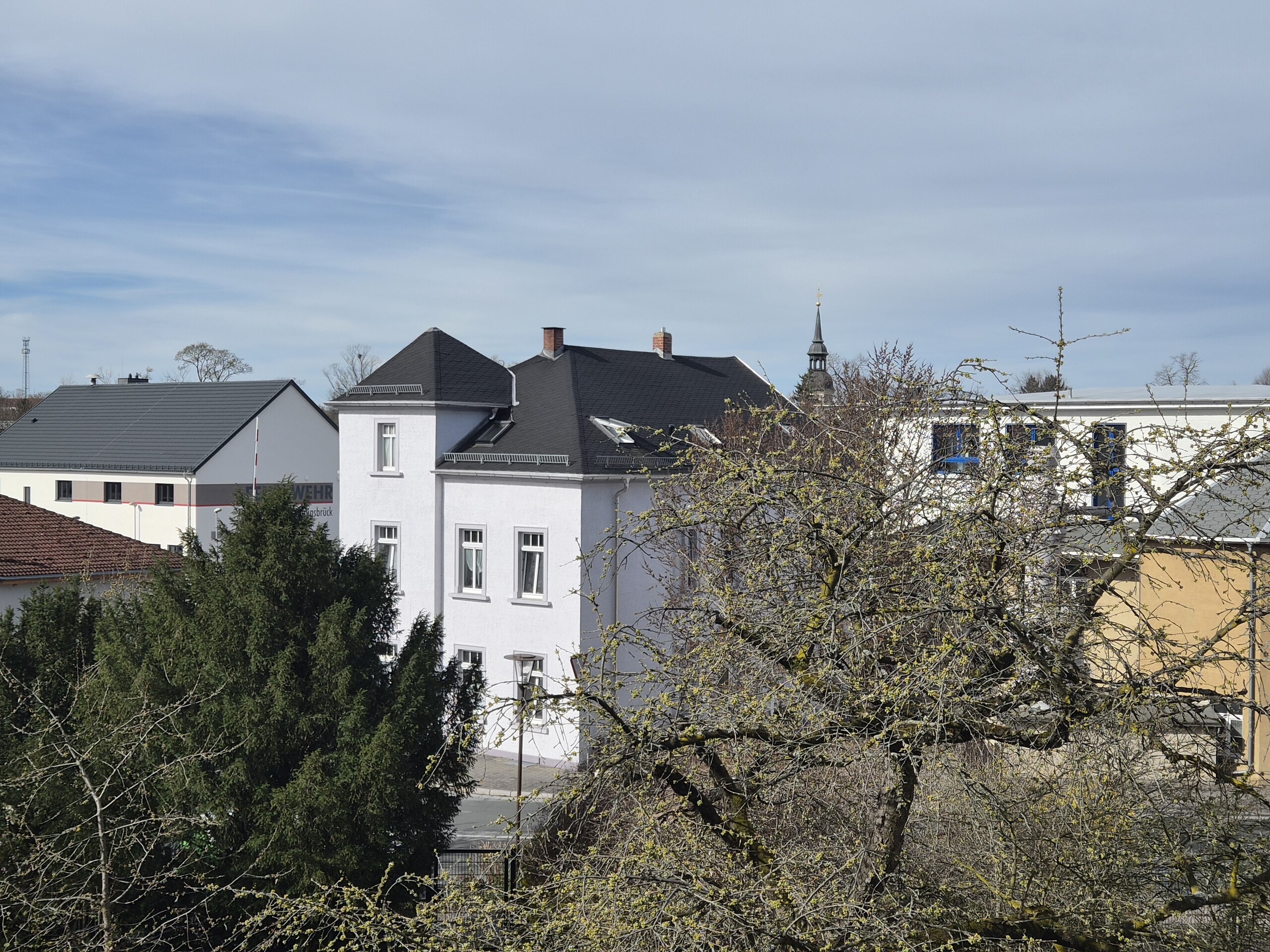

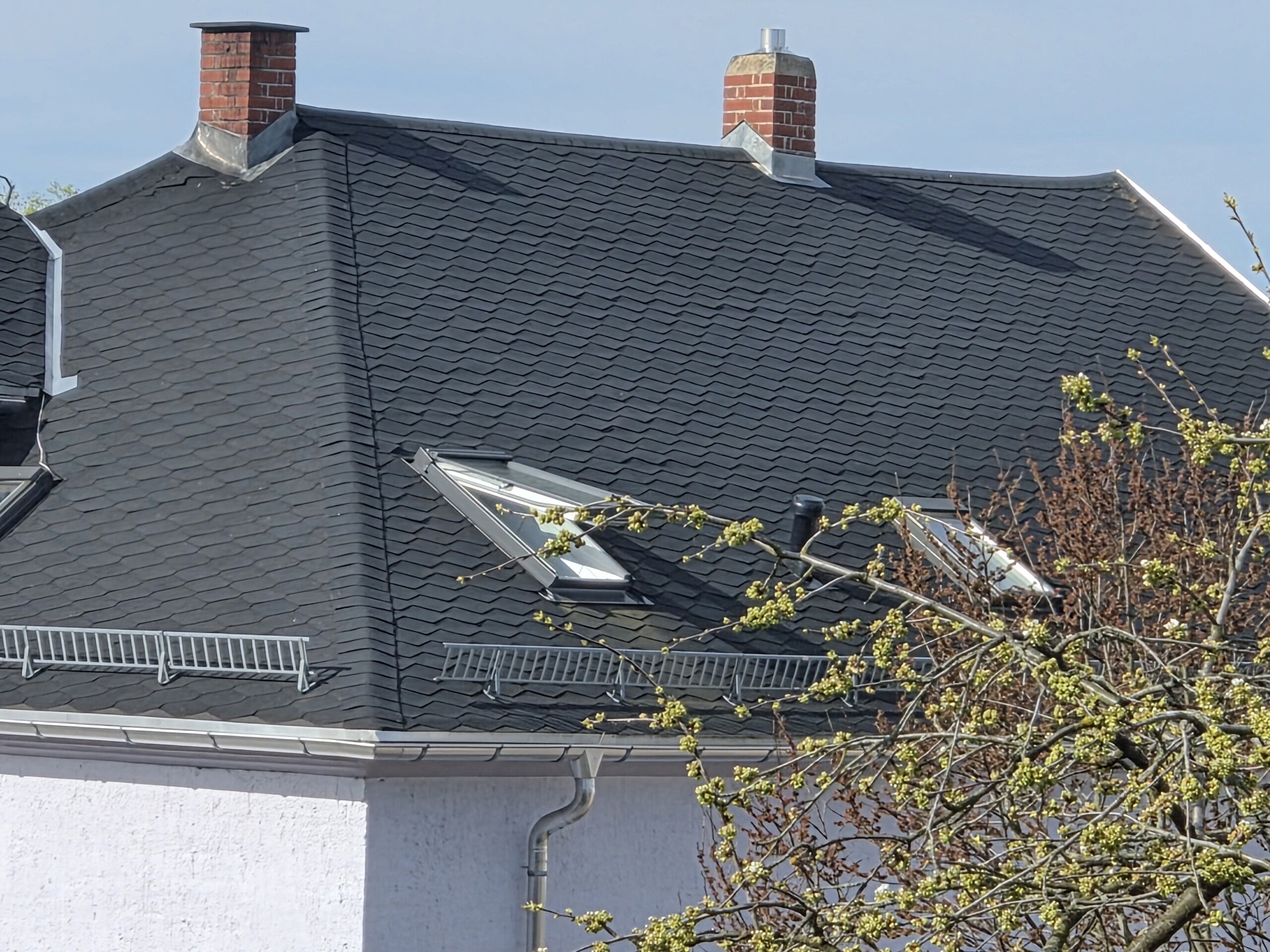
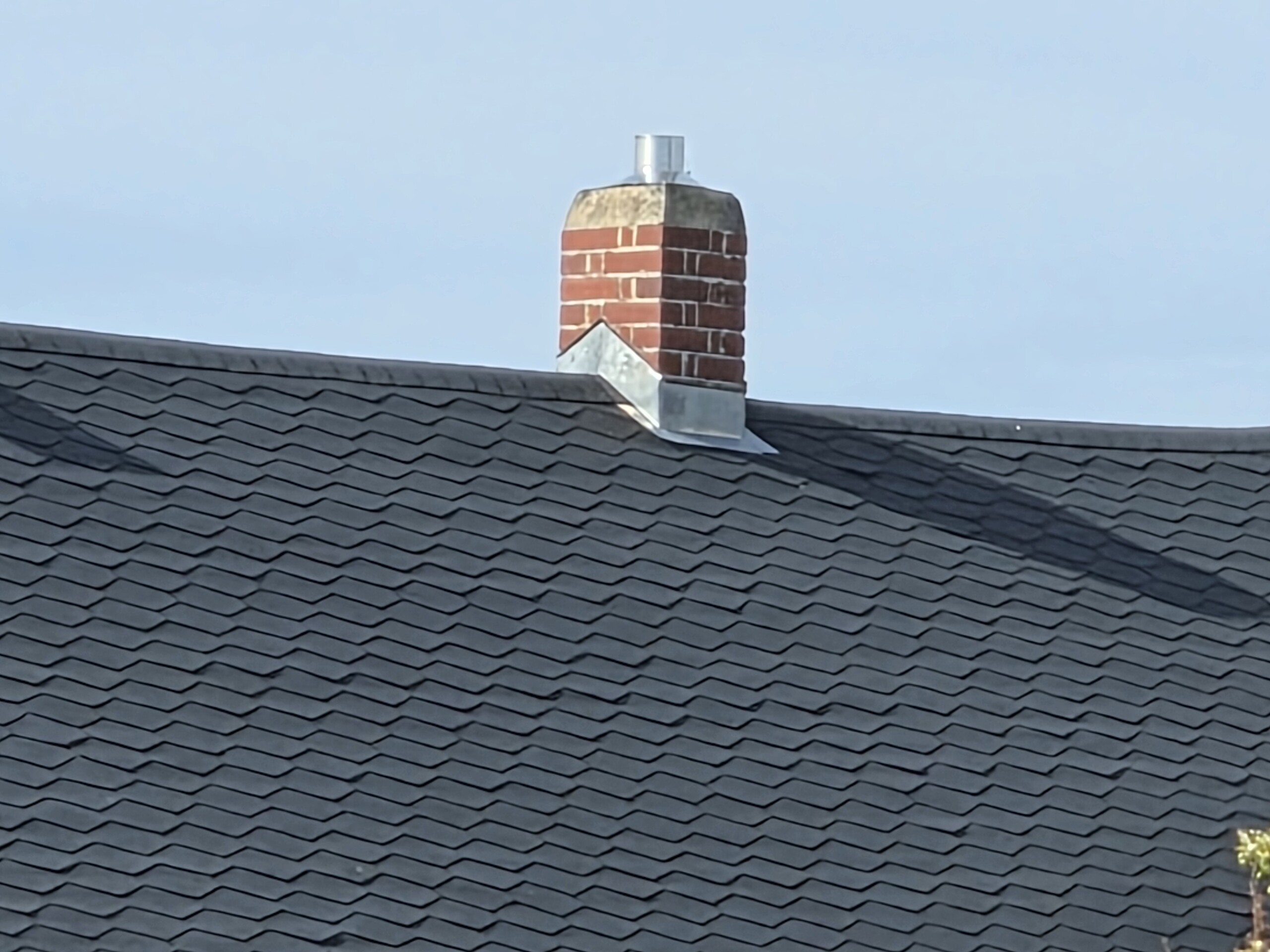
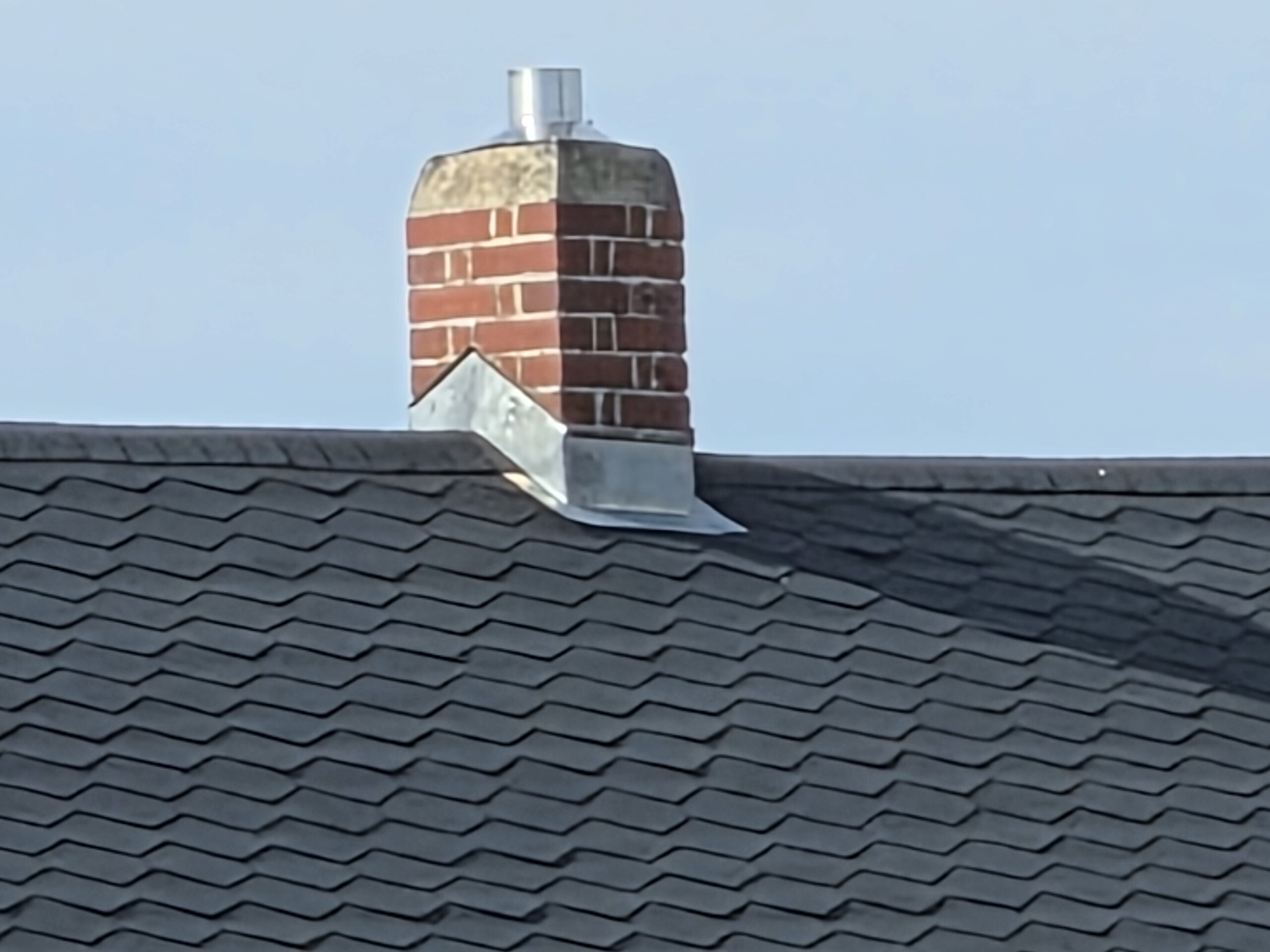
Image comparison
Choose a scene and navigate within the first image. One click changes the position on touchscreens. One click on the zoomed-in image opens the original in a new window. The first image shows the scaled photograph of the test device.
Wide-angleWide-angleLow LightZoom 5xUltra wide-angle




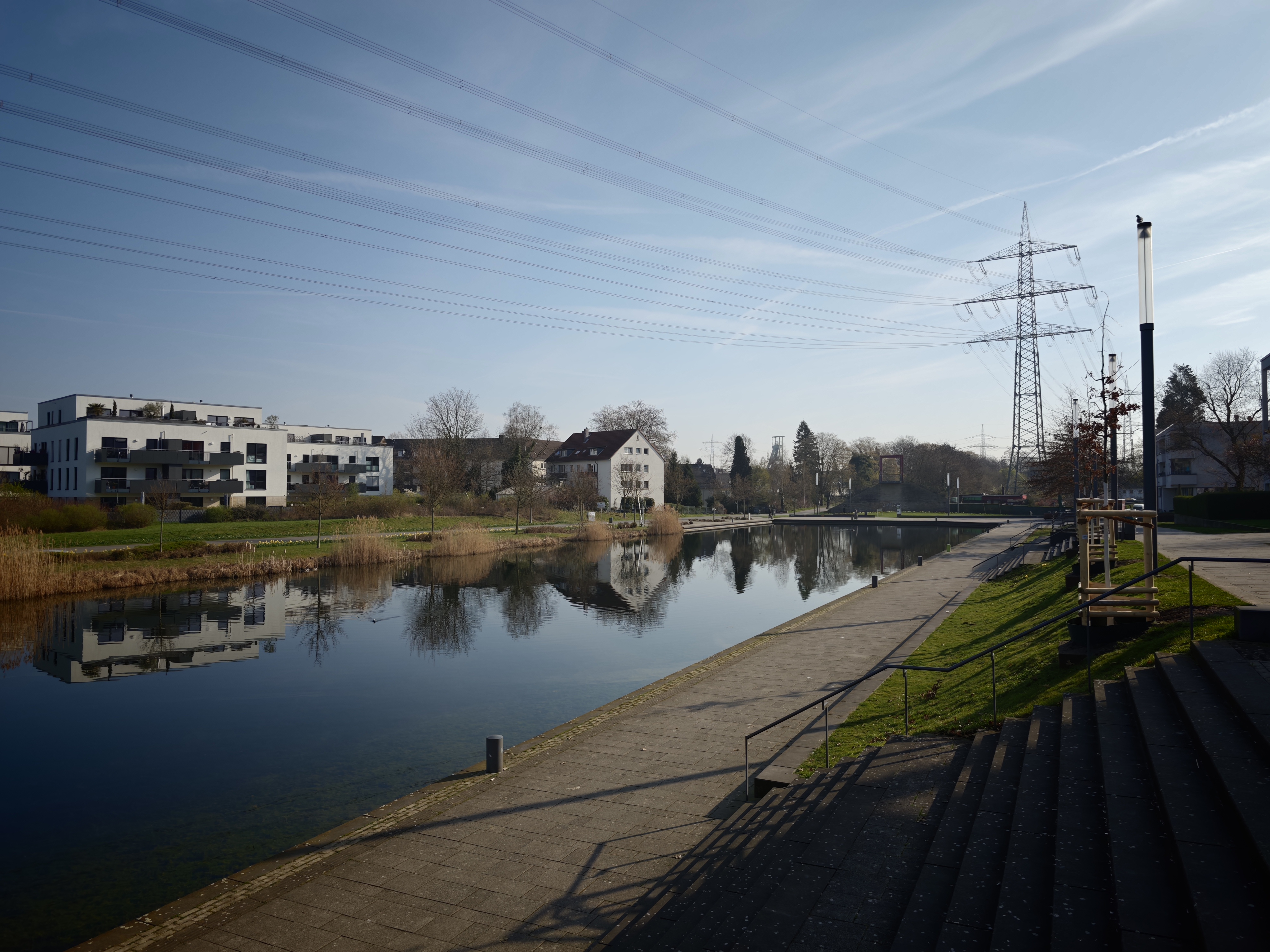
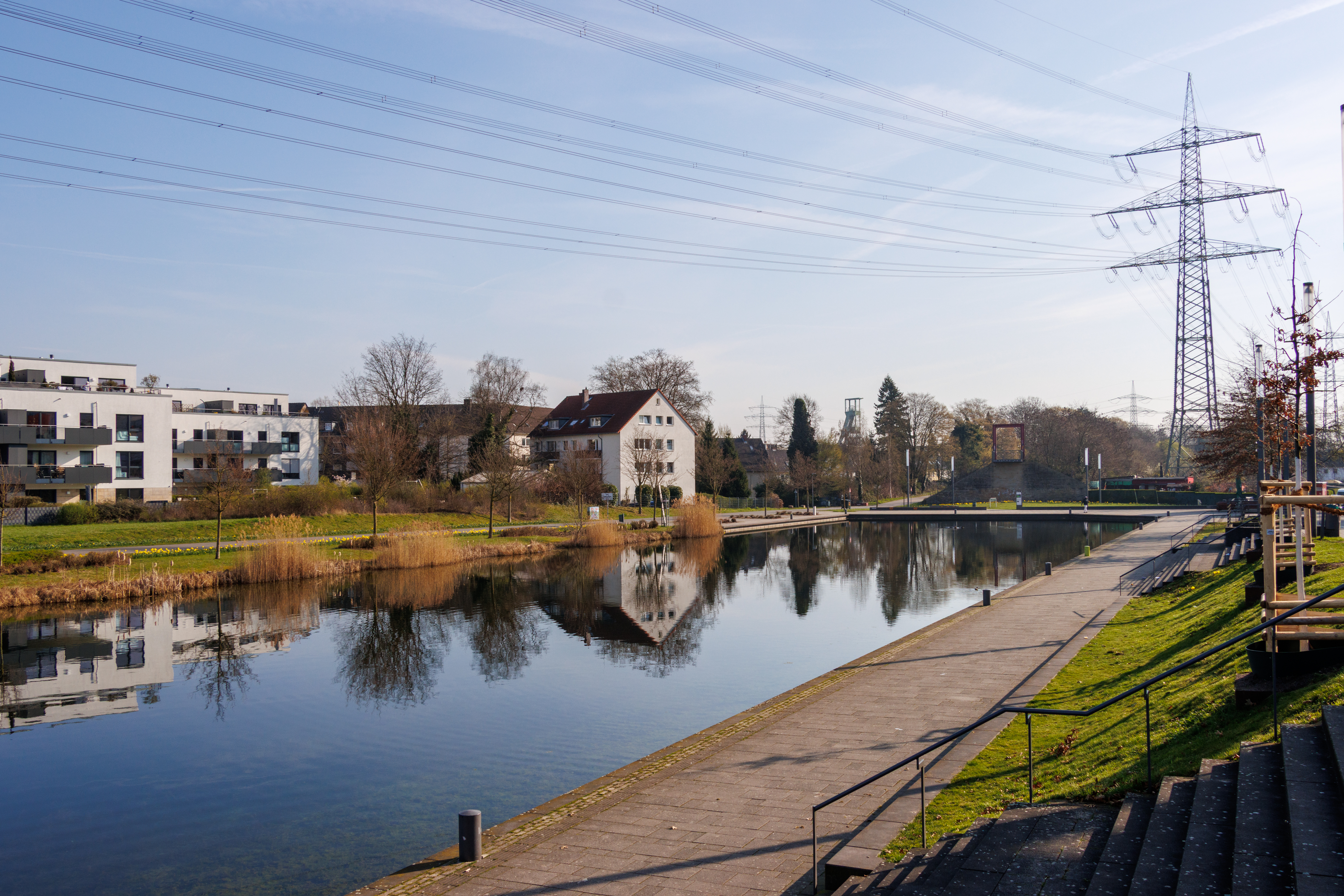














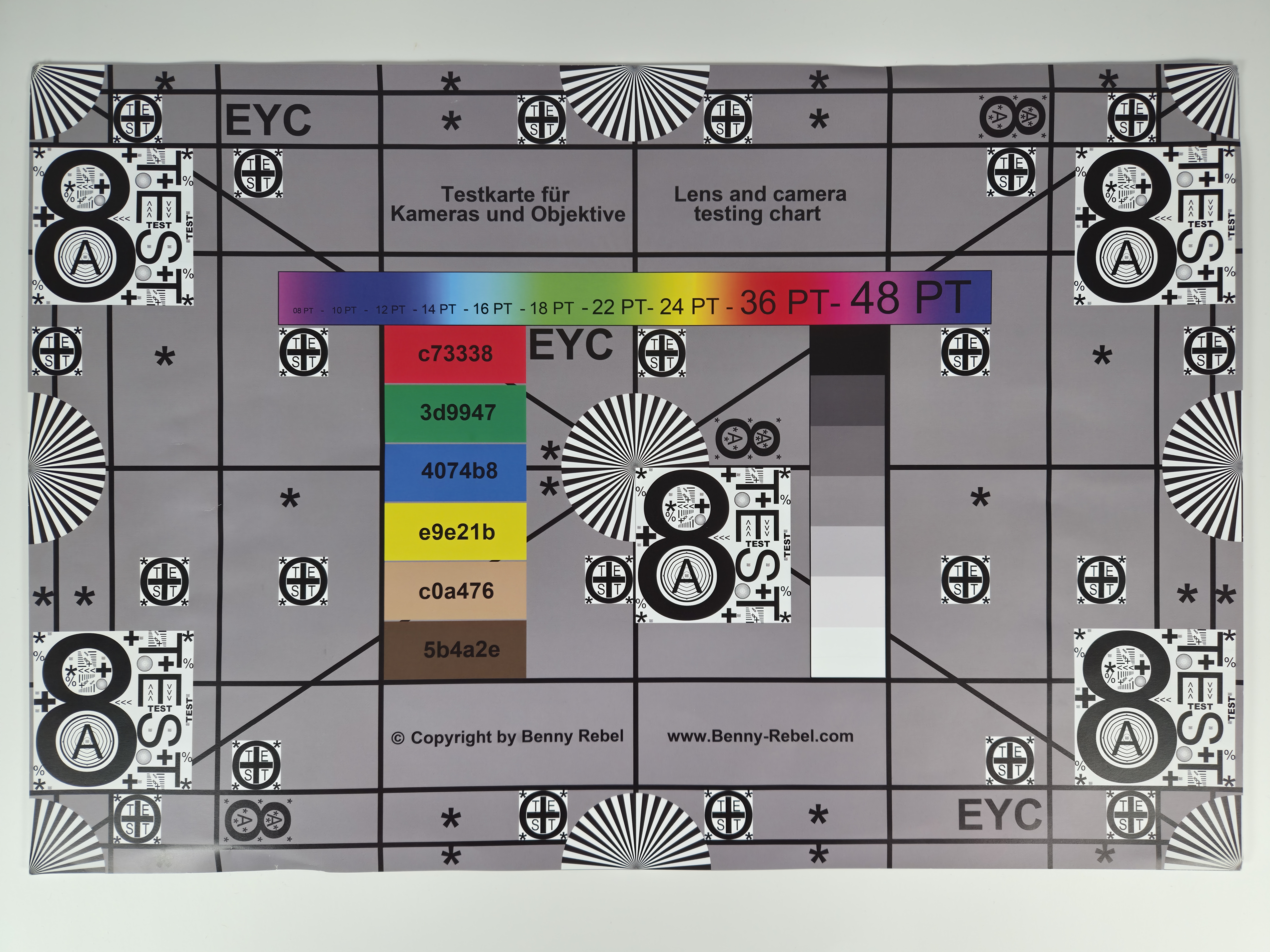

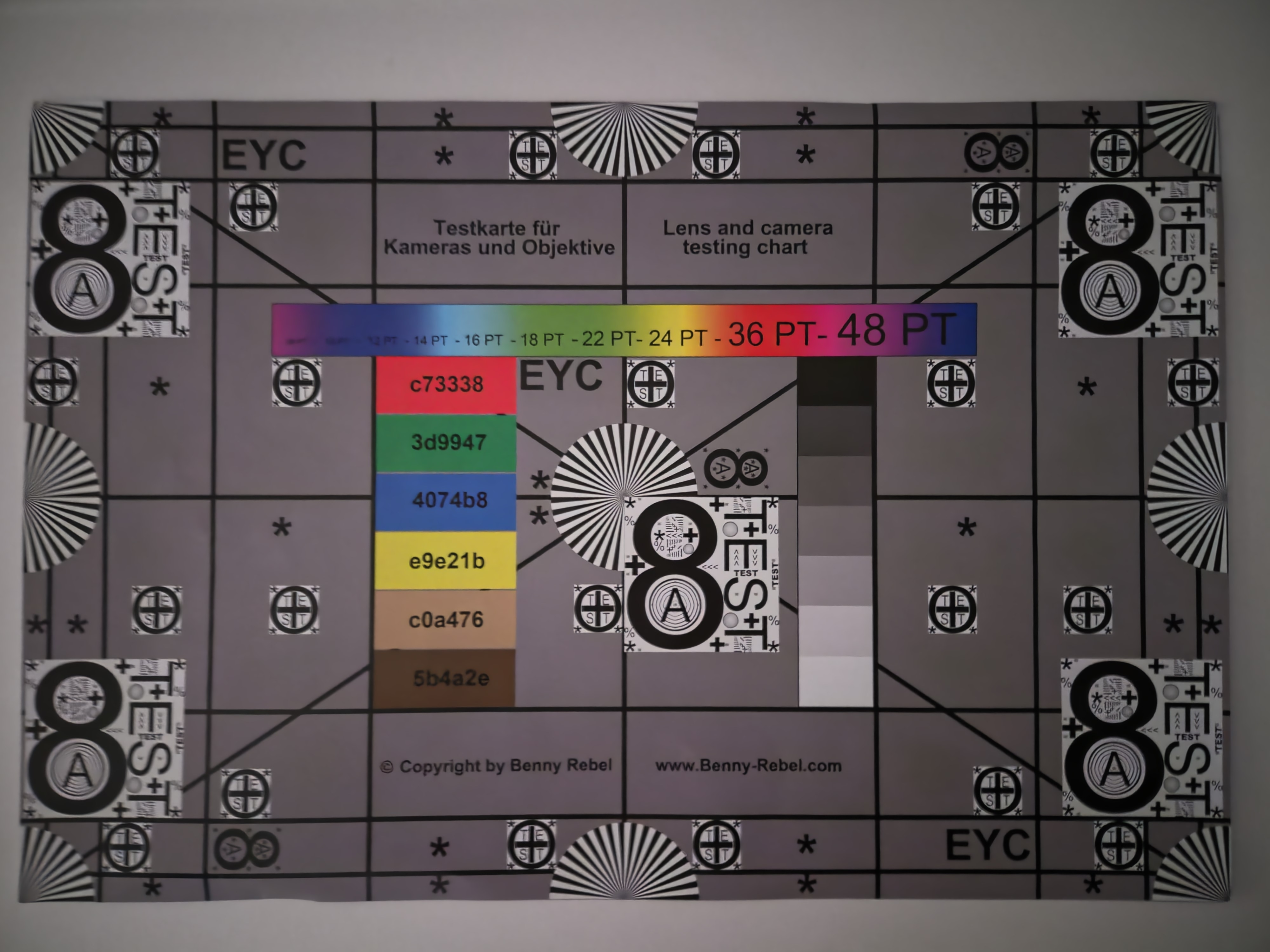

Accessories and warranty - Android phone without power supply unit
The Galaxy S26+ is only supplied with a USB-C cable and a SIM tool. A suitable power adapter and cases are available for purchase in the Samsung store.
The Warranty in Europe is 24 months and can be extended with the Care+ insurance package. This costs between 139 and 179 euros, depending on the scope of insurance.
Input devices and operation - Galaxy S26 Plus with ultrasonic sensor
The touchscreen responds quickly and precisely to inputs, while pen input, as with the Ultra model, is still not offered. The linear vibration motor provides crisp feedback and can be adjusted to your own needs in the settings.
An ultrasonic fingerprint sensor is installed for biometric security and works reliably and quickly. Alternatively, a rather insecure 2D face recognition can be used via the front camera.

Display - Large OLED screen with PWM dimming, but ...
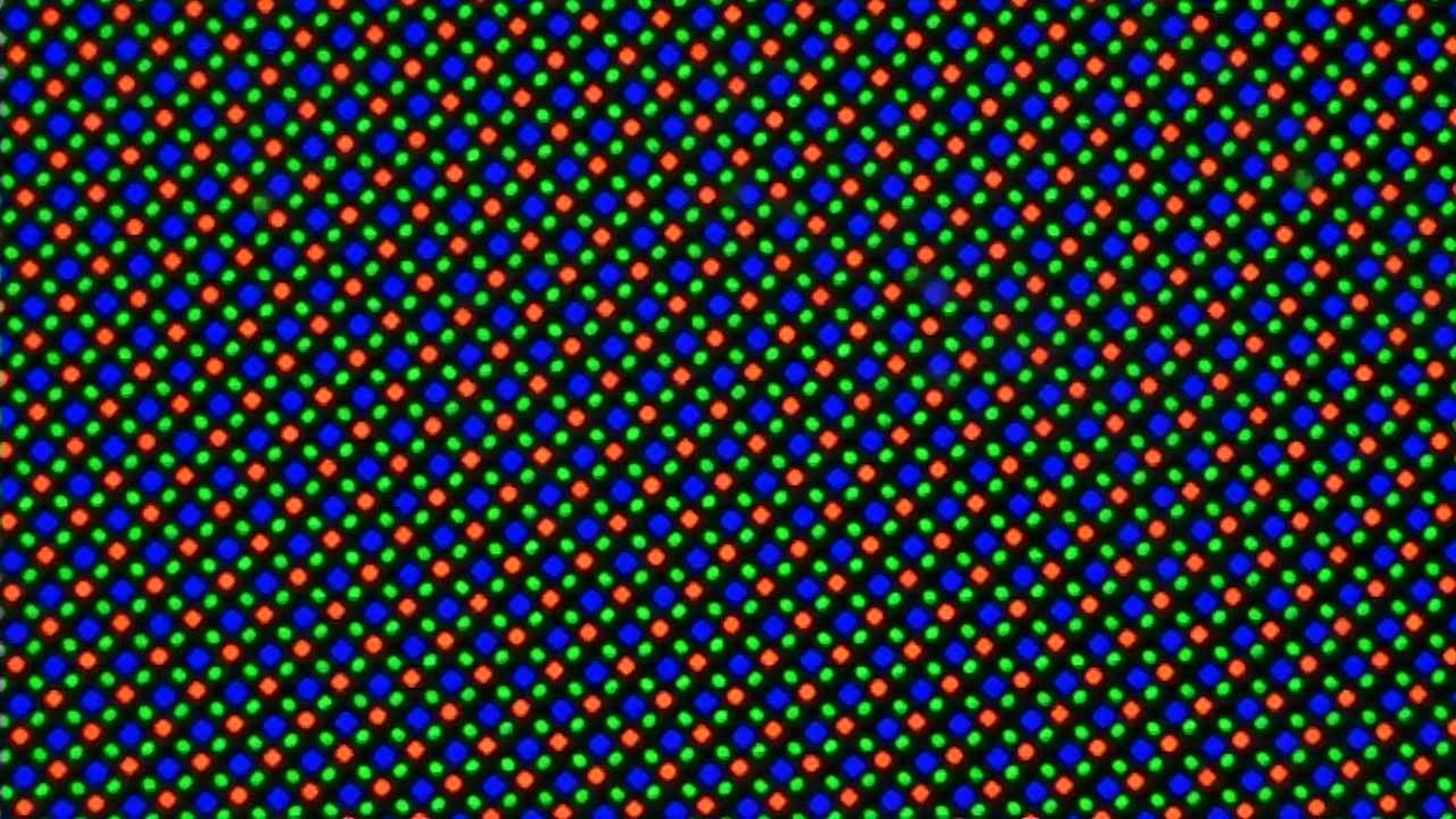
The 6.7-inch AMOLED display of the Plus model remains unchanged in 2026, but this is not a problem given the appealing starting point. The high resolution (QHD+) enables a razor-sharp display of over 500 ppi, and the refresh rate can be dynamically adjusted between 1 and 120 Hz using LTPO technology.
The brightness offered is very good in both the APL18 measurement and HDR playback, but not at the top level. Unfortunately, the 240-Hz panel still exhibits relatively low flicker, and Samsung has also dispensed with high-frequency PWM dimming. The frequency here is only 480 Hz, while Chinese manufacturers offer almost 4,000 Hz. The Galaxy phone is therefore not ideal for sensitive people with PWM complaints.
| |||||||||||||||||||||||||
Brightness Distribution: 95 %
Center on Battery: 1384 cd/m²
Contrast: ∞:1 (Black: 0 cd/m²)
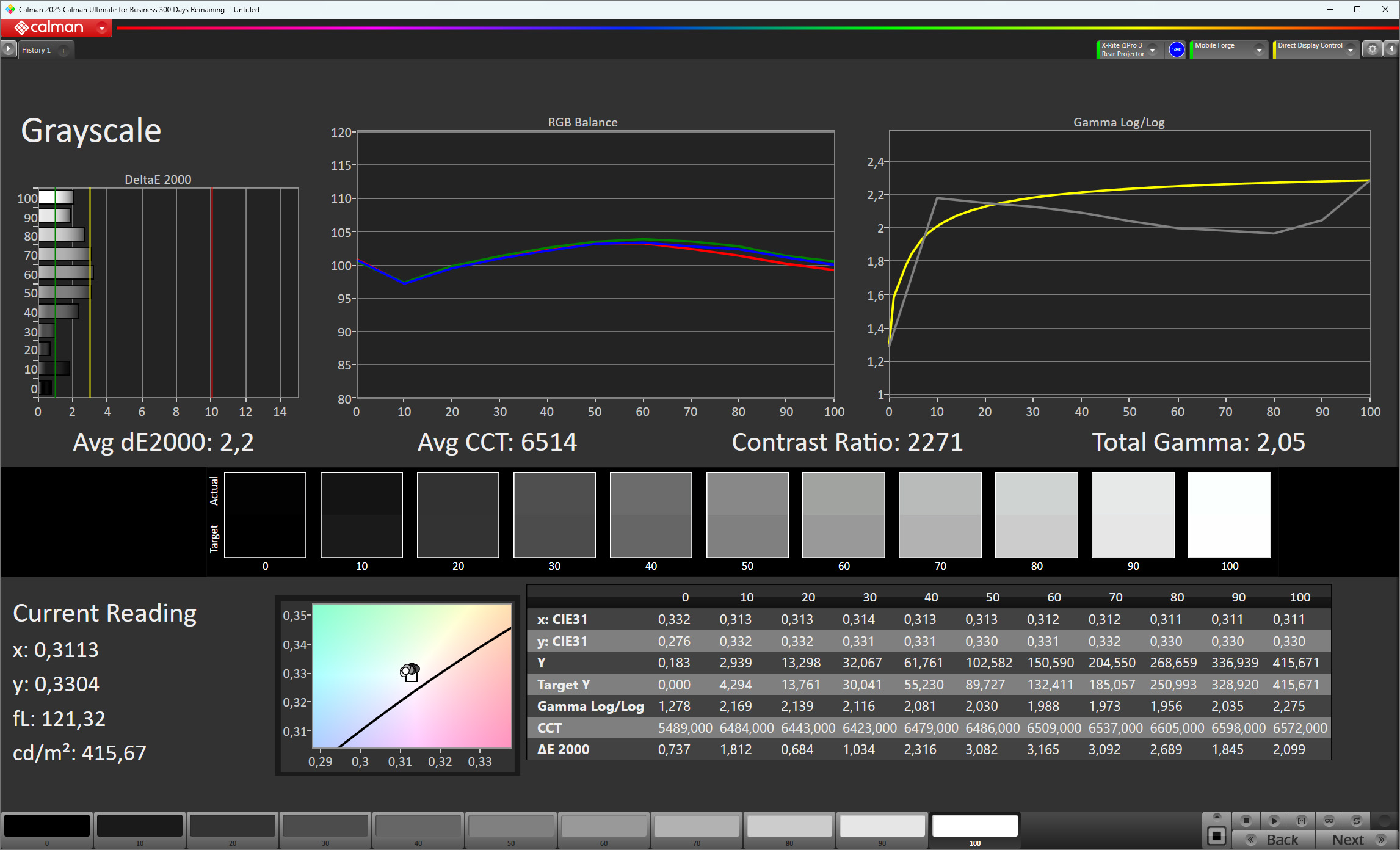
ΔE ColorChecker Calman: 2.8 | ∀{0.5-29.43 Ø4.69}
ΔE Greyscale Calman: 2.2 | ∀{0.09-98 Ø4.94}
99.8% sRGB (Calman 2D)
Gamma: 2.05
CCT: 6514 K
| Samsung Galaxy S26+ LTPO-AMOLED, 3120x1440, 6.7" | Samsung Galaxy S25+ Dynamic AMOLED 2X, 3120x1440, 6.7" | OnePlus 15 AMOLED, 2772x1272, 6.8" | Xiaomi Poco F8 Ultra AMOLED, 2608x1200, 6.9" | Motorola Signature AMOLED, 2780x1264, 6.8" | |
|---|---|---|---|---|---|
| Screen | 3% | 12% | 26% | 14% | |
| Brightness middle (cd/m²) | 1384 | 1371 -1% | 1114 -20% | 1771 28% | 1561 13% |
| Brightness (cd/m²) | 1379 | 1370 -1% | 1109 -20% | 1773 29% | 1547 12% |
| Brightness Distribution (%) | 95 | 96 1% | 97 2% | 99 4% | 99 4% |
| Black Level * (cd/m²) | |||||
| Colorchecker dE 2000 * | 2.8 | 2.7 4% | 1.33 52% | 1.3 54% | 1.46 48% |
| Colorchecker dE 2000 max. * | 4.5 | 4.2 7% | 2.42 46% | 2.8 38% | 3.63 19% |
| Greyscale dE 2000 * | 2.2 | 2 9% | 1.9 14% | 2.1 5% | 2.5 -14% |
| Gamma | 2.05 107% | 2.03 108% | 2.273 97% | 2.25 98% | 2.144 103% |
| CCT | 6514 100% | 6450 101% | 6708 97% | 6452 101% | 6612 98% |
* ... smaller is better
| Display / APL18 Peak Brightness | |
| Xiaomi Poco F8 Ultra | |
| Samsung Galaxy S26+ | |
| Samsung Galaxy S25+ | |
| Motorola Signature | |
| Display / HDR Peak Brightness | |
| Motorola Signature | |
| Xiaomi Poco F8 Ultra | |
| Samsung Galaxy S25+ | |
| Samsung Galaxy S26+ | |
Screen Flickering / PWM (Pulse-Width Modulation)
| Screen flickering / PWM detected | 240 Hz Amplitude: 15.27 % Secondary Frequency: 480 Hz | 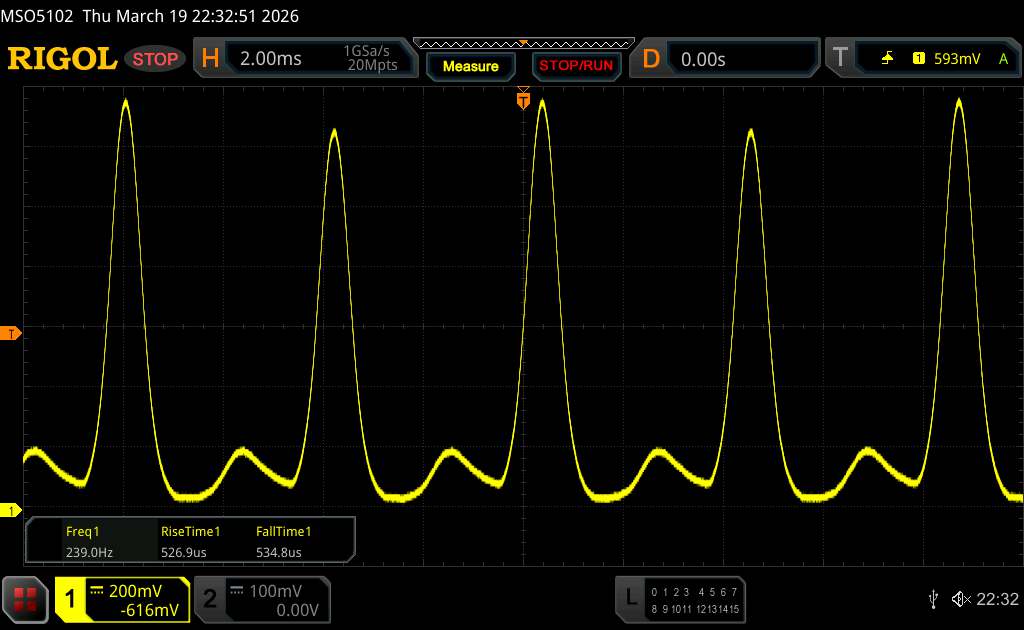 | |
The display backlight flickers at 240 Hz (worst case, e.g., utilizing PWM) . The frequency of 240 Hz is relatively low, so sensitive users will likely notice flickering and experience eyestrain at the stated brightness setting and below. In comparison: 52 % of all tested devices do not use PWM to dim the display. If PWM was detected, an average of 7611 (minimum: 5 - maximum: 343500) Hz was measured. | |||
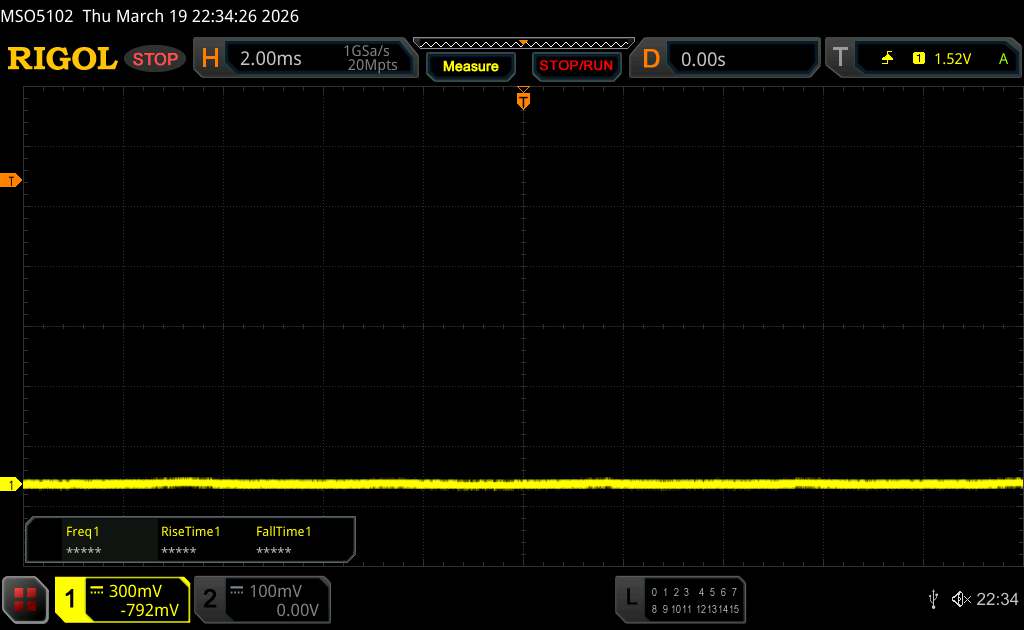
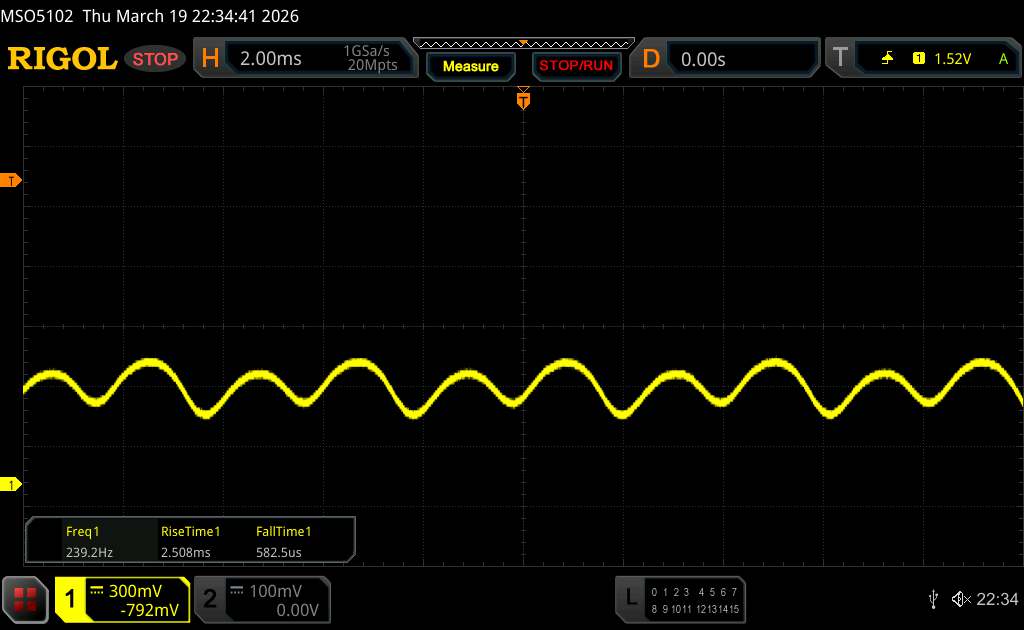
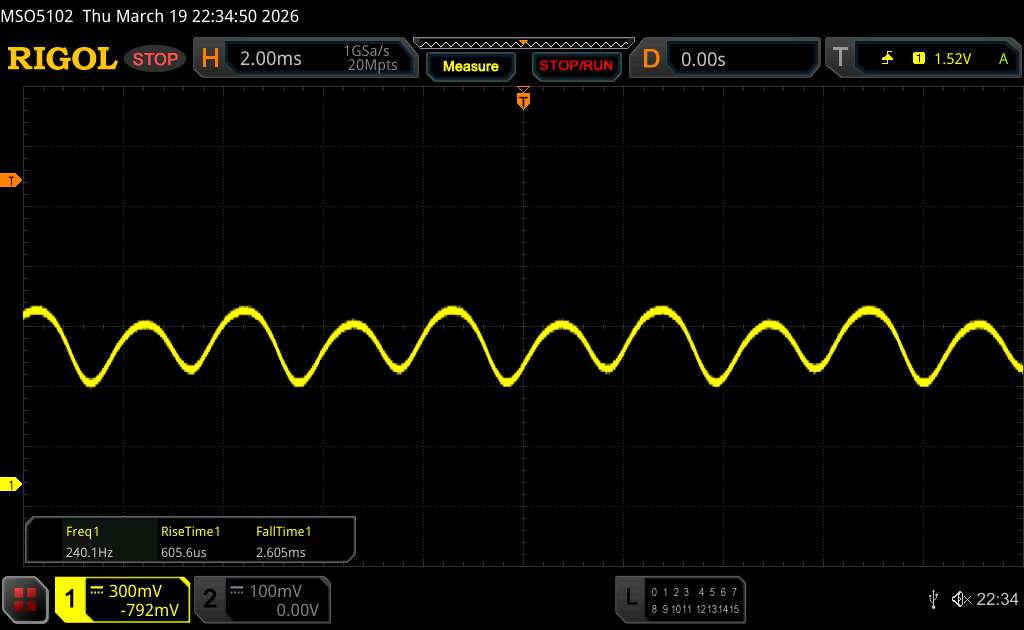
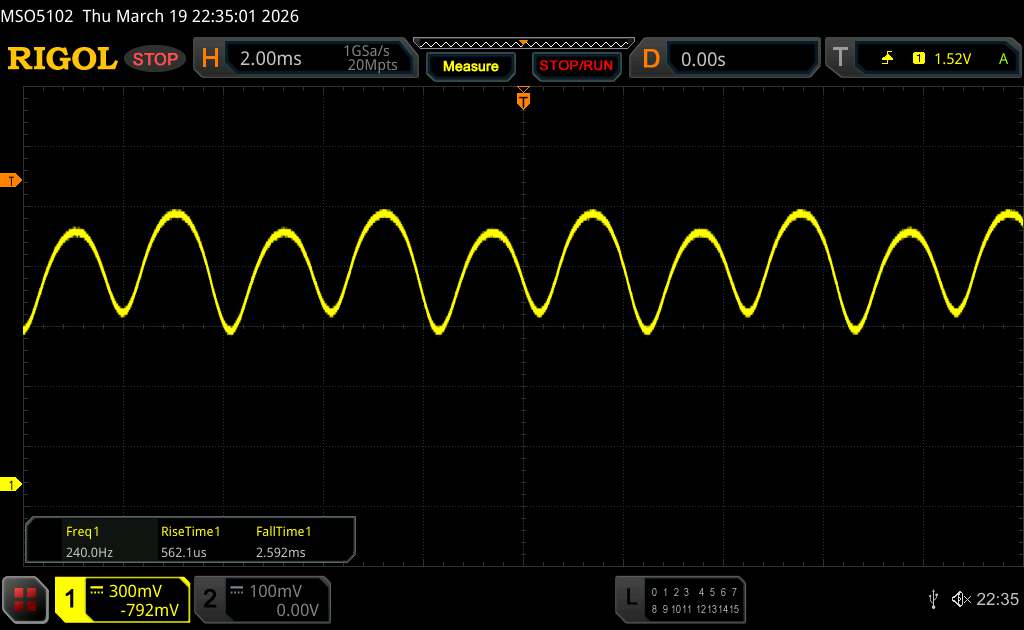
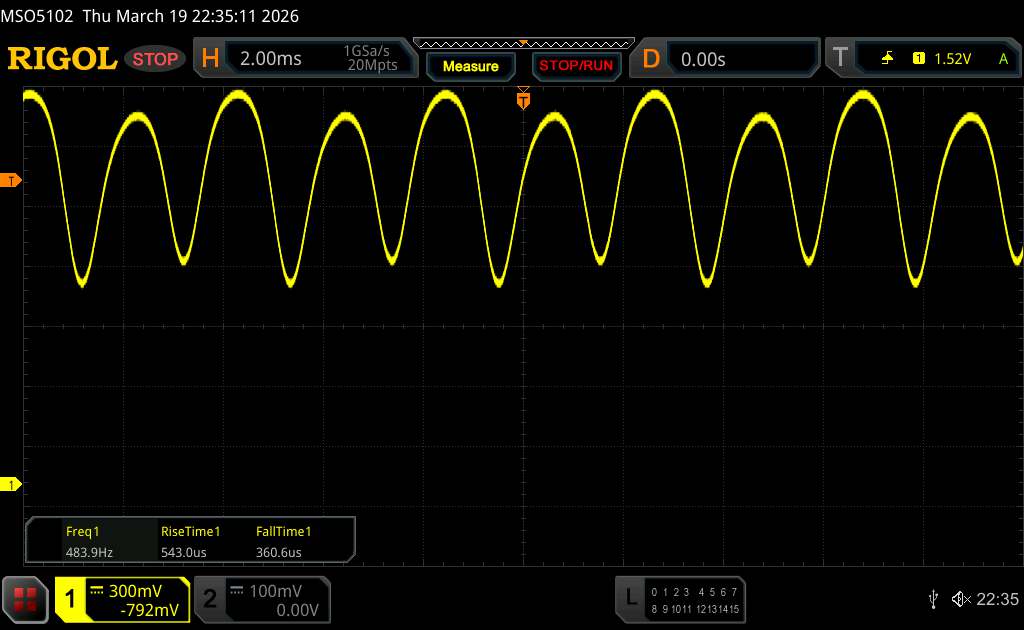
Measurement series with fixed zoom level and different brightness settings (The amplitude curve at minimum brightness looks flat, but this is due to the scaling. The info box shows the enlarged version of the amplitude at minimum brightness)
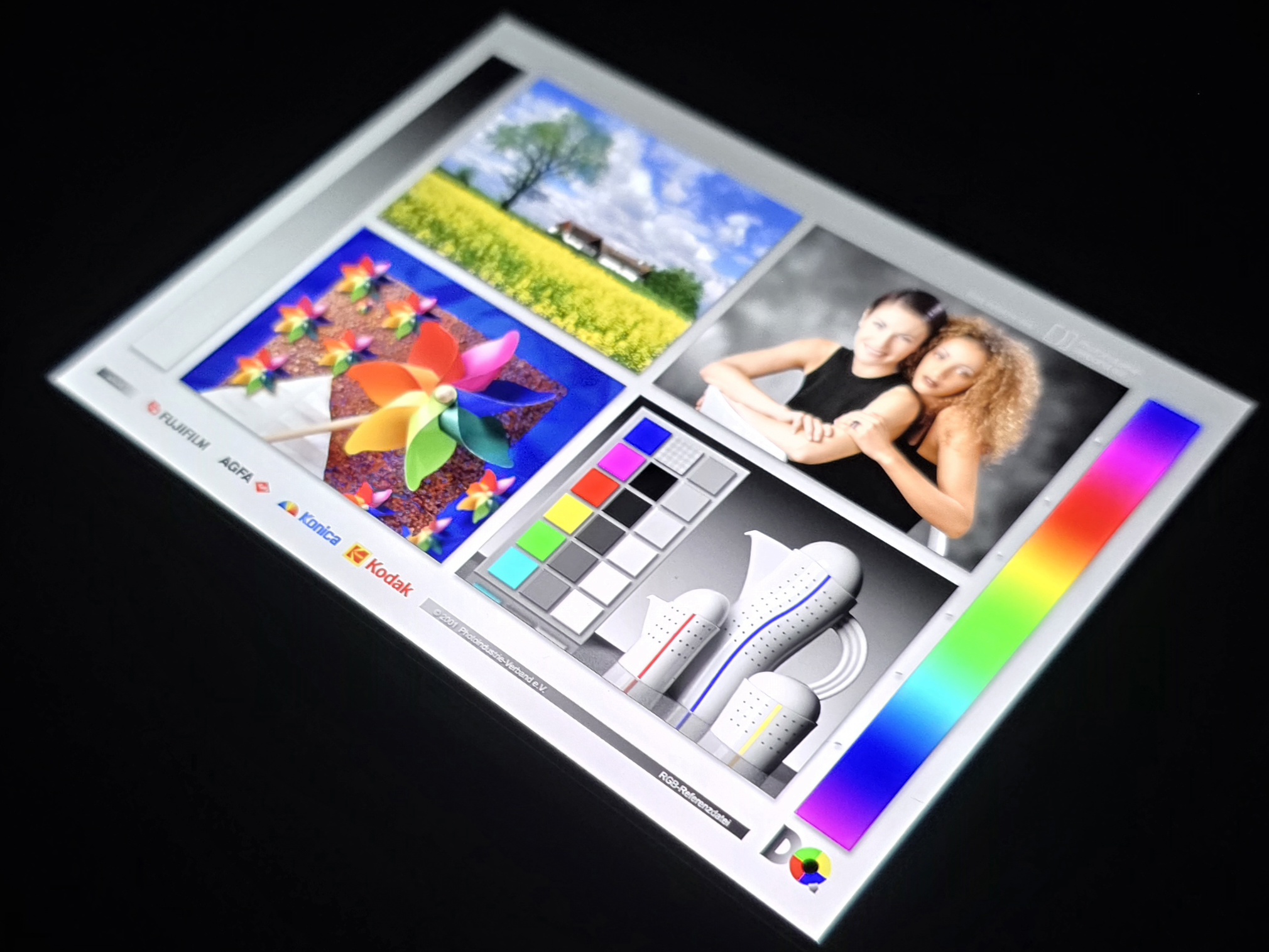
The same applies to the color display as to the brightness. Samsung's high-end phone performs neither poorly nor particularly well here. We get the best color representation in the "Natural" screen mode, in which deviations remain easily recognizable to the naked eye.


Display Response Times
| ↔ Response Time Black to White | ||
|---|---|---|
| 1.18 ms ... rise ↗ and fall ↘ combined | ↗ 0.6195 ms rise | 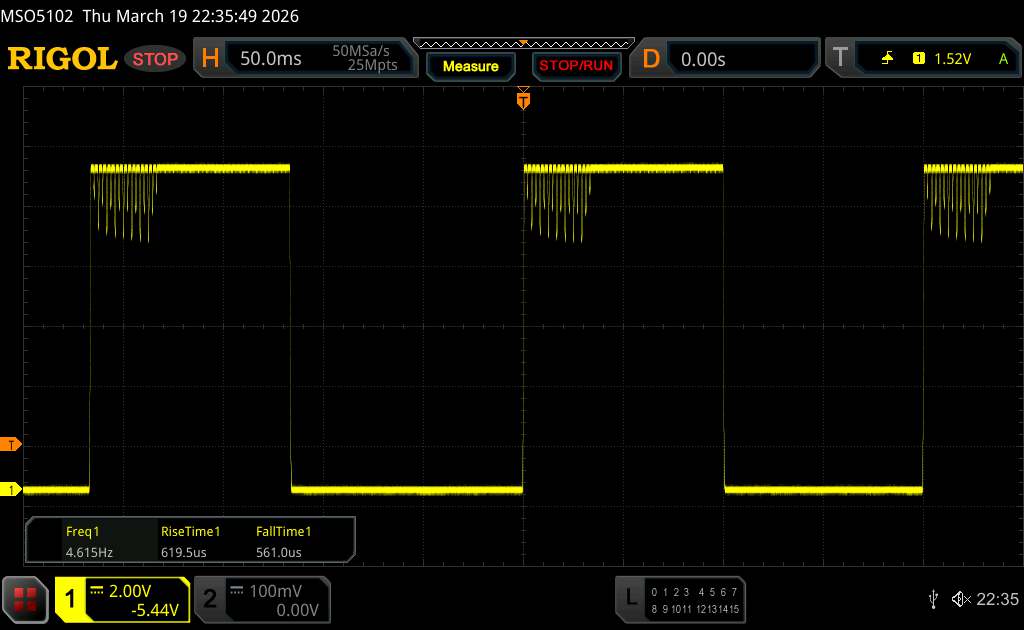 |
| ↘ 0.561 ms fall | ||
| The screen shows very fast response rates in our tests and should be very well suited for fast-paced gaming. In comparison, all tested devices range from 0.1 (minimum) to 240 (maximum) ms. » 6 % of all devices are better. This means that the measured response time is better than the average of all tested devices (19.7 ms). | ||
| ↔ Response Time 50% Grey to 80% Grey | ||
| 3.79 ms ... rise ↗ and fall ↘ combined | ↗ 2.137 ms rise | 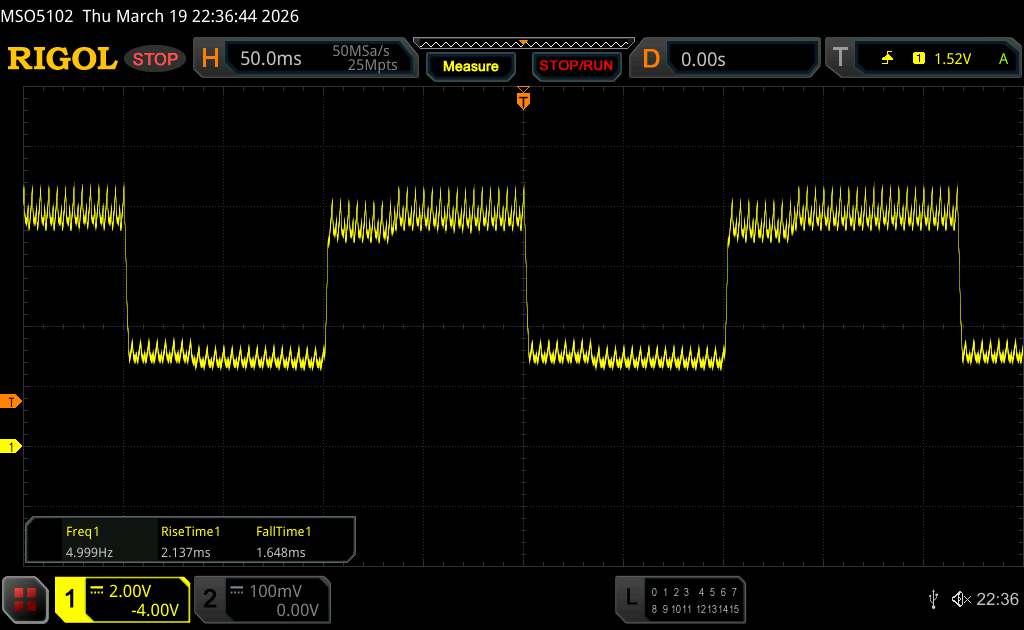 |
| ↘ 1.648 ms fall | ||
| The screen shows very fast response rates in our tests and should be very well suited for fast-paced gaming. In comparison, all tested devices range from 0.13 (minimum) to 636 (maximum) ms. » 15 % of all devices are better. This means that the measured response time is better than the average of all tested devices (30.7 ms). | ||
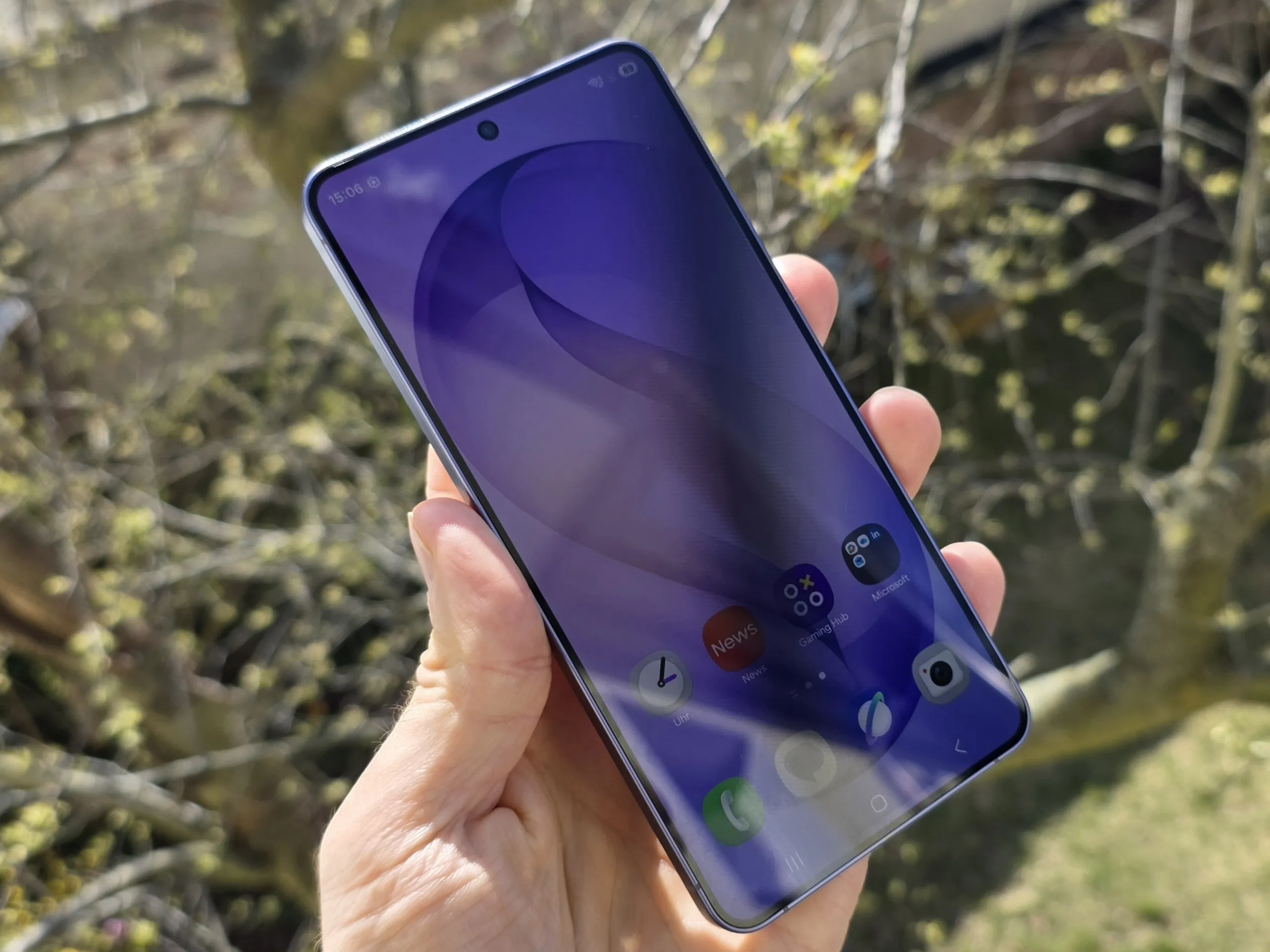
The large OLED panel with stable viewing angles is impressive outdoors. Display content remains clearly visible even in direct sunlight. However, the Ultra models with their anti-reflective coating are visibly easier to read.
Performance - New Samsung chipset in the Galaxy phone
When it comes to the chipset, Samsung falls back into old patterns. While the Galaxy S26 Ultra is also based on the Snapdragon 8 Elite Gen 5, the European Plus model comes with the company's own Exynos 2600. The Samsung SoC is manufactured using the 2 nm GaA process and has 10 cores. At its heart is an ARM C1-Ultra with 3.8 GHz.
This means that the Galaxy S26+ performs well behind the single-core representatives; the Exynos 2600 is still fast, although it only has a notable advantage over the Snapdragon 8 Elite for Galaxy of the predecessor in the multi-core tests. The Exynos 2600 performs very well in Geekbench AI.
| UL Procyon AI Inference for Android - Overall Score NNAPI | |
| Samsung Galaxy S25+ | |
| OnePlus 15 | |
| Motorola Signature | |
| Average Samsung Exynos 2600 (22076 - 22393, n=2) | |
| Samsung Galaxy S26+ | |
| Xiaomi Poco F8 Ultra | |
| Average of class Smartphone (2895 - 66164, n=99, last 2 years) | |
| Oppo Find X9 Pro | |
| AImark - Score v3.x | |
| Average of class Smartphone (293 - 307528, n=67, last 2 years) | |
| Average Samsung Exynos 2600 (1998 - 2079, n=2) | |
| Samsung Galaxy S26+ | |
| OnePlus 15 | |
| Samsung Galaxy S25+ | |
| Oppo Find X9 Pro | |
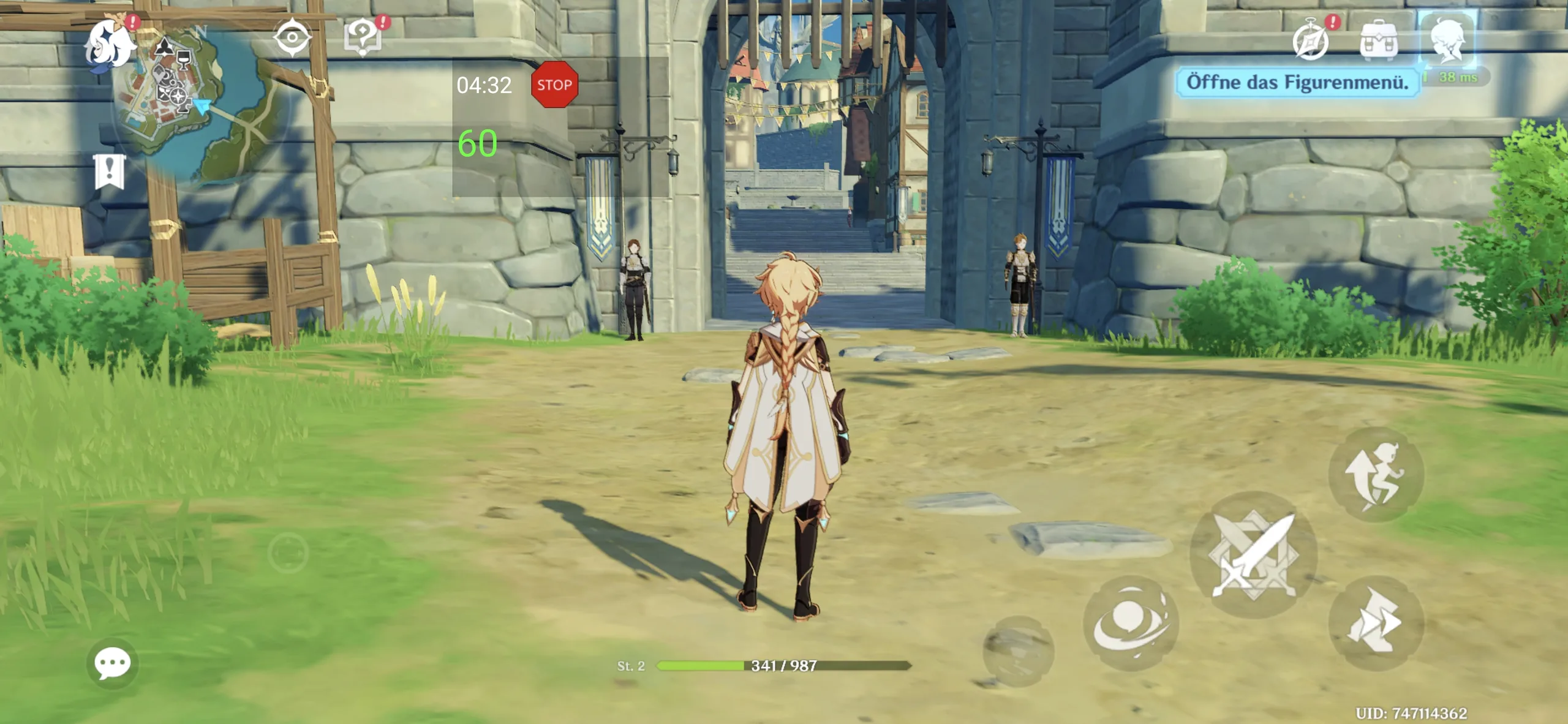
The integrated Samsung Xclipse 960 is used for graphics calculations. The Galaxy S26+ achieves extremely high scores in the 3DMark test. The GPU also impresses with top results in the GFXBench.
GFXBench (DX / GLBenchmark) 2.7: T-Rex Onscreen | 1920x1080 T-Rex Offscreen
GFXBench 3.0: on screen Manhattan Onscreen OGL | 1920x1080 1080p Manhattan Offscreen
GFXBench 3.1: on screen Manhattan ES 3.1 Onscreen | 1920x1080 Manhattan ES 3.1 Offscreen
GFXBench: on screen Car Chase Onscreen | 1920x1080 Car Chase Offscreen | on screen Aztec Ruins High Tier Onscreen | 2560x1440 Aztec Ruins High Tier Offscreen | on screen Aztec Ruins Normal Tier Onscreen | 1920x1080 Aztec Ruins Normal Tier Offscreen | 3840x2160 4K Aztec Ruins High Tier Offscreen
| 3DMark / Wild Life Extreme Unlimited | |
| Samsung Galaxy S26+ | |
| Oppo Find X9 Pro | |
| OnePlus 15 | |
| Xiaomi Poco F8 Ultra | |
| Samsung Galaxy S25+ | |
| Motorola Signature | |
| 3DMark / Wild Life Extreme | |
| Samsung Galaxy S26+ | |
| Oppo Find X9 Pro | |
| Samsung Galaxy S25+ | |
| Xiaomi Poco F8 Ultra | |
| OnePlus 15 | |
| Motorola Signature | |
| 3DMark / Wild Life Unlimited Score | |
| Xiaomi Poco F8 Ultra | |
| Samsung Galaxy S26+ | |
| Samsung Galaxy S25+ | |
| Oppo Find X9 Pro | |
| OnePlus 15 | |
| Motorola Signature | |
| 3DMark / Solar Bay Score | |
| Oppo Find X9 Pro | |
| Samsung Galaxy S26+ | |
| Xiaomi Poco F8 Ultra | |
| OnePlus 15 | |
| Samsung Galaxy S25+ | |
| Motorola Signature | |
| 3DMark / Solar Bay Unlimited Score | |
| Oppo Find X9 Pro | |
| Samsung Galaxy S26+ | |
| Samsung Galaxy S25+ | |
| OnePlus 15 | |
| Xiaomi Poco F8 Ultra | |
| Motorola Signature | |
| 3DMark / Steel Nomad Light Unlimited Score | |
| Samsung Galaxy S26+ | |
| Oppo Find X9 Pro | |
| OnePlus 15 | |
| Xiaomi Poco F8 Ultra | |
| Samsung Galaxy S25+ | |
| Motorola Signature | |
| 3DMark / Steel Nomad Light Score | |
| Samsung Galaxy S26+ | |
| Oppo Find X9 Pro | |
| OnePlus 15 | |
| Xiaomi Poco F8 Ultra | |
| Samsung Galaxy S25+ | |
| Motorola Signature | |
| GFXBench (DX / GLBenchmark) 2.7 / T-Rex Onscreen | |
| Samsung Galaxy S25+ | |
| Samsung Galaxy S26+ | |
| Xiaomi Poco F8 Ultra | |
| Motorola Signature | |
| Oppo Find X9 Pro | |
| OnePlus 15 | |
| GFXBench (DX / GLBenchmark) 2.7 / T-Rex Offscreen | |
| Oppo Find X9 Pro | |
| OnePlus 15 | |
| Samsung Galaxy S25+ | |
| Samsung Galaxy S26+ | |
| Motorola Signature | |
| Xiaomi Poco F8 Ultra | |
| GFXBench 3.0 / Manhattan Onscreen OGL | |
| Samsung Galaxy S25+ | |
| Samsung Galaxy S26+ | |
| Xiaomi Poco F8 Ultra | |
| Motorola Signature | |
| Oppo Find X9 Pro | |
| OnePlus 15 | |
| GFXBench 3.0 / 1080p Manhattan Offscreen | |
| Oppo Find X9 Pro | |
| OnePlus 15 | |
| Samsung Galaxy S25+ | |
| Samsung Galaxy S26+ | |
| Motorola Signature | |
| Xiaomi Poco F8 Ultra | |
| GFXBench 3.1 / Manhattan ES 3.1 Onscreen | |
| Samsung Galaxy S25+ | |
| Samsung Galaxy S26+ | |
| Xiaomi Poco F8 Ultra | |
| Motorola Signature | |
| Oppo Find X9 Pro | |
| OnePlus 15 | |
| GFXBench 3.1 / Manhattan ES 3.1 Offscreen | |
| Oppo Find X9 Pro | |
| Samsung Galaxy S26+ | |
| Xiaomi Poco F8 Ultra | |
| OnePlus 15 | |
| Samsung Galaxy S25+ | |
| Motorola Signature | |
| GFXBench / Car Chase Onscreen | |
| Samsung Galaxy S25+ | |
| Samsung Galaxy S26+ | |
| Xiaomi Poco F8 Ultra | |
| Motorola Signature | |
| Oppo Find X9 Pro | |
| OnePlus 15 | |
| GFXBench / Car Chase Offscreen | |
| Samsung Galaxy S26+ | |
| OnePlus 15 | |
| Oppo Find X9 Pro | |
| Xiaomi Poco F8 Ultra | |
| Samsung Galaxy S25+ | |
| Motorola Signature | |
| GFXBench / Aztec Ruins High Tier Onscreen | |
| Samsung Galaxy S25+ | |
| Xiaomi Poco F8 Ultra | |
| Samsung Galaxy S26+ | |
| Motorola Signature | |
| Oppo Find X9 Pro | |
| OnePlus 15 | |
| GFXBench / Aztec Ruins High Tier Offscreen | |
| Samsung Galaxy S26+ | |
| Xiaomi Poco F8 Ultra | |
| Oppo Find X9 Pro | |
| Samsung Galaxy S25+ | |
| Motorola Signature | |
| OnePlus 15 | |
| GFXBench / Aztec Ruins Normal Tier Onscreen | |
| Samsung Galaxy S25+ | |
| Samsung Galaxy S26+ | |
| Xiaomi Poco F8 Ultra | |
| Motorola Signature | |
| Oppo Find X9 Pro | |
| OnePlus 15 | |
| GFXBench / Aztec Ruins Normal Tier Offscreen | |
| Samsung Galaxy S26+ | |
| Xiaomi Poco F8 Ultra | |
| Oppo Find X9 Pro | |
| Samsung Galaxy S25+ | |
| Motorola Signature | |
| OnePlus 15 | |
| GFXBench / 4K Aztec Ruins High Tier Offscreen | |
| Samsung Galaxy S26+ | |
| Samsung Galaxy S25+ | |
| Xiaomi Poco F8 Ultra | |
| Oppo Find X9 Pro | |
| OnePlus 15 | |
| Motorola Signature | |
| Jetstream 2 | |
| 2.0 Total | |
| Samsung Galaxy S25+ (Chrome 133.0.6943.137) | |
| Samsung Galaxy S26+ (Chrome 146) | |
| Average Samsung Exynos 2600 (273 - 281, n=2) | |
| Motorola Signature (Chrome 145) | |
| Xiaomi Poco F8 Ultra (Chrome 143) | |
| Average of class Smartphone (63.9 - 423, n=117, last 2 years) | |
| OnePlus 15 (Chrome 142) | |
| 2.2 Total | |
| Samsung Galaxy S26+ (Chrome 146) | |
| Average Samsung Exynos 2600 (294 - 354, n=2) | |
| Average of class Smartphone (2 - 480, n=104, last 2 years) | |
| Motorola Signature (Chrome 145) | |
| Speedometer 3 - Score 3.0 | |
| Samsung Galaxy S25+ (Chrome 133.0.6943.137) | |
| Average Samsung Exynos 2600 (27.1 - 28.3, n=2) | |
| Samsung Galaxy S26+ (Chrome 146) | |
| Xiaomi Poco F8 Ultra (Chrome 143) | |
| OnePlus 15 (Chrome 142) | |
| Motorola Signature (Chrome 145) | |
| Average of class Smartphone (3.06 - 45.5, n=81, last 2 years) | |
| Octane V2 - Total Score | |
| Samsung Galaxy S25+ (Chrome 133.0.6943.137) | |
| OnePlus 15 (Chrome 142) | |
| Average Samsung Exynos 2600 (85043 - 92374, n=2) | |
| Samsung Galaxy S26+ (Chrome 146) | |
| Xiaomi Poco F8 Ultra (Chrome 143) | |
| Average of class Smartphone (6015 - 126661, n=135, last 2 years) | |
| Motorola Signature (Chrome 145) | |
| Mozilla Kraken 1.1 - Total | |
| Average of class Smartphone (281 - 2718, n=120, last 2 years) | |
| Motorola Signature (Chrome 145) | |
| Xiaomi Poco F8 Ultra (Chrome 143) | |
| Samsung Galaxy S25+ (Chrome 133.0.6943.137) | |
| Samsung Galaxy S26+ (Chrome 146) | |
| Average Samsung Exynos 2600 (374 - 388, n=3) | |
| OnePlus 15 (Chrome 142) | |
| WebXPRT 5 - Overall | |
| Average Samsung Exynos 2600 (91 - 95, n=2) | |
| Samsung Galaxy S26+ (Chrome 146) | |
| Average of class Smartphone (19 - 104, n=26, last 2 years) | |
* ... smaller is better
| Samsung Galaxy S26+ | Samsung Galaxy S25+ | OnePlus 15 | Xiaomi Poco F8 Ultra | Motorola Signature | Average 256 GB UFS 4.0 Flash | Average of class Smartphone | |
|---|---|---|---|---|---|---|---|
| AndroBench 3-5 | 50% | 54% | 115% | 130% | 54% | 28% | |
| Sequential Read 256KB (MB/s) | 3574.74 | 4057.35 14% | 3962.2 11% | 4064.33 14% | 4049.69 13% | 3613 ? 1% | 2278 ? -36% |
| Sequential Write 256KB (MB/s) | 2543.31 | 3311.02 30% | 3741.2 47% | 3987.65 57% | 3774.28 48% | 2625 ? 3% | 1971 ? -23% |
| Random Read 4KB (MB/s) | 419.84 | 294.51 -30% | 352.6 -16% | 575.86 37% | 613.85 46% | 390 ? -7% | 317 ? -24% |
| Random Write 4KB (MB/s) | 122.63 | 351.16 186% | 334.4 173% | 551.82 350% | 628.08 412% | 390 ? 218% | 362 ? 195% |


Emissions - Samsung phone with hotspot
Temperature
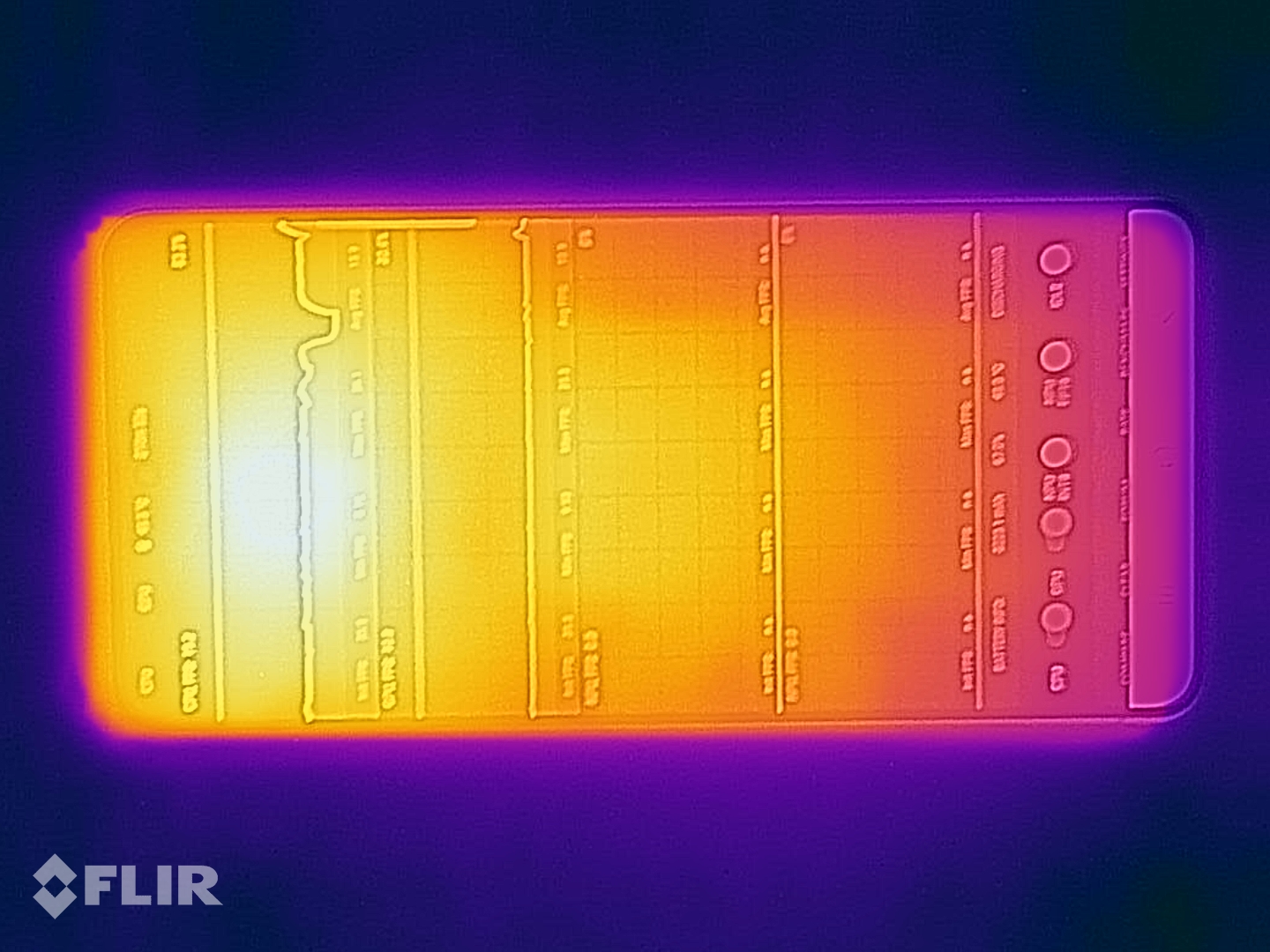
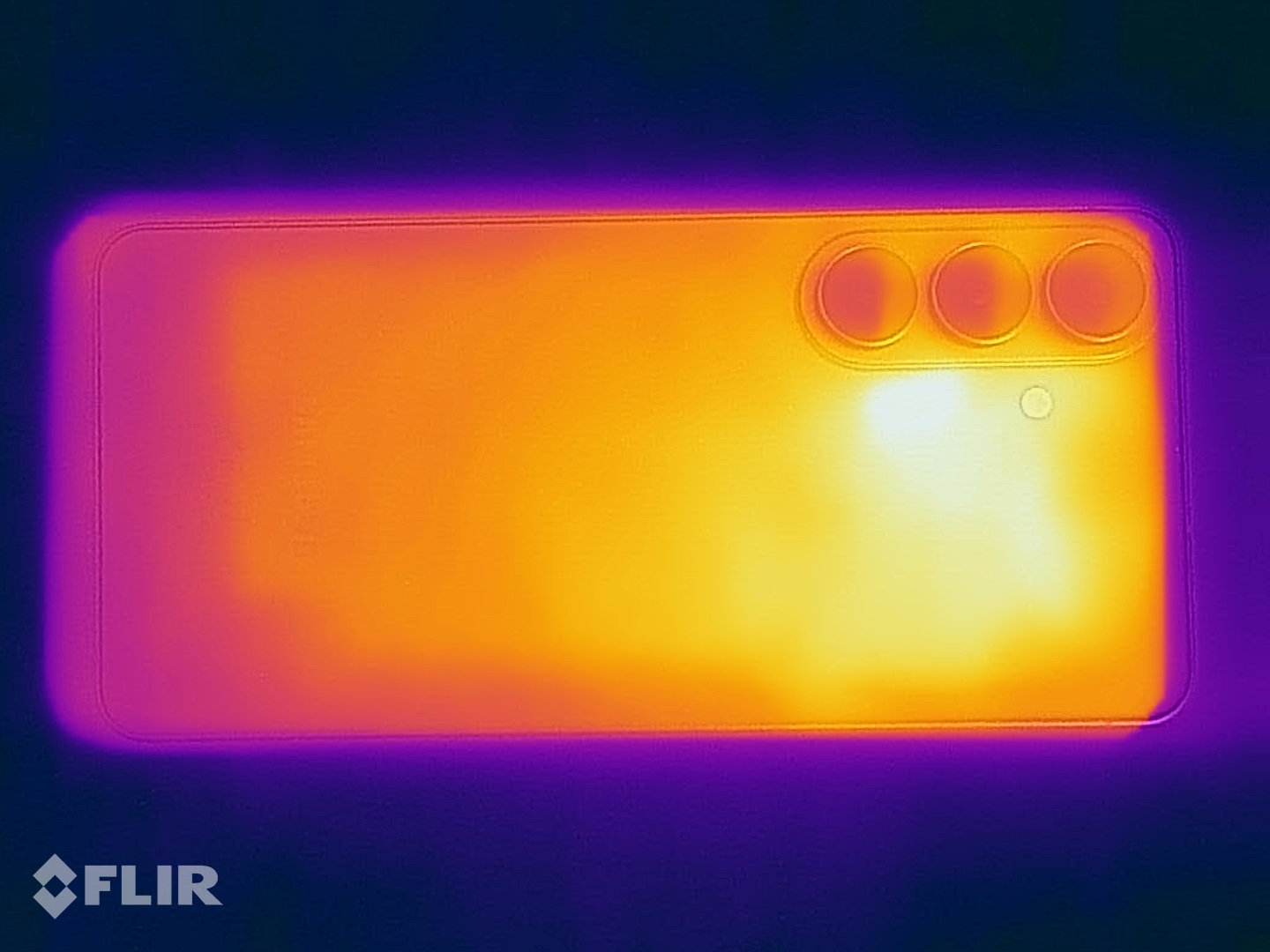
Under constant load, we measured surface temperatures of over 47 °C in places. Not low, but also not critically high. The cooling performance is similarly efficient as in the predecessor; in the 3DMark stress tests, we achieved a moderate throttling of up to 40 percent. However, the Galay S26+ can sometimes maintain maximum performance for longer.
(-) The maximum temperature on the upper side is 47.5 °C / 118 F, compared to the average of 35.4 °C / 96 F, ranging from 21.9 to 247 °C for the class Smartphone.
(-) The bottom heats up to a maximum of 46.9 °C / 116 F, compared to the average of 34.1 °C / 93 F
(+) In idle usage, the average temperature for the upper side is 26.7 °C / 80 F, compared to the device average of 33 °C / 91 F.
3DMark Stress Tests
| 3DMark | |
| Wild Life Stress Test Stability | |
| Motorola Signature | |
| OnePlus 15 | |
| Samsung Galaxy S26+ | |
| Samsung Galaxy S25+ | |
| Wild Life Extreme Stress Test | |
| Samsung Galaxy S26+ | |
| OnePlus 15 | |
| Samsung Galaxy S25+ | |
| Solar Bay Stress Test Stability | |
| Motorola Signature | |
| Samsung Galaxy S26+ | |
| Samsung Galaxy S25+ | |
| Steel Nomad Light Stress Test Stability | |
| Motorola Signature | |
| Samsung Galaxy S25+ | |
| Samsung Galaxy S26+ | |
Speaker
One of the Plus model's strengths is its good speakers. Our pink noise measurement shows a fairly even frequency response for the mids and highs - only the super tweeters dip a little. A hint of bass is also perceptible.
Alternatively, audio can also be output via the USB-C port, and the Galaxy S26+ is also able to start an Auracast broadcast.
Samsung Galaxy S26+ audio analysis
(+) | speakers can play relatively loud (90.1 dB)
Bass 100 - 315 Hz
(-) | nearly no bass - on average 21.2% lower than median
(±) | linearity of bass is average (7.4% delta to prev. frequency)
Mids 400 - 2000 Hz
(±) | higher mids - on average 5.5% higher than median
(+) | mids are linear (5.5% delta to prev. frequency)
Highs 2 - 16 kHz
(+) | balanced highs - only 2.6% away from median
(+) | highs are linear (3.6% delta to prev. frequency)
Overall 100 - 16.000 Hz
(±) | linearity of overall sound is average (15% difference to median)
Compared to same class
» 2% of all tested devices in this class were better, 3% similar, 95% worse
» The best had a delta of 11%, average was 34%, worst was 136%
Compared to all devices tested
» 21% of all tested devices were better, 4% similar, 75% worse
» The best had a delta of 4%, average was 23%, worst was 136%
Samsung Galaxy S25+ audio analysis
(+) | speakers can play relatively loud (90.9 dB)
Bass 100 - 315 Hz
(-) | nearly no bass - on average 18.3% lower than median
(+) | bass is linear (6.5% delta to prev. frequency)
Mids 400 - 2000 Hz
(±) | higher mids - on average 6.3% higher than median
(+) | mids are linear (5.2% delta to prev. frequency)
Highs 2 - 16 kHz
(±) | higher highs - on average 6.7% higher than median
(+) | highs are linear (4.6% delta to prev. frequency)
Overall 100 - 16.000 Hz
(±) | linearity of overall sound is average (16.8% difference to median)
Compared to same class
» 9% of all tested devices in this class were better, 7% similar, 84% worse
» The best had a delta of 11%, average was 34%, worst was 136%
Compared to all devices tested
» 30% of all tested devices were better, 7% similar, 63% worse
» The best had a delta of 4%, average was 23%, worst was 136%
Battery life - Galaxy S26 Plus still with "mini battery"
Power consumption
The power consumption is inconspicuous, the Galaxy S26+ consumes a similar amount of power as its predecessor with the Snapdragon chipset.
The 4,900 mAh battery, which can be charged with 45 watts wired and 15 watts wirelessly, is neither particularly large nor can be charged really quickly. When fully discharged, the Samsung phone needs just over an hour with a Xiaomi power bank.
| Off / Standby |   0.11 / 0.26 Watt 0.11 / 0.26 Watt |
| Idle |  0.56 / 1.28 / 1.31 Watt 0.56 / 1.28 / 1.31 Watt |
| Load |
12.38 / 16.9 Watt |
    
| |
Key:
min: ,
med: ,
max: Metrahit Energy | |
| Samsung Galaxy S26+ 4900 mAh | Samsung Galaxy S25+ 4900 mAh | OnePlus 15 7300 mAh | Xiaomi Poco F8 Ultra 6500 mAh | Motorola Signature 5200 mAh | Average Samsung Exynos 2600 | Average of class Smartphone | |
|---|---|---|---|---|---|---|---|
| Power Consumption | 7% | -17% | 3% | -16% | 7% | -5% | |
| Idle Minimum * (Watt) | 0.56 | 0.45 20% | 1.2 -114% | 0.87 -55% | 0.8 -43% | 0.52 ? 7% | 0.901 ? -61% |
| Idle Average * (Watt) | 1.28 | 1.09 15% | 1.4 -9% | 1.29 -1% | 1.3 -2% | 1.067 ? 17% | 1.483 ? -16% |
| Idle Maximum * (Watt) | 1.31 | 1.13 14% | 1.8 -37% | 1.33 -2% | 1.7 -30% | 1.18 ? 10% | 1.677 ? -28% |
| Load Average * (Watt) | 12.38 | 14.41 -16% | 6.7 46% | 8.84 29% | 11.8 5% | 12.4 ? -0% | 6.82 ? 45% |
| Load Maximum * (Watt) | 16.9 | 16.37 3% | 12.3 27% | 9.15 46% | 18.7 -11% | 16.8 ? 1% | 10.8 ? 36% |
* ... smaller is better
Power consumption: Geekbench (150 cd/m²)
Power consumption: GFXbench (150 cd/m²)
Battery life
In our practical battery tests, which are carried out with an adjusted display brightness of 150 cd/m², the phone delivers solid runtimes of almost 18 hours in the WLAN test, but the predecessor with Qualcomm SoC lasts around 2 hours longer.
| Battery runtime - WiFi v1.3 | |
| Samsung Galaxy S26+ | |
| Samsung Galaxy S25+ | |
| OnePlus 15 | |
| Xiaomi Poco F8 Ultra | |
| Motorola Signature | |
Notebookcheck overall rating
The Galaxy S26+ is a very good smartphone, but the name "Galaxy S25+ (2026)" would have been more appropriate .

Samsung Galaxy S26+
- 04/10/2026 v8
Marcus Herbrich
 Total Sustainability Score:
 Possible alternatives in comparison
Image | Model / Review | Price | Weight | Drive | Display |
|---|---|---|---|---|---|
1. 89%  | Samsung Galaxy S26+ Samsung Exynos 2600 ⎘ Samsung Xclipse 960 ⎘ 12 GB Memory, 256 GB UFS 4.x | List Price: 1249€ | 190 g | 256 GB UFS 4.0 Flash | 6.70" 3120x1440 513 PPI LTPO-AMOLED |
2. 88.4%  | Samsung Galaxy S25+ Qualcomm Snapdragon 8 Elite for Galaxy ⎘ Qualcomm Adreno 830 ⎘ 12 GB Memory, 256 GB UFS 4.x | List Price: 1149 Euro | 190 g | 256 GB UFS 4.0 Flash | 6.70" 3120x1440 513 PPI Dynamic AMOLED 2X |
3. 87.1%  | OnePlus 15 Qualcomm Snapdragon 8 Elite Gen 5 ⎘ Qualcomm Adreno 840 ⎘ 16 GB Memory, 512 GB UFS 4.x | Amazon: List Price: 999€ | 215 g | 512 GB UFS 4.1 Flash | 6.78" 2772x1272 450 PPI AMOLED |
4. 88.2%  | Xiaomi Poco F8 Ultra Qualcomm Snapdragon 8 Elite Gen 5 ⎘ Qualcomm Adreno 840 ⎘ 16 GB Memory, 512 GB UFS 4.x | List Price: 900€ | 220 g | 512 GB UFS 4.1 Flash | 6.90" 2608x1200 416 PPI AMOLED |
5. 87.9%  | Motorola Signature Qualcomm Snapdragon 8 Gen 5 ⎘ Qualcomm Adreno 829 ⎘ 16 GB Memory, 512 GB UFS 4.x | List Price: 1000 Euro | 186 g | 512 GB UFS 4.1 Flash | 6.80" 2780x1264 450 PPI AMOLED |
Transparency
The selection of devices to be reviewed is made by our editorial team. The test sample was provided to the author as a loan by the manufacturer or retailer for the purpose of this review. The lender had no influence on this review, nor did the manufacturer receive a copy of this review before publication. There was no obligation to publish this review. As an independent media company, Notebookcheck is not subjected to the authority of manufacturers, retailers or publishers.
This is how Notebookcheck is testing
Every year, Notebookcheck independently reviews hundreds of laptops and smartphones using standardized procedures to ensure that all results are comparable. We have continuously developed our test methods for around 20 years and set industry standards in the process. In our test labs, high-quality measuring equipment is utilized by experienced technicians and editors. These tests involve a multi-stage validation process. Our complex rating system is based on hundreds of well-founded measurements and benchmarks, which maintains objectivity. Further information on our test methods can be found here.
 Add as a preferred source on Google


