




Verdict
The Poco F8 Ultra positions itself as a high-end smartphone and is equipped with a suitably powerful SoC. It also features a bright and colour-accurate 120-Hz AMOLED display, a solid triple-camera setup, USB 3.2 support, IP68 certification, a 6,500 mAh battery and fast charging both wired and wireless. In addition, the device delivers excellent Bose-tuned audio.
That said, the display is not based on power-saving LTPO technology, 6-GHz Wi-Fi is missing, and the smartphone shows significant heat development under sustained stress tests. Software update support could also be more generous.
Despite these shortcomings, the Poco F8 Ultra offers a very strong overall package that faces little direct competition in its price segment.
Pros
Cons
Price and availability
The Poco F8 Ultra is available directly from Xiaomi's official online store and from retailers such as Amazon and Galaxus.

- $899.99XIAOMI Poco F8 Ultra 5G Ai (Compatible with Tmobile Mint Tello & Global) (256GB + 12GB) Ai 2K 6.9" Bose Sound 50MP Gamers Phone NFC Dual sim Unlocked Model 2510DPC44G (Black)
- $889.99XIAOMI Poco F8 Ultra 5G Ai (Compatible with Tmobile Mint Tello & Global) (256GB + 12GB) Ai 2K 6.9" Bose Sound 50MP Gamers Phone NFC Dual sim Unlocked Model 25102PCBEG (Denim Blue)
- $1,039.99XIAOMI Poco F8 Ultra 5G Ai (Compatible with Tmobile Mint Tello & Global) (512GB + 16GB) Ai 2K 6.9" Bose Sound 50MP Gamers Phone NFC Dual sim Unlocked Model 25102PCBEG (Blue Demin)
Table of Contents
- Verdict
- Specifications – Poco F8 Ultra
- Case – Poco F8 Ultra relies on Poco Shield Glass
- Features – Poco smartphone with fast USB 3.2
- Software – six years of updates
- Communication – dual-band GNSS and 5G Sub6
- Telephony and call quality – F8 Ultra with dual eSIM
- Cameras – Poco F8 Ultra with three 50 MP sensors
- Accessories and warranty – optional Xiaomi Care coverage
- Input devices and handling – ultrasonic in-display fingerprint sensor
- Display – larger and with lower resolution
- Performance – Poco F8 Ultra comes with Snapdragon 8 Elite Gen 5
- Emissions – overheating under stress
- Battery life – 6,500 mAh in the Poco F8 Ultra
- Notebookcheck overall rating
- Possible alternatives at a glance
The second Ultra model followed quickly, with the Poco F8 Ultra replacing its predecessor after just around eight months. Poco has sought to reassure buyers, however, stating that this accelerated release cycle is intended as a one-off strategic adjustment rather than a permanent change to the company's internal release calendar.
Unfortunately, Xiaomi has also increased prices. The Poco F8 Ultra is once again available in two storage configurations, 12 GB/256 GB (MSRP: €830) and 16 GB/512 GB (MSRP: €900), representing price increases of €80 and €100 respectively compared to the previous generation. At the time of writing, no officially confirmed US pricing has been announced.
Specifications – Poco F8 Ultra
Case – Poco F8 Ultra relies on Poco Shield Glass
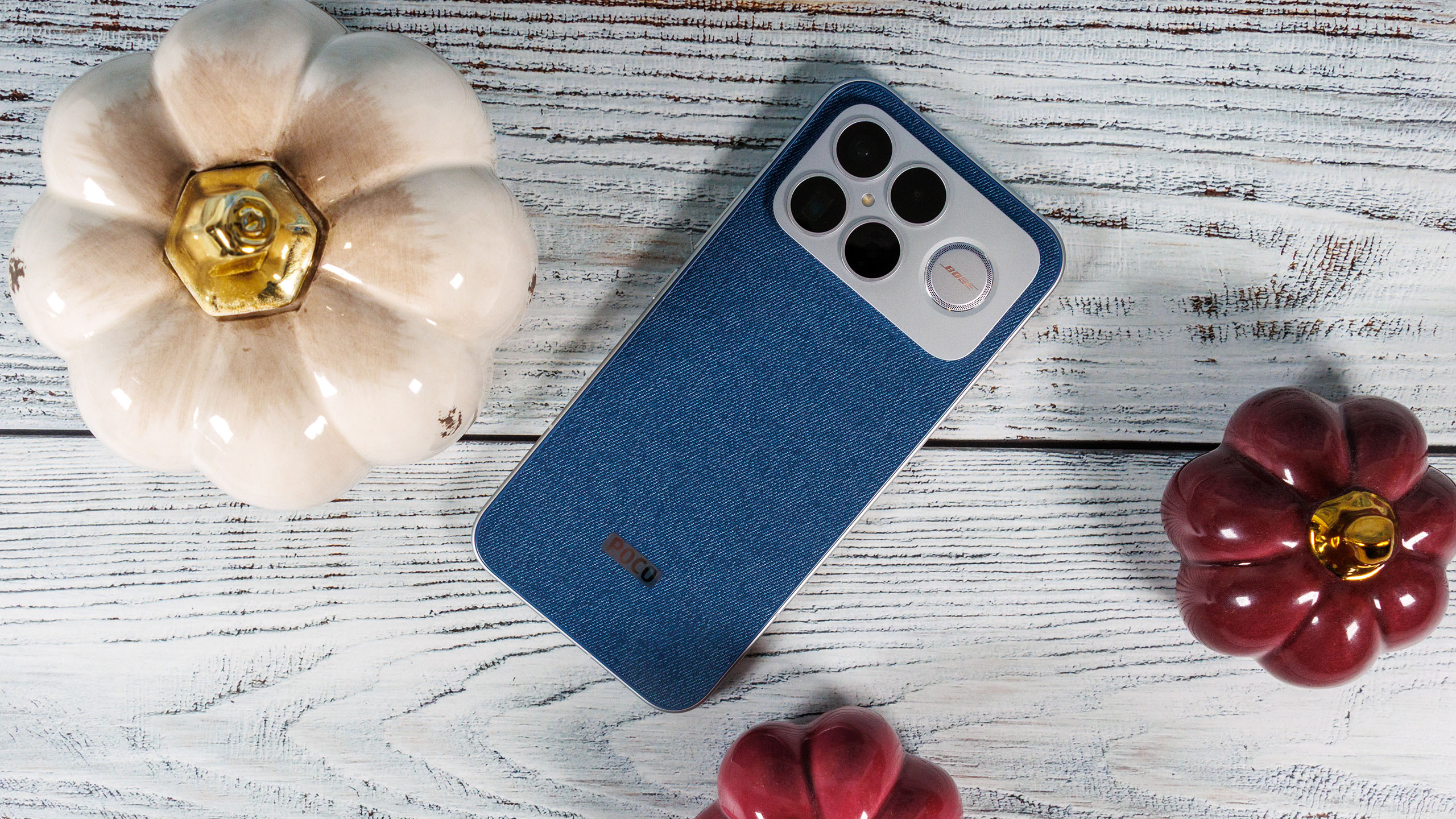
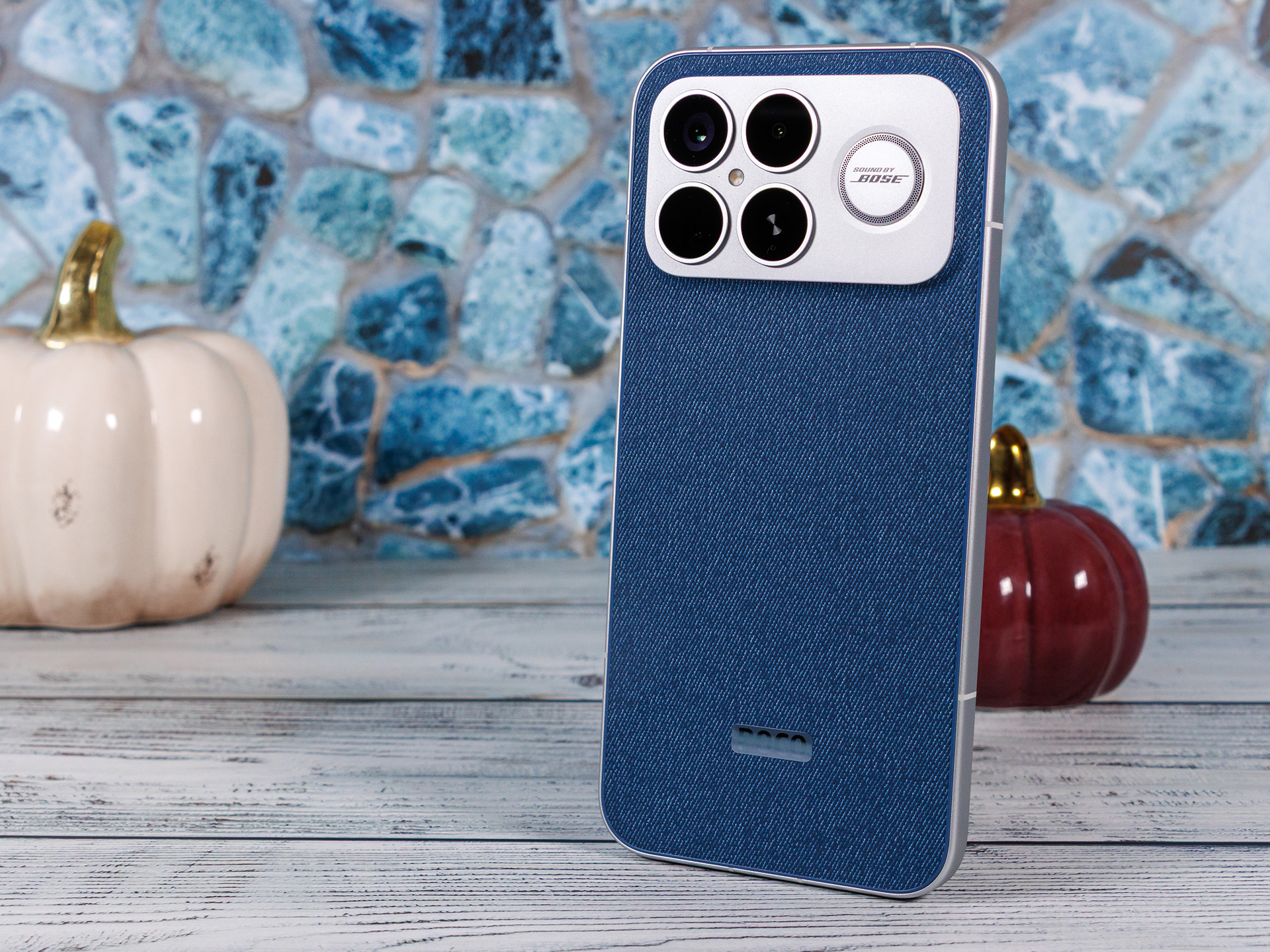
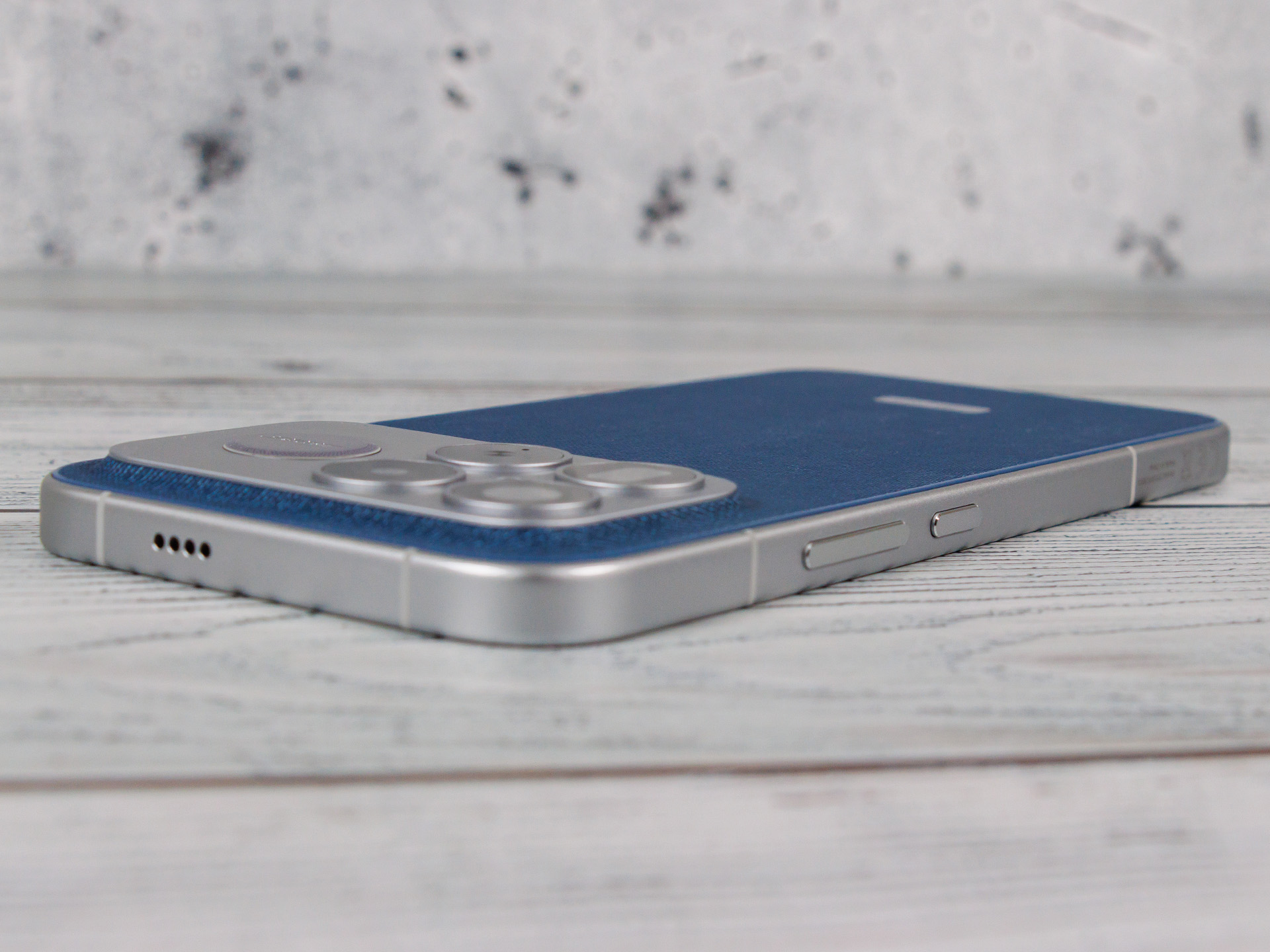
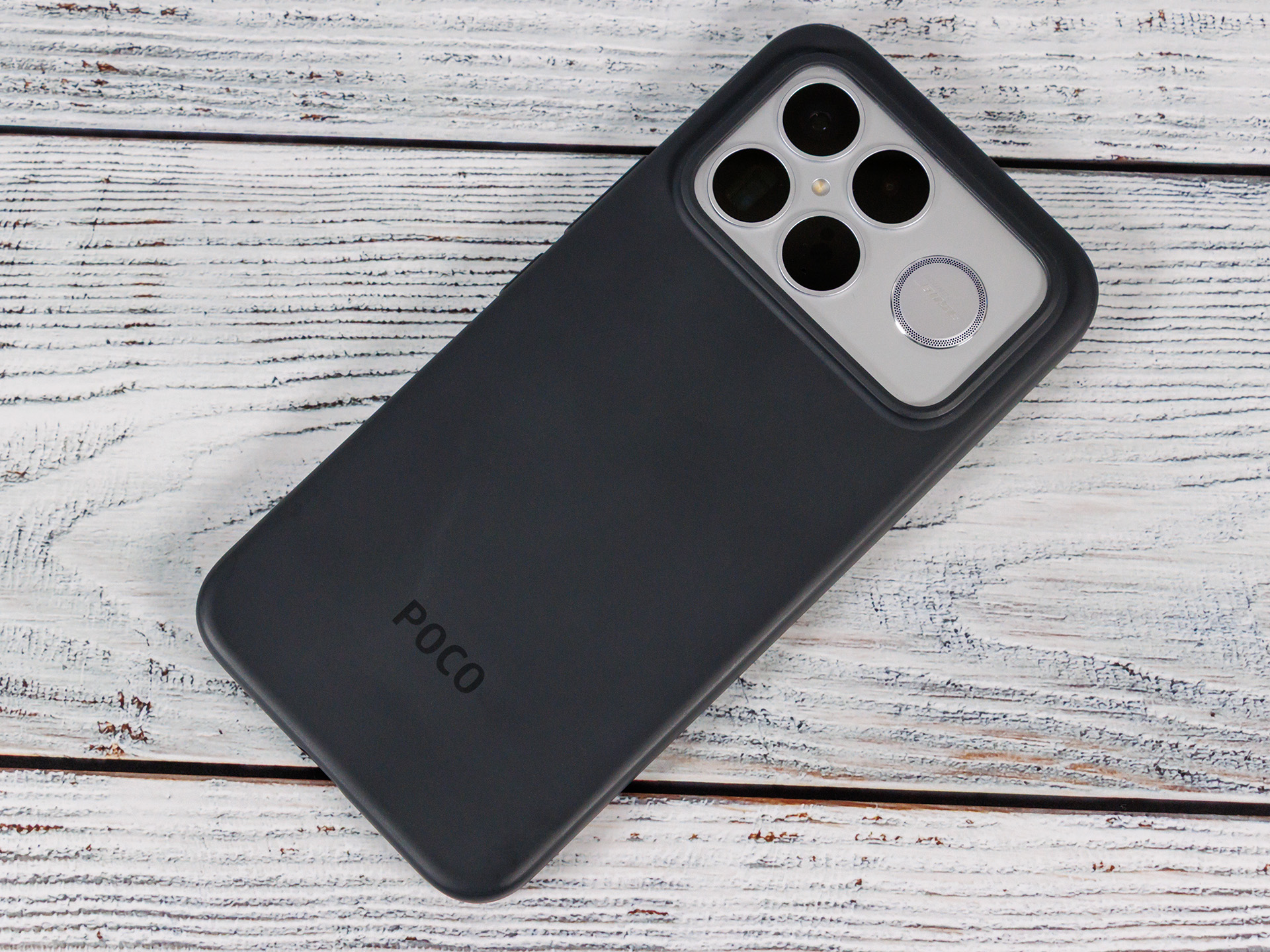
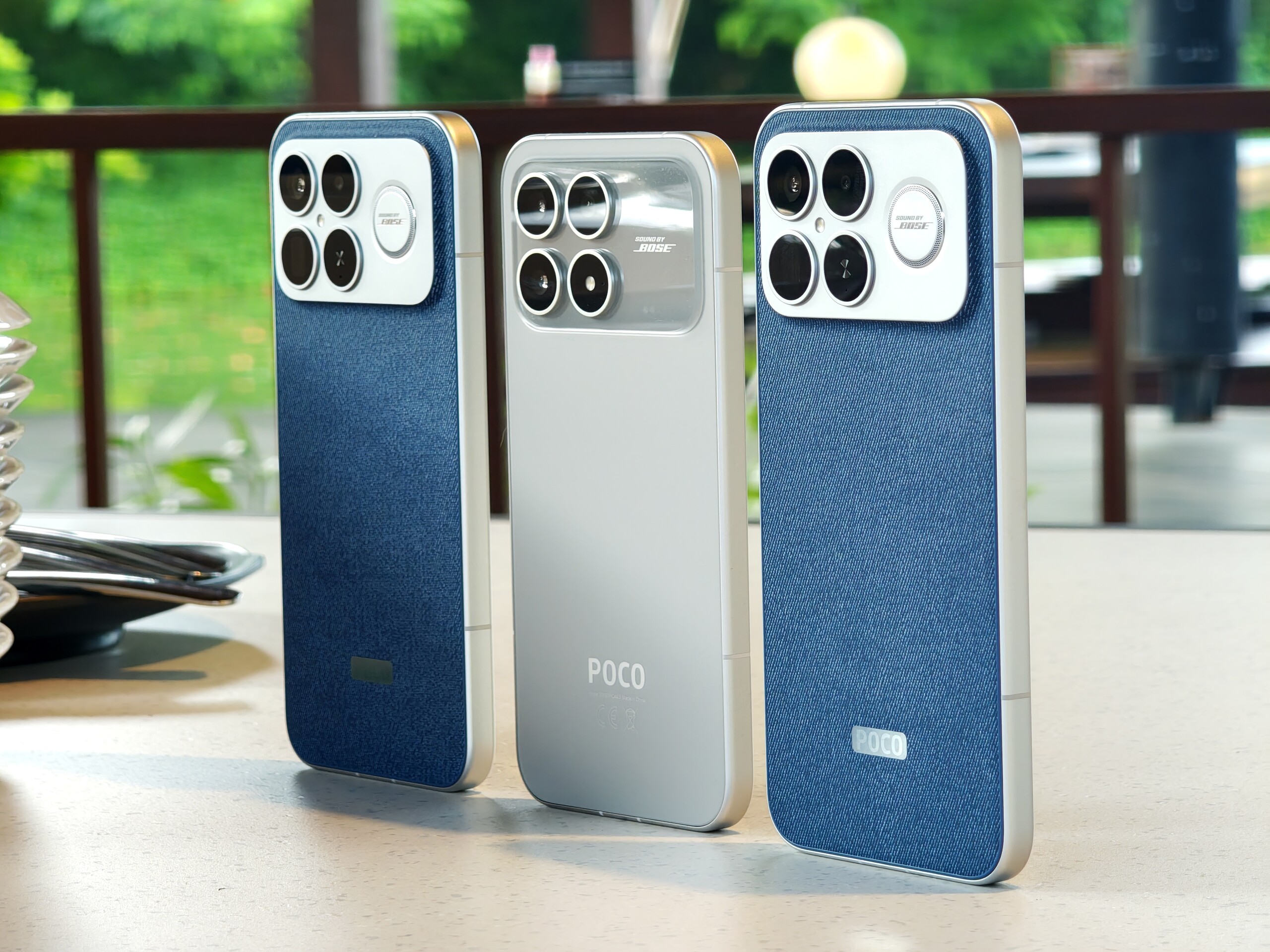
The Poco F8 Ultra is available in Black and Denim Blue colour variants. On the black model, the frame is matte black and the rear panel is made from a fibreglass composite. The blue version, by contrast, uses a silicone-resin-based nanomaterial designed to mimic the look of denim, paired with a matte silver aluminium frame. The chassis has a nominal thickness of 8.3 mm, which we were able to confirm. Including the camera module, thickness increases to up to 11.9 mm.
Build quality appears high overall. The denim-style rear panel features a coarse texture and offers very good grip, although it feels more rubber-like than fabric-like to the touch. Panel gaps are tight and even, and the smartphone exhibits only minimal creaking when subjected to torsional stress. In addition, the device is certified to the IP68 standard, making it resistant to both dust and water. The front is protected by Poco's in-house Poco Shield Glass.
Features – Poco smartphone with fast USB 3.2
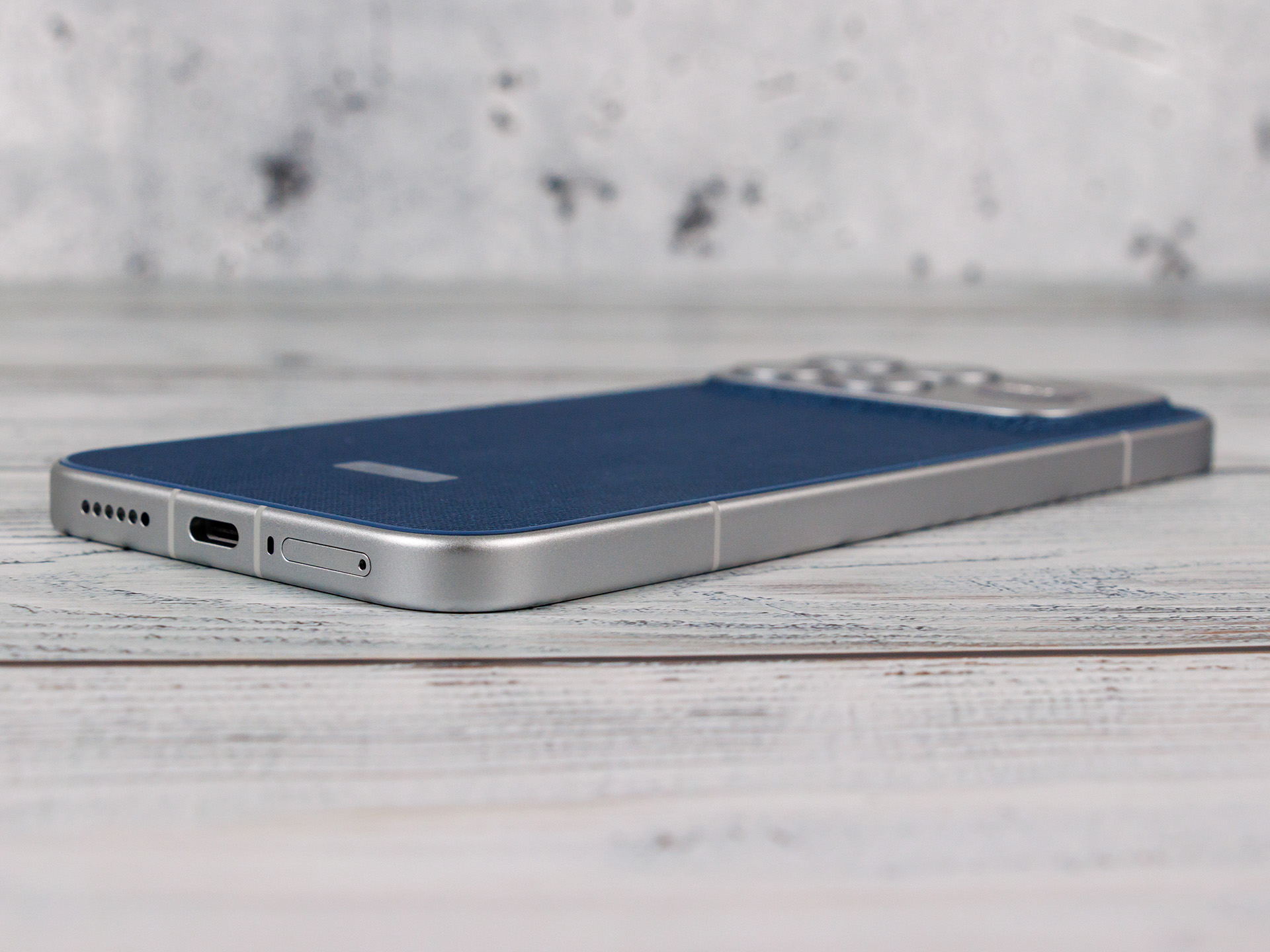
In contrast to the Pro model, the Poco F8 Ultra features a fast USB 3.2 port that supports wired image output. The high transfer rates in the copy test (768.14 MB/s) actually speak in favor of the faster Gen 2 standard.
As expected, the device does not feature an audio jack or microSD support. It supports Xiaomi's offline communication, but does without UWB.
Software – six years of updates
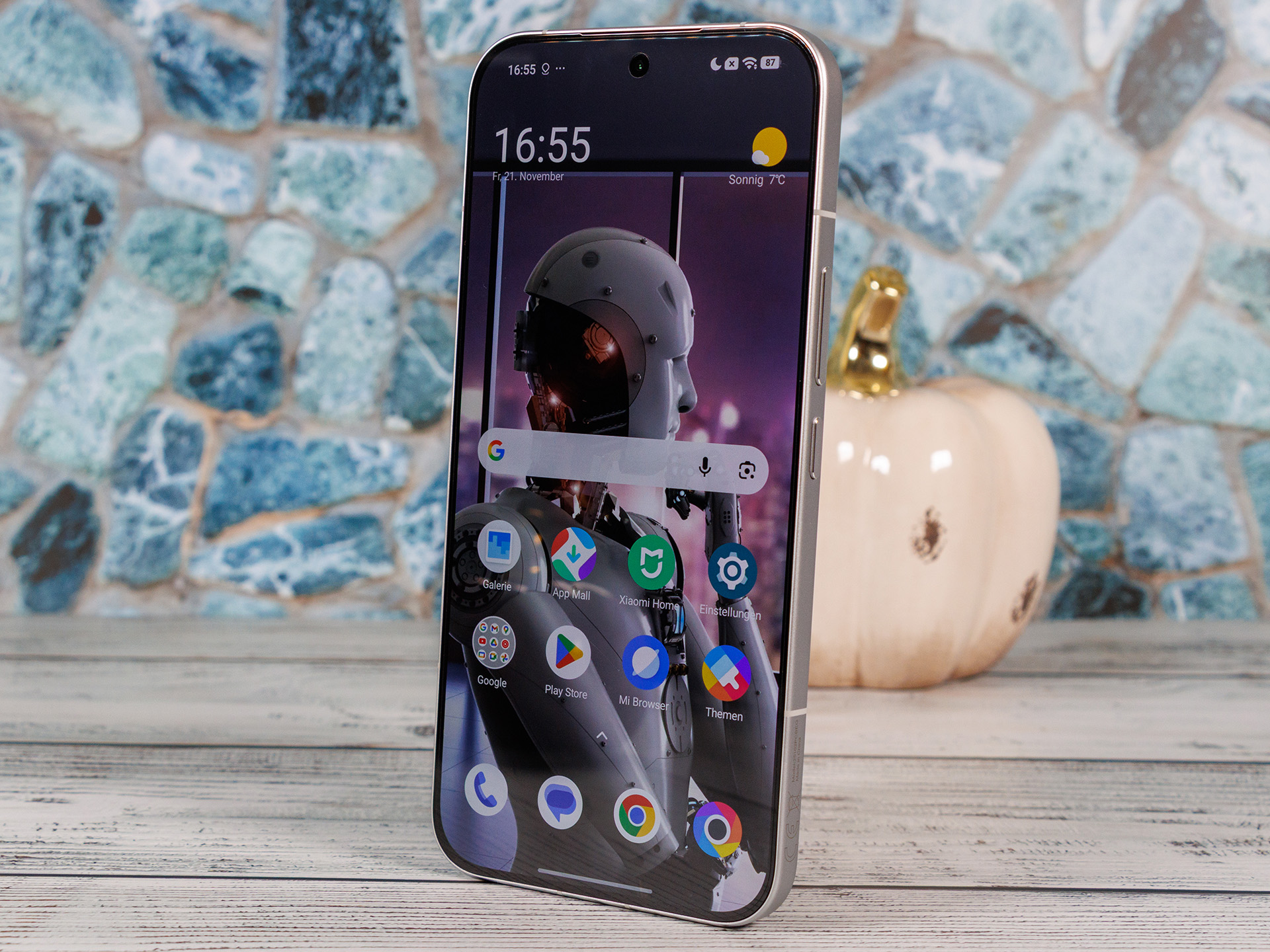
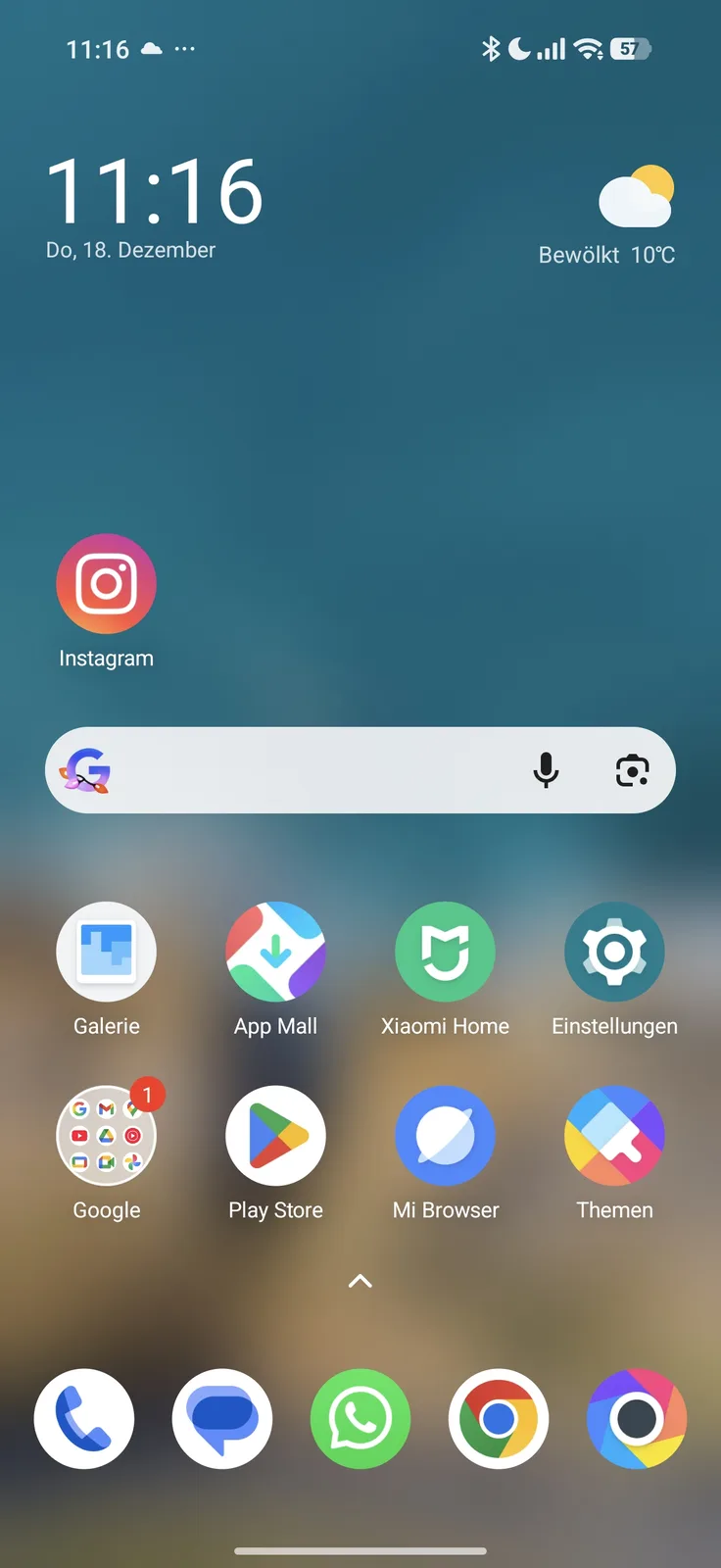
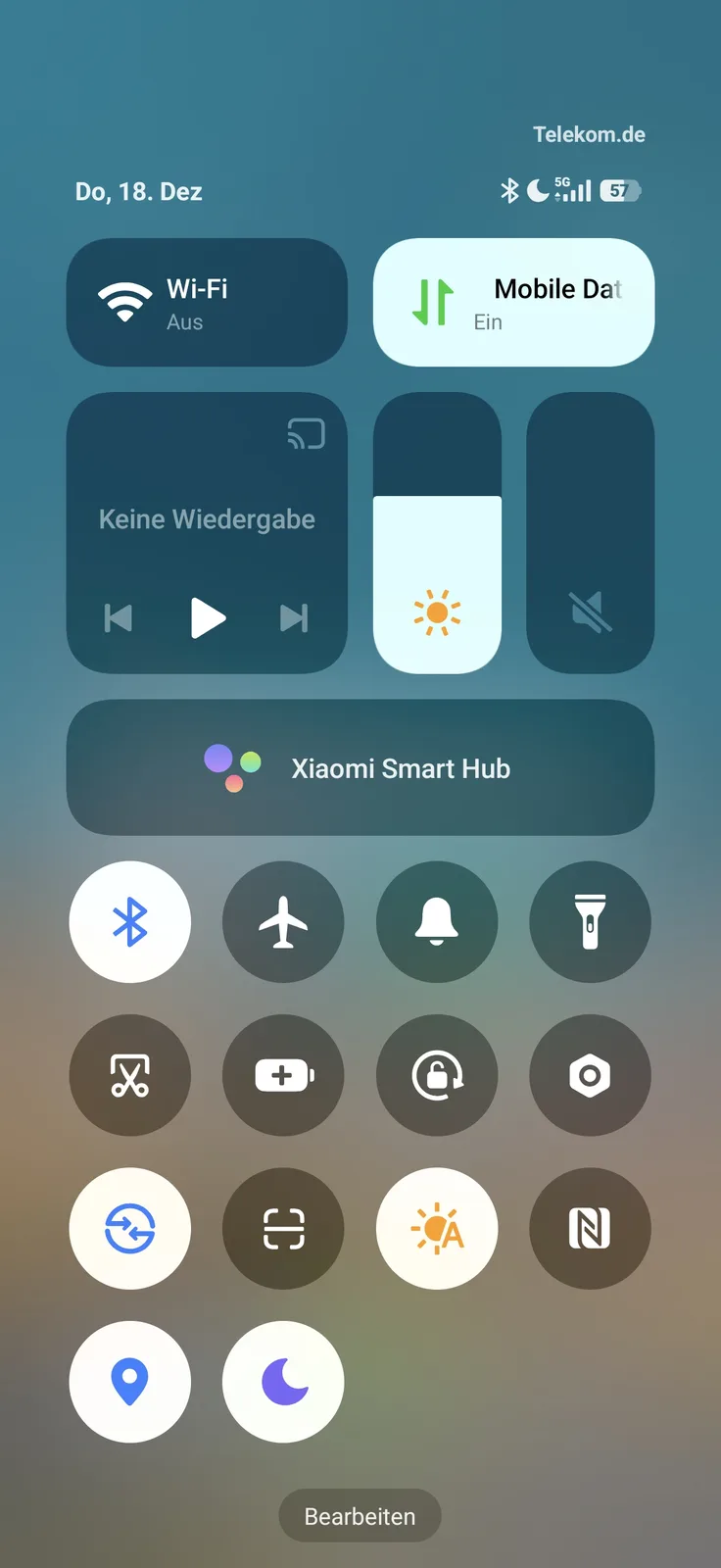
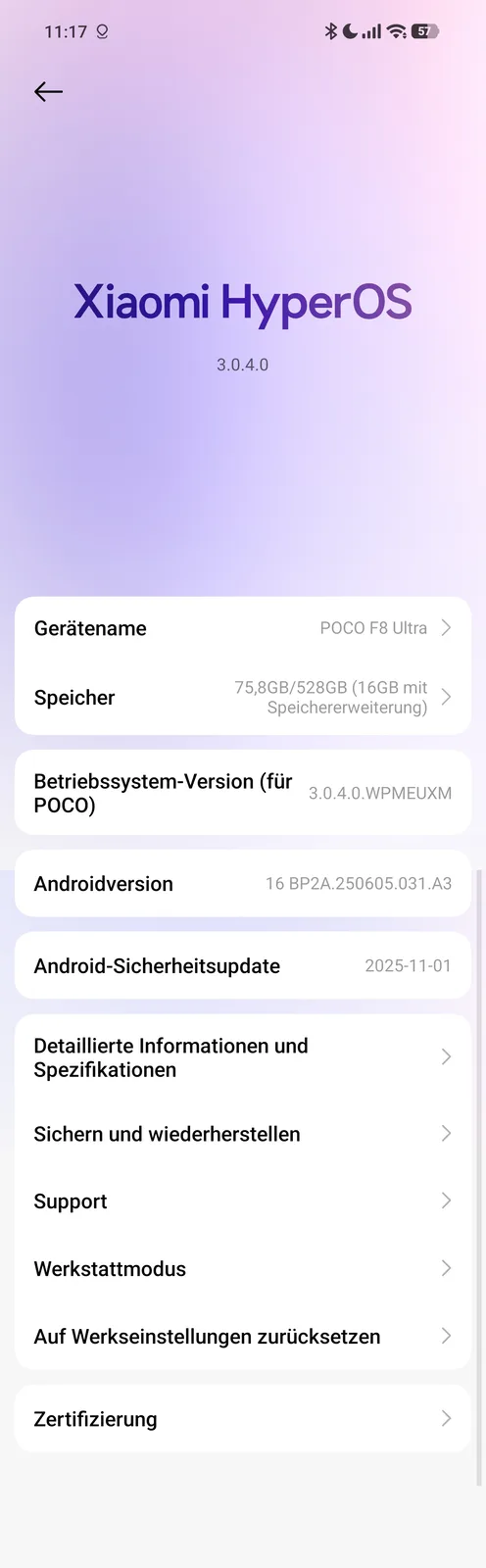
The Poco F8 Ultra ships with Google Android 16 and Xiaomi’s HyperOS 3.0. According to the manufacturer, it is set to receive four years of Android version updates and a further two years of security patches. Given the device’s high-end ambitions, longer software support would have been desirable.
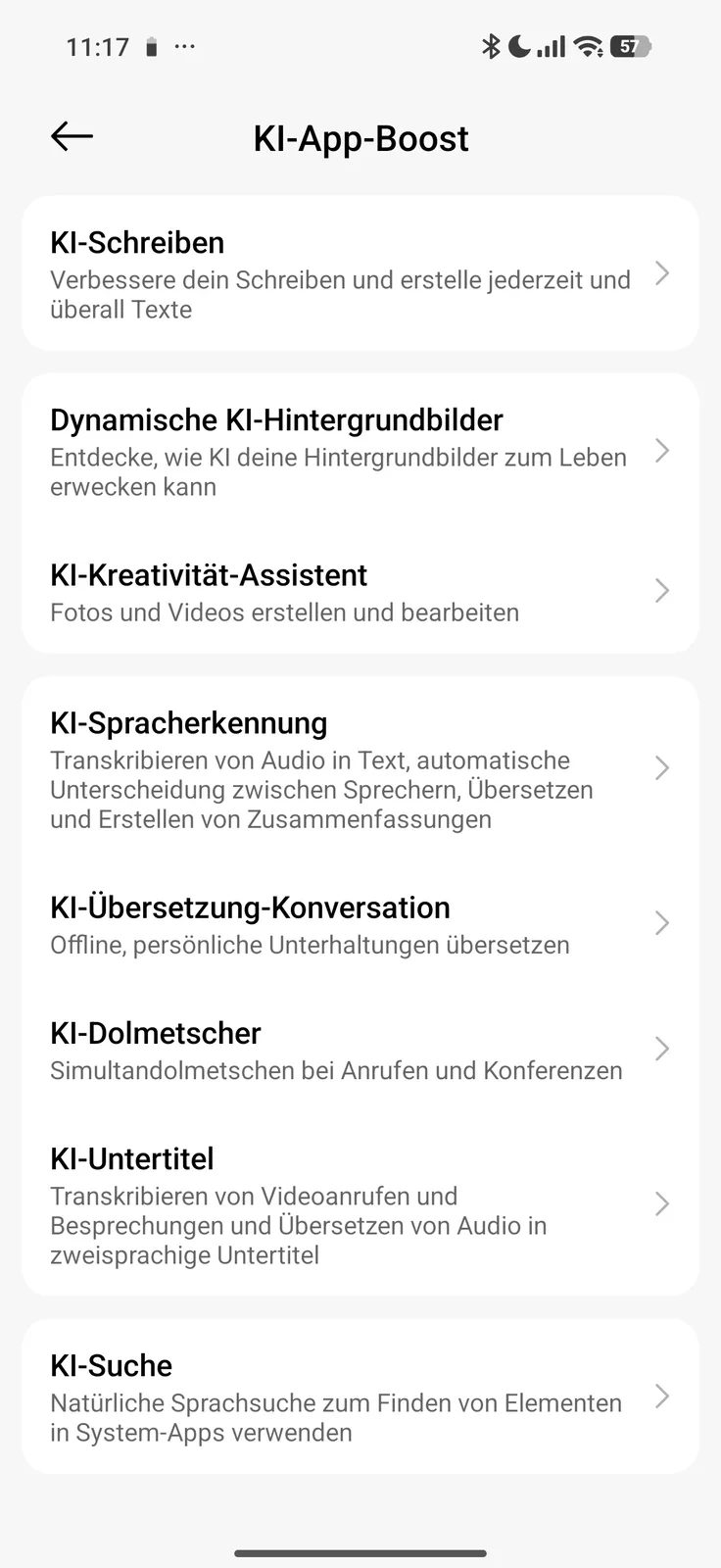
Xiaomi’s HyperAI features are also included. However, the system comes with a considerable number of pre-installed third-party apps as well as advertising. While these apps can be removed easily, we explain how to disable system advertising in a separate article.
Sustainability
There is only general information about sustainability on the company website, but no full report on the smartphone. The outer packaging is largely free of plastic, but is shrink-wrapped.
Repair by the user is not planned.
Communication – dual-band GNSS and 5G Sub6
The Poco F8 Ultra supports all modern mobile communication standards with a broad frequency band support and showed good reception characteristics during the test, even abroad.
The current Wi-Fi 7 is supported in the WLAN, but without the fast 6 GHz band. However, the transmission rates with 5 GHz are at the expected level and stable.
| Networking | |
| Xiaomi Poco F8 Ultra | |
| iperf3 transmit AXE11000 | |
| iperf3 receive AXE11000 | |
| Samsung Galaxy S25 Ultra | |
| iperf3 transmit AXE11000 | |
| iperf3 receive AXE11000 | |
| iperf3 transmit AXE11000 6GHz | |
| iperf3 receive AXE11000 6GHz | |
| Honor Magic7 Pro | |
| iperf3 transmit AXE11000 | |
| iperf3 receive AXE11000 | |
| iperf3 transmit AXE11000 6GHz | |
| iperf3 receive AXE11000 6GHz | |
| Google Pixel 10 Pro | |
| iperf3 transmit AXE11000 | |
| iperf3 receive AXE11000 | |
| iperf3 transmit AXE11000 6GHz | |
| iperf3 receive AXE11000 6GHz | |
| Average 802.11 a/b/g/n/ac/ax/be | |
| iperf3 transmit AXE11000 | |
| iperf3 receive AXE11000 | |
| iperf3 transmit AXE11000 6GHz | |
| iperf3 receive AXE11000 6GHz | |
| Average of class Smartphone | |
| iperf3 transmit AXE11000 | |
| iperf3 receive AXE11000 | |
| iperf3 transmit AXE11000 6GHz | |
| iperf3 receive AXE11000 6GHz | |
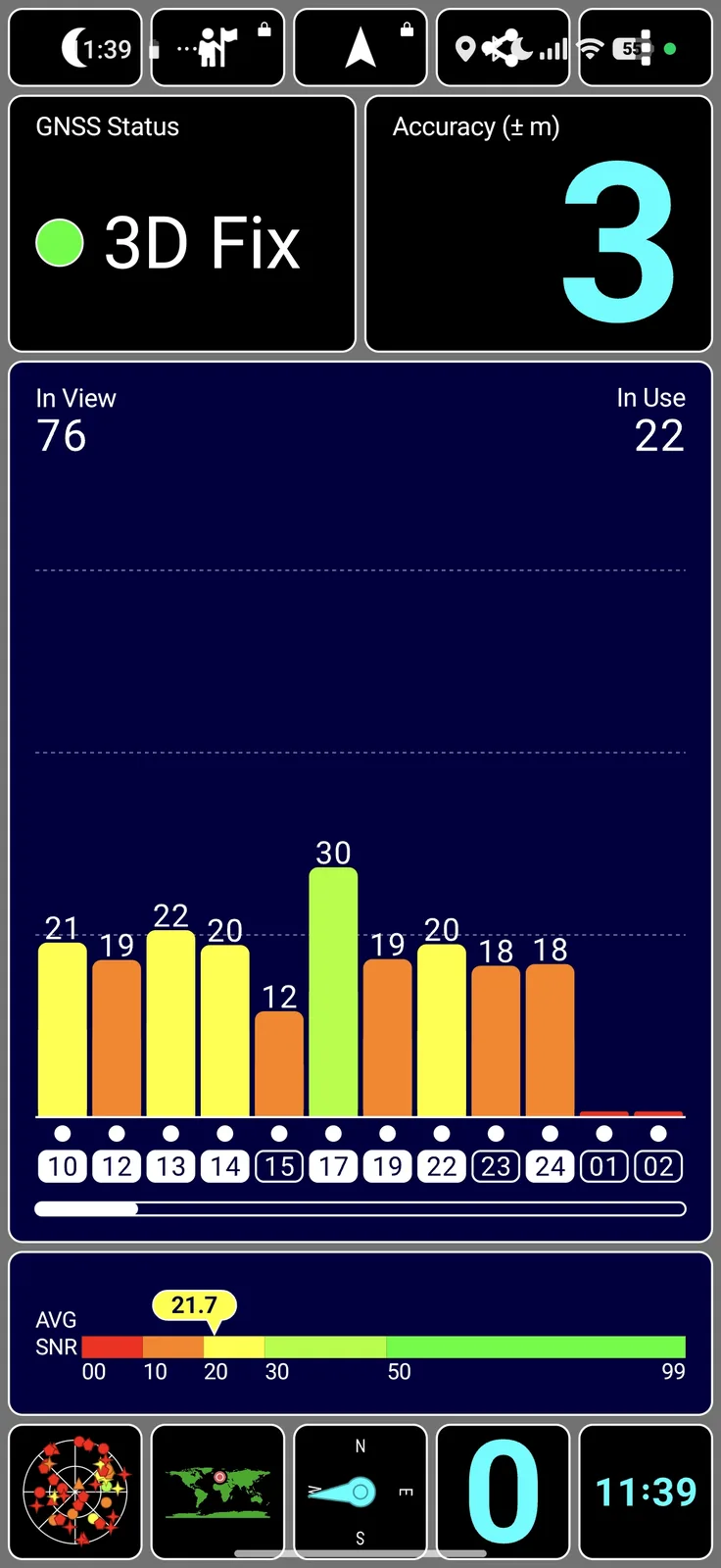
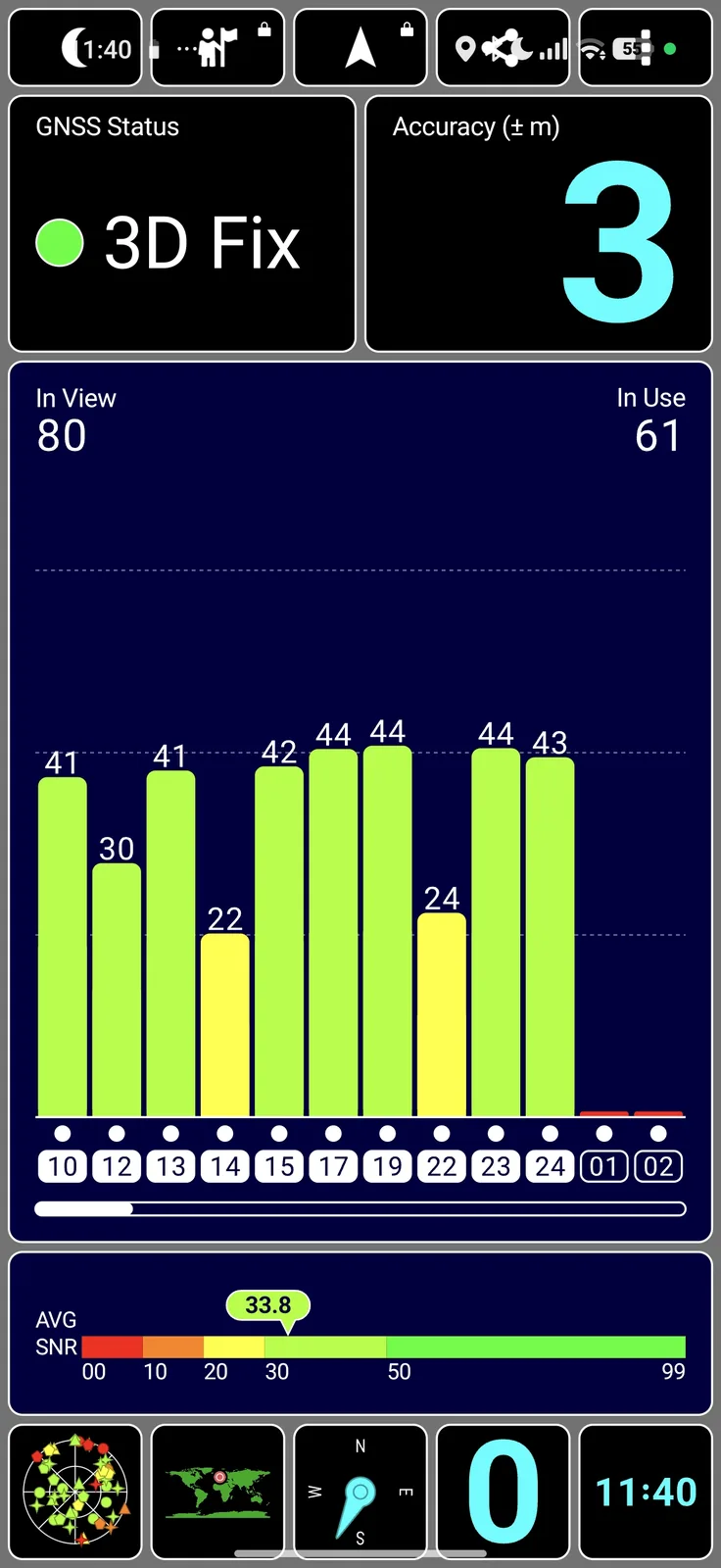
Satellite lock-on was achieved very quickly outdoors. Indoors, acquisition took slightly longer, but remained comparatively fast.
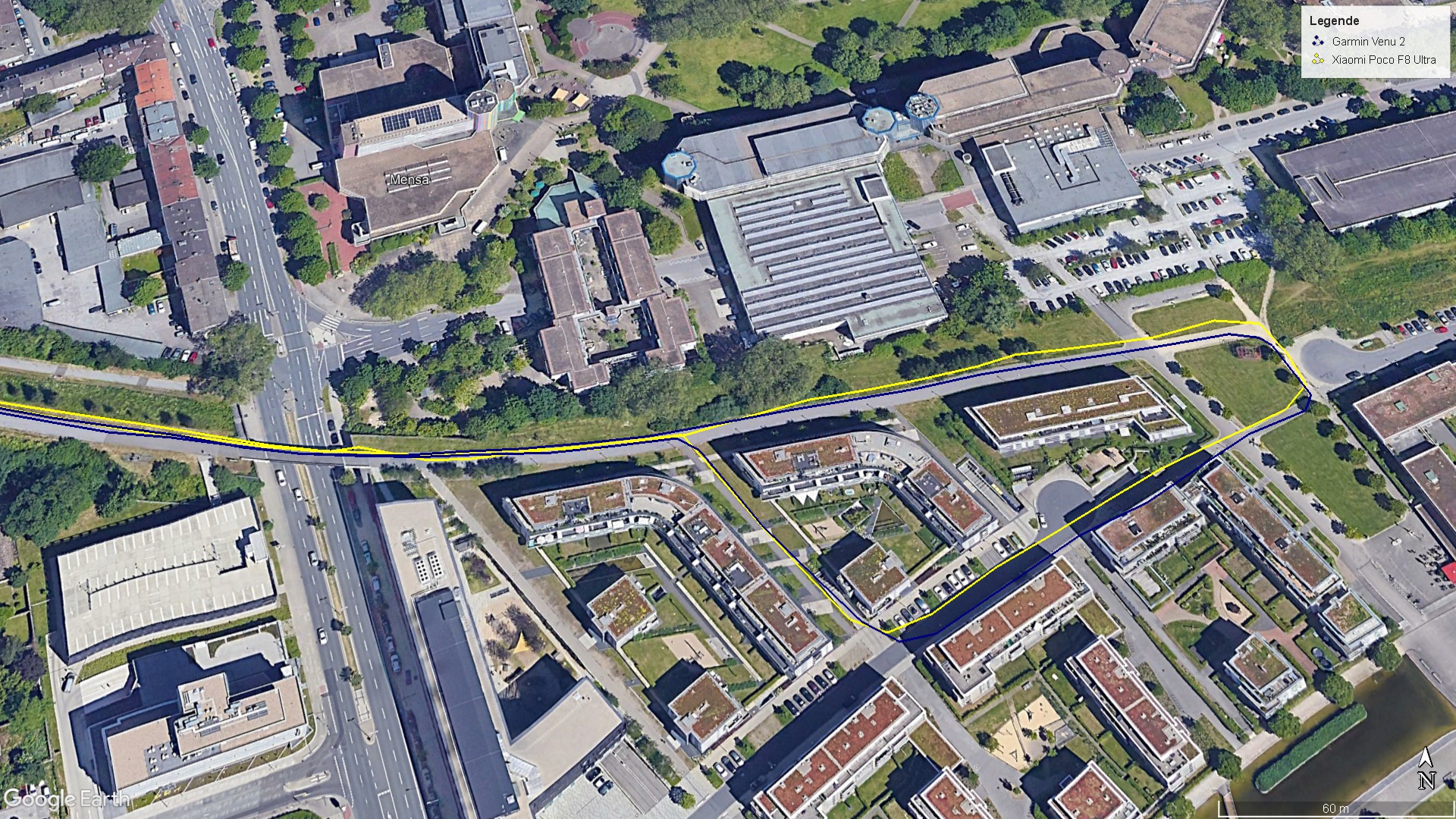
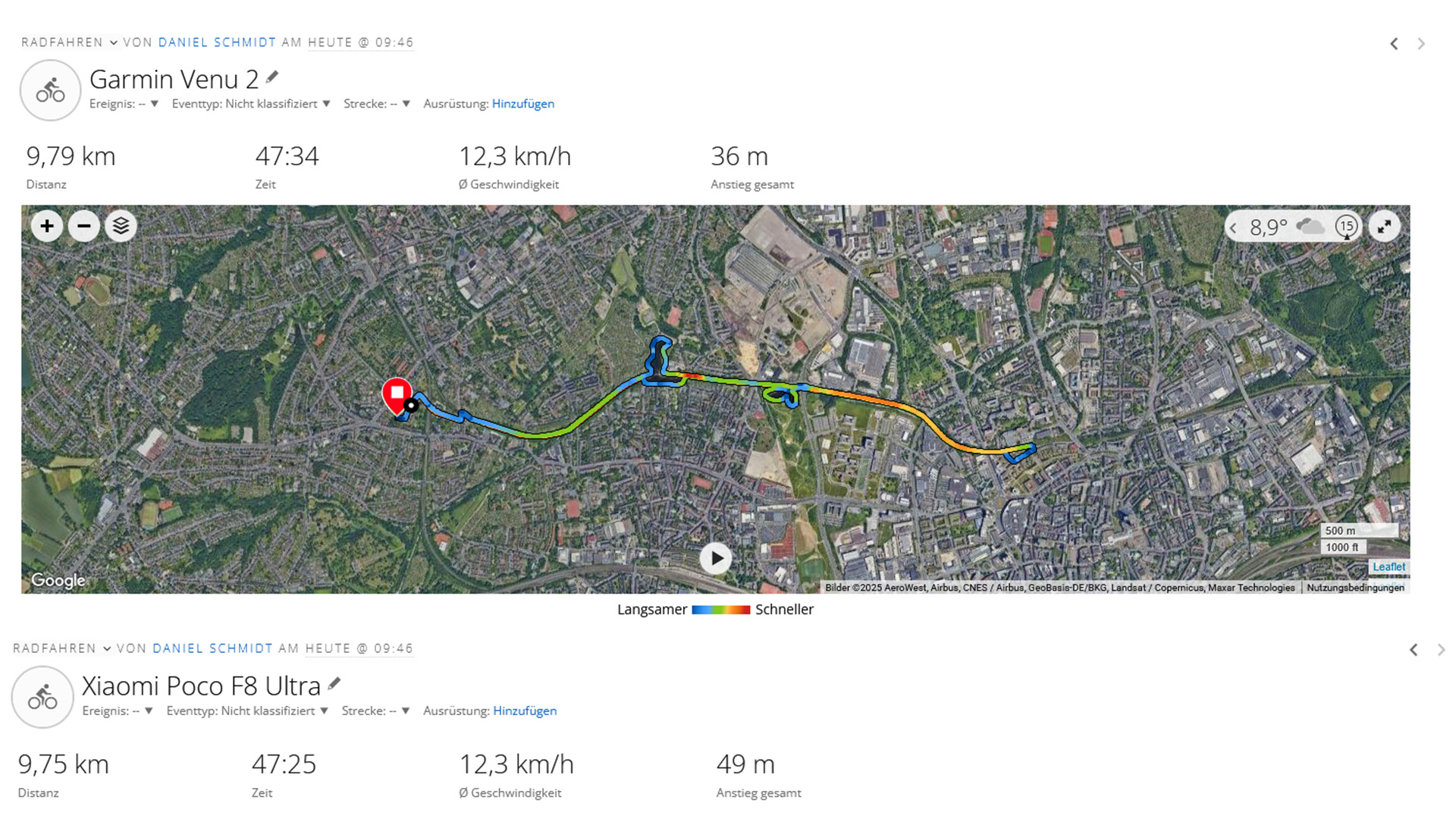
During a cycling tour, the smartphone was compared with the Garmin Venu 2. The two devices performed at a similar level, although the fitness smartwatch proved to be slightly more accurate. Nevertheless, the Poco F8 Ultra delivered a very good overall result.

Telephony and call quality – F8 Ultra with dual eSIM
When held to the ear, the Poco F8 Ultra impresses with very good voice quality in quiet environments, while the noise suppression is only mediocre and can lead to dropouts on busy roads. The integrated speaker ensures a solid call volume without any significant reverberation effects.
Dual SIM support includes two nano-SIM cards or two eSIMs, including mixed combinations; VoLTE, Wi-Fi calls and Vo5G are also available and worked reliably in the test.
Cameras – Poco F8 Ultra with three 50 MP sensors

Although the front camera of the Poco F8 Ultra has a high resolution, it does not use pixel binning and the full number of pixels is only available in the 4:3 aspect ratio, which is reduced to 24 MP in the default 16:9. The images are coherent and pleasing in daylight, but details are lost early on in low light.
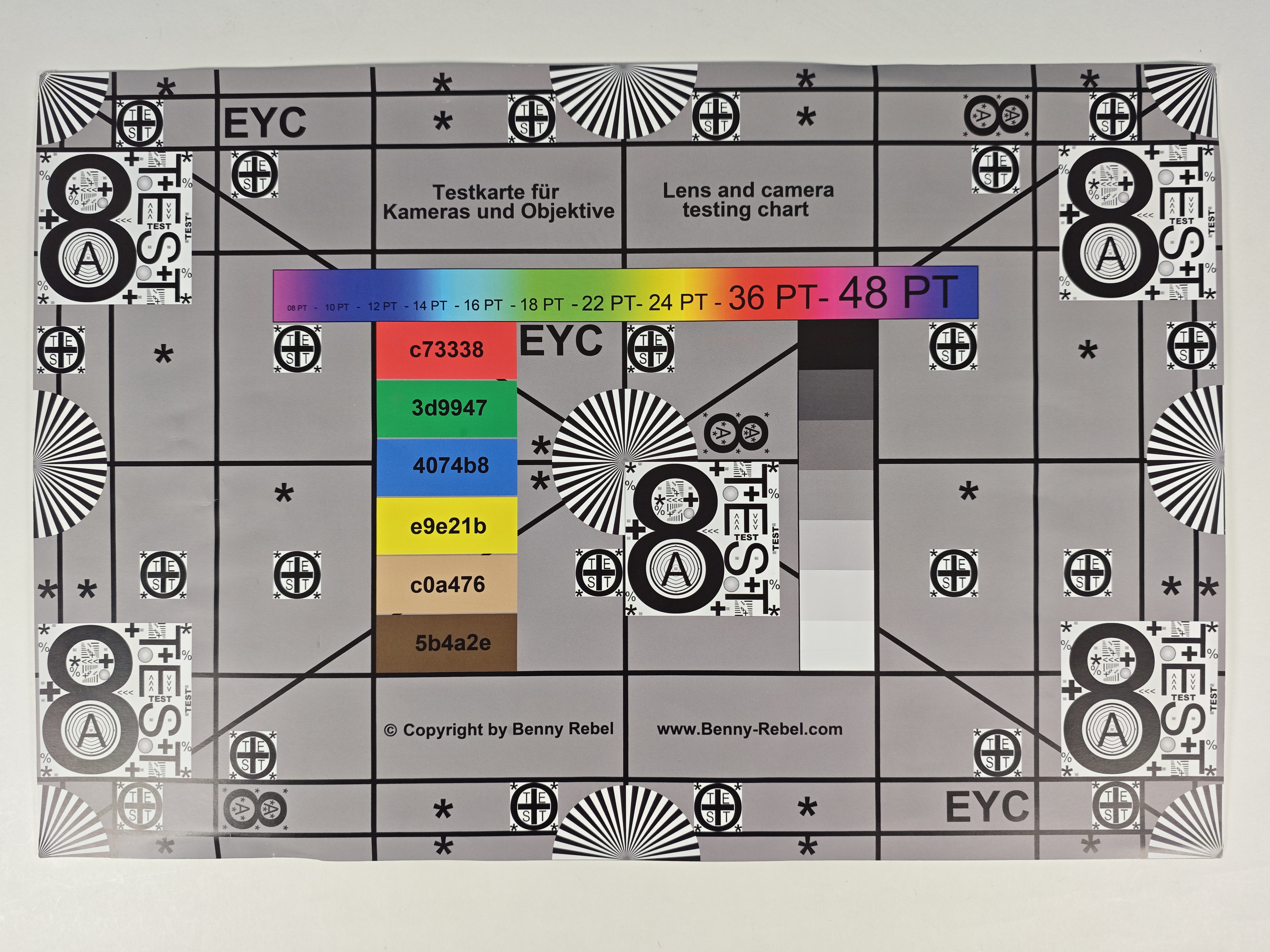
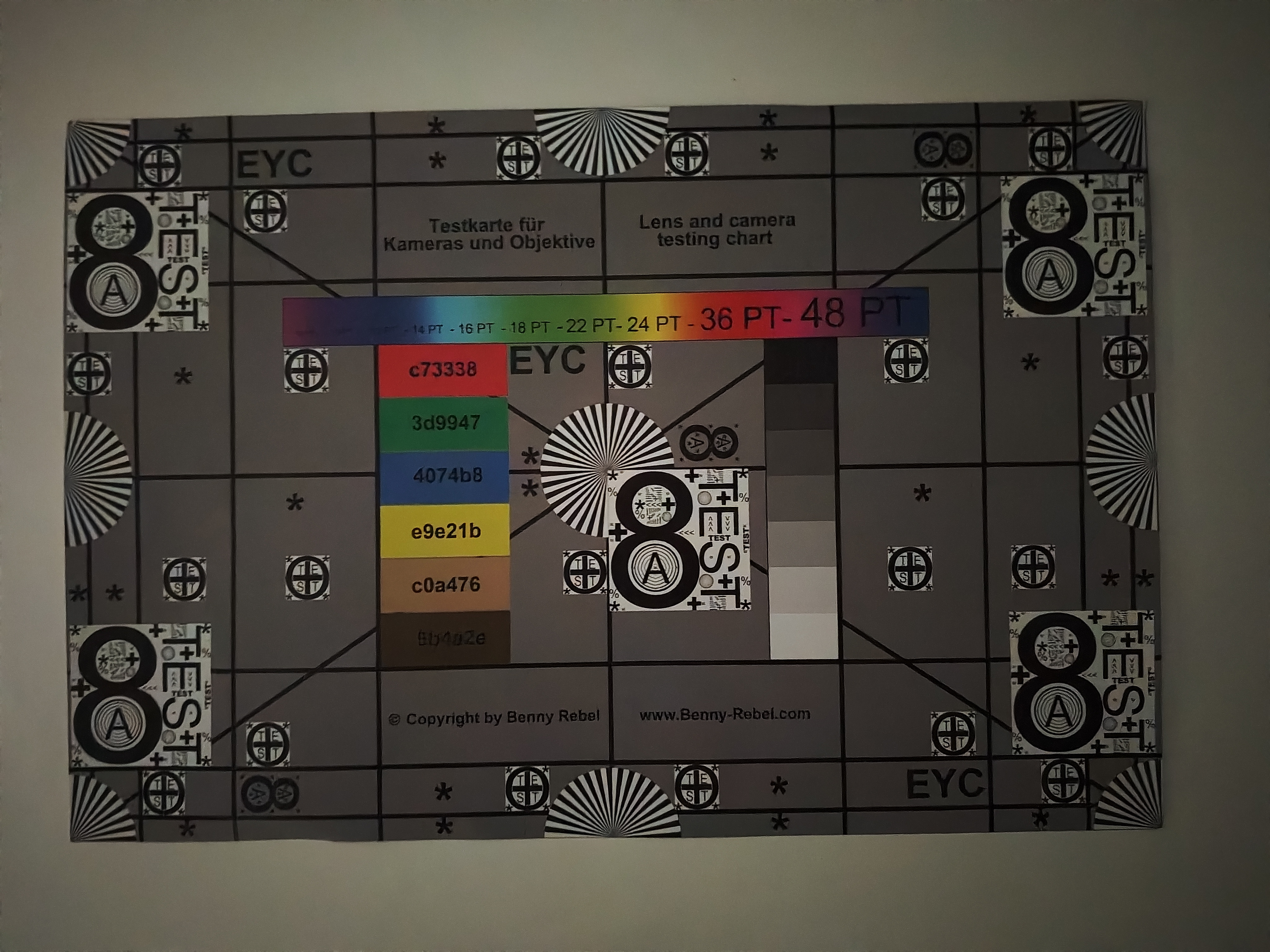
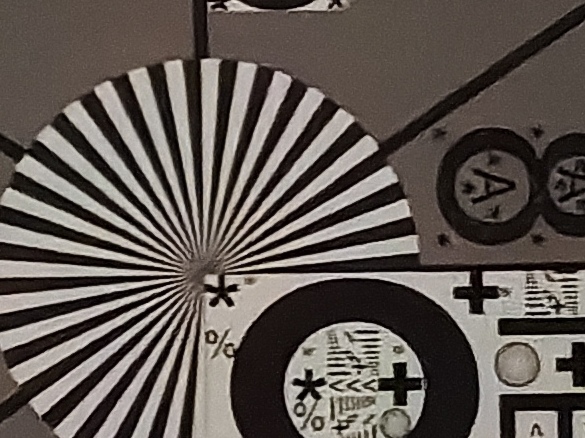
The main camera relies on the brand new Light Fusion 950 sensor, which impresses with a balanced image composition and takes good photos, even in dim light. The ultra-wide angle shows no aberrations in the test, but could do with a little more sharpness. The optical zoom also delivers good results and can also be used as a macro lens (minimum distance: 30 cm). Both the main and zoom sensors can use OIS.
The F8 Ultra can film in 8k with 30 FPS or 4k with 60 FPS. With ShootSteady, a particularly smooth image stabilization is on board, which however only works at 2.8k/30FPS. The front camera is limited to 4k (30 FPS).





Zoom

















further sample images (Image source: Daniel Schmidt)
Image comparison
Choose a scene and navigate within the first image. One click changes the position on touchscreens. One click on the zoomed-in image opens the original in a new window. The first image shows the scaled photograph of the test device.
HauptkameraHauptkameraUltraweitwinkel5-facher ZoomLow-Light























Accessories and warranty – optional Xiaomi Care coverage
The Poco F8 Ultra's scope of delivery includes a USB cable (Type-A to Type-C), a SIM eject tool and a black silicone protective case.
The smartphone comes with a 12-month manufacturer warranty, which does not affect the statutory seller warranty applicable in the country of purchase. Optionally, Xiaomi's Xiaomi Care insurance package can be added, costing either €59 or €79 for two years, depending on the level of coverage.
Input devices and handling – ultrasonic in-display fingerprint sensor
The capacitive touchscreen of the Poco F8 Ultra responds reliably and precisely to inputs. Glide characteristics with the preinstalled screen protector are good, although direct interaction with the glass itself feels noticeably more premium.
For biometric security, an ultrasonic fingerprint sensor is integrated into the display and proved to be very fast and reliable during testing. In addition or as an alternative, facial recognition via the front-facing camera can be used, which unlocks the device quickly under good lighting conditions.
The linear vibration motor provides crisp haptic feedback, although it could occasionally be a little stronger.


Display – larger and with lower resolution

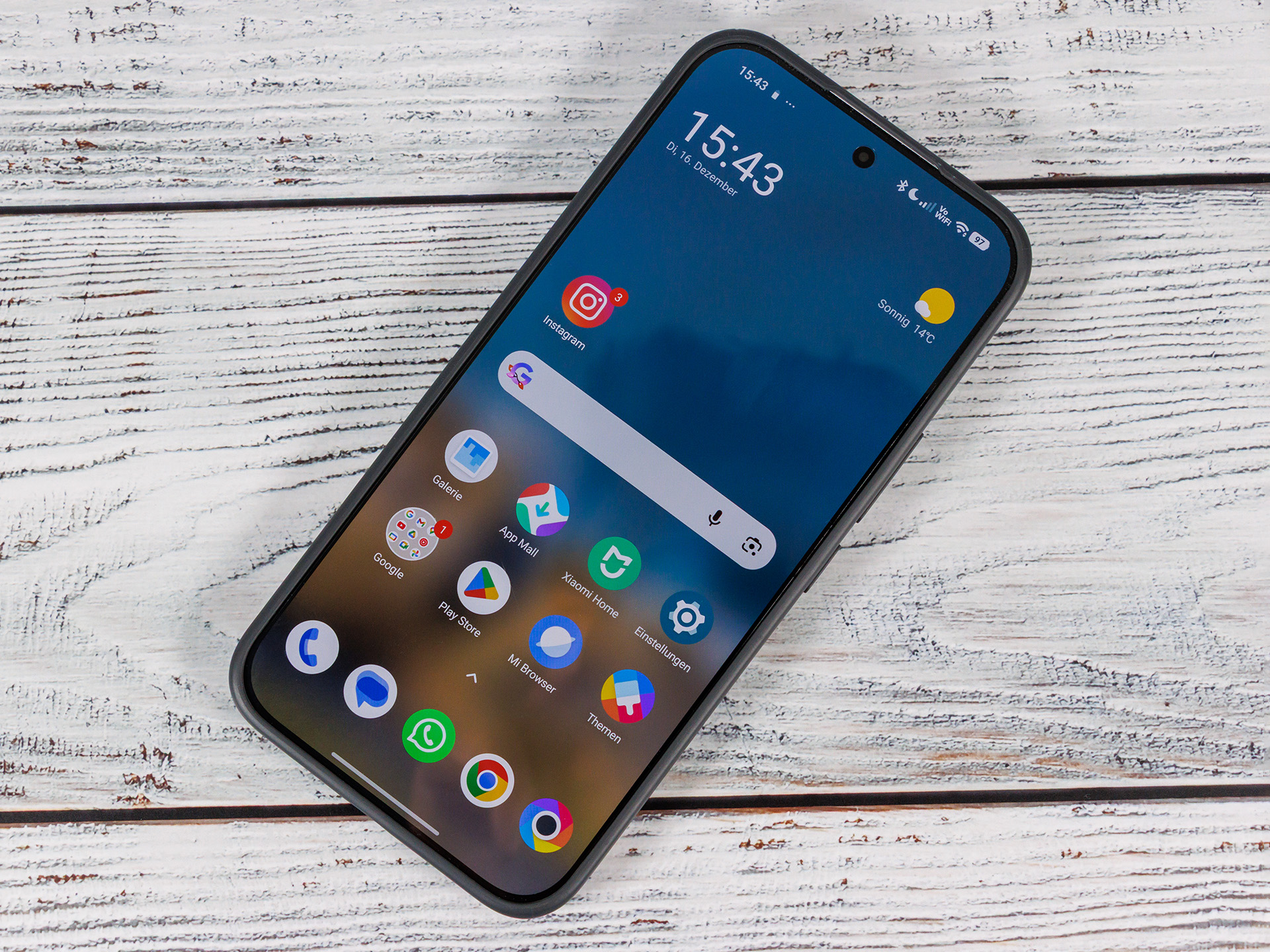
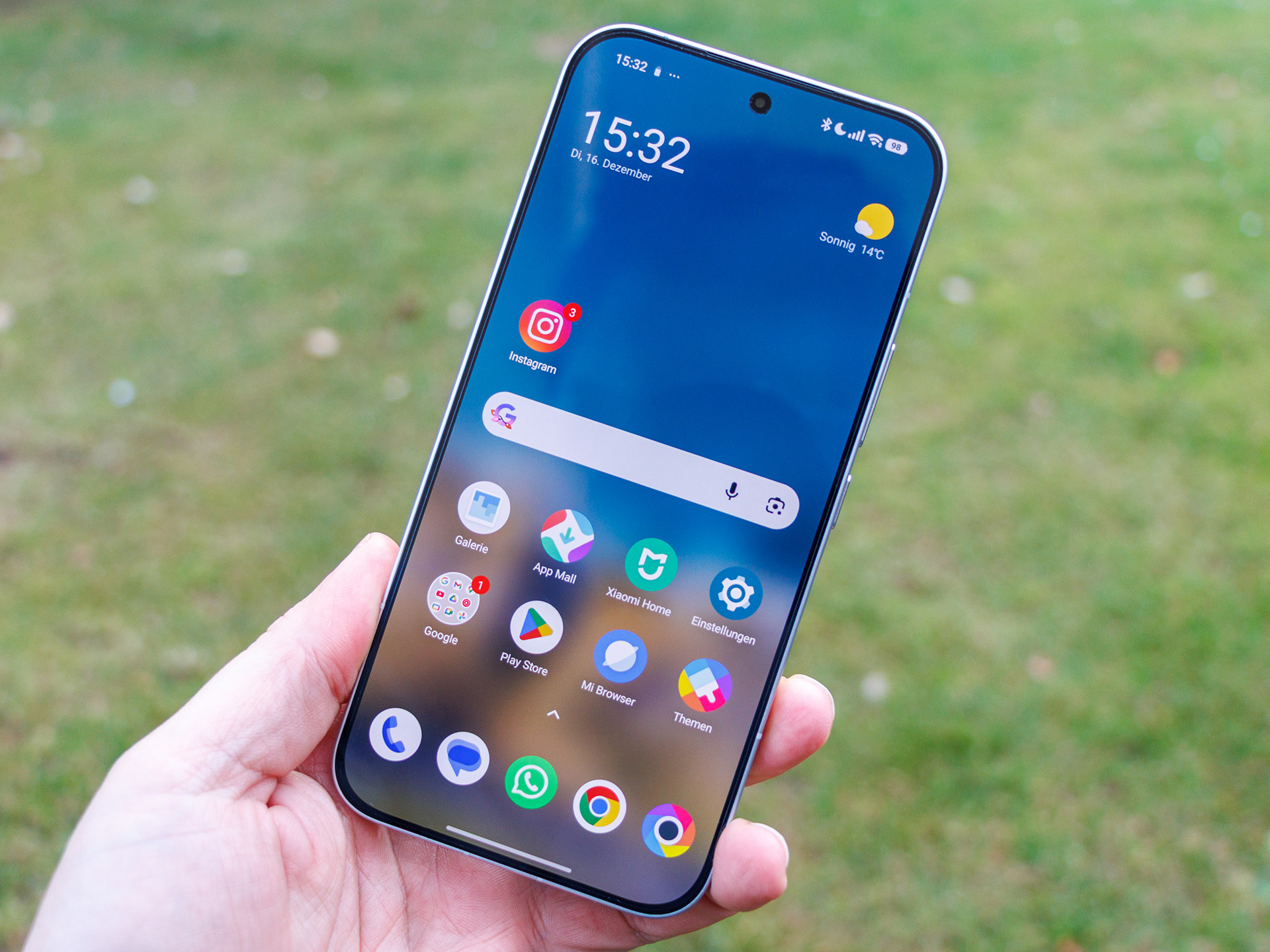
Compared to its predecessor, the display of the Poco F8 Ultra has grown slightly in size, but at the same time features a lower resolution. Even so, a sharp image is still ensured with a pixel density of 416 PPI. It is also disappointing that the panel is once again not based on LTPO technology, meaning the refresh rate can only be adjusted dynamically by the system between 60 and 120 Hz.
Brightness levels are high, reaching around 3,500 cd/m² in both the APL18 and HDR measurements. When brightness is adjusted manually, a maximum of 617 cd/m² is available, while activating the sunlight mode allows values of up to 821 cd/m².
As with the F8 Pro, Poco lists DC dimming for brightness control in the specifications. Under the oscilloscope, however, this turns out to be high-frequency PWM dimming with a low base frequency. As a result, the display is comparatively easy on the eyes, but not completely flicker-free.
| |||||||||||||||||||||||||
Brightness Distribution: 99 %
Center on Battery: 1771 cd/m²
Contrast: ∞:1 (Black: 0 cd/m²)
ΔE ColorChecker Calman: 1.3 | ∀{0.5-29.43 Ø4.69}
ΔE Greyscale Calman: 2.1 | ∀{0.09-98 Ø4.94}
99.6% sRGB (Calman 2D)
Gamma: 2.25
CCT: 6452 K
| Xiaomi Poco F8 Ultra AMOLED, 2608x1200, 6.9" | Samsung Galaxy S25 Ultra Dynamic AMOLED 2X, 3120x1440, 6.9" | Honor Magic7 Pro OLED, 2800x1280, 6.8" | Google Pixel 10 Pro OLED, 2856x1280, 6.3" | |
|---|---|---|---|---|
| Screen | -44% | 11% | 31% | |
| Brightness middle (cd/m²) | 1771 | 1357 -23% | 1607 -9% | 2161 22% |
| Brightness (cd/m²) | 1773 | 1350 -24% | 1609 -9% | 2198 24% |
| Brightness Distribution (%) | 99 | 94 -5% | 95 -4% | 94 -5% |
| Black Level * (cd/m²) | ||||
| Colorchecker dE 2000 * | 1.3 | 3.1 -138% | 0.9 31% | 0.7 46% |
| Colorchecker dE 2000 max. * | 2.8 | 4.7 -68% | 1.8 36% | 1.8 36% |
| Greyscale dE 2000 * | 2.1 | 2.2 -5% | 1.7 19% | 0.8 62% |
| Gamma | 2.25 98% | 2 110% | 2.24 98% | 2.19 100% |
| CCT | 6452 101% | 6391 102% | 6346 102% | 6646 98% |
* ... smaller is better
| Display / APL18 Peak Brightness | |
| Xiaomi Poco F8 Ultra | |
| Google Pixel 10 Pro | |
| Samsung Galaxy S25 Ultra | |
| Honor Magic7 Pro | |
| Display / HDR Peak Brightness | |
| Honor Magic7 Pro | |
| Xiaomi Poco F8 Ultra | |
| Google Pixel 10 Pro | |
| Samsung Galaxy S25 Ultra | |
Screen Flickering / PWM (Pulse-Width Modulation)
| Screen flickering / PWM detected | 120 Hz Amplitude: 14.02 % Secondary Frequency: 2272 Hz | 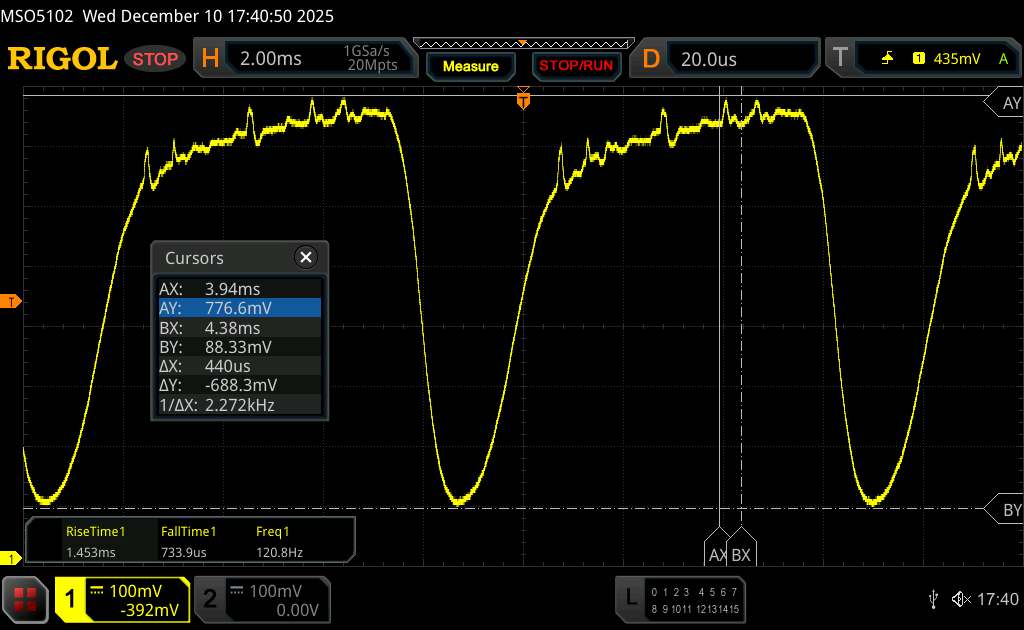 | |
The display backlight flickers at 120 Hz (worst case, e.g., utilizing PWM) . The frequency of 120 Hz is very low, so the flickering may cause eyestrain and headaches after extended use. In comparison: 52 % of all tested devices do not use PWM to dim the display. If PWM was detected, an average of 7638 (minimum: 5 - maximum: 343500) Hz was measured. | |||
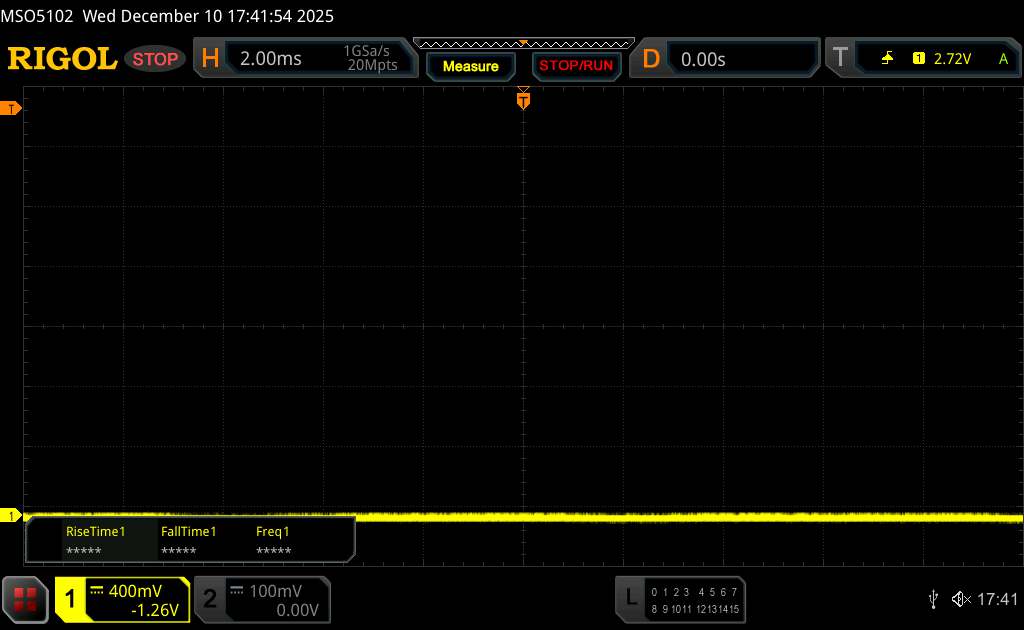
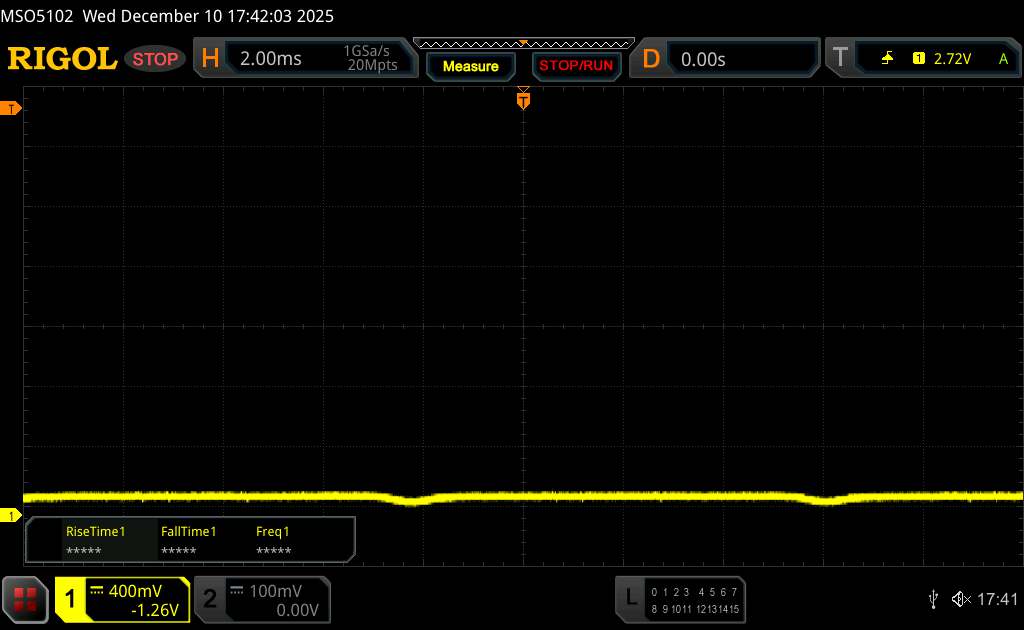
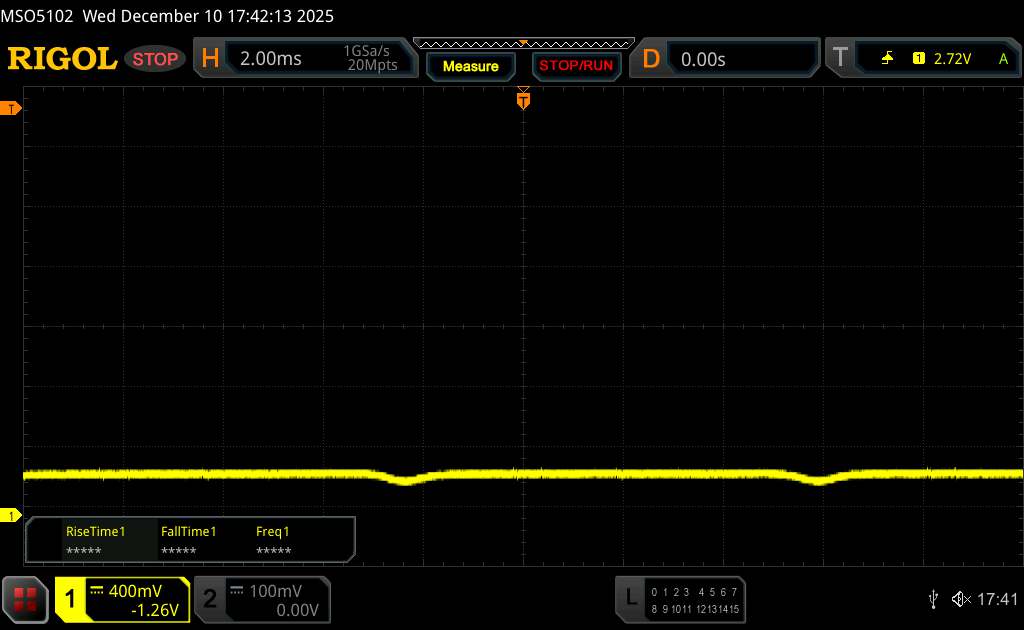
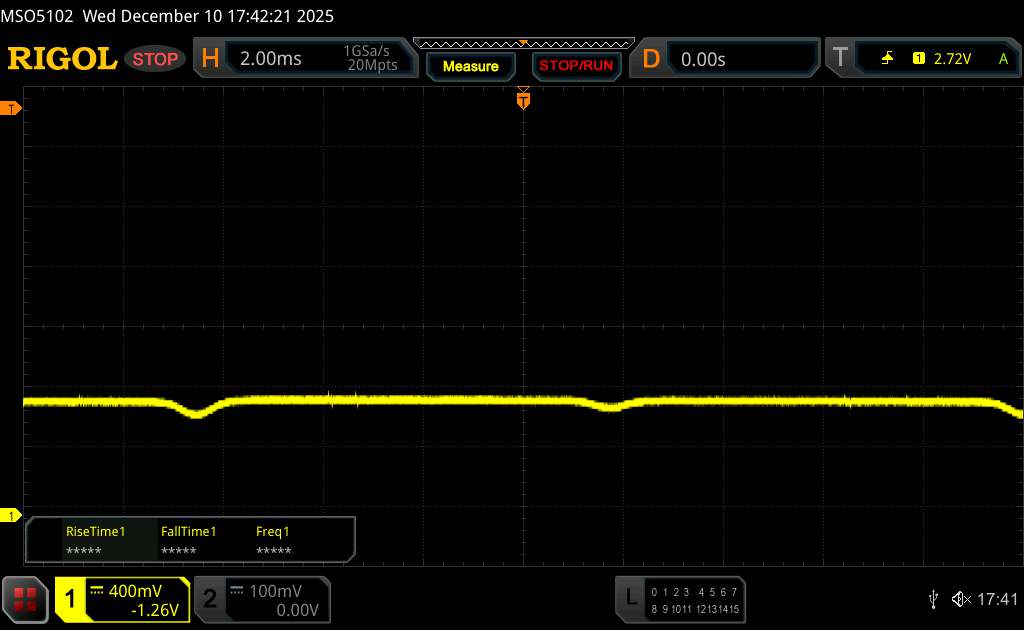
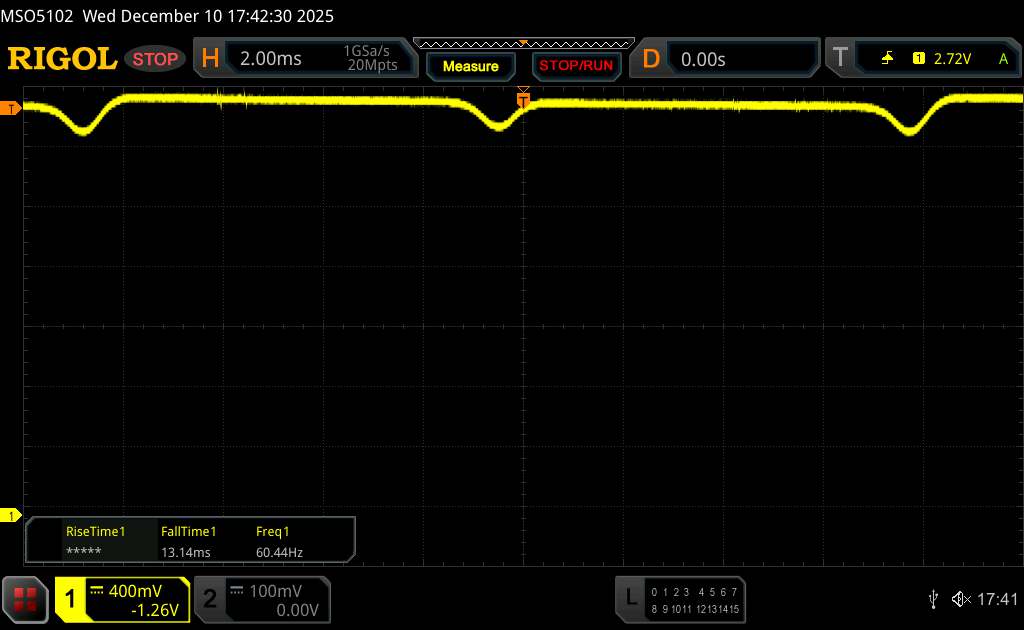
Measurement series with fixed zoom level and different brightness settings (The amplitude curve at minimum brightness looks flat, but this is due to the scaling. The info box shows the enlarged version of the amplitude at minimum brightness)
We assess the display's calibration accuracy using Calman. When the colour temperature is set to Warm, colour reproduction is very accurate, though it still appears marginally cooler than the target.


Display Response Times
| ↔ Response Time Black to White | ||
|---|---|---|
| 0.87 ms ... rise ↗ and fall ↘ combined | ↗ 0.4395 ms rise | 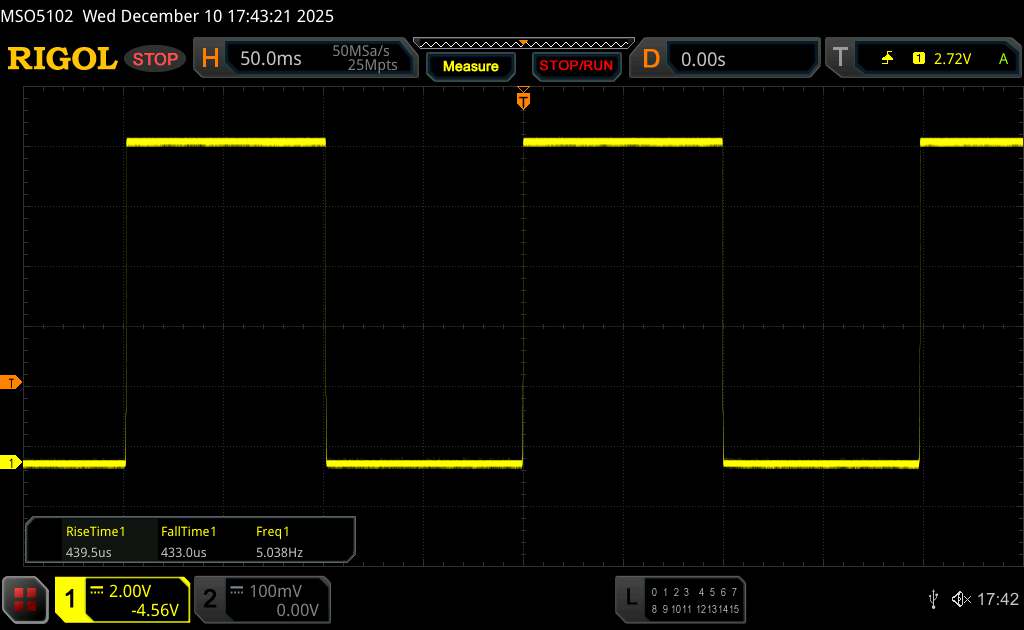 |
| ↘ 0.433 ms fall | ||
| The screen shows very fast response rates in our tests and should be very well suited for fast-paced gaming. In comparison, all tested devices range from 0.1 (minimum) to 240 (maximum) ms. » 3 % of all devices are better. This means that the measured response time is better than the average of all tested devices (19.7 ms). | ||
| ↔ Response Time 50% Grey to 80% Grey | ||
| 0.86 ms ... rise ↗ and fall ↘ combined | ↗ 0.433 ms rise | 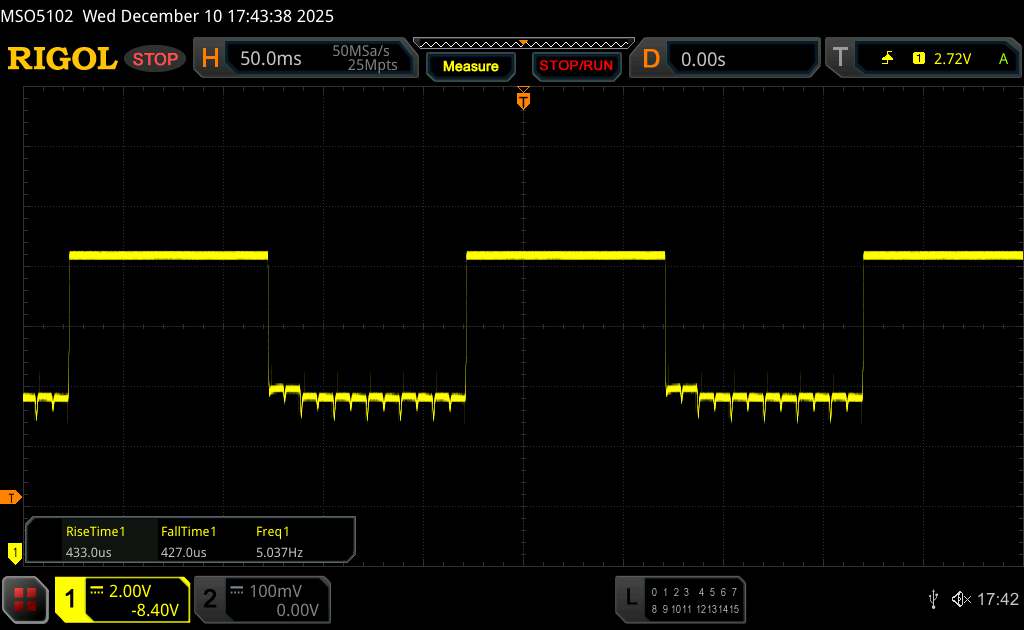 |
| ↘ 0.427 ms fall | ||
| The screen shows very fast response rates in our tests and should be very well suited for fast-paced gaming. In comparison, all tested devices range from 0.13 (minimum) to 636 (maximum) ms. » 3 % of all devices are better. This means that the measured response time is better than the average of all tested devices (30.8 ms). | ||
Outdoors, the Poco F8 Ultra leaves a good impression even on warm days and remains easy to read at all times. At most, reflections can be somewhat distracting.
Viewing angle stability of the panel is very good. At very shallow viewing angles, the image only darkens slightly.

Performance – Poco F8 Ultra comes with Snapdragon 8 Elite Gen 5
The Poco F8 Ultra relies on the cutting-edge Snapdragon 8 Elite Gen 5 and delivers first-class system performance.
Depending on the selected configuration, the smartphone has 12 or 16 GB LPDDR5x RAM available and the UFS 4.1 memory is also one of the fastest.
| UL Procyon AI Inference for Android - Overall Score NNAPI | |
| Samsung Galaxy S25 Ultra | |
| Average Qualcomm Snapdragon 8 Elite Gen 5 (10671 - 24487, n=12) | |
| Honor Magic7 Pro | |
| Average of class Smartphone (2895 - 78695, n=92, last 2 years) | |
| Xiaomi Poco F8 Ultra | |
| Google Pixel 10 Pro | |
The integrated Adreno 840 serves as the graphics solution. At present, there is no faster GPU available in a smartphone. In addition, Poco equips the F8 Ultra with a dedicated VisionBoost D8 chipset, which is intended to further optimise gaming performance.
GFXBench (DX / GLBenchmark) 2.7: T-Rex Onscreen | 1920x1080 T-Rex Offscreen
GFXBench 3.0: on screen Manhattan Onscreen OGL | 1920x1080 1080p Manhattan Offscreen
GFXBench 3.1: on screen Manhattan ES 3.1 Onscreen | 1920x1080 Manhattan ES 3.1 Offscreen
GFXBench: on screen Car Chase Onscreen | 1920x1080 Car Chase Offscreen | on screen Aztec Ruins High Tier Onscreen | 2560x1440 Aztec Ruins High Tier Offscreen | on screen Aztec Ruins Normal Tier Onscreen | 1920x1080 Aztec Ruins Normal Tier Offscreen | 3840x2160 4K Aztec Ruins High Tier Offscreen
| 3DMark / Wild Life Extreme Unlimited | |
| Xiaomi Poco F8 Ultra | |
| Samsung Galaxy S25 Ultra | |
| Honor Magic7 Pro | |
| Google Pixel 10 Pro | |
| 3DMark / Wild Life Extreme | |
| Xiaomi Poco F8 Ultra | |
| Samsung Galaxy S25 Ultra | |
| Honor Magic7 Pro | |
| Google Pixel 10 Pro | |
| 3DMark / Wild Life Unlimited Score | |
| Xiaomi Poco F8 Ultra | |
| Samsung Galaxy S25 Ultra | |
| Honor Magic7 Pro | |
| Google Pixel 10 Pro | |
| 3DMark / Solar Bay Score | |
| Xiaomi Poco F8 Ultra | |
| Samsung Galaxy S25 Ultra | |
| Honor Magic7 Pro | |
| 3DMark / Solar Bay Unlimited Score | |
| Samsung Galaxy S25 Ultra | |
| Xiaomi Poco F8 Ultra | |
| Honor Magic7 Pro | |
| 3DMark / Steel Nomad Light Unlimited Score | |
| Xiaomi Poco F8 Ultra | |
| Samsung Galaxy S25 Ultra | |
| Honor Magic7 Pro | |
| Google Pixel 10 Pro | |
| 3DMark / Steel Nomad Light Score | |
| Xiaomi Poco F8 Ultra | |
| Samsung Galaxy S25 Ultra | |
| Honor Magic7 Pro | |
| Google Pixel 10 Pro | |
| GFXBench (DX / GLBenchmark) 2.7 / T-Rex Onscreen | |
| Google Pixel 10 Pro | |
| Samsung Galaxy S25 Ultra | |
| Honor Magic7 Pro | |
| Xiaomi Poco F8 Ultra | |
| GFXBench (DX / GLBenchmark) 2.7 / T-Rex Offscreen | |
| Samsung Galaxy S25 Ultra | |
| Honor Magic7 Pro | |
| Xiaomi Poco F8 Ultra | |
| Google Pixel 10 Pro | |
| GFXBench 3.0 / Manhattan Onscreen OGL | |
| Google Pixel 10 Pro | |
| Samsung Galaxy S25 Ultra | |
| Honor Magic7 Pro | |
| Xiaomi Poco F8 Ultra | |
| GFXBench 3.0 / 1080p Manhattan Offscreen | |
| Samsung Galaxy S25 Ultra | |
| Honor Magic7 Pro | |
| Xiaomi Poco F8 Ultra | |
| Google Pixel 10 Pro | |
| GFXBench 3.1 / Manhattan ES 3.1 Onscreen | |
| Samsung Galaxy S25 Ultra | |
| Honor Magic7 Pro | |
| Xiaomi Poco F8 Ultra | |
| Google Pixel 10 Pro | |
| GFXBench 3.1 / Manhattan ES 3.1 Offscreen | |
| Xiaomi Poco F8 Ultra | |
| Honor Magic7 Pro | |
| Samsung Galaxy S25 Ultra | |
| Google Pixel 10 Pro | |
| GFXBench / Car Chase Onscreen | |
| Xiaomi Poco F8 Ultra | |
| Honor Magic7 Pro | |
| Samsung Galaxy S25 Ultra | |
| Google Pixel 10 Pro | |
| GFXBench / Car Chase Offscreen | |
| Xiaomi Poco F8 Ultra | |
| Honor Magic7 Pro | |
| Samsung Galaxy S25 Ultra | |
| Google Pixel 10 Pro | |
| GFXBench / Aztec Ruins High Tier Onscreen | |
| Xiaomi Poco F8 Ultra | |
| Honor Magic7 Pro | |
| Samsung Galaxy S25 Ultra | |
| Google Pixel 10 Pro | |
| GFXBench / Aztec Ruins High Tier Offscreen | |
| Xiaomi Poco F8 Ultra | |
| Samsung Galaxy S25 Ultra | |
| Honor Magic7 Pro | |
| Google Pixel 10 Pro | |
| GFXBench / Aztec Ruins Normal Tier Onscreen | |
| Samsung Galaxy S25 Ultra | |
| Honor Magic7 Pro | |
| Xiaomi Poco F8 Ultra | |
| Google Pixel 10 Pro | |
| GFXBench / Aztec Ruins Normal Tier Offscreen | |
| Xiaomi Poco F8 Ultra | |
| Honor Magic7 Pro | |
| Samsung Galaxy S25 Ultra | |
| Google Pixel 10 Pro | |
| GFXBench / 4K Aztec Ruins High Tier Offscreen | |
| Samsung Galaxy S25 Ultra | |
| Xiaomi Poco F8 Ultra | |
| Honor Magic7 Pro | |
| Google Pixel 10 Pro | |
| Jetstream 2 - 2.0 Total | |
| Samsung Galaxy S25 Ultra (Chrome 132) | |
| Honor Magic7 Pro (Chrome 131) | |
| Google Pixel 10 Pro (Chrome 140) | |
| Average Qualcomm Snapdragon 8 Elite Gen 5 (70.1 - 409, n=9) | |
| Xiaomi Poco F8 Ultra (Chrome 143) | |
| Average of class Smartphone (63.9 - 423, n=109, last 2 years) | |
| Speedometer 3 - Score 3.0 | |
| Samsung Galaxy S25 Ultra (Chrome 132) | |
| Honor Magic7 Pro (Chrome 131) | |
| Xiaomi Poco F8 Ultra (Chrome 143) | |
| Average Qualcomm Snapdragon 8 Elite Gen 5 (14.4 - 31.4, n=7) | |
| Google Pixel 10 Pro (Chrome 140) | |
| Average of class Smartphone (3.06 - 45.5, n=76, last 2 years) | |
| WebXPRT 4 - Overall | |
| Samsung Galaxy S25 Ultra (Chrome 132) | |
| Honor Magic7 Pro (Chrome 131) | |
| Google Pixel 10 Pro (Chrome 140) | |
| Average Qualcomm Snapdragon 8 Elite Gen 5 (102 - 278, n=10) | |
| Average of class Smartphone (56 - 278, n=85, last 2 years) | |
| Xiaomi Poco F8 Ultra (Chrome 143) | |
| Octane V2 - Total Score | |
| Samsung Galaxy S25 Ultra (Chrome 132) | |
| Honor Magic7 Pro (Chrome 131) | |
| Google Pixel 10 Pro (Chrome 140) | |
| Average Qualcomm Snapdragon 8 Elite Gen 5 (47984 - 126661, n=15) | |
| Xiaomi Poco F8 Ultra (Chrome 143) | |
| Average of class Smartphone (6015 - 126661, n=130, last 2 years) | |
| Mozilla Kraken 1.1 - Total | |
| Average of class Smartphone (281 - 2718, n=113, last 2 years) | |
| Xiaomi Poco F8 Ultra (Chrome 143) | |
| Google Pixel 10 Pro (Chrome 140) | |
| Average Qualcomm Snapdragon 8 Elite Gen 5 (284 - 799, n=19) | |
| Honor Magic7 Pro (Chrome 131) | |
| Samsung Galaxy S25 Ultra (Chrome 132) | |
* ... smaller is better
| Xiaomi Poco F8 Ultra | Samsung Galaxy S25 Ultra | Honor Magic7 Pro | Google Pixel 10 Pro | Average 512 GB UFS 4.1 Flash | Average of class Smartphone | |
|---|---|---|---|---|---|---|
| AndroBench 3-5 | -28% | -25% | -55% | -17% | -44% | |
| Sequential Read 256KB (MB/s) | 4064.33 | 3823.28 -6% | 3910.81 -4% | 1492.74 -63% | 3608 ? -11% | 2291 ? -44% |
| Sequential Write 256KB (MB/s) | 3987.65 | 3361.24 -16% | 3683.81 -8% | 1353.55 -66% | 3219 ? -19% | 1971 ? -51% |
| Random Read 4KB (MB/s) | 575.86 | 287.85 -50% | 282.34 -51% | 264.44 -54% | 412 ? -28% | 316 ? -45% |
| Random Write 4KB (MB/s) | 551.82 | 331.61 -40% | 357.04 -35% | 347.84 -37% | 496 ? -10% | 361 ? -35% |
Emissions – overheating under stress
Temperature
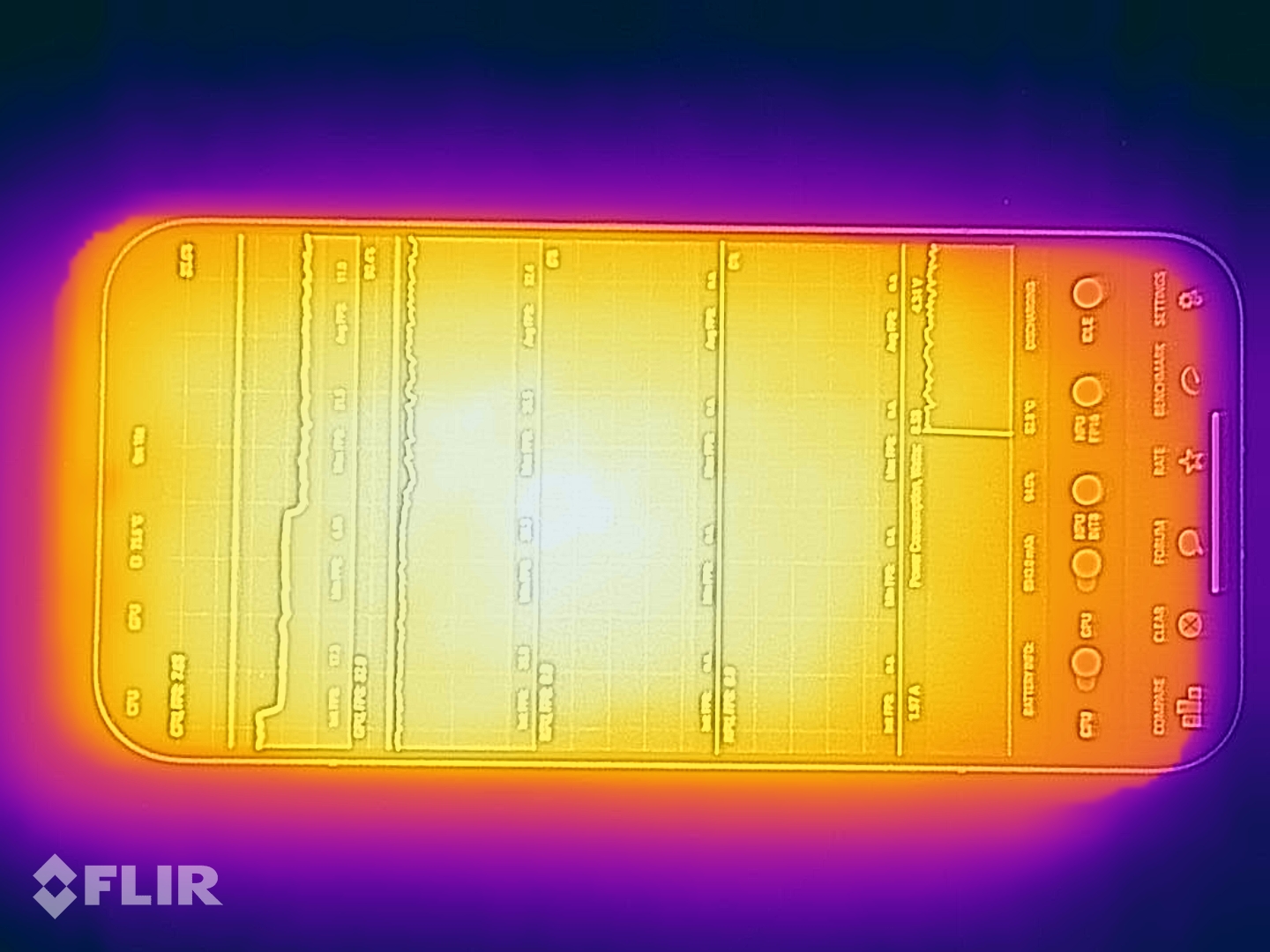
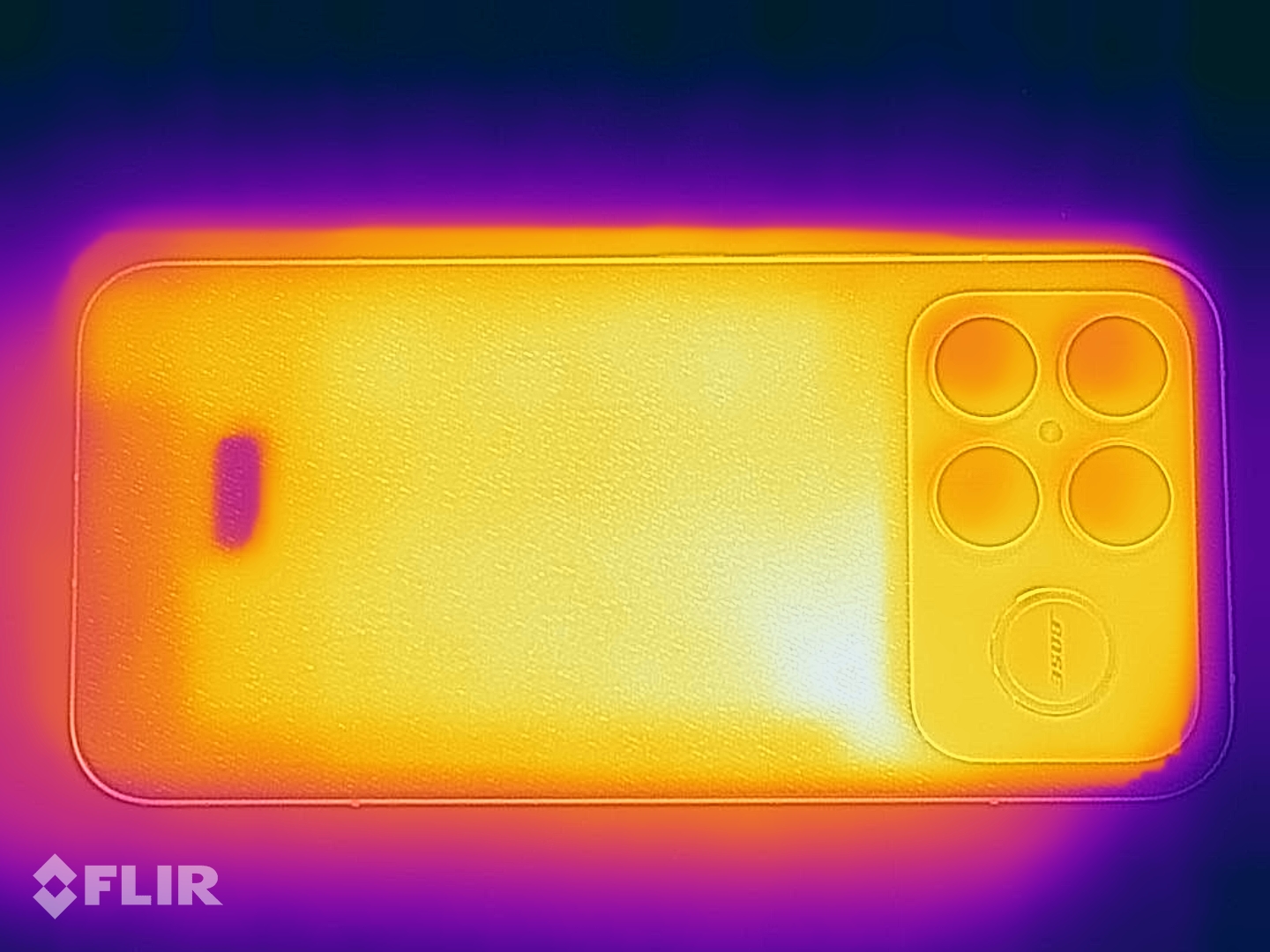
Under sustained load, surface temperatures occasionally approach the 50-degree mark, which is still within an acceptable range.
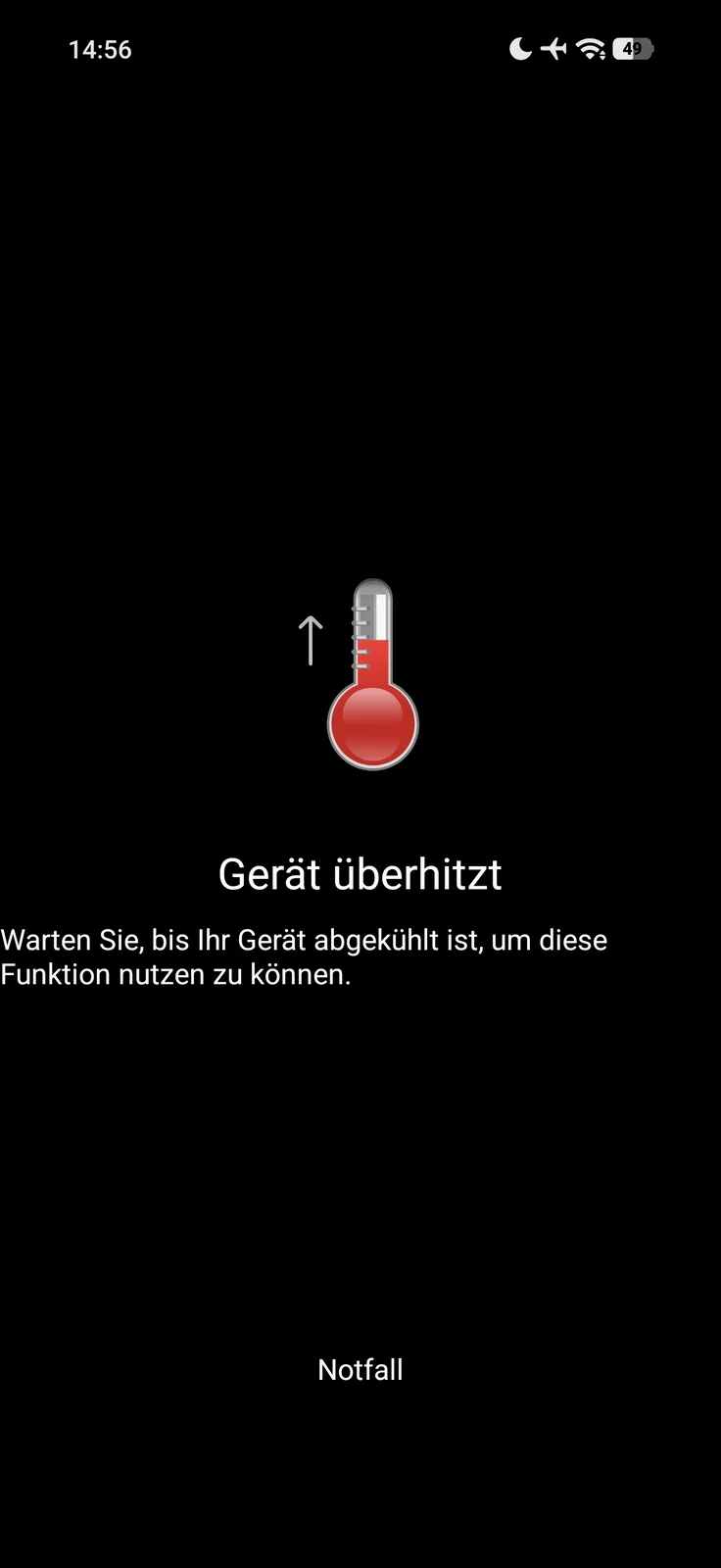
Less convincing is the SoC's cooling performance, however. Only one of the 3DMark stress tests was able to run to completion, while the others were terminated early due to overheating concerns. Even the lightest test (Wild Life) stopped after 12 out of 20 loops. In everyday use, however, we have so far not observed any resulting limitations.
(-) The maximum temperature on the upper side is 49.8 °C / 122 F, compared to the average of 35.3 °C / 96 F, ranging from 21.9 to 247 °C for the class Smartphone.
(-) The bottom heats up to a maximum of 48.9 °C / 120 F, compared to the average of 34.1 °C / 93 F
(+) In idle usage, the average temperature for the upper side is 28 °C / 82 F, compared to the device average of 33 °C / 91 F.
3DMark Stress Tests
| 3DMark | |
| Wild Life Stress Test Stability | |
| Google Pixel 10 Pro | |
| Honor Magic7 Pro | |
| Samsung Galaxy S25 Ultra | |
| Steel Nomad Light Stress Test Stability | |
| Google Pixel 10 Pro | |
| Honor Magic7 Pro | |
| Samsung Galaxy S25 Ultra | |
| Solar Bay Extreme Stress Test Stability | |
| Xiaomi Poco F8 Ultra | |
| Honor Magic7 Pro | |
Speakers
The speakers tuned by Bose, including a rear-mounted subwoofer, are a genuine highlight. The difference is clearly audible, and the Poco F8 Ultra delivers acoustic performance unlike that of any smartphone we have tested so far.
Xiaomi Poco F8 Ultra audio analysis
(+) | speakers can play relatively loud (89.6 dB)
Bass 100 - 315 Hz
(±) | reduced bass - on average 14.3% lower than median
(+) | bass is linear (6.8% delta to prev. frequency)
Mids 400 - 2000 Hz
(+) | balanced mids - only 4% away from median
(+) | mids are linear (4.6% delta to prev. frequency)
Highs 2 - 16 kHz
(+) | balanced highs - only 3.3% away from median
(+) | highs are linear (2.6% delta to prev. frequency)
Overall 100 - 16.000 Hz
(+) | overall sound is linear (11.4% difference to median)
Compared to same class
» 0% of all tested devices in this class were better, 0% similar, 100% worse
» The best had a delta of 11%, average was 34%, worst was 136%
Compared to all devices tested
» 8% of all tested devices were better, 2% similar, 90% worse
» The best had a delta of 4%, average was 23%, worst was 136%
Samsung Galaxy S25 Ultra audio analysis
(+) | speakers can play relatively loud (93 dB)
Bass 100 - 315 Hz
(-) | nearly no bass - on average 21.5% lower than median
(+) | bass is linear (4.8% delta to prev. frequency)
Mids 400 - 2000 Hz
(+) | balanced mids - only 4.3% away from median
(+) | mids are linear (4.4% delta to prev. frequency)
Highs 2 - 16 kHz
(+) | balanced highs - only 3.3% away from median
(+) | highs are linear (1.4% delta to prev. frequency)
Overall 100 - 16.000 Hz
(+) | overall sound is linear (14.6% difference to median)
Compared to same class
» 2% of all tested devices in this class were better, 2% similar, 96% worse
» The best had a delta of 11%, average was 34%, worst was 136%
Compared to all devices tested
» 19% of all tested devices were better, 4% similar, 77% worse
» The best had a delta of 4%, average was 23%, worst was 136%
Battery life – 6,500 mAh in the Poco F8 Ultra
Power consumption
The power consumption of the Poco F8 Ultra remains at a relatively efficient level.
Charging is supported at up to 100 watts via cable and up to 50 watts wirelessly. In testing, a full charging cycle took just 35 minutes (50% in 15 minutes, 80% in 27 minutes).
| Off / Standby |   0.06 / 0.31 Watt 0.06 / 0.31 Watt |
| Idle |  0.87 / 1.29 / 1.33 Watt 0.87 / 1.29 / 1.33 Watt |
| Load |
8.84 / 9.15 Watt |
    
| |
Key:
min: ,
med: ,
max: Metrahit Energy | |
| Xiaomi Poco F8 Ultra 6500 mAh | Samsung Galaxy S25 Ultra 5000 mAh | Honor Magic7 Pro 5270 mAh | Google Pixel 10 Pro 4870 mAh | Average Qualcomm Snapdragon 8 Elite Gen 5 | Average of class Smartphone | |
|---|---|---|---|---|---|---|
| Power Consumption | -6% | -19% | -39% | -8% | -8% | |
| Idle Minimum * (Watt) | 0.87 | 0.55 37% | 0.94 -8% | 1.01 -16% | 0.882 ? -1% | 0.893 ? -3% |
| Idle Average * (Watt) | 1.29 | 0.77 40% | 1.5 -16% | 1.65 -28% | 1.373 ? -6% | 1.489 ? -15% |
| Idle Maximum * (Watt) | 1.33 | 0.91 32% | 1.57 -18% | 2.05 -54% | 1.586 ? -19% | 1.682 ? -26% |
| Load Average * (Watt) | 8.84 | 13.81 -56% | 11.03 -25% | 7.25 18% | 8.01 ? 9% | 6.85 ? 23% |
| Load Maximum * (Watt) | 9.15 | 16.69 -82% | 11.68 -28% | 19.78 -116% | 11.4 ? -25% | 10.7 ? -17% |
* ... smaller is better
Power consumption: Geekbench (150 cd/m²)
Power consumption: GFXbench (150 cd/m²)
Battery life
Despite its large battery, the Poco F8 Ultra's runtimes are not among the very best, but they are still very good overall. With just under 22 hours in the Wi-Fi test, it should offer more than enough endurance to last two days.
| Battery runtime - WiFi v1.3 | |
| Xiaomi Poco F8 Ultra | |
| Samsung Galaxy S25 Ultra | |
| Honor Magic7 Pro | |
| Google Pixel 10 Pro | |
Notebookcheck overall rating
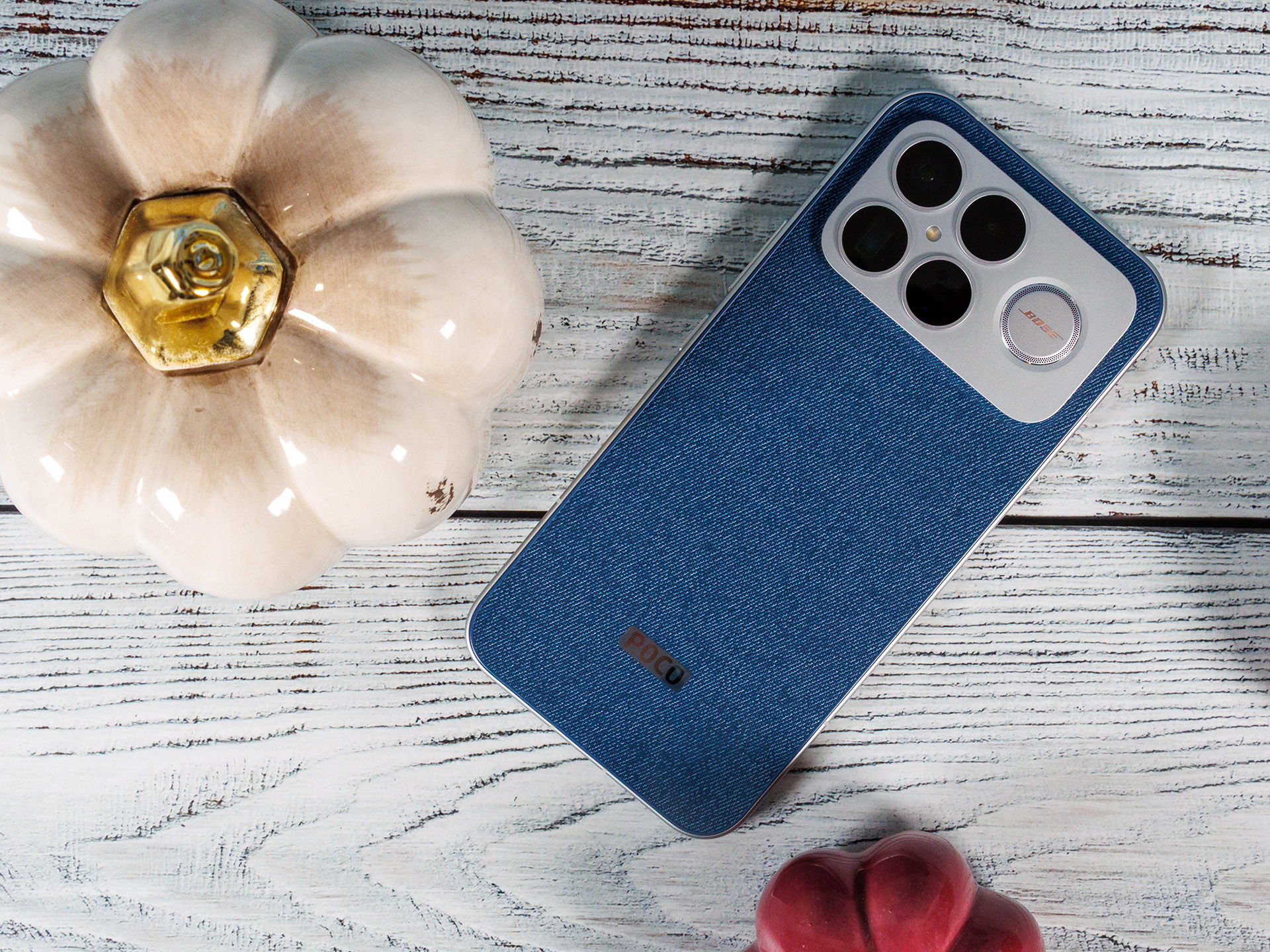
The Poco F8 Ultra offers a high-quality IP68-certified chassis with either a denim-style or fibreglass finish, a Snapdragon 8 Elite Gen 5, USB 3.2, strong cameras, a bright 120-Hz display, Bose speakers with a subwoofer and a 6,500 mAh battery. Under sustained load, however, the device shows significant heat development, and support for 6-GHz Wi-Fi is missing.
Xiaomi Poco F8 Ultra
- 12/18/2025 v8
Daniel Schmidt
 Total Sustainability Score:
 Possible alternatives at a glance
Image | Model / Review | Price | Weight | Drive | Display |
|---|---|---|---|---|---|
1. 88.2%  | Xiaomi Poco F8 Ultra Qualcomm Snapdragon 8 Elite Gen 5 ⎘ Qualcomm Adreno 840 ⎘ 16 GB Memory, 512 GB UFS 4.x | List Price: 900€ | 220 g | 512 GB UFS 4.1 Flash | 6.90" 2608x1200 416 PPI AMOLED |
2. 89.4%  | Samsung Galaxy S25 Ultra Qualcomm Snapdragon 8 Elite for Galaxy ⎘ Qualcomm Adreno 830 ⎘ 12 GB Memory, 256 GB UFS 4.x | List Price: 1449€ | 218 g | 256 GB UFS 4.0 Flash | 6.90" 3120x1440 498 PPI Dynamic AMOLED 2X |
3. 89.2%  | Honor Magic7 Pro Qualcomm Snapdragon 8 Elite ⎘ Qualcomm Adreno 830 ⎘ 12 GB Memory, 512 GB UFS 4.x | Amazon: $990.00 List Price: 1300€ | 223 g | 512 GB UFS 4.0 Flash | 6.80" 2800x1280 453 PPI OLED |
4. 88.9%  | Google Pixel 10 Pro Google Tensor G5 ⎘ IMG DXT-48-1536 ⎘ 16 GB Memory, 256 GB UFS 4.x | List Price: 1199€ | 207 g | 256 GB UFS 4.0 Flash | 6.30" 2856x1280 497 PPI OLED |
Transparency
The selection of devices to be reviewed is made by our editorial team. The test sample was given to the author by the manufacturer free of charge for the purposes of review. There was no third-party influence on this review, nor did the manufacturer receive a copy of this review before publication. There was no obligation to publish this review. As an independent media company, Notebookcheck is not subjected to the authority of manufacturers, retailers or publishers.
This is how Notebookcheck is testing
Every year, Notebookcheck independently reviews hundreds of laptops and smartphones using standardized procedures to ensure that all results are comparable. We have continuously developed our test methods for around 20 years and set industry standards in the process. In our test labs, high-quality measuring equipment is utilized by experienced technicians and editors. These tests involve a multi-stage validation process. Our complex rating system is based on hundreds of well-founded measurements and benchmarks, which maintains objectivity. Further information on our test methods can be found here.
 Add as a preferred source on Google


