




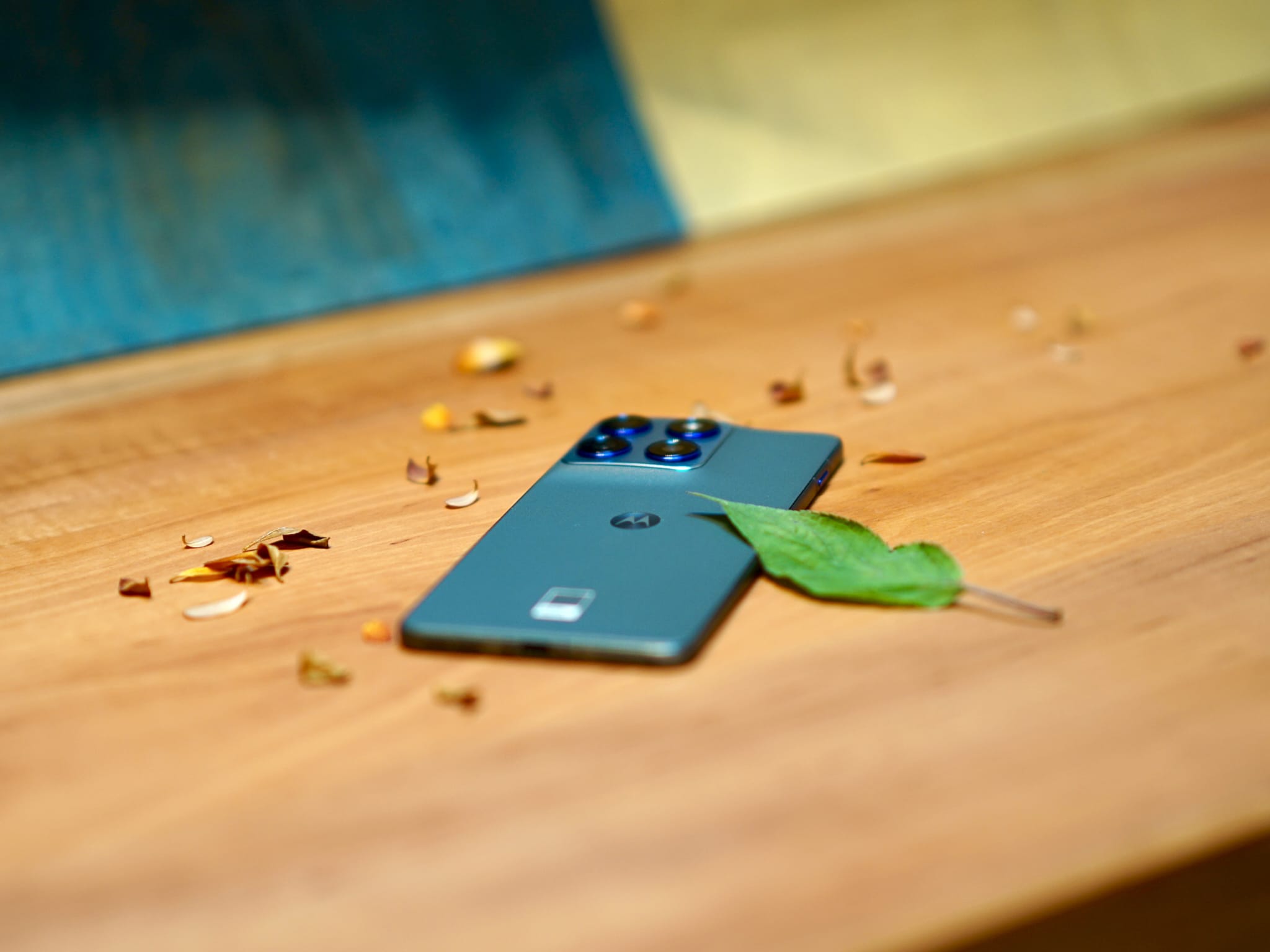
Verdict
The Motorola Edge 70 is feather-light and genuinely slim. It feels special to hold. However, these qualities come with clear compromises. Compared with its predecessor, the price has more than doubled, yet buyers no longer get optical zoom, and the camera system, while still capable of taking good photos, is noticeably less flexible.
Some features also feel out of place at this price point. These include the relatively slow USB 2.0 port without DisplayPort support, a display that can only reduce its refresh rate to a minimum of 60 Hz, and above all a system-on-a-chip that is only moderately fast for this class.
That is unfortunate, because the Motorola Edge 70 is well built, looks genuinely attractive, supports wireless charging, and still delivers battery runtimes that are perfectly suitable for everyday use despite its slim design.
Significantly discounted offers can already be found online. If prices for this slim design-focused device continue to fall, the combination of innovative design and mid-range hardware will become considerably more appealing.
Pros
Cons
Price and availability
On Amazon Germany, the Motorola Edge 70 is currently still available at close to its full price of just under 800 euros.
At the same time, noticeably cheaper offers can already be found online at the time of testing. In the United States, however, there is no officially confirmed MSRP or launch via Motorola USA. Prices listed by third-party retailers and price comparison sites should therefore be regarded as indicative only and may vary depending on seller and configuration.

- $515.00Motorola Moto Edge 70 5G Ai (Compatible with Tmobile Mint Tello & Global) (512GB+12GB) NFC 50MP 4K Triple Cam Dual Sim 6.67" Curved XT2601-3 Latino American Version (Gadget Gray)
- $380.00Motorola Moto Edge 70 Fusion 5G Ai (Compatible with Tmobile Mint Tello & Global) (256GB+8GB) NFC 50MP 4K Triple Cam Dual Sim 6.8" Curved XT2605-3 Latino American Version (Pantone Silhouette (Blue))
- $349.50Motorola Moto Edge 70 Fusion 5G Ai (Compatible with Tmobile Mint Tello & Global) (256GB+8GB) NFC 50MP 4K Triple Cam Dual Sim 6.8" Curved XT2605-3 Latino American Version (Slihouette Blue FIFA Edition)
Table of Contents
- Verdict
- Specifications
- Chassis – slim yet sturdy
- Features – only one storage option in Western markets
- Software – close to stock Android
- Communication and GNSS – Fast Wi-Fi performance
- Telephony and call quality – sounds good
- Cameras – noticeable compromises
- Accessories and warranty – no charger in the EU
- Input devices and operation – fast and precise
- Display – unfortunately with PWM
- Performance – little power for the price class
- Emissions – can get hot
- Battery life – good endurance despite the slim body
- Notebookcheck overall rating
- Possible alternatives at a glance
Some readers may remember Motorola's Moto Z series, which once pushed extremely thin smartphones onto the market. Even then, compromises such as fragile displays and limited battery capacity were part of the equation.
With the Motorola Edge 70, Motorola is revisiting this approach, this time without modular accessories and instead aligning itself with the slim-design trend popularised by Apple and Samsung.
Specifications
Chassis – slim yet sturdy
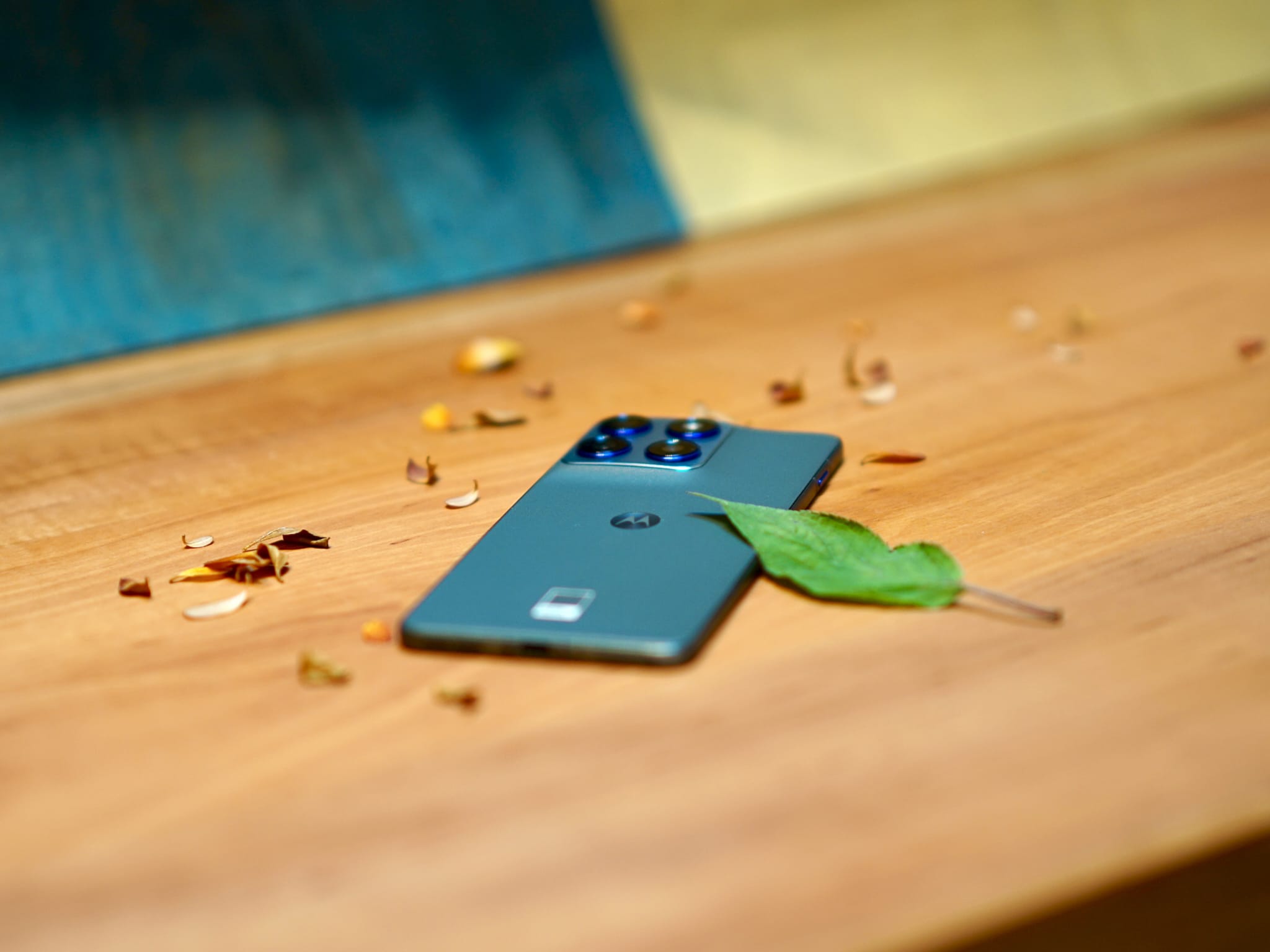
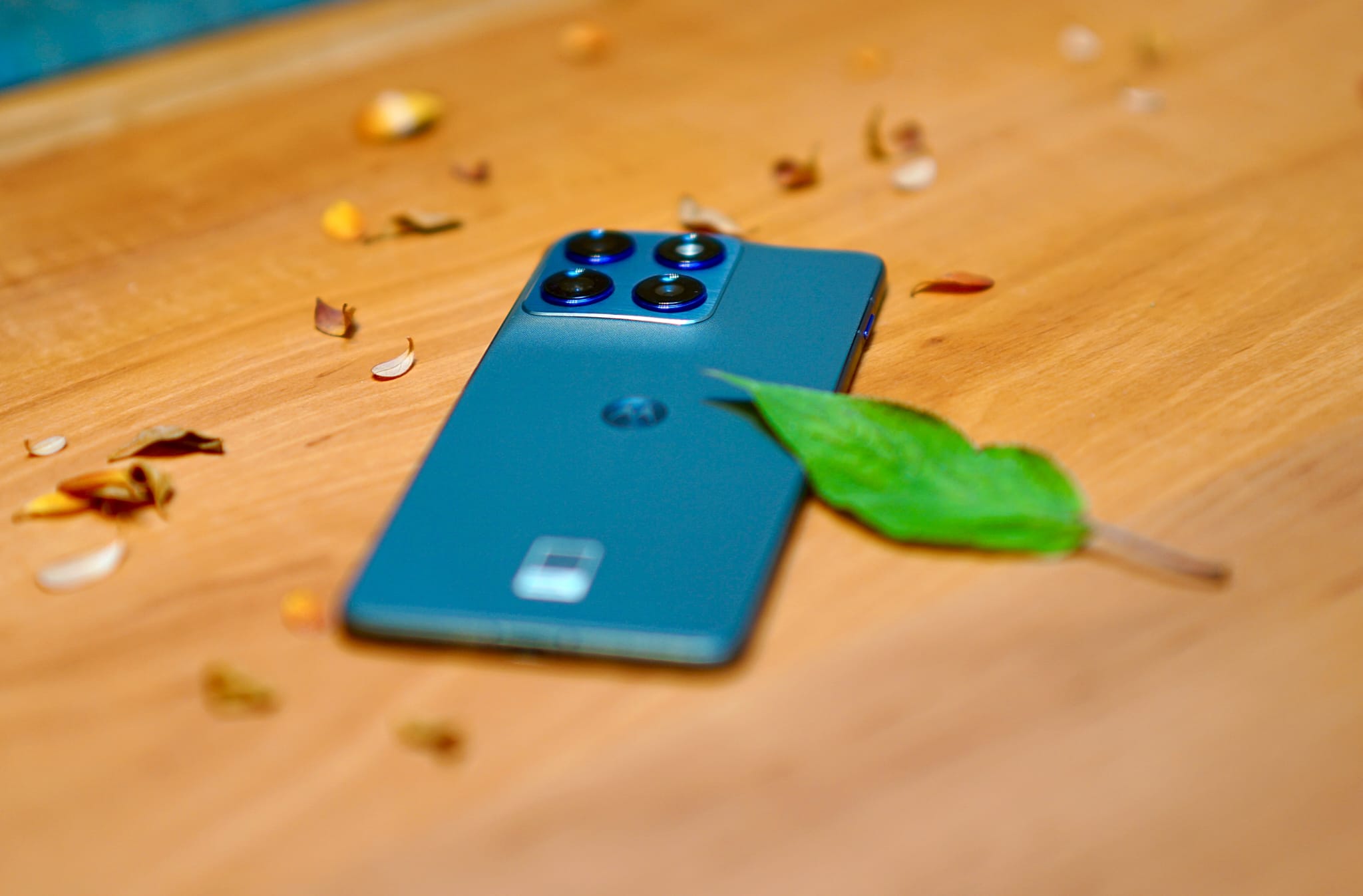
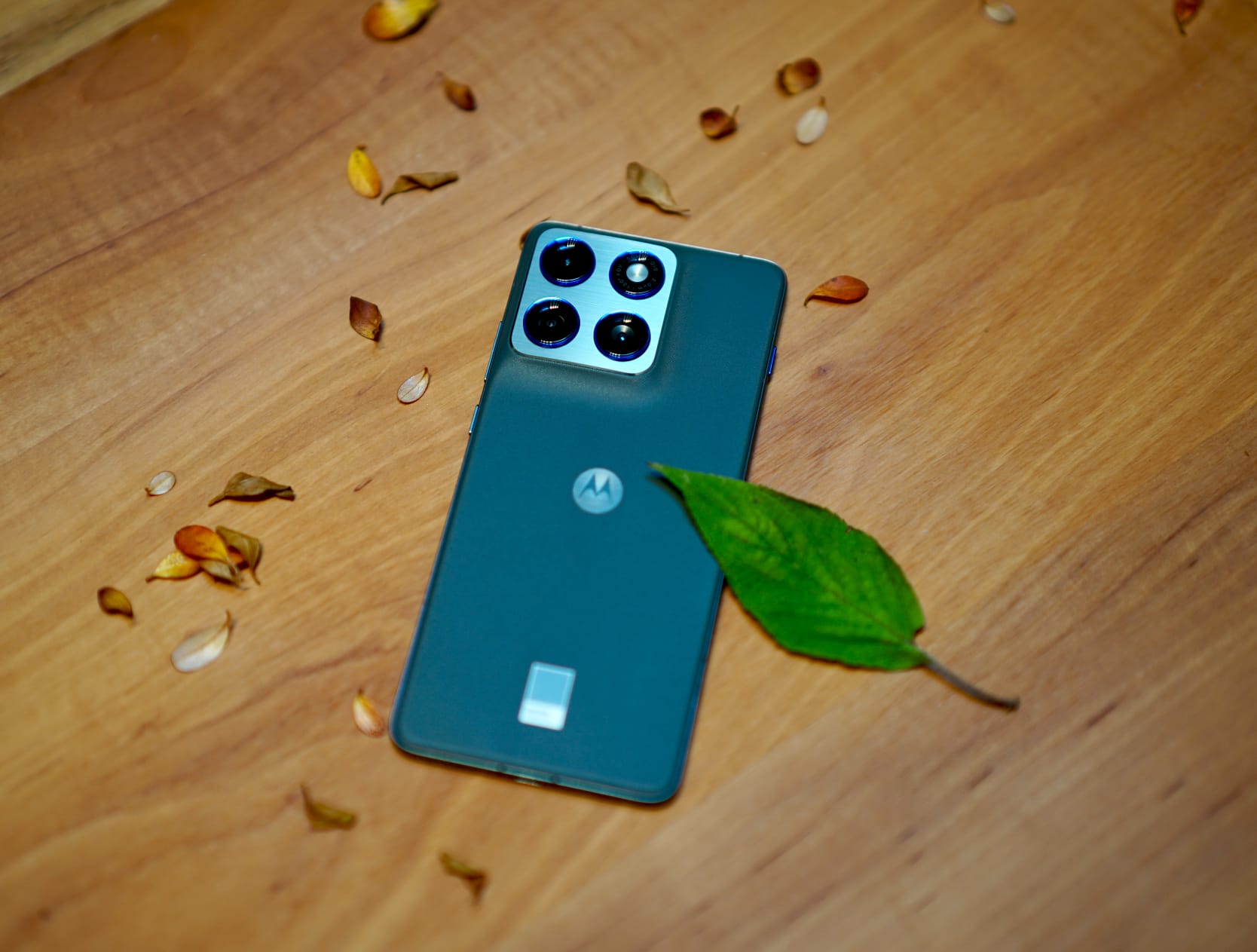
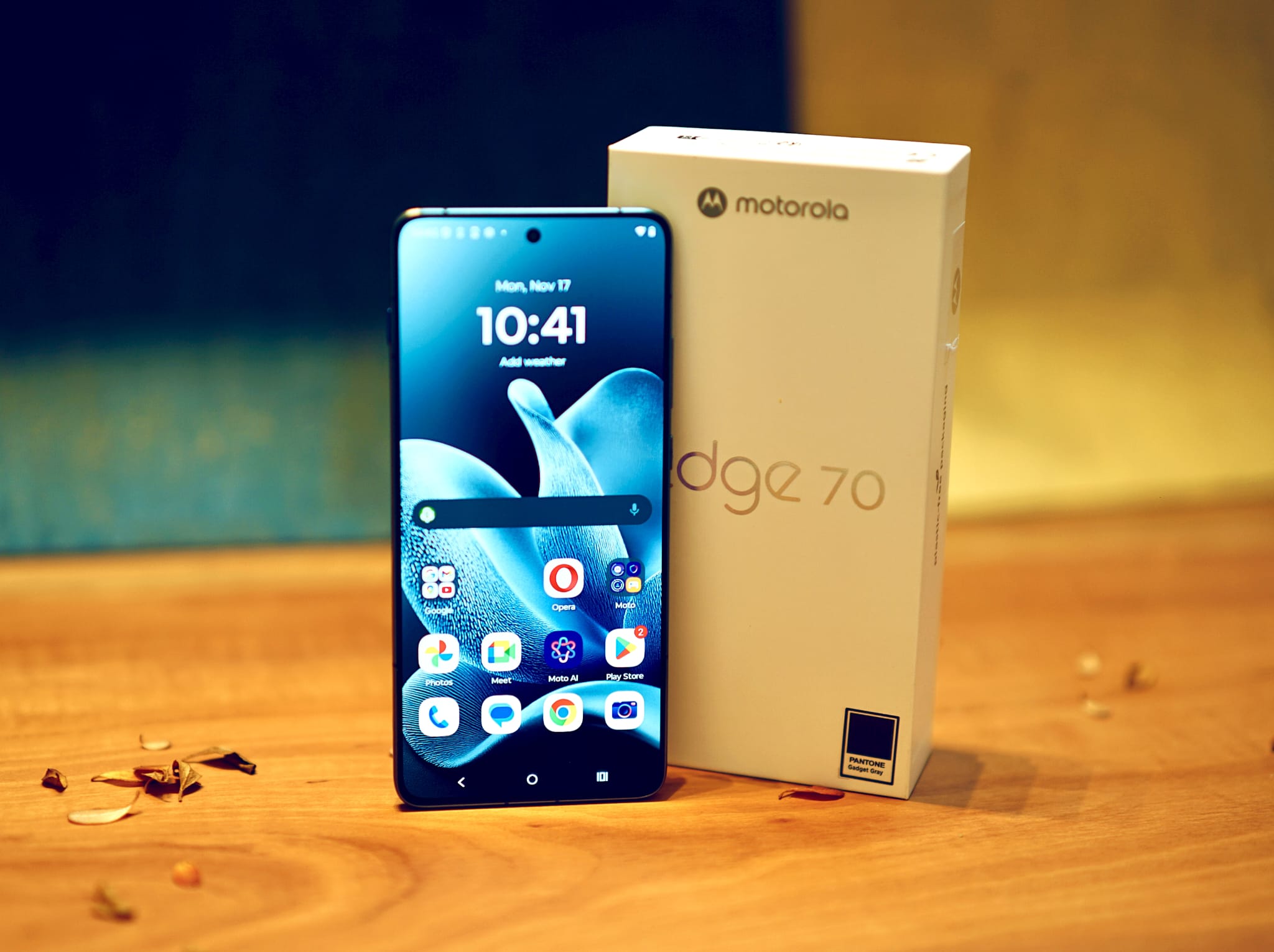
At first touch, the chassis impresses with its slim profile and very low weight of just 159 grams. Thanks to the aluminium frame, the smartphone still feels solid, shows no flex and does not creak.
In contrast to recent generations, the camera module now stands out clearly against a metal background. The lens surrounds are finished in a contrasting colour relative to the rear panel.
The chassis is available in four Pantone colours: dark grey, grey-green, green, and the Pantone Colour of the Year 2026, "Cloud Dancer", a shade of white. In this variant, the smartphone also features small crystals embedded in the rear panel.
The device is certified to IP68 and IP69 standards.


Features – only one storage option in Western markets
In Europe, the phone is available with 512 GB of internal storage and 12 GB of RAM. In China, a 256 GB variant is also offered. Storage expansion is not possible, as the device lacks a microSD card slot.
Despite its relatively high price, the Motorola Edge 70 is limited to a USB 2.0 port, which cannot output a DisplayPort signal. Wireless screen transmission via Miracast is possible, however. NFC for contactless payments is included.
Software – close to stock Android
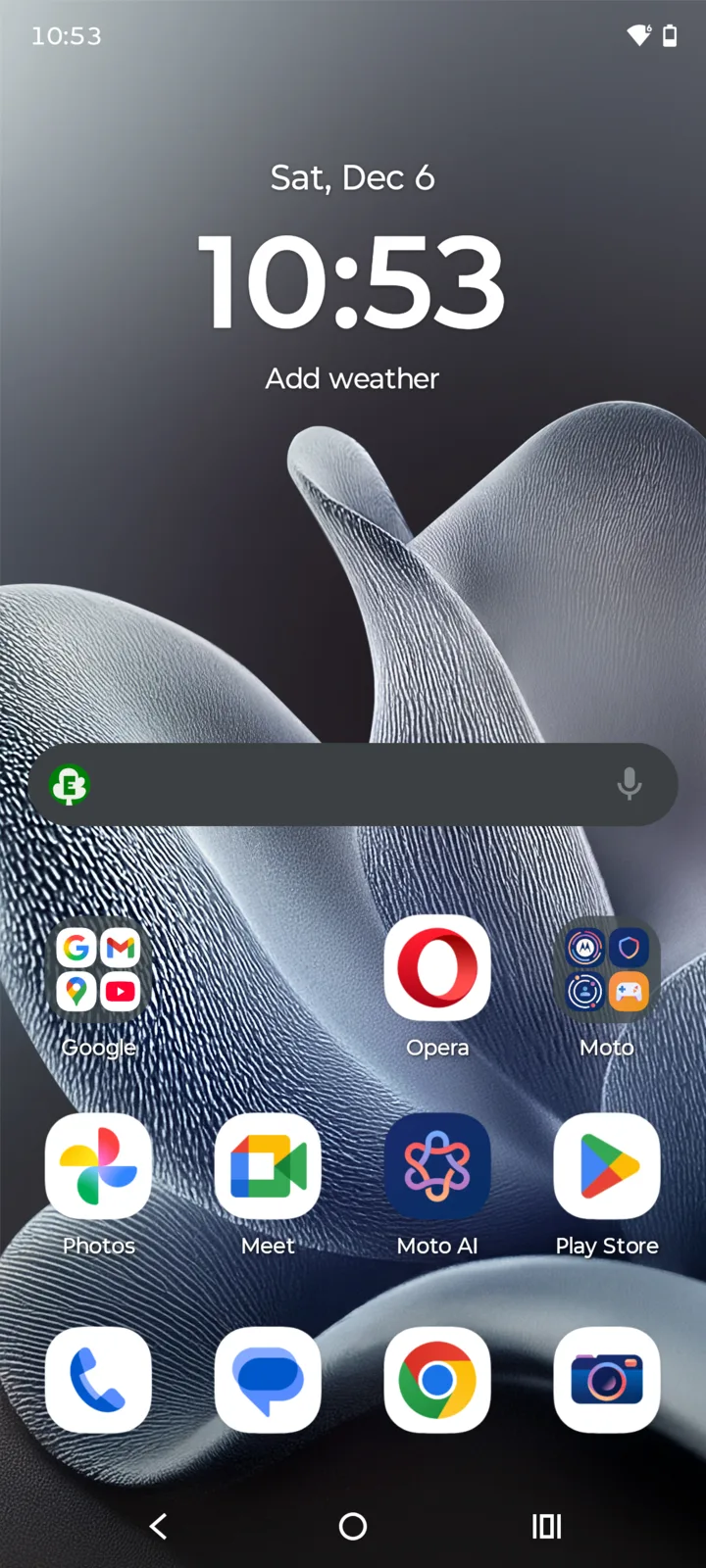
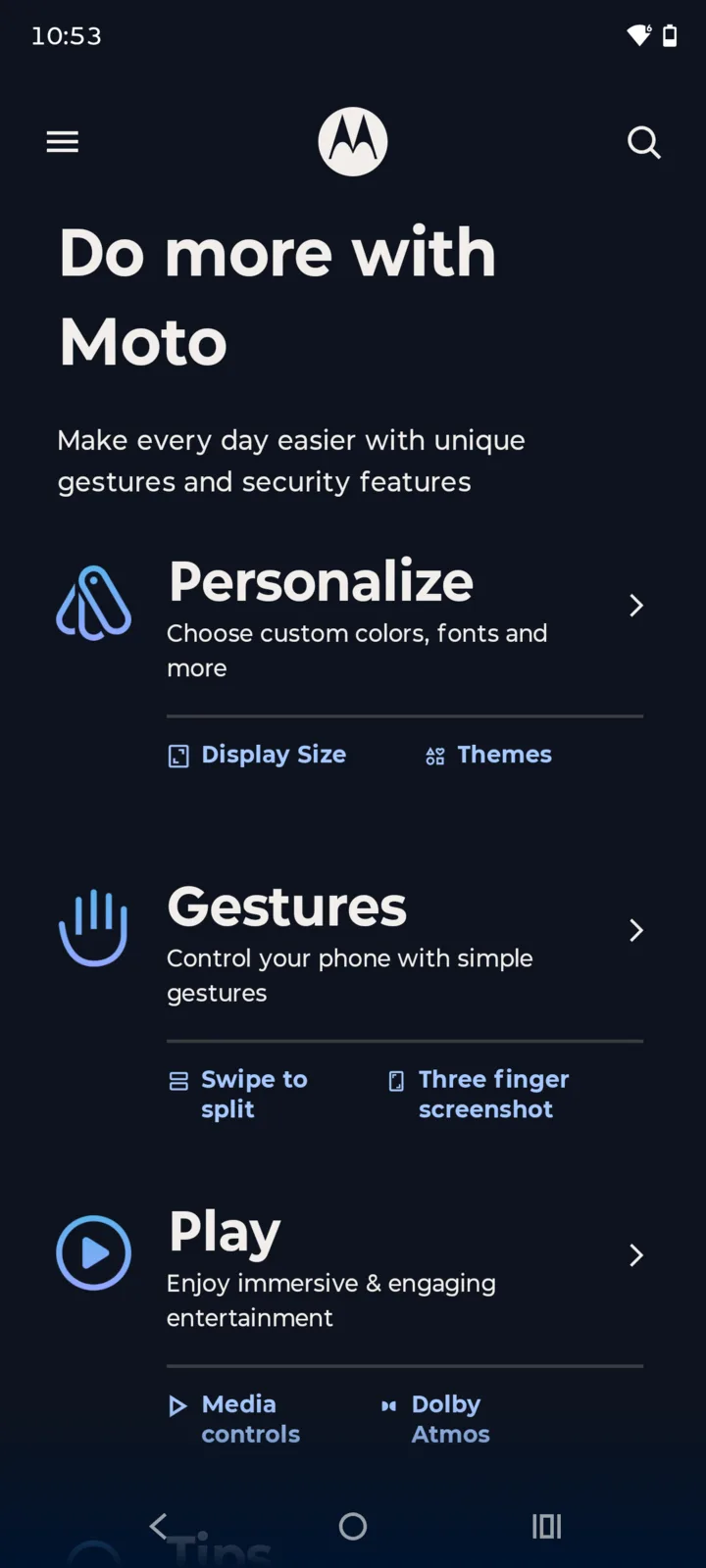
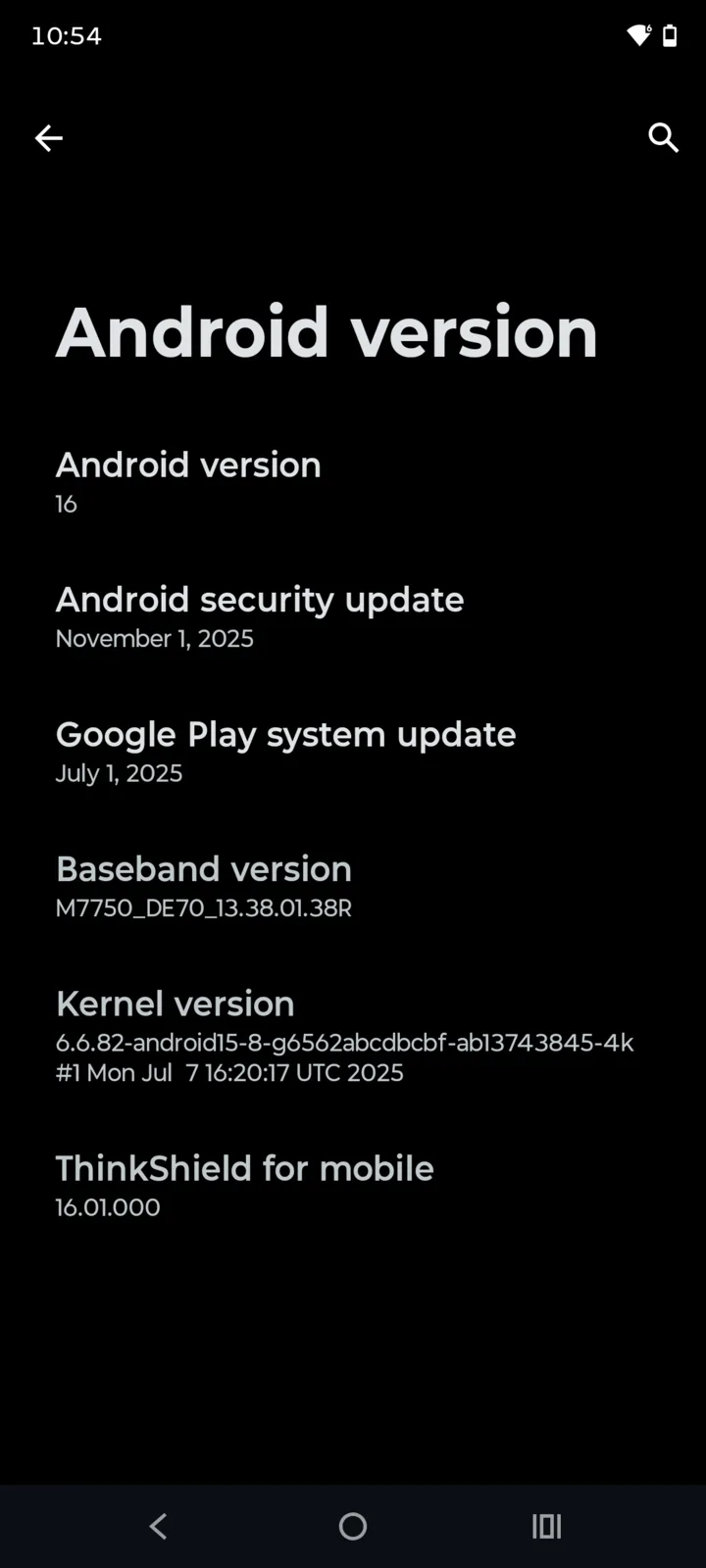
Hello UI is based on Android 16 and remains very close to Google's stock Android experience. Motorola's own additions are neatly bundled into the central Moto app, alongside Moto Secure and Moto AI.
Motorola promises Android version updates through Android 20, as well as security patches until 2031. This is a solid and reassuring commitment, even if some competing manufacturers now go one year further.
Sustainability
The packaging is completely plastic-free, and Motorola states a carbon footprint of 38.2 kg CO₂ equivalent for the Edge 70.
In addition, Motorola provides spare parts and repair guides for its devices via a dedicated website.
Communication and GNSS – Fast Wi-Fi performance
The Edge 70 supports Wi-Fi 6E, allowing it to use the less congested 6 GHz band for wireless networks. In our tests with the reference router Asus ROG Rapture AXE11000, it delivers good throughput and clearly outperforms its predecessor, for example.
In terms of mobile connectivity, a wide range of frequency bands is supported, making the Edge 70 well suited for use while travelling. Reception was also good in spot checks during our testing.
| Networking | |
| Motorola Edge 70 | |
| iperf3 transmit AXE11000 6GHz | |
| iperf3 receive AXE11000 6GHz | |
| Motorola Edge 60 | |
| iperf3 transmit AXE11000 | |
| iperf3 receive AXE11000 | |
| Honor 400 | |
| iperf3 transmit AXE11000 | |
| iperf3 receive AXE11000 | |
| Xiaomi 15S Pro | |
| iperf3 transmit AXE11000 6GHz | |
| iperf3 receive AXE11000 6GHz | |
| Samsung Galaxy S25 Edge | |
| iperf3 transmit AXE11000 | |
| iperf3 receive AXE11000 | |
| iperf3 transmit AXE11000 6GHz | |
| iperf3 receive AXE11000 6GHz | |
| Average Wi-Fi 6E | |
| iperf3 transmit AXE11000 | |
| iperf3 receive AXE11000 | |
| iperf3 transmit AXE11000 6GHz | |
| iperf3 receive AXE11000 6GHz | |
| Average of class Smartphone | |
| iperf3 transmit AXE11000 | |
| iperf3 receive AXE11000 | |
| iperf3 transmit AXE11000 6GHz | |
| iperf3 receive AXE11000 6GHz | |
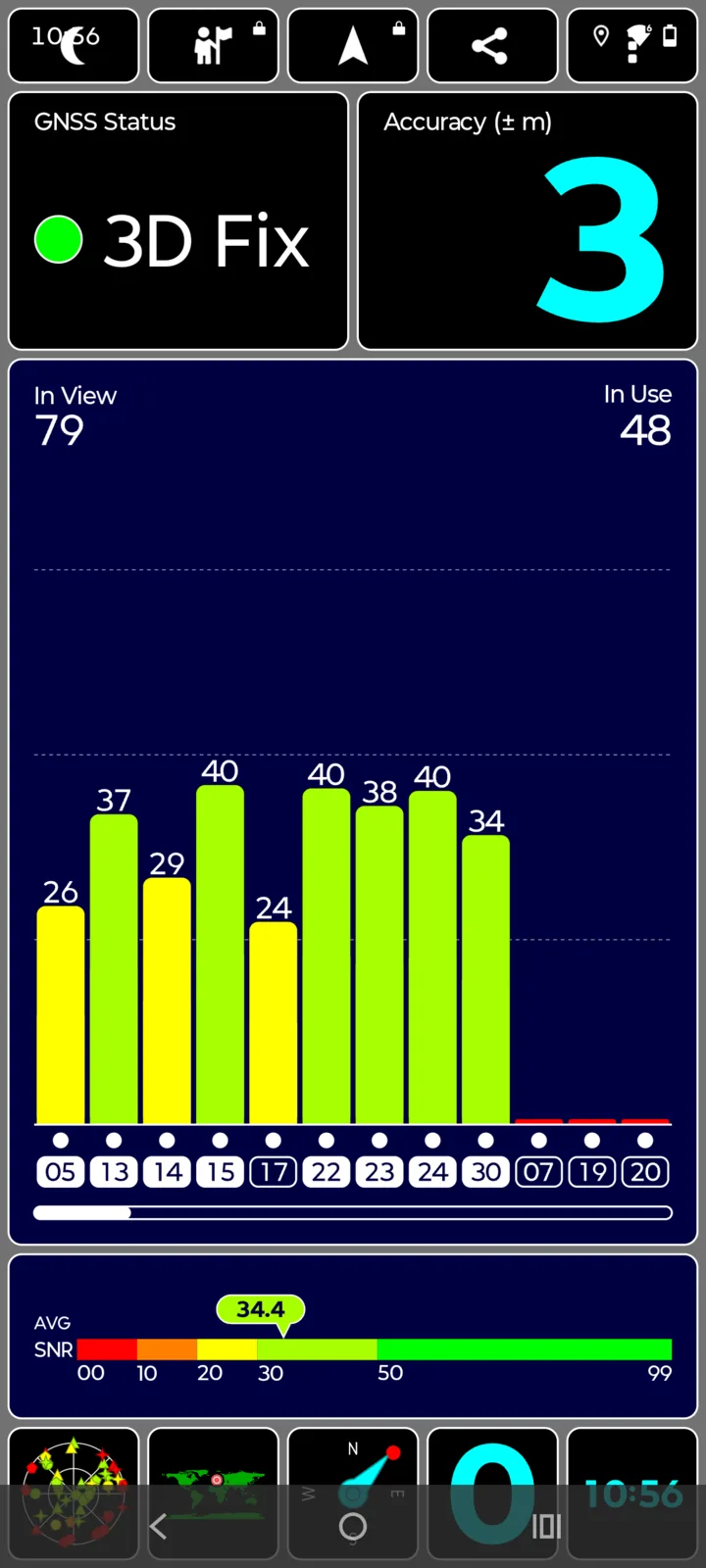
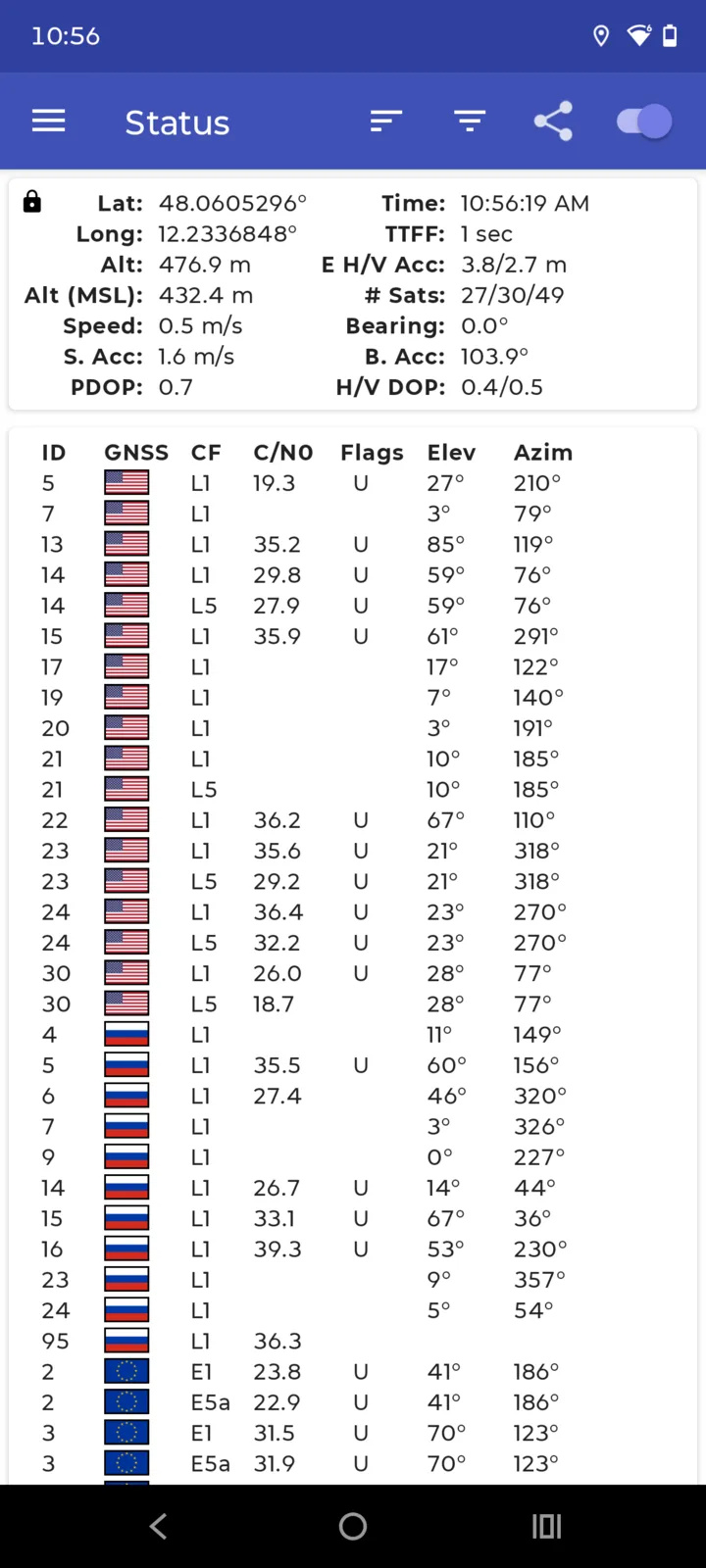
Outdoors, the device quickly achieves a positioning accuracy of around three metres. While many satellite systems are supported, SBAS is not available to further improve accuracy.
Telephony and call quality – sounds good
Motorola relies on Google's Phone app, which is clearly laid out and offers all essential features, including VoLTE and Vo5G.
In our test calls, voice quality was good and free of interference, both via the earpiece and when using the speakerphone.
Cameras – noticeable compromises

That Motorola has made cuts to the camera system is understandable given the "slim and lightweight" concept. However, this was one of the Edge 60's key strengths, particularly thanks to its optical zoom. The significantly more expensive Edge 70 now has to do without this feature, which is at the very least disappointing.
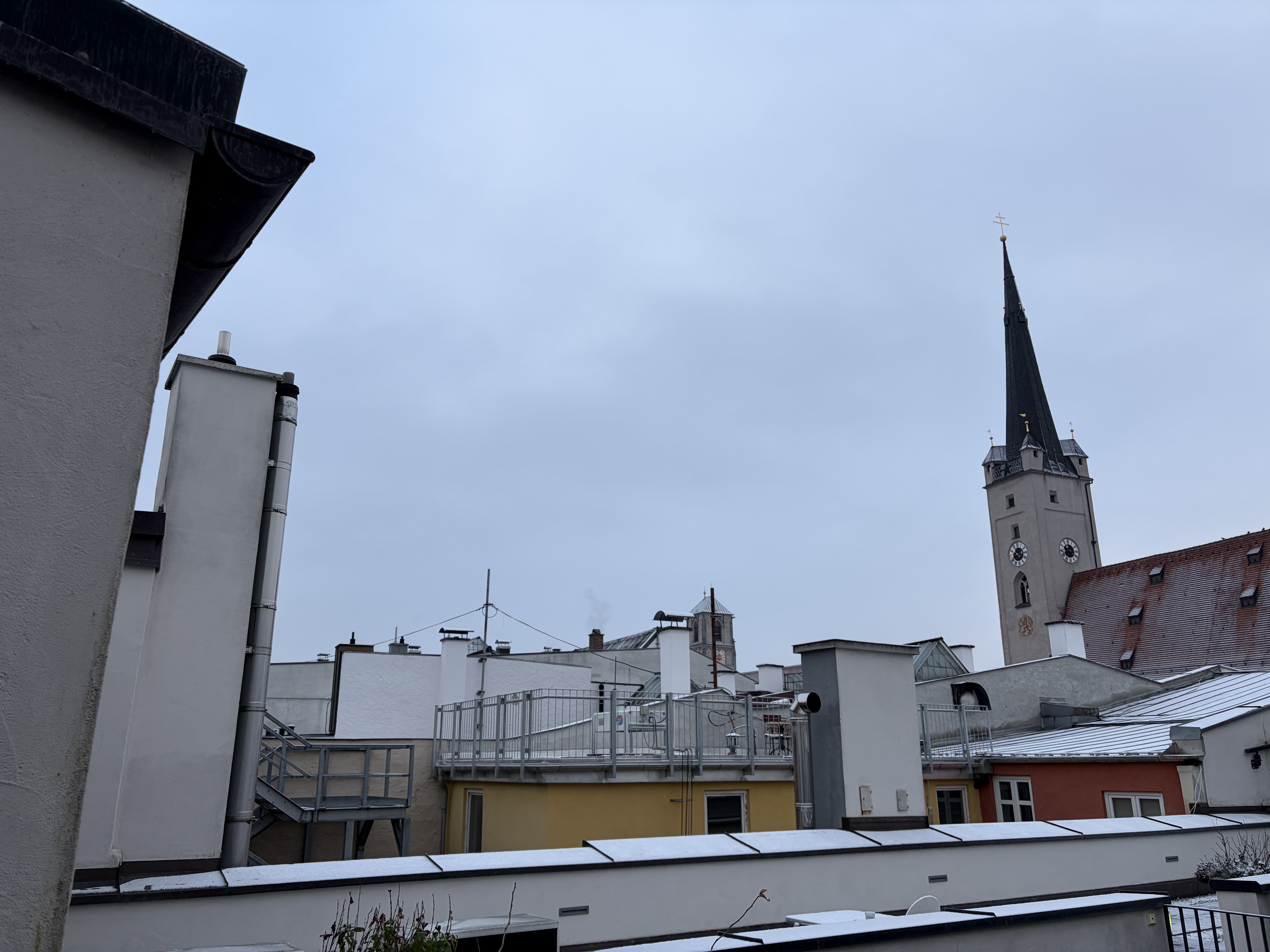
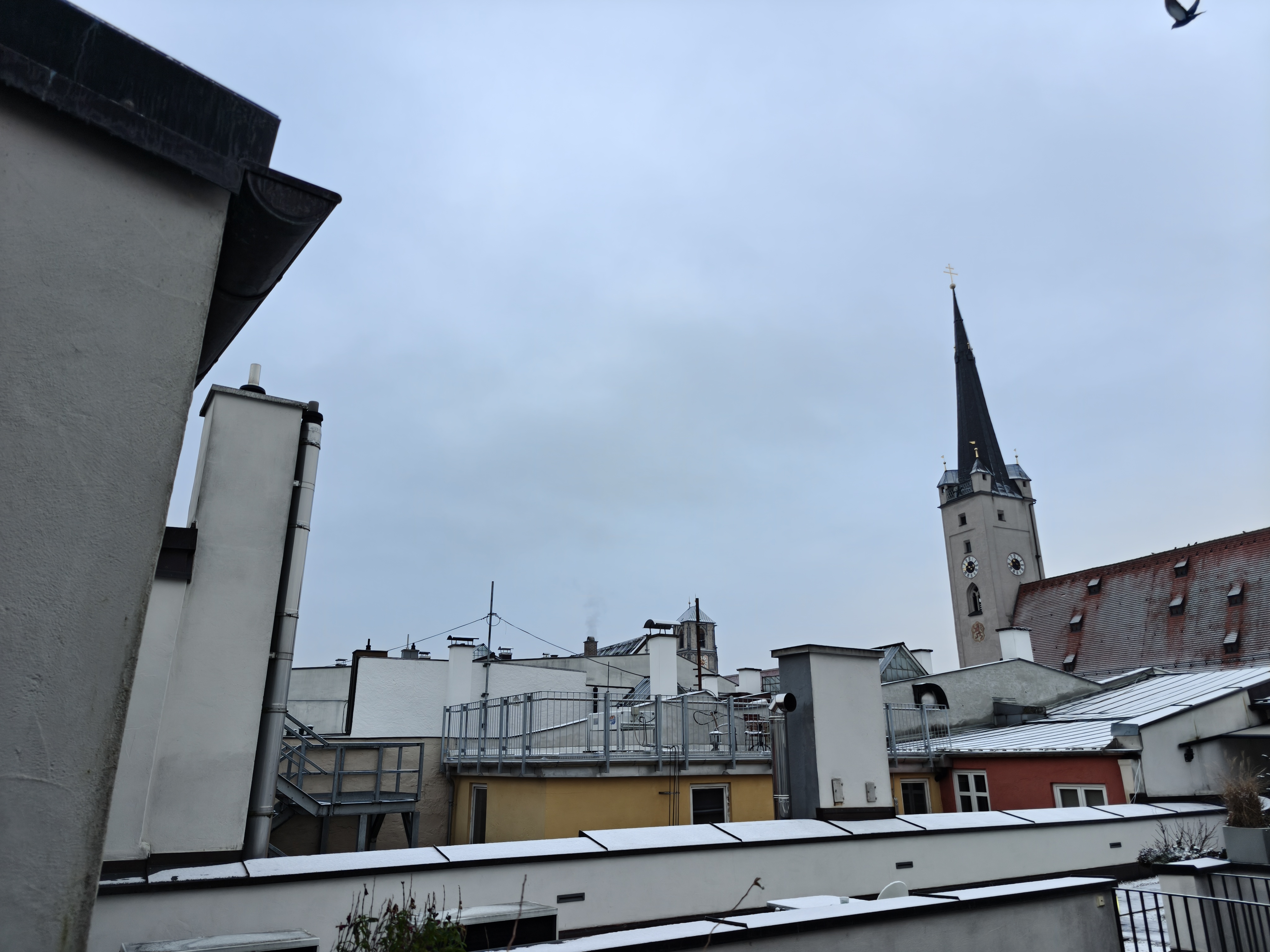
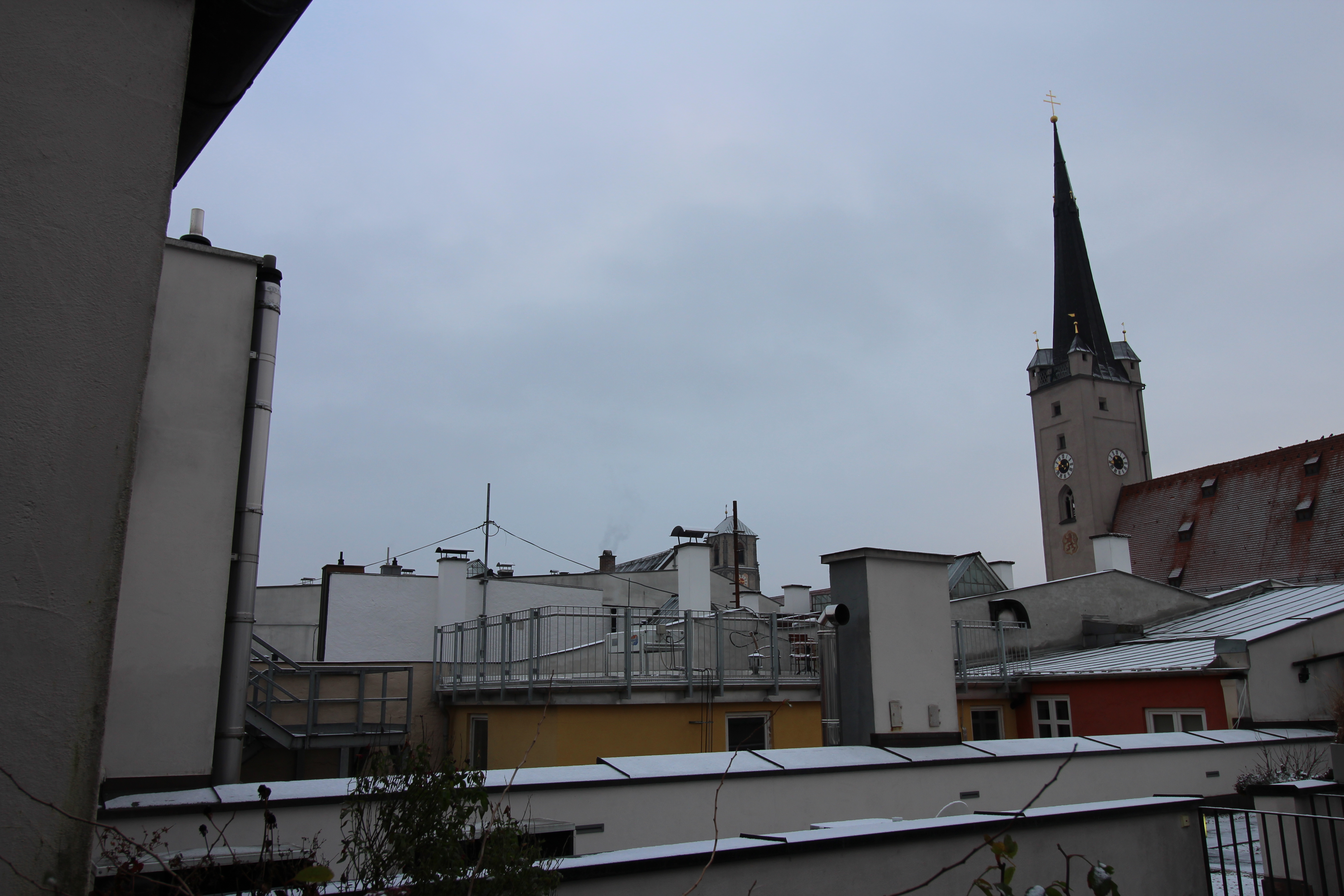
The 50-megapixel main camera produces sharp, high-contrast photos in good lighting and still delivers decent results in lower light. However, more distant objects can no longer be captured with the same level of detail.
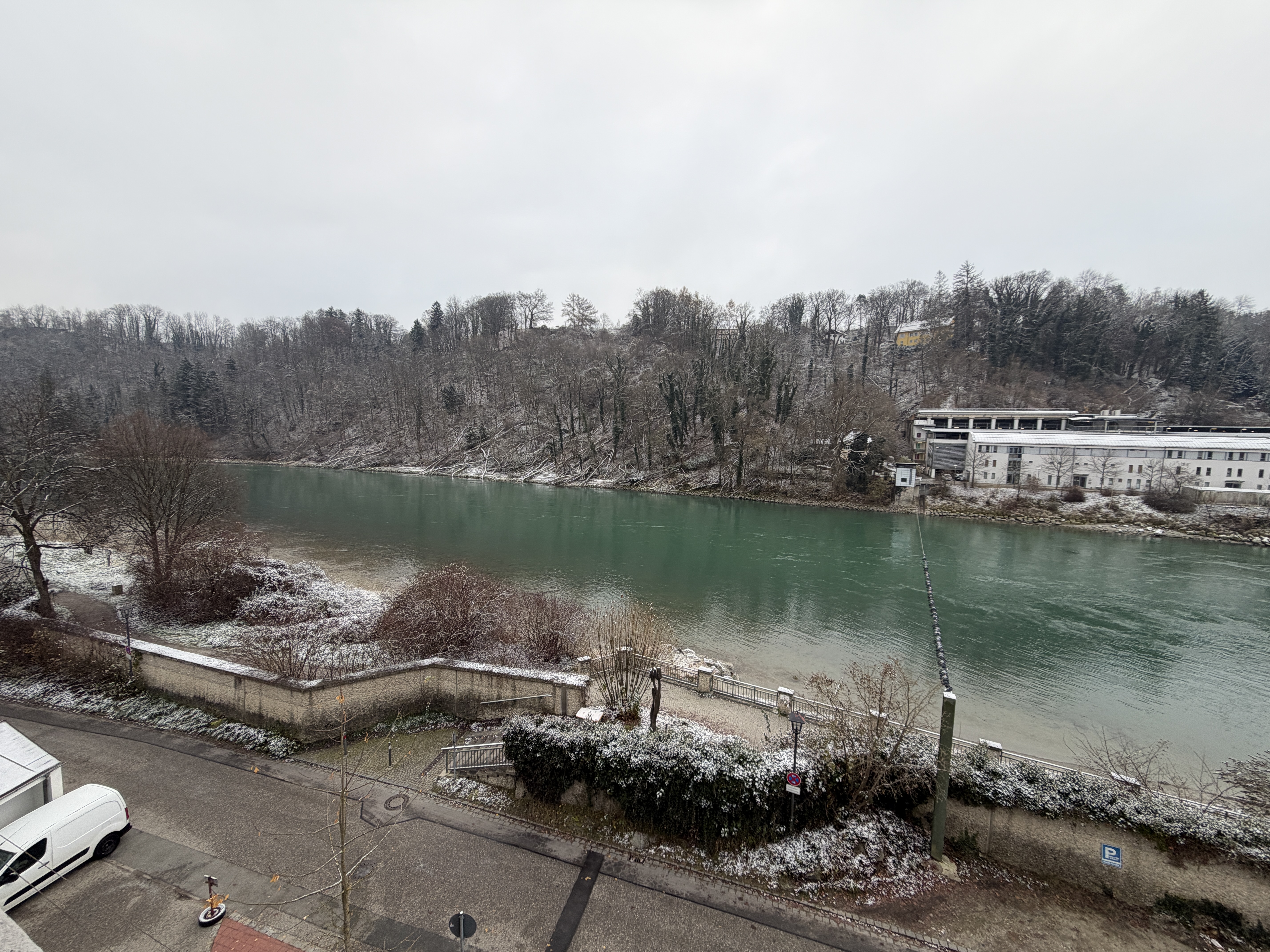
The ultra-wide-angle camera is capable of producing attractive panoramas, but fine details are rendered less accurately.
At the front, there is also a 50-megapixel sensor, which takes sharp photos but is not particularly light-sensitive.
Videos can be recorded in 4K at 60 fps using both the main and front cameras. Image quality is good in both cases, and the autofocus responds reasonably quickly and unobtrusively.
Image comparison
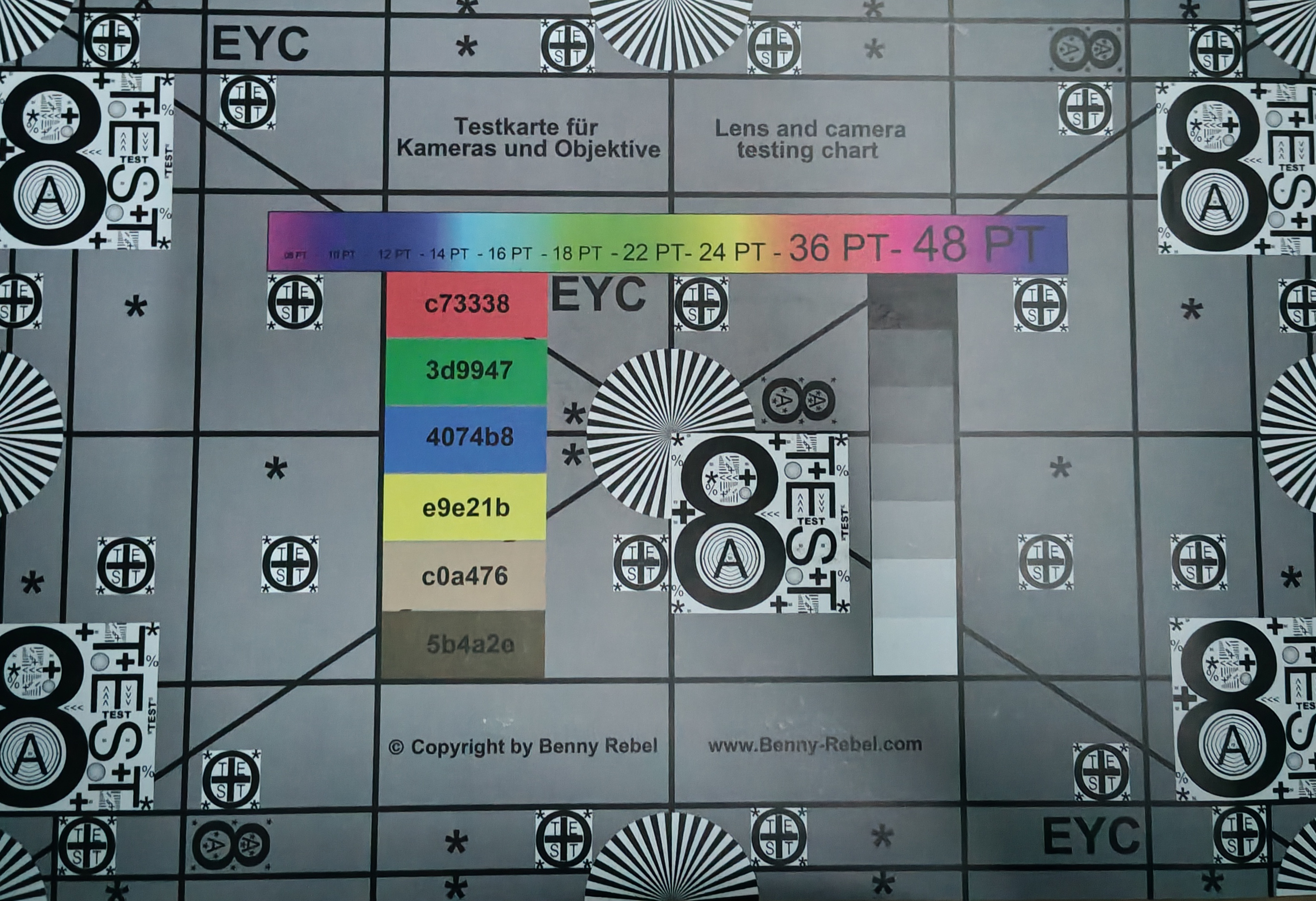
Choose a scene and navigate within the first image. One click changes the position on touchscreens. One click on the zoomed-in image opens the original in a new window. The first image shows the scaled photograph of the test device.
PflanzeUmgebungLow LightWeitwinkelkamera















Accessories and warranty – no charger in the EU
In the EU, no charger is included in the box. However, the manufacturer does provide a transparent hard plastic case, which still supports wireless charging.
Motorola offers a 24-month warranty for smartphones purchased in Europe.
Input devices and operation – fast and precise
The touchscreen scans for inputs up to 300 times per second. At the same time, the display can show up to 120 frames per second. This results in a responsive and smooth user experience that is also highly precise.
A dedicated button on the left side activates Moto AI. However, the button cannot be freely assigned to other functions and cannot be used as a camera shutter.
Display – unfortunately with PWM
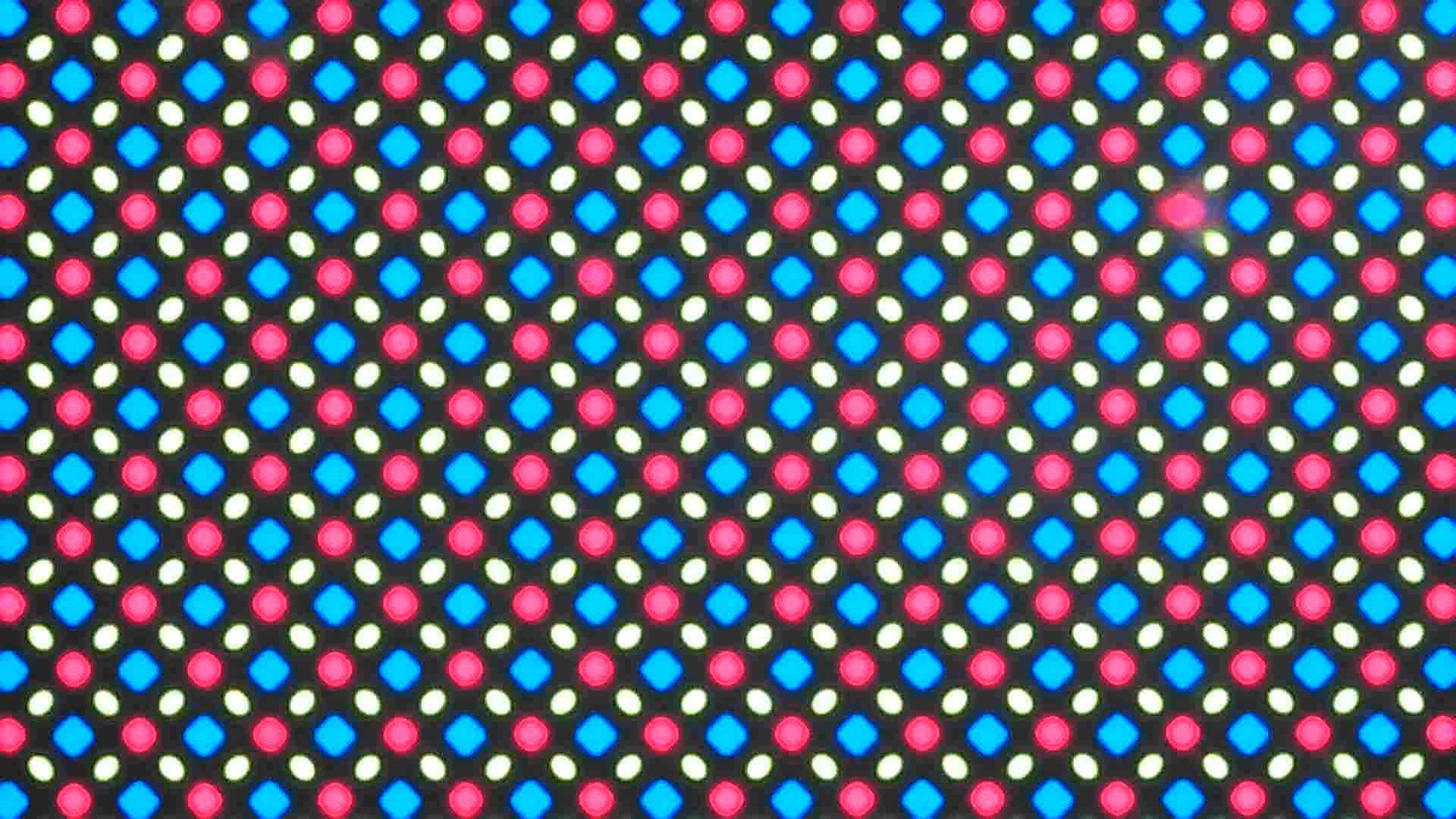
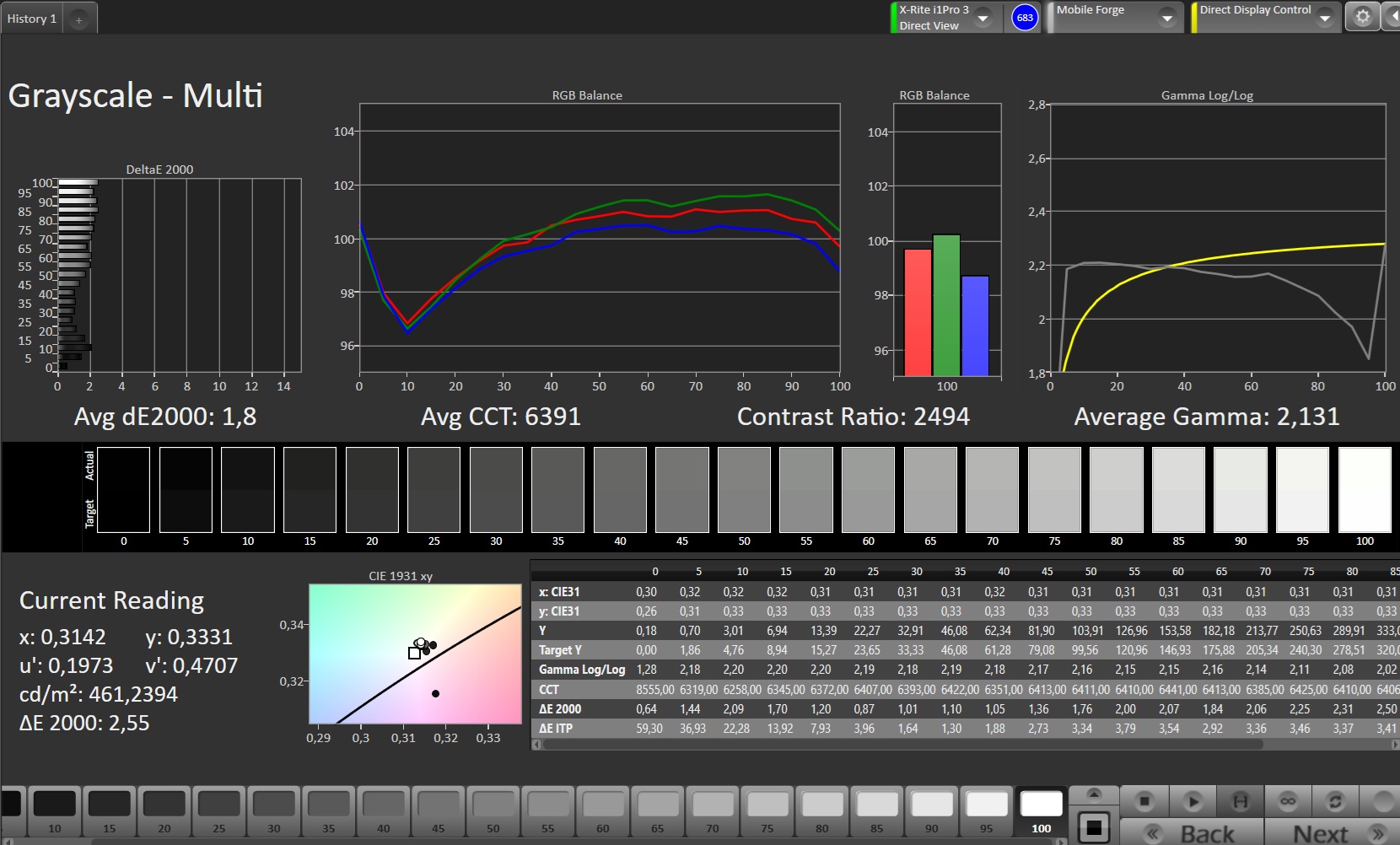
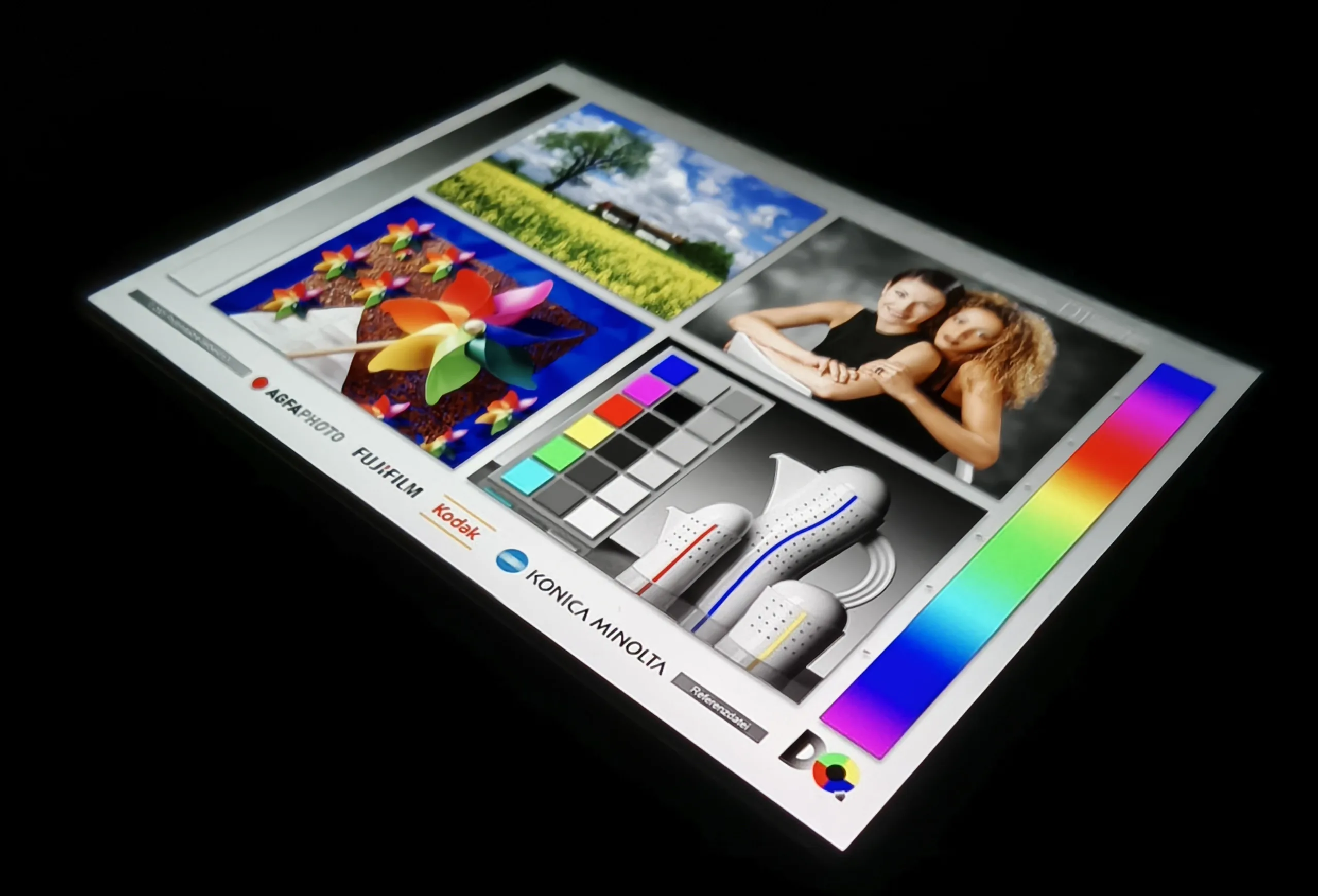
The 6.67-inch display has a resolution of 2,712 × 1,220 pixels, resulting in a pixel density of 446 PPI, which is sufficient for a sharp image.
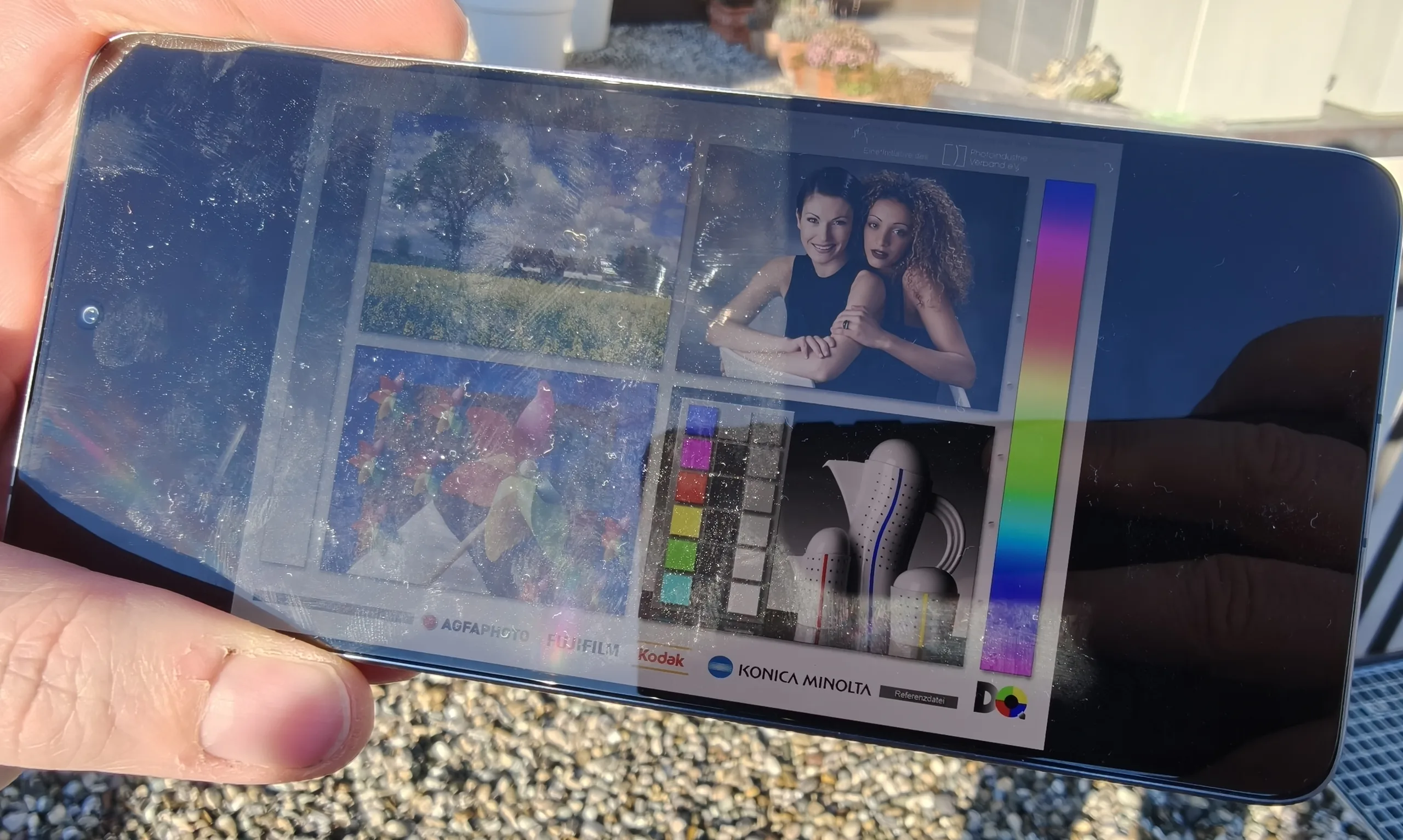
The P-OLED panel can reach up to 1,374 cd/m² in our full-screen brightness test, while peak brightness of over 3,000 cd/m² is possible on smaller areas according to our measurements.
PWM flickering at 180 Hz occurs at very low brightness levels. There is an option called “Flicker Prevention”, but this mainly improves behaviour at slightly higher brightness settings. As a result, users who are sensitive to PWM should try the display in person before purchasing.
| |||||||||||||||||||||||||
Brightness Distribution: 95 %
Center on Battery: 1374 cd/m²
Contrast: ∞:1 (Black: 0 cd/m²)
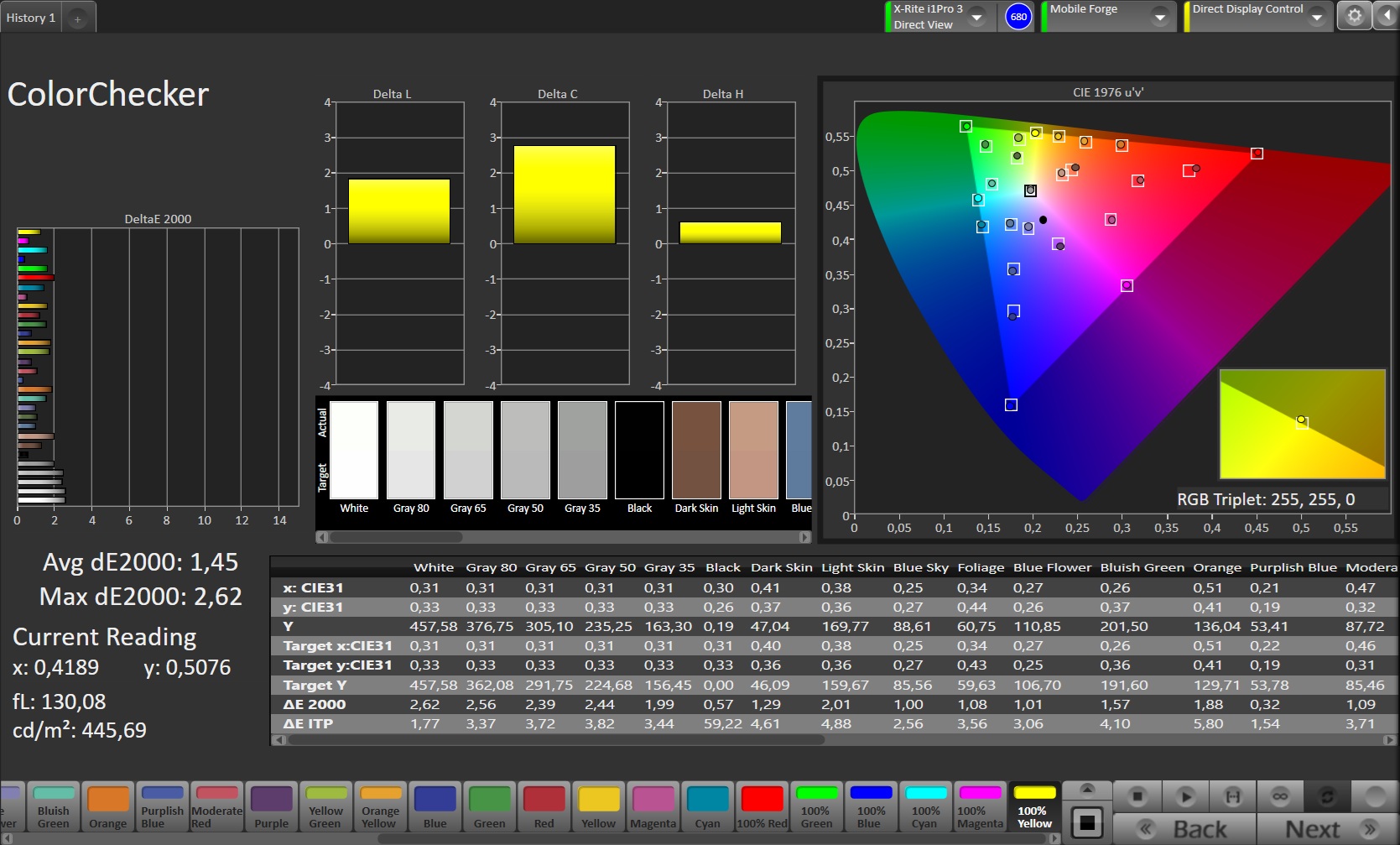
ΔE ColorChecker Calman: 1.45 | ∀{0.5-29.43 Ø4.68}
ΔE Greyscale Calman: 1.8 | ∀{0.09-98 Ø4.93}
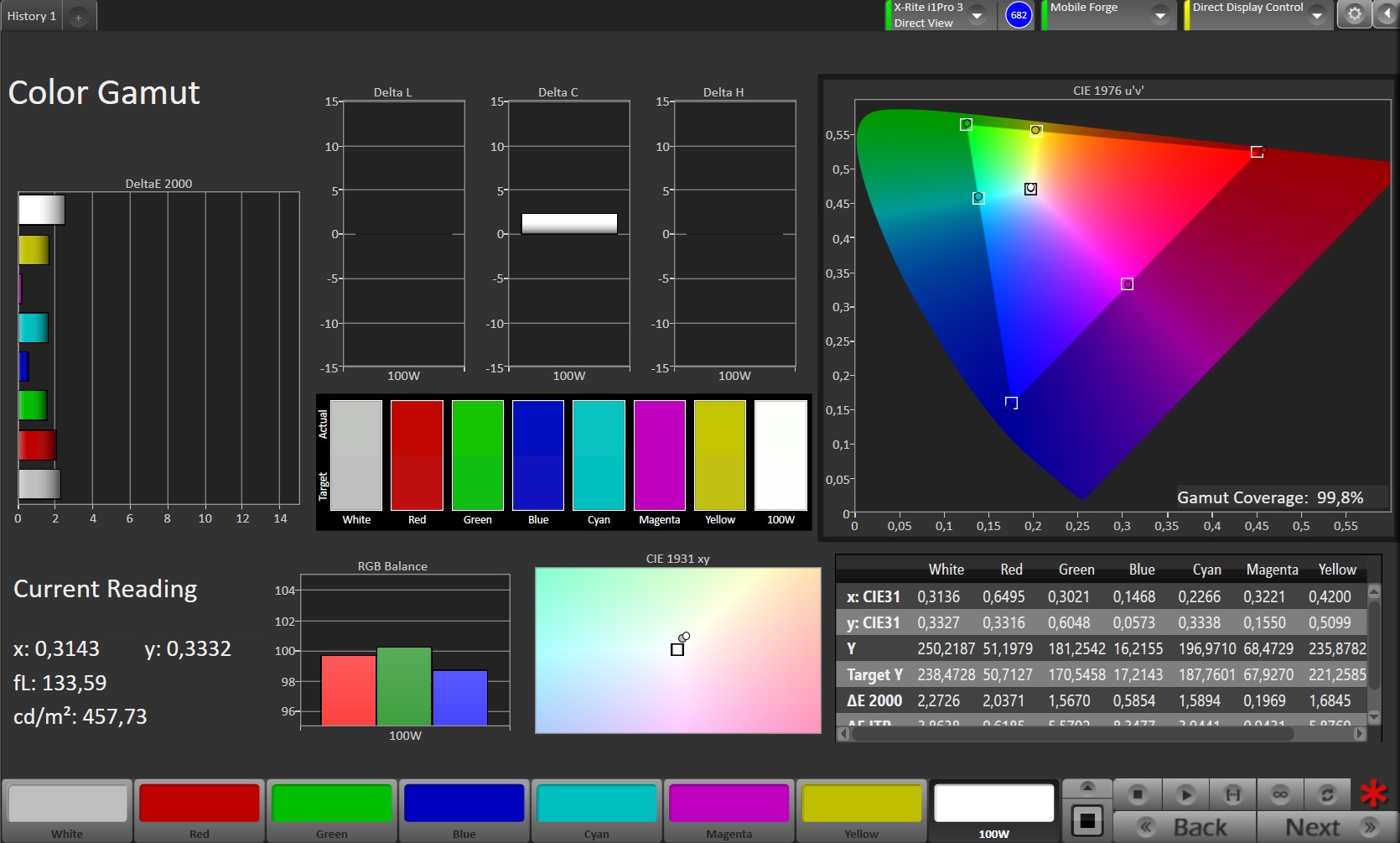
99.8% sRGB (Calman 2D)
Gamma: 2.131
CCT: 6391 K
| Motorola Edge 70 P-OLED, 2712x1220, 6.7" | Motorola Edge 60 P-OLED, 2712x1220, 6.7" | Honor 400 OLED, 2736x1264, 6.6" | Xiaomi 15S Pro 3200x1440, 6.7" | Samsung Galaxy S25 Edge Dynamic AMOLED 2X, 3120x1440, 6.7" | |
|---|---|---|---|---|---|
| Screen | 17% | 29% | -48% | -54% | |
| Brightness middle (cd/m²) | 1374 | 1362 -1% | 1605 17% | 983 -28% | 1399 2% |
| Brightness (cd/m²) | 1333 | 1336 0% | 1607 21% | 949 -29% | 1371 3% |
| Brightness Distribution (%) | 95 | 95 0% | 96 1% | 91 -4% | 94 -1% |
| Black Level * (cd/m²) | |||||
| Colorchecker dE 2000 * | 1.45 | 0.93 36% | 0.7 52% | 2.07 -43% | 3.9 -169% |
| Colorchecker dE 2000 max. * | 2.62 | 1.69 35% | 1.5 43% | 5.24 -100% | 6.3 -140% |
| Greyscale dE 2000 * | 1.8 | 1.2 33% | 1.1 39% | 3.3 -83% | 2.1 -17% |
| Gamma | 2.131 103% | 2.201 100% | 2.24 98% | 2.233 99% | 2.01 109% |
| CCT | 6391 102% | 6585 99% | 6422 101% | 7224 90% | 6506 100% |
* ... smaller is better
Screen Flickering / PWM (Pulse-Width Modulation)
| Screen flickering / PWM detected | 180 Hz Amplitude: 15 % | 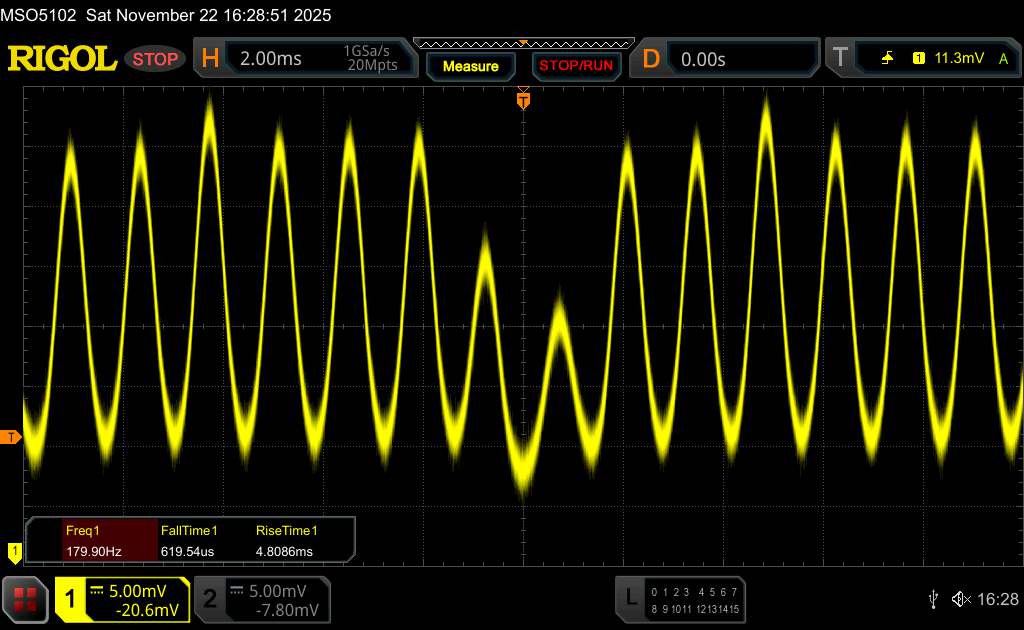 | |
The display backlight flickers at 180 Hz (worst case, e.g., utilizing PWM) . The frequency of 180 Hz is relatively low, so sensitive users will likely notice flickering and experience eyestrain at the stated brightness setting and below. In comparison: 52 % of all tested devices do not use PWM to dim the display. If PWM was detected, an average of 7572 (minimum: 5 - maximum: 343500) Hz was measured. | |||
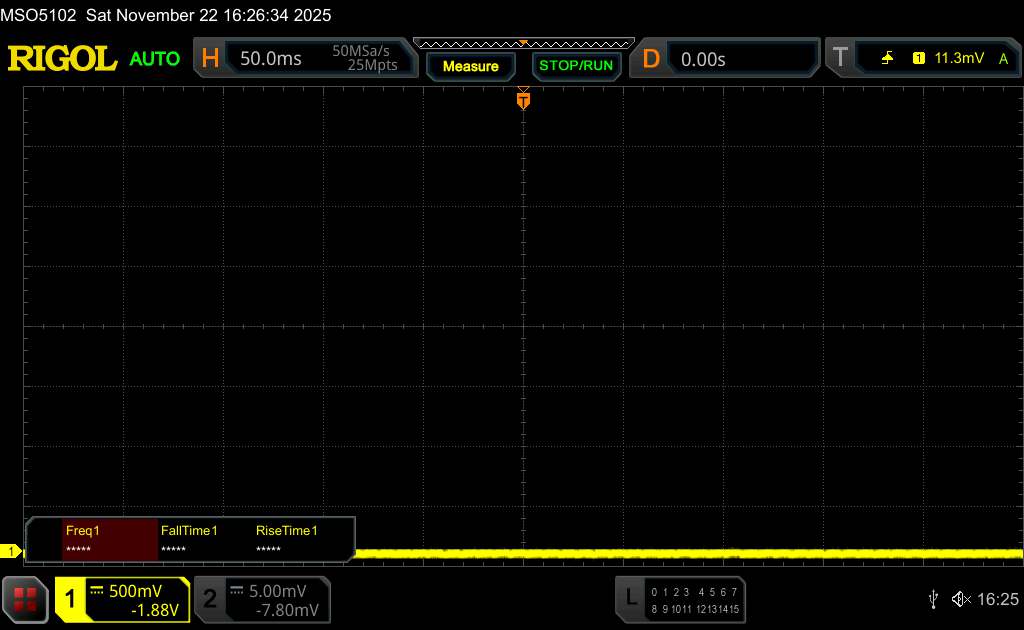
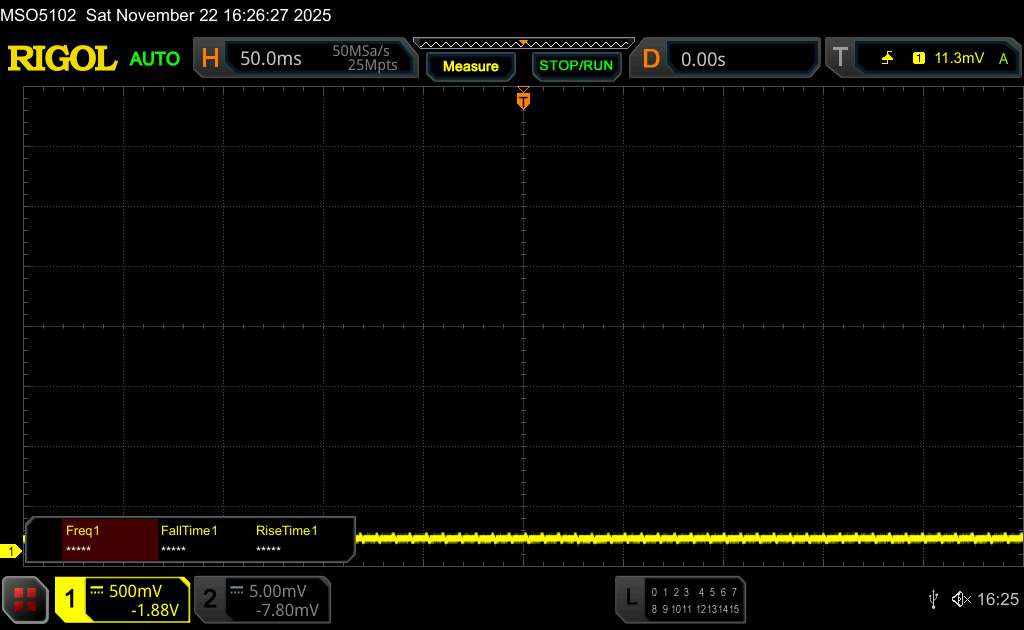
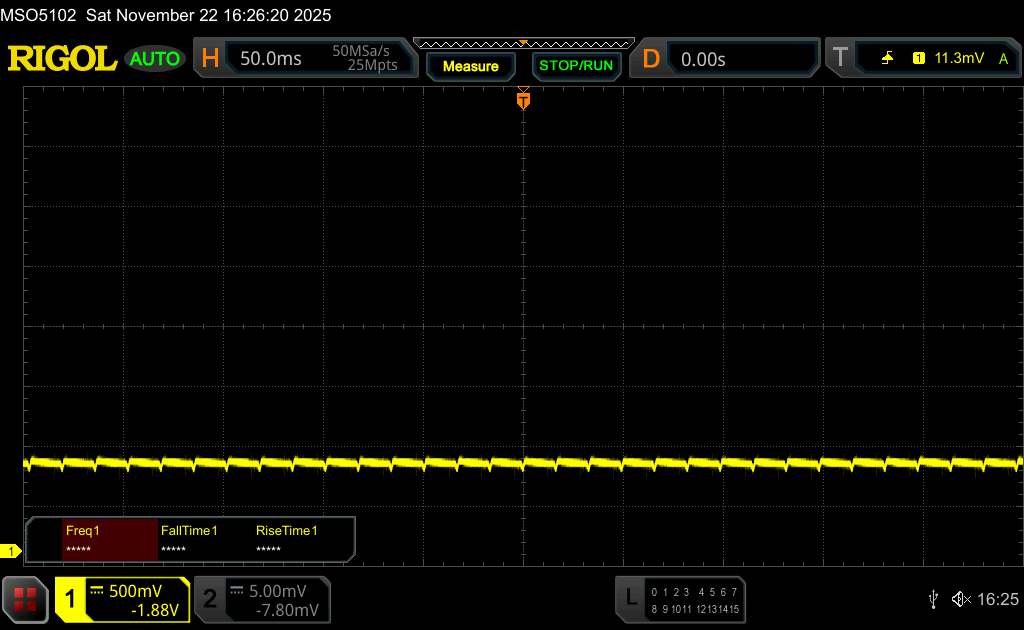
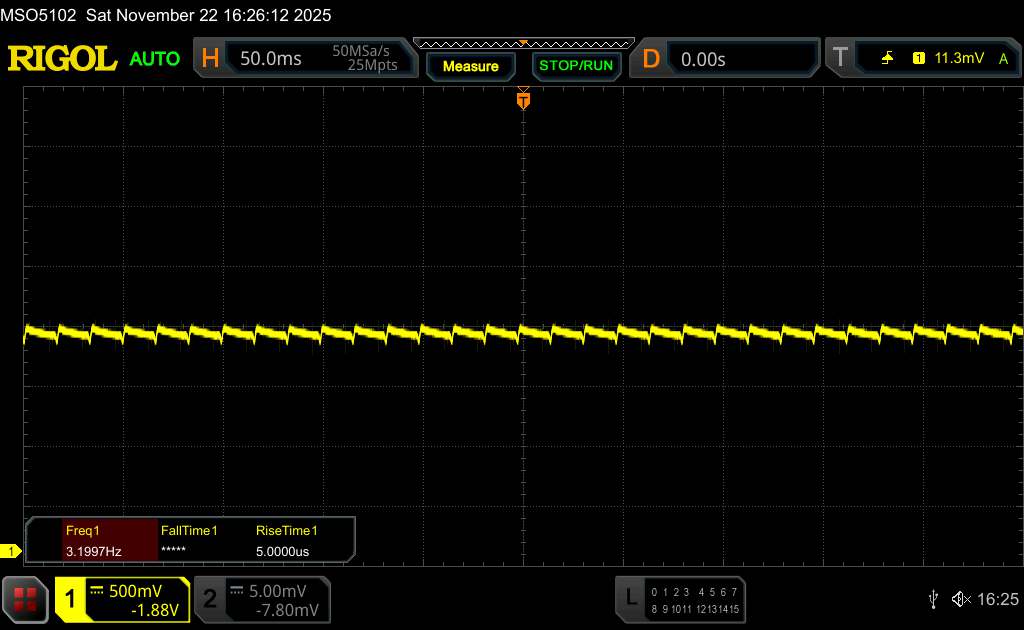
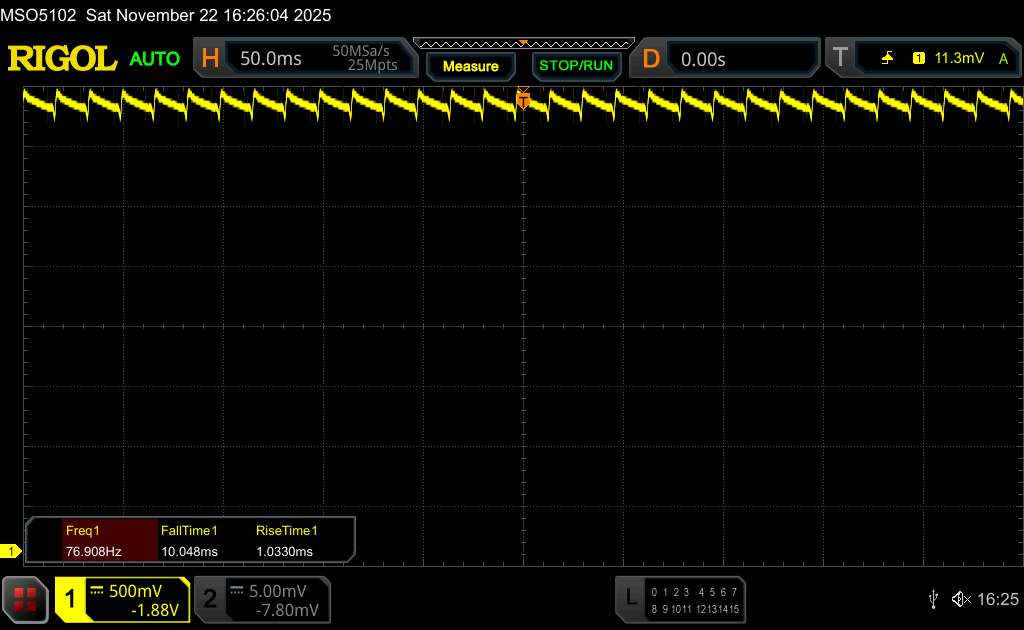
Measurement series with fixed zoom level and different brightness settings (The amplitude curve at minimum brightness looks flat, but this is due to the scaling. The info box shows the enlarged version of the amplitude at minimum brightness)
Display Response Times
| ↔ Response Time Black to White | ||
|---|---|---|
| 4.1 ms ... rise ↗ and fall ↘ combined | ↗ 1.2 ms rise | 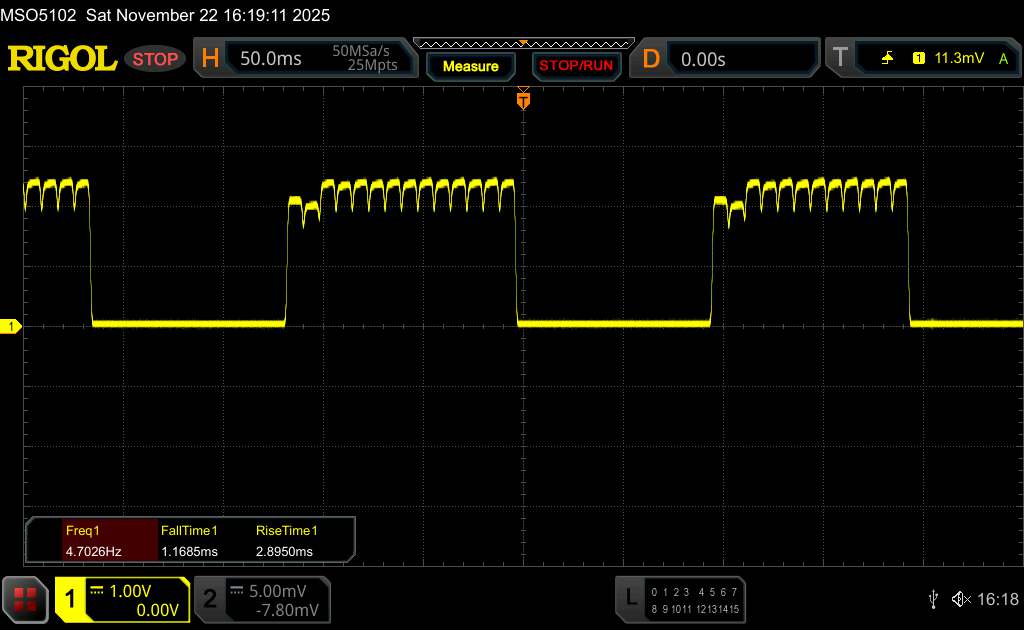 |
| ↘ 2.9 ms fall | ||
| The screen shows very fast response rates in our tests and should be very well suited for fast-paced gaming. In comparison, all tested devices range from 0.1 (minimum) to 240 (maximum) ms. » 18 % of all devices are better. This means that the measured response time is better than the average of all tested devices (19.6 ms). | ||
| ↔ Response Time 50% Grey to 80% Grey | ||
| 3.2 ms ... rise ↗ and fall ↘ combined | ↗ 1.4 ms rise | 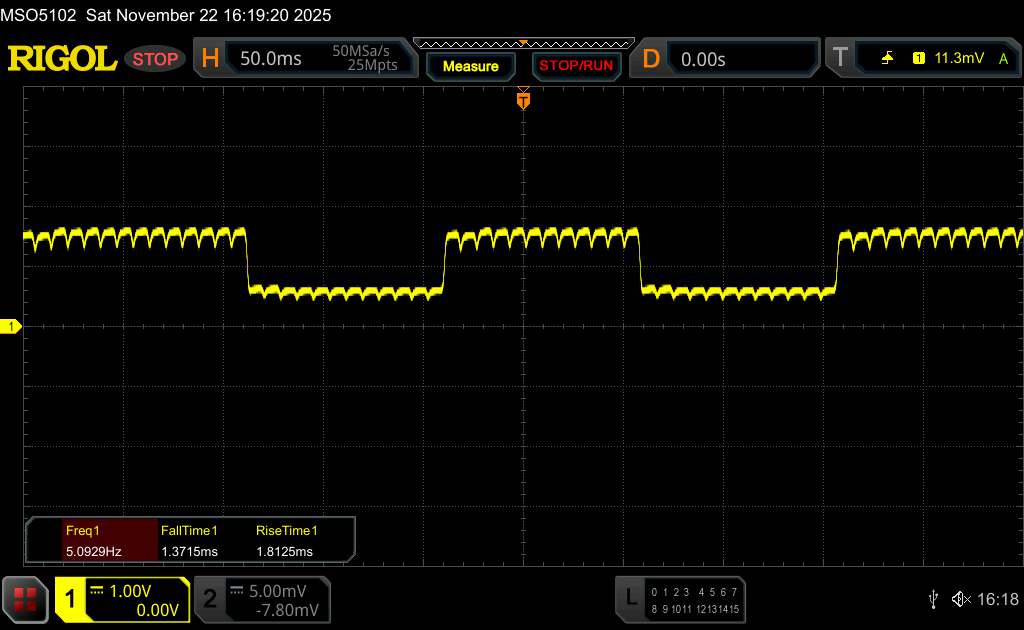 |
| ↘ 1.8 ms fall | ||
| The screen shows very fast response rates in our tests and should be very well suited for fast-paced gaming. In comparison, all tested devices range from 0.13 (minimum) to 636 (maximum) ms. » 14 % of all devices are better. This means that the measured response time is better than the average of all tested devices (30.7 ms). | ||
Performance – little power for the price class
The Qualcomm Snapdragon 7 Gen 4 is a mid-range SoC that feels underpowered for a price point of around 800 euros.
While it is usually capable of delivering a smooth system experience, performance headroom is limited.
| CrossMark - Overall | |
| Samsung Galaxy S25 Edge | |
| Xiaomi 15S Pro | |
| Average of class Smartphone (376 - 2856, n=106, last 2 years) | |
| Average Qualcomm Snapdragon 7 Gen 4 SM7750-AB (1009 - 1095, n=4) | |
| Honor 400 | |
| UL Procyon AI Inference for Android - Overall Score NNAPI | |
| Motorola Edge 60 | |
| Samsung Galaxy S25 Edge | |
| Xiaomi 15S Pro | |
| Average of class Smartphone (2895 - 66164, n=98, last 2 years) | |
| Motorola Edge 70 | |
| Average Qualcomm Snapdragon 7 Gen 4 SM7750-AB (n=1) | |
| AImark - Score v3.x | |
| Motorola Edge 60 | |
| Average of class Smartphone (293 - 231543, n=65, last 2 years) | |
| Xiaomi 15S Pro | |
| Samsung Galaxy S25 Edge | |
In graphics performance, the smartphone clearly outperforms its predecessor. However, given the roughly doubled price, one could reasonably expect more power.
Thanks to the modern chip, almost all mobile games still run quite smoothly on the Edge 70. Advanced features such as ray tracing, however, are not supported.
GFXBench (DX / GLBenchmark) 2.7: T-Rex Onscreen | 1920x1080 T-Rex Offscreen
GFXBench 3.0: on screen Manhattan Onscreen OGL | 1920x1080 1080p Manhattan Offscreen
GFXBench 3.1: on screen Manhattan ES 3.1 Onscreen | 1920x1080 Manhattan ES 3.1 Offscreen
GFXBench: on screen Car Chase Onscreen | 1920x1080 Car Chase Offscreen | on screen Aztec Ruins High Tier Onscreen | 2560x1440 Aztec Ruins High Tier Offscreen | on screen Aztec Ruins Normal Tier Onscreen | 1920x1080 Aztec Ruins Normal Tier Offscreen | 3840x2160 4K Aztec Ruins High Tier Offscreen
| 3DMark / Wild Life Extreme Unlimited | |
| Samsung Galaxy S25 Edge | |
| Xiaomi 15S Pro | |
| Motorola Edge 70 | |
| Honor 400 | |
| Motorola Edge 60 | |
| 3DMark / Wild Life Extreme | |
| Samsung Galaxy S25 Edge | |
| Xiaomi 15S Pro | |
| Motorola Edge 70 | |
| Honor 400 | |
| Motorola Edge 60 | |
| 3DMark / Wild Life Unlimited Score | |
| Samsung Galaxy S25 Edge | |
| Xiaomi 15S Pro | |
| Motorola Edge 70 | |
| Honor 400 | |
| Motorola Edge 60 | |
| 3DMark / Solar Bay Score | |
| Samsung Galaxy S25 Edge | |
| Xiaomi 15S Pro | |
| Motorola Edge 60 | |
| 3DMark / Solar Bay Unlimited Score | |
| Samsung Galaxy S25 Edge | |
| Xiaomi 15S Pro | |
| Motorola Edge 60 | |
| 3DMark / Steel Nomad Light Unlimited Score | |
| Samsung Galaxy S25 Edge | |
| Xiaomi 15S Pro | |
| Motorola Edge 70 | |
| Honor 400 | |
| Motorola Edge 60 | |
| 3DMark / Steel Nomad Light Score | |
| Samsung Galaxy S25 Edge | |
| Xiaomi 15S Pro | |
| Motorola Edge 70 | |
| Honor 400 | |
| Motorola Edge 60 | |
| GFXBench (DX / GLBenchmark) 2.7 / T-Rex Onscreen | |
| Samsung Galaxy S25 Edge | |
| Motorola Edge 70 | |
| Xiaomi 15S Pro | |
| Motorola Edge 60 | |
| GFXBench (DX / GLBenchmark) 2.7 / T-Rex Offscreen | |
| Xiaomi 15S Pro | |
| Samsung Galaxy S25 Edge | |
| Motorola Edge 70 | |
| Motorola Edge 60 | |
| GFXBench 3.0 / Manhattan Onscreen OGL | |
| Samsung Galaxy S25 Edge | |
| Xiaomi 15S Pro | |
| Motorola Edge 70 | |
| Motorola Edge 60 | |
| GFXBench 3.0 / 1080p Manhattan Offscreen | |
| Samsung Galaxy S25 Edge | |
| Xiaomi 15S Pro | |
| Motorola Edge 70 | |
| Motorola Edge 60 | |
| GFXBench 3.1 / Manhattan ES 3.1 Onscreen | |
| Samsung Galaxy S25 Edge | |
| Xiaomi 15S Pro | |
| Motorola Edge 70 | |
| Motorola Edge 60 | |
| GFXBench 3.1 / Manhattan ES 3.1 Offscreen | |
| Samsung Galaxy S25 Edge | |
| Xiaomi 15S Pro | |
| Motorola Edge 70 | |
| Motorola Edge 60 | |
| GFXBench / Car Chase Onscreen | |
| Samsung Galaxy S25 Edge | |
| Xiaomi 15S Pro | |
| Motorola Edge 70 | |
| Motorola Edge 60 | |
| GFXBench / Car Chase Offscreen | |
| Xiaomi 15S Pro | |
| Samsung Galaxy S25 Edge | |
| Motorola Edge 70 | |
| Motorola Edge 60 | |
| GFXBench / Aztec Ruins High Tier Onscreen | |
| Samsung Galaxy S25 Edge | |
| Xiaomi 15S Pro | |
| Motorola Edge 70 | |
| Honor 400 | |
| Motorola Edge 60 | |
| GFXBench / Aztec Ruins High Tier Offscreen | |
| Samsung Galaxy S25 Edge | |
| Xiaomi 15S Pro | |
| Motorola Edge 70 | |
| Honor 400 | |
| Motorola Edge 60 | |
| GFXBench / Aztec Ruins Normal Tier Onscreen | |
| Samsung Galaxy S25 Edge | |
| Xiaomi 15S Pro | |
| Motorola Edge 70 | |
| Honor 400 | |
| Motorola Edge 60 | |
| GFXBench / Aztec Ruins Normal Tier Offscreen | |
| Samsung Galaxy S25 Edge | |
| Xiaomi 15S Pro | |
| Motorola Edge 70 | |
| Honor 400 | |
| Motorola Edge 60 | |
| GFXBench / 4K Aztec Ruins High Tier Offscreen | |
| Samsung Galaxy S25 Edge | |
| Xiaomi 15S Pro | |
| Motorola Edge 70 | |
| Honor 400 | |
| Motorola Edge 60 | |
While there can occasionally be brief delays when loading images on larger websites, web browsing on the Motorola Edge 70 is generally very fast.
| Jetstream 2 - 2.0 Total | |
| Samsung Galaxy S25 Edge (Chrome 137.0.7151.72) | |
| Average Qualcomm Snapdragon 7 Gen 4 SM7750-AB (132.2 - 203, n=3) | |
| Average of class Smartphone (63.9 - 423, n=113, last 2 years) | |
| Motorola Edge 70 (Chrome 142) | |
| Honor 400 (Chrome 137) | |
| Motorola Edge 60 (Chrome 136.0.7103.125) | |
| Speedometer 2.0 - Result 2.0 | |
| Samsung Galaxy S25 Edge (Chrome 137.0.7151.72) | |
| Average of class Smartphone (49.3 - 733, n=72, last 2 years) | |
| Motorola Edge 70 (Chrome 142) | |
| Average Qualcomm Snapdragon 7 Gen 4 SM7750-AB (n=1) | |
| Motorola Edge 60 (Chrome 136.0.7103.125) | |
| Speedometer 3 - Score 3.0 | |
| Samsung Galaxy S25 Edge (Chrome 137.0.7151.72) | |
| Xiaomi 15S Pro | |
| Average of class Smartphone (3.06 - 56.5, n=80, last 2 years) | |
| Motorola Edge 70 (Chrome 142) | |
| Average Qualcomm Snapdragon 7 Gen 4 SM7750-AB (n=1) | |
| Motorola Edge 60 (Chrome 136.0.7103.125) | |
| WebXPRT 4 - Overall | |
| Samsung Galaxy S25 Edge (Chrome 137.0.7151.72) | |
| Xiaomi 15S Pro (Chrome 137) | |
| Average of class Smartphone (56 - 278, n=88, last 2 years) | |
| Motorola Edge 60 (Chrome 136.0.7103.125) | |
| Motorola Edge 70 (Chrome 142) | |
| Average Qualcomm Snapdragon 7 Gen 4 SM7750-AB (n=1) | |
| Octane V2 - Total Score | |
| Samsung Galaxy S25 Edge (Chrome 137.0.7151.72) | |
| Xiaomi 15S Pro | |
| Average of class Smartphone (6015 - 160221, n=129, last 2 years) | |
| Motorola Edge 60 (Chrome 136.0.7103.125) | |
| Motorola Edge 70 (Chrome 142) | |
| Average Qualcomm Snapdragon 7 Gen 4 SM7750-AB (n=1) | |
| Honor 400 (Chrome 137) | |
| Mozilla Kraken 1.1 - Total | |
| Motorola Edge 60 (Chrome 136.0.7103.125) | |
| Motorola Edge 70 (Chrome 142) | |
| Average of class Smartphone (216 - 2718, n=118, last 2 years) | |
| Average Qualcomm Snapdragon 7 Gen 4 SM7750-AB (746 - 897, n=2) | |
| Xiaomi 15S Pro (Chromne 137) | |
| Samsung Galaxy S25 Edge (Chrome 137.0.7151.72) | |
* ... smaller is better
With UFS 3.1 storage, the Edge 70 cannot quite keep up with true high-end smartphones. Even so, data transfer speeds are fast, and load times remain reasonably short.
| Motorola Edge 70 | Motorola Edge 60 | Honor 400 | Xiaomi 15S Pro | Samsung Galaxy S25 Edge | Average 512 GB UFS 3.1 Flash | Average of class Smartphone | |
|---|---|---|---|---|---|---|---|
| AndroBench 3-5 | -37% | -2% | 71% | 26% | -13% | 3% | |
| Sequential Read 256KB (MB/s) | 2021.5 | 970.1 -52% | 1962.46 -3% | 3786.34 87% | 3907.51 93% | 1878 ? -7% | 2258 ? 12% |
| Sequential Write 256KB (MB/s) | 2028.2 | 791.35 -61% | 1812.5 -11% | 3649.81 80% | 2285.66 13% | 1406 ? -31% | 1973 ? -3% |
| Random Read 4KB (MB/s) | 299 | 258.29 -14% | 333.34 11% | 422.84 41% | 431.86 44% | 291 ? -3% | 318 ? 6% |
| Random Write 4KB (MB/s) | 387.3 | 305.41 -21% | 377.57 -3% | 677.95 75% | 210.99 -46% | 345 ? -11% | 370 ? -4% |
Emissions – can get hot
Temperature
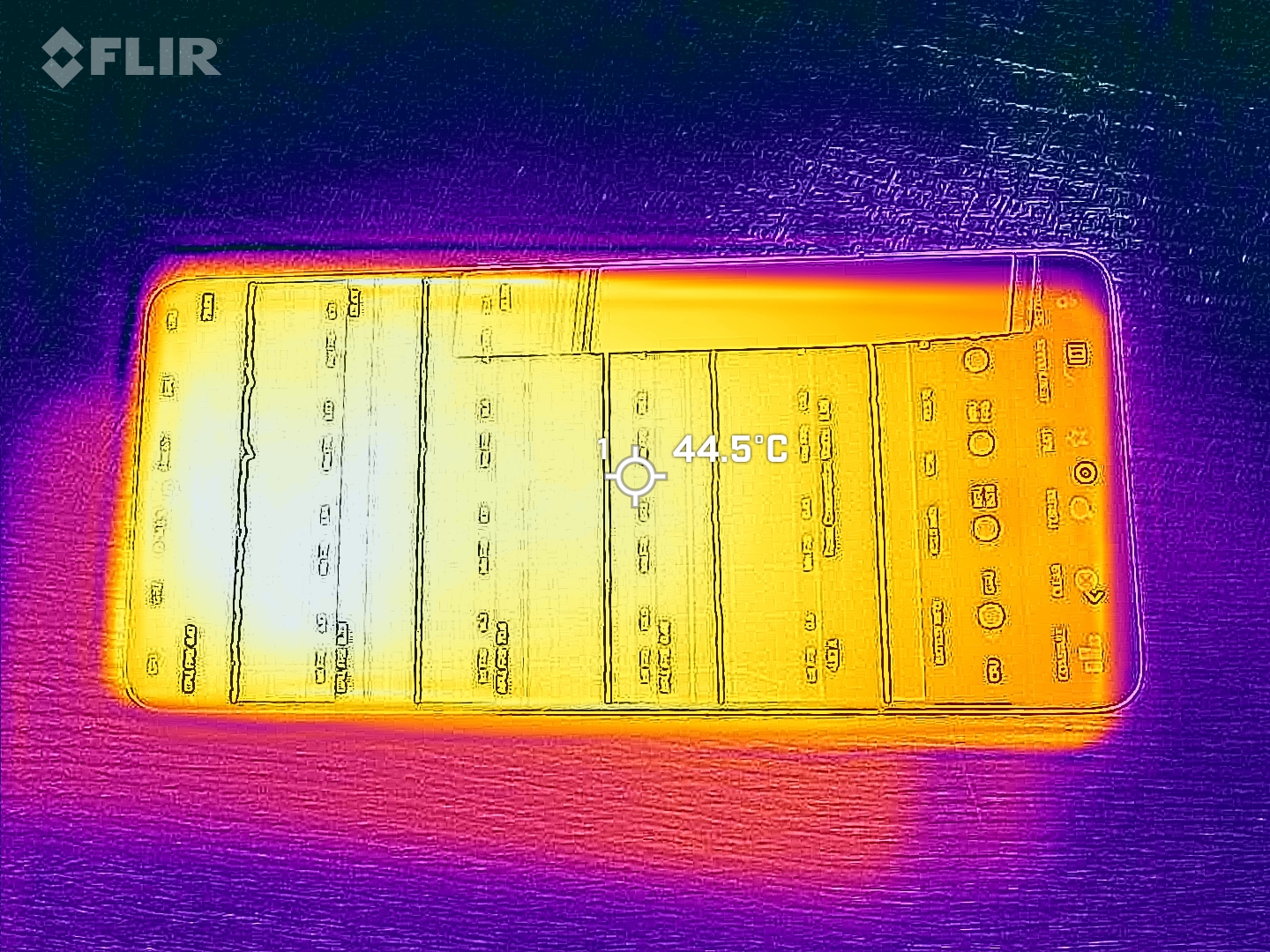
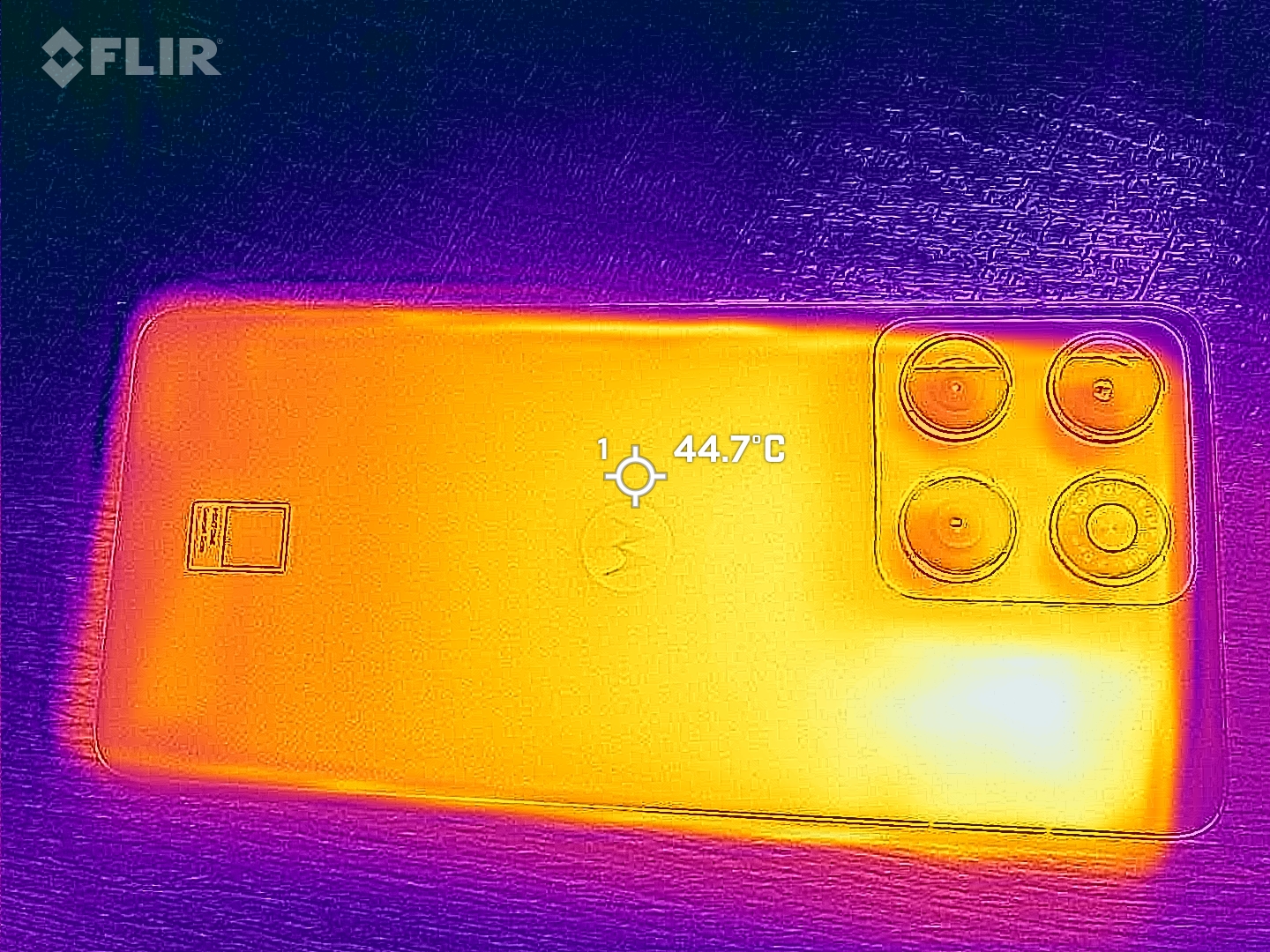
Surface temperatures become clearly noticeable after prolonged load, reaching up to 49.5 °C in our measurements. This is quite high, especially considering that testing was carried out at room temperature.
Performance remains largely unaffected for an extended period. Only towards the end of the 3DMark stress tests does a significant drop in performance become apparent, reaching up to around 30 percent.
(-) The maximum temperature on the upper side is 46.5 °C / 116 F, compared to the average of 35.4 °C / 96 F, ranging from 21.9 to 247 °C for the class Smartphone.
(-) The bottom heats up to a maximum of 49.5 °C / 121 F, compared to the average of 34.1 °C / 93 F
(+) In idle usage, the average temperature for the upper side is 25.1 °C / 77 F, compared to the device average of 33 °C / 91 F.
3DMark Stress Tests
| 3DMark | |
| Wild Life Stress Test Stability | |
| Honor 400 | |
| Motorola Edge 60 | |
| Xiaomi 15S Pro | |
| Motorola Edge 70 | |
| Samsung Galaxy S25 Edge | |
| Wild Life Extreme Stress Test | |
| Motorola Edge 60 | |
| Xiaomi 15S Pro | |
| Motorola Edge 70 | |
| Samsung Galaxy S25 Edge | |
| Solar Bay Stress Test Stability | |
| Xiaomi 15S Pro | |
| Samsung Galaxy S25 Edge | |
| Steel Nomad Light Stress Test Stability | |
| Honor 400 | |
| Motorola Edge 60 | |
| Motorola Edge 70 | |
| Xiaomi 15S Pro | |
| Samsung Galaxy S25 Edge | |
Speaker
The speaker is located on the lower edge of the phone and is supported by the earpiece to create light stereo effects. At maximum volume, however, it sounds somewhat strained and can no longer reproduce music with full clarity.
The selection of Bluetooth audio codecs is broad, allowing external headphones or speakers to be connected without any issues.
Motorola Edge 70 audio analysis
(+) | speakers can play relatively loud (82.5 dB)
Bass 100 - 315 Hz
(-) | nearly no bass - on average 20.7% lower than median
(±) | linearity of bass is average (12.4% delta to prev. frequency)
Mids 400 - 2000 Hz
(+) | balanced mids - only 2.6% away from median
(+) | mids are linear (4.5% delta to prev. frequency)
Highs 2 - 16 kHz
(±) | higher highs - on average 7.7% higher than median
(±) | linearity of highs is average (11.4% delta to prev. frequency)
Overall 100 - 16.000 Hz
(±) | linearity of overall sound is average (17.4% difference to median)
Compared to same class
» 13% of all tested devices in this class were better, 8% similar, 79% worse
» The best had a delta of 11%, average was 34%, worst was 136%
Compared to all devices tested
» 34% of all tested devices were better, 8% similar, 58% worse
» The best had a delta of 4%, average was 23%, worst was 136%
Samsung Galaxy S25 Edge audio analysis
(+) | speakers can play relatively loud (90.5 dB)
Bass 100 - 315 Hz
(-) | nearly no bass - on average 23.3% lower than median
(+) | bass is linear (6.9% delta to prev. frequency)
Mids 400 - 2000 Hz
(±) | higher mids - on average 5.7% higher than median
(+) | mids are linear (4.8% delta to prev. frequency)
Highs 2 - 16 kHz
(±) | higher highs - on average 5.7% higher than median
(+) | highs are linear (4.1% delta to prev. frequency)
Overall 100 - 16.000 Hz
(±) | linearity of overall sound is average (18.7% difference to median)
Compared to same class
» 22% of all tested devices in this class were better, 9% similar, 68% worse
» The best had a delta of 11%, average was 34%, worst was 136%
Compared to all devices tested
» 43% of all tested devices were better, 8% similar, 49% worse
» The best had a delta of 4%, average was 23%, worst was 136%
Battery life – good endurance despite the slim body
Power consumption
In idle mode, the Edge 70 proves to be slightly more power-hungry than comparable smartphones, but overall power consumption remains within reasonable limits.
The phone can be charged at up to 67 watts, which results in charging times of well under an hour when using a compatible charger. Wireless charging is also supported, at up to 15 watts.
| Off / Standby |   0.1 / 0.2 Watt 0.1 / 0.2 Watt |
| Idle |  1.1 / 1.4 / 1.9 Watt 1.1 / 1.4 / 1.9 Watt |
| Load |
5.1 / 9.2 Watt |
    
| |
Key:
min: ,
med: ,
max: Metrahit Energy | |
| Motorola Edge 70 4800 mAh | Motorola Edge 60 5200 mAh | Honor 400 5300 mAh | Xiaomi 15S Pro 6100 mAh | Samsung Galaxy S25 Edge 3900 mAh | Average Qualcomm Snapdragon 7 Gen 4 SM7750-AB | Average of class Smartphone | |
|---|---|---|---|---|---|---|---|
| Power Consumption | 1% | 35% | 3% | -33% | -7% | -4% | |
| Idle Minimum * (Watt) | 1.1 | 1 9% | 0.46 58% | 0.8 27% | 0.59 46% | 1.117 ? -2% | 0.908 ? 17% |
| Idle Average * (Watt) | 1.4 | 1.5 -7% | 1.12 20% | 1.4 -0% | 1.12 20% | 1.82 ? -30% | 1.482 ? -6% |
| Idle Maximum * (Watt) | 1.9 | 1.9 -0% | 1.36 28% | 1.7 11% | 1.19 37% | 2 ? -5% | 1.685 ? 11% |
| Load Average * (Watt) | 5.1 | 5.6 -10% | 6.3 -24% | 14.72 -189% | 5.1 ? -0% | 6.64 ? -30% | |
| Load Maximum * (Watt) | 9.2 | 8 13% | 9.1 1% | 16.57 -80% | 9.2 ? -0% | 10.5 ? -14% |
* ... smaller is better
Power consumption: Geekbench (150 cd/m²)
Power consumption: GFXbench (150 cd/m²)
Battery life
The silicon–carbon battery has a capacity of 4,800 mAh, which is sufficiently large.
In our realistic Wi-Fi browsing test, the Edge 70 achieves a runtime of 19 hours and 34 minutes. This allows for comfortable everyday use and should get most users through a full day without needing to recharge.
| Motorola Edge 70 4800 mAh | Motorola Edge 60 5200 mAh | Honor 400 5300 mAh | Xiaomi 15S Pro 6100 mAh | Samsung Galaxy S25 Edge 3900 mAh | |
|---|---|---|---|---|---|
| Battery runtime | 6% | 2% | 30% | -3% | |
| Reader / Idle (h) | 38.5 | 38.8 1% | 43.8 14% | ||
| WiFi v1.3 (h) | 19.6 | 20.3 4% | 20 2% | 25.4 30% | 17.9 -9% |
| Load (h) | 4.2 | 4.8 14% | 3.6 -14% | ||
| H.264 (h) | 23.2 | 25.7 |
Notebookcheck overall rating
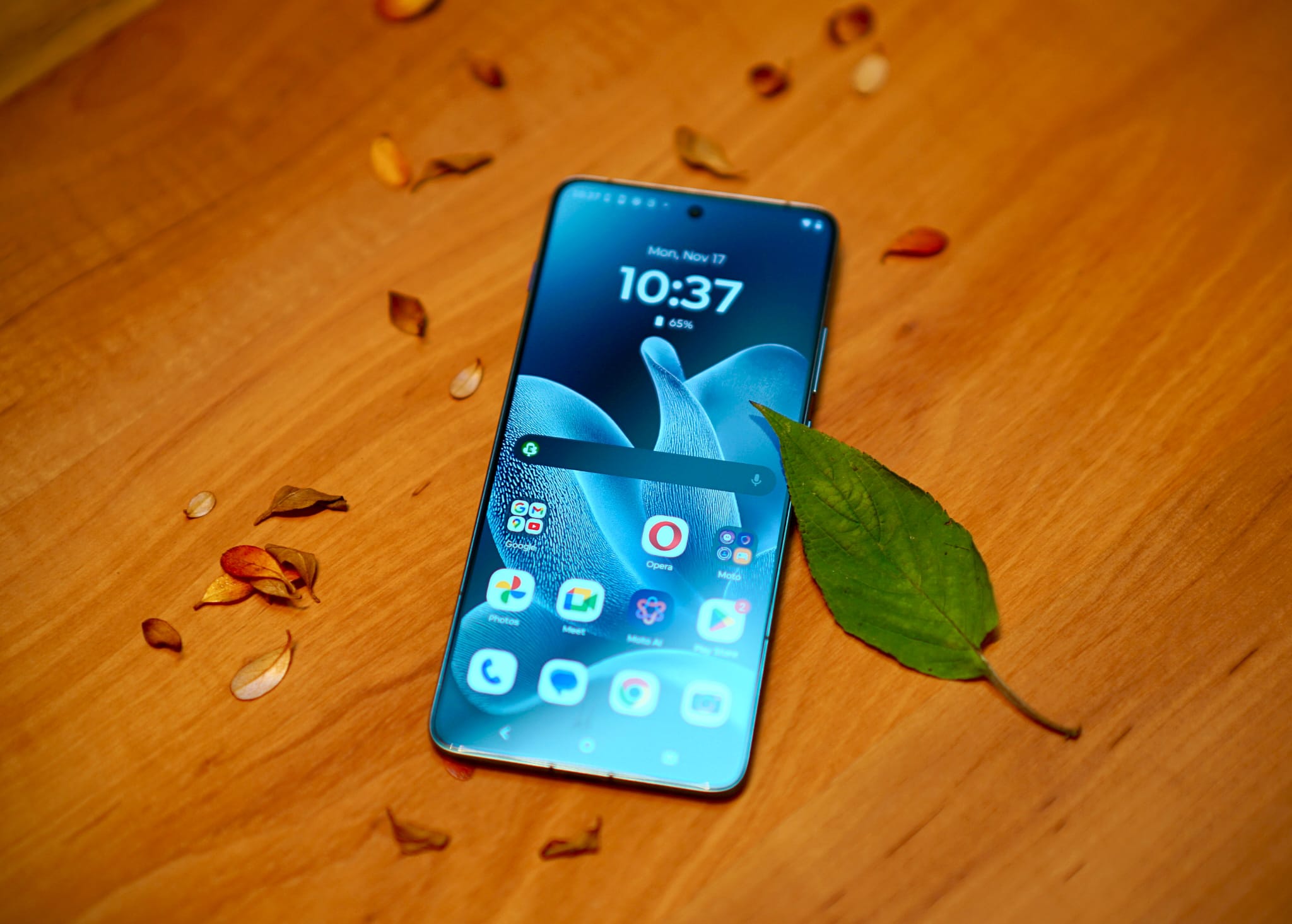
The Motorola Edge 70 is an impressively thin and lightweight smartphone.
However, this comes with several compromises and a comparatively high price.
Motorola Edge 70
- 12/10/2025 v8
Florian Schmitt
 Total Sustainability Score:
 Possible alternatives at a glance
Image | Model / Review | Price | Weight | Drive | Display |
|---|---|---|---|---|---|
1. 81.3%  | Motorola Edge 70 Qualcomm Snapdragon 7 Gen 4 SM7750-AB ⎘ Qualcomm Adreno 722 ⎘ 12 GB Memory, 512 GB UFS 3.1 | List Price: 799€ | 159 g | 512 GB UFS 3.1 Flash | 6.67" 2712x1220 446 PPI P-OLED |
2. 79.2%  | Motorola Edge 60 MediaTek Dimensity 7300 ⎘ ARM Mali-G615 MP2 ⎘ 12 GB Memory, 512 GB UFS 2.2 | List Price: 429.99 Euro | 179 g | 512 GB UFS 2.2 Flash | 6.67" 2712x1220 446 PPI P-OLED |
3. 80.5%  | Honor 400 Qualcomm Snapdragon 7 Gen 3 ⎘ Qualcomm Adreno 720 ⎘ 8 GB Memory, 512 GB UFS 3.1 | List Price: 550€ | 184 g | 512 GB UFS 3.1 Flash | 6.55" 2736x1264 460 PPI OLED |
4. 89.8%  | Xiaomi 15S Pro Xiaomi Xring O1 ⎘ ARM Immortalis-G925 MC16 ⎘ 16 GB Memory, 512 GB UFS 4.x | Amazon: 1. $779.50 XIAOMI 17T PRO Ai 5G (Compat... 2. $430.00 XIAOMI Redmi Note 15 Pro+ Pl... 3. $312.79 XIAOMI Redmi Note 15 Pro 5G ... List Price: 830€ | 216 g | 512 GB UFS 4.1 Flash | 6.73" 3200x1440 521 PPI |
5. 88.3%  | Samsung Galaxy S25 Edge Qualcomm Snapdragon 8 Elite for Galaxy ⎘ Qualcomm Adreno 830 ⎘ 12 GB Memory, 256 GB UFS 4.x | List Price: 1249€ | 163 g | 256 GB UFS 4.0 Flash | 6.70" 3120x1440 395 PPI Dynamic AMOLED 2X |
Transparency
The selection of devices to be reviewed is made by our editorial team. The test sample was provided to the author as a loan by the manufacturer or retailer for the purpose of this review. The lender had no influence on this review, nor did the manufacturer receive a copy of this review before publication. There was no obligation to publish this review. As an independent media company, Notebookcheck is not subjected to the authority of manufacturers, retailers or publishers.
This is how Notebookcheck is testing
Every year, Notebookcheck independently reviews hundreds of laptops and smartphones using standardized procedures to ensure that all results are comparable. We have continuously developed our test methods for around 20 years and set industry standards in the process. In our test labs, high-quality measuring equipment is utilized by experienced technicians and editors. These tests involve a multi-stage validation process. Our complex rating system is based on hundreds of well-founded measurements and benchmarks, which maintains objectivity. Further information on our test methods can be found here.
 Add as a preferred source on Google


