




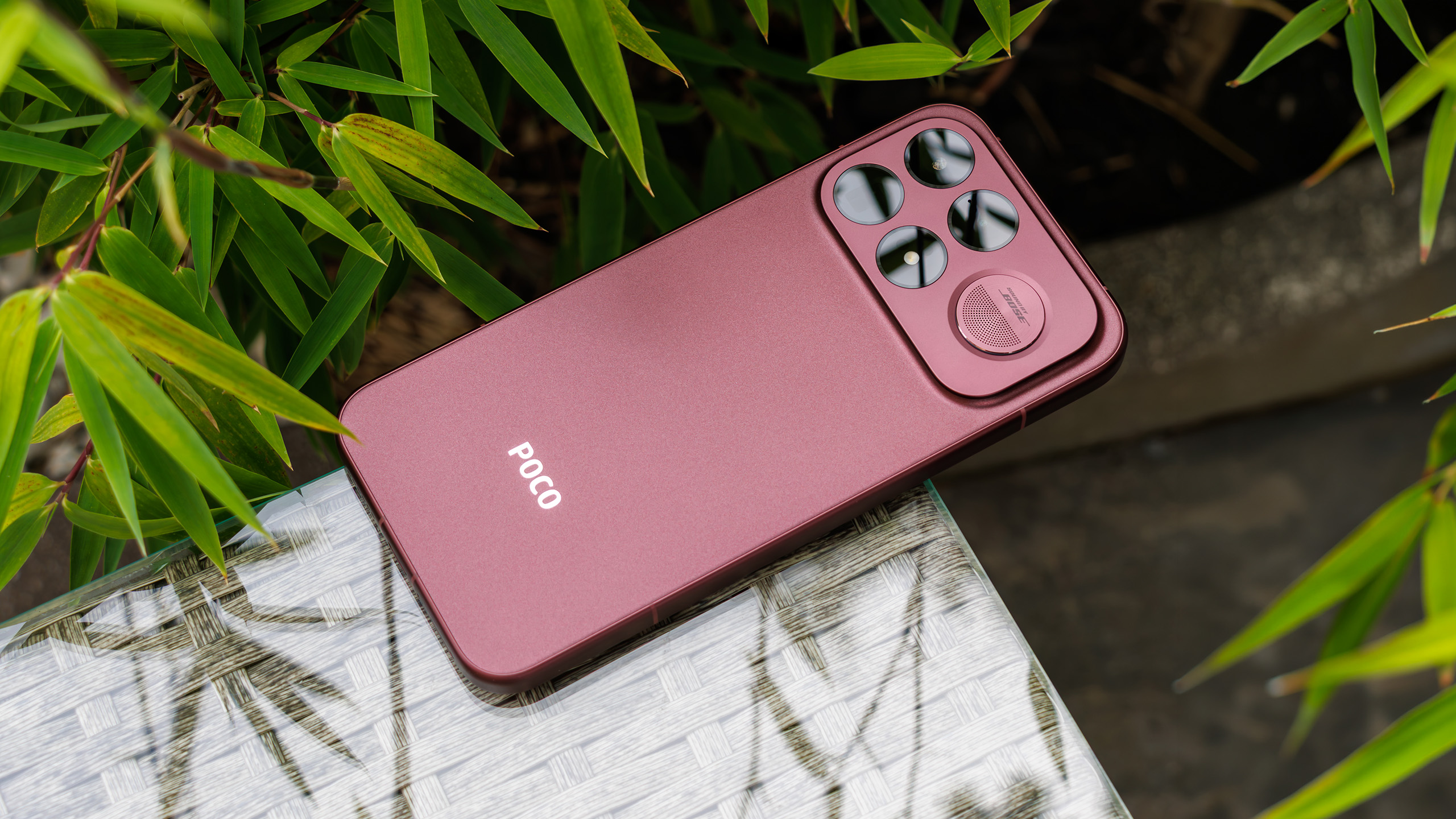
Verdict on the Poco F9 Ultra
The Poco F9 Ultra stands out with exceptional battery life, excellent performance, an impressive display, and a sound system that is remarkably powerful for a smartphone. Its feature set and build quality are also solid overall.
However, Poco achieves this level of sustained performance at the cost of high temperatures. More significant drawbacks include the regression in the main camera, the lack of an LTPO panel, and the limited software update commitment. Given the substantial price increase, these compromises are harder to overlook.
The F9 Ultra is therefore a strong overall package, but it is not an outright improvement over its predecessor.
Pros
Cons
Price and availability

- $797.99XIAOMI Poco F8 Ultra 5G Ai (Compatible with Tmobile Mint Tello & Global) (256GB + 12GB) Ai 2K 6.9" Bose Sound 50MP Gamers Phone NFC Dual sim Unlocked Model 2510DPC44G (Black)
- $849.99XIAOMI Poco F8 Ultra 5G Ai (Compatible with Tmobile Mint Tello & Global) (256GB + 12GB) Ai 2K 6.9" Bose Sound 50MP Gamers Phone NFC Dual sim Unlocked Model 25102PCBEG (Denim Blue)
- $349.99XIAOMI Poco X8 PRO 5G Ai (Compatible with Tmobile Mint Tello & Global) (256GB + 8GB) 6.59" 50MP Gamers Phone NFC Dual sim Unlocked Model 2511FPC34G Liberado (Black)
Table of Contents
- Verdict on the Poco F9 Ultra
- Xiaomi Poco F9 Ultra specifications
- Case - The Poco F9 Ultra has an IP rating
- Connectivity - Few missing features
- Software - Clean HyperOS 3.0 with four years of updates
- Connectivity and GNSS – Poco Flagship still lacks 6-GHz Wi-Fi
- Phone features and voice quality
- Cameras – Smaller main sensor with more megapixels
- Accessories and warranty – Poco includes a case again
- Input devices and operation – Ultrasonic fingerprint sensor on the F9 Ultra
- Display – Up to 10,000 cd/m², but…
- Performance – Poco again relies on the same SoC
- Emissions – Poco again opts for Bose 2.1 sound
- Runtimes - Huge 8,050-mAh battery
- Notebookcheck overall rating
- A comparison of possible alternatives
Poco is bringing its flagship lineup forward with the launch of the F9 Ultra. Compared to the F8 Ultra, the biggest upgrades are the battery and display: Battery capacity has increased from 6,500 to a whopping 8,050 mAh, while the maximum refresh rate has risen from 120 to 185 Hz.
The phone also features a revamped sound system and a new 200-MP main camera. However, the latter is not an improvement in every respect, as its sensor is smaller than that of its predecessor. Our review will reveal whether more megapixels really translate into better image quality in this case.
Poco has also raised its smartphone prices significantly. The entry-level model with 12 GB of RAM and 256 GB of storage has an MSRP of $799 (F8 Ultra: $729, +10%), while the 16 GB / 512 GB model costs $949 (F8 Ultra: $799, +19%). New to the lineup is a 16 GB / 1 TB version, which costs $1,199.
Xiaomi Poco F9 Ultra specifications
Case - The Poco F9 Ultra has an IP rating
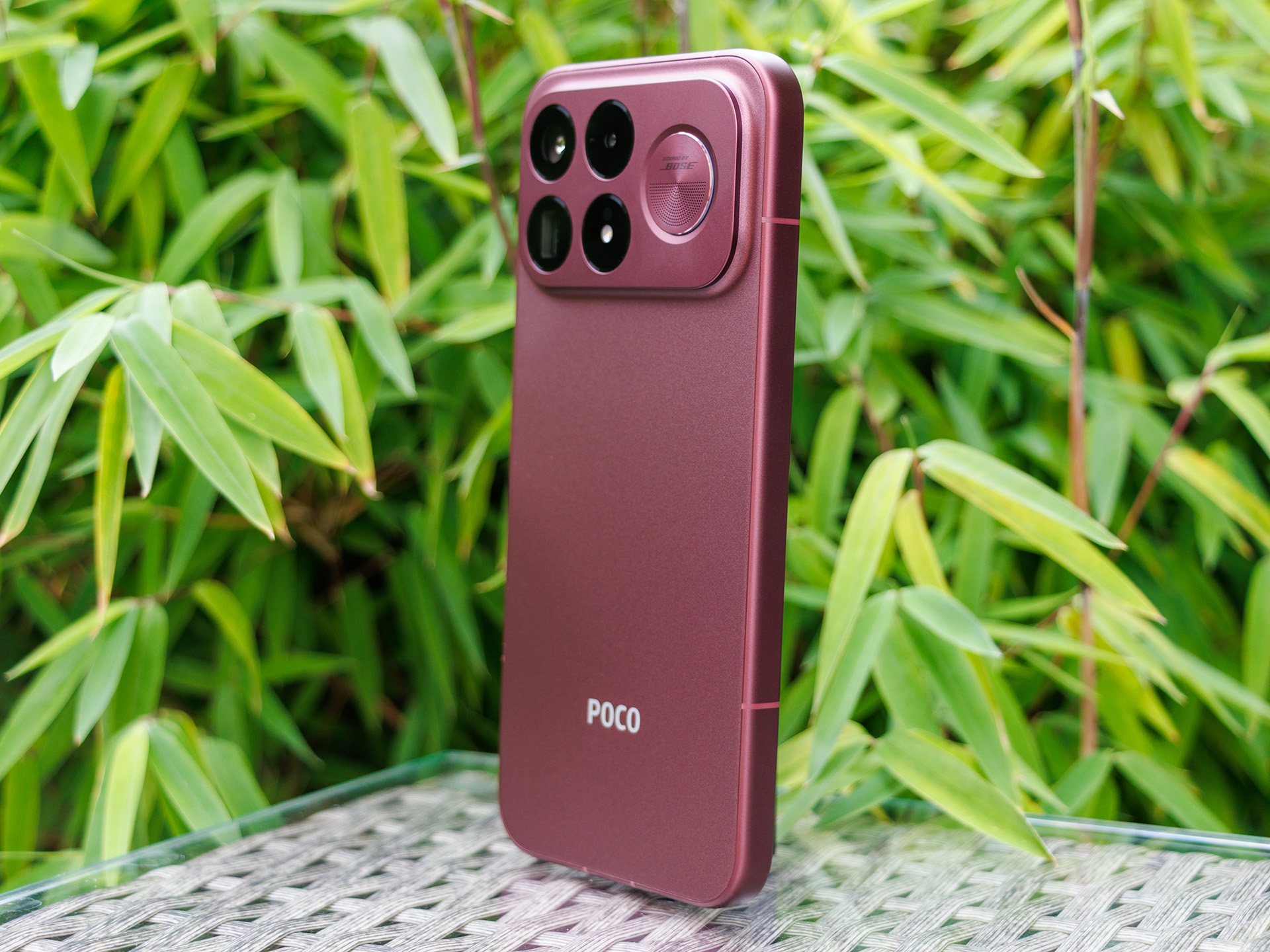
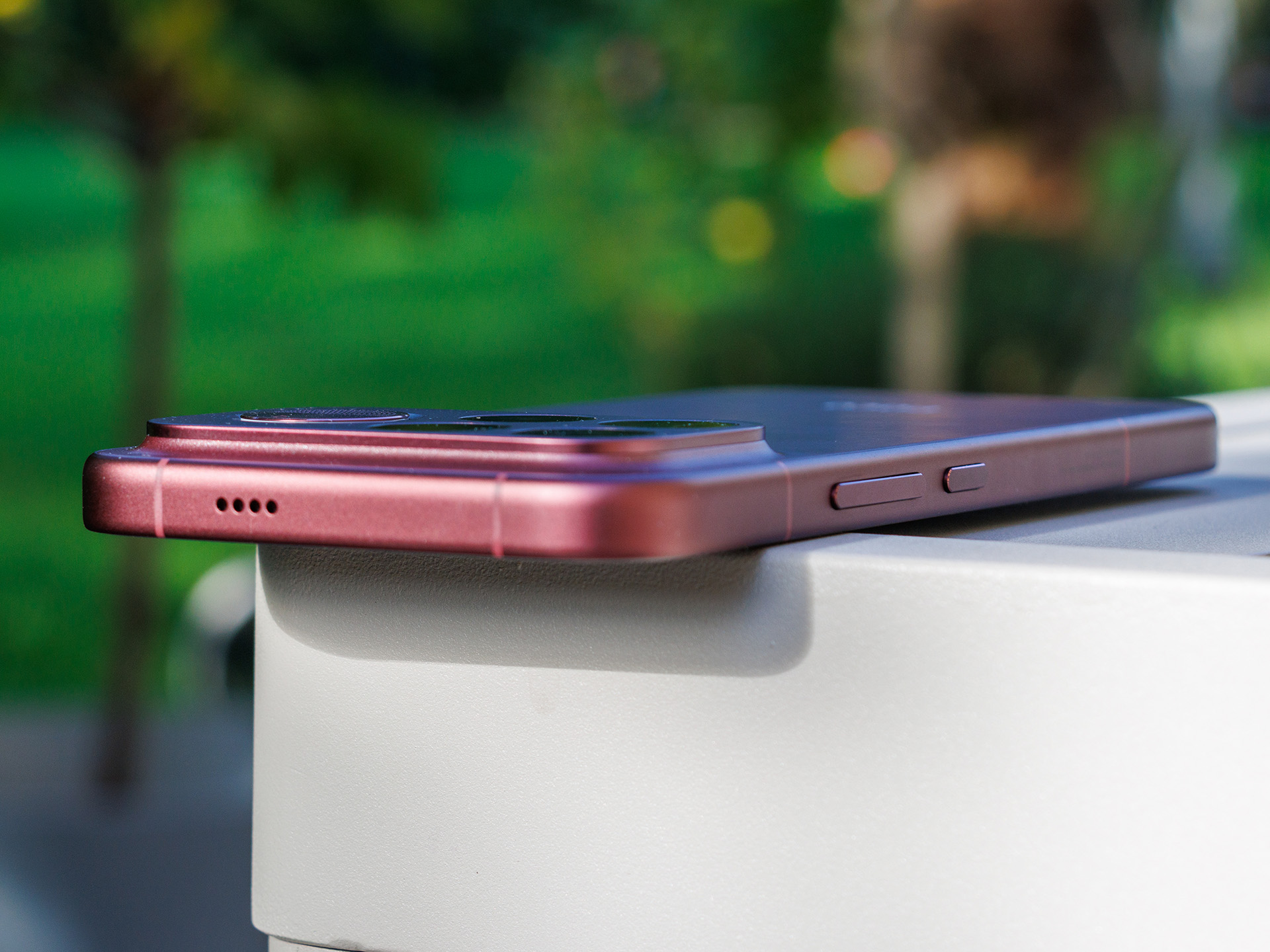
The Poco F9 Ultra is available in Black and Dark Cherry. Weighing 8.29 oz, it is certainly no lightweight. Xiaomi lists the phone as 0.344 inches thick, although we measured just 0.337 inches. Including the camera module, the maximum thickness reaches 0.498 inches.
Build quality is impressive, with tight and uniform gaps, a comfortable in-hand feel, and surfaces that effectively resist fingerprints. During our twisting tests, the Poco F9 Ultra proved to be robust, although it did produce some slight creaking.
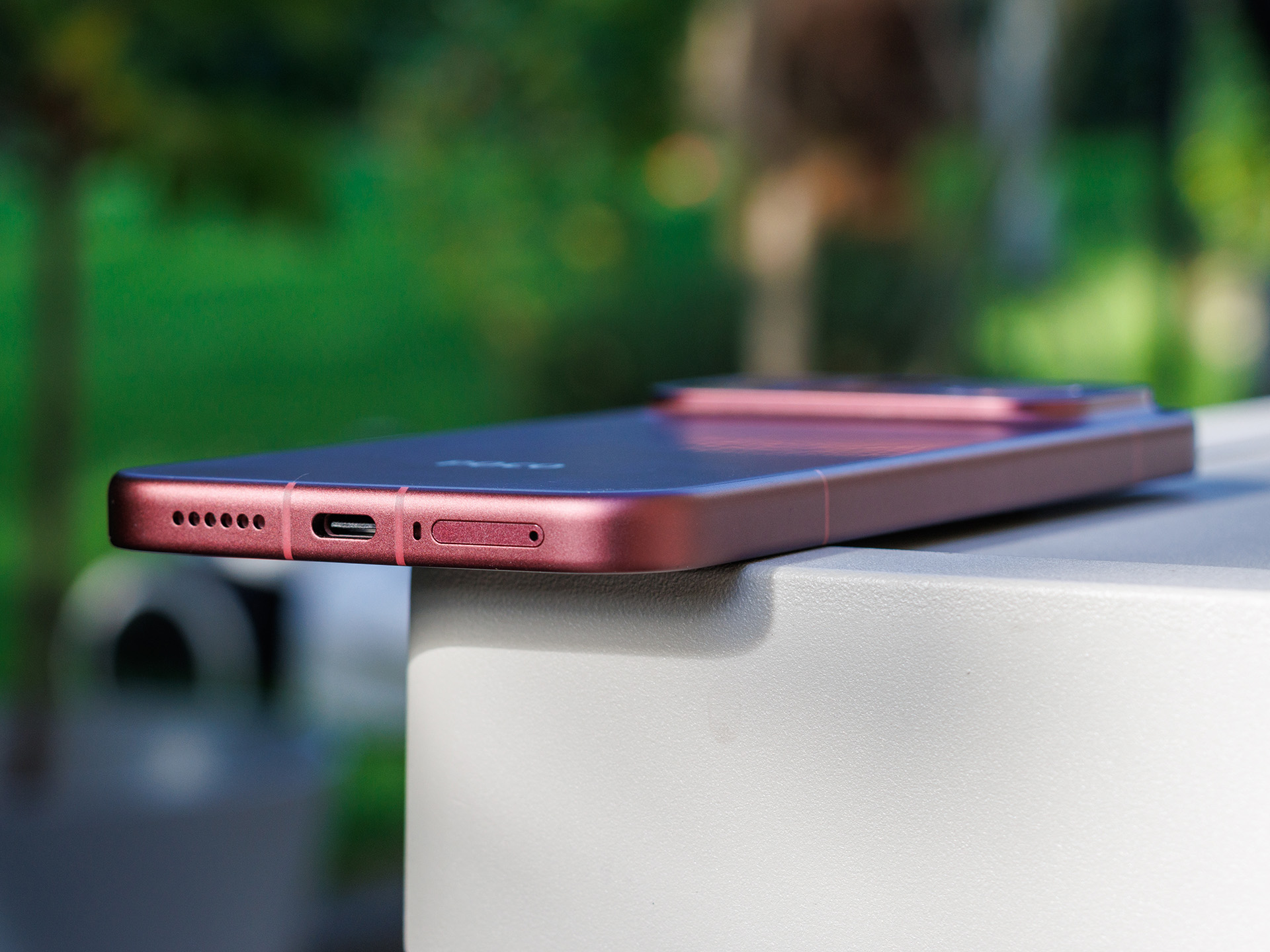
The smartphone is dust-tight and protected against continuous immersion in water, thanks to its IP68 rating.
Connectivity - Few missing features
In terms of features, the Poco offers Wi-Fi 7, Bluetooth 6.0, eSIM support, NFC, and an ultrasonic fingerprint sensor. Its USB 3.2 port supports video output to external displays, although there is no desktop mode. Wireless charging and reverse wireless charging are also supported.
Given the phone’s high price, we particularly miss UWB, a barometer, and an LTPO display capable of reducing the refresh rate to as low as 1 Hz.
Software - Clean HyperOS 3.0 with four years of updates
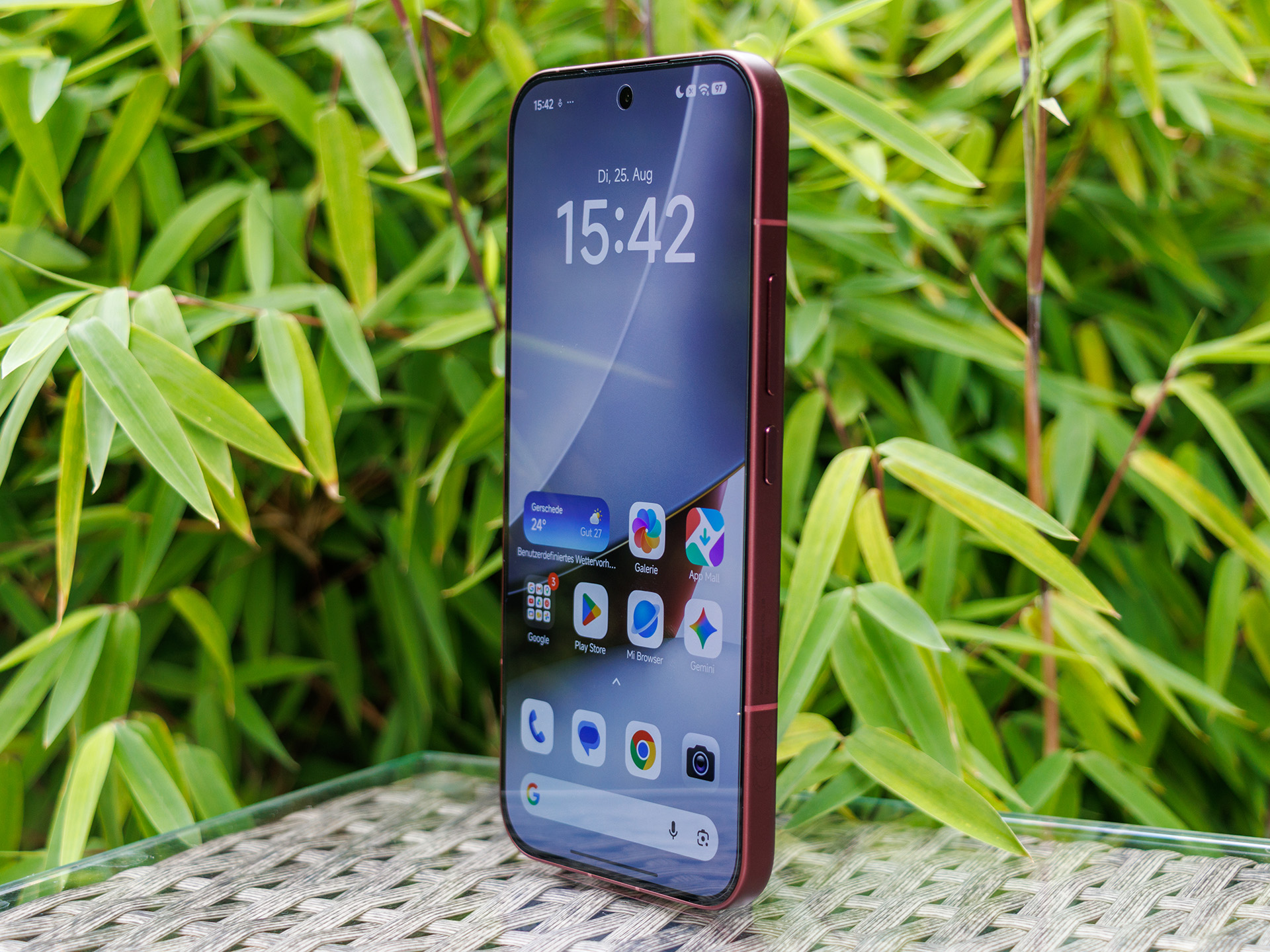
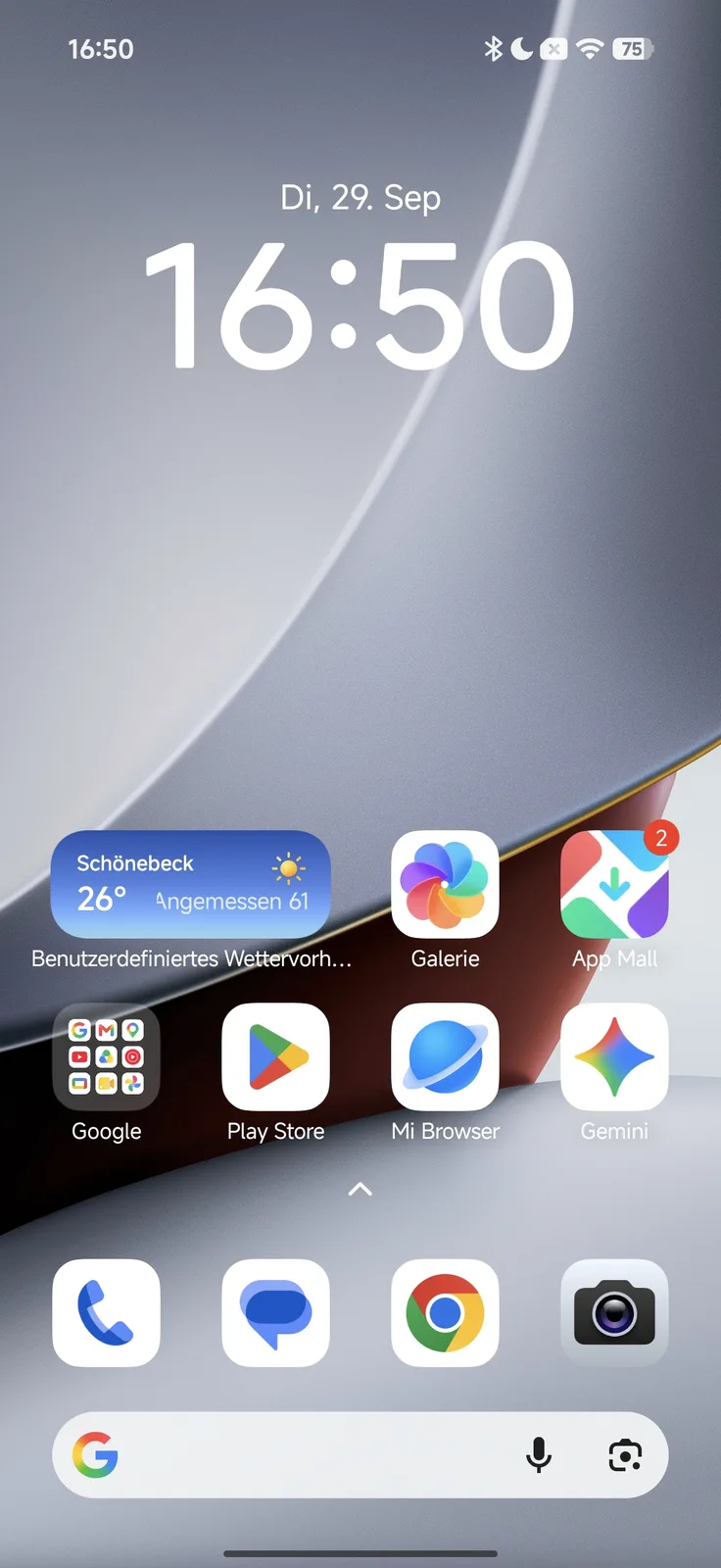
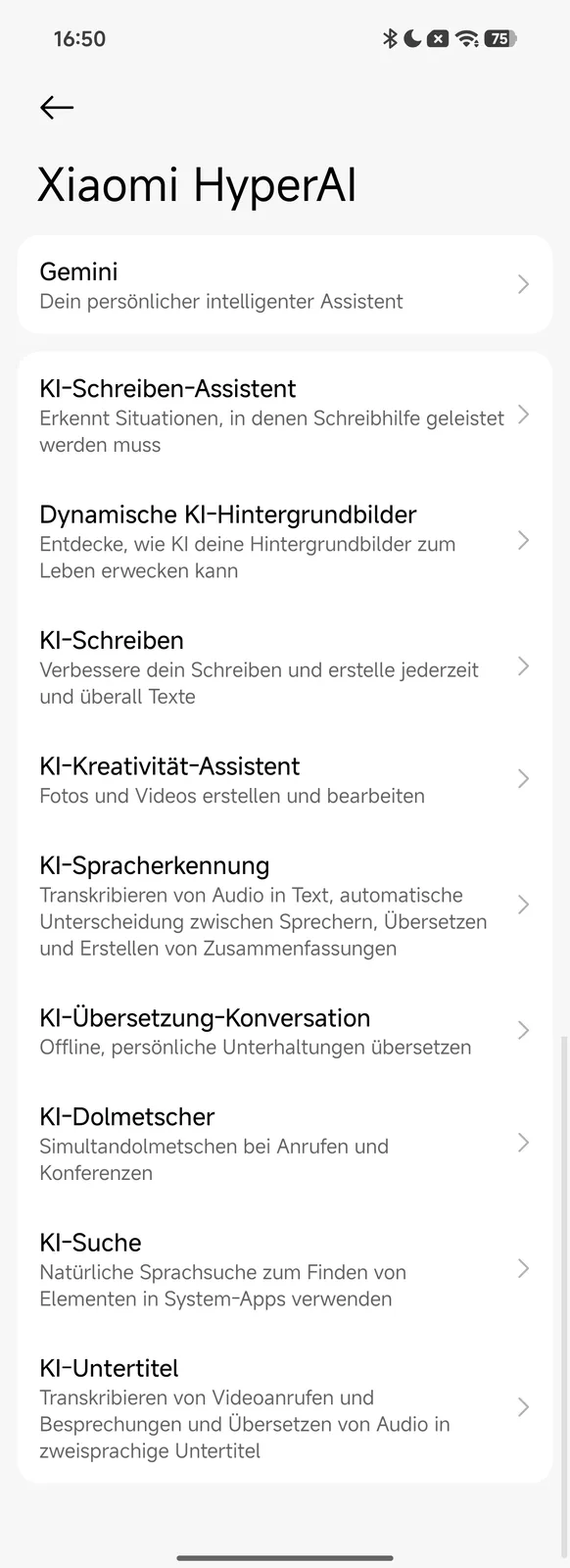
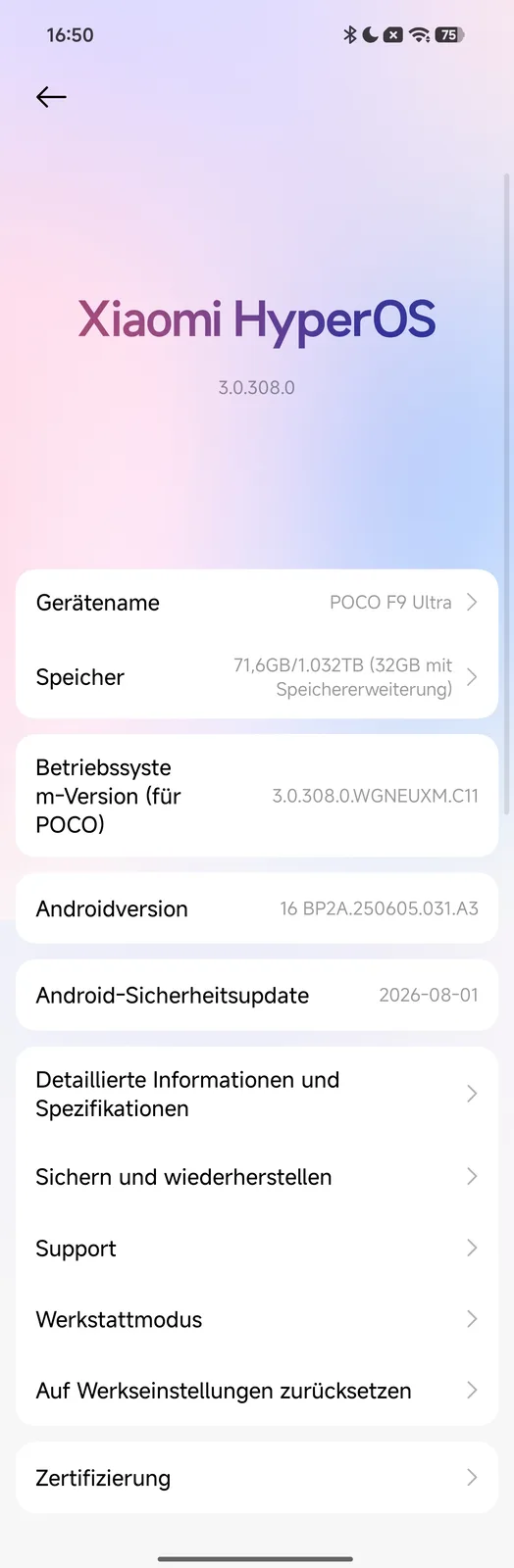
The Poco F9 Ultra runs Google Android 16 with HyperOS 3.0. Unlike its predecessor, it does not feature a visually customized Poco UI, but instead comes with full-fledged HyperOS and comprehensive HyperAI features.
Version updates will be provided for only four years, while security patches will be available for two additional years. Although the ads are less intrusive than on budget smartphones, they are still present. Read here to learn how to disable them as much as possible. Poco also preinstalls some third-party apps, but these can be completely uninstalled.
Sustainability
There is room for improvement when it comes to sustainability. Just four major Android updates and a guarantee of 1,000 battery cycles are not particularly ambitious for a smartphone in this price range. Furthermore, the EPREL database rates the phone’s repairability at just Class C.
So far, the Poco F9 Ultra is not listed in Xiaomi’s self-repair program, although it will likely be added in the near future. Poco does not provide specific information on its carbon footprint or the percentage of recycled materials used.
Connectivity and GNSS – Poco Flagship still lacks 6-GHz Wi-Fi
During our test, the Poco F9 Ultra delivered fast and stable Wi-Fi transfer rates. Unfortunately, Xiaomi still omits support for the 6-GHz band.
Cellular reception is good in metropolitan areas, although the range of supported frequency bands could be broader.
| Networking | |
| Xiaomi Poco F9 Ultra | |
| iperf3 transmit Wi-Fi6/7 RT-BE96U | |
| iperf3 receive Wi-Fi6/7 RT-BE96U | |
| Samsung Galaxy S26 Ultra | |
| iperf3 transmit AXE11000 | |
| iperf3 receive AXE11000 | |
| iperf3 transmit AXE11000 6GHz | |
| iperf3 receive AXE11000 6GHz | |
| iperf3 transmit Wi-Fi6/7 RT-BE96U | |
| iperf3 receive Wi-Fi6/7 RT-BE96U | |
| Xiaomi 17T Pro | |
| iperf3 transmit Wi-Fi6/7 RT-BE96U | |
| iperf3 receive Wi-Fi6/7 RT-BE96U | |
| Motorola Signature | |
| iperf3 transmit AXE11000 | |
| iperf3 receive AXE11000 | |
| iperf3 transmit AXE11000 6GHz | |
| iperf3 receive AXE11000 6GHz | |
| Nothing Phone (3) | |
| iperf3 transmit AXE11000 | |
| iperf3 receive AXE11000 | |
| iperf3 transmit AXE11000 6GHz | |
| iperf3 receive AXE11000 6GHz | |
| Xiaomi Poco F8 Ultra | |
| iperf3 transmit AXE11000 | |
| iperf3 receive AXE11000 | |
| Average 802.11 a/b/g/n/ac/ax/be | |
| iperf3 transmit AXE11000 | |
| iperf3 receive AXE11000 | |
| iperf3 transmit AXE11000 6GHz | |
| iperf3 receive AXE11000 6GHz | |
| iperf3 transmit Wi-Fi6/7 RT-BE96U | |
| iperf3 receive Wi-Fi6/7 RT-BE96U | |
| Average of class Smartphone | |
| iperf3 transmit AXE11000 | |
| iperf3 receive AXE11000 | |
| iperf3 transmit AXE11000 6GHz | |
| iperf3 receive AXE11000 6GHz | |
| iperf3 transmit Wi-Fi6/7 RT-BE96U | |
| iperf3 receive Wi-Fi6/7 RT-BE96U | |
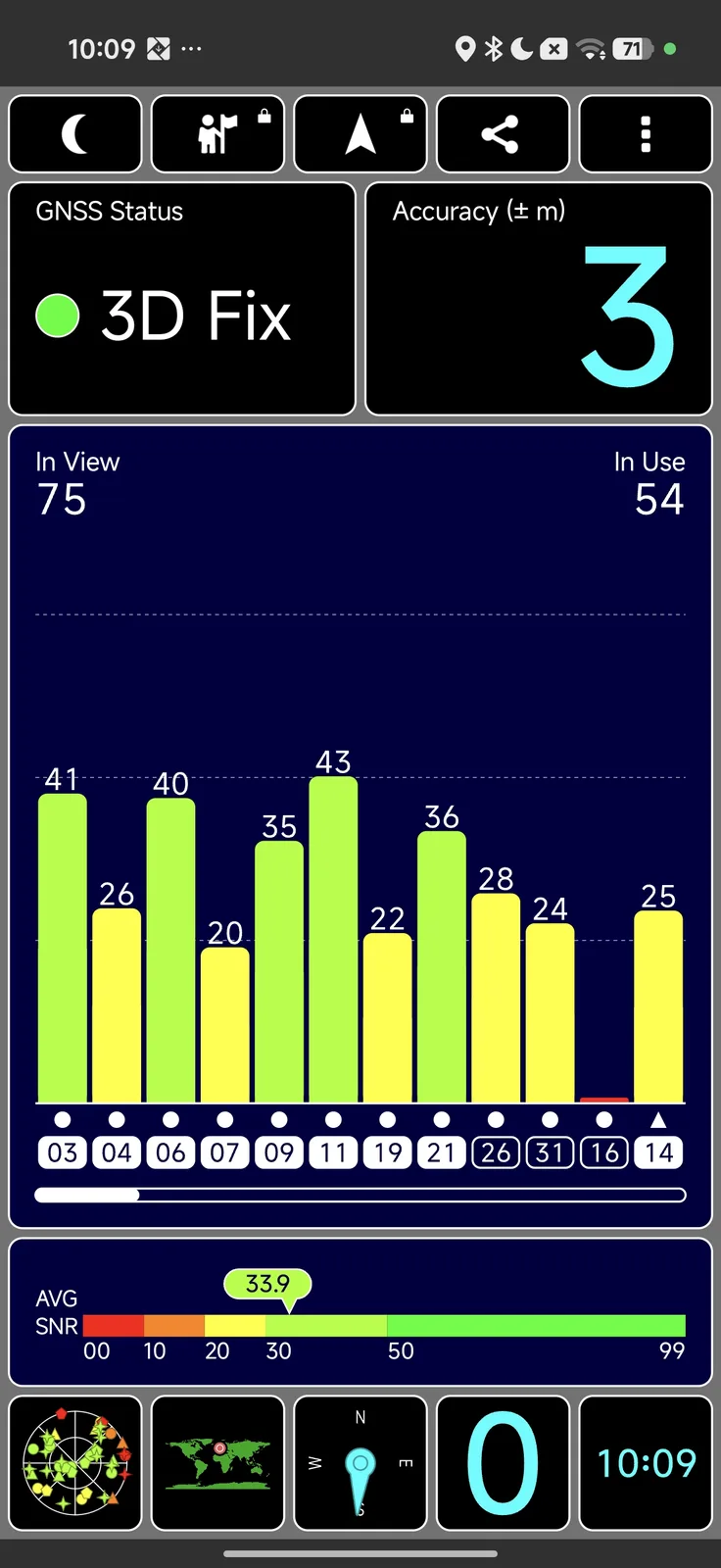
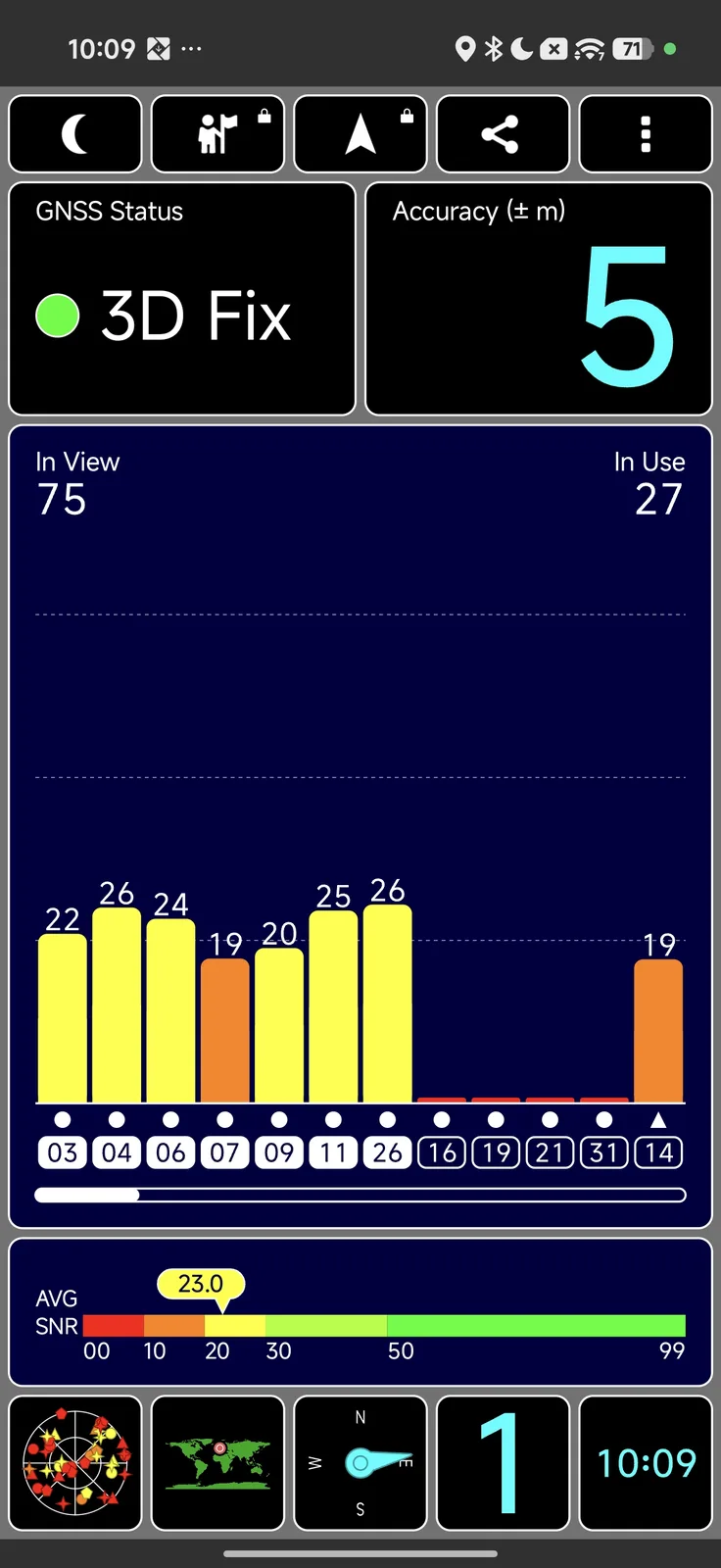
The smartphone locks onto satellite signals fairly quickly and accurately, even indoors.
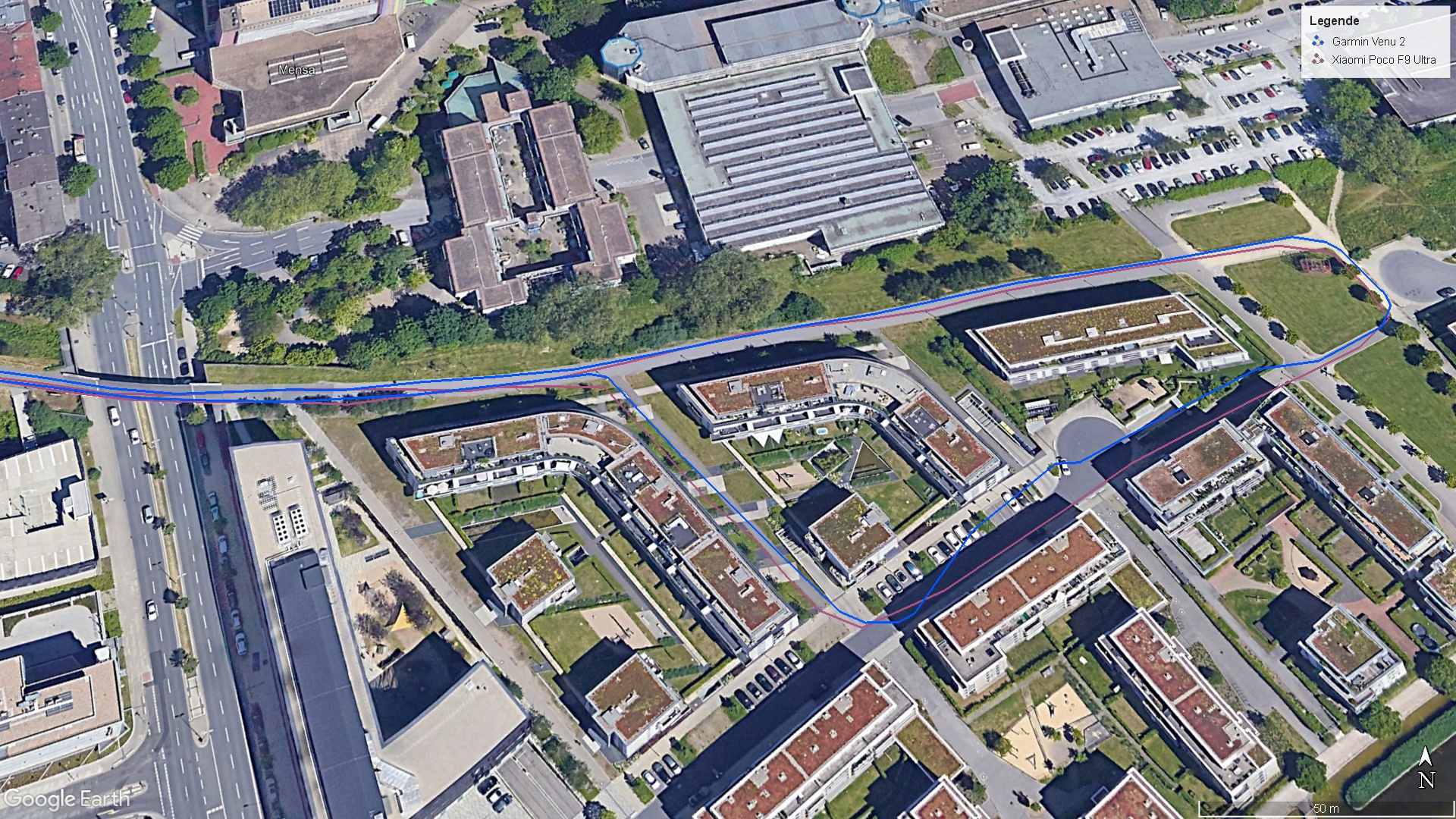
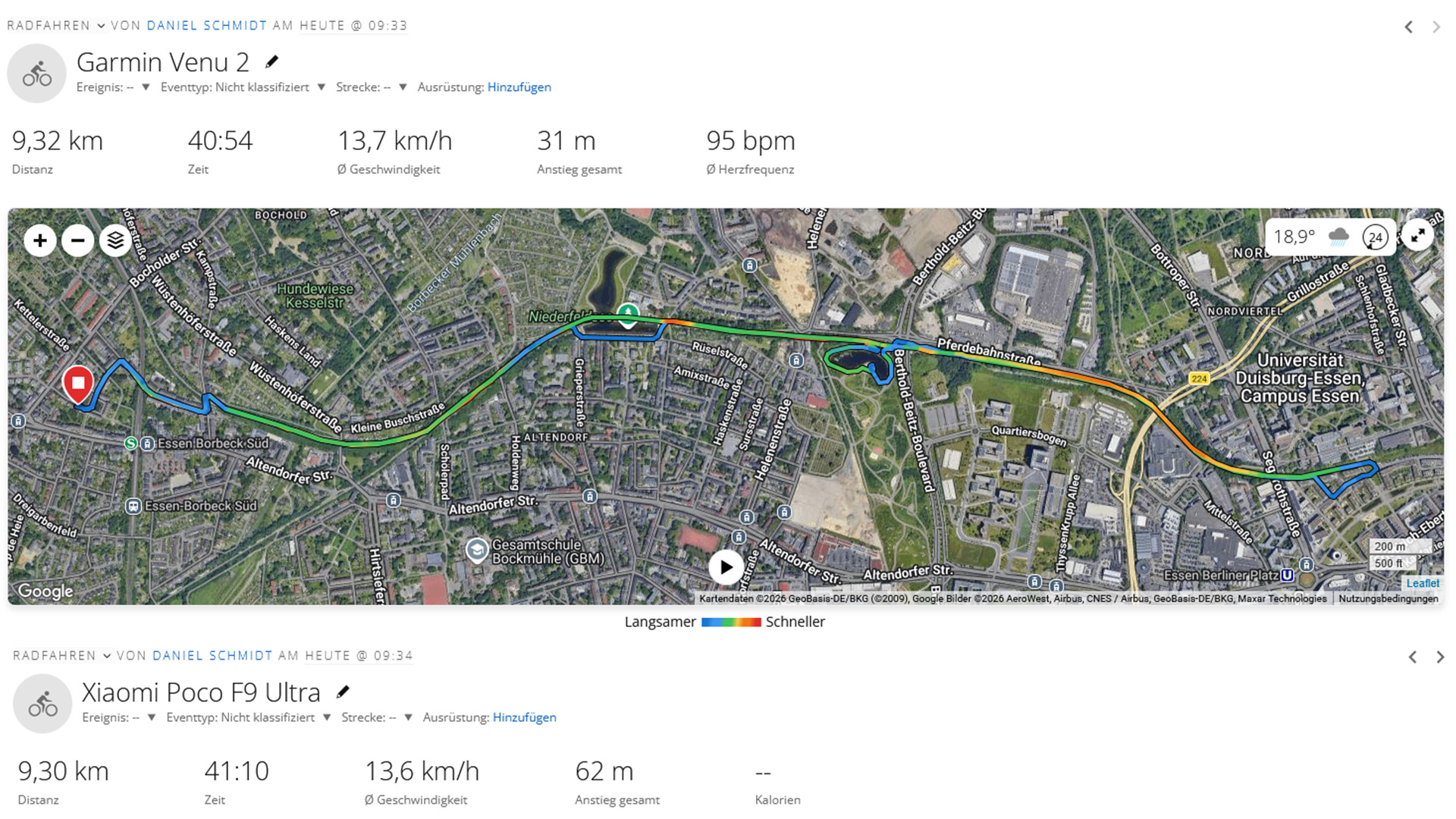
During a bike ride, we compared its location accuracy with that of a Garmin Venu 2. Over the entire route, the difference was just 66 feet. However, a closer look revealed a slight weakness in the Poco phone’s tracking while we were circling the lake. In the city center, on the other hand, it performed better.

Phone features and voice quality
The Poco F9 Ultra offers good call quality and sounds quite natural, although the person on the other end found our voice somewhat muffled. Background noise is filtered out effectively, although the smartphone reaches its limits in very noisy environments.
It supports either two nano-SIMs or two eSIMs, and a combination of the two is also possible.
Cameras – Smaller main sensor with more megapixels

Xiaomi has not changed the Poco F9 Ultra’s front-facing camera. It features a 32-MP sensor without pixel binning and takes good selfies in daylight. In low-light conditions, however, image quality drops off quickly. Video recording tops out at Ultra HD at 30 FPS.
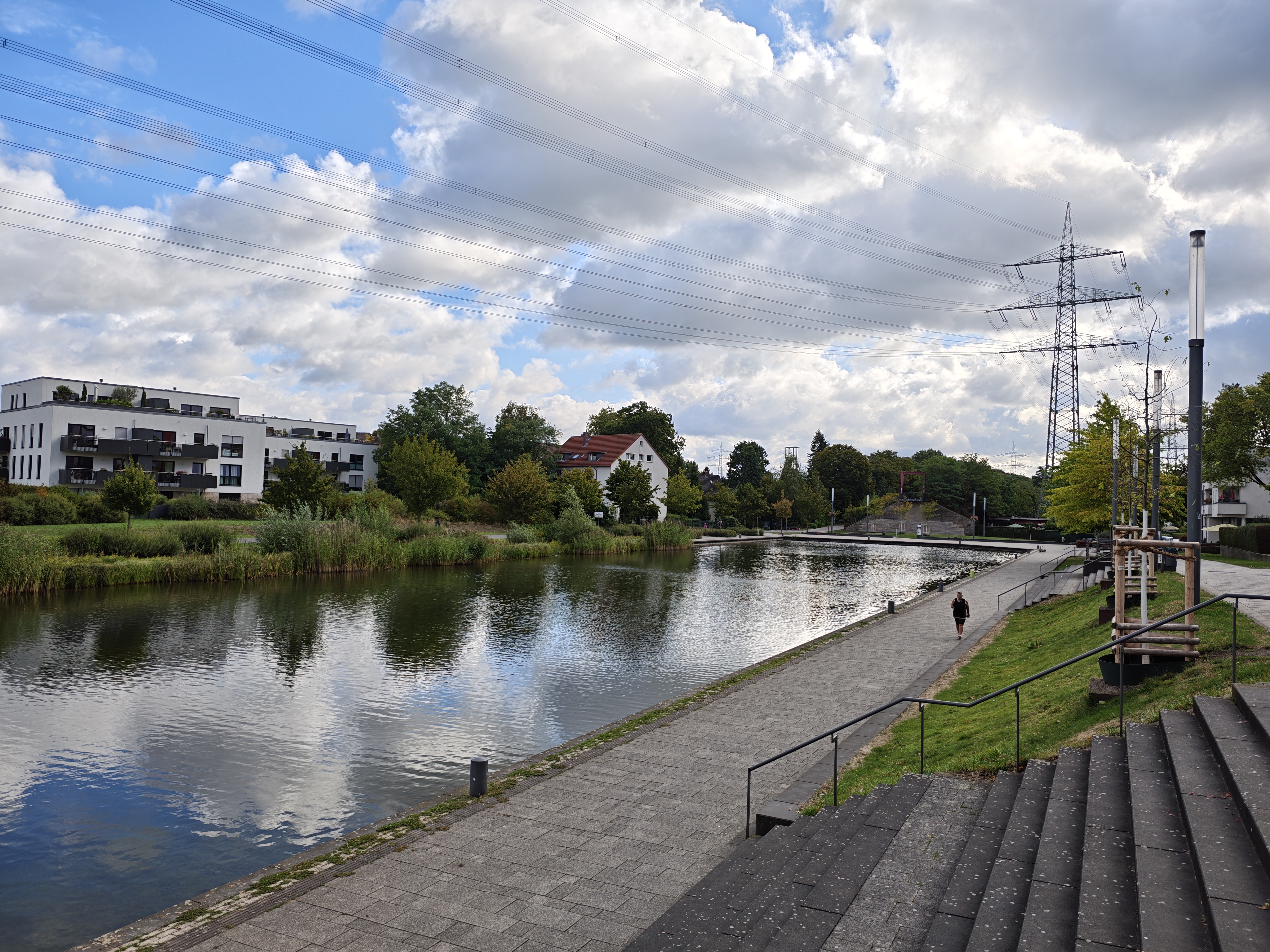
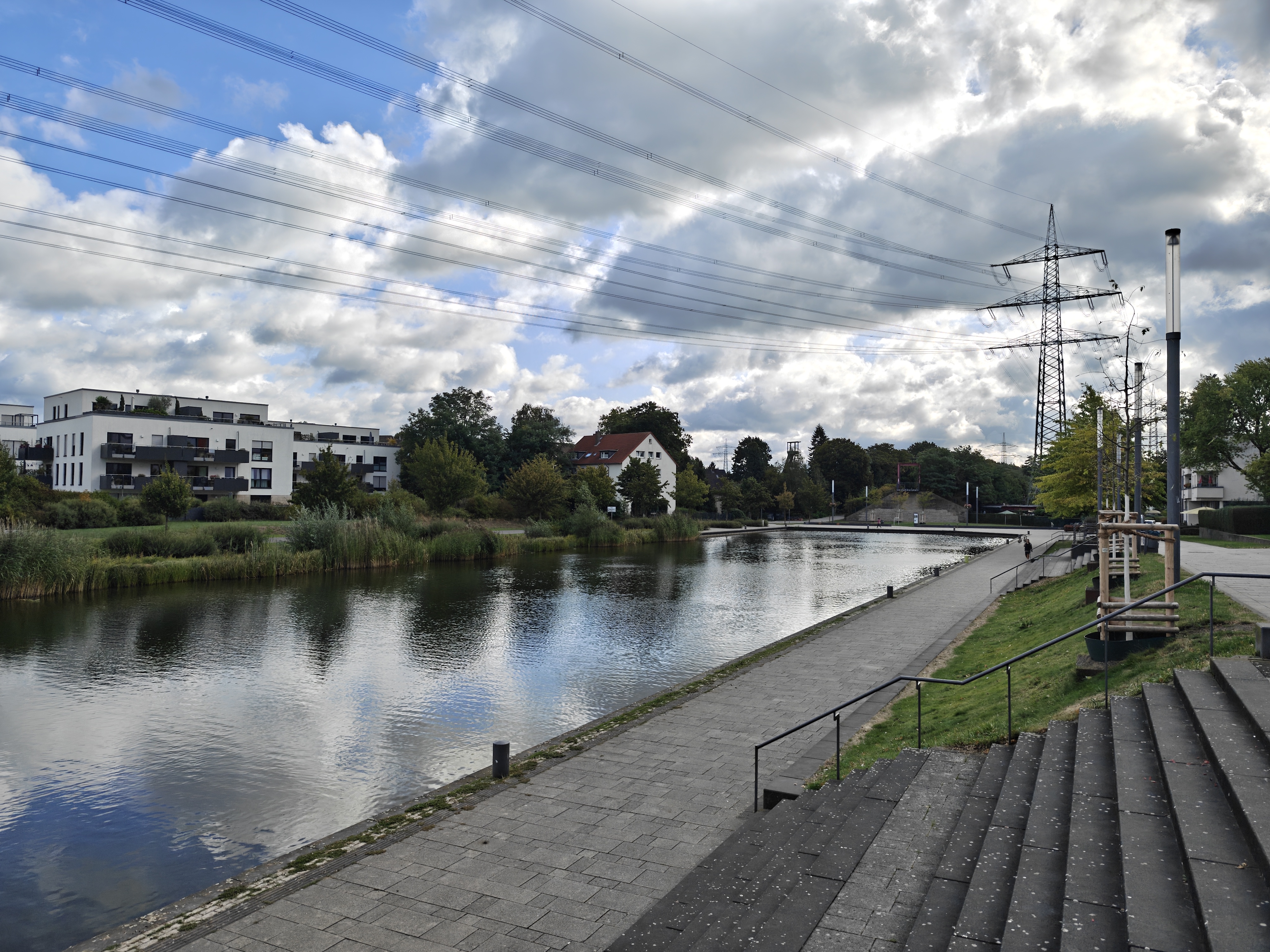
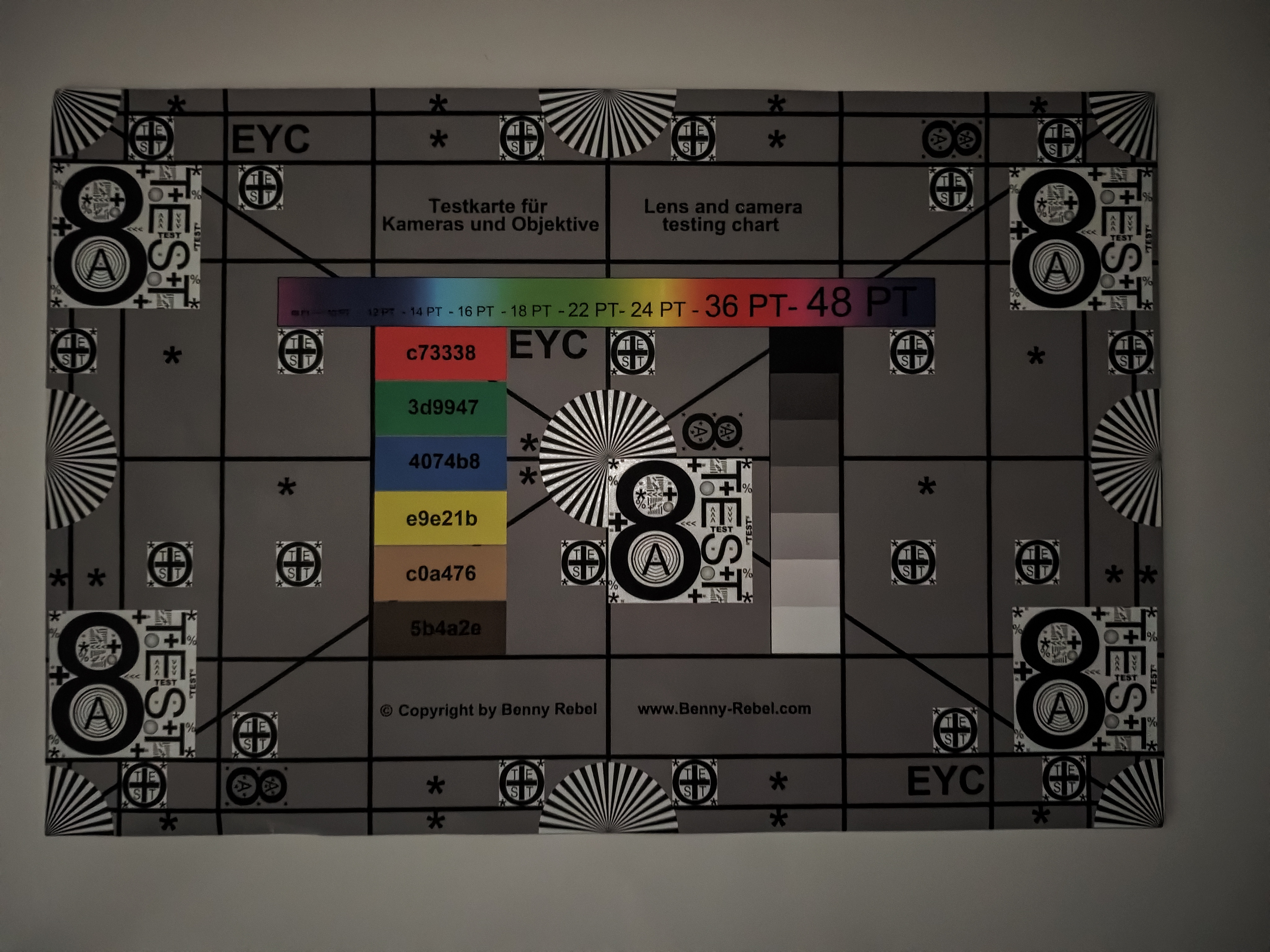
The triple-camera setup on the back is largely unchanged, as the ultra-wide-angle and periscope telephoto cameras are identical to those on the F8 Ultra. However, Poco has made significant changes to the main camera. Although the unspecified sensor has a resolution of 200 MP, it is significantly smaller than the Light Fusion 950 sensor used in the F8 Ultra. To make matters worse, Poco has also replaced the glass lens with an all-plastic six-element lens system. In daylight, the F9 Ultra continues to take good photos, but image quality is worse than that of its predecessor in low-light conditions. Even Live View is darker, making it harder to see the subject. The smartphone also takes a relatively long time to capture and process 200-MP images.
Video recording tops out at 8K at 30 FPS or Ultra HD at up to 60 FPS. If you need higher frame rates, you can use slow-motion mode, which supports up to 1,920 FPS in Full HD.
Image comparison
Choose a scene and navigate within the first image. One click changes the position on touchscreens. One click on the zoomed-in image opens the original in a new window. The first image shows the scaled photograph of the test device.
HauptkameraHauptkameraUltraweitwinkel5-facher ZoomLow-Light






















Accessories and warranty – Poco includes a case again
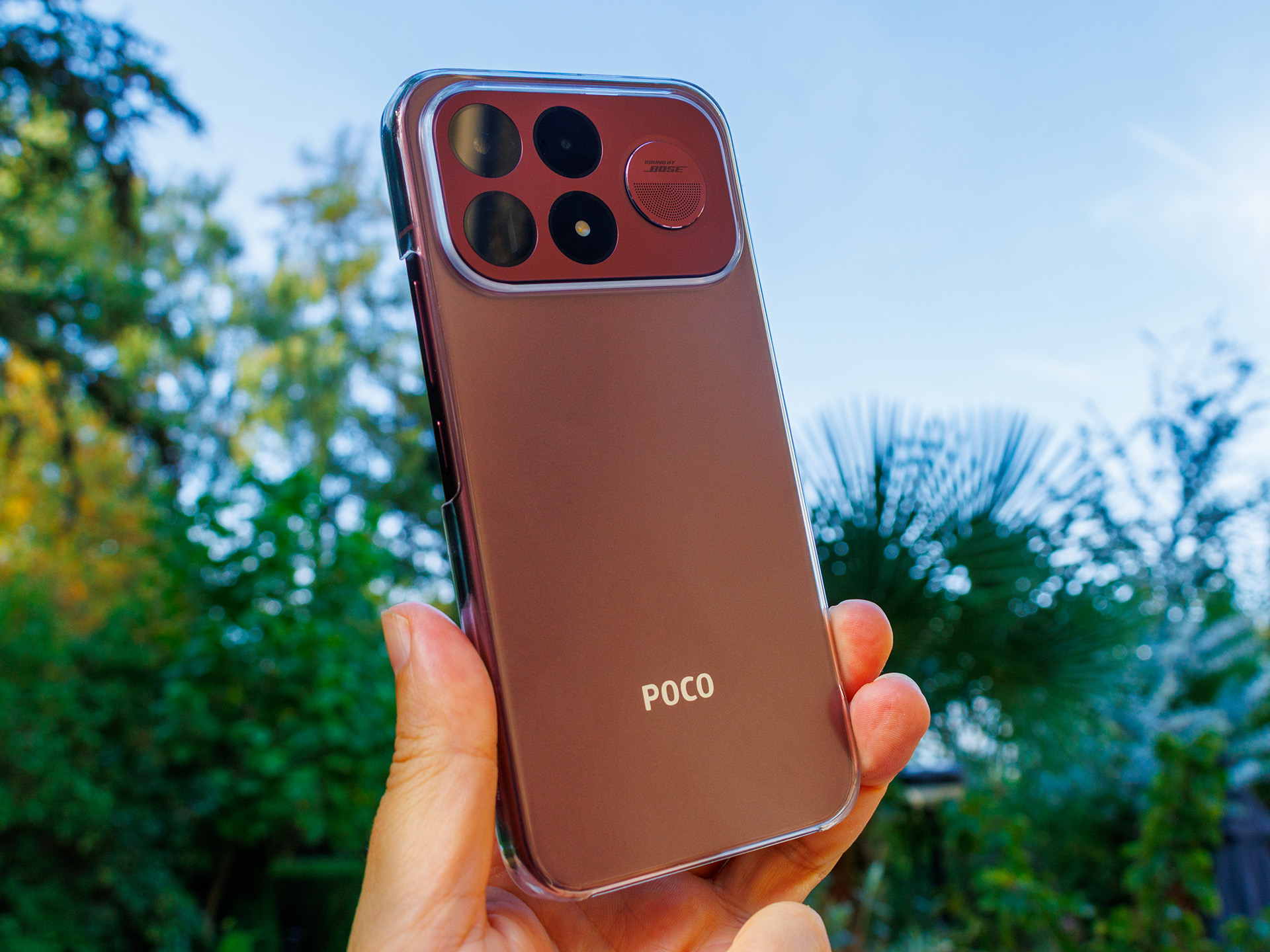
The Poco F9 Ultra comes with a USB cable (Type-A to Type-C), a partially frosted clear case, and a SIM tool. A power adapter is not included.
Warranty and Xiaomi Care coverage vary by market and retailer. Since the Poco F9 Ultra is not officially sold through Xiaomi’s US retail channels, US warranty and insurance options may not be available.
Input devices and operation – Ultrasonic fingerprint sensor on the F9 Ultra
The Poco F9 Ultra’s capacitive touchscreen responds to input precisely and reliably. Even with the factory-applied screen protector, the surface feels smooth, although direct contact with the glass is noticeably smoother.
For biometric unlocking, the display features a fast and reliable ultrasonic fingerprint sensor. Alternatively, facial recognition via the front-facing camera works quickly in good lighting conditions. The linear vibration motor provides pleasantly crisp feedback, although it could be somewhat stronger in some situations.
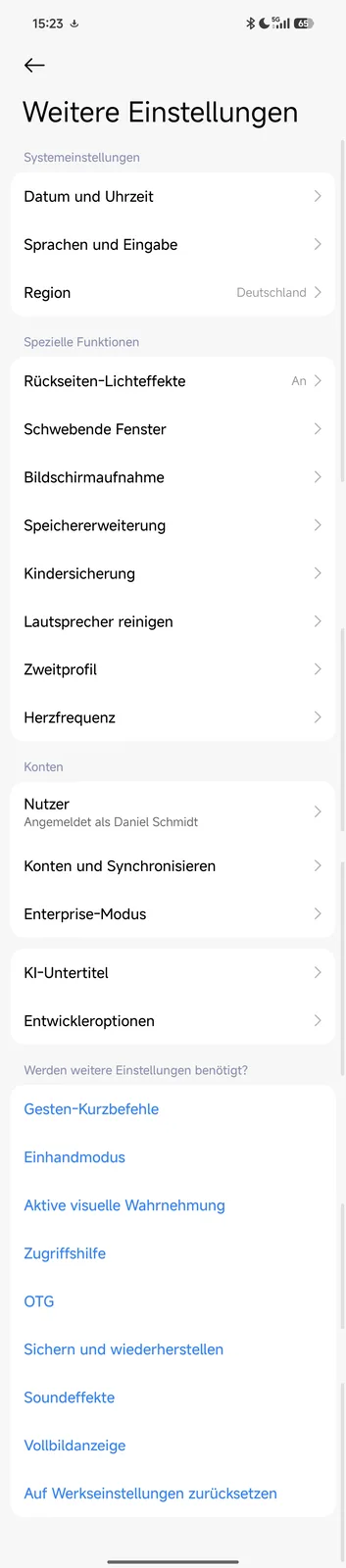
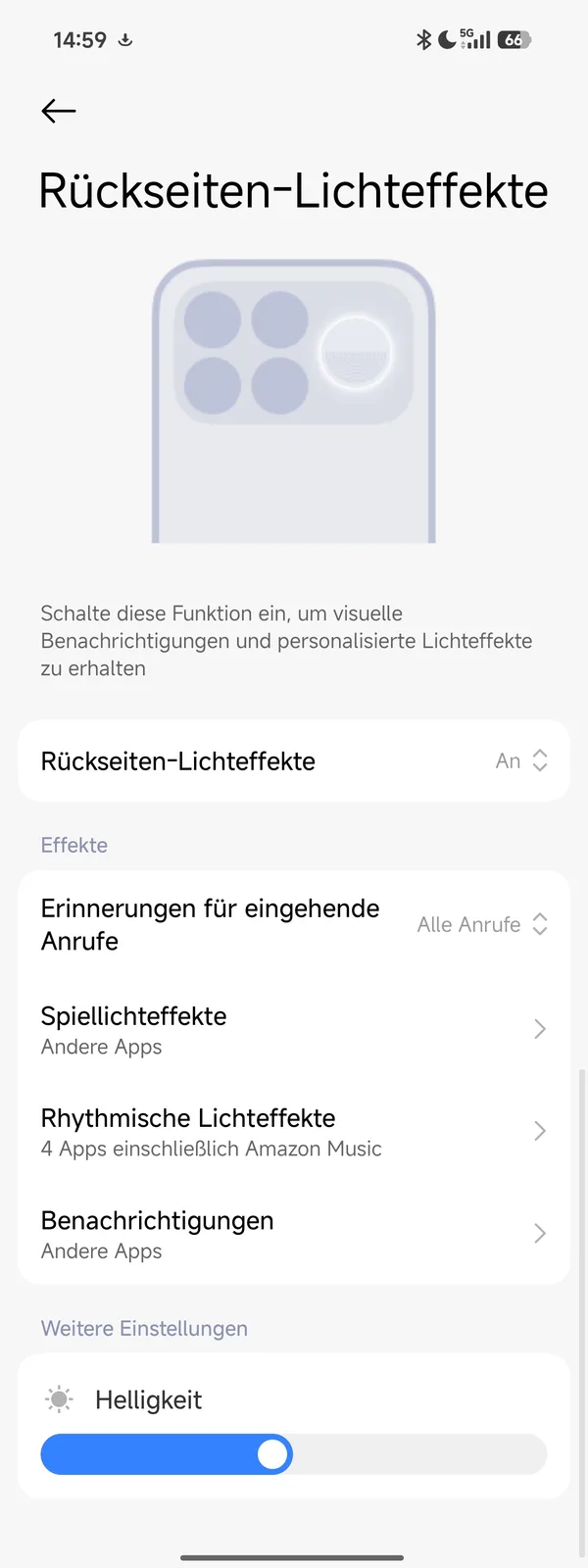
A new feature is the status LED ring around the subwoofer, which offers versatile lighting effects and can even pulse in sync with music.

Display – Up to 10,000 cd/m², but…
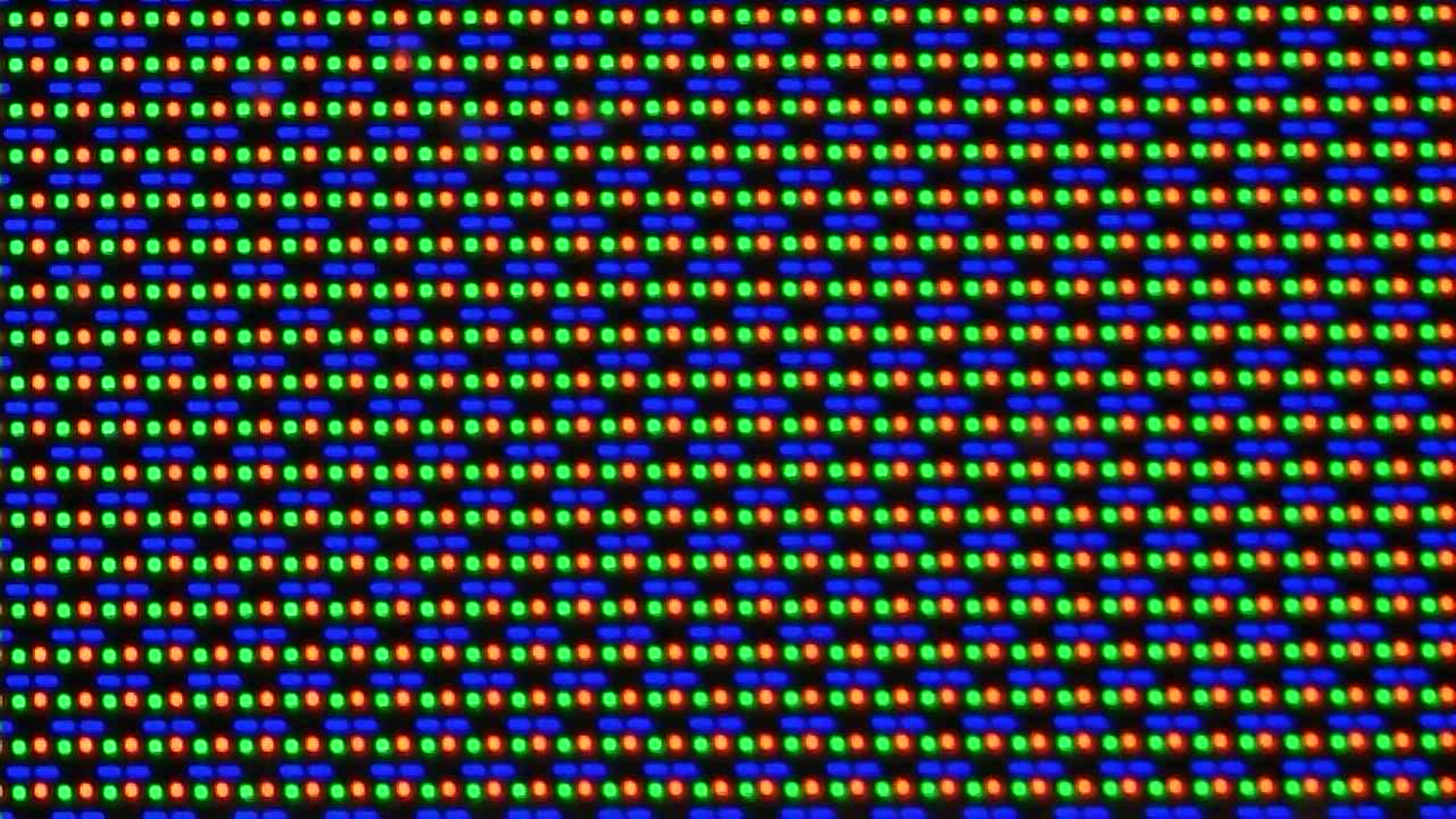
Unlike its predecessor, the Poco F9 Ultra’s display now supports a refresh rate of up to 185 Hz, although this is reserved for gaming mode. Otherwise, it operates between 60 and 120 Hz and drops to 30 Hz for the always-on display. It’s a shame that Poco still hasn’t included a full-fledged LTPO display.
The highlight of the new display is its claimed peak brightness of up to 10,000 cd/m². However, this is only achieved over a very small area. Unfortunately, our measuring device maxes out at 8,500 cd/m²; any higher and it only displays an error message, which is why we are entering this value into the database. During the more practical APL18 measurement, we reached only 2,435 cd/m², which is lower than the F8 Ultra’s result.
For brightness control, the F9 Ultra uses DC dimming. However, at minimum brightness, our measurements show that the panel behaves more like one using high-frequency PWM dimming.
| |||||||||||||||||||||||||
Brightness Distribution: 93 %
Center on Battery: 1219 cd/m²
Contrast: ∞:1 (Black: 0 cd/m²)
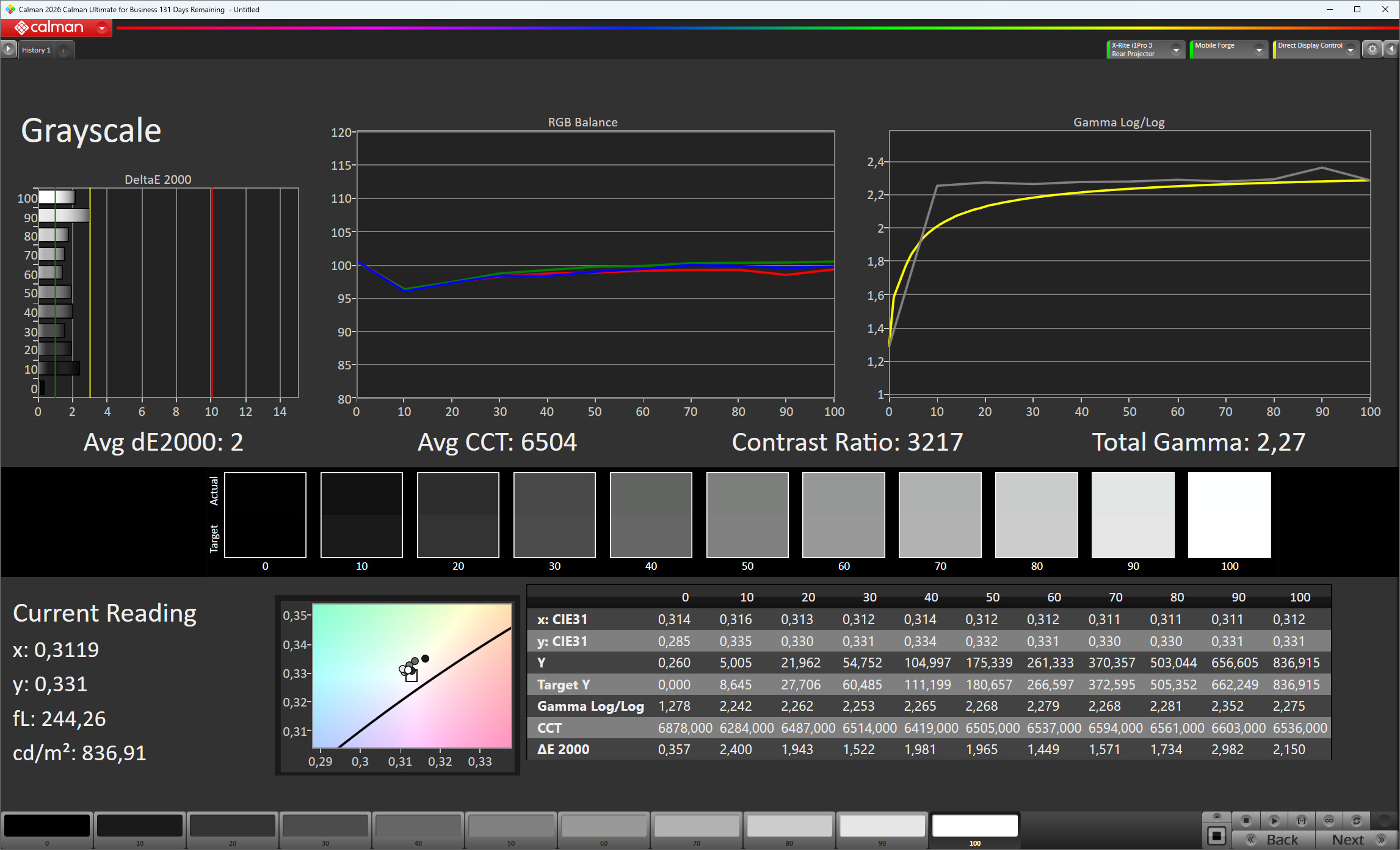
ΔE ColorChecker Calman: 1.2 | ∀{0.5-29.43 Ø4.69}
ΔE Greyscale Calman: 2 | ∀{0.09-98 Ø4.94}
99.9% sRGB (Calman 2D)
Gamma: 2.27
CCT: 6504 K
| Xiaomi Poco F9 Ultra AMOLED, 2608x1200, 6.9" | Samsung Galaxy S26 Ultra Dynamic AMOLED 2X, 3120x1440, 6.9" | Xiaomi 17T Pro AMOLED, 2772x1280, 6.8" | Motorola Signature AMOLED, 2780x1264, 6.8" | Nothing Phone (3) AMOLED, 2800x1260, 6.7" | Xiaomi Poco F8 Ultra AMOLED, 2608x1200, 6.9" | |
|---|---|---|---|---|---|---|
| Display | -27% | -9% | -30% | -61% | -7% | |
| APL18 Peak Brightness (cd/m²) | 2435 | 2713 11% | 3507 44% | 2120 -13% | 1517 -38% | 3519 45% |
| HDR Peak Brightness (cd/m²) | 8500 | 2975 -65% | 3295 -61% | 4542 -47% | 1475 -83% | 3458 -59% |
| Response Times | -40% | -46% | -47% | -405% | -22% | |
| Response Time Grey 50% / Grey 80% * (ms) | 0.63 ? | 0.84 ? -33% | 1.13 ? -79% | 1.2 ? -90% | 7.86 ? -1148% | 0.86 ? -37% |
| Response Time Black / White * (ms) | 0.64 ? | 1.25 ? -95% | 1.01 ? -58% | 1.1 ? -72% | 1.17 ? -83% | 0.87 ? -36% |
| PWM Frequency (Hz) | 120 | 240 | 120 | 120.2 | 90 | 120 |
| PWM Amplitude * (%) | 15.31 | 13.99 9% | 15.46 -1% | 12 22% | 12.96 15% | 14.02 8% |
| Screen | -16% | -4% | -1% | -32% | 15% | |
| Brightness middle (cd/m²) | 1219 | 1339 10% | 1068 -12% | 1561 28% | 1548 27% | 1771 45% |
| Brightness (cd/m²) | 1204 | 1381 15% | 1060 -12% | 1547 28% | 1535 27% | 1773 47% |
| Brightness Distribution (%) | 93 | 94 1% | 97 4% | 99 6% | 98 5% | 99 6% |
| Black Level * (cd/m²) | ||||||
| Colorchecker dE 2000 * | 1.2 | 2.5 -108% | 1.3 -8% | 1.46 -22% | 2.2 -83% | 1.3 -8% |
| Colorchecker dE 2000 max. * | 3 | 3.8 -27% | 2.5 17% | 3.63 -21% | 5.5 -83% | 2.8 7% |
| Greyscale dE 2000 * | 2 | 1.7 15% | 2.2 -10% | 2.5 -25% | 3.7 -85% | 2.1 -5% |
| Gamma | 2.27 97% | 2.05 107% | 2.26 97% | 2.144 103% | 2.26 97% | 2.25 98% |
| CCT | 6504 100% | 6498 100% | 6875 95% | 6612 98% | 6787 96% | 6452 101% |
| Total Average (Program / Settings) | -28% /
-24% | -20% /
-16% | -26% /
-19% | -166% /
-139% | -5% /
1% |
* ... smaller is better
Screen Flickering / PWM (Pulse-Width Modulation)
| Screen flickering / PWM detected | 120 Hz Amplitude: 15.31 % Secondary Frequency: 4166 Hz | 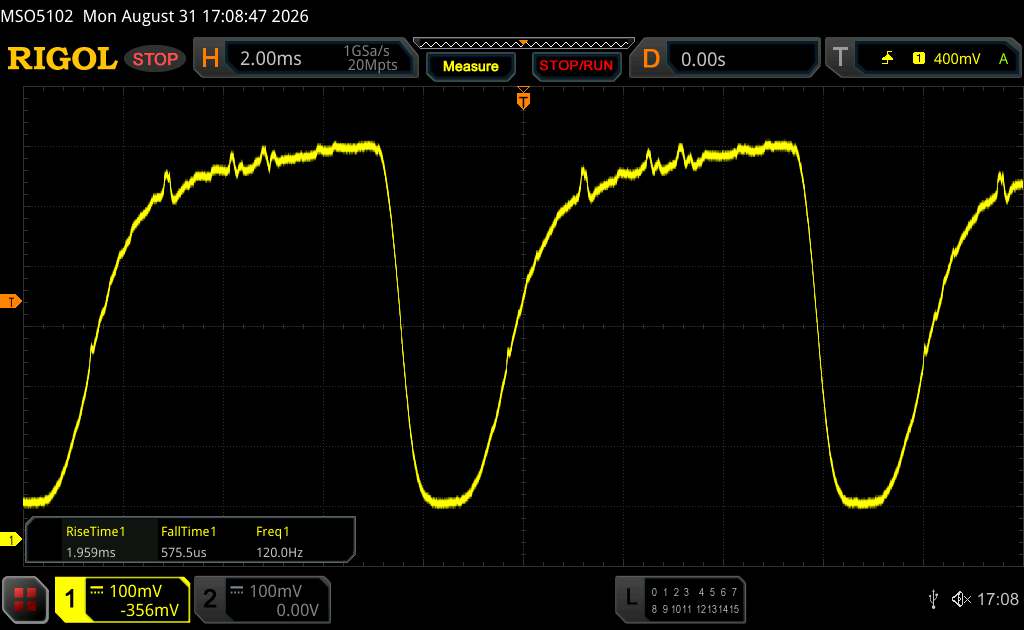 | |
The display backlight flickers at 120 Hz (worst case, e.g., utilizing PWM) . The frequency of 120 Hz is very low, so the flickering may cause eyestrain and headaches after extended use. In comparison: 52 % of all tested devices do not use PWM to dim the display. If PWM was detected, an average of 7614 (minimum: 5 - maximum: 343500) Hz was measured. | |||
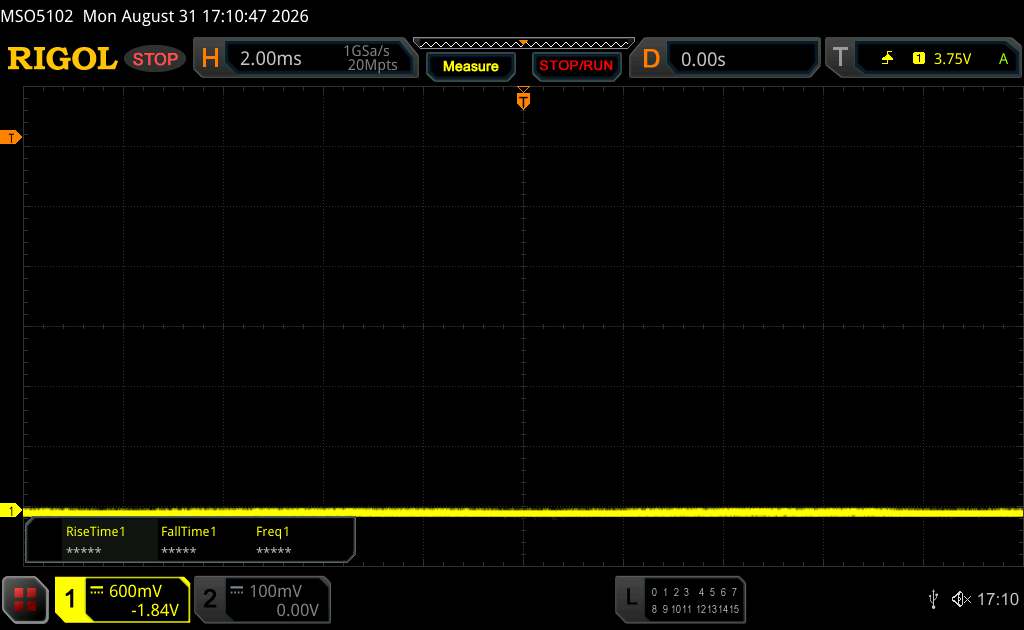
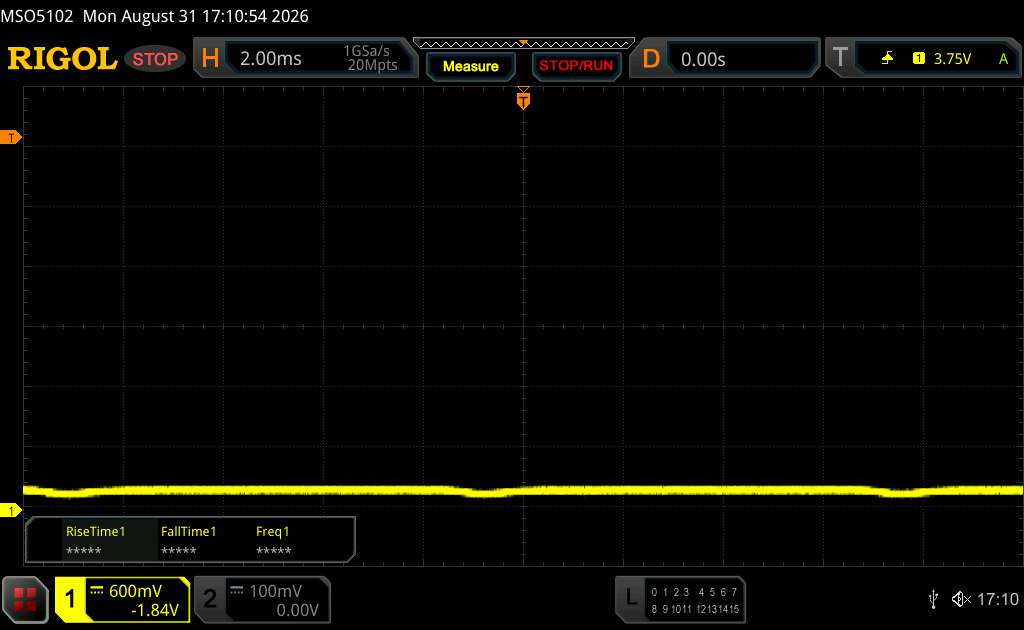
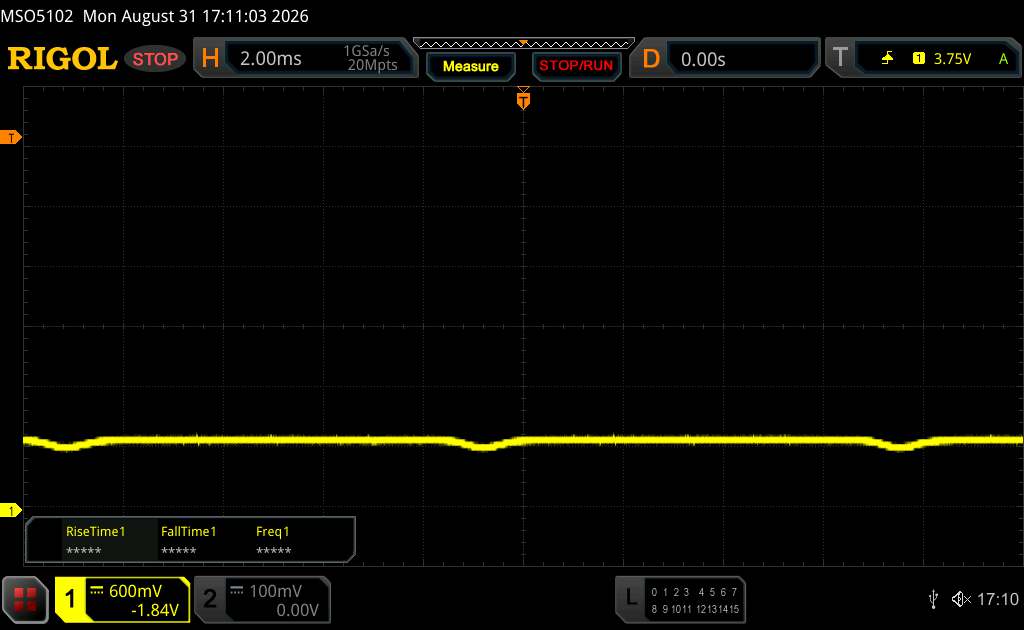
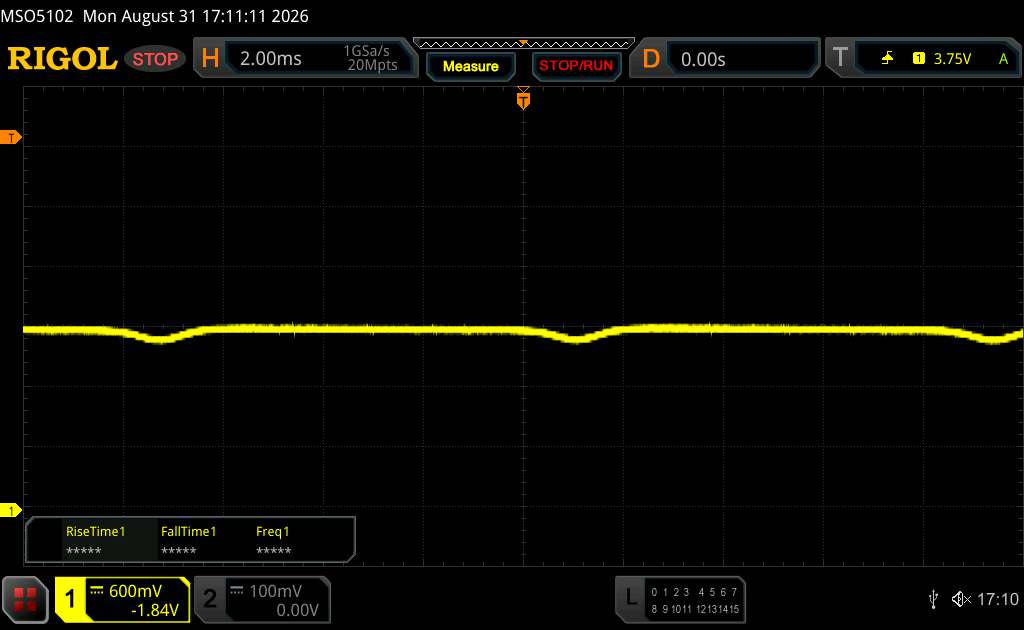
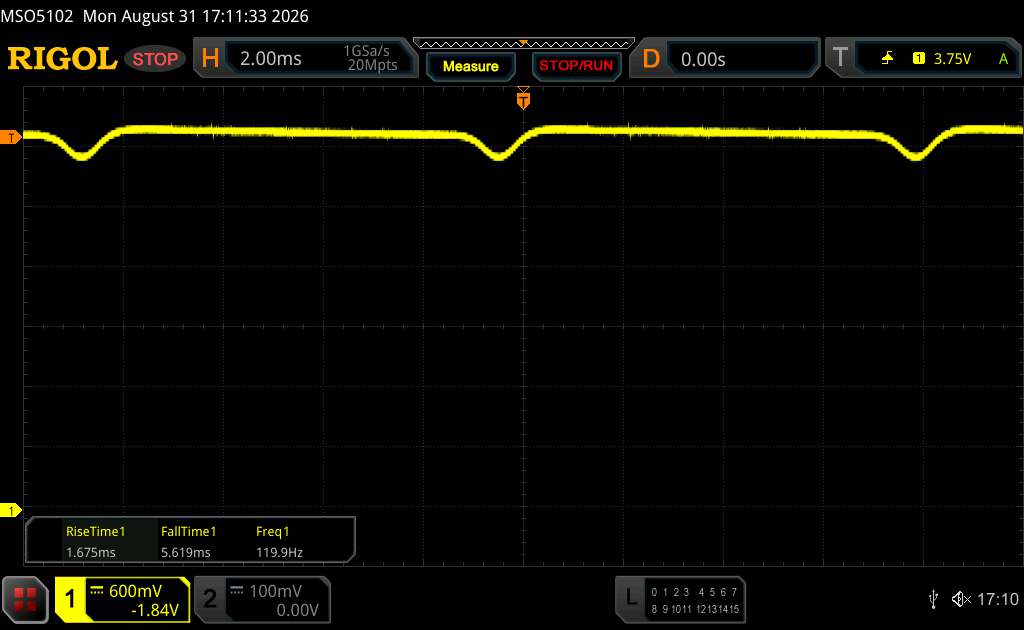
Measurement series at a fixed zoom level and various brightness settings (Although the amplitude at minimum brightness looks flat, this is due to the scaling. You can see the enlarged version of the amplitude at minimum brightness in the info box.)
Color reproduction is very natural when using the original color pro color scheme with the warm color temperature setting. However, the factory default settings produce a noticeably cooler and more vivid color palette.


Display Response Times
| ↔ Response Time Black to White | ||
|---|---|---|
| 0.64 ms ... rise ↗ and fall ↘ combined | ↗ 0.3185 ms rise | 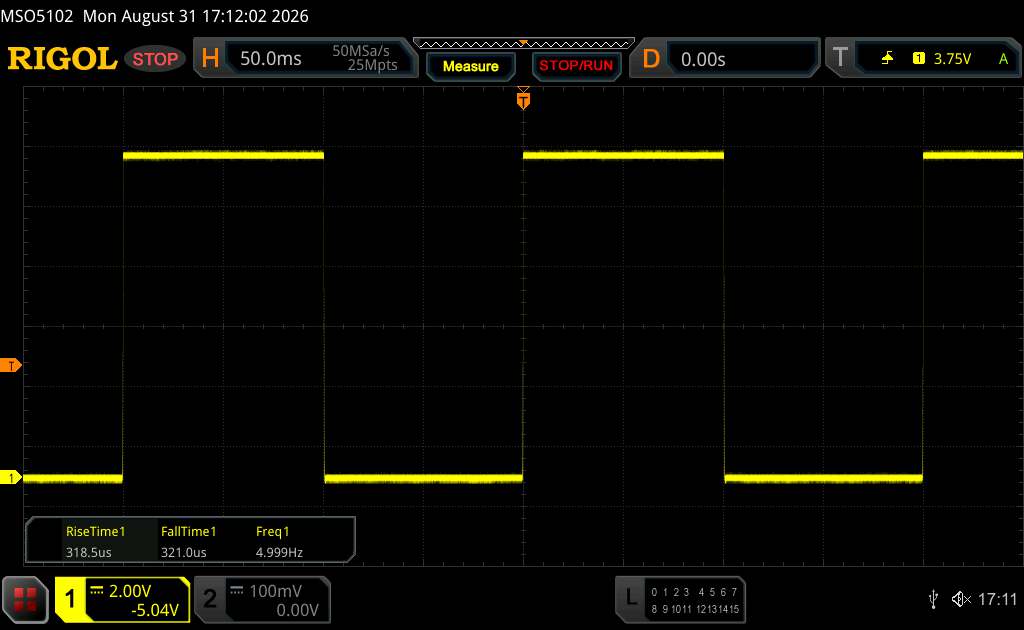 |
| ↘ 0.321 ms fall | ||
| The screen shows very fast response rates in our tests and should be very well suited for fast-paced gaming. In comparison, all tested devices range from 0.1 (minimum) to 240 (maximum) ms. » 2 % of all devices are better. This means that the measured response time is better than the average of all tested devices (19.7 ms). | ||
| ↔ Response Time 50% Grey to 80% Grey | ||
| 0.63 ms ... rise ↗ and fall ↘ combined | ↗ 0.2945 ms rise | 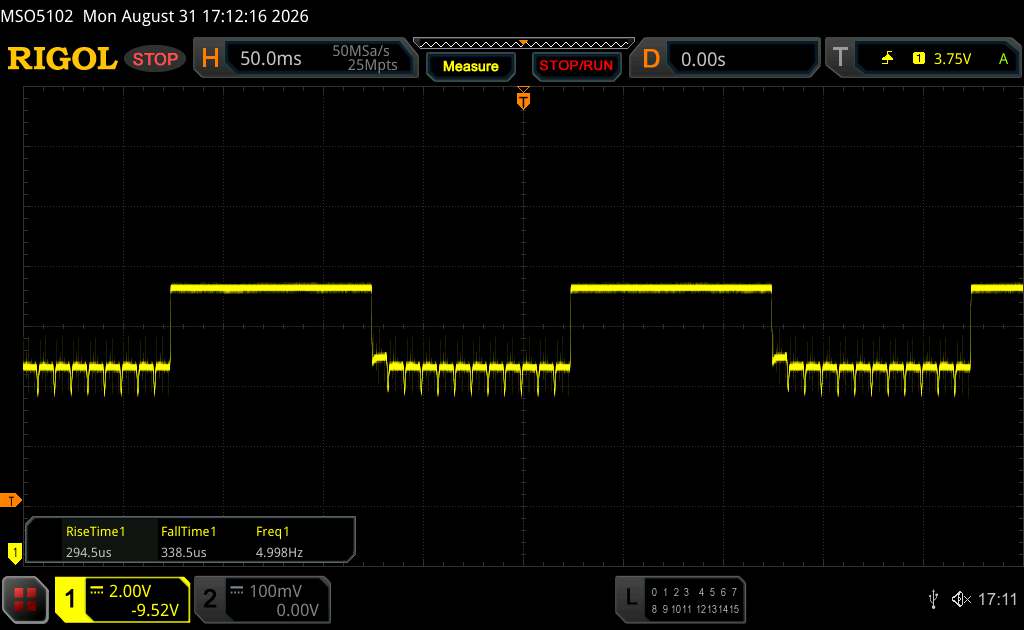 |
| ↘ 0.3385 ms fall | ||
| The screen shows very fast response rates in our tests and should be very well suited for fast-paced gaming. In comparison, all tested devices range from 0.13 (minimum) to 636 (maximum) ms. » 2 % of all devices are better. This means that the measured response time is better than the average of all tested devices (30.7 ms). | ||
Outdoors, the Poco F9 Ultra performs quite well, although it does not get as bright as its predecessor in direct sunlight. For maximum brightness, you should use automatic mode, as manual mode is limited to 850 cd/m².
Viewing angle stability is very good. Even at wide viewing angles, brightness loss is minimal, with reflections being the main potential nuisance.

Performance – Poco again relies on the same SoC
Like its predecessor, the Poco F9 Ultra is powered by the Snapdragon 8 Elite Gen 5. The SoC is extremely fast, but by sticking with the same chip, Poco is once again moving away from the approach of equipping its flagship with the latest and most powerful SoC.
| UL Procyon AI Inference for Android - Overall Score NNAPI | |
| Samsung Galaxy S26 Ultra | |
| Motorola Signature | |
| Average Qualcomm Snapdragon 8 Elite Gen 5 (10671 - 24487, n=13) | |
| Xiaomi Poco F9 Ultra | |
| Average of class Smartphone (2895 - 66164, n=99, last 2 years) | |
| Nothing Phone (3) | |
| Xiaomi 17T Pro | |
| AImark - Score v3.x | |
| Average of class Smartphone (293 - 307528, n=66, last 2 years) | |
| Samsung Galaxy S26 Ultra | |
| Average Qualcomm Snapdragon 8 Elite Gen 5 (774 - 2381, n=7) | |
| Nothing Phone (3) | |
The Adreno 840 serves as the integrated graphics unit. It supports all modern features and ranks among the fastest mobile GPUs available.
GFXBench (DX / GLBenchmark) 2.7: T-Rex Onscreen | 1920x1080 T-Rex Offscreen
GFXBench 3.0: on screen Manhattan Onscreen OGL | 1920x1080 1080p Manhattan Offscreen
GFXBench 3.1: on screen Manhattan ES 3.1 Onscreen | 1920x1080 Manhattan ES 3.1 Offscreen
GFXBench: on screen Car Chase Onscreen | 1920x1080 Car Chase Offscreen | on screen Aztec Ruins High Tier Onscreen | 2560x1440 Aztec Ruins High Tier Offscreen | on screen Aztec Ruins Normal Tier Onscreen | 1920x1080 Aztec Ruins Normal Tier Offscreen | 3840x2160 4K Aztec Ruins High Tier Offscreen
| 3DMark / Wild Life Extreme Unlimited | |
| Samsung Galaxy S26 Ultra | |
| Xiaomi Poco F9 Ultra | |
| Xiaomi 17T Pro | |
| Motorola Signature | |
| Nothing Phone (3) | |
| 3DMark / Wild Life Extreme | |
| Samsung Galaxy S26 Ultra | |
| Xiaomi Poco F9 Ultra (Press-Version) | |
| Xiaomi 17T Pro | |
| Motorola Signature | |
| Nothing Phone (3) | |
| 3DMark / Wild Life Unlimited Score | |
| Samsung Galaxy S26 Ultra | |
| Xiaomi Poco F9 Ultra | |
| Xiaomi 17T Pro | |
| Motorola Signature | |
| Nothing Phone (3) | |
| 3DMark / Solar Bay Score | |
| Samsung Galaxy S26 Ultra | |
| Xiaomi 17T Pro | |
| Xiaomi Poco F9 Ultra | |
| Motorola Signature | |
| Nothing Phone (3) | |
| 3DMark / Solar Bay Unlimited Score | |
| Xiaomi 17T Pro | |
| Samsung Galaxy S26 Ultra | |
| Xiaomi Poco F9 Ultra | |
| Motorola Signature | |
| Nothing Phone (3) | |
| 3DMark / Solar Bay Extreme Score | |
| Xiaomi 17T Pro | |
| Xiaomi Poco F9 Ultra | |
| Samsung Galaxy S26 Ultra | |
| 3DMark / Solar Bay Extreme Unlimited Score | |
| Xiaomi Poco F9 Ultra | |
| Xiaomi 17T Pro | |
| Samsung Galaxy S26 Ultra | |
| 3DMark / Steel Nomad Light Unlimited Score | |
| Samsung Galaxy S26 Ultra | |
| Xiaomi Poco F9 Ultra | |
| Xiaomi 17T Pro | |
| Motorola Signature | |
| Nothing Phone (3) | |
| 3DMark / Steel Nomad Light Score | |
| Samsung Galaxy S26 Ultra | |
| Xiaomi Poco F9 Ultra | |
| Xiaomi 17T Pro | |
| Motorola Signature | |
| Nothing Phone (3) | |
| GFXBench (DX / GLBenchmark) 2.7 / T-Rex Onscreen | |
| Xiaomi Poco F9 Ultra | |
| Samsung Galaxy S26 Ultra | |
| Motorola Signature | |
| Xiaomi 17T Pro | |
| Nothing Phone (3) | |
| GFXBench (DX / GLBenchmark) 2.7 / T-Rex Offscreen | |
| Xiaomi 17T Pro | |
| Xiaomi Poco F9 Ultra | |
| Samsung Galaxy S26 Ultra | |
| Motorola Signature | |
| Nothing Phone (3) | |
| GFXBench 3.0 / Manhattan Onscreen OGL | |
| Xiaomi Poco F9 Ultra | |
| Samsung Galaxy S26 Ultra | |
| Motorola Signature | |
| Xiaomi 17T Pro | |
| Nothing Phone (3) | |
| GFXBench 3.0 / 1080p Manhattan Offscreen | |
| Samsung Galaxy S26 Ultra | |
| Xiaomi Poco F9 Ultra | |
| Xiaomi 17T Pro | |
| Motorola Signature | |
| Nothing Phone (3) | |
| GFXBench 3.1 / Manhattan ES 3.1 Onscreen | |
| Xiaomi Poco F9 Ultra | |
| Samsung Galaxy S26 Ultra | |
| Motorola Signature | |
| Xiaomi 17T Pro | |
| Nothing Phone (3) | |
| GFXBench 3.1 / Manhattan ES 3.1 Offscreen | |
| Samsung Galaxy S26 Ultra | |
| Xiaomi 17T Pro | |
| Xiaomi Poco F9 Ultra | |
| Motorola Signature | |
| Nothing Phone (3) | |
| GFXBench / Car Chase Onscreen | |
| Xiaomi Poco F9 Ultra | |
| Xiaomi 17T Pro | |
| Samsung Galaxy S26 Ultra | |
| Motorola Signature | |
| Nothing Phone (3) | |
| GFXBench / Car Chase Offscreen | |
| Samsung Galaxy S26 Ultra | |
| Xiaomi Poco F9 Ultra | |
| Xiaomi 17T Pro | |
| Motorola Signature | |
| Nothing Phone (3) | |
| GFXBench / Aztec Ruins High Tier Onscreen | |
| Xiaomi Poco F9 Ultra | |
| Xiaomi 17T Pro | |
| Samsung Galaxy S26 Ultra | |
| Motorola Signature | |
| Nothing Phone (3) (Vulkan) | |
| GFXBench / Aztec Ruins High Tier Offscreen | |
| Samsung Galaxy S26 Ultra | |
| Xiaomi 17T Pro | |
| Xiaomi Poco F9 Ultra | |
| Motorola Signature | |
| Nothing Phone (3) (Vulkan) | |
| GFXBench / Aztec Ruins Normal Tier Onscreen | |
| Xiaomi Poco F9 Ultra | |
| Samsung Galaxy S26 Ultra | |
| Motorola Signature | |
| Xiaomi 17T Pro | |
| Nothing Phone (3) (Vulkan) | |
| GFXBench / Aztec Ruins Normal Tier Offscreen | |
| Samsung Galaxy S26 Ultra | |
| Xiaomi 17T Pro | |
| Xiaomi Poco F9 Ultra | |
| Motorola Signature | |
| Nothing Phone (3) (Vulkan) | |
| GFXBench / 4K Aztec Ruins High Tier Offscreen | |
| Xiaomi 17T Pro | |
| Samsung Galaxy S26 Ultra | |
| Xiaomi Poco F9 Ultra | |
| Motorola Signature | |
| Nothing Phone (3) (vulkan) | |
| Jetstream 2 | |
| 2.0 Total | |
| Samsung Galaxy S26 Ultra (Chrome 146) | |
| Nothing Phone (3) (Chrome 138.0.7204.179) | |
| Motorola Signature (Chrome 145) | |
| Average Qualcomm Snapdragon 8 Elite Gen 5 (70.1 - 409, n=10) | |
| Average of class Smartphone (63.9 - 423, n=116, last 2 years) | |
| Xiaomi Poco F9 Ultra (Chrome 153) | |
| Xiaomi 17T Pro (Edge 149) | |
| Xiaomi 17T Pro (Opera 100) | |
| Xiaomi 17T Pro (Chrome 150) | |
| Xiaomi 17T Pro (Mi Browser V14) | |
| Xiaomi 17T Pro (Firefox 152) | |
| 2.2 Total | |
| Samsung Galaxy S26 Ultra (Chrome 146) | |
| Average Qualcomm Snapdragon 8 Elite Gen 5 (2 - 480, n=17) | |
| Nothing Phone (3) (Chrome 138.0.7204.179) | |
| Average of class Smartphone (2 - 480, n=104, last 2 years) | |
| Motorola Signature (Chrome 145) | |
| Xiaomi Poco F9 Ultra (Chrome 153) | |
| Xiaomi 17T Pro (Edge 147) | |
| Xiaomi 17T Pro (Chrome 147) | |
| Octane V2 - Total Score | |
| Samsung Galaxy S26 Ultra (Chrome 146) | |
| Average Qualcomm Snapdragon 8 Elite Gen 5 (39303 - 126661, n=16) | |
| Nothing Phone (3) (Chrome 138.0.7204.179) | |
| Average of class Smartphone (6015 - 126661, n=135, last 2 years) | |
| Motorola Signature (Chrome 145) | |
| Xiaomi Poco F9 Ultra (Chrome 153) | |
| Xiaomi 17T Pro (Chrome 150) | |
| Mozilla Kraken 1.1 - Total | |
| Xiaomi 17T Pro (Chrome 150) | |
| Xiaomi Poco F9 Ultra (Chrome 153) | |
| Average of class Smartphone (281 - 2718, n=120, last 2 years) | |
| Motorola Signature (Chrome 145) | |
| Nothing Phone (3) (Chrome 138.0.7204.179) | |
| Average Qualcomm Snapdragon 8 Elite Gen 5 (284 - 1014, n=20) | |
| Samsung Galaxy S26 Ultra (Chrome 146) | |
| WebXPRT 5 - Overall | |
| Average Qualcomm Snapdragon 8 Elite Gen 5 (29 - 104, n=5) | |
| Average of class Smartphone (19 - 104, n=26, last 2 years) | |
| Xiaomi Poco F9 Ultra (Chrome 153) | |
| Xiaomi 17T Pro (Chrome 150) | |
* ... smaller is better
| Xiaomi Poco F9 Ultra | Samsung Galaxy S26 Ultra | Xiaomi 17T Pro | Motorola Signature | Nothing Phone (3) | Average 1 TB UFS 4.1 Flash | Average of class Smartphone | |
|---|---|---|---|---|---|---|---|
| AndroBench 3-5 | -35% | -41% | 3% | -13% | -9% | -44% | |
| Sequential Read 256KB (MB/s) | 3907.08 | 3626.09 -7% | 3021.51 -23% | 4049.69 4% | 3720.79 -5% | 3348 ? -14% | 2278 ? -42% |
| Sequential Write 256KB (MB/s) | 3938.71 | 1658.91 -58% | 2770.02 -30% | 3774.28 -4% | 3270.73 -17% | 3461 ? -12% | 1971 ? -50% |
| Random Read 4KB (MB/s) | 556.92 | 513.44 -8% | 414.44 -26% | 613.85 10% | 438.57 -21% | 471 ? -15% | 317 ? -43% |
| Random Write 4KB (MB/s) | 628.46 | 207.16 -67% | 108.71 -83% | 628.08 0% | 585.11 -7% | 662 ? 5% | 362 ? -42% |
Emissions – Poco again opts for Bose 2.1 sound
Temperature
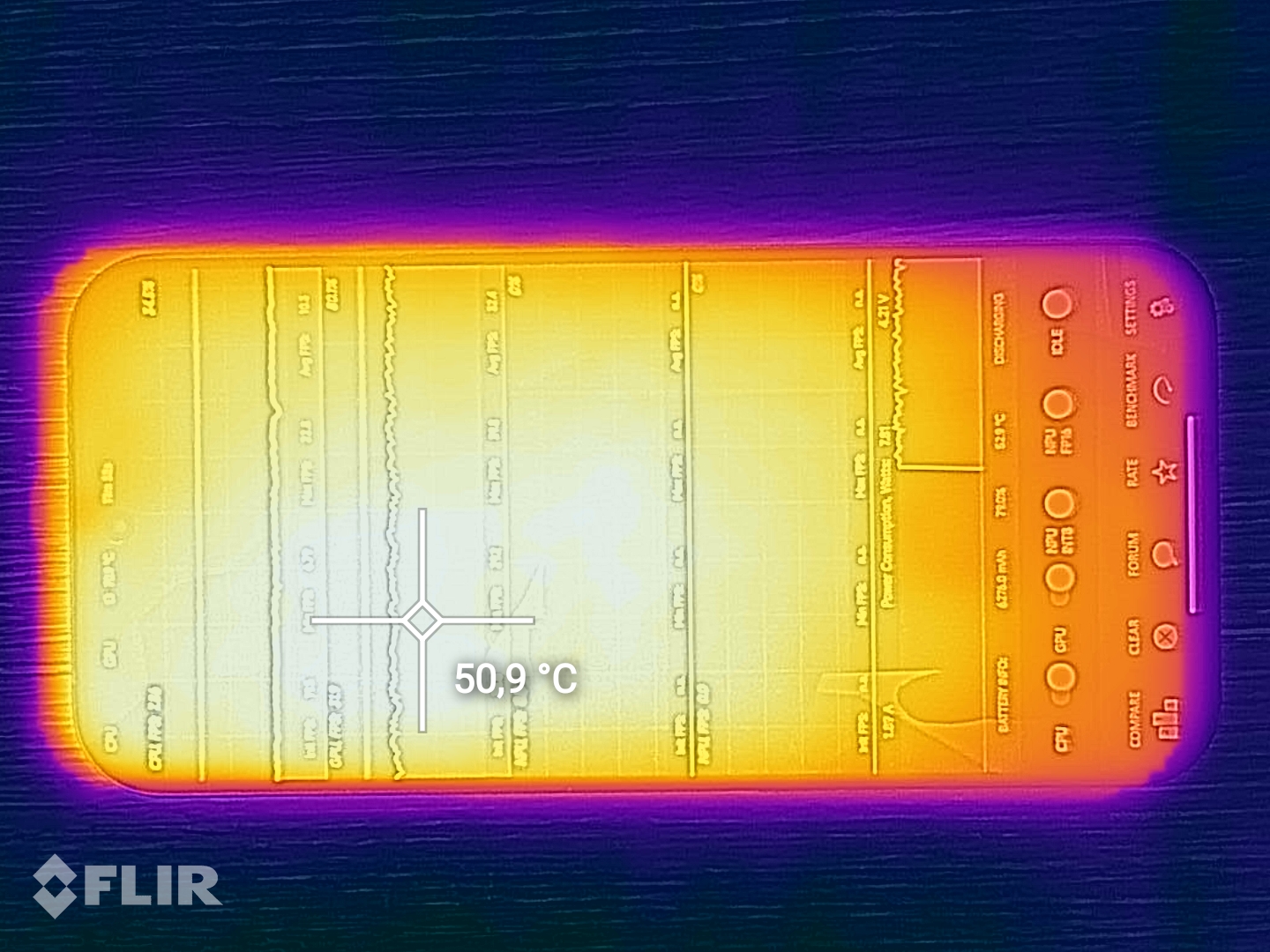
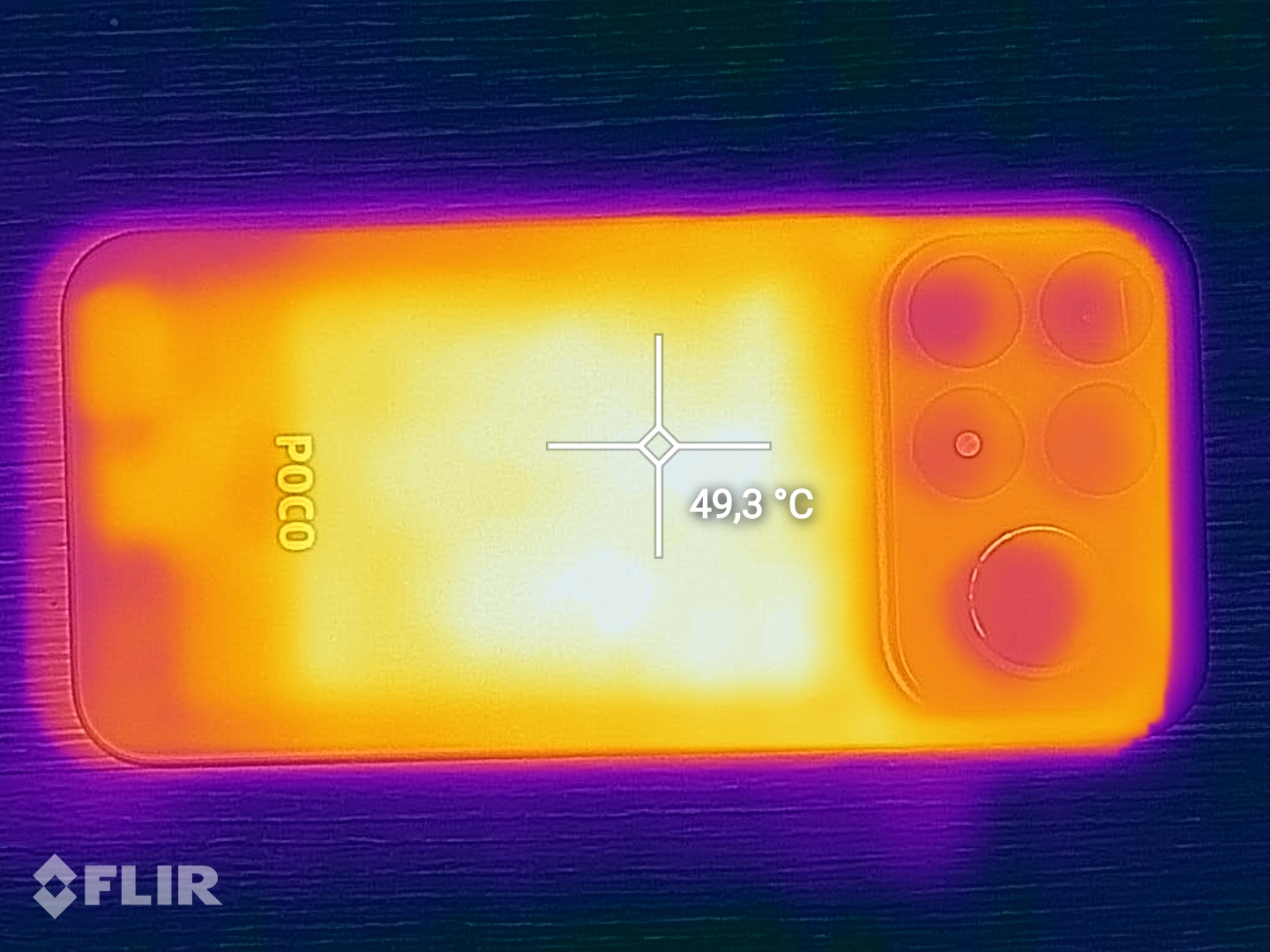
Poco has significantly improved the SoC’s cooling. All 3DMark stress tests now run to completion, and thermal throttling is less severe than on competing devices.
On the flip side, surface temperatures get quite high under sustained load.
(-) The maximum temperature on the upper side is 50.4 °C / 123 F, compared to the average of 35.4 °C / 96 F, ranging from 21.9 to 247 °C for the class Smartphone.
(-) The bottom heats up to a maximum of 49.4 °C / 121 F, compared to the average of 34.1 °C / 93 F
(+) In idle usage, the average temperature for the upper side is 28.1 °C / 83 F, compared to the device average of 33 °C / 91 F.
3DMark Stress Tests
| 3DMark | |
| Wild Life Stress Test Stability | |
| Xiaomi Poco F9 Ultra | |
| Motorola Signature | |
| Nothing Phone (3) | |
| Xiaomi 17T Pro | |
| Samsung Galaxy S26 Ultra | |
| Wild Life Extreme Stress Test | |
| Xiaomi Poco F9 Ultra | |
| Xiaomi 17T Pro | |
| Nothing Phone (3) | |
| Samsung Galaxy S26 Ultra | |
| Solar Bay Stress Test Stability | |
| Nothing Phone (3) | |
| Xiaomi Poco F9 Ultra | |
| Xiaomi 17T Pro | |
| Motorola Signature | |
| Samsung Galaxy S26 Ultra | |
| Solar Bay Extreme Stress Test Stability | |
| Xiaomi Poco F8 Ultra | |
| Xiaomi Poco F9 Ultra | |
| Samsung Galaxy S26 Ultra | |
| Steel Nomad Light Stress Test Stability | |
| Xiaomi Poco F9 Ultra | |
| Motorola Signature | |
| Xiaomi 17T Pro | |
| Nothing Phone (3) | |
| Samsung Galaxy S26 Ultra | |
Speakers
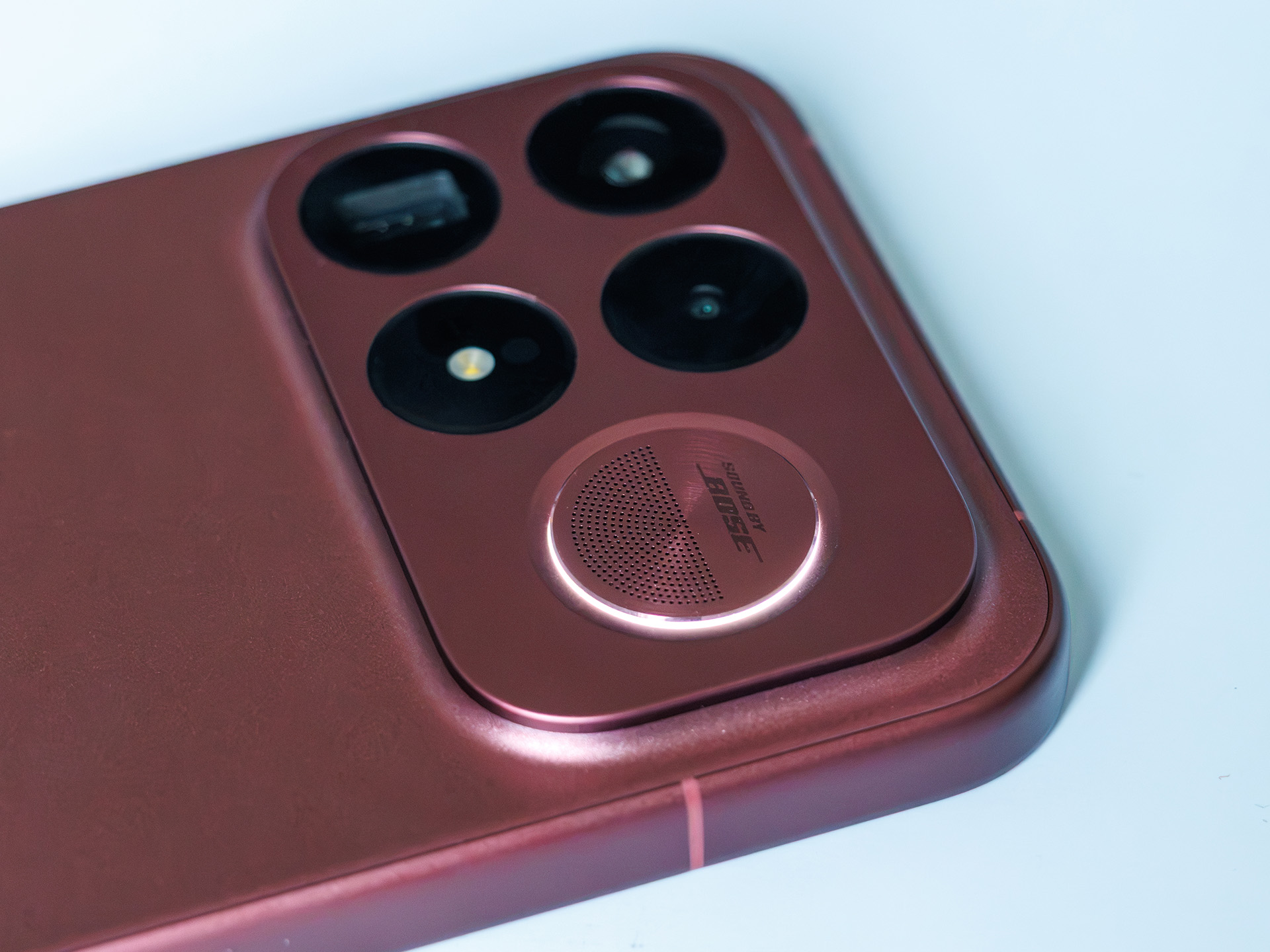
With the F9 Ultra, Poco is once again partnering with Bose, equipping the device with two speakers and a subwoofer on the back.
Thanks to its high maximum volume, the F9 Ultra not only gets exceptionally loud but also delivers a surprising amount of depth in the lower frequencies for a smartphone. The midrange and high frequencies are reproduced with good presence and are largely balanced, although the volume drops more noticeably in the highest frequencies. Overall, the F9 Ultra delivers powerful, full-bodied sound and ranks among the better smartphones for audio quality.
Xiaomi Poco F9 Ultra audio analysis
(+) | speakers can play relatively loud (87.8 dB)
Bass 100 - 315 Hz
(±) | reduced bass - on average 12.9% lower than median
(±) | linearity of bass is average (8.1% delta to prev. frequency)
Mids 400 - 2000 Hz
(+) | balanced mids - only 4.6% away from median
(+) | mids are linear (5.9% delta to prev. frequency)
Highs 2 - 16 kHz
(+) | balanced highs - only 4.4% away from median
(+) | highs are linear (2.6% delta to prev. frequency)
Overall 100 - 16.000 Hz
(+) | overall sound is linear (11.8% difference to median)
Compared to same class
» 0% of all tested devices in this class were better, 0% similar, 100% worse
» The best had a delta of 11%, average was 34%, worst was 136%
Compared to all devices tested
» 9% of all tested devices were better, 3% similar, 89% worse
» The best had a delta of 4%, average was 23%, worst was 136%
Nothing Phone (3) audio analysis
(+) | speakers can play relatively loud (93.2 dB)
Bass 100 - 315 Hz
(-) | nearly no bass - on average 21.2% lower than median
(+) | bass is linear (4.5% delta to prev. frequency)
Mids 400 - 2000 Hz
(+) | balanced mids - only 4.5% away from median
(+) | mids are linear (3.8% delta to prev. frequency)
Highs 2 - 16 kHz
(+) | balanced highs - only 4.7% away from median
(+) | highs are linear (4% delta to prev. frequency)
Overall 100 - 16.000 Hz
(±) | linearity of overall sound is average (15.9% difference to median)
Compared to same class
» 5% of all tested devices in this class were better, 5% similar, 90% worse
» The best had a delta of 11%, average was 34%, worst was 136%
Compared to all devices tested
» 25% of all tested devices were better, 5% similar, 70% worse
» The best had a delta of 4%, average was 23%, worst was 136%
Runtimes - Huge 8,050-mAh battery
Power consumption
Power consumption is relatively high, particularly at idle.
| Off / Standby |   0.15 / 0.43 Watt 0.15 / 0.43 Watt |
| Idle |  1.18 / 2.28 / 2.34 Watt 1.18 / 2.28 / 2.34 Watt |
| Load |
11.96 / 14.56 Watt |
    
| |
Key:
min: ,
med: ,
max: Metrahit Energy | |
| Xiaomi Poco F9 Ultra 8050 mAh | Samsung Galaxy S26 Ultra 5000 mAh | Xiaomi 17T Pro 7000 mAh | Motorola Signature 5200 mAh | Nothing Phone (3) 5150 mAh | Xiaomi Poco F8 Ultra 6500 mAh | Average Qualcomm Snapdragon 8 Elite Gen 5 | Average of class Smartphone | |
|---|---|---|---|---|---|---|---|---|
| Power Consumption | 21% | 33% | 15% | 61% | 35% | 30% | 31% | |
| Idle Minimum * (Watt) | 1.18 | 0.56 53% | 0.89 25% | 0.8 32% | 0.4 66% | 0.87 26% | 0.882 ? 25% | 0.901 ? 24% |
| Idle Average * (Watt) | 2.28 | 1.18 48% | 1.67 27% | 1.3 43% | 0.7 69% | 1.29 43% | 1.373 ? 40% | 1.483 ? 35% |
| Idle Maximum * (Watt) | 2.34 | 1.33 43% | 1.73 26% | 1.7 27% | 1.21 48% | 1.33 43% | 1.586 ? 32% | 1.677 ? 28% |
| Load Average * (Watt) | 11.96 | 14.91 -25% | 6.27 48% | 11.8 1% | 8.84 26% | 8.01 ? 33% | 6.82 ? 43% | |
| Load Maximum * (Watt) | 14.56 | 16.58 -14% | 8.63 41% | 18.7 -28% | 9.15 37% | 11.4 ? 22% | 10.8 ? 26% |
* ... smaller is better
Power consumption: Geekbench (150 cd/m²)
Power consumption: GFXbench (150 cd/m²)
Runtimes
Thanks to its massive battery, the Poco F9 Ultra delivers outstanding battery life.
However, with better power efficiency, it could have lasted a few hours longer.
Notebookcheck overall rating
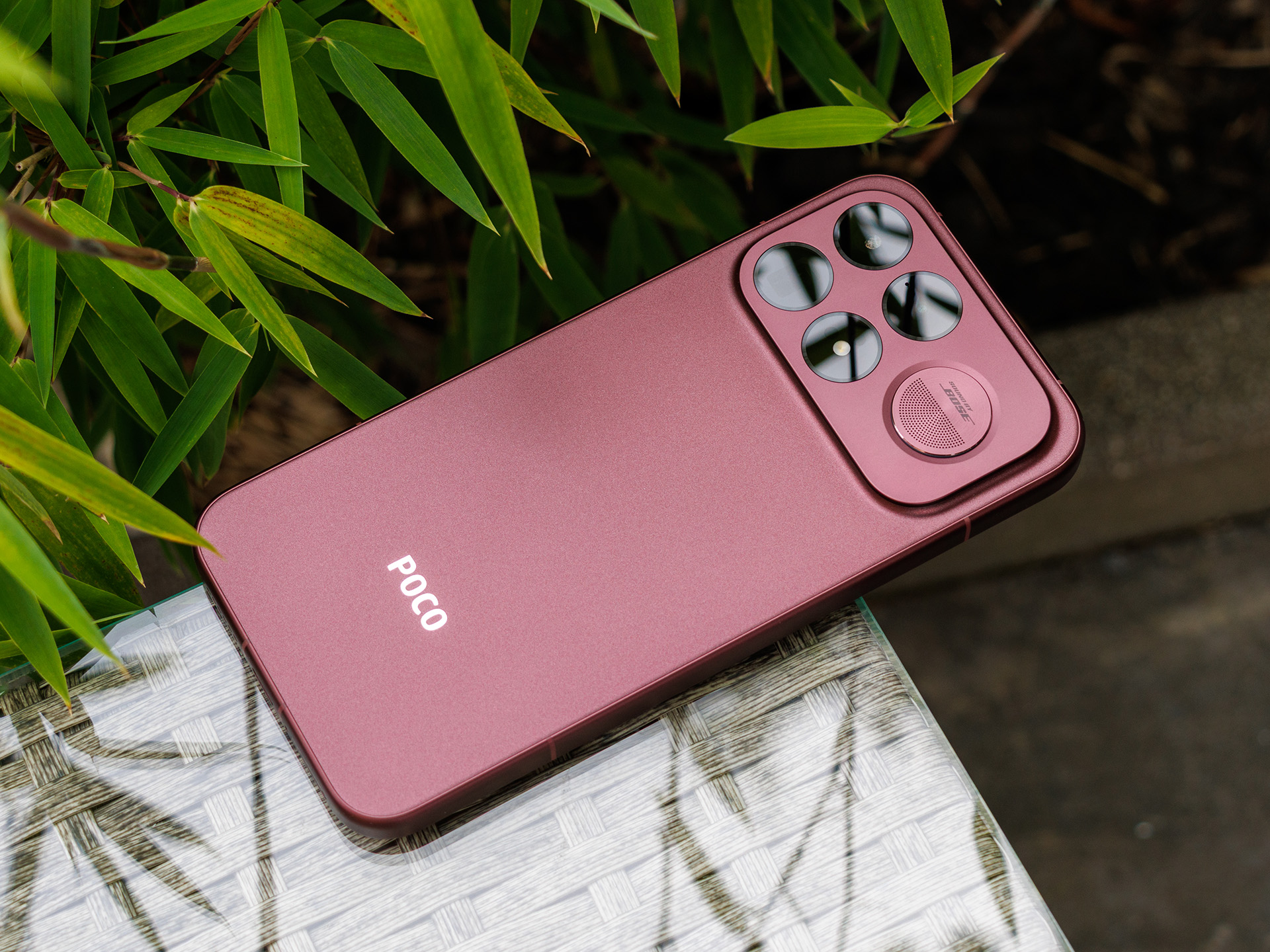
The Poco F9 Ultra delivers exceptional battery life, powerful audio, and strong performance. However, its significantly higher price is accompanied by several compromises that could have been avoided.
Xiaomi Poco F9 Ultra
- 09/30/2026 v8
Daniel Schmidt
 Total Sustainability Score:
 A comparison of possible alternatives
Image | Model / Review | Price | Weight | Drive | Display |
|---|---|---|---|---|---|
1. 89.3%  | Xiaomi Poco F9 Ultra Qualcomm Snapdragon 8 Elite Gen 5 ⎘ Qualcomm Adreno 840 ⎘ 16 GB Memory, 1024 GB UFS 4.x | List Price: 1200€ | 235 g | 1 TB UFS 4.1 Flash | 6.90" 2608x1200 416 PPI AMOLED |
2. 89.8%  | Samsung Galaxy S26 Ultra Qualcomm Snapdragon 8 Elite Gen 5 for Galaxy ⎘ Qualcomm Adreno 840 ⎘ 12 GB Memory, 256 GB UFS 4.x | List Price: 1449€ | 214 g | 256 GB UFS 4.0 Flash | 6.90" 3120x1440 498 PPI Dynamic AMOLED 2X |
3. 85.7%  | Xiaomi 17T Pro MediaTek Dimensity 9500 ⎘ Arm Mali G1- Ultra MC12 ⎘ 12 GB Memory, 512 GB UFS 4.x | Amazon: $785.00 List Price: 1000€ | 219 g | 512 GB UFS 4.1 Flash | 6.83" 2772x1280 447 PPI AMOLED |
4. 87.9%  | Motorola Signature Qualcomm Snapdragon 8 Gen 5 ⎘ Qualcomm Adreno 829 ⎘ 16 GB Memory, 512 GB UFS 4.x | List Price: 1000 Euro | 186 g | 512 GB UFS 4.1 Flash | 6.80" 2780x1264 450 PPI AMOLED |
5. 84.8%  | Nothing Phone (3) Qualcomm Snapdragon 8s Gen 4 SM8735 ⎘ Qualcomm Adreno 825 ⎘ 16 GB Memory, 512 GB UFS 4.x | Amazon: List Price: 899 Euro | 218 g | 512 GB UFS 4.0 Flash | 6.67" 2800x1260 460 PPI AMOLED |
Transparency
The selection of devices to be reviewed is made by our editorial team. The test sample was given to the author by the manufacturer free of charge for the purposes of review. There was no third-party influence on this review, nor did the manufacturer receive a copy of this review before publication. There was no obligation to publish this review. As an independent media company, Notebookcheck is not subjected to the authority of manufacturers, retailers or publishers.
This is how Notebookcheck is testing
Every year, Notebookcheck independently reviews hundreds of laptops and smartphones using standardized procedures to ensure that all results are comparable. We have continuously developed our test methods for around 20 years and set industry standards in the process. In our test labs, high-quality measuring equipment is utilized by experienced technicians and editors. These tests involve a multi-stage validation process. Our complex rating system is based on hundreds of well-founded measurements and benchmarks, which maintains objectivity. Further information on our test methods can be found here.
 Add as a preferred source on Google


