




Poco F9 Ultra: Why 10,000 cd/m² is not necessarily better
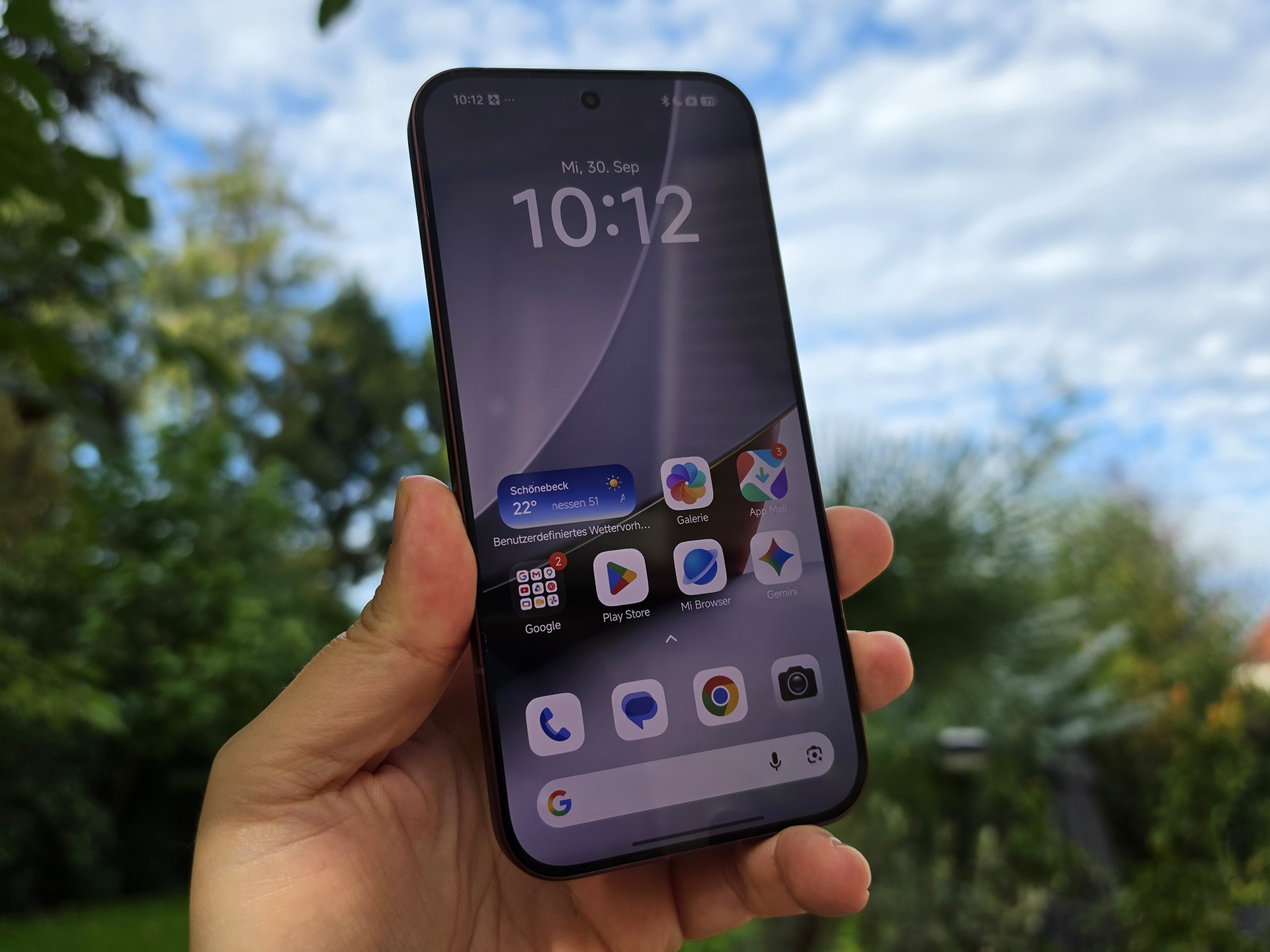
The maximum peak brightness of an OLED panel is an impressive figure on the spec sheet, but it doesn’t tell the whole story when it comes to real-world readability. The Poco F9 Ultra only reaches the advertised 10,000 cd/m² with HDR content and on a very small portion of the screen. Our measuring device reaches its limit at 8,500 cd/m². While such reserves are certainly useful for individual HDR highlights, they are rarely put to use in normal smartphone use.
More meaningful for everyday use is our APL18 measurement, in which the white test area is surrounded by graduated gray areas, putting the display under more realistic conditions. Here, the F9 Ultra reaches 2,435 cd/m². This is a good figure, though it’s significantly lower than that of the Poco F8 Ultra. For typical content, the new panel thus offers no brightness advantage over its predecessor. Consequently, the new model doesn’t offer any advantage outdoors either. The F9 Ultra remains easy to read even in direct sunlight, but it doesn’t outperform its predecessor in this regard. In manual mode, the maximum brightness is around 850 cd/m².
The 10,000 cd/m² is thus primarily a spectacular peak value for small HDR areas rather than a practical upgrade. The display of the Poco F9 Ultra is excellent, but anyone expecting a significant improvement over the F8 Ultra (buy here on Amazon) based on the five-digit brightness rating is likely to be disappointed.
 Add as a preferred source on Google


