




Poco F9 Ultra vs. F8 Ultra: 200 MPix are not always better
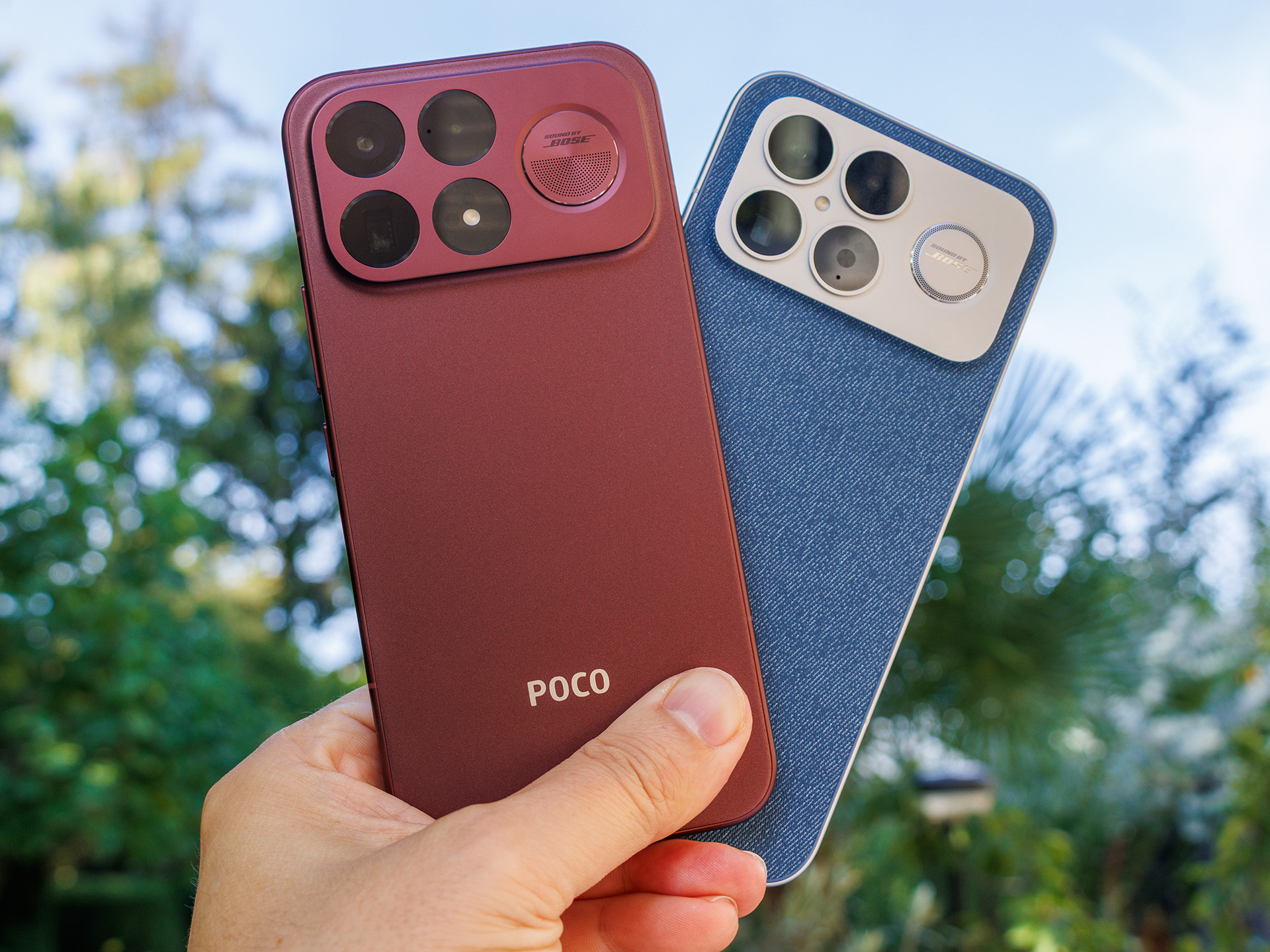
On paper, the Poco F9 Ultra’s new main camera initially sounds like a significant upgrade: Instead of 50 MPix, it now offers a whopping 200 MPix. However, a closer look at the hardware reveals a different story. At 1/1.56 inches, the new sensor is significantly smaller than the F8 Ultra’s 1/1.31-inch Light Fusion 950. Consequently, the individual pixels are also smaller, though Poco compensates for the higher resolution through pixel binning.
Another change concerns the optics. While the F8 Ultra still used a glass-lens design, the F9 Ultra relies exclusively on six plastic lenses. The field of view has also changed slightly: the 35mm equivalent focal length increases from 23 to 24 millimeters, giving the F9 Ultra a slightly narrower field of view.
With its new main camera, Poco is taking an unusual approach: higher resolution paired with a smaller sensor and simpler optics. The nominally impressive 200 MPix is therefore by no means automatically an upgrade over the predecessor’s 50-MPix camera. Especially in low light, it remains to be seen whether the higher resolution can actually compensate for the physical drawbacks.
We compared the two side by side: In daylight, they deliver similar results, but in a direct comparison, it’s noticeable that the photos from the Poco F8 Ultra have slightly more contrast. In contrast, those from the F9 Ultra capture finer details. This applies both in standard mode at 12.5 MPix and at full resolution at 50 or 200 MPix.


The differences become more pronounced in low light, as the Poco F9 Ultra's smaller sensor becomes noticeable in these conditions. The autofocus also hunts significantly more often in low-light situations than on the F8 Ultra (buy it here on Amazon).


The Live View mode also shows some differences, which is a bit surprising. The Poco F8 Ultra brightens the image much more, making our subject easier to see in the dark.


The Poco F9 Ultra’s 200-MPix camera is therefore not a clear upgrade. While it does capture finer details in daylight, overall both smartphones perform at a similar level. In low light, however, the tables turn: The F8 Ultra’s larger sensor offers visible advantages, and its autofocus also works more reliably. So, on the F9 Ultra, more megapixels don’t automatically mean a better camera.
Source
 Add as a preferred source on Google


No comments for this article
