




The two outer rings of Uranus have different origins
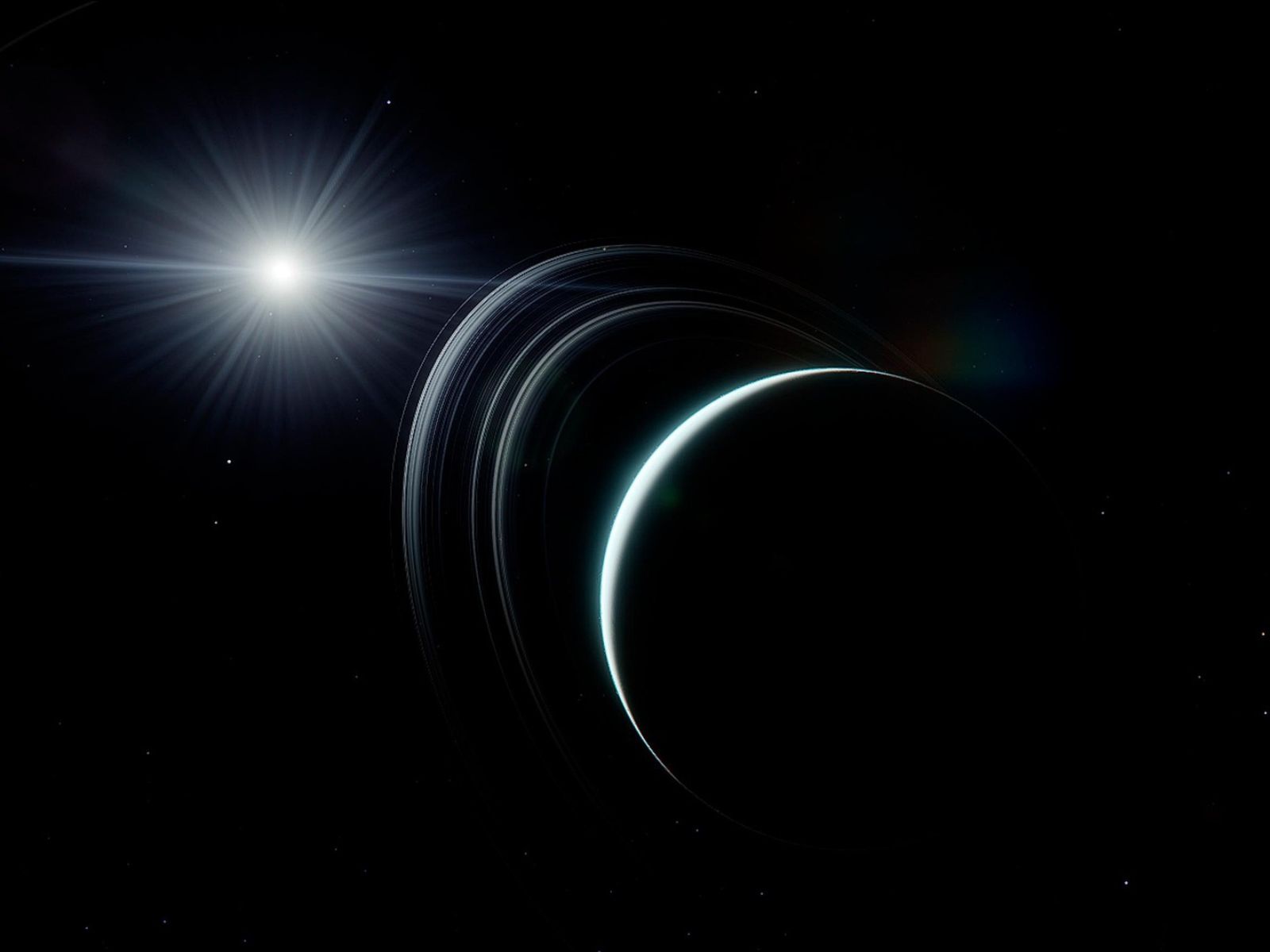
Uranus has been observed for many centuries and was classified as a planet in 1781. But this celestial object still holds many mysteries, such as its rings, which were discovered in 1977. And on this subject, a new study suggests that these two outer rings have different origins.
Indeed, the μ and ν rings (also known as mu and nu) are blue and red. And this color variation would be caused by differences in composition. According to astronomers at the University of California, Berkeley, the μ ring is mainly composed of water ice, while the ν ring is composed of rock with about 10 to 15% carbon.
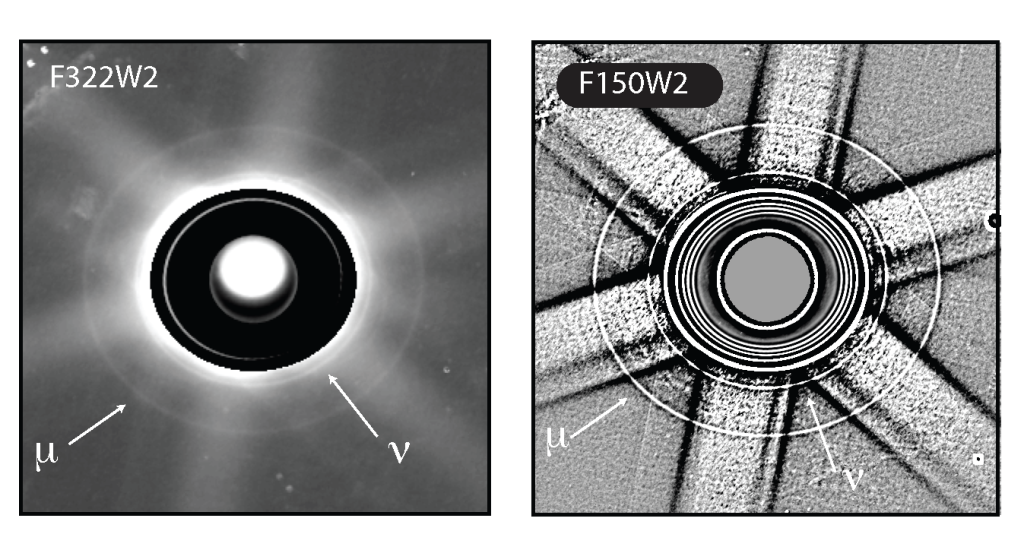
Consequently, based on observations from the James Webb Space Telescope and the Hubble Space Telescope, it appears that the moon Mab, which measures only 12 km in diameter, is the source of the μ ring. And this discovery is quite significant, as it also confirms that Mab is composed of water ice. However, the situation is quite different for the other outer ring, as Imke de Pater, a professor at the University of California, explains:
"In contrast, the ν ring material is sourced from micrometeorite impacts on and collisions between unseen rocky bodies rich in organic materials, which must orbit between some of the known moons. One interesting question is why the parent bodies sourcing these rings are so different in composition."
But while these discoveries help astronomers to better understand this planet, there are still many mysteries surrounding it. Indeed, Uranus remains largely unknown, and further studies could help answer some of these questions.
Source(s)
Journal of Geophysical Research: Planets
Image source: NASA, ESA, Image processing: Imke de Pater, Matt Hedman
 Add as a preferred source on Google


