




Astronomers have discovered an exo-Jupiter that may have clouds

Astronomers observe exoplanets in order to detect potential signs of life elsewhere in the universe. A recent discovery may change many things, as a team led by Elisabeth Matthews at the Max Planck Institute for Astronomy (MPIA) has discovered an exo-Jupiter that may have clouds.
This exoplanet is called Epsilon Indi Ab, and its existence was confirmed in 2018. But after observing this celestial object using the James Webb Space Telescope’s mid-infrared instrument (MIRI), astronomers spotted new details.
Indeed, its mass is estimated to be about 7.6 times that of Jupiter, despite a similar diameter. Nevertheless, its temperature is low, between 200 and 300 K (−70 and +26 °C). However, after conducting several studies, scientists believe that clouds are present on this exo-Jupiter.
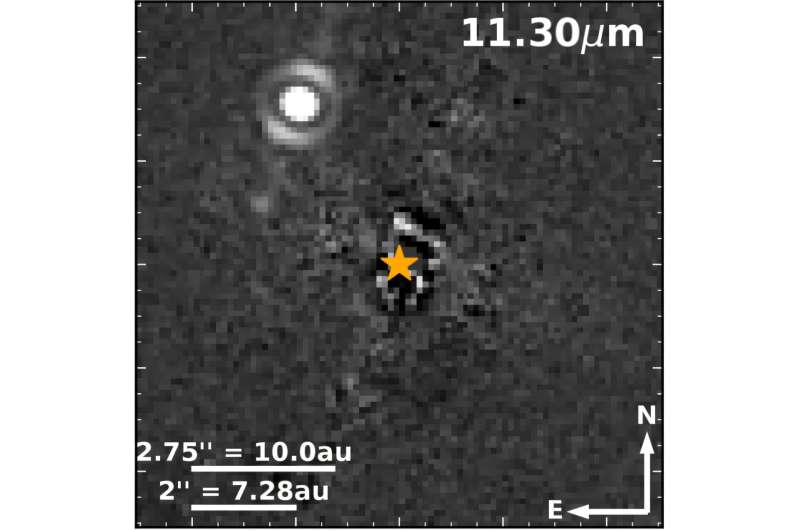
It must be said that on Jupiter, ammonia clouds are located in the upper layers of the atmosphere. But on Epsilon Indi Ab, these clouds appear to be thick and composed of water ice. In addition, these clouds may be located in various places on this exoplanet.
However, while this discovery is a major breakthrough, detecting clouds on an exoplanet is extremely difficult. Therefore, it will be necessary to wait for new devices, such as the NASA's Nancy Grace Roman Space Telescope, which could observe these structures. And this could, in the future, lead to the discovery of life elsewhere in the universe.
Source(s)
 Add as a preferred source on Google


