




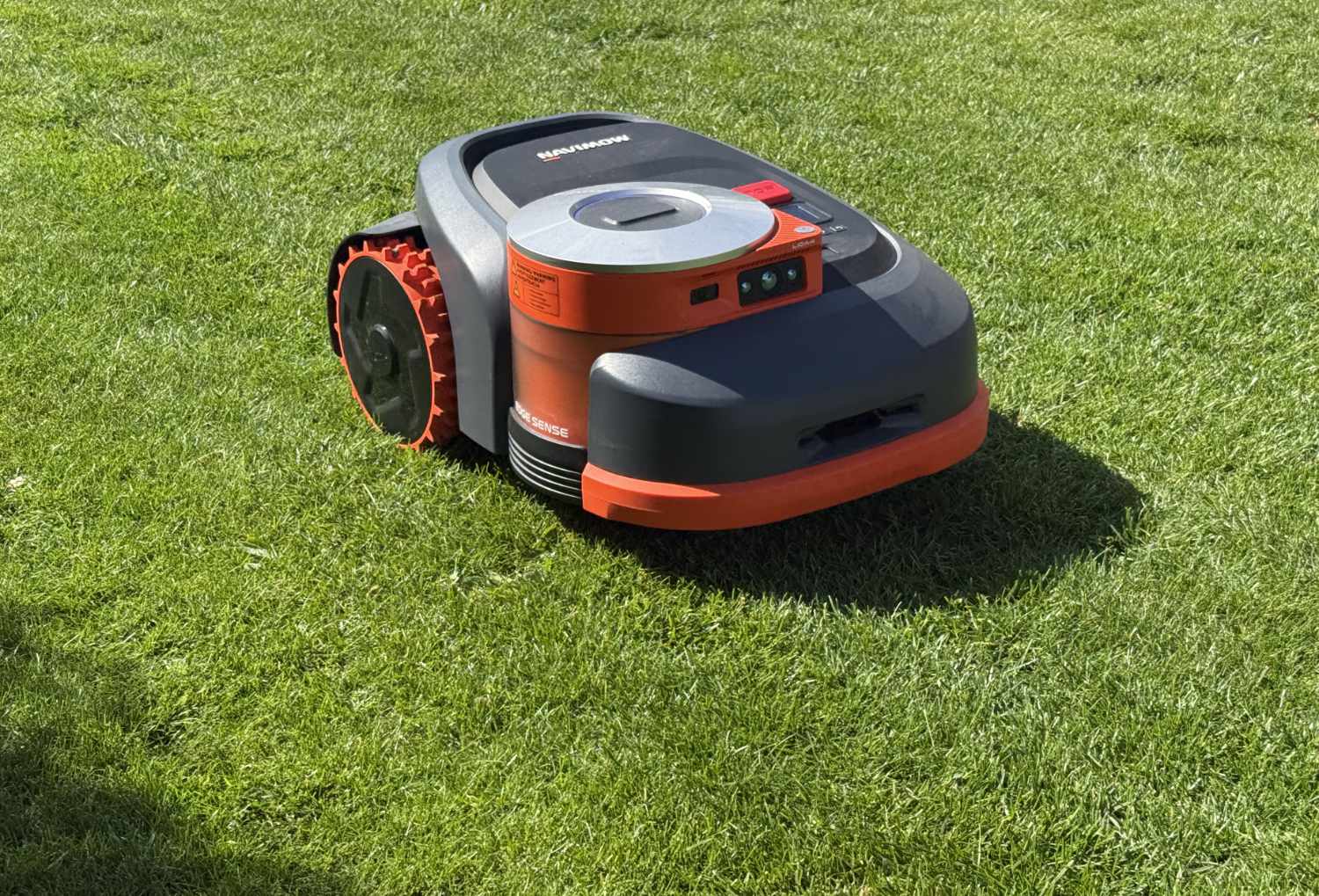
LiDAR instead of RTK: Navimow H2 robotic lawn mower review
Successor.
The Navimow H2 is the second generation of Navimow’s debut robotic lawn mower. Our Navimow H2 review shows what innovations this mid-range model offers and how well they work in practice.Marcus Schwarten (translated by Marcus Schwarten (translation supported by DeepL)) Published 🇩🇪 🇳🇱 ...
Navimow H2 review verdict: A reliable robotic lawn mower without standout features
With the H2 series, Navimow has made selective improvements to its established robotic lawn mower. The key innovation is the use of LiDAR combined with Net-RTK and vision, eliminating the need for an RTK antenna.
There are a few other improvements as well, although they remain quite limited. In our view, Navimow missed an opportunity to do more here. A solution for better edge cutting, for example, would have been desirable. After all, numerous manufacturers such as Roborock, Dreame, Ecovacs, and Mammotion have more to offer in 2026.
Ultimately, the Navimow H2 is a solid robotic lawn mower with LiDAR navigation, but it lacks standout features. It generally navigates and avoids obstacles reliably and otherwise gives little cause for complaint, but it leaves wider strips along the edges than many competitors, including models that are often less expensive.
Pros
Cons
Price and availability
The suggested retail price for Navimow’s H2 series in Europe starts at 1,599 euros (MSRP). The model is available in four different versions: the H206 for up to 600 square meters (1,599 euros MSRP), the H210 for up to 1,000 square meters (1,799 euros MSRP), H215 for up to 1,500 square meters (2,099 euros MSRP), and H230 for up to 3,000 square meters (2,499 euros MSRP). An overview of available retailers can be found on the manufacturer’s website.
In the USA, Navimow offers two models: the H210 for 0.25 acres at $1,799 and the H220 for 0.5 acres at $2,199 (MSRP).
Table of Contents
- Navimow H2 review verdict: A reliable robotic lawn mower without standout features
- Features & what’s included: Triple navigation instead of RTK
- Setup & maintenance: AI mapping is acting up on the test device
- App & usability: As good as ever
- Navigation & obstacle detection: Nearly perfect
- Lawn & edge mowing: More blades, but no edge cutter
- Runtime & noise level: Mows approximately 300 m² per battery charge
The H Series was Segway Navimow’s first robotic lawn mower and was introduced back in 2021. For the 2026 gardening season, the manufacturer has now launched a successor, the H2 Series, which fits between the i2 and X4 model lines.
What’s changed? At first glance—visually speaking—not much. Nevertheless, the second generation offers several important innovations and improvements, as our Navimow H2 review reveals.
Data Sheet
| Feature/Model | Navimow H2 Series | Havimow H Series |
|---|---|---|
| Area | max. 600 to max. 3,000 m² | max. 500 to max. 3,000 m² |
| Navigation & Obstacle Detection | EFLS LiDAR+ (LiDAR + NRTK + Vision) | EFLS 1.0 (RTK + Vision) |
| Mower | Mowing disc | Mowing disc |
| Number of blades | 6 blades | 3 blades |
| Cutting width | 22 cm | 22 cm |
| Cutting height | 2–7 cm | 3–6 cm |
| Cutting height adjustment | electric | electric |
| Gradient | 45% / 24° | 45% / 24° |
| Display | yes | yes |
| Battery capacity | 5.1 to 10 Ah | 5.1 to 10.2 Ah |
| Weight | ~16 kg | ~ 17 kg |
| Dimensions | 62.4 × 44.5 × 29.5 cm | 60.3 × 46.8 × 27.4 cm |
| Water resistance | IP66 | IP66 |
| Storage case included | No | No |
| Number of blades included | 12 pieces | N/A |
| Color | Gray/Orange | Gray/Orange |
Features & what’s included: Triple navigation instead of RTK
The key innovation of the H2 series is the change in navigation technology. In the first generation, Navimow still relied on RTK. By 2026, however, this standard will increasingly be replaced by LiDAR—including in the H2. In the EFLS LiDAR system, this technology—already widely known from robotic vacuum cleaners—is combined with Network RTK positioning and visual recognition to form a triple-fusion navigation architecture. This also eliminates the need for an RTK antenna, making it easier to place the robot in the yard. Additionally, LiDAR technology is less susceptible to shading from trees, buildings, and other obstacles.
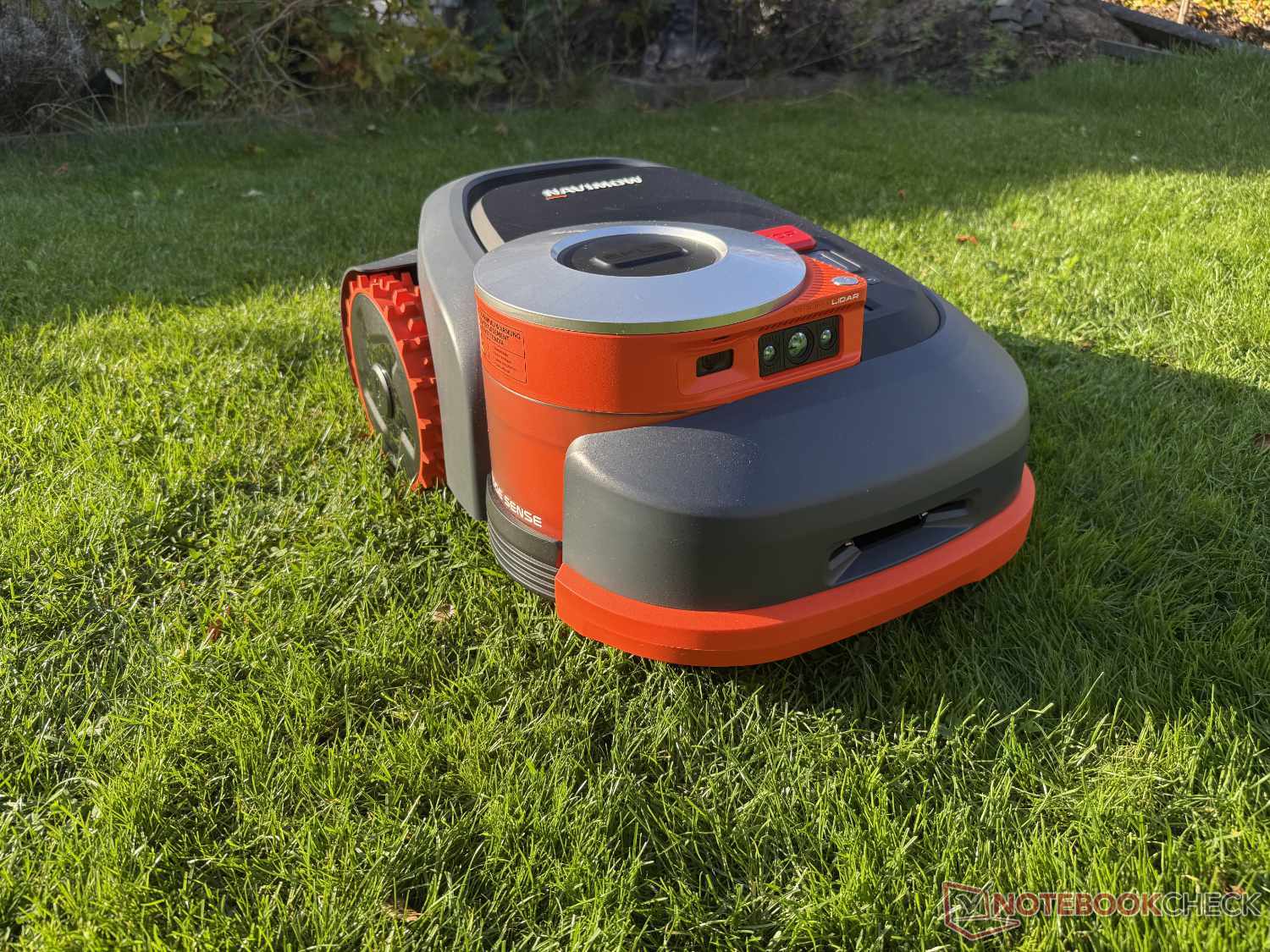
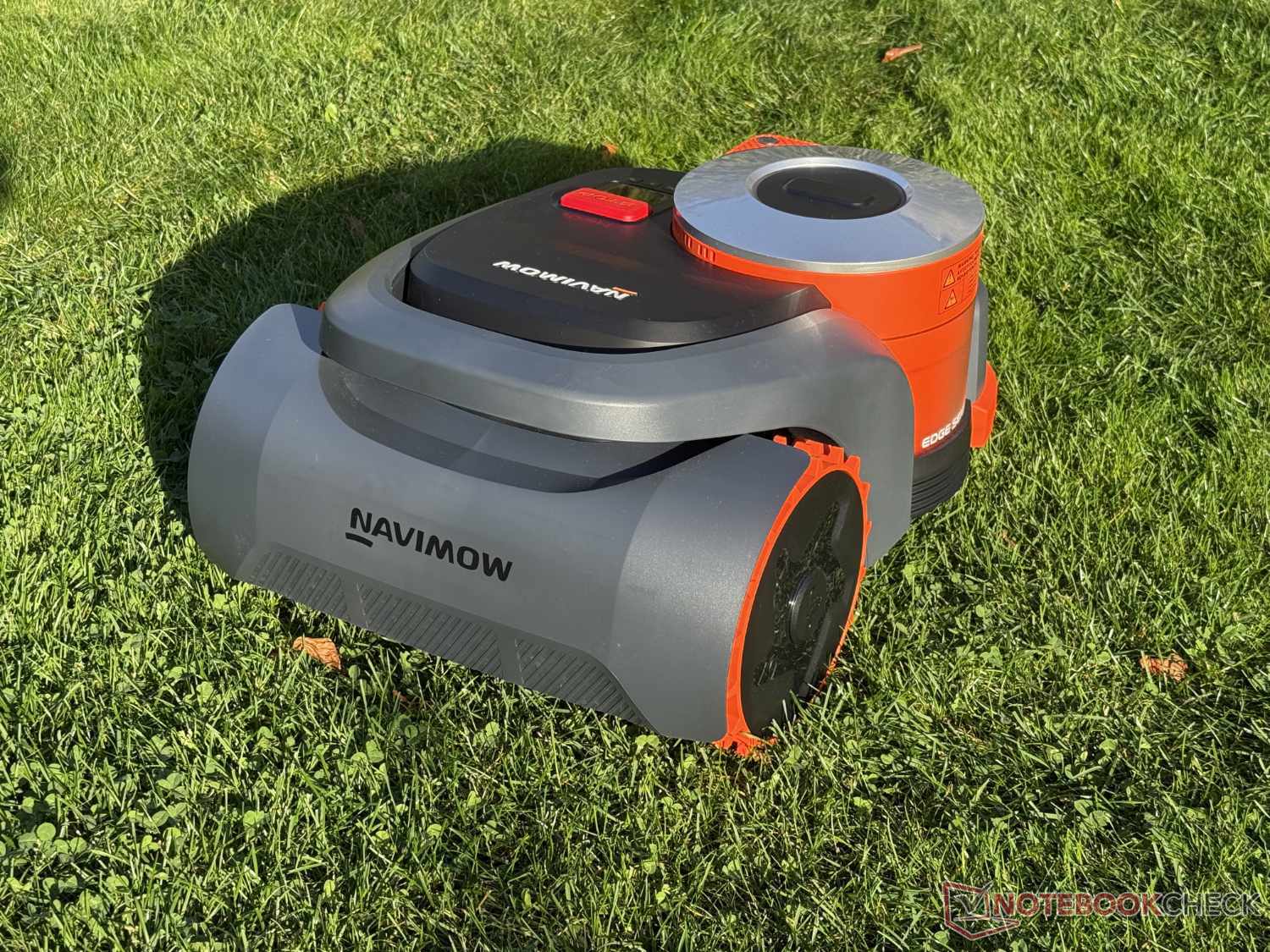
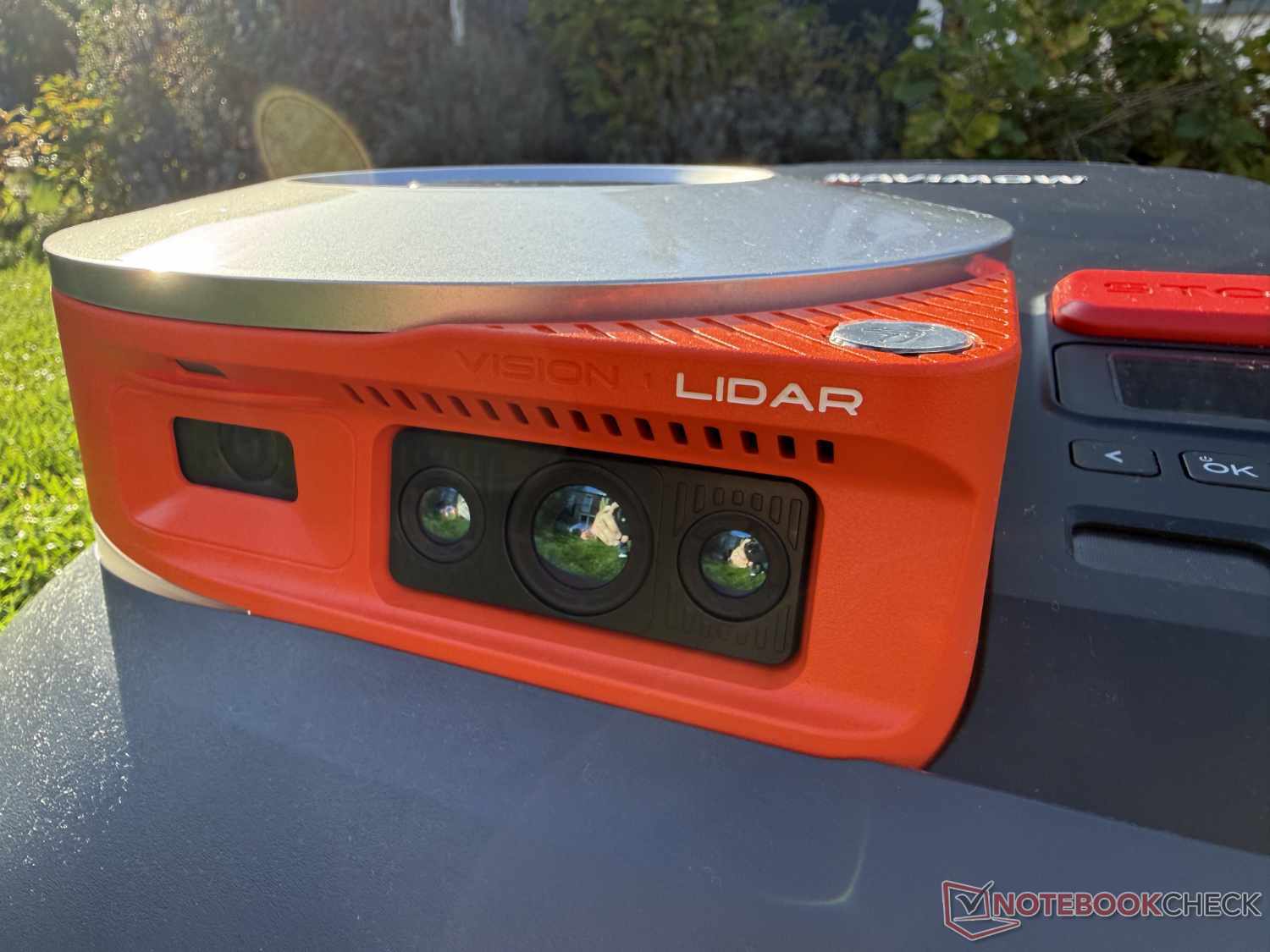
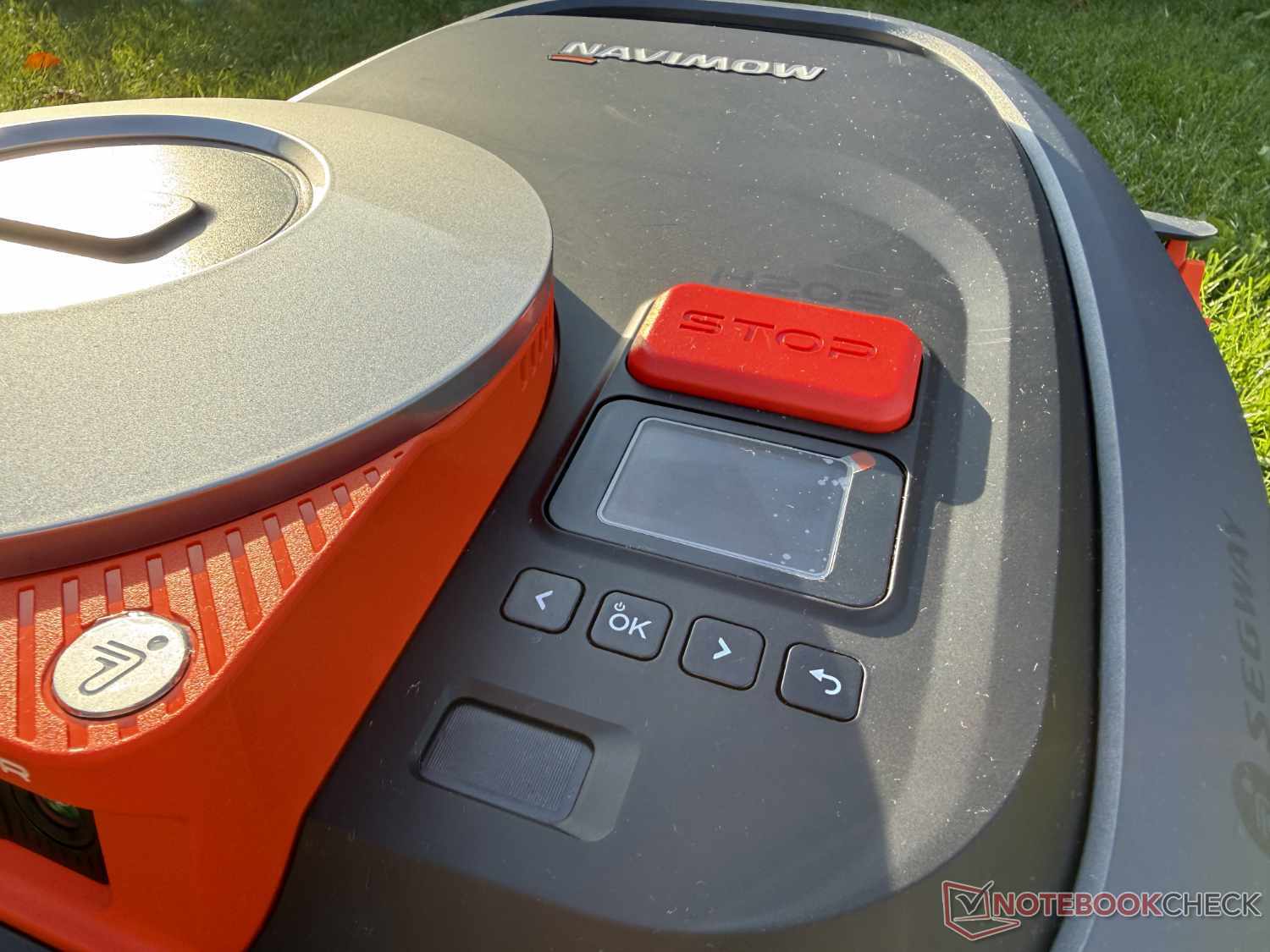
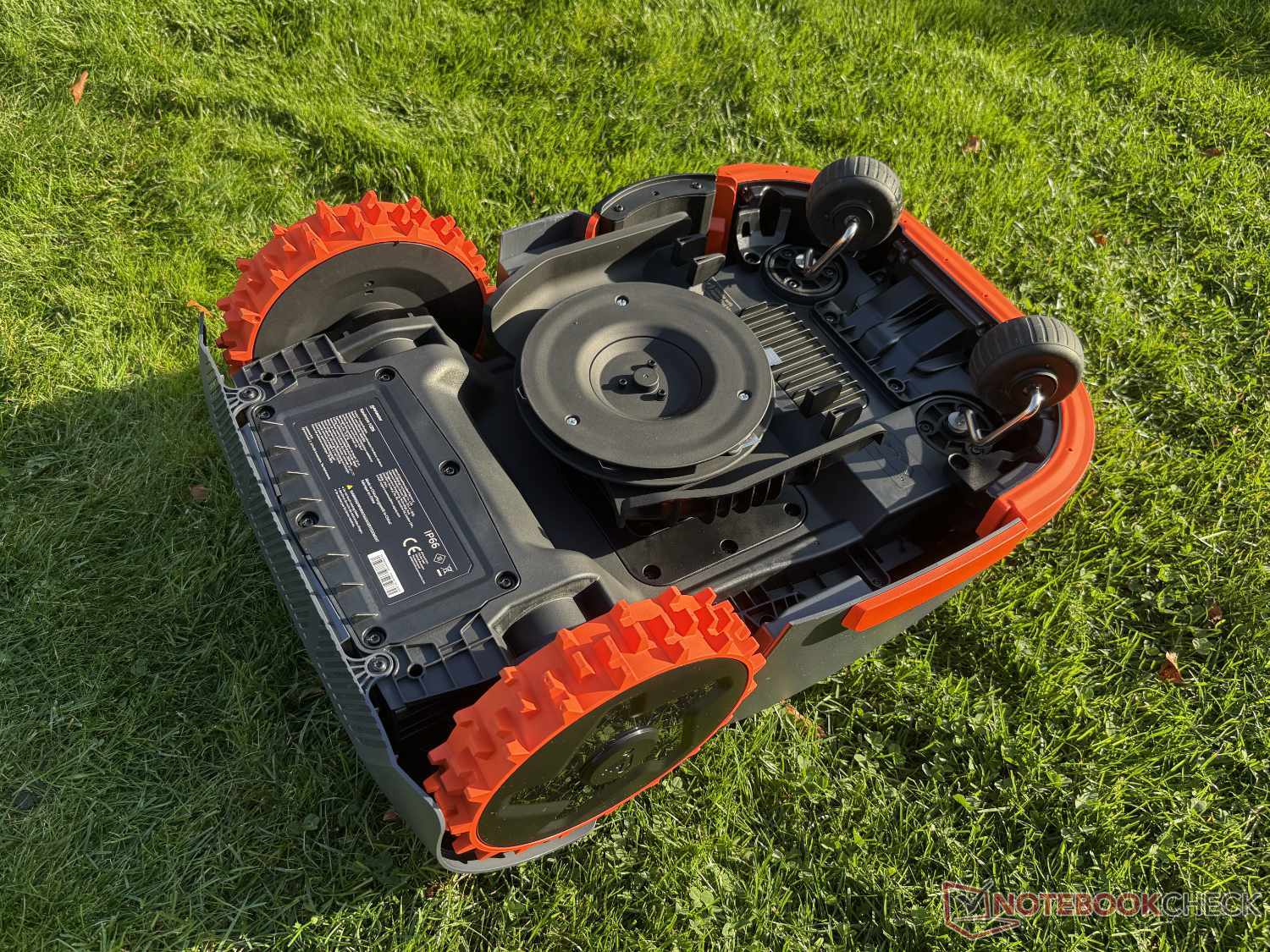
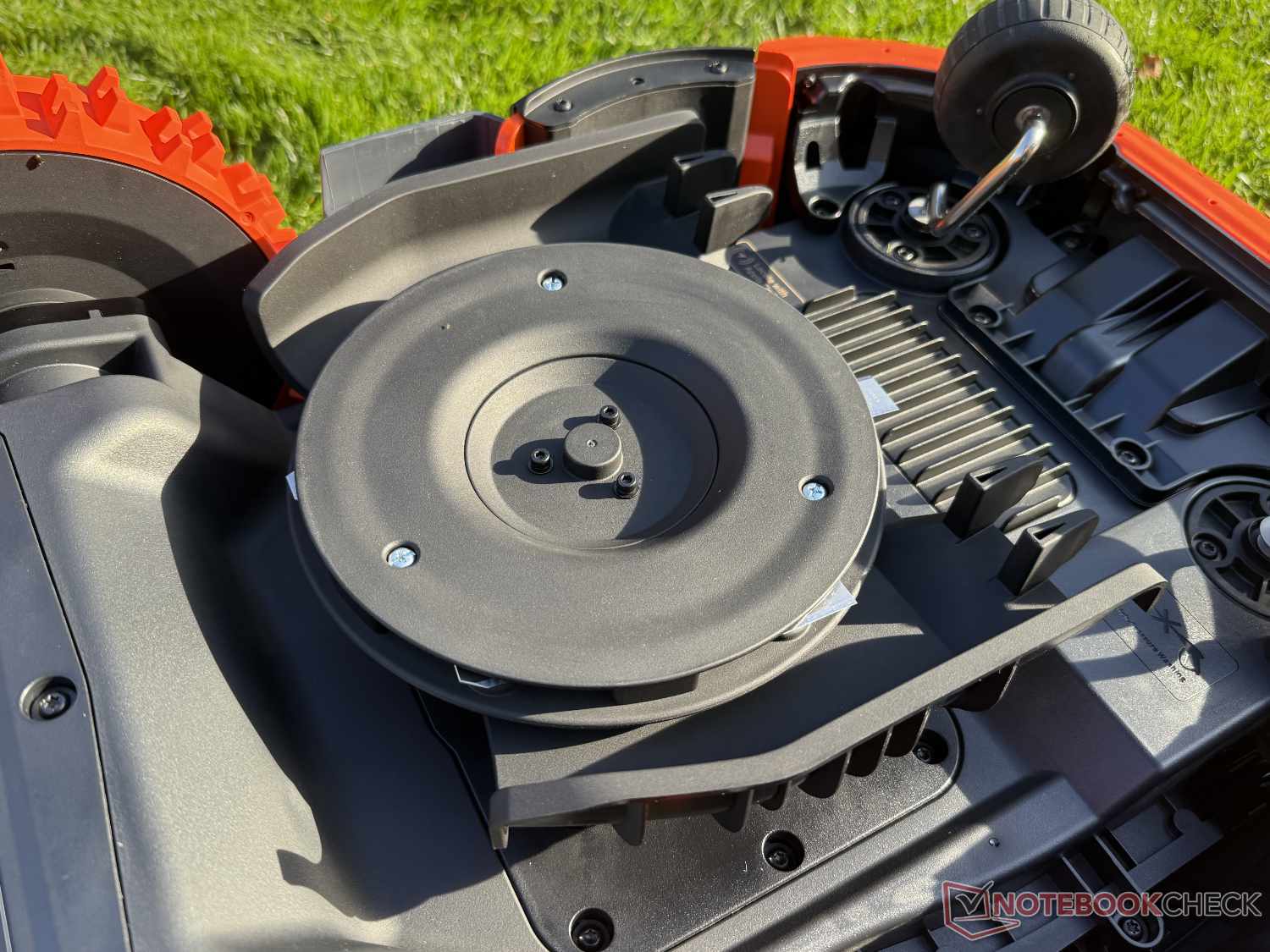
Apart from changes to the camera area, where the LiDAR module is now located, the design has remained largely unchanged. The new generation also mows with a cutting deck featuring a 22 cm cutting width, but now with six blades instead of three. The cutting height can also be adjusted electrically within a wider range, from 2 to 7 cm. However, the Navimow H2 does not offer a special edge-mowing function, such as those found on the Mova LiDAX Ultra (starting at about 700 euros on Amazon) or the Roborock RockNeo Q1.
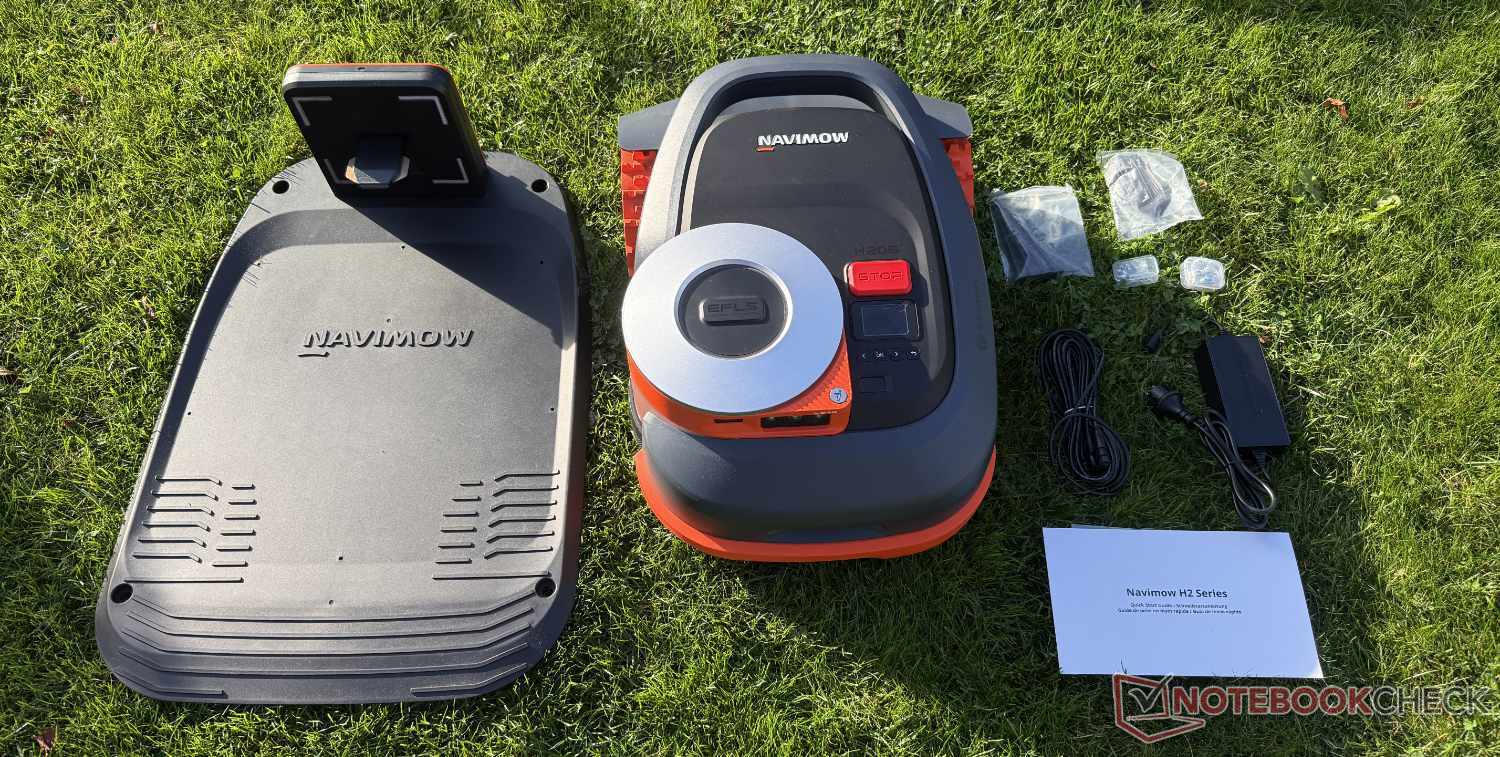
The Navimow H2 comes with the standard charging station. The package includes the usual ground screws for securing it to the ground. The package is rounded out by 12 replacement blades.
Setup & maintenance: AI mapping is acting up on the test device
Once the app, robot, and Wi-Fi network have successfully connected, the process of mapping the lawn begins. This can be done either automatically using AI or manually. Unfortunately, the AI mode did not work initially on our pre-production test unit. Although the robotic lawn mower was positioned in the middle of the lawn, an error message appeared stating that it could not find the lawn. However, production models should not be affected by this issue.
Once the mapping process had been started manually, however, we were able to switch to AI mode even on the test unit. The H2 then slowly and carefully made its way along the edge of the lawn. This worked well for the most part, but it did end up in a hedge once.
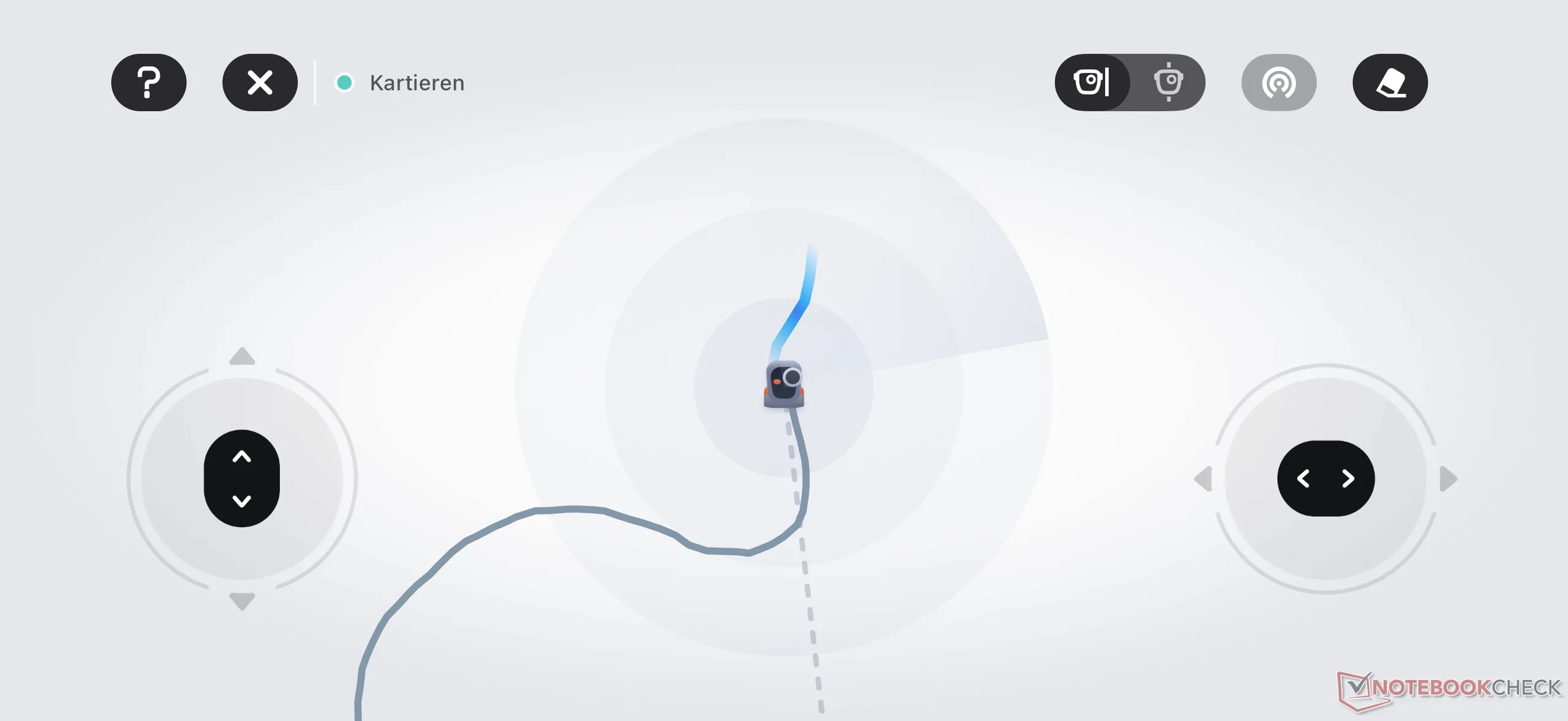
Alternatively, purely manual mapping is available, which works perfectly fine. Here, the robotic mower is guided along the edge of the lawn using two joysticks on the smartphone display. The H2 responds adequately, but not too sensitively. On the plus side: An erase function allows you to correct mistakes.
Overall, the Navimow H2 is ready for use fairly quickly, although the time required naturally depends on the size of the lawn and thus the duration of the mapping process. Once the virtual map is created, it can be customized to your specific needs if desired, for example by setting up restricted zones.
App & usability: As good as ever
In our view, the Navimow app was already one of the best on the market last year. That hasn’t changed in 2026. It doesn’t offer an excessive number of features, but it’s largely intuitive to use and clearly laid out. As usual, the overview screen displays the current map along with live progress when the robotic lawn mower is hard at work.
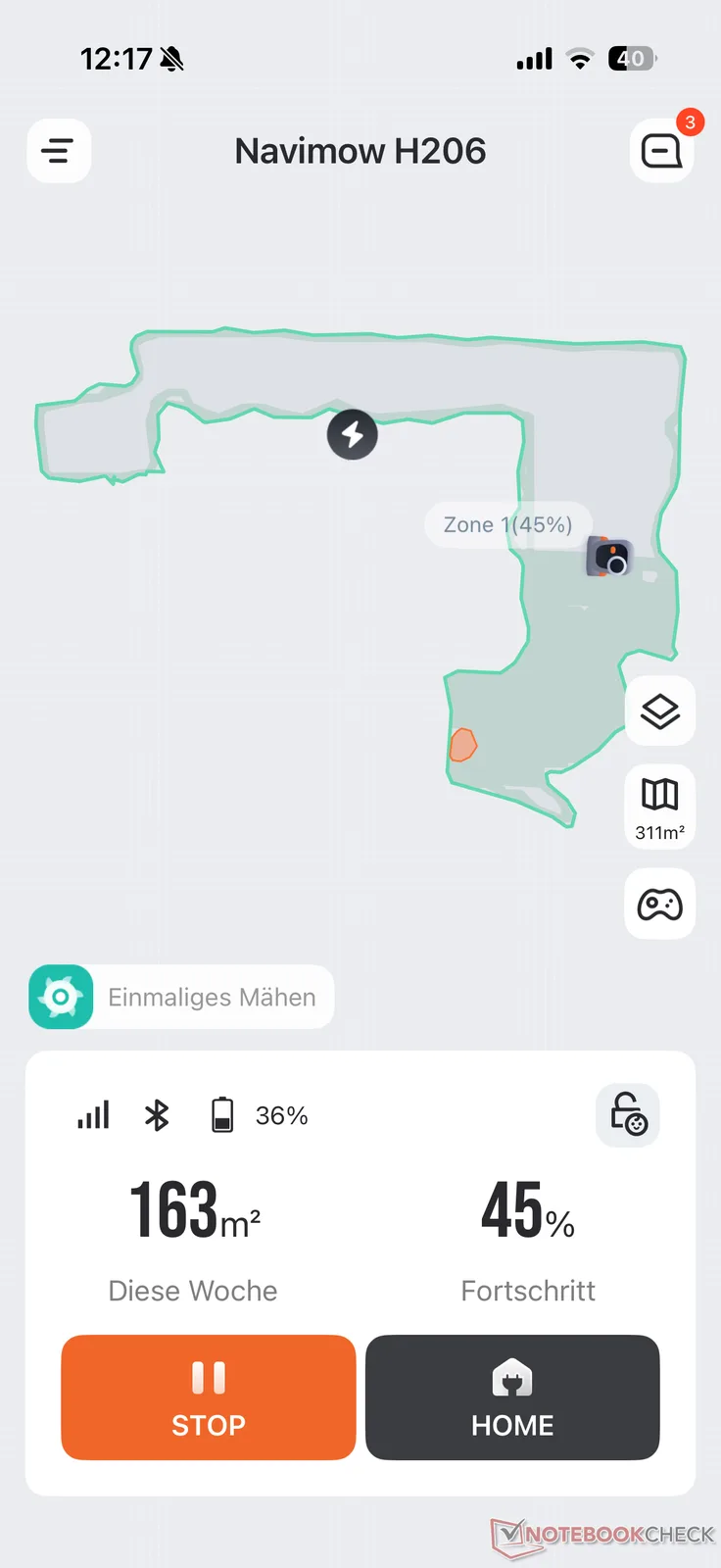
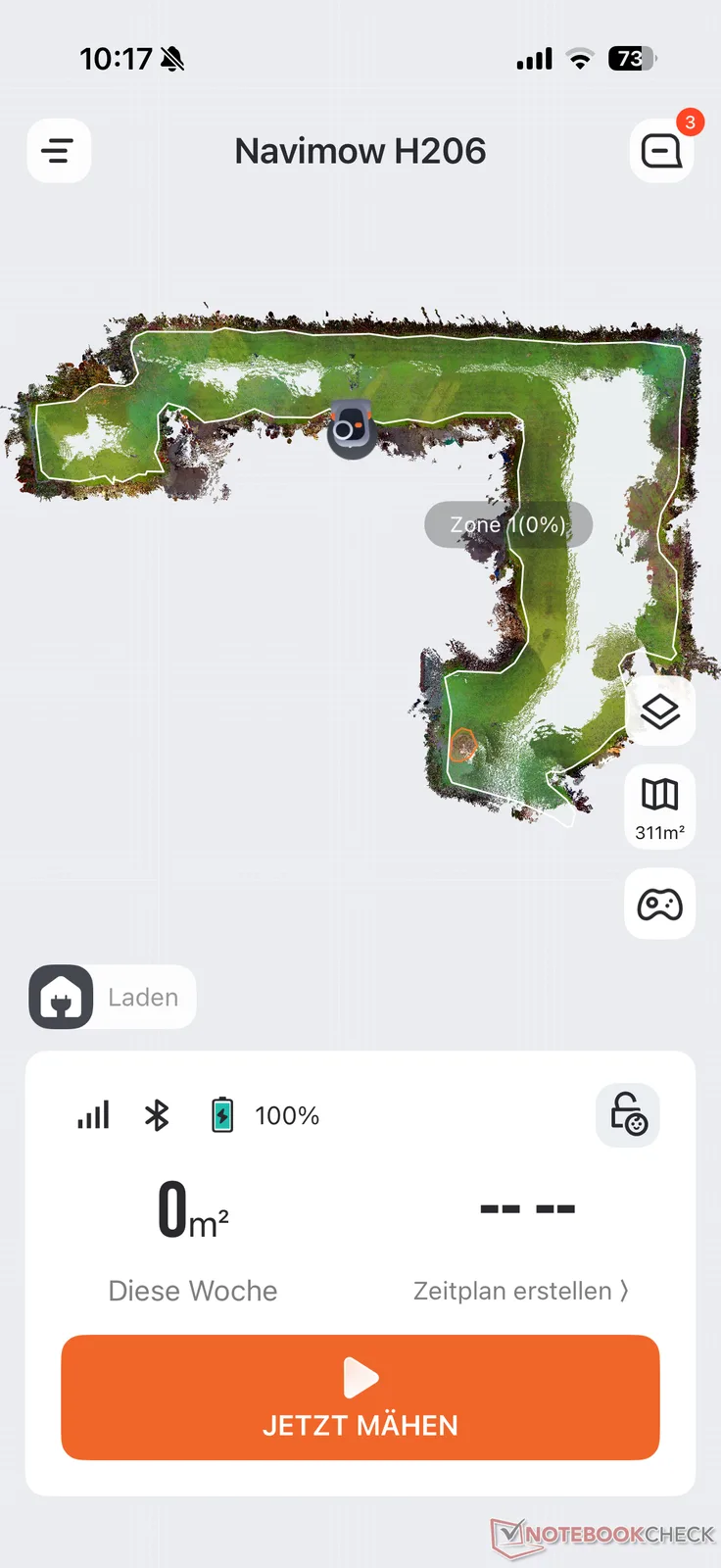
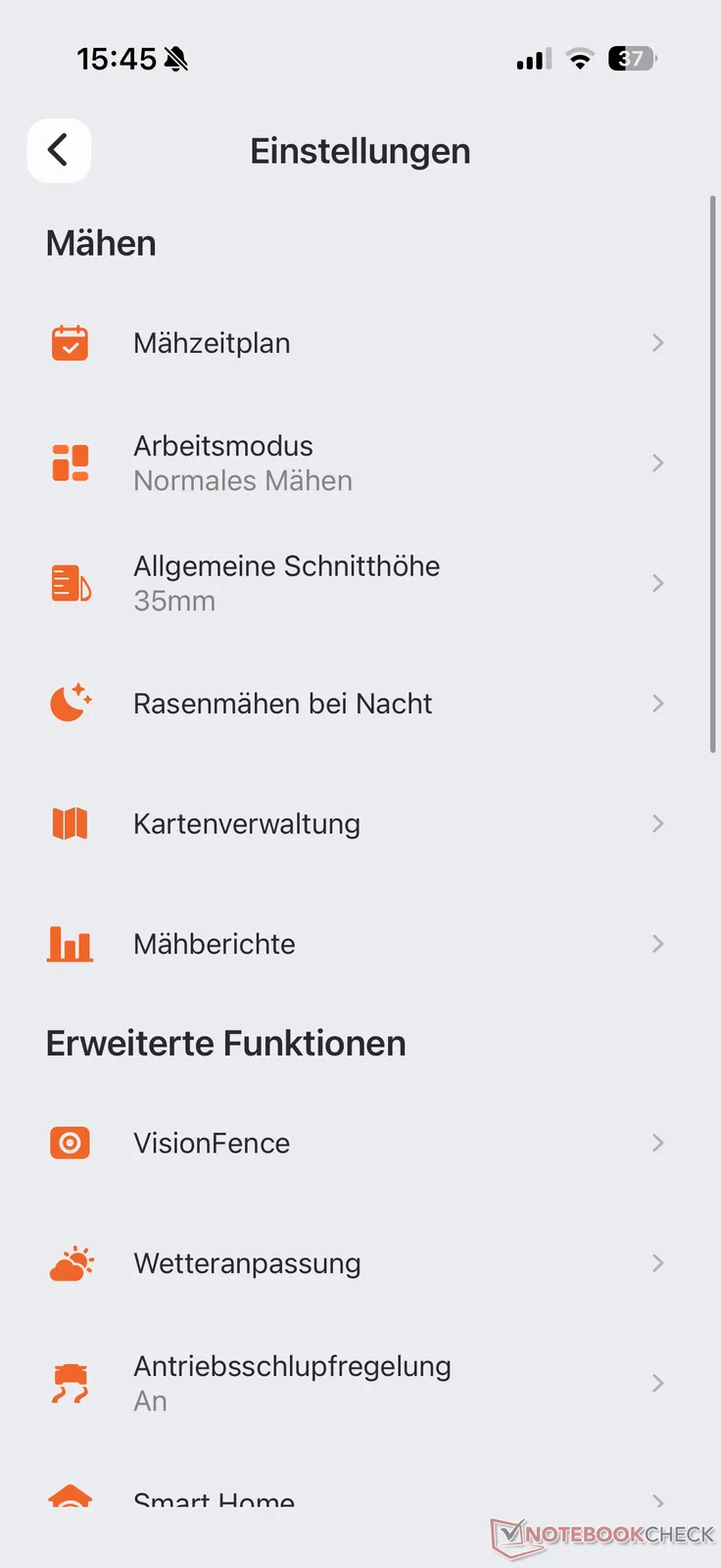
At the bottom of the screen, in addition to the main control buttons for starting, pausing, and charging, you can see key information at a glance, such as the mowed area in square meters and as a percentage, as well as the battery level. On the right-hand side, there are three buttons for the map view (with terrain, if desired), map editing, and remote control.
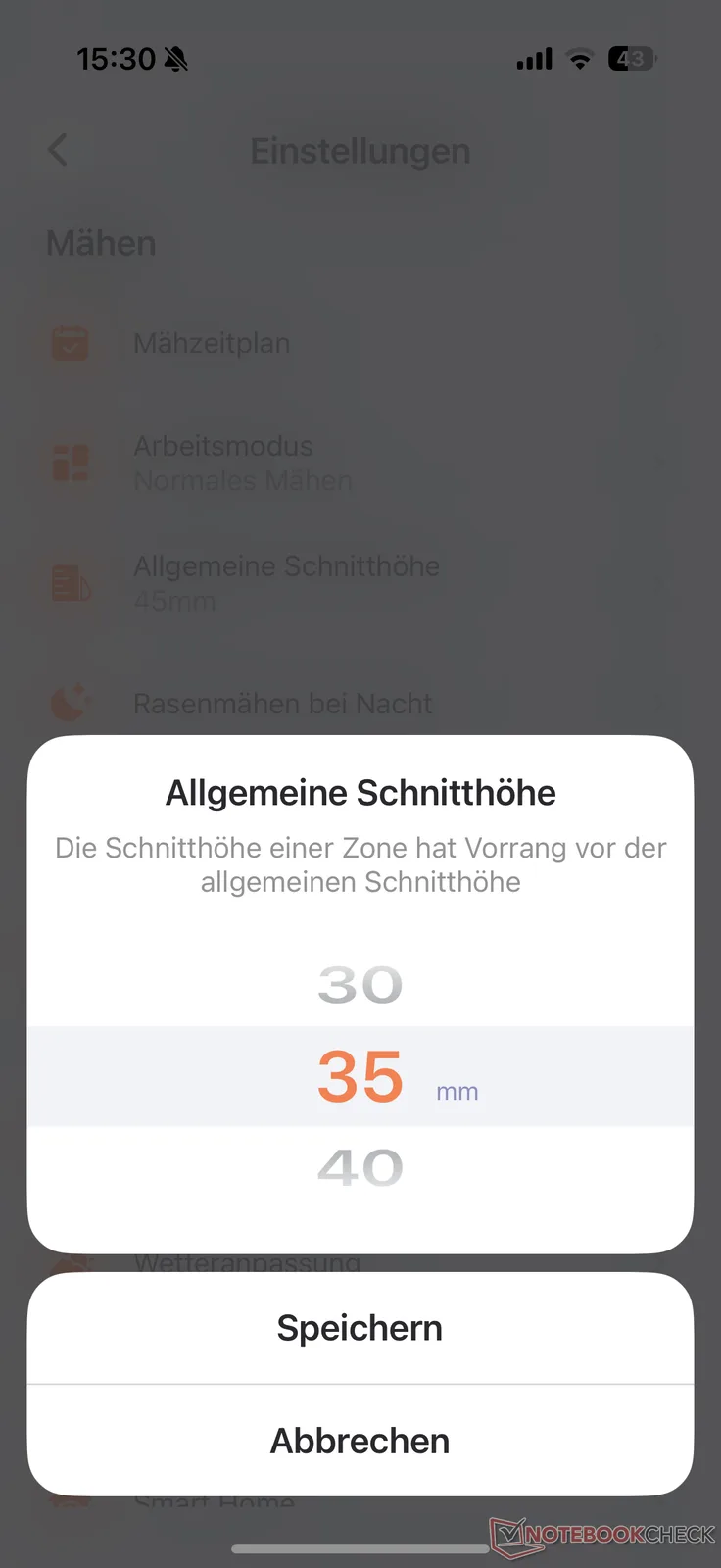
In the upper-right corner, two icons lead to notifications and settings. The menu that appears then includes, among other things, the mowing schedule, mowing reports, and important settings such as operating mode, cutting height, and more. For the sensitivity of obstacle detection (VisionFence), there are only a few options to choose from (channel obstacle avoidance, pet-friendly).
Navigation & obstacle detection: Nearly perfect
When it comes to navigation, the Navimow H2 does not require the RTK reference station that was still necessary in its predecessor. This should please anyone who finds the antenna—which is typically 1.5 to 2 meters high, depending on the model—to be a nuisance. This also promises advantages in gardens with many tall trees and other obstacles, as these can interfere with GPS/RTK reception.
With its LiDAR navigation (supported by Net-RTK and Vision), the Navimow H2 made a good impression in testing. It reliably mowed the entire area and revisited any missed spots (for example, due to movable obstacles) at the end.
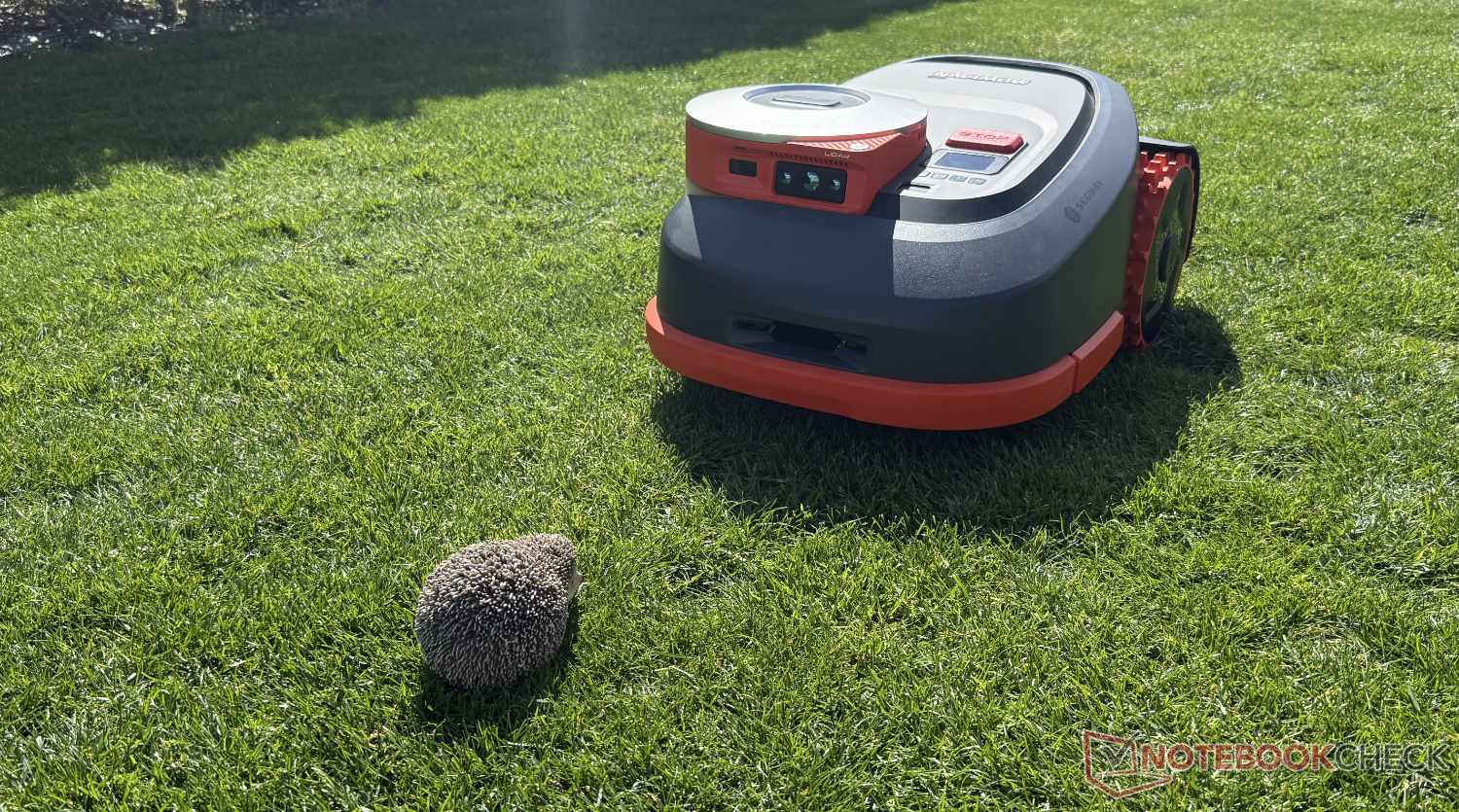
There’s little to criticize about its performance. Obstacle detection didn’t work quite as well as expected in the test, but it still performed adequately. The Navimow H2 consistently detected our fake hedgehog. It even stopped every time it encountered a piece of garden hose—which has caused problems for many robotic mowers—though it did touch it once while turning away. However, a tennis ball posed a major problem for the H2 during testing, as it was consistently run over. Here, the built-in cameras clearly had trouble distinguishing the low contrast of the neon-yellow tennis ball against the green lawn.
Lawn & edge mowing: More blades, but no edge cutter
Based on our test impressions, there is nothing to criticize regarding the Navimow H2’s mowing performance across the area. Since it reliably follows its paths and covered the entire test area in the process, comprehensive mowing is ensured. This robotic lawn mower features twice as many blades as the first series. The H2 isn’t the best at handling inclines, but it can manage slopes of up to about 45 percent. That’s sufficient for most gardens.
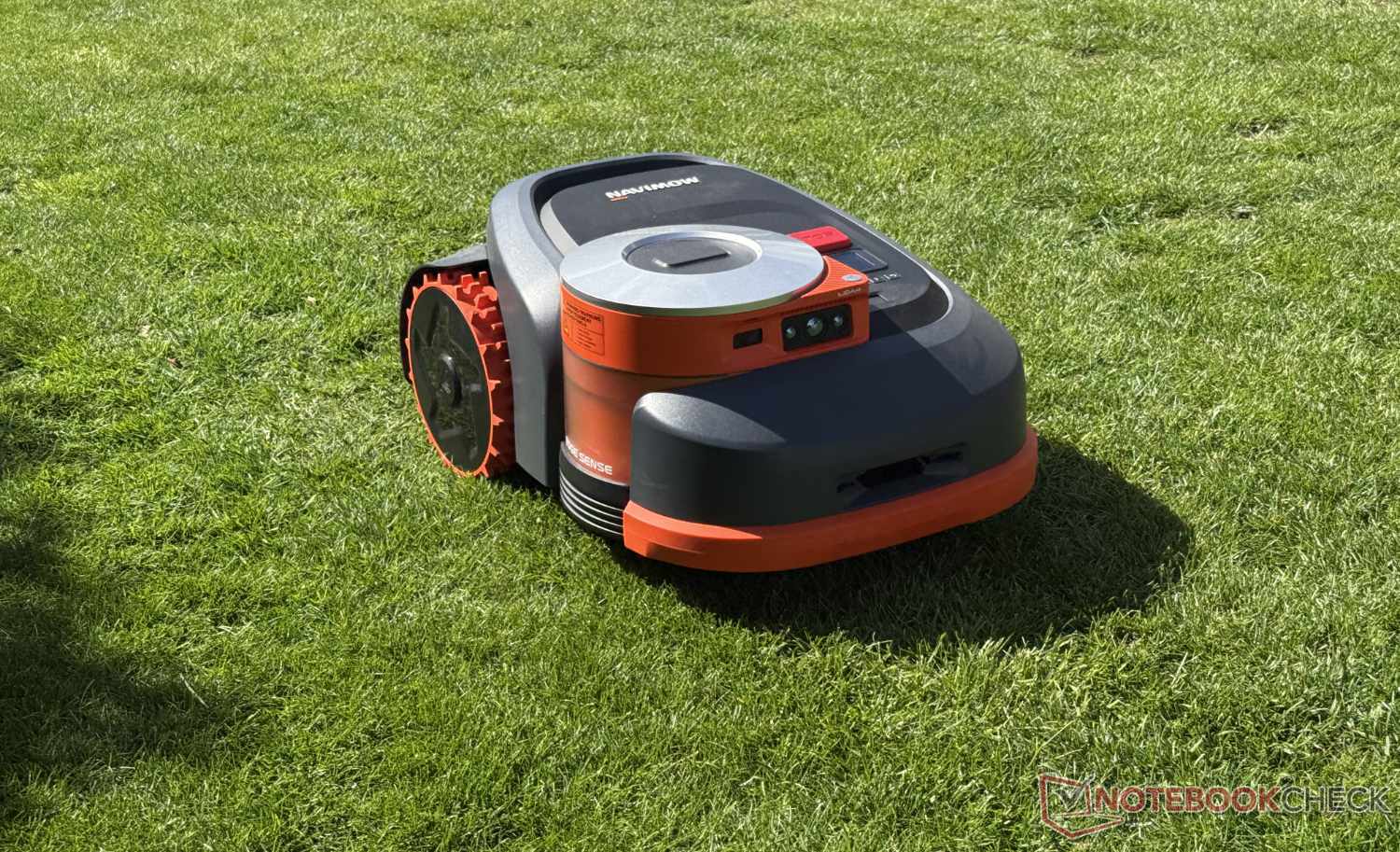
You can set the number of laps the robotic mower makes along the edge in the app. In our test area, the H2 navigated relatively close to the edges and proceeded quite slowly and cautiously. Although navigation worked well overall here as well, it still left behind a fairly wide unmowed strip. This is because the cutting deck in the robot lawn mower—which is about 45 cm wide—is located a good 10 cm from the edge. As a result, mowing right up to the edge is only possible on level transitions that the robot can drive over.
Runtime & noise level: Mows approximately 300 m² per battery charge
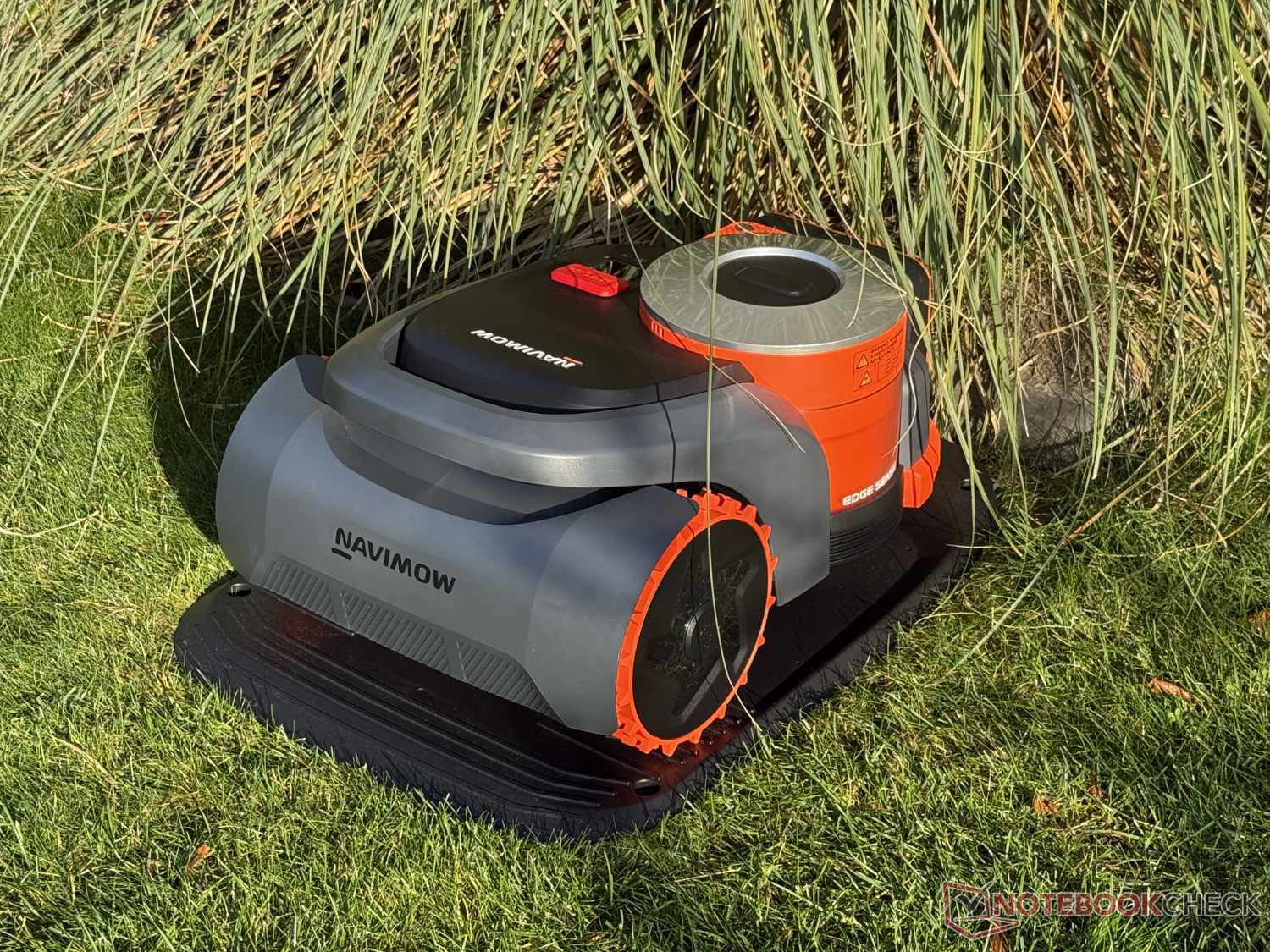
In our test, the Navimow H206 ran for about two hours straight on a single battery charge, mowing approximately 300 square meters of lawn. During the subsequent charging stop at the station, which took less than two hours, a good 100 Wh flowed into the test unit’s 5.1 Ah battery at a rate of up to just under 100 W.
In operation, the H2 is energy-efficient, but not in standby mode. While docked at the charging station, our test unit drew about 13 W despite having a fully charged battery. This prevents it from achieving a better score in the energy rating. To compare the energy consumption of the robotic mowers we tested, we assume three mowing cycles per week covering 500 square meters. Based on our measurements, the Navimow H2 requires an estimated 10 kWh per month for this task—making it quite energy-intensive.
In terms of noise level, the Navimow H2 stands out neither particularly positively nor negatively in the test. The roughly 60 dB (which also depends on mowing activity) isn’t especially loud, but it doesn’t make it one of the quietest robotic mowers either.

Based on our test, is the Navimow H2 not the right cordless robotic lawn mower for your yard?
Then discover many more models in our 2026 Best Robotic Lawn Mowers list!
Transparency
The selection of devices to be reviewed is made by our editorial team. The test sample was given to the author by the manufacturer free of charge for the purposes of review. There was no third-party influence on this review, nor did the manufacturer receive a copy of this review before publication. There was no obligation to publish this review. As an independent media company, Notebookcheck is not subjected to the authority of manufacturers, retailers or publishers.
 Add as a preferred source on Google


