




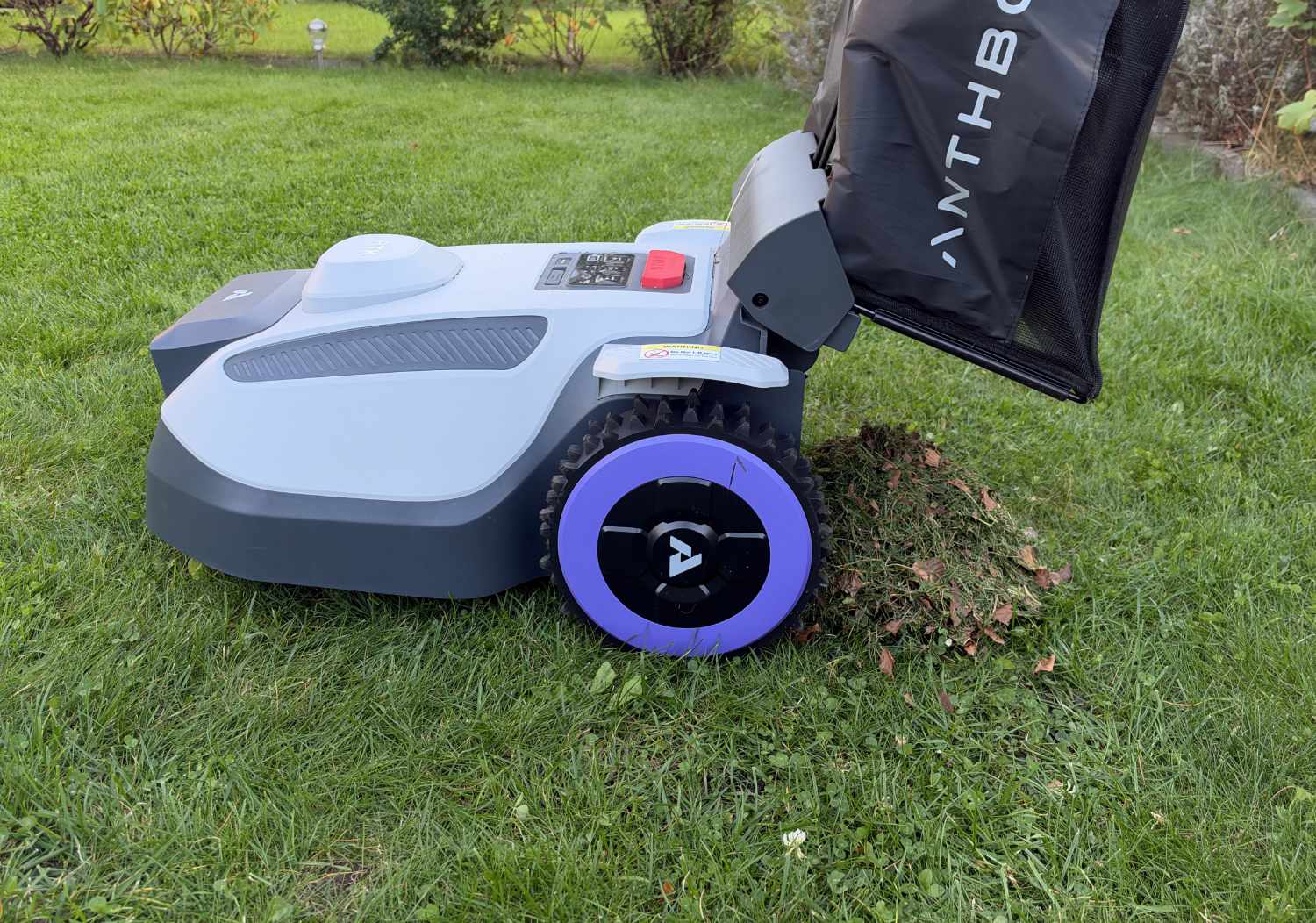
This robotic lawn mower makes sense in autumn too: Anthbot N8 review
Leaf collector.
The Anthbot N8 is an unusual robotic lawn mower. It not only mows the lawn, but also collects grass clippings and leaves thanks to its collection basket and special blades. Our Anthbot N8 review reveals whether this makes it the perfect robotic lawn mower right through autumn.Marcus Schwarten (translated by Marcus Schwarten (translation supported by DeepL)) Published 🇩🇪
Anthbot N8 test verdict: Lawn mower and leaf collector
The Anthbot N8 stands out in the now crowded market of wire-free robotic lawn mowers. With its rear-mounted collection basket, it expands the possibilities of automatic lawn mowing to include collecting grass clippings and leaves, which can be quite practical in some situations—for example, when the grass is tall or there are lots of leaves on the lawn. Its functionality in this regard was almost trouble-free. And it is quite impressive the first time it automatically raises its basket at the previously defined drop-off point.
However, this added functionality comes with a few drawbacks. At almost 1 m in total length (including the basket), the Anthbot N8 is anything but nimble. This is particularly noticeable when turning and trimming edges, where the Anthbot N8 loses a few points in our test. Its obstacle detection is also not top-notch. It is also quite loud and power-hungry.
Pros
Cons
Price and availability
The recommended retail price for the Anthbot N8 is $1,699 euros. It is available directly from the manufacturer.
Table of Contents
- Anthbot N8 test verdict: Lawn mower and leaf collector
- Features & scope of delivery: robotic lawn mower with two baskets
- Setup & maintenance: Manual mapping, including unloading zones
- App & controls: Collect, sweep and mulch
- Navigation & obstacle detection: Size is the biggest problem
- Mowing lawns & edges: Leaves almost completely collected
- Runtime & noise level: Louder and more power-hungry than others
After already introducing two Anthbot robotic lawn mowers this year—the Anthbot M9 and the Anthbot M9 Pro—we want to take a look at the Anthbot N8 as the gardening season draws to a close. Even though the lawn hardly grows anymore at this time of year, this robotic mower still makes sense in autumn.
Why? Because it has a large collection basket at the rear for grass clippings, leaves, and the like. We have been familiar with this concept for some time from the Mammotion Yuka. In our Anthbot N8 test, we looked at how Anthbot has implemented it and how the two models differ.
Data sheet
| Feature/Model | Anthbot N8 |
|---|---|
| Area | 1,500 m² |
| Navigation and obstacle detection | Full-Band RTK + NRTK + Dual Vision |
| Mower deck | Mowing disc |
| Number of blades | 6 |
| Cutting width | 20 cm |
| Cutting height | 3 - 7 cm |
| Adjust cutting height | electric |
| Slope | 45% / 24° |
| Display | no |
| Battery capacity | 9.2 Ah |
| Weight | 16.5 kg |
| Dimensions | 61 x 43.1 x 33.3 cm |
| Water resistance | IPX6 |
| Garage included in the package | no |
| Replacement blades included in the delivery package | 3 |
| Color | Gray |
| RRP | 1,599 euros |
Features & scope of delivery: robotic lawn mower with two baskets
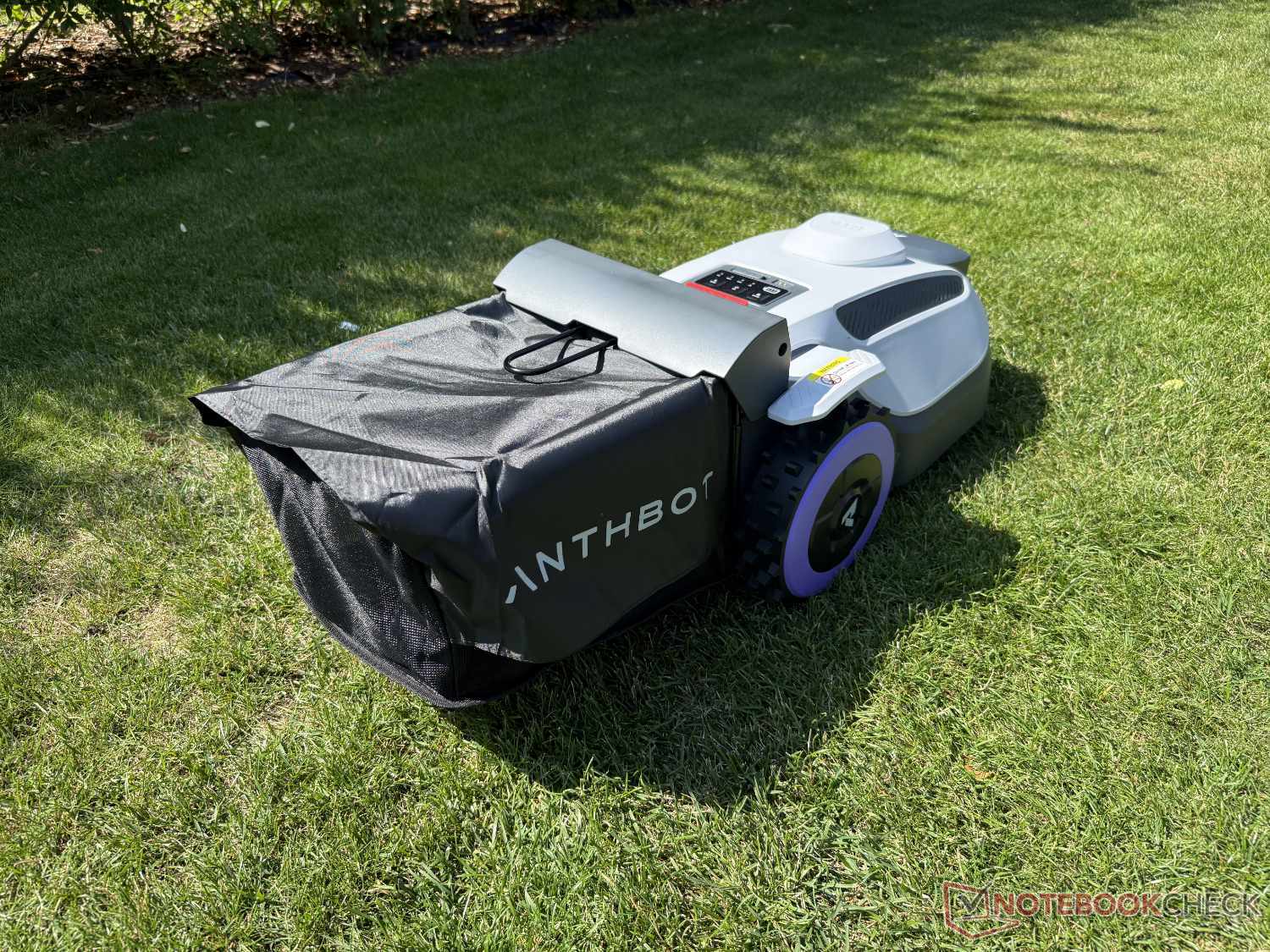
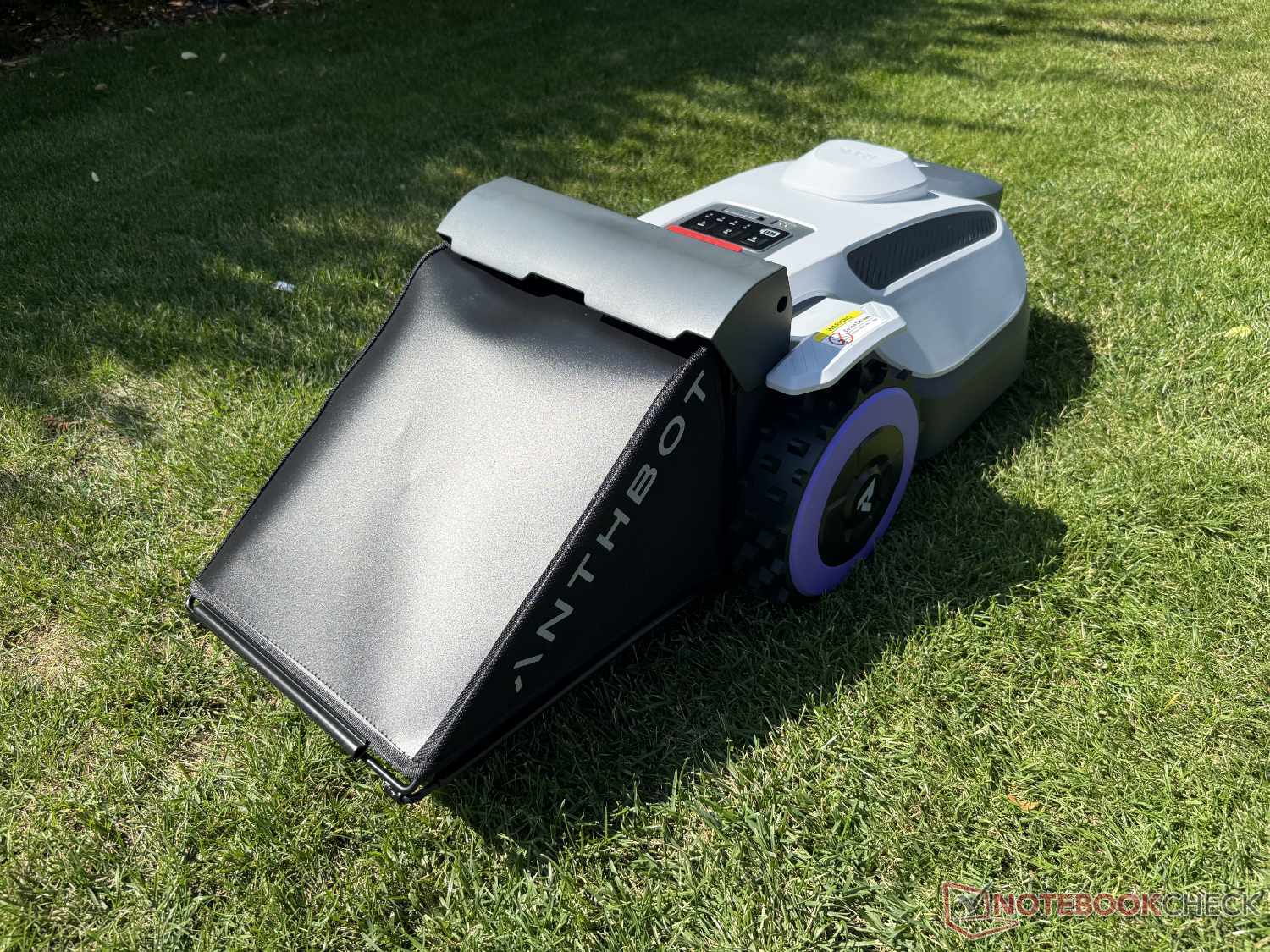
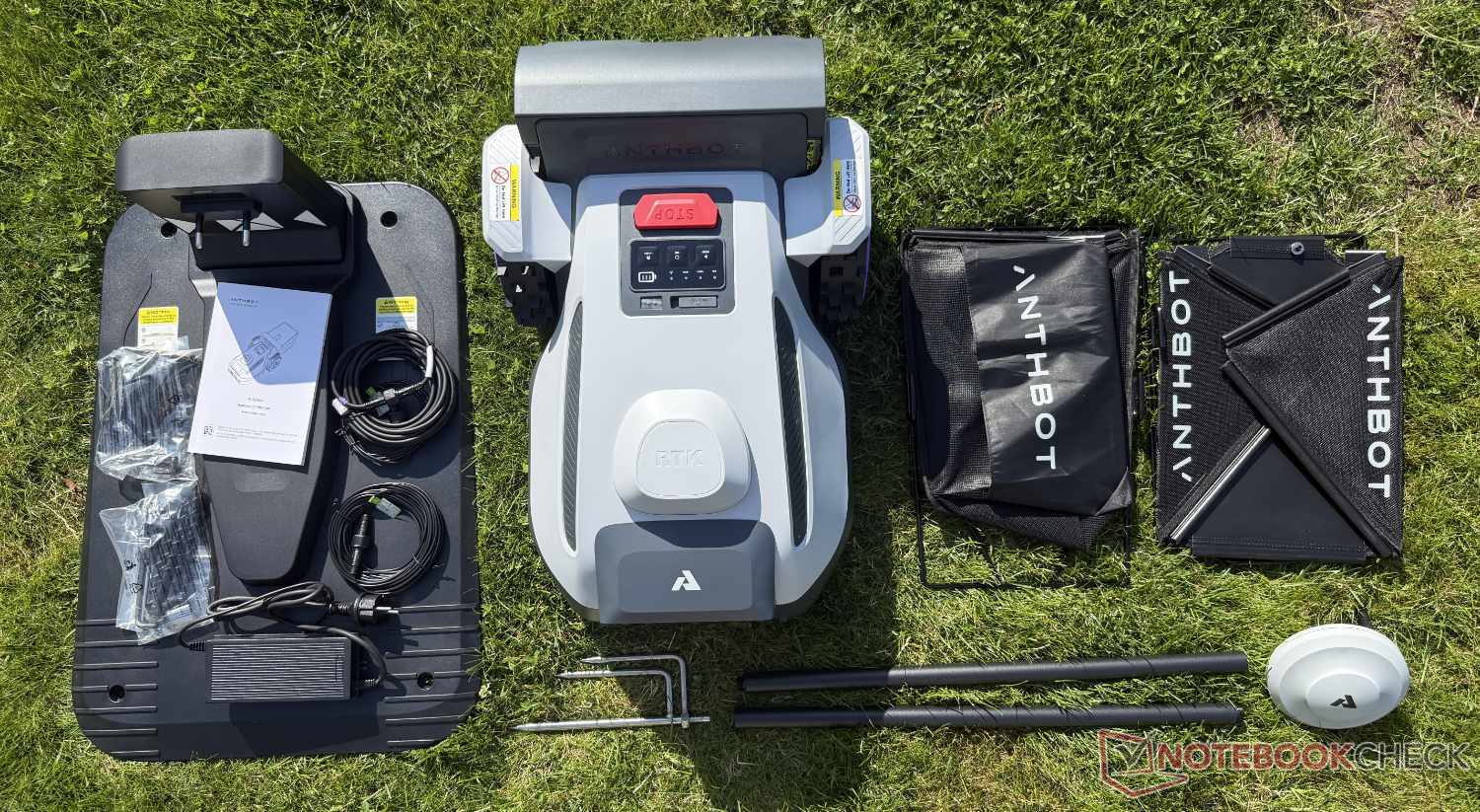
Let’s start our Anthbot N8 test with what’s included in the box, as it already offers a good insight into what makes this robotic lawn mower special. It comes with two different baskets, each of which must first be assembled using its wire frame. One is a grass collection bag, while the other is a discharge deflector. We’ll explain what that means further down in our Anthbot N8 review.
For navigation, the Anthbot N8, designed for areas of up to 1,500 square meters, uses conventional RTK, which requires the included RTK reference station with its mast just over 1.5 m tall, and also supports NetRTK. The charging station and the usual accessories, including a screwdriver and a mulching disc with six blades in total, round out the package.
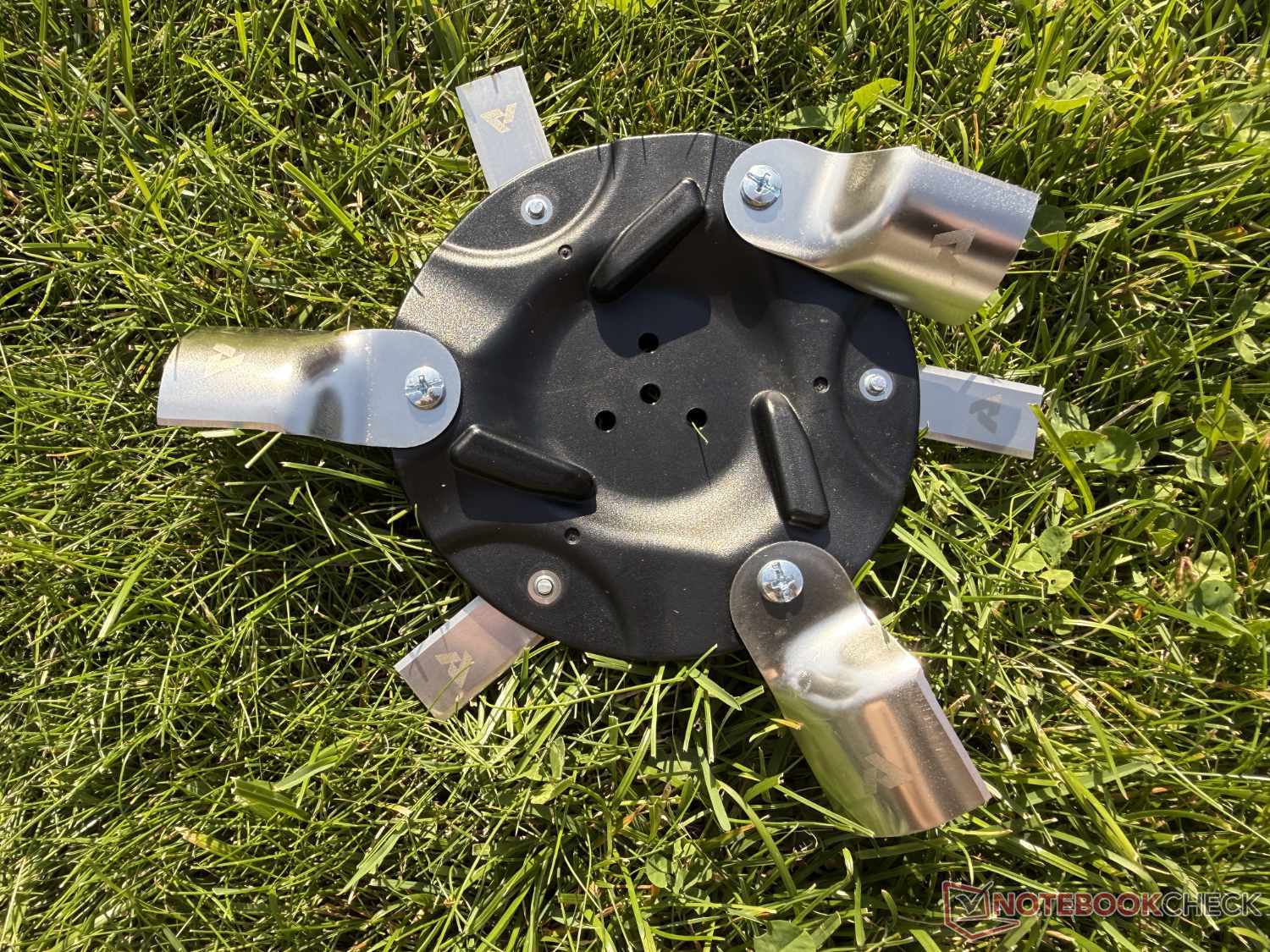
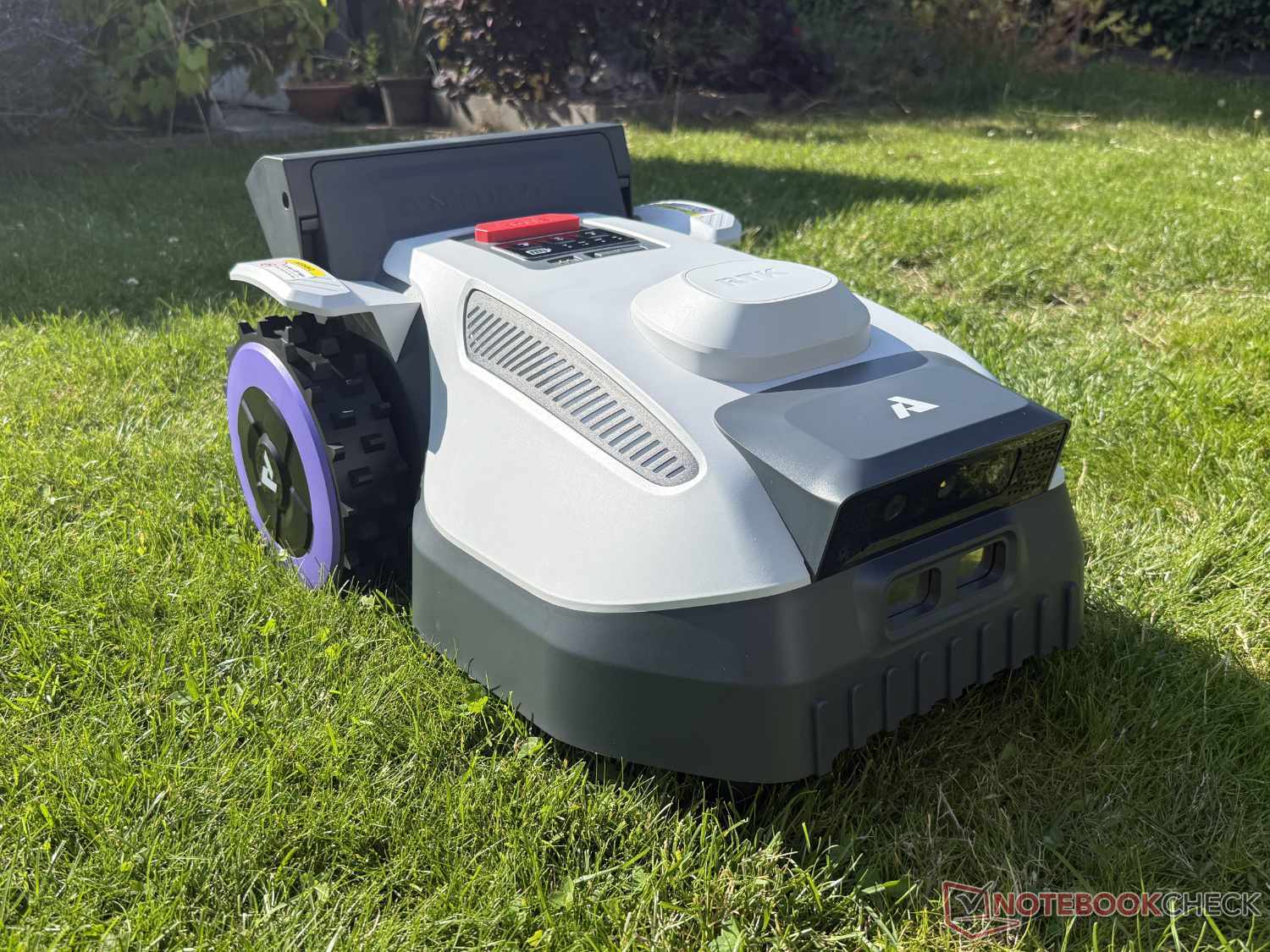
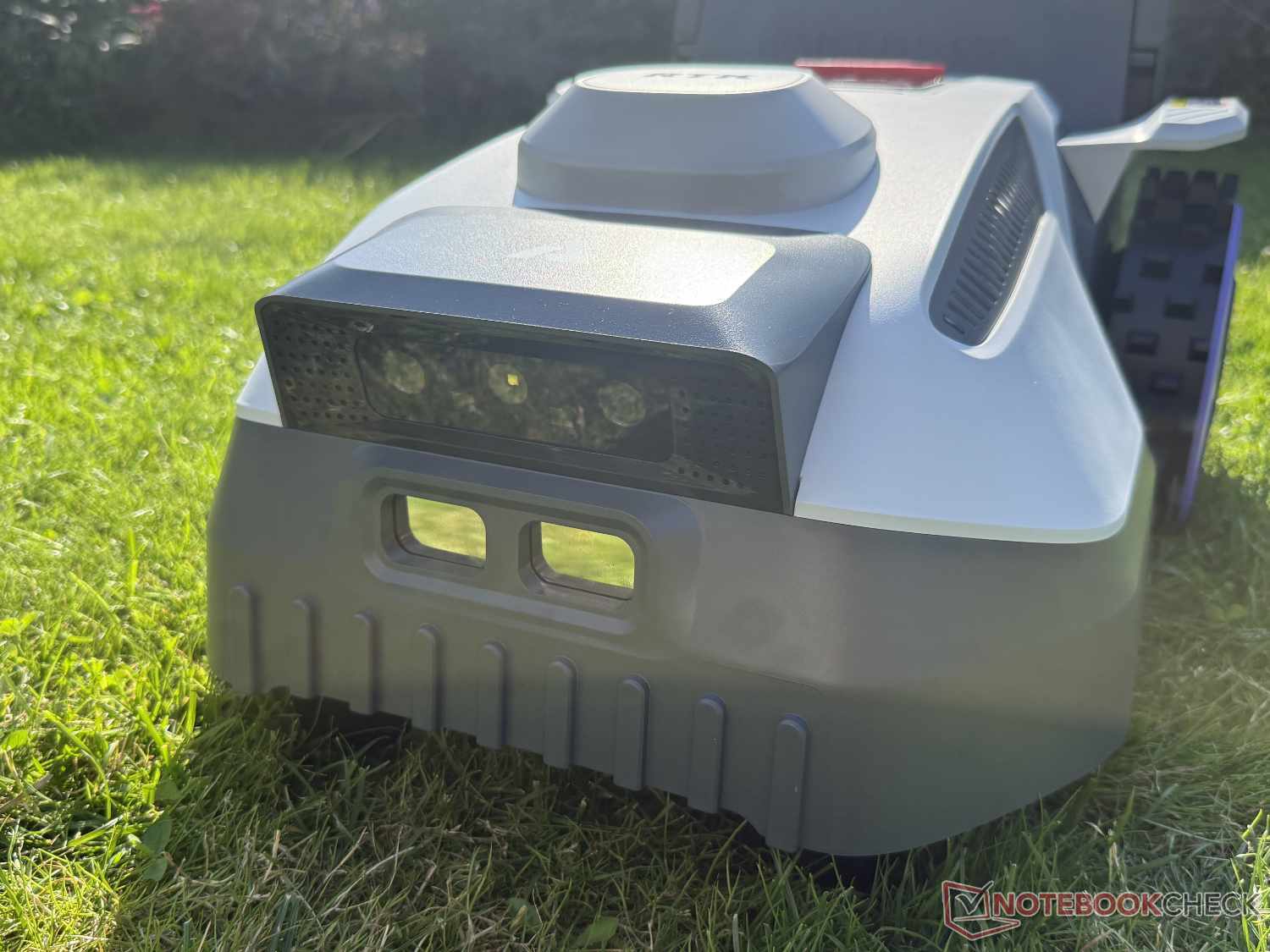
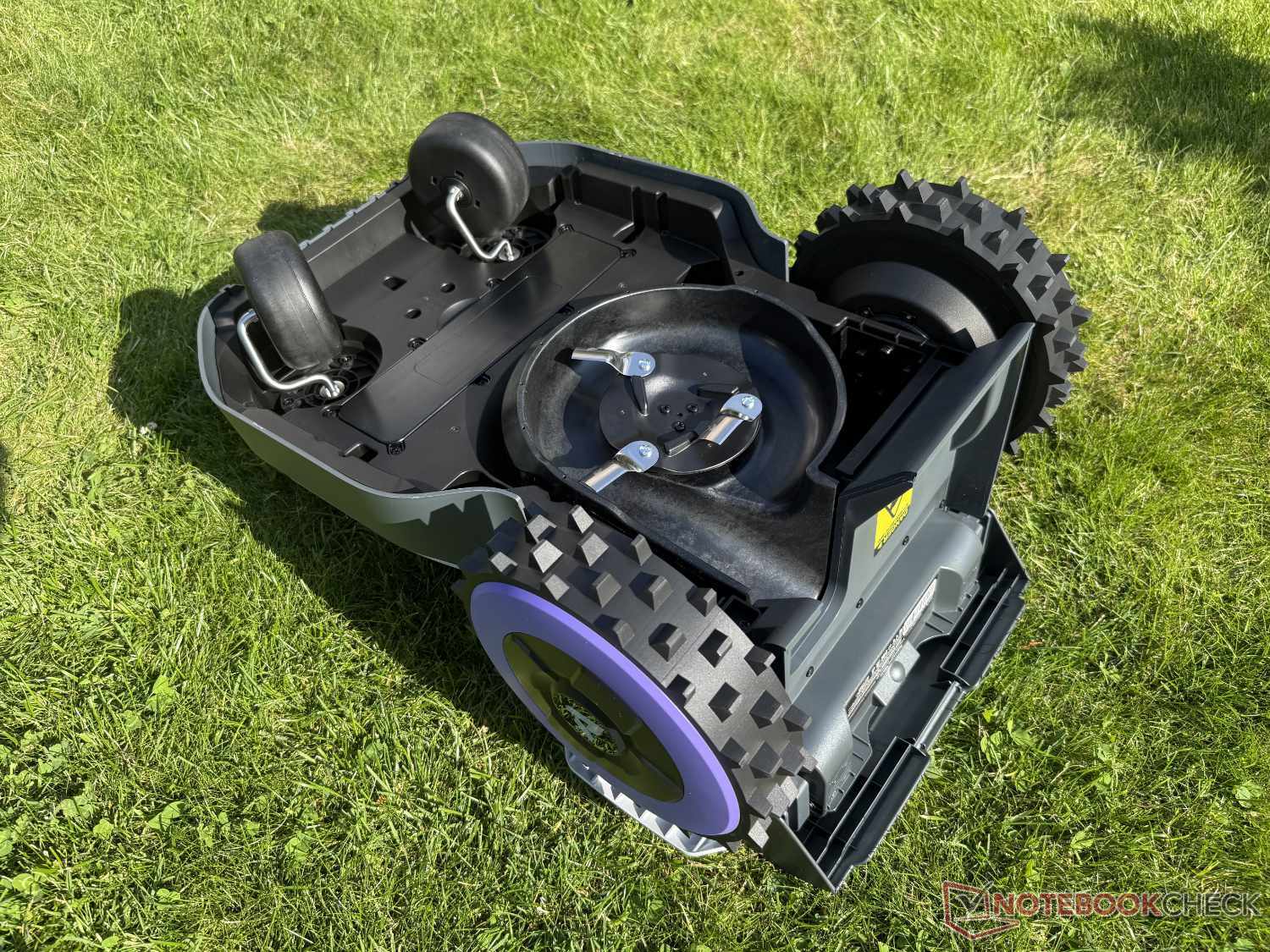
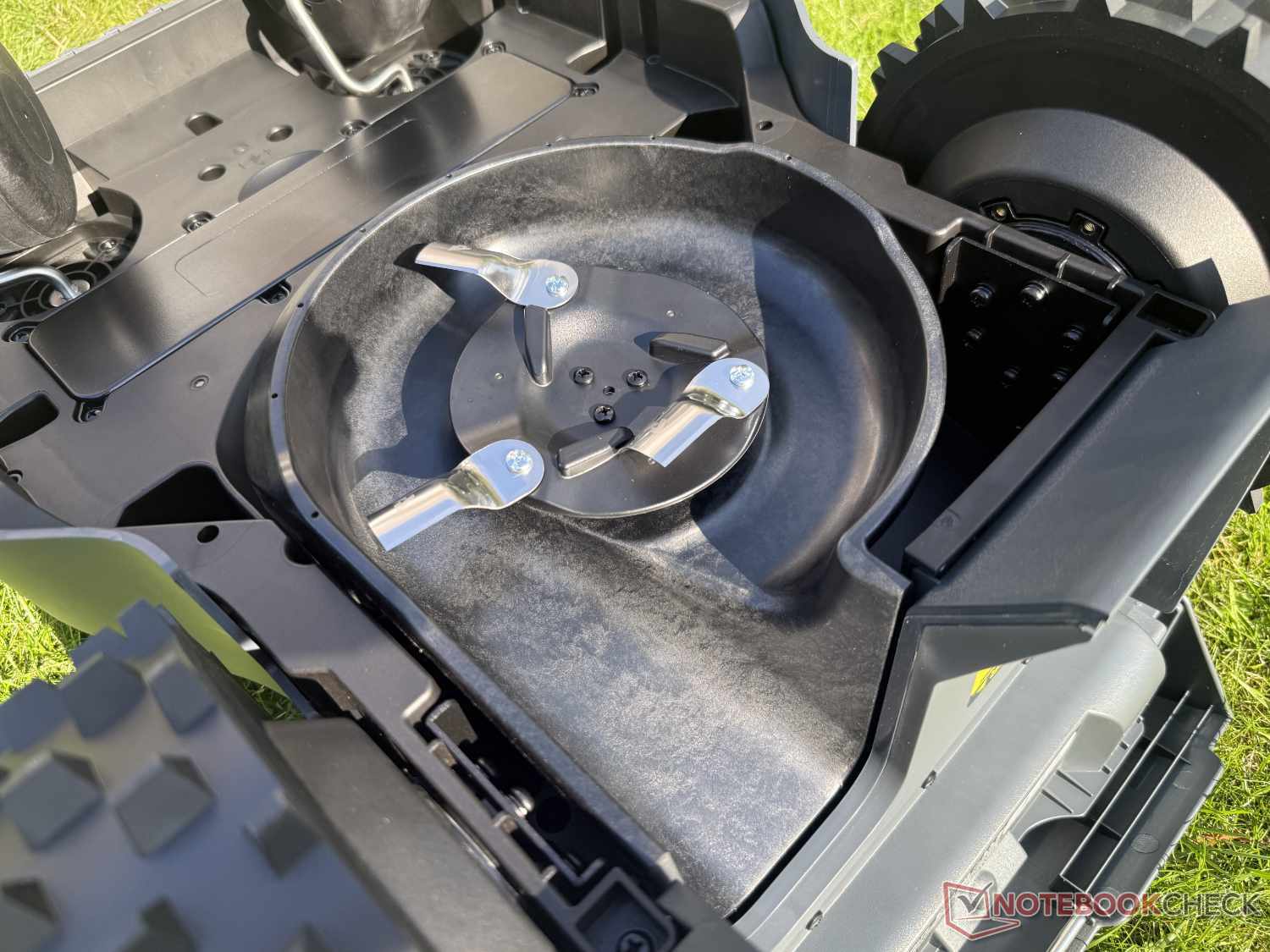
A mowing disc with a 20 cm cutting width is fitted as standard and equipped with three shovel-shaped blades. This means the robotic mower not only cuts the grass, but also uses its cyclone system to blow the clippings, leaves and the like through an opening at the rear and into the attached basket. The cutting height can be adjusted electronically between 3 and 7 cm. There are two cameras at the front for detecting obstacles. How well this worked in practice is also discussed further below.
Setup & maintenance: Manual mapping, including unloading zones
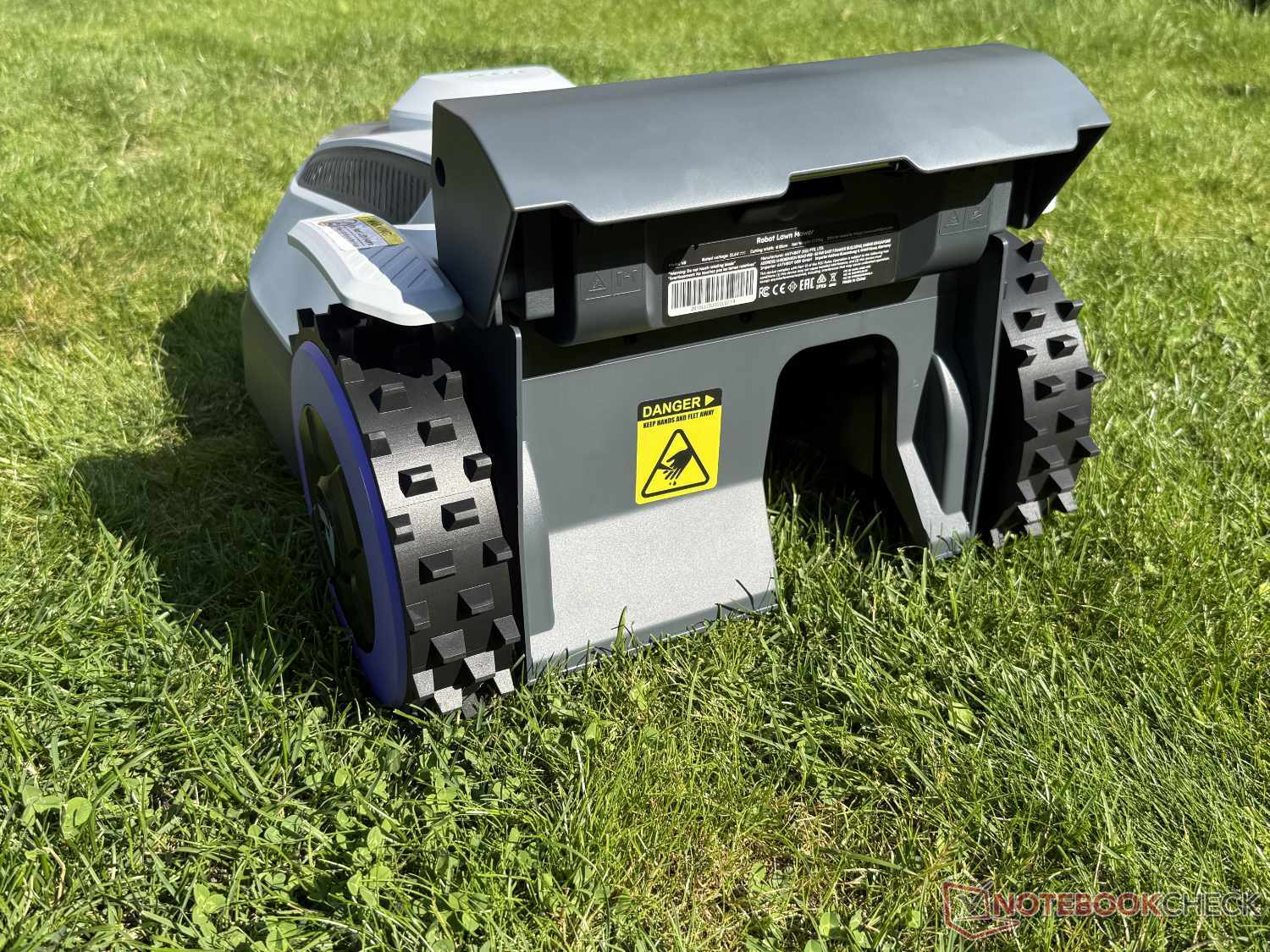
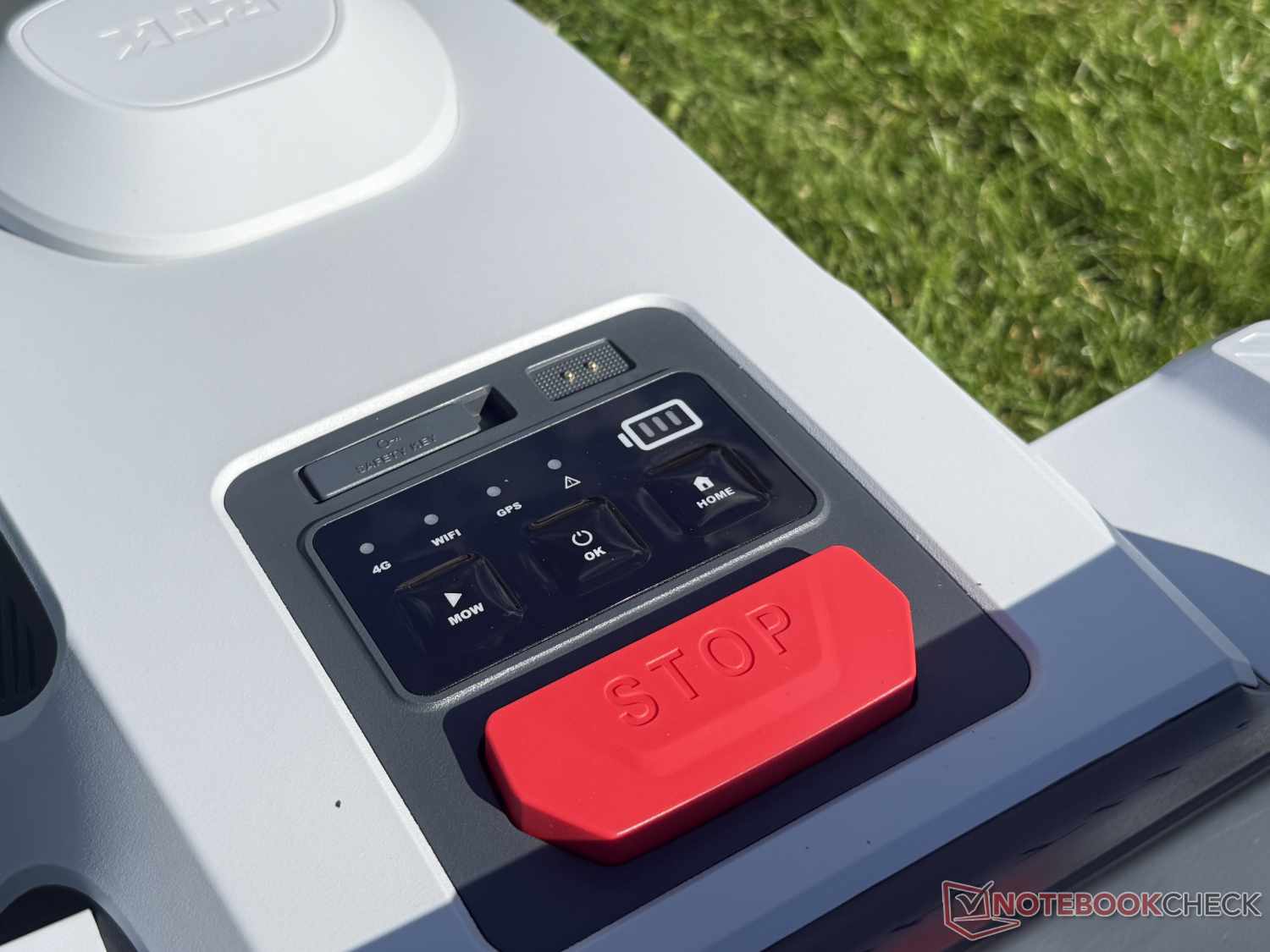
Before it can start mowing and collecting grass, the Anthbot N8 needs to be assembled and set up. This involves the usual steps for an RTK model—positioning the charging station (making sure there is enough space) and connecting it to power, setting up and connecting the RTK antenna, and switching on the robotic mower—as well as assembling at least one of the two “attachments.” Both the grass collection bag and the discharge deflector are made from a frame of metal rods with a cover attached. They are quick to assemble, and the instructions explain the process reasonably clearly.
Next comes the familiar process of connecting to the Anthbot app and your home Wi-Fi network, which also went smoothly during our test of the Anthbot N8. Then it’s time to map the garden.
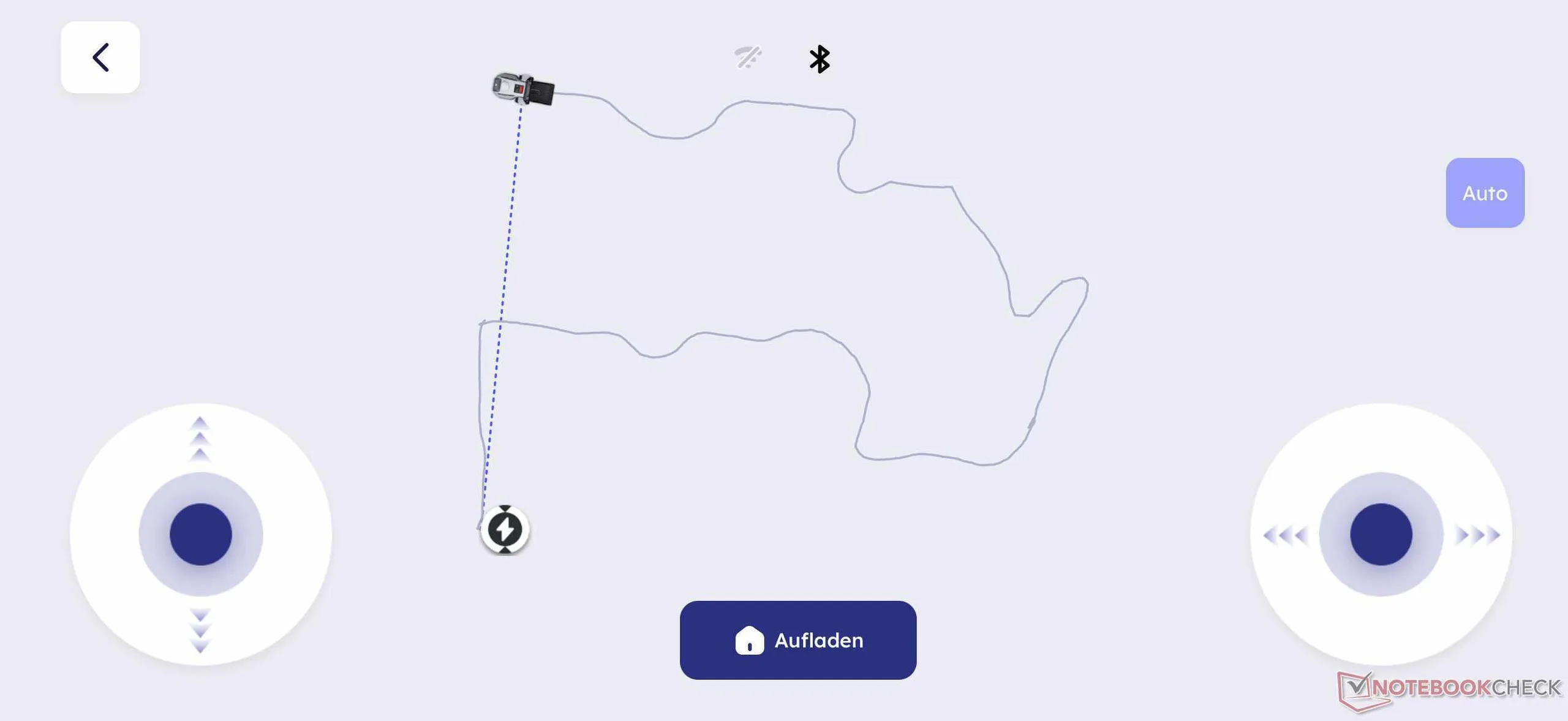
The Anthbot N8 does not offer automatic AI mapping, as many modern robotic lawn mowers do. Instead, you have to manually steer the robot around its new territory once using two virtual control sticks on your smartphone’s display. You’ll notice not only that the controls are very sensitive and the N8 sometimes moves faster than you’d like, but also what is probably its biggest drawback: at almost 1 m long, it’s simply very large and therefore not at all nimble.
Once the virtual map has been created, there’s one more highly unusual but essential step: the robotic mower must be guided to at least one and no more than five dumping areas. These must not be too close to the edge of the lawn and must be easily accessible to the behemoth—otherwise, it won’t accept the spot after rotating on the spot to check it. They can also be located outside the mapped area. The usual adjustments are also available, such as adding more zones and no-go zones.
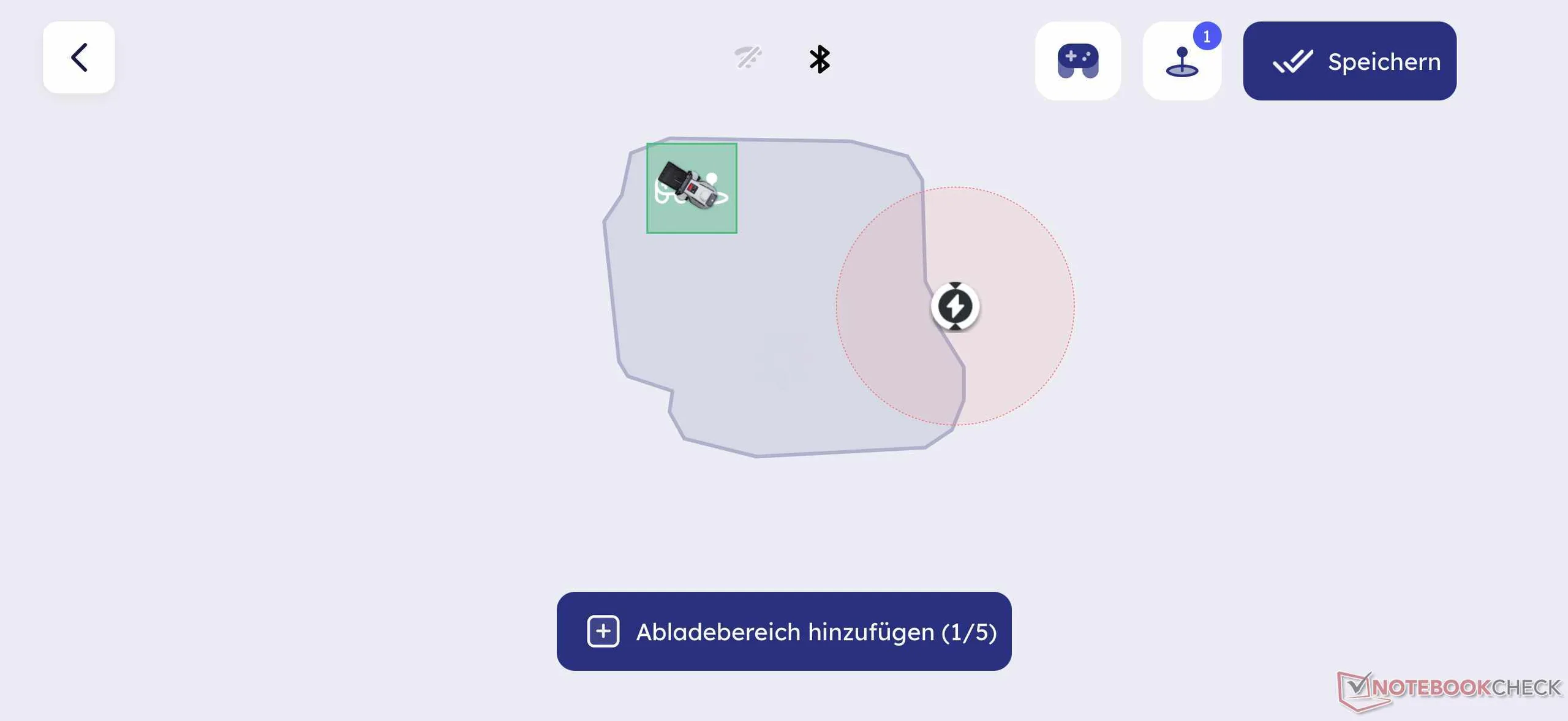
One drawback we noticed in testing is that a large puddle of water collects on top of the grass catcher after heavy rain. A covered parking spot in an XXL garage would therefore be a good idea. As usual, the IPX6-protected robotic mower can be cleaned with a garden hose. Replacing the blades (three spare blades are included) is easy with the supplied screwdriver. One downside in terms of handling is that the Anthbot N8 has no handle at all, making it difficult to grip and carry.
App & controls: Collect, sweep and mulch
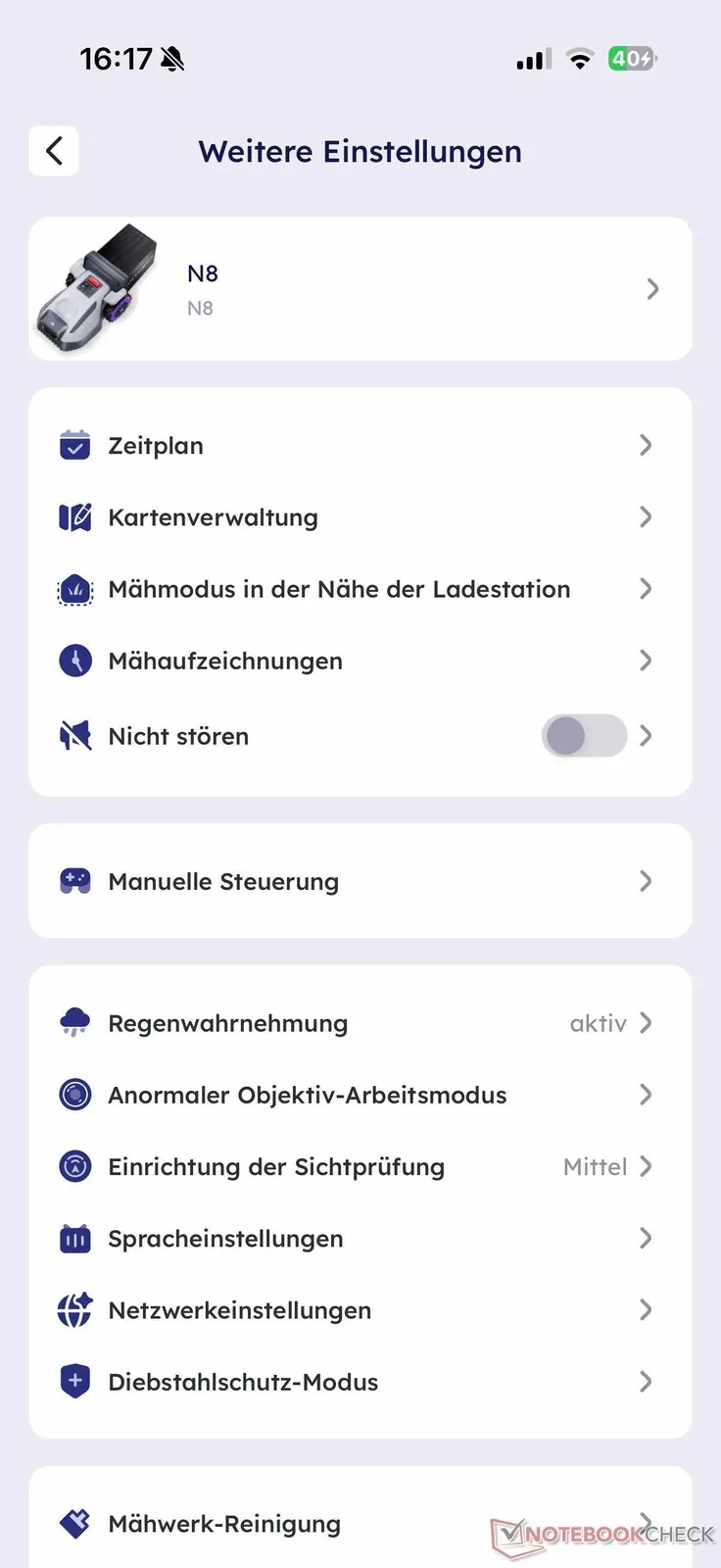
We already discussed the Anthbot app in more detail during our test of the M9; unfortunately, some parts of it have not been translated perfectly into German. It offers the usual functions, such as map management, scheduling, anti-theft mode, and other features and settings, but no live video. Here, we want to focus specifically on the particularities of using the Anthbot N8.
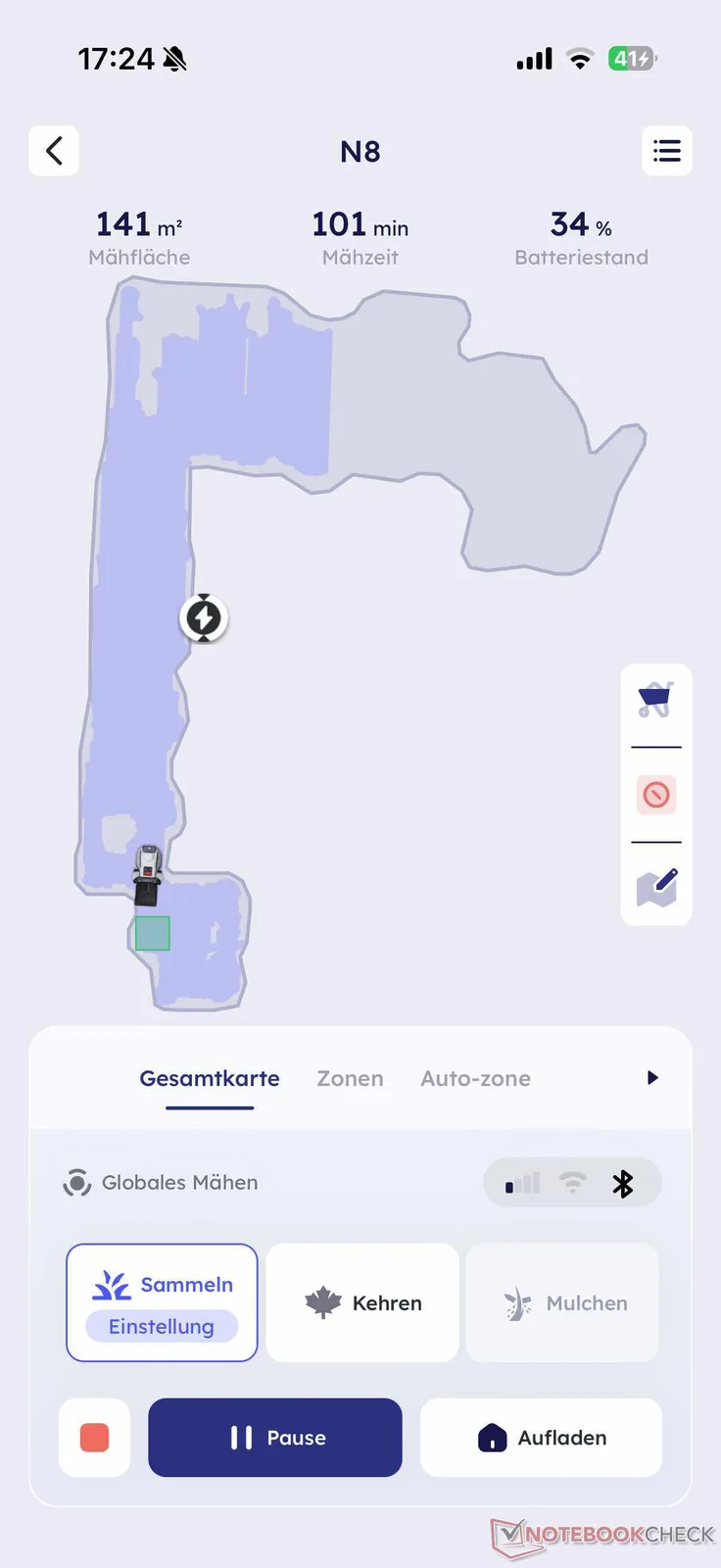
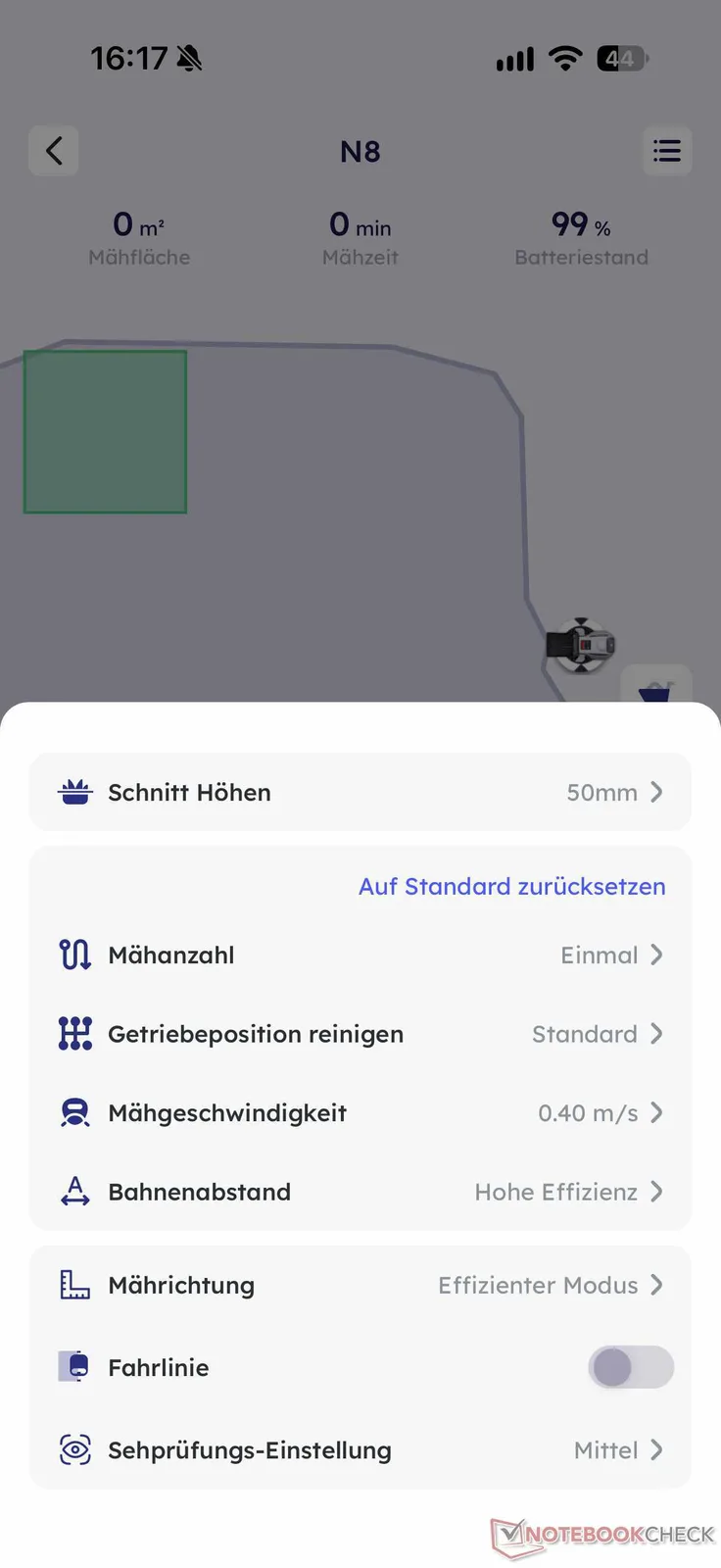
For one, there are the three modes: Collect, Sweep, and Mulch. The first two use the pre-installed mower deck and collection bag, while the last uses the (initially to be installed) mulching disc and deflector. For each mode, you can set the cutting height (30 to 70 mm in 5 mm increments), the number of mowing passes (once or twice), the mowing speed (three settings), the lane spacing (two options), the mowing direction, and the obstacle detection sensitivity (Low, Medium, High).
Another special feature is an icon on the right edge that lets you trigger an immediate emptying of the grass bag in the designated disposal area—for example, if it is unusually full or you want to interrupt the job unexpectedly. The bag is emptied automatically at the end of a mowing session and, based on our observations, every 100 minutes. Unfortunately, we couldn’t find a way to adjust this, which doesn’t seem particularly sensible.
Navigation & obstacle detection: Size is the biggest problem
In principle, the Anthbot N8 navigated reliably using RTK or NetRTK across two different test areas, where potential obstacles to GPS reception were relatively limited. Although it sometimes seemed a little chaotic, it ultimately covered the areas as thoroughly as its capabilities allowed.
The biggest problem, however, is simply its extreme length of almost one meter. This makes the Anthbot N8 anything but nimble. This not only becomes apparent when turning and passing through narrow gaps, but also when mowing along the edges of the lawn. It leaves a lot of grass uncut, especially in inward-facing corners, and performs significantly worse here than many other robotic lawn mowers—even those without a dedicated edge-cutting solution of the kind found in the Roborock RockNeo Q1 or the Mammotion Luba mini 2 AWD.
On the plus side, it seems well aware of its length. It has only rarely bumped into anything with its attachment. This is important for the basket’s longevity, especially since it doesn’t seem particularly robust. The Anthbot N8 performs better here than the Mammotion Yuka, which had its fair share of problems.
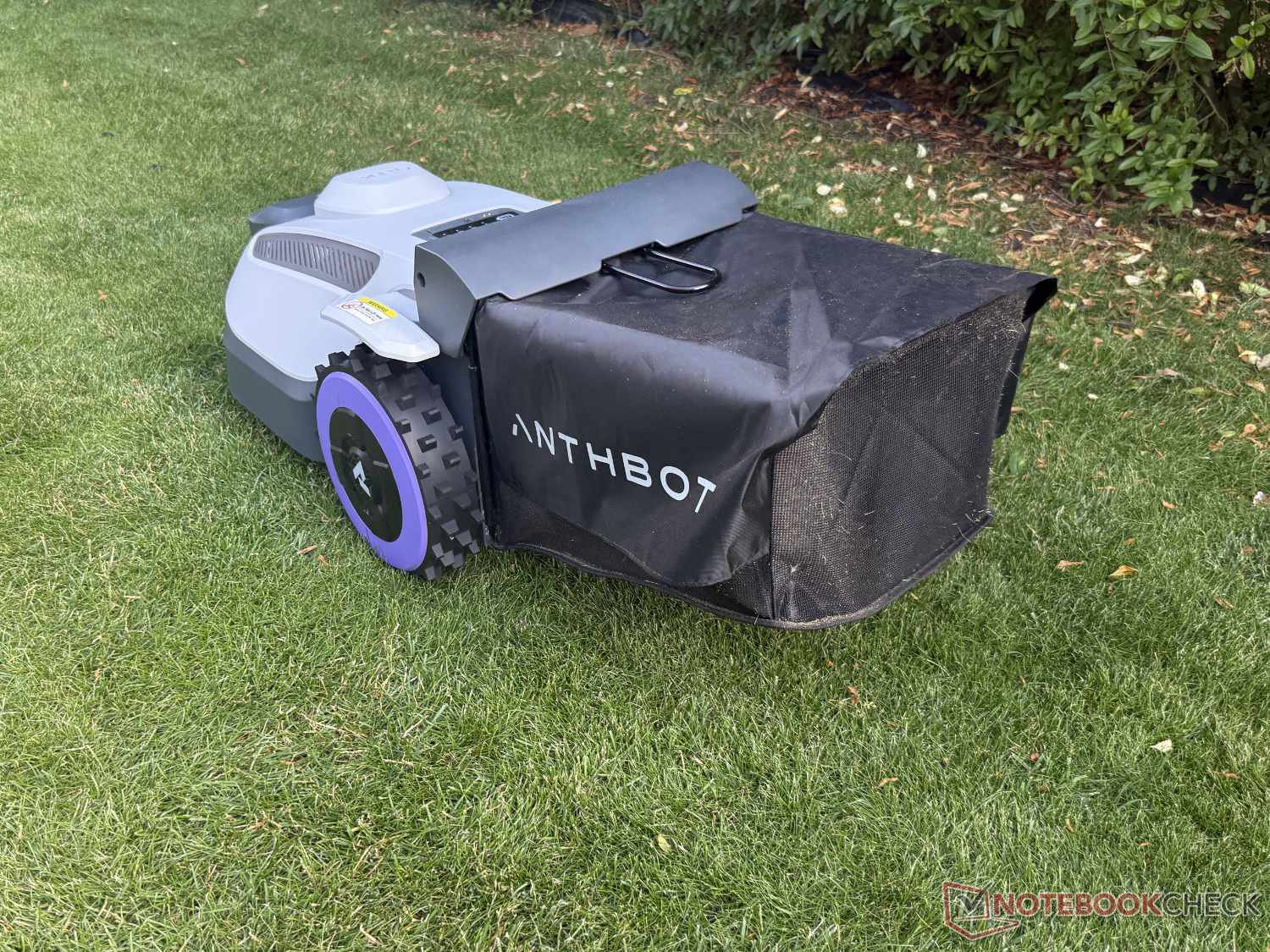
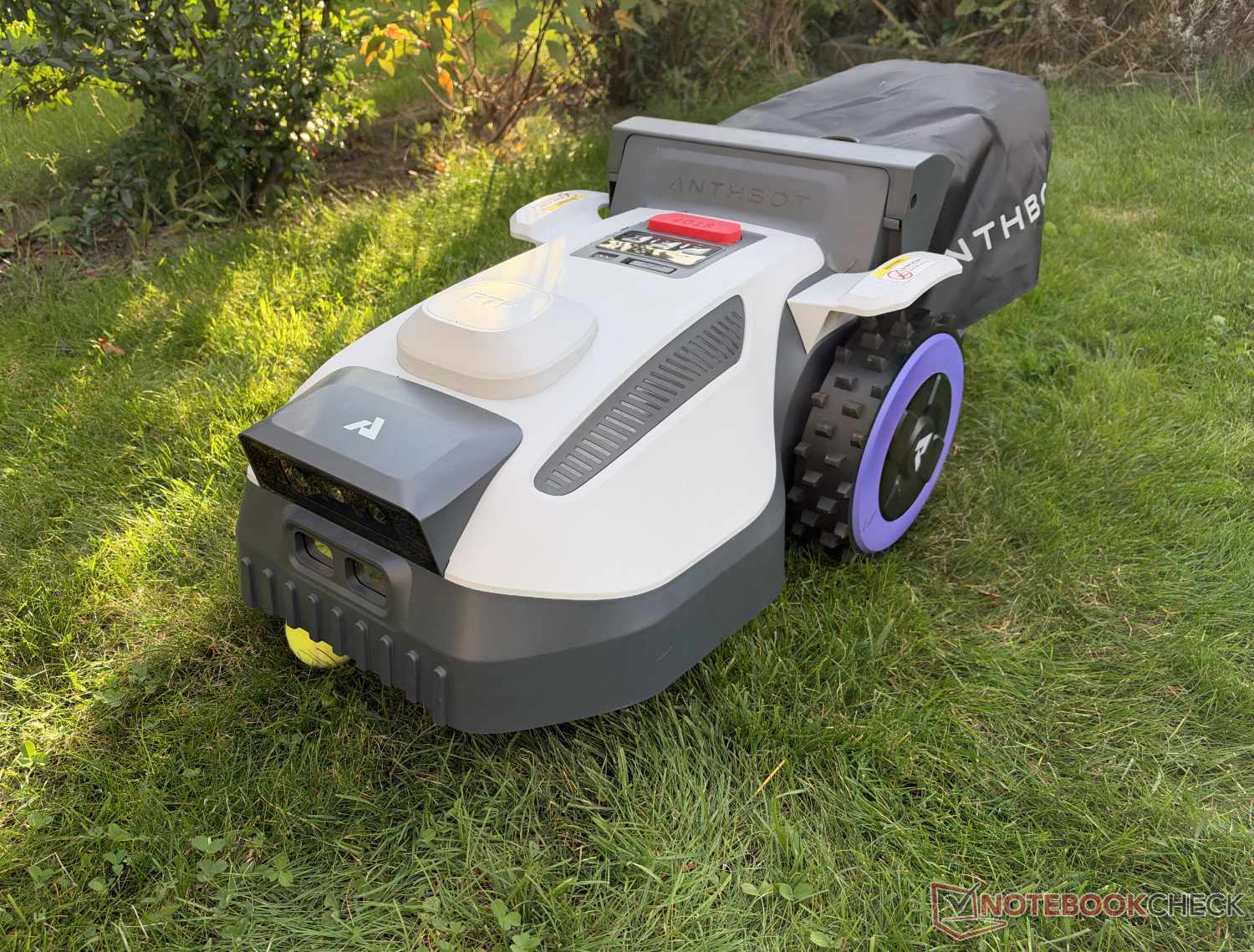
Another problem in the Anthbot N8 test is that obstacle detection did not work perfectly, even at its most sensitive setting. While the robotic mower did recognize a soccer ball and a ball about 10 cm in size with its two cameras, that is the bare minimum we expect—with the obstacles still sometimes being touched while turning. It also reliably stopped in front of a piece of garden hose, which is exemplary.
However, the N8 failed completely when faced with a tennis ball, and it also at least bumped into our hedgehog dummy in more than half of the attempts. This means the Anthbot N8 does not perform particularly well in this part of the test, scoring about the same as the Anthbot M9 Pro. Many other robotic mowers—including the Anthbot M9—have already performed better in our tests.
Mowing lawns & edges: Leaves almost completely collected
We now come to the Anthbot N8’s key feature. The robotic lawn mower can either mow in the conventional way, collecting grass clippings and the like in the collection bag, or it can be used for mulching with the discharge deflector, using the separately included mulching disc with three shovel-shaped blades and three standard blades.
This means that when the grass is longer, it can not only collect it, but also chop it up and leave it on the lawn—just as conventional robotic lawn mowers do with ideally short clippings. However, with their simple blades, they need to run very regularly, whereas the Anthbot N8 can handle somewhat longer grass, too.
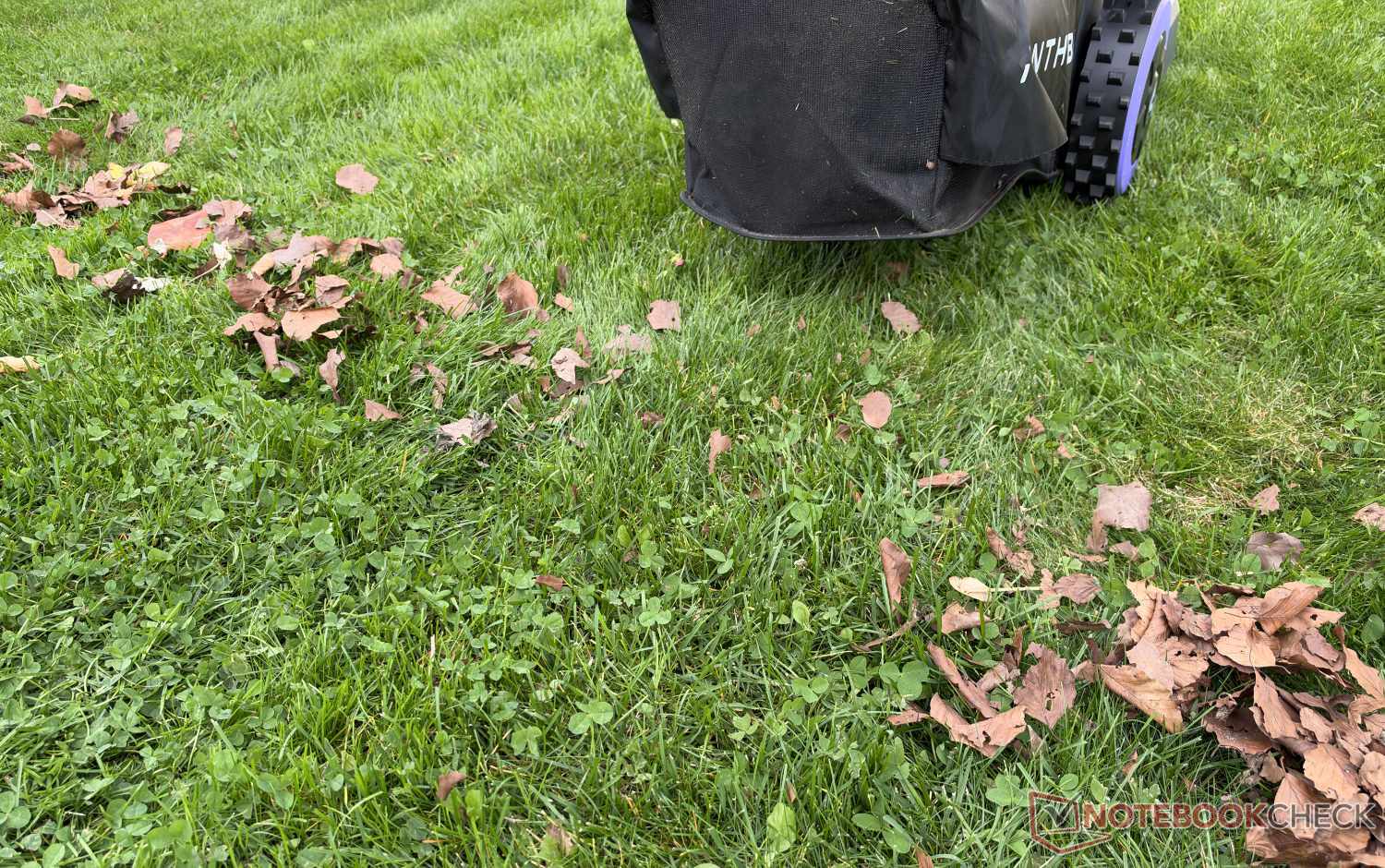
The preassembled standard mowing deck with its shovel-shaped blades was used primarily in the test. The resulting cut looked good in the test and was on par with traditional mowing decks. The Anthbot N8’s cyclone system did a very good job in the test of collecting cut grass and leaves scattered across the lawn. Aside from a few leaves left behind, it picked everything up and collected it in its basket. At predefined intervals, it drives to the defined drop-off point(s) and automatically lifts the basket there so that the contents fall out.
The Anthbot N8 cannot operate without either the collection basket or the discharge deflector fitted. It has a large opening at the rear, through which the grass clippings either fly into the basket or are slowed down by the deflector. Unfortunately, this means the robotic mower cannot mow the lawn in a compact configuration and have the attachment fitted only when needed. In our view, the Mammotion Yuka does this better. Its grass catcher is equipped with a rotating brush that actively sweeps grass clippings, leaves and similar debris into the collection basket, instead of flinging them into it through the mower deck. This means it can be put to work without the basket and, for example, fitted with it only in autumn to collect leaves.
The Anthbot N8’s length is its biggest obstacle along edges. In addition, the 20 cm-wide mower deck is positioned in the middle of the robotic mower, which is around 43 cm wide. This leaves wide strips of unmown grass that even standard lawn edging cannot eliminate. Like all models, it can only mow right up to the edge on level transitions—and when there is enough space.
Runtime & noise level: Louder and more power-hungry than others
The Anthbot N8 has a 9.2 Ah or 198 Wh battery. In our test, this was enough for a runtime of around 2 hours, which is slightly longer than the manufacturer’s stated figure. During this time, it mowed just under 200 square meters. The robot then drove to the station with just under 15 percent charge remaining.
It then disappeared there for around an hour and a half, during which a good 200 Wh passed through the meter. If we extrapolate this to an assumed mowing area of 500 square meters, mowed three times a week, to make the energy consumption of the robotic mowers we tested comparable, we arrive at a figure of just over 16 kWh. This is quite a high figure, due in part to the relatively high standby consumption of over 10 W (while waiting for its next run).
The Anthbot N8 is below average not only in terms of energy consumption but also noise levels. We measured around 70 dB from a distance of one meter. This makes the robotic mower almost as loud as a conventional lawn mower—and eliminates the advantage of robotic mowers, which are generally much quieter. There is an optional, somewhat quieter mode with a lower mowing blade speed.
ANTHBOT M Pro Series: Designed for real gardens
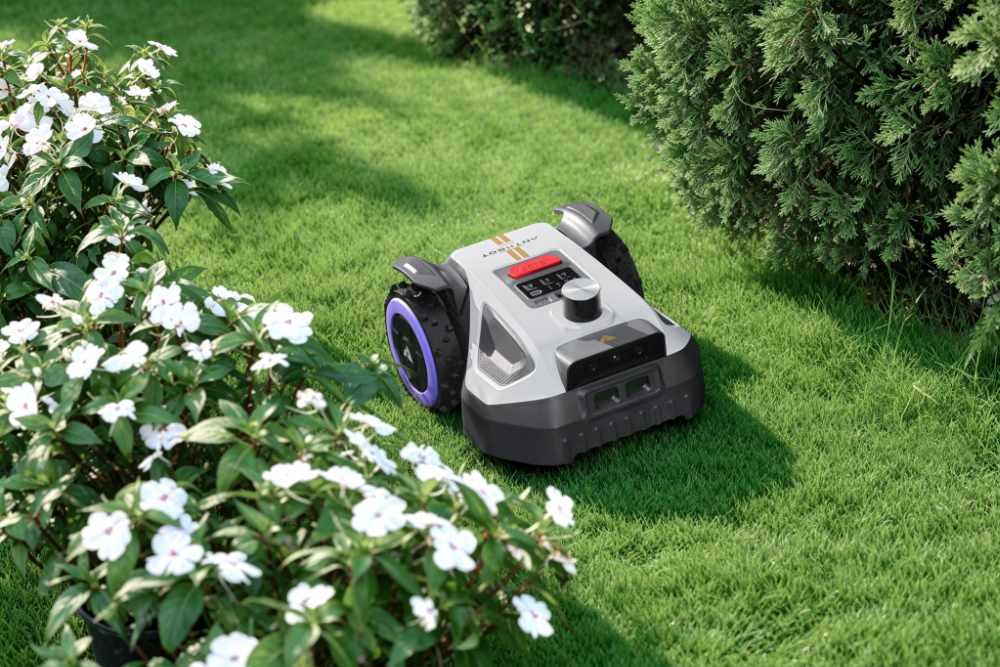
The M Pro series is equipped with HoloSense™ navigation, which combines 360° LiDAR, RTK, NetRTK and Dual Vision to ensure precise and stable navigation. Whether under tree canopies, beneath roof overhangs or in tight corners, HoloSense enables the mower to navigate reliably even where individual navigation technologies might reach their limits.
The M9 Pro is designed for lawns up to 1,000 m², while the M5 Pro is suitable for areas up to 500 m². Discover the M Pro series and current offers at de.anthbot.com

Is the Anthbot N8 not the right wire-free robotic lawn mower for your garden, according to our test?
Then discover many more models in our Best Robotic Lawn Mowers 2026!
Transparency
The selection of devices to be reviewed is made by our editorial team. The test sample was given to the author by the manufacturer free of charge for the purposes of review. There was no third-party influence on this review, nor did the manufacturer receive a copy of this review before publication. There was no obligation to publish this review. As an independent media company, Notebookcheck is not subjected to the authority of manufacturers, retailers or publishers.
 Add as a preferred source on Google


